
Recipes
Authentic Dutch Pancake (Pannenkoeken): Easy Traditional Recipe
As an Amazon Associate we earn from qualifying purchases. We may earn a commission from links on this page, at no extra cost to you. Learn more.
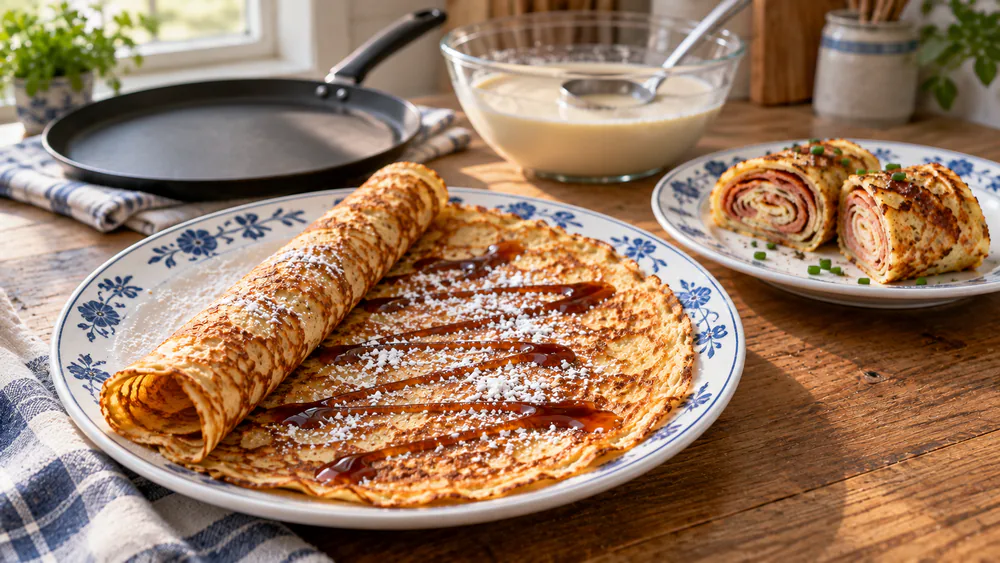
A Dutch pancake, or pannenkoek, is a thin, wide pancake cooked to fill an entire frying pan. It is larger and thinner than the fluffy stack you know from brunch, yet sturdier and more foldable than a lacy French crepe. There is no baking powder here, so it stays flat and golden instead of puffy. One pannenkoek can stretch up to a foot across. Best of all, it works sweet or savory, which is why it has been Dutch comfort food for centuries. This is the version we make at home, and it comes together in about 25 minutes.
What Are Dutch Pancakes (Pannenkoeken)?
Pannenkoeken are the classic pancakes of the Netherlands. The name is simple: "pannenkoek" means "pan cake," and the plural is "pannenkoeken." English speakers can approximate it as "PAH-nen-koo-kuh(n)."
Each one is cooked to the size of a full frying pan, up to a foot (about 30 cm) across. The batter is a thin, four-ingredient mix of flour, milk, eggs, and a little salt. Authentic pannenkoeken use no raising agent, which keeps them thin and flat. For the full background on the traditional Dutch pannenkoek, it has been a staple since the Dutch Golden Age.
How Dutch Pancakes Differ from American Pancakes and French Crepes
An American pancake is small, thick, and fluffy. Baking powder makes it rise, and it is stacked with butter and syrup. A French crepe is the opposite: very thin, almost lacy, then folded around a filling.
A Dutch pannenkoek lands in the middle. It is pan-wide and thin like a crepe, but a touch thicker, softer, and eggy enough to fold or roll without tearing. The biggest difference is leavening: authentic pannenkoeken skip it, which keeps them flat. That sturdy surface is what lets you pile on sweet or savory toppings and roll the whole thing up.
Ingredients You'll Need
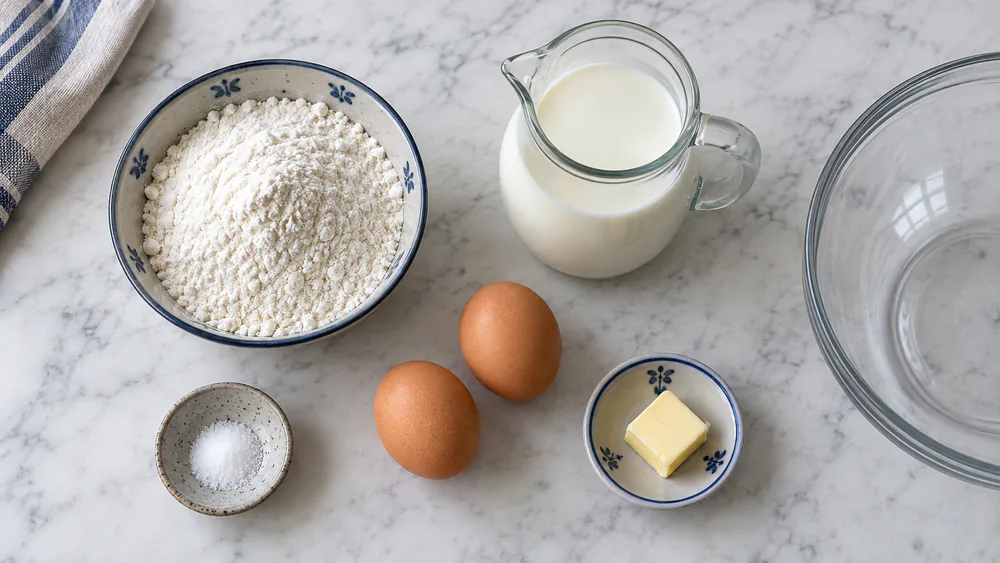
The authentic ratio is easy to remember: 250 g flour, 500 ml milk, and 2 eggs. That balance gives a thin, pourable batter that spreads pan-wide without tearing.
- 250 g (about 2 cups) all-purpose flour
- 500 ml (about 2 cups) whole milk
- 2 large eggs
- a pinch to 1/4 teaspoon salt
- butter, for the pan
- optional: 1 teaspoon vanilla or vanilla sugar, 1/2 teaspoon cinnamon
A standard batch makes roughly 8 to 10 pancakes, depending on pan size and how thinly you spread each one.
Ingredient Notes and Substitutions
Plain all-purpose flour is the standard, and it is all you need. Whole milk gives the richest result, but any milk works, including plant milk for a dairy-free batch. For a gluten-free version, a 1:1 gluten-free flour blend swaps in cleanly.
The one thing to leave out is baking powder. A little vanilla or cinnamon is a welcome sweet touch, but a raising agent turns your pannenkoek into something closer to an American pancake.
Equipment
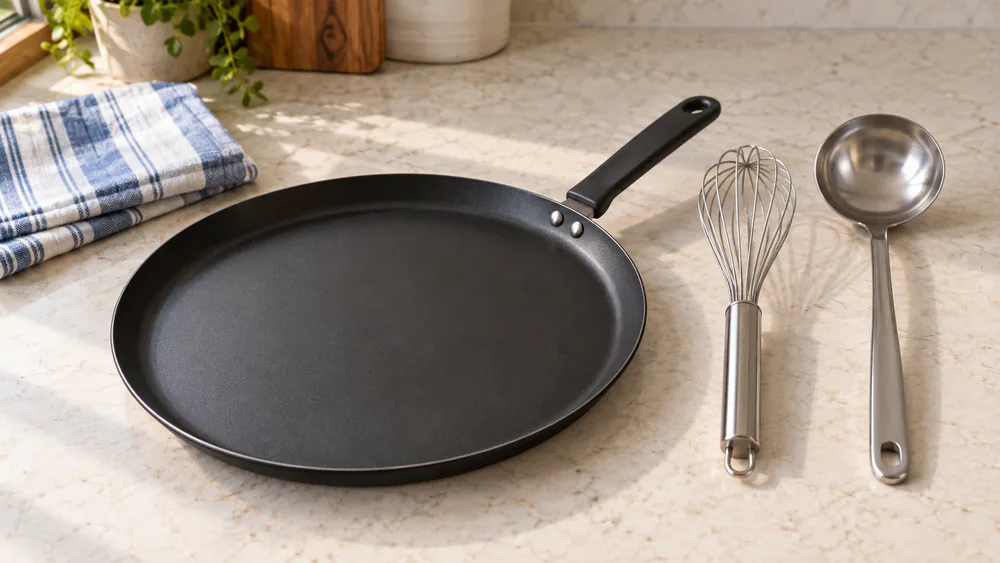
You do not need special gear, just the right pan. We reach for a wide nonstick crepe pan between 9 and 12 inches (24 to 30 cm) across. A well-seasoned cast-iron pan works beautifully too.
The pan surface matters most. A nonstick or well-seasoned pan lets the thin pancake release cleanly and flip in one piece; on a bare or sticky pan, it grabs and tears. Beyond that, you need only a balloon whisk or hand mixer for a smooth batter, a ladle for portioning, and a bag of plain all-purpose flour.
How to Make Dutch Pancakes (Step-by-Step)
The method is quick once the batter is mixed and rested. Here is how we make them, one pancake at a time.
Step 1: Mix the Batter
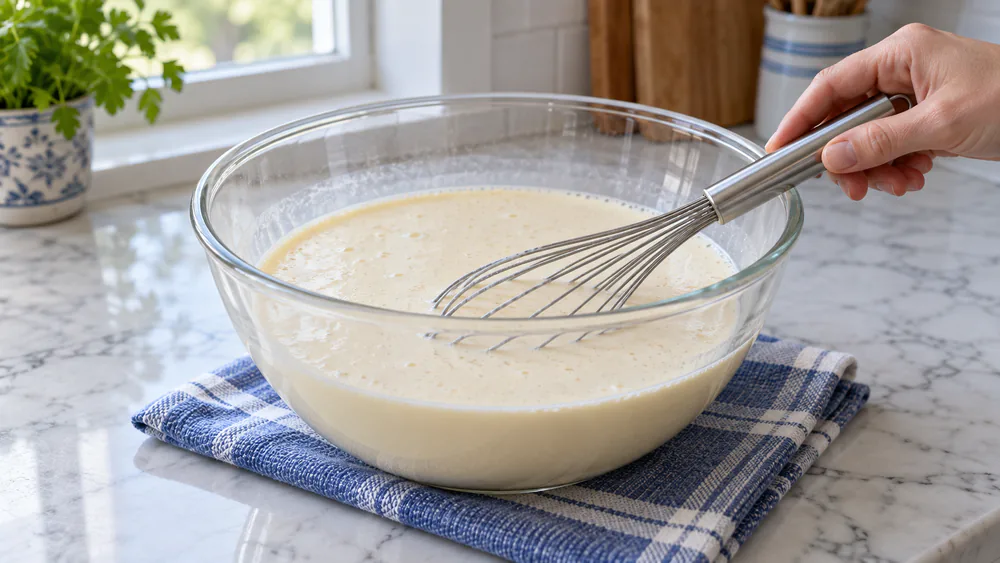
Whisk the flour and salt in a large bowl. Make a well, crack in the 2 eggs, and add a splash of the milk. Whisk from the middle outward, pouring in the rest of the milk as the batter loosens.
We stop the moment it is smooth and pourable, about the thickness of light cream. Do not overmix. Too much whisking builds gluten and makes tough pancakes, and a few small lumps cook out on their own.
Step 2: Rest the Batter
Let the batter rest before you cook. Resting lets the flour hydrate and the gluten relax, which gives a smoother, more tender, thinner pancake.
We usually rest ours 15 to 30 minutes on the counter. Even 10 minutes helps, and an overnight rest in the fridge is fine too. Skip this step and the pancakes are more likely to turn out tough.
Step 3: Cook the Pannenkoeken
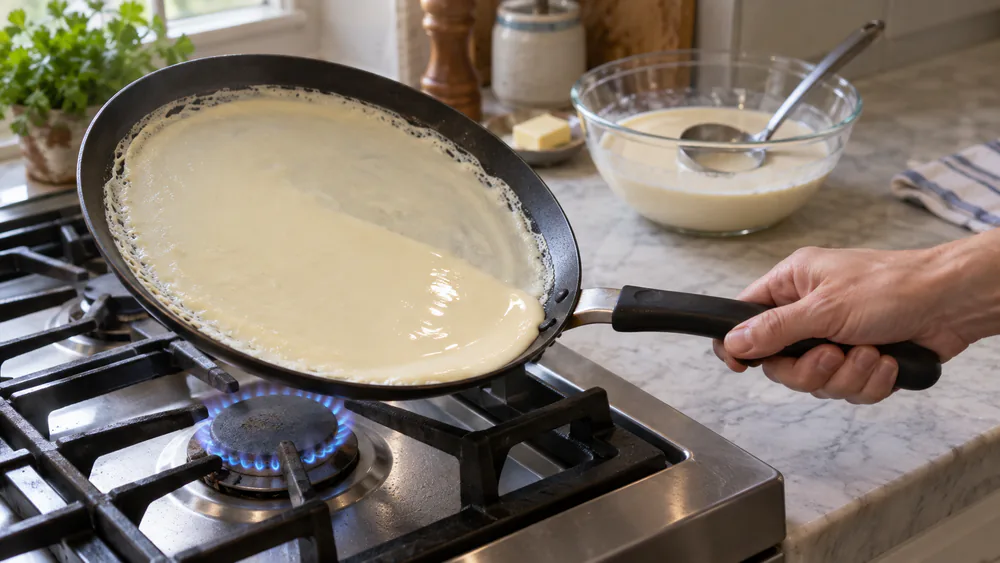
Set the pan over medium heat and add a small knob of butter. Medium is the sweet spot. Too hot and the pancake browns before it can spread, too cool and it turns pale and sticky. A quick test is a few water droplets, which should dance across the surface.
Pour in a small ladle of batter and immediately tilt and swirl the pan. You want the batter to coat the whole base in a thin, even layer. Cook for about 1 to 2 minutes per side. Flip when the top is no longer shiny, small holes appear, and the edges start to loosen and brown. Re-grease with a little butter before every pancake, or the later ones will stick and tear.
Sweet and Savory Topping Ideas
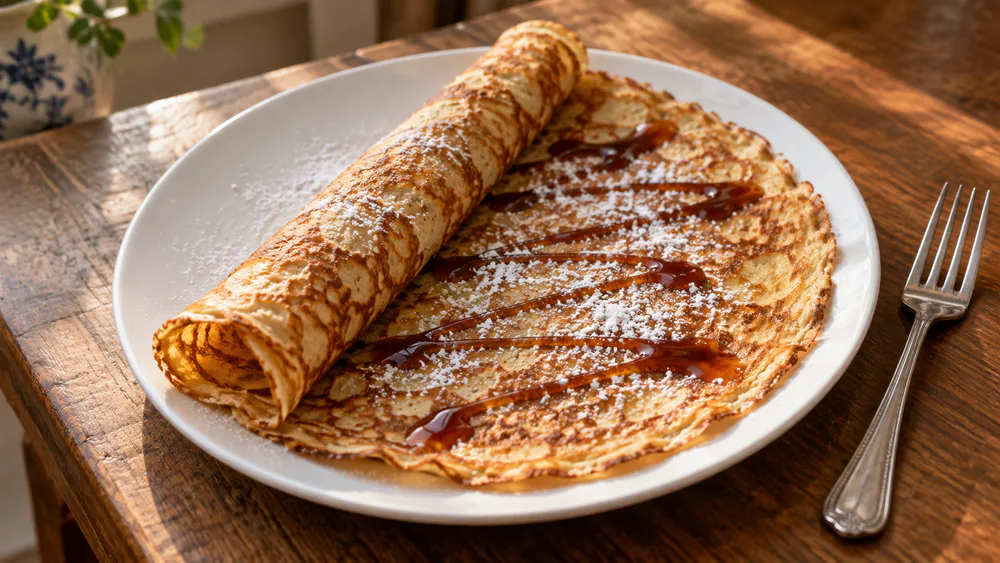
The best part of a pannenkoek is that it goes either way. On the sweet side, the classics are a dusting of powdered sugar (poedersuiker) and a drizzle of stroop, a thick dark Dutch syrup made from sugar beet. Appelstroop, a spiced apple butter, is another favorite, along with apple slices, raisins, Nutella, and maple syrup.
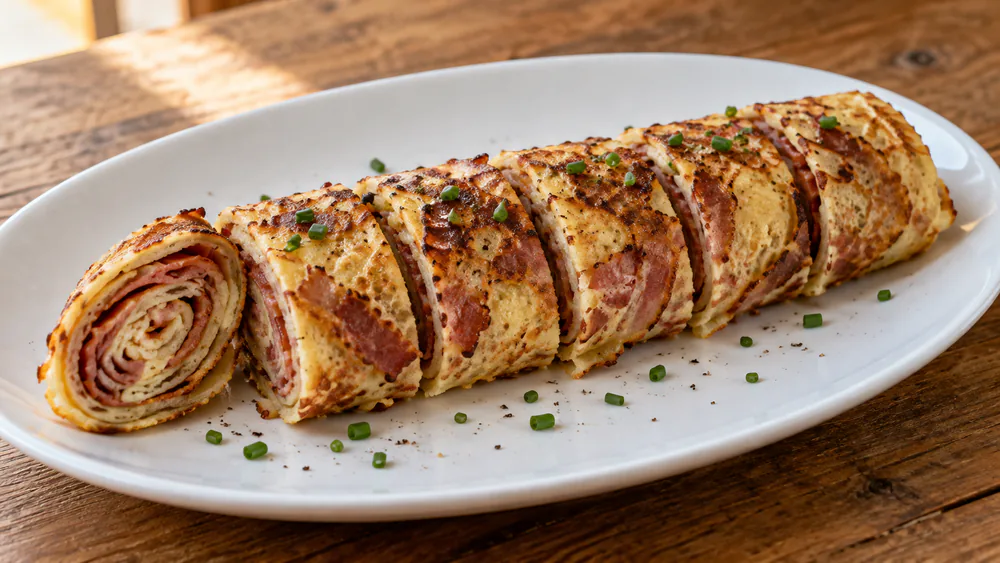
For savory pannenkoeken, think bacon (spek), cheese, ham, mushrooms, and onions. The salty-sweet pairing of crisp bacon and stroop is a Dutch classic. For savory versions, we lay the bacon or apple straight into the wet batter, so it cooks into the pancake rather than sitting on top.
Expert Tips for Perfect Pannenkoeken
A few small habits separate a thin, golden pannenkoek from a thick, patchy one.
The most common beginner mistake is not swirling fast enough, so the batter sets thick before it spreads. Keep the batter thin, and move quickly the second it hits the pan. Hold the heat at medium, and re-grease before each one. Go easy on toppings, because a thin pancake cannot support a heavy pile.
Tip. The moment the batter hits the pan, lift it off the heat and swirl in a full circle. That single motion spreads a pannenkoek pan-wide and thin before it can set.
Serving Suggestions
The traditional way to eat a pannenkoek is rolled up by hand or with cutlery, dressed with stroop and powdered sugar. That is how Dutch pancake houses serve them.
In the Netherlands, these are dinner, not just breakfast. A batch is cooked one pancake at a time and eaten as a full evening meal. For a savory supper, we like a bacon pannenkoek with a little stroop on the side.
Recipe Variations
Once you have the basic pannenkoek down, the variations write themselves. A spekpannenkoek adds bacon cooked into the batter, and an appelpannenkoek does the same with thin apple slices. On the sweet side, a teaspoon of vanilla or a little cinnamon warms up the batter.
For dietary needs, swap in a 1:1 gluten-free flour blend, or use plant milk for a dairy-free version. You can add a little baking powder for a puffier, American-style pancake, but that steps away from the authentic, flat pannenkoek.
How to Store and Reheat Leftovers
Pannenkoeken keep well, so they are great for batch cooking. Stack cooled pancakes with a square of parchment between each one, then refrigerate for 2 to 3 days.
To reheat, warm them briefly in a dry pan over low heat, or give them 20 to 30 seconds in the microwave. They freeze well too. Layer parchment between them, seal in a bag, and reheat straight from frozen.
A Short History of Pannenkoeken
Pannenkoeken were hugely popular during the 17th-century Dutch Golden Age, and they appear again and again in Dutch paintings from the period. Even then they were served as full meals, topped with bacon, apples, or raisins. Food historian Ken Albala credits the 17th-century Dutch with the first truly modern pancakes.
Today, specialised pancake houses (pannenkoekenhuizen) are found across the Netherlands and Belgium, with long topping menus. If you enjoy traditional Dutch cuisine, the pannenkoek is one of its warmest everyday dishes.
Note. In Dutch homes and pancake houses alike, pannenkoeken are a proper meal, not a breakfast side. That is why the pans are so wide and the toppings run from powdered sugar to bacon and cheese.
Recipe Card (Ingredients, Instructions, Notes, Nutrition)
Ingredients
- 250 g (about 2 cups) all-purpose flour
- 500 ml (about 2 cups) whole milk
- 2 large eggs
- a pinch to 1/4 teaspoon salt
- butter, for the pan
- optional: 1 teaspoon vanilla or vanilla sugar, 1/2 teaspoon cinnamon
Instructions
- Whisk the flour and salt, then whisk in the eggs and milk until smooth and pourable.
- Rest the batter 15 to 30 minutes so it firms and thins out.
- Heat a little butter in a wide pan over medium heat.
- Ladle in batter and swirl to coat the base in a thin layer.
- Cook 1-2 minutes per side, flipping once the top looks dry and the edges loosen.
- Re-grease and repeat, then serve rolled up with your toppings.
Notes
Rest time is flexible: anywhere from 15 minutes to overnight improves the texture. Keep the batter thin and skip the baking powder to stay authentic. For the real Dutch taste, finish with stroop rather than maple syrup.
Nutrition
Nutrition is an estimate for one plain pancake before toppings, and it changes with size and add-ins. Figure on roughly 150 kcal each for a standard-size pannenkoek.
Frequently Asked Questions
What is the difference between Dutch, American, and French crepe pancakes?
A Dutch pannenkoek is pan-wide and thin, but thicker and sturdier than a French crepe. An American pancake is small and fluffy from baking powder, and a crepe is very thin and lacy. Pannenkoeken use no raising agent, so they stay flat and foldable.
Can I make the batter ahead, and how long should it rest?
Yes, and it helps. Making the batter ahead is ideal, since resting improves the texture. We rest ours 15 to 30 minutes at room temperature, though even 10 minutes helps and an overnight rest is fine.
How do I keep my pannenkoeken thin and not too thick?
Keep the batter thin and pourable, about the thickness of light cream. Then swirl the pan quickly the moment the batter goes in, so it spreads before it sets. A thick batter or a slow swirl makes them too thick.
Can I make Dutch pancakes gluten-free or dairy-free?
Yes. Use a 1:1 gluten-free flour blend for the all-purpose flour, and swap in plant milk for a dairy-free batch. The method does not change.
How do I store and reheat leftover pannenkoeken?
Stack them with parchment between each one and refrigerate for 2 to 3 days, or freeze them the same way. Reheat in a dry pan over low heat, or for 20 to 30 seconds in the microwave.
What does "pannenkoeken" mean and how do I say it?
It means "pan cakes," from "pan" and "koek" (cake). The singular is "pannenkoek," and English speakers can approximate the plural as "PAH-nen-koo-kuh(n)."
Ready to upgrade your kitchen?
Browse more tested recipes and kitchen guides, or get our best cooking tips in your inbox.