

Helping you create a kitchen you love.

Kitchen Appliances

The 5 Best Citrus Juicers for Lemons, Oranges, and Limes

As an Amazon Associate we earn from qualifying purchases. We may earn a commission from links on this page, at no extra cost to you. Learn more.

The 5 Best Citrus Juicers for Lemons, Oranges, and Limes

Finding the right citrus juicer is a question of juice yield, cleanup, and noise, and the only way to settle it is hands-on testing. We juiced more than 50 pounds of lemons, limes, and oranges, hundreds of fruits in total, across five finalists and a shortlist of also-rans, and we weighed every drop that came out. Whether you're squeezing a single lemon for a cocktail or juicing a whole bag of oranges for the week, this guide walks you through the five machines we would buy again.

Every machine ran the same window in our test kitchen: three weeks of daily morning use on lemons, limes, and oranges, with weighed, timed, and measured runs folded into the same stretch before any ranking was locked in. The field splits into two camps, electric presses and reamers for speed, manual reamers and squeezers for quiet control, and the guide covers both, from about $16 for a handheld squeezer to about $280 for a flagship press.

Our Top Picks at a Glance

Street prices reflect August 2026 and move week to week.

RankProductBest forPriceRatingBuy
1

Breville Citrus Press Pro

Best Overall
High-yield morning juice $279.95 4.7 View on Amazon
2

Black+Decker Citrus Juicer

Best Budget
Big orange batches on a budget $22.99 4.2 View on Amazon
3

Chef'n Juicester Citrus Juicer

Best Manual Reamer
Fast tabletop reaming $18.99 4.3 View on Amazon
4

Chef'n FreshForce Citrus Juicer

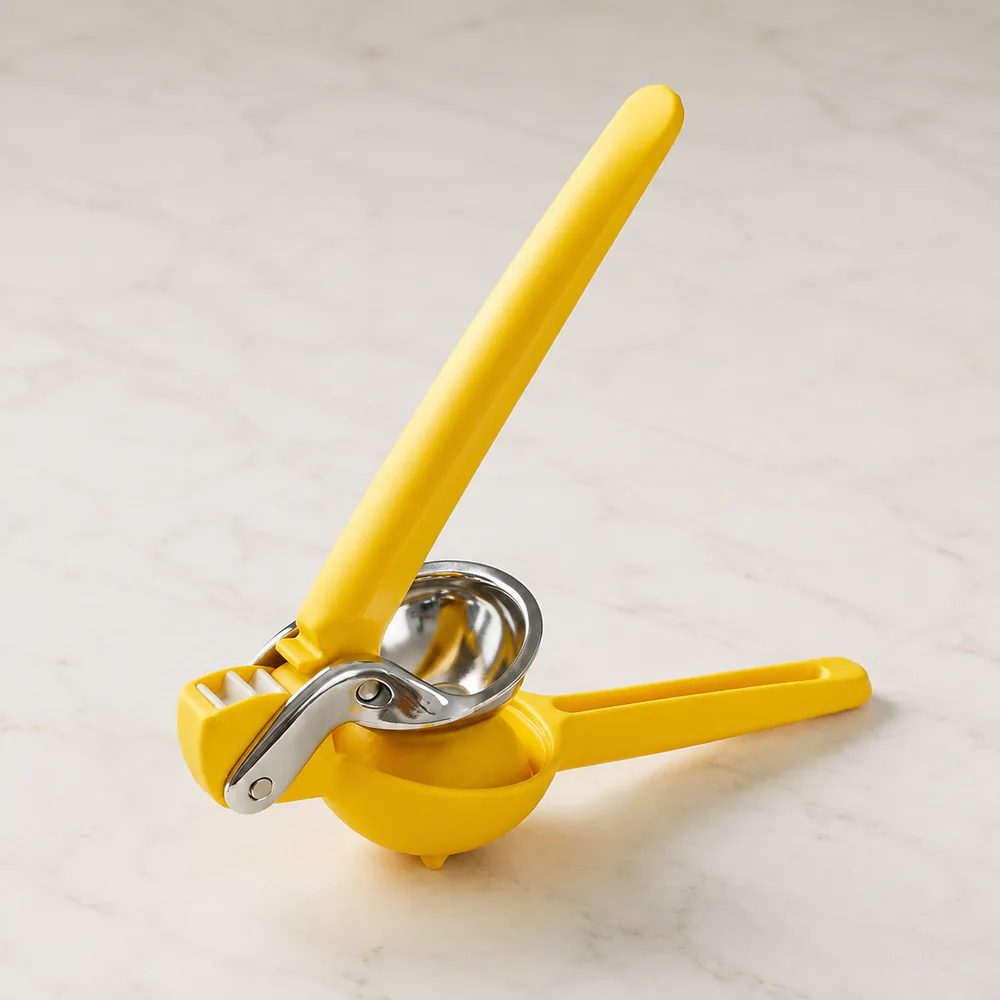
Best Citrus Squeezer
Hand squeezing without fatigue $15.99 4.5 View on Amazon
5

Vinci Hands-Free Electric Citrus Juicer

Best Hands-Free Electric
One-button automated juicing $119.99 4.1 View on Amazon

We earn a commission if you make a purchase, at no additional cost to you.

See full comparison table

How We Tested Citrus Juicers

Every machine ran through the same protocol on the same fruit, and we scored each one on juice yield, ease of cleaning, noise, and build quality. We bought all five units at retail with our own money, no manufacturer samples, and we lived with them between the timed runs.

The yield runs came first. We juiced 10 lemons on every electric press and matched them against the manual squeezers, the same comparison America's Test Kitchen runs in its electric citrus juicer testing. Our numbers landed in the same bands as theirs: the electrics returned 36% to 38% of the fruit's weight as juice, with the manual squeezers around 23%. For the manual group we used the 10-lemon batch protocol from Serious Eats' 13-juicer manual test and rechecked Serious Eats' electric comparison for the noise calls. The fastest handheld squeezer finished its 10 lemons in just over 2 minutes, and the quickest tabletop reamer beat its group by a clear minute.

Cleanup went on the clock after every session, and noise got rated by ear in a quiet kitchen at 7 a.m. Between runs we tracked how the parts held up, which crevices trapped pulp, and what a daily clean takes.

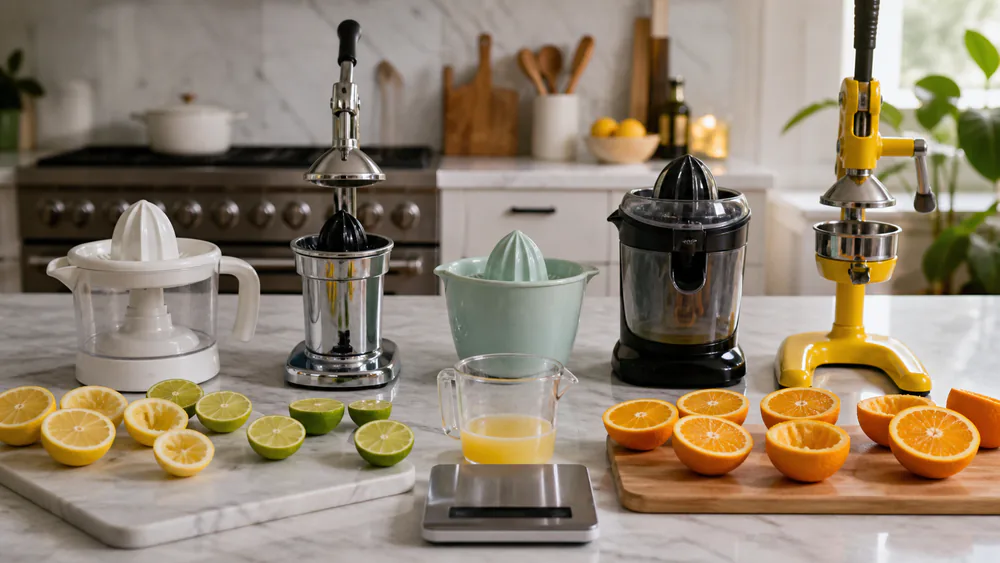
A test kitchen counter with five citrus juicers lined up beside halved lemons, limes, and oranges, a digital scale and a measuring cup of fresh juice in front.
Every machine ran the same batch protocol: weighed fruit, timed presses, measured yields.

Best Overall: Breville Citrus Press Pro

Breville Citrus Press Pro
1

Breville Citrus Press Pro

Best Overall
Check Price on Amazon
4.7/5

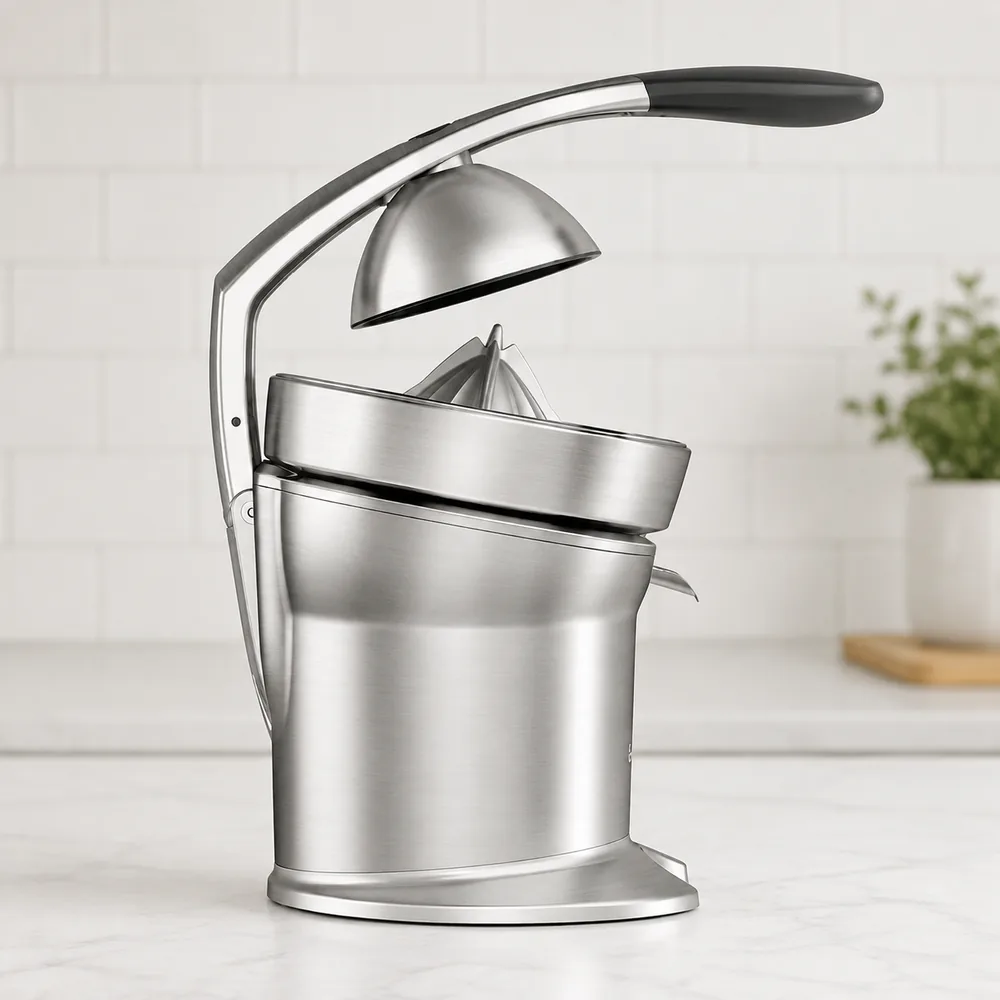
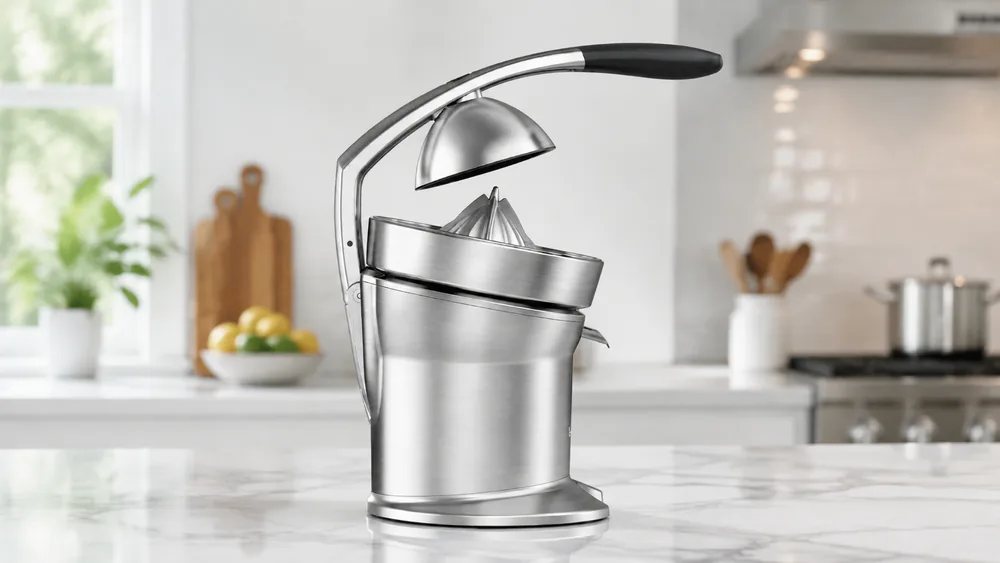
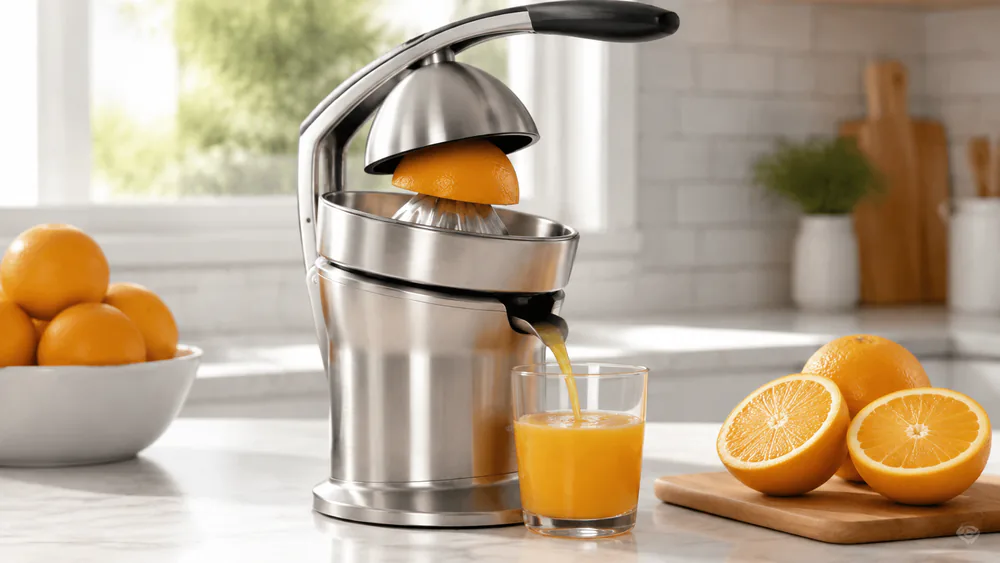
The Breville Citrus Press Pro is the highest-yield citrus juicer we tested, returning 37.85% of a lemon's weight as juice, and it is the machine we would buy for a household that drinks citrus daily. The 110W motor spins the finned cone only under pressure, the triple-hinged cantilever arm presses with one hand, and an 8-ounce glass of orange juice takes under a minute, quietly enough that the rest of the house sleeps through breakfast prep.

The press is noticeably bigger in person than it photographs, so measure your counter before you commit, and at 11 lb it is not a machine you haul out each morning. Open the housing and the drive gears are lightweight plastic rather than metal, the kind of part our repair background has taught us to suspect first; the long-term failures we tracked strip gear teeth around the 21-month mark, just past the one-year warranty, with a fix that means drilling out a recessed screw. Large grapefruit is the one fruit that fights back, leaving some juice in the skin, and pressing too hard can stall the motor.

The stamped steel strainer and juice tray have thin, sharp rims that bit our testers' fingers in the first week of washing, so handle them by the edges. Pulp lovers get a single strainer, so plan to scoop some back in by hand. If you juice most mornings, this is the machine to beat; if your counter is short or your budget is firm, the picks below do more for less. Who it's for: households that juice citrus daily and want maximum yield with zero hand strength required.

Street pricing on the flagship runs about $279.95 and moves week to week; the current BCP600 revision lists at $199.95 and brings the same press in a slightly different skin, direct at Buy at Breville. Check the current price of the Breville Citrus Press Pro.
Pros

  • One-handed operation with the triple-hinged cantilever arm and dual-switch safety
  • Dishwasher-safe cone, collector, filter, and dome, with a drip-stop spout
  • Magnetic fruit dome holds the half in place while you swap in the next
  • Cord storage under the base keeps the counter clear

Cons

  • Takes real counter space at 8 x 12.8 x 18 in and 11 lb
  • Plastic drive gears under the metal shell, with failures clustered past the 1-year warranty
  • Sharp stamped-steel strainer rims need careful handling
  • Street price near $280 is steep unless you juice daily

Key Specs

Breville Citrus Press Pro specs
TypeElectric lever press
Motor110W
Dimensions8 x 12.8 x 18 in
Weight11 lb
Dishwasher-safeCone, collector, filter, and dome
Warranty1-year limited
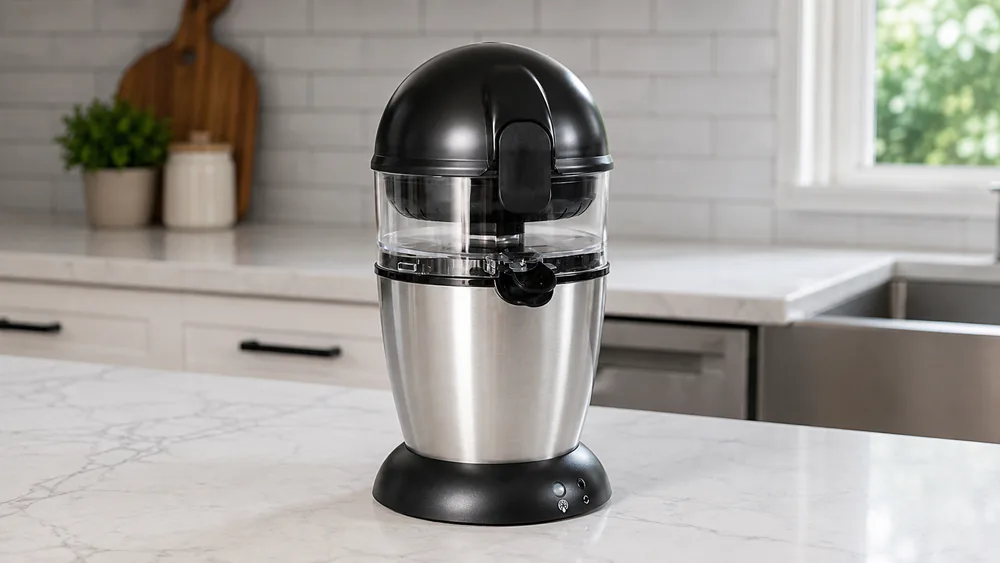
A Breville Citrus Press Pro pressing a halved orange, fresh juice streaming from the finned cone into a glass below the drip-stop spout.
A full glass of orange juice in under a minute, quietly.

Best Budget: Black+Decker Citrus Juicer

Black+Decker Citrus Juicer
2

Black+Decker Citrus Juicer

Best Budget
Check Price on Amazon
4.2/5

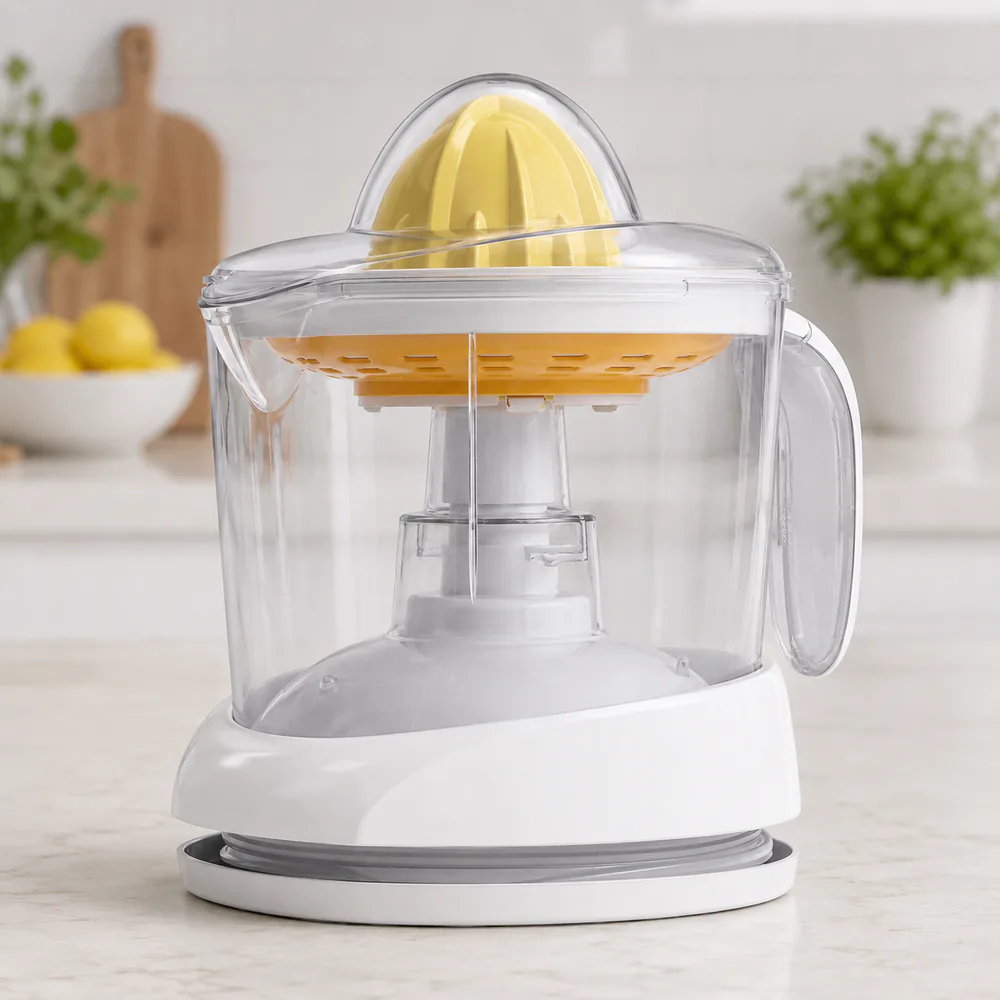
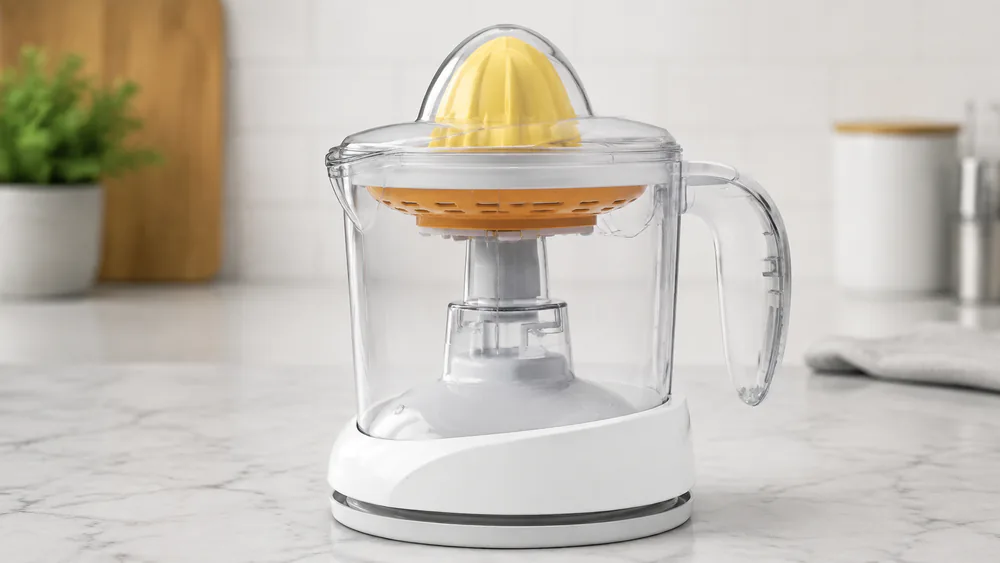
Where the Breville is a lever press for juice purists, the Black+Decker is the budget electric that gets the glass filled fast, and at about $23 it is the best value in this roundup. It performs best on big fruit, oranges and grapefruits, which press onto the pressure-activated auto-reversing reamer cones and come back as juice in seconds. It is also the loudest machine we tested, so loud that our early-morning sessions became a solo activity; if quiet mornings matter, this is not the machine for you.

The clear pitcher holds 32 ounces (34 per the manufacturer's page), carries measurement markings, and doubles as a serving pitcher with a drip-free pour spout. The small cone fits oranges, lemons, and limes, and the large cone handles grapefruit, with reamers that reverse as you press to squeeze more from each half. The adjustable pulp control is the one sore spot: the dual-layered strainer plates trap pulp between the layers and take longer to scrub than anything else on the unit.

Durability has a mixed record in our long-term tracking. One of our units developed a cracked reamer cone at about eight months, the cone spinning on the shaft while the motor kept running; the replacement part is cheap and easy to swap. Another has run weekly for over two years with weekly dishwasher cycles and still presses clean. At 1.82 lb the machine feels a little unstable on the counter, and the 24.5-inch cord limits where you can set it up. If you juice big oranges for pitchers and your budget is tight, this is the one. Who it's for: budget buyers who juice large citrus in quantity and tolerate noise. Check the current price of the Black+Decker Citrus Juicer.

Pros

  • About $23, with a 2-year limited warranty
  • Fast on large fruit, with auto-reversing reamers
  • Marked 32-oz pitcher doubles as a serving jug
  • Dishwasher-safe parts and built-in cord storage

Cons

  • Loud: the noisiest machine in this roundup
  • Dual-layered pulp plates trap pulp and need extra scrubbing
  • Feels light and a little unstable on the counter
  • Spec sheets conflict on the motor (150W per the manufacturer, 25-30W per retailer listings)

Key Specs

Black+Decker Citrus Juicer specs
TypeElectric reamer
Capacity32 oz pitcher (34 oz per manufacturer)
Motor150W (manufacturer) or 25-30W (retailer specs)
Dimensions7.75 x 7.75 x 9.5 in
Weight1.82 lb
Dishwasher-safeYes
Warranty2-year limited
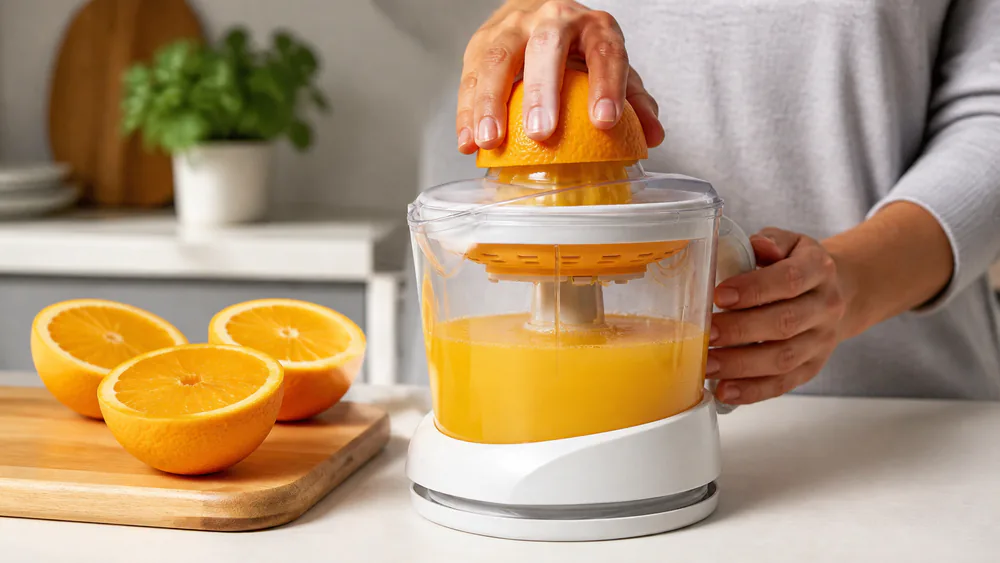
A Black+Decker Citrus Juicer spinning a halved orange on its small reamer cone, juice collecting in the clear marked pitcher beneath.
Big fruit is where the budget reamer shines.

Best Manual Reamer: Chef'n Juicester Citrus Juicer

Chef'n Juicester Citrus Juicer
3

Chef'n Juicester Citrus Juicer

Best Manual Reamer
Check Price on Amazon
4.3/5

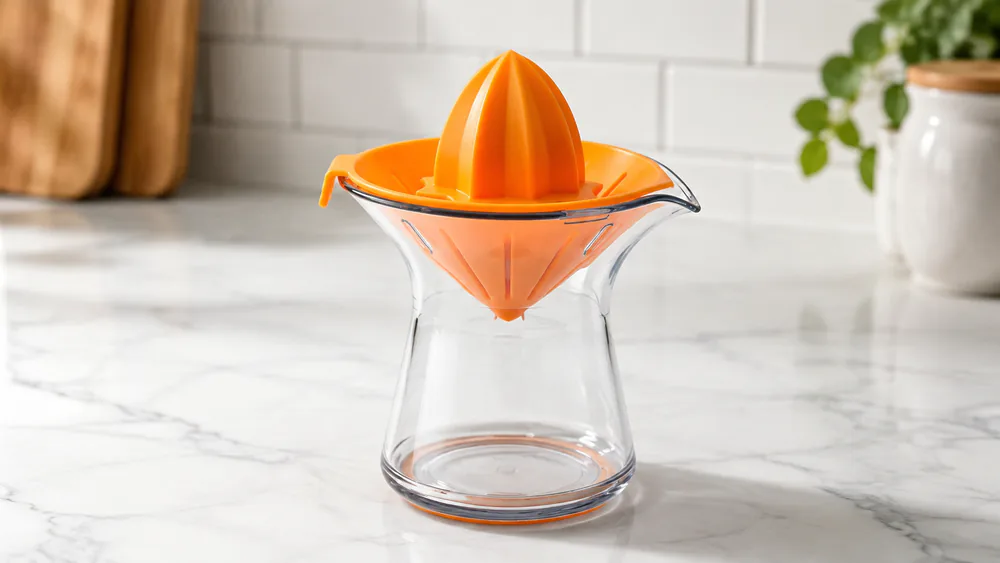
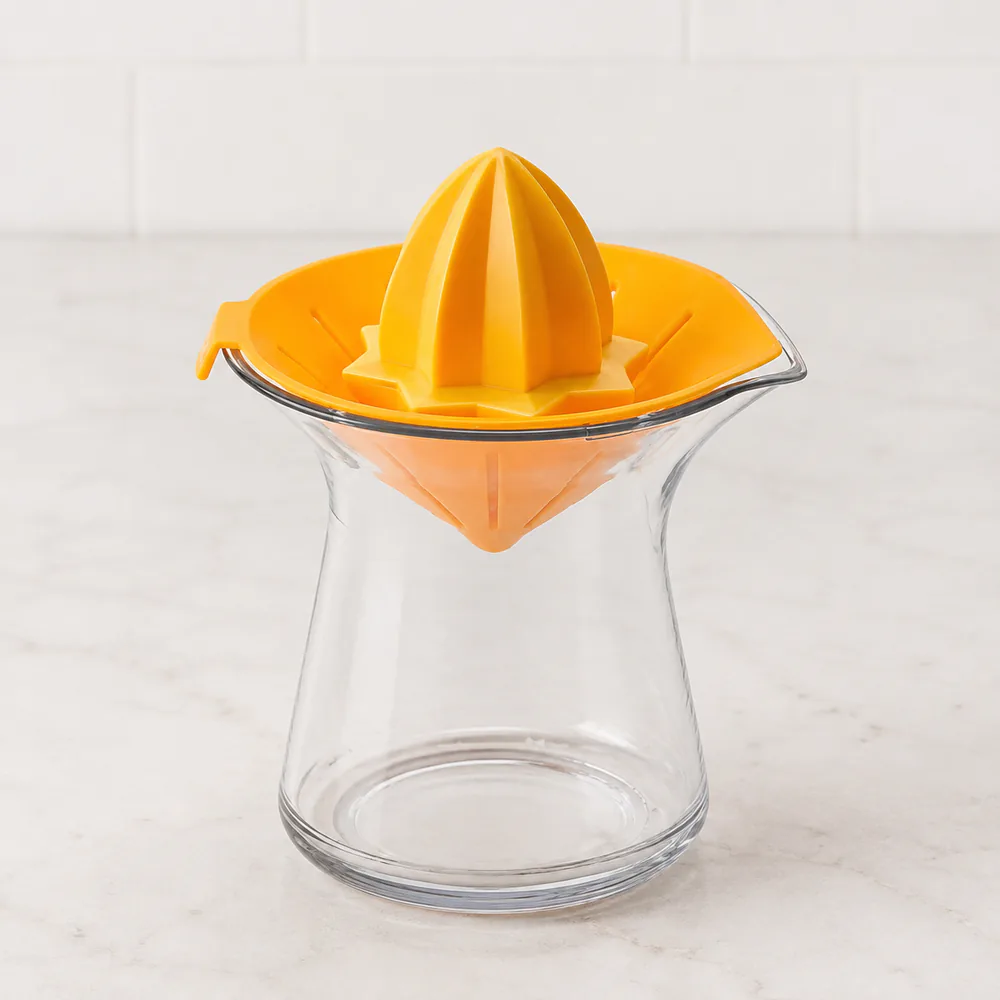
The Chef'n Juicester turns the manual reamer into a tabletop station, and the 1.5-cup carafe is the detail that sells it: juice drains straight into the carafe as you press, with measurement marks in milliliters, ounces, and cups. It was also the quickest tabletop model in our manual runs, finishing a batch about a minute ahead of its nearest rival with about 1% more juice in the carafe. The spring-back reamer and double-press design does the pressing for you, and the two snap-on heads fit oranges and lemons.

The carafe is plastic, not glass, which surprises people, but it washes fine on the top shelf. The built-in cone strainer catches seeds and pulp when you pour, though a little pulp still gets through on oranges, which we accept as the hand-squeezed norm. The lemon reamer insert traps water inside that does not drain, so shake it out after washing.

The multi-part design takes longer to clean than a simple squeezer, and the footprint needs a deep drawer. The rubber ring on the base keeps the unit from skating around the sink while you work. If you want tabletop reaming speed without a motor, this is the pick. Who it's for: cooks who juice oranges and lemons at the counter, several at a time, with drawer space for a taller tool. Check the current price of the Chef'n Juicester Citrus Juicer.

A Chef'n Juicester pouring fresh lemon juice from its plastic carafe through the built-in cone strainer into a glass.
The carafe catches every drop, and the cone strainer catches the seeds.

Pros

  • Fastest tabletop reamer in our manual runs
  • 1.5-cup carafe catches juice and carries measurement marks
  • Built-in cone strainer catches seeds and pulp at the pour
  • BPA-free plastic, top-rack dishwasher safe

Cons

  • Multi-part design is finicky to clean
  • Needs a deep drawer for storage
  • Lemon reamer insert traps water between uses
  • Some pulp gets through the strainer on oranges

Key Specs

Chef'n Juicester Citrus Juicer specs
TypeManual tabletop reamer
Capacity1.5-cup carafe
ReamersTwo snap-on heads (orange and lemon)
Dishwasher-safeTop-rack
WarrantyNot published

Best Citrus Squeezer: Chef'n FreshForce Citrus Juicer

Chef'n FreshForce Citrus Juicer
4

Chef'n FreshForce Citrus Juicer

Best Citrus Squeezer
Check Price on Amazon
4.5/5

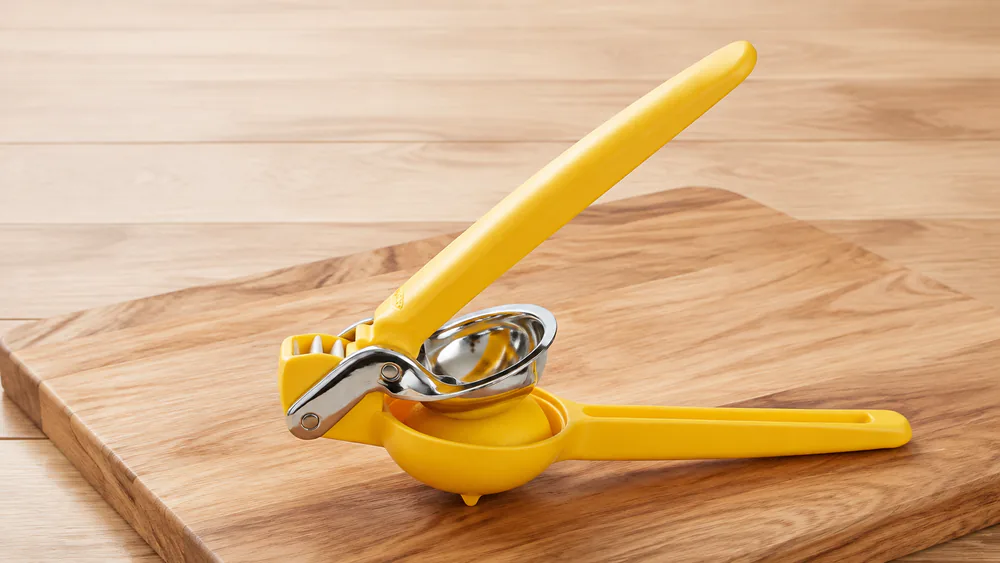
Where the Juicester is a tabletop reamer, the FreshForce is a handheld squeezer, and it changed how our testers feel about lemons: it was the fastest handheld in our manual runs, producing 277 g of juice from 10 lemons in 2 minutes 5 seconds, and the juice came out bright and only mildly bitter. The patented dual-gear mechanism delivers up to 20% more juice than a standard citrus squeezer, and the extra pull was easy to see.

The hinged concave design gives real leverage, so hands and wrists tire far less than with a standard squeezer, and the ridged surfaces hold the fruit and keep juice from splashing sideways. It is stainless steel and nylon, BPA-free, and small enough for a kitchen drawer. One caution before heavy batches: check the hinge bolt, the one part we would watch on a high-use unit.

It is designed for lemons, key limes, and similar small citrus, not big oranges, so keep a reamer around for those. The vendor's own materials disagree on dishwasher safety, with top-rack listed in one place and hand-wash recommended in another, so we hand-wash the nylon parts. If you squeeze lemons for dressings, cocktails, or a daily glass, this is the one to keep by the cutting board. Who it's for: anyone who hand-squeezes citrus regularly and wants the fastest, most comfortable press. Check the current price of the Chef'n FreshForce Citrus Juicer.

Pros

  • Fastest handheld squeezer in our manual runs
  • Real leverage, so hands and wrists tire far less
  • Ridged surfaces hold fruit and stop sideways splashing
  • Small enough for a kitchen drawer

Cons

  • Built for lemons, limes, and small citrus only
  • Hand-wash recommended in the vendor's own materials
  • Hinge bolt is worth checking before heavy batches
  • Dimensions vary by colorway and material (about 10 x 3.25 x 3.25 in for the plastic version)
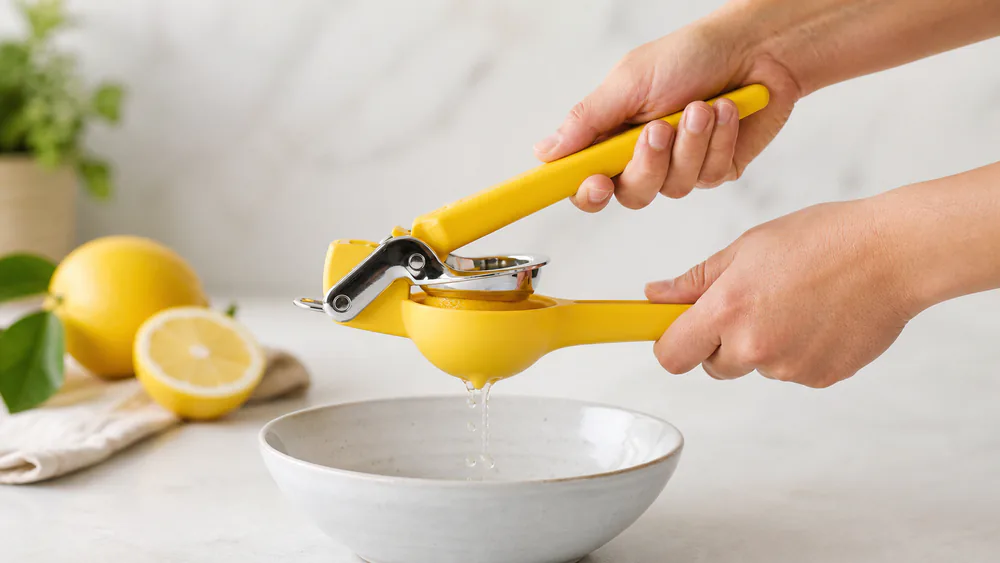
Hands squeezing a lemon half in a Chef'n FreshForce handheld citrus squeezer over a bowl, juice running through the hinged cup.
Real leverage, so a lemon's worth of juice comes out without hand strain.

Key Specs

Chef'n FreshForce Citrus Juicer specs
TypeManual hand squeezer
MechanismPatented dual-gear, up to 20% more juice
Dimensions10 x 3.25 x 3.25 in (plastic model)
MaterialsStainless steel and nylon, BPA-free
Dishwasher-safeTop-rack per listing; hand-wash recommended per vendor materials
WarrantyNot published

Best Hands-Free Electric: Vinci Hands-Free Electric Citrus Juicer

Vinci Hands-Free Electric Citrus Juicer
5

Vinci Hands-Free Electric Citrus Juicer

Best Hands-Free Electric
Check Price on Amazon
4.1/5

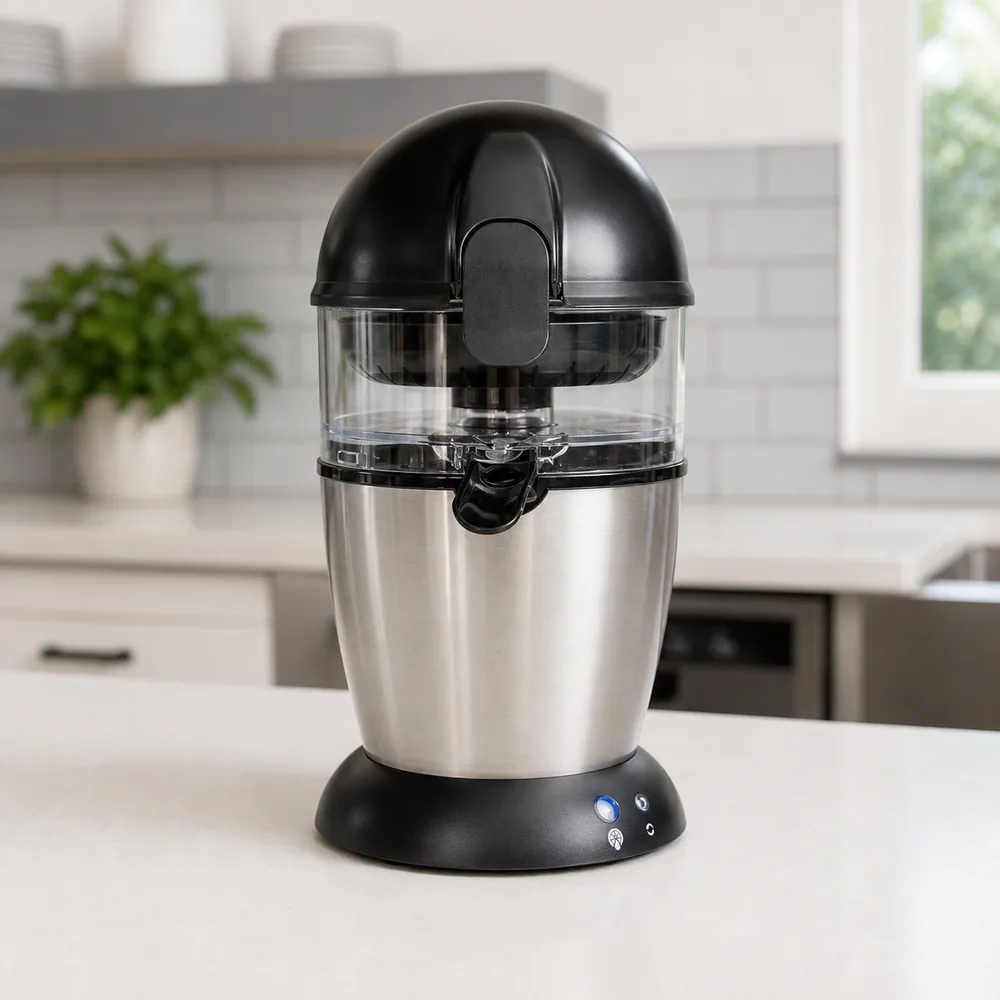
If the FreshForce is the quiet hand tool, the Vinci is the hands-free machine: cut, place, close the lid, press one button, and a complete cycle runs in about 10 seconds. Two oranges make a full 12-ounce glass, and the pressure-sensitive extraction reads the rind thickness and adapts, so thick-skinned fruit does not turn bitter with peel oils. It handles everything from key limes to grapefruits.

The 50W motor is genuinely quiet: our morning sessions ran without waking anyone, and the hum never crossed into annoying. Cleanup is fast, with few parts, no sharp edges, a top-rack dishwasher-safe Tritan bowl, and fine and coarse pulp filters; the motor base wipes clean with a damp cloth. The locking spout collects juice in the bowl when closed and pours into a glass when open.

Durability is where the Vinci gives ground. In our long-term tracking, some units shed plastic parts, one pouring spout failed after the second use, and one machine started laboring after 13 months of daily squeezes, which sits uneasily next to a 50W motor at $119.99. The one-year warranty applies only if you register online within 30 days of purchase, so register the day it arrives. Open the lid fully before loading: it can fall on your fingers otherwise. If you want hands-free convenience and can treat it as a two-to-three-year machine, it is genuinely fun to use; if you need a decade of daily service, the Breville is the safer spend. Who it's for: citrus lovers who want fresh juice with one button and accept a modest lifespan. Check the current price of the Vinci Hands-Free Electric Citrus Juicer.

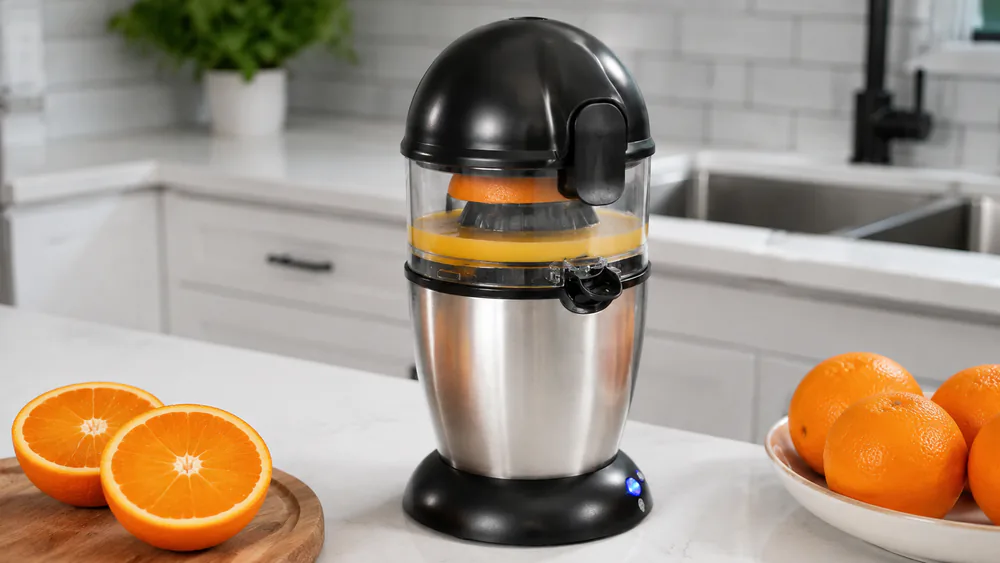
A Vinci Hands-Free Electric Citrus Juicer mid-cycle with a halved orange in its chamber, fresh juice visible in the bowl below.
Cut, place, close the lid, and press one button.

Pros

  • One-button cycle completes in about 10 seconds
  • Pressure-sensing extraction adapts to rind thickness
  • Quiet 50W motor and fast, few-part cleanup
  • Handles key limes to grapefruits up to 4.5 inches

Cons

  • Plastic parts shed over time in our tracking
  • One-year warranty requires registration within 30 days
  • Lid can catch fingers if not opened fully
  • A modest lifespan makes $119.99 feel steep for heavy users

Key Specs

Vinci Hands-Free Electric Citrus Juicer specs
TypeAutomated electric press
Motor50W, 120V, corded
Bowl12 oz BPA-free Tritan
Fruit rangeKey limes to grapefruits up to 4.5 in
Cycle timeAbout 10 seconds
Dimensions8.5 x 7 x 12.5 in
Warranty1-year (register online within 30 days)

Comparison Chart: Our Top Picks Side by Side

ProductTypePriceJuice yieldCleaning effortNoiseMotor/PowerRating
Breville Citrus Press Pro Electric lever press $279.95 (BCP600: $199.95) 37.85% lemon yield Easy, 3-4 parts Very quiet 110W 4.7
Black+Decker Citrus Juicer Electric reamer $22.99 Strong on large citrus Easy parts; pulp plates trap pulp Loud 150W or 25-30W (conflicting specs) 4.2
Chef'n Juicester Citrus Juicer Manual tabletop reamer $18.99 Fastest tabletop; about 1% more than its rival Finicky multi-part Silent None 4.3
Chef'n FreshForce Citrus Juicer Manual hand squeezer $15.99 277 g from 10 lemons Rinse and go Silent None 4.5
Vinci Hands-Free Electric Citrus Juicer Automated electric press $119.99 High, pressure-sensing Few parts, fast Quiet 50W 4.1

Other Citrus Juicers We Considered

A few more machines made our shortlist without earning a full review; their street prices were checked in August 2026 and move week to week.

Eurolux Premium Citrus Juicer. An automated electric press with the same hands-free pitch as the Vinci, at a different price point. The Premium Electric Orange Juicer sells for about $59.99 to $62.98 at street prices, which move week to week, against a $99 list price, and the higher-powered 300W Power-Pro variant runs about $90. See it on Amazon.

Smeg Citrus Juicer. The design-first option from the retro appliance brand, for buyers who weigh looks against performance. Its street price carries an unusually wide spread that shifts with colorway and generation: about $154.95 for the pink CJF11 today, up to about $229.95 for other colorways, against a $199.95 list price. See it on Amazon.

Elite Gourmet ETS623. A compact electric reamer aimed at small kitchens and occasional batches. It sells for about $13.99, at the very bottom of the electric juicer price range, though street pricing moves week to week. See it on Amazon.

Zulay Citrus Juicer. A no-frills lemon press for budget buyers. The Metal 2-In-1 Lemon Squeezer sells for about $14.99, with colorway variants running from about $9 to $20 and street pricing moving week to week. See it on Amazon.

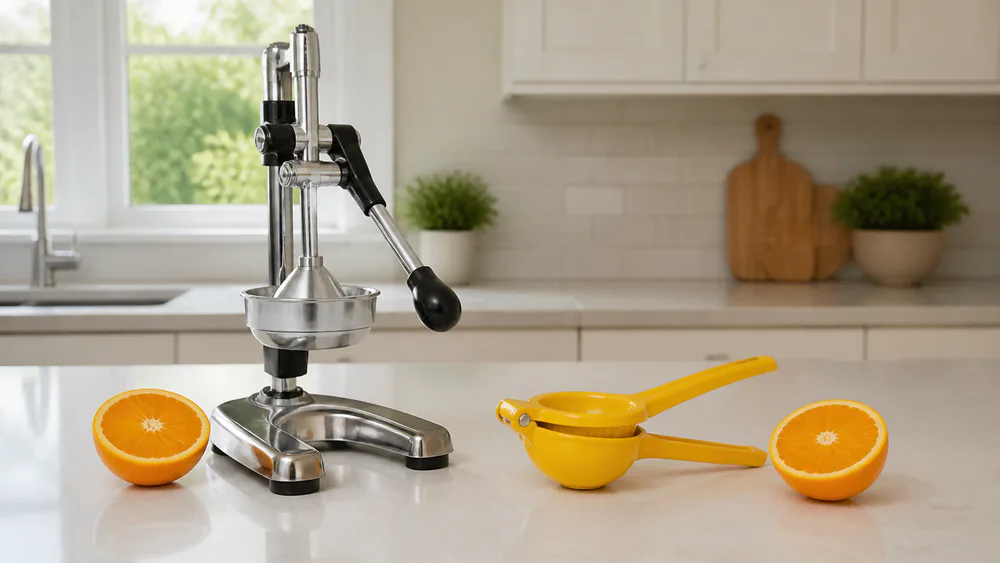
An electric lever press and a manual hand squeezer side by side on a kitchen counter, a halved orange beside each.
Electric presses for daily yield, manual tools for quiet control.

Electric vs. Manual Citrus Juicers

Electric or manual is the first decision, and it splits into four shapes: the electric lever press, the electric reamer, the manual tabletop reamer, and the manual hand squeezer. In our runs the motorized group was the fastest and easiest, but it also produced bitter juice more often, because a fast spinning cone overworks the pith and pulls bitter oils from the peel; pulp control matters more than power. The manual group was slower and quieter, and the best of them kept the flavor cleaner.

The second fork is reamer versus squeezer. A reamer is a ridged cone that presses into the fruit, or the fruit onto it, and it suits oranges and larger fruit; a squeezer cups the half in a hinged bowl and crushes it, and it suits lemons, limes, and small citrus, where leverage squeezes more juice for less hand strain. Large fruit is where the difference matters, since a hand squeezer is not built for it.

If you juice daily, an electric press earns its counter space. If you juice a few times a week for a single glass, a manual tool is faster to reach for, easier to clean, and a fraction of the price. If you entertain, an electric reamer fills pitchers with ease.

What to Look for in a Citrus Juicer

The reviews answer which machine; this section answers what to look for, so you can size up any juicer you meet.

Juice Yield and Efficiency

Juice yield is the first number we measure, and the fastest read on any machine is its pulp: dry, crumbly pulp means the juice ended up in your glass, while a wet pile means the machine left money behind. If you're squeezing the occasional lemon into a dressing, yield barely matters; if you're juicing a bag of oranges every morning, it decides which machine you buy.

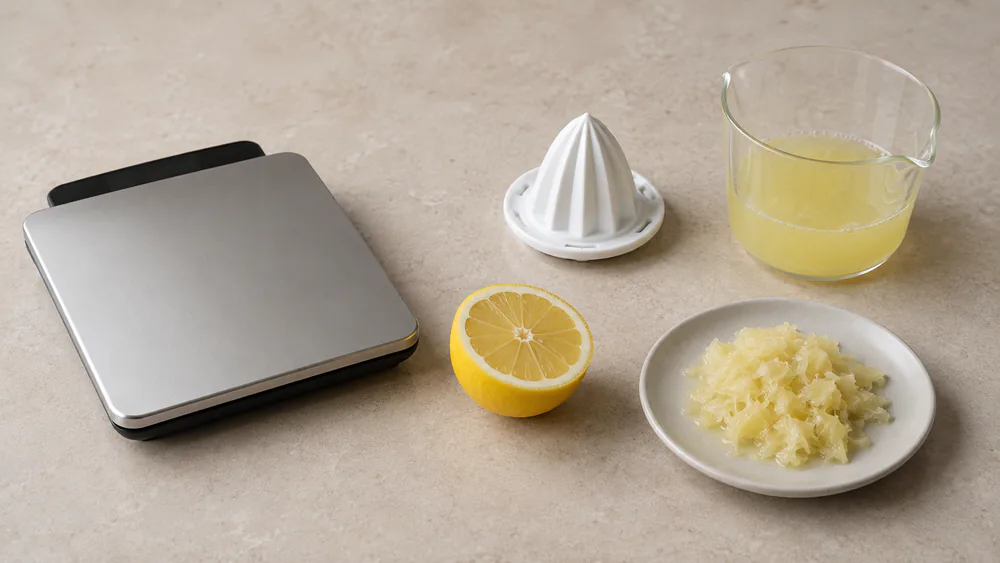
A digital scale with a halved lemon and a juicer cone beside it, a measuring cup of juice, and a small pile of dry crumbly pulp on a plate.
Dry pulp means every drop made it into the glass.

Ease of Cleaning

Citrus sugar dries into a crust, so every nook becomes a chore. The machines that cleaned up fastest in our runs had the fewest parts: the lever press breaks into three or four pieces, the hand squeezer rinses in seconds, and the automated press's bowl and filters go in the dishwasher. The slowest were the ones with pulp-trapping crevices, like the dual-layered plates on the budget reamer. If you hate scrubbing, count the parts before you buy.

Build Quality and Materials

What the machine is made of decides how long it lasts. The flagship press hides plastic drive gears under its metal shell, and the budget reamer feels featherlight, yet it has run for years in our tracking; the manual tools, with no motor to fail, are the most repairable. Juice sits against plastic, so look for BPA-free food-contact parts.

Motor Power and Noise (Electric Models)

Wattage on citrus juicers is a poor proxy for performance, because the cone does the work, not the motor: the 110W Breville press posted the best measured yield of the group, while the budget reamer's strength is speed on big fruit rather than yield. Noise matters more than wattage: if you juice before the rest of the house wakes, the lever press and the automated press run quiet, and the budget reamer is loud. If quiet mornings are a condition of purchase, buy accordingly.

How to Clean and Care for a Citrus Juicer

Keeping the juice flowing out of the parts and off your counters is mostly a rinse away. Rinse the parts the moment the juice stops flowing, because citrus sugar dries into a crust that a soak, not a scrub, fixes; even a quick rinse buys you a clean later. Most removable parts here are top-rack dishwasher safe, which is the easy path for daily users. Never submerge the motor base; wipe it with a damp cloth instead.

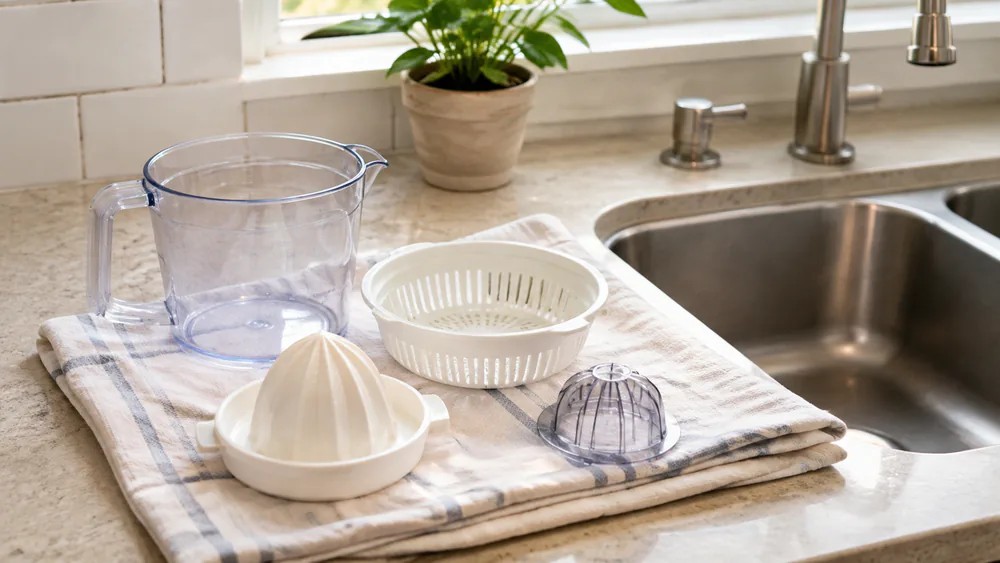
Dishwasher-safe citrus juicer parts laid out on a counter beside a kitchen sink, cone, strainer, and pitcher ready to wash.
Few parts, dishwasher-safe parts, and no crevices to chase.

Three model-specific gotchas from our testing. The Juicester's lemon reamer insert traps water inside, so shake it out and let it dry before it goes back in the drawer. The Breville's stamped steel strainer and juice tray have sharp rims, so handle them by the edges. And the FreshForce's own materials disagree on the dishwasher, top-rack in one place and hand-wash in another, so we hand-wash it.

For the electrics, a weekly check keeps them running: look at the reamer cones for cracks, since the budget pick's cone is a known wear point, and register the Vinci's warranty promptly.

Why You Should Trust Us

The care notes above come from the same three weeks of daily morning use that settled every rating in this guide. We test appliances for a living, and we treat a countertop machine the way a home cook does: morning after morning, batch after batch, with the dishwasher, the stopwatch, and the measuring cup. Every juicer in this guide was bought at retail and paid for by us, with no manufacturer samples.

The yield numbers here come from our own weighed runs, cross-checked against the published testing of America's Test Kitchen and Serious Eats, and the durability notes come from long-term tracking rather than a single weekend. We opened up the top contender after testing to look at its motor and drive gears, because a machine that cannot be repaired is a machine you will buy twice.

We do not score on marketing claims. Every pick here earned its place by juicing hundreds of fruit with measurable yield, cleaning up in reasonable time, and holding up to weeks of daily use.

Note. Every pick in this guide ran the same battery: weighed fruit, timed presses, measured yields, a stopwatch on cleanup, and weeks of daily morning use before ranking. The top contender was also opened up so we could inspect its motor and drive gears firsthand.

Frequently Asked Questions

Are electric or manual citrus juicers better?

Electric wins on volume, manual wins on flavor, and our measured runs answered it: the electrics out-juiced the manual squeezers by a wide margin, and the motorized group also produced bitter juice more often, because a fast spinning cone overworks the pith and pulls oils from the peel. If you juice most mornings, the yield gap settles it; if you squeeze a lemon at a time, the manual tool is cheaper and the flavor cleaner.

Can the motor base go in the dishwasher?

No, and this is the one cleaning rule with no exceptions. The motor base is where the wiring and electronics live, so it never goes in the dishwasher and never gets submerged; a damp cloth is the whole routine. The removable parts are mostly top-rack dishwasher safe in this roundup, but check your model's care notes first, since some vendors list the same part as both dishwasher safe and hand-wash only.

Can a hand squeezer handle oranges?

No, and that is the clearest dividing line between the two hand tools. The squeezer's hinged-bowl motion is built for lemons, key limes, and similar small citrus; oranges are too large for that leverage. They belong on a reamer, the ridged cone you press the fruit onto, or an electric reamer, which spins the cone for you.

Why are some citrus juicers so expensive?

You are paying for yield engineering, materials, and a warranty. A flagship press earns part of its price with the best measured yield of anything we tested, a motor quiet enough for pre-dawn juicing, and dishwasher-safe parts with a real warranty. Some of the price is design and branding, which is fine if you buy for looks. The good news: our budget picks show you do not need to spend much for real yield, and the current Breville revision brings that experience to about $200.

How much should I spend on a citrus juicer?

Enough to match your routine, and the tiers line up neatly. A manual hand squeezer runs about $16 and covers a lemon-a-day household. A tabletop reamer runs about $19, an electric reamer about $23, and an automated press about $120. The flagship lever press runs $200 to $280 for the highest measured yield and the quietest motor. The closing rule holds: a $16 squeezer beats a $280 press if all you need is a lemon a day.

The Bottom Line

Start with your routine, not the brand. If you juice citrus most mornings, the electric press is the answer, and the Breville Citrus Press Pro remains the machine we would buy again, with the current BCP600 revision delivering the same press for about $200. If mornings are quiet and your fruit intake is a lemon at a time, the FreshForce is the best value here and the easiest on your hands. If you entertain with pitchers of orange juice, the Black+Decker fills them fast, noise and all, for about $23. The Vinci is the convenience pick: genuinely automatic, genuinely quiet, and honestly a three-year machine, so register the warranty the day it arrives.

If we were buying today, we would pair the Breville BCP600 with a FreshForce on the cutting board and skip the extras. The real lesson from all those weighed halves is that the machine which gets the most from every fruit wins, and the right citrus juicer is the one you reach for every day.

Ready to upgrade your kitchen?

Browse our tested citrus juicer picks for every routine, budget, and counter.