As an Amazon Associate we earn from qualifying purchases. We may earn a commission from links on this page, at no extra cost to you. Learn more.
We judge every espresso machine the way we judge anything with a motor and a heating element: daily use first, then a hard look at how it is built and whether it will still work in two years. Espresso machines are hard to choose because the price range is huge, and a cheap machine and an expensive one can both make a decent shot on a good day. What separates them is consistency, steam power, and how long they last. Our quick answer is the Breville Barista Express for most people, and the seven other picks below cover every budget and skill level.
We rank on the criteria that matter in a real kitchen: shot quality, steam power, warm-up, and upkeep.
Our Top Picks at a Glance
Here is the short version, ranked by the job each machine does best. Check the current price before you buy.
We score each machine on the things that matter at 7 a.m. in a real kitchen. Those are shot quality, steam power, how long it takes to be ready, how easy it is to clean, noise, and whether the build looks like it will last. Price and counter footprint come in as tie-breakers.
Warm-up is a scoring criterion in its own right, since that is where rated figures and real mornings part ways.
Warm-up time deserves a note, because it varies more than people expect. A machine with a rated heat-up of a few seconds can still need many minutes before the group head and chassis have heated through. We treat the rated figure as a best case and tell you what each machine needs for a good shot.
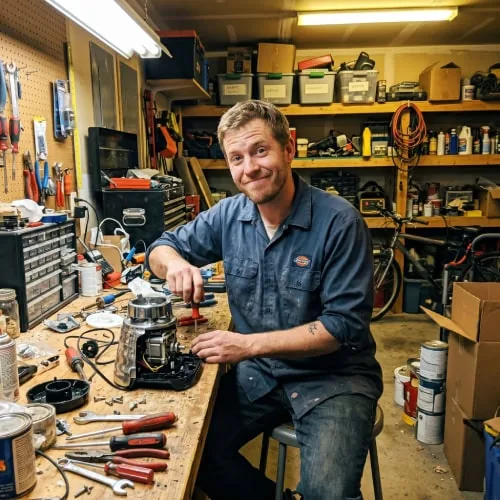
Build quality is where our background as appliance repair technicians shapes the scores. A machine earns a recommendation only if it makes good coffee and is built to last. That is why a few popular models rank lower than their fans might expect.
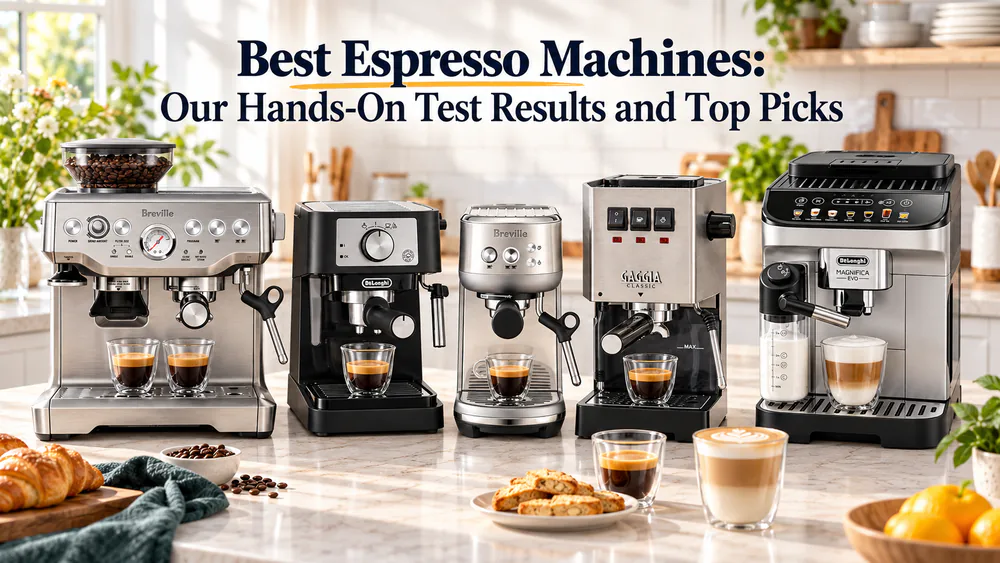
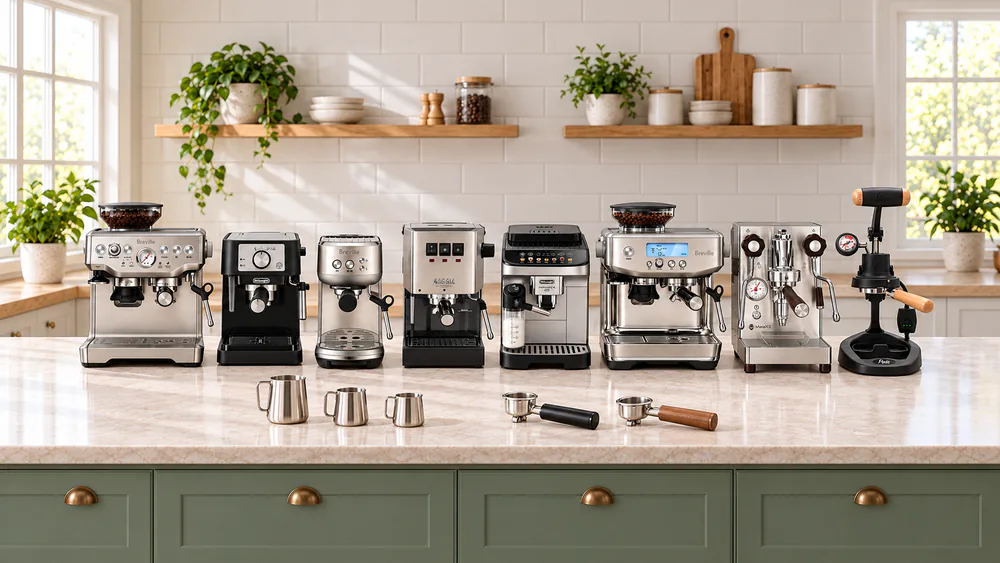
Machines from entry-level to heat exchanger, set up for side-by-side shots.
Note. Ratings below are our own scores out of 5.
The Reviews
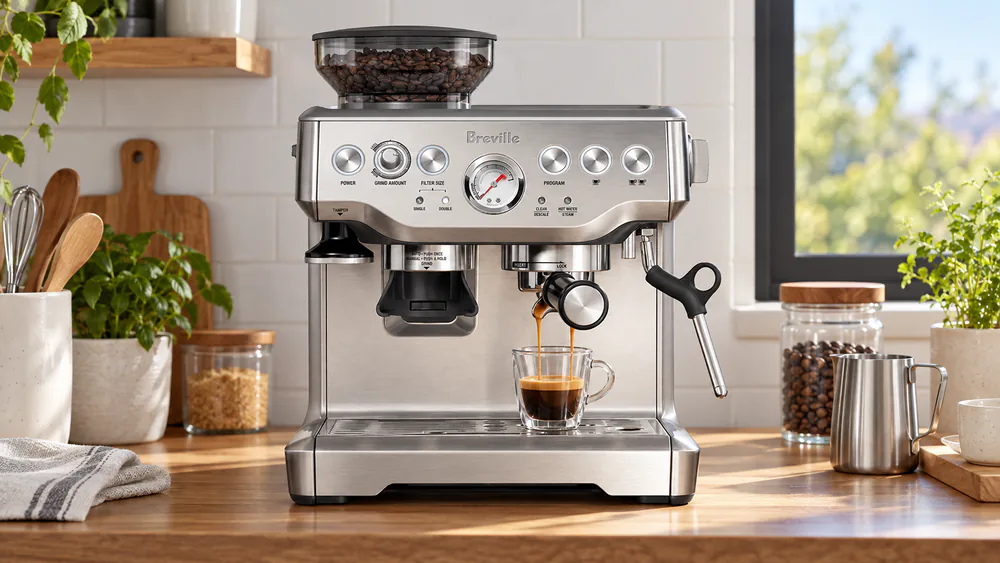
Best Espresso Machine Overall: Breville Barista Express
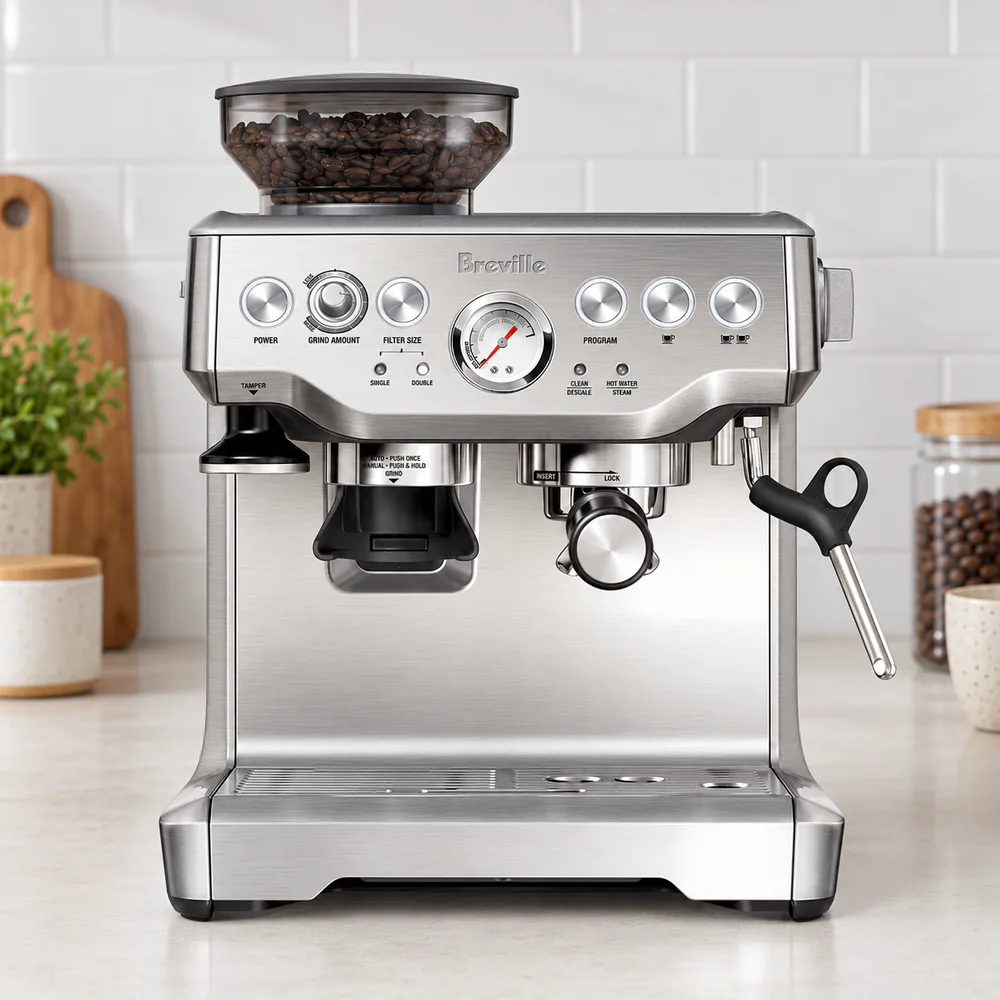
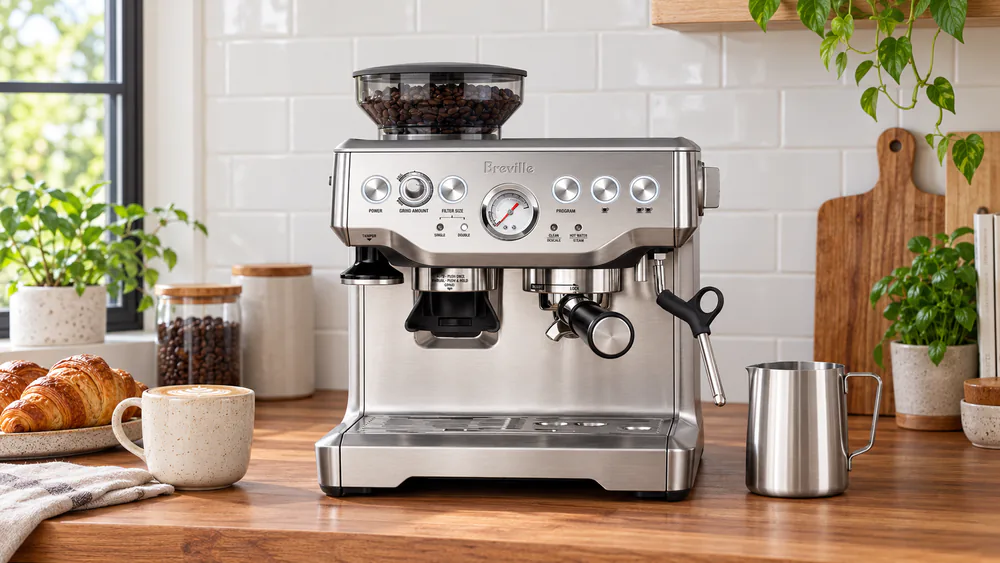
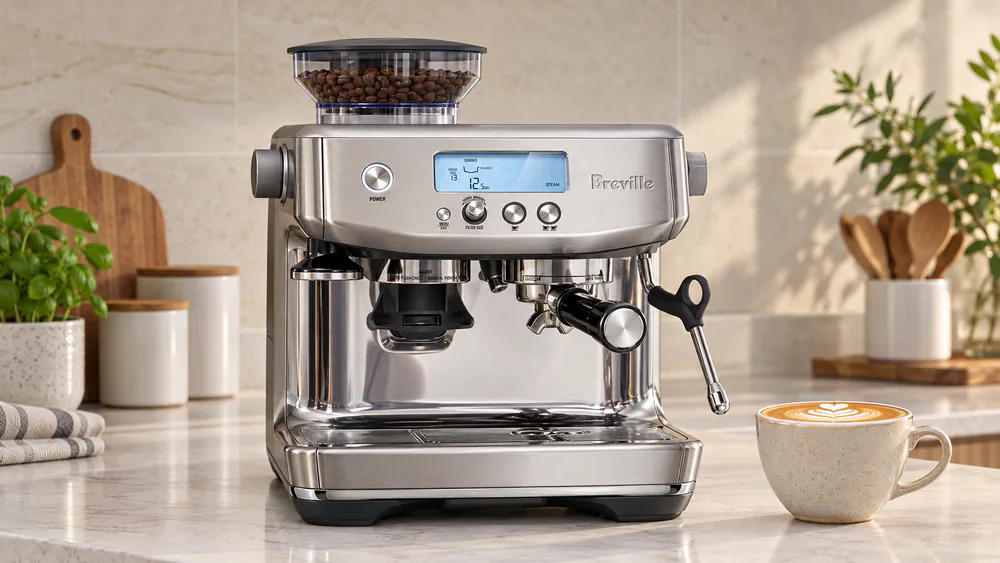
The Barista Express is the machine we would point most people toward. It grinds, doses, and brews in one footprint. It is also easy to set up, run, and clean, as a first serious espresso machine should be.
Built-in conical burr grinder with 16 grind settings
Thermocoil heating with PID temperature control
15-bar pump with low-pressure pre-infusion, then 9-bar extraction
Manual steam wand for hand-textured milk
Razor dose trimming tool, integrated tamper, milk jug, and water filter included
Specifications
Power
1600W
Water tank
67 oz
Bean hopper
1/2 lb
Portafilter
54mm
Dimensions
15.9 x 13.1 x 12.4 in
Warranty
1 Year limited
Everything you need to start is in the box. The integrated grinder feeds the portafilter directly, the tamper clips to the machine, and the Razor tool trims the dose level. You do not need to buy a separate grinder, a scale, or a tamper on day one, and that matters when the alternative is spending more on gear before the first shot.
The heating system is the other reason this machine holds up well against rivals. Thermocoil heating with PID keeps brew temperature steadier than the cheapest thermoblock machines, and the 15-bar pump with pre-infusion ramps pressure up gently before settling at 9 bar for extraction. In plain terms, that gentle start helps the puck saturate evenly, which gives you fewer sour or thin shots while you are still learning.
In daily use, setup, operation, and cleaning are all easy. The part that keeps this machine running well is routine: wipe and purge the steam wand after every drink and keep up the cleaning cycles. Skipped maintenance shows up fast. Regular care is what keeps it running.
The steam wand is manual, so you will need a few tries to get silky microfoam. We think that is a feature rather than a flaw, because it teaches you the skill behind latte art. The 67 oz tank is generous and rarely needs a refill midweek.
Now the honest part. The grinder is the weak point of this design, and it can quit. Some units fail early, and long daily use has ended with the volumetric pours no longer cutting off on their own, or with an overheated solenoid and a burning smell. Those are the problems we would watch for, and they are why this machine scores 4.6 rather than higher. The 1 year limited warranty is short for a machine at this price, so register it when it arrives.
For a mid-priced machine, it is the best balance of quality, convenience, and learning room that we found.
Pros and Cons
Pros
Grinder, tamper, and milk jug included, so nothing else to buy first
PID heating and pre-infusion give steady, forgiving shots
Easy to set up, run, and clean
Large 67 oz tank
Cons
The grinder is the weak point and some units fail early
Manual steam wand takes practice
Only a 1 year limited warranty
Who It's For
Pick the Barista Express if you want one machine that goes from whole beans to a finished latte and you are willing to learn the milk steaming. Skip it if you have a very small counter (see the Bambino below) or want one-touch drinks (see the Magnifica Evo).
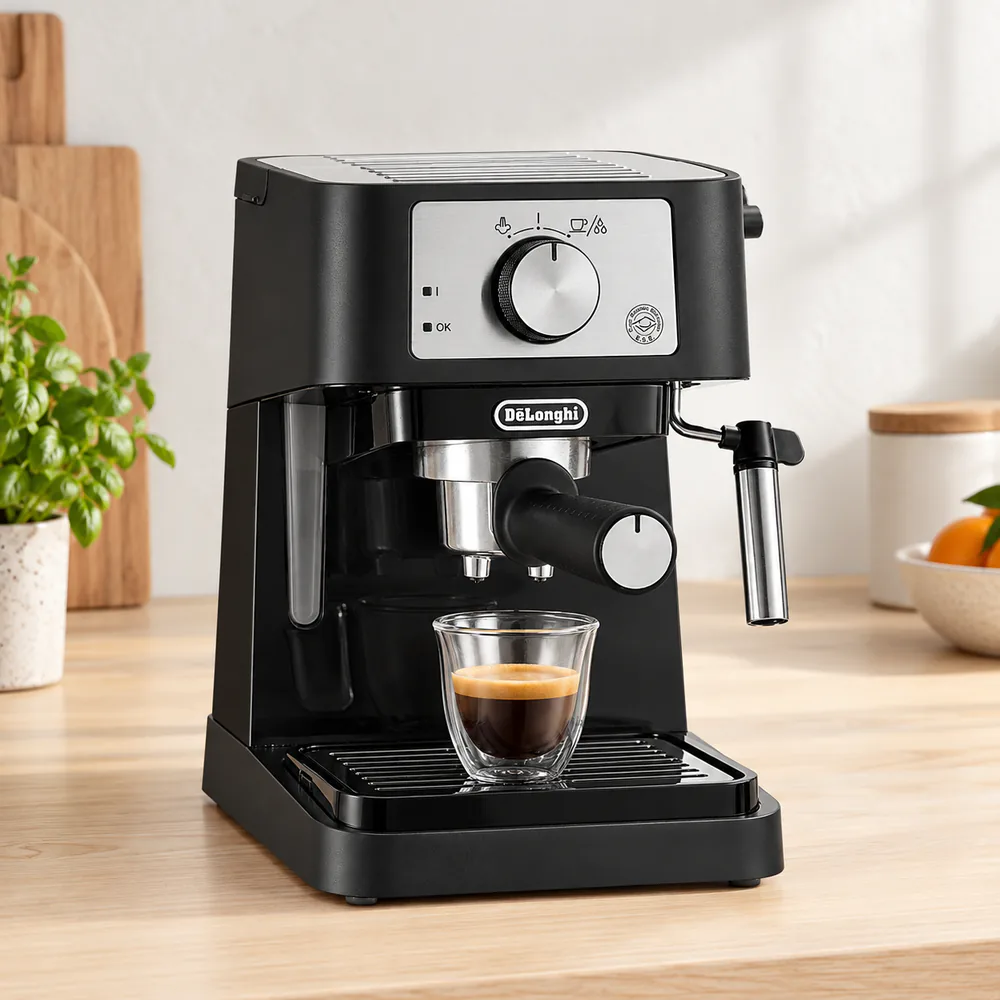
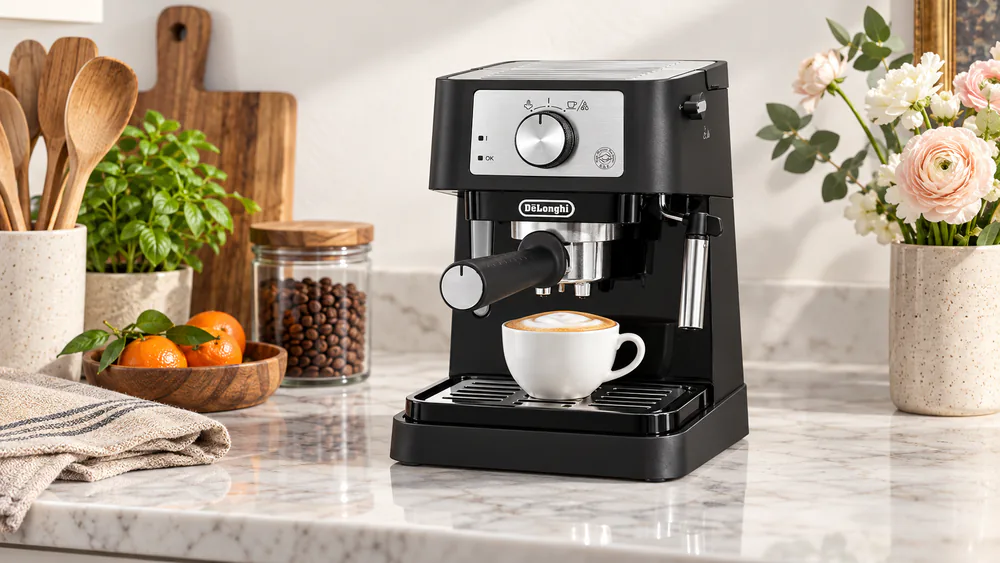
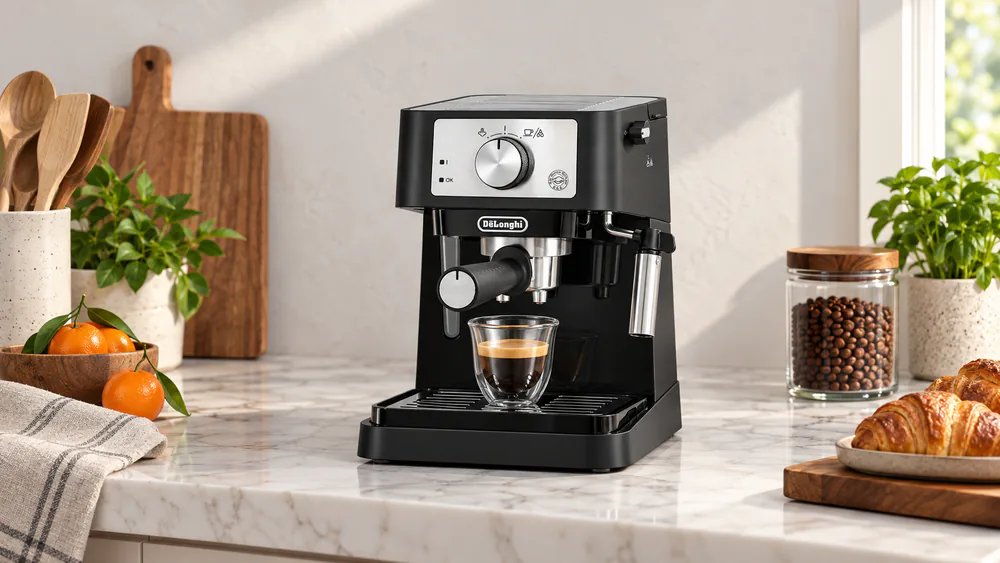
The Stilosa is the machine to buy when your budget is tight and you want to find out whether you actually like making espresso. It is simple to use, simple to clean, and the shots and cappuccinos are good for the price.
15 bar pump
Stainless steel boiler
Manual steam wand for cappuccinos and lattes
Portafilter, measuring scoop with tamper, single and double filters included
Two-level cup holder for espresso cups or taller mugs
Specifications
Pump
15 bar
Boiler
Stainless steel
Steam wand
Manual
Grinder
None
At this price you get what the box shows. There is a portafilter, a plastic scoop that doubles as a tamper, single and double filter baskets, and a two-level cup holder. There is no grinder, so you need freshly ground coffee from somewhere, and a grinder is the first upgrade we would make. For a pairing idea, see our guide to the best manual coffee grinders.
Where the Stilosa shows its price is consistency. Brew temperature is inconsistent, with some shots coming out hot enough and some not. If you notice sour shots, that is usually the explanation, and running a little hot water through the portafilter before you brew can help a bit. The steam wand also drips, water leaks can show up around the machine, and some units break within a year.
None of that makes it a bad buy. It makes it a low-cost trial. If you pull shots every morning for a few months and love it, you will be ready for a Gaggia or a Breville. If the habit does not stick, you have lost the price of a few restaurant dinners rather than the price of a premium machine.
We rate it 3.8 because the value is real and the build is not. Buy it knowing it is the starting point, not the end of the road.
Pros and Cons
Pros
Lowest price of any real espresso machine here
Simple to use and easy to clean
Good shots and cappuccinos for the money
Manual steam wand teaches the milk skill
Cons
Brew temperature is inconsistent from shot to shot
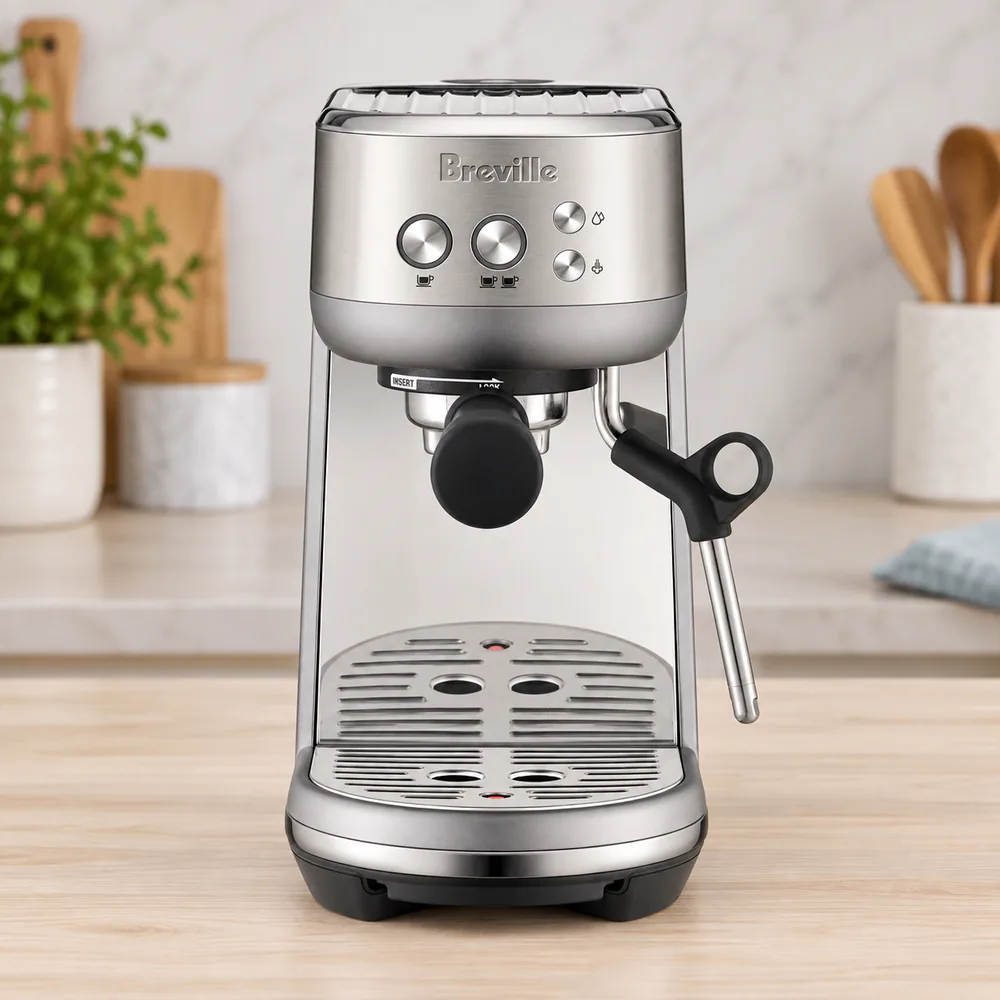
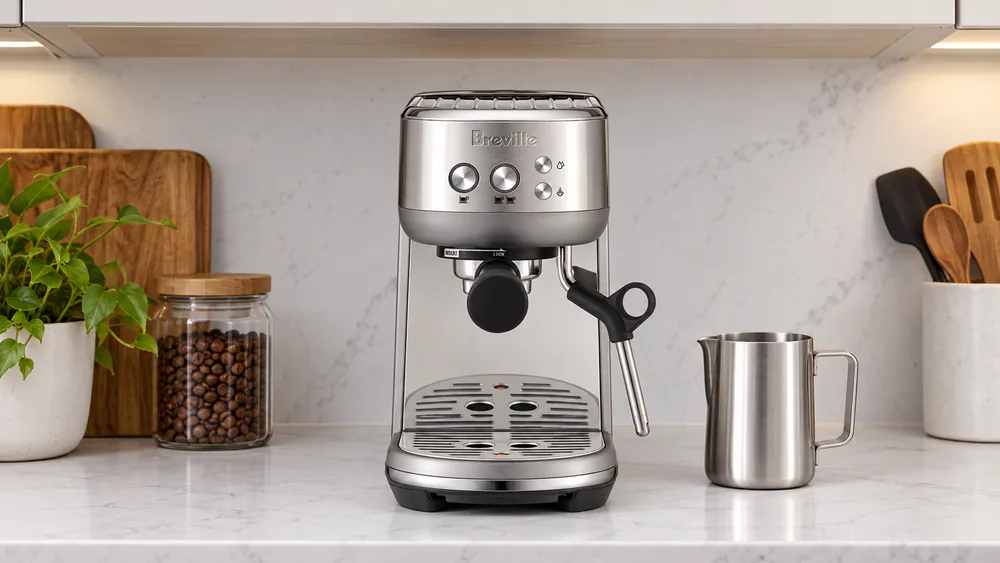
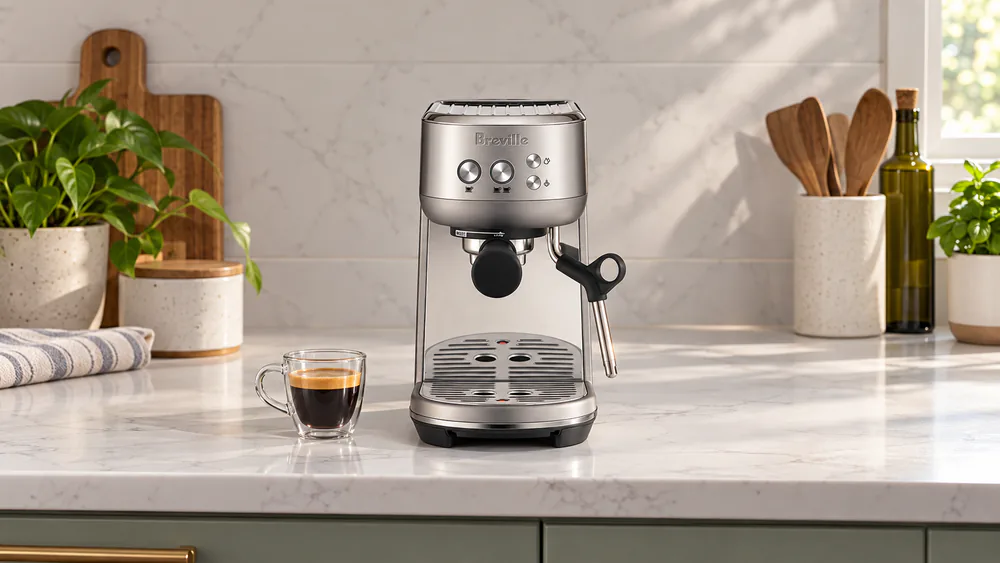
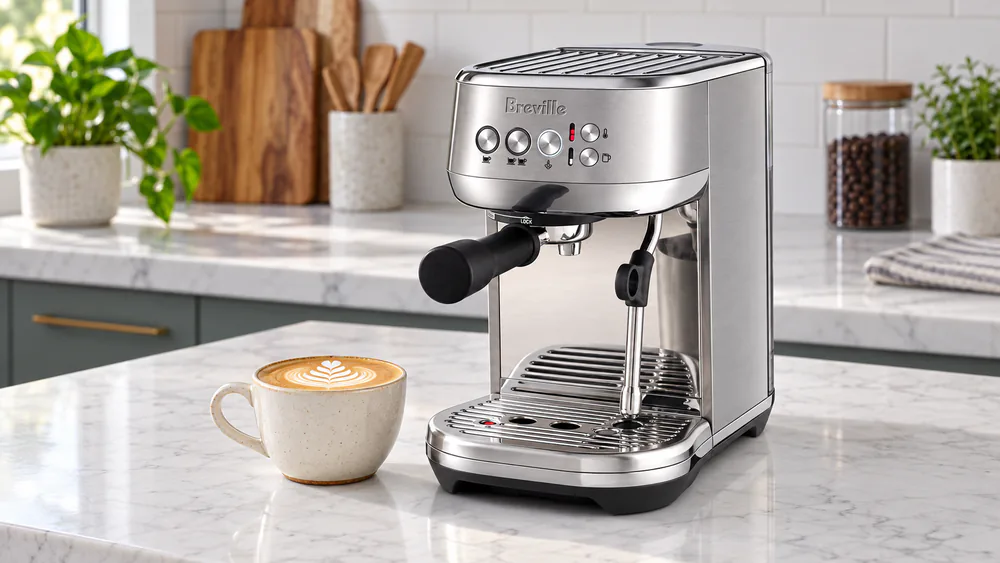
Where the Stilosa trades away consistency, the Bambino trades away only the grinder, and it is the best espresso machine for a small kitchen. It heats up fast, sets up in minutes, and its steam wand makes easy microfoam for latte art, all in a footprint of 11.9 inches wide.
ThermoJet heater with PID temperature control
15-bar pump with low-pressure pre-infusion, 9-bar extraction
54mm portafilter with a 19 g dose
Steam wand that textures milk for latte art
Counter-friendly 11.9 inch width
Specifications
Power
1560W
Portafilter
54mm
Dimensions
11.9 x 6.1 x 13.5 in
Warranty
1 Year limited
Compact does not have to mean compromised. The counter footprint is small enough for a compact kitchen, and unboxing and the first shot are low-stress for a first machine. The learning curve is short, and the machine is fairly quiet for an espresso machine.
Breville rates the ThermoJet heater at about 3 seconds to extraction temperature. We treat that as the heater's best case. The time to a ready shot, with a warmed cup and portafilter, is longer than that figure. Even so, it is far quicker than the old boiler machines that need a long wait.
If you want automatic milk, look at the Bambino Plus, which adds an automatic steam wand with adjustable temperature and texture. The Plus also has a removable tank of about 1.9 L, and it costs noticeably more than the base Bambino.
The extra cost that surprises people is accessories. The stock tamper, scale, and pitcher are basic, and better ones can cost almost as much again as the machine. Budget for that. Durability is also the recurring weak spot: some units arrive with missing or stuck parts or fail early, though the long-lived ones, still pulling several shots a day after three years with regular cleaning, show what good care can do.
There is no built-in grinder, so pair it with a good separate one. We rate it 4.4 for the size, speed, and ease, with a point off for the reliability question.
Pros and Cons
Pros
Very small footprint, only 11.9 inches wide
Fast heat-up and quick setup
Steam wand makes easy microfoam for latte art
Fairly quiet for an espresso machine
Cons
No grinder
Stock accessories are basic and upgrades are costly
Some units fail early or arrive with stuck parts
Best Espresso Machine for Beginners: Gaggia Classic Evo Pro
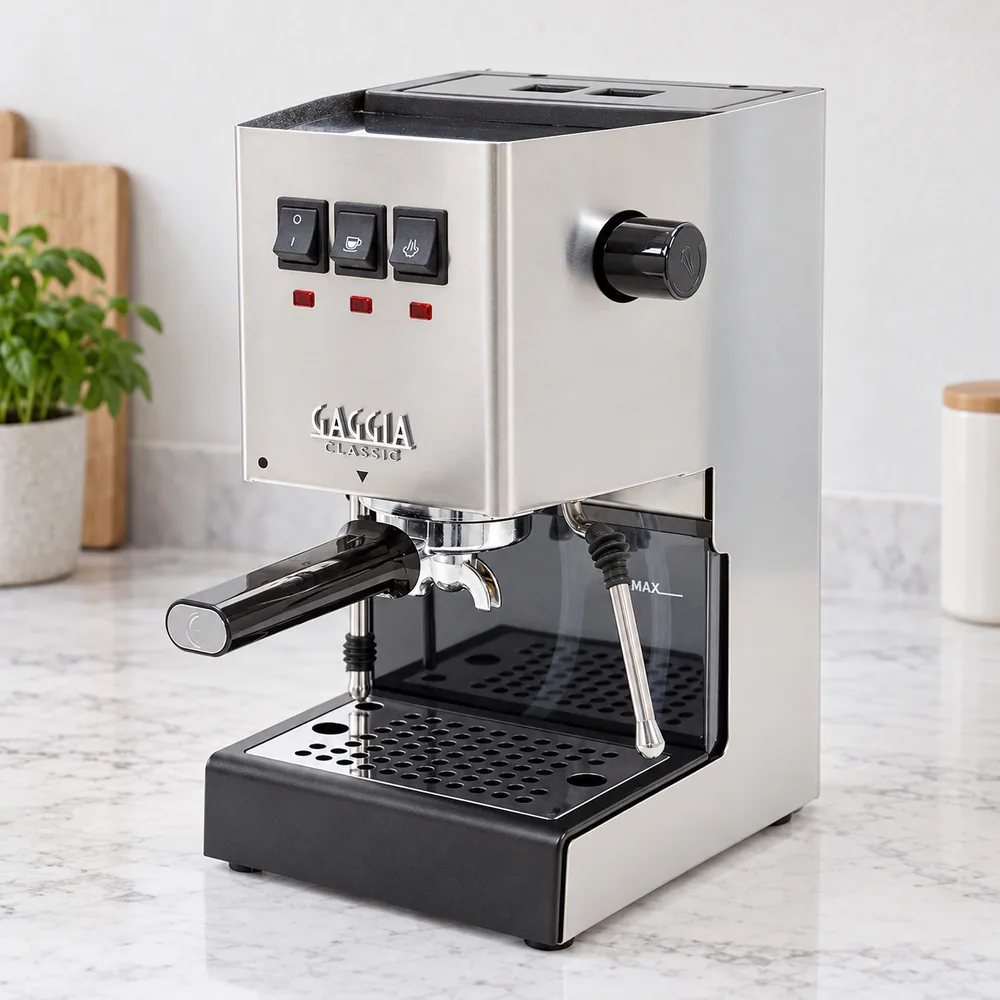
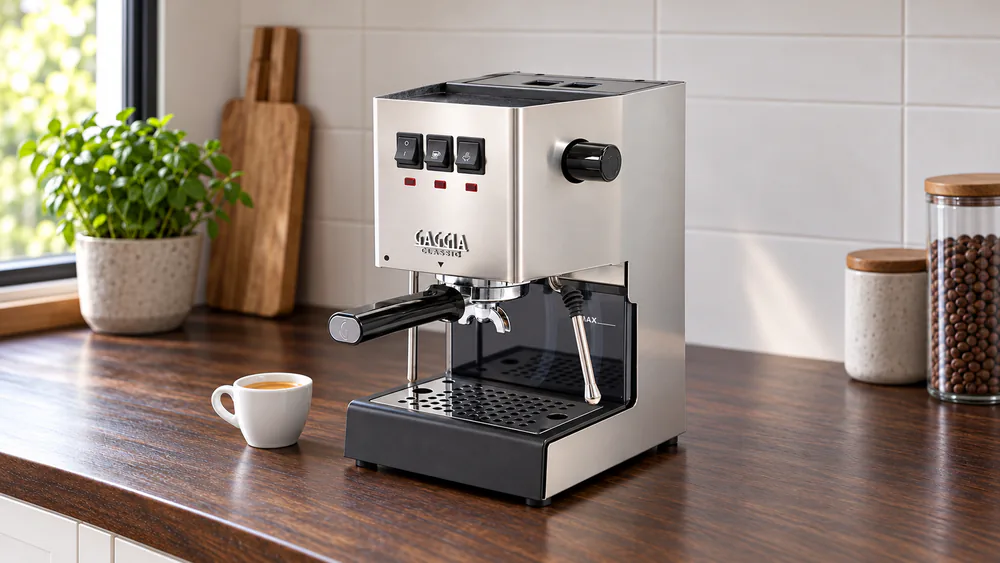
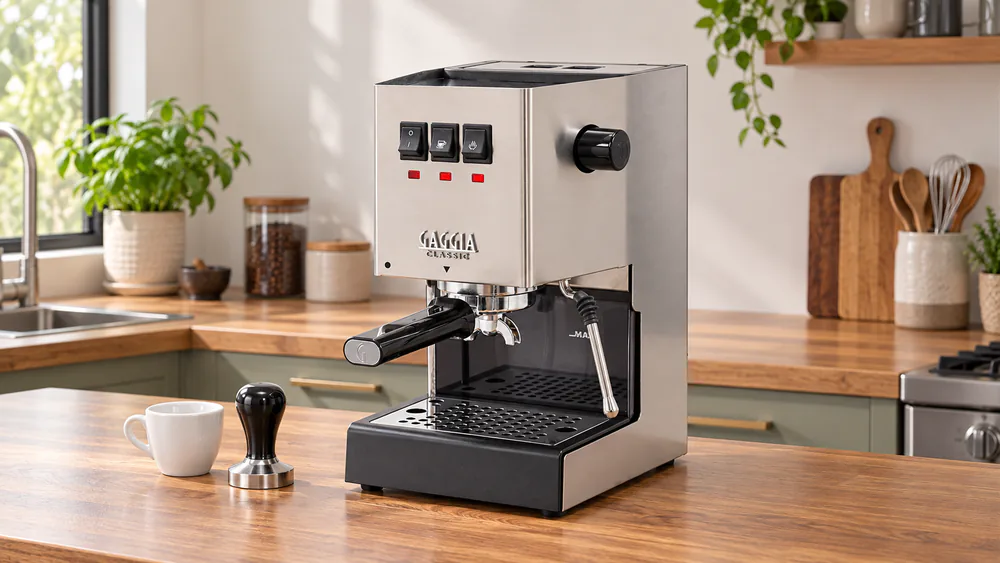
Step up from the Bambino's easy ride and the Gaggia Classic Evo Pro is where we send anyone who wants to learn real espresso technique rather than just press a button. It is a good first step up from pods or drip, with a commercial-style portafilter and a steam wand that makes proper milk.
9 bar extraction
58mm commercial-style portafilter
Single boiler, no PID
Three-way solenoid valve for a dry puck
Commercial-style steam wand, made in Italy
Specifications
Pressure
9 bar
Portafilter
58mm
Boiler
Single
This is a machine that rewards patience. A single boiler means a wait after you flip to steam, and getting consistent brew temperature without a PID takes practice. The boiler reaches brew temperature in roughly 45 seconds to 2 minutes, depending on how you measure, but the best shots come after letting the machine warm for 10 to 15 minutes so the group and chassis heat through. We would put it on when you wake up and make your coffee after you have had a shower.
The metal steam wand has strong output and textures milk well. It is the part of the machine that most surprises people used to cheaper models. Making back-to-back milk drinks is where the single boiler shows, because you wait for the boiler to cool back down to brew temperature between a latte and the next one.
It feels built to last, with a steel housing, though the portafilter can wobble when set in. Reliability is mixed. Some units last years, and others fail within a year. The 58mm portafilter also gives you access to a much larger range of baskets and accessories than the 54mm size on the Breville models.
There is no grinder, so budget for one. If you want a machine that teaches you temperature surfing, dosing, and tamping, there is no better teacher at this price. If you want convenience, buy the Barista Express instead.
A word on milk drinks, since that is where most buyers spend their time. The Gaggia's steam wand has real power, so a small pitcher of milk is textured quickly, which gives you less time for the milk to become overheated and flat. Pair that with a patient routine of brewing first and steaming second, and the single boiler stops feeling like a limitation. The wait between brewing and steaming gives them time to wipe the portafilter and set the cup down, so the routine ends up feeling natural rather than slow.
Pros and Cons
Pros
Strong steel housing and commercial-style 58mm portafilter
Powerful metal steam wand textures milk well
Teaches real espresso technique
Wide range of 58mm baskets and accessories
Cons
Single boiler means a wait between brewing and steaming
No PID, so temperature takes practice
Reliability is mixed, with some units failing within a year
Needs a separate grinder
Who It's For
Pick the Gaggia if you want to learn temperature surfing, dosing, and tamping and are happy to buy a separate grinder. Skip it if you want one-touch convenience.
Best Super-Automatic Espresso Machine: De'Longhi Magnifica Evo
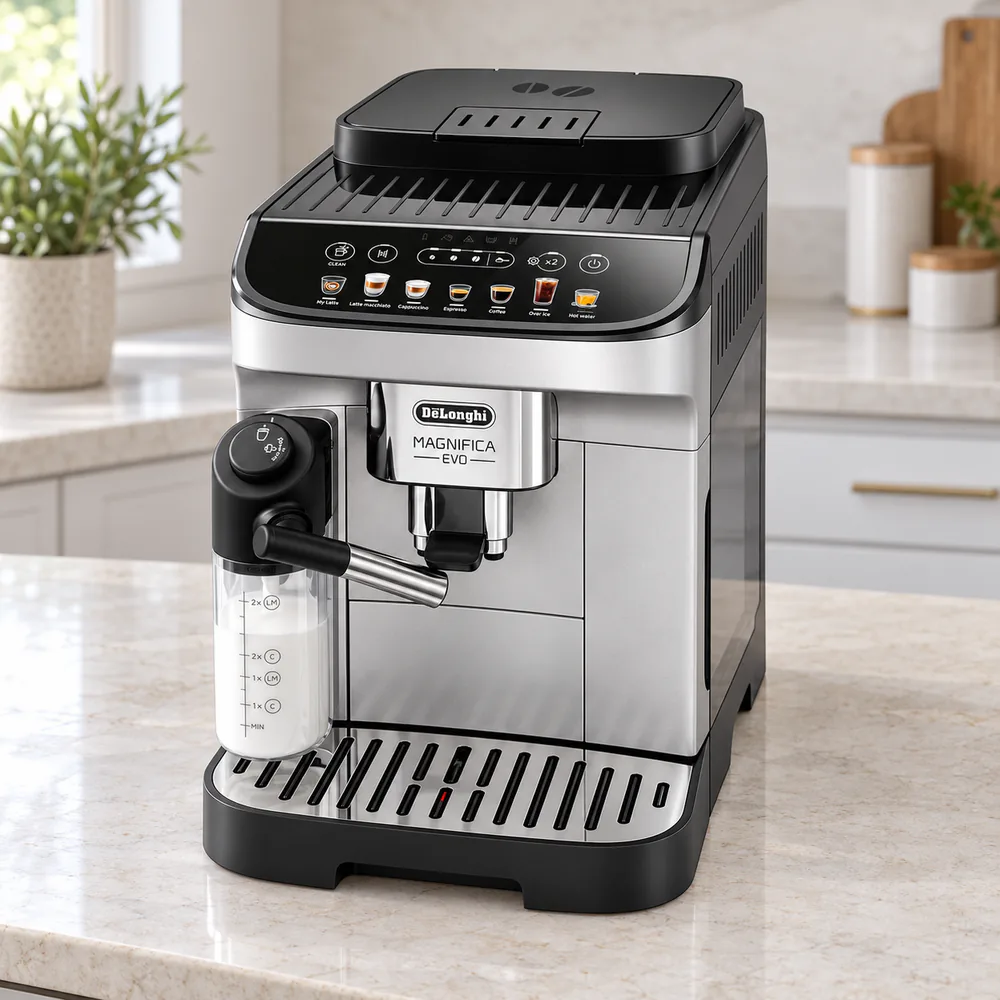
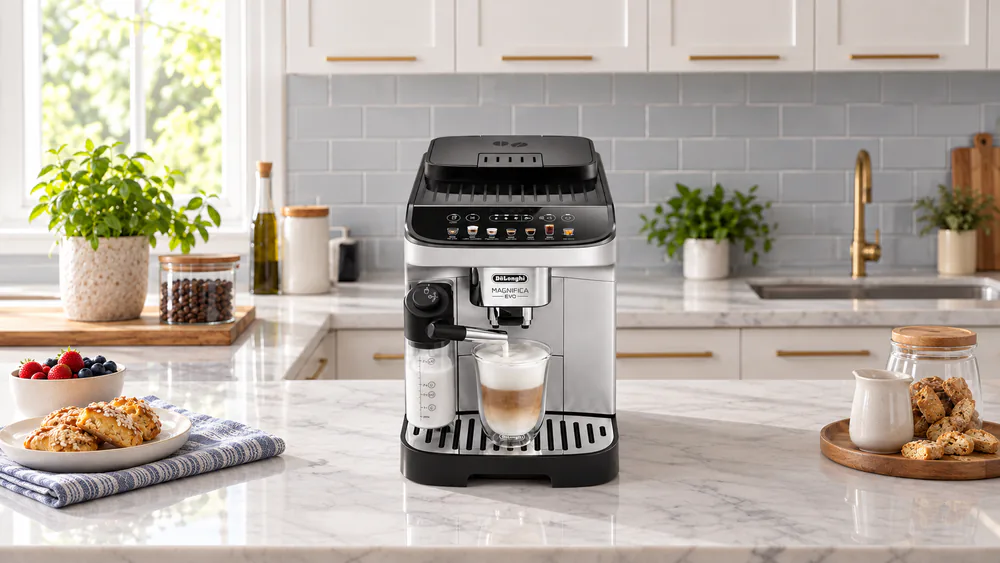
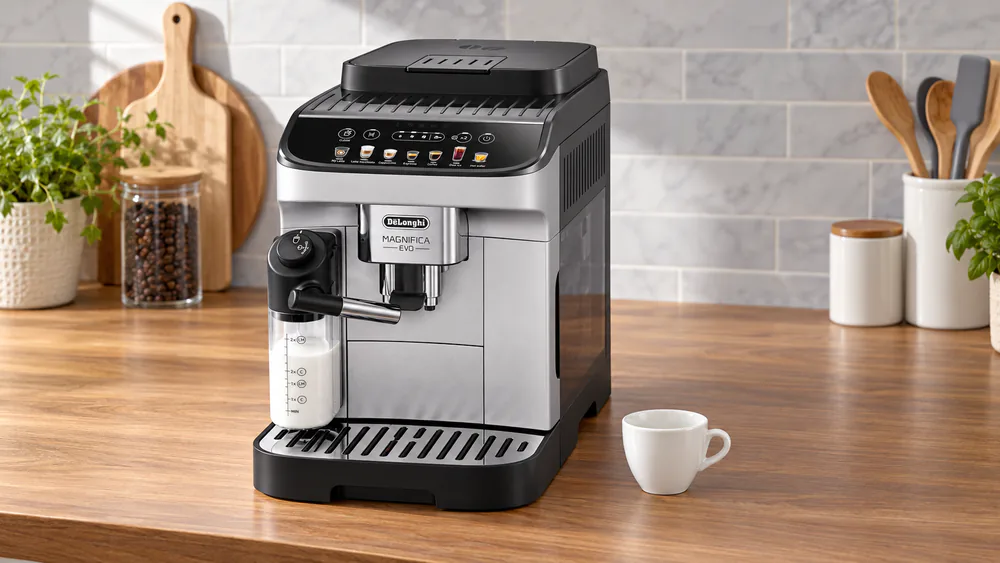
Unlike the Gaggia, which asks you to learn the craft, the Magnifica Evo asks nothing of you. If you want a latte at the press of a button and you do not want to learn tamping, the Magnifica Evo is the best super-automatic we looked at. It grinds, doses, brews, and froths the milk, and it saves your preferred drinks.
7 one-touch beverages, with My Latte saved recipes
Built-in conical burr grinder with 13 grind settings
LatteCrema automatic milk system
Auto-clean and automatic grounds disposal
Removable parts that are dishwasher-safe
Specifications
Beverages
7 one-touch
Grinder
13 settings, conical burr
Milk system
LatteCrema
The experience is entirely different from a semi-automatic. There is no portafilter and no puck to knock out. You press a button and the machine does the rest, which is why it suits busy households where everyone wants a different drink. The My Latte recipes let each person save their own settings.
The built-in grinder is loud but quick and consistent. If you make the first coffee of the day while someone else sleeps, you will notice it. The LatteCrema canister is dishwasher-safe and easy to clean, and the foam goes straight into the cup. It is less fluffy than what a carafe frother makes, but dairy and oat milk both froth well.
Reliability is mixed, with some machines holding up and others failing within two months. That is the main reason we hold the rating at 4.0. Pricing is also confusing, because the version with the automatic LatteCrema system costs more, while a cheaper version with a manual wand exists. Check which one you are buying. We could not confirm the tank capacity or the boiler type, so check the listing for those.
A super-automatic will not match the shot quality of a well-dialed semi-automatic with a good grinder. For the full comparison, see our FAQ below. But for convenience, nothing else here comes close.
Pros and Cons
Pros
One-touch drinks, with 7 beverages and saved recipes
Quick, consistent built-in grinder
Dishwasher-safe LatteCrema canister and removable parts
Foams both dairy and oat milk well
Cons
Grinder is loud
Foam is less fluffy than a carafe frother
Reliability is mixed, with some units failing early
Cannot match a dialed-in semi-automatic for shot quality
Best Espresso Machine with a Built-in Grinder: Breville Barista Pro
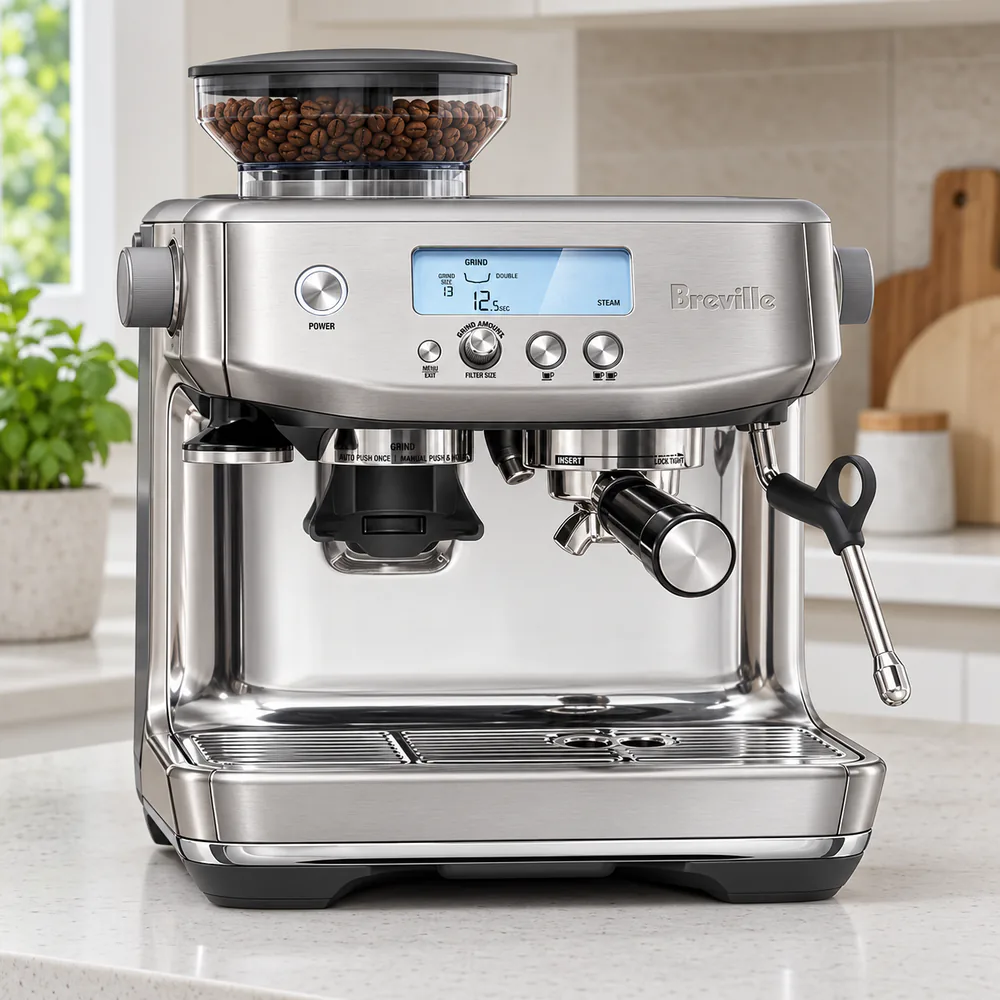
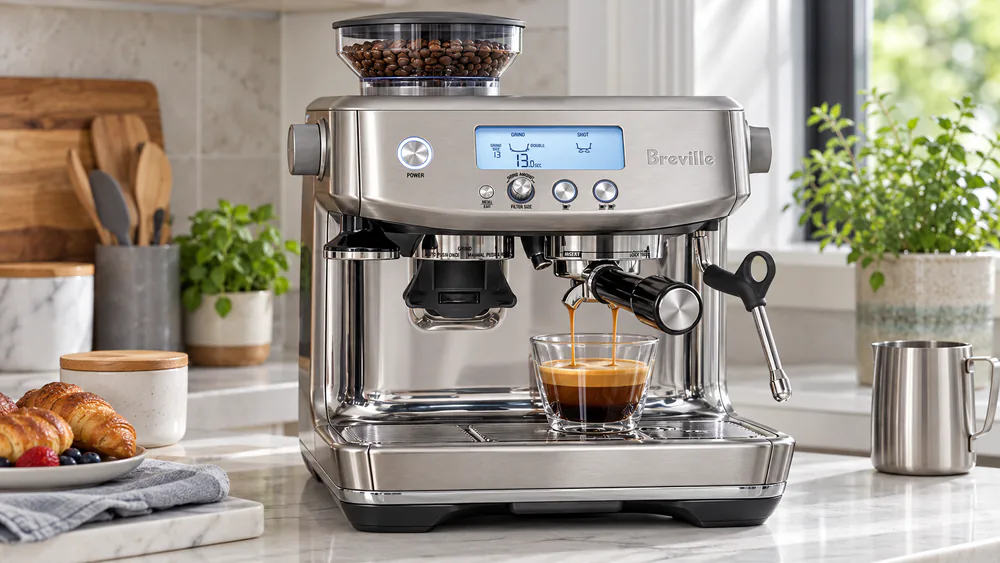
The Barista Pro keeps you in control of the steps the Magnifica Evo handles automatically. It is the machine we would choose if our budget allowed for an upgrade from the Barista Express. It heats up almost immediately, with hot water and steam on tap, and the steam wand froths wonderfully.
ThermoJet heating that is ready fast
LCD interface with 1 or 2 cup volumetric control
Built-in grinder with adjustable grind control
480 ml milk jug, water filter, and Razor dose tool
67 oz water tank and 1/2 lb bean hopper
Specifications
Power
1680W
Water tank
67 oz
Hopper
1/2 lb
Portafilter
54mm
Warranty
2 Year limited
Where the Barista Express uses a thermocoil, the Barista Pro uses a ThermoJet heater. In daily use that means the wait between waking the machine and making a drink is short, and you can move straight from shot to steam with little delay. That is a real advantage for anyone making milk drinks for more than one person.
Shots are excellent once dialed in, but we want to be honest about the word "once". The single-wall baskets need more fiddling than the double, and it is not magic. Dialing in takes time. A beginner can make a decent latte within minutes and there is room to grow from there. Among the machines we looked at, 2.5 years in it remained a good daily machine.
The LCD is the biggest practical upgrade over the Barista Express. It shows the grind setting and shot progress, and the volumetric control lets you program one and two cup volumes. The warranty is also better, at 2 years against 1.
The weak point is long-term reliability. A mechanical fault inside warranty came back a year after the repair, which is something to weigh against the better electronics. If you want a built-in grinder machine and the extra cost is not a problem, this is the one. If it is, buy the Barista Express and save the difference for coffee.
If you are choosing between the two Brevilles with built-in grinders, the question is really about how you use the machine. The Barista Express is the better value for one person making a drink a day. The Barista Pro earns its extra money when two or three people want milk drinks in a row, because the fast heat-up and ready steam keep the queue moving. The faster heat-up also means you can leave the machine off until you want a drink, which suits anyone who prefers not to leave an appliance warming on the counter.
Pros and Cons
Pros
Heats up almost immediately, with hot water and steam on tap
Steam wand froths wonderfully
LCD and programmable 1 or 2 cup volumes
2 year limited warranty and 67 oz tank
Cons
Dialing in takes time, and single-wall baskets are fiddly
Long-term reliability is the weak point
Costs more than the Barista Express
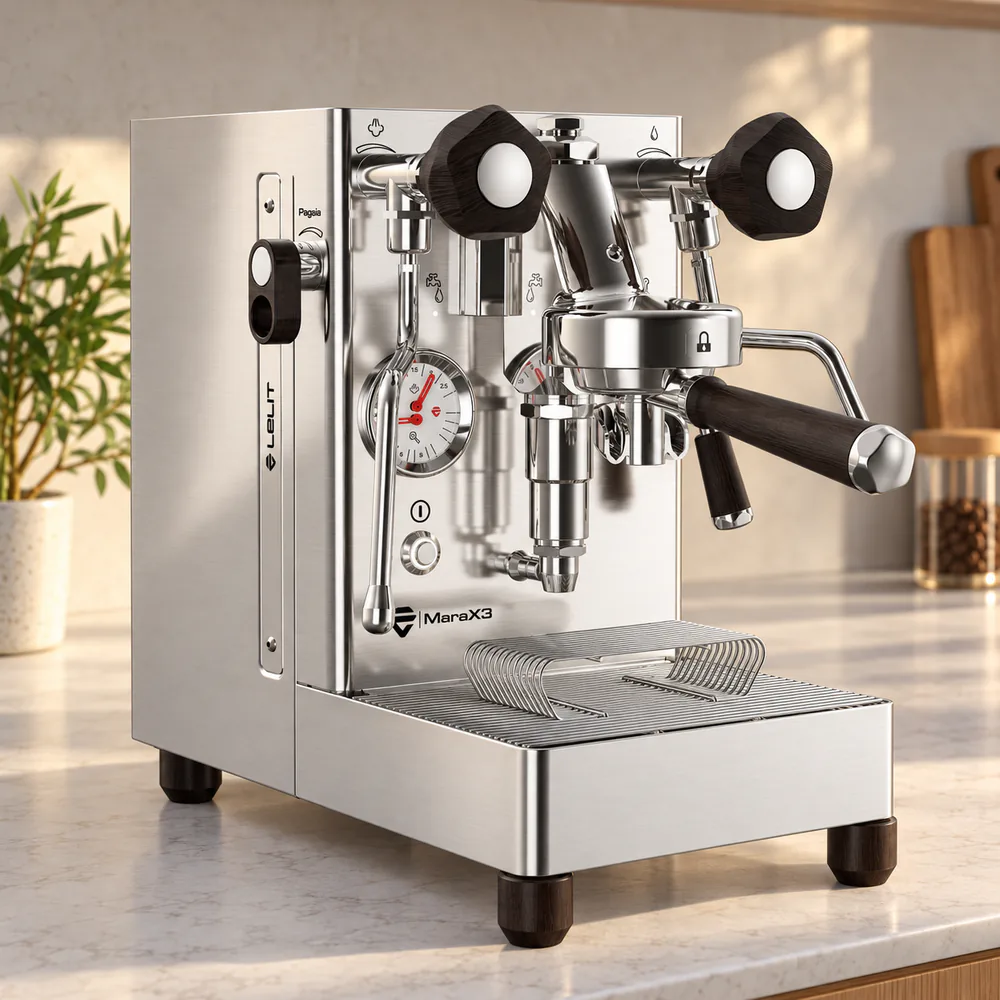
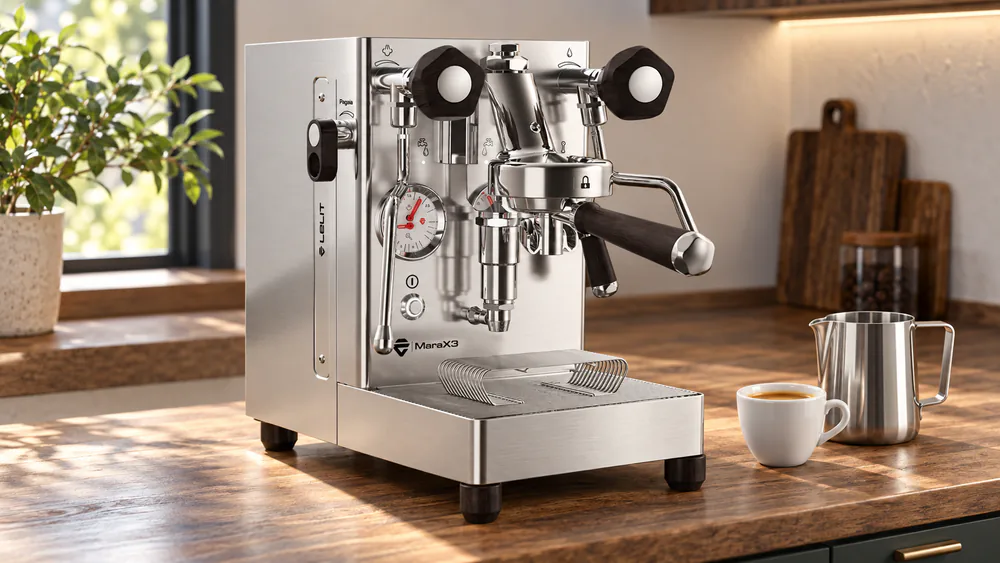
Best Premium Espresso Machine for Enthusiasts: Lelit MaraX
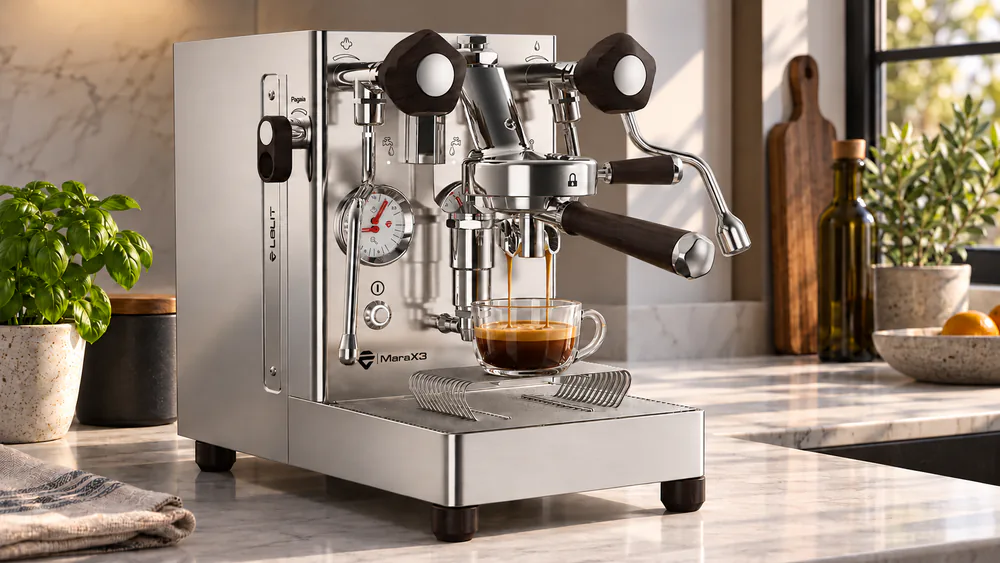
Priced far above the Breville, the MaraX is the machine for the enthusiast who has outgrown the entry-level Breville and Gaggia options. It brews and steams at the same time, which a single boiler cannot do, and it has the E61-style group that many café machines use.
1.8L stainless steel heat-exchanger boiler
Brew and steam at the same time
Temperature sensing at the boiler and group, with 3 adjustable temperature levels
E61-style 58mm group and portafilter
2.5L water reservoir, about 45 lb shipping weight
Specifications
Boiler
1.8L heat exchanger
Reservoir
2.5L
Portafilter
58mm
Warm-up
About 18 minutes
Grinder
None
The heat exchanger is the heart of the machine. Instead of waiting for a boiler to change temperature between brewing and steaming, you get both at once, which makes back-to-back milk drinks a calm affair. That is the one thing the Gaggia cannot do. The temperature sensing at the boiler and group, and the three adjustable temperature levels, let you tune the machine for the beans you are using.
You pay for that in time and space. The MaraX needs about 18 minutes to warm up fully, so it suits a morning routine where you switch it on early. It also weighs about 45 lb, so it wants a permanent spot on the counter. There is no grinder, and at this level you will want a good one. See our guide to the best manual coffee grinders as a starting point if you prefer hand grinding.
The MaraX rewards the wait. With no cooling flush needed, brew temperature stays about as steady as a larger double-boiler E61 machine, and the pre-infusion and pressure ramp let you grind finer without choking the shot. Steam is strong enough for good microfoam even in brew-priority mode, and steam-priority mode runs hotter for back-to-back milk drinks. Warm-up can run longer than 18 minutes on some units, so plan on switching it on early. Over a year of daily use, temperature stability can drift and shots become less consistent, so treat it as a machine that wants attention.
Pricing is the sticking point: it is the splurge of the group, and prices vary by retailer, so confirm you are getting the newer Mara X3 revision before you buy. The button below goes to an Amazon search, and specialty coffee retailers are another option.
At nearly three times the price of the Barista Express, this is not the right machine for everyone. It is the right machine for anyone who has already pulled shots for a year and knows why they want it.
Pros and Cons
Pros
Brews and steams at the same time
E61-style 58mm group and commercial-style hardware
Temperature sensing and three adjustable temperature levels
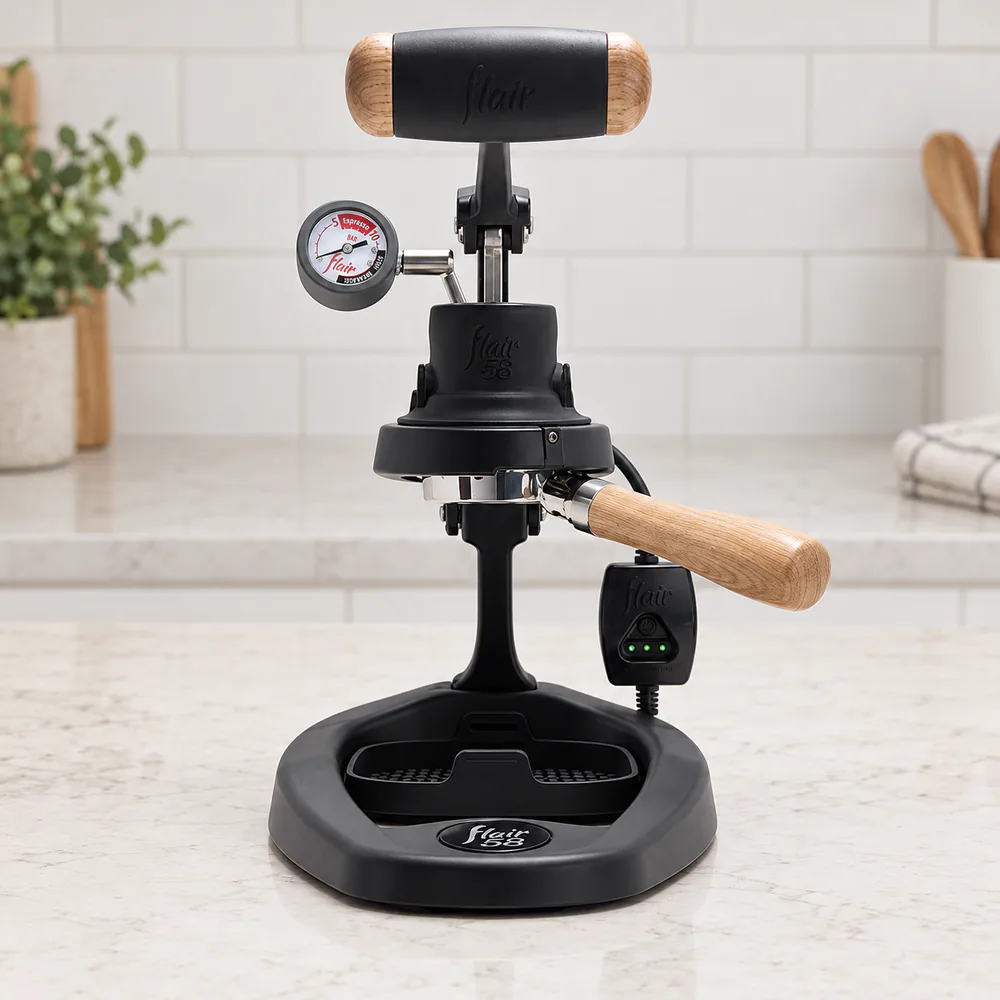
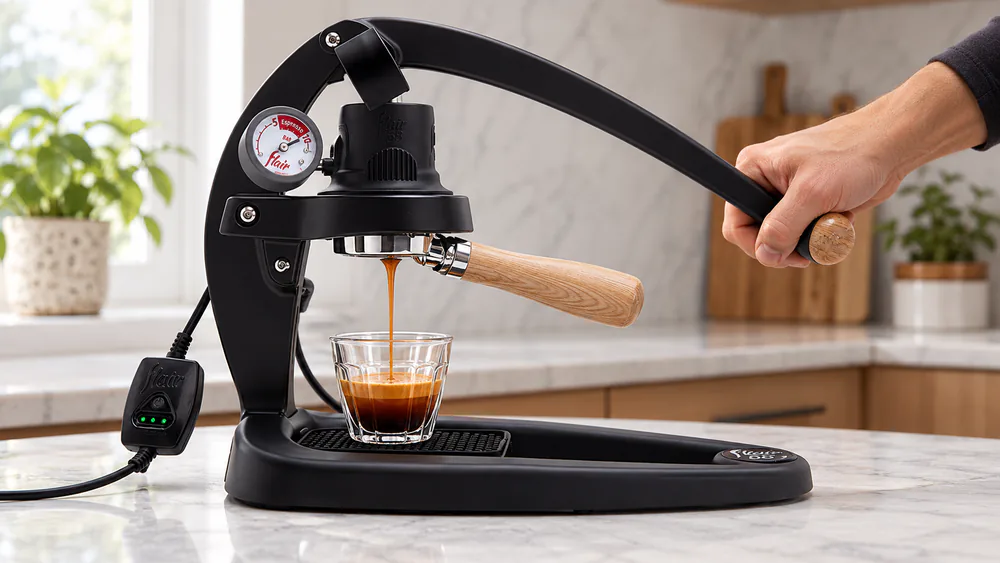
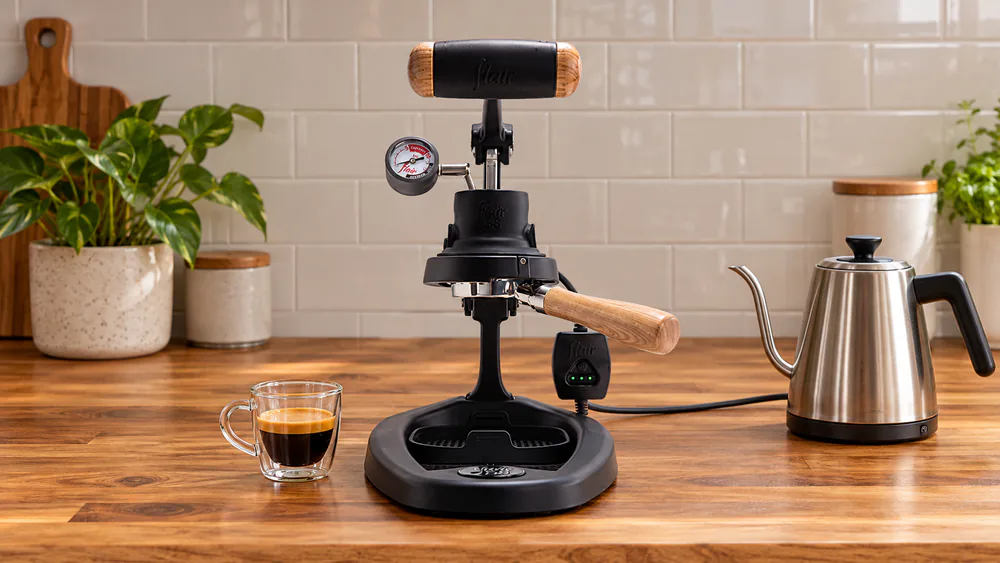
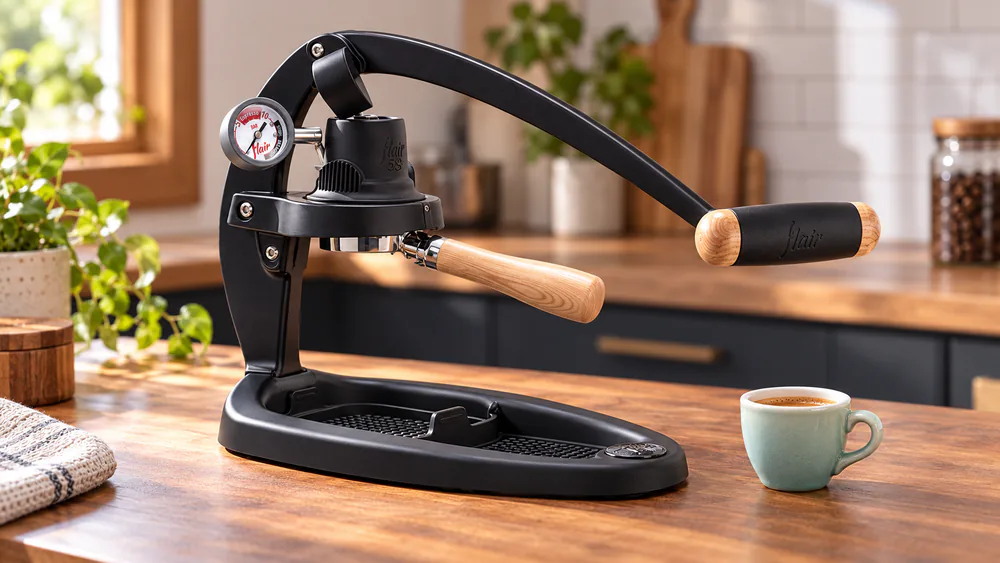
Where the MaraX asks for money and counter space, the Flair 58 asks for effort. It turns espresso into a hands-on craft. You heat water in a kettle, load a 58mm portafilter, and press the lever, and the result runs like a semi-automatic with a very stable, hard lever pressure.
Manual lever with no pump or steam wand
Electric preheat in under 5 minutes, with three settings (80, 85, 90 C)
58mm portafilter, 16 to 20 g dose, up to 55 ml yield
Die-cast aluminum frame with stainless brew parts
Up to 12 bar of pressure
Specifications
Portafilter
58mm
Preheat
Under 5 minutes
Weight
12 lb
Warranty
5-year
The build feels exceptional. The die-cast frame is solid, and under hard lever pressure the machine is very stable. The electric preheat takes less than 5 minutes, which is a real saving over waiting for a boiler machine to heat through.
There is a learning curve. The stock low-flow basket forgives coarser grinds, while the high-flow basket needs a capable grinder. A hand grinder is a fine match, and we cover options in our guide to the best manual coffee grinders. You also need a kettle and a separate way to steam milk, because there is no pump or steam wand.
Cleanup is quick: knock out the puck and rinse the brew group and portafilter. Keep a spare cup nearby for the water left in the chamber. Because there is no pump, no solenoid, and no electronics beyond the preheater, there is simply less that can break, and the 5-year warranty reflects that.
Pricing differs across the Flair 58, the 58x (cheaper), and the Plus 2 (pricier), and between retailers. Check which version you are buying. This is the pick for the person who enjoys the ritual more than the speed. If you want a quick latte before work, buy a different machine on this list.
Pros and Cons
Pros
Exceptional build, with a die-cast aluminum frame
Very stable under lever pressure
Quick electric preheat and fast cleanup
5-year warranty and 12 lb weight
Cons
Learning curve, and needs a capable grinder
No steam wand, so milk drinks need another tool
You need kettle-hot water and a spare cup
Price differs across versions and retailers
Espresso Machines Compared
Here is every pick side by side. We have left a cell as "not confirmed" where we could not verify a figure.
Spec
Barista Express
Stilosa
Bambino
Gaggia Classic Evo Pro
Magnifica Evo
Barista Pro
Lelit MaraX
Flair 58
Type
Semi-auto
Semi-auto
Semi-auto
Semi-auto
Super-automatic
Semi-auto
Semi-auto (heat exchanger)
Manual lever
Boiler
Thermocoil with PID
Stainless boiler
ThermoJet with PID
Single boiler
Thermoblock (not confirmed)
ThermoJet
1.8L heat exchanger
None (kettle water)
Built-in grinder
Yes (16 settings)
No
No
No
Yes (13 settings)
Yes
No
No
Steam wand
Manual
Manual
Manual (auto on Plus)
Manual, commercial
LatteCrema automatic
Manual
Yes
None
Tank
67 oz
Not confirmed
About 1.9L (Plus)
Not confirmed
Not confirmed
67 oz
2.5L
None
Our rating
4.6
3.8
4.4
4.3
4.0
4.5
4.7
4.2
If you read across the rows, a few patterns show up. Only three of the eight include a grinder, and those are also the easiest to live with if you are starting from whole beans. The two machines with the biggest steam capability, the Lelit MaraX and the Gaggia, both ask you to be a patient, hands-on user.
How to Choose an Espresso Machine
Start with how much of the process you want to control. If you like the idea of dialing in a grind, tamping, and steaming milk yourself, a semi-automatic is the right fit. If you want a drink with no learning curve, look at a super-automatic. Everything else, from boilers to PID, follows from that decision. If you are still unsure whether espresso is for you, our guide to espresso vs. drip coffee explains the difference in the cup, and our roundup of the best coffee makers covers the non-espresso options.
A manual machine, like the Flair 58, asks you to supply the pressure and the hot water. It is the most hands-on option and the cheapest to repair, since there is little to break. A semi-automatic has a pump and a heater, and you control the grind, dose, and tamp. Most of this list lives here.
A super-automatic does all of it for you, from grinding to frothing. Capsule machines are simpler still, using a sealed pod. They are convenient and clean, but they cannot match the flavor or the control of a machine that brews fresh grounds, and for that reason none are on this list. If you already own a capsule machine such as the one in our Ninja Luxe Café review, it is a fair choice for convenience, and you can always step up later.
Boilers: Single, Dual, Thermoblock
The boiler decides how quickly you move between brewing and steaming. A single boiler, like the one in the Gaggia, has to change temperature between the two jobs, so you wait. A heat exchanger, like the Lelit's, keeps brew and steam available at once. A dual boiler has a separate boiler for each, the most capable and most expensive setup, and the reason "dual boiler" appears at the top of every enthusiast wish list.
Thermoblock and thermocoil systems, found in the Breville and De'Longhi machines, heat water as it passes through. They warm up quickly and cost less, but temperature stability depends on the quality of the control system, which is why PID matters.
Pressure, PID, and Steam Wand
Pump pressure is a spec that sounds more important than it is. A machine advertises 15 bar, but good espresso is extracted at about 9 bar, and the better machines regulate to that. The Breville models do exactly this after a low-pressure pre-infusion.
PID is a controller that keeps water temperature steady within a degree or two. The Barista Express and Bambino have it, while the Gaggia does not, which is why temperature takes practice on the Gaggia.
The steam wand is where many people end up disappointed. A strong wand with a good tip makes silky microfoam, while a weak one makes bubbly froth. A manual wand takes practice but gives better results, and an automatic wand is easier but less flexible.
Tip. Wipe the steam wand and purge it right after every milk drink. Dried milk inside the wand is the quickest way to a clogged tip and a bad-tasting latte.
Built-in Grinder or Separate Grinder
A built-in grinder saves money and counter space, and it removes the first decision a beginner has to make. The trade-off is that if the grinder fails, you may be without a machine. A separate grinder costs more up front but can be replaced or upgraded on its own.
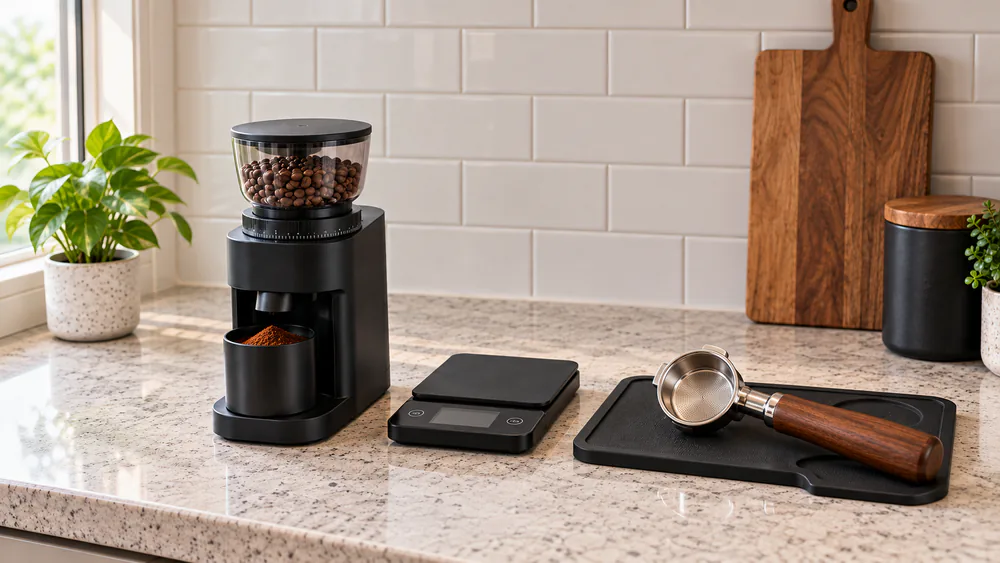
For the machines without a grinder, spend at least as much on the grinder as you can afford. It affects the cup more than the machine does.
A grinder, scale, and tamper turn a good machine into a great cup.
Accessories and Cleaning
Plan to buy a few extras. The stock tamper on most entry machines is basic, and better tampers, scales, and milk pitchers can cost almost as much again as the machine. A knock box, a cleaning brush, and descaling tablets are the basics.
Cleaning is what keeps a machine alive. Backflush on the schedule your machine recommends, descale when it asks, and purge the steam wand after every drink. Machines that get descaled and backflushed on schedule run without trouble, and that is the pattern we would copy.
The best machine is the one you will still clean and use six months from now.
Other Espresso Machines Worth Considering
Two more machines are worth a quick mention. They did not earn a full review slot, but they make sense for specific buyers.
9
Breville Bambino Plus
4.4
The Bambino with an automatic steam wand and a larger removable tank, for people who want hands-off milk.
It helps to match the machine to the routine rather than the spec sheet. If you make one or two drinks every morning and want to finish in ten minutes, the Barista Pro or the Magnifica Evo fits best. Both get you from cold start to cup quickly. If you make coffee slowly on weekends and treat it as a hobby, the Gaggia, the Lelit, or the Flair 58 will give you more to learn and more to enjoy.
Households that drink a lot of milk drinks should weigh the steam system above everything else. A single boiler such as the Gaggia's makes you wait between brewing and steaming, so a latte for each person at the table becomes a staggered affair. The Lelit solves this with its heat exchanger, and the Breville ThermoJet and thermocoil machines get close for a fraction of the price.
Small kitchens and shared apartments are a different case. Counter space, noise, and warm-up time matter more than top-end shot quality. The Bambino is the clear fit there, and it is fairly quiet for an espresso machine. The Magnifica Evo grinder, by contrast, is loud, so think about who is asleep when you brew.
Finally, think about repairs. Machines with fewer moving parts, like the Flair 58, have less to go wrong. Machines with built-in grinders pack more into one housing, so a single failure can take the whole machine out of service. None of this rules out a Breville or a De'Longhi, but it is worth knowing before you decide that a grinder-in-the-box is always the simpler choice.
Common Mistakes
The most common mistake is buying a great machine and a poor grinder. Stale or coarsely ground coffee will ruin shots on any machine in this guide. The second mistake is chasing bar pressure on the box. A 15 bar label is a pump rating, not a promise of better espresso.
The third is skipping maintenance. Machines die from scale and clogged steam wands far more often than they die from wear. Descale on schedule, backflush, and wipe the wand. The fourth is ignoring warm-up. Several of these machines make their best shots only after a longer warm-up than the spec sheet suggests, and the Gaggia and the Lelit are the clearest examples.
Espresso Machine FAQs
How much should I spend on an espresso machine?
Plan on a budget machine to start, with the Stilosa as the entry point, and a mid-priced machine you can grow with. A grinder and accessories are the costs most people forget.
Do I need a separate grinder?
Only if the machine lacks one. The Barista Express, Barista Pro, and Magnifica Evo include grinders; the Stilosa, Bambino, Gaggia, Lelit, and Flair 58 do not.
How often should I descale and clean it?
Backflush on the schedule in your manual and descale when the machine prompts you. The Barista Express and Barista Pro ship with a water filter, which is worth installing to slow scale buildup.
Is a super-automatic as good as a semi-automatic?
A super-automatic wins on convenience, while a dialed-in semi-automatic wins in the cup. If you want a decent drink with no learning curve, choose the Magnifica Evo.
How long does warm-up really take?
It depends on the machine. The Bambino's heater is rated at about 3 seconds, the Flair 58 preheats in under 5 minutes, the Gaggia gives its best shots after 10 to 15 minutes, and the MaraX needs about 18.
Is the Bambino Plus worth the premium?
It adds an automatic steam wand with adjustable temperature and texture, plus a removable tank of about 1.9 L, for noticeably more than the base Bambino. If you want hands-off milk, yes; if you enjoy steaming by hand, save the money.
Final Verdict
If you want one machine, buy the Breville Barista Express. If your budget is tight, start with the Stilosa; if your counter is tiny, the Bambino. Pay for the Barista Pro if you make a lot of milk drinks, and save the Lelit MaraX for when you know exactly why you want it.
If you already own a good grinder, the Gaggia Classic Evo Pro or the Bambino gives you the most espresso for the money, because you are not paying for a grinder you will not use.