Five questions separate a pan that lasts from one in the landfill within a year.
Frying pan size and weight
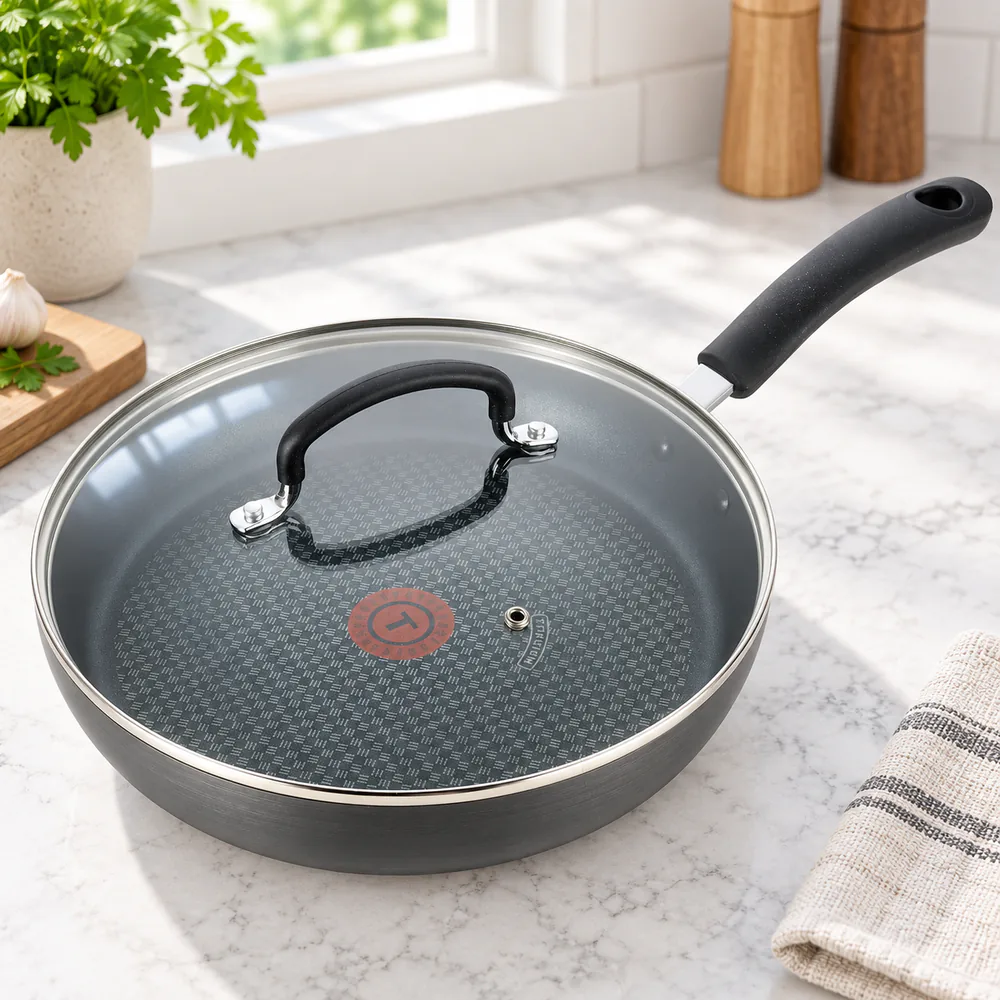
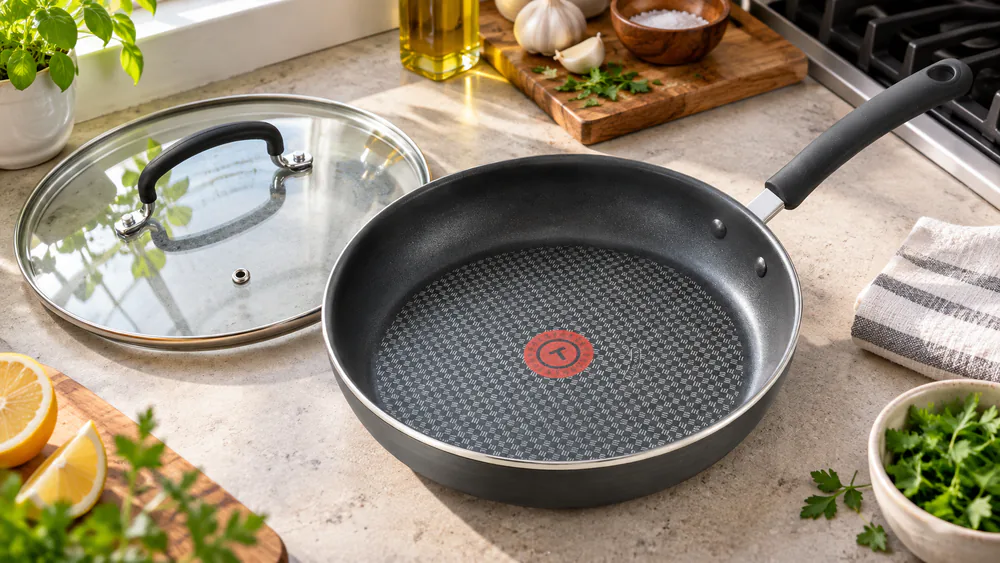
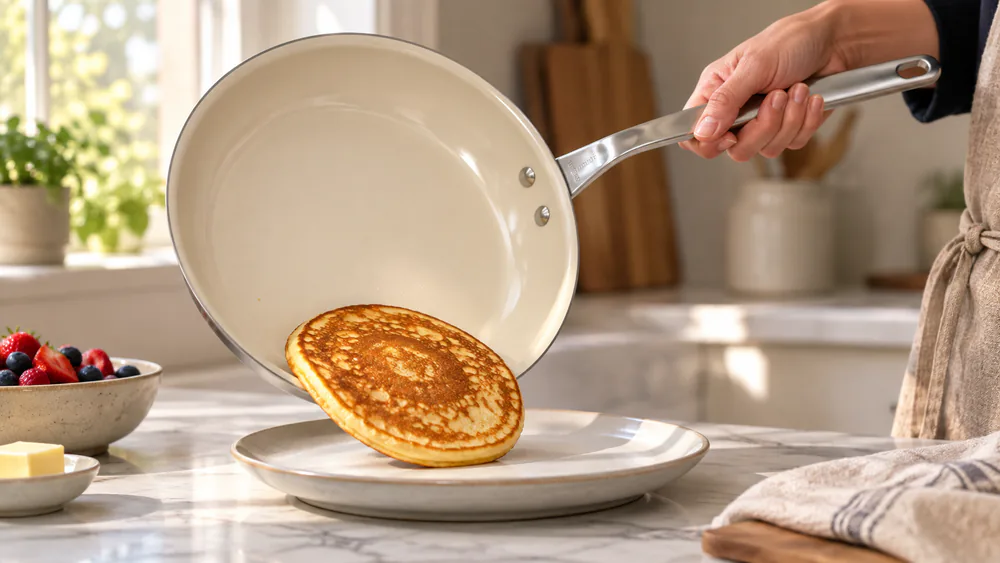
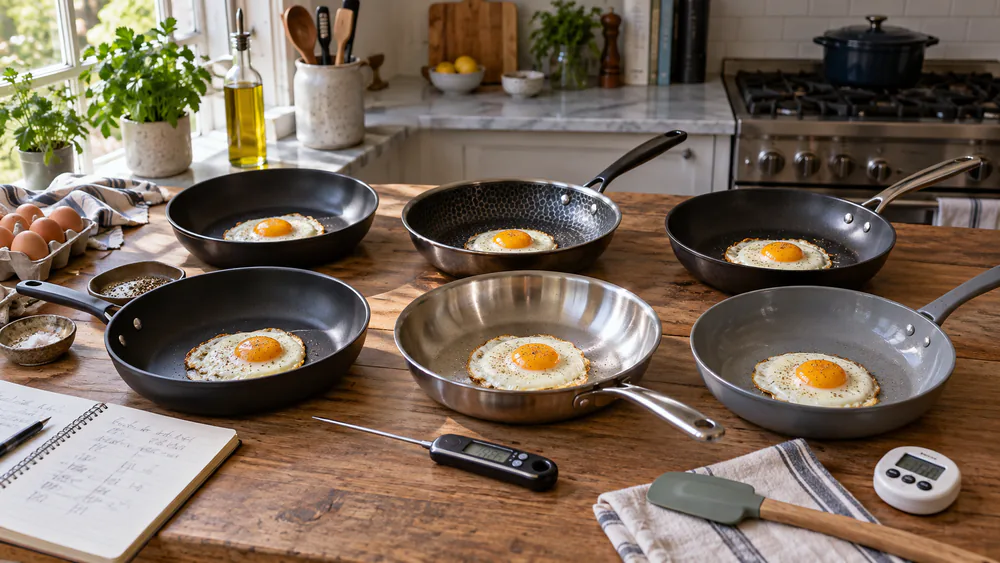
A 10-inch pan is the all-rounder: two or three eggs, a chicken breast, a stack of pancakes. An 8-inch is the egg pan, a 12-inch the family pan, and the weight matters as much as the width, since a heavy 10-inch like the T-fal at about 3.45 lb can be a strain to lift and pour one-handed. The Made In at 2.5 lb shows what balanced weight feels like.
Coating type and durability
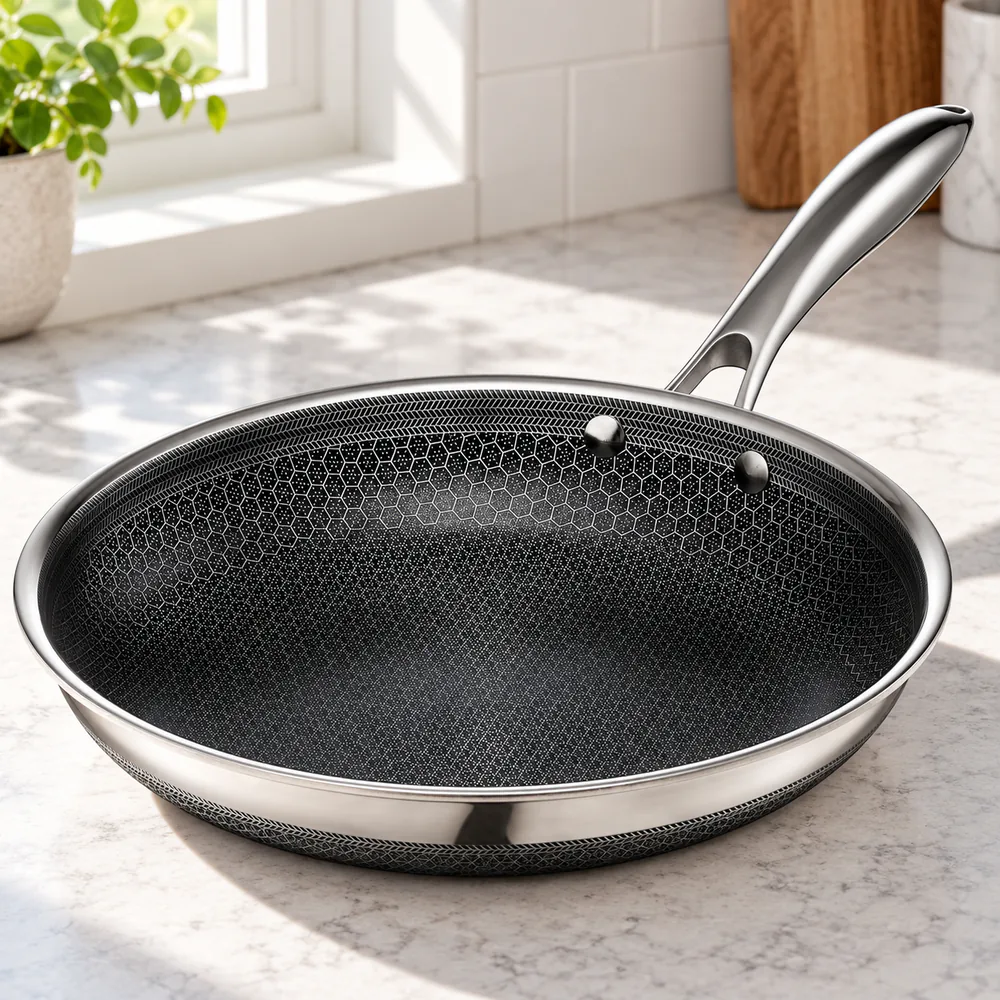
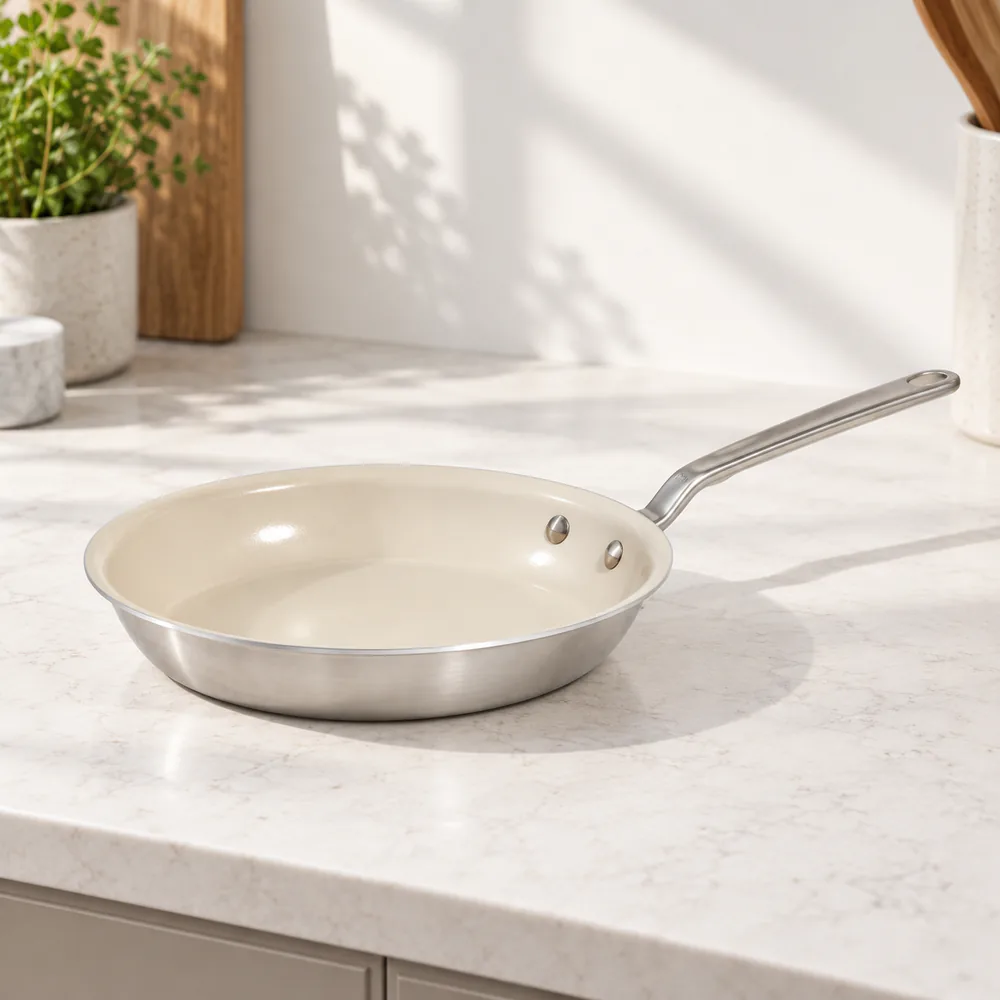
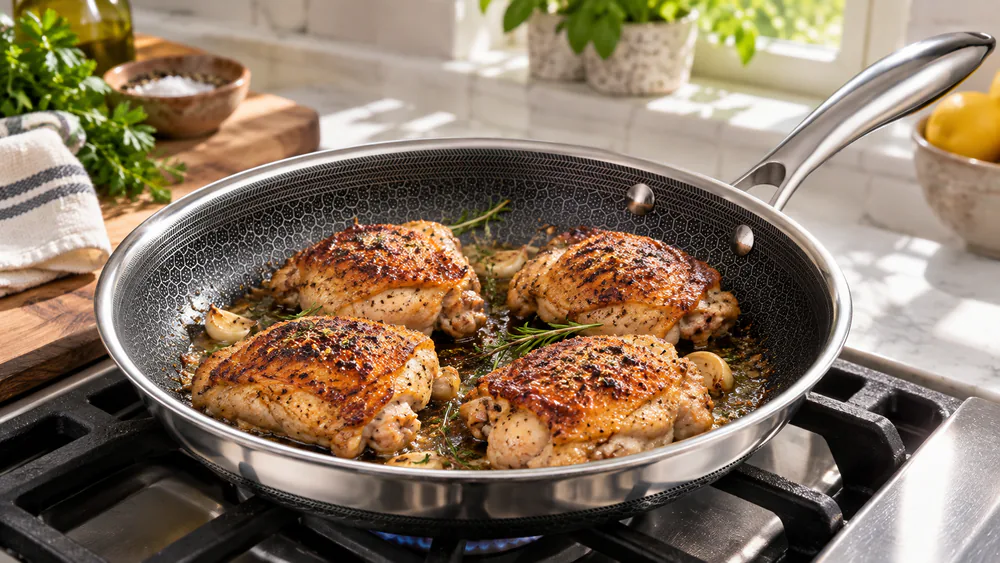
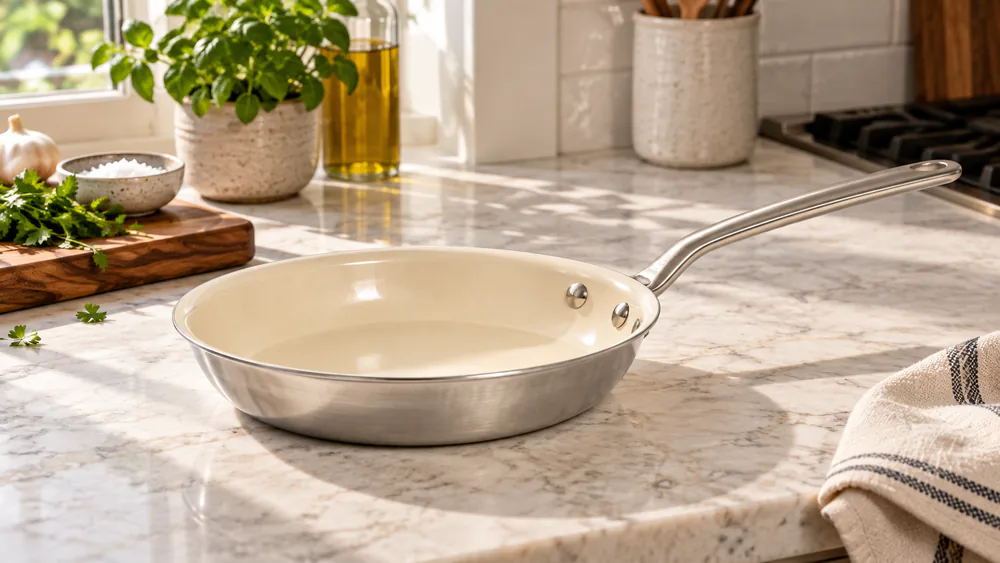
Buy the coating for the cooking you actually do. Eggs every morning and nothing hotter means PTFE, which releases best and lasts longest when treated gently. A PFAS-free priority points to ceramic, so budget for replacement. Metal utensils and high heat call for a hybrid, and plan to learn the seasoning ritual. No coating lasts forever, and the pans that last are the ones with honest care instructions printed on the box.
Handle comfort and oven safety
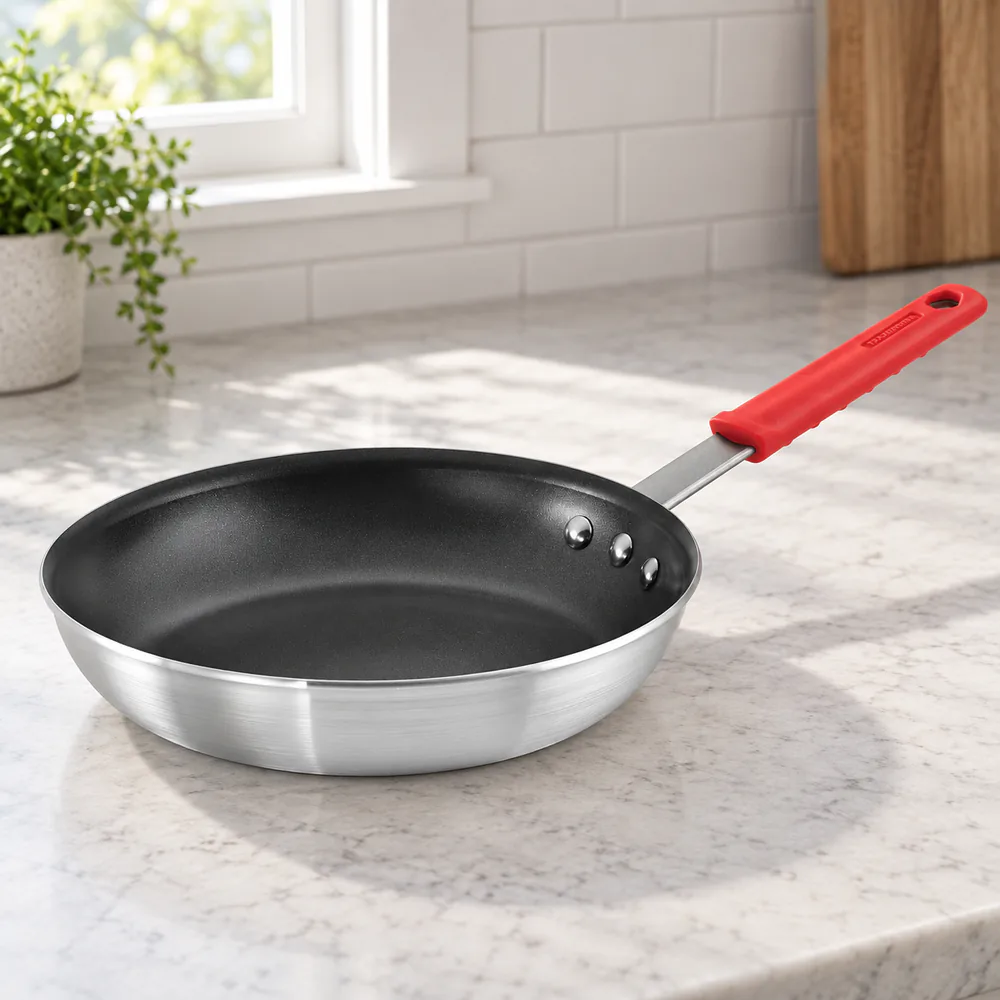
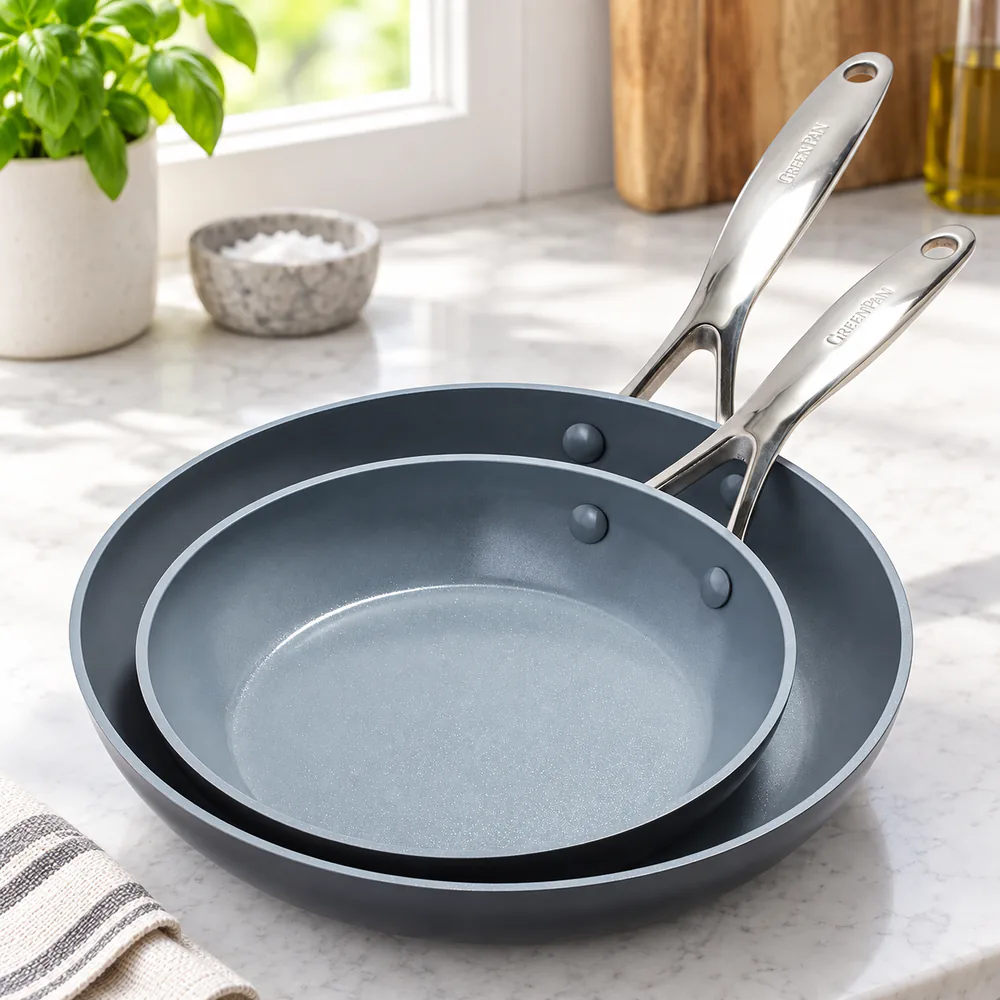
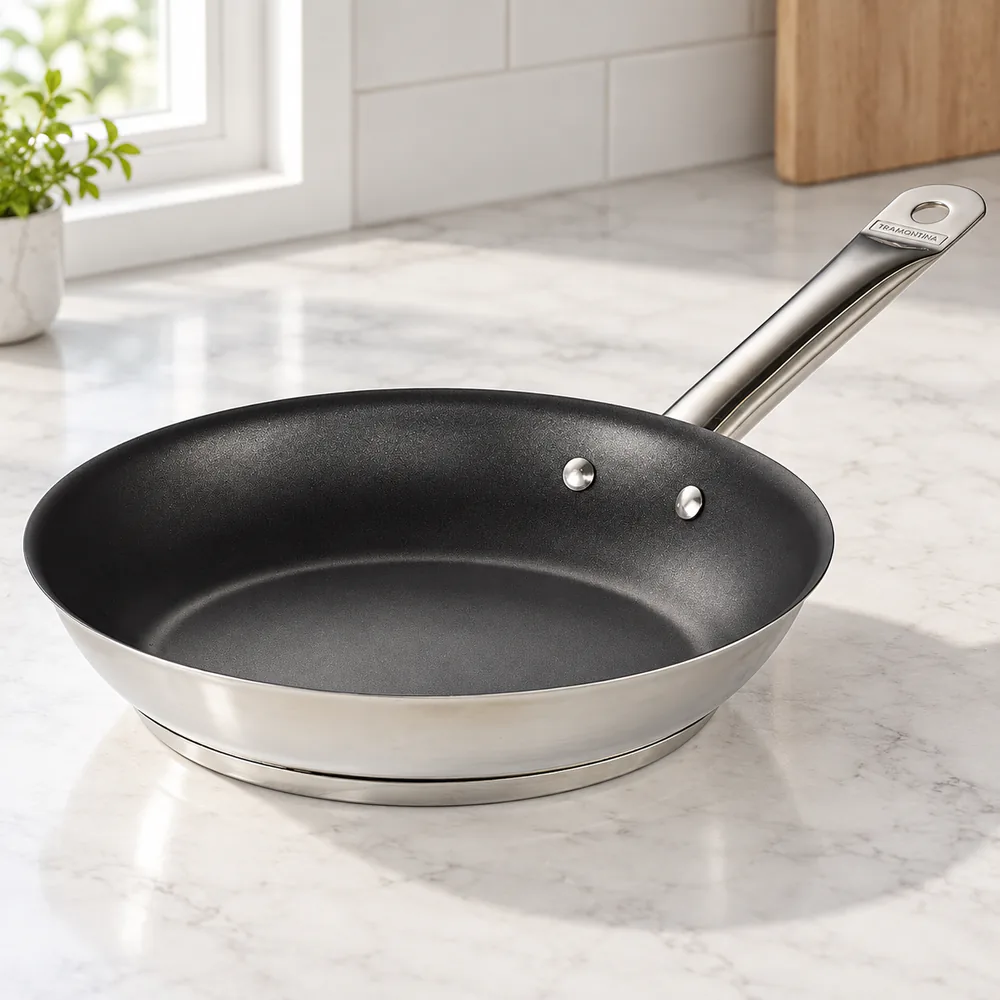
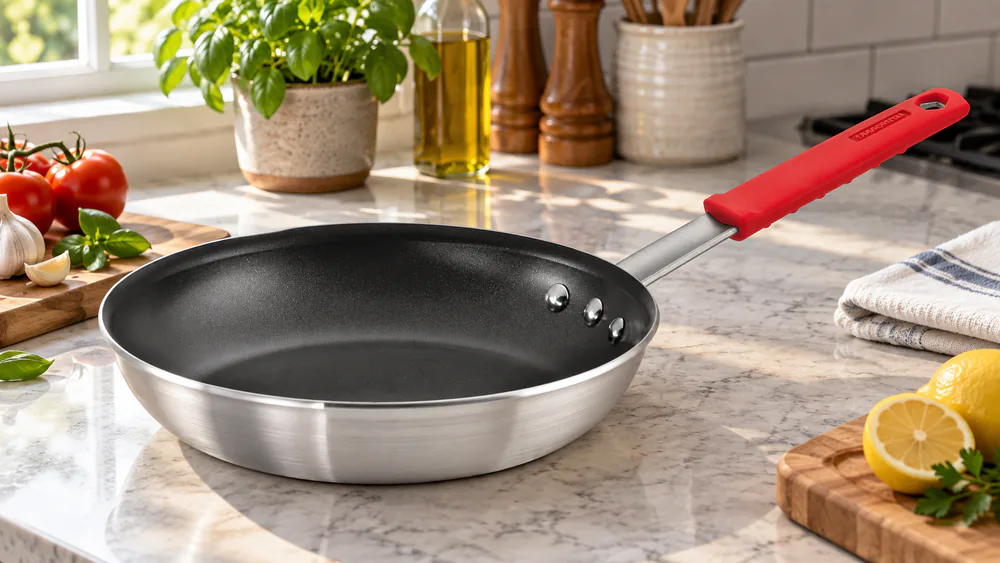
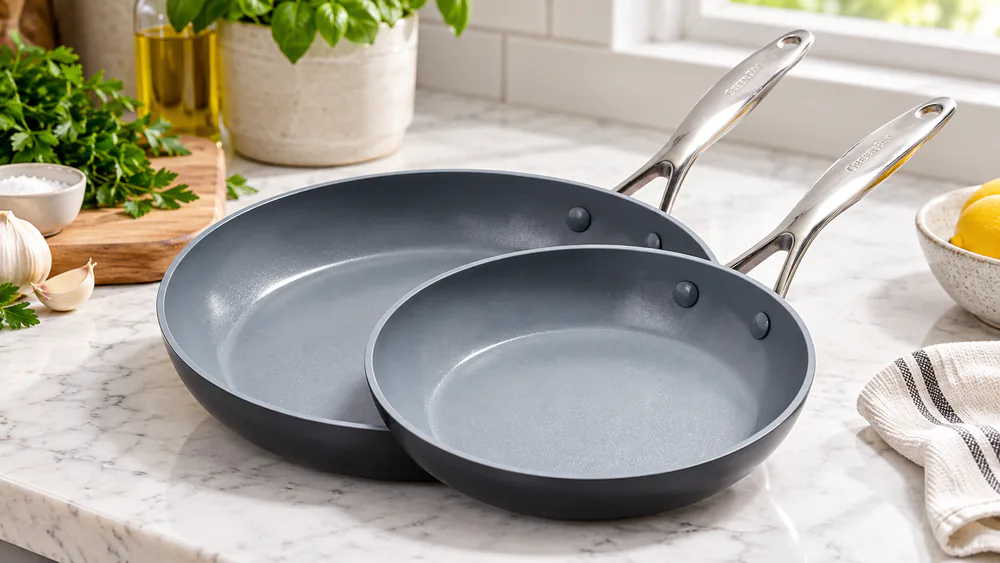
The handle is where the premium brands stumble. The All-Clad HA1's contoured steel grip digs into palms, while the GreenPan's polished stainless stays cool and the T-fal's riveted silicone softens the grip. Oven safety is the second test, so check the pan's rating against your cooking; ratings here run 400F to 600F, and remember that glass lids rate lower than their pans, from 350F to 425F. On the Tramontina Professional, the silicone sleeve must come off for oven use, and removal is model-dependent, so test yours.
Cooktop and dishwasher compatibility
Induction changes everything. The Tramontina Professional and the T-fal Ultimate sit out, while the GreenPan, the Tri-Ply Base, the HexClad, and the Made In all carry magnetic bases. Dishwasher safe is the most misread label in cookware; it describes survival, not longevity. Our testing shows the outside finish dulls on dishwasher-washed pans while hand-washed siblings stay bright.