Helping you create a kitchen you love.

Kitchen Appliances

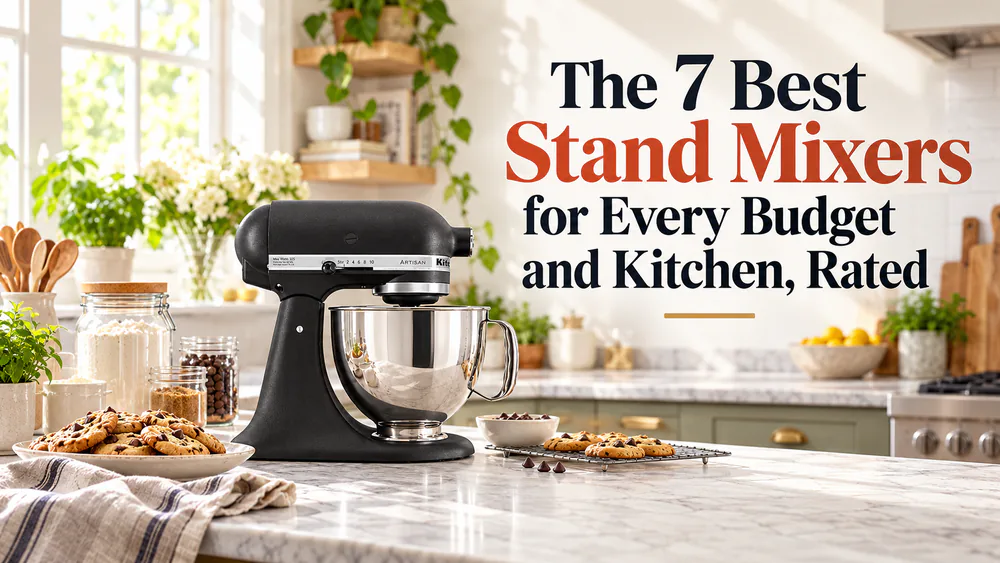
The 7 Best Stand Mixers for Every Budget and Kitchen, Rated

As an Amazon Associate we earn from qualifying purchases. We may earn a commission from links on this page, at no extra cost to you. Learn more.

The 7 Best Stand Mixers for Every Budget and Kitchen, Rated

We rated seven stand mixers on how they handle whipped cream, cookie dough, and dense bread dough, scoring each one on power, stability, noise, cleanup, and how long it should keep running. We also weighed which parts fail first and whether you can get a replacement. The KitchenAid Artisan 5-Qt is our best overall pick, and the Cuisinart SM-50 is the runner-up for bakers who want more power for less money.

Every mixer is held to the same yardstick: how the motor and gearing are built, how stable the body and bowl stay under load, how loud it runs, how easy it is to clean, and what the parts and warranty look like.

Stand mixers come in more shapes than most shoppers expect. A tilt-head mixer suits cookies and cakes, a bowl-lift handles heavy dough, and bottom-drive designs trade the familiar look for sheer kneading muscle. If you want to see the whole category before you pick, browse our stand mixer reviews for every model we cover.

Our Top Picks at a Glance

RankProductBest forBowl sizeRatingBuy
1

KitchenAid Artisan 5-Qt

Best Overall
Most home bakers 5-quart 4.7 View on Amazon
2

Cuisinart SM-50 5.5-Qt

Runner-Up
Power on a mid-range budget 5.5-quart 4.6 View on Amazon
3

Hamilton Beach 4-Qt

Best Budget
First-time buyers 4-quart 4.2 View on Amazon
4

Bosch Universal Plus

Best for Bread Dough
Bread bakers 6.5-quart 4.5 View on Amazon
5

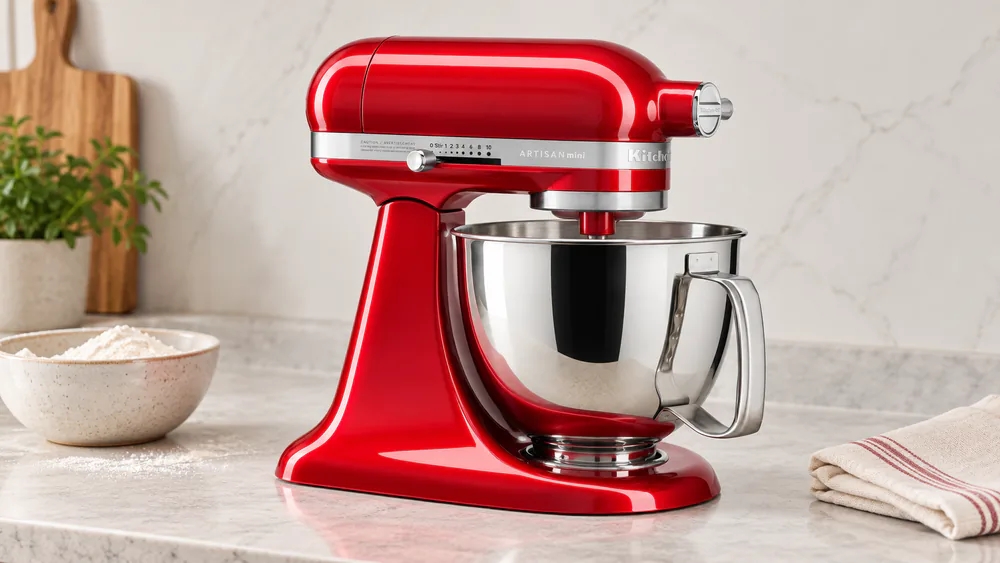
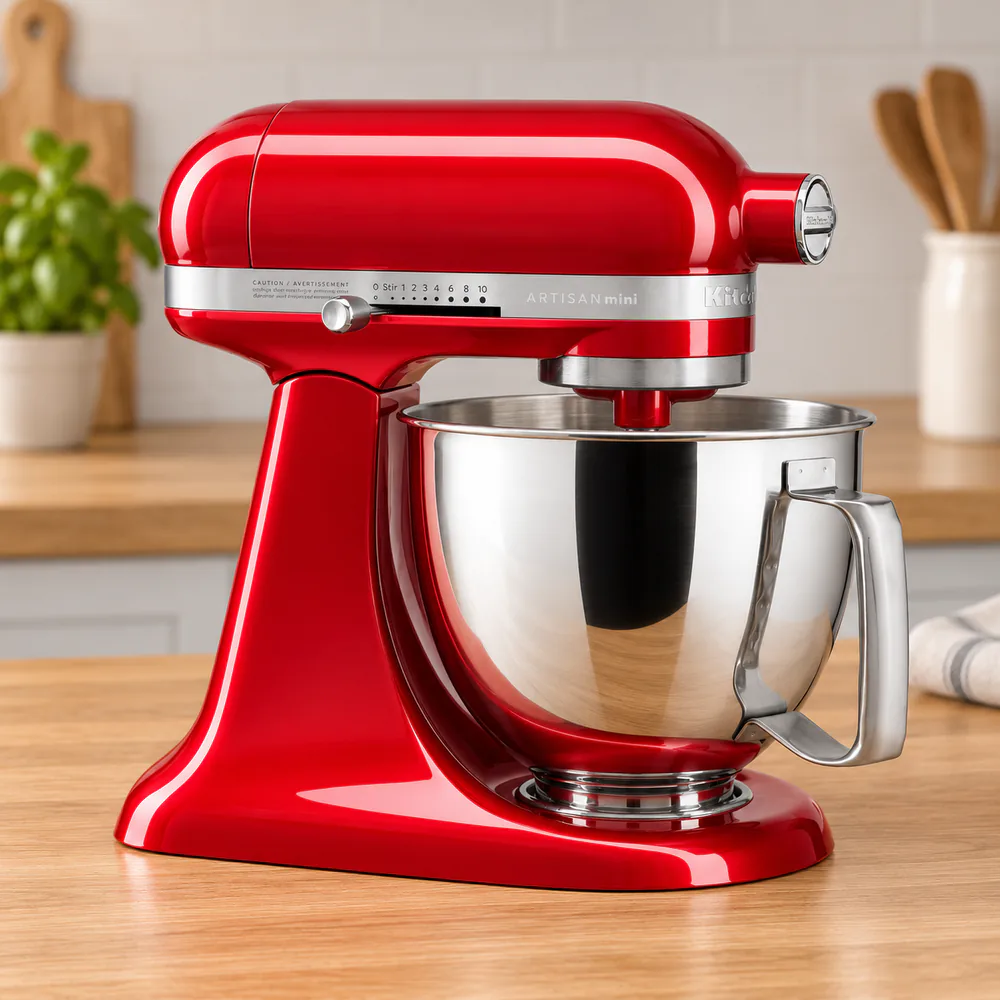
KitchenAid Artisan Mini 3.5-Qt

Best for Small Kitchens
Tight counters and small batches 3.5-quart 4.3 View on Amazon
6

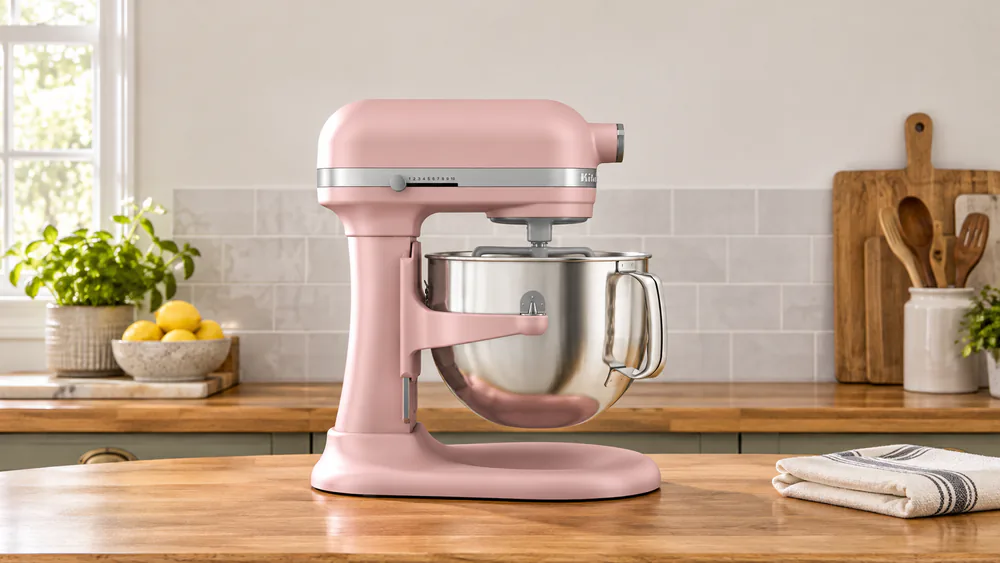
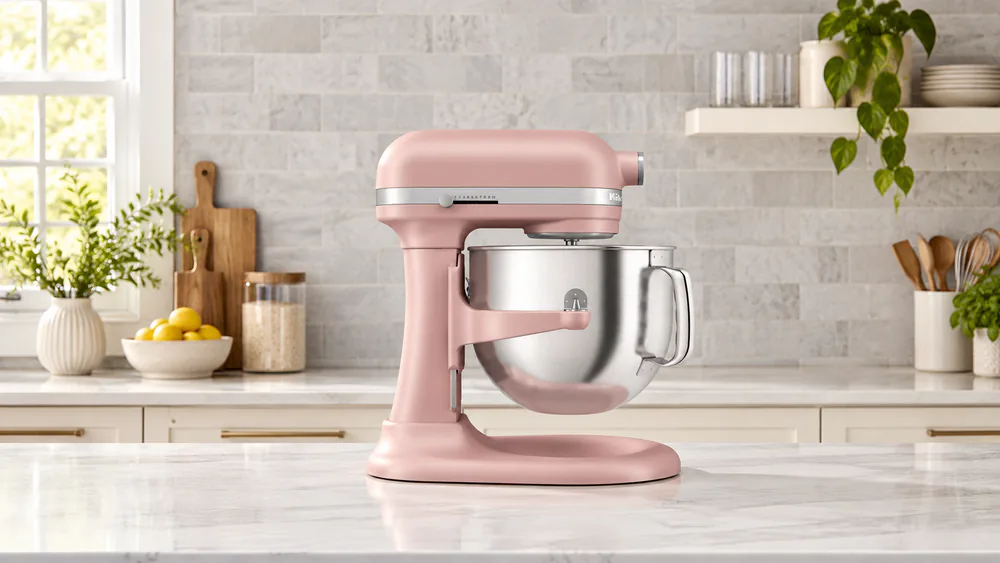
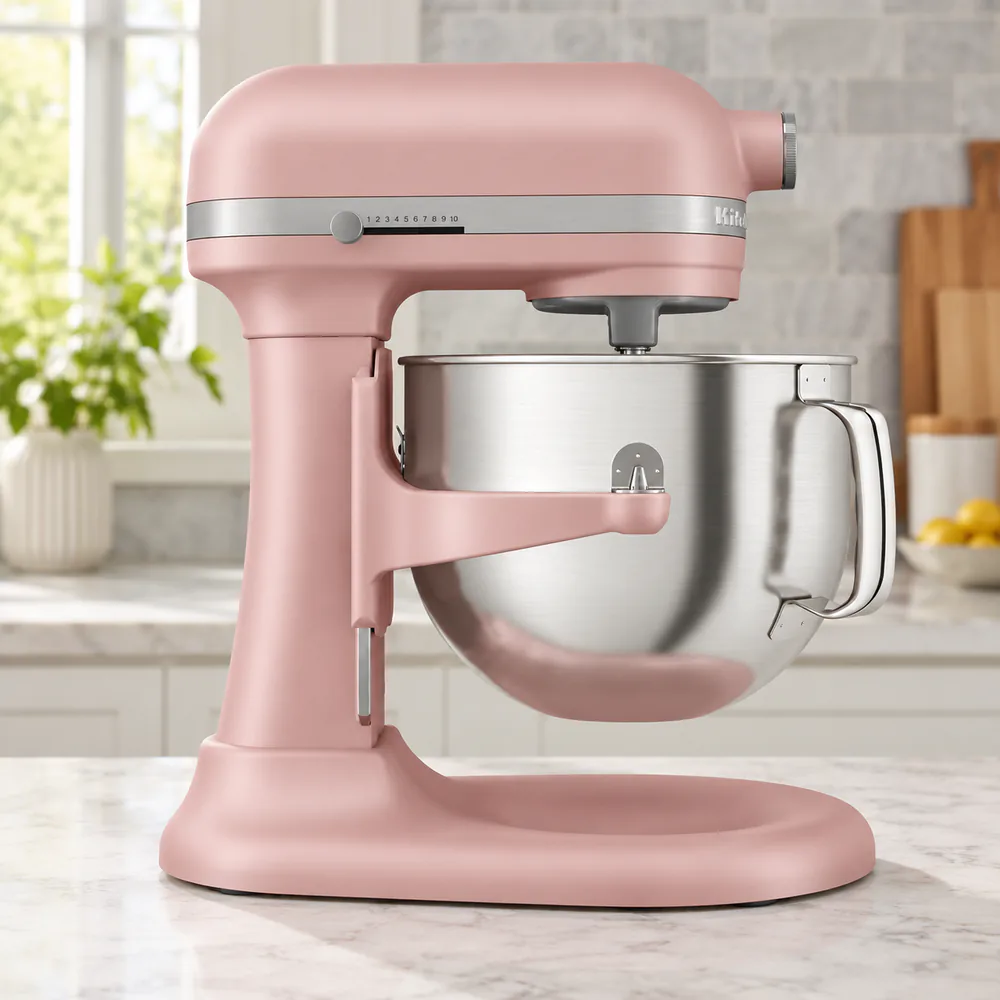
KitchenAid 7-Qt Bowl-Lift

Best Bowl-Lift
Big batches and heavy dough 7-quart 4.5 View on Amazon
7

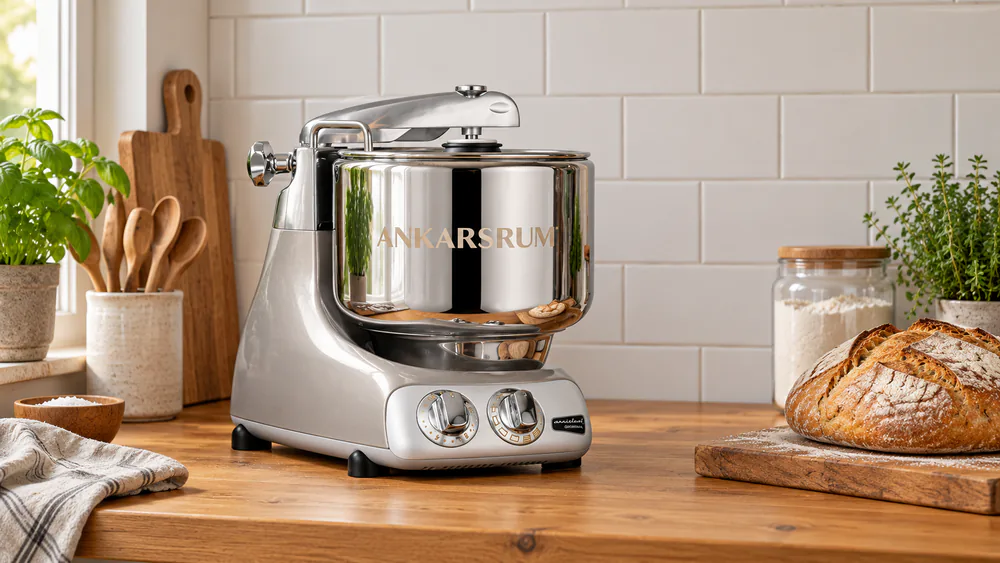
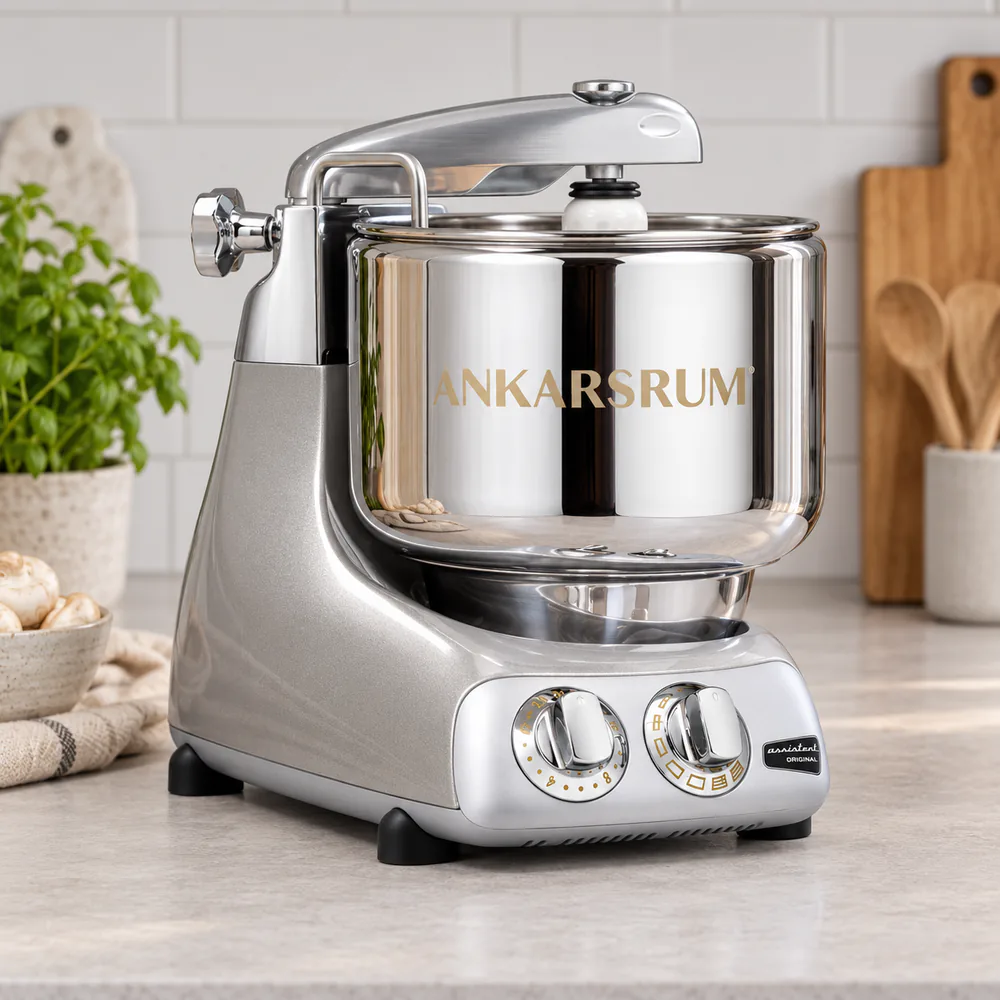
Ankarsrum Original

Best Splurge
Serious bread bakers 7.4-quart 4.4 View on Amazon

We earn a commission if you make a purchase, at no additional cost to you.

See full comparison table

How We Rate Stand Mixers

We scored every mixer on the same five questions. Does it power through dense dough without straining? Does it stay put on the counter? How loud is it? How easy is cleanup? And will it still be mixing a few years from now?

Here is how we score. We assess every mixer in the same order: motor and gearing build, bowl stability, noise, cleanup, then parts availability and warranty.

Dough is the hardest job a mixer does, so it decided most of the rankings. A stiff bread dough loads the motor and gears for ten minutes or more, which is exactly where weak builds show their limits. Cookie dough and whipped cream told us about bowl design, beater clearance, and how well each machine scrapes the sides.

We also paid attention to noise, because a mixer that sits on your counter for years needs to be livable. In a loaded run the Bosch measures about 80 to 90 dB, the KitchenAid bowl-lift 74 to 84 dB, and the Ankarsrum 73 to 89 dB. The Cuisinart ran quieter than we expected for a 500-watt machine.

The last criterion is the one we care about most. We look at how a machine is built, what tends to wear out, and whether you can replace the parts that do. A mixer that wins a bake-off but fails in year two is not a recommendation we are willing to make.

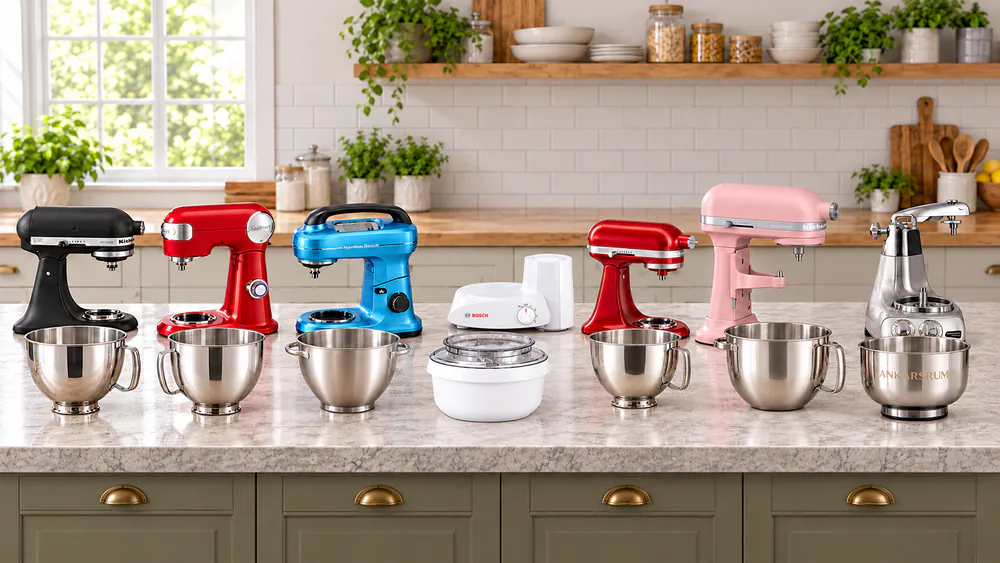
Seven stand mixers lined up on a long kitchen counter, each with a bowl beside it
All seven contenders in this roundup.

Tip. Run the same recipe on every mixer you compare. A single batch of stiff bagel or bread dough tells you more about a motor in ten minutes than any spec sheet.

Stand Mixer Reviews

Best Overall: KitchenAid Artisan 5-Qt

KitchenAid Artisan 5-Qt
1

KitchenAid Artisan 5-Qt

Best Overall
Check Price on Amazon
4.7/5

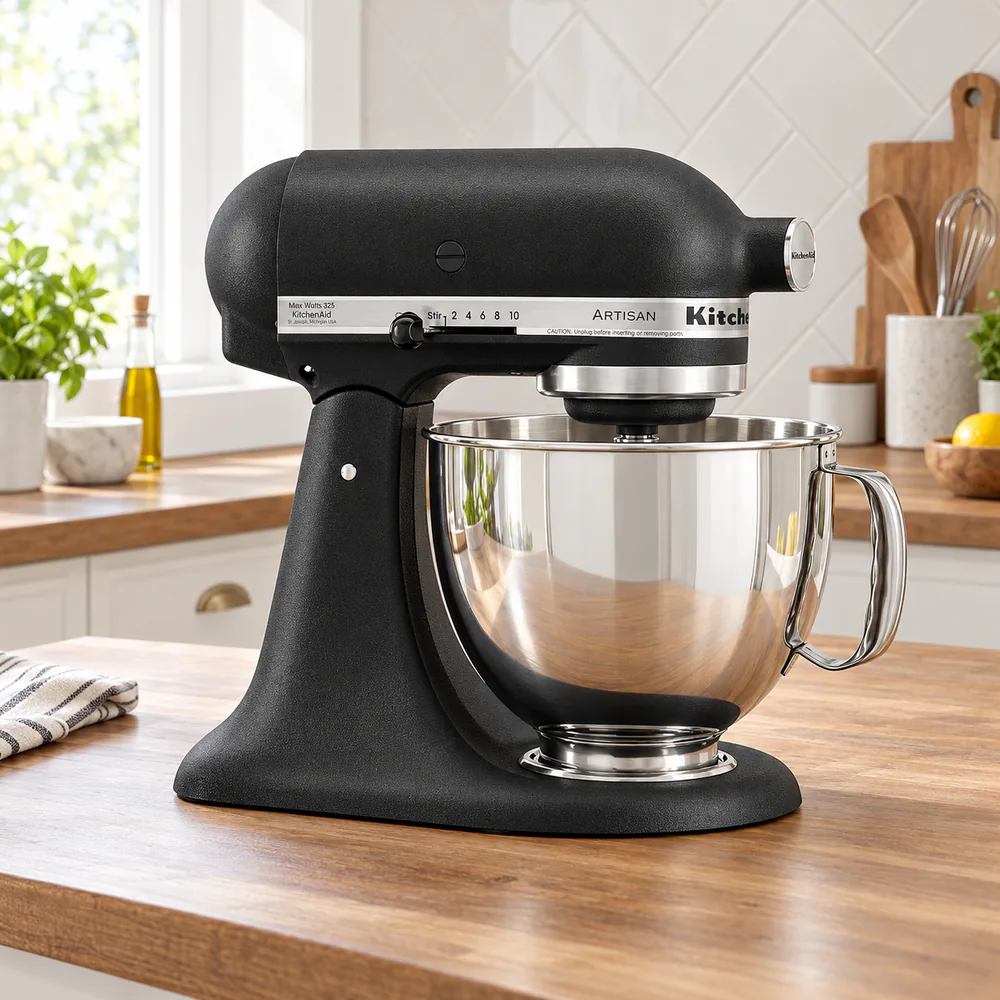
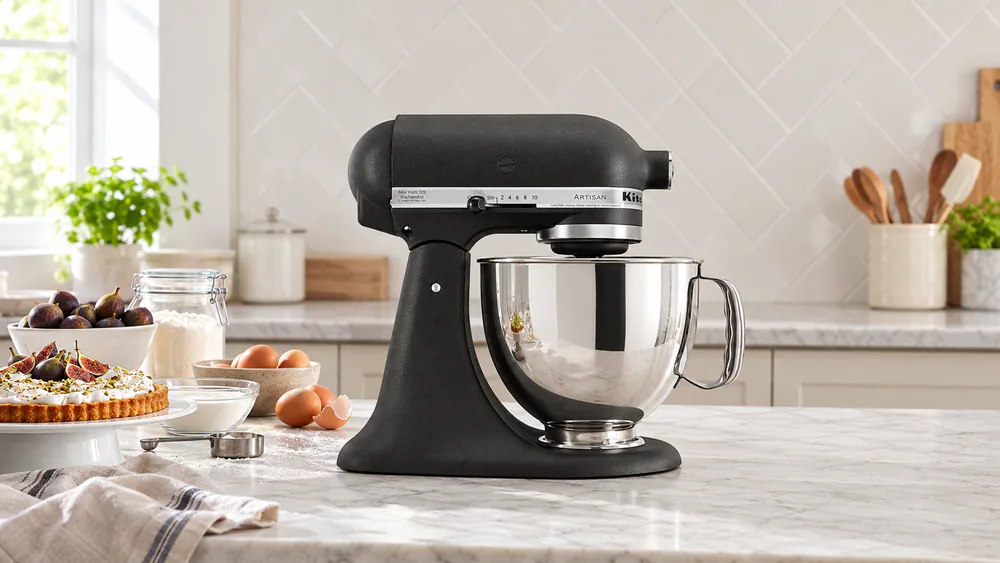
Start with the spec sheet and the Artisan looks modest, yet it is the mixer we would buy again for a typical home kitchen. Its 325-watt motor and 10 speeds cover cake batter, whipped cream, and cookie dough, and the 5-quart bowl handles up to 9 dozen cookies per batch. Nothing else in this roundup matches how many jobs it can take on once you add attachments.

Pros

  • 325-watt motor with 10 speeds handles everyday baking
  • Power hub works with 10+ attachments
  • 5-quart bowl makes up to 9 dozen cookies
  • Many colors and a 36-inch cord

Cons

  • Not suited to stiff bread dough (see the tilt-head warning below)
  • Only a 1-year replacement warranty
  • Price varies by color

Everyday mixing is where it earns its keep. It reliably handles cake batter, cookies, and whipped cream and is a purchase you can keep for years. The wide color range, especially red, adds to its appeal.

The tilt-head design makes adding ingredients easy, and the power hub accepts more than ten optional attachments, from a pasta roller to a meat grinder. The 36-inch cord reaches most outlets without a power strip. For a deeper look at this model, read our KitchenAid stand mixer review.

It is not a heavy-dough machine. A tilt-head's gears can strip on a small batch of stiff bread dough around the end of the first year, which is the classic weak point of this design. If you bake bread every week, look at the Bosch or the bowl-lift below. For cookies, cakes, and the occasional loaf, the Artisan is hard to beat. At 22.8 lb it also stays planted on the counter.
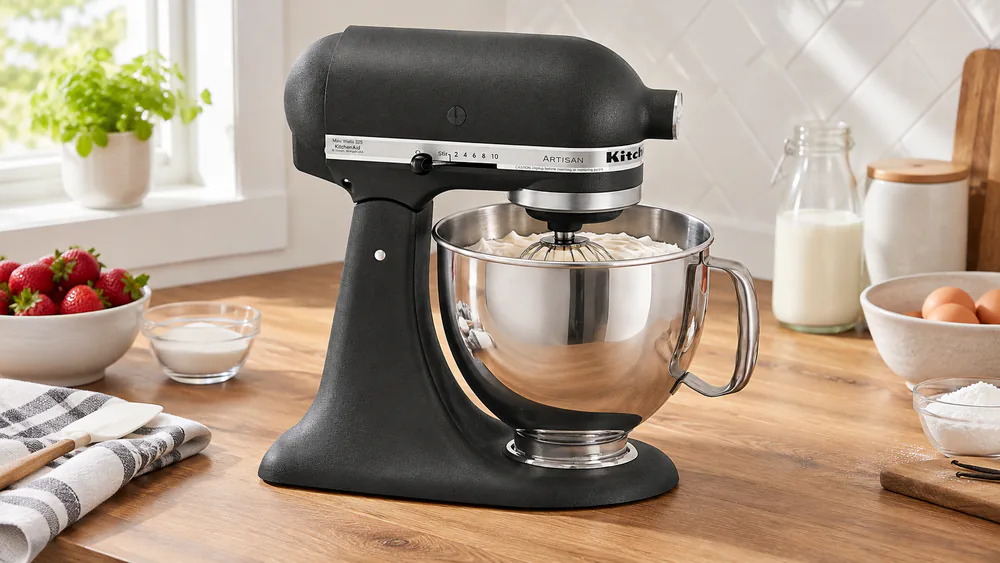
A KitchenAid Artisan 5-quart tilt-head mixer whipping cream in its bowl with the wire whip attached
The Artisan is at its best on whipped cream, batters, and cookie dough.

Runner-Up: Cuisinart SM-50 5.5-Qt

Cuisinart SM-50 5.5-Qt
2

Cuisinart SM-50 5.5-Qt

Runner-Up
Check Price on Amazon
4.6/5

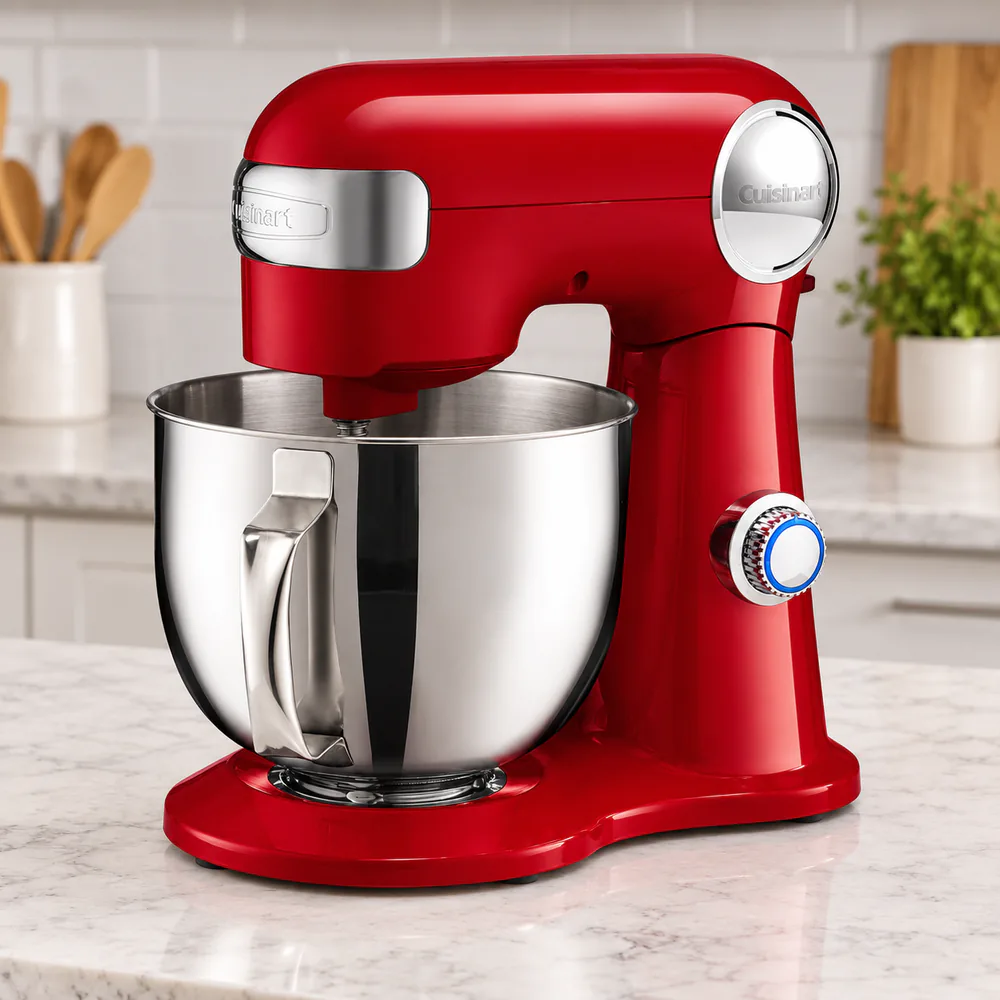
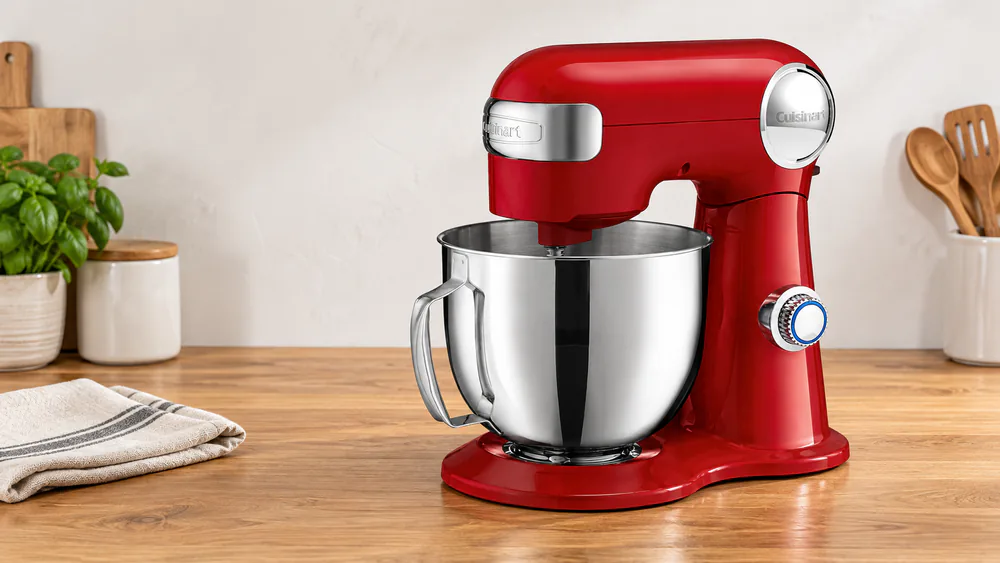
On paper the Cuisinart SM-50 outguns the KitchenAid, and it is the best value in this roundup. Its 500-watt motor and 12 speeds handle dense bread dough and cookie dough without straining. It feels sturdy and heavy on the counter, and it runs quieter than we expected.

Pros

  • 500-watt motor with 12 speeds powers through dense dough
  • Sturdy die-cast build that feels heavy and stable
  • Quieter than expected
  • Dishwasher-safe bowl and accessories
  • Limited 3-year warranty

Cons

  • No grater in the attachment lineup
  • Only one attachment outlet
  • Price varies by color and seller

The 5.5-quart stainless bowl is a half quart bigger than the Artisan's, and the whole package comes with a chef's whisk, paddle, dough hook, and a splash guard with a pour spout. The bowl and accessories are dishwasher safe, which saves real time after a cookie marathon. The tilt-back head is die-cast metal, so it feels more premium than the price suggests.

After two-plus years of regular use, the Cuisinart is still mixing rolls, cookies, and bread without drama. It also takes less counter room than a KitchenAid and is easy to tuck away. That long-run record, plus a limited 3-year warranty, is why it sits so high.

The main gap is accessories. It has a single attachment outlet that fits a pasta roller, ice cream maker, grinder, and spiralizer, but the lineup lacks a grater. If you want the biggest accessory shelf, the KitchenAid wins. If you mostly bake, this is the smarter spend.

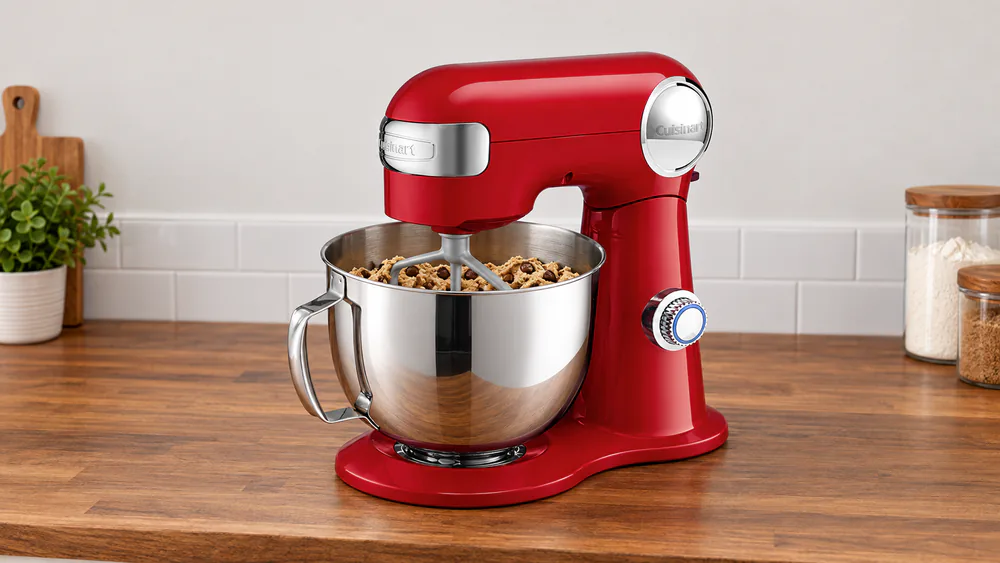
A Cuisinart SM-50 stand mixer with its stainless bowl full of cookie dough and the paddle attachment lowered in
The 5.5-quart stainless bowl handled dense cookie dough.

Best Budget: Hamilton Beach 4-Qt

Hamilton Beach 4-Qt
3

Hamilton Beach 4-Qt

Best Budget
Check Price on Amazon
4.2/5

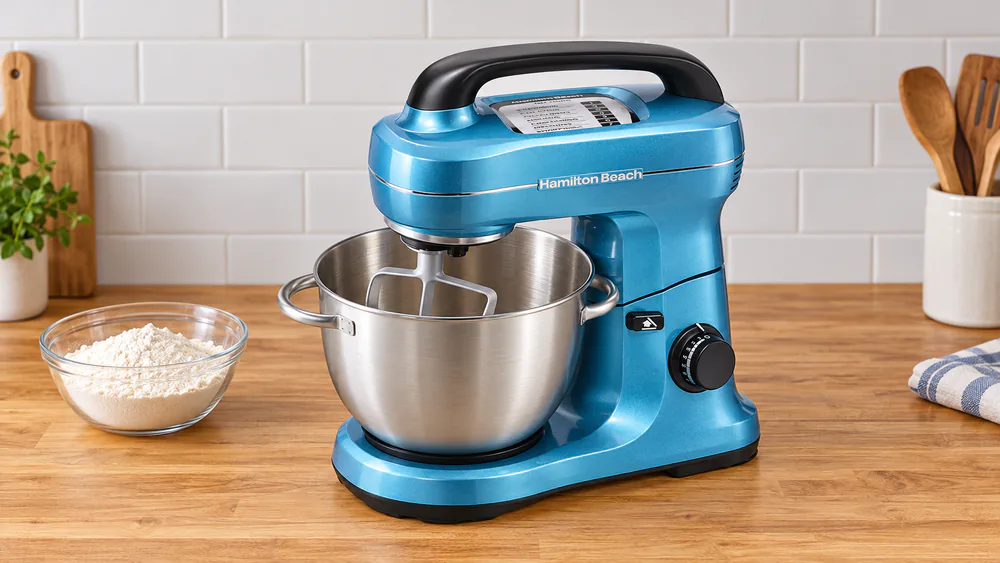
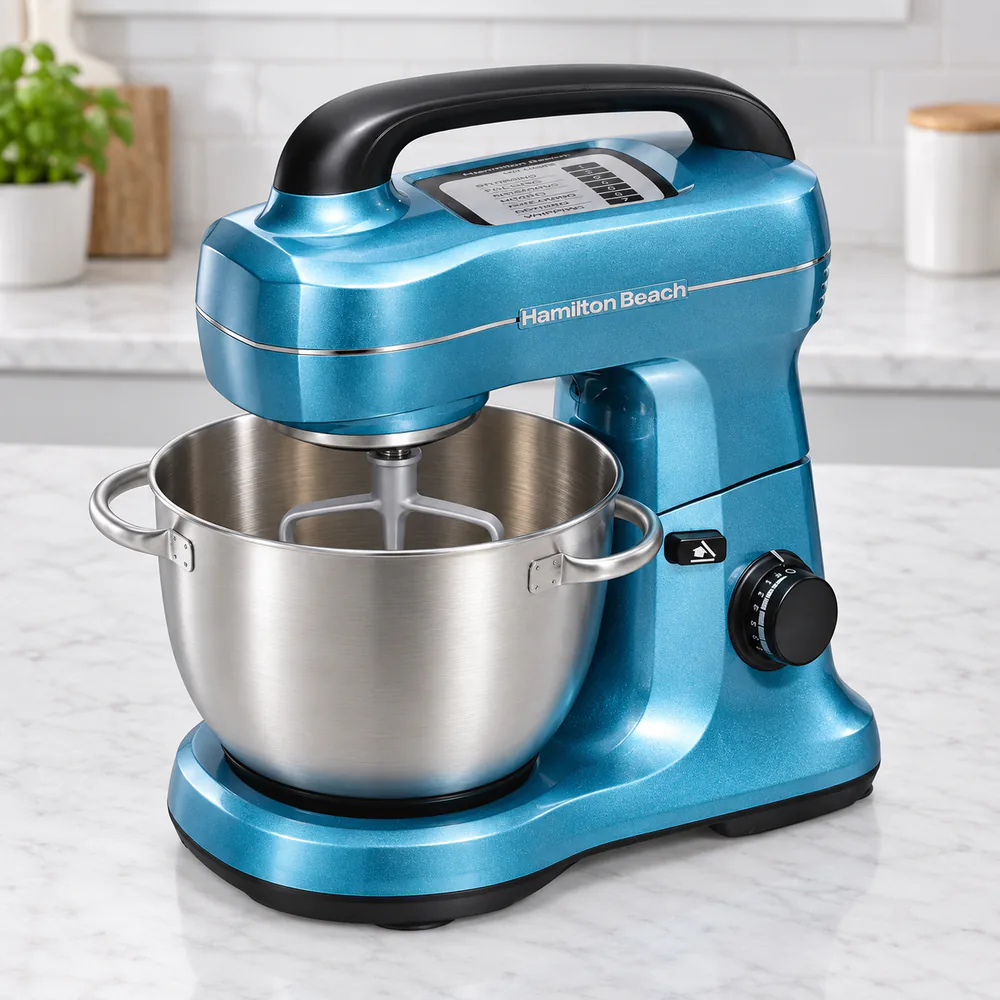
Who is the Hamilton Beach 4-Qt for? Anyone who has never owned a stand mixer and wants a low-risk start. Its 300-watt motor has 7 speeds, and the 4-quart stainless bowl is big enough for a double batch of cookies. It whips butter quickly, and it costs a fraction of what the KitchenAid does.

Pros

  • Lowest price in the roundup
  • Built-in carry handle and light body
  • Slow first speed and handy speed guide
  • Dishwasher-safe bowl and tools

Cons

  • Smaller 4-quart bowl
  • Speed-knob lettering wears off after about two years of weekly use
  • Too light for heavy, stiff dough

The slow first speed keeps flour from flying out of the bowl, and the speed guide on top takes the guesswork out of choosing a setting. It is light enough to carry to a cupboard using the built-in handle, which matters if you have no room for a permanent spot on the counter. The dough hook, whisk, and flat beater are all dishwasher safe, and cleanup is quick.

Durability is respectable for the money. After two years of weekly use, the lettering on the speed knob wears off, but the mixer keeps mixing bread, cookies, cakes, and mashed potatoes. The bowl is smaller than a KitchenAid's, and the lighter body means it will not feel as planted on a stiff dough.

We would not buy it for weekly bread baking. For a beginner who wants to stop creaming butter by hand, it does the job at a budget price.

Best for Bread Dough: Bosch Universal Plus

Bosch Universal Plus
4

Bosch Universal Plus

Best for Bread Dough
Check Price on Amazon
4.5/5

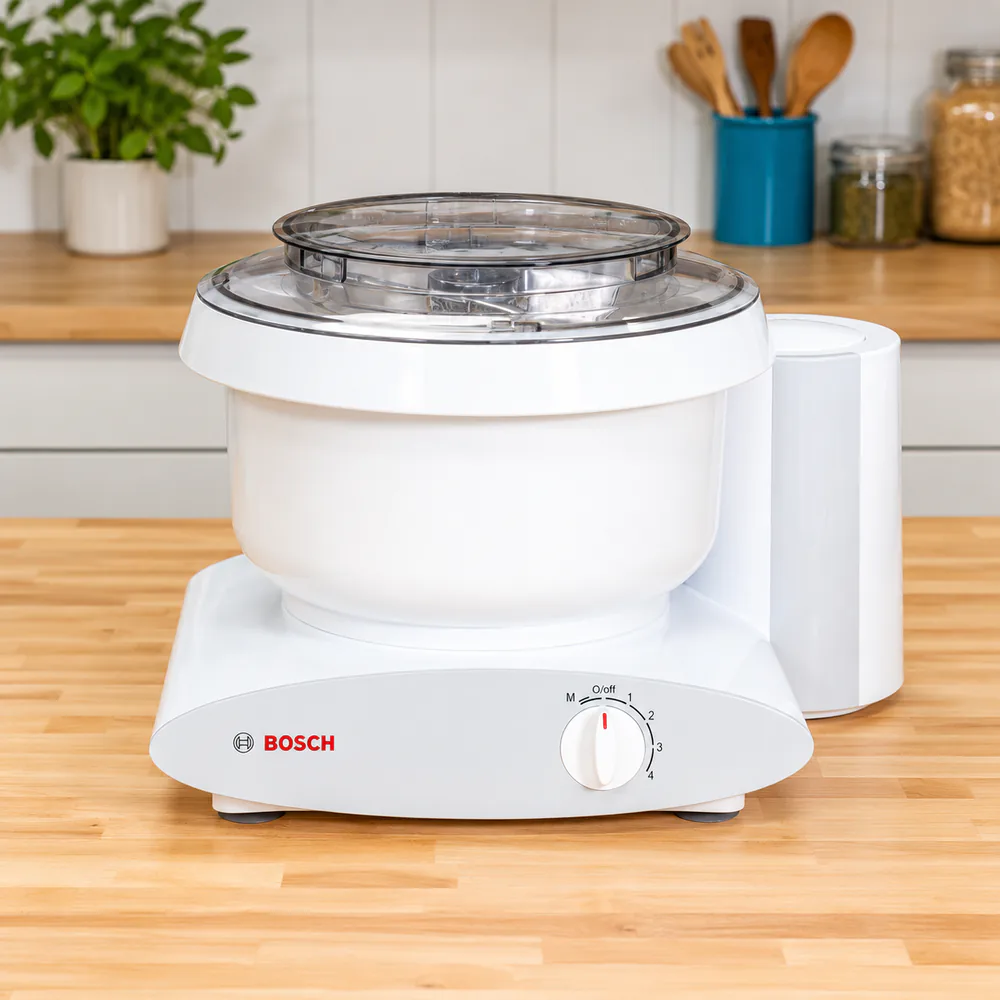
Build is what sets the Bosch Universal Plus apart: a belt-driven bottom-drive design made for people who bake bread every week. Its 500-watt belt-driven motor and 6.5-quart bowl handle double and triple cookie batches and about four loaves of bread dough at a time. The brand claims it kneads up to 15 pounds of dough, but the real-world loaf count is closer to four, so plan around that.

Pros

  • 500-watt belt-driven motor and 6.5-quart bowl handle about four loaves
  • Suction-cup feet keep it planted while kneading
  • Lid stops dry ingredients from spraying
  • 3-year warranty on motor and transmission

Cons

  • Center column makes scraping the bowl awkward
  • Plastic attachment parts can snap
  • Dough hook is not dishwasher safe and can oxidize
  • Loud, at about 80 to 90 dB under load

It brings dough together faster than a tilt-head, although kneading speed is similar once the dough forms. The suction-cup feet keep it from walking across the counter during a long knead, and the bowl lid stops dry ingredients from spraying when you whip. At 12.75 lb it is far lighter than the KitchenAid bowl-lift, yet it stays put.

The design has trade-offs. The center column makes scraping dough out of the bowl awkward compared with a KitchenAid-style bowl. The plastic attachment parts can snap, and the dough hook is not dishwasher safe and can oxidize, so dry it right away. It is also the loudest mixer in our group at about 80 to 90 dB in a loaded run.

The warranty helps: 3 years on the motor and transmission, with 1 year on parts and accessories. The bowl is plastic rather than stainless, and the price sits in premium territory. For a bread-first kitchen, it earns that money.

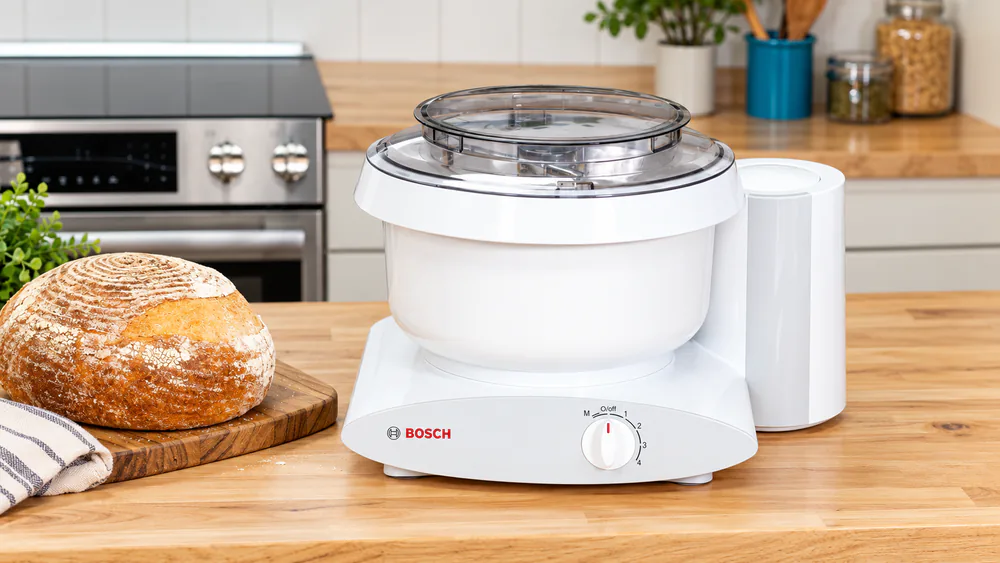
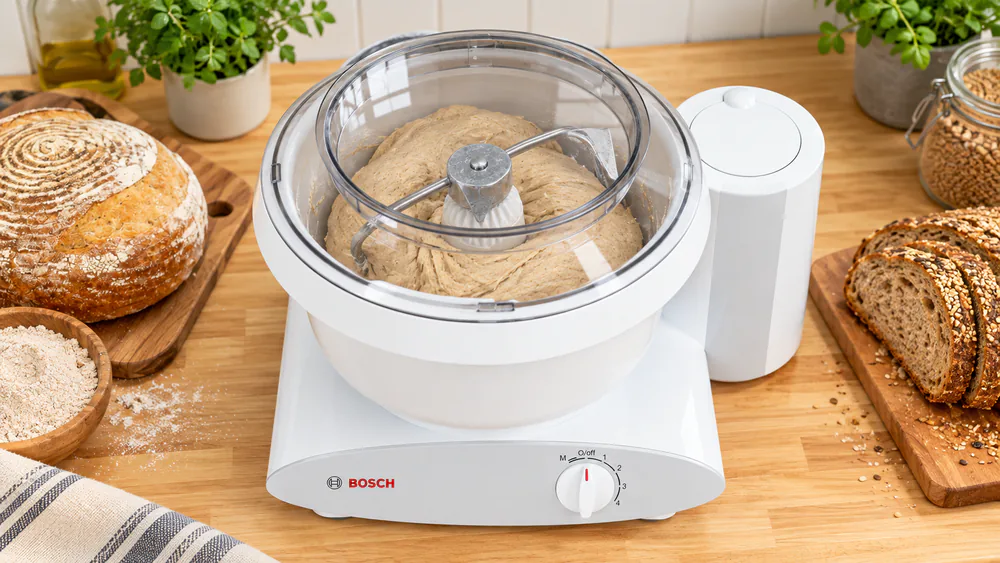
A Bosch Universal Plus bottom-drive mixer with its lid on the 6.5-quart plastic bowl and a dough hook mid-knead
The Bosch lid keeps dry ingredients in the bowl.

Best for Small Kitchens: KitchenAid Artisan Mini 3.5-Qt

KitchenAid Artisan Mini 3.5-Qt
5

KitchenAid Artisan Mini 3.5-Qt

Best for Small Kitchens
Check Price on Amazon
4.3/5

Counter space and cabinet space are the reasons to pick the Artisan Mini. It is lighter and smaller than the full Artisan, with the same power as the KitchenAid Classic, and it keeps the same tilt-head layout. The 3.5-quart bowl makes up to 5 dozen cookies, which covers a family batch and most holiday trays.

Pros

  • Smaller and lighter than the full-size Artisan
  • Same attachment hub and tilt-head layout as the rest of the family
  • Up to 5 dozen cookies per batch
  • Dishwasher-safe bowl

Cons

  • 3.5-quart bowl is too small for large or double recipes
  • Better for soft doughs than stiff ones
  • Fewer color and bundle options than the full-size model

It has 10 speeds and the 59-touchpoint planetary action that KitchenAid uses across the family. You also get a flex edge beater, a coated dough hook, and a 6-wire whip, and the bowl is dishwasher safe. For a couple or a small household, that is a lot of kit in a small footprint.

In everyday use the Mini is comfortable with standard recipes and box mixes, and its small footprint makes it easy to find a home for. Its 3.5-quart bowl is the limit on big doughs.

The limits are what you would expect. Small bowls mean small batches, and it should not be pushed with stiff bread dough (see the tilt-head warning in our tilt-head vs. bowl-lift section). Keep it to cookies, cakes, frostings, and soft doughs.

We could not confirm the Mini's wattage, weight, or street price from reliable sources, so check the listing for the current price before you buy.

Best Bowl-Lift / Heavy Duty: KitchenAid 7-Qt Bowl-Lift

KitchenAid 7-Qt Bowl-Lift
6

KitchenAid 7-Qt Bowl-Lift

Best Bowl-Lift
Check Price on Amazon
4.5/5

The KitchenAid 7-Qt Bowl-Lift is worth considering when a tilt-head lacks capacity or power, but pay close attention to parts and durability. The 7-quart bowl has 11 speeds, including a half-speed folding setting, and the brand says it kneads over 8.5 lbs of bread dough or 13 dozen cookies. A three-point locking bowl-lift holds the bowl firmly against the beater.

Pros

  • 7-quart bowl, 11 speeds, and a folding speed
  • Heaviest and most stable in the roundup at 29.2 lb
  • Three-point locking bowl-lift
  • Works with 10+ hub attachments

Cons

  • Fits fewer bread loaves than the Bosch or Ankarsrum
  • Some attachments oxidize if not dried quickly
  • Failures show up around 3 to 5 years in recent builds
  • Only a 1-year warranty

It is also a stable mixer. At 29.2 lb it is the heaviest in the group, and it sits still under heavy loads. The double flex edge beater scrapes the bowl more thoroughly than a standard flat beater, and the pouring shield keeps flour in the bowl. In a loaded run it measures 74 to 84 dB, which makes it the quietest of the heavy-duty options.

There are limits. It fits fewer bread loaves than the Bosch or the Ankarsrum, and some attachments are not dishwasher safe and oxidize if you do not dry them quickly. Recent KitchenAid builds also show failures at about 3 to 5 years, and the warranty is only 1 year. At a premium price, it asks you to accept some durability risk.

We could not confirm the motor wattage with a vendor source. Judge it by the 7-quart bowl and the bowl-lift design instead.

A KitchenAid 7-quart bowl-lift mixer with the bowl raised and locked on its supports, with the flat beater attached inside
The bowl-lift lever locks the bowl against the beater in three places.

Best Splurge / Design: Ankarsrum Original

Ankarsrum Original
7

Ankarsrum Original

Best Splurge
Check Price on Amazon
4.4/5

Nothing else here looks or works like the Ankarsrum Original, which suits a serious bread baker with the budget to match. The 7.4-quart stainless bowl spins around fixed tools, and the brand lists 11 lb of dough capacity. It fits about four loaves comfortably.

Pros

  • 7.4-quart stainless bowl fits about four loaves
  • Lid lets dough proof in the bowl
  • Dishwasher-safe parts
  • 7-year limited warranty

Cons

  • Highest price in the roundup
  • Whisk and beater need a separate bowl
  • Steeper learning curve than any tilt-head

The bowl lid lets dough proof right in the bowl, and the parts are dishwasher safe. At 18.96 lb it is much lighter than a bowl-lift but still feels serious. In a loaded run it measures 73 to 89 dB, a wide range that depends on how stiff the dough is. The 7-year limited warranty is the longest in this roundup, and it speaks to how confident the maker is.

The learning curve is steeper than any other mixer here. Whisk and beater attachments need a separate bowl, so it is not a drop-in replacement for a KitchenAid on cakes and whipped cream. Treat it as a dough specialist that happens to do other jobs. It is the most expensive mixer here, and the price varies by seller and bundle. The button below searches Amazon for current sellers.

Comparison Table

ProductTypeCapacityWattageWeightOur rating
KitchenAid Artisan 5-Qt Tilt-head 5-quart 325 22.8 lb 4.7
Cuisinart SM-50 5.5-Qt Tilt-head 5.5-quart 500 Not verified 4.6
Hamilton Beach 4-Qt Tilt-head 4-quart 300 Not verified 4.2
Bosch Universal Plus Bottom-drive 6.5-quart 500 12.75 lb 4.5
KitchenAid Artisan Mini 3.5-Qt Tilt-head 3.5-quart Not verified Not verified 4.3
KitchenAid 7-Qt Bowl-Lift Bowl-lift 7-quart Not verified 29.2 lb 4.5
Ankarsrum Original Bottom-drive, spinning bowl 7.4-quart Not verified 18.96 lb 4.4

Tilt-Head vs. Bowl-Lift: Which Do You Need?

For most home bakers, a tilt-head is the right call. You tilt the head back, the bowl stays locked on the base, and you can scrape, add ingredients, or swap beaters in seconds. Cookies, cakes, frosting, and whipped cream all work well in a tilt-head, and the machine takes less cabinet space.

A bowl-lift earns its place when you bake bread weekly or cook in volume. The bowl cranks up to the beater on a lever, which holds it more firmly and handles larger loads. It usually runs heavier, which helps stability, and it fits a bigger bowl. The KitchenAid 7-Qt is our example, and the Bosch and the Ankarsrum take the same idea further with bottom-drive designs.

Warning. Tilt-head mixers strain on stiff dough. A KitchenAid tilt-head's gears can strip on a small batch of stiff bread dough around the end of the first year. If you knead bread weekly, step up to a bowl-lift or a bottom-drive.

Counter space is the tiebreaker most people forget. A bowl-lift is taller and heavier, so it often lives on the counter rather than in a cabinet, and lifting 29 lb in and out of storage gets old fast. A tilt-head such as the Cuisinart or the Hamilton Beach is far easier to tuck away between uses.

Here is the quick rule we use. If you bake cookies and cakes a few times a month and want the easiest handling, buy a tilt-head. If you knead bread every week or regularly mix more than two dozen cookies at once, buy a bowl-lift or a bottom-drive machine.

Pros

  • Tilt-head: easy access to the bowl and beater
  • Tilt-head: smaller footprint and lower price
  • Bowl-lift: steadier under heavy dough
  • Bowl-lift: larger bowls for batch baking

Cons

  • Tilt-head: weaker on stiff, small-batch dough
  • Tilt-head: bowl sizes top out around 5.5 quarts in this group
  • Bowl-lift: heavier and harder to store
  • Bowl-lift: costs more

What to Look For When Buying a Stand Mixer

Start with how you bake, not with the brand. A few criteria separate machines that last from machines that frustrate you within a year, and most of them show up in the specs.

Bowl Capacity and Size

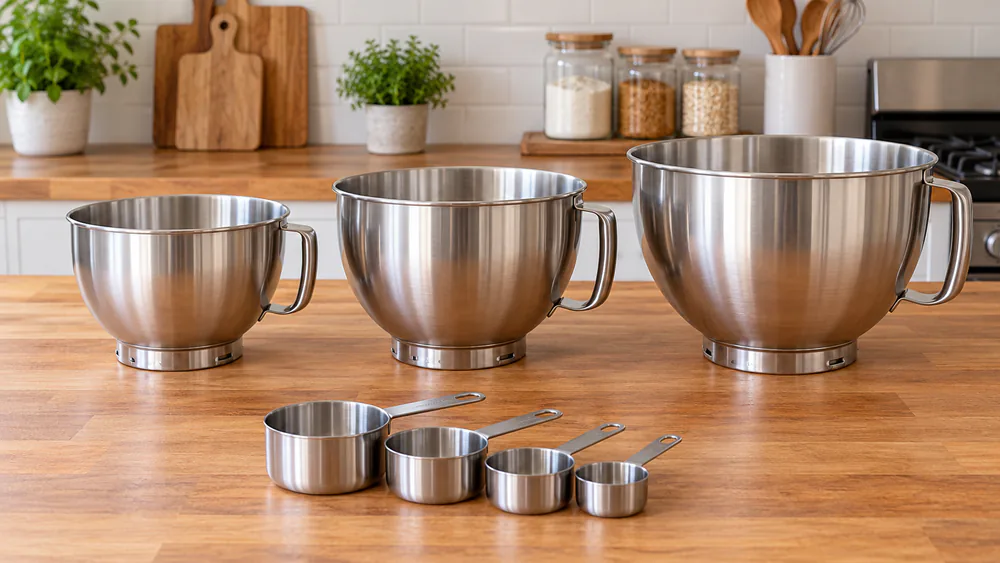
Bowl size sets your batch size. A 3.5-quart bowl handles a family batch of cookies, a 4 to 5.5-quart bowl covers a typical household, and 6.5 to 7.4 quarts is for people who bake bread in volume. Brand dough claims such as 15 pounds or 11 lb are ceilings, not daily loads. Real-world loaf counts run closer to four loaves for the Bosch and Ankarsrum, and fewer for the KitchenAid bowl-lift.

Three stand mixer bowls of different sizes (3.5-quart, 5-quart and 7-quart) lined up on a counter with measuring cups beside them
From 3.5 quarts to 7 quarts, bowl size drives batch size.

Motor Power and Stability

Wattage helps, but it is not the whole story. The Cuisinart's 500-watt motor handles dense dough easily, while the KitchenAid Artisan's 325 watts is enough for cookies and cakes but weaker on stiff dough. Stability matters just as much. A heavy body like the 29.2 lb KitchenAid bowl-lift or suction-cup feet like the Bosch's keep the machine from walking across the counter.

Wattage tells you what a motor can start. Weight, gearing, and bowl design tell you what it can finish.

Attachments and Accessories

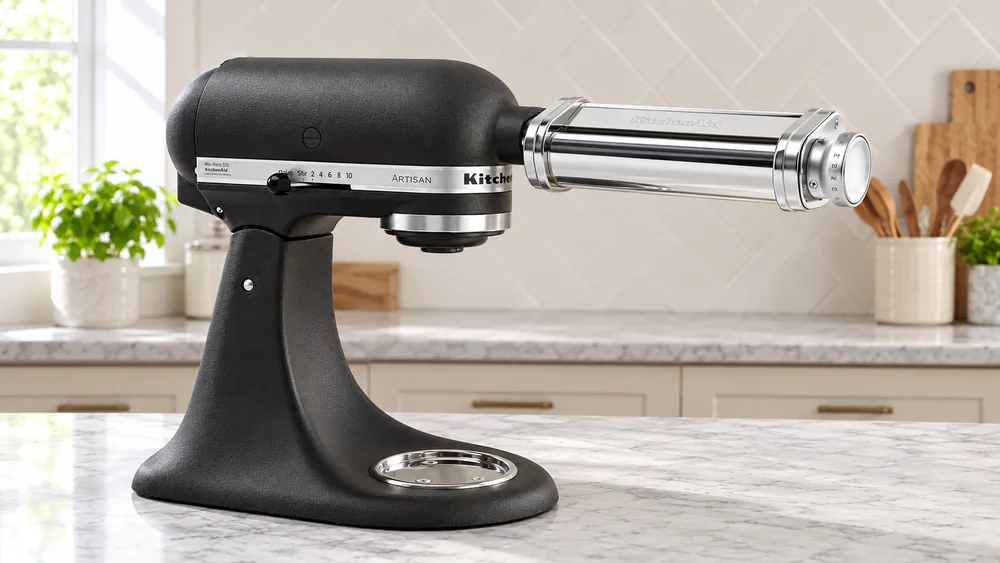
Think about what you will really use. The KitchenAid hub accepts more than ten attachments, which makes it the most flexible choice. The Cuisinart has one outlet and no grater, and the Bosch offers a slicer, shredder, grinder, pasta maker, and juicer as options. If you only bake, ignore the attachment count and put the money toward a stronger motor.

Counter Footprint

A mixer that lives in a cabinet gets used less. The Hamilton Beach has a carry handle, the Cuisinart takes less room than a KitchenAid, and the Artisan Mini is the smallest of the group. If the mixer will stay on your counter, measure its height with the head tilted back to check clearance under wall cabinets.

Warranty and Parts

Warranty length tells you how much a maker trusts its own build. The Ankarsrum carries 7 years, the Cuisinart 3 years, the Bosch 3 years on the motor and transmission, and the KitchenAid Artisan and bowl-lift 1 year. Also check whether replacement parts are easy to order, since a plastic gear or a snapped attachment is the usual failure.

Note. Recent KitchenAid builds show failures at about 3 to 5 years, so a longer warranty from a competitor can be worth a lot over the life of the machine.

Close-up of a KitchenAid stand mixer attachment hub with a pasta roller attachment fitted to it
The attachment hub is the main reason people stay with KitchenAid.

A final tip on price: these mixers vary in price by color. The same machine in a less popular finish can cost noticeably less. Buying through Amazon also gives you straightforward return protection if a unit arrives damaged, which is worth having on a 20-pound-plus appliance.

Stand Mixers We Would Steer You Away From

Not every mixer earns a spot. These are the kinds of machines we would steer you away from, and the reasons are mostly about build and fit.

We would skip any small tilt-head if you plan to bake bread. We would skip a lightweight mixer for heavy dough as well, since it will hop across the counter and strain the motor. And we would skip budget machines that bundle no dough hook or no splash guard, since you will end up paying for the missing pieces.

Two of the models in our top seven also come with real caveats. The Bosch's loud motor and awkward bowl make it a poor fit for a shared apartment or for cake baking. The KitchenAid 7-Qt sits at the premium end and carries only a 1-year warranty, so it is a hard sell if you rarely bake large batches. Weigh those trade-offs before you buy.

How to Care for Your Stand Mixer

A little routine care keeps a mixer working for years. Wipe the body and the head with a damp cloth after every use, and never submerge it. Wash the bowl and beaters soon after you finish, because dried dough is harder to remove.

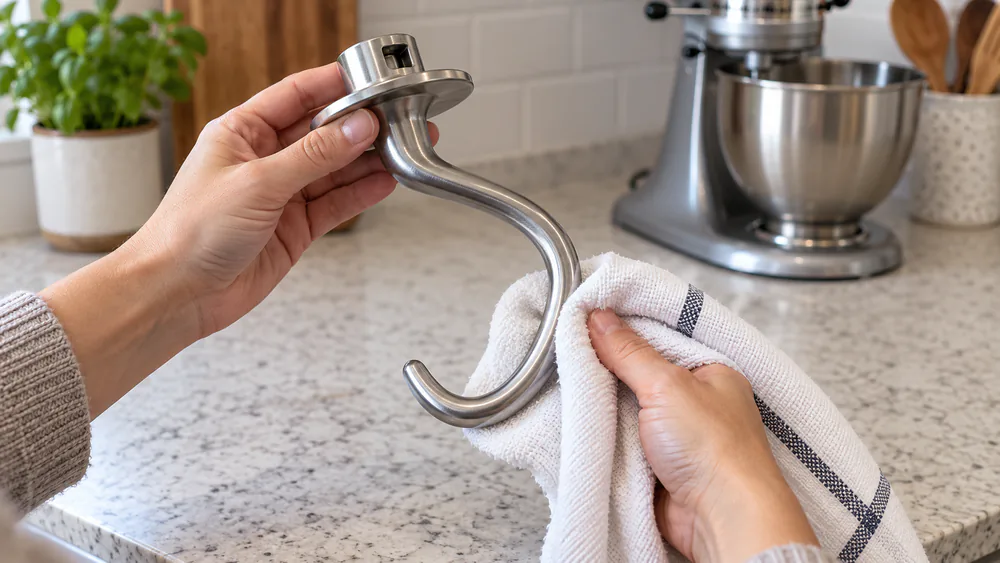
Check each attachment before you put it in the dishwasher. Some KitchenAid attachments are not dishwasher safe and oxidize if you do not dry them quickly, and the Bosch dough hook behaves the same way. The Cuisinart and Hamilton Beach bowls and tools can go in the dishwasher without trouble. Dry anything metal by hand after washing.

Do not overload the machine. Split a very stiff dough into two smaller batches, and let the motor rest between them. If you want a refresher on technique, read how to use a KitchenAid stand mixer, which covers attachments, speeds, and basic dough handling.

Tip. Keep the bowl lid, splash guard, and beaters together in one drawer or bin. Missing parts are the most common reason a mixer sits unused.

A hand drying a metal dough hook with a clean towel next to a stand mixer on a kitchen counter
Dry metal attachments right away to prevent oxidation.

Stand Mixer FAQs

How long does a stand mixer last?

It depends on the build and the dough, so see the warranty and parts section above for how each brand compares.

Are heavier stand mixers better?

Often, yes, though design counts as much as mass; our motor power and stability notes explain why.

Is KitchenAid worth the price?

Yes if you will use the attachments; if you mostly bake, the Cuisinart costs less. For a model-by-model comparison, see our guide to the best KitchenAid stand mixers.

Stand mixer or hand mixer?

A hand mixer is fine for occasional cake batter and whipped cream and takes almost no space. A stand mixer pays off when you knead dough, make big batches, or want your hands free to add ingredients.

Bottom Line

Key takeaway. For most kitchens, buy the KitchenAid Artisan 5-Qt. Choose the Cuisinart SM-50 for more power per dollar, the Bosch or Ankarsrum for weekly bread, and the Hamilton Beach if budget comes first.

The decision rule is simple: if your baking is mostly cookies, cakes, and the occasional loaf, stay with a tilt-head; if bread is a weekly habit, move to a bowl-lift or bottom-drive machine.

Read next

Ready to upgrade your kitchen?

Browse more buying guides, or get our newsletter for new picks as we add them.