As an Amazon Associate we earn from qualifying purchases. We may earn a commission from links on this page, at no extra cost to you. Learn more.
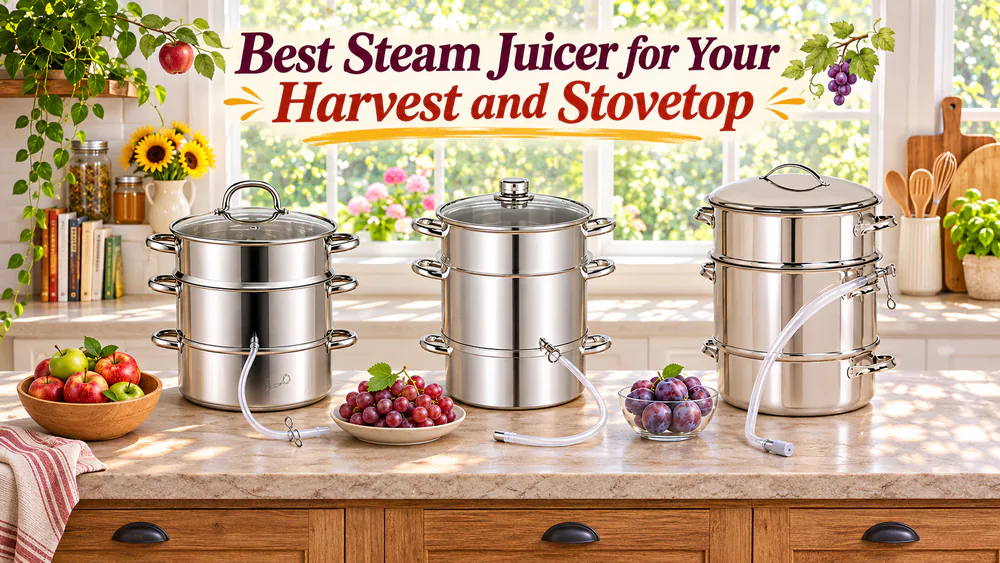
Every grape vine and apple tree eventually produces more fruit than anyone can eat. A steam juicer turns that surplus into clear juice with no crushing, no cheesecloth and very little pulp to deal with. In this guide, we walk through six stovetop models, how they handle grapes, apples and plums, and which one we would put on our own burner first.
We judged each model on the things that decide whether you use it twice or twenty times: how it drains, how the lid and handles behave when hot, how easily the pans come apart for washing, and how much room the stack takes in a cupboard. If you want to compare other machines first, our juicer reviews cover presses and electric extractors too.
Best steam juicers at a glance
Capacity numbers on these pots are confusing, so the table names the vessel wherever the maker did. An advertised "11-quart" size is not a juice yield, and several brands never say which pan it measures. Where a number is unconfirmed, we say so rather than guess.
Model
Best-fit use
Capacity (vessel named)
Cooktops
Main limitation
Cooks Standard 11-Quart 02731
Best overall, spare-hose convenience
11-quart advertised; vessel split unconfirmed
Induction, gas, electric, glass, halogen, ceramic
Several large pieces; water level needs watching
Giantex 11-Quart KC46721
Value-minded occasional juicing
11-quart advertised; vessel attribution disputed
Gas, electric; induction per maker
Awkward lid knob; tier fit can feel loose
Mehu-Liisa 11 Liter
Premium steel construction
11 L designation versus 10.5 qt insert; confirm version
Induction and other stoves (regional version)
Regional capacity mismatch; premium tier
VIVOHOME 5 Qt
Smaller fruit batches
5-quart fruit colander, 5-quart juice pan
Gas, electric, ceramic, induction
Smaller basket; hose clip is fiddly
Norpro 619
Large harvests
11.75-quart fruit insert, 4-quart juice pan
Induction-compatible base
Bulky stack; collector smaller than basket
Cook N Home 11-Quart NC-00256
Mixed cooktops, including induction
11-quart advertised; vessel split unconfirmed
Induction, gas, electric, glass, halogen, ceramic
Hose, clamp and tube need careful checks
How we tested these steam juicers
We score each model on the details that matter to a home canner: the water pan, fruit basket, hose and clamp, and the need to monitor water throughout a long extraction. The criteria are draining, handling, fit between the tiers, cleanup and storage footprint.
The fruits that matter most for these pots are grapes, apples and plums, so those are the jobs we weigh each model against.
Honest limits matter here. We did not measure comparable yield per pound, heat-up times or long-term failure rates, so we do not rank on those numbers. Our picks reflect fit, handling and cleanup, and the awards below describe who each model suits.
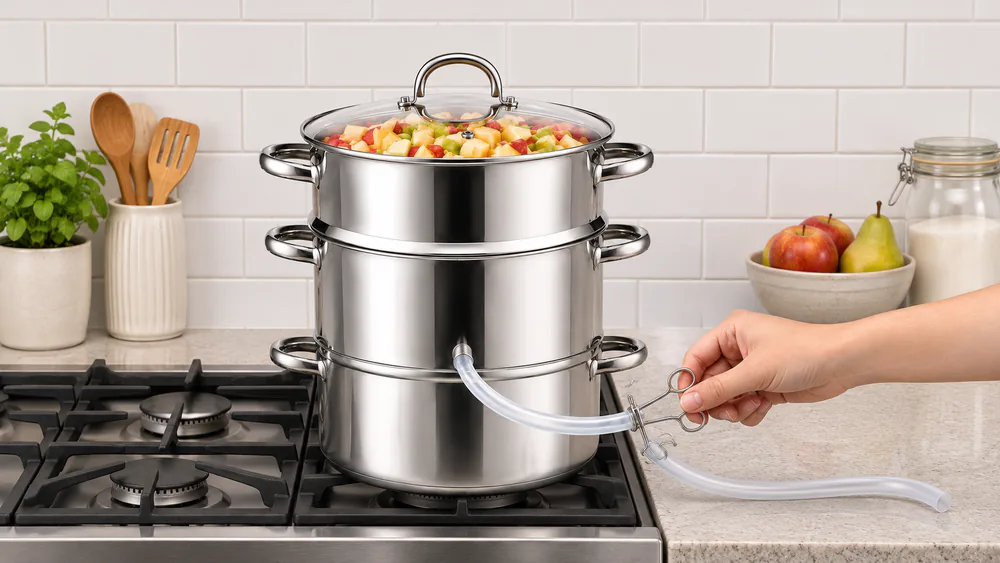
Checking the hose and clamp on a cold stovetop before heating.
1. Cooks Standard 11-Quart 02731: Best overall
Who it suits and why it stands out
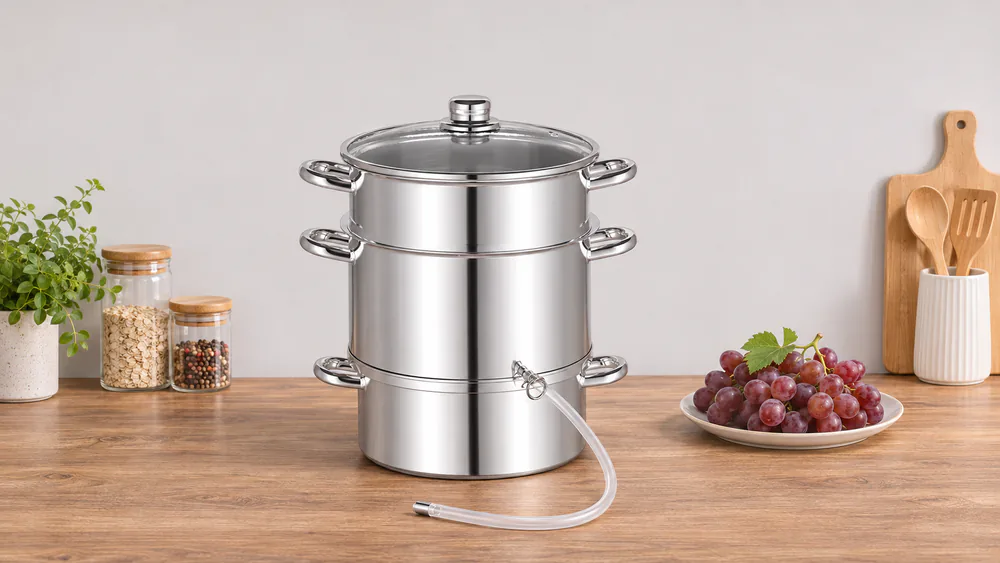
The Cooks Standard is the model we would hand to a first-time steam juicer. The moment that matters is mid-extraction: the water level needs active attention through a long run, and the pot rewards that attention with flavorful juice, even from previously frozen fruit scraps. It also spares you the boiling, mashing and straining of the by-hand method.
The pans are polished stainless steel on an aluminum disc base. Two hoses come in the box, so a failed hose does not end your harvest weekend. The base is 28 cm across, and the maker lists induction, gas, electric, glass, halogen and ceramic cooktops as compatible.
Washes readily when spent fruit is removed promptly
Two hoses included
Broad cooktop support, including induction
Cons
Extraction can feel slow even though hands-on work is low
Several large pieces to clean and store
Vessel volumes are not specified beyond the 11-quart headline
Trade-offs to consider
Plan to stay nearby. The water level needs active attention during a long extraction, and the separable pans make assembly straightforward but leave several pieces to wash and shelve. Treat the 11-quart label as the size of the product, not a promise of juice.
2. Giantex 11-Quart KC46721: Best value
Who it suits and why it stands out
The Giantex needs particular care when you lift its hot lid. It is the budget-minded pick for someone who will juice a few times a season, and its large strainer takes a substantial fruit load. The glass-lid knob is awkward to grasp when you lift it to check the fruit, so keep a mitt or towel handy. The upside is that the parts fit together readily.
The body and welded loop handles are stainless steel over an aluminum-clad base, and the maker lists induction alongside gas and electric. Overall dimensions are 12 x 12 x 14 inches, so check your cupboard height before you buy.
The lowest-cost way into steam juicing in this group.
Pros
Easy cleanup after grape extraction
Clear juice with little visible pulp
Parts fit together readily
Budget tier
Cons
The glass-lid knob is awkward to grasp when checking fruit
Tier fit can feel less precise than a pricier set
Fruit-basket and bottom-pot capacities are not consistently distinguished
Trade-offs to consider
The tiers seat a little less crisply than on a more expensive set. Retailer return terms vary by seller, so confirm them where you buy.
3. Mehu-Liisa 11 Liter: Best premium option
Who it suits and why it stands out
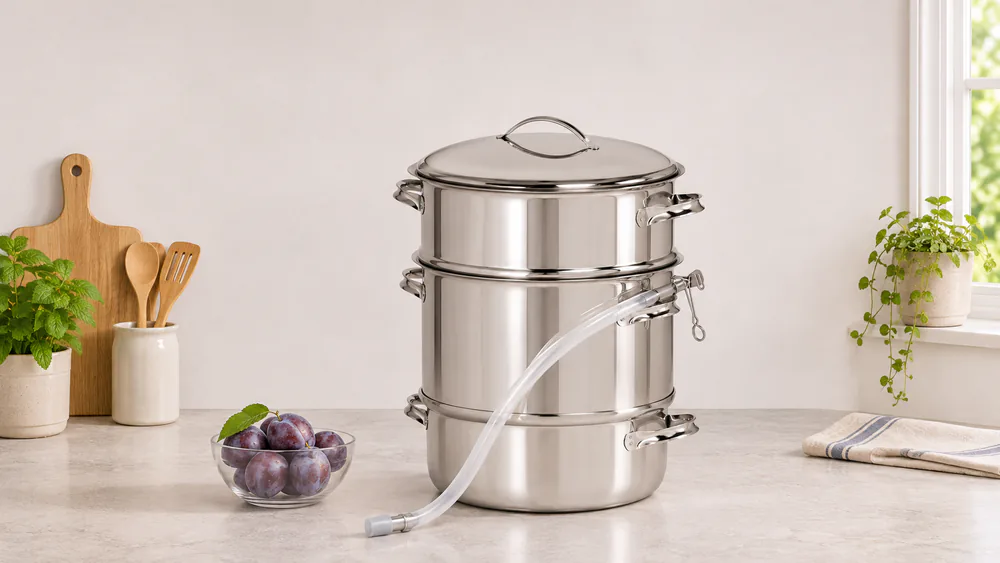
Before anything else, confirm which Mehu-Liisa version you are buying, because US and Finnish documentation describe different volumes. Once you have confirmed the version, the Mehu-Liisa offers the sturdy feel you would expect from a premium model. The 18/10 stainless steel body feels sturdy and well assembled straight out of the package, and the steel lid sits firmly. A 10-year manufacturer warranty covers the steel parts, which is rare in this category.
It also earns its place with surplus vineyard and orchard fruit. Cleanup is straightforward, with little residue to scrub once the spent fruit is out and the unit is rinsed. The silicone drain tube and stainless clamp are separate from the pans, and the water pan holds 4.23 quarts.
Buy it if you juice every autumn and want the sturdiest steel.
Pros
18/10 stainless steel feels substantial and well assembled
Lid sits firmly
10-year warranty on steel parts
Easy rinse-and-go cleanup
Cons
Premium cost tier, the highest of the six
Regional capacity descriptions do not convert to the same volume
Low drain outlet can let some settled pulp into the last pour
Trade-offs to consider
The version caveat in numbers: US copy describes a 10.5-quart insert, while Finnish documentation lists 11 L, and the two do not convert to the same volume. The warranty covers steel parts, not the tubing, and the included cookbook leaves you wanting more practical recipe guidance.
4. VIVOHOME 5 Qt: Best for smaller batches
Who it suits and why it stands out
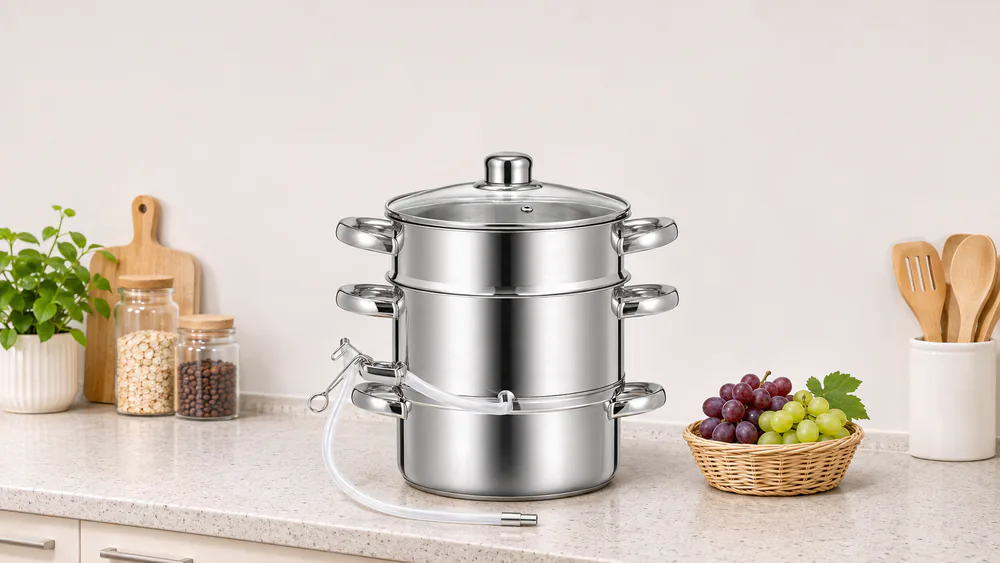
The VIVOHOME is the compact choice, and its hose clip is the fussy part: seat it dry before the first batch. The stack is manageable for smaller fruit batches, which suits a single muscadine vine or a backyard apple tree, and the glass lid lets you check the fruit without repeatedly opening the stack. Muscadine juice came out easier than boiling and straining the grapes, and cleanup was easy.
The numbers are clear for once: a 5-quart fruit colander, a 5-quart juice pan and a 4.3-quart water pan. The lid is 4mm tempered glass, and two hose-and-clamp kits come with it. Gas, electric, ceramic and induction cooktops are all supported.
Smaller basket means more rounds for a big harvest
The hose clip can be frustrating to use
Dimensions and long-term durability for this exact size are unconfirmed
A smaller basket also means repeat loads once the harvest gets big.
5. Norpro 619: Best for large harvests
Who it suits and why it stands out
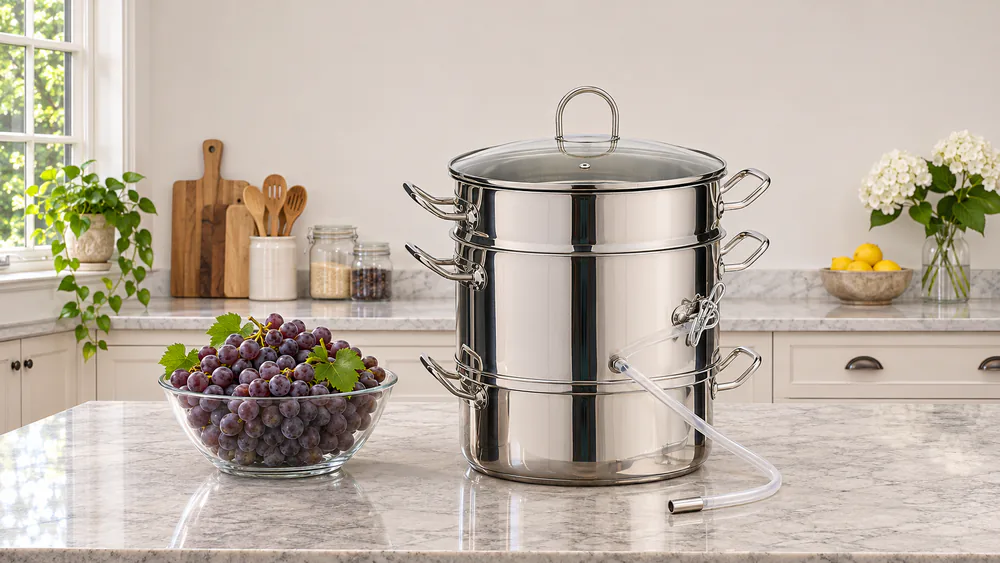
The Norpro takes up considerable space, and its juice collector is smaller than its fruit basket. It has the clearest large-basket specification here: an 11.75-quart fruit insert, a 4-quart juice collection pan and a 7.25-quart water pot. It produces good grape juice, and drawing juice and cleaning the steel surfaces are both straightforward. It also leaves less cleanup mess than a mechanical extractor.
The steel body feels substantial and sturdy, with an encapsulated, induction-compatible base. The basket holds a substantial grape load, though a big harvest still means repeated batches.
Large stack takes significant storage space and is cumbersome when full
Juice collector is smaller than the basket
Lid handle can be a weak point on glass-lid versions
Trade-offs to consider
The manufacturer lists 18.5 x 15.25 x 11.5 inches, and the stack becomes cumbersome when full. With the 4-quart collector smaller than the basket, expect to drain it more often than the other large pots. The packed weight is published as 12.85 pounds, but that figure does not separate packed from empty weight.
6. Cook N Home 11-Quart NC-00256: Best for mixed cooktops, including induction
Who it suits and why it stands out
Unlike the Norpro, the Cook N Home suits kitchens with a glass top, an induction hob or a gas range, since the maker lists induction, gas, electric, glass, halogen and ceramic as compatible. Its drain hose is the catch. Hot juice can leak at the connection, and the hose and clamp are a more troublesome point than the plain steel pans, so check the clamp before every batch and again once the pot is hot.
Features include stainless steel pans over an aluminum layered base, side handles on each level, a metal loop lid handle and a removable middle juice pan.
The drain hose can leak hot juice at the connection
Juice collector and tube need careful rinsing to remove sticky residue
Assembled dimensions are inconsistent across published sources
Trade-offs to consider
Rinse the collector and tube carefully. Published dimensions conflict, so measure your storage space before you commit.
How steam juicers work and when to choose one
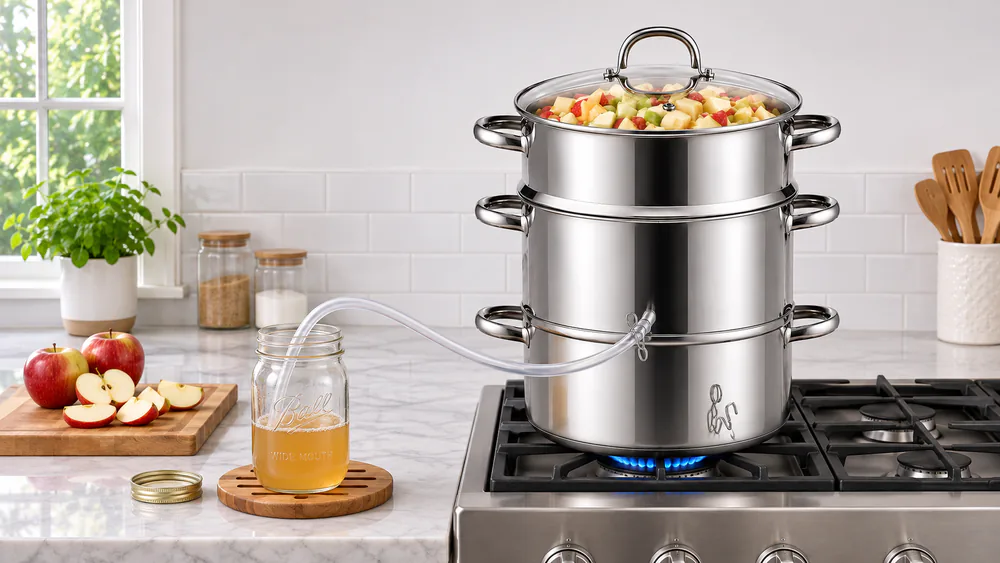
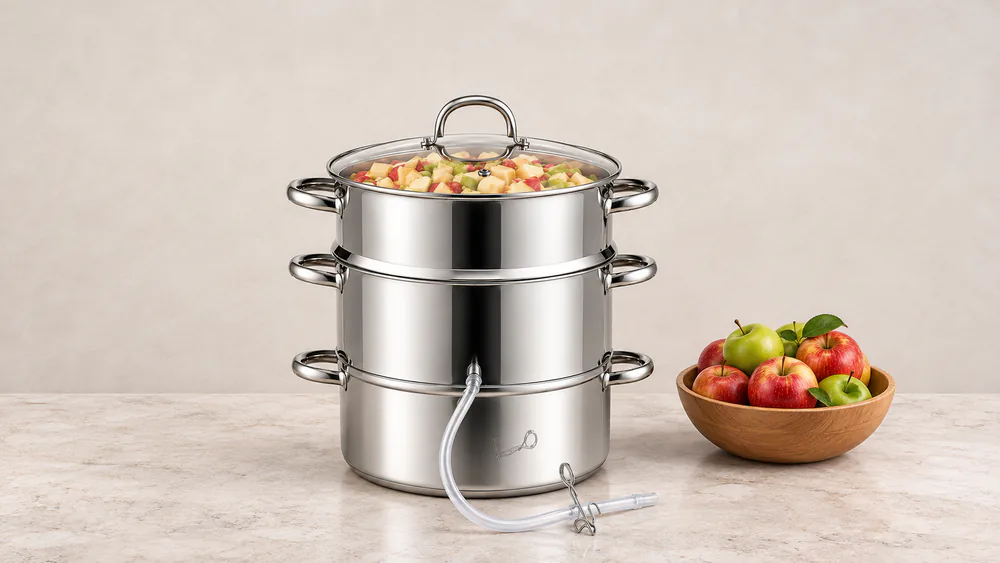
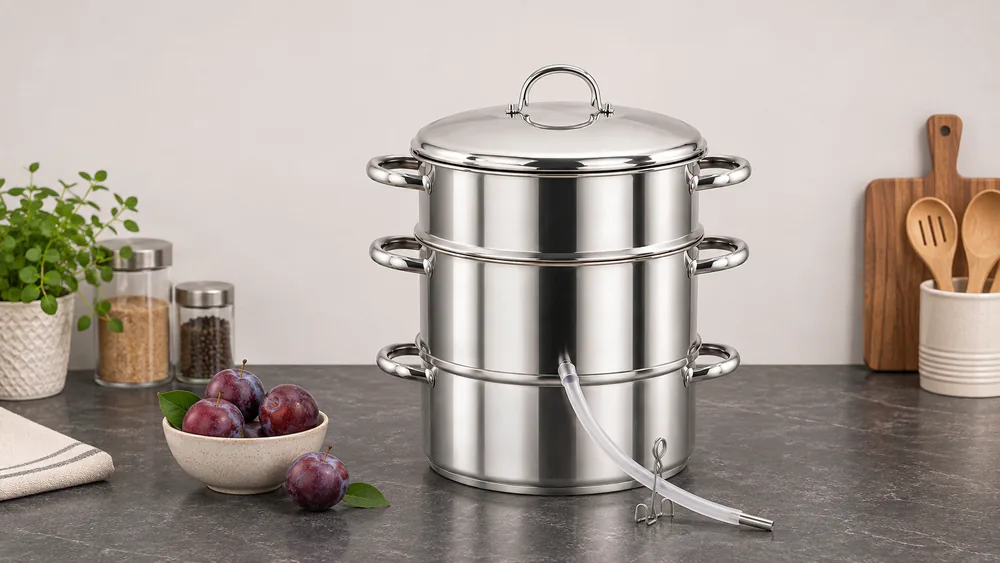
Water boils in the bottom pan, steam rises through the center opening, and it heats the fruit in the perforated top basket. Juice collects in the middle pan, and you drain it through a hose. Grapes, berries, cherries, plums, apples and pears all suit this method. Wash and sort the fruit, and cut larger pieces to fit.
Steam juicers versus juice presses and electric extractors
Presses extract juice from raw fruit, while steam juicers cook the fruit as they extract. The flavor and workflow differ. A steam juicer is passive and quiet once it is going, which is why it appeals to people with a lot of fruit and no wish to stand over a machine.
Steam juicers versus steam canners
These are different devices. A steam juicer extracts juice; an atmospheric steam canner processes filled jars. Some product listings blur the two, so do not buy a juicer expecting it to can your jars.
How to choose a steam juicer
Fruit-basket capacity, juice capacity and storage space
Look for the vessel behind every capacity number. Fruit-basket volume is room for fruit, not liters of juice. For grapes, guidance runs roughly 2 to 3 cups of juice per quart of fruit, and that depends on variety and ripeness. A big basket with a small collector, as on the Norpro, means you will drain more often.
Note. Do not convert nominal quarts into pounds of fruit or promised juice. Vessel size is not a yield promise, and the juice pan sets how often you must drain.
Stainless steel materials and base construction
Stainless steel pans are the baseline. Mehu-Liisa names 18/10 steel, and Norpro advertises professional-gauge steel. The base matters just as much: aluminum disc, aluminum-clad and encapsulated bases spread heat across the bottom pan. We could not compare steel thickness across the six, so judge by how solid the pot feels when you pick it up.
A big basket means nothing if the hose leaks or the lid knob burns your fingers.
Cooktop compatibility, including induction
Verify induction support from the maker, not the listing headline. Cooks Standard, Cook N Home, VIVOHOME and Norpro all state induction compatibility, Giantex does through its current specifications, and the Mehu-Liisa regional version does too. Confirm your exact version before buying.
Hose, clamp, handles and lid design
This is where hose and clamp details decide the pot. Check the clamp and tube before heating. Handles and lids are hot during use, so always use mitts, whatever the copy says about cool handles. Glass lids let you look without lifting, but knobs and handles can be weak points.
Cleaning, replacement parts and long-term value
Wash after use, separate the pans, and clear residue from the drain tube. Treat mineral deposits in the water pan with the maker's directions. Replacement hose, clamp and lid stock is not established for all six models, so do not assume parts are interchangeable.
Using and caring for a steam juicer
Fruit preparation, water monitoring and draining
Wash and sort the fruit. Keep water in the base the whole time, and avoid heat that boils the pot dry. Grapes run roughly 60 minutes in the manufacturer's chart and apples about 1.5 to 2 hours, though ripeness and loading change that, and preheating takes extra time.
Juice storage and canning requirements
Steam extraction does not complete preservation.
Warning. Process filled jars with a tested juice-canning method for your jar size and altitude. A sealed lid alone is not proof of safe preservation. Freezing is the simple alternative: cool the juice and leave expansion room in freezer-suitable containers.
Cleaning and storing the pots, hose and clamp
Rinse right away, before sugars set. Separate the pans, flush the hose, and dry everything before nesting it in the cupboard.
Steam juicer FAQs
Can you steam-juice frozen fruit?
Yes. The Cooks Standard extracts flavorful juice from previously frozen fruit scraps, so a freezer stash of surplus fruit is fair game.
Do these juicers work on an induction stove?
Most of the six do. Cooks Standard, Cook N Home, VIVOHOME and Norpro state induction compatibility, but confirm your exact version before buying.
Can you use the juice for jelly?
Yes. Use the measured juice quantity with the sugar and pectin directions in a tested jelly recipe.
What are the disadvantages of steam juicing?
It is slow, the stack is bulky to store, and you must watch the water level. The heat also changes juice composition, so do not expect raw-press flavor.
Final verdict: Which steam juicer should you choose?
Most people should start with the Cooks Standard, which our top review explains in full. The real decision is how big your harvest is. For bushels of grapes, the Norpro's published basket justifies its footprint. For a vine or two, the VIVOHOME avoids a pot you would rarely fill. The Mehu-Liisa only makes sense if you juice every year and value the steel-parts warranty.