As an Amazon Associate we earn from qualifying purchases. We may earn a commission from links on this page, at no extra cost to you. Learn more.
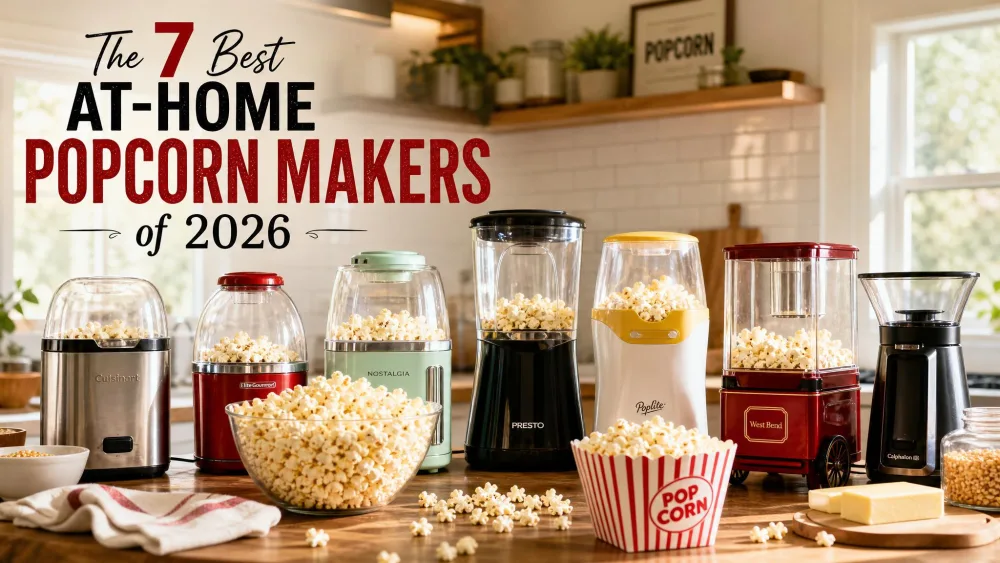
We tested seven at-home popcorn makers for this guide, from a roughly $20 countertop air popper to a 26-pound theater-style machine, and we counted every unpopped kernel by hand. Our lead product tester ran 100-gram batches of the same kernels through each machine, timed every batch, and cleaned each one as its manual recommends. The numbers rearranged our expectations: the cheapest pick popped nearly everything, while a well-known microwave bowl left roughly half its batch unpopped in a high-wattage oven and never made the cut.
The unpopped-kernel rate is the number that ranks a popcorn maker. A popper exists to turn cheap kernels into fluffy, snackable corn, and speed, noise, and cleanup all come second to how much of the bag pops. Air poppers, stovetop cranks, hot-oil machines, and microwave bowls all promise a good movie night, but they perform very differently. Below are our seven picks, the test data behind each, and the buying guidance we wish we had first.
Our lead product tester ran all seven machines through the same gauntlet: 100-gram batches of the same kernels, timed from first pop to last, with every unpopped kernel counted by hand. We bought each unit at retail and scored on pop rate, pop time, cleanup, noise, and durability.
Our test series spanned about three months of near-daily popping, and by the time the window closed we had logged more than 200 timed batches and gone through 75 pounds of kernels.
The unpopped-kernel count is the measurement we trust most; a machine that leaves a third of its batch hard and brittle has failed at its one job.
Per-model results:
Presto PopLite: 2.5 minutes, 95 percent-plus pop rate (8 to 12 unpopped kernels per 100-gram load), 30-second cleanup.
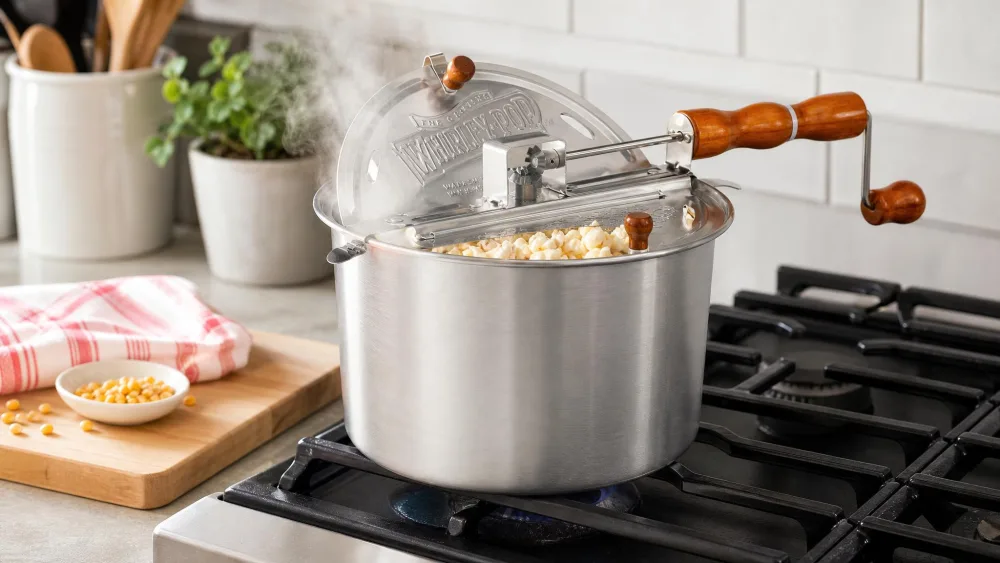
Original Whirley Pop: about 3 minutes popping (about 5 with heat-up), roughly 98 percent pop rate, corn about 40 percent larger by volume than microwave-bag.
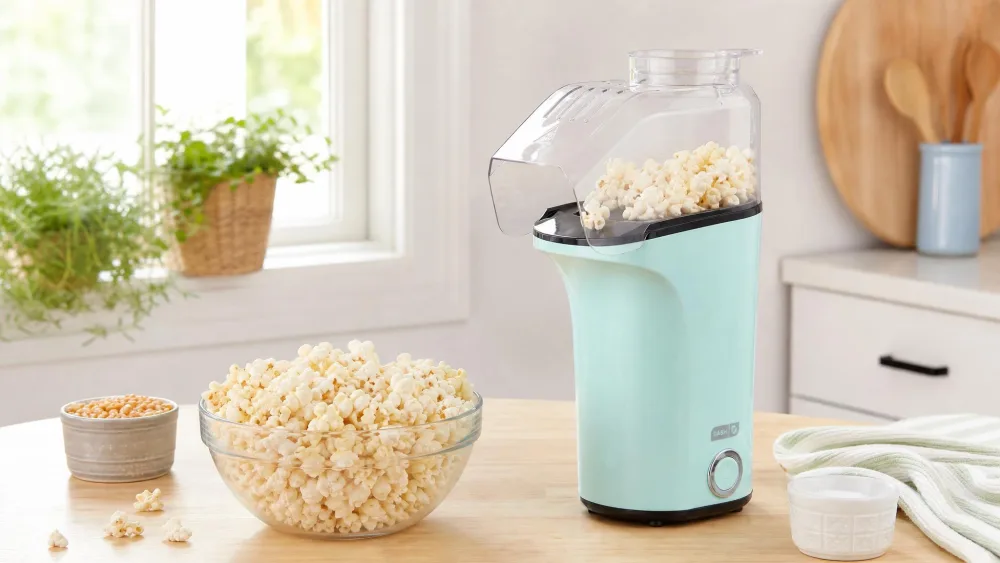
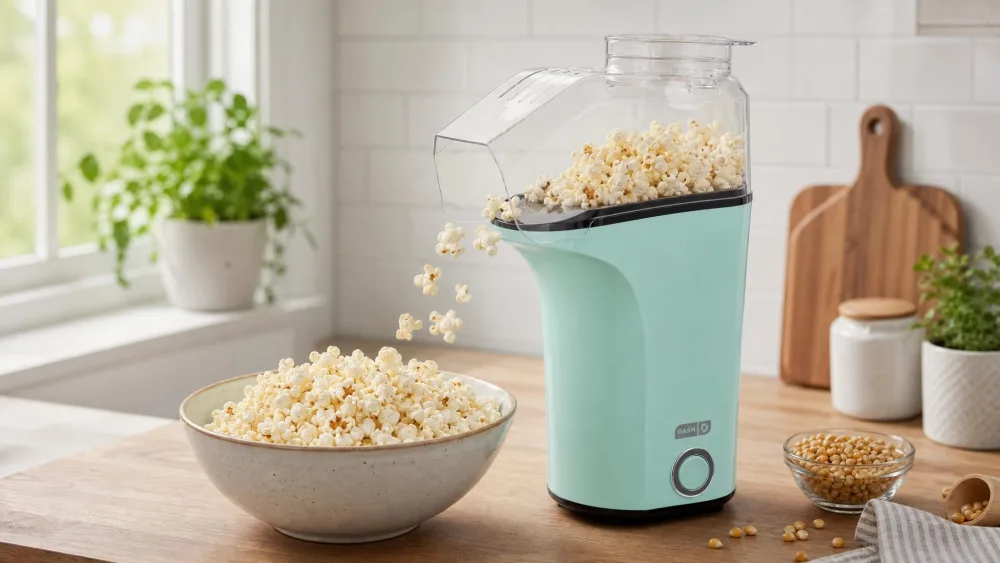
DASH Fresh Pop: about 2 minutes, a pop rate a shade below the PopLite's, 5-second cleanup.
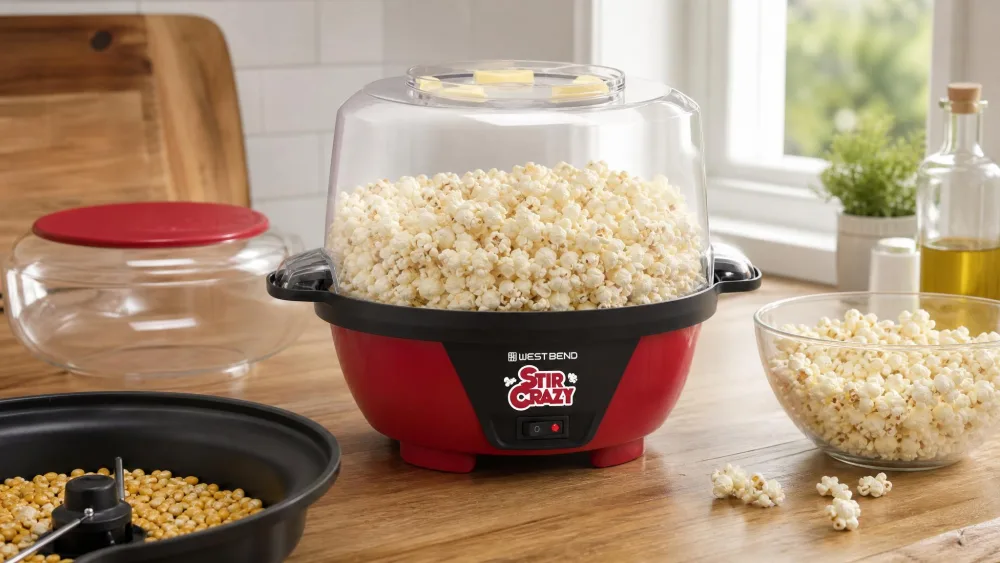
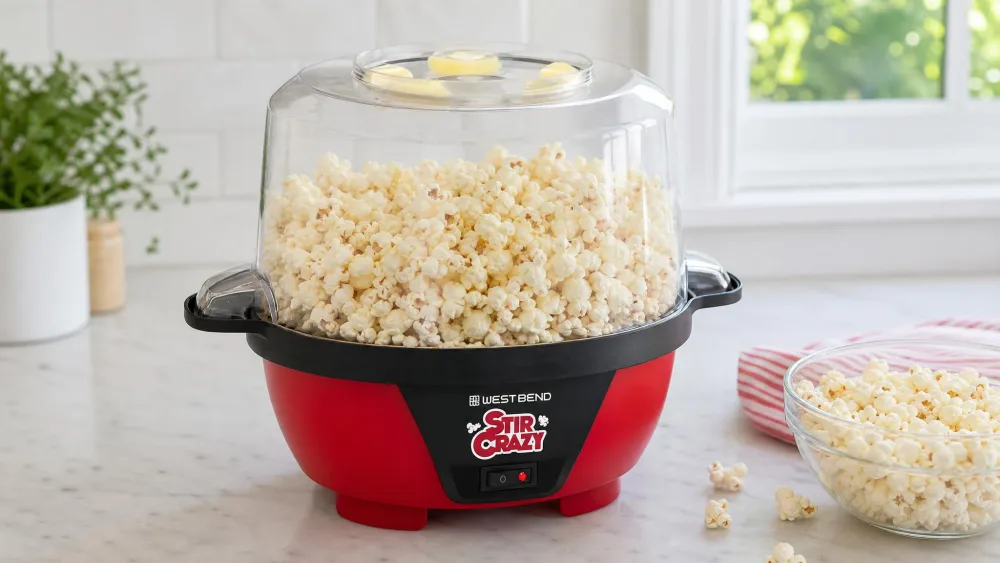
West Bend Stir Crazy: 4 to 5 minutes, 99 percent pop rate, wipe-clean base with a top-rack lid.
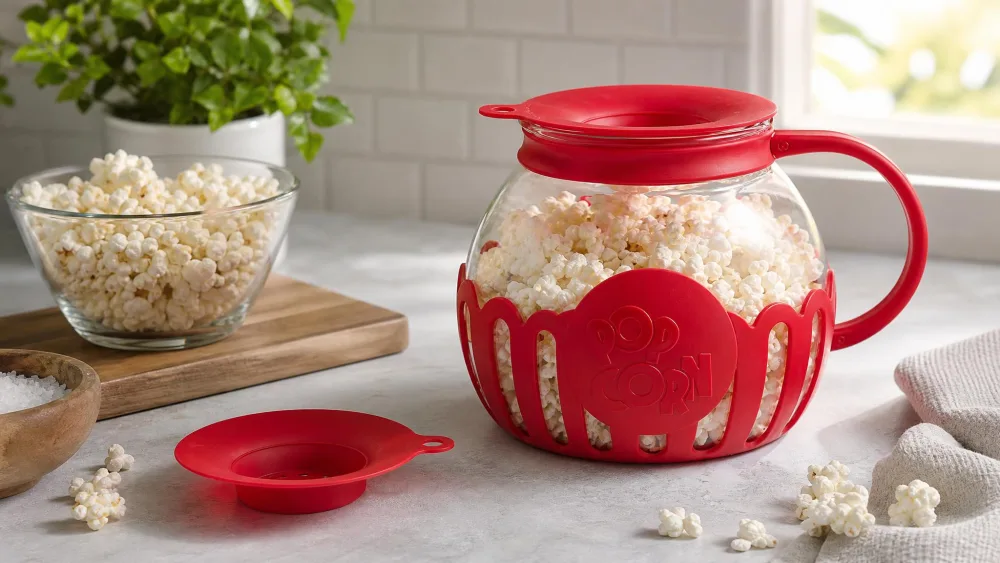
Ecolution Micro-Pop: about 2.5 minutes in a 1000W microwave (about 3.5 at 700W, more unpopped), fully dishwasher safe.
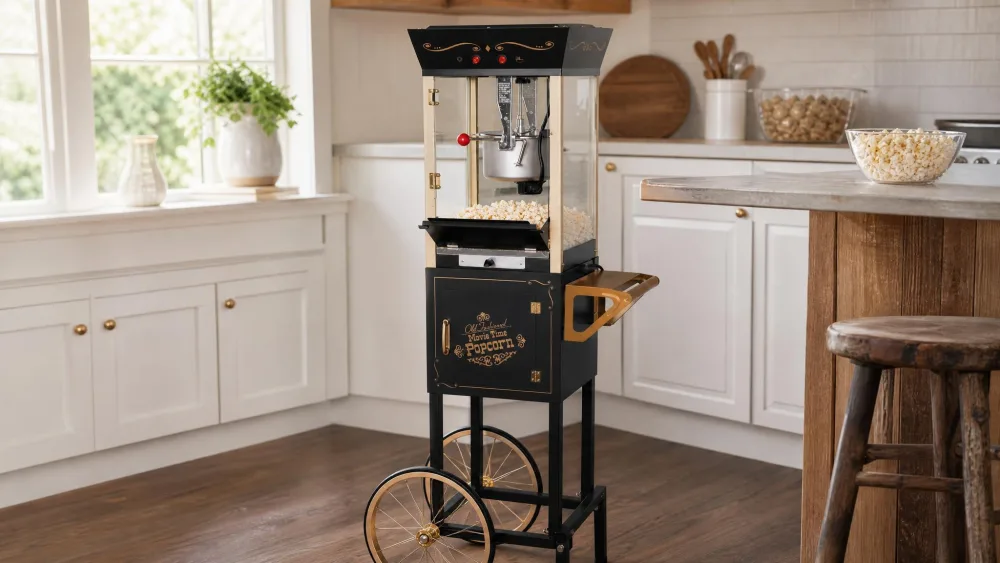
Nostalgia Professional Cart: about 3 to 4 minutes from the 8-ounce kettle, 10 to 15 minutes to clean.
Great Northern Matinee: about 3 to 4 minutes, up to 48 cups, under a minute to wipe down.
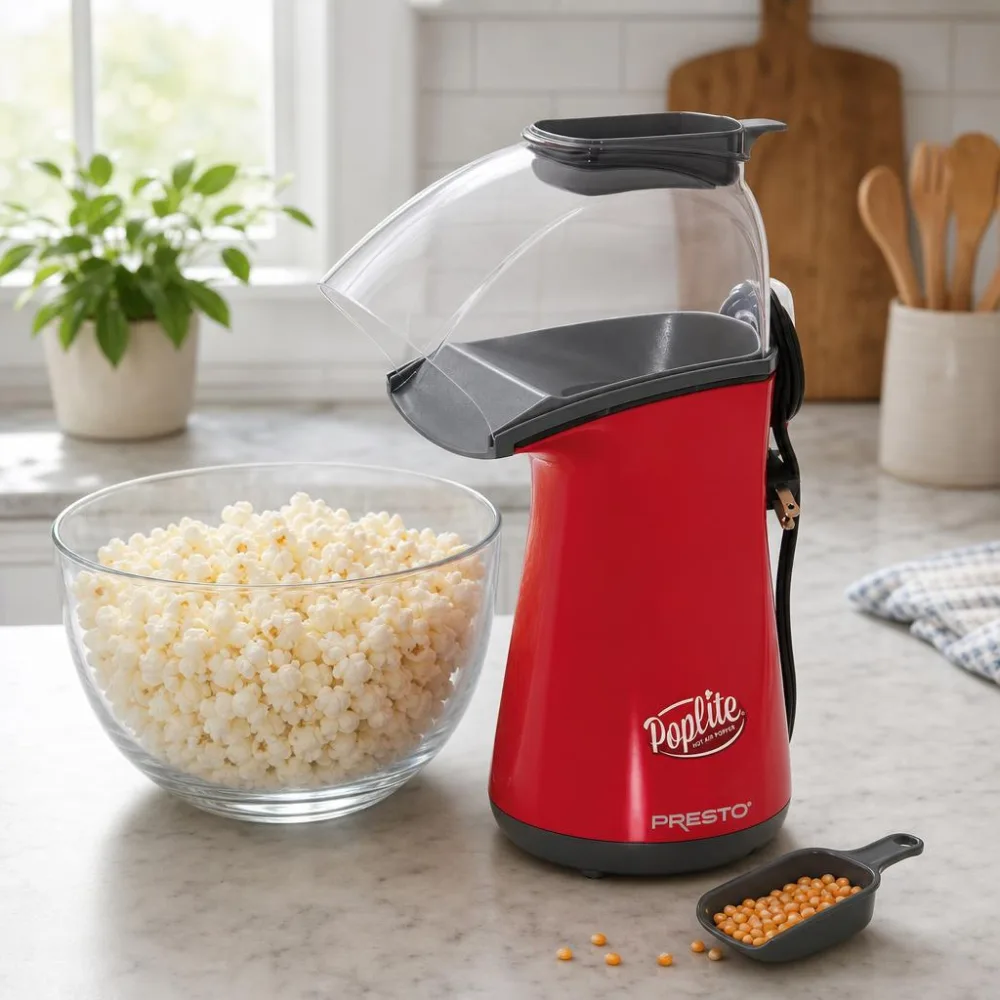
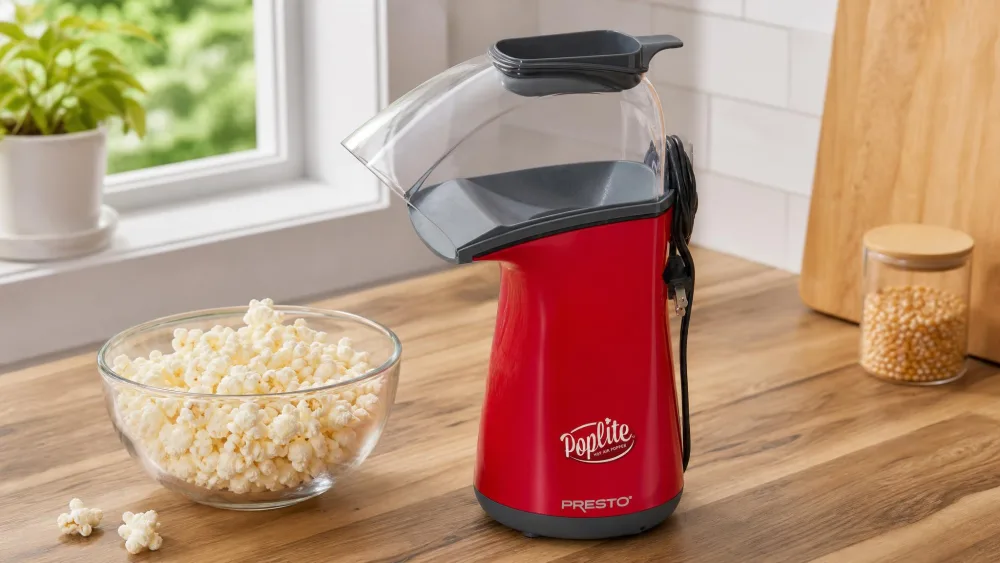
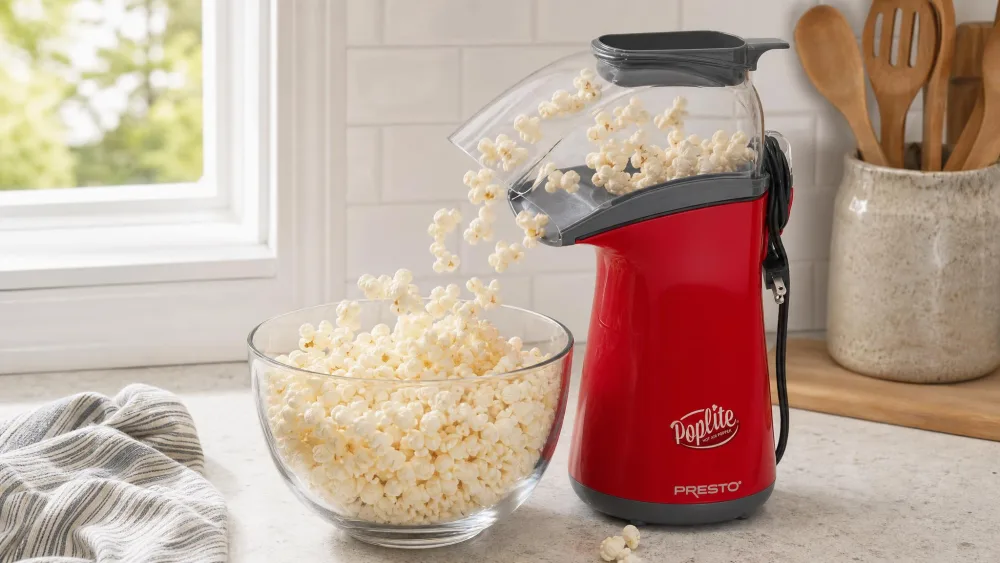
The Presto PopLite is the best at-home popcorn maker for most people: it pops more of its kernels than anything else at the price.
Our 100-gram batch finished in about 2.5 minutes with just 8 unpopped kernels left in the bowl, a 95 percent-plus pop rate. During the first heating phase it shot a few unpopped kernels out of the top, and tilting the popper back 15 to 20 degrees for the first minute stopped the flyers. The top gets hot during a run, and because there is no switch, you stop it by unplugging it.
The butter tray does not melt a full tablespoon within the 2.5-minute cycle, so we melt butter separately. Durability is the honest caveat: our data splits between units that died around six months and units that ran five years or more, every failure a heating-element death rather than a broken housing.
It is a hot-air, oil-free popper rated for up to 18 cups, measuring 9.25 by 5.81 by 13.75 inches and weighing about 2 pounds, with a 1-year warranty. At a street price near $32, the Presto PopLite hot air popper is the cheapest route we found to a 95 percent-plus pop rate.
Key takeaway. Tilt the PopLite back 15 to 20 degrees for the first minute of heating to stop the kernel flyers.
Pros
No oil needed; hot air does the popping
Cleanup is about 30 seconds with removable parts
Built-in measuring cup doubles as a butter tray
Cons
No on/off switch; unplugging is the only way to stop it
Butter tray will not melt a tablespoon mid-pop
Shoots a few kernels out of the top in the first minute
Durability spans about 6 months to 5-plus years
Who it's for: households that want oil-free popcorn on demand, with the best numbers per dollar here.
2. Original Whirley Pop: Best Stovetop Popcorn Maker
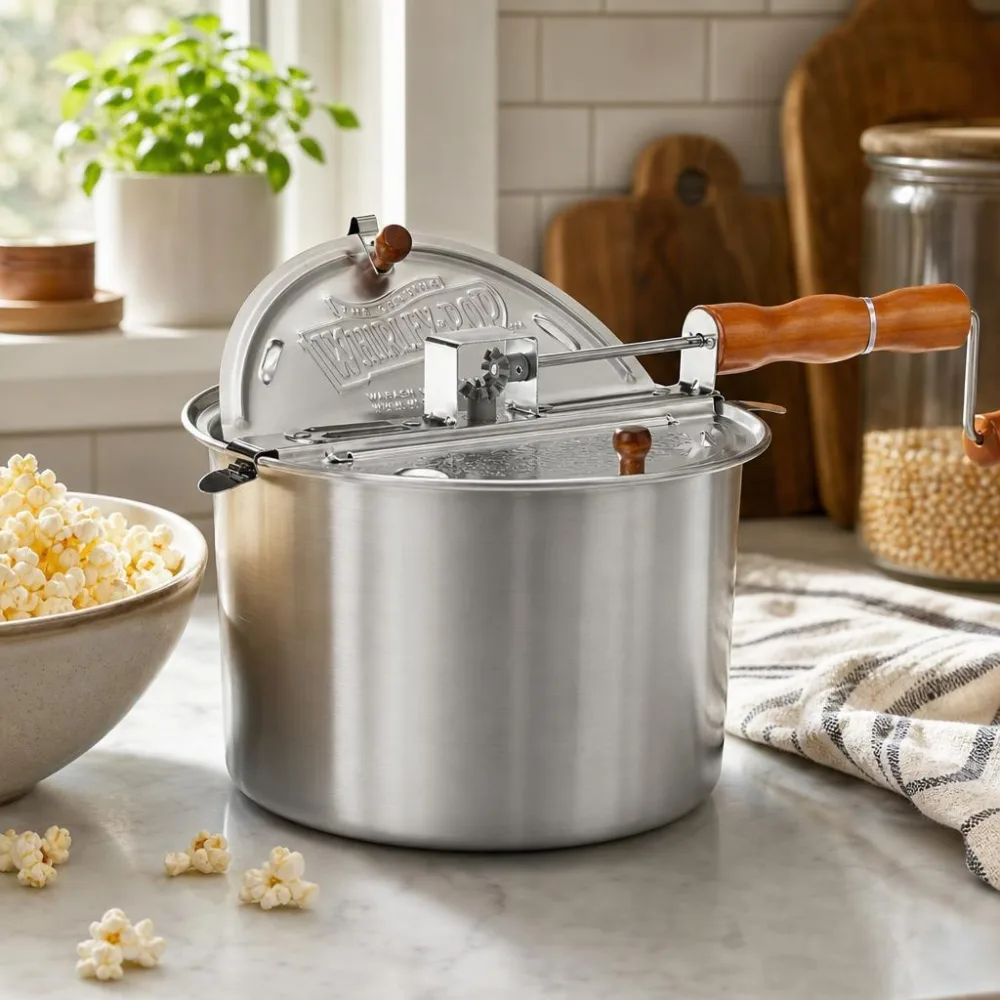
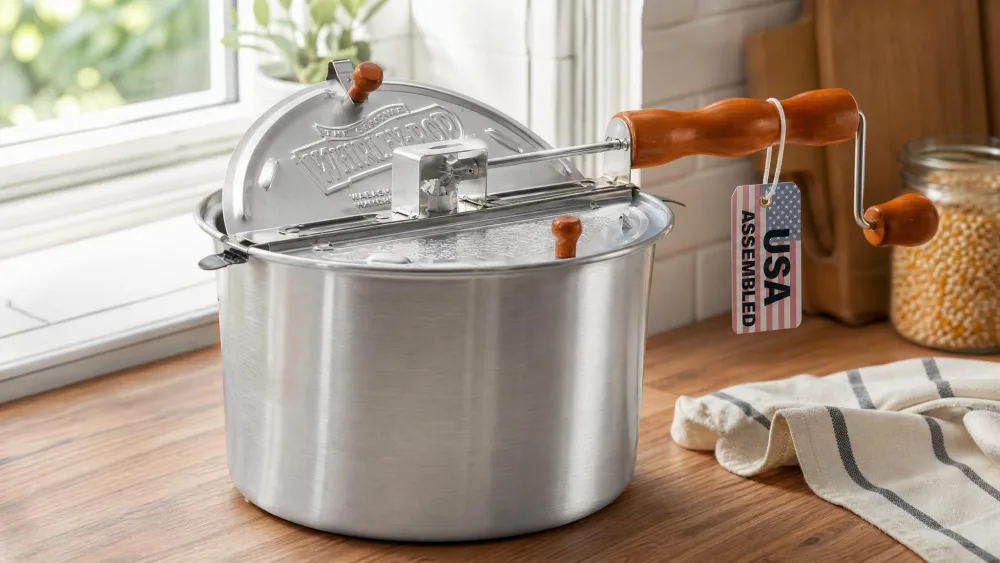
If the PopLite is set-and-forget, the Whirley Pop is hands-on, and the best stovetop maker for the movie theater taste at home.
The hand crank is the price of admission: about 3 minutes of steady turning over a medium flame, with the patented gear mechanism keeping every kernel moving so nothing scorches. Our batches came out with near-zero unpopped kernels, about 98 percent pop rate, and the corn ran about 40 percent larger by volume than microwave-bag corn. With heat-up, the run took about 5 minutes.
The 6-quart aluminum pot is hand wash only; the dishwasher darkens the metal. The 25-year warranty matches our data: the known weak point is the nylon gears, which wear after about a decade of weekly popping. One of our long-term logs ran weekly for 15 years before it needed attention. It is a stovetop unit for gas, electric, or glass-top ranges serving 4 to 6 people.
Pros
Patented gear mechanism keeps kernels moving and heats evenly
Vented lid releases steam and prevents scorching
25-year warranty with $5 replacement gears
Works on gas, electric, and glass-top ranges
Cons
Requires steady hand cranking for the full batch
Hand wash only; the aluminum darkens in the dishwasher
A 6-quart pot plus crank takes up stovetop space
Who it's for: cooks who will trade 3 minutes of cranking for theater-flavor corn that outlives the warranty.
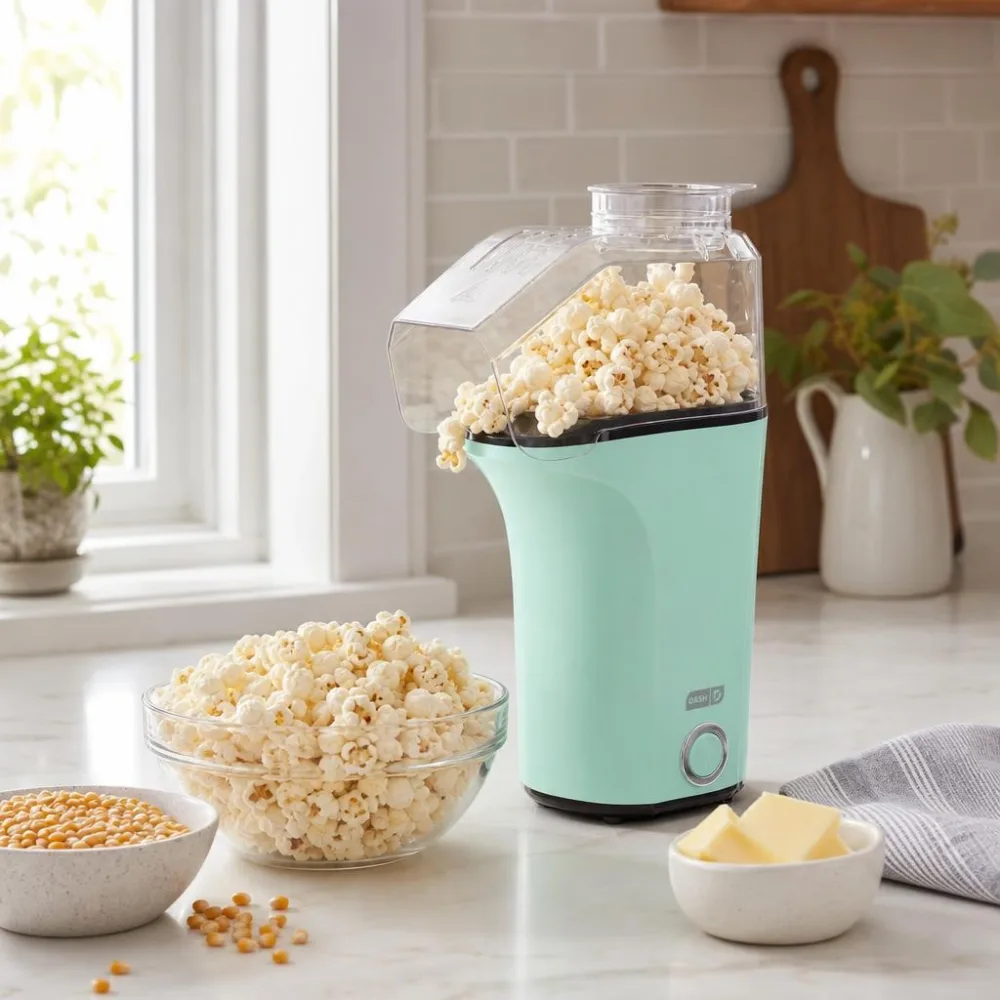
The Whirley Pop demands a crank; the DASH Fresh Pop takes one button at about a third of the price, the best budget air popper.
One-touch start, about 2 minutes to a full 16-cup bowl, and 5-second cleanup because there is no oil anywhere. It is the loudest popper we tested, close to a hair dryer on high. The thin plastic gets hot right after a batch, and the top cover's clips show stress with repeated use and can warp from heat. Underfilled, it shoots unpopped kernels out of the top, so it needs a minimum load. Its butter dish does not get hot enough to melt butter mid-pop.
Durability is the honest weak spot: the most common failure in our logs is the unit quietly losing heat output, with several deaths at about 7 months. It is a 1400W hot-air popper rated for up to 16 cups, measuring 8.4 by 4.8 by 13.5 inches, with a 1-year warranty.
Pros
About $20, and pops up to 16 cups in about 2 minutes
One-touch start
Removable chute and butter tray
Cons
Durability is the weak spot; deaths around 7 months in our logs
Thin plastic gets hot after a batch, and clips can warp
Needs a full kernel load or it shoots unpopped kernels
Who it's for: first-time buyers and dorm kitchens that want the cheapest honest air popper.
The DASH is an air popper; the West Bend Stir Crazy goes the opposite way with oil, butter, and a motorized stir rod, the best hot-oil popper for the money.
The stir rod reverses direction automatically so kernels never stick, and the butter well on top melts butter and drizzles it over the batch mid-pop. Our batches hit a 99 percent pop rate, and a three-year log of ours (32 pounds of kernels) held a 95 to 100 percent success rate.
The base gets genuinely hot, one of our testers burned a finger flipping it over to serve, and it must never be immersed. A 160 to 170-gram load is the practical max. We stopped using the flipped lid as a serving bowl: it does not seat securely, and steam softens the top layer.
Durability is the honest weak spot: multiple units in our logs died within 6 to 18 months, and the plastic base can crack if the kettle overheats. It is an 850W electric hot-oil popper rated for 6 quarts (up to 6.75 per batch), measuring 13 by 10 by 10 inches and weighing about 4.4 pounds, with a BPA-free housing.
Warning. The base gets genuinely hot and must never be immersed. Unplug it, let it cool, and wipe it down.
Pros
Motorized stir rod keeps kernels moving and nothing sticks
Butter well melts and drizzles butter mid-pop
Top-rack lid and a wipes-clean heating plate
Cons
Multiple units in our logs died within 6 to 18 months
The base gets hot enough to burn a finger when flipping it over
The lid steams the top layer when used as a bowl
Who it's for: households that want butter-flavored, theater-style corn in big bowls without cranking a pot.
5. Ecolution Micro-Pop: Best Microwave Popcorn Maker
The Stir Crazy needs counter space and an outlet; the Ecolution Micro-Pop needs only a microwave and a drawer, the best microwave popcorn maker.
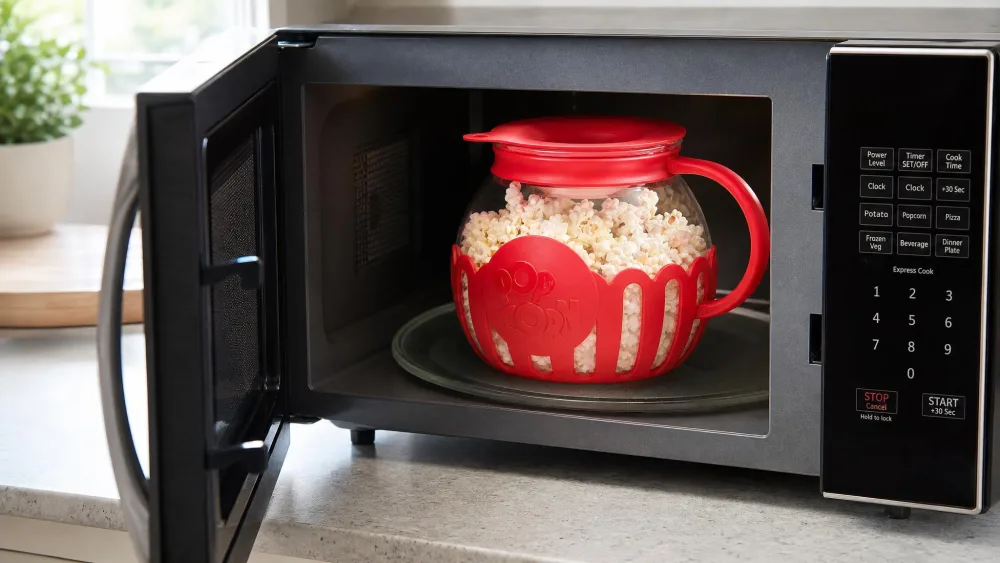
In our 1000W microwave it finished a perfect 3-quart batch in about 2.5 minutes; in a 700W oven the same batch needed about 3.5 minutes and left more unpopped kernels. High-wattage ovens are a trap: several batches scorched at the 3-minute mark, so we stop at about 2 minutes in a 1000W-plus oven. The silicone lid is a measuring cup and butter dispenser, but it runs small for heavy-butter use.
It is the only fully dishwasher-safe popper in our test set: a 3-quart bowl in thermal-shock-resistant borosilicate glass with a BPA-free silicone lid, for turntable microwaves only.
Warning. High-wattage microwaves scorch this bowl fast; several of our batches burned at 3 minutes. Stop at about 2 minutes in a 1000W-plus oven.
Pros
No oil, no counter space, and no plug: just a microwave
Thermal-shock-resistant glass with a rim that stays cool
Lid measures kernels and melts butter on top
Cons
Results depend entirely on your microwave's wattage
The lid's butter cup runs small for heavy-butter use
Turntable microwaves only; skip the popcorn button
Who it's for: apartment cooks who want fresh popcorn from a drawer-sized tool.
6. Nostalgia Professional Cart: Best Theater-Style Popcorn Maker for Movie Nights
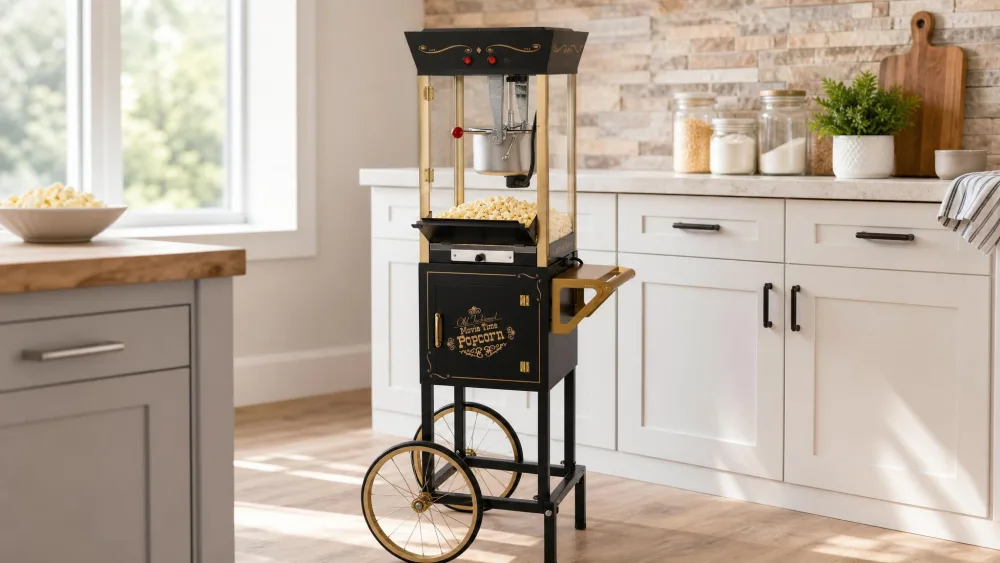
Where the Micro-Pop disappears into a drawer, the Nostalgia Professional Cart fills a corner and becomes a concession stand, the best theater-style maker for movie nights.
The 8-ounce stainless kettle with its built-in stirring system popped a 32-cup batch in about 3 to 4 minutes, and the heated base kept the corn crisp. The cart is smaller than the photos suggest: the cabinet is tight, the kettle needs two hands, and the lid will not stay propped while you pour in oil and kernels. Assembly instructions are poor; we needed a video.
A full clean takes 10 to 15 minutes. The build is lighter than the price suggests, with a cheap-feeling candy dispenser and a few plastic parts, though the frame is sturdy. The wheels are the best feature: we roll it out for movie night and back into storage, and the upper unit lifts off for countertop use. It is a theater-style machine with tempered safety glass windows and a 1-year warranty.
Pros
Rolling cart with wheels and a pull handle
Heated base keeps popped corn warm and crisp
Upper unit lifts off the cart for countertop use
Cons
Smaller and lighter-feeling than the photos suggest
Tight cabinet; two hands for the kettle, no prop for the lid
Assembly instructions are poor
Who it's for: families that want the movie theater experience at home as an event.
7. Great Northern Matinee: Best for Large Batches / Big Families
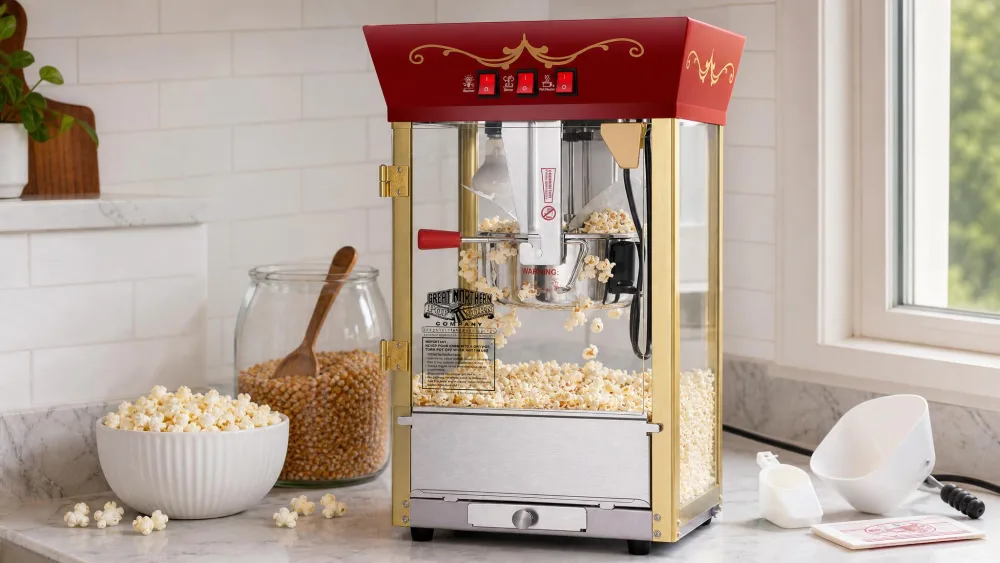
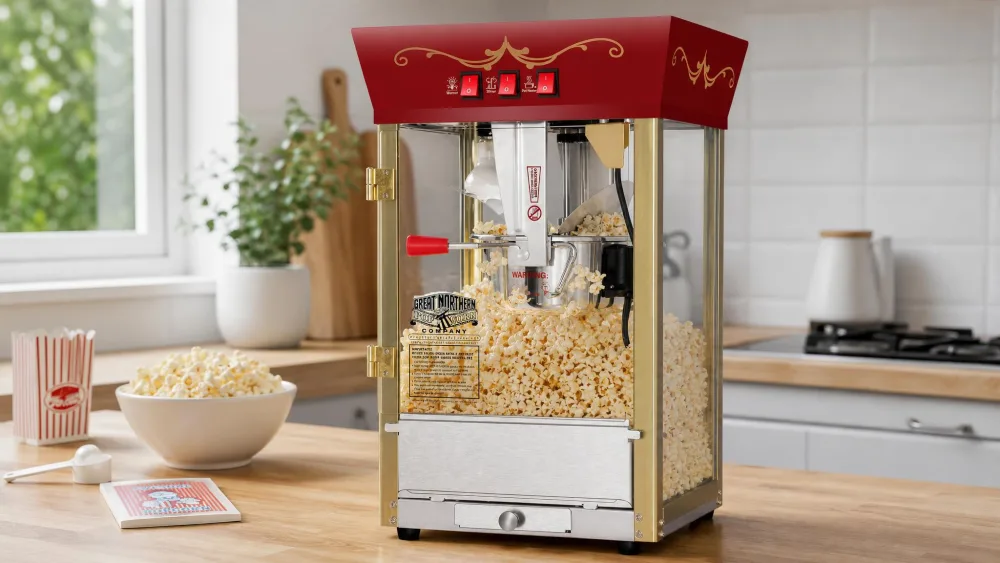
The Nostalgia rolls; the Great Northern Matinee sits on the counter and serves even bigger crowds, the best maker for large batches and big families.
The 3-switch control runs the kettle heater, stirrer, and warming light independently, so a batch stayed crisp for hours on the heated deck. The 850W stainless kettle popped a clean batch in about 3 to 4 minutes after a few break-in batches, and the reject kernel tray caught the unpopped pieces.
Our nearly daily-use log ran about 3 years with zero trouble, using coconut oil and Flavacol-style seasoning. The door is the weak point: multiple units lost the tempered-glass door within about 3 months. The kettle lid rusts if washed like normal cookware, so we hand wash and dry it; the rest is a damp-cloth wipe.
It is an 850W stainless-kettle machine with a 60W warming light, popping up to 48 cups per batch, measuring 14.7 by 12.9 by 23.1 inches and weighing 26.7 pounds, with a scoop, 50 popcorn bags, and 3 buckets included.
Pros
3-switch control: kettle, stirrer, and warming light run independently
Reject kernel tray catches unpopped pieces
Ships with scoop, 50 popcorn bags, and 3 buckets
Cons
Tempered-glass door is fragile; units lost it within about 3 months
Kettle lid rusts if washed like normal cookware
26.7 pounds and a 23-inch height need real counter space
Who it's for: big families, party hosts, and home-theater rooms where 48 cups is not overkill.
Prices are street pricing at the time of writing and move week to week.
How to Choose the Best Popcorn Maker for Your Home
Here is what to consider before buying.
Air Popper vs Stovetop vs Microwave vs Hot Oil
Air poppers need no oil, keeping calories near zero, and they are the fastest to clean but the loudest to run; their movie theater experience at home is the lightest of the four types. Stovetop pots use a thin layer of oil that carries flavor and puffs the corn bigger and chewier, at the cost of about 5 minutes of attention and a hand wash. Microwave bowls need no counter space and no plug, but results depend on your oven's wattage. Hot-oil electric machines deliver the fullest flavor and the largest batches, but need the most care around hot oil.
Capacity: How Much Popcorn Do You Actually Need?
A 16 to 18-cup batch covers a household of four, which is what the PopLite and the DASH deliver. Six-quart pots and the Stir Crazy step up to party bowls. Theater machines start at 32 cups, with the Great Northern at 48 per batch, and they earn their counter space only if large batches happen regularly. Measure your counter and your guest list before you measure quarts.
Ease of Cleaning & Maintenance
Air poppers have the fewest parts, a chute and cup to rinse plus a base to wipe, so cleanup is seconds. Microwave bowls are the only fully dishwasher-safe option in this roundup. Stovetop pots are hand wash only, since aluminum darkens in the dishwasher, and kettle machines need a damp-cloth wipe plus a hand-washed kettle lid. Ask whether the chute and cup come off and whether the lid goes in the dishwasher; those answers decide if cleanup takes 30 seconds or 15 minutes.
Noise Level: How Loud Is Each Type?
Air poppers are the loudest type we tested, and the DASH is the loudest of them, close to a hair dryer on high. Hot-oil poppers sit mid-pack, audible but not conversation-stopping. Theater-style machines run the quietest, a low hum that is easy to ignore mid-movie. If you pop after bedtime, skip the air popper.
Butter Melting & Convenience Features
Every air popper here ships with a butter tray, and almost none work well: the PopLite's and the DASH's trays do not melt a full tablespoon mid-pop, so we melt butter in the microwave. The Stir Crazy is the exception, and the Micro-Pop's lid doubles as a small butter cup. If melted butter is the point of movie night, buy the machine that melts it for you.
Tip. Melt the butter in the microwave while the batch pops; the built-in trays on most air poppers do not finish a tablespoon in one cycle.
Materials & Safety: BPA-Free Construction
Plastics and coatings touch the food in every electric popper, so materials matter. The Stir Crazy's housing is BPA-free, and the Micro-Pop pops in borosilicate glass with a silicone lid, the least plastic-heavy option we tested. According to the FDA, approved uses of BPA in food-contact packaging remain safe, while the National Institute of Environmental Health Sciences calls BPA an endocrine disruptor and keeps studying low-dose effects. When a BPA-free version costs the same, buy it.
Warning. Hot oil is the real safety story: kettle machines and hot-oil poppers get genuinely hot. Keep the Stir Crazy's base out of the sink, let microwave bowls rest before handling, and never wash an aluminum stovetop pot in the dishwasher.
Price & Value
The practical zone for a first popcorn maker is $20 to $50; our picks line up in the comparison table above. Theater machines jump to $180 and $250 and only make sense if you run them weekly. Air poppers and hot-oil poppers generally last 2 to 5 years in our logs, theater-style machines 5 to 10 or more. The Whirley Pop's 25-year warranty is the strongest value signal in the roundup.
The machine that pops nearly everything can fail within a year, and the machine that needs hand washing can run for fifteen. Weigh durability as heavily as pop rate.
Frequently Asked Questions
Which popcorn maker makes the best-tasting popcorn?
Stovetop and kettle machines win on flavor, because oil carries seasoning into the kernel; our best batches came from the Whirley Pop and from coconut-oil kettle batches. Air-popped corn tastes cleaner and lighter. Finely ground popcorn salt also clings better than table salt.
Is an air popper or stovetop popcorn maker better?
Air poppers are oil-free, fast, and nearly effortless to clean, but they are loud and the corn is dry. Stovetop poppers produce bigger, chewier kernels with a fraction of the unpopped kernels, in exchange for cranking and hand washing. Both top picks popped 95 percent-plus, so choose on flavor and chore load, not success rate.
Are popcorn makers worth it vs microwave popcorn?
Yes. Loose kernels cost far less per serving than microwave bags, so a bowl popper pays for itself quickly if you pop regularly, and you control the oil and salt. The microwave bag stays the fastest zero-cleanup option, but it costs several times more per batch, and its butter is a flavoring, not butter.
How do I get movie-theater taste at home?
Three things: oil, fine salt, and timing. Pop in coconut oil or another high-heat oil, season with finely ground popcorn salt, and stop the machine the moment the pops slow to a few seconds apart. The Whirley Pop and the kettle machines get closest because their oil carries the salt and heat evenly.
Are popcorn makers easy to clean?
The air poppers are, about 30 seconds for the PopLite and 5 for the DASH. Microwave bowls are fully dishwasher safe. Stovetop pots need warm soapy water and a towel, never the dishwasher, and theater machines take 10 to 15 minutes.
Final Thoughts
The ranking is the short version: the PopLite for the best all-round numbers, the Whirley Pop if theater flavor beats convenience, the DASH if the budget is firm. Every honest failure is in the reviews, not hidden in fine print.
If we started from scratch, we would buy a microwave bowl popper first, learn our oven's timing, and upgrade once the habit stuck. We would skip theater-style machines unless parties happen weekly, and we would budget a few dollars for replacement Whirley Pop gears rather than treating a decade-old popper as disposable.
Buy fresh kernels, do not overfill, and any of these seven beats a microwave bag on taste and price. The hard part is remembering to preheat the butter.