As an Amazon Associate we earn from qualifying purchases. We may earn a commission from links on this page, at no extra cost to you. Learn more.
Finding a good low priced blender for smoothies shouldn't require a fortune, but it does require patience. The budget aisle is full of machines that stall on frozen fruit, rattle the counter at full power, or die a year in. We tested five of the most popular low priced blenders, from $30 personal cups to a 72-oz countertop pitcher.
We ran every blender on this list through weeks of daily smoothie-making on our own counter, blending frozen fruit, spinach, and protein powder every morning, crushing ice, and timing cleanups. The results did not track the price tags: the cheapest blender here carries the biggest reliability warning, and the best smoothie machine we found costs about what you would pay for a few takeout meals.
Here are the five we would recommend, the tests that separated them, and what to check before buying.
The question we set out to answer was simple: how much performance does a low priced blender actually deliver? All five picks blended the same morning shake on our counter, frozen strawberries, spinach, protein powder, and a liquid base. We timed every run, watched for motor strain, and checked the texture. A second test added a cup of ice cubes to see who crushed and who chunked. Cleanup was measured honestly: every part that touched the blend went into the dishwasher or under the tap. Then we kept using the machines daily, because the things that kill a budget blender, seal leaks, loosening blade bases, fighting lids, and cracking plastic, only show up after the first month.
Performance scored first, then build quality, then cleaning, with noise and value as tiebreakers. A machine that blends beautifully but fails in year one is not a bargain, and a quiet one that stalls on frozen fruit is not a smoothie maker.
Every pick blended the same morning shake in our testing.
The 5 Best Low Priced Blenders for Smoothies, Reviewed
Here is how the five shook out, from the daily workhorse to the specialists.
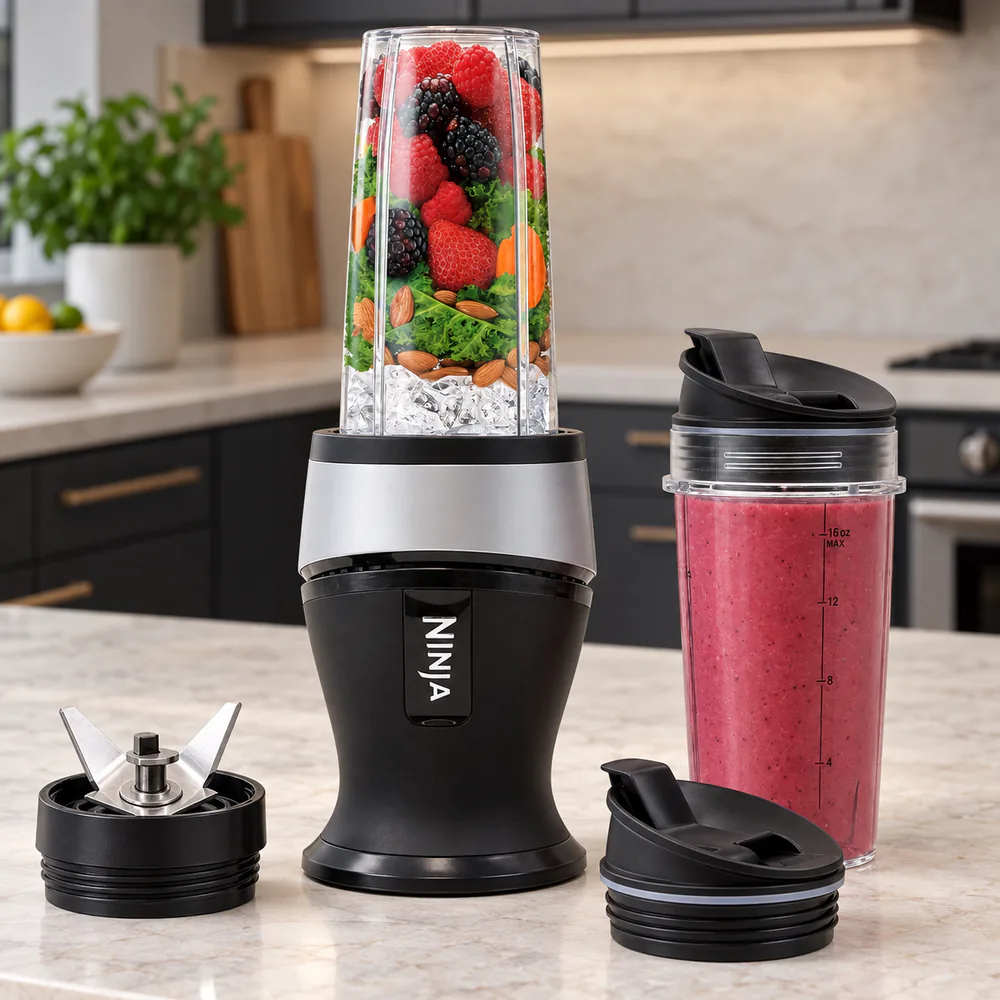
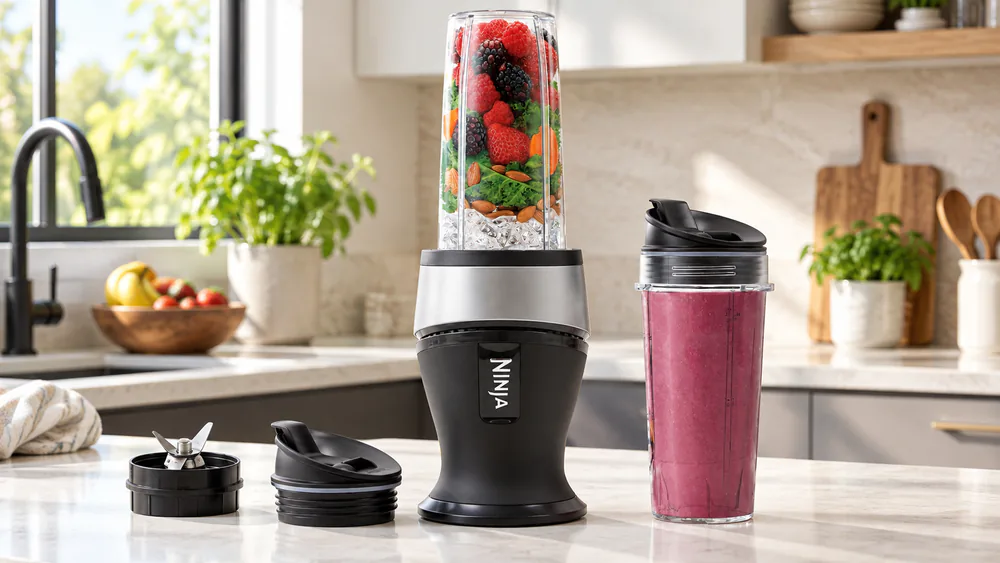
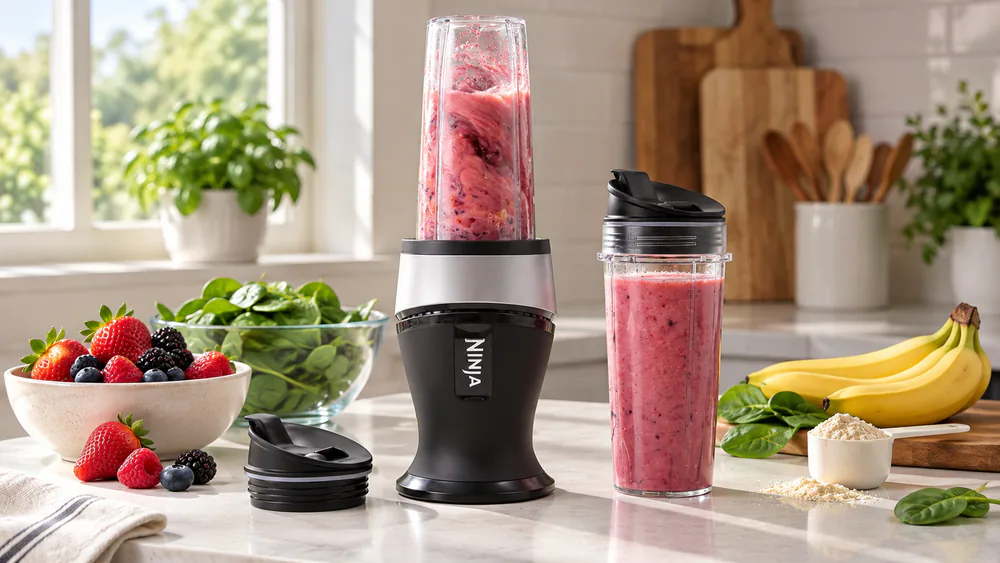
Our mornings in the test kitchen start the same way: frozen strawberries, a handful of spinach, a scoop of protein powder, and thirty seconds of hope. The Ninja Fit turned that pile into a smooth shake in under 45 seconds, with no motor strain, through six weeks of daily use, and turned a cup of ice cubes into snow in three or four pulses. That combination of speed and power makes the Ninja Fit Compact Personal Blender our best overall pick for daily smoothies.
Pros
700W motor handles frozen fruit, spinach, and protein powder without strain
Crushes ice to snow
Quick cleanup: unscrew the blade, top-rack the rest, and a rinse handles the cup in seconds
Compact footprint with two 16-oz to-go cups and spout lids
Cons
Loud at full power, so early-morning runs are not stealthy
16-oz cups feel small for meal-replacement shakes
Seal durability is inconsistent; some units leak early, others run daily for years
It suits the single-serve drinker who wants the smallest footprint and fastest morning routine, though blending means holding the cup down and shaking the tapered cup when frozen chunks settle.
The Ninja Fit blends frozen fruit smooth in under 45 seconds.
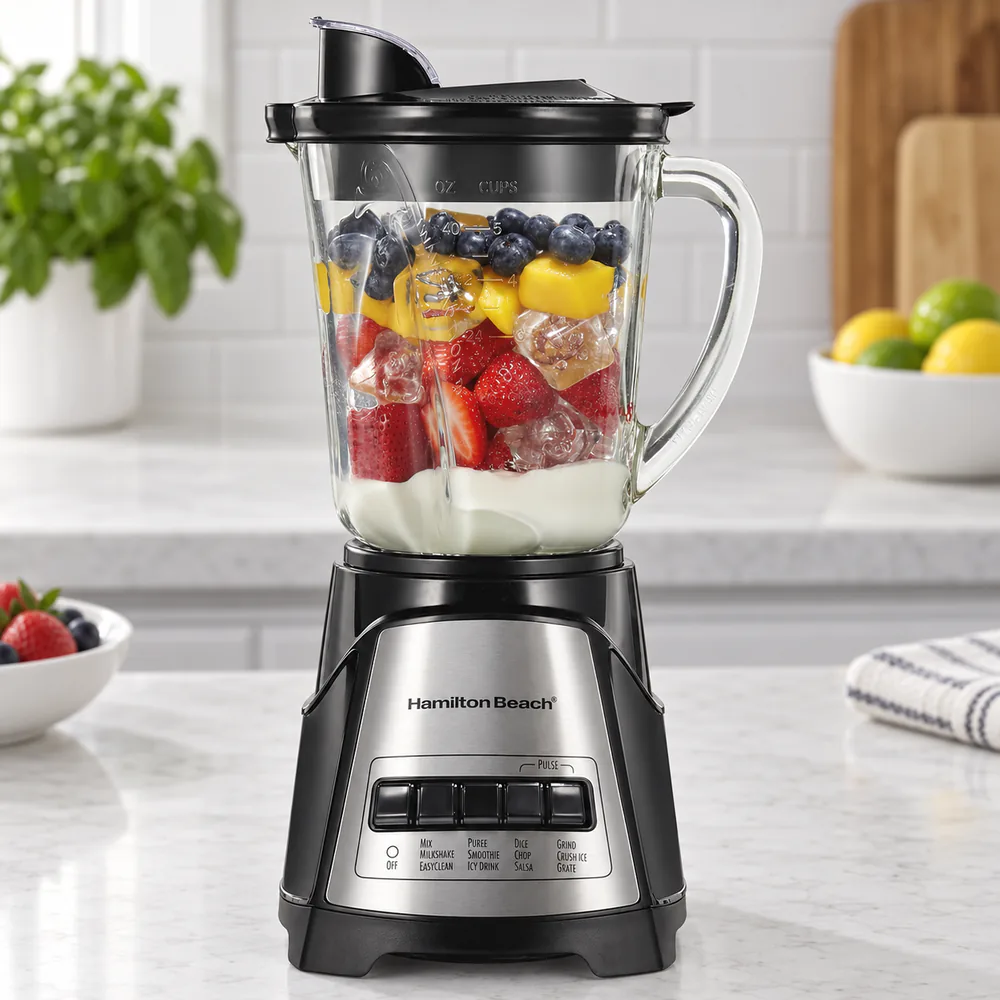
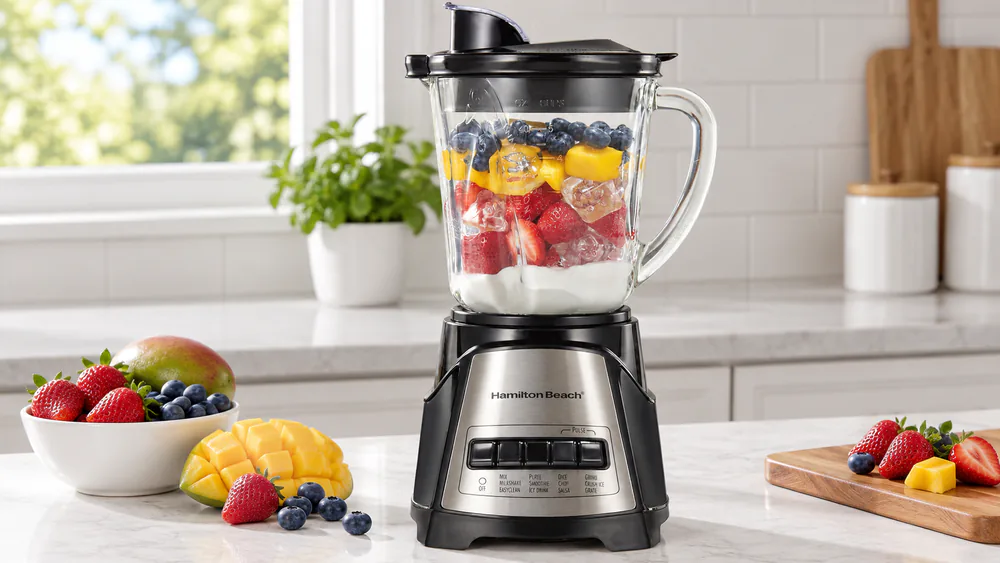
Where the Ninja Fit is built for speed, the Power Elite is built for reach. Best results came when we kept loads below about the 3-cup level, still plenty for two generous smoothies. The lid, though, fought us after almost every blend, and pouring without it invited drips from the spout.
Pros
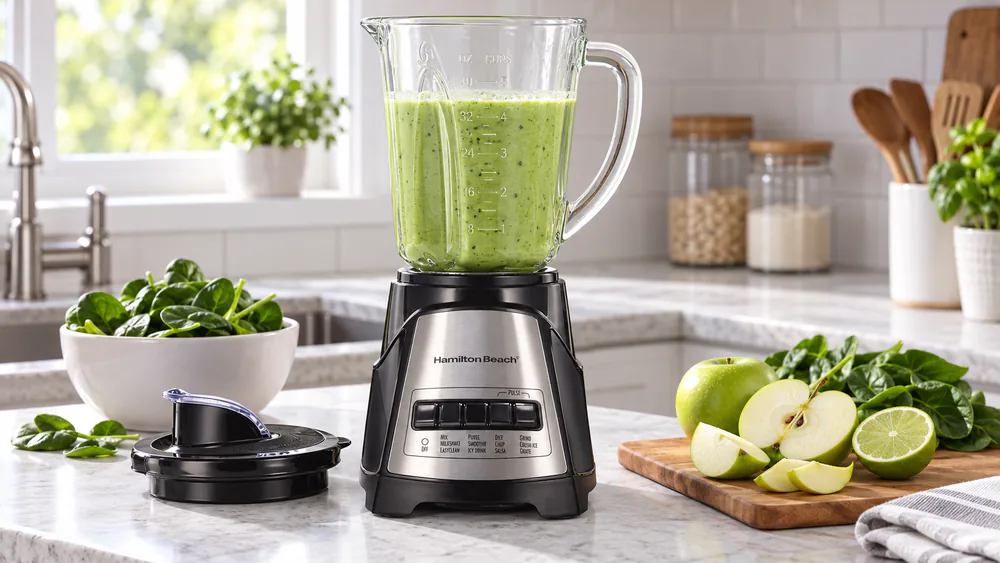
40-oz glass jar is dishwasher safe and resists stains and odors
12 blending functions on a simple 5-button panel, from puree to crush ice
3-year limited warranty
Patented Wave~Action system pulls ingredients down into the blades
Cons
Lid resists removal after blending, and the spout drips if you pour without it
Thick blends and fibrous greens need more liquid and scraping than you expect
Ice crushing is solid with a liquid base but leaves chunks without one
At a street price that swings from about $25 to $45 by season, it delivers full-size performance for the price of a personal blender. That is why the Hamilton Beach Power Elite is our best value pick.
The 40-oz glass jar is the Power Elite's best feature.
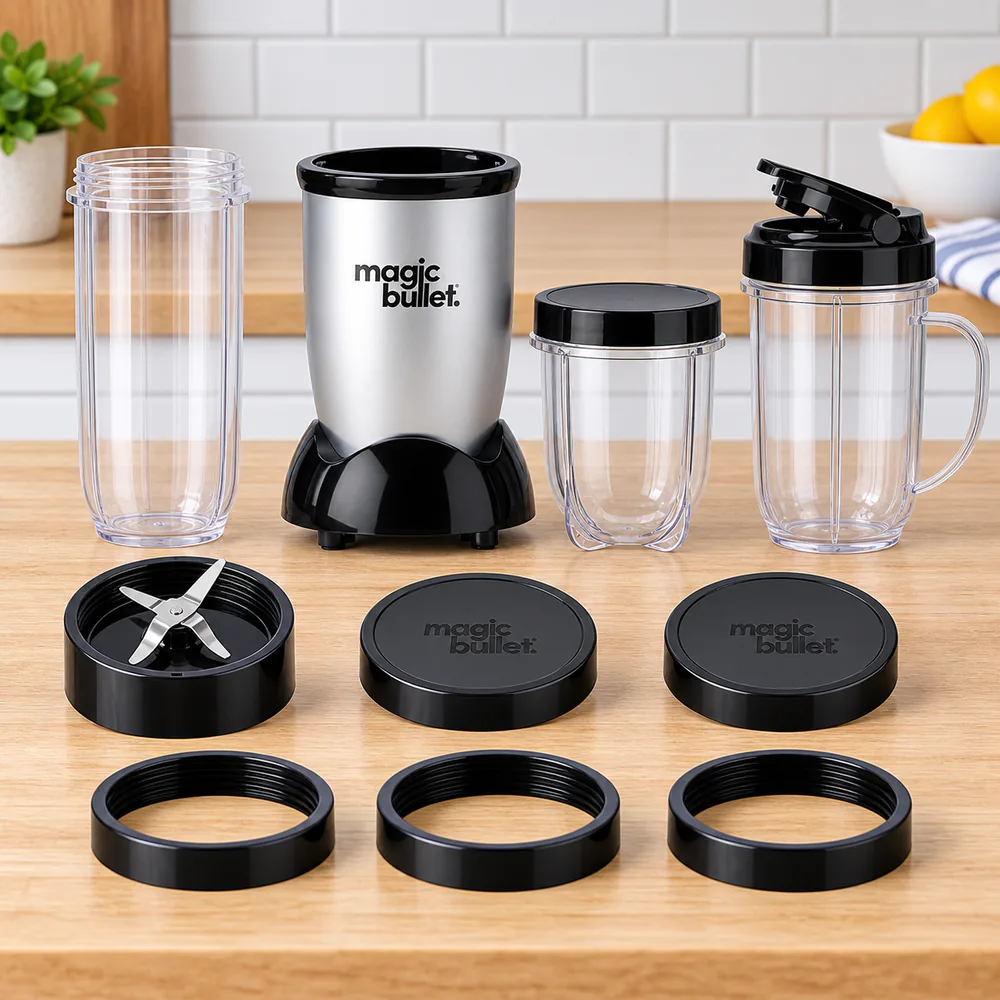
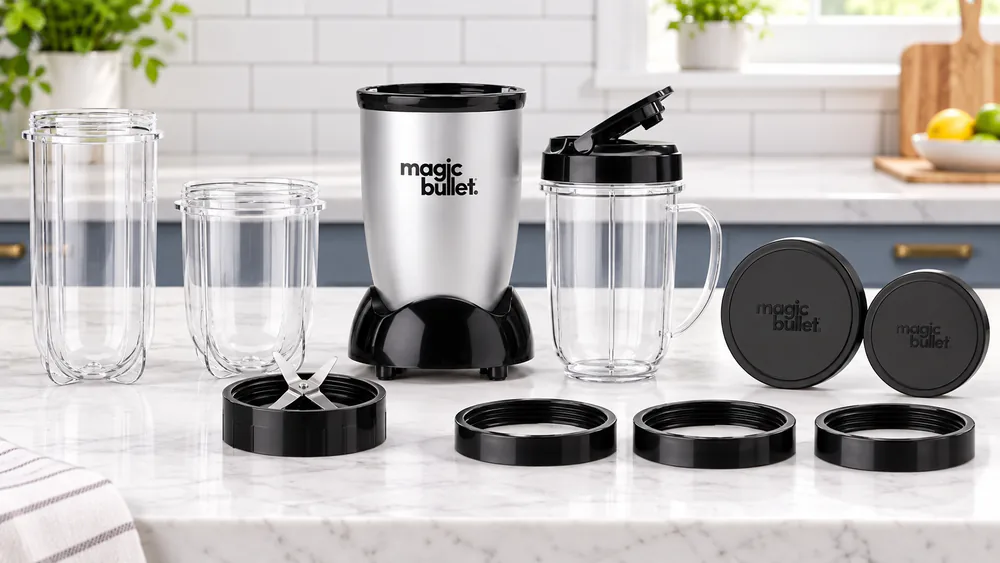
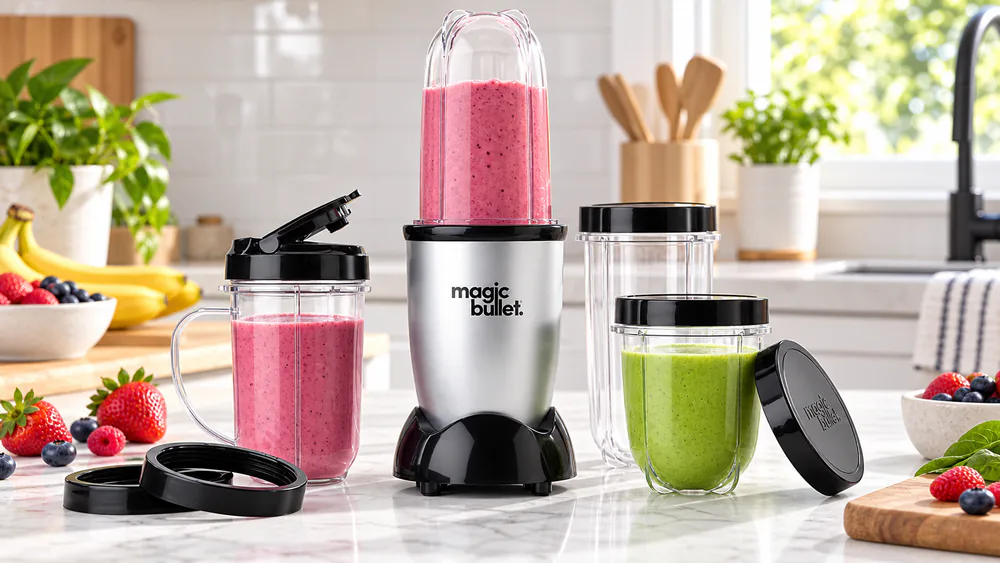
If the Power Elite is the value step up, the Magic Bullet is the price floor, honest about its limits. A heavy frozen-fruit load can trip the thermal fuse: a burning smell, a dead motor mid-blend, and a cool-down wait before the next shake. Work it with liquid poured in first, and frozen fruit blends smooth in about 10 seconds. At about $25 to $35, it is the lowest-priced pick here and our best budget blender when you respect the 250W ceiling.
Pros
11-piece set with two blend cups, a party mug, to-go lids, and a recipe guide
Twist-on blend-in-cup design with no on/off switch
Cups and the stainless cross blade hold up in the dishwasher over months of daily use
Cons
250W motor is not built for whole ice cubes
Thermal fuse can trip on heavy frozen loads, forcing a cool-down wait
Loud enough to be apartment-sensitive
Cup sizes vary across retailers, so check the exact set you are getting
The base-to-cup connection wears over the years, and old cups and blades keep fitting new bases, which makes the Magic Bullet 11-Piece Set a buy-again appliance.
The Magic Bullet blends best when liquid goes in first.
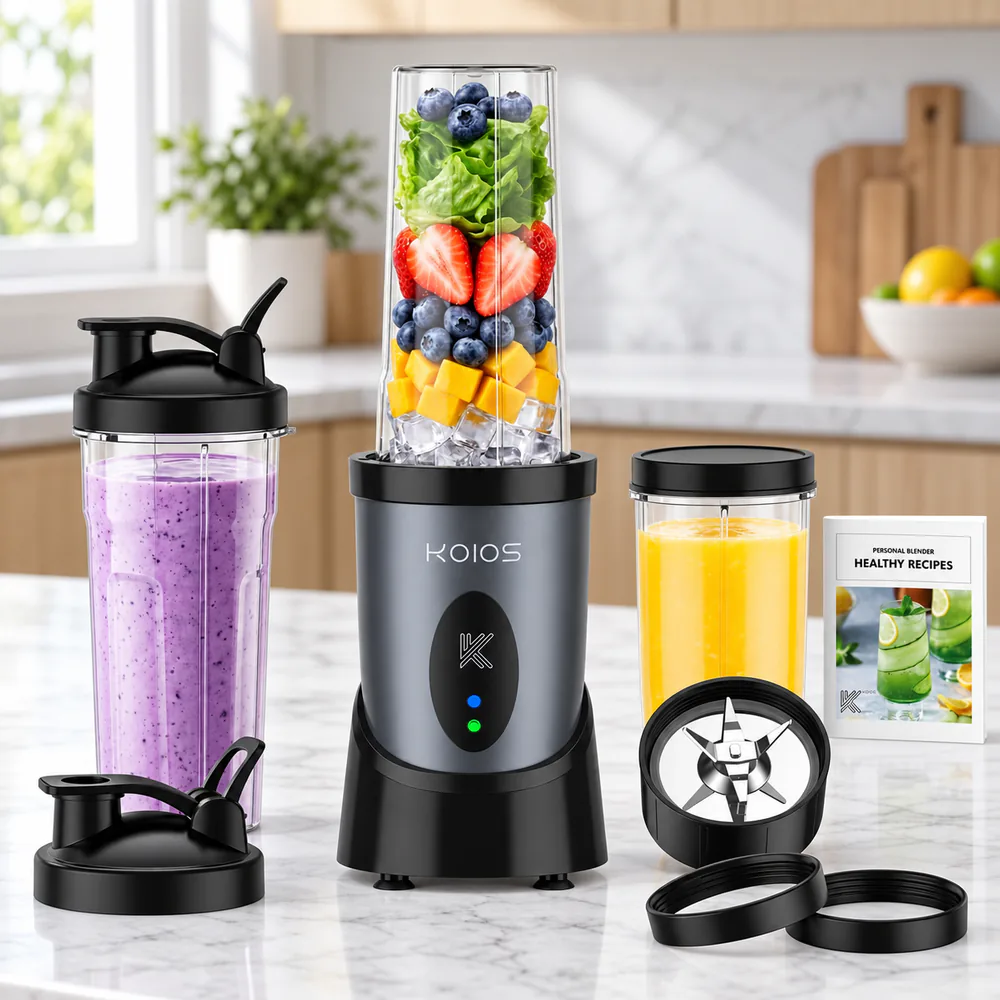
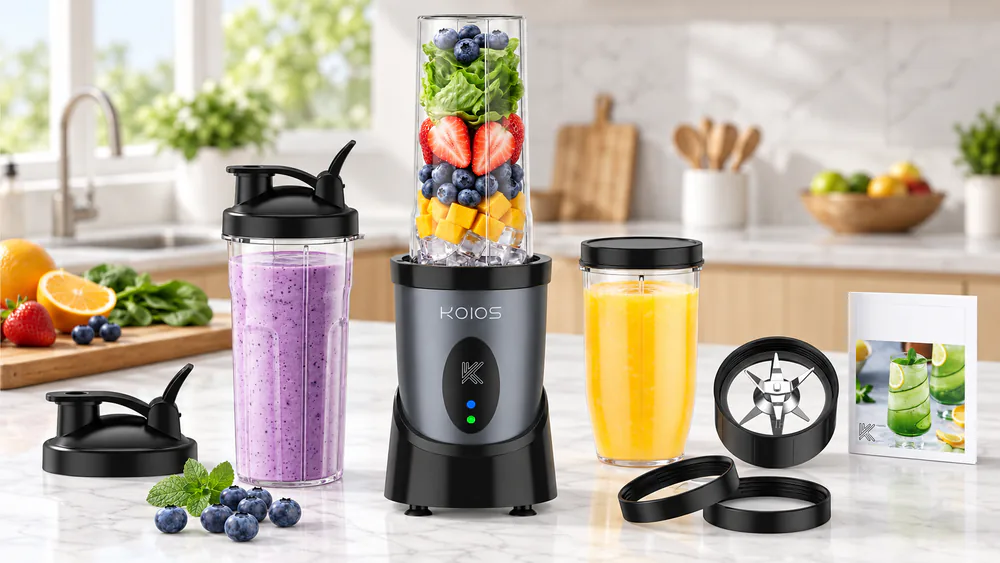
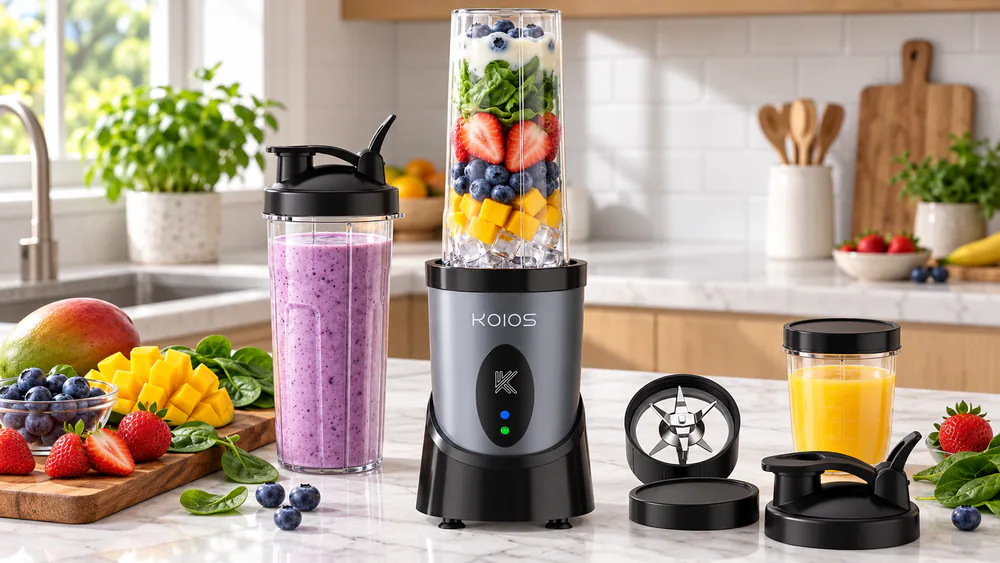
The Magic Bullet shows the personal class at 250W; the KOIOS shows the same class at 900W peak and 23,000 RPM. It rewards a patient order of operations: liquid and powders first, then frozen fruit in half-cup increments, and the result is chunk-free shakes where weaker personal blenders stall. The suction feet held firm through every run, and the cups and blade rinse clean quickly.
Pros
900W peak motor at 23,000 RPM, the strongest in the personal class here
Two 23-oz to-go cups plus a 16-17-oz middle cup
One-twist lock operation with no buttons to hold
24-month quality coverage with lifetime technical support
Cons
Detachable blade base is a durability risk; failures cluster after about a month
The small drinking hole does not vent, so thick smoothies drink better with the lid off
Set against about $30 of price, the KOIOS Personal Blender is the strongest power-per-dollar personal blender we tested, if you blend in stages.
The KOIOS rewards a staged blend: liquids first, then frozen fruit.
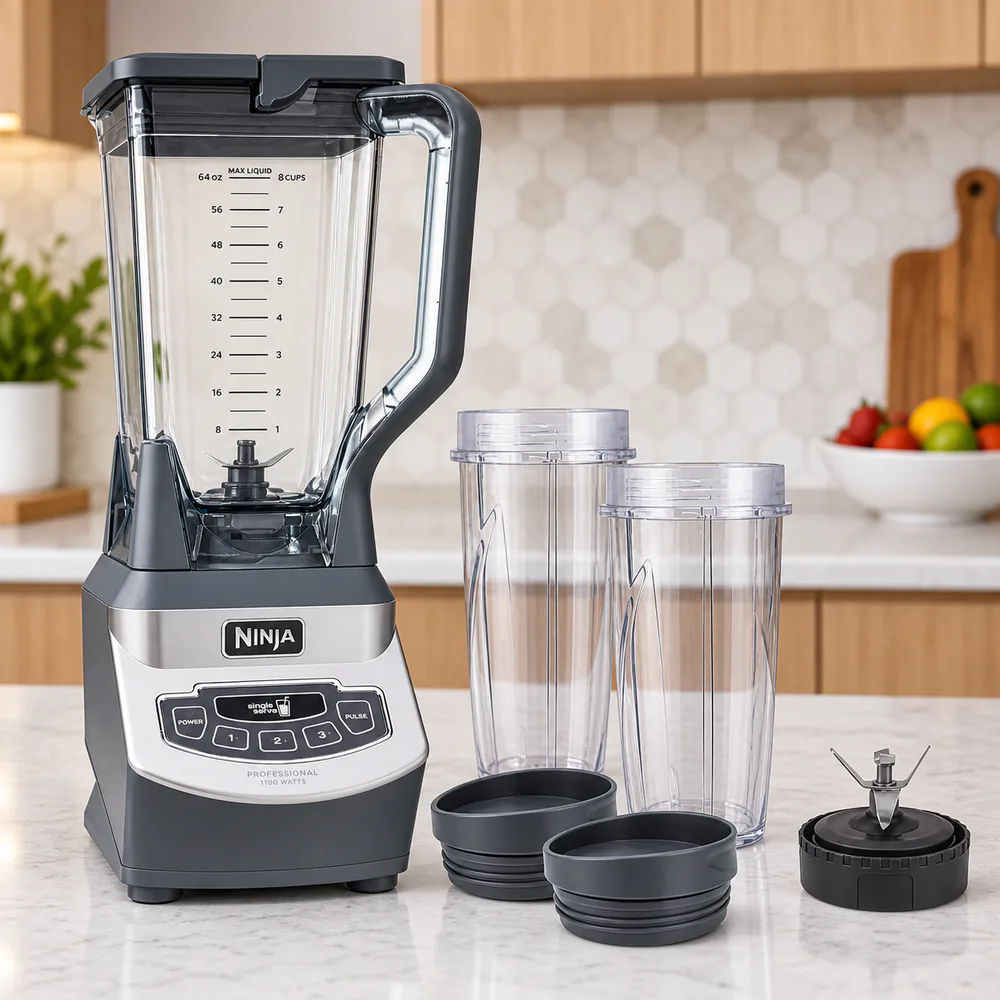
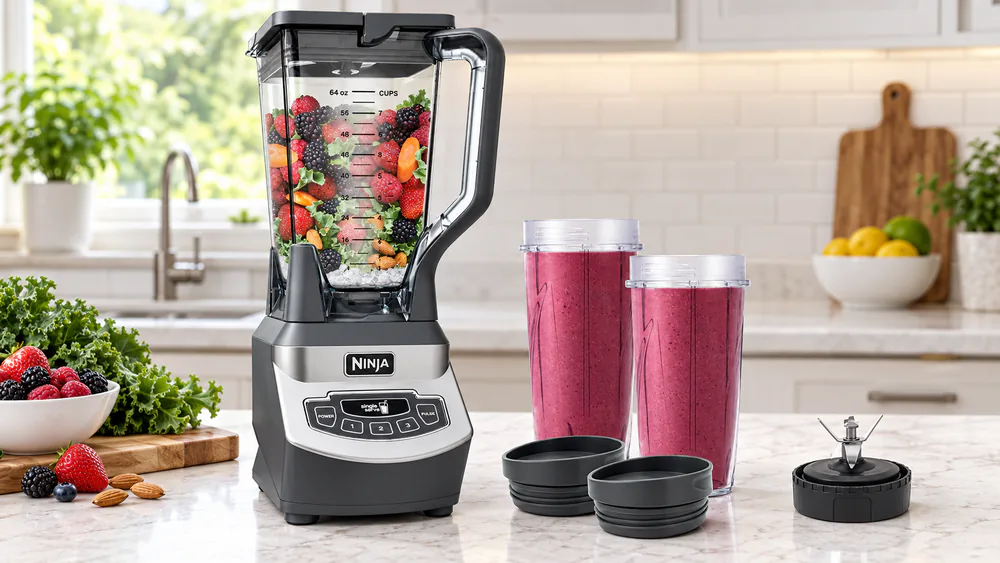
Every personal blender on this list tops out at one or two servings; the BL660 is the family answer. A tray of ice cubes became snow in about 15 seconds, loud enough to wake a household but over too fast to mind. Green smoothies came out smooth, and the 72-oz Total Crushing pitcher, with a 64-oz max liquid capacity, held enough for everyone at once. The plastic pitcher is the weak link: cracks have shown up after months of use, including from hot-liquid blending, and a replacement runs $70 to $80, so we hand-wash ours and keep hot liquids out.
Pros
1100W motor with a 72-oz Total Crushing pitcher
Three speeds, pulse, and a single-serve function with two 16-oz to-go cups
Manual controls stay simple; nothing to program
Cons
Pitcher plastic can crack after months of use, and replacements are not cheap
The 16-oz to-go cups feel small for daily meal shakes
The 1100W motor, three speeds, and pulse cover everything a smoothie routine needs, with two 16-oz to-go cups on the side. The BL610, the 1000W sibling with the same 72-oz pitcher but no to-go cups, is one to watch when it drops closer to $88. At about $100 to $120, the Ninja BL660 is the only one here that blends for the whole household, which is why it wins the large-batch slot.
The BL660 turns a tray of ice to snow in about 15 seconds.
Comparison Table
Prices swing week to week on every pick here, so check the latest price before you buy.
Product
Price
Motor Power/Wattage
Jar Capacity
Ice Crushing
Our Rating
Ninja Fit QB3001SS
about $60-70
700W
(2) 16-oz to-go cups
Excellent
4.7
Hamilton Beach Power Elite
about $40
700W peak
40-oz glass jar
Good
4.3
Magic Bullet 11-Pc Set
about $25-35
250W
12-22-oz cups (sizes vary)
Weak
4.2
KOIOS 900W
about $30
900W peak
(2) 23-oz cups + 16-17-oz cup
Good
4.1
Ninja Professional BL660
about $100-120
1100W
72-oz pitcher (64-oz max liquid)
Excellent
4.5
Buyer's Guide: How to Choose a Low Priced Blender for Smoothies
The first decision is form factor. A personal blender serves one cup at a time and earns its keep with morning speed, while a countertop model with a 40-oz glass jar or a 72-oz pitcher feeds the whole household. Both appear on this list, so the right starting point is how many smoothies you blend per day. From there, five specifications separate the machines that last from the ones that stall.
1. Motor Power and Wattage
Wattage is the number shoppers check first, and with good reason. Under 600W is soft fruit and liquids only. The 600 to 900W band handles most households' frozen-fruit smoothies when liquid goes in first, which is where the 700W Ninja Fit and Hamilton Beach live. For a countertop blender used daily with ice and heavy frozen loads, 1000W is the consensus recommended minimum, and the 1000 to 1500W band is the countertop class to aim for. Some models quote peak power, so compare like-for-like; Ninja's Professional Plus line with Auto-iQ adds timed programs higher up.
2. Jar Capacity and Material
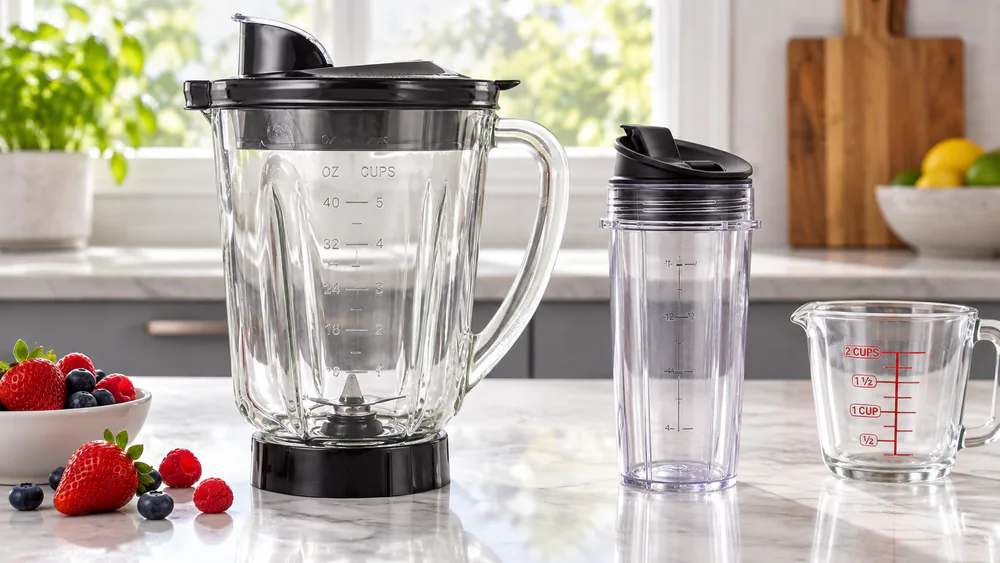
Personal cups run from 16-oz, which fits exactly one smoothie, up to the KOIOS's 23-oz cups. Countertop jars go from the 40-oz glass jar on the Hamilton Beach to the BL660's 72-oz pitcher. Material matters: glass jars are heavier and breakable, while plastic pitchers are lighter and cheaper.
Note. If greens and a scoop of powder are part of your daily shake, aim for the 23-oz class, like the KOIOS cups; that is where add-ins fit without a squeeze.
3. Ease of Cleaning
Top-rack dishwasher-safe parts are the line we draw across every pick on this list. The Ninja Fit cleans up fastest of the group, and the Hamilton Beach's jar, lid, and blades all go in the dishwasher. Hand-wash the BL610's blades, since they are genuinely sharp, and dry the lid gaskets by hand if you want them to last. Hamilton Beach's 51131G is another value-priced option in the same family.
4. Ice Crushing and Blade Design
About 500 to 600W is the floor for occasional ice crushing, and only with a liquid base. A 250W personal blender like the Magic Bullet is not built for whole cubes. A 700W personal blender handles ice routinely, while the full-size countertop picks crush a whole tray of cubes in a single pass. When it comes to ice, blade shape matters less than technique: liquid first, soft ingredients near the blades, frozen fruit on top, then short 15-second pulses instead of continuous runs, and if you smell burning, stop and let the motor cool down.
5. Noise, Durability, and Warranty
Budget blenders run loud, and none of our picks is the exception: the Ninja Fit, Magic Bullet, and KOIOS are all loud at full power, the BL660 is the loudest, and the Hamilton Beach sits mid-pack. Motors typically last two to four years with daily use, blades dull in one to two years and cost about $15 to replace, and warranties on this list run 1 year on the Ninja and Magic Bullet models and 24 months on the KOIOS.
A $30 blender that dies in a year costs more over five years than a $100 blender that lasts.
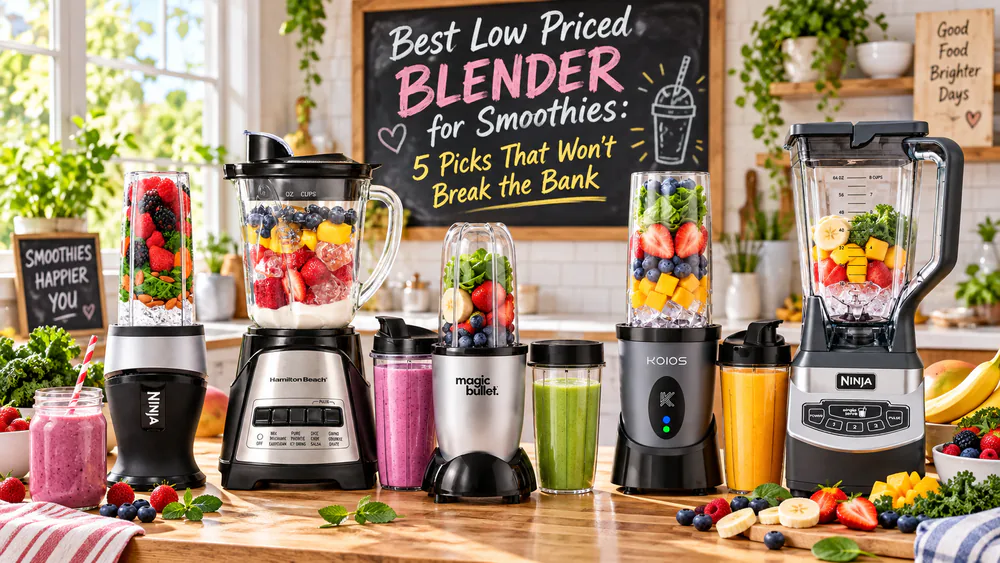
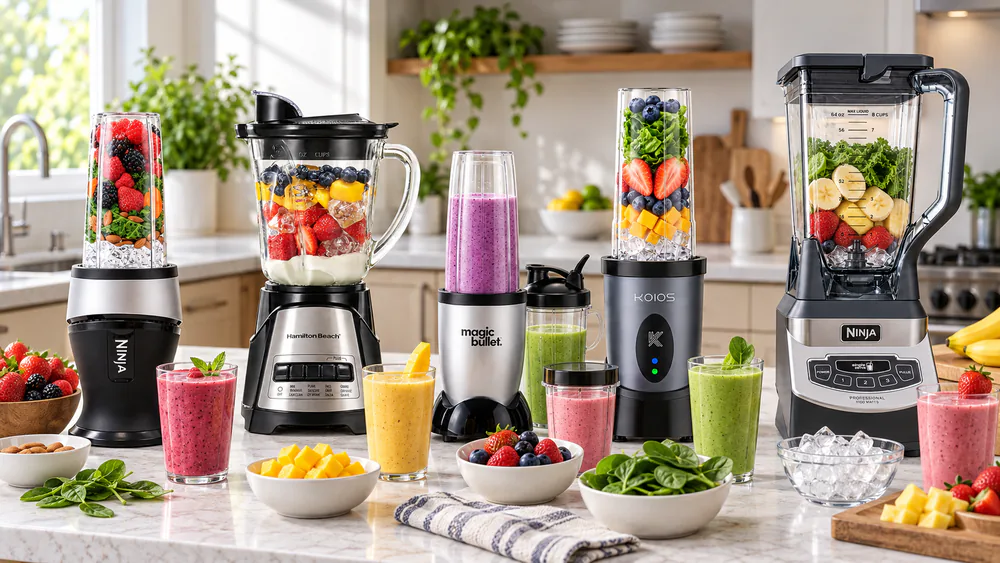
Personal and countertop jars side by side show the size gap.
Frequently Asked Questions
How many watts do I need for smoothies with frozen fruit?
At least 700W in a personal blender, and 1000W or more for a countertop model used daily with ice. If yours stalls on frozen fruit, add more liquid before you replace it; most stalls are technique problems, not motor problems.
Are personal blenders good for daily smoothie making?
For one or two servings a day, yes, and most of our picks are personal blenders for exactly that reason. The trade-offs are run time and capacity: some models must be held down while blending, and a household-size batch means several rounds. When you regularly blend for more than two people, a countertop model with a 40-oz jar or a 72-oz pitcher is the better fit.
Can a cheap blender really crush ice?
Our test runs put a number on it. The BL660 turned a full tray of cubes into snow in about 15 seconds, and the Ninja Fit did the same to a cup in three or four pulses. Keep a liquid base under the blades and pulse in short bursts; a dry run on whole cubes is what strains a budget motor.
What's the best budget blender for green smoothies?
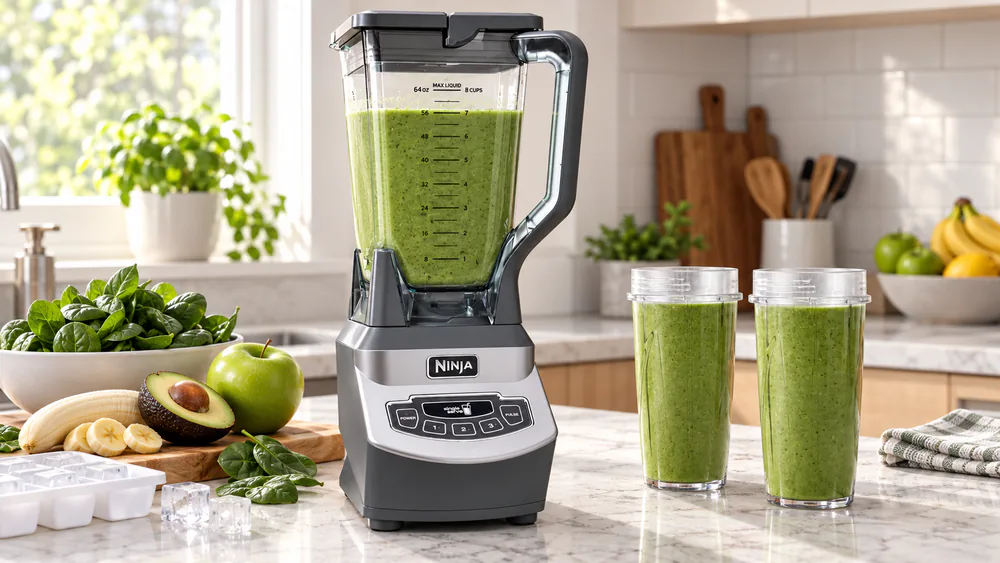
For a single serving, the Ninja Fit blended spinach, frozen fruit, and protein powder smooth in under 45 seconds. For family batches, the BL660 is the one to pick. The Hamilton Beach handles greens too, but wants more liquid than you might expect.
How much should I spend on a low priced blender?
About $40 to $50 is where a low priced blender starts to perform like a serious appliance, and the Hamilton Beach Power Elite lands near that band depending on the sale. The Ninja Fit starts around $55. Below about $30 to $35, you are in entry-level territory that struggles with frozen ingredients.
Are portable blenders powerful enough for daily smoothies?
A USB-charged portable is fine for soft-fruit shakes on the go, but the class sits far below the 600W line where frozen fruit becomes reliable: mainstream USB-charged portables run about 150-230W, with entry-level units dipping to 50-100W. Premium high-voltage models claim 350-700W peak, but that is brand-claimed output for a small minority of the market, so treat the class as an occasional-use machine. If you blend every morning, a 700W personal blender with to-go cups covers the counter and the commute.
Final Verdict
The short version of this guide: for one or two smoothies a day, shop the 700W personal class. For a household that blends in batches, the jump to the 1100W BL660 is worth it for the 72-oz pitcher alone. If a full-size glass jar at a budget price matters most, the Hamilton Beach Power Elite delivers it at a seasonal price that often dips below $30.
If your budget will not stretch past about $30, the Magic Bullet is the honest entry point, and its buy-again design, where old cups and blades keep fitting new bases, softens the risk. We would rather save a little longer for the 700W class. The good news for 2026 shoppers is that the difference between a $35 blender and a $100 blender is smaller than the difference between a well-built motor and a cheap one.