As an Amazon Associate we earn from qualifying purchases. We may earn a commission from links on this page, at no extra cost to you. Learn more.
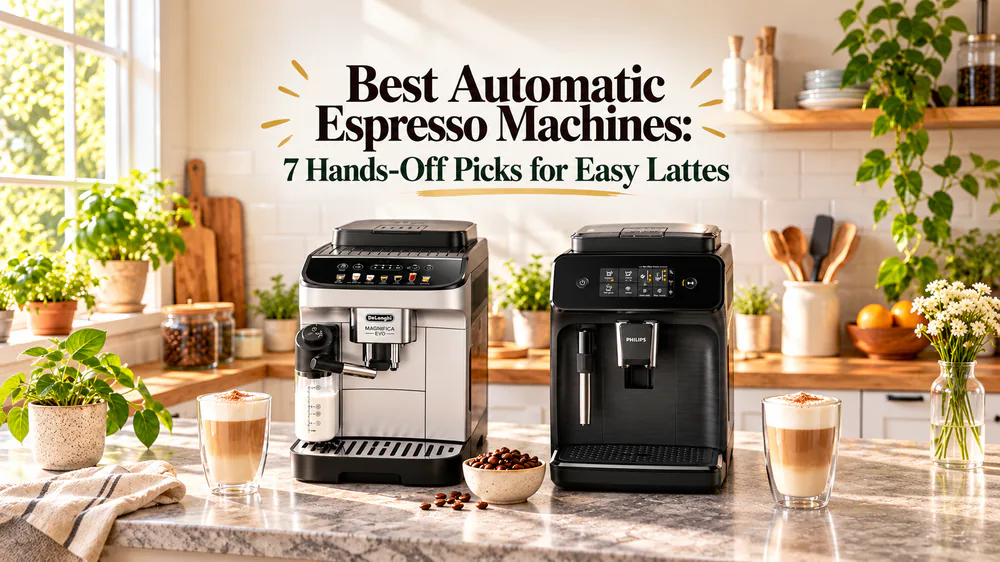
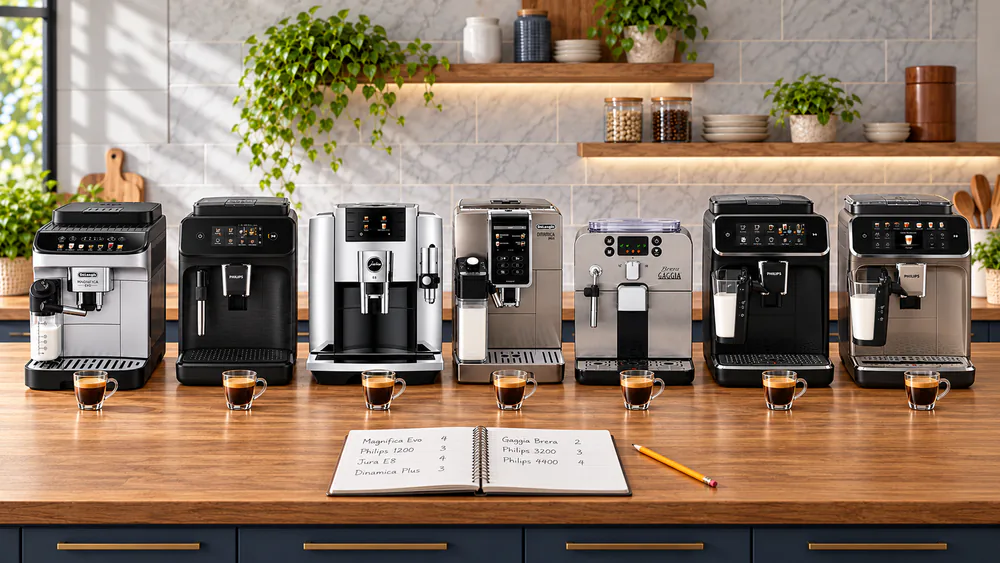
Every machine here is scored on the same four things: how the shot tastes, how easy it is to dial in, how the milk turns out, and how much cleanup it asks for on a normal morning. Our pick for most people is the De'Longhi Magnifica Evo with LatteCrema, with the Jura E8 for those who want the best cup and the Philips 1200 for those who want the cheapest way in.
A super-automatic machine grinds the beans, doses, tamps, brews, and ejects the used puck with a push of a button. "Automatic" is the looser label, and in this guide we use it for machines that do all of that or most of it, with some form of milk system attached.
Here is how we score. We judge each machine on the same four criteria, weighted by their importance to a weekday coffee routine:
Taste: body, crema, and whether the shot tastes balanced or thin, sour, and bitter.
Ease of dialing in: how many shots it takes to reach a good cup, and how clear the controls are.
Milk texture: how the froth looks and tastes with dairy and with plant milks, and how much fuss the milk system adds.
Daily cleanup: what has to be rinsed, emptied, and wiped every morning and night.
We care most about how a machine behaves once the grind is sorted and how much work it asks of you on an ordinary day. Where a review below describes a specific moment, such as setup time, a number of shots, or the six-week run on the Dinamica Plus, it comes from our recorded findings on that machine.
Our first piece of advice to any espresso buyer is to think about the grinder before the machine. On a super-automatic the grinder is built in, so the grind range and how well the machine uses it decide your shot quality more than any pressure figure on the box. That is why this guide spends so much time on grind settings and so little on bar ratings, since nearly every machine here lists the same 15 bar pump.
The same four scoring criteria applied to every machine.
Tip. Expect the first few shots from any new machine to taste off. Pull and discard shots while you adjust the grind one step at a time, and change only one setting between shots. It is the quickest way to find the setting that works.
Our Top 7 Automatic Espresso Machines
Seven machines, presented by award category rather than by score, so the numbers in each rating will not run in order. Every rating is our own score out of five. For a wider look at the category beyond fully automatic models, see our espresso machine reviews.
1. Best Overall: De'Longhi Magnifica Evo with LatteCrema
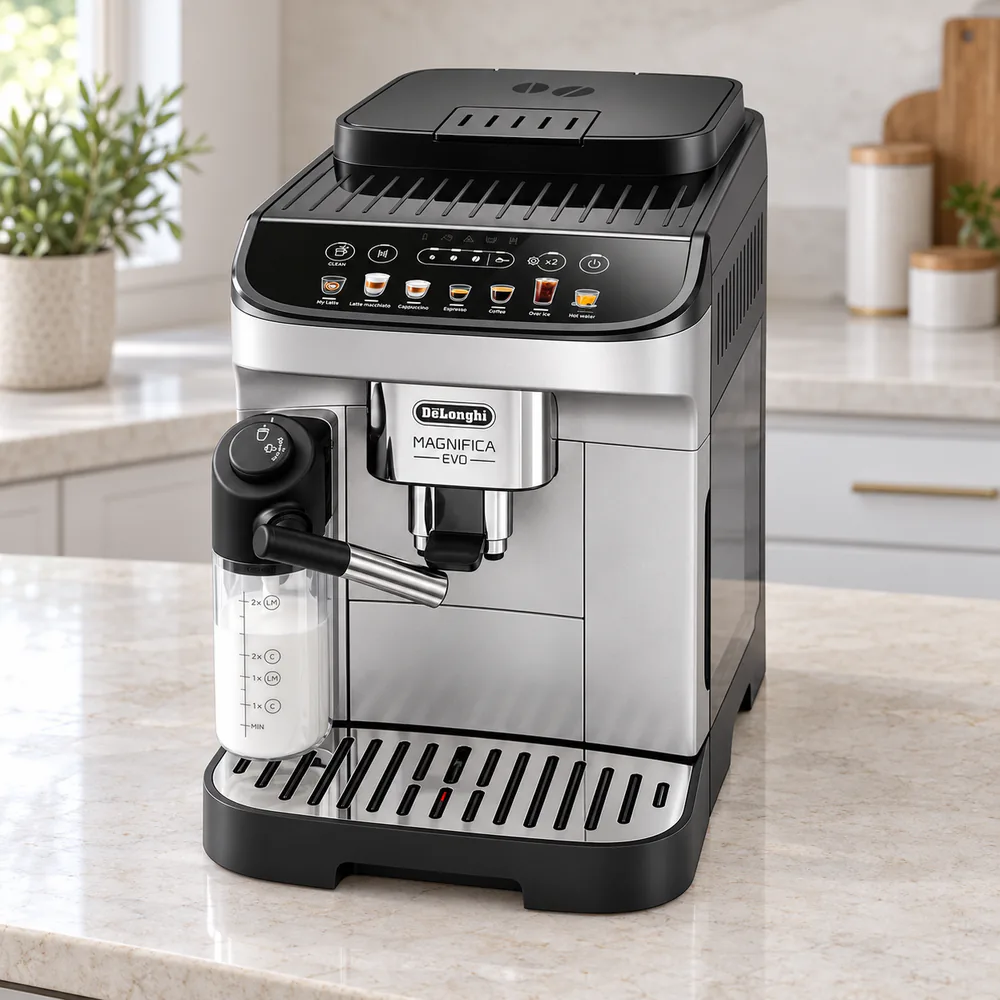
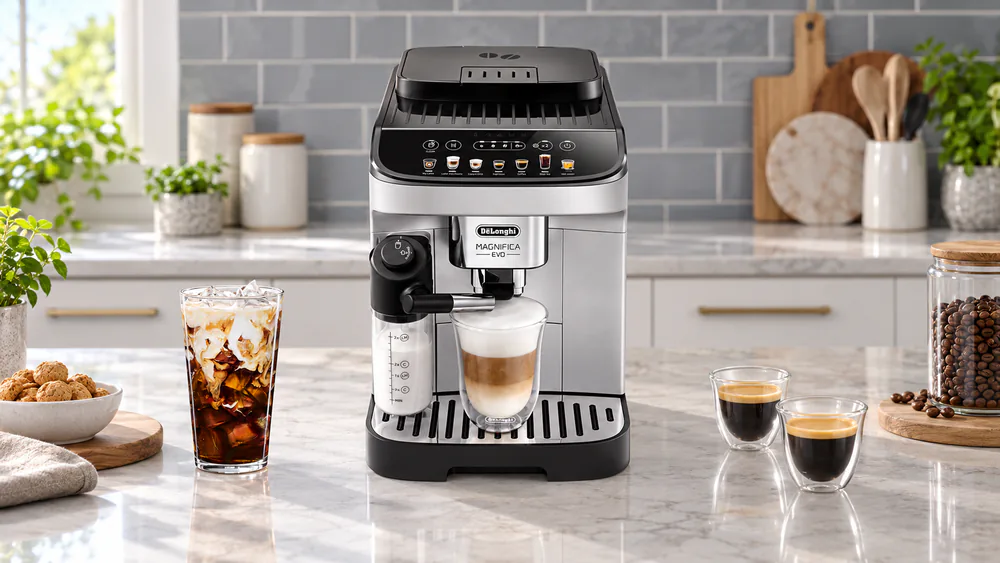
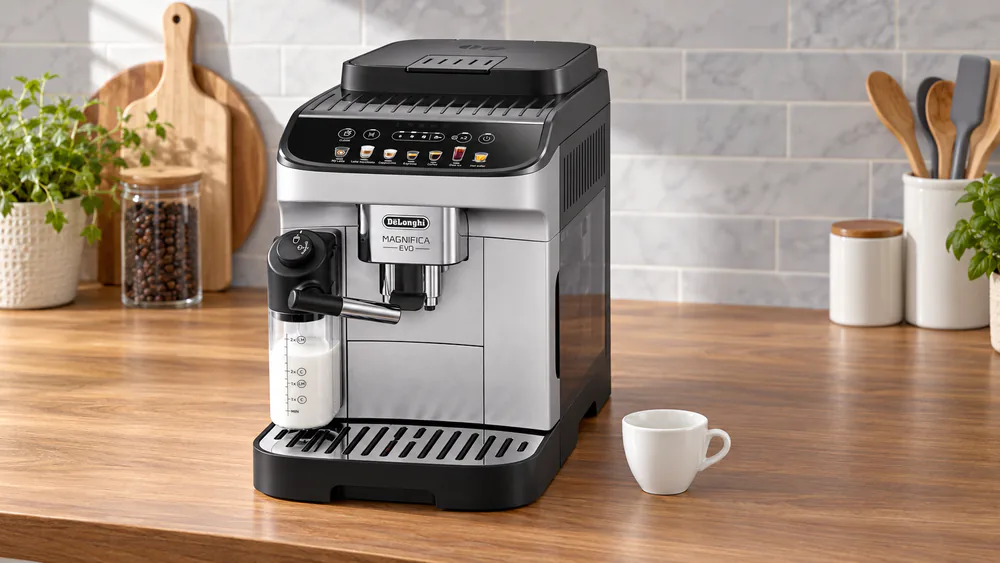
The Magnifica Evo is the machine we would buy again for a typical household, because it makes good milk drinks without asking you to learn anything. It prices below the premium machines in the LatteCrema version, and it is the best balance of price and results in the group.
Seven one-touch recipes, including My Latte, cappuccino, and over ice
Soft-touch colored buttons instead of a touchscreen
Simple controls a first-time user can handle
Specifications
Grinder
Conical burr, 13 settings
Pump
15 bar
Milk system
LatteCrema carafe
Warranty
2-year, plus 1 year with registration
Setup took about 30 minutes, most of it rinse cycles and filling the tank. The first shots at default settings came out underextracted, and they improved once we stepped the grinder finer. Go too fine and the machine throws an error, so move one click at a time.
The LatteCrema froth is the reason it wins. It comes out light and airy without a burnt taste, which suits cappuccinos and latte macchiatos. The Over Ice setting brews a very strong, cooler concentrate that is harsh on its own but good once diluted. The Long drink runs several grinding cycles, which adds wait time. The housing is painted plastic, so it feels less premium than the Jura. The warranty runs 2 years, plus a third with registration.
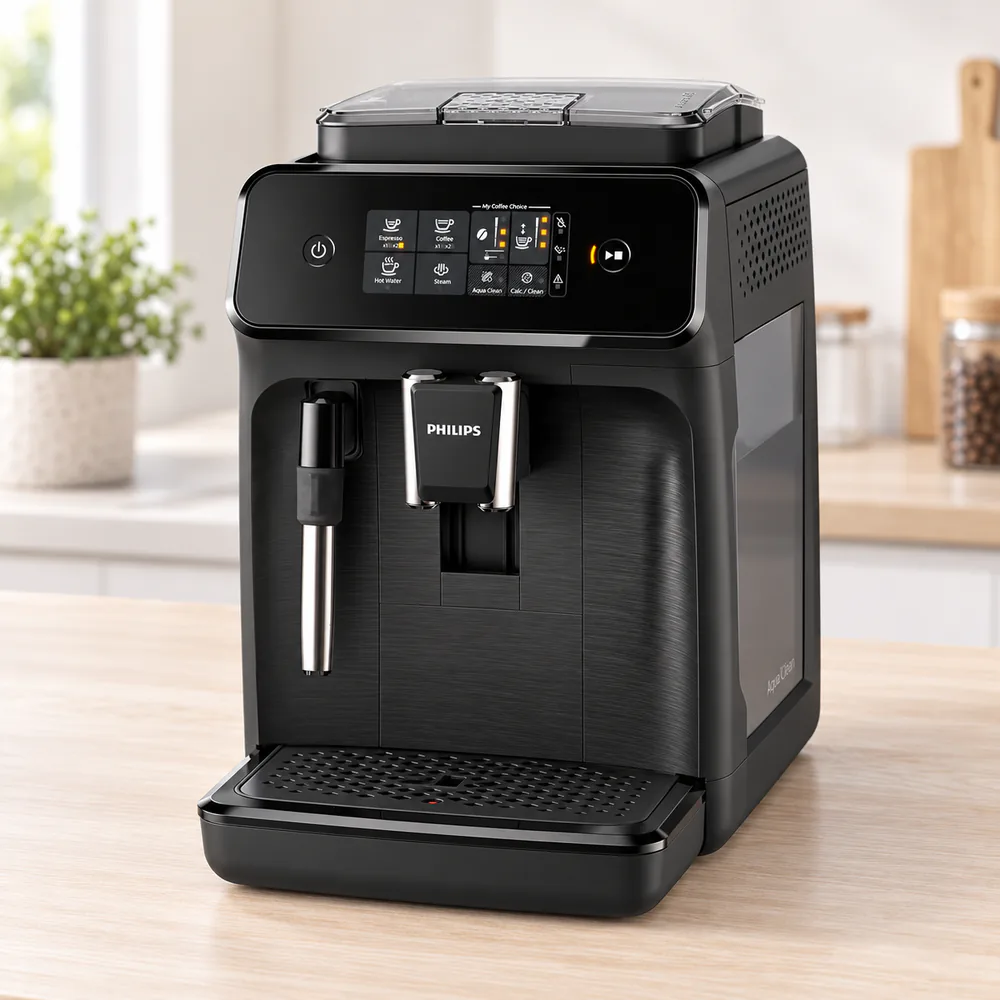
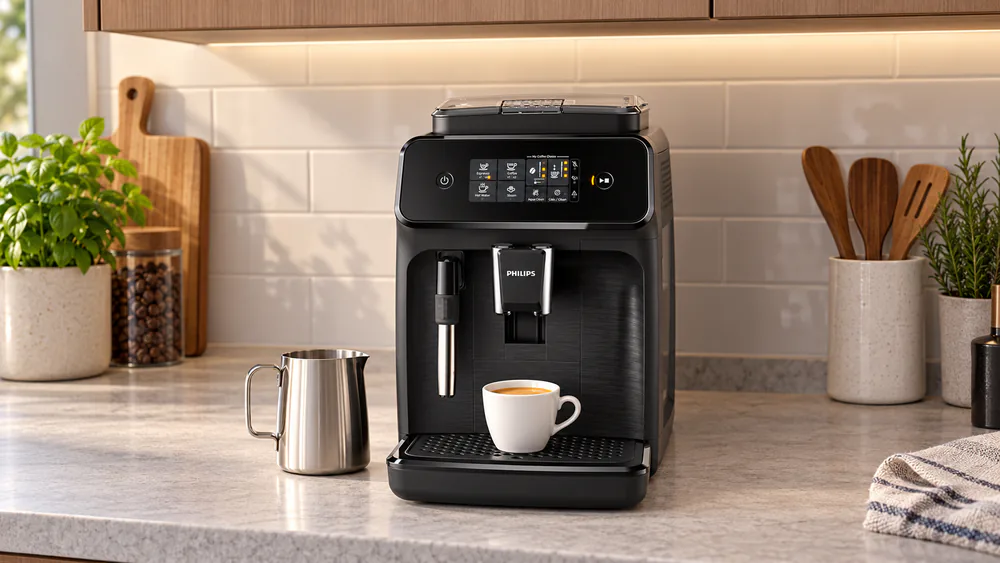
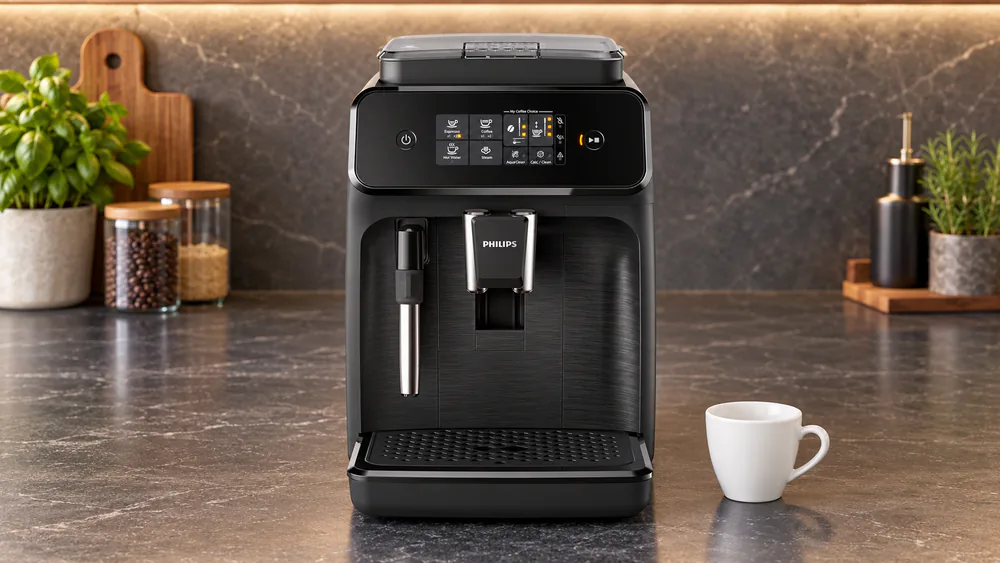
Where the Magnifica Evo steams milk for you, the Philips 1200 hands you the pitcher. As the cheapest machine here, it is the best value for money if you want espresso and are happy to do your own milk. It makes just 2 coffee varieties, espresso and coffee, and the espresso is the one worth ordering.
Touch display with three strength settings
Ceramic grinder and Aroma Seal bean hopper
Manual steam wand for hot milk drinks
Specifications
Drinks
2 coffee varieties
Milk system
Classic steam wand
Brew temperature
90 to 98 C
Descaling
AquaClean filter, up to 5,000 cups
Expect a slow start. The first 5 to 10 cups ran weak until we tuned the grind density, and after that the espresso was good for the price. Regular coffee is thin, so treat this as an espresso machine that happens to make a long drink. Three strength settings on the My Coffee Choice menu keep decisions to a minimum.
Brew temperature is held between 90 and 98 C, and the AquaClean filter stretches descaling to up to 5,000 cups. It fits under upper cabinets with room for a pitcher, and it is a better fit than a cheap semi-automatic if you do not want to tamp.
Pros
Lowest price in the group
Good espresso once the grind is tuned
Fits under upper cabinets
Cons
Loud grinder and steam wand
Wand has limited swivel, so repositioning a pitcher is fiddly
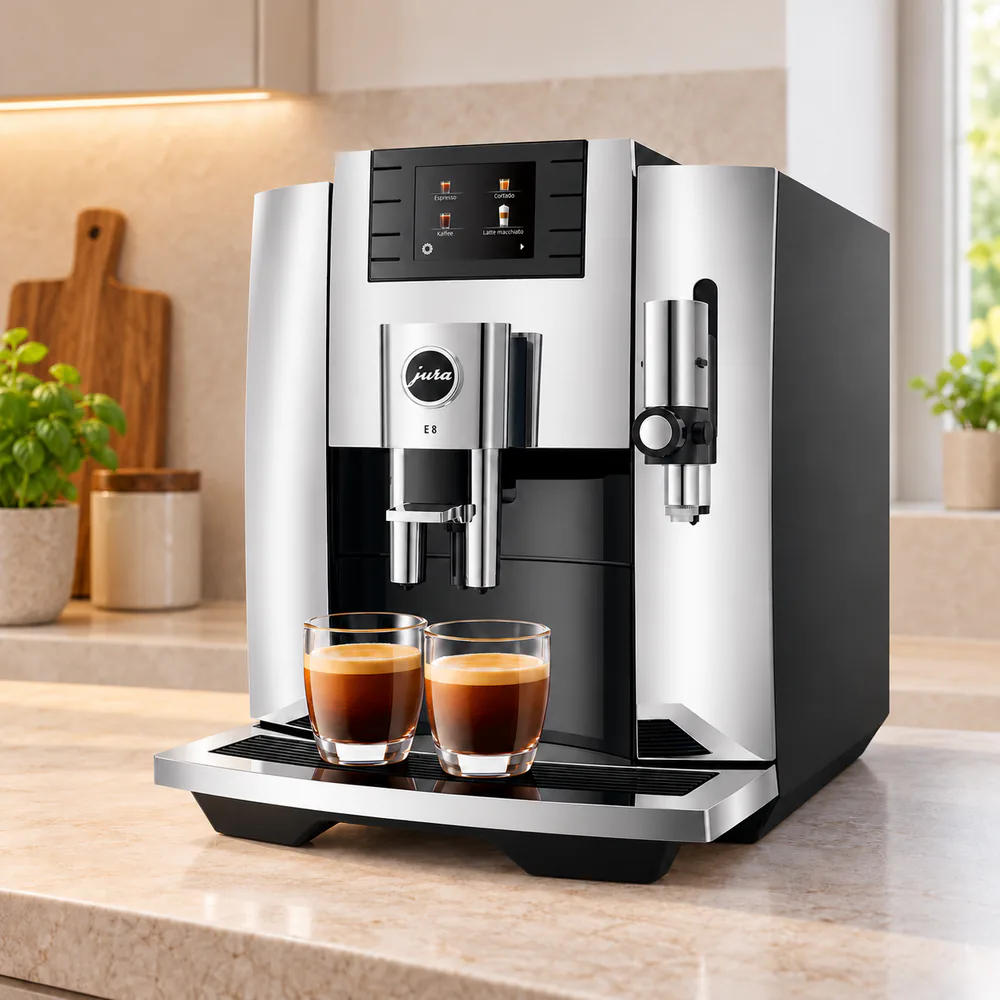
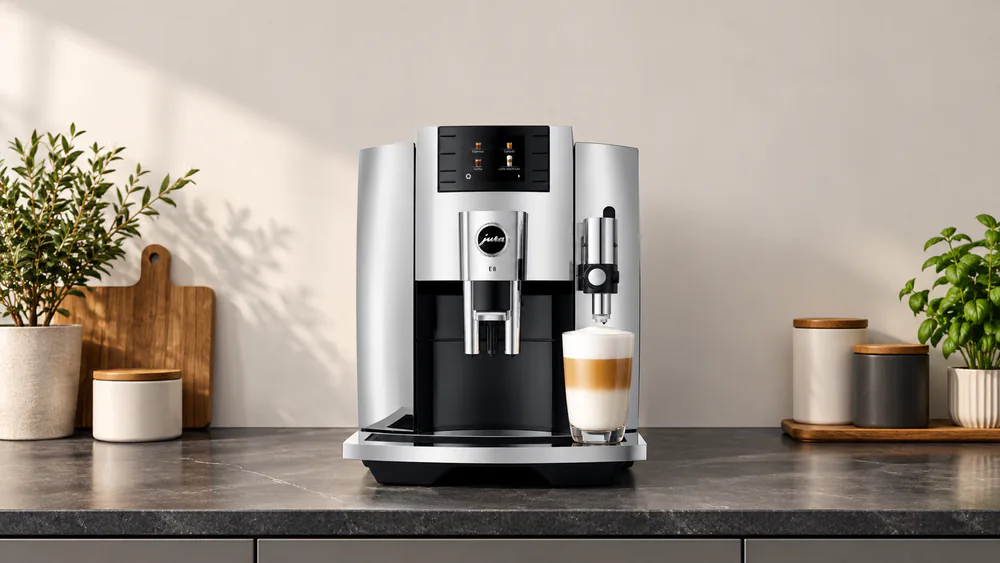
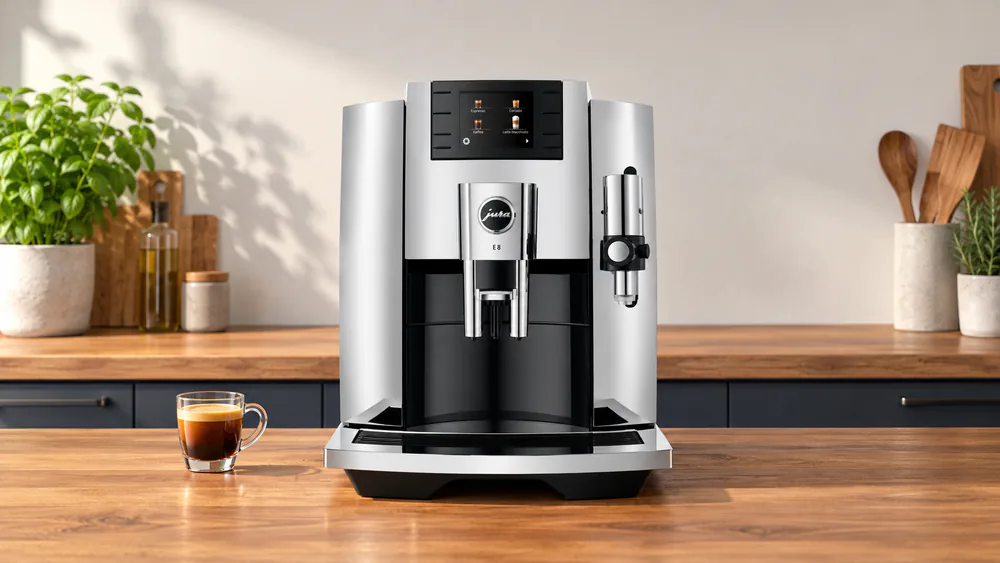
At more than four times the Philips 1200, the Jura E8 makes the best drinks of the seven. The shot and the cup feel like European coffee shop output, and it compares favorably with a countertop Miele. If cup quality is the only thing that counts, this is the machine to buy.
Intelligent preheating and Claris Smart filter
Automatic milk system with cleaning programs
Chrome cup grille and grooved water tank
Specifications
Grinder
Professional Aroma Grinder (conical burr)
Pump
15 bar
Water tank
1.9 L
Bean hopper
280 g
It is a premium machine in every way. The Professional Aroma Grinder is a conical burr unit, the 15 bar pump feeds a thermoblock heater, and the Pulse Extraction Process is built to make short drinks taste better by tuning how water passes through the grounds. The 2.8-inch color display and six buttons are easy to learn. The 1.9 L water tank and 280 g bean hopper keep refills occasional.
The menu covers a range of drinks, from espresso to flat white, cortado, and latte macchiato. The exact drink count differs by generation and finish, so check the listing for your version. Price differs by finish too, and it is the splurge of the group.
We ranked it third rather than first because most households will not feel the extra quality enough to justify the price. For those who will, it is the machine to buy.
Pros
Best-tasting drinks in the group
Display and menus that are easy to learn
Milk-system cleaning programs built in
Cons
Highest price, and filters, tablets, and milk-system parts add to the running cost
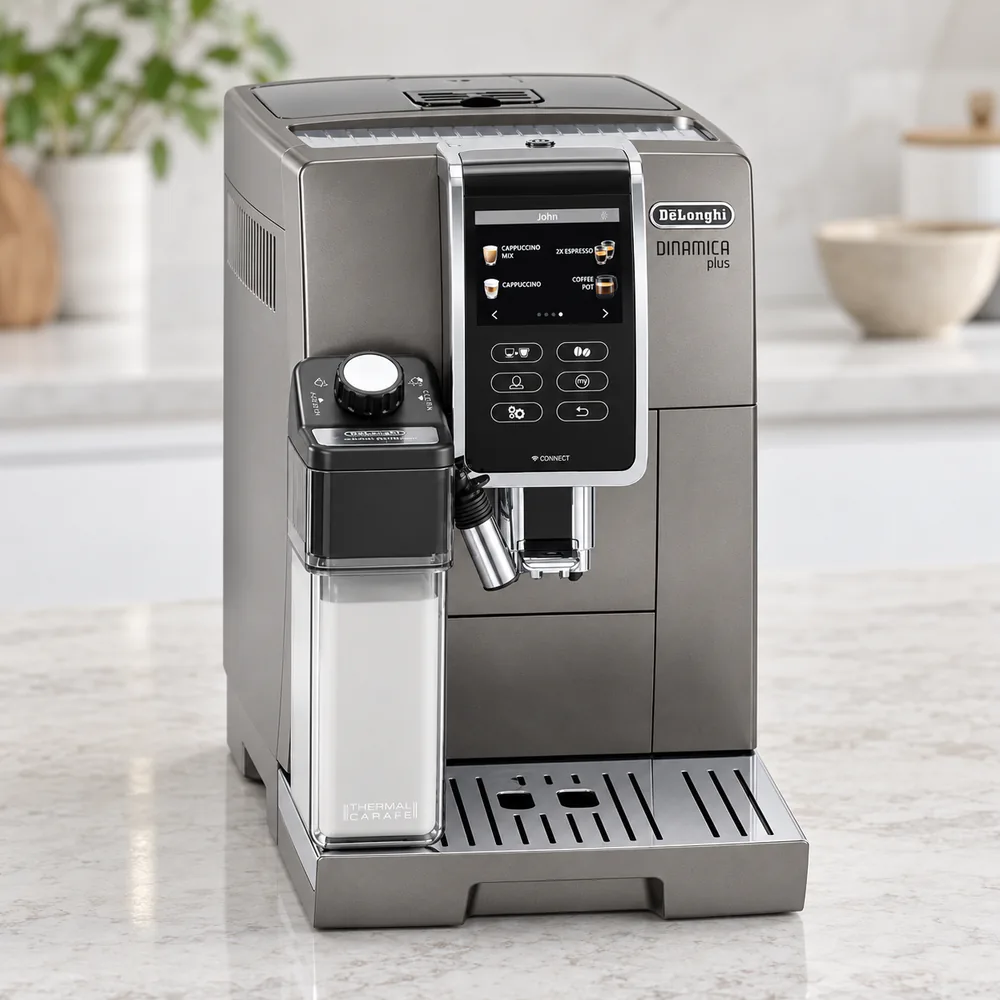
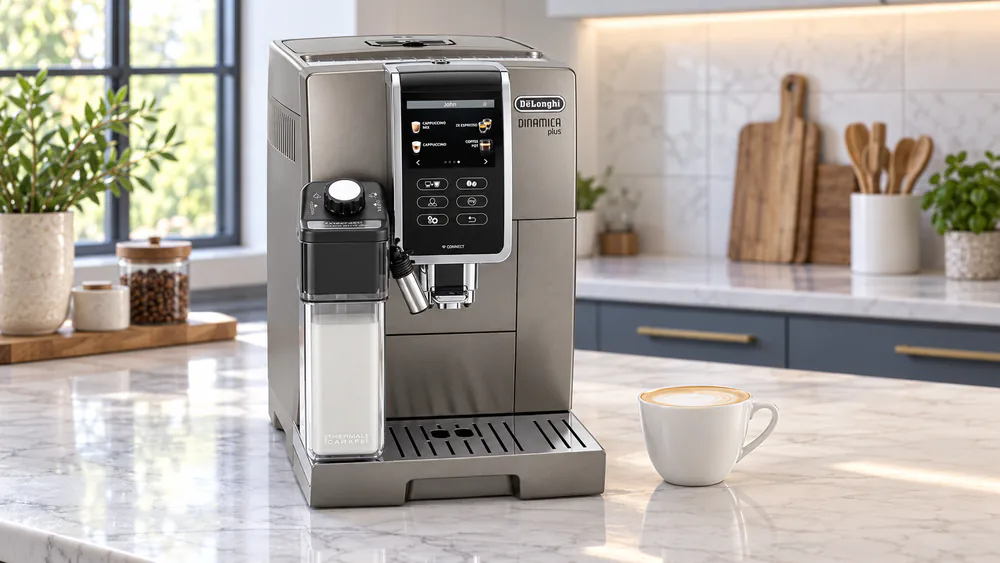
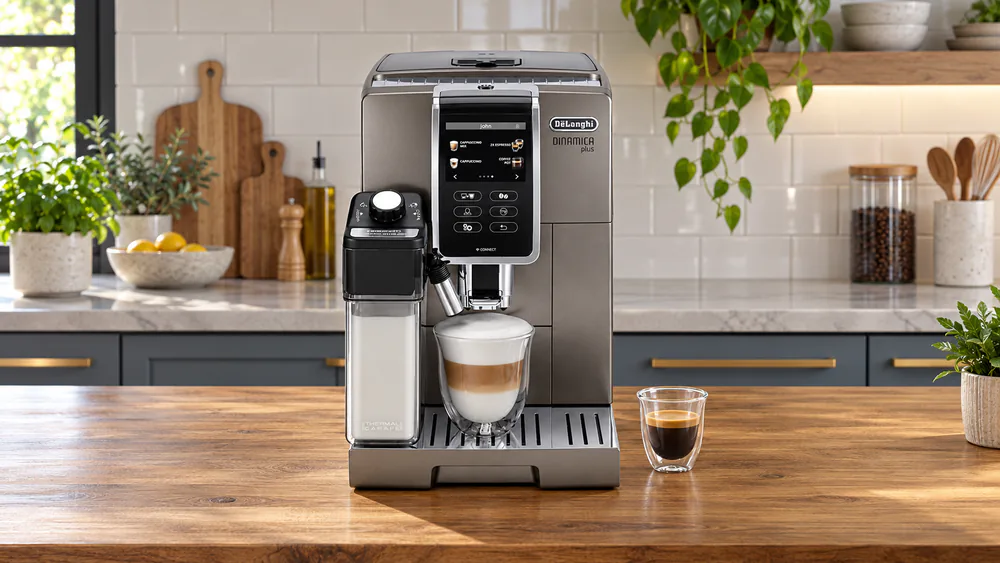
The Dinamica Plus is the Magnifica Evo's pricier sibling, and it is the machine we recommend if milk drinks are most of what you make. The LatteCrema thermal carafe textures both dairy and plant milks well, and it lives in the fridge between uses, so there is no day-old milk sitting on the counter.
Pros
Strong milk texture with dairy and plant milks
Touchscreen and app that stay simple
Removable brew unit, dishwasher-safe milk frother, and drip tray for easy cleanup
Cons
Drinks can arrive warm rather than hot, so preheat your cup
Milk system can stop working over time, so rinse it after every use
Wide price swings between retailers
Across six weeks and 65-plus shots, the app and one-touch menu stayed simple, and the machine turned out good drinks one after another. The 3.5-inch color touch display makes the menu easy to read, and the Smart-One-Touch system lists your most-used drinks first. The Coffee Link app saves up to 3 personalized recipes. The menu is large, but the number of recipes varies by regional variant, so we do not count on a specific total.
Price is the trade-off. It sits in the premium tier and varies widely by retailer, so watching for a sale is worth the effort.
Tip. On any machine with a milk carafe, rinse the milk path right after your last drink of the day. Dried milk is what clogs these systems, and a thirty-second rinse is far easier than a descaling session.
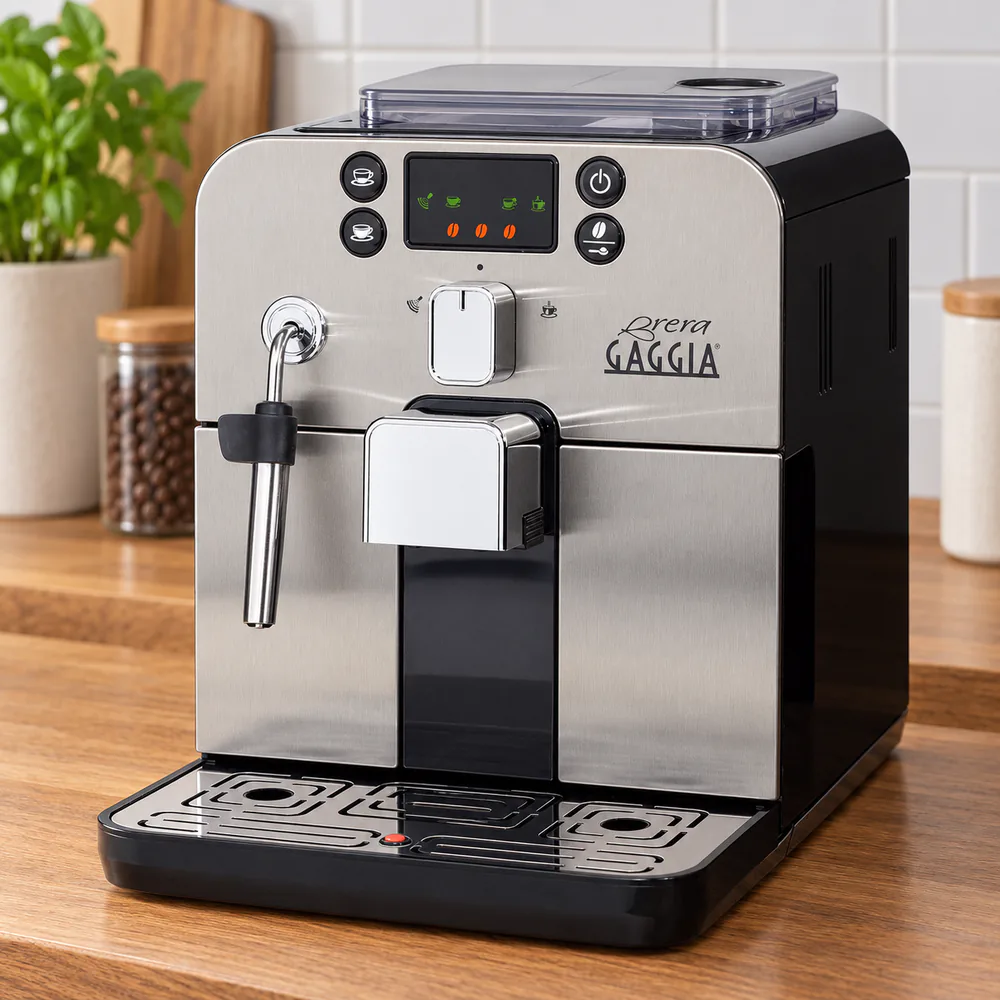
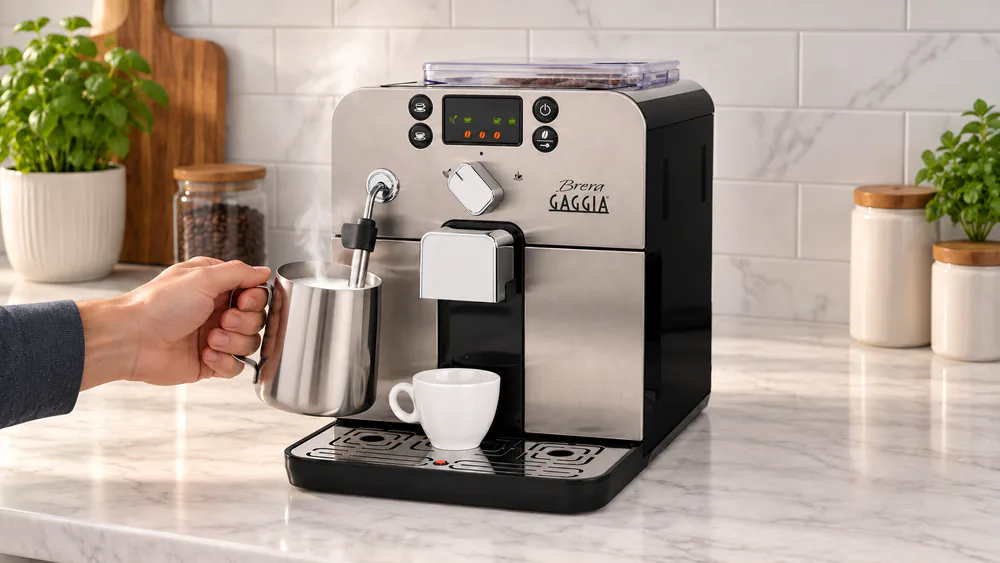
The Gaggia Brera's auto rinse cycle takes some getting used to, so keep a mug ready at startup and shutdown. After that the machine settles into a routine. Once the settings are dialed, daily espresso with crema is steady, and the Pannarello wand heats in under 10 seconds and froths well for lattes and cappuccinos, though you hold the pitcher yourself.
Pros
Smallest footprint in the group
Steady espresso with crema once dialed in
Pannarello wand froths quickly
Cons
The 1.2 L tank needs frequent refills, and the front drip tray and 8-brew dregs drawer need regular emptying
Noisy grinder, and the wand or brew head can spit unexpectedly
Brew unit can stick
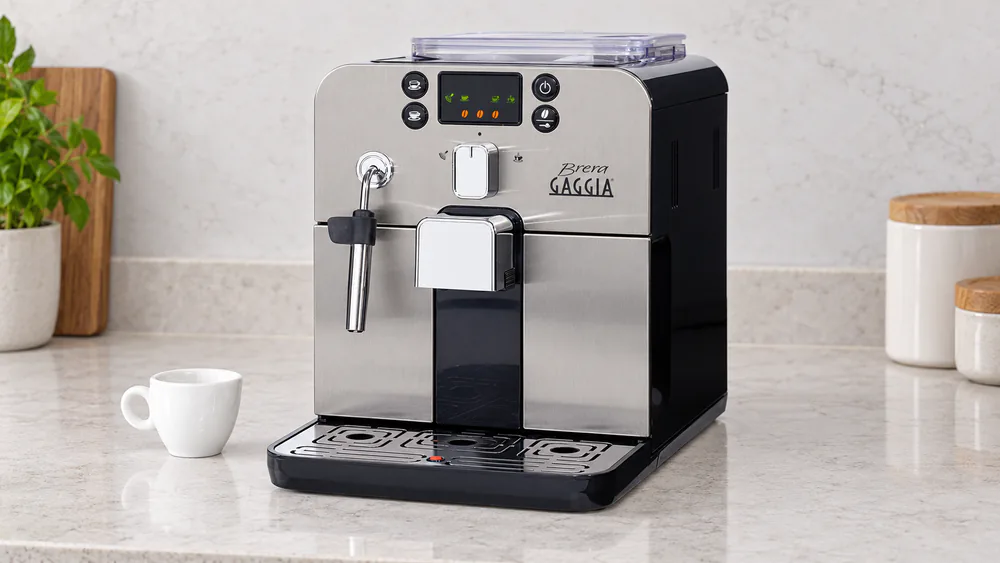
It measures about 12.4 by 10 inches at the base and stays under 18 inches tall, which is compact for a machine that grinds and brews on its own. Inside is a 15 bar pump with pre-infusion, a ceramic burr grinder with 5 grind settings, and a bypass doser for pre-ground coffee, which is handy for decaf. The adjustable spout fits cups from 3.1 to 4.5 in tall, and the 250 g hopper is enough for a week or two.
It costs more than the Philips 1200 and gives you a real milk wand and a removable brew group. The back and sides are plastic, and there is no brew temperature control.
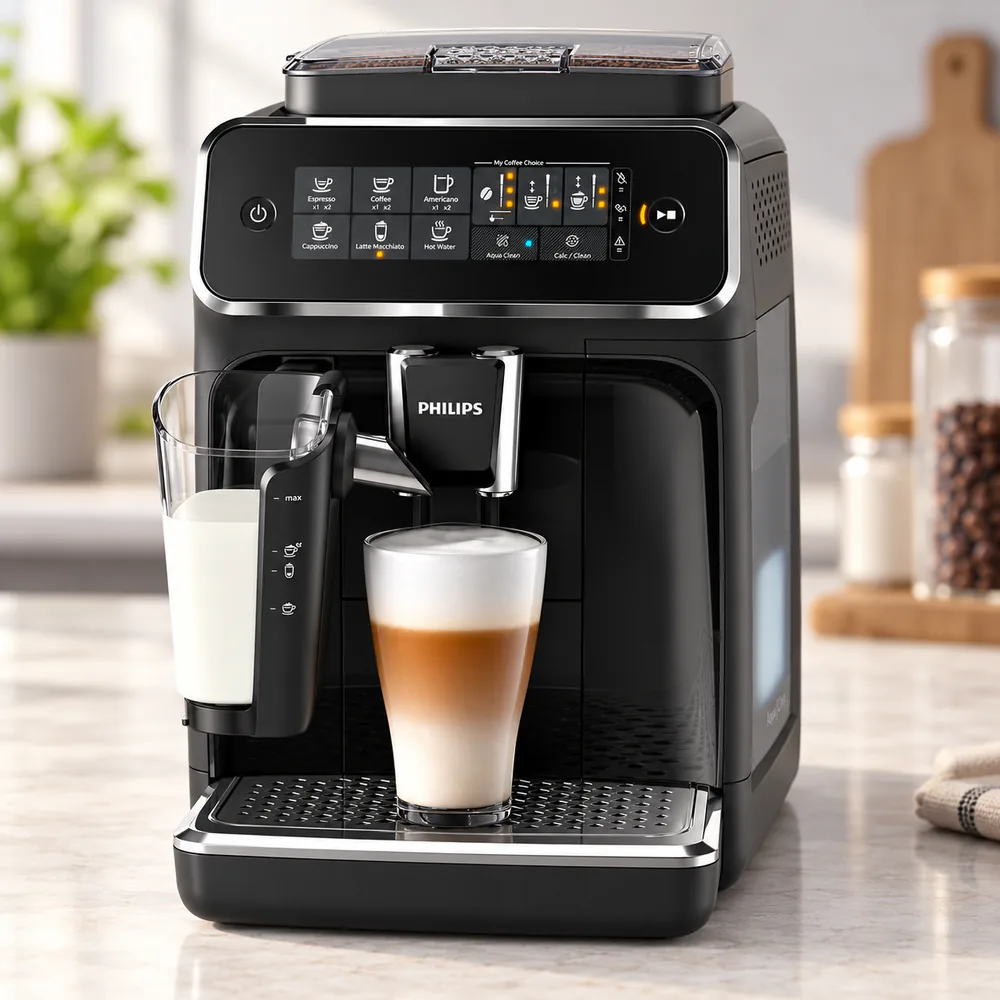
Straight out of the box, the Philips 3200 espresso is thin. It took about six shots to fix: we set brew temperature to the top setting, the grinder to 2 or 3, and the dose to maximum, and the result was a full-bodied, syrupy shot. Only about 6 of the 12 grind settings are usable, since the coarsest ones taste weak or sour.
Specifications
Drinks
5 coffee drinks (espresso, coffee, cappuccino, latte macchiato, and an americano or iced coffee on the newer variant)
Grinder
Ceramic flat burr, 12 settings
Dimensions
15 in wide, 10 in deep, 17 in tall
Bean hopper
10 oz
Descaling
AquaClean filter, up to 5,000 cups
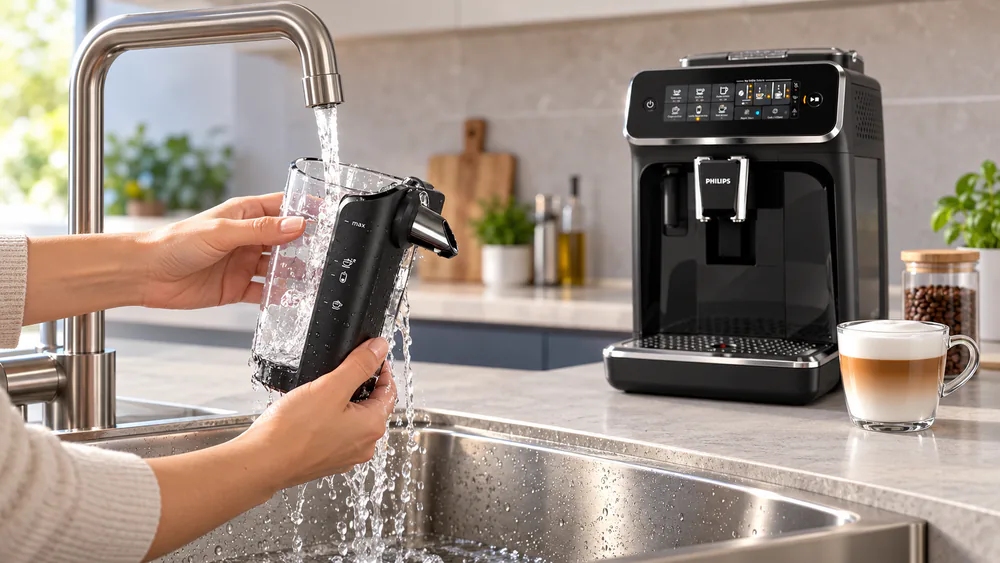
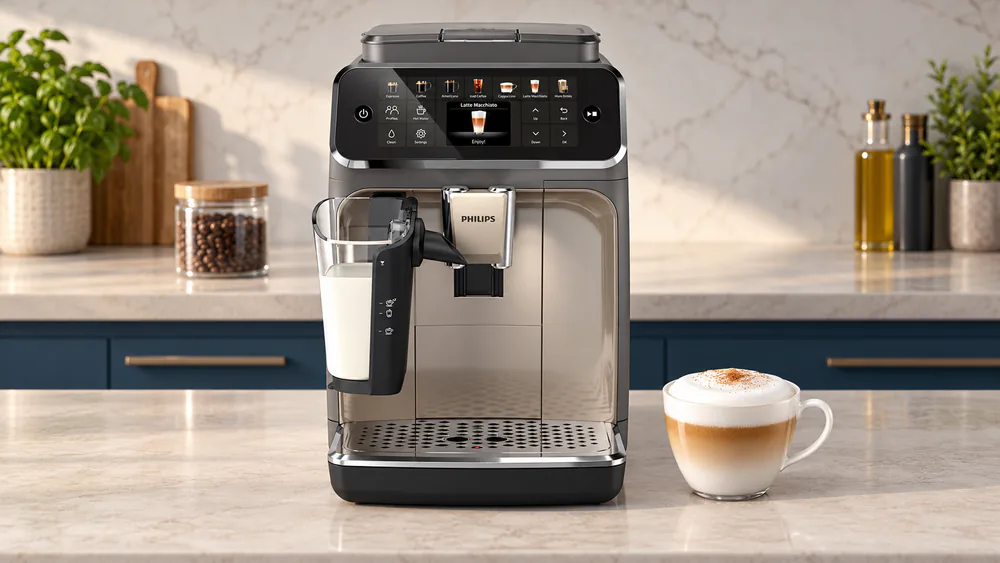
After that, this is the easiest machine on the list to live with. The LatteGo milk system has 2 parts and no tubes, and it rinses clean in about 15 seconds under the tap. Plant milks froth acceptably, which makes it a strong first machine for anyone who has fought with a milk system before.
Pros
Fastest milk-system cleanup in the group
Simple to operate
Plant milks froth acceptably
Cons
Loud grinder and slightly dense foam
Descaling takes about 30 minutes
Mixed reliability: one household of three, drinking five or six cups a day, got about two years of use, while another unit needed factory repairs for the water-pump sensor and then the grinder
Note. The 3200 is being replaced by the 3300, so stock and pricing swing for now. Treat the 3300 as an equivalent.
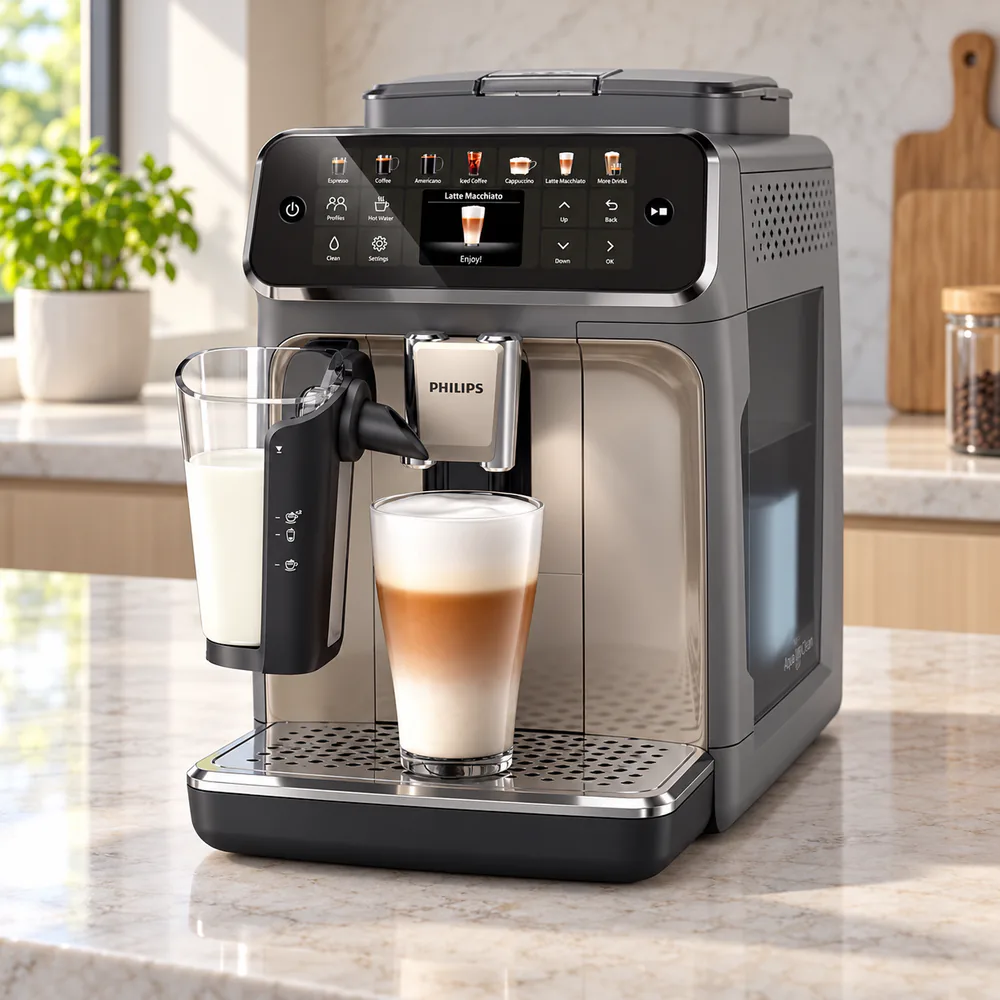
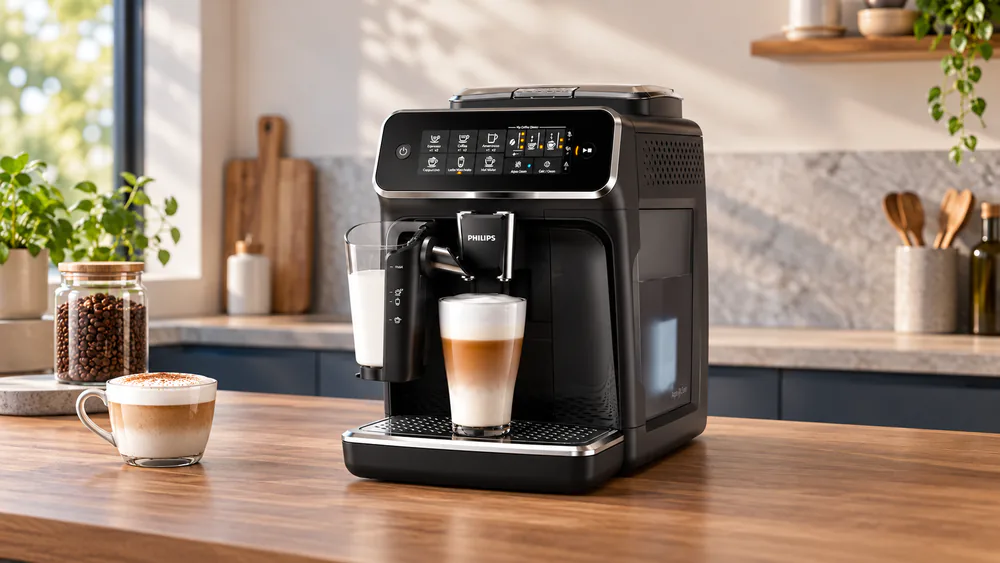
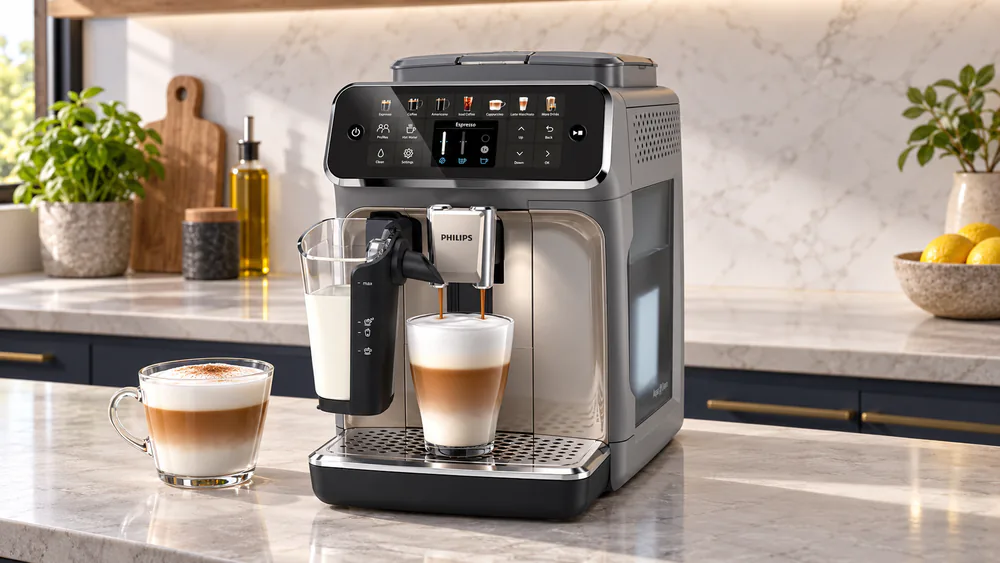
The Philips 4400 is the pick for a household where two people drink two different things. It offers 12 presets and saves up to 2 profiles, so a strong americano and a milky cappuccino are each one tap away. It costs more than the 3200 for the same style of milk system.
Pros
Two profiles and 12 presets
Quick, tube-free milk cleanup
Noticeably quieter than earlier Philips models
Cons
Strength can come out weak or watery until the grind and dose are adjusted
Dimensions and tank size not verified
The LatteGo system has 3 parts, no internal tubes, and rinses in 10 seconds, so cleanup stays quick even when you make a few milk drinks in a row. The QuickStart feature gets the machine ready in 3 seconds, and SilentBrew sound shielding makes it 40% quieter than earlier models, which matters in an open kitchen at 6 a.m. We could not verify its dimensions or tank capacity, so measure your space before buying.
It comes last in this list only because the better-balanced machines above did more for the money. For the right household it may well be the best of the seven.
Comparison table
Product
Drink types
Milk system
Grinder
Size / capacity
Rating
De'Longhi Magnifica Evo
7 one-touch
LatteCrema carafe
Conical burr, 13 settings
1.8 L tank
4.6
Philips 1200
2 coffee
Classic steam wand
Ceramic
Fits under upper cabinets
4.0
Jura E8
Espresso to flat white and cortado
Automatic milk system
Professional Aroma Grinder
1.9 L tank, 280 g hopper
4.7
De'Longhi Dinamica Plus
Large menu, app
LatteCrema carafe
Conical burr
1.8 L tank
4.5
Gaggia Brera
Espresso and coffee
Pannarello steam wand
Ceramic, 5 settings
Under 18 inches tall, 1.2 L tank
4.1
Philips 3200
5 coffee
LatteGo
Ceramic, 12 settings
15 x 10 x 17 in, 10 oz hopper
4.3
Philips 4400
12 presets
LatteGo
Ceramic
Not verified
4.4
Automatic vs. Super-Automatic vs. Semi-Automatic Espresso Machines
The names get blurry, so here is how we use them. A super-automatic machine does everything from grinding to brewing to ejecting the puck, and many also froth milk. Every machine in this guide fits that description. An automatic machine, in older usage, controls the water volume of each shot for you, but you still grind and tamp. A semi-automatic machine leaves grinding, dosing, tamping, and stopping the shot up to you, which gives more control and takes more practice.
If you want to taste the difference between hands-on and hands-off, our best espresso machines roundup covers the semi-automatic side. The honest trade is this: a super-automatic takes the learning curve out of morning coffee, and a semi-automatic rewards the time you put in with better espresso and cheaper parts.
Super-automatics also bring a few quirks. The brew unit is a moving part inside the machine, so it needs rinsing and the occasional lubrication. The built-in grinder is not replaceable, and pre-ground coffee goes only through a bypass doser on models that have one, such as the Gaggia Brera.
How to Choose an Automatic Espresso Machine
Start with how you drink coffee, not with the spec sheet. A person who makes one oat-milk latte a day needs a different machine than a household that pulls four espressos before breakfast. The six factors below are the ones that moved our scores.
Drink Customization and Presets
More presets are not always better. What counts is whether the machine lets you change strength, volume, and temperature, and whether it remembers your changes. The Philips 4400 and the Dinamica Plus save profiles, the Magnifica Evo saves one recipe, and the Philips 1200 and Gaggia Brera save almost nothing. If two people share the machine, prioritize profiles.
Milk System
This is the biggest day-to-day difference. A carafe such as the LatteCrema is automatic and tidy, and it sits in the fridge on some models. A LatteGo system has the fewest parts and the fastest cleanup. A manual steam wand gives better foam control and costs less, but you do the work. Pick the style that matches how much effort you will put in at 7 a.m., not on a weekend.
Grinder Quality
Grind range matters more than anything else on this list. The Magnifica Evo gives 13 settings, the Philips 3200 gives 12 but only about half are usable, and the Gaggia Brera gives 5. Fewer settings are not always a problem, since a steady grinder with a few good steps beats a wide range of poor ones. Whichever machine you buy, plan to adjust grind during the first week.
Warning. Do not put oily, dark-roast beans in these grinders. Oils coat the burrs and the chute, and they can clog the machine over time. Use medium roasts, and descale on the machine's schedule, since scale is the other common cause of expensive repairs.
Size and Spout Height
Measure your cabinets and your tallest travel mug. The Gaggia Brera accepts cups from 3.1 to 4.5 in tall, which rules out many large mugs. The Philips 1200 fits under upper cabinets, and the Philips 3200 stands 17 in tall. If you only drink from small cups, any of them will do.
Cleaning and Maintenance
Cleaning decides whether you still use the machine in six months. Milk systems are the main task, and LatteGo is the easiest. After that, plan to empty the drip tray and the dregs drawer, rinse the water tank, run the rinse cycle, and descale on schedule. The AquaClean filters on the Philips models stretch descaling to up to 5,000 cups, and the Jura relies on its Claris Smart filter. Take the filter seriously, because skipping it shortens the machine's life.
A super-automatic only stays automatic if cleaning is easy enough to do every day.
Budget
Budget machines give you espresso and little else, mid-range machines give you automatic milk, and premium machines give you better shots, touchscreens, and profiles. Do not forget the running costs: filters, descaling tablets, cleaning tablets, and beans. As a rule of thumb, the cheaper the machine, the more you do by hand.
Other Automatic Espresso Machines Worth Considering
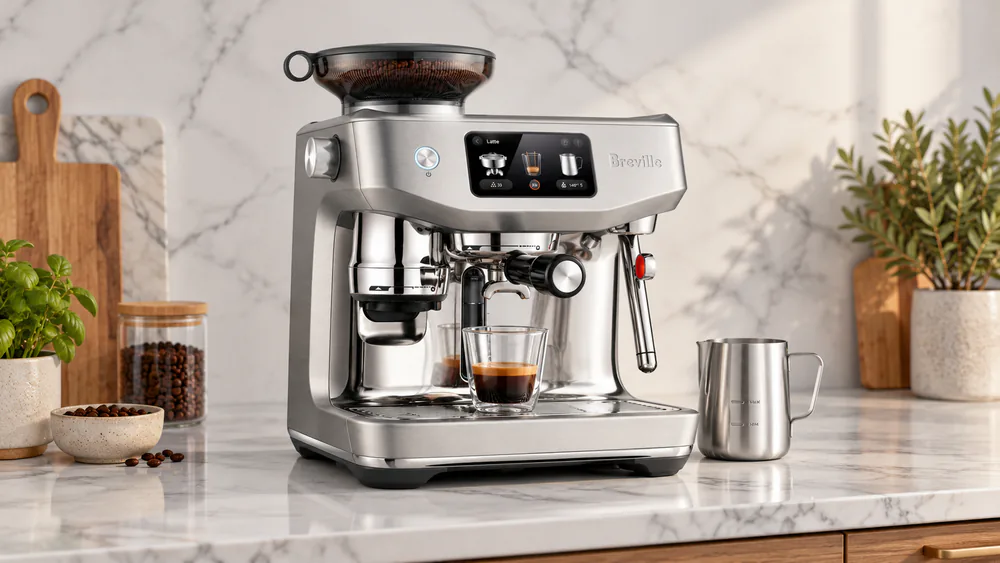
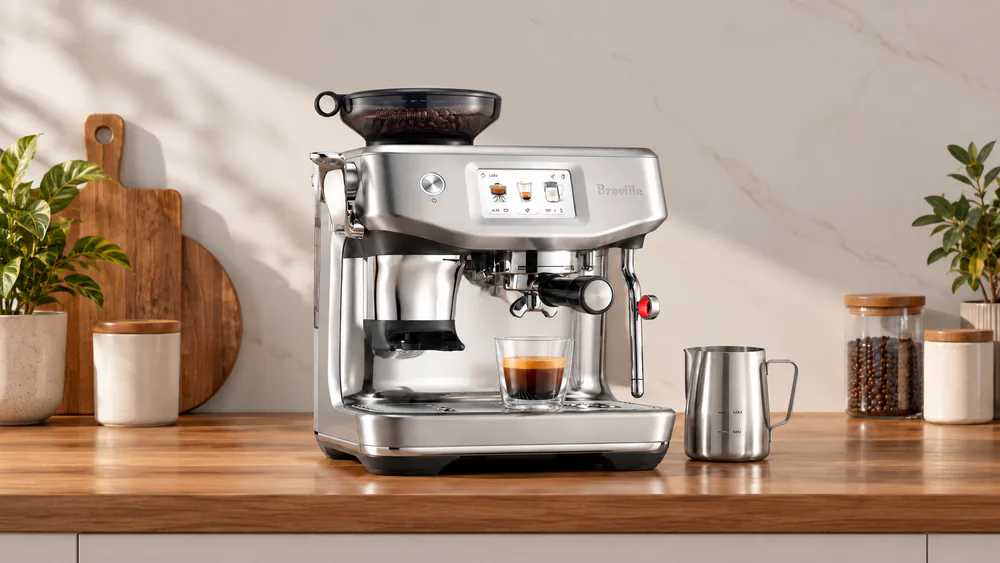
Two Breville models are worth a look if you prefer a hybrid between automatic and hands-on: the Oracle Jet and the Barista Touch Impress. We do not feature them as full picks, because we could not source a reliable buy link, but they are the machines to check next. For more on the brand, see our best Breville espresso machine guide.
8
Breville Oracle Jet
4.2
A semi-automatic machine with automated grinding and tamping, for people who want more control than a super-automatic gives.
We would skip any machine with a milk system you cannot take apart and rinse, since milk residue is what ends most of these machines' lives. We would also skip the cheapest pod-style "automatic" machines, because they are not bean-to-cup and the cost per cup adds up.
Within this guide, the Philips 1200 is the one to skip if you want milk drinks without effort, and the Gaggia Brera is the one to skip if you pour large mugs. Both are good machines for the right person and the wrong ones for the rest.
Common mistakes
The most common mistake is judging a machine by its first cups. Several machines here gave weak or thin shots at default settings, and they improved after a few dial-in steps. Give it a full week before you return it.
That patience matters most with the Philips 3200 and the Magnifica Evo, where our notes show thin or underextracted early shots that improved once the grinder, dose, and brew temperature were adjusted. Moving one setting at a time is what makes the change visible in the cup.
The second is ignoring the milk system. People buy for shot quality and then stop using the machine because milk cleanup is a chore. The third is skipping the water filter and descaling, which is how most of these machines die early.
Frequently Asked Questions
Are automatic espresso machines worth it?
Yes, if you drink espresso or milk drinks most days, since a mid-range machine takes the guesswork out of grinding, dosing, and tamping. If you drink coffee only on weekends, a simpler setup costs less.
Do automatic machines make real espresso?
Yes. They push hot water through finely ground coffee at pressure, usually 15 bar, which is the definition of espresso. The shots can be excellent once you dial in the grind, though a skilled barista on a semi-automatic machine can still do better.
Do these machines work with oat or almond milk?
Yes. The LatteGo models froth plant milks acceptably, and the Dinamica Plus carafe textures dairy and alternatives well. Plan on a rinse right after, whichever milk you use.
Can I use pre-ground coffee?
Only on a machine with a bypass doser. Of the seven here, the Gaggia Brera has one, which makes it handy for an occasional decaf cup alongside your regular beans.
How long will one of these last?
It depends on the unit and on how you maintain it. One Philips 3200 in a household of three, drinking five or six cups a day, was still running reliably after about two years, while another needed factory repairs for the water-pump sensor and then the grinder. A warranty helps: the Magnifica Evo carries 2 years, plus a third with registration.
Is the Philips 3200 still available?
Availability varies by retailer. The 3200 is being replaced by the 3300, so treat the 3300 as an equivalent and expect stock and pricing to swing.
Final Verdict
The Magnifica Evo suits most kitchens, so use your own habits to decide whether to move off it. If two people share the machine and drink different things, the Philips 4400 and its two profiles fit better. If most of what you pour is milk and you want the carafe in the fridge, pay up for the Dinamica Plus. If you plan to steam your own milk and want the lowest entry price, start with the Philips 1200. If counter space is limited, the Brera is the compact choice.