As an Amazon Associate we earn from qualifying purchases. We may earn a commission from links on this page, at no extra cost to you. Learn more.
If your blender leaves you drinking gritty, chalky clumps instead of a smooth shake, the machine is the problem, not your powder. Protein powder sinks, cakes to the cup walls, and foams when the blades aerate too hard, and most blenders are not built for it. We tested 7 blenders with real whey protein and frozen fruit, running every machine through weeks of daily counter use before a single score was written down. The clump-and-foam test came first: a protein blender that leaves lumps is just a loud cup.
Quick Summary: Our Top Picks for the Best Blender for Protein Powder
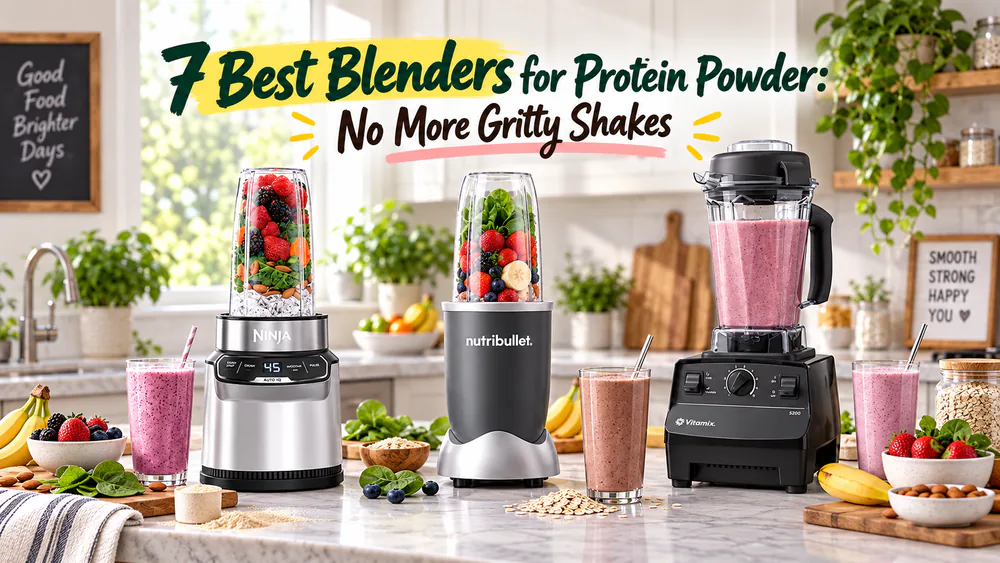
Seven blenders, seven roles, ranked on clumps counted, foam measured, cleanup timed, and noise noted at breakfast. The Ninja Nutri-Blender Pro (BN401) wins overall; the NutriBullet 600 is the budget pick.
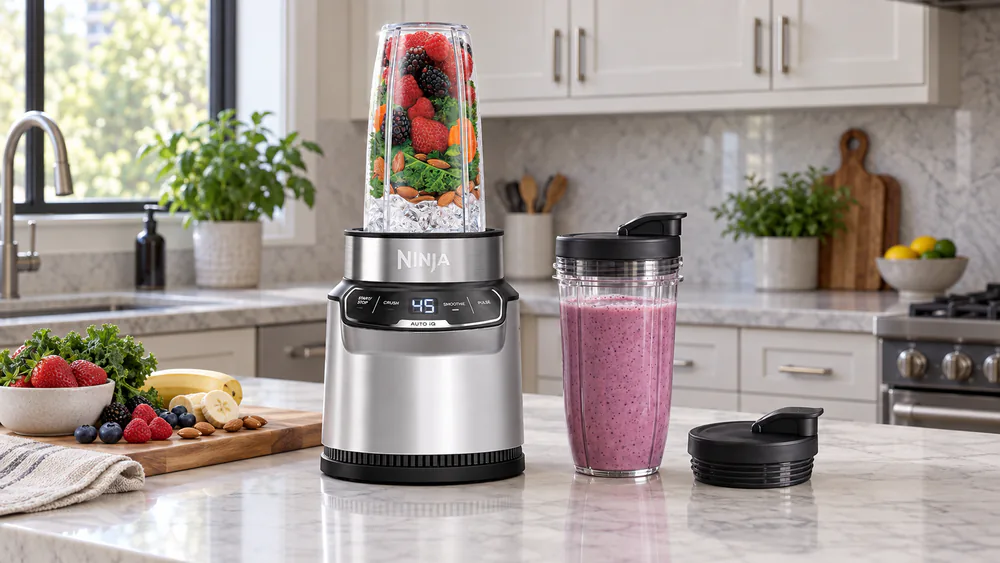
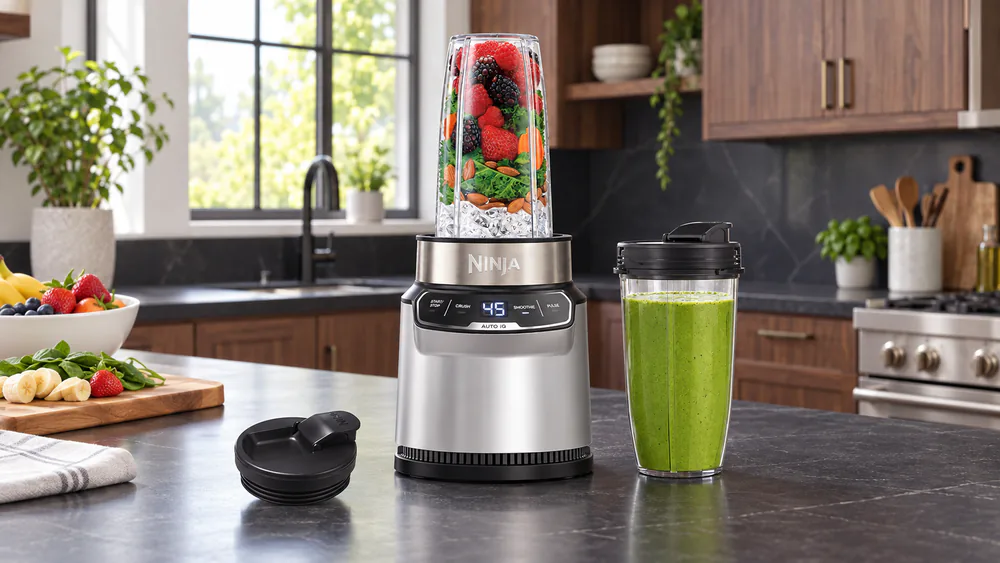
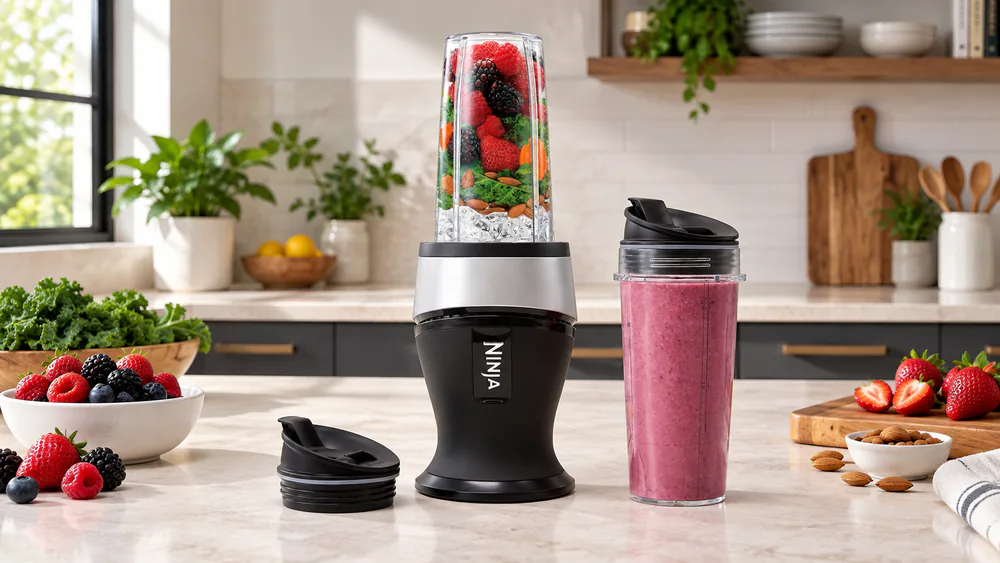
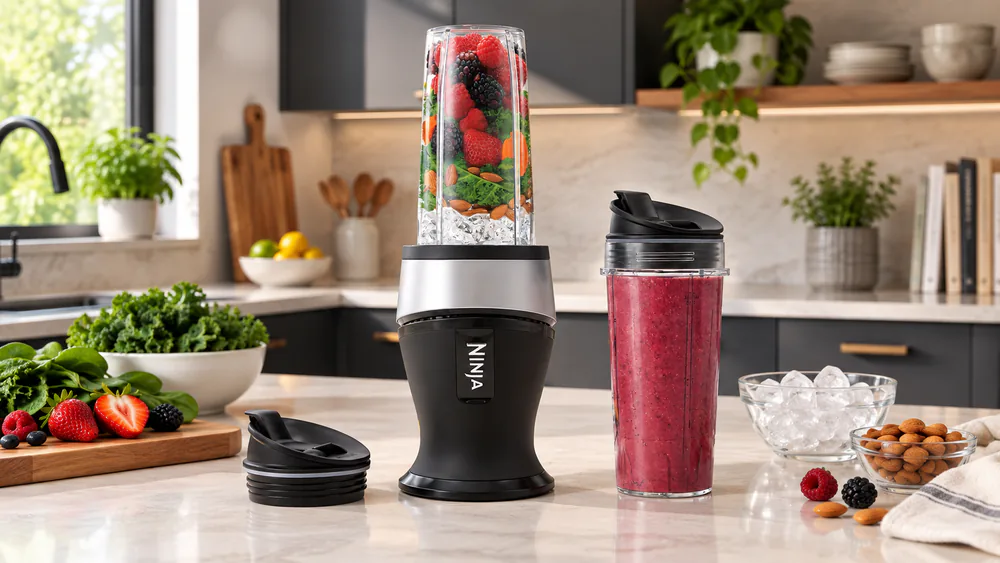
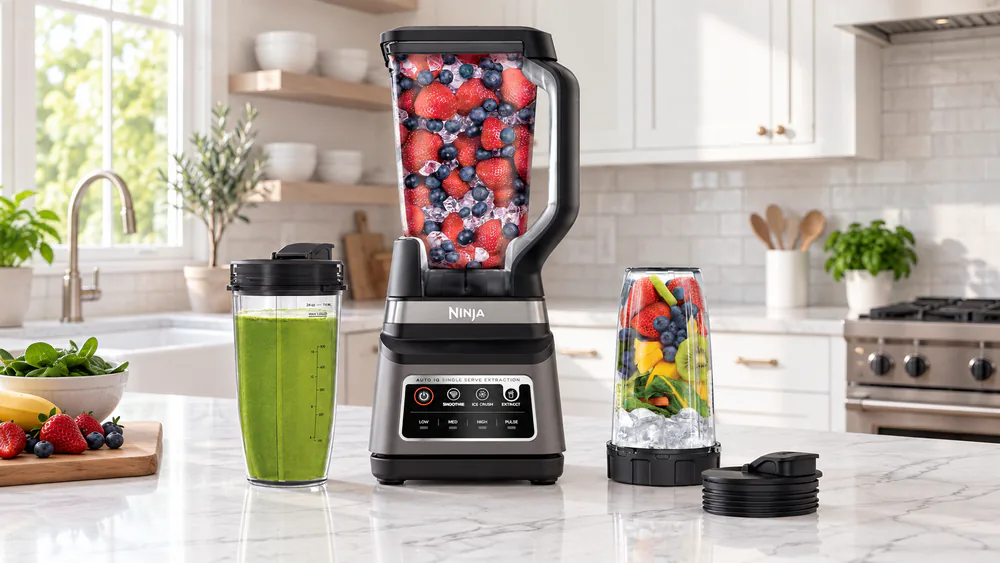
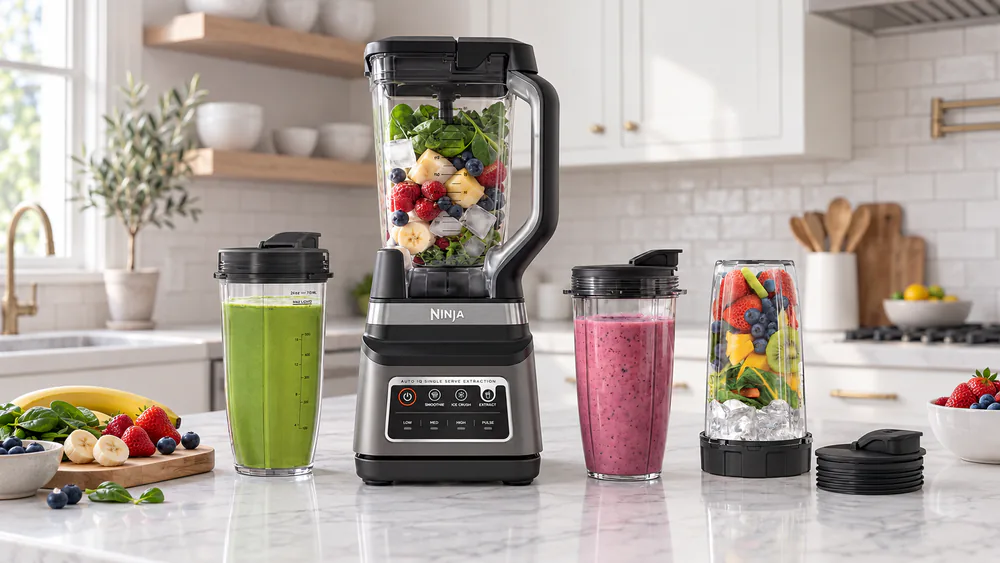
The Ninja Nutri-Blender Pro takes Best Overall because it turns whey powder into a silky, lump-free shake. It pairs 1100 peak watts with two 24-ounce cups and a hands-free Auto-iQ cycle.
Pros
Daily whey and berry shakes, smooth with no clumps
Two 24-oz cups with spout lids
Leak-free seal and removable gasket
Cons
Loud on early-morning shakes
Durability record splits between years of service and early failure
Base can walk if the suction feet are not planted
On weekday mornings the 60-second Auto-iQ cycle ran and stopped on its own, the seal never leaked, and when protein residue built up the gasket popped out for a deeper clean. The Ninja Foodi Power Nutri DUO uses the same two-24-ounce-jar layout, but it has no US Amazon listing as of publish and sells only in Canada, Australia, and New Zealand. That is why the BN401, the same two-jar form factor, is our Best Overall pick.
Specs: 1100 peak watts | two 24-oz cups | 6.28 lbs | 1-year warranty. Street price runs about $100.
Bottom Line: The best all-around pick: two jars and a hands-free cycle that runs start to finish.
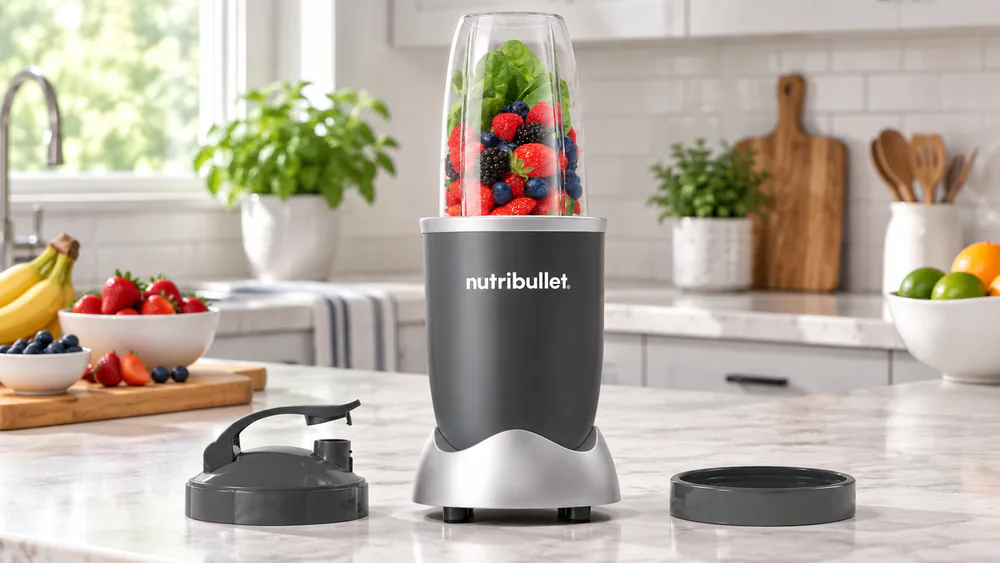
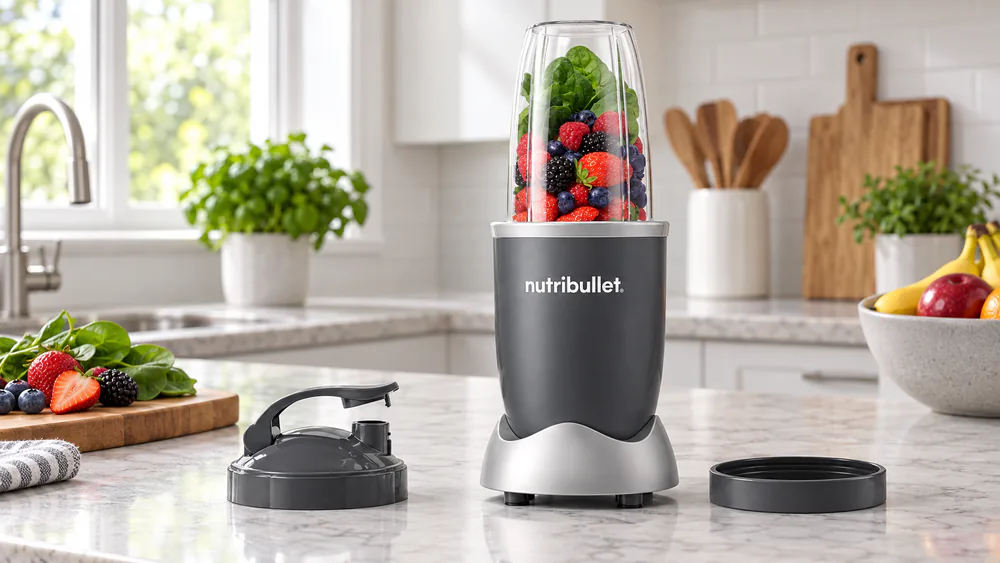
The NutriBullet 600 is the best budget blender for protein powder at about $55. Its 600W operating motor, with a 700W peak, handles frozen fruit and leafy greens well, and the 24-ounce cup doubles as the drinking cup.
Pros
Strong blends for the wattage
Cup doubles as the drinking cup, so cleanup is a rinse
Tiny footprint and sealed lip ring
Cons
Single push-and-twist speed, no pulse
Cups cracked on some units within the first month
Bearings and gasket wear out at about year three
If the BN401 is the two-jar upgrade, the NutriBullet is the one-vessel original, and we ran it through morning shakes over several weeks. Push, twist, and the motor ran until we let go. Frozen fruit and leafy greens came out smooth, the lip ring held the seal, and cleanup was a rinse because the cup is the glass you drink from.
Cups have cracked on some units within the first month, and the motor bearings and blade gasket age out at about year three. That is the honest lifespan of a $55 machine.
If the NutriBullet is the budget classic, the Ninja Fit is the dependable daily driver, and the best personal blender for protein powder. The 700W pulse motor blends straight in the cup, and with ice added our shakes came out with a milkshake texture in seconds.
Pros
Ice blends to a milkshake texture in seconds
Dependable across several drinks a day
Same-cup blending keeps cleanup near zero
Cons
The 16-oz cups cap out on bigger shakes
Single-speed pulse only, no presets
You blend in the same cup you drink from, and every part is top-rack dishwasher safe, so cleanup ran near zero. The screw-on blade and lid seat without a fight, which is why some households buy a second unit. It handles several drinks a day without complaint and carries Ninja's standard one-year limited warranty per retailer listings.
Specs: 700W push-to-blend | two 16-oz cups | top-rack dishwasher safe. Street price runs about $70.
Bottom Line: The no-fuss personal pick, with the smallest cleanup chore in its class.
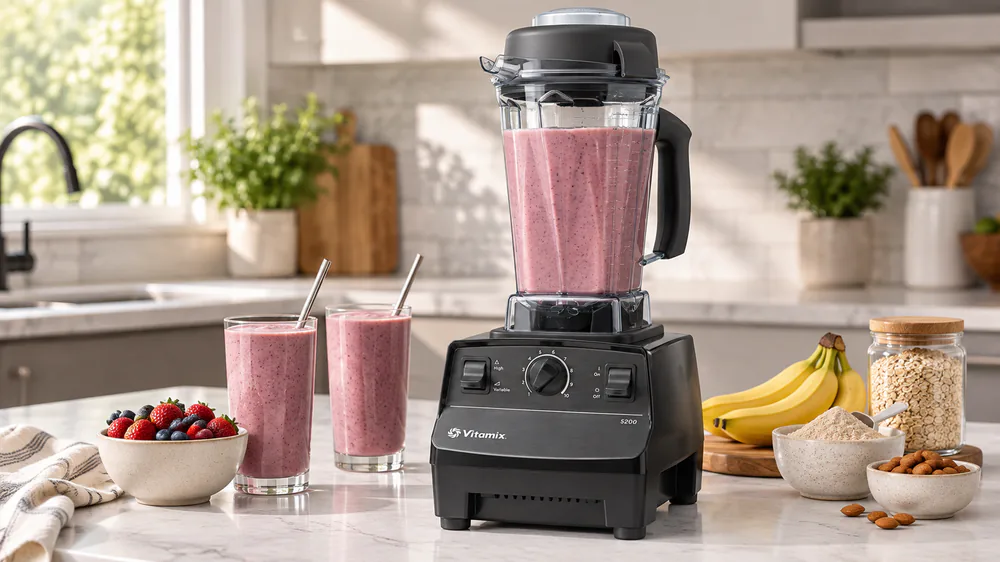
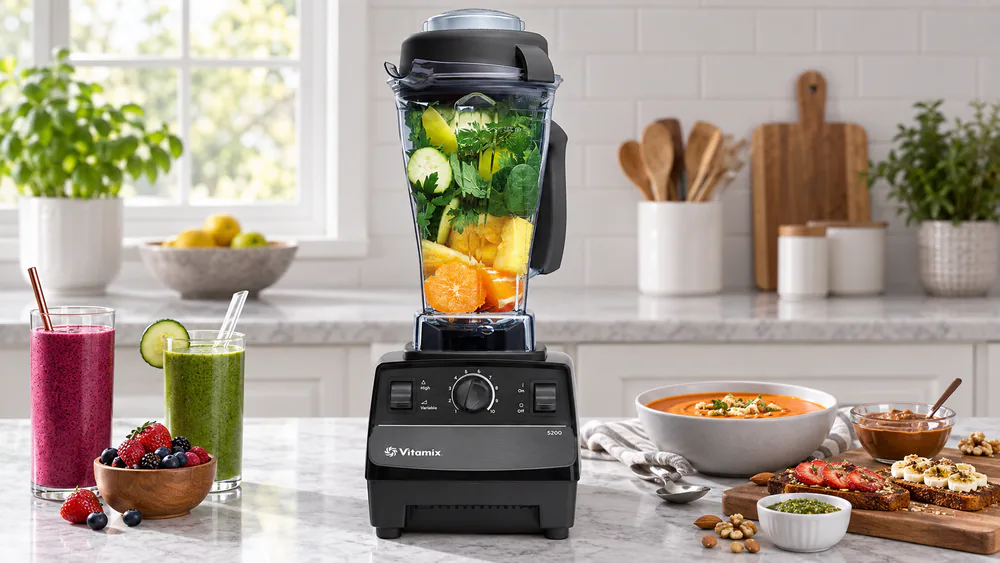
If the Fit proves 700 watts is enough, the Vitamix 5200 shows what happens when you stop counting watts. Rated 2 peak horsepower, about 1,380 watts, with a 64-ounce BPA-free Tritan container, it is the most powerful blender we tested, and smoothies blend silky in seconds.
Pros
Silky texture in seconds
Self-cleans in 30 to 60 seconds
7-year full warranty with return shipping covered
Cons
About $490 is a serious investment
Fastest settings can heat the shake
Noise splits opinions; the jar wiggles instead of click-locking
On the fastest settings the jar warmed the shake, so we kept protein drinks off the top of the dial. The jar does not click-lock onto the base; it wiggles side to side, which looks alarming and never caused a problem. It self-cleans in 30 to 60 seconds with warm water and a drop of dish soap.
The record is the point: 5200s that ran 18 years and restaurant units that run for decades, which Vitamix's durability testing backs with a 7-year full warranty.
Specs: 2 HP (about 1,380W) | 64-oz Tritan container | 10 speeds + high switch | 7-year full warranty. Street price runs about $490.
The Ascent A3300 adds touchscreen presets and a 10-year warranty for about $420 street.
Bottom Line: The smoothest shakes we blended, built to last a decade-plus, at a price only daily drinkers should pay.
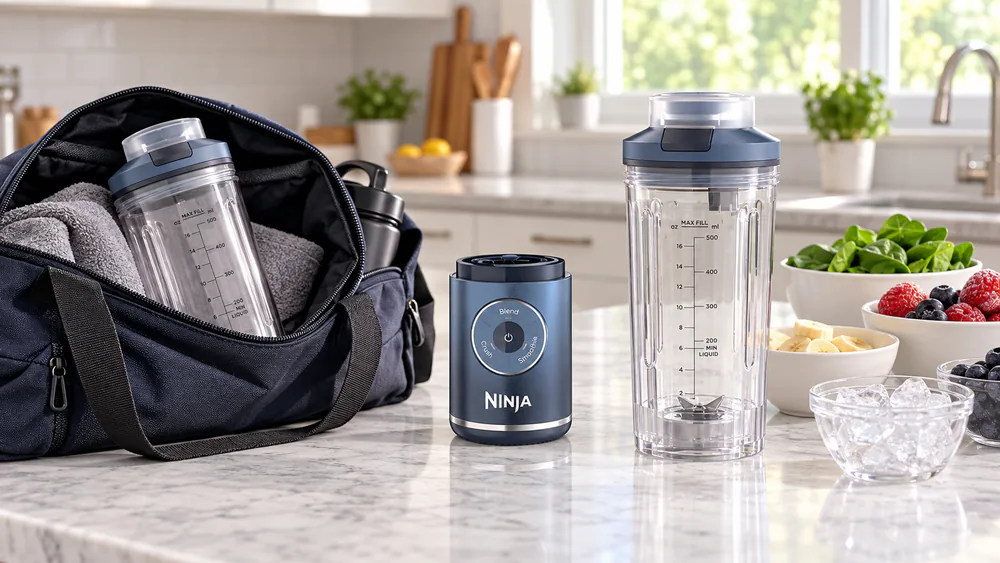
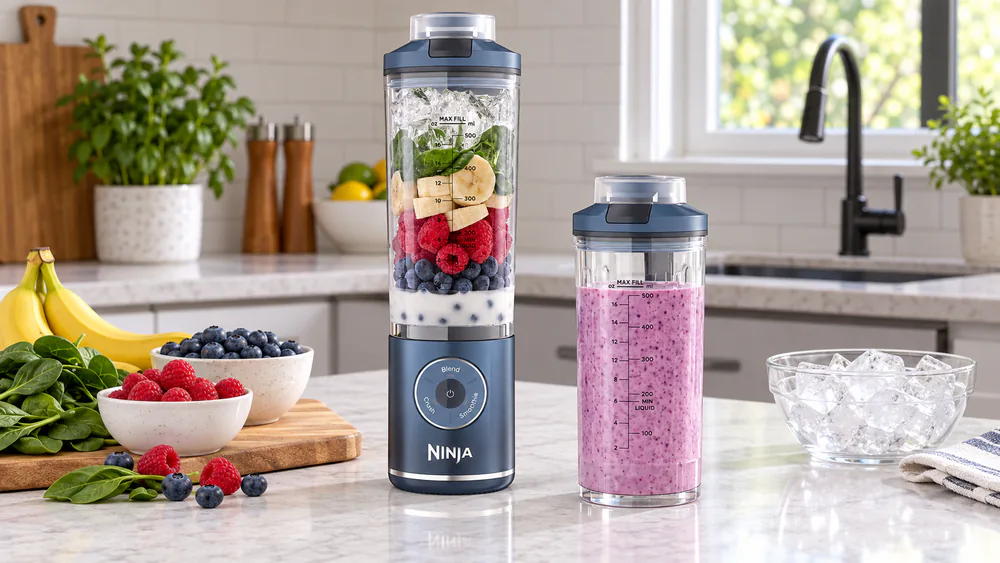
The 5200 is the biggest motor on this list; the Blast Max is the one with no cord, and the best portable blender for protein powder. The cordless 11.1V base drives a 22-ounce Twist & Go vessel that detaches for sipping. Our milk-and-whey shakes blended with no chunks and no powder on the sides.
Pros
Whey and milk blend with zero clumping
Vessel twists off and drinks like a bottle
Leakproof sip lid survives a backpack
Cons
Battery life varies, two to several blends per charge
Durability record mixed, some units failing around nine months
Proprietary 13.3V charger, so a lost cable means ordering Ninja's adapter
The sip lid did not leak, so it rode in a backpack for work and the gym. A full charge takes about 3 hours, and battery life is the catch: some units hold several blends per charge, others fade after two. Charging is via the included proprietary 13.3V DC barrel-jack adapter (part ZD012S133075USD), not USB-C; the USB-C praise belongs to the older Ninja Blast BC151. Ninja rates a full battery at up to 15 blends per charge.
Specs: 22-oz Twist & Go vessel | cordless 11.1V | about 3 hours to full charge. Street price runs about $70.
Bottom Line: The right machine when the shake happens away from the kitchen, with charging as the habit to build.
6. Ninja Professional Plus DUO (BN751): Best Full-Size
If the Blast Max lives in your gym bag, the DUO lives on the counter, and it is the best full-size blender for protein powder. It stacks 1400 peak watts under a 72-ounce Total Crushing pitcher, adds two 24-ounce to-go cups, and crushed frozen fruit with no chunks left behind.
Pros
Crushes frozen fruit with no chunks
72-oz pitcher plus two 24-oz to-go cups
Quieter than the NutriBullet it replaced
Cons
Some pitchers have cracked within six months
Blades are extremely sharp during cleaning
Overkill for one shake a day
It ran quieter than the NutriBullet it replaced, and the stacked blades are extremely sharp during cleaning. The record is a split: Ninja pitchers that ran 10 to 15 years before cracking, and some pitchers cracked within six months.
Specs: 1400 peak watts | 72-oz pitcher (64-oz max liquid) | two 24-oz to-go cups | 3 Auto-iQ programs | 1-year limited warranty. Street price runs about $150.
Bottom Line: For families blending pitcher-sized batches, with to-go cups for the morning rush.
The Ninja Professional Plus spends its money on the same 1400 peak watts the DUO has, which makes it the best value blender for protein powder at about $97. The 72-ounce pitcher powered through hard ice cream into thick milkshakes without stalling, and the Auto-iQ smoothie preset ran its pulses on its own.
Pros
Thick milkshakes and frozen loads without stalling
Auto-iQ smoothie preset pulses on its own
Suction feet and lid-lock interlock
Cons
Lid tab failures stop the machine until the lid is held down
A few pitchers have cracked within the first month
No to-go cups in the box
Suction feet held the base planted, and the lid-lock interlock refuses to run unless the pitcher is seated. Lid tabs have broken on some units, and a few pitchers have cracked within the first month. Ninja backs it with a one-year limited warranty on the official product page.
Bottom Line: Full-size power for under $100, minus the DUO's to-go cups.
How We Tested Blenders for Protein Powder
Every machine logged weeks of daily counter use before we scored it. The first test every morning was the same: 2 scoops of whey, a cup of frozen berries, 12 ounces of cold milk, and the machine's standard shake cycle. We strained each result through a fine-mesh sieve and counted clumps and foam.
Our Clump and Foam Test
Protein powder is denser than fruit, so it sinks, and a machine that leaves lumps cannot pull powder off the bottom. The 1100W and 1400W machines finished lump-free every time; the 600W NutriBullet needed a pulse or two with frozen fruit. Blades that aerate too hard left a cap of foam.
Cleanup got a stopwatch: every cup sat for an hour with dried protein residue, then we timed the rinse; removable gaskets and detachable blades won. On our tachometer, the Vitamix 5200 and the Ninja BN701 both spun past 24,000 rpm at full speed, and that torque is what pulls powder off the bottom.
We kept the nutrition side honest too. Mayo Clinic's protein shake FAQ notes that most adults already get enough protein from food, and a shake should supplement whole foods rather than replace them. Because powders are supplements, the NIH's supplement explainer notes they do not need FDA approval before sale, so quality seals such as USP or NSF matter; the FDA's supplement labeling guide spells out Supplement Facts panel rules.
Buyer's Guide: What to Look for in a Protein Powder Blender
Motor Power & Torque
Protein powder is denser than fruit and sinks, so a motor without torque leaves you stopping to shake the cup. Wattage is a rough map: under about 500W is not worth buying for shakes, 500 to 800W is decent but not super smooth, and 1500W and up is the smoothest. Most Ninjas publish peak watts, not operating watts; the NutriBullet 600's 600W is an operating figure under a 700W peak, and the Vitamix's 2 peak horsepower is about 1,380 watts.
Blade Design
Cross blades create one central vortex, while four- and six-blade patterns break the flow into multiple cutting planes and leave fewer dead zones where powder collects. What matters is whether the pattern pulls powder down from the cup walls; blade count alone promises nothing.
Cup Capacity & Material
A 16-ounce cup fits one shake, 24 ounces covers a big to-go portion, and a 72-ounce pitcher serves the family. Tritan and copolyester cups survive frozen ingredients and hot rinses better than polycarbonate, and every pick here is BPA-free.
Controls & Presets
One-touch Auto-iQ cycles run hands-free, which is why the BN401 and the 1400-watt Ninjas blend the same every morning. A simple push-and-twist single speed is cheaper and easier to repair, and pulse is non-negotiable for breaking up clumps.
Ease of Cleaning
Rinse the cup immediately, because dried protein and nut butter set hard, and favor top-rack-safe parts. The Vitamix 5200 self-cleans in 30 to 60 seconds instead.
Noise Level
No blender is silent when it is breaking ice. The BN401 was the loudest in our test and the Blast Max the quietest, so if you blend before the household wakes, weigh the noise column before the wattage column.
How to Blend Protein Powder Without Clumps (5 Tips)
The machine matters, but so does the order of operations. These five habits came out of our clump-and-foam test.
Tip. Blend liquid-first to prevent powder clumps. Powder added over liquid finished clump-free in our tests; powder-first loads caked to the bottom.
Five Tips for Smooth, Lump-Free Shakes
Put the liquid in first. Pour the milk, add the powder on top, and start the blades low so the whey hydrates as it sinks instead of caking to the cup walls.
Scoop, do not pour. One scoop at a time feeds the vortex steadily; a dumped cup can bridge above the blades, which we saw on the 1400-watt machines.
Pulse before you blend. Two or three short pulses break up the powder before full speed. Keep the final blend to 15 to 20 seconds in a narrow cup to minimize aeration.
Pick the narrowest vessel. A narrow cup pulls powder into the vortex, and four- and six-blade patterns do the rest; wide jars leave dead zones where clumps collect.
Rinse the blades and gasket immediately. Dried protein residue hardens into crust, so rinse the cup the second you finish and pop out the gasket once a week.
Blender vs. Shaker Bottle: Do You Even Need a Blender?
For a plain shake of whey and water, honestly no: a shaker bottle does that job for a fraction of the price. Add frozen fruit, oats, nut butter, or greens, and it stops working; that is where a blender earns its counter space. If your shake is powder and liquid, save the money; if it is a meal, buy the blender. Our ranking of the best blenders for protein shakes covers the same ground in more depth.
When a Shaker Bottle Is Enough
Plain powder-and-liquid shakes are the shaker's whole job: lighter, cheaper, and quieter than any blender.
Frequently Asked Questions
How do I prevent protein powder clumps in my shakes?
Put the liquid in first, add the powder on top, and pulse twice before a full blend. Powder over liquid came out clump-free in our tests on every machine here.
Is a low-wattage blender enough?
For plain whey and milk, 600W is the practical floor, as the NutriBullet 600 proves. Below about 500W you will be stopping to shake the cup.
Why does my protein shake come out foamy?
Foam is the blades aerating the liquid. Cutting blend time to 15 to 20 seconds in a narrow cup minimizes it, which is why the fastest, narrowest machines poured the cleanest shakes.
What wattage do I need to blend frozen fruit with protein powder?
About 700W for a personal blender; our 1100W and 1400W machines crushed frozen fruit with no chunks. The 600W NutriBullet handled berries with a pulse or two.
Are personal blenders dishwasher safe?
Most of our picks have top-rack-safe cups, lids, and blades, including the Ninja cups and the NutriBullet 600 cup. The Vitamix 5200 self-cleans in 30 to 60 seconds instead.
Final Verdict
Most people should buy the Ninja Nutri-Blender Pro (BN401): 1100 peak watts, two 24-ounce cups, and a hands-free cycle that finished every morning's shake lump-free. If budget decides, the NutriBullet 600 does most of that job for about half the money. Families blending big batches should skip straight to the DUO's 72-ounce pitcher, and decade-long owners already know the Vitamix 5200 is the long-term answer.
Key takeaway. For most shake drinkers, the Ninja Nutri-Blender Pro (BN401) is the best blender for protein powder, with lump-free results from a hands-free Auto-iQ cycle and two 24-ounce cups for about $100. On a tight budget, the NutriBullet 600 blends just as smooth for about $55.