As an Amazon Associate we earn from qualifying purchases. We may earn a commission from links on this page, at no extra cost to you. Learn more.
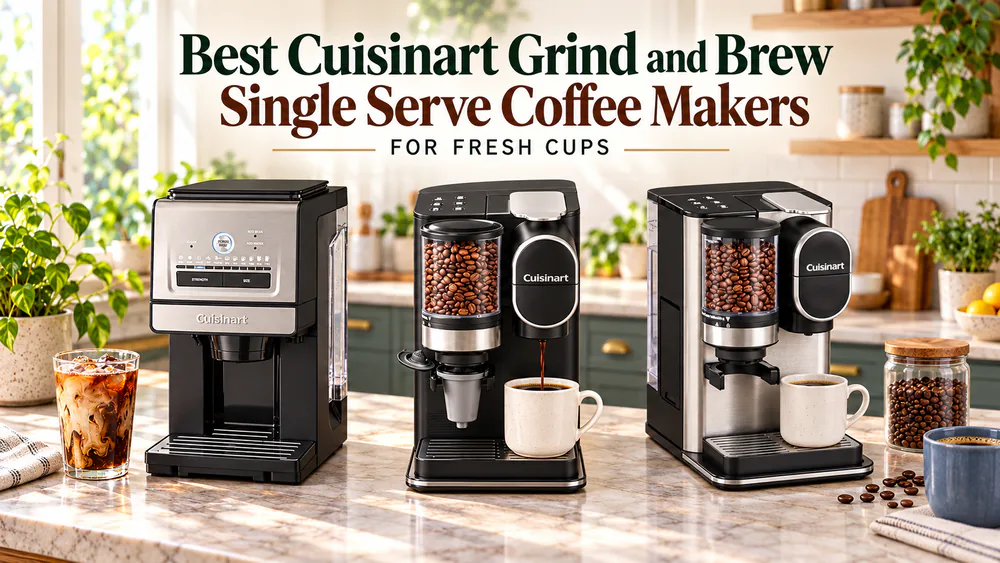
If you want a freshly ground cup of coffee without a grinder, a brewer, and two sets of parts to wash every morning, a single-serve grind-and-brew machine is the obvious answer. Cuisinart makes the best-known versions, and the shortlist is short: the DGB-30 and the DGB-2. We think the DGB-30 is the better machine for most kitchens, and the DGB-2 is the one to consider if you want pod compatibility or a smaller footprint.
The two models look similar on a shelf, but they do not behave the same way at the counter. One grinds straight into a brewing basket and brews on its own. The other has you fill a reusable cup, carry it to the brew head, and then choose a size. That one difference shapes cleanup, speed, and how often you reach for the machine on a busy weekday. If you are still deciding between formats, our Kitchen Appliances coverage shows where single-serve machines sit next to full-pot brewers and espresso gear.
In this guide we cover how the two models differ on workflow, inputs, cup sizes, mug clearance, cleaning, and descaling. We also say plainly where each one gets annoying, because grind-and-brew machines trade convenience for a few extra chores, and you should know which chores before you buy.
Cuisinart Grind and Brew Single-Serve Picks at a Glance
The DGB-30 is our top pick because it grinds, brews, and offers strength and iced options in one sequence. The DGB-2 is the alternative for households that also want K-Cup compatible pods.
We approached this category the way most shoppers do: we wanted one machine that handles beans, makes a single mug, and does not turn every morning into a cleaning project. Both models went through the same set of questions. How many steps stand between a hopper of beans and a hot cup? What happens when you want a second cup right away? How easy is it to get the grinder parts out and clean them? Does your favorite mug actually fit under the spout?
We scored each model on five things: cup quality, workflow, ease of cleanup, how much space it takes, and what can go wrong over time. We did not score speed as a lab number, because the manuals do not publish brew times and we would rather not invent them. We also left out wattage, since we could not confirm it from the manufacturer.
Two limits shape how we write about these machines. First, they are single-serve coffee brewers, not espresso machines, and we judged them as brewers. Second, individual machines vary. Some run for years and some develop leaks or lose their brewing function, so we treat those failures as possible outcomes rather than typical lifespan.
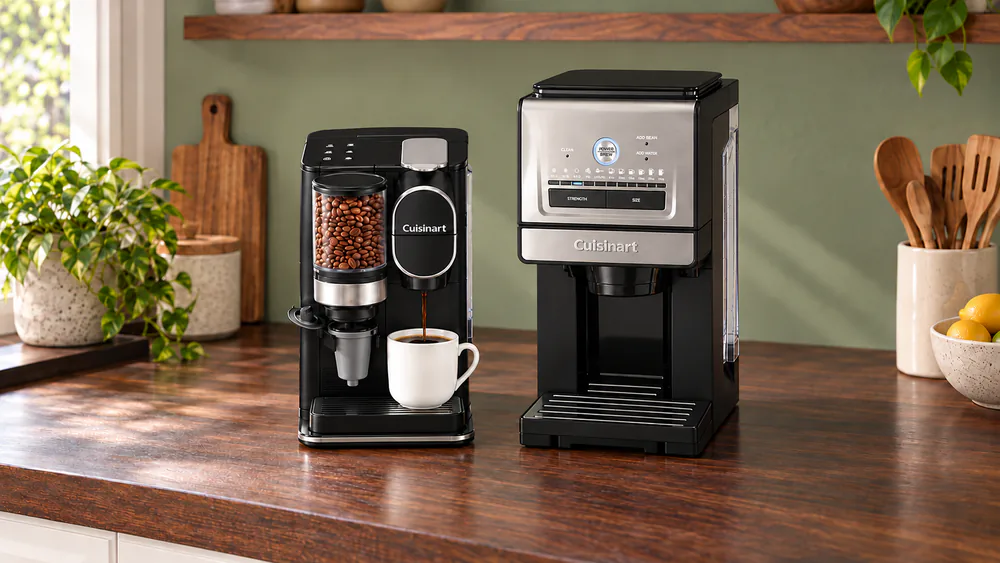
The DGB-30 stands about three inches taller than the DGB-2.
Note. A third model name, the DGB-2SS, and a white DGB-2W also exist. Those are finish names for the DGB-2 format, not a different brewing design, so everything we say about the DGB-2 applies to them.
Cuisinart Grind and Brew Single-Serve Models to Consider
Two models make up the shortlist. The DGB-30 is the current Cuisinart product and the one we would buy first. The DGB-2 is marked discontinued at the manufacturer's direct store, so remaining stock and seller availability vary. That does not make it a bad machine, but it is a reason to check warranty paperwork and the return terms before you commit.
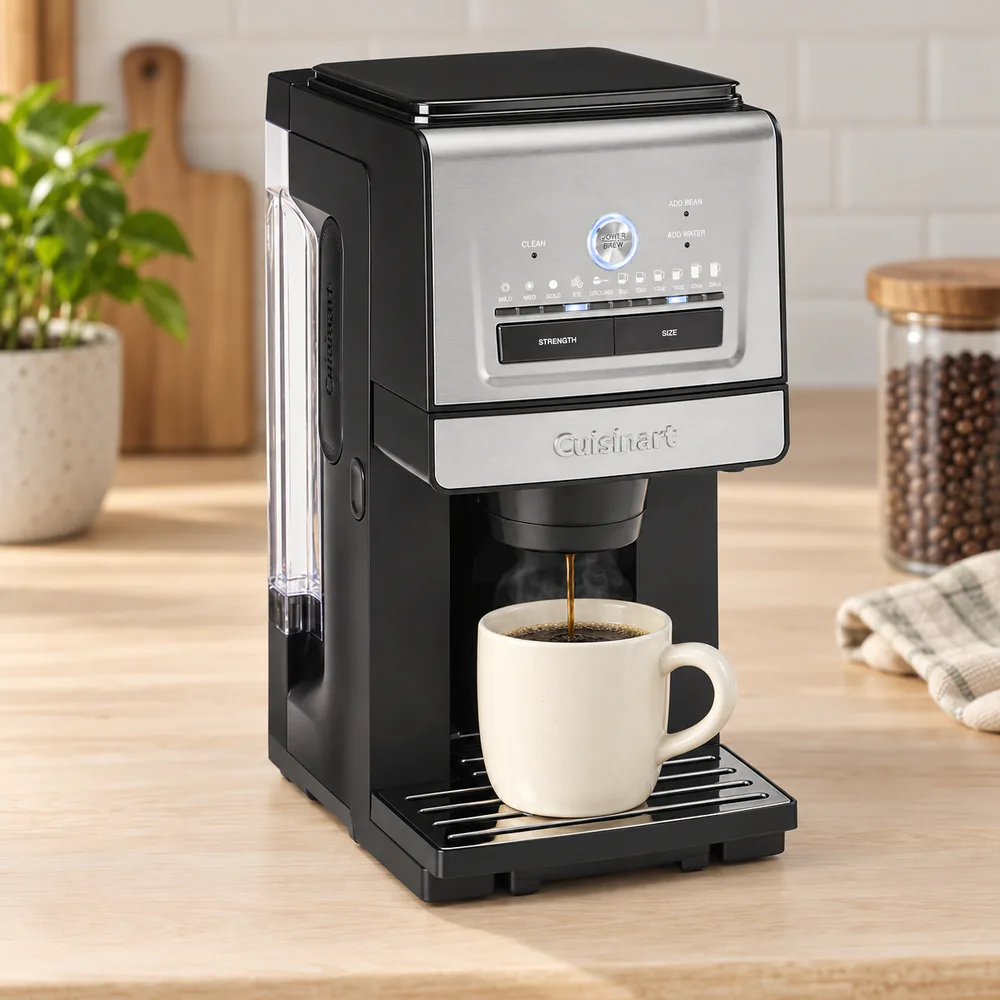
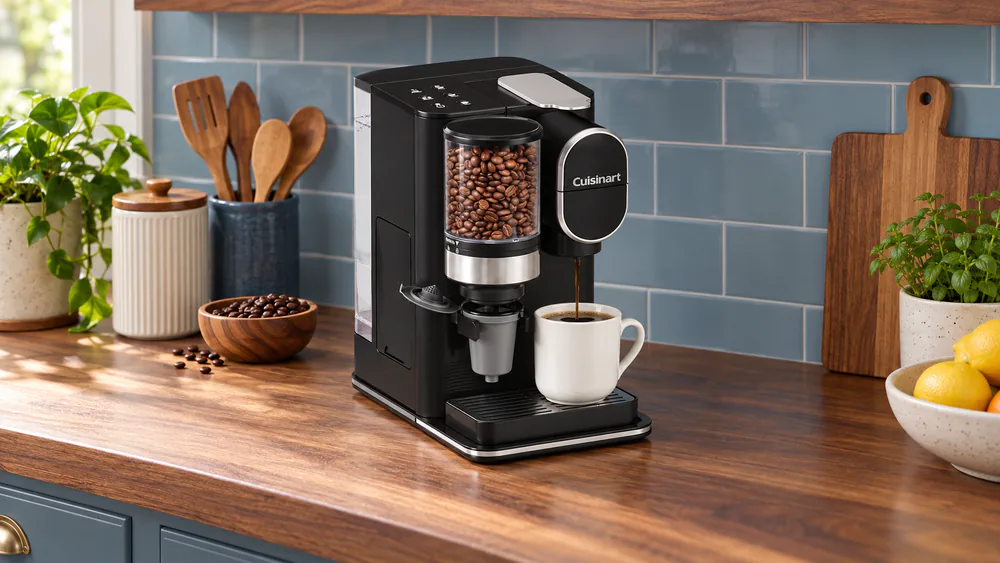
Freshly ground coffee from the DGB-30 tastes full and arrives hot, and it works well for both black coffee and iced drinks. It grinds into the brewing basket and then brews automatically, which is the cleanest workflow of the two models. The price of that convenience is a set of small chores around the grinder.
Pros
Stainless steel conical burr mill with a 1/2 lb bean hopper and sealed lid
Hot servings from 8 oz up to 24 oz, plus a dedicated Over Ice mode
Mild, Med, and Bold strength settings for whole-bean hot brewing
Removable hopper, burr, brewing chamber, and drip tray for deeper cleaning
Gold-tone permanent filter included, and it accepts a 4-cup basket paper filter
Cons
The grinder can jam and waste partly ground beans
The chute between grinder and basket adds fiddly cleaning
Taller than the DGB-2, so it will not fit comfortably under many cabinets
No pod brewing; beans and grounds only
The workflow is simple on paper: fill the hopper and reservoir, pick a size and strength, and press the button. Cuisinart's sequence then grinds into the basket and starts brewing without more input from you. For a quiet household, the grinding is conspicuous, so plan on a short burst of noise before the first drip.
The routine has friction in a few places. A poorly fed hopper can interrupt an otherwise easy morning, and lifting out the burr to clear a jam is awkward. Overall, the controls, filling, and cleanup make the routine a little less convenient than the integrated format suggests, but the cup quality is the reason we still put it first.
The DGB-30 is a good fit if you drink larger mugs, switch between hot and iced coffee, or want to choose Mild, Med, or Bold without changing beans. It is a poor fit if you want pod brewing, or if you rotate beans several times a week and do not want to clean the hopper each time.
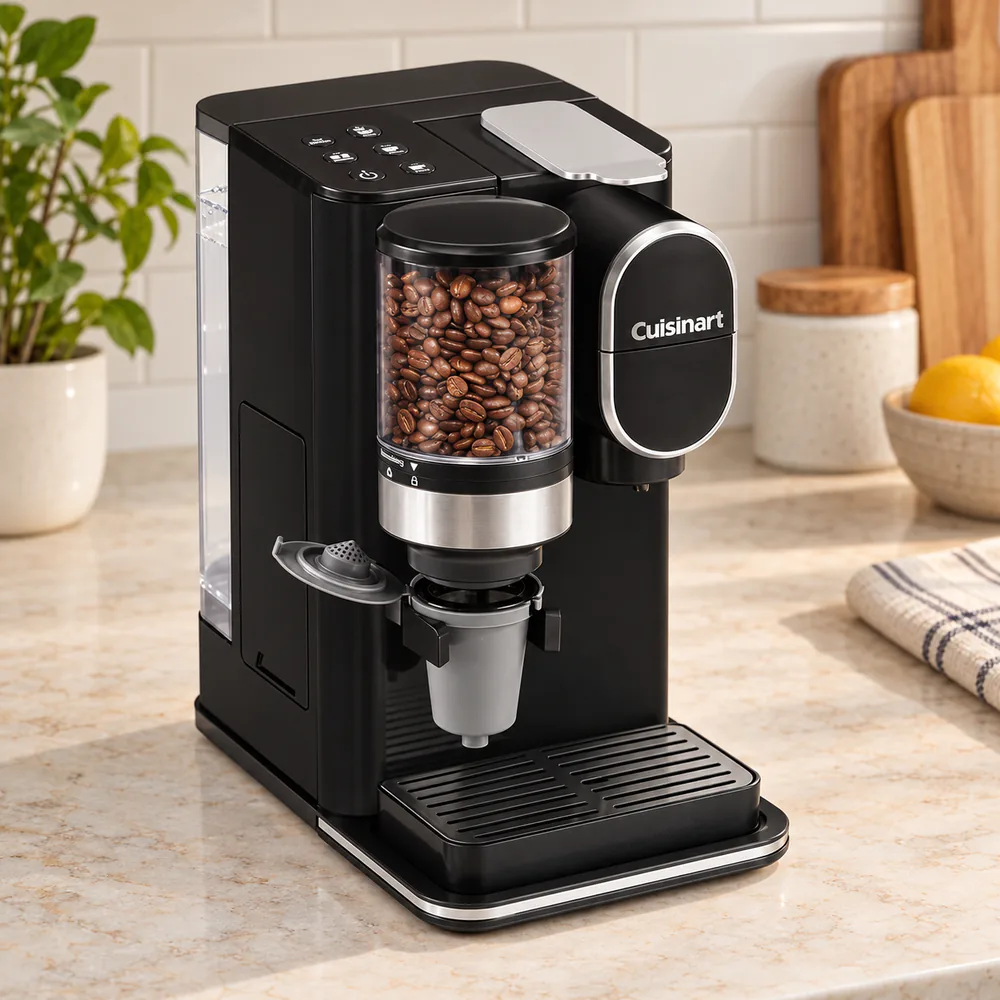
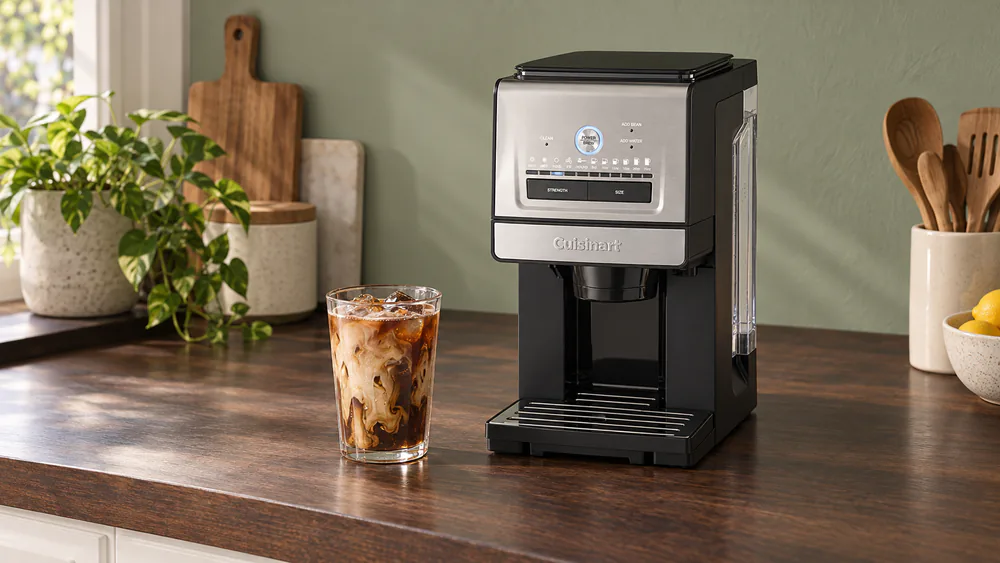
The DGB-2 earns its place by being flexible. It grinds beans, brews pre-ground coffee, and accepts K-Cup compatible pods, all in a body that stands 12.67 inches tall. The coffee tastes satisfyingly strong across its serving settings, and the controls are easy to learn. The catch is the reusable cup, which does more work than you expect and creates most of the mess.
Pros
Beans, pre-ground coffee, and K-Cup compatible pods in one machine
Compact footprint at 11.02 by 7.28 inches
Easy controls and a removable 48-ounce reservoir that makes filling straightforward
A concealed storage compartment keeps the reusable cup handy
3-year limited warranty for normal household use
Cons
Grinder is substantially louder than the brewing itself
Grounds can miss the reusable cup and collect in the catch tray
Fixed hopper makes changing beans and filling cumbersome
Marked discontinued at the manufacturer, so stock depends on the seller
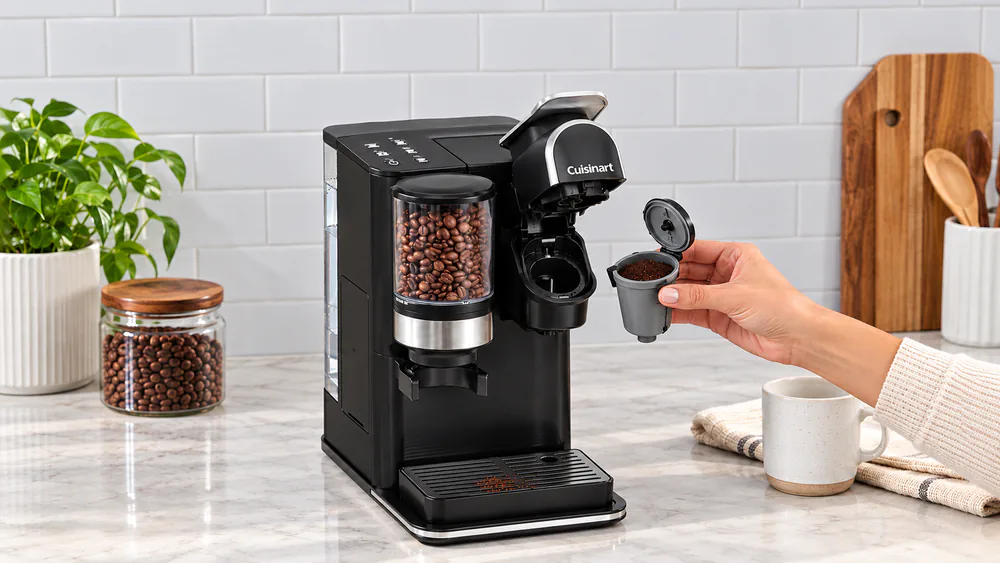
Where the DGB-30 grinds straight into the basket, the DGB-2 has one extra step. You grind into the open reusable cup, close its lid, transfer the cup into the brew chamber, and then pick a serving size. Before you insert the HomeBarista cup, you remove the ordinary capsule holder. It is not hard, but it is a sequence you repeat every morning.
That reusable cup is also where things go wrong. Grinding can overfill it, and stopping the grinder by hand helps control spillover. Grounds can miss the cup and collect in the catch tray, and wet grounds that escape around the brew-head lid are difficult to reach and clean. Fine sediment can pass through the mesh into the drink, and the cup is hot right after brewing, so let it cool before you empty it.
Long-term reliability is mixed. Some machines work for years, while loss of brewing function and leaks are both possible failure modes, even when the grinder still runs. We would not call either outcome typical, but it is another reason to keep proof of purchase for the 3-year warranty.
The fixed hopper sits around the central grinder, so pouring beans quickly can scatter them across the counter. If you change beans often, this is the model that will frustrate you.
Where the DGB-2 shines is in small households. A pair of people who want fresh beans on weekdays and the occasional pod for a guest or a rushed morning can run this machine without needing a full pot. That beans-or-pods flexibility is something the DGB-30 cannot offer.
The HomeBarista cup holds up to 15 grams of grounds.
Cuisinart DGB-30 vs. DGB-2: The Differences That Matter
The table below lays out the verified differences. We left out anything the manufacturer does not document.
Criteria
Cuisinart DGB-30
Cuisinart DGB-2
Workflow
Integrated grind then brew
Move filled HomeBarista cup into brew head
Inputs
Beans, grounds
Beans, grounds, K-Cup compatible pods
Grinder
Stainless steel conical burr
Conical burr
Hot sizes
8, 10, 12, 16, 20, 24 oz
8, 10, 12 oz
Reservoir
58-ounce
48-ounce
Hopper
1/2 lb
100g
Strength and ice
Mild/Med/Bold; dedicated Ice mode
No dedicated strength or Ice selection
Footprint (depth x width)
11.47 x 7.99 inches
11.02 x 7.28 inches
Height
15.71 inches
12.67 inches
Mug clearance
Up to 7 inches, tray removed
Removable tray; exact maximum unverified
Cleanup
Basket after each cup; brush outlet; removable hopper and burr
Empty reusable cup; sweep spilled grounds; fixed hopper and pod needles
Warranty
3-year limited
3-year limited
Availability
Active manufacturer product page
Discontinued at manufacturer; check seller stock
Grinding and Brewing Workflow
The DGB-30 is the smoother of the two. It grinds into the brewing basket and brews automatically, so once you press the button there is nothing to carry or close. The only mandatory step between cups is opening the basket door and discarding the grounds to reset the interlock.
The DGB-2 asks for more handling. You grind into the HomeBarista cup, close the lid, move it to the brew chamber, and choose a size. When you want one cup and have a minute, it is fine. When you want a second cup in a hurry, the DGB-30 is quicker to restart because you have only the basket to empty.
Both machines use a conical burr, which is the grinder style we prefer for single cups. Compared with a blade, a conical burr crushes beans between two surfaces, so the grounds come out more even and you get less fine dust in the cup. That matters most with the DGB-2, where the mesh cup can already let sediment through. We could not verify any user-adjustable burr gap on either machine, so do not buy one expecting to dial in a precise grind size. Strength on the DGB-30 changes the brew, not the grind.
Noise is similar in kind. The DGB-2 grinder is substantially louder than its brewing, and the DGB-30 grinding is conspicuous in a quiet kitchen. If someone sleeps near your kitchen, neither is a silent machine.
Whole Beans, Ground Coffee and Pod Compatibility
Both models accept whole beans or pre-ground coffee. The difference is the third option. The DGB-2 accepts K-Cup compatible pods, and the DGB-30 does not brew pods at all.
If your household includes one person who wants a pod and another who wants fresh beans, the DGB-2 is the only machine on this shortlist that handles both. If you will only ever use beans, the pod option adds a part to maintain, because the DGB-2 pod needles can clog and need clearing by following the manual procedure.
Pre-ground coffee works as a shortcut on both. On the DGB-30, the strength settings apply to whole-bean hot brewing only, so Mild, Med, and Bold are unavailable when you brew grounds or ice. On the DGB-2, there is no dedicated strength or Ice selection at all. If you plan to use pre-ground coffee regularly, remember that the DGB-2 reusable cup holds a maximum of 15 grams and the manual says not to tamp.
Cup Sizes, Water Reservoir and Mug Clearance
The DGB-30 offers hot servings of 8, 10, 12, 16, 20, and 24 oz. The DGB-2 offers 8, 10, and 12 oz. If your regular mug holds more than 12 ounces, the DGB-2 will leave you making a second cup or settling for a weaker drink than you want.
The DGB-30 reservoir is 58-ounce, and the DGB-2 reservoir is 48-ounce. Both are removable, which makes filling at the sink straightforward. The DGB-2 reservoir fills quickly and its water-level window helps you see what remains.
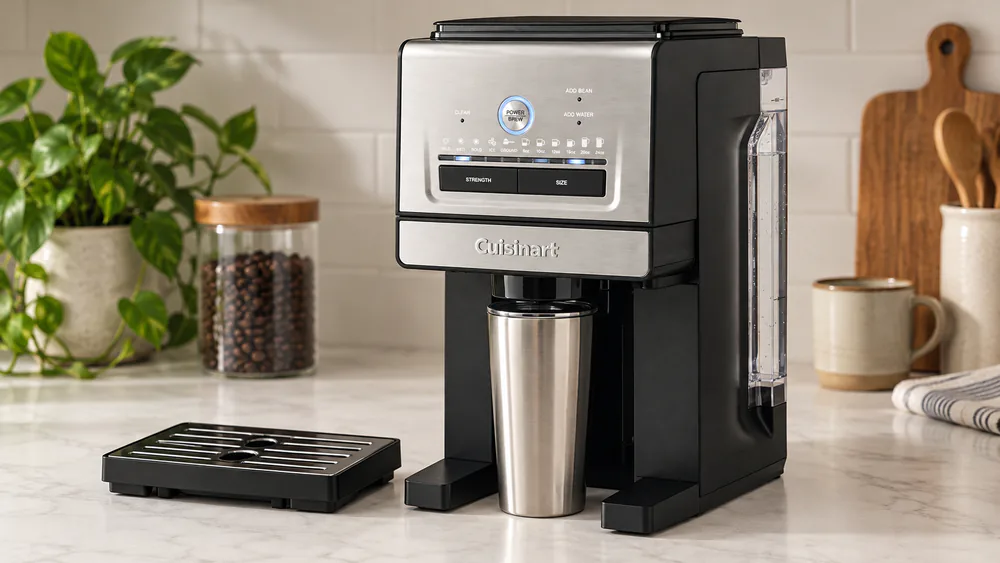
Mug clearance is where shoppers get caught. Travel mugs up to 7 inches tall fit under the DGB-30 with the drip tray removed, and the tray position is adjustable. A tall travel tumbler can fail to fit even when its volume matches a selectable serving, so measure your tumbler before you assume a 20 oz setting works. For the DGB-2, the tray is removable, but we could not verify a maximum mug height, so do not borrow the DGB-30 figure. Its narrow drip tray is also less reassuring under wide mugs, and short cups can catch splashes on their sides.
Selectable sizes are not guaranteed measured output either. Servings can come out a little over or under, so leave headroom in the mug.
Travel mugs up to 7 inches tall fit the DGB-30 only with the drip tray removed.
Cleaning Effort and Ongoing Costs
Day-to-day cleaning is covered in the maintenance section below, so here we stick to what keeps costing you money. Ongoing costs are modest and identical in structure. Both machines use a charcoal water filter that you replace every 60 days or 60 uses, sooner with hard water. Paper filters are optional on the DGB-30, which includes a gold-tone permanent filter and four paper filters. Beans, vinegar for descaling, and charcoal filters are the main consumables.
How to Choose the Right Model for Your Kitchen
Pick the model by thinking about your morning first and the spec sheet second. The two machines are close enough on warranty and coffee quality that routine, cabinet height, and mug size decide the choice.
Match the Brewing Options to Your Morning Routine
Choose the DGB-30 if you make the same sort of drink most days, want a large mug or an iced coffee, and are happy to empty a basket between cups. Its strength settings let you adjust a bean you already like without opening a new bag.
Choose the DGB-2 if the household splits between beans and pods, or if you want a lower, smaller machine for a modest counter. Plan on a bit more handling for the reusable cup and accept that the hopper is fixed in place.
Tip. If your mornings are rushed, run the grind-and-brew cycle on the DGB-30 while you do something else, and empty the basket as soon as the cup is done. Leaving wet grounds in the basket makes the next cleanup harder.
Check Counter Space and Access for Refilling
The DGB-30 measures 11.47 inches deep by 7.99 inches wide by 15.71 inches tall. The DGB-2 measures 11.02 inches deep by 7.28 inches wide by 12.67 inches tall. The depth and width are close, but the extra height of the DGB-30 is the part that causes trouble.
Steam collects above the DGB-30 while it brews, so a spot tucked under an upper cabinet is inconvenient. Measure the clearance, then add a few inches for steam and for the hopper lid. Weight figures for the DGB-30 differ between sources, so we rely on dimensions to judge counter fit.
Refilling is easier on the DGB-30, where you remove the reservoir and fill the hopper through its sealed lid. On the DGB-2, the removable reservoir is easy, but the central grinder structure makes pouring beans awkward and quick pours can scatter them.
Compare Warranty, Consumables and Included Accessories
Both models carry a 3-year limited warranty. The DGB-2 warranty covers manufacturing defects from the original purchase, requires proof of purchase, and excludes misuse and unauthorized accessories. Keep your receipt, whichever model you choose.
Return eligibility depends on the seller and purchase terms. The manufacturer's direct store advertises 30-day returns for the DGB-30, but conditions vary, so check them before you buy. Buying through Amazon can give you a clear return path as well.
For accessories, the DGB-30 includes a gold-tone permanent filter and four paper filters. The DGB-2 ships with the HomeBarista reusable filter cup and a charcoal water filter. Both use a charcoal filter on the 60-day schedule.
Cleaning and Maintenance Before You Buy
A grind-and-brew machine is a grinder and a brewer in the same body, so it needs both kinds of cleaning. Plan on a quick daily routine and a monthly deeper one. If that sounds like too much, a plain drip machine is the better buy.
Everyday Grounds and Filter Cleanup
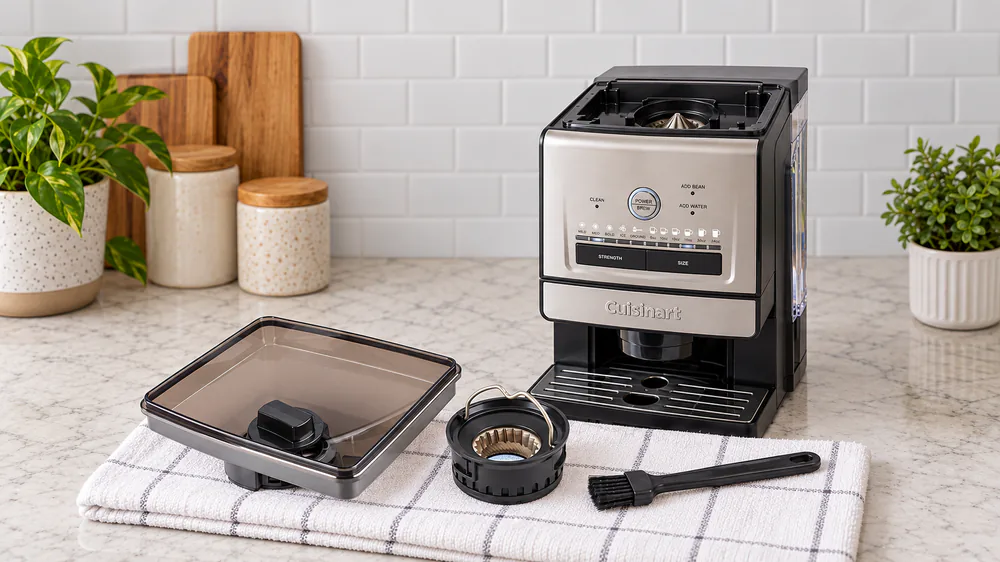
On the DGB-30, empty the basket after each cup, brush the coffee outlet, and wipe the reservoir. The drip tray goes in the dishwasher. Hand-wash the specified grinder components and dry them thoroughly, because damp parts hold on to oily residue. The removable hopper and burr make that residue easier to reach, though the daily basket emptying still slows back-to-back cups.
On the DGB-2, empty the hopper before removing the burr, then brush the grind outlet and wipe the hopper. Let the reusable cup cool, tip out the grounds, and rinse it. The capsule holder and funnel can go on the top rack of the dishwasher. Do not put the whole grinder or every removable part in the dishwasher, because the manuals give component-specific directions.
The DGB-30 hopper and burr lift out for cleaning, which makes oily residue easier to reach.
Grinder Care and Descaling
Grinder care comes down to two habits: brush the outlet often and clear oily residue before it builds up. Oily dark roasts leave more behind than light roasts, so clean more often if that is your preference. Never force a jammed grinder. Empty the hopper, remove the burr as the manual directs, and clear the beans by hand.
Descaling is a monthly job, adjusted for water hardness and how much you brew. The two models use the same mix of 13 oz of vinegar plus 26 oz of water, followed by three fresh-water rinses, but the button sequences differ, so do not swap them.
On the DGB-30, a red CLEAN indicator prompts you. Hold Strength and Size for three seconds, then press Power/Brew. On the DGB-2, sequential flashing lights prompt cleaning. Hold Power and 8 oz for two seconds.
Replace the charcoal filter every 60 days or 60 uses, and sooner if you have hard water. If you skip descaling, mineral scale builds up in the water path, and that can lead to the kind of brewing problems people blame on the machine itself.
Warning. Follow your own model's descaling button sequence from the manual. The DGB-30 and DGB-2 use different procedures even though the vinegar mix matches.
Frequently Asked Questions
Does every Cuisinart Grind and Brew model make a single serving?
No. The DGB-30 and DGB-2 are the single-serve models on this shortlist. Cuisinart also sells full-pot grind-and-brew machines, which are a different product.
What should you do if the DGB-30 grinder jams mid-cycle?
Stop the cycle, empty the hopper, remove the burr as the manual directs, and clear the beans by hand. Never force it.
Does the DGB-30 need paper filters?
No. It includes a gold-tone permanent filter, and it also accepts a 4-cup basket paper filter if you prefer one.
How often should the charcoal water filter be replaced?
Every 60 days or 60 uses on both models, and sooner with hard water.
Is the DGB-2 still worth buying if it is discontinued?
It can be, if the seller's stock, return window, and warranty paperwork check out. The manufacturer marks it discontinued, so availability varies, and the 3-year limited warranty requires proof of purchase.
Final Verdict: Which Cuisinart Model Should You Choose?
If the DGB-2 is tempting because of pods or its smaller body, treat it as a shop-around purchase: the manufacturer lists it as discontinued, so confirm the seller's stock, return window, and warranty paperwork before you commit. If those checks come back clean, it is a sound pick for a small household. Otherwise the DGB-30 is the safer long-term buy.
When to Choose the DGB-30
Choose it when you drink large mugs, want iced coffee, like choosing Mild, Med, or Bold, and have cabinet space for a machine that is 15.71 inches tall. Also choose it if you rotate beans.
When to Choose the DGB-2
Choose it when you want K-Cup compatible pods as a fallback, drink 12 oz or less, and need a shorter body at 12.67 inches. Check the seller's stock and return terms first, since the manufacturer lists it as discontinued.