As an Amazon Associate we earn from qualifying purchases. We may earn a commission from links on this page, at no extra cost to you. Learn more.
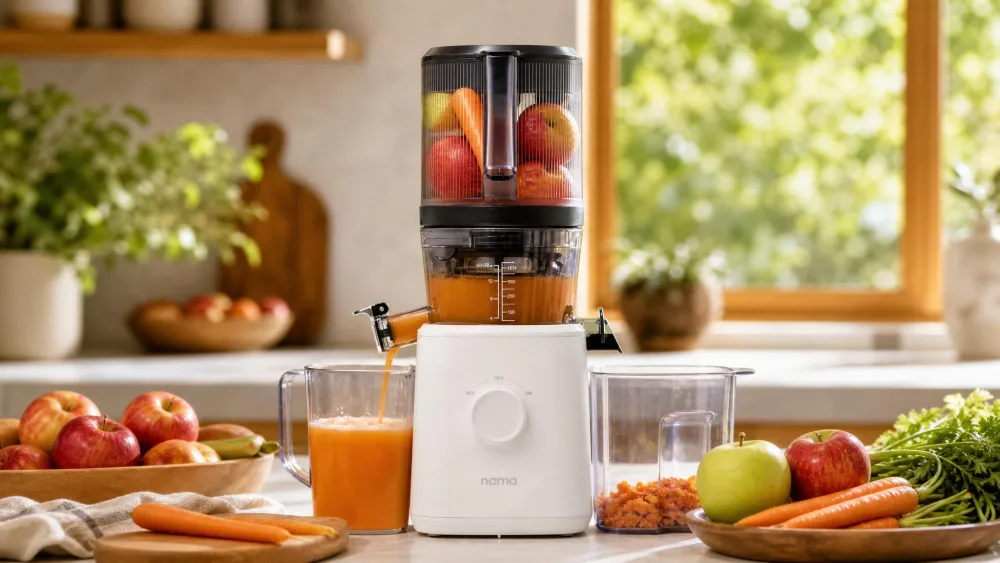
Some machines win you over in a single batch. For us it was the Nama J2: a hopper full of apples, carrots, and ginger went in whole, and the machine cut, pressed, and fed itself while we watched juice fill the pitcher. Four days of juice came out of that 40-minute load, and it ran quietly the whole time.
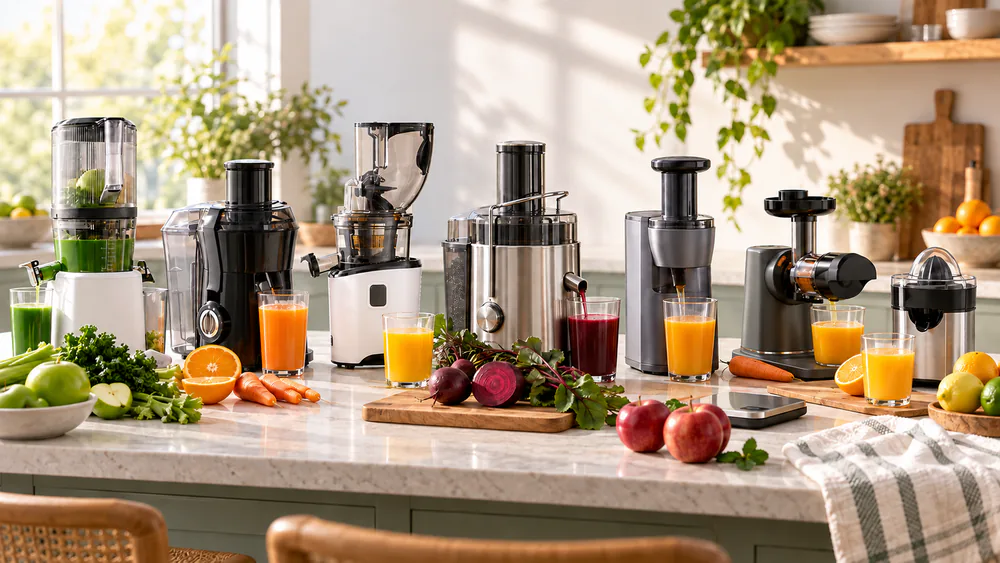
We tested 22 fruit juicers, from a $39.95 citrus press to $650 cold press machines, scoring yield, pulp moisture, noise, and cleanup, then living with the finalists on our counter until the verdicts felt honest. Only 12.3% of adults in America meet the recommended fruit intake, according to the Centers for Disease Control and Prevention, and a good juicer is one of the easiest ways to close that gap.
Below are the seven that earned a permanent place in our kitchen, ranked in the order we would buy them.
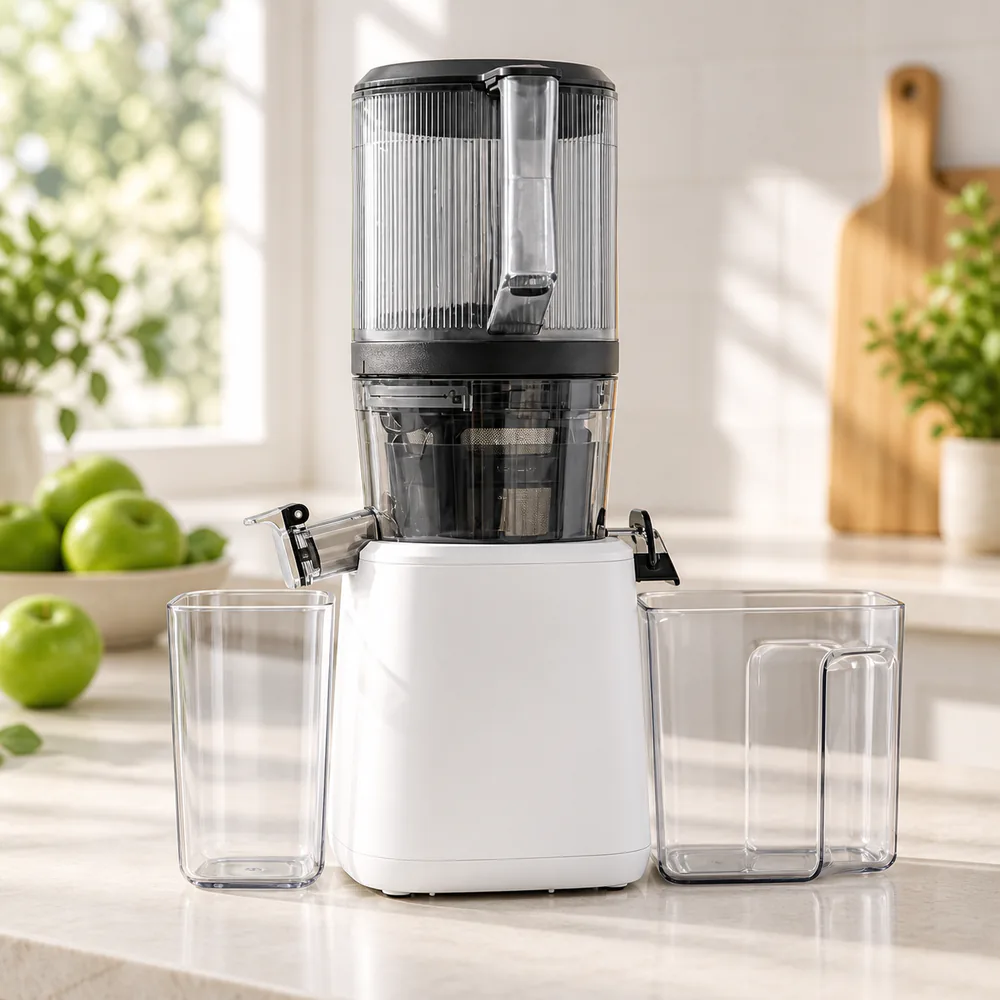
The Nama J2 Cold Press Juicer is the best fruit juicer we tested, and the one we would spend our own money on. If you juice more than twice a week, this is the machine to buy.
Pros
More juice and less pulp than any other machine in this test
Two strainers, fine and coarse, for juice or smoothie textures
15-year warranty on all parts
Cons
Assembly is finicky until you learn all 13 parts
Fine strainer needs the cleaning tool after most batches
Hand wash only, no dishwasher-safe parts
The difference is the self-feeding batch hopper: load a whole recipe, drop the lid on, and walk away while it cuts and feeds itself. Assembly carries a real learning curve, about 13 parts, and it refuses to turn on until every piece is seated right. Once it clicks, it runs quietly, and Nama sells it direct at the same $599 as Amazon.
Cleanup is the one honest demerit: the fine mesh strainer needs the included dual-ended tool after most batches, parts are hand-wash only, and dried-on pulp takes real scrubbing. Key specs: 200W motor, 50 RPM, 70-oz self-feeding hopper, 35-oz juice pitcher, 15-year warranty.
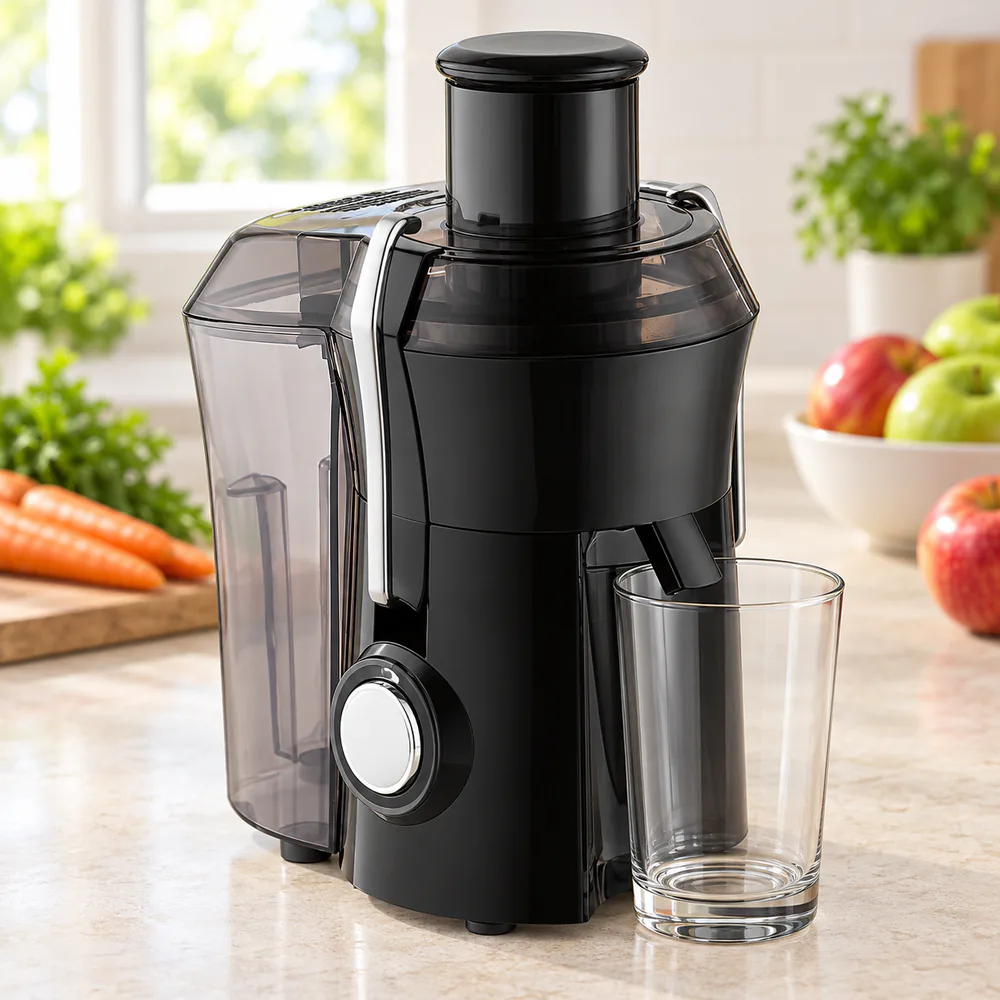
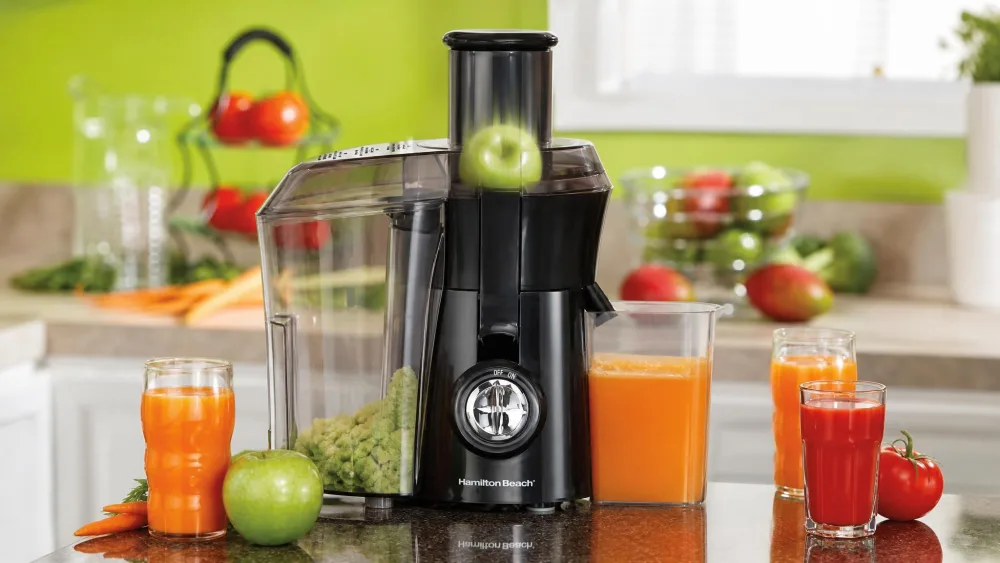
If the J2 is the long game, the Hamilton Beach 67601A Big Mouth Juice Extractor is the fast, cheap play, and the fruit juicer we recommend on a budget. At $74.95 it does the two things a first juicer must: swallow whole fruit and clean up in minutes.
Pros
Whole apples fit the 3-in chute with zero prep
Dishwasher-safe removable parts
3-year warranty at a budget price
Cons
Loud, with a torque jump at startup
Pineapple and big batches leave pulp noticeably wet
Plastic build at this price is expected
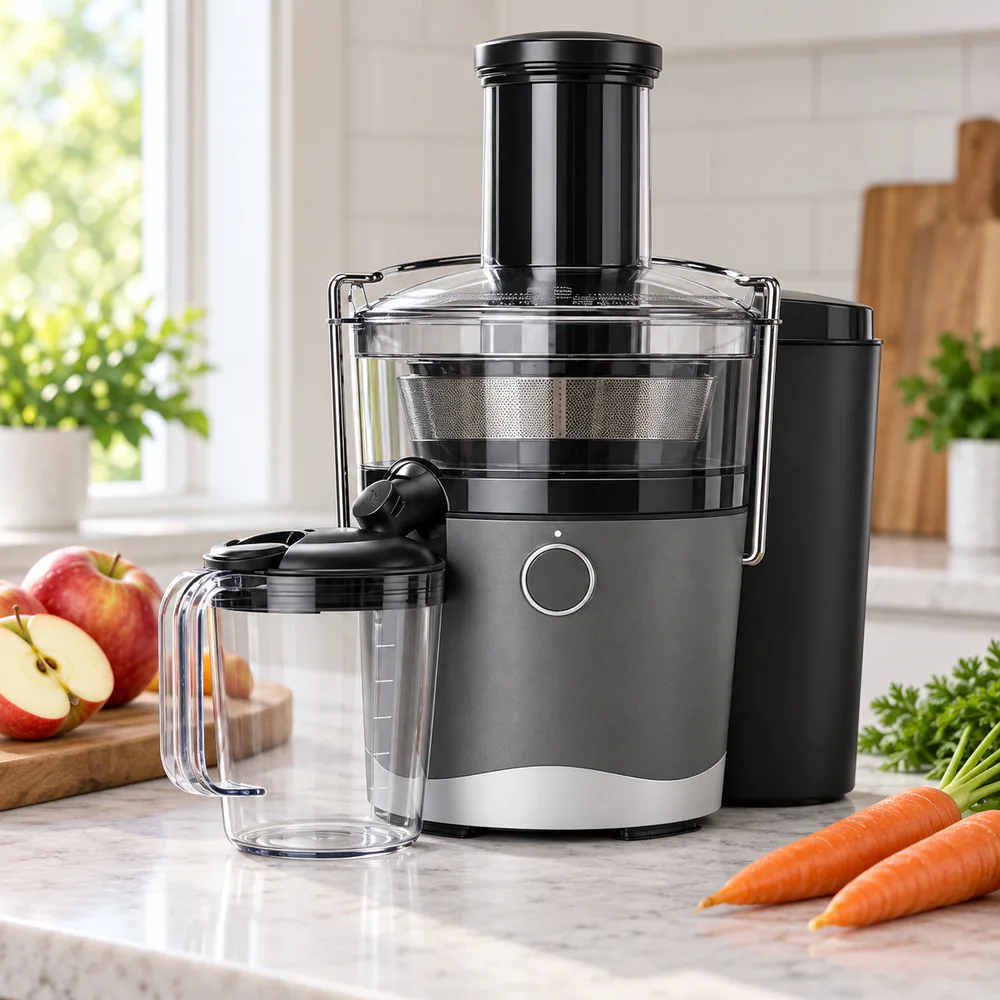
The 3-inch Big Mouth chute takes a whole apple with zero knife work, and the 800W motor chews through beets, carrots, celery, and lemons in seconds. It is loud, and it jumps with torque at startup, so hold it steady for a second. The 80-oz pulp bin means fewer empty stops mid-batch.
The Easy Sweep 67870 with cleaning brush is Hamilton Beach at Walmart at about $64; the 2-speed 67850 runs $149.95 on Amazon. Key specs: 800W motor, 3-in feed chute, 80-oz pulp bin, dishwasher-safe parts, 3-year warranty.
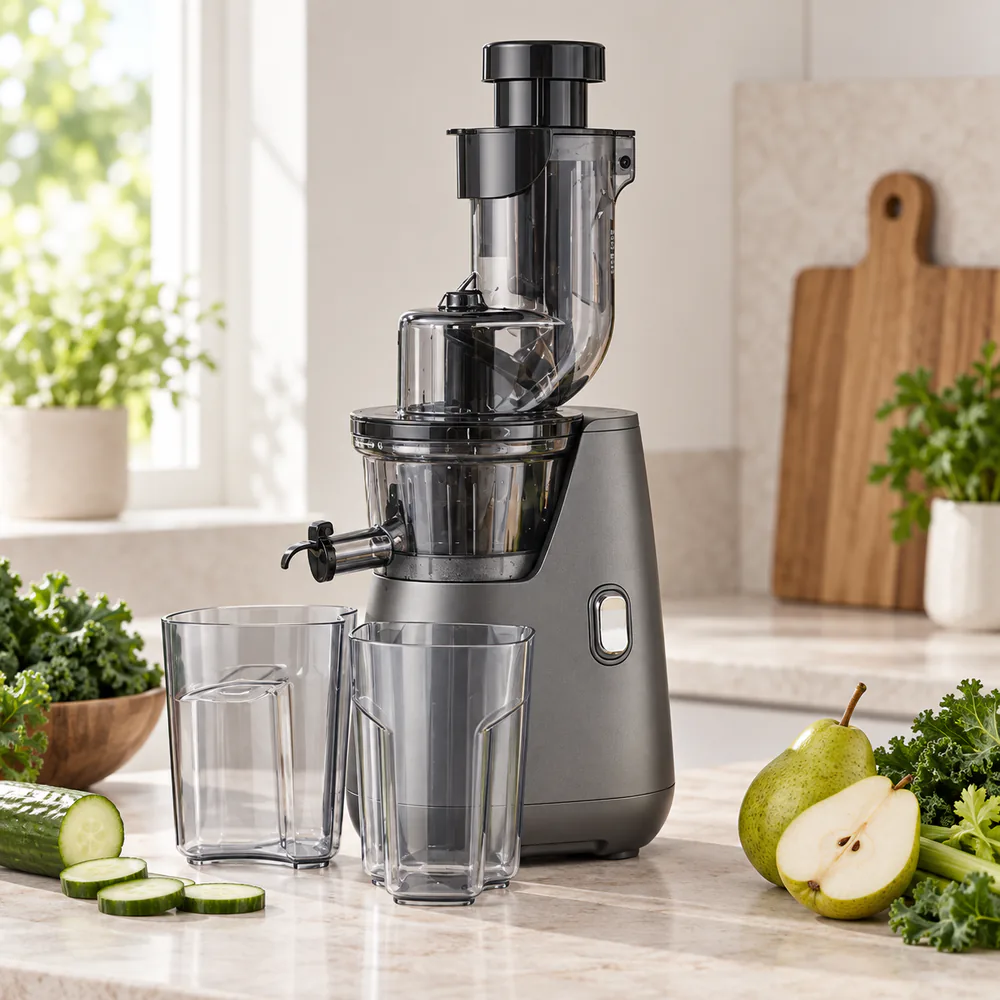
Best Cold Press (Masticating) Fruit Juicer: Kuvings REVO830W
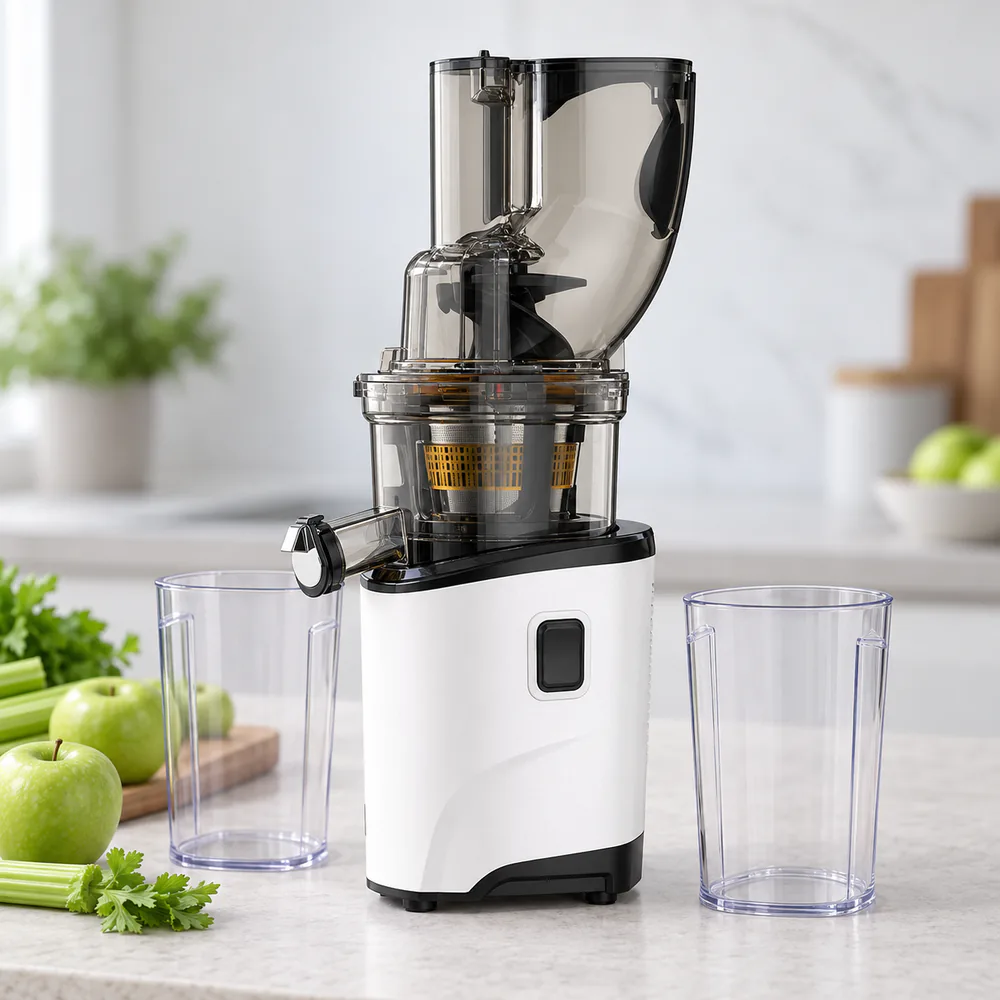
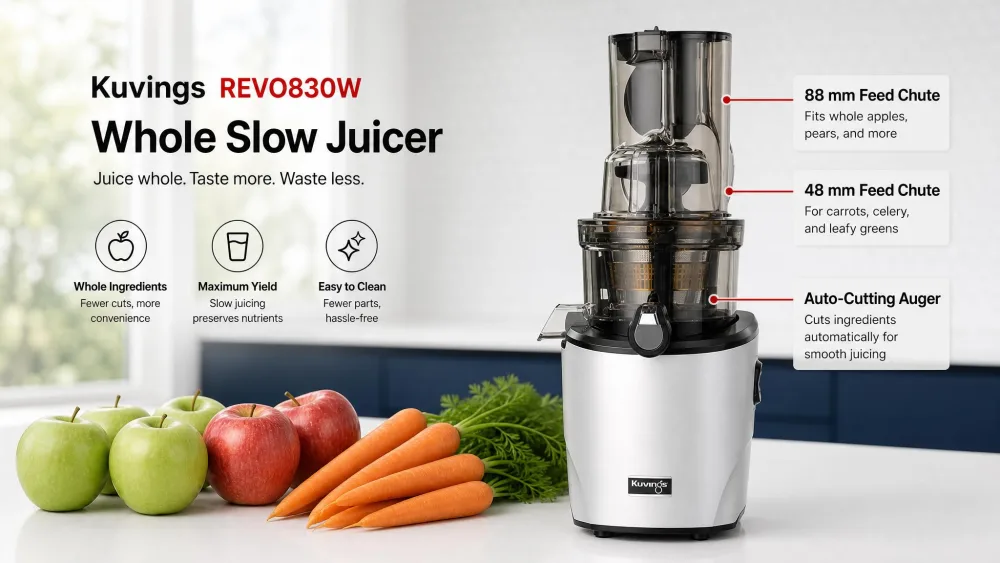
Where Hamilton Beach cuts corners on price, the Kuvings Whole Slow Juicer REVO830W is a premium cold press for buyers who want whole-fruit convenience without giving up masticating yield. It is our pick for dedicated cold press fans.
Pros
Auto-cutting auger chops whole produce before pressing
Smoothie and sorbet attachments included
Nesting juice and pulp cups stack for storage
Cons
One unit stopped powering on after about seven months
A whole beet jammed and broke one of our units
Long strainers still need some scrubbing
The auto-cutting auger chops whole produce before pressing, so with the dual 88 mm and 48 mm feed chutes most of our batches needed almost no prep, and the juice came out pulp-free and sweet. It is not indestructible: a whole beet jammed and broke one of our units, and another stopped powering on after about seven months. We also ran the sibling EVO820, the Kuvings Whole Slow Juicer EVO 820, but it is not sold on Amazon in the US; it runs $599.95 at Macy's and Williams-Sonoma.
At $649.99 this is the priciest pick in the guide, and the smoothie and sorbet attachments earn it. Key specs: 240W motor, dual chutes (88 mm and 48 mm), 32-oz juice pitcher, 15-year limited warranty.
Best Centrifugal Fruit Juicer: Breville Juice Fountain Cold Plus
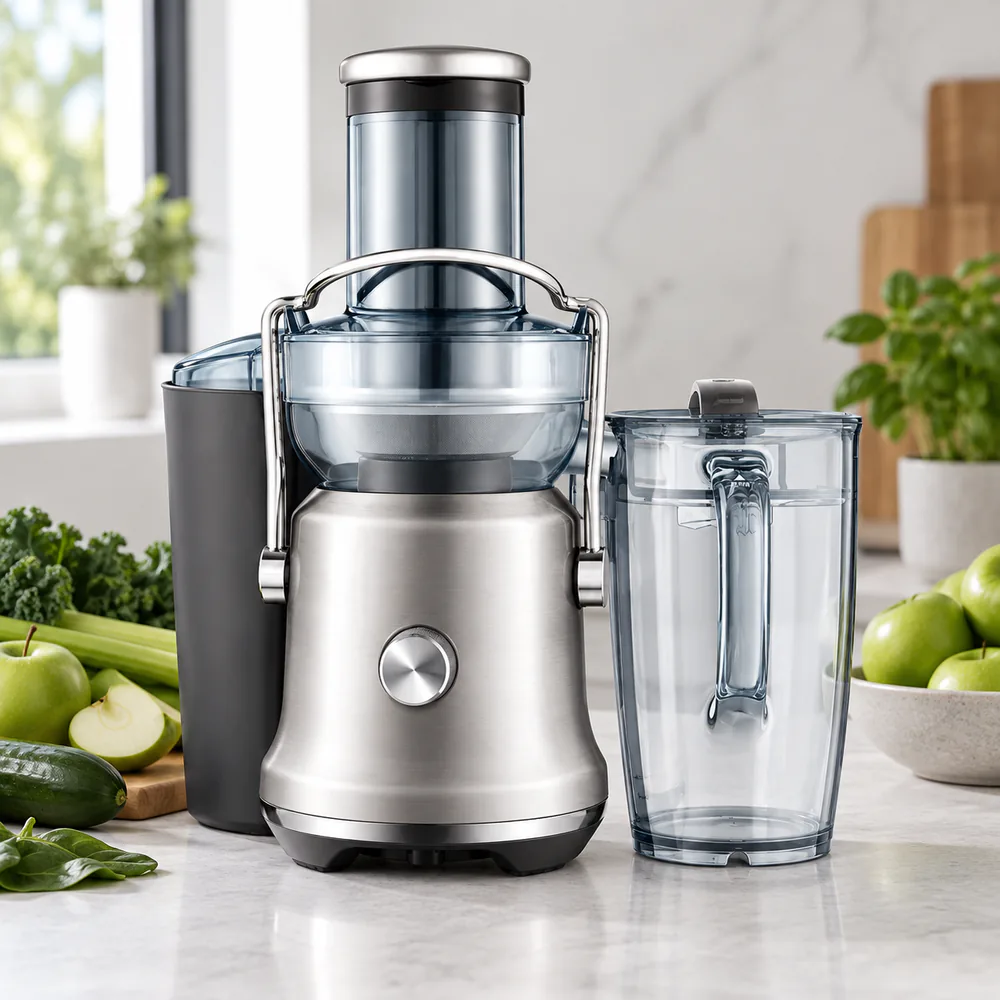
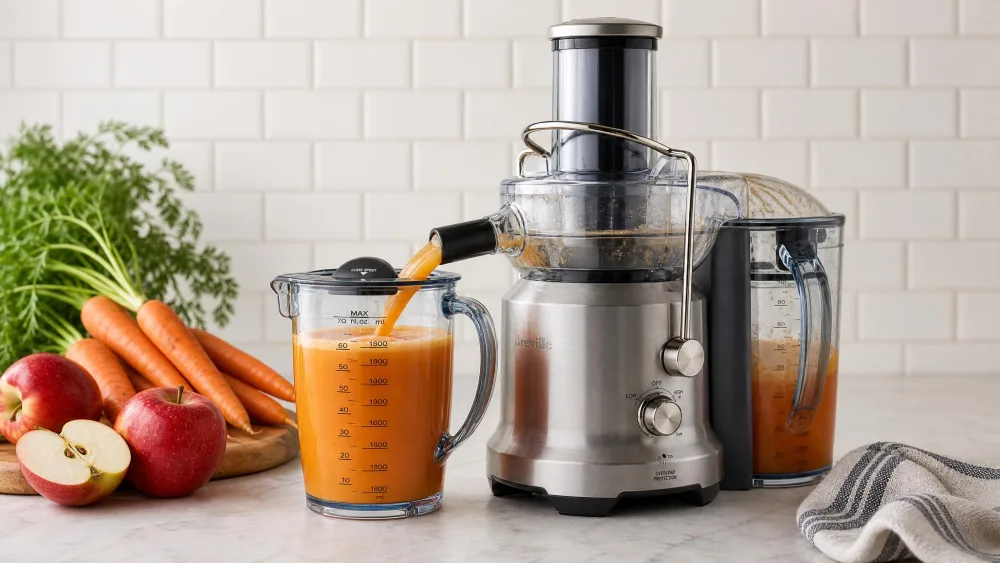
If you want Kuvings-style yield but refuse to wait out a slow auger, the Breville Juice Fountain Cold Plus is the centrifugal answer, and the fastest machine in this test.
Pros
Fastest juicer we tested on carrots and kale
3.5-in chute swallows whole apples in seconds
Dishwasher-safe filter basket, pulp bin, and jug
Cons
Pulp runs wetter than every cold press here
Jug lid fights you over the tight rubber seal
1-year warranty is short at this price
On carrots and kale it finished before the other machines warmed up, and whole apples went down the 3.5-inch chute in seconds. Despite the centrifugal design, juice temperatures stayed comparable to the cold press models, and the 70-oz jug pours clean. The trade-offs: the jug lid fights you over a tight rubber seal, and the machine is bulky to store. Breville lists it at the same $329.95 MSRP. Key specs: 1000W North American motor, 3.5-in chute, 70-oz jug, 1-year warranty.
Best Fruit Juicer for Beginners: Cuisinart CSJ-300 Easy Clean
The Breville is fast, but the Cuisinart CSJ-300 Easy Clean Slow Juicer is the slow juicer we recommend to beginners: gentle on produce, gentle on the wallet at $140.99, and its most famous claim actually holds.
Pros
Mesh-free filter rinses under the tap
All removable parts are dishwasher safe
Reverse function clears the odd jam
Cons
Strainers suction together and are hard to separate
Tight crevices trap pulp despite the "easy clean" name
Whole apples need cutting in half first
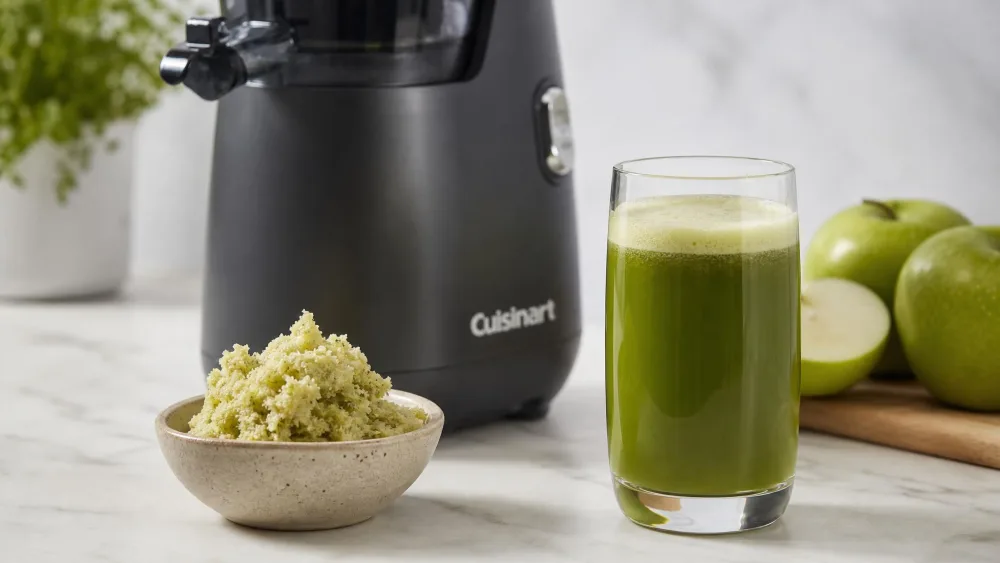
The 80 RPM masticating auger squeezed apple pulp drier than any machine we tested this round, leaving a crumbly, bone-dry residue. The Easy Clean name overpromises, though: parts break down into tight spaces that trap pulp, the two inner strainers suction together so hard we fought to separate them, and whole apples only fit the 3.5-inch chute with effort, so halve them.
Two honest notes from the longer run: our apple juice carried a quarter-inch foam cap, and a juicing bowl on a daily-use unit cracked in two places after about six weeks, leaking onto the motor base, with no replacement part available. Other units passed the year mark without complaint. Key specs: 200W motor, 80 RPM, 3.5-in two-way chute, 33.8-oz pitcher, 3-year warranty.
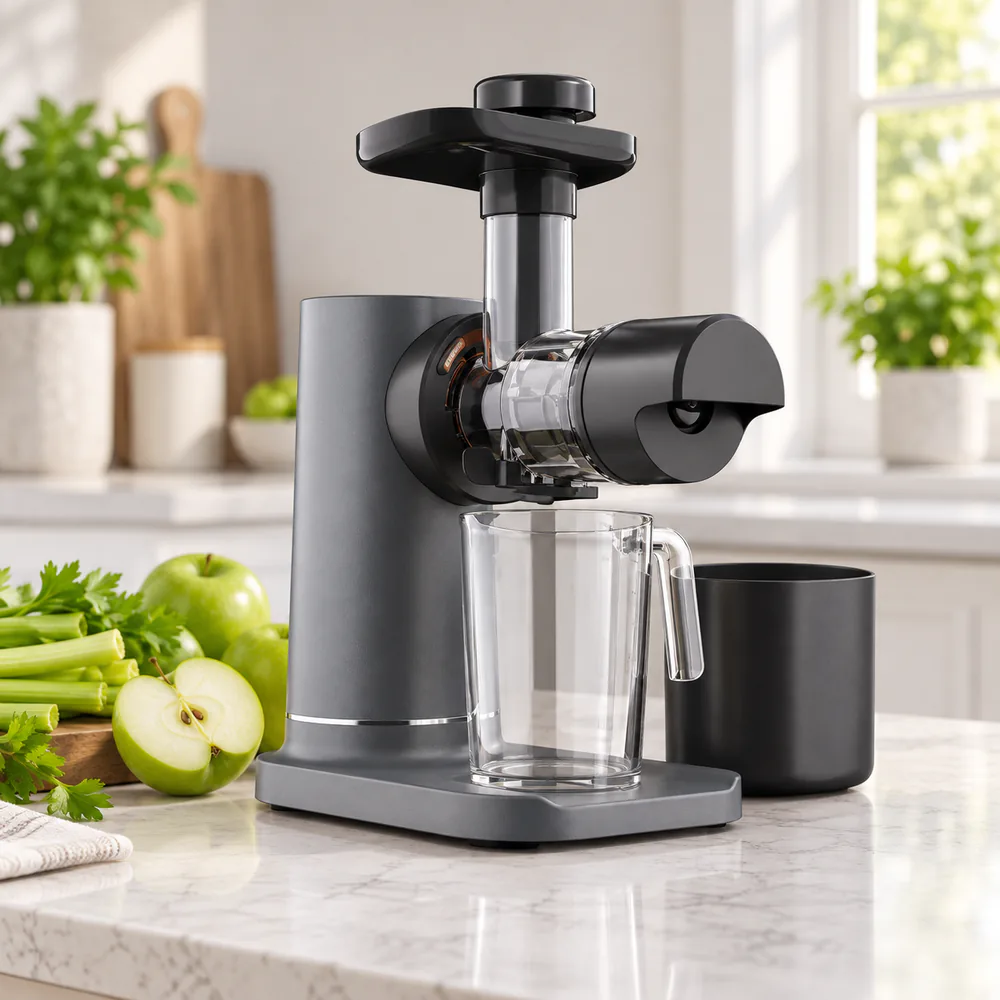
The CSJ-300 cleans up okay, but the Ninja NeverClog Cold Press Juicer JC151 is the cold press that really earns the easy-clean label, and the one we suggest when cleanup dread is the only thing holding you back.
Pros
Everything but the base is dishwasher safe
Pulp filter rinses clean when you clean promptly
Two pulp filters dial in the pulp level
Cons
1.75-in chute means real chopping before each batch
Kale produces wet, fluffy pulp that pulls through slowly
Noise varies: quiet in some runs, squeaky on apples in others
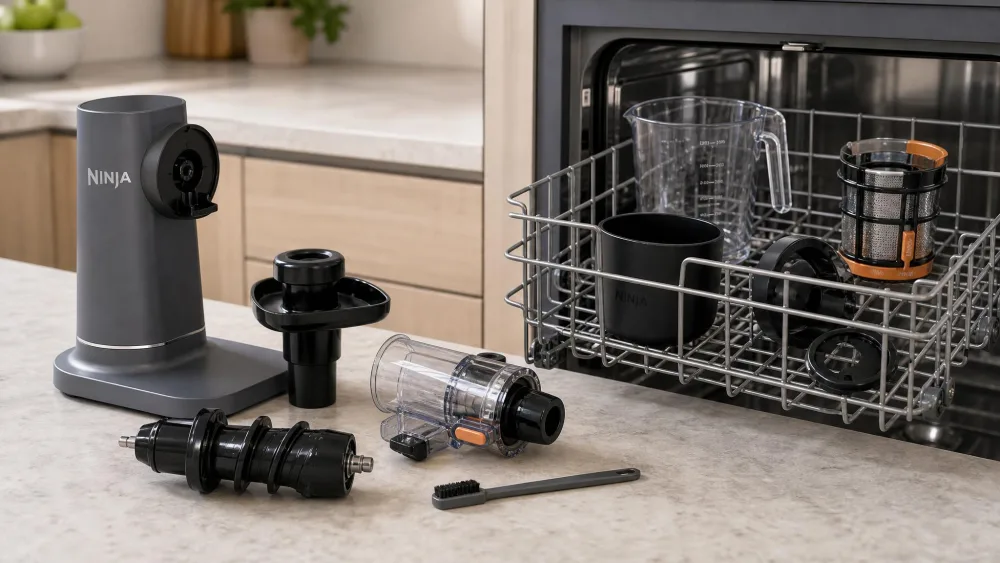
The pulp filter rinses clean under the tap. Carrots, apples, celery, lemons, and greens all ran through without a stall; kale is the exception, wetter, fluffier pulp that pulls through slowly. The 1.75-inch chute is the real cost: a 6-minute green juice batch in our testing, plus all the chopping to fit it. Noise is genuinely split, quiet in some runs, loud with a shrill squeak on apples in others.
Durability watch: a crack formed in the chute near the peel spout on one of our units after about six months; the replacement assembly runs around $70, and Ninja's customer service covered it. Key specs: 150W motor, 24-oz juice jug, 1.75-in feed chute, dishwasher-safe parts, 1-year warranty.
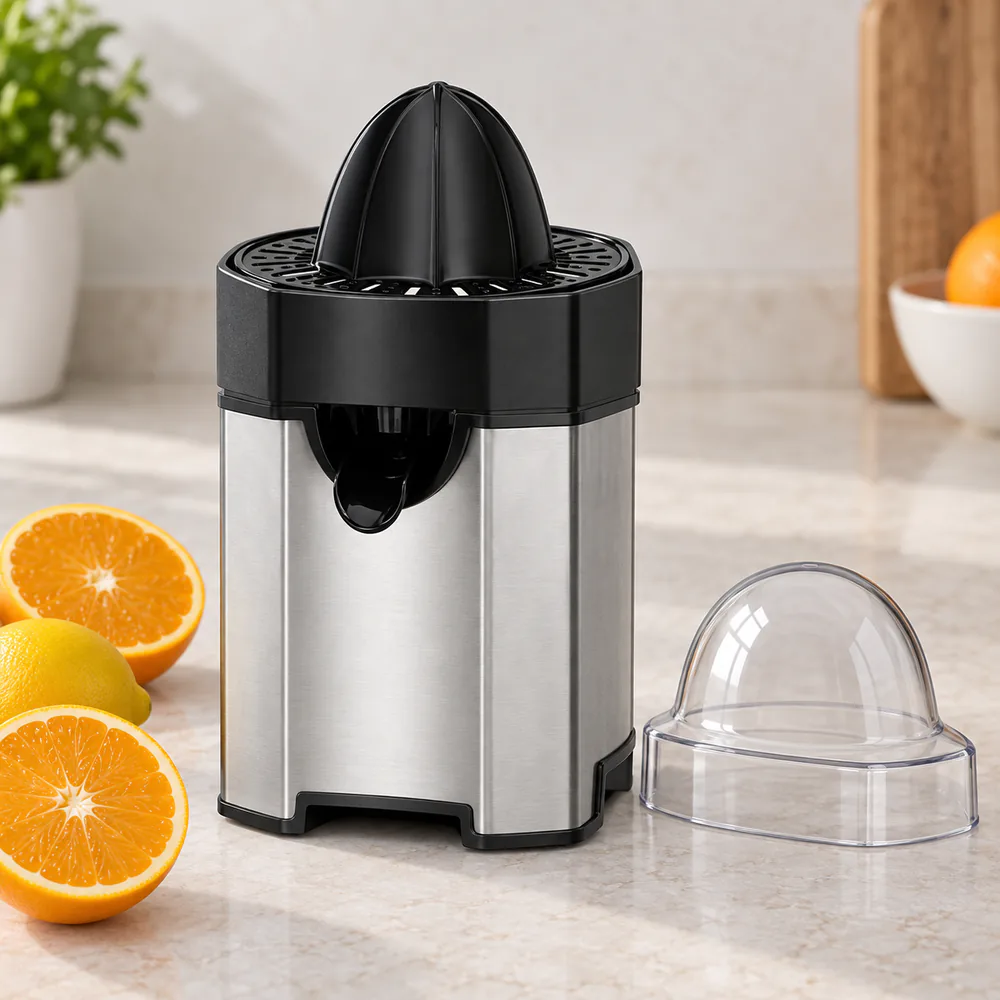
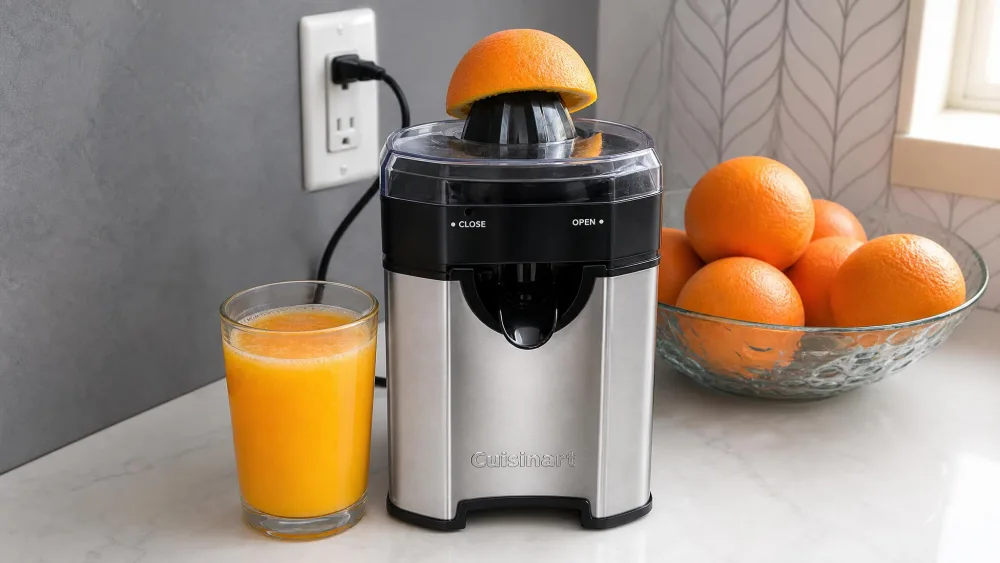
None of the six machines above makes a great glass of straight orange juice, so the seventh pick is a specialist: the Cuisinart CCJ-500P1 Pulp Control Citrus Juicer, our pick for citrus, and at $39.95 the cheapest in this guide.
Pros
Three pulp settings, from near-clear to pulpy
Near-silent and fast to clean
One reamer handles limes through grapefruits
Cons
Single-purpose: no whole-fruit or greens capability
Fruit goes on the reamer one half at a time
One unit slipped into permanent spin mode after two years
The three pulp settings, low, medium, and high, moved our glasses from near-clear to pulpy, and the auto-reversing reamer spins fruit both ways. It is near-silent, quieter than any full-size machine we tested. One durability note: after two years of seasonal use, one unit slipped into a permanent spin mode that forced a replacement.
If citrus is a weekend treat rather than a daily habit, this is still the one we would buy: $40 buys real orange juice. Key specs: three pulp settings, auto-reversing universal reamer, fits limes to grapefruits, dishwasher-safe parts, 3-year warranty.
Best Fruit Juicers Compared (Comparison Chart)
Every pick side by side, with the numbers that decided them.
Product
Type
Price
Yield
Ease of cleaning
Noise
Nama J2 Cold Press Juicer
Cold press (batch)
$599
More juice, less pulp than any rival
Strainer needs the tool; clean promptly
Quiet
Hamilton Beach 67601A
Centrifugal
$74.95
Good for the price; wet pulp on big batches
Easy; dishwasher-safe parts
Loud
Kuvings REVO830W
Cold press
$649.99
Pulp-free and sweet with the auto-cutting auger
Wider pulp gasket; some scrubbing
Quiet
Breville Juice Fountain Cold Plus
Centrifugal
$329.95
High and pulp-free; pulp wetter than cold press
Dishwasher-safe jug, filter, pulp bin
Loud-ish for a centrifugal
Cuisinart CSJ-300
Cold press
$140.99
Bone-dry pulp
Parts dishwasher-safe; strainers stick
Quieter than older models
Ninja NeverClog JC151
Cold press
$149.95
Slightly above centrifugal; dry pulp
Best-in-class; everything but base dishwasher-safe
Can squeak on apples
Cuisinart CCJ-500P1
Citrus press
$39.95
High per fruit with final-spin extraction
Dishwasher-safe parts; fast
Minimal
Note. Prices are street captures from August 2026 and move week to week; yield notes reflect our own weighed batches.
Other Fruit Juicers We Tested
Four more machines earned notes. The Hurom H-AA runs a quiet 150W motor and its slow-squeeze juice kept up to 72 hours refrigerated, but assembly is finicky and the chamber brushes pop out during cleaning; at $399 it could not out-earn the Nama. The Tribest Shine Kitchen Co. cold press juicer is genuinely small at 4.3 lb, but its juice came out pulpier with lower yields, and the parts fit together so snugly they are hard to take apart.
The two below are niche but honest.
8
Nutribullet Juicer NBJ50100
3.8
Smooth, pulp-free juice with no learning curve, but it roars like a vacuum and the sieve needs the scrub brush every time.
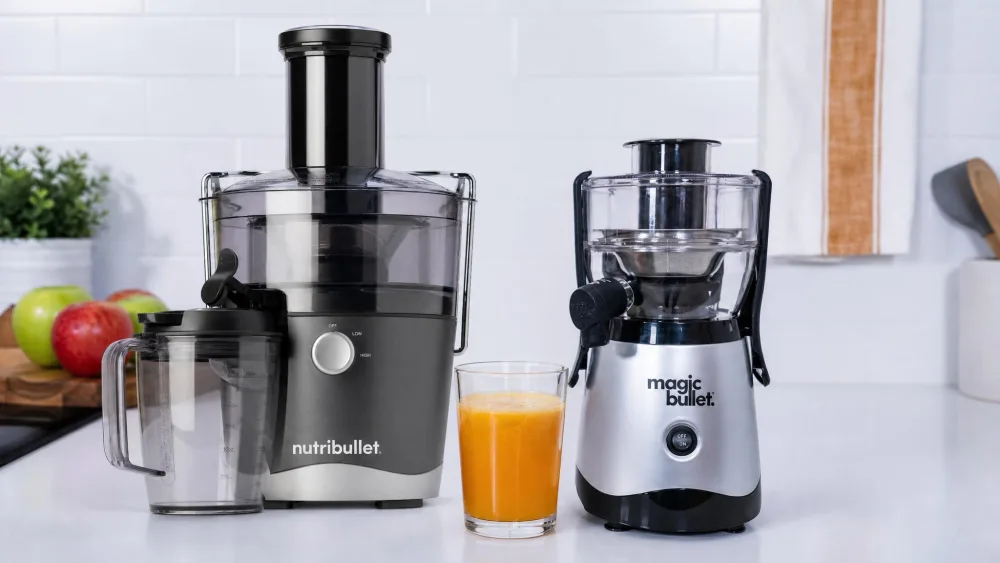
The Nutribullet is the machine you hear before you see it: as loud as a vacuum cleaner in our tests, with pulp wetter than the masticating machines. The Magic Bullet Mini is its opposite: a 400W motor, a 2-inch chute, and a 16-oz cup with a to-go lid, and one of our units is still going after three years. Neither handles a family batch, but the Mini suits a studio kitchen.
How We Tested Fruit Juicers
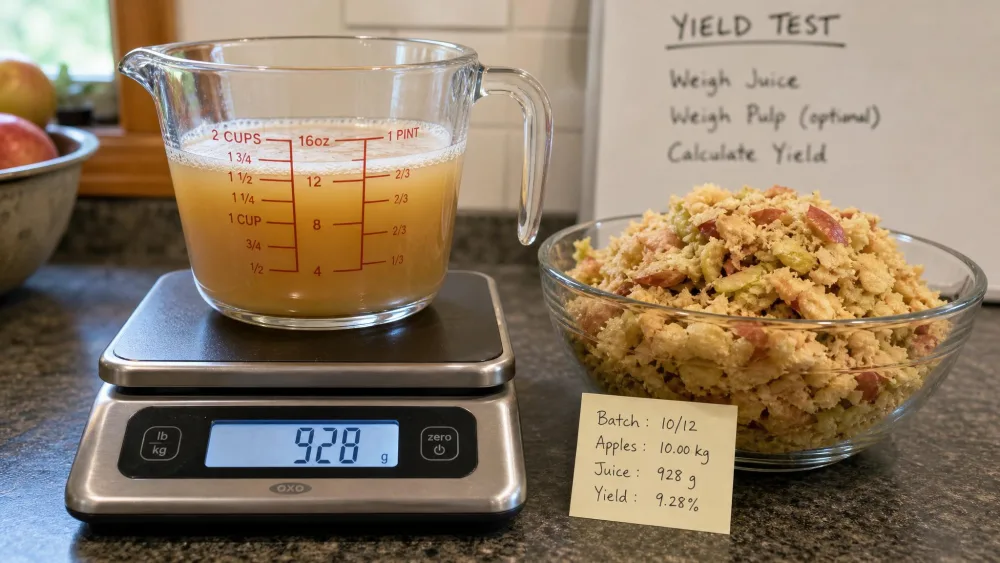
We tested 22 fruit juicers, from $40 citrus presses to $650 cold press machines. Every unit ran the same produce list: carrots, apples, kale, celery, oranges, lemons, limes, beets, ginger, cucumber, parsley, and grapes. We measured juice yield by weight, then weighed and squeezed the pulp. We timed every batch, logged noise with a decibel meter, checked juice temperature, and measured the foam cap on each glass. Apple juice from every machine went into the fridge for a 3-day shelf-life check, and we tasted each batch.
Our Testing Criteria
The 22 machines were scored on five criteria, and the finalists kept running on our counter for months of daily use before the verdicts locked.
Yield: weight of juice per weight of produce, plus how dry the squeezed pulp came out. Our best green-juice result hit about 75%, nearly 12 ounces from 16 ounces of produce, on the smaller Nama J3.
Pulp and foam: how much reached the glass, and how the juice behaved over three days in the fridge.
Noise: logged with the decibel meter, reported qualitatively, since no manufacturer publishes numbers. Cold presses were quietest, centrifugals loudest.
Cleanup: part count, rinse time, and dishwasher survival.
Build: stalls, jams, cracks, and failures over the testing window, plus whether replacement parts were actually available.
Cold press machines won the yield contest almost every time, and batch juicers like the Nama J2 erased the biggest real-world friction of chute-style slow juicers: no feeding one piece at a time, no clogging from wrong-size chunks.
What to Look for in a Fruit Juicer
Buy the machine for the juice you actually make, not the juice you imagine making.
Centrifugal vs. Masticating (Cold Press) Juicers
Centrifugal machines spin a shredding disc at high speed and fling pulp against a mesh filter. They are fast and cheap, but their juice foams more and separates faster in the fridge. Masticating, or cold press, juicers crush and press produce slowly, at 40 to 80 RPM, and their pulp comes out drier and more compacted, so the juice keeps its color and separates less. The trade is time: minutes per batch instead of seconds.
Feed Chute Size and Whole-Fruit Capability
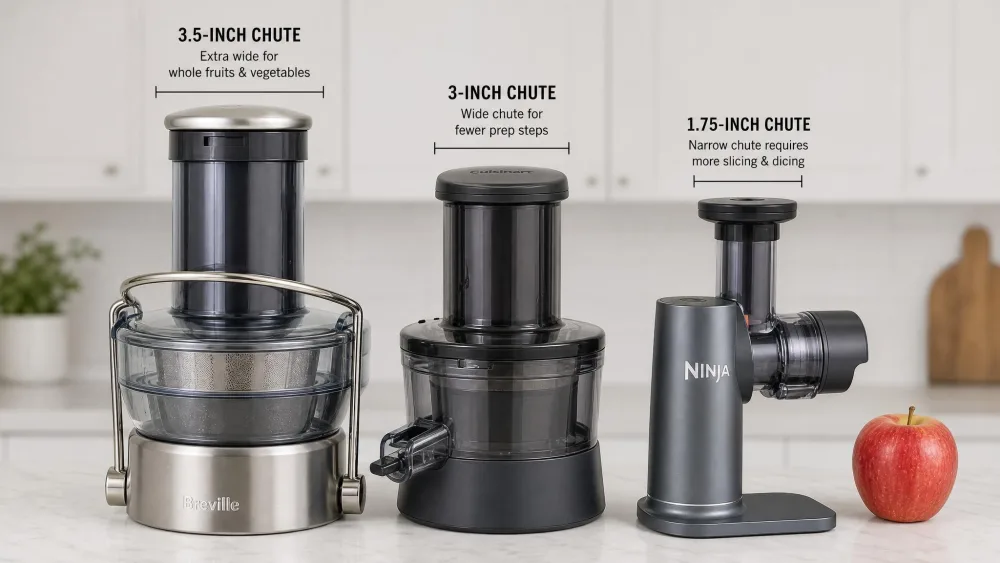
The chute size decides your knife work. A 3-inch chute takes a whole apple (Hamilton Beach); 3.5 inches does it comfortably (Breville, Cuisinart); the Ninja's 1.75 inches means chopping everything. The Kuvings dual chutes run to 88 mm, and its auto-cutting auger chops before pressing, so prep nearly disappears.
Ease of Cleaning
Cleanup is where juicers go to die. Look for dishwasher-safe parts, like everything but the Ninja's base and the Breville's filter basket, pulp bin, and jug, plus mesh-free filters that rinse under the tap, like the Cuisinart's. Clean promptly, or dried pulp turns into real scrubbing.
Motor Power, Noise, and Yield
Masticating machines do fine on 150 to 250W because they turn slowly; centrifugal machines need 800 to 1000W to shred at speed. RPM matters for slow juicers, and 40 to 80 is the normal range. Noise follows the type: cold presses are quietest, centrifugals loudest. Yield is the number that pays the bills: weigh the juice and squeeze the pulp, because a machine that leaves your fruit wet is leaving your money behind.
Price and Warranty
Fruit juicers run from $40 to $650, and the price buys yield, noise, and durability, plus the warranty behind them: 1 year (Breville, Ninja) to 15 years (Nama, Kuvings). A long warranty matters because strainers, chutes, and seals wear out, and replacement parts are the real cost of ownership.
The chute width decides your prep time, and the dishwasher decides whether the juicer stays on your counter.
Tip. Buy for the produce you actually juice. Daily green juice justifies a cold press on yield alone; a weekend orange juice habit is better served by a $39.95 citrus press than by any full-size machine.
Warning. Never add ice to a juicer, even when a recipe calls for it. Cubes can shatter augers and damage the motor on both slow and centrifugal machines; chill the produce instead.
Fruit Juicer FAQs
Is juicing fruit actually good for you?
For most healthy adults, yes, in moderation. An umbrella review in Nutrition Reviews found that moderate intake of 100% juice, about 4 to 8 ounces a day, was not associated with higher risk of type 2 diabetes or heart disease in healthy adults, and a review in Nutrition Bulletin reached a similar balanced conclusion. Some nutrients even come out ahead: beta-carotene is more bioavailable from carrot juice than raw carrots.
Do you lose nutrients when you juice?
Some. Mayo Clinic puts it plainly: juicing is no healthier than eating whole fruits and vegetables, and whole produce also has healthy fiber, which is lost during most juicing. The flip side: juice makes it easy to get more fruit into your day, and fresh juice holds up well, best within 24 hours and 48 to 72 hours refrigerated in an airtight container.
How do you clean a fruit juicer?
Rinse the strainer and pulp parts immediately, before pulp dries on. Most removable parts here are dishwasher safe, but hand washing extends the life of mesh strainers, and the Nama J2 and Ninja both want their included brushes on the fine strainers.
Can you use the leftover pulp from juicing?
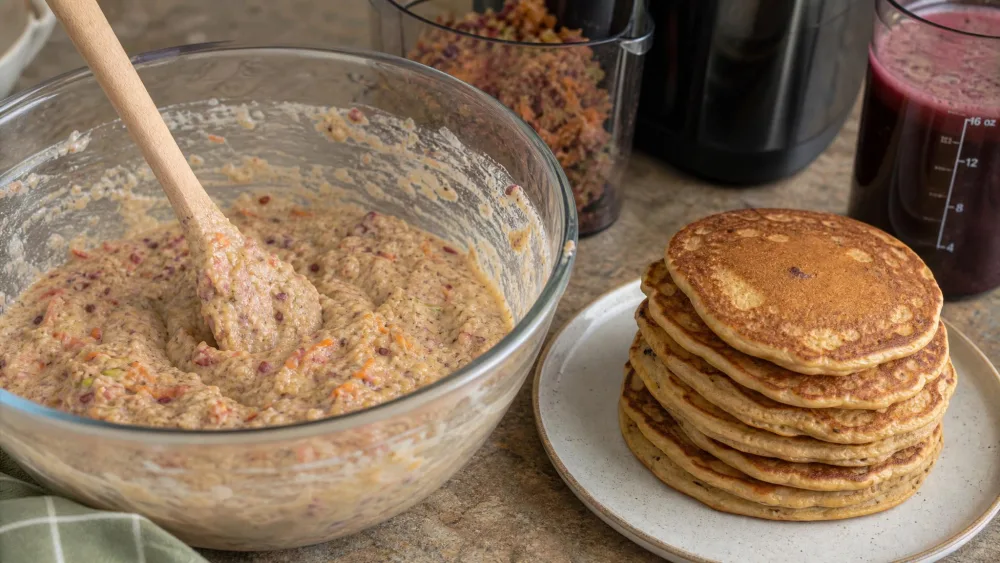
Yes. Compost it, or bake it into pulp pancakes, muffins, and granola; the Ninja NeverClog and the Hurom H70 both ship recipe books with pulp recipes.
What's the best fruit juicer overall?
For most households, the Nama J2: the most hands-free machine we tested. On a tight budget, the Hamilton Beach 67601A is the pick.
What fruits should you not put in a juicer?
Avocados and bananas, which have too little juice to extract, and cauliflower and broccoli, which are tough to digest raw and concentrate poorly when juiced. Soft berries, mango, and melon all juice fine in most machines.
The Bottom Line: Which Fruit Juicer Should You Buy?
Each verdict above stands on its own, and a few edge notes before checkout. The runner-up we keep reaching for is the Breville when a big batch has to be done in minutes, and the Ninja when cleanup is the priority. On the budget tier, the Hamilton Beach 67601A is the fastest path into juicing; the 67870 at Walmart is the same motor with a cleaning brush for about $64.
What we would do differently: buy through Amazon for the return protection, check Walmart and Williams-Sonoma before paying sticker, and keep the receipt: the warranty is the only real safety net on a machine that sees pulp daily. For the Kuvings, choose a retailer with a generous return window.
Key takeaway. The best fruit juicer is the one that fits your habit: the Nama J2 for daily green juice, the $39.95 Cuisinart for weekend orange juice, the Hamilton Beach on a budget.