As an Amazon Associate we earn from qualifying purchases. We may earn a commission from links on this page, at no extra cost to you. Learn more.
Homemade ice cream beats the freezer aisle on flavor, but only when the machine earns its counter space. The gap between a creamy pint and a bowl of icy slush rarely comes down to the recipe; it comes down to how the churner freezes the base, how much air the paddle folds in, and how much planning the kitchen can stomach.
When we say under 30 minutes, we mean active churn time, the minutes the motor works. That holds for every machine here except the full-size compressor, at 30 to 40 minutes, and freezer-bowl and pint models need the base pre-frozen about 24 hours first.
So we tested seven machines side by side through a summer's worth of batches, timed every churn, and scored each one on speed, texture, noise, and cleanup.
What You'll Learn
This guide ranks seven churners across every freezing method in the category, from a $37 single-serving machine to a $380 compressor, and explains which specs decide texture and where the speed claims end.
How We Tested the Best Ice Cream Churners
We ran 40 batches through the seven machines over the summer, five to six per churner, so the numbers in this guide are ours. Every batch drew from the same recipe families: a custard-base vanilla, a no-cook base, and a fruit sorbet; the USDA egg-safety guidance for homemade ice cream covers pasteurized-egg substitutions.
What We Tested: 7 Churners and 40 Batches
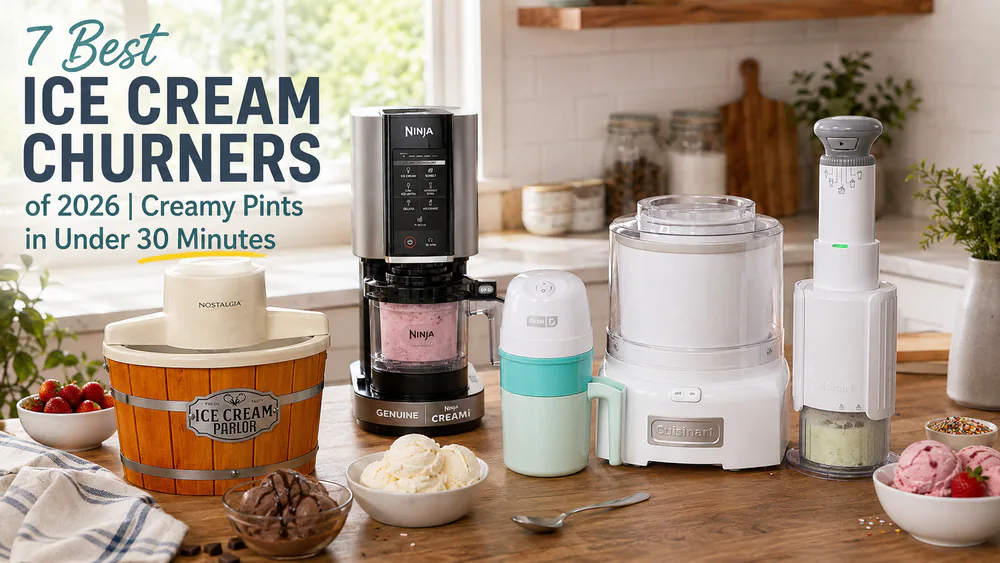
The seven machines cover every chilling method: freezer bowls (ICE-21P1, Dash My Pint), ice and salt (Nostalgia WICM4L), freeze-ahead pint processing (both CREAMis, FastFreeze MAX), and a built-in compressor (ICE-100). Active churn times ran from two minutes for the pint processors to 30 to 40 minutes for the compressor, with freezer-bowl machines at 12 to 30 minutes.
Our Scoring Criteria: Speed, Texture, Noise, and Cleanup
Speed is active churn time, with the pre-freeze disclosed separately, because a machine that needs 24 hours of warning is honest only when it says so. Texture decides the ranking: we graded soft-serve consistency, scoopability after a hardening hour, and ice crystal size, and blade processors produced the smallest crystals, about 0.18 mm versus 0.31 mm for a churn. Noise we judged at counter height; cleanup scored part count, dishwasher safety, and hand-washing minutes.
How to Choose the Right Ice Cream Churner for Your Kitchen
The core divide in ice cream churners is the chilling method: it sets the price, the counter space, and whether you churn on a whim or only with a day of notice.
Freezer Bowl vs. Built-in Compressor
A freezer-bowl machine is the entry point. The double-insulated bowl sits in your freezer for about 24 hours, then a small single-speed motor churns the base against the frozen walls, no ice or salt required, and it costs the least and stores the smallest. The schedule is the catch: no frozen bowl, no batch, no second flavor without a second bowl.
A built-in compressor chills the bowl itself, so it churns on demand and runs back-to-back batches; you pay in price, weight, and counter space. Between the two sit the freeze-ahead pint processors, which freeze the base in its serving container and cream it in minutes. Churning freezes the base and folds in air, and the air content is what makes ice cream scoopable instead of icy.
Capacity and Batch Cycle Time
Match capacity to the household: a 1.5-quart bowl makes four to five servings, a 1.6-cup pint machine makes one, a 4-quart ice-and-salt bucket makes about a gallon. The batch cycle has three parts that get skipped: the pre-freeze, the active churn, and the hardening hour that turns soft serve into scoopable ice cream. Expect roughly $37 to $80 for a freezer-bowl machine, $130 to $280 for a freeze-ahead processor, and $380 for a compressor.
Dasher and Paddle Design
The dasher does the texture work. Paddle shape sets the overrun that makes ice cream light: gelato paddles are built for density, while blade processors, with no paddle at all, turn out the densest results. Dasher material decides durability: the plastic dashers in the ice-and-salt machines we tested strip under load, while the stainless paddles on the compressor machine are built to last.
Note. The freezer does the waiting. Every freezer-bowl and pint machine here needs about 24 hours at 0 F before its first batch; read "under 30 minutes" as active churn time, not first bite.
No churner can fix a base that starts warm or a bowl that never gets truly cold; the freezer is half the machine, and the other half is a day of planning.
Quick Comparison: The 7 Best Ice Cream Churners at a Glance
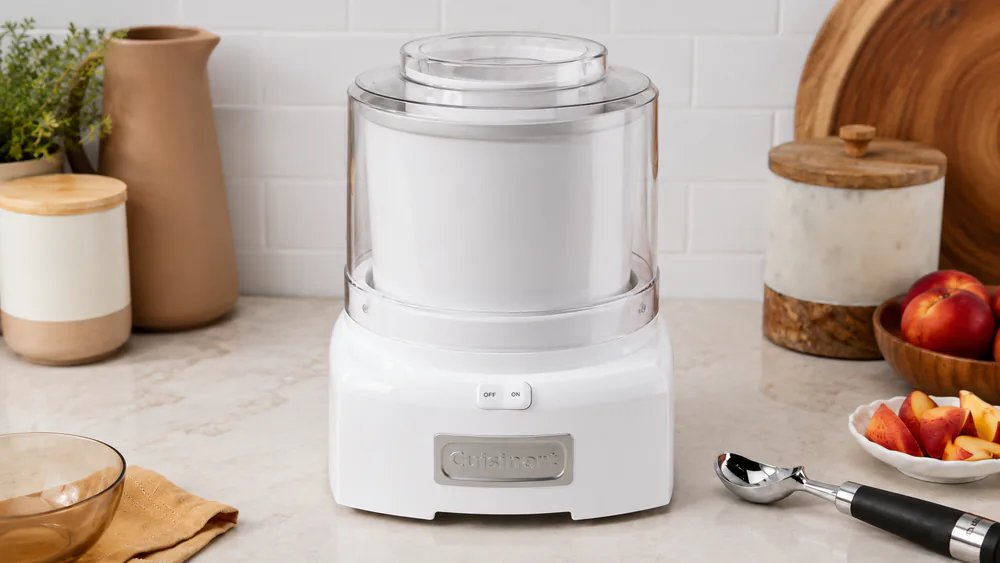
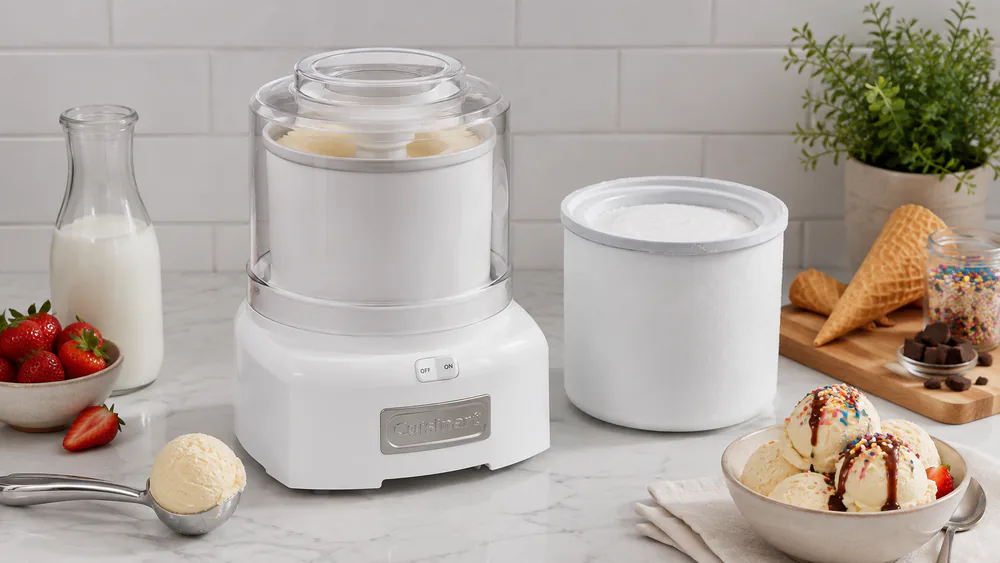
This is the churner we would buy again. With the bowl frozen and a well-chilled base, our churn times ran 12 to 15 minutes, faster than the 20-minute claim on Cuisinart's spec sheet. Every batch came out soft serve, and an hour or two in the freezer made it scoopable.
Pros
Double-insulated freezer bowl, no ice or salt required
Easy-lock lid with a spout for adding mix-ins mid-churn
Three-year limited warranty
Cons
Bowl needs about 24 hours at 0 F before the first batch
One batch feeds four to five people, not a crowd
Book recipes run about 30% over capacity
The bowl lives in the freezer between uses, and a second bowl is the trick for back-to-back flavors; we churned three in one afternoon. The motor hums like a stick mixer, cleanup is three parts under warm water, and book recipes run 30% over capacity. Street price sits around $70 against an $89.95 list; the wattage varies by retailer feed.
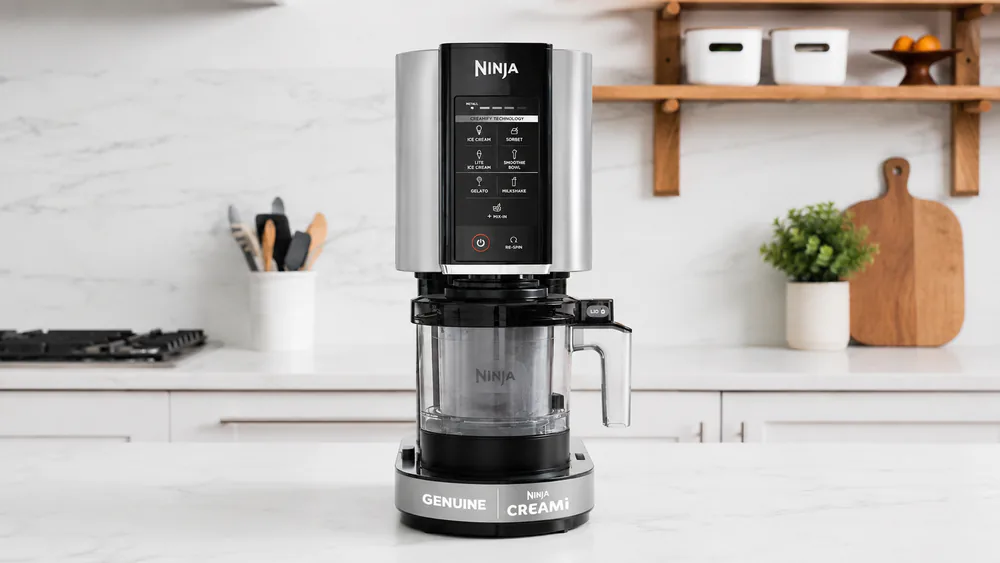
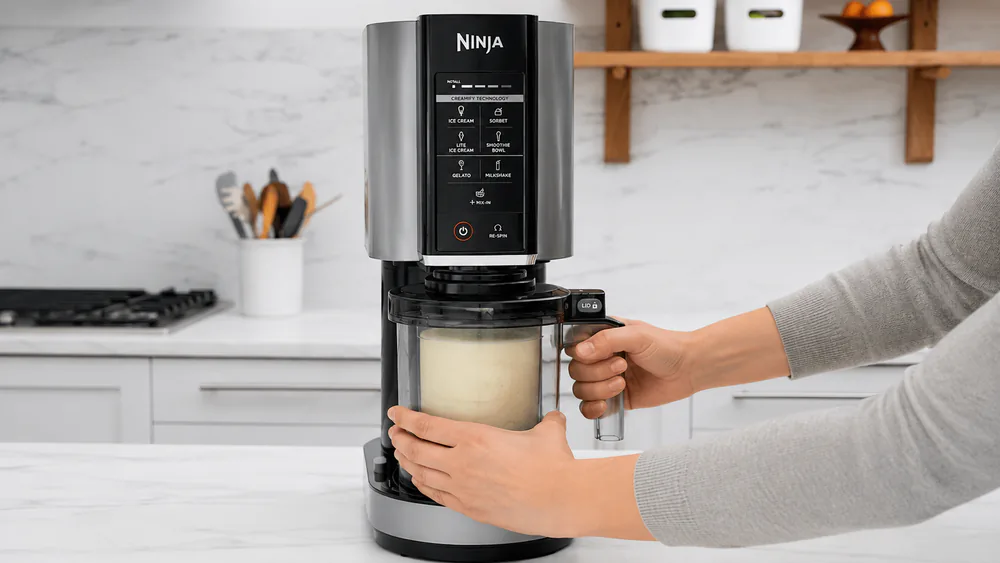
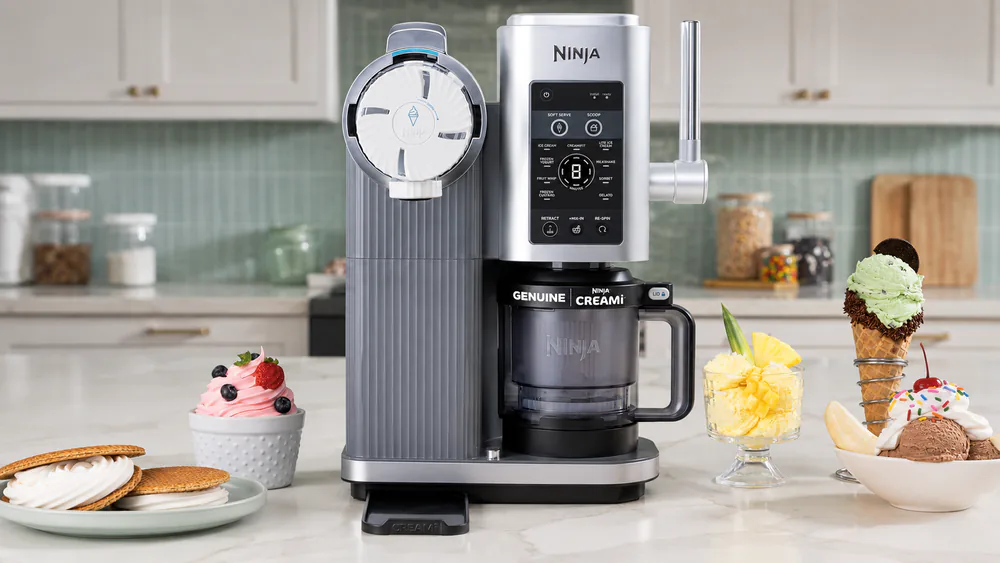
Where the ICE-21P1 spends 20 minutes churning a bowl, the Ninja CREAMi NC301 spends about two minutes processing a fully frozen pint; a blade creams the rock-solid base in place. Seven one-touch programs cover ice cream, gelato, sorbet, milkshakes, smoothie bowls, and more. We compared the two approaches in Cuisinart Ice-21 vs Ninja Creami.
Pros
Seven one-touch programs; pints process in about two minutes
Re-spin fixes crumbly first-pass texture almost every time
Leftovers reprocess back to fresh texture the next day
Cons
24-hour pre-freeze in the pint before every batch
Very loud, with a grind pitch as the blade drives
Recurring blade and spindle failures on some units
The first spin is startlingly loud, with an alarming grinding pitch, and the first pass leaves a crumbly texture that a Re-spin fixes almost every time; refrozen leftovers reprocess back to fresh texture the next day. Overfilling past the Max Fill line jams the paddle until the pint thaws, blade and spindle failures recur on a minority of units, and we inspect pint walls for scratches each spin. Street pricing lands around $200; the full lineup lives in our Ninja Creami review.
The pint freezes for 24 hours, then processes in two minutes.
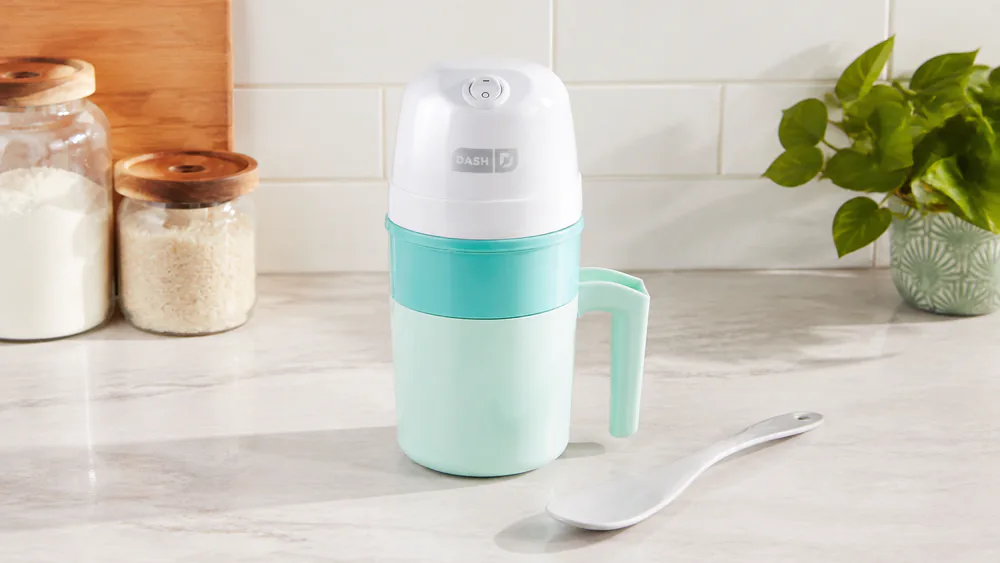
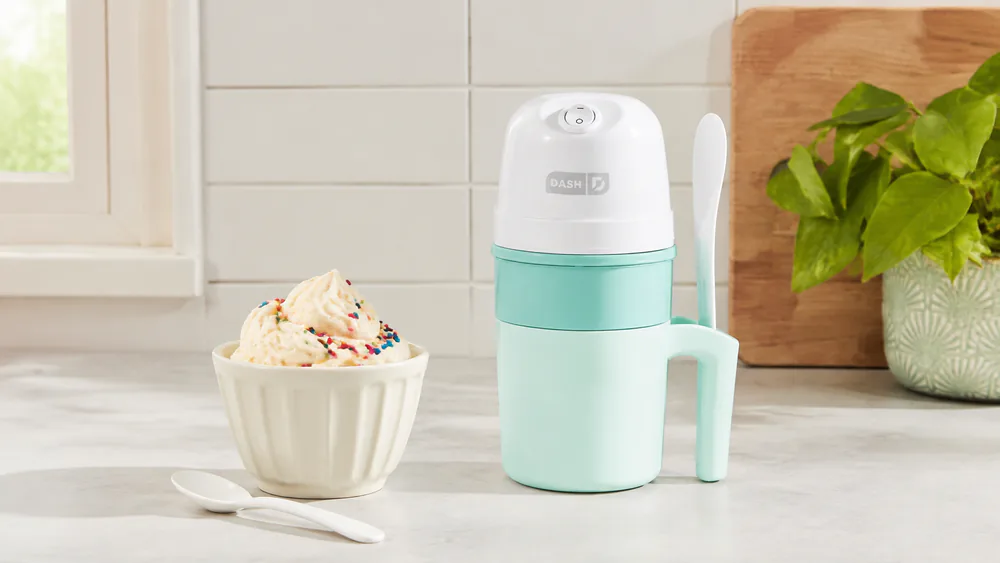
If the CREAMi is the family dessert station, the Dash My Pint is the dorm-room machine, and the price makes the compromise explicit: about $37 for 1.6 cups per batch, roughly one serving; buy two if two kids want dessert. Results are always soft-serve consistency.
Pros
Lowest price in the group, about $37
Tiny footprint; disassembles for storage
Soft-serve texture straight out of the machine
Cons
1.6 cups per batch, about one serving
Bowl needs a full 24 hours in the freezer
Results thin out past about 25 minutes
The mixture starts freezing around the rim the moment it is poured in. Churning past 20 to 25 minutes hits diminishing returns as the small bowl warms, so we stop early and harden the batch in a covered container. Pre-chilling the mixture an hour or two is the most reliable fix for batches that never set, and low-fat bases come out icier.
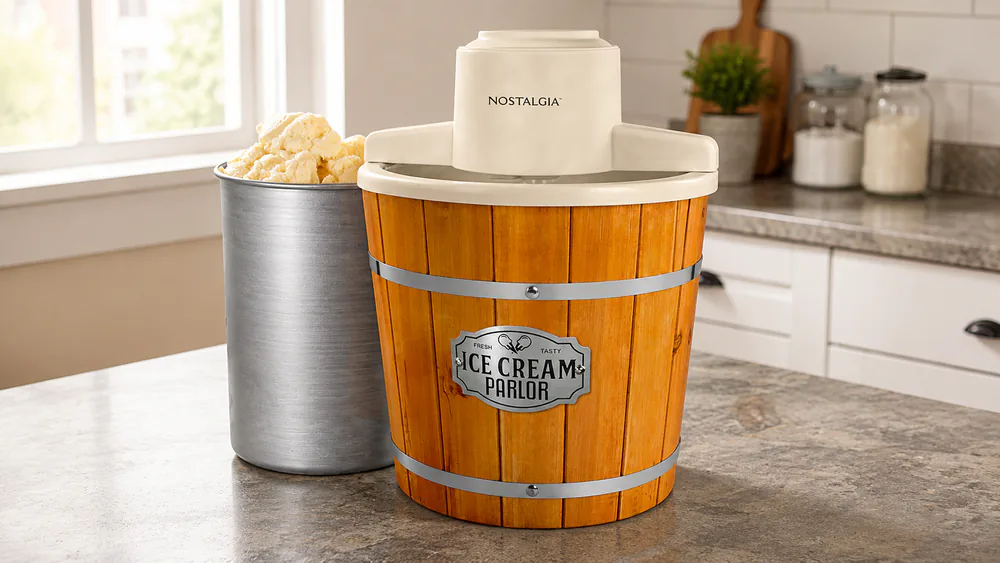
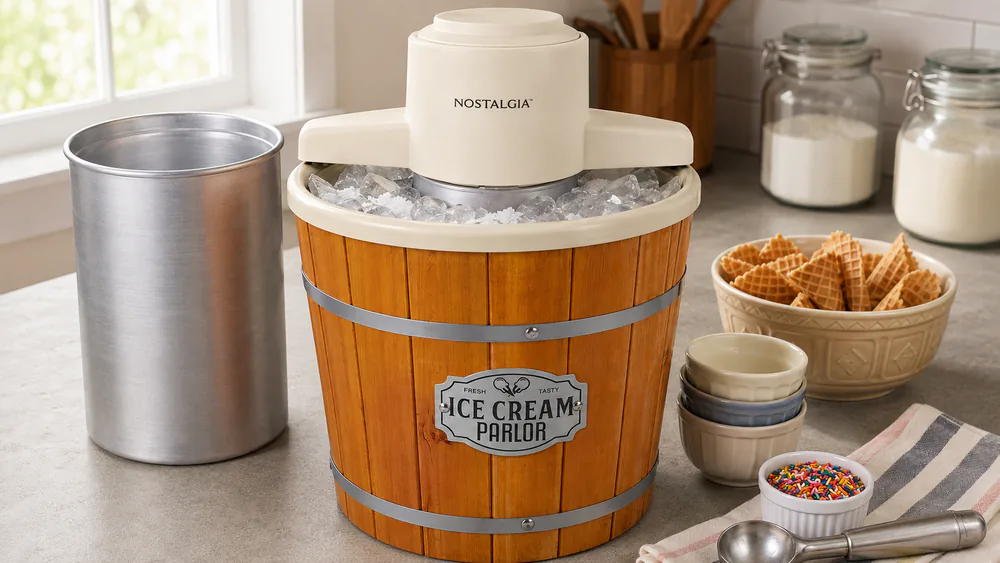
The Nostalgia WICM4L is the party machine of the group, the counterpoint to the Dash's single serving: it turns 4 quarts, about a gallon of finished ice cream, in one run; no pre-freezing, just ice, salt, and a motor that does the cranking.
Pros
4-qt capacity, about a gallon per run
No pre-freezing; churn the day you need it
Quiet motor; the ice grinding is the loud part
Cons
Churn time swings with temperature, 30 minutes to over an hour
Salt mess; canister and dasher hand-wash only
Plastic dasher can strip under load
A 4-quart batch churns to soft serve in about 30 minutes with one to two bags of ice and 2 to 4 cups of salt; too much salt freezes the mix grainy, too little and it never sets, and a 70-degree day stretched our batch past an hour. Cleanup is the catch: salt residue everywhere, and the plastic dasher strips out under load. At about $60 it earns its keep for parties and loses it for daily use.
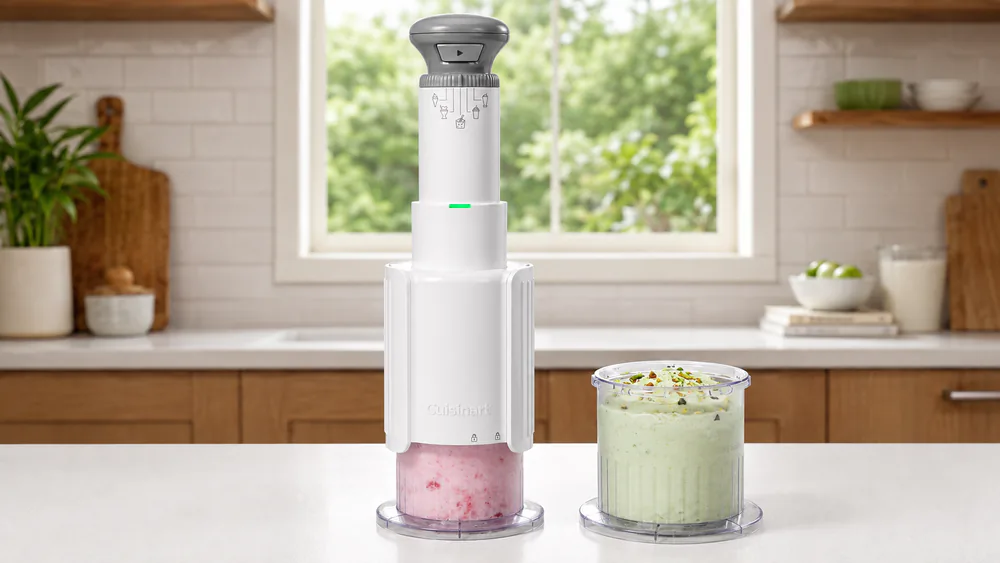
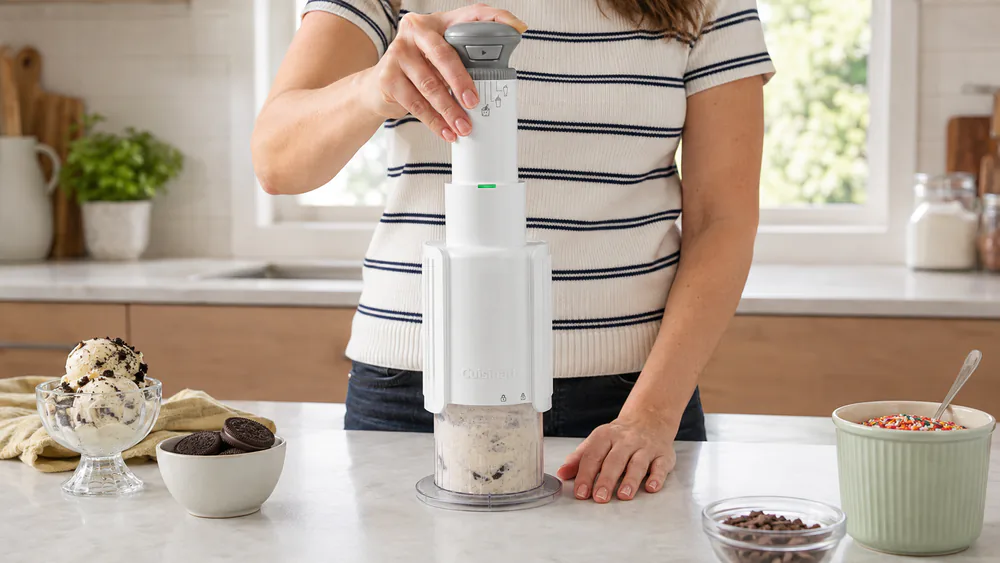
If the Nostalgia is for crowds, the Cuisinart FastFreeze MAX is the machine you hide in a drawer between batches. Two 1-pint dessert cups freeze for 24 hours, then a wand creams each pint in one to three minutes.
Pros
Smallest storage footprint; disassembles into a drawer
One to three minutes of processing after a 24-hour cup freeze
Three-year limited warranty
Cons
Texture is creamified, not identical to churned
Some bases come out powdery without a stabilizer
Blade removal needs two hands; handle is wipe-only
A classic vanilla base hit great texture in about three up-and-down wand passes, quiet enough not to startle the pets, though some bases come out powdery without a pinch of guar or xanthan gum. The blades push out of the wand, which takes two hands to clean, and the unit disassembles to 5.3 by 18.4 inches. Street price runs $129 to $134, and Cuisinart's product page backs it with a three-year warranty.
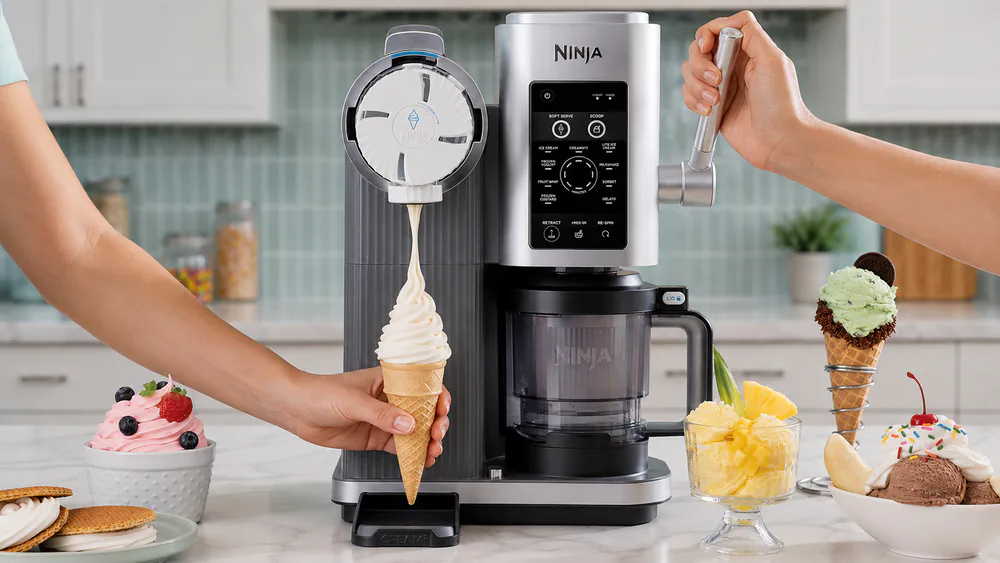
The Ninja CREAMi Scoop & Swirl NC701 is the soft serve pick, the machine that turns a frozen pint into a cone with a proper swirl on top. Thirteen one-touch programs include six soft serve modes, and a three-speed automatic handle dispenses into a cone; two 16-ounce 2-in-1 pints come with nozzles.
Pros
Thirteen programs including six soft serve modes
Three-speed automatic swirl handle for cones
Re-spin refreshes refrozen leftovers
Cons
Vacuum-cleaner loud, over 80 dB on some modes
Tall and heavy; needs dedicated counter space
Only NC700-series pints fit
Level freezing is the single biggest success factor; a pint frozen at an angle makes the blade struggle or skip. The noise is the headline complaint: processing is vacuum-cleaner loud, over 80 dB on some modes. Only NC700-series pints fit, the unit is too tall for under-cabinet storage, and per-pint output feels small. Street pricing holds near $279; see Ninja Creami vs Ninja Creami Deluxe.
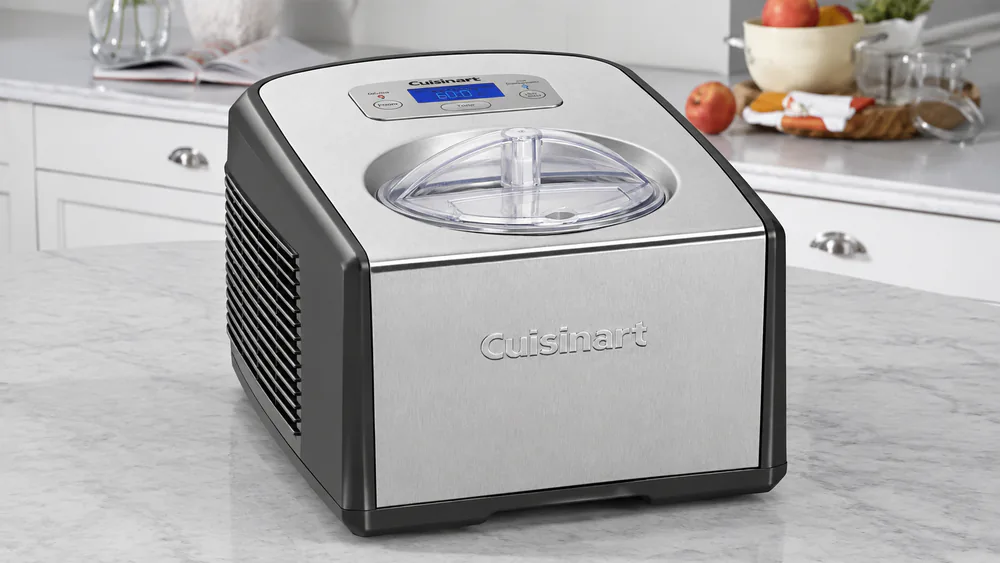
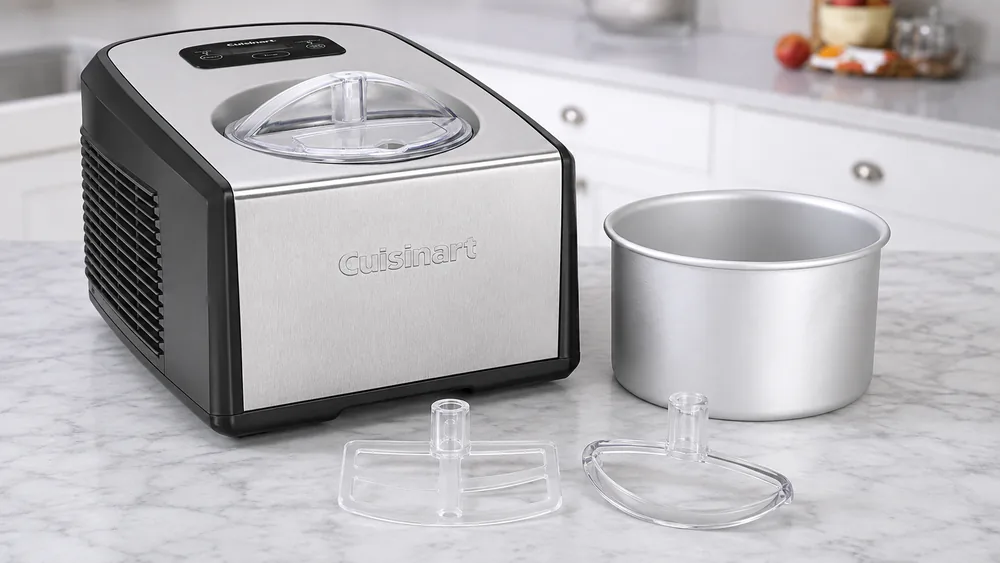
The Cuisinart ICE-100 is the only machine here that answers yes to churning on a whim. A built-in compressor chills the 1.5-quart bowl itself, so there is no pre-freezing; you pour the base, set the 60-minute countdown timer, and walk away. Two paddles, for ice cream and gelato, plus a 10-minute Keep Cool cycle, are part of the $379.95 package.
Pros
Built-in compressor; no pre-freezing, back-to-back batches
Two paddles: standard ice cream and denser gelato
Longevity track record with warranty support
Cons
$379.95 list price, the most expensive churner here
30 to 40 minutes per batch
About 32 lb; a countertop fixture, not a stored appliance
A 1.5-quart batch ran 30 to 40 minutes and came out soft serve, with back-to-back batches about 10 minutes apart. The gelato paddle measured about 19% overrun versus 36% with the ice cream paddle. The bucket must be bone dry between uses, 4 cups is the safe fill, and units we have tracked run weekly every summer for seven-plus years, with a failed motor replaced under warranty.
The gelato paddle folds in about half the air.
FAQ
How long does a freezer bowl need to freeze before churning?
Plan about 24 hours at 0 F for a double-insulated bowl like the Cuisinart ICE-21P1's or the Dash My Pint's. A warm freezer leaves the bowl unfrozen and the batch unset, which looks like a broken machine; keep the bowl in the back of the freezer.
Is a built-in compressor churner worth the extra cost?
Only if you churn often. The Cuisinart ICE-100 costs about $380 against roughly $70 for the ICE-21P1, buying no planning, back-to-back batches, or steady chiller temperature. For a few batches a month, the freezer-bowl price wins.
Why does my homemade ice cream come out icy?
Icy texture usually comes from a base that starts too warm, a churn that stops early, or a batch that skips the hardening hour. Sugar and fat lower the freezing point, so low-sugar and low-fat bases freeze harder and turn icier, which is what stabilizers fix. Churn a well-chilled base and give every batch an hour or two in the freezer.
How loud is a compressor ice cream churner?
The only true compressor here, the Cuisinart ICE-100, sits between a dishwasher and a quiet stand mixer. The loudest machines here are not compressors at all: the CREAMi family's blade processing is vacuum-cleaner loud, over 80 dB on some modes. Freezer-bowl churners like the ICE-21P1 hum for 12 to 15 minutes and are the quietest.
Final Thoughts: The Verdict
For most kitchens, the machine that earned the top slot is the one that asks for a day of warning. If your kitchen runs on frozen pints, the CREAMi family is the right branch of the family tree, and the NC701 turned frozen pints into soft serve with a proper swirl. Below $50 the Dash My Pint makes a genuine serving, and the Nostalgia's 4-quart bucket is the party machine. What we would do differently: churn the compressor model first, and budget the hardening hour into the evening.