As an Amazon Associate we earn from qualifying purchases. We may earn a commission from links on this page, at no extra cost to you. Learn more.
Homemade ice cream without a real machine is a gamble. Hand-churned batches turn icy and gritty, and a bag of ice and salt gets you a party trick, not a weeknight dessert. The right machine fixes the texture, but the market splits three ways: freezer bowls, compressors, and Creami-style processors, with prices from about $60 to $800.
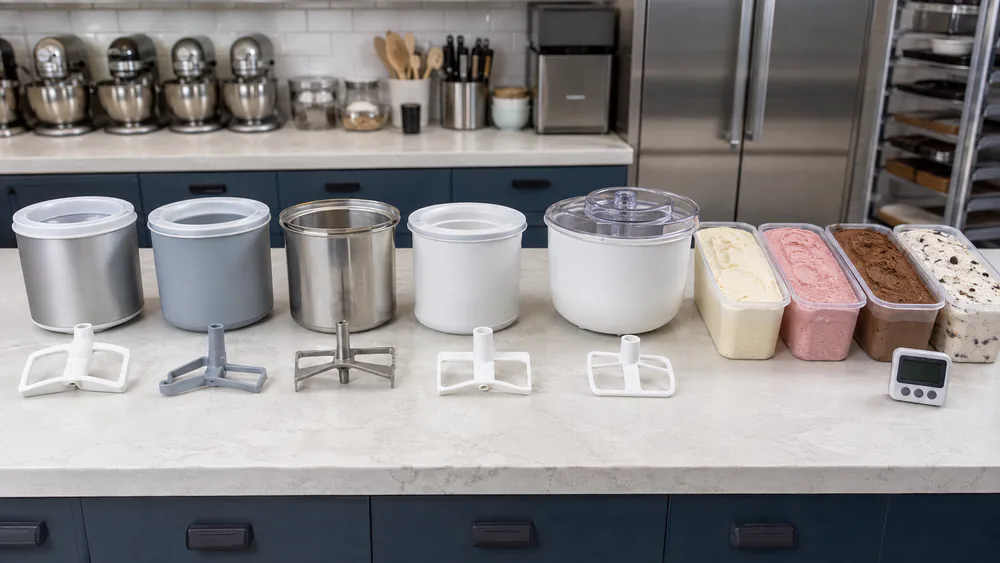
We tested 10 ice cream makers from Cuisinart, Ninja, Breville, and Whynter, churning batch after batch of the same custard base through every machine and timing each run to the minute. We scored texture, churn speed, noise, and cleanup, then ranked the field for every budget.
The four weeks before this went to press were an ice cream marathon: 30 batches of the same vanilla custard base, three churned through each machine, before we recorded a single score.
Our Top 3 Picks at a Glance
Three machines stood apart after our testing: the best overall, the best compressor, and the best for creative flavors. Full reviews follow the quick comparison table.
Prices are street pricing at the time of writing and move with seasonal sales. The ratings are ours alone, scored on the same five-point scale across all 10 machines, so a 4.7 means the same thing for a $70 bowl machine as for an $800 compressor.
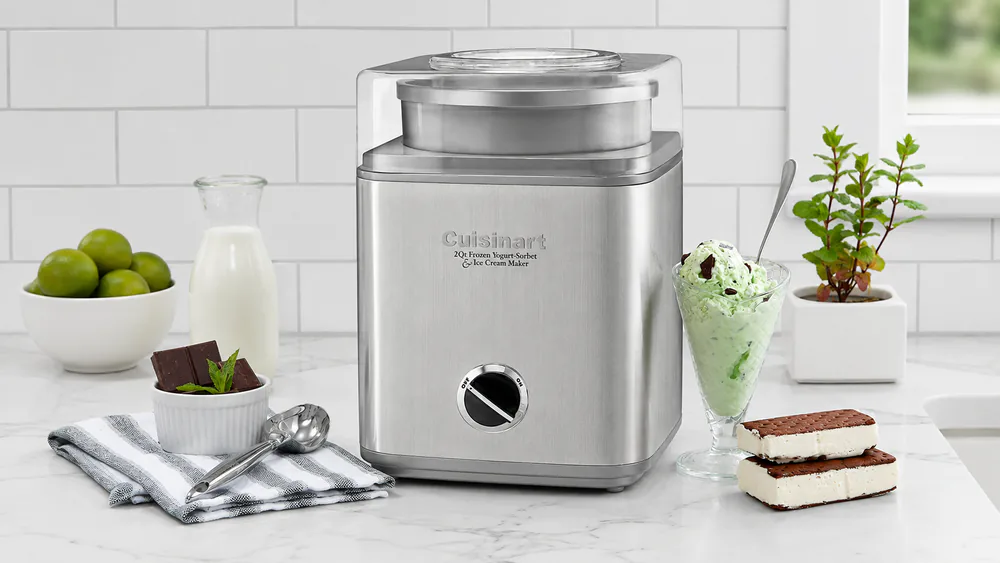
1. Cuisinart ICE-21P1 - Best Overall for Beginners
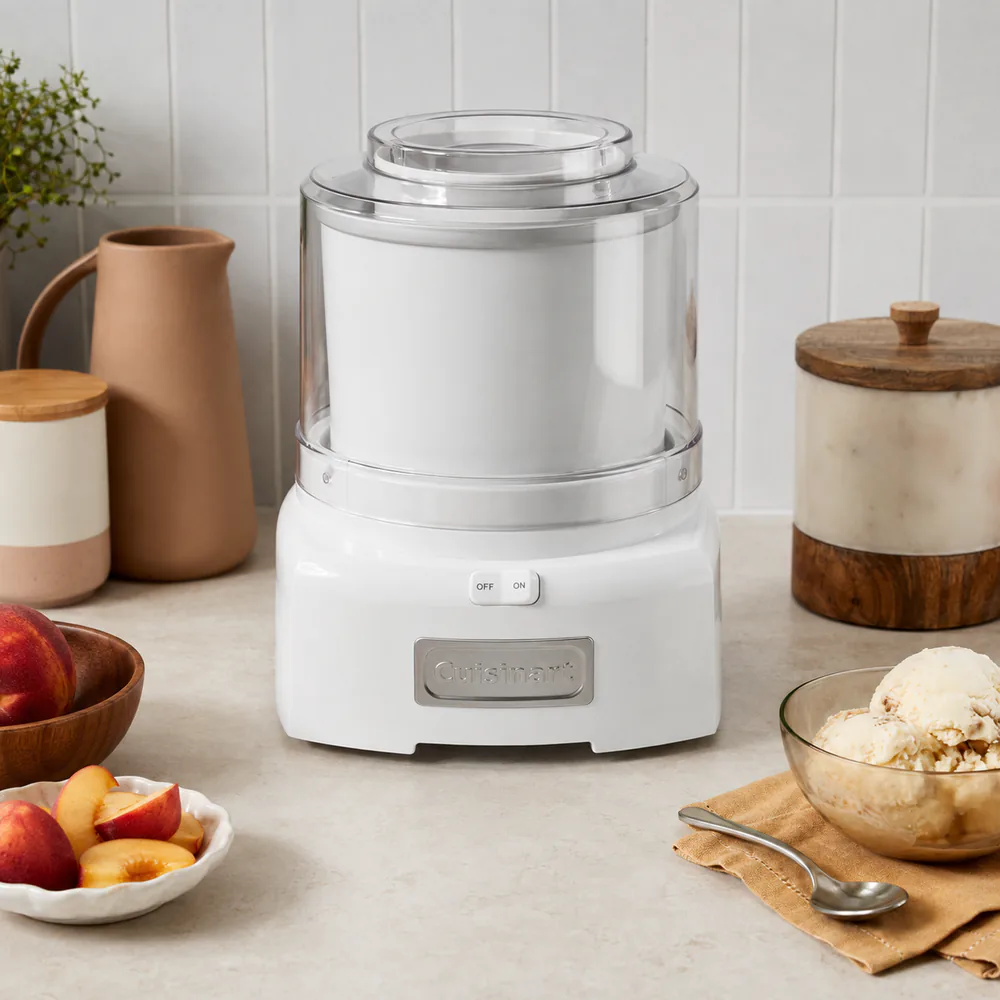
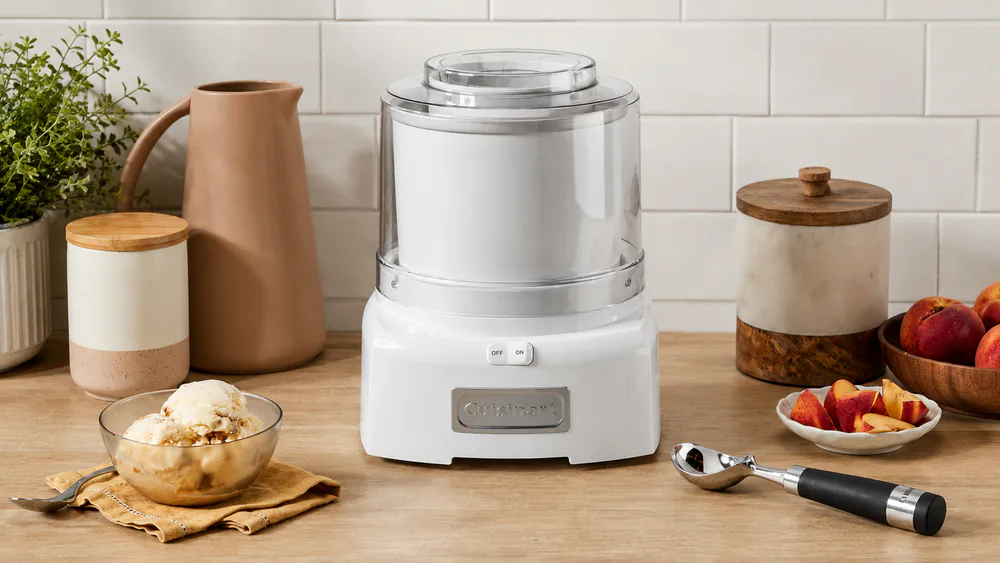
The Cuisinart ICE-21P1 is our default answer to "what should I buy first?", and this round of testing only confirmed it.
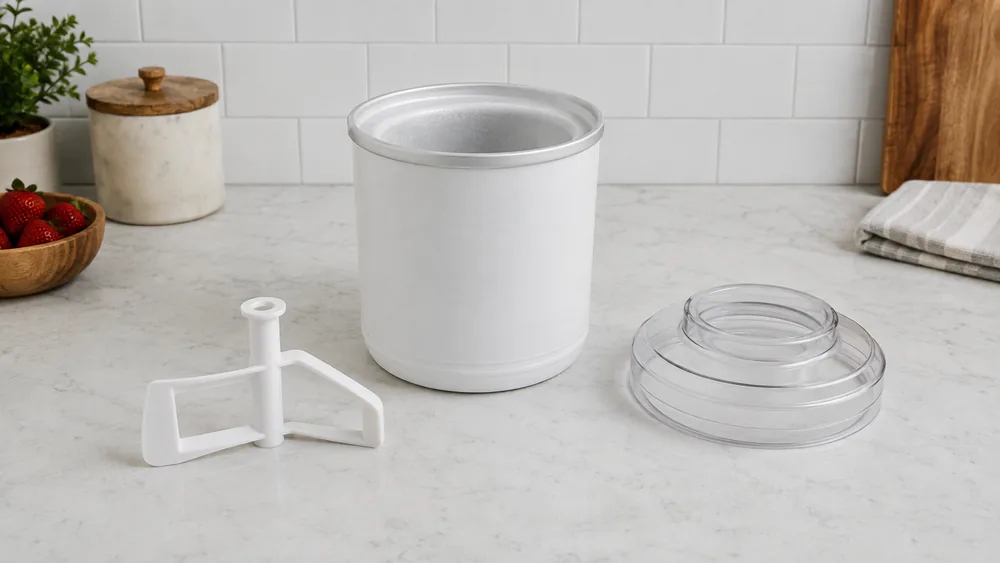
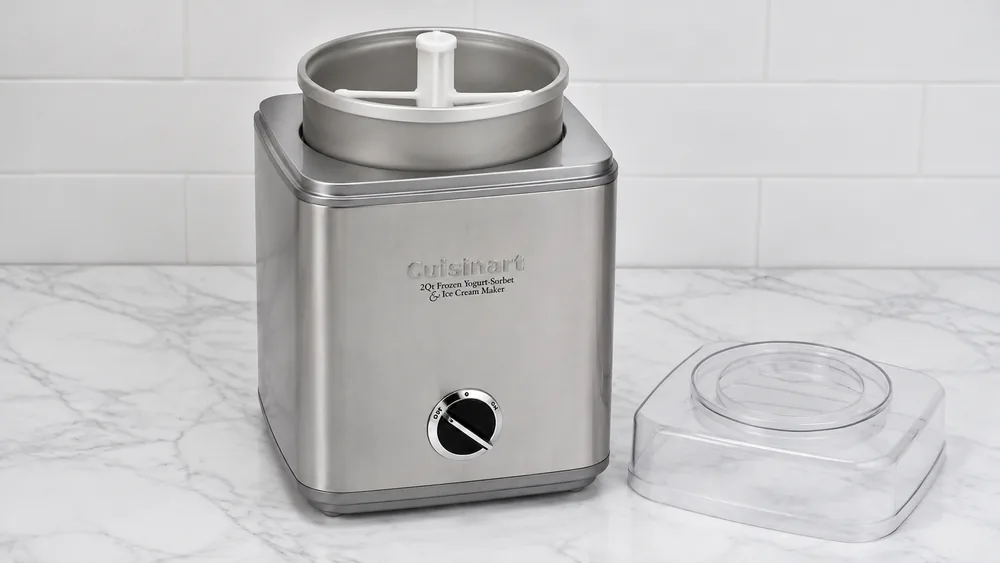
The ICE-21P1 is the machine we would buy again, and at about $70 it makes the argument easy. Churning in a warm kitchen, our first vanilla custard hit soft-serve in 20 minutes and firmed up scoopable after a couple of hours in the freezer. The hum ran steady the whole time, about the level of a stick blender, and cleanup came down to three parts and a rinse.
Pros
Soft-serve consistency in about 20 minutes
Three parts to clean, with no ice or salt residue
Easy-lock lid with a large spout for dropping in mix-ins
Compact bowl that lives happily in the freezer
Cons
Bowl needs 16 to 24 hours of pre-freeze before it can churn
Hum is noticeable for the full 20 minutes
1.5 quarts feeds about four, not a crowd
The honest catch is capacity: 1.5 quarts serves about four, so a crowd or a second flavor means a spare bowl or an overnight refreeze. We kept the bowl parked in the freezer between batches, which made the whole machine an impulse away from dessert, and the recipe booklet that comes in the box is actually worth reading. The controls are a single on/off switch, which is the point: nothing to learn and nothing to break.
Who Should Buy It
Anyone's first machine, and the right pick for households that churn a couple of times a month. If you are weighing it against a Ninja Creami, our Cuisinart Ice-21 vs Ninja Creami comparison covers the fork in the road.
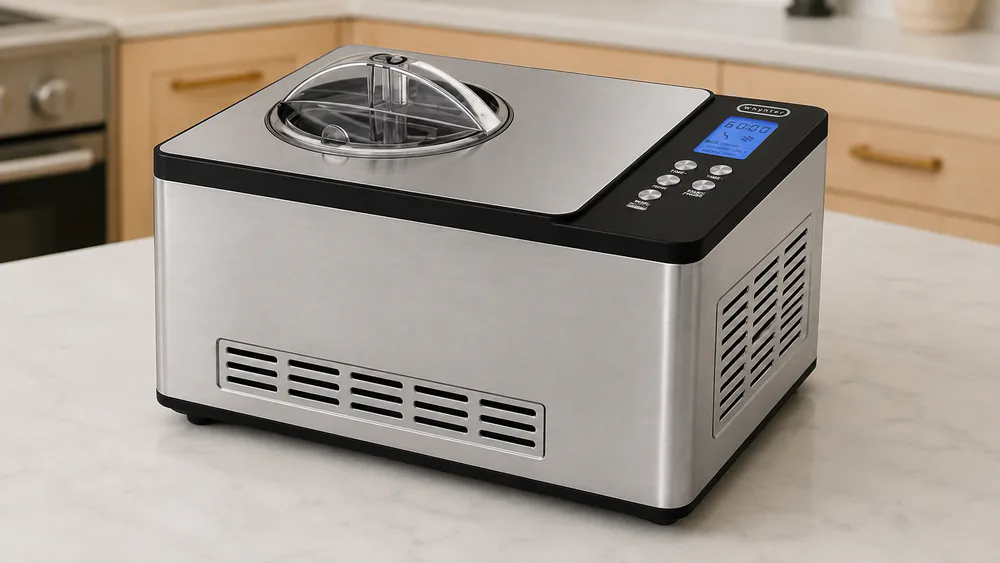
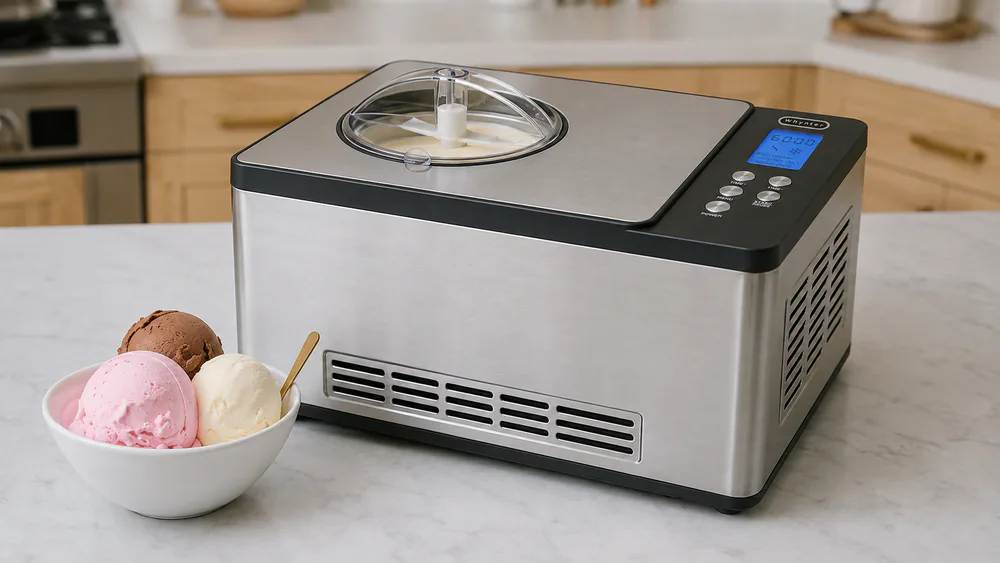
2. Whynter ICM-201SB - Best Compressor Ice Cream Maker
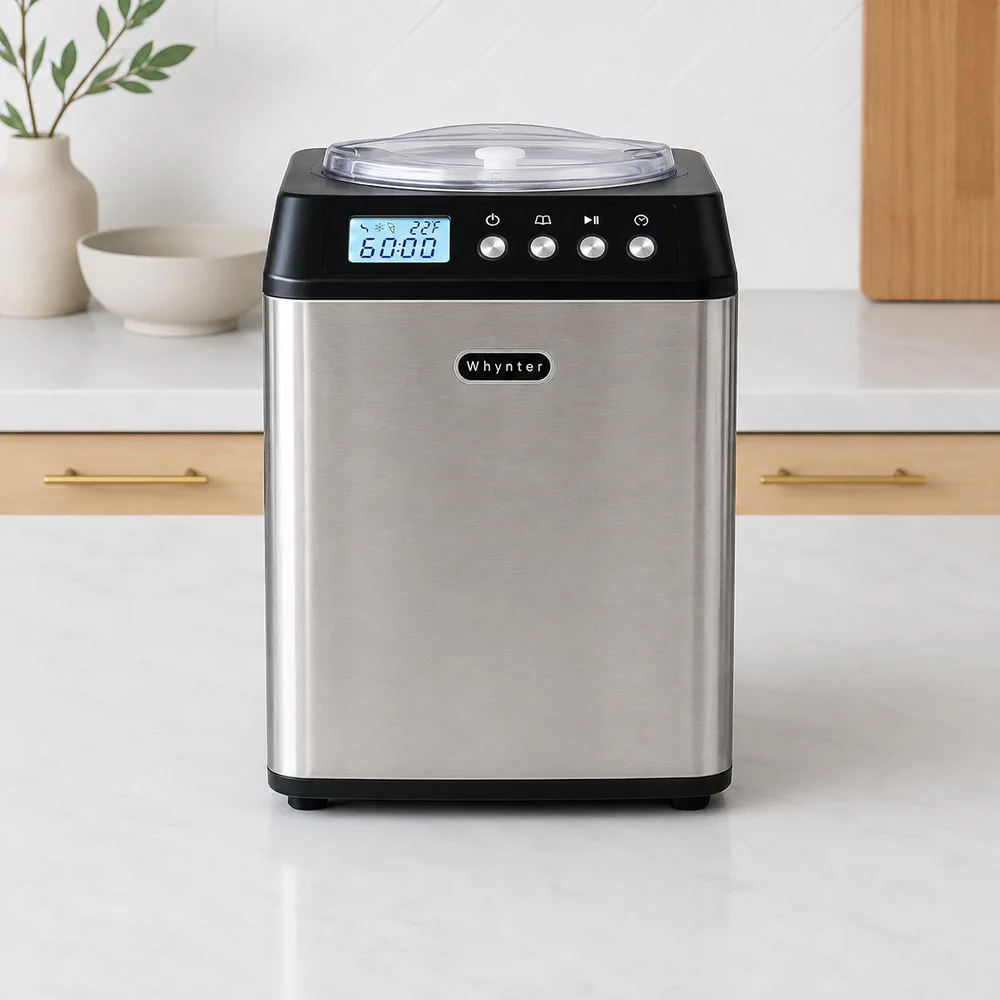
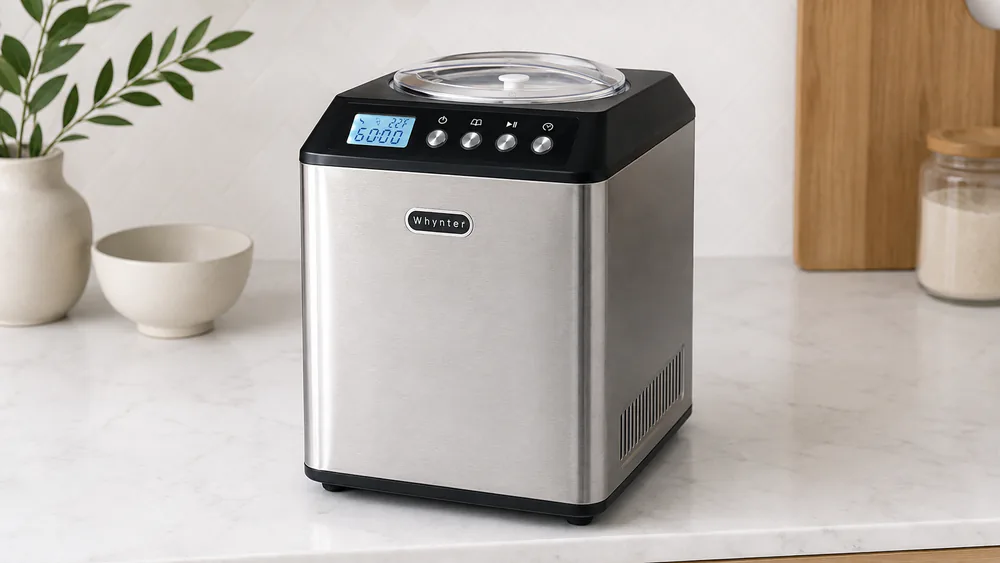
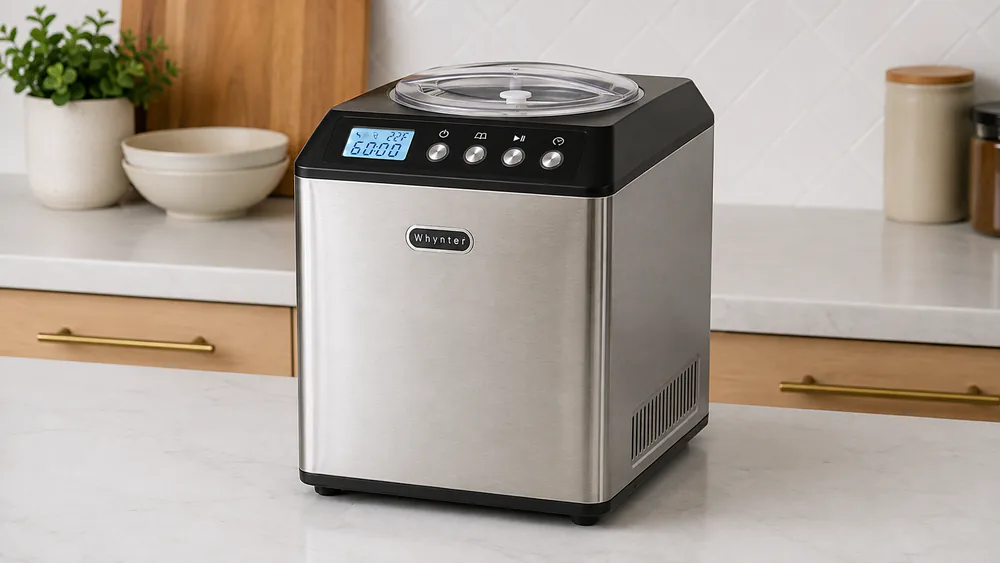
Where the Cuisinart plans a day ahead, the Whynter ICM-201SB brings its own cold and starts churning the moment you do.
On a mid-morning run, a mango batch hit soft-serve in 32 minutes with no pre-freeze and no ice. By early afternoon we had a second batch, a custard, churning, about 40 minutes, and the machine never strained. That back-to-back pace is the compressor's whole argument, and it lands.
Pros
8 to 10 servings per batch from a 2.1-quart bowl
Removable stainless steel bowl with a BPA-free churn blade
Pause button for dropping in mix-ins
3 modes, an audible timer, and a cooling range down to -31 F
Cons
Costs about $310, well above the freezer-bowl tier
Shuts down for a cool-down after 2 to 3 consecutive batches
Bowl can freeze tight to the machine after keep-cool, so it needs a gentle release
The quiet is the surprise: at 55 decibels or less it runs at conversation level, light enough that we churned while people talked in the same room. It is heavy, about 24 pounds, so it earns a permanent counter spot. The motor protection logic is genuinely useful, shutting things down for a cool-down after two or three consecutive batches, or when a mix gets too thick, instead of straining. America's Test Kitchen names it the best self-refrigerating ice cream maker, and we agree with the call.
Who Should Buy It
Regular churners who want back-to-back batches without freezer planning, and households that like to make a week of flavors in one afternoon.
3. Ninja Creami Deluxe NC501 - Best for Creative Frozen Treats
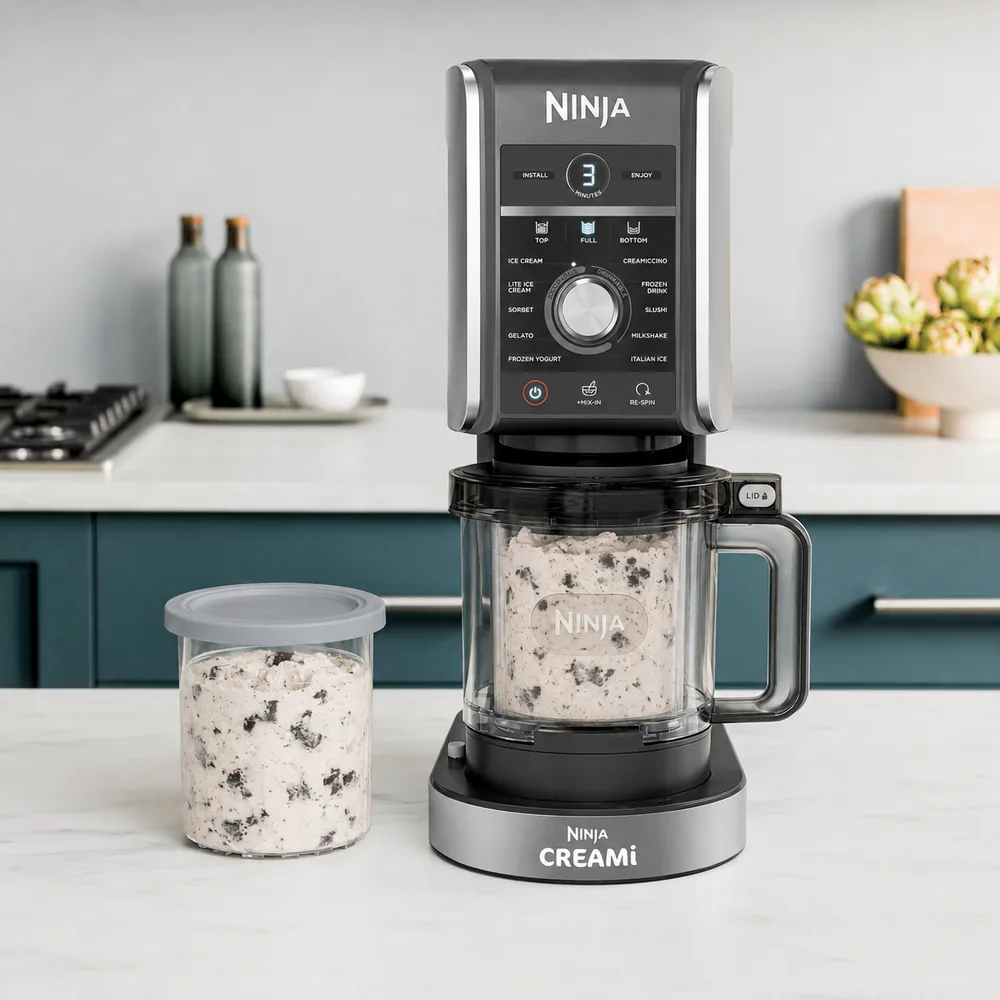
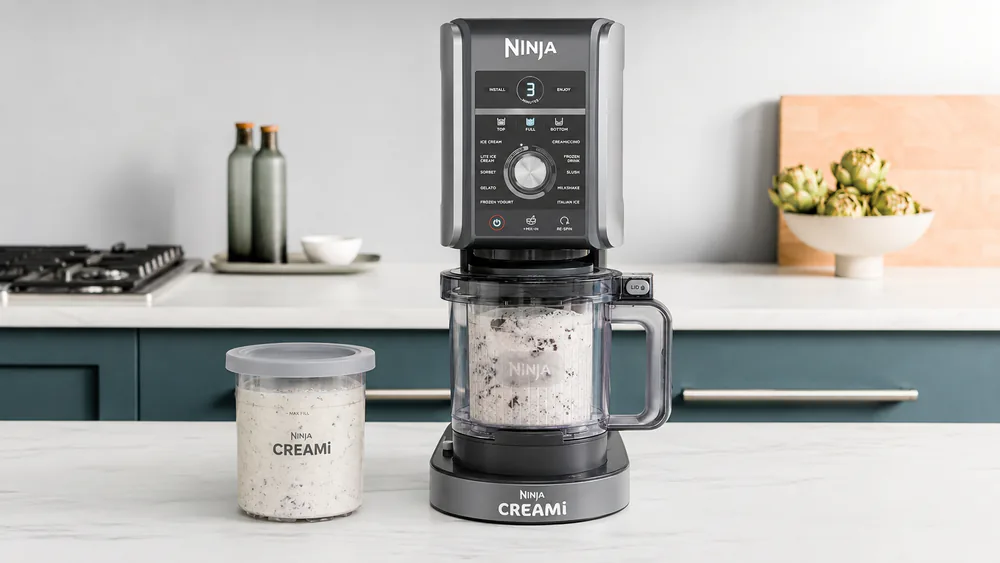
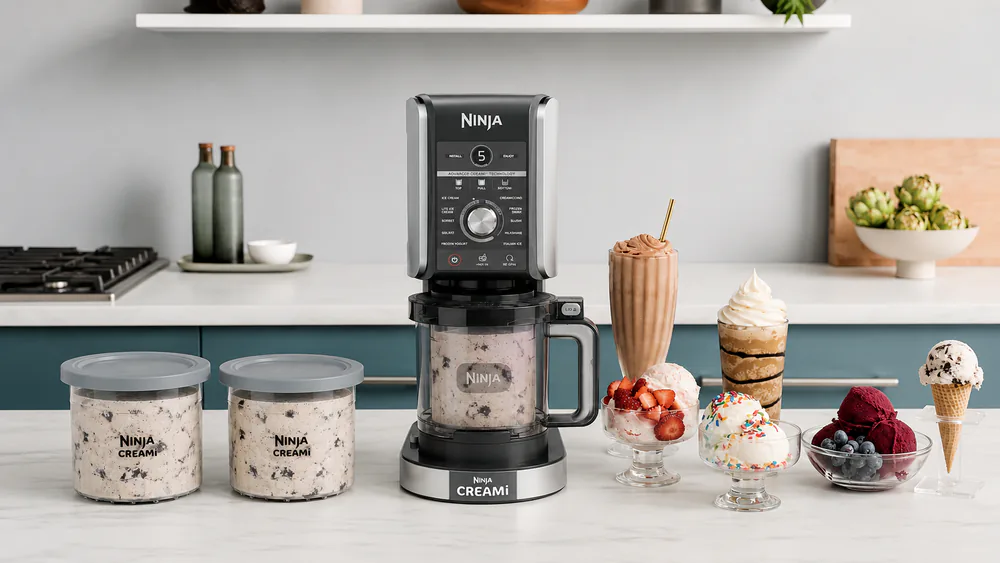
The Ninja Creami Deluxe NC501 is a different species of machine, one that freezes the base instead of the bowl.
Our first spin taught us two rules: flatten the frozen base before processing, or it volcanoes up to the lid, and brace for the noise. The spin itself took under 3 minutes, loud enough that our testers compared it to a jet engine, and the re-spin button rescued every crumbly or too-firm result we handed it. The 24-hour freeze before that first spin is the planning tax every Creami machine charges.
Pros
Protein and dairy-free bases come out scoopable and smooth
11 one-touch programs plus re-spin and mix-in modes
Two 24-ounce XL tubs with storage lids, dishwasher safe
Dual processing spins two mix-in flavors from one base
Cons
Painfully loud for the 2 to 3 minute spin
Base must freeze solid for 24 hours before processing
Creamerizer paddle and motor failures on heavily used units
The Deluxe's real party trick is control: protein, dairy-free, low-sugar, and keto bases all spun up scoopable and smooth, close to store-bought. The 11 one-touch programs cover everything from sorbet to milkshakes, and the two 24-ounce XL tubs hold 50% more than the original Creami pints. The 800-watt dual-drive motor applies downward pressure as it spins, which is how it cuts through a fully frozen base, and the machine weighs about 14 pounds with a footprint near 12 by 8 by 17 inches. Durability is the sore spot: the Creamerizer paddle can shear off on heavily used machines, and we have tracked motor failures within months of regular use, so the 1-year warranty earns its keep.
Who Should Buy It
Creative bases and dietary control: protein, dairy-free, low-sugar, and anything you would rather engineer than buy. For the full verdict on the family, see our Ninja Creami review.
4. Breville Smart Scoop - Best Premium Compressor Model
If the Whynter is the sensible compressor, the Breville Smart Scoop is the enthusiast's compressor.
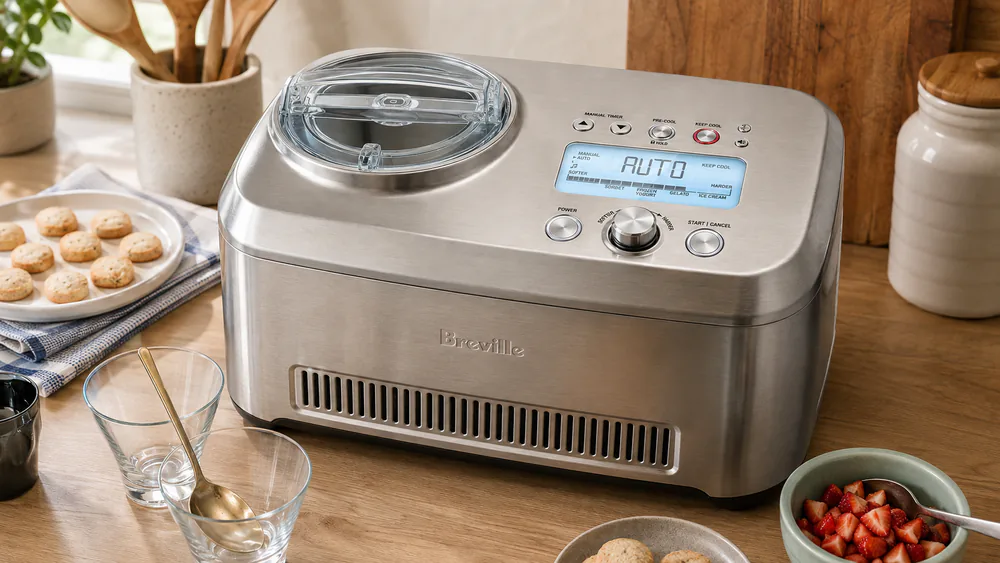
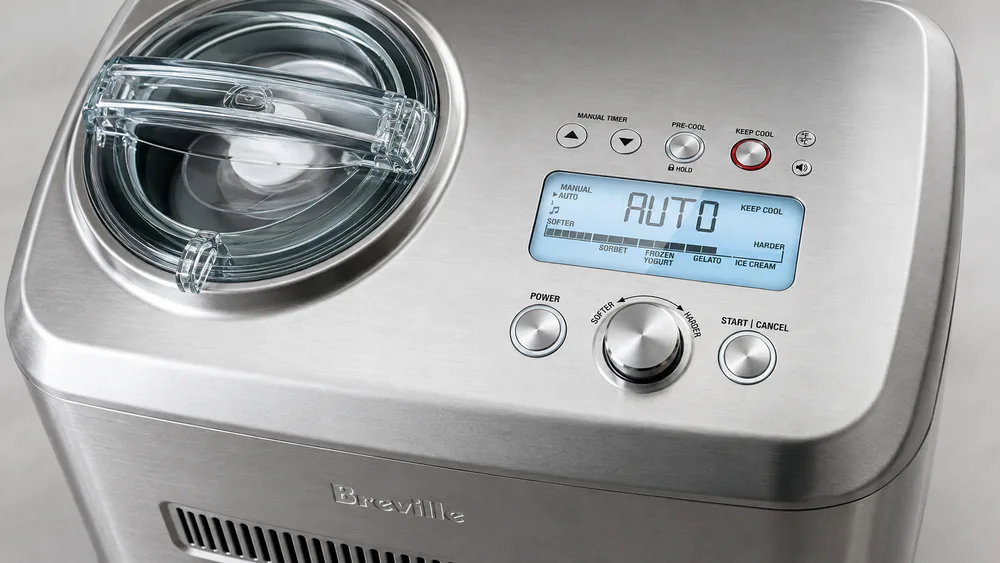
The Smart Scoop is the only machine here you can truly walk away from: pick one of 12 hardness settings, and it senses when the batch is done and holds it cold for up to 3 hours. Between batches the compressor needs a few minutes to bleed pressure before it restarts, and the temperature readout drifts briefly, so we learned to ignore it. What we could not ignore is the cleaning: the bowl is heavy and genuinely awkward to wash, the trade-off for results that justify the price tag.
Pros
Automatic hardness sensing across 12 settings
Keep-cool function holds the batch chilled up to 3 hours
165-watt compressor handles sugar-free bases well
Four pre-sets plus full manual mode
Cons
About $600, a serious investment for a home kitchen
1.1-quart bowl is small for the price
Heavy bowl is genuinely hard to clean
The price of admission is the small 1.1-quart bowl at about $600, and some retailers list the same machine at 1.5 quarts, but Breville's own spec is 1.1. Regular churners buy a second bowl to keep batches moving. Sugar-free bases need longer churn at a lower temperature, and this machine is the one that pulls the temperature down far enough to handle them properly. A pre-cool setting chills the bowl before a batch starts, and a beep tells you when the moment is right to drop in mix-ins.
Who Should Buy It
Enthusiasts who want the best texture a home machine can produce and do not mind the price, or the bowl.
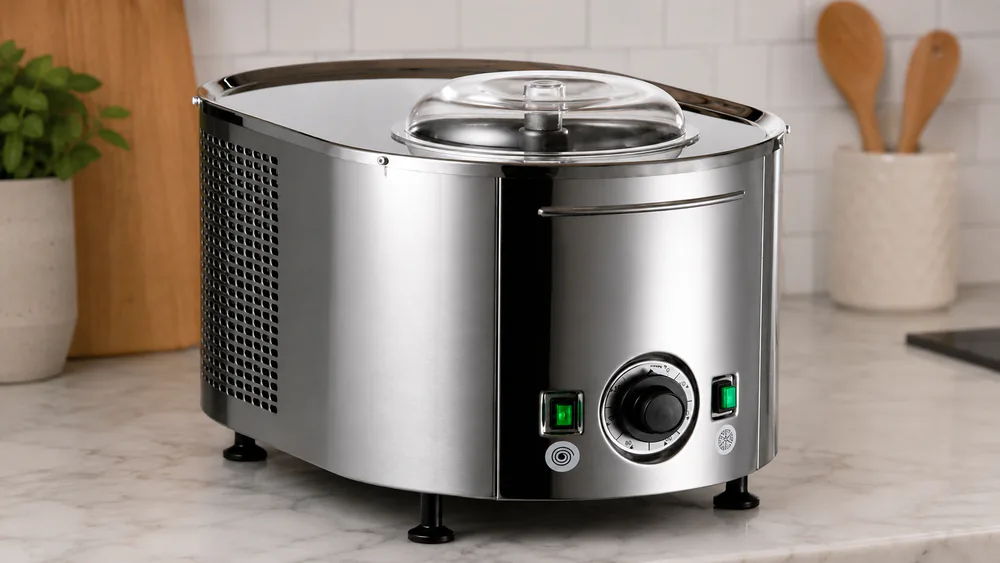
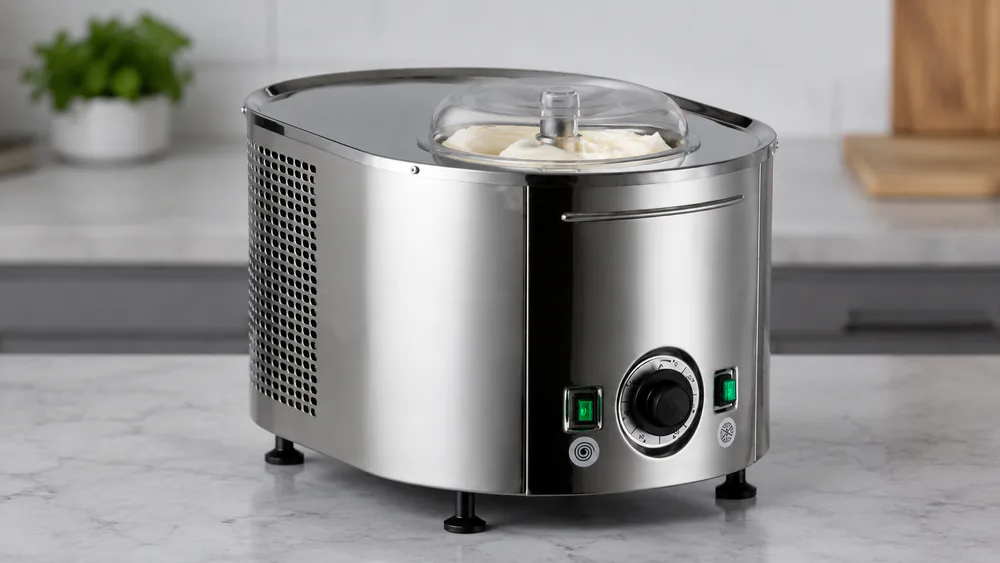
5. Lello 4080 Musso Lussino - Best Gelato-Style Machine
Where the Breville manages the batch for you, the Lello 4080 Musso Lussino is the machine the shops use, and it behaves like it.
Our gelato batch came out of the Lello with the dense, low-overrun texture of a shop case, small ice crystals and all, which is the machine's whole reason to exist. It freezes about 3 quarts of ice cream or sorbet per hour, with churn time landing between 15 and 30 minutes depending on the recipe. The stainless body sits like a tank on the counter at close to 40 pounds, and it feels built for decades.
Pros
Gelato-shop texture with dense, low overrun
No pre-freeze, fully automatic operation
All-stainless build meant to outlast the kitchen
Made in Italy, the same class of machine shops use
Cons
About $800, and the price swings hard with sales
Bowl is not removable
Drive system can grind on some runs
The caveats are honest. The bowl is not removable, so cleaning means wiping it out between batches, which takes about a minute. The drive system can grind on some runs and purr on others, the one inconsistent behavior we logged. Fully automatic two-button operation with a timer, made in Italy, and roughly $800, with flash sales that have dropped it far lower. It stands about 18 inches tall, so it earns a corner of the counter rather than a spot in the cabinet.
Who Should Buy It
Gelato obsessives, and anyone who wants one machine that will outlive the counter it sits on.
6. Cuisinart ICE-30BCP1 - Best 2-Quart Freezer Bowl
The Cuisinart ICE-30BCP1 takes the ICE-21P1's formula and scales it to the family.
The ICE-30BCP1 is the family-size version of the formula that made the ICE-21P1 our top pick: 2 quarts in about 25 to 30 minutes, fully automatic. It is also loud, the loudest freezer-bowl machine we tested, closer to a 747 than a kitchen appliance for the half hour it runs. The payoff is texture, with batches that need only an hour or two in the freezer to come scoopable.
Pros
2-quart family-size batches in about 25 to 30 minutes
Large spout for mix-ins mid-churn
Brushed stainless housing with retractable cord storage
Heavy-duty motor that handles thick bases
Cons
Very loud for the full run
Bowl needs a full 24-hour freeze before every batch
Two quarts is the family size, and the large ingredient spout takes mix-ins mid-churn without lifting the lid. It weighs about 13 pounds, and the heavy-duty motor handles thick bases without complaint. Machines in this family have churned happily for five-plus years, which is the durability claim that matters. The footprint, about 8.25 by 8.25 by 11.5 inches, is modest for the capacity.
Who Should Buy It
Families that want 2-quart batches from a proven formula without paying compressor prices.
7. Whynter ICM-200LS - Best Budget Compressor
Where the Breville and Lello chase perfection, the Whynter ICM-200LS chases value.
The ICM-200LS churns for 40 to 50 minutes with no pre-freeze, so one afternoon gave us three flavors from the same machine, each ready to scoop after an hour or two in the freezer. It is heavy, about 24 pounds of permanent counter. The paddle stops being happy with very thick or over-churned mixtures, so we pulled batches at soft-serve instead of pushing them.
Pros
Compressor convenience for about $270
2.1-quart bowl makes about 8 to 10 servings
Removable aluminum bowl, churn, and lid
Extended cooling function and soft-touch LCD timer
Cons
Longest churn times in the test, 40 to 50 minutes
Paddle struggles with very thick mixtures
Heavy, and the bowl is hand-wash only
The noise is a toss-up in practice: some runs surprised us with quiet, others hummed like any compressor, against a 60-decibel-or-less rating. The churn, paddle, and lid all come out for cleaning, though the aluminum bowl is not dishwasher safe. The ice cream scoop in the box is a small courtesy that earns the brand goodwill. Its 16.75 by 11.25 by 10.25-inch footprint is roughly two toaster ovens of counter, and the 24 pounds mean it stays where you park it.
Who Should Buy It
Buyers who want compressor convenience on a budget and churn one or two flavors a week rather than a marathon.
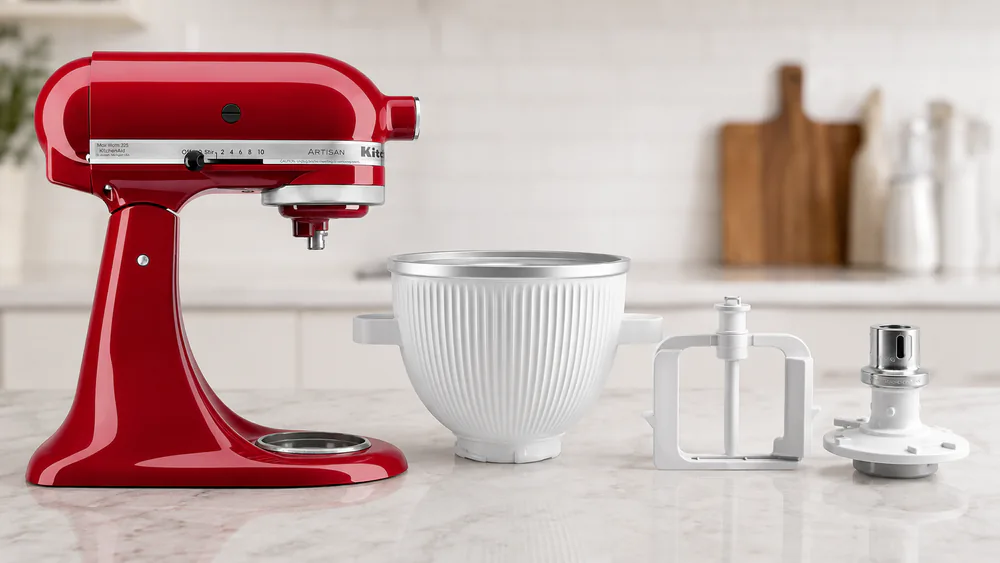
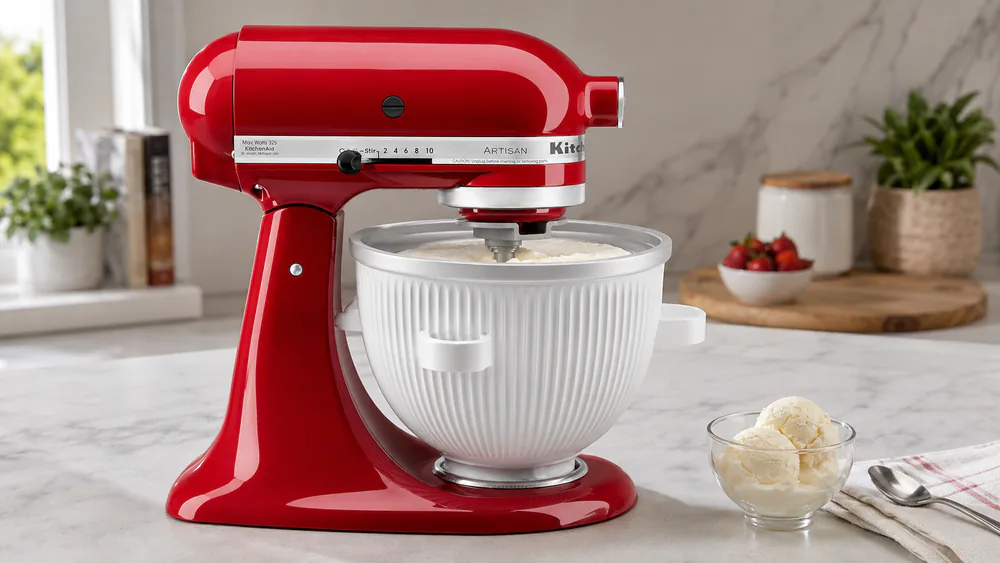
8. KitchenAid Stand Mixer Ice Cream Attachment - Best Space-Saver
If the Whynter is the value compressor, the KitchenAid ice cream attachment is the space-saver of the category: no machine at all, just a bowl and paddle for a mixer you already own.
The attachment churned 2 quarts in about 25 minutes on the slowest speed, exactly as the manual demands. The rules are specific: never stop and restart mid-churn once the dasher freezes in place, because the plastic drive connector in the hub is the weak point, and hand-wash the bowl, because coolant leaks were a known theme in this family's history. Follow the rules and the bowl lives in the freezer full time, ready whenever the mixer is.
Pros
No counter footprint beyond the mixer you already own
2-quart bowl with a redesigned dasher
Redesigned hub assembly included with the attachment
Cons
Slowest speed only, and no stopping mid-churn
Plastic drive connector is the known weak point
Requires a compatible stand mixer, sold separately
Fits most tilt-head mixers of 4.5 quarts and up, plus most bowl-lift models of 6 quarts and up, so the odds are good your mixer takes it. It does not fit the Artisan Mini or older bowl-lift models like the K5SS, so check your model number before buying. The bowl is the 6 pounds you add to the cabinet, roughly 11 by 9 by 7 inches. At about $100 it costs about the same as a budget standalone machine, so the math only works if the mixer is already on your counter, which is the fine print.
Who Should Buy It
KitchenAid owners who want a second function from the mixer they already store, and who churn occasionally.
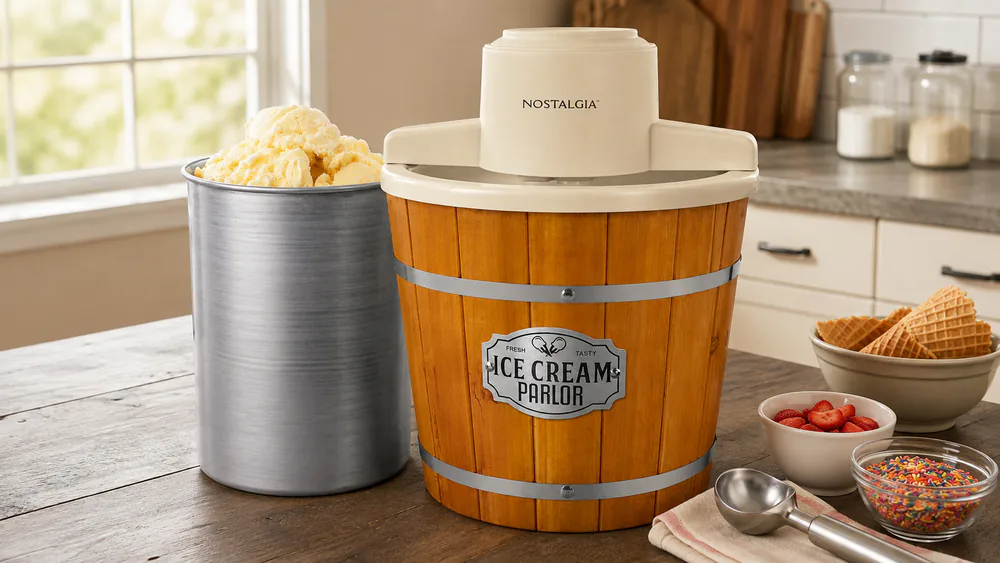
9. Nostalgia 4-Quart Electric - Best for Parties
The Nostalgia 4-Quart Electric is the machine for everyone who wants a party instead of a single pint.
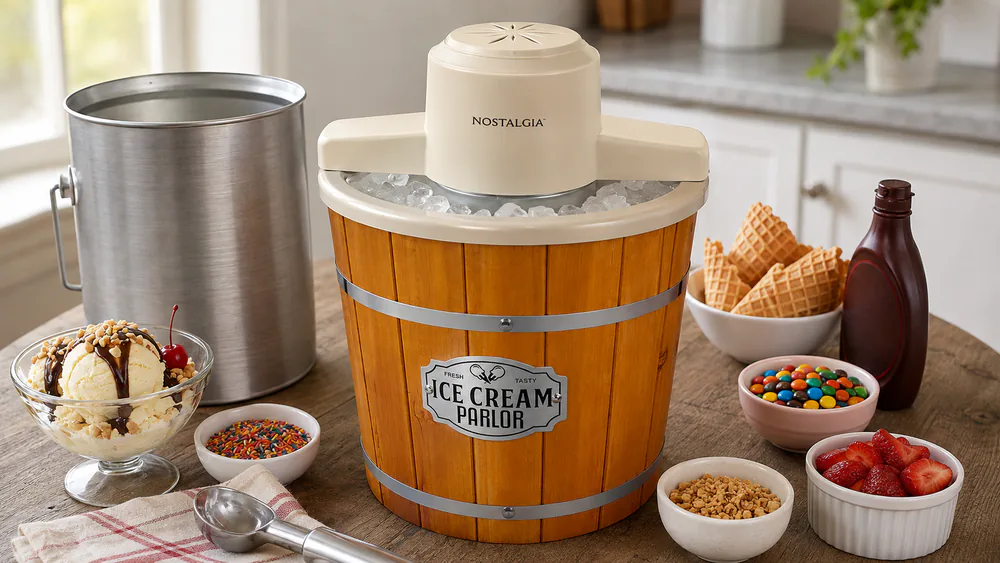
The Nostalgia is the party machine: 4 quarts, a wooden slatted bucket, and about a bag of ice plus a box of rock salt per batch. In 20 to 40 minutes it churned a gallon-class batch while the motor stayed quiet and the ice ground away in the bucket, and the see-through lid let everyone watch. It was the most fun we had in this test.
Pros
4-quart batches, roughly a gallon, for parties
Fun, old-fashioned look with a wooden bucket
About $60, the cheapest machine here
Motor is quiet; the ice grinding is the noise
Cons
Needs a bag of ice and box of rock salt per batch
Plastic dasher breaks after months of use, and parts are scarce
Cleanup means dealing with melted salt water
The practical costs are real: melted salt water to drain, a short power cord, and a plastic dasher that is the known weak point, with replacement parts chronically out of stock. A few units even ship with a loose wood slat, a quibble worth checking at the door. At about $60, it is the cheapest way to make a truly big batch of ice cream. The locking mount keeps the aluminum canister steady while the motor turns, so setup is ice, salt, base, and a flick of the switch.
Who Should Buy It
Party hosts who want 4 quarts of ice cream and a fun afternoon, salt and all.
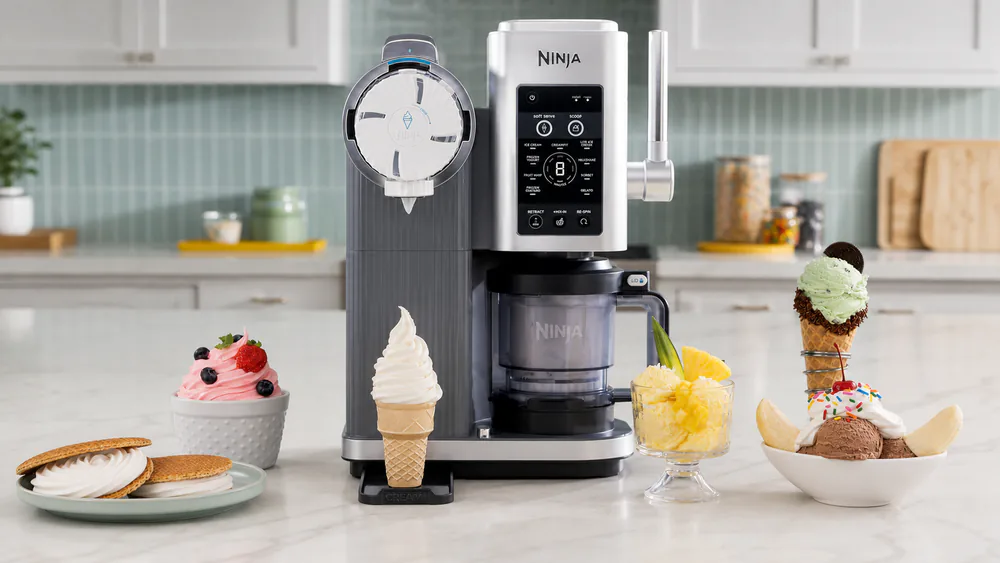
10. Ninja Creami Scoop & Swirl - Best Soft Serve
Where the Deluxe engineers texture, the Ninja Creami Scoop & Swirl finishes the list the way it finishes a birthday party: with soft serve.
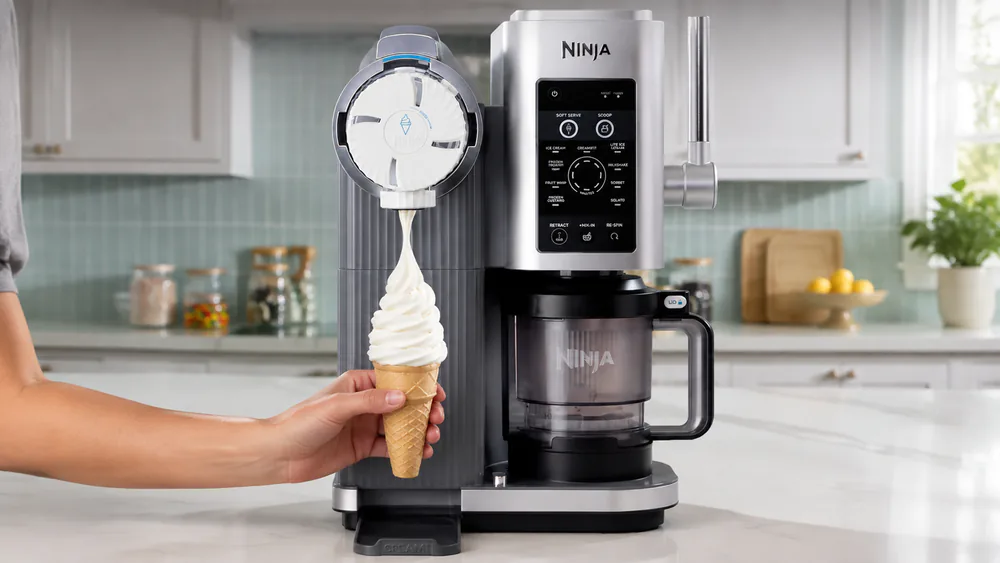
The Scoop & Swirl's party trick is real: pull the handle and you get actual soft serve, swirl included, genuinely comparable to a commercial machine's. It is loud, vacuum-cleaner loud at 95-plus decibels during a spin, and tall enough that it would not fit under our standard upper cabinets. Cleanup was the fastest of the 10, because the pints and parts are dishwasher safe and the motor base never touches food.
Pros
Real soft serve with swirl, comparable to commercial machines
13 programs including 6 soft serve settings
Fastest cleanup in the test, with dishwasher-safe parts
Scoop and swirl modes in one 16-ounce pint
Cons
Loud, around 95 decibels during processing
Tall and heavy, with a base that must freeze 24 hours
Corners of the pint always keep some mixture behind
The batch-prep habit is the same as the Deluxe's: freeze several pints 24 hours ahead, spin on demand, run a re-spin when you want a smoother scoop, and accept that some mixture always stays in the corners of the pint. The 13 programs include six soft serve settings, a 2-in-1 pint that scoops or swirls, and three speed settings on the automatic handle. A pull-out drip tray catches the run-off, and the box includes 30-plus recipes to start with. It weighs about 21 pounds and needs counter space, but for soft-serve households it is the whole show.
Who Should Buy It
Households with kids, or strong opinions, who want soft serve at home and have the counter space for a tall machine.
Other Ice Cream Makers We Tested
A few more machines deserve a nod even though they did not make the ranked list.
The original Ninja Creami still makes the same spin-and-scrape magic in a pint-size machine. If the Deluxe's 24-ounce tubs are more than you need, it is the cheaper on-ramp to the texture trick at $199.95, though street pricing moves week to week and with seasonal promos, and the machine routinely sells in the $150 to $180 range.
The older KitchenAid KICA0WH attachment still shows up at about $100 and fits 5 to 6 quart household mixers. We would buy the current KSMICM instead, and hand-wash its bowl religiously: the old bowl was infamous for leaking blue coolant, a known theme in the family.
Ninja's earlier pint machines, the NC100, NC200, and NC300 series, use a different motor base than the Deluxe, so their pint tubs will not fit the NC501. The current NC300-series machine, the NC301 7-in-1, runs about $199.95, though the family spans variants that price differently, roughly $169 to $220 at the moment, with the flagship dipping into the $150 to $180 range on sale. If you are starting fresh, buy into one tub family and stay there.
None of these change our top-10 order, but each fills a niche the ranked list does not.
How We Tested the Best Ice Cream Makers
Every machine in this guide churned the same custard base, and we timed each batch from the first turn to soft-serve. We scored texture, churn time, noise at counter distance, and how long cleanup took, then weighed all of it against price. The 10 machines split into the three types, and we treated each type by its own rules: freezer-bowl machines got their bowls a full pre-freeze first, compressors ran from a standing start, and Creami machines processed bases that had frozen solid for 24 hours.
Each machine churned three batches of that custard base for its score: one calibration run to learn how it behaved, then two timed, scored runs whose churn times we averaged. About ten flavor-variation batches, mango, gelato, chocolate, and pumpkin pie among them, ran on top for the machines that handle multi-flavor sessions, which brought the full series to roughly 40 churned runs. The four-week window paced the testing as much as the machines did: a freezer bowl needs 16 to 24 hours of refreeze between batches, so the bowl-based machines ran about one scored batch per day, while the compressors churned two or three batches back to back on test days.
All four criteria were scored on the same five-point scale, with 5 the best. Texture was judged on ice-crystal size and scoopability after freezing, churn time was timed to the minute from power-on to soft-serve, noise combined a meter reading with how the machine sounded in a normal room, and cleanup was scored on parts count and how much scrubbing they needed. The four scores averaged into each machine's one-decimal rating.
Why Trust Our Testing
The freezer-bowl machines took 20 to 30 minutes per batch after 16 to 24 hours of bowl pre-freeze. The compressors ran 15 to 50 minutes depending on the model, with no pre-freeze, and the Creami machines spun for 2 to 5 minutes after their bases froze a full day. Noise came out in three bands: 70 to 80 decibels for the freezer-bowl units, roughly 55 to 80 for the compressors, with the quietest machines holding conversation level, and 85 decibels and up for the Creami machines, though only for a few minutes at a time. We checked how each bowl released its batch, whether the machine stopped politely at thick or overworked mixtures, how many parts each machine asked us to wash, and which parts actually lived up to the dishwasher-safe promise. Homemade ice cream keeps about 2 weeks in the freezer, so we scored texture the way it actually gets eaten: soft-serve out of the bowl, then scoopable after an hour or two in the freezer.
How to Choose the Best Ice Cream Maker (Buying Guide)
The machines above all work, and they work well. The right one comes down to how often you churn, who you feed, and how much counter you can spare.
Freezer Bowl vs. Compressor vs. Ice-and-Salt
Freezer-bowl machines are the mainstream: a double-insulated bowl freezes for 16 to 24 hours, then a motor turns the paddle inside it. They are cheap, from about $60 to $150, and their batches are small and fast. Compressor machines carry their own freezing system, so there is no pre-freeze at all, and that hardware is why they cost $270 and up, sometimes far up. Ice-and-salt buckets like the Nostalgia are the original design: ice, rock salt, and a motor, with 4-quart batches and a cleanup bill of melted salt water. The third type, Creami-style processors, does not churn at all; it spins a fully frozen base into a smooth texture in minutes. The compressor premium is mostly hardware: inside those machines sits the same kind of cooling system as a mini-fridge, and that is where the $270-plus price goes. Each type also changes how often you can churn: freezer bowls need a re-freeze between batches, compressors run back to back, and Creami machines trade a 24-hour base-freeze for a 2-minute spin. If you are torn between the pint-size Creami and the Deluxe, our Ninja Creami vs Deluxe comparison lays out the differences.
Warning. Never run a freezer bowl through the dishwasher, and never freeze it upside down. Both can drain the phase-change fluid inside the bowl walls, and a drained bowl is a dead bowl.
Capacity: What Size Do You Need?
A 1.5-quart bowl makes about four servings, which covers a couple or a small family for one dessert. A 2-quart bowl, like the Cuisinart ICE-30BCP1 or the KitchenAid attachment, is the family size. Compressor machines in the 2.1-quart class turn out 8 to 10 servings and can run back to back, which is how one afternoon becomes a week of flavors. Parties are the 4-quart buckets' job; the Nostalgia's batch is closer to a gallon, enough for a birthday party with leftovers to spare. A second bowl is the cheapest upgrade in the category, so Cuisinart buyers pick one up the way they buy a spare pan, and Cuisinart sells its freezer bowl separately.
Noise, Churn Time and Texture
Every machine here makes noise, and the pattern is the trade-off. Freezer-bowl models run about 70 to 80 decibels for 20 to 30 minutes, like a loud conversation you cannot tune out. Compressors span roughly 55 to 80 decibels, from the Whynter machines' quiet hum up to the loudest units, and they stretch it over 15 to 50 minutes. The Creami machines are the loudest at 85 decibels and up, roughly a lawnmower, but only for 2 to 5 minutes. Texture is the other side of the clock: no machine in this class hits scoop-shop texture straight out of the bowl. Freezer-bowl and compressor output firms up after 1 to 3 hours in the freezer, and Creami pints refreeze into blocks that need a re-spin, which is a feature, not a bug. Base temperature skews every number here: a well-chilled base churns faster and smoother, and a warm one adds minutes to the clock and ice crystals to the scoop.
Price and Value
Set the budget by habit first. A $70 freezer-bowl machine is the best value in the category: it makes four servings of honest ice cream and asks for a day of planning. At about $100 the family size appears, at about $270 the budget compressors, and at $600 to $800 the premium machines whose texture and convenience are genuinely a step up. The compressor premium buys no pre-freeze, back-to-back batches, and temperature control. We think most buyers land in one of two places: the $70 to $100 freezer-bowl tier, or the $270 to $310 compressor tier. The Creami machines sit at $235 to $270 and make a different bet, texture and control over convenience. We would rather own a $70 freezer-bowl machine used weekly than a $600 premium machine used twice a year, and the ratings above reflect that bias.
Tips for Better Homemade Ice Cream
Start cold. Churn time depends heavily on the base's starting temperature, so chill custards overnight and freeze Creami bases a full 24 hours. Churn to soft-serve and let the freezer finish the job; every batch in this test improved after an hour or two of rest. Sugar-free bases need longer churn at a lower temperature, and that is where compressor machines like the Breville earn their keep. For compressor owners, pull the batch at soft-serve instead of pushing for a hard freeze, which is where the Whynter machines get finicky. When we want the texture bar, we look at shops like Salt & Straw, whose test kitchen runs the same Lello Musso reviewed above.
Tip. Keep a freezer-bowl machine's bowl in the freezer full time, and a batch is one ingredient run away. For Creami machines, flatten the frozen base before spinning, or it volcanoes up to the lid.
Frequently Asked Questions
Which brand makes the best ice cream maker?
Cuisinart is the consensus pick for most home kitchens, and our top pick is its ICE-21P1. Ninja owns the texture crowd, Breville owns the premium end, and Whynter makes the best compressors for the money.
How long does it take to make ice cream?
The prep is the real clock, and only compressors skip the wait entirely. A freezer-bowl machine needs a bowl that froze overnight, a Creami needs a base that froze a full 24 hours, and a compressor churns the same day. The churn itself runs from minutes to under an hour depending on the machine, so plan around the wait.
Is a compressor ice cream maker worth it?
If you churn at least once a week, yes: no pre-freeze, back-to-back batches, and consistent texture are worth the $270 to $800 premium. If you churn once a month, a freezer-bowl machine at a third of the price will do you fine.
Is buying an ice cream maker worth it?
For anyone who eats ice cream regularly, yes. Homemade batches keep about 2 weeks in the freezer, so a machine turns into real volume, and the per-batch cost is a fraction of premium pints.
Can you make gelato or sorbet in a regular machine?
Sorbet works in every type here, since it needs no dairy and churns fast. Gelato is pickier: the dense, low-overrun texture comes closest on compressor machines like the Lello 4080, or on the Breville's gelato setting.
How do you clean an ice cream maker?
Freezer-bowl machines are the quickest: three parts and no residue, and the bowl itself is hand-wash only, never the dishwasher. Creami pints and parts are dishwasher safe. Compressor bowls wipe clean once the batch comes out, though the heavy ones take some care.
Final Thoughts
If we ran this test again tomorrow, we would buy a second bowl for every freezer-bowl machine on day one; it is the cheapest way to double the machine's value. The machine that surprised us most was the Nostalgia: for a real party it is genuinely the right tool, ice and salt included. And for first-time buyers, match the machine to the routine, not the hype. Churn monthly, buy the freezer bowl. Churn weekly, buy the compressor. Crave soft serve, buy the Scoop & Swirl.