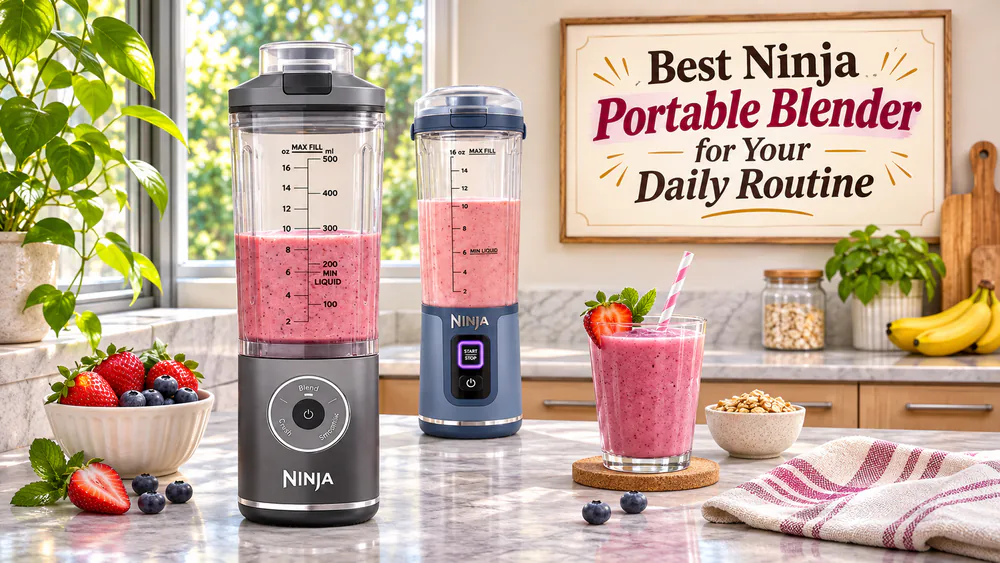
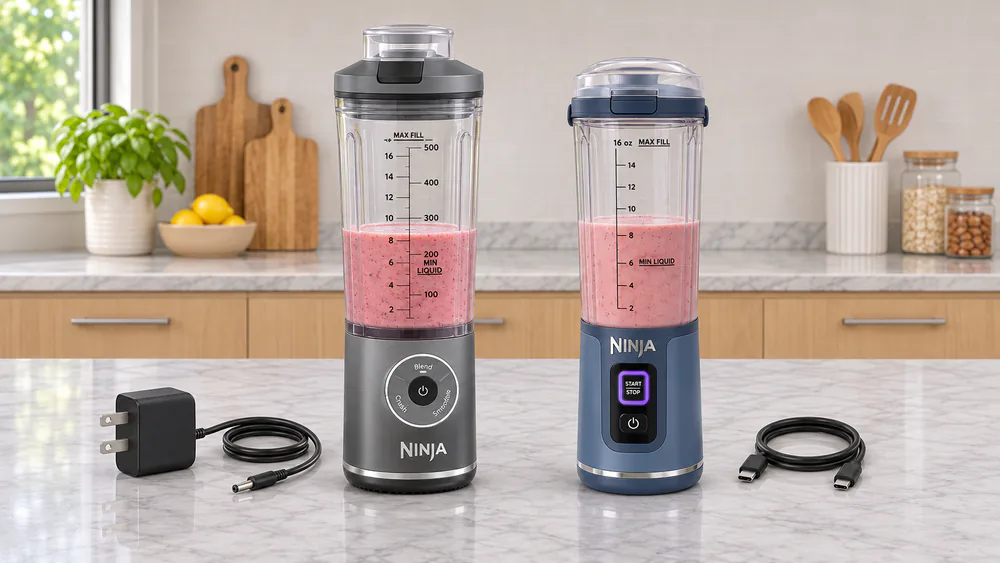
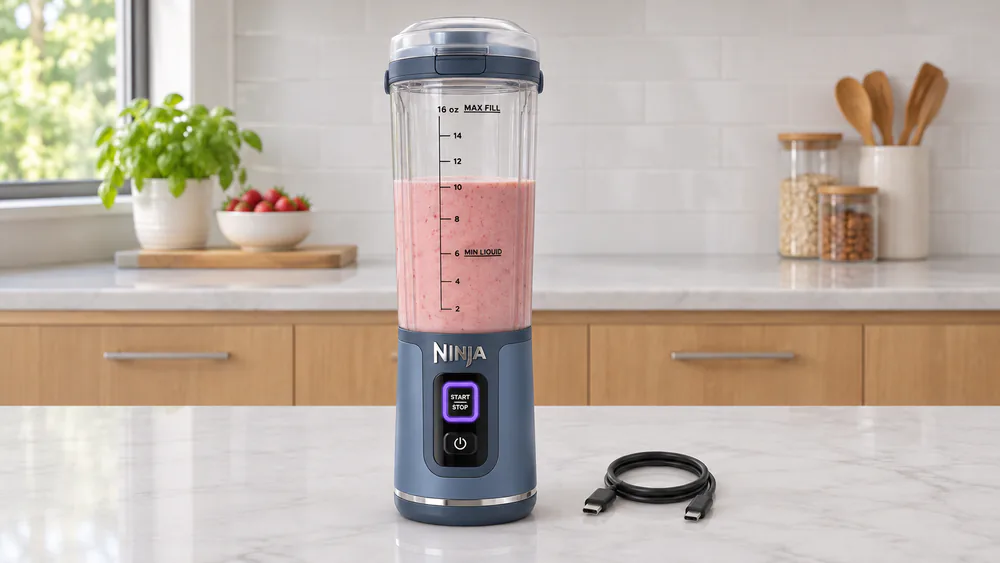
The original Blast suits people who want a compact, bottle-sized blender with USB-C charging, while the Blast Max lets them leave the motor at home. Our Ninja Blast portable blender review goes deeper on the original, but the short version is here.
Blending performance and limitations
Soft fruit and vegetables blended more readily than a hard frozen load. With frozen berries, the first 30-second cycle left clumps along the cup wall, so we ran a second cycle to clear them. A large frozen load made the Blast jam, and ice stayed chunky, so smaller portions worked better.
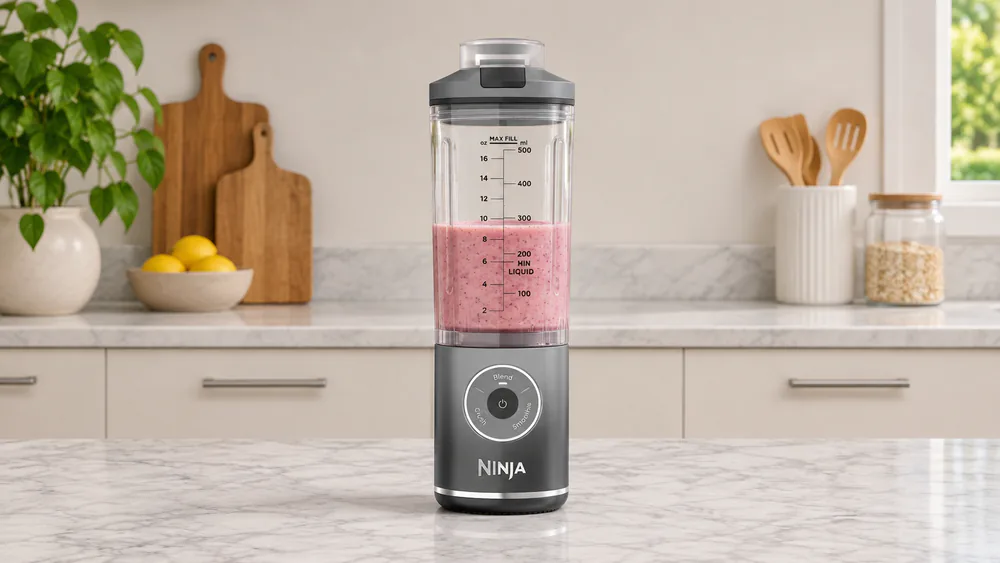
Leafy greens and fruit skins left tiny particles. Add liquid to at least the 6oz MIN LIQUID line first, and stay under the 16oz MAX FILL line on the 18oz cup. The Start/Stop button runs a 30-second cycle.
Carrying the cup, battery life, and charging
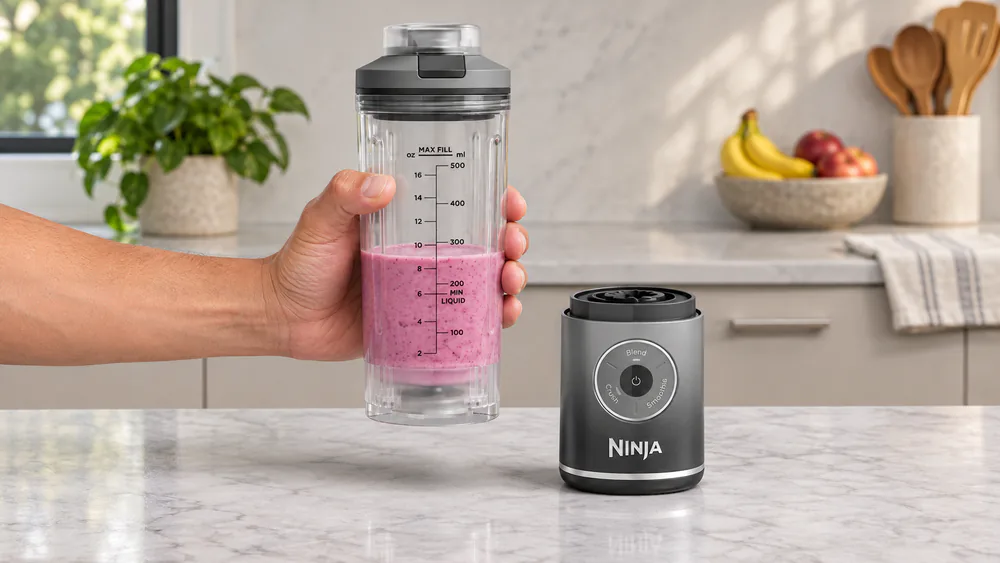
In the standard package the motor base stays attached while you carry a drink, because unscrewing the cup exposes its open bottom. Bottom caps vary by package and region, so do not count on one.
A full charge takes approximately 2 hours, and any suitable USB-C supply will do. Ninja's support FAQ allows blending while plugged in, and charging pauses during the blend. Ninja's maximum is up to 15 cycles, but finished drinks per charge can be much lower, especially with frozen fruit. When a blocked-blade warning interrupted a smoothie, we powered off and shook the cup, which cleared the temporary blockage. Short endurance cut a drink short more than once.
Reasons to choose it and reasons to skip it
Choose it for thawed smoothie fruit, milk, and protein powder, or when USB-C charging matters. Skip it if you blend frozen fruit daily. The battery cannot be replaced by the user, so contact customer service for any battery problem.