As an Amazon Associate we earn from qualifying purchases. We may earn a commission from links on this page, at no extra cost to you. Learn more.
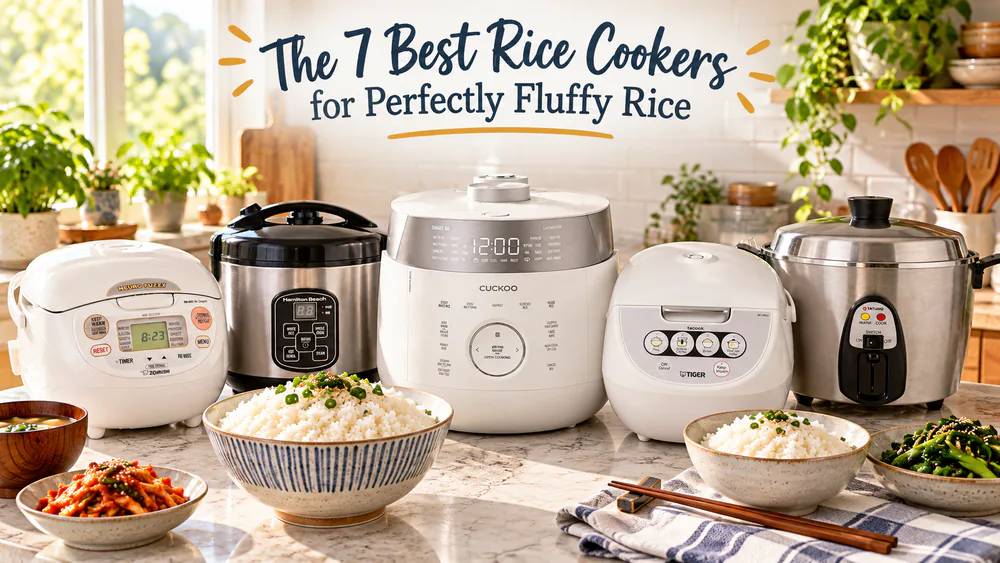
If you eat rice most weeks and still fight mushy bottoms, a scorched crust, or a pot that boils over onto the burner, the fix is almost always the machine, not your technique. A good rice cooker takes the guesswork out of the ratio and the timing, then holds the batch warm until dinner is on the table. The trick is knowing which one earns its counter space.
We put dozens of models through our test kitchen, from the fuzzy-logic Zojirushi with a cult following to a twenty-dollar Aroma mini built for one. We cooked white, brown, jasmine, and sushi rice in each, cleaned every pot by hand, and lived with the units long enough to see how coatings and switches held up. Our senior appliance tester scores these machines performance first, then durability. Below are our seven winners, a quick table, our testing method, and a buying guide.
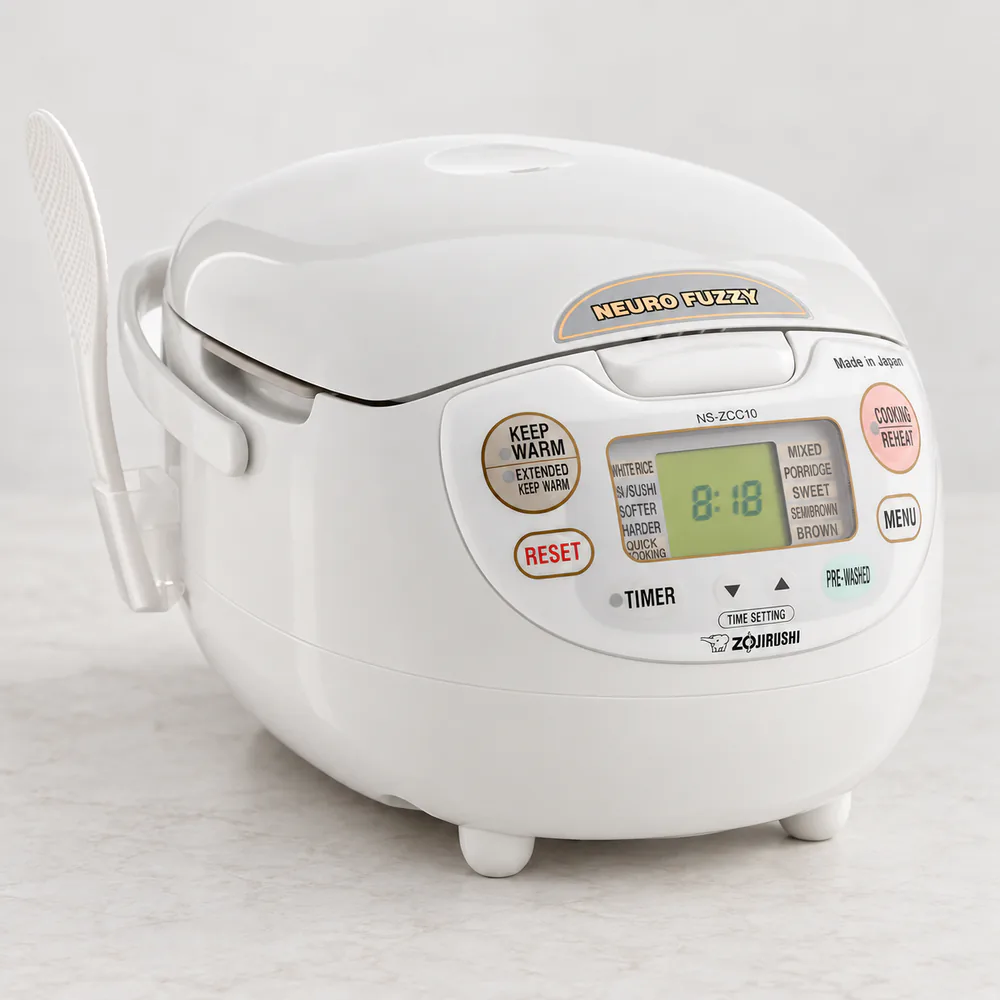
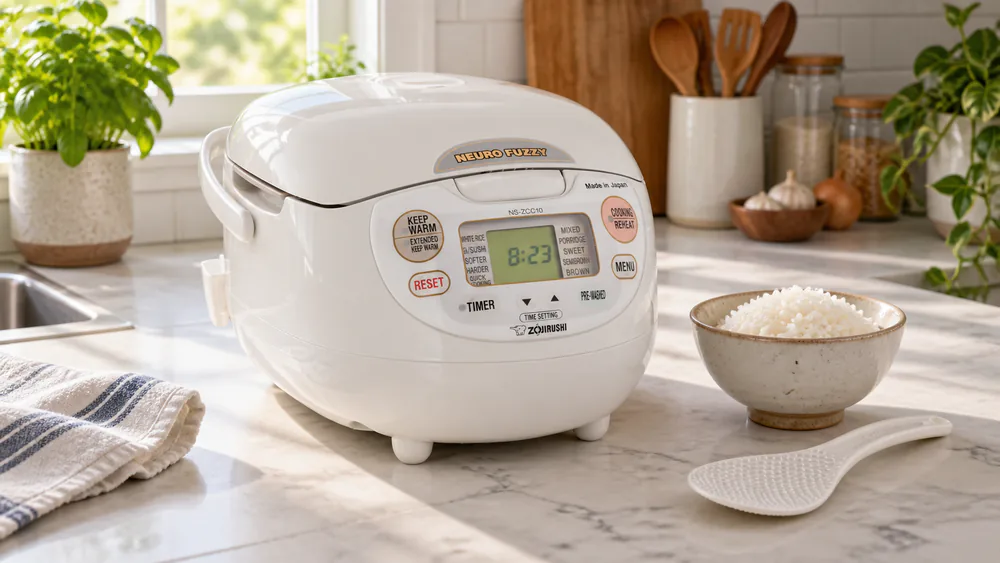
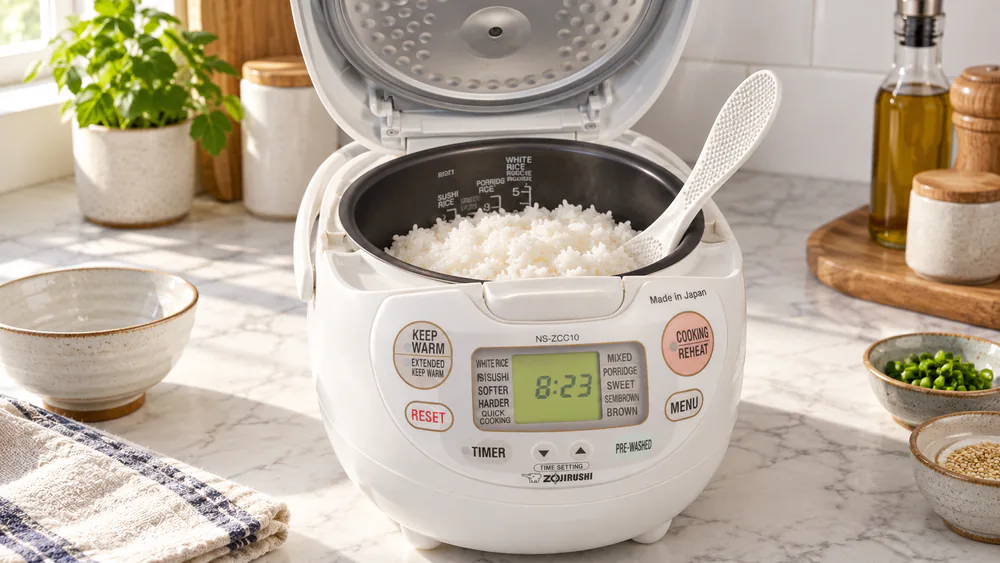
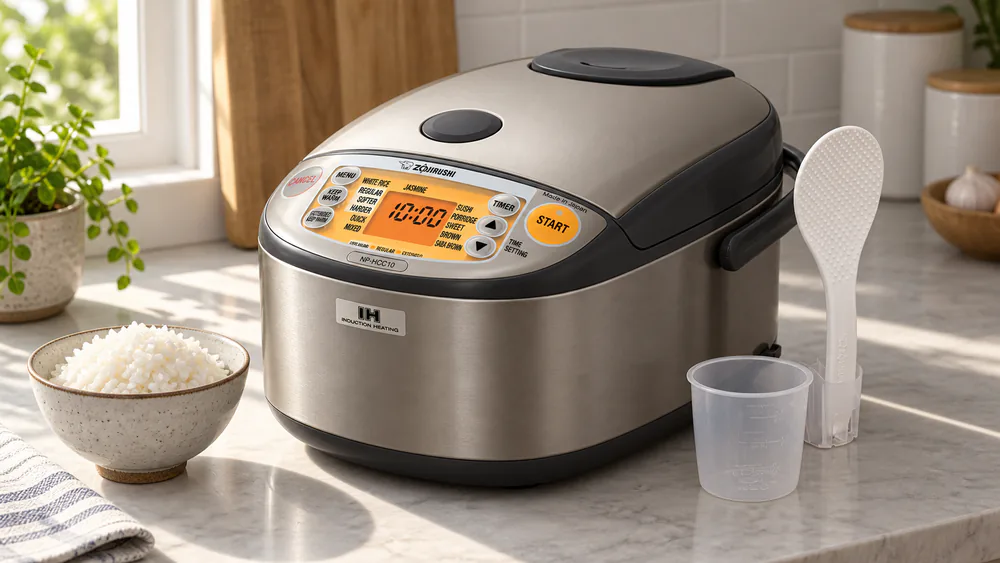
The Neuro Fuzzy is the machine we kept reaching for. Its fuzzy-logic microcomputer reads the pot and makes fine heat and timing adjustments instead of flipping a single on-off thermostat, so a batch of jasmine came out evenly cooked whether we ran it full or half empty. The spherical nonstick pan is the quiet star: after a sticky porridge cycle it wiped clean in seconds, a real step down in cleanup friction from a scorched stovetop pot. Its 5.5 cups uncooked yield about 10 cups cooked, and it kept that batch warm up to 12 hours without drying the top layer.
Most owners describe it as a long-haul machine that lasts a decade or more, though a small minority hit an early failure. The part to baby is the inner bowl, since the nonstick surface wears and dents if handled roughly. If you cook a lot of GABA or brown rice, the induction NP-HCC10 is the pricier step-up in the family, with 1,230 watts for an even more even grain at the cost of a slower cook.
Pros
Fuzzy-logic control cooks evenly, full pot or half
Spherical nonstick pan wipes clean in seconds
Keeps rice warm up to 12 hours without drying it
Cons
The nonstick inner bowl is delicate and dents easily
Around $224, a real investment
A full 10-cup batch off the fuzzy-logic white setting.
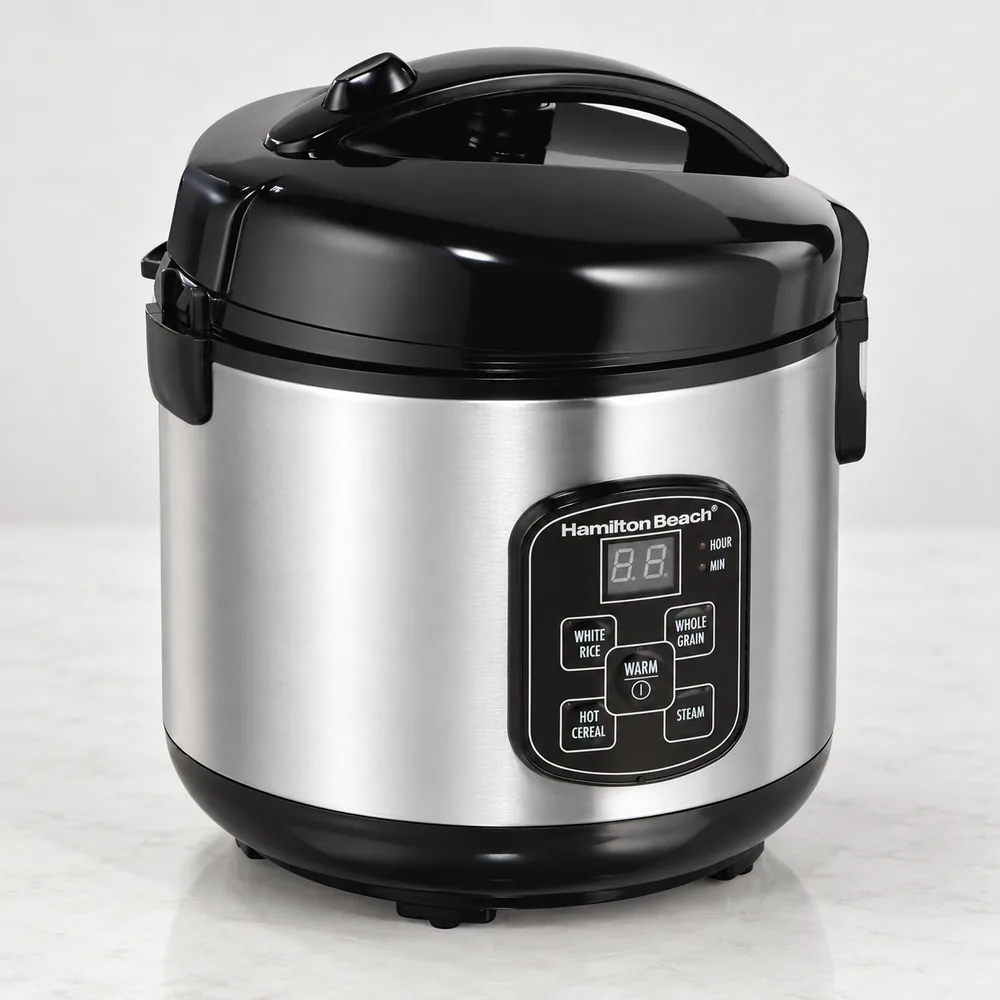
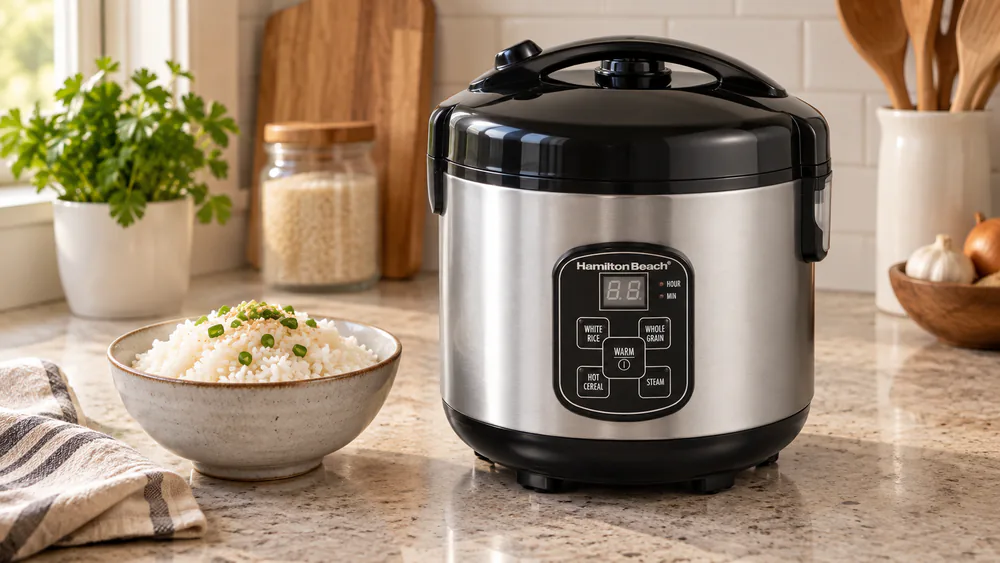
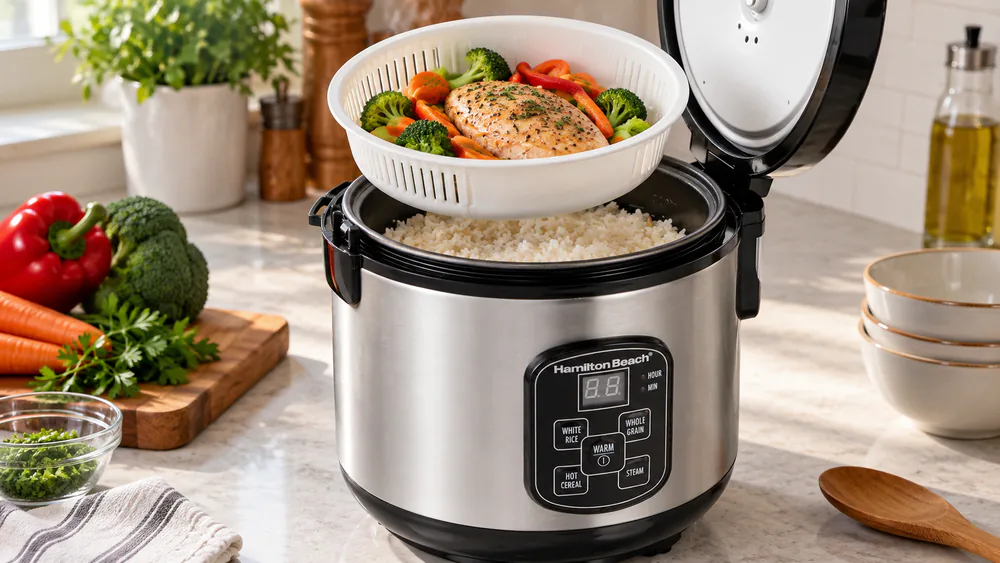
For under fifty dollars, usually in the mid-$30s, the Hamilton Beach 37518 does more than its price suggests. It cooked fluffy white rice on the one-touch setting and steamed a chicken breast in the basket at the same time, turning a side and a protein into one run. The PFAS-free ceramic nonstick pot lifts out for the dishwasher, and the glass lid plus countdown timer let us walk away without babysitting it. Its 4 cups uncooked cook up to 8 cups, though a few buyers feel the pot runs a touch smaller than the label implies.
Honesty first: this is a low-cost bet, not a lifer. Several owners report it quitting after roughly three months, the risk you accept at this price. It is a smart pick for a first apartment, or for testing whether a rice cooker earns a spot before you commit to a Zojirushi.
Pros
Steams a protein and cooks rice in the same run
PFAS-free ceramic pot is dishwasher safe
Hard to beat in the mid-$30s
Cons
Several owners report failures around three months
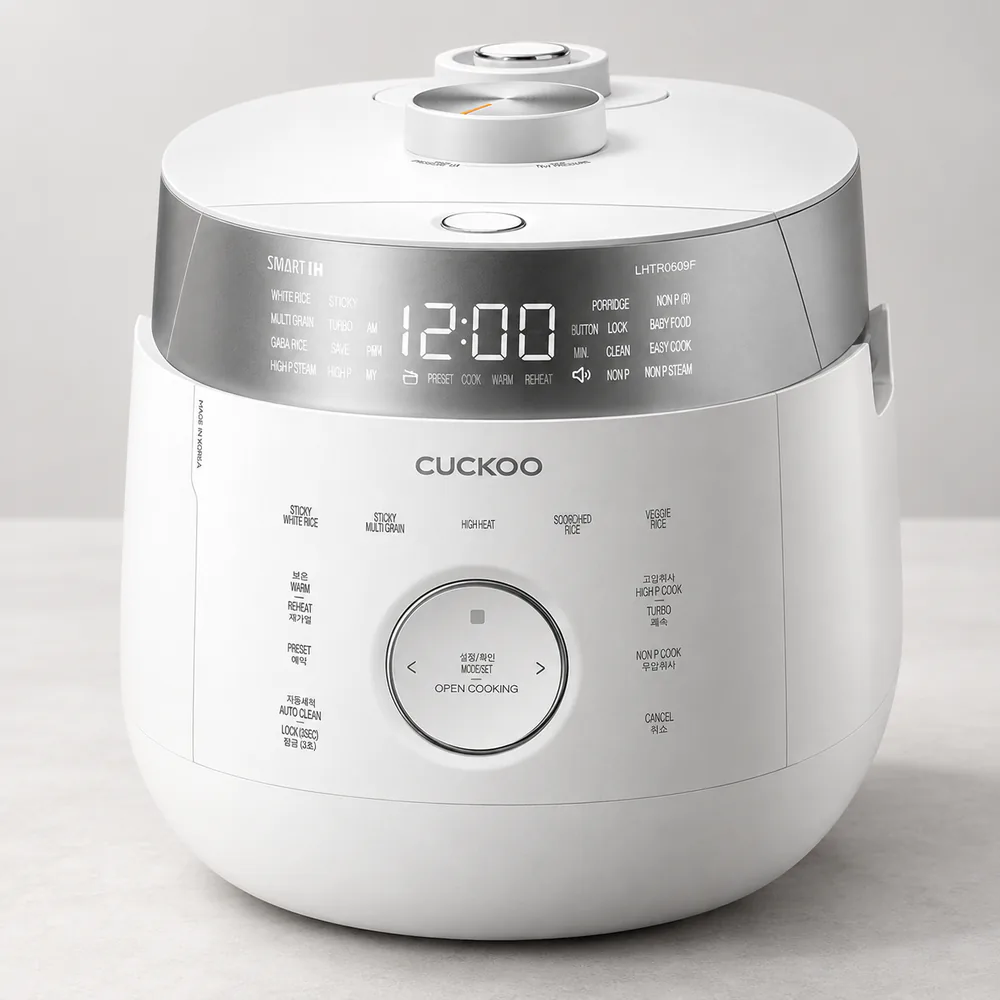
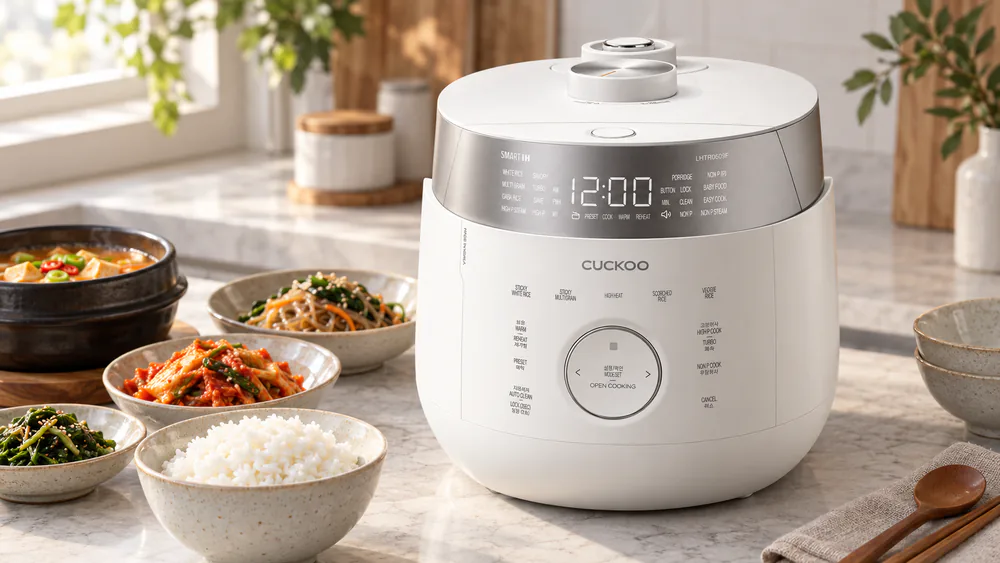
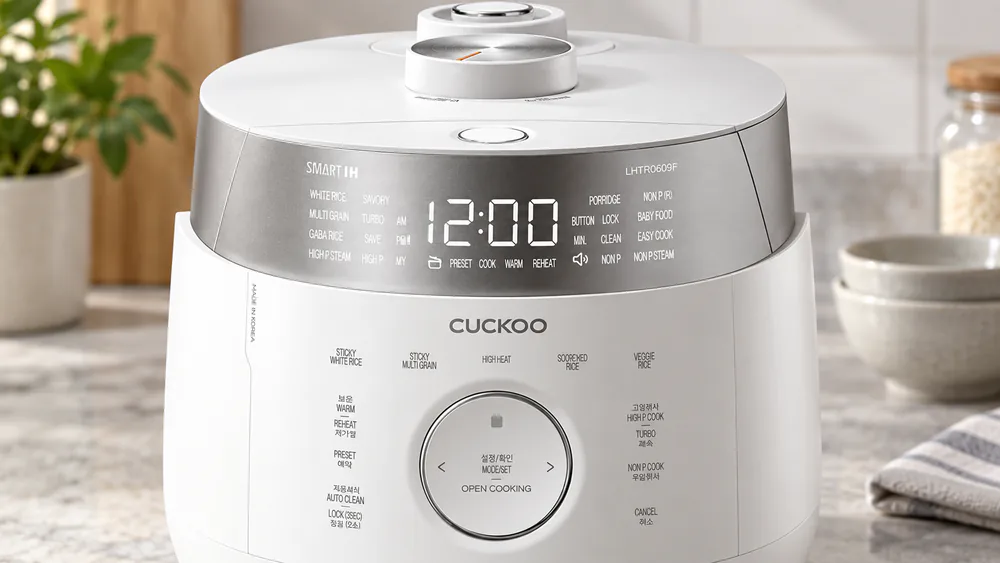
The Cuckoo is the machine to buy when rice is the center of the meal, not a side. Its twin-pressure system lets you choose pressure or non-pressure cooking, and the induction heat wraps the whole inner pot, so the batches we ran came out with a texture we would call restaurant grade. With 23 operating modes covering GABA, scorched rice, porridge, baby food, and steam, it is the most versatile cooker here. It holds 6 cups uncooked for 12 cups cooked and fed two of us in about thirty minutes.
Two things to know. It is loud: the steam release during the pressure stage is closer to a stovetop pressure cooker than the quiet operation some listings imply. And at this price the failure reports sting more, with several owners seeing theirs break down within a few years. Pricing swings widely by retailer, from around $300 to high triple digits, so shop it around.
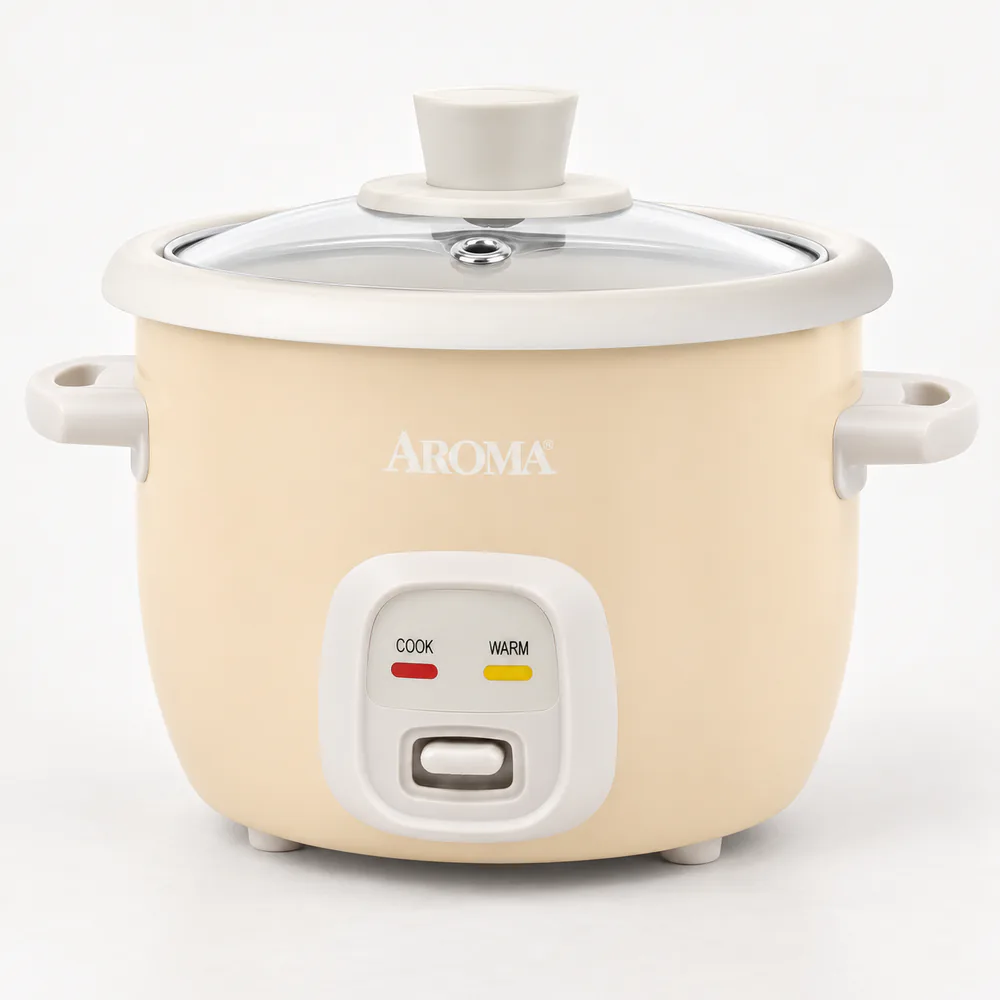
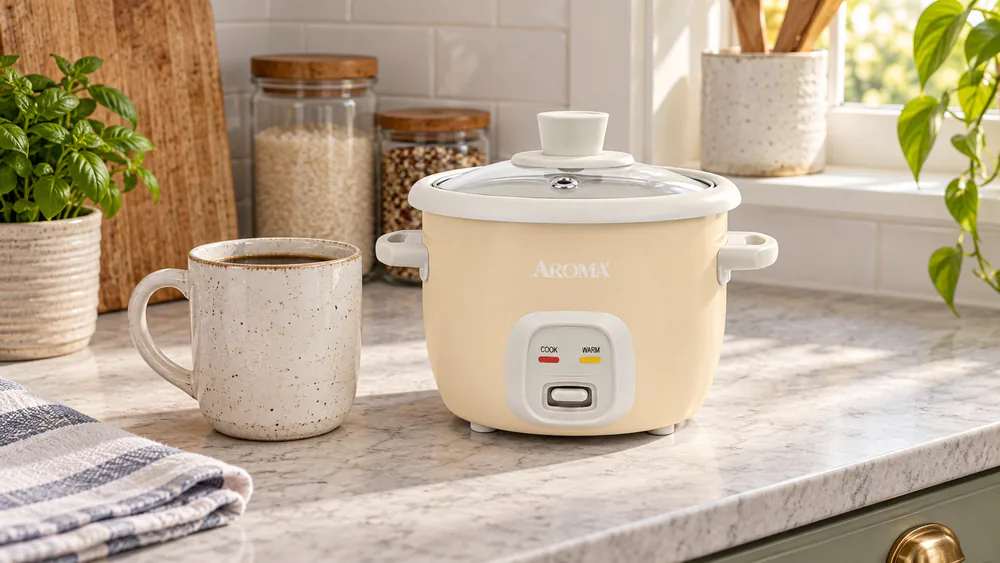
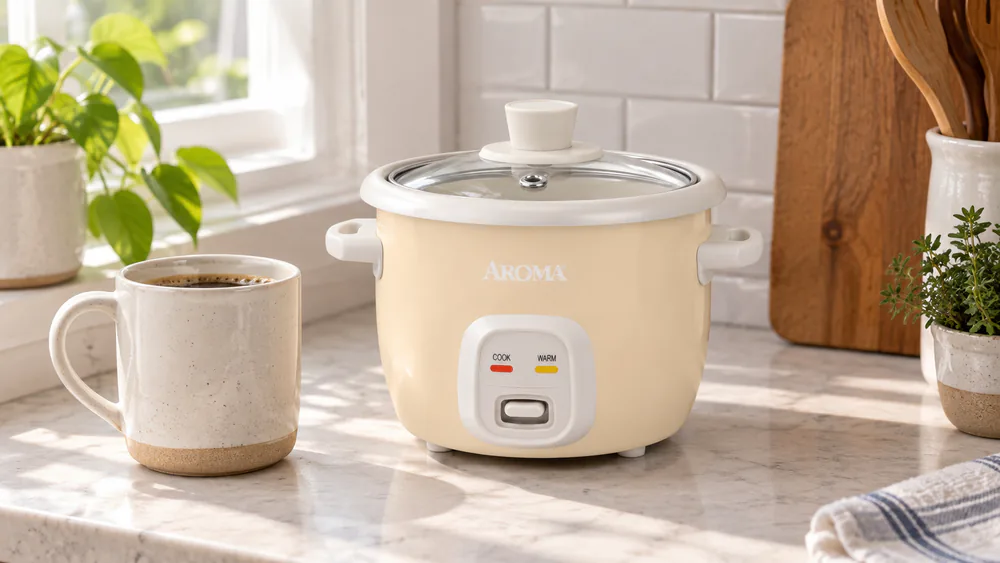
At around twenty-one dollars and the size of a large mug, the Aroma Mini is the cooker for a dorm, an RV, or a counter with no room to spare. It is genuinely counter-friendly and nailed one to two servings with a single one-touch button that flips itself from cook to keep-warm. The CoreCoat ceramic nonstick pot is made without PFAS, and the same pot handles oatmeal and small soups, so it earns its tiny footprint in more than one meal.
The honest limit is capacity. Its ceiling is 2 cups uncooked, or 4 cups cooked, and it is easy to overshoot that if you expect family volume. For a solo cook or a couple, it is the most sensible small-batch machine we tested.
Pros
Tiny footprint fits the smallest kitchens
PFAS-free CoreCoat ceramic pot
Doubles as an oatmeal and soup pot
Cons
4-cup cooked ceiling is easy to overshoot
Too small for family-size batches
The mini takes up about as much room as a coffee maker.
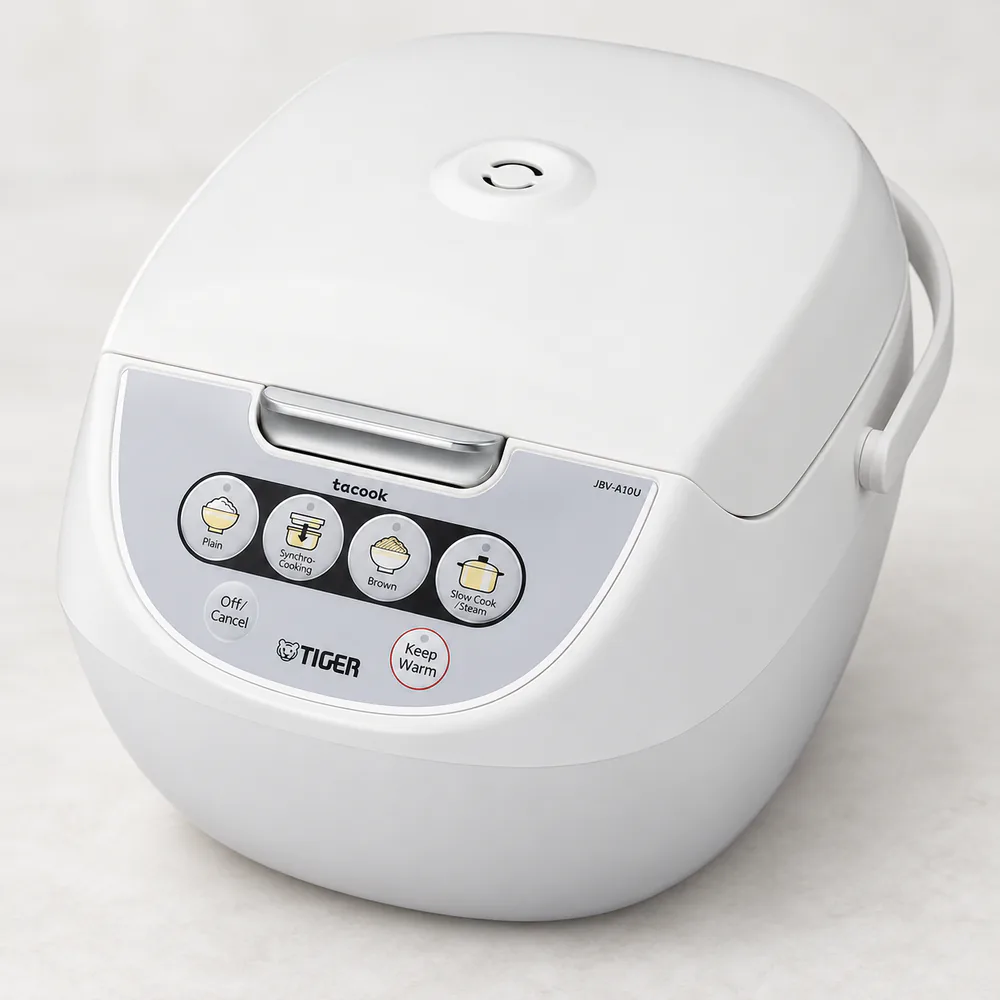
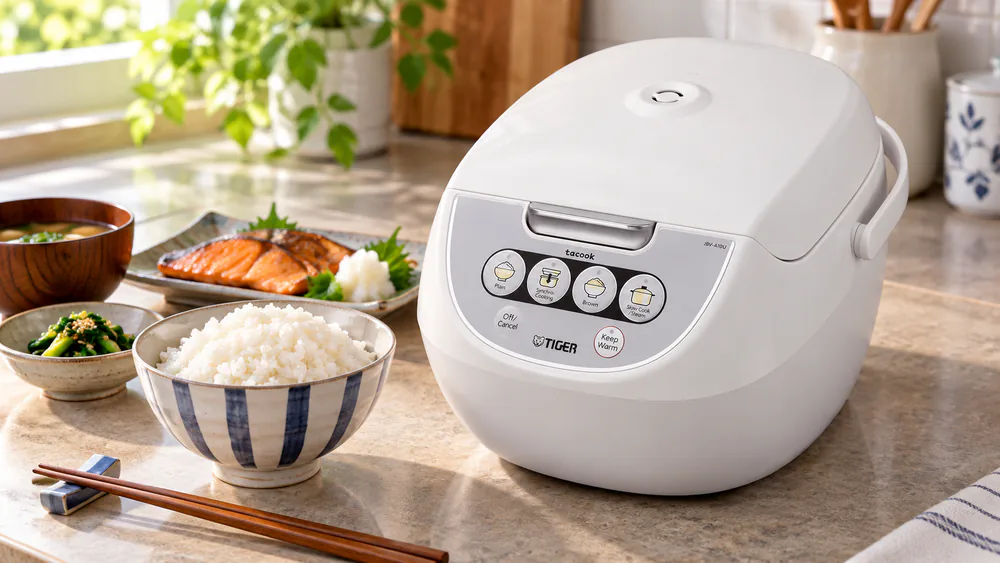
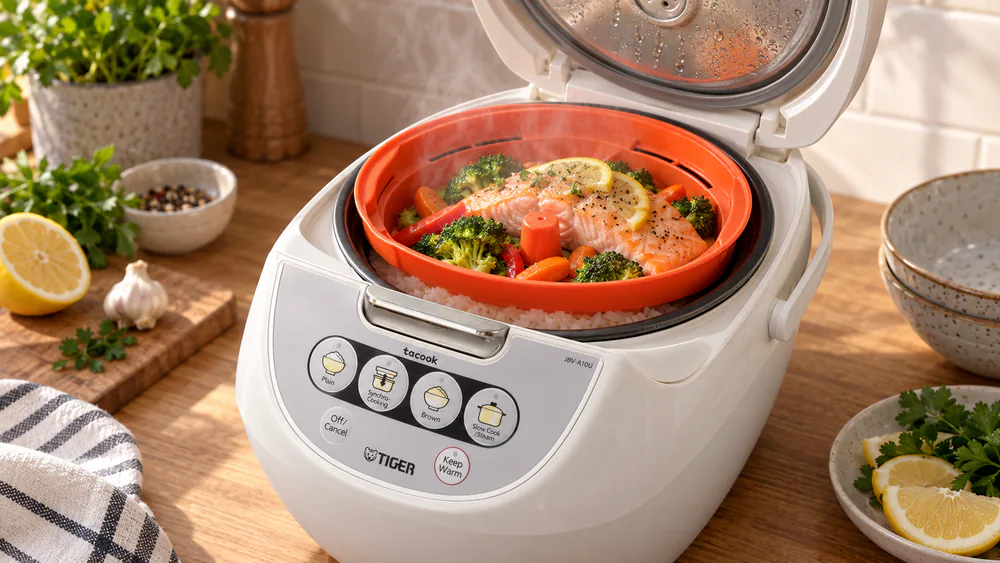
The Tiger earns the sushi nod because its microcomputer control turns out the tacky, uniform grain that sushi rice demands, and it does it fast. The standout is the tacook synchronized tray, which let us steam fish or vegetables above the rice in one run, a weeknight time-saver that also cooked a full batch quicker than several rivals. It holds 5.5 cups uncooked for about 11 cups cooked, runs four settings for plain rice, brown rice, slow cook, and steam, and keeps a batch warm up to 12 hours.
The 1.0mm aluminum pot wears a fluorine nonstick coating that holds up well over dozens of cycles with soft utensils. Owners who scrub hard or reach for metal report chipping, and a minority saw the unit fail inside a year. At around $110 and a light 5.7 lbs, it is easy to store and easy to love if sushi night is a regular thing.
Pros
Micom control nails sticky, uniform sushi rice
Tacook tray steams a side above the rice
Light and easy to store at 5.7 lbs
Cons
Fluorine coating chips if scrubbed or used with metal
A minority report failures inside the first year
The synchronized tray turns one cycle into a full meal.
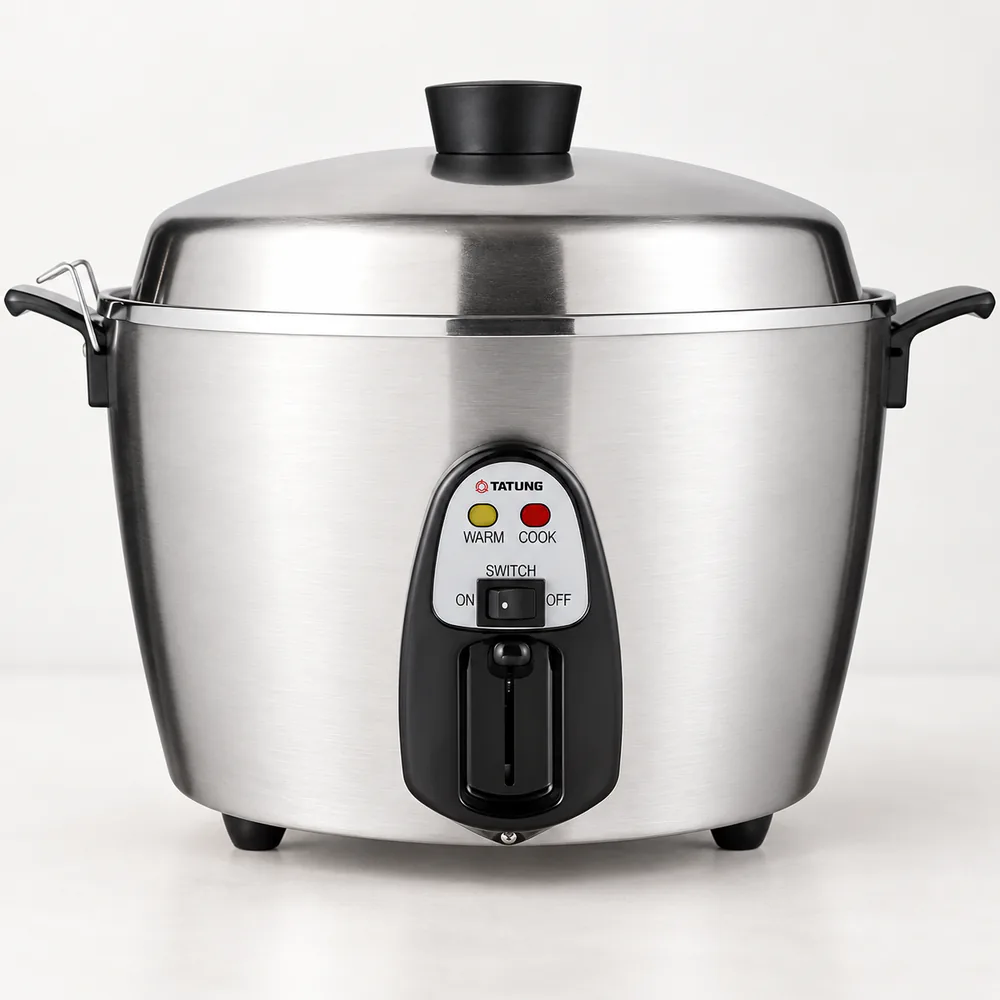
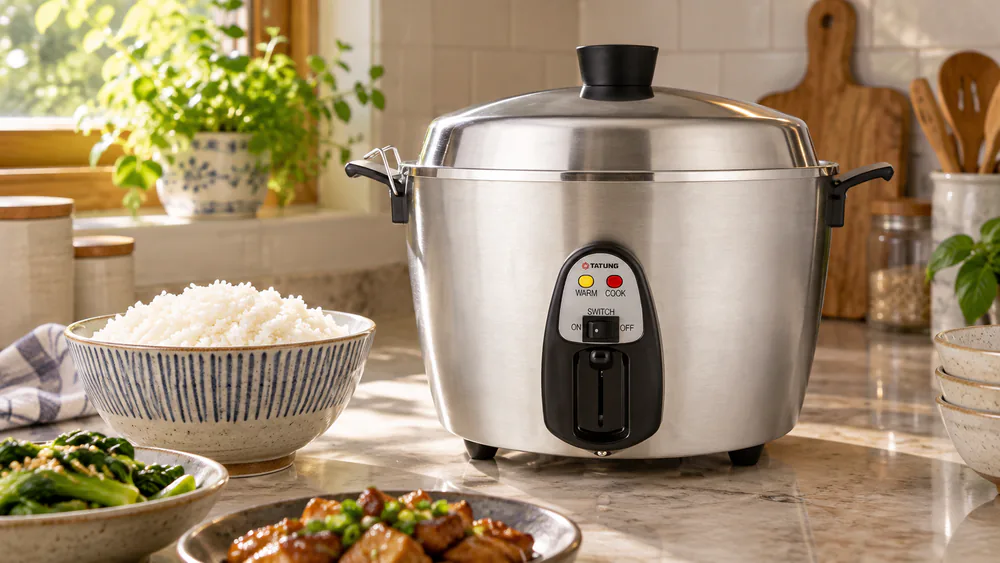
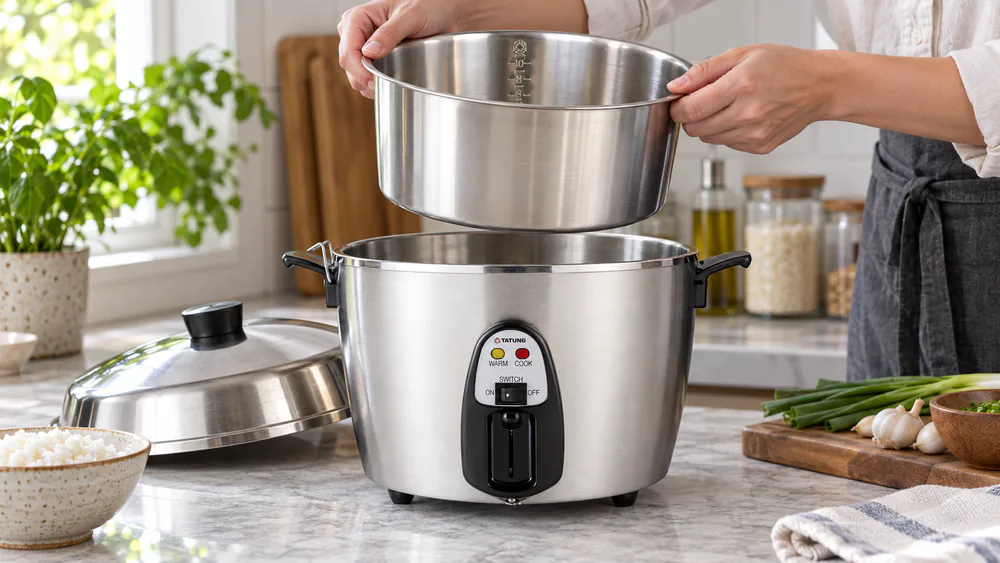
If you want to skip nonstick entirely, the Tatung is the answer. Its inner and outer pots are 18/8 food-grade 304 stainless steel with no coating at all, so there is no nonstick layer to hold PFAS and nothing to flake into your food. It uses indirect heat, where steam from an outer pot surrounds the inner one, and that gentle method doubles neatly as a steamer and stew pot. Its huge 11 cups uncooked yields a party-sized 22 cups cooked.
The tradeoff is cleanup. Rice sticks more to bare stainless than to a nonstick bowl, so a stuck batch wants a soak. A few owners hit an early dud, but the all-stainless build earns a cult following, with survivors running a decade and beyond. It uses a simple keep-warm on-off switch rather than a smart timer.
Pros
All 304 stainless build with no coating to flake
Doubles as a steamer and stew pot
Reputation for lasting a decade or more
Cons
Rice sticks to bare stainless, so cleanup needs a soak
Basic on-off keep-warm, no smart presets
No coating means nothing to flake, but rice sticks more.
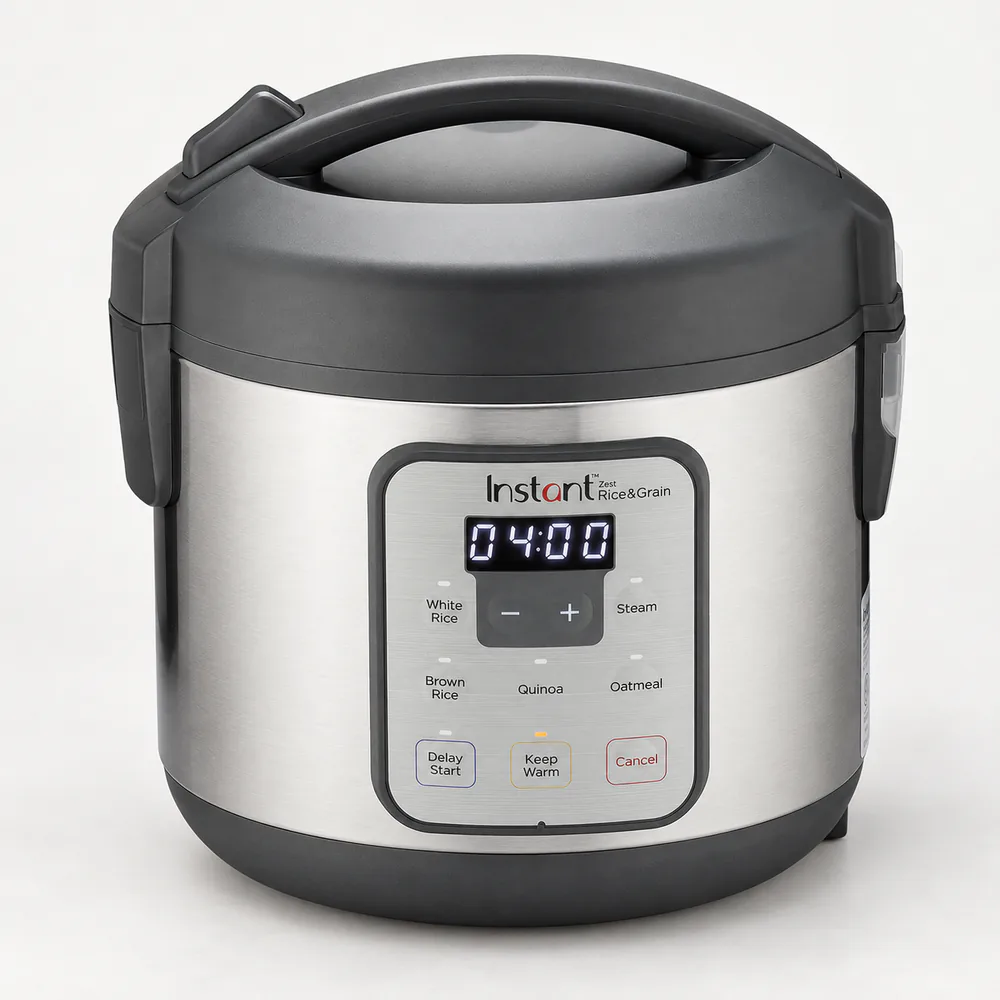
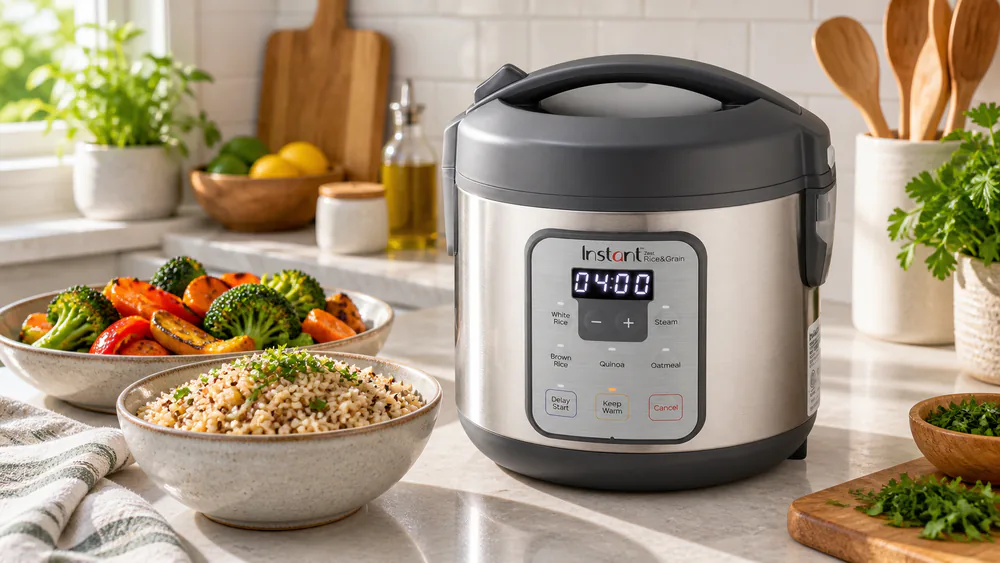
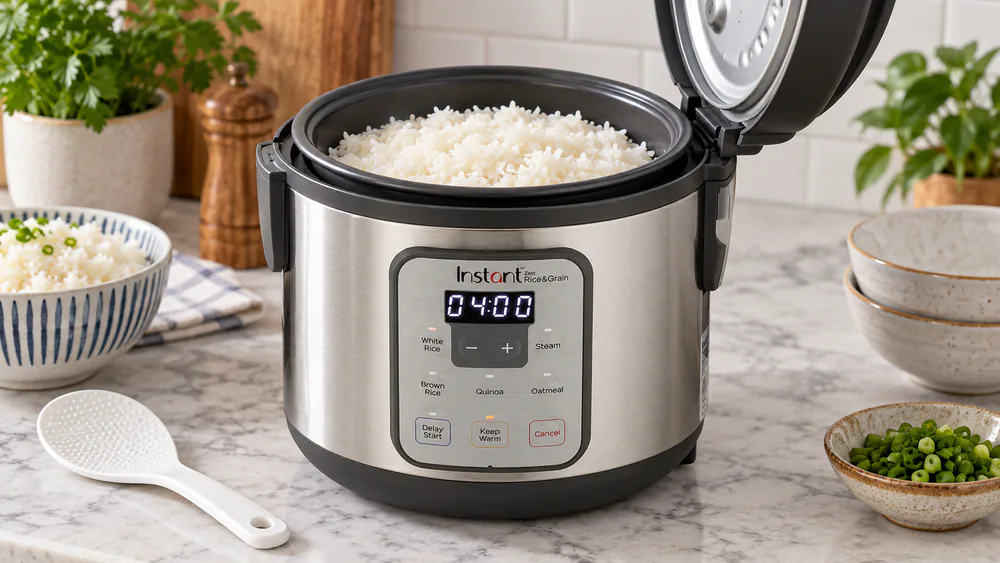
The Instant Zest is the one to grab when speed matters most. It turned out fluffy white and brown rice quickly and, thanks to its dishwasher-safe ceramic-coated pot and steamer tray, was one of the easiest units here to clean. It runs four smart programs for rice, oatmeal, and grains, holds 4 cups uncooked for 8 cups cooked, doubles as a warmer, and packs over ten safety features including overheat protection and a safe-locking lid.
Set your expectations on the presets. They need a batch or two of tweaking before they land your rice exactly right, and several owners report the unit dying within three months, so it lands as a value bet. Its small water-collection reservoir can overflow, so give it a clear spot on the counter.
Pros
Cooks white and brown rice quickly
Dishwasher-safe pot and steamer tray
Over ten built-in safety features
Cons
Presets need a batch or two of tweaking
Some owners report failures within three months
Fast and easy to clean, once you dial in the presets.
How We Tested Rice Cookers
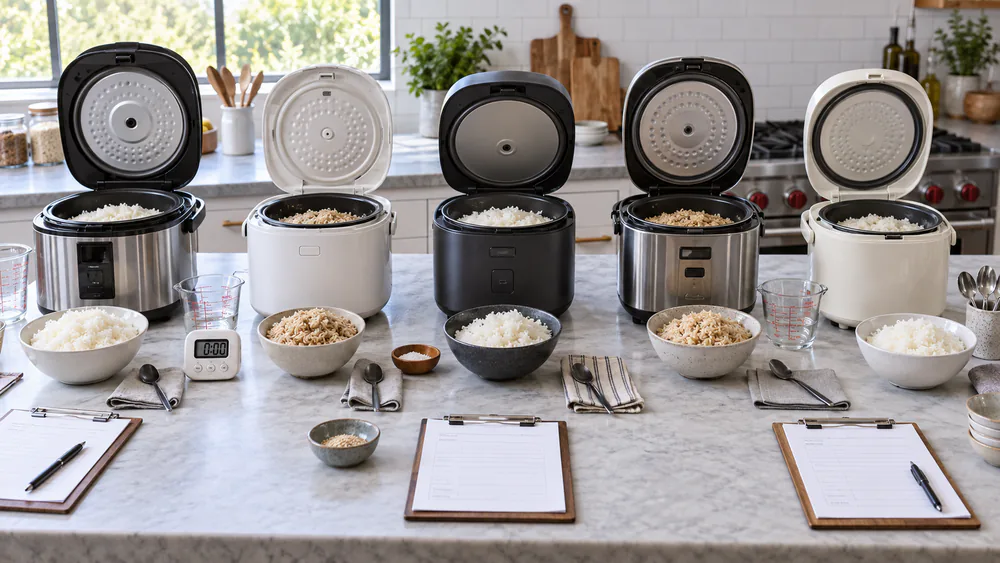
We bought and cooked with every machine rather than working from spec sheets. Each cooker ran multiple batches of white, brown, jasmine, and sushi rice so we could judge whether the grain cooked evenly top to bottom, whether the bottom scorched, and how the keep-warm cycle treated a batch left sitting for hours.
Because our tester scores machines on performance and durability first, cleanup and longevity carried as much weight as cooking. We hand-washed every inner pot to feel how much friction each coating created, ran the dishwasher-safe pots through real cycles, and noted how loud each unit was. We also tracked which parts wear first and how long owners report their units lasting, so our ratings reflect the second year of ownership, not just the first meal.
Tip. Rinse white rice until the water runs mostly clear before cooking. It removes surface starch, and every cooker here turned out cleaner, less gummy grains once we did.
Every cooker ran the same battery of batches.
Why Trust Mr. Kitchen Adviser
Our reviews are led by a senior appliance tester who spent eight years as a certified appliance repair technician before he started writing about the machines he used to fix. That background is why our reviews tell you how loud a unit runs, how a coating holds up after months of cycles, and whether you can still get a replacement part two years down the line.
We buy the gear ourselves and cook real meals in it. We do not repeat marketing claims we could not reproduce; when a listing implied a pressure cooker ran quietly and it did not, we said so. Every award reflects hands-on cooking, hand cleanup, and a hard look at how each machine ages.
What to Look For in a Rice Cooker
The right cooker depends on how much rice you make, how you like it cooked, and how much you want to fuss with it. Here are the factors that changed our rankings.
Capacity
Buy for the batch you cook most often, not the biggest one you can imagine. A single cook or a couple is well served by a 4-cup-cooked mini like the Aroma; a family of four wants 8 to 12 cups cooked, where the Hamilton Beach, Cuckoo, and Instant Zest sit. Only reach for a 22-cup machine like the Tatung if you cook for a crowd, because a huge pot cooks a small batch less evenly.
Cooking Technology (Micom, Induction, Pressure)
This is the biggest divide between a cheap cooker and an expensive one. A basic cooker uses a single on-off thermostat: heat until the water is gone, then switch to warm. A microcomputer, or micom, cooker uses a chip and a temperature sensor to make fine adjustments to heat and timing, which is how the Zojirushi and Tiger cook so evenly across grain types. Induction heats the whole pot electromagnetically for an even more uniform result, and pressure cooking, like the Cuckoo's, drives water into the grain fast for a stickier texture. More technology means better rice, but a higher price and, in the pressure models, more noise.
The jump from a plain on-off cooker to a fuzzy-logic one is the single biggest upgrade in rice quality you can buy.
Presets and Functions
Look at the presets you will actually use. Nearly every cooker offers white rice and an automatic switch to keep warm, but brown, sushi, porridge, and GABA settings matter if you cook those often. A synchronized steaming tray, like the Tiger's tacook or the Hamilton Beach basket, cooks a protein or vegetables above the rice in one run, the feature we used most on weeknights.
Note. Keep-warm is not the same on every machine. The Zojirushi and Tiger hold a batch up to 12 hours without drying it, while a basic cooker's warm setting can crust the top layer after an hour or two.
Ease of Use and Cleaning
The pot you clean is the part you grow to love or hate. Nonstick pots wipe clean in seconds, which is why the Zojirushi's spherical pan is such a pleasure, but the coating eventually wears. Bare stainless, like the Tatung's, never flakes and lasts for years, but rice sticks and cleanup wants a soak. Here is how the two pot styles weigh out:
Pros
Nonstick and ceramic pots release rice and wipe clean fast
Stainless never flakes and outlasts any coating
Dishwasher-safe pots skip the scrub entirely
Cons
Nonstick coatings wear and dent over years of use
Bare stainless sticks and needs a soak before washing
Material and PFAS / Nonstick Safety
Nonstick coatings are convenient, but some shoppers want to avoid them because regulators document potential health effects associated with PFAS exposure. Two paths avoid the concern. The first is a coating made without PFAS, like the ceramic pots on the Hamilton Beach and Aroma. The second is skipping coatings entirely with an all-stainless cooker like the Tatung, where there is no nonstick layer to contain PFAS. If a coating-free pot is a priority, the tradeoff is that bare stainless takes more effort to clean.
Other Rice Cookers We Tested
The step-up Zojirushi below suits anyone who cooks a lot of brown or GABA rice and wants the most even texture we found, at a higher price and a slower cook.
8
Zojirushi NP-HCC10 Induction Heating
4.7
The induction step-up to our top pick, with 1,230 watts for the most even brown and GABA rice we cooked, at a premium price and a slower cycle.
A few habits keep any cooker turning out perfect rice every time. Rinse your rice first, measure with the cup that came in the box rather than a standard measuring cup, and level the water to the pot's marked line. Let a finished batch rest with the lid closed for ten minutes before you fluff it; the steam finishes the outer grains and keeps them from clumping.
For care, use only the soft spatula or a wooden spoon on any coated pot, since metal is what chips a coating. On the Zojirushi and Tiger, baby the inner bowl, because it is the part that wears first. Wipe the lid and steam vent after each use so starch does not build up.
Warning. Never run a rice cooker with the inner pot missing or with water between the pot and the heating plate. It can damage the element and is a common cause of an early failure.
Frequently Asked Questions
Is a rice cooker worth it?
If you cook rice more than once a week, yes. A cooker turns out evenly cooked grains without babysitting, frees up a burner, and keeps the batch warm until dinner. Even a budget model does this more reliably than a pot on the stove.
What is the difference between a cheap and an expensive rice cooker?
Mostly the heating technology. A cheap cooker uses a single on-off thermostat, while pricier micom, induction, and pressure models adjust heat and timing throughout the cook for more even rice. You also pay for durability, more presets, and longer keep-warm.
Can you cook other grains in a rice cooker?
Yes. Every cooker here handles brown rice, and most cook quinoa, oatmeal, and other grains with the right water ratio and setting. Machines with dedicated grain or porridge presets, like the Cuckoo and Instant Zest, make it easier.
Why does my rice cooker use a smaller cup than my measuring cup?
Rice cooker cups are about 180 milliliters, smaller than a standard 240-milliliter US cup. Use the cup that came with the machine and fill water to the matching pot line, and the ratio comes out right every time.
Are nonstick inner pots safe?
Intact modern coatings are generally considered safe for cooking, but if you want to avoid PFAS entirely, choose a PFAS-free ceramic pot like the Hamilton Beach or Aroma, or an all-stainless cooker like the Tatung.
Final Verdict
For most kitchens, the Zojirushi Neuro Fuzzy is the cooker we would buy without hesitation: it cooks every grain evenly, cleans up in seconds, and tends to last for years. If money is tight, the Hamilton Beach delivers surprisingly good rice as long as you treat it as a low-cost bet. Cooking for a crowd points to the Cuckoo, avoiding coatings entirely points to the Tatung, and a tiny kitchen is happiest with the Aroma Mini.