Helping you create a kitchen you love.

Kitchen Appliances

Rice Robot Cooker Reviews: Honest Pros, Cons, and Real Results

As an Amazon Associate we earn from qualifying purchases. We may earn a commission from links on this page, at no extra cost to you. Learn more.

Rice Robot Cooker Reviews: Honest Pros, Cons, and Real Results

We ran the Rice Robot through two weeks of nightly dinners before forming an opinion, because a one-touch gadget this cheap tends to look either brilliant or disposable. The short version is that it delivers on plain white rice and stumbles when you push it further. Reliability is the biggest question mark: the housing feels light and low-cost in the hand, and owner reports of early failure are common enough that we watched for them closely.

What Is the Rice Robot Cooker?

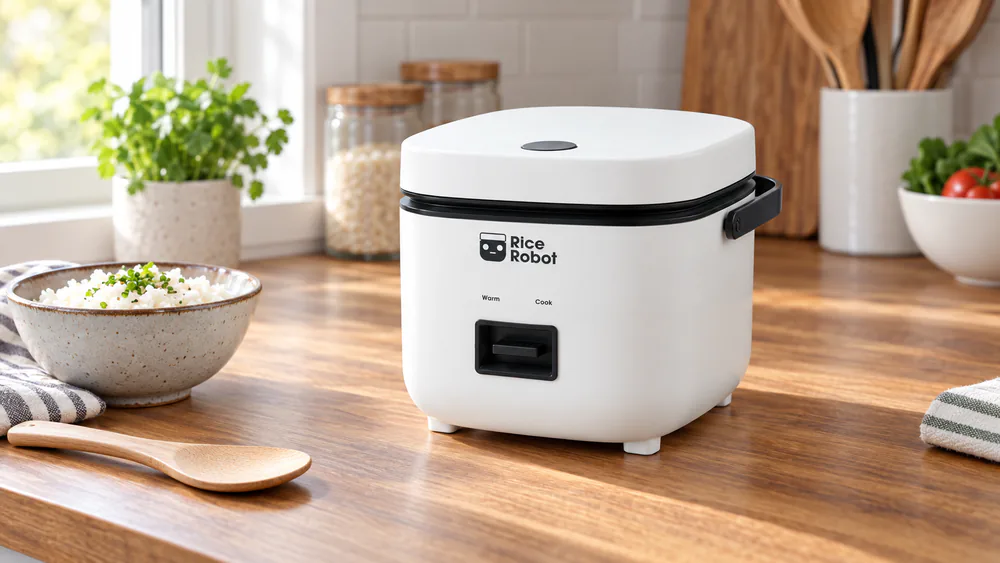
The Rice Robot is a compact personal rice cooker sold under the As Seen on TV banner, aimed at single cooks, couples, dorms, and campers rather than families. It uses a simple click-and-cook button, an automatic keep-warm mode, and an auto shut-off, so there are no menus or timers to learn. You add rice and water, press down, and walk away.

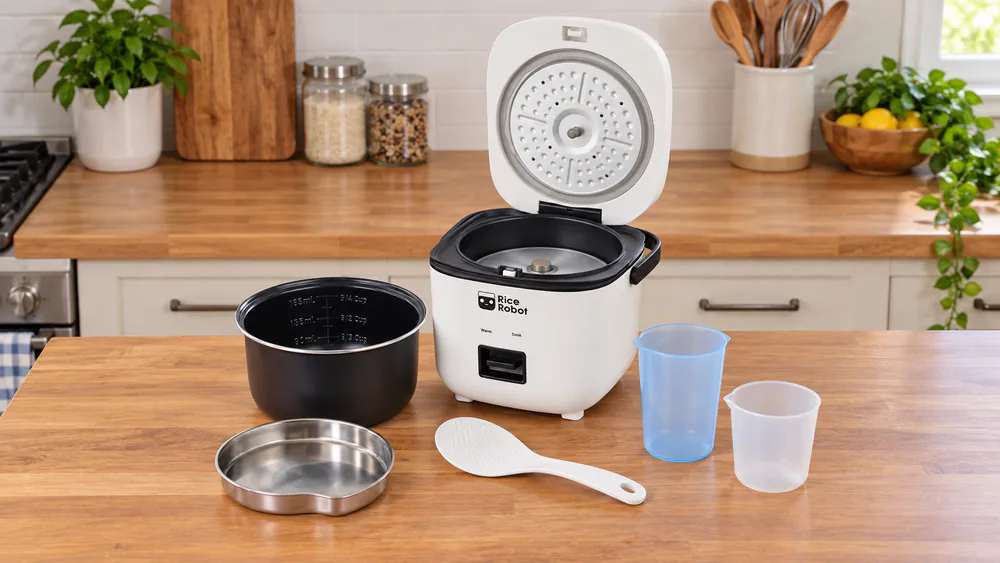
The box is fuller than the price suggests: a stainless steel steamer tray, two color-coded measuring cups, a serving spoon, and a recipe book with 60 recipes. The inner pot is a ceramic PFAS-free nonstick listed as dishwasher safe. The cooker is widely attributed to EMSON, though the primary listing does not print the name, so we treat that as likely rather than certain.

Rice Robot Personal Rice Cooker
1

Rice Robot Personal Rice Cooker

Best for one or two people
Check Price on Amazon
3.6/5

After two weeks of nightly cooking, the Rice Robot earned its spot for one clear reason: plain white rice came out fluffy and well-textured, with separate grains that lived up to the perfect rice promise in most batches. Cleanup was just as easy, since the ceramic pot wiped clean with a quick swipe. What holds it back is a mixed reliability record and a cheap, light build, so we score it a solid budget pick rather than a keeper for life.

  • One-touch cook button with automatic keep-warm and auto shut-off
  • Ceramic PFAS-free nonstick pot wipes clean or goes in the dishwasher
  • Stainless steel steamer tray handles vegetables well
  • Small footprint stashes in a cupboard or rides along in an RV

Specifications

Capacity
about 4 cups cooked
Power
200W
Dimensions
7x7x7.8 in
Coating
PFAS-free ceramic nonstick
Accessories
steamer tray, 2 measuring cups, spoon, recipe book

Key Specifications at a Glance

Rice Robot Personal Rice Cooker key specs
Brand and modelRice Robot (attributed to EMSON), model 2524
Capacity1 quart pot, marketed as 4 cups cooked
Dimensions7x7x7.8 in
Wattage200W
CoatingPFAS-free ceramic nonstick, dishwasher safe
List price$39.95

How We Tested the Rice Robot

We cooked with the Rice Robot every day for two weeks, running white rice, brown rice, oatmeal, and steamed vegetables, and scored it on cooking results, cleanup, noise, and build quality. We bought the unit ourselves, the way a shopper would. Because reliability is the loudest question here, we paid close attention to how the cooker felt and held up in daily handling. The housing feels light and low-cost, and the thin aluminum lid disc is the kind of part that could crack under rough handling, which lines up with what worried owners flag most.

The Rice Robot ceramic nonstick inner pot lifted out beside its stainless steel steamer tray and two color-coded measuring cups on a kitchen counter.
The ceramic pot, steamer tray, and color-coded cups that ship in the box.

Cooking Performance and Rice Quality

Plain white rice is where the Rice Robot shines. Batch after batch, it turned out fluffy, well-separated grains that earned the perfect rice label, and the keep-warm mode held them at temperature without drying into a crust. Push past plain rice, though, and results wobble: thicker recipes could turn clumpy or gummy, soft enough to mash into paste. Cook time is inconsistent too. Our white rice took roughly 29 minutes in one run, while lighter loads finished much faster, and brown rice ran long at around 1 hour in a single test.

Steaming Tray and Versatility

The stainless steamer tray adds welcome range. We steamed broccoli over a batch of rice with no real complaints, and stacking the tray let us cook a side and a starch at once. Watch overfilling, though: the cooker can boil over when you crowd the pot, and water can pool near the plug area, a safety worry for at least one owner.

Cleanup and the PFAS-Free Nonstick Pot

Cleanup is the Rice Robot's quiet strength. The ceramic pot wipes clean with a quick swipe or goes in the dishwasher, and the lid disc with its rubber gasket pops off for washing. Across two weeks of daily rice we never had to soak or scrub. The pot is marketed as PFAS-free nonstick, a claim we can report but not independently confirm, since we found no third-party lab testing behind it. If coating chemistry matters to you, it helps to understand what PFAS are and why coatings matter before you shop.


Tip. Rinse the ceramic pot and pop off the lid disc right after serving. It wipes clean easily, but dried starch near the gasket gets stubborn if you leave it overnight.

Pros and Cons of the Rice Robot

Two weeks of daily use left a clear ledger. The Rice Robot does the simple things well and cheaply, and asks you to accept a light build and uneven reliability in return.

What We Liked

The appeal is how little the Rice Robot asks of you. There is nothing to program, the tiny footprint made it painless to pack for a weekend away, and the steamer tray meant a starch and a side could cook at once, a trick most rivals this size skip.

What Fell Short

The build feels light, thicker recipes came out gummy, and there is no beep when rice is done. It just switches the front light from cook to warm, so you have to glance over to know it finished.

Pros

  • Fluffy, well-textured plain white rice in most batches
  • Ceramic pot wipes clean fast and is dishwasher safe
  • Compact and light, easy to store or take camping
  • Generous box: steamer tray, cups, spoon, and 60-recipe book

Cons

  • Cheap, light build with a thin aluminum lid disc
  • Mixed reliability, with reports of early failure
  • Thicker recipes can turn clumpy or gummy
  • No done beep, just a light that switches to warm

What Other Owners Are Saying

The single biggest complaint we found is early death, and the light build did nothing to reassure us against it. Many units simply stop turning on, some within the first month, and a few on the first plug-in. A related fault is a cook button that will not stay latched down, so a cooker that worked at first can later refuse to start a cycle.

It is not all grim, though, and the reliability picture is genuinely split. Plenty of owners report long, trouble-free service in a camper or small kitchen. In our own use it ran quietly, the cook and warm lights were easy to read, and nothing failed.

Buy it for one narrow job and it delivers; ask it to last for years and the split reliability record will keep you guessing.

Rice Robot vs. Alternatives

At around $40, the Rice Robot sits in an awkward middle: nearly double the cheapest mini cookers, yet with less control than a true fuzzy-logic machine.

ProductPriceCapacity (cooked)Cooking controlCoatingKeep-warmSteamer tray
Rice Robot ~$40 ~4 cups one-touch PFAS-free ceramic nonstick Yes (auto) Yes (stainless)
Aroma Mini ~$21 4 cups one-touch CoreCoat ceramic nonstick Yes (auto) No
Dash Mini ~$22 2 cups one-switch ceramic nonstick Yes No
Cuckoo Micom ~$120 6 cups fuzzy logic nonstick Yes Steam menu

The Aroma Mini matches the Rice Robot's 4 cups of cooked capacity for roughly half the price, though it skips the steamer tray. The Dash Mini is smaller at 2 cups cooked, best for a single serving. For menu control, the Cuckoo Micom steps up to 6 cups cooked with fuzzy logic, and the Zojirushi Micom adds dedicated white, brown, and oatmeal settings, though both cost several times as much. The Rice Robot's edge is the steamer tray and the convenience, not the price.

Where to Buy and How Much It Costs

The Rice Robot lists at $39.95, and street pricing hovers around $40, drifting from the high $30s to the low $40s. Buying through a retailer with a clear return path is the smart move here: if a unit arrives dead or quits in the first month, an easy return is your best protection. Some listings mention a 5-Year Limited Warranty, but we could not confirm those terms, so treat any warranty claim as unverified until the seller spells it out.

Frequently Asked Questions

Is there any warranty, and what happens if my unit fails early?

Some listings cite a 5-Year Limited Warranty, but we could not confirm those terms on the primary listing or the manual, so do not count on it. Your real protection is the retailer's return window, so buy where returns are easy and test the cooker within the first few weeks, when early failures tend to show up.

How much rice does it hold?

The pot is described as 1 quart, marketed as about 4 cups cooked, which feeds one or two people. Some listings call it 1.2 quart, so we would not treat any single volume as exact.

Can it cook brown rice, oatmeal, and steamed vegetables?

Yes, though brown rice ran long at around 1 hour in one test, so plan ahead. Watch the fill line on oatmeal so it does not boil over, and stack the steamer tray above rice rather than running it on its own.

Is the 60-recipe booklet actually worth using?

It is a nice extra for ideas, but temper your expectations: several of its recipes came out bland and needed seasoning tweaks to earn a spot in the rotation. Treat it as a starting point, not a finished cookbook.

Is the Rice Robot Worth It? Final Verdict

The Rice Robot is a good little cooker for one narrow job: fluffy plain white rice for one or two people with almost no effort and almost no cleanup. If that describes your kitchen, dorm, or camper, the $40 buys real convenience and a steamer tray most rivals skip. What you cannot count on is longevity, so buy it where returns are easy. If you cook for a family or need a cooker to last for years, spend up on a fuzzy-logic model instead.

Key takeaway. We score the Rice Robot 3.6 out of 5. Excellent plain white rice and effortless cleanup, held back by a cheap build and a genuinely mixed reliability record. Best for singles, couples, and campers who buy where returns are easy.

Read next

Ready to upgrade your kitchen?

Compare our tested picks and buying guides to find the appliance that fits your counter and your budget.