

Helping you create a kitchen you love.

Kitchen Appliances

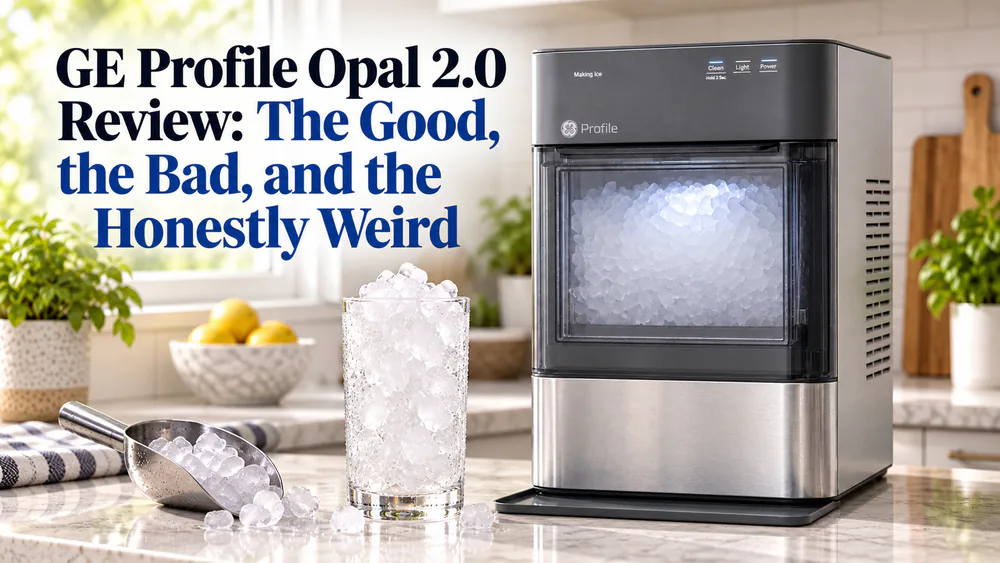
GE Profile Opal 2.0 Review: The Good, the Bad, and the Honestly Weird

As an Amazon Associate we earn from qualifying purchases. We may earn a commission from links on this page, at no extra cost to you. Learn more.

GE Profile Opal 2.0 Review: The Good, the Bad, and the Honestly Weird

We ran the GE Profile Opal 2.0 through weeks of daily use, and the first scoop told us most of the story. The pellets came out chewable, airy, and Sonic-style, the kind of soft ice that collapses under a straw instead of cracking a tooth. Then we lived with the machine, listened to it, and cleaned it, and the picture got more complicated.

So is the nugget ice worth it? Short answer: the ice is fantastic and the machine is honestly a little weird about noise, upkeep, and long-term reliability. This review walks through what we found, where the Opal 2.0 earns its counter space, and where cheaper makers or a little owner discipline change the math.

We tested the base 2.0 and the side-tank Ultra, because the water setup changes daily life more than any spec sheet suggests.

What Is the GE Profile Opal 2.0?

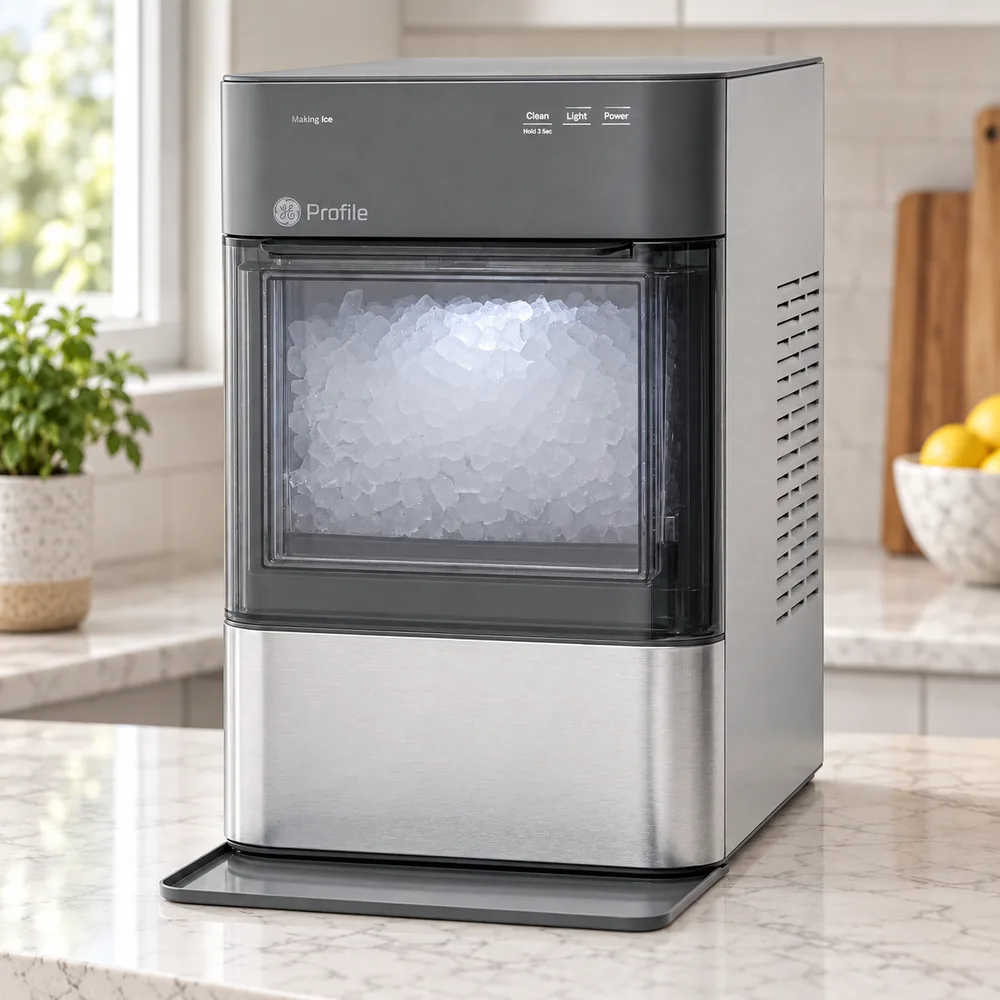
The GE Profile Opal 2.0 is a countertop nugget ice maker, the update to the viral Opal 1.0 that made soft, chewable pellet ice a home-kitchen thing. It compacts thin flakes into small nuggets, so you get restaurant-style ice without a plumbed-in built-in unit.

Nugget ice works differently from cube trays. The machine freezes a thin layer of ice on a chilled auger, scrapes it off as flakes, then presses those flakes into little cylinders. That compaction is why the ice chews instead of cracking a tooth, and why it soaks up whatever you pour over it.

The 2.0 adds built-in WiFi with the SmartHQ app, an advanced sanitize and descale cleaning cycle, a scale-inhibiting water filter, and an optional side tank. On the Ultra, that side tank is integrated. The core promise is simple: good ice, on your counter, on a schedule you set from your phone.

GE Profile Opal 2.0 at a glance
Daily ice outputup to 38 lbs
Ice per hour1.6 lbs (70F ambient, 60F water)
First batch10 minutes or less
Ice bin capacity3 lbs
Side tank (Ultra)0.75 gallon removable
Dimensionsapprox 13.43 x 17.5 x 16.5 in
ConnectivityWiFi with SmartHQ, Alexa, Google
Street pricearound $429

How We Tested It

We bought the machine ourselves and ran it through weeks of daily use, the way a household actually leans on an ice maker: morning glasses, afternoon drinks, and full pitchers for dinner. We scored it on ice quality and output, noise in a real kitchen, the water-fill routine, cleaning burden, and the smart features that are supposed to make ownership easier.

Beyond our own bench time, we tracked how these units hold up over a year or more, the one thing weeks of use cannot show, and let that reliability picture feed the verdict.

We also kept the competitors in view, comparing the Opal 2.0 against the Silonn, the Frigidaire Gallery, a budget portable, and the older Opal 1.0, so the value question stays grounded in real alternatives.

Note. The higher output numbers on any nugget maker are best-case, measured in cool rooms with cold inlet water. Warm kitchens and warm water pull real-world yield down, which is normal for this whole category.

Nugget Ice Quality, Texture, and Output

This is where the Opal 2.0 earns its reputation. We poured a first batch over cold brew, walked away, and came back to find the pellets had softened just enough to slush the drink without watering it down. They hold their shape in the glass, then give way when you chew, exactly what nugget-ice fans are chasing.

Output is rated up to 38 pounds of nugget ice per day, roughly 1.6 pounds per hour at 70F ambient and 60F water. That is the best-case figure; GE's own DOE-basis number is 32 pounds a day in warmer conditions. Either way, the first batch lands in 10 minutes or less, so you are not waiting long to start a glass.

The bin holds up to 3 pounds at a time, and it is not a freezer, so ice slowly melts and the machine re-freezes the meltwater. That keeps the supply fresh, but it also makes the Opal a make-as-you-go machine, not a place to stockpile ice for a party.

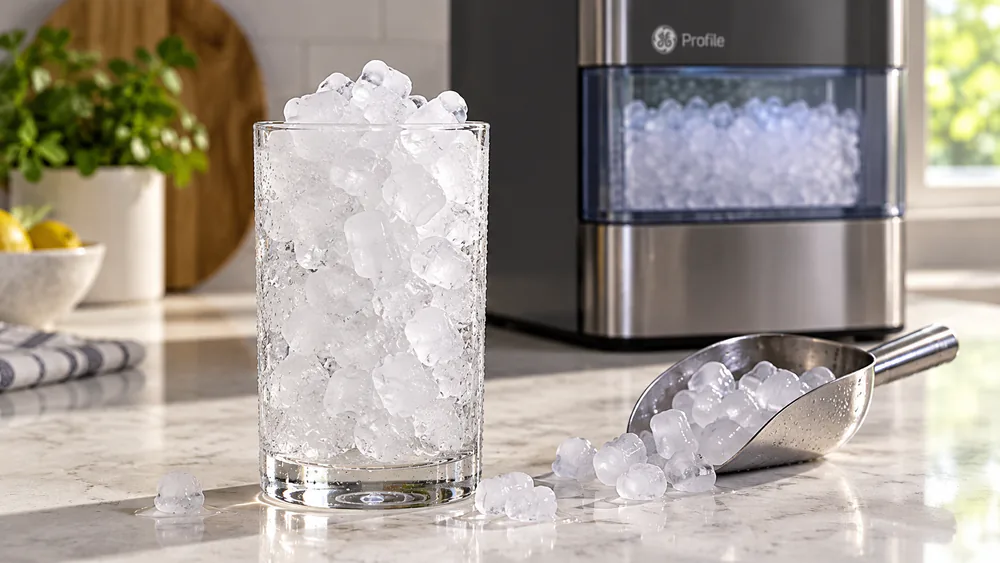
A glass filled with soft chewable nugget ice from the GE Profile Opal 2.0, pellets piled above the rim on a kitchen counter.
The nugget ice is the reason to buy this machine.

For everyday drinking, the texture is a clear step above the pebble-style ice from cheaper makers, and it stayed consistent batch after batch across our test weeks.

Design, Build, and Countertop Footprint

The Opal 2.0 wears a clean stainless finish with an LED touch display, and it looks the part on a counter. At roughly 13.43 inches wide, 17.5 deep, and 16.5 tall, the base unit has a modest width but real depth, so measure before you commit a corner.

The Ultra is a different conversation. With the integrated side tank, it is physically huge; one owner compared it to keeping a microwave on the counter. You trade fewer refills for a much bigger appliance, and that is a real countertop real-estate decision, not a rounding error.

Build quality is mostly solid where you touch it. For a countertop machine, the fit and finish are good; the honest catch is size, especially on the tank-equipped version.

Tip. If counter space is tight, start with the base 2.0 and add the separate side tank only if you find yourself refilling constantly. It is the smaller footprint for the same ice.

Smart Features: SmartHQ App and WiFi Scheduling

Connectivity is the 2.0's headline upgrade over the 1.0: built-in WiFi with the SmartHQ app, plus Alexa and Google voice control, for scheduling ice and getting maintenance alerts.

In practice, scheduling is the feature that earns its keep. Setting the machine to have ice ready by the time you wake up, or to pause overnight, is genuinely useful, and the maintenance reminders nudge you toward the cleaning cadence this machine needs. Voice control is a nice-to-have more than a daily habit.

Is the app essential? No, the ice is just as good without ever opening it. But if you like a schedule and cleaning alerts, SmartHQ is the most polished in this category, since none of the cheaper nugget makers offer WiFi at all.

Noise: How Loud Is It in Real Use?

Noise is the Opal 2.0's most divisive trait. In our kitchen the compaction stage was the giveaway: a quiet hum through most of the cycle, then a rising whine every time the auger pressed a fresh batch, loud enough that we paused a phone call sitting six feet away. Move to the next room and it faded to background; sit beside it and you notice every cycle.

Measured levels land somewhere around 39 to 48 dB during production, though GE publishes no official decibel rating and the figure tends to climb as the machine wears, so treat it as a rough band rather than a spec. The spread matches what we heard: the sound varies by how far you sit, the age of the unit, and which stage of the cycle it is in.

Warning. A developing squeak or high-pitched noise that starts around six months of use is a recurring owner complaint, and it cannot be cleaned away. It often signals wear rather than scale, so factor it into where you place the machine and how you plan to use the warranty window.

The practical takeaway: this is not a bedroom appliance, and an open-plan kitchen will hear it cycle. If quiet matters to you, keep that in mind before you buy.

The Side Tank and Water-Fill Options

Water handling is where the Opal 2.0 quietly shapes daily life. The base unit uses an internal reservoir you top off, while the Ultra adds a 0.75 gallon removable side tank, and the 2.0 also supports a water-line option that most competitors lack.

The side tank cuts down refills, which is the single biggest daily annoyance with a make-as-you-go machine. Fewer trips to the sink is a meaningful quality-of-life upgrade if you use a lot of ice.

Tip. When you first set up the side tank, double-check the tank and drain hoses against the manual. At least one owner found them mislabeled, which drained the reservoir onto the counter until it was re-plumbed. A two-minute check saves a puddle.

For heavy users, the water line or side tank is worth the extra footprint and cost. For lighter use, the base reservoir is fine; just plan on regular refills.

Cleaning, Descaling, and Maintenance

This is the part the marketing undersells. The Opal 2.0 has an advanced sanitize and descale cleaning cycle, a scale-inhibiting water filter rated for about three months, and a reusable air filter. On paper it sounds hands-off.

In reality, running the descale cycle, wiping the auger area, and swapping the filter add up to a routine you feel, not one you forget. Because the machine constantly re-freezes meltwater, scale builds up, and skipping the cycle is the fastest way to shorten the machine's life. GE publishes a full routine worth following; you can read GE's cleaning and descaling routine for the Opal before you buy so you know what you are signing up for.

The base 2.0 uses a P4INKFILTR filter and a P4INKCLEAN cleaning kit sold separately, while the Ultra integrates the filter. Either way, budget for consumables and time. The single strongest reliability signal we found is simple: owners who run only distilled water and descale on schedule report the longest life, with one hitting a full year of daily use still going strong.

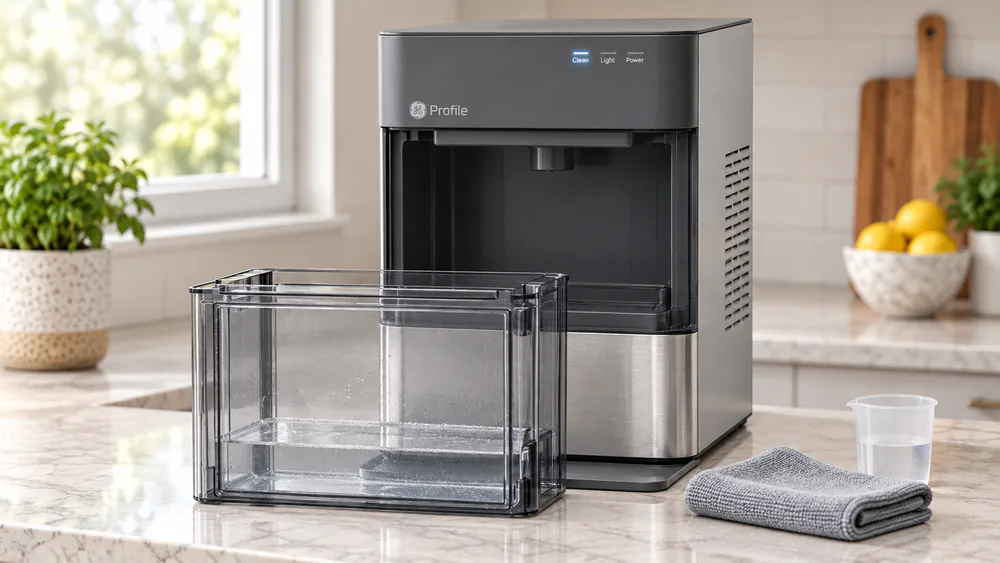
The GE Profile Opal 2.0 running its descale cleaning cycle, cleaning solution in the reservoir and the touch display showing the clean mode active.
Descaling is frequent, and skipping it is the fastest way to kill the machine.

Pros and Cons

The Opal 2.0 is a machine of sharp highs and real trade-offs. Here is the honest ledger after living with it.

Pros

  • Excellent chewable nugget ice, the best we have made at home
  • Fast output, up to 38 lbs a day with a first batch in 10 minutes
  • Sleek stainless design and clear touch display
  • SmartHQ app with WiFi scheduling and maintenance alerts
  • Water-line option and side tank cut down on refills

Cons

  • Loud during production, with a common six-month squeak risk
  • Frequent, fiddly cleaning and descaling
  • Reliability is a recurring weak spot past the warranty window
  • Premium price versus cheaper nugget makers
  • The Ultra with the side tank is very large on a counter

How It Compares to Other Nugget Ice Makers

Against the field, the Opal 2.0 wins on ice quality and features but not on price or, necessarily, longevity. The Silonn is compact, fast, and cheap, but its ice trends toward small pebble rather than true nugget, and some units develop leaks; one owner still logged over two years of daily Deep South use, so the value can be real if pebble ice is acceptable.

The Frigidaire Gallery makes ice fast and dense enough to resist quick melting, and it is meaningfully cheaper. Its weak spot is durability, landing around a year to under two years before plastic parts break and output degrades to shavings. Budget portable makers like the EUHOMY-class units are the cheapest entry, but their un-insulated bins let ice melt fast, so they run near-constantly and are impractical for holding a stock of ice.

The older GE Opal 1.0 makes the same great nugget ice but drops the WiFi emphasis and carries its own complaints, including sudden loud grinding and ice melting overnight in the bin. Repeat Opal buyers tend to treat these machines as consumables, reporting roughly three to five years across successive units when descaled often, rather than a lifetime appliance.

ProductDaily outputReservoir / tankWiFiWater lineStreet price
GE Opal 2.0 up to 38 lbs 0.75 gal side tank (Ultra) Yes Yes ~$429
Silonn up to 33 lbs 3L removable No No ~$145
Frigidaire Gallery up to 44 lbs reservoir fill No No ~$277
Newair / EUHOMY up to 34 lbs 1.2 qt tank No No ~$137
GE Opal 1.0 34 lbs half-gal optional No No ~$399

The Opal 2.0 makes the best ice in this group by a clear margin. Whether that ice is worth triple the price of a Silonn is the only question that actually matters.

Pricing and Is It Worth It?

Pricing is genuinely messy. The Opal 2.0 commonly runs around $429 street, ranging up to roughly $549 to $629 depending on configuration and retailer, against a GE MSRP in the $579 to $629 range. Street prices move week to week and jump with the side-tank, Ultra, and XL-tank configurations, so treat $429 as a sale figure rather than a fixed MSRP.

The Opal 2.0 lands at two to three times the cost of a capable budget maker. What you pay for is the best ice, the WiFi scheduling, the water-line option, and a build that looks the part. What you do not necessarily buy is longevity; the reliability spread is wide, and the machine rewards owners who baby it.

Where to buy: the Opal shows up across major appliance retailers, and prices swing with promotions, so check current pricing before you commit. Buying through a retailer with an easy return path gives you a window to catch early-failure units before the warranty math turns against you.

The GE Profile Opal 2.0 Buy Box

GE Profile Opal 2.0 Nugget Ice Maker
1

GE Profile Opal 2.0 Nugget Ice Maker

Best Nugget Ice, With Caveats
Check Price on Amazon
4.0/5

After weeks of daily use, the Opal 2.0 makes the best nugget ice we have had at home, chewable and airy, with a first batch in 10 minutes and up to 38 pounds a day. The honest catch is everything around the ice: it is loud during production, the cleaning routine is a real chore, and long-term reliability is a coin flip unless you run distilled water and descale on schedule. Buy it for the ice and the WiFi scheduling; go in clear-eyed about the upkeep and the price.

Pros

  • Best chewable nugget ice in its class
  • Up to 38 lbs a day, first batch in 10 minutes
  • SmartHQ WiFi scheduling and water-line option
  • Sleek stainless design

Cons

  • Loud, with a common six-month squeak risk
  • Frequent, fiddly cleaning and descaling
  • Reliability varies past the warranty window
  • Premium price

Common Mistakes Buyers Make

The most common mistake is treating the Opal like a set-and-forget appliance. The owners who get years out of it run distilled water and descale on schedule; the ones who skip maintenance post the six-month failure stories. Plan for the upkeep before you buy.

The second mistake is misjudging size, especially with the Ultra, which is close to microwave-sized. The third is expecting a stockpile: because the bin melts and re-freezes, the Opal makes ice for a steady daily supply, not for filling a cooler.

The Verdict

The buy box above holds our bottom line, so here is who should act on it. The Opal 2.0 is for the household that drinks a lot of soft ice, wants app scheduling, and will genuinely keep a descaling habit; for that buyer it earns its counter space.

It is the wrong buy for two people. If you want ice in a quiet room, or you know you will skip maintenance, the reliability odds are not in your favor. And if pebble-style ice is close enough, a budget maker like the Silonn saves you two-thirds of the price and most of the noise, at the cost of true nugget texture and the smart features. The Opal is the premium choice; whether the premium fits you is the whole decision.

Key takeaway. Our score: 4.0 out of 5. A near-perfect ice maker held back by everything that is not the ice.

Frequently Asked Questions

What warranty does the GE Profile Opal 2.0 come with, and can you get parts after it expires?

Owners consistently reference a one-year warranty, though we could not confirm the exact term on an official GE warranty page, so verify it at purchase. The bigger concern is post-warranty support: parts and repair options are thin once the year is up, which is why owners treat a failure just outside the window as a total loss.

Should you use distilled water or is filtered tap water fine?

Distilled is the safer bet. The owners who report the longest, trouble-free life are the ones running only distilled water and descaling on schedule, because it starves the machine of the mineral scale that builds up as it re-freezes meltwater. Filtered tap can work, but it raises how often you will need to descale and how hard scale fights back.

Should you buy the base 2.0 plus a separate side tank, or step up to the Ultra?

Buy the base 2.0 first if counter space matters. The Ultra bakes in the large 0.75 gallon tank and is close to microwave-sized, while the base unit with an add-on tank gives you the same refill relief in a smaller footprint, and you can skip the tank entirely if you find you do not need it. Go Ultra only if you want the integrated tank and have the room.

How much power does it draw, and will it spike the electric bill?

GE does not publish a clear wattage or annual energy figure we could verify, so treat any specific cost claim with caution. As a compressor-based unit that cycles on and off all day, it draws more than an occasional-use appliance, so plan for steady background consumption.

What is the difference between the Opal 1.0, 2.0, and Ultra?

The 1.0 makes the same great nugget ice but drops the WiFi emphasis. The 2.0 adds SmartHQ WiFi scheduling and an improved cleaning cycle, and the Ultra integrates a large 0.75 gallon side tank for fewer refills at the cost of a much bigger footprint.

Read next

Ready to upgrade your kitchen?

See how the Opal 2.0 stacks up against the rest of our tested picks, then find the machine that fits your counter and budget.