As an Amazon Associate we earn from qualifying purchases. We may earn a commission from links on this page, at no extra cost to you. Learn more.
The best juicer does more than squeeze fruit. It is the machine you actually pull out on a busy morning, the one that turns a bag of apples into a glass of fresh juice without a fight, and it cleans up before you have finished your coffee. A good juicer, also called a juice extractor, earns its counter space; a mediocre one ends up in the cabinet by March.
We tested them the way you will use them: daily batches, real produce, and a running count of cleanup time. The seven below are the ones that earned a permanent spot in our kitchen, from fast centrifugals to quiet cold press machines.
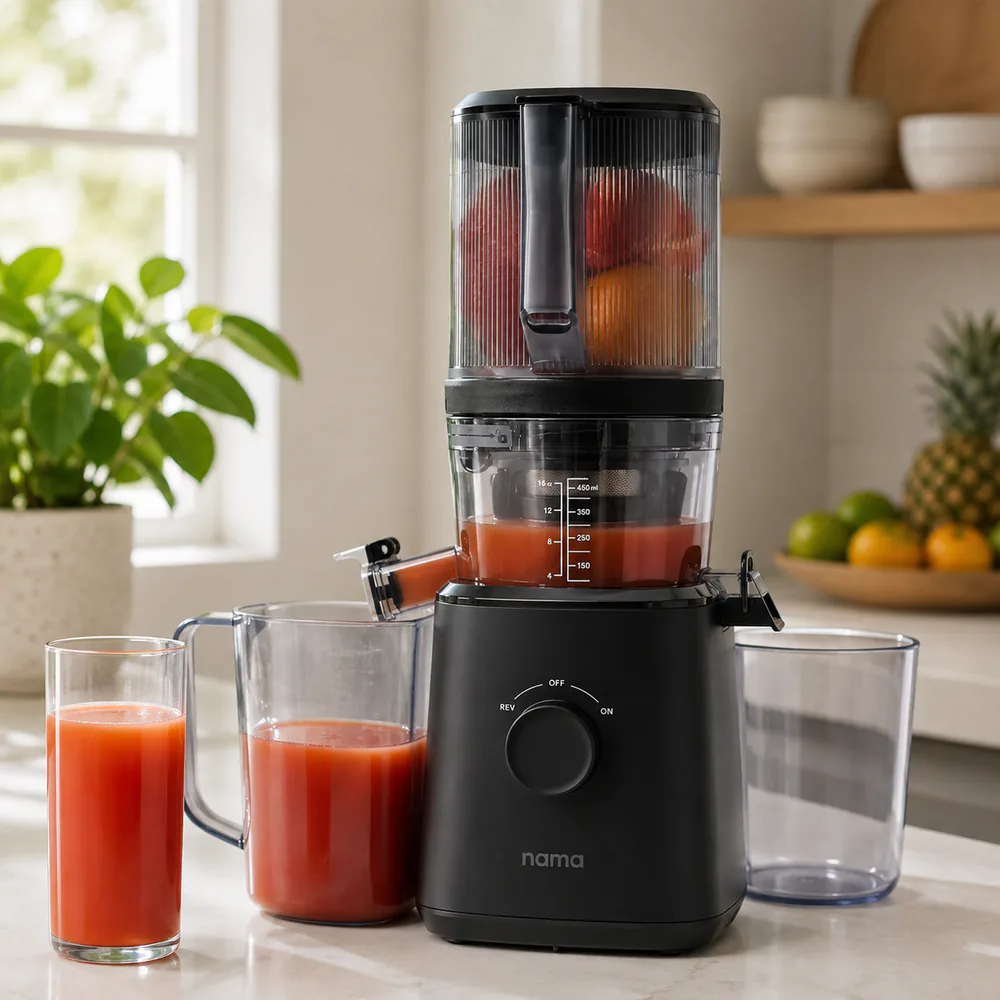
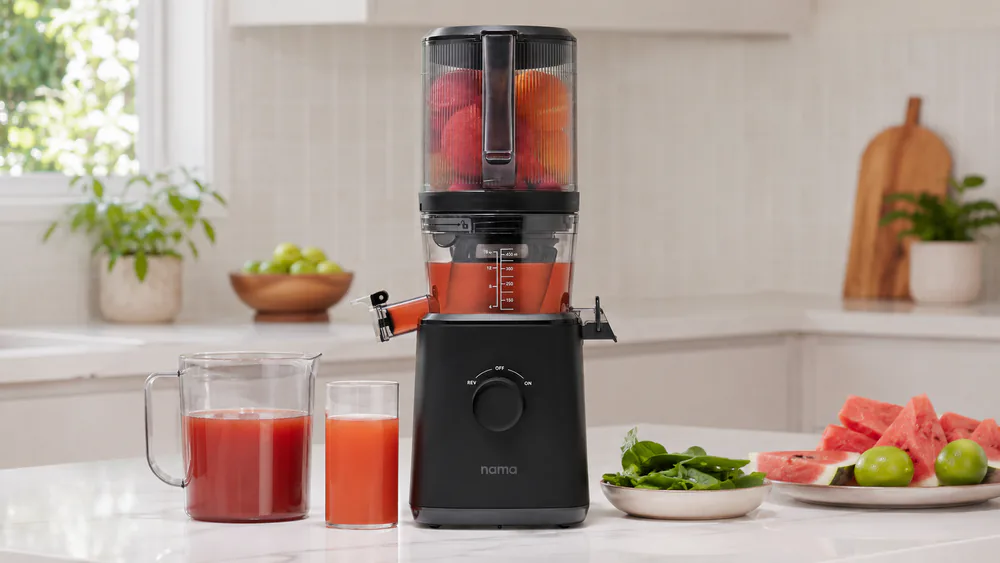
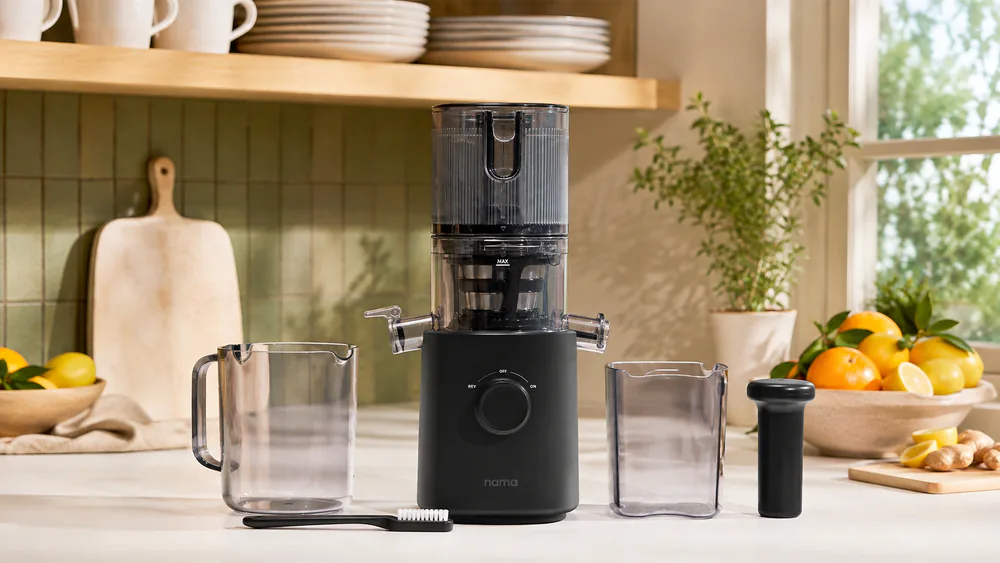
The Nama J2 is the juicer we kept going back to, because it makes more juice. Four oranges pressed into 460 ml in our side-by-side runs, the largest haul of any machine here, and the spent pulp came out so dry and crumbly it looked fully extracted. Green juice ran clean with the least pulp left in the glass of anything we tested, quiet enough to run while someone slept twelve feet away.
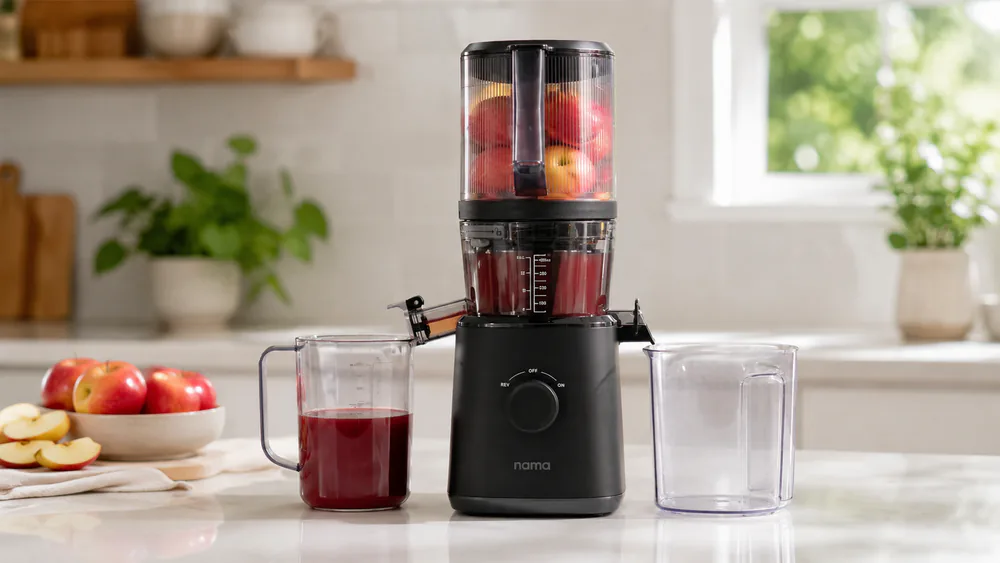
The hopper loads a whole recipe and feeds itself, hands-off. You pay for that yield at the fine stainless strainer, about five minutes of scrubbing per batch. The 15-year warranty on all parts backs a machine built to be repaired rather than replaced; after three years of daily batches ours showed no motor weakening or blade dulling. See current pricing on the Nama J2 Cold Press Juicer at Amazon or the Nama J2 Cold Press Juicer at Nama's official site.
Hands-free self-feeding hopper loads a whole recipe
Two strainers included: fine and coarse
30-day satisfaction guarantee with the 15-year warranty
Specifications
Motor
200W, 50 RPM
Yield per load
16-32 oz
Cleanup
Fine strainer, hand wash
Warranty
15-year
Load a whole recipe into the J2's hopper and it feeds itself.
Pros and Cons
Pros
Best juice yields we measured, with dry, crumbly pulp
Quiet enough to run while the household sleeps
Hands-free hopper for batch juicing
15-year warranty on all parts
Cons
Strainer needs dedicated scrubbing each batch
Too tall to store under standard upper cabinets
Small pulp-outlet gasket can pop off during cleanup
Best Budget Juicer: Ninja NeverClog Cold Press Juicer
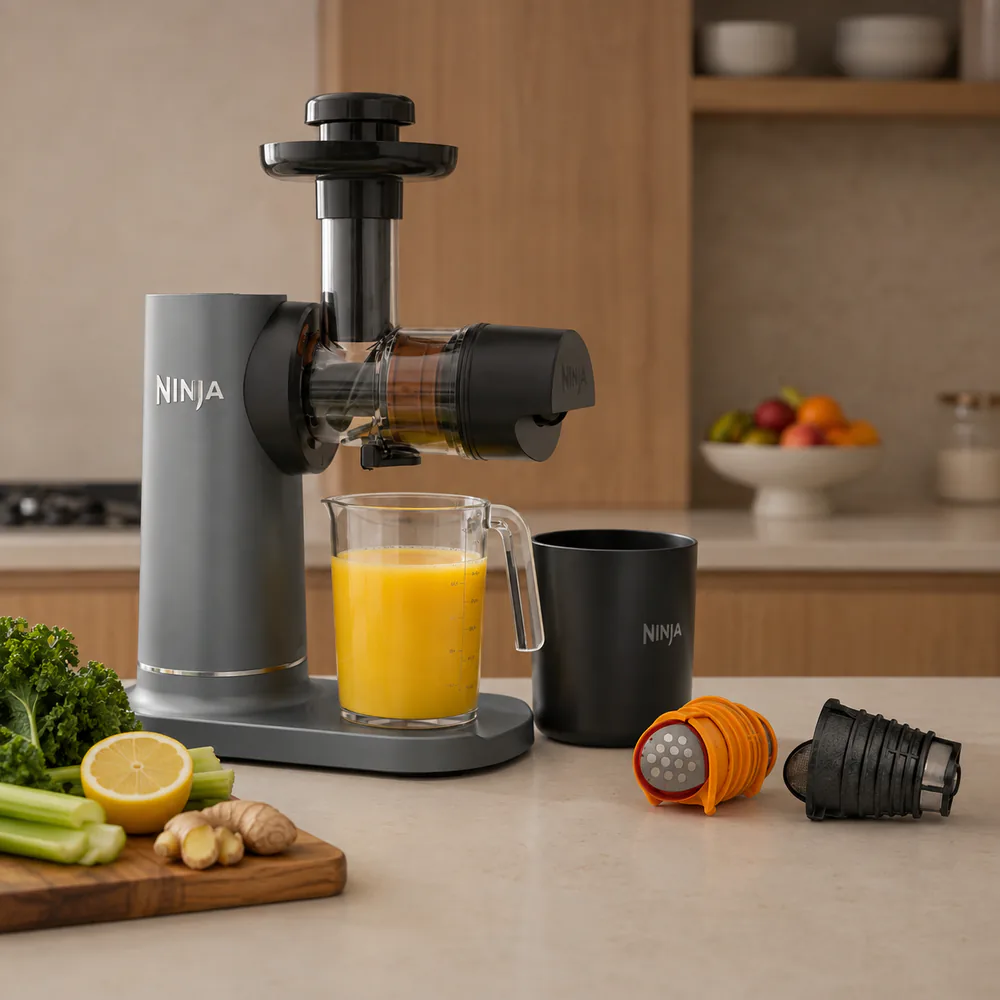
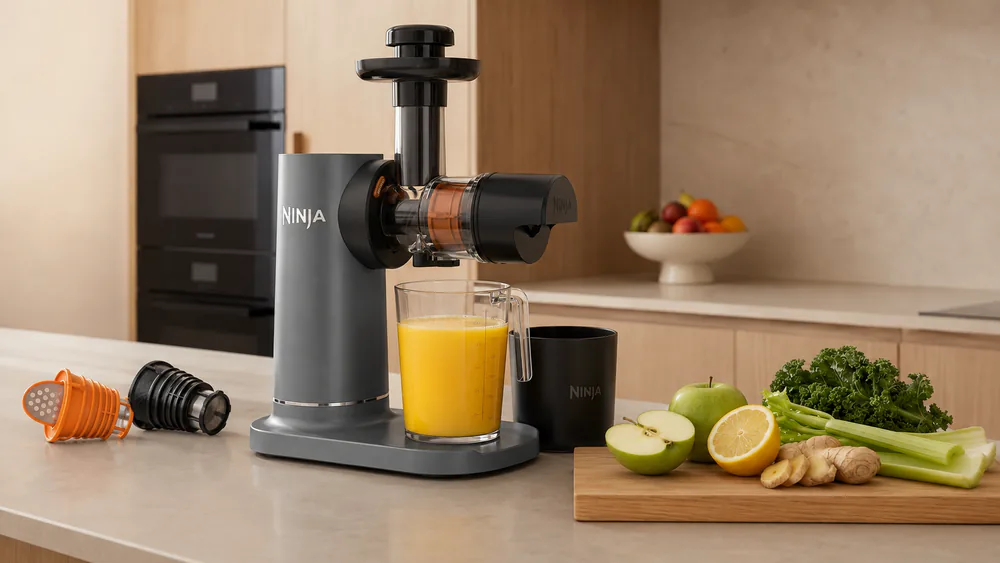
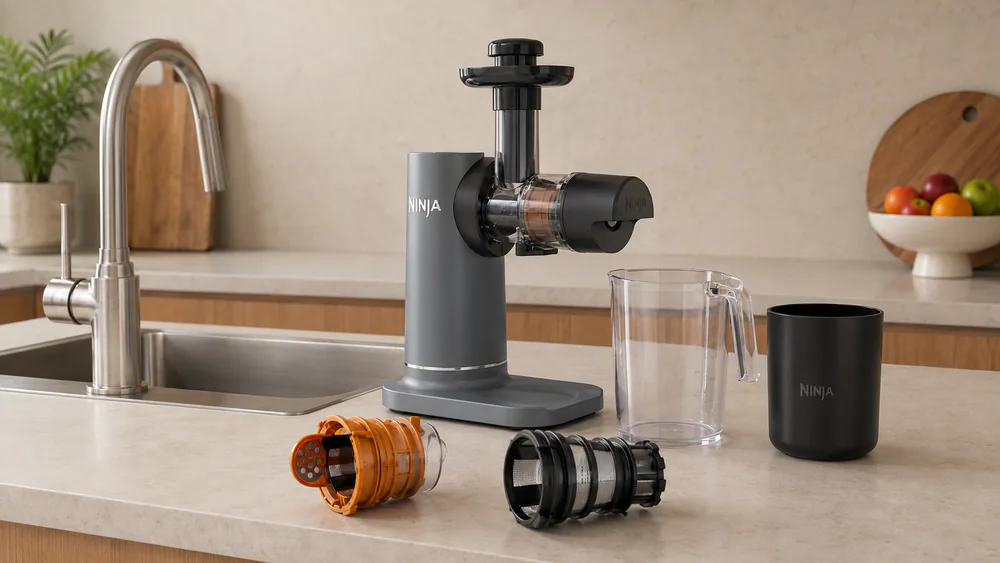
If the J2 is the countertop fixture, the Ninja NeverClog is the budget cold press that behaves like a machine three times its price. On kale, spinach, and wheatgrass it matched extraction from machines that cost three to four times as much, and it refused to jam on celery and pineapple cores in our batches. At roughly $150, it is a worthwhile investment.
The reality check is the feed chute: narrow, so most produce needs pre-cutting, and the 24 oz jug really is single-serving size. Firm produce can trigger a loud squeak, and cutting harder items smaller quiets it. All juice-contact parts are dishwasher safe; the pulp filter just needs a prompt rinse. We have seen chutes crack on heavily used units around the six-month mark, with the replacement assembly running about $70, covered by the 1-year warranty. See current pricing for the Ninja NeverClog Cold Press Juicer on Amazon, and full details on the Ninja NeverClog Cold Press Juicer at ninjakitchen.com.
One-touch Start/Stop and Reverse, which clears jams
Total Pulp Control: swap filters for less or lots of pulp
All juice-contact parts dishwasher safe and BPA-free
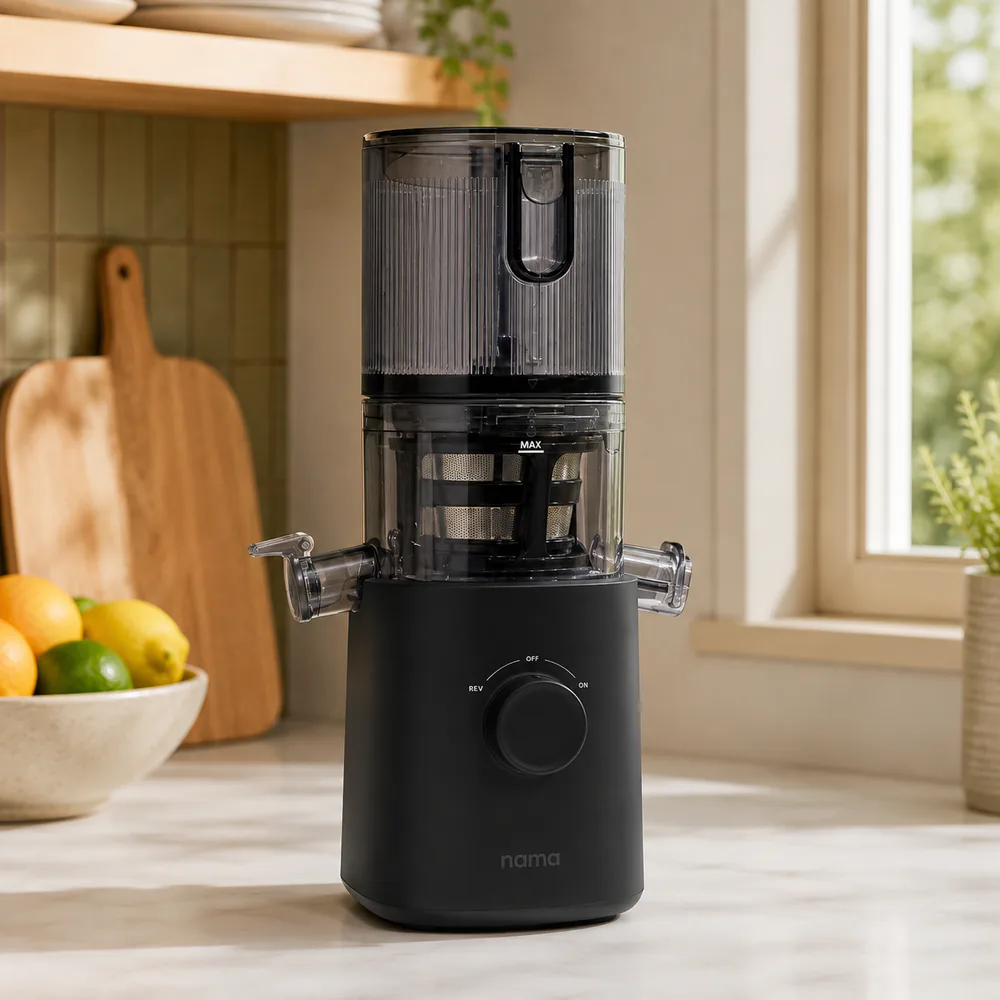
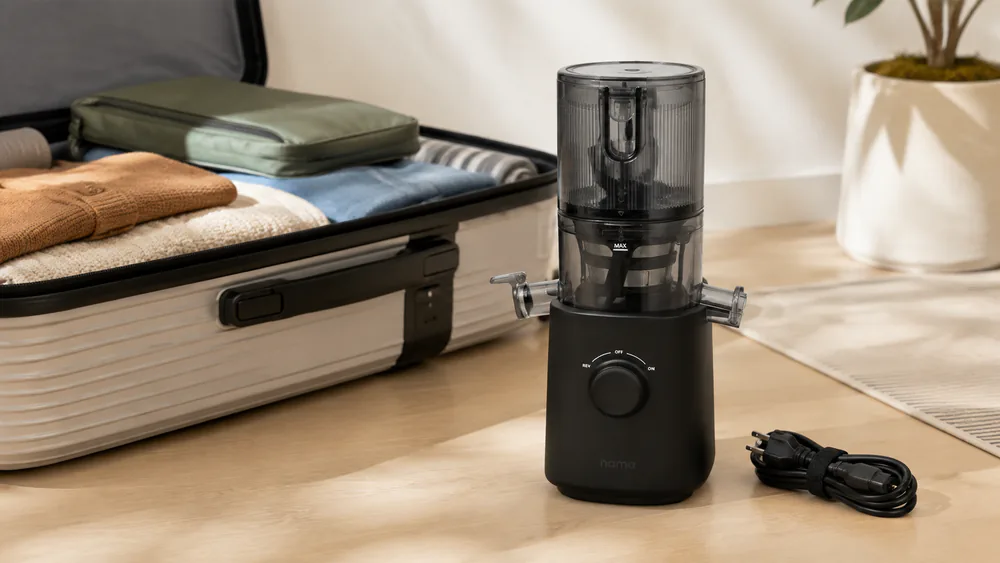
Where the J2 covers a family, the Nama J3 shrinks the same engineering into a machine you can pack. It pressed the juice we rated best-tasting of the group: near-homogeneous, with only a touch of sediment and a light foam layer, and no bitterness. Our green juice came out crisp and balanced, batch after batch.
The downsized auger has honest limits: uncut ginger and hard, fibrous roots stall it, and it leaves a little more pulp behind than its bigger sibling. In exchange you get 9.7 lb and about 15.4 in tall, with a 1-liter self-feeding hopper, light enough for a travel bag, plus the J2's warranty for less than the J2's list price. Check the Nama J3 Cold Press Juicer on Amazon for current pricing.
1-liter self-feeding hopper, hands-free
Fine and coarse strainers included
BPA-free Ultem auger and Tritan chamber, detachable cord
Specifications
Motor
130W, 50 RPM
Yield per load
8-16 oz
Cleanup
Quick rinse, hand wash
Warranty
15-year
Pros and Cons
Pros
Excellent juice quality, near-homogeneous and clean
Compact and light enough to travel
15-year warranty at a lower list price than the J2
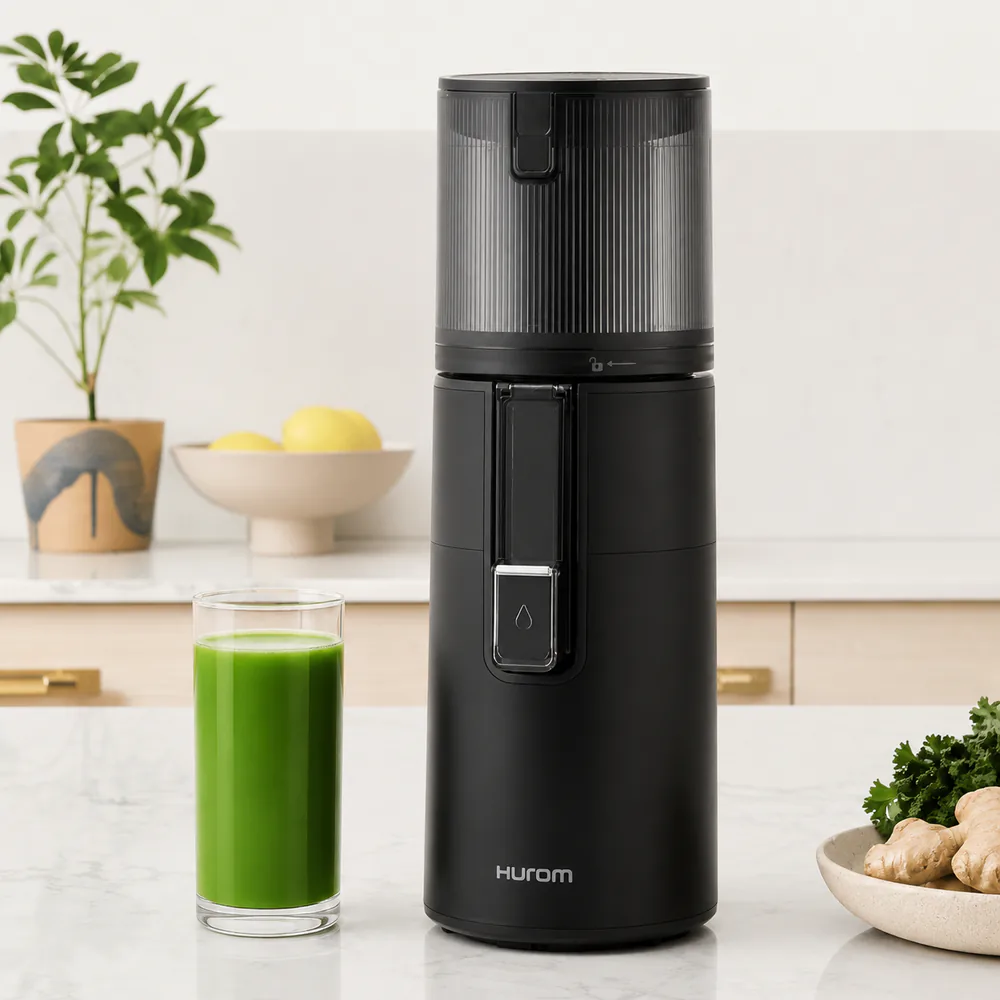
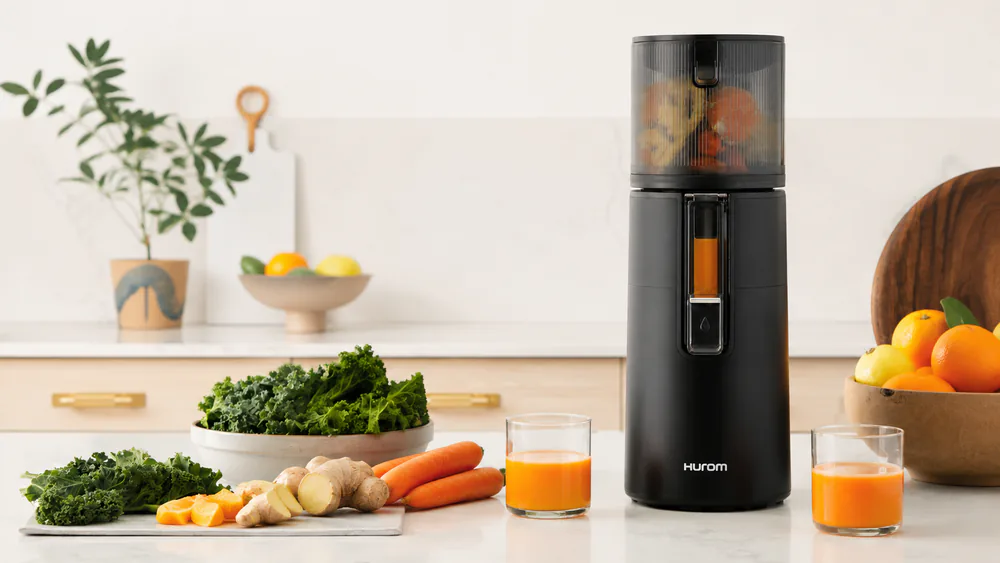
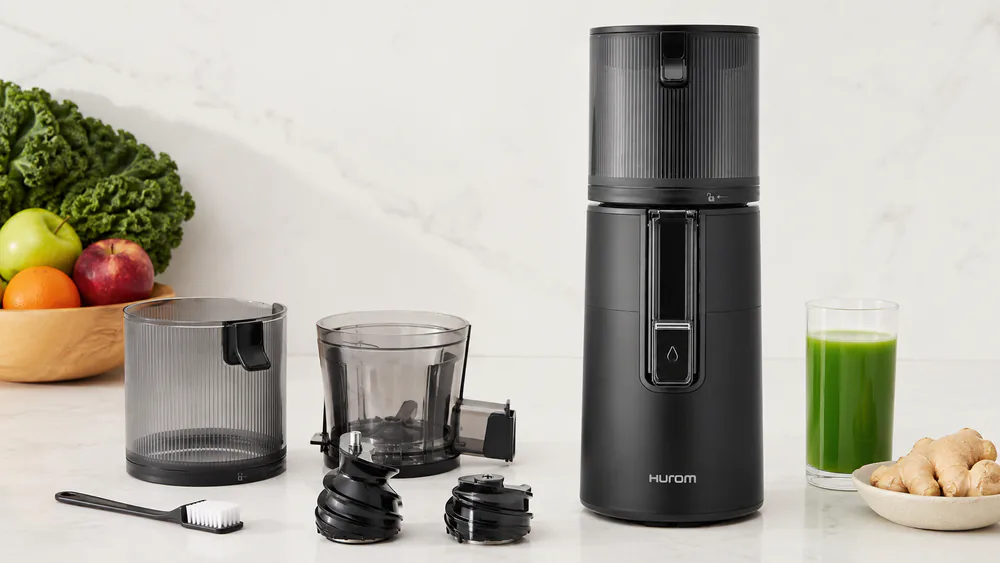
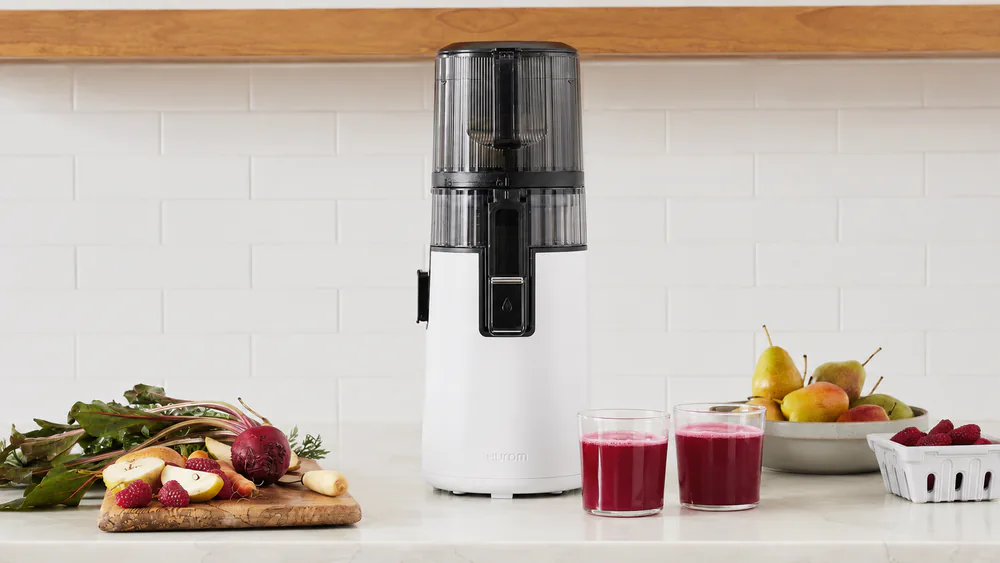
If the J3 is about portability, the Hurom H400 is about retiring the scrubbing brush. Its two-part auger doubles as the strainer, so there is no mesh screen to scrub anywhere. After a year of daily use in our kitchen, the routine has not changed: disassembly takes under a minute, a forceful water rinse handles the rest, and the auger goes in the dishwasher.
The screenless design trades a little clarity: some pulp ends up in the glass, and a full pulp bin suddenly makes the juice run fibrous, so check it mid-batch. The H400 runs softly enough for a toddler's nap in the next room, and our green juice kept its rich color for more than 24 hours, then held up to three days in the fridge. Roughly $749 makes it the priciest machine here, but the 15-year US warranty helps justify it. See the Hurom H400 Easy Clean Slow Juicer at Amazon for current pricing.
Strainer-free two-part auger, nothing to scrub
Large self-feeding hopper with a gauge window
Juice keeps up to three days refrigerated
Specifications
Motor
150W AC, 90 RPM, rated for 30 minutes continuous use
Chamber
550 ml
Hopper opening
45 mm (1.8 in)
Cleanup
Rinse in under a minute; auger dishwasher safe
Warranty
15-year in the US, varies by region
The auger is the strainer, so there is nothing to scrub.
Pros and Cons
Pros
Fastest cleanup of any pick: rinse and go
Whisper quiet, family-friendly noise level
Self-feeding hopper with a gauge window
Cons
Pulpier juice than screened machines
Steep price for the category
Spout seal needs occasional maintenance
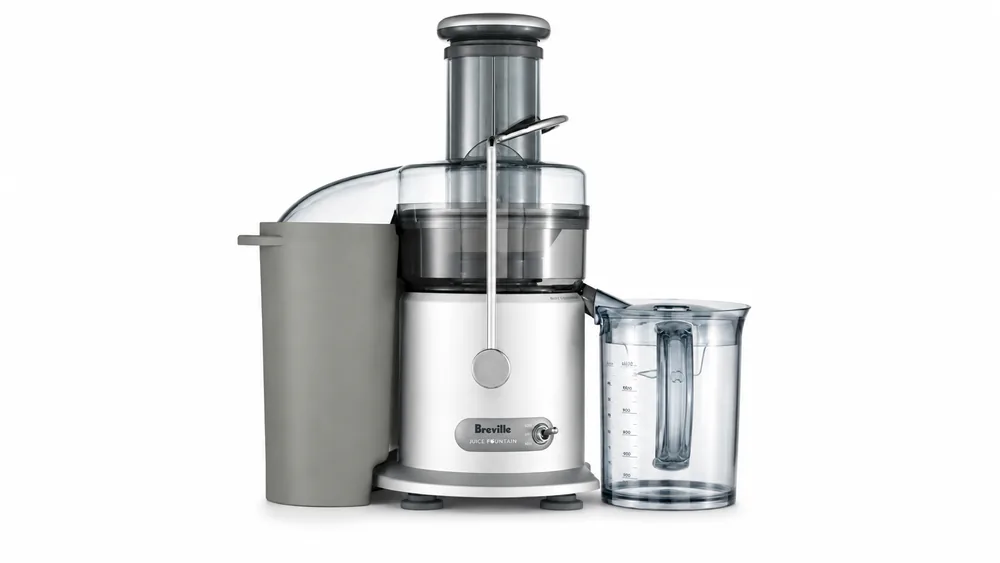
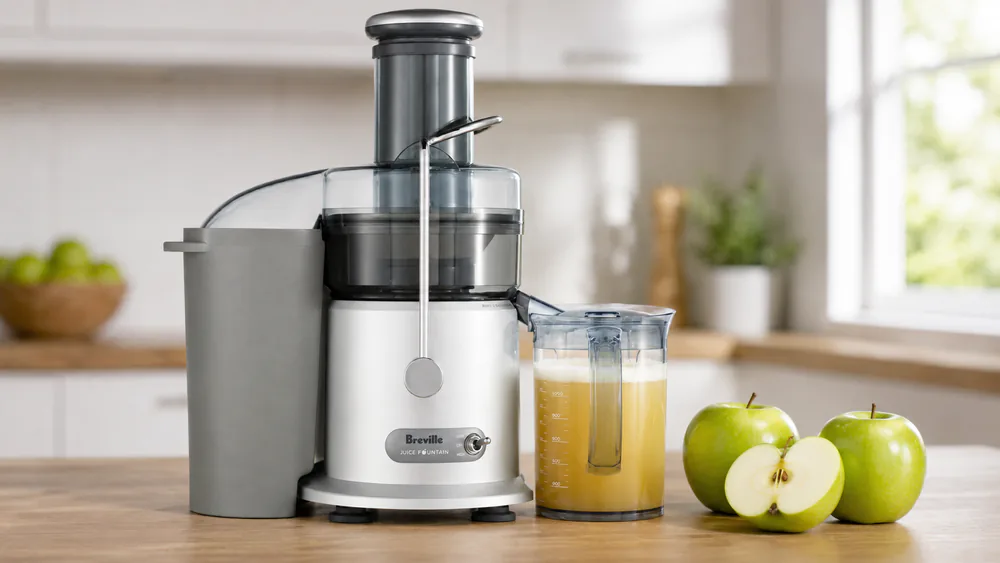
Best Centrifugal Juicer: Breville Juice Fountain Plus
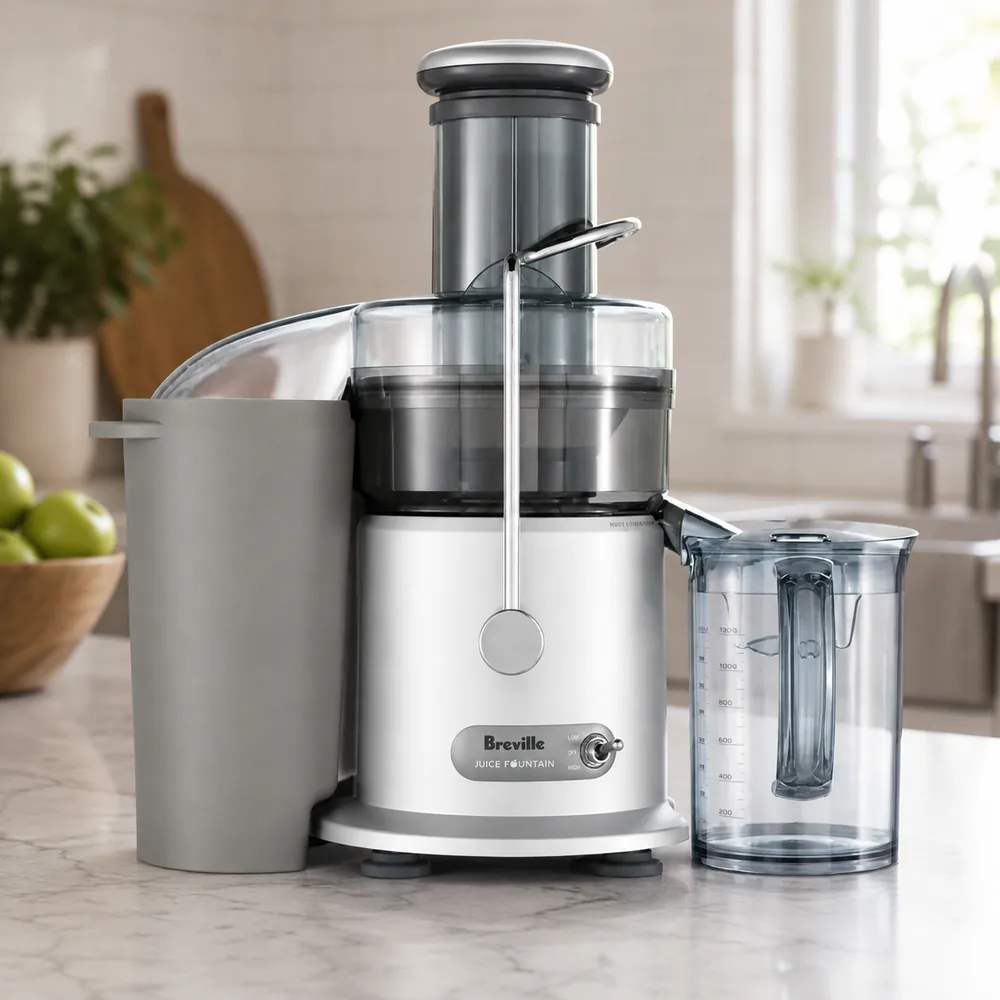
Every machine so far presses slowly. If speed is your priority, the Breville Juice Fountain Plus wins the sprint: an 8 oz glass of apple juice comes out in about five seconds, and whole fruit drops straight through the 3 in chute, no cutting board involved.
This is a hard-produce machine: apples, carrots, and beets yield well with very little pulp, and running the wet pulp through a second time recovers noticeably more juice. Loose leaves are its weakness, so wrap leafy greens around sturdier produce or they blow back up the chute. It is one of the loudest juicers we measured. Cleanup is five to seven pieces by hand, and the mesh basket needs scrubbing within minutes or residue sets. Check the Breville Juice Fountain Plus on Amazon for pricing.
850W motor with dual speeds up to 13,000 RPM
3 in extra-wide chute fits whole fruit
35.2 oz jug with built-in froth separator
Specifications
Motor
850W, 6,500 / 12,000-13,000 RPM
Jug
35.2 oz with froth separator
Pulp bin
2.6 qt, detachable
Cleanup
Mesh basket, most parts dishwasher safe
Warranty
1-year
Pros and Cons
Pros
Whole-fruit convenience with a 3 in chute
Strong yields on apples, carrots, and beets
Built-in froth separator
Cons
Very loud while running
Weak on loose leafy greens
Mesh basket needs prompt scrubbing
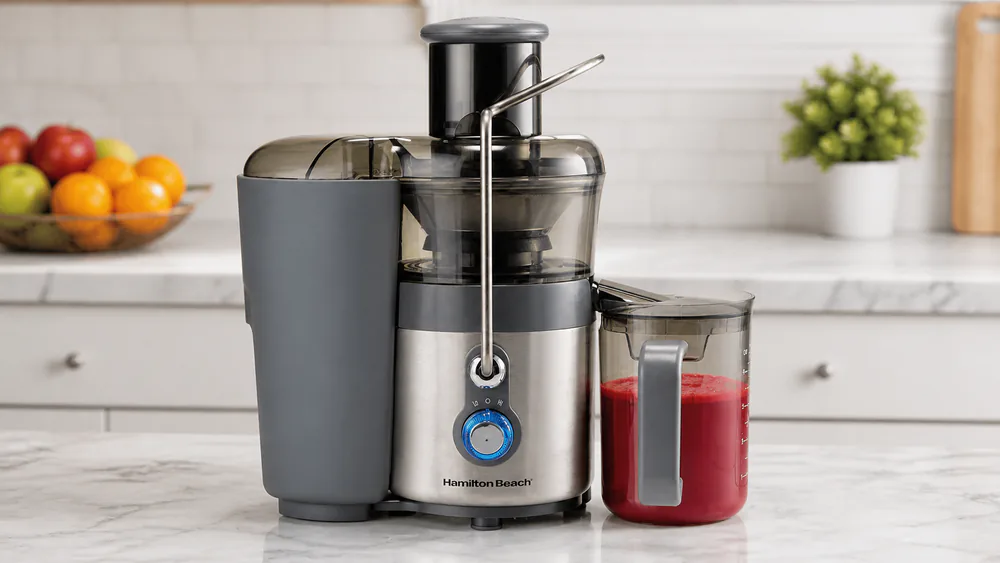
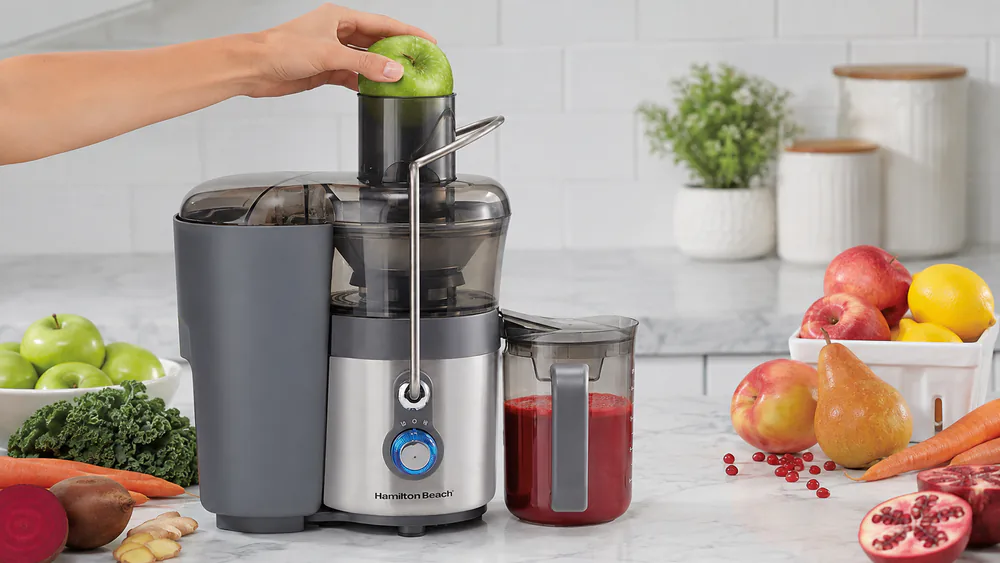
Best Juicer for Beginners: Hamilton Beach Easy Clean Juice Extractor
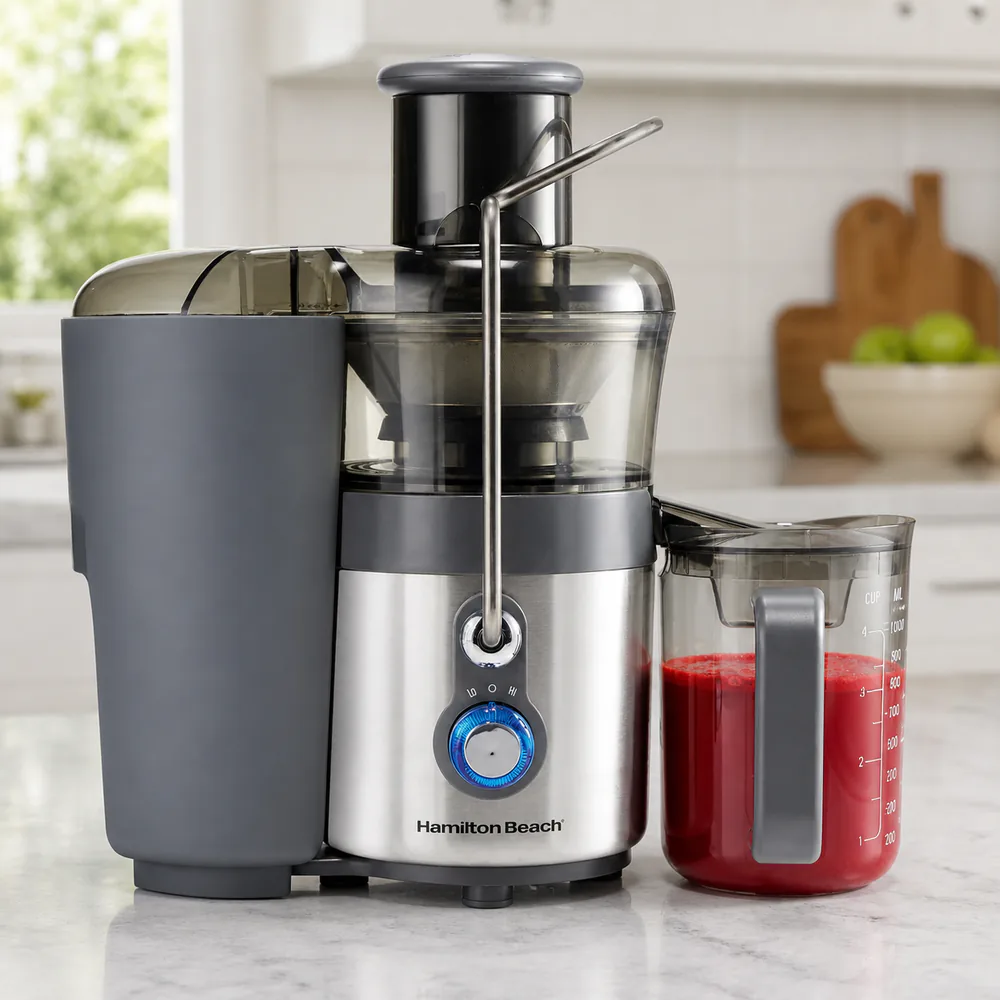
Where the Breville is the speed pick, the Hamilton Beach Easy Clean is the one we would hand to a first-time buyer: a plain 2-speed centrifugal with a 3 in Big Mouth chute that swallows whole produce, a patented Easy Sweep tool that cuts strainer cleaning time, and pulp bin, juice bowl, lid, and pusher that all go in the dishwasher.
It behaves like a budget machine in the moment: the unit vibrates and can walk across the counter, the low speed setting is nearly useless for anything but soft fruit, and extraction varied batch to batch, with wet pulp on some runs, dry on others. Grinding citrus whole works well, and the motor stayed cool through a 45-minute session. Overfill the pulp bin and juice overflows down the sides, and heavy back-to-back batches trip the motor's thermal shutdown for five to ten minutes. Durability is the weak spot, so treat this as an affordable starter rather than a lifetime machine. See the Hamilton Beach Easy Clean Juice Extractor at Amazon for current pricing.
850W motor, two speeds for hard and soft produce
40 oz BPA-free pitcher with lid and froth separator
Dishwasher-safe pulp bin, bowl, lid, and pusher
Specifications
Motor
850W, 2-speed
Chute
3 in Big Mouth
Pitcher
40 oz with froth separator
Cleanup
Easy Sweep tool; dishwasher-safe parts
Warranty
3-year
Pros and Cons
Pros
Simple, approachable controls for beginners
Whole-fruit chute, no pre-cutting
Dishwasher-safe parts and Easy Sweep tool
Cons
Vibrates and can walk on the counter
Extraction consistency varies by produce
Motor shuts down after heavy batches
Best Compact Juicer for Small Kitchens: Tribest Shine Multi-Batch Compact Cold Press Juicer
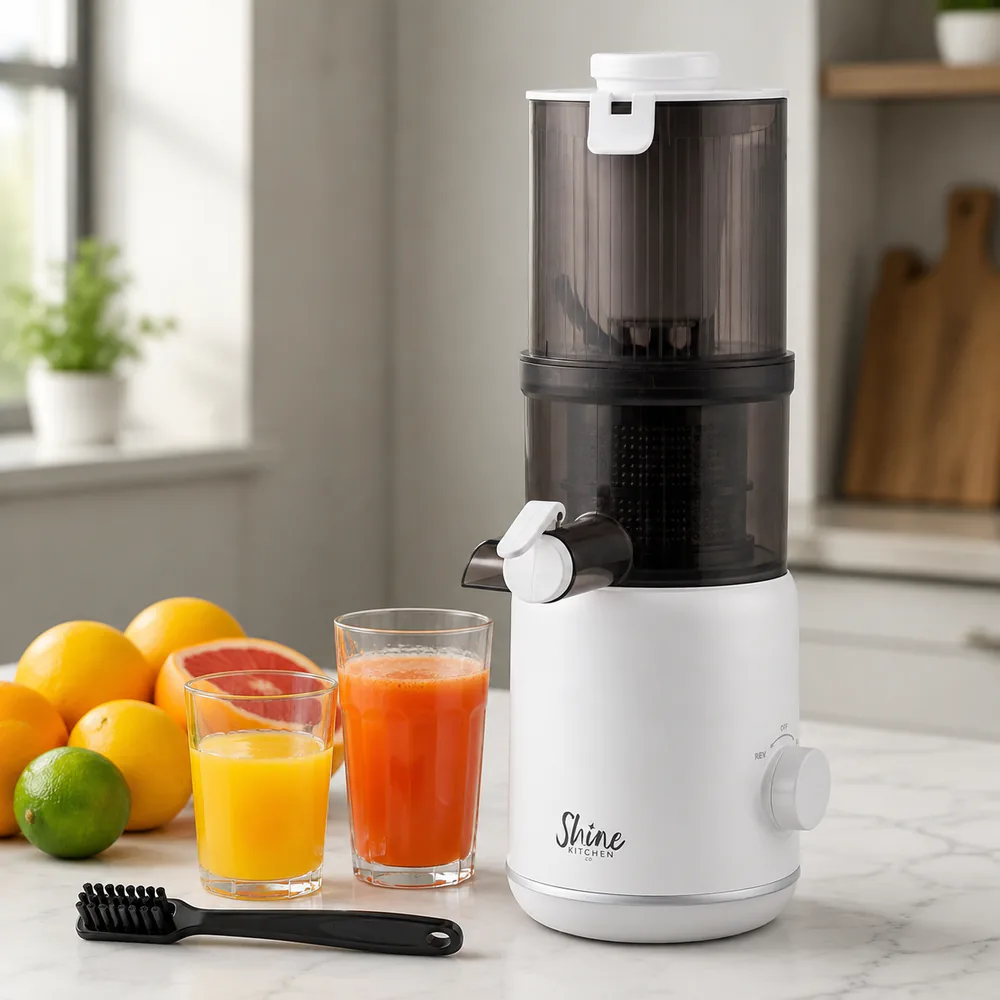
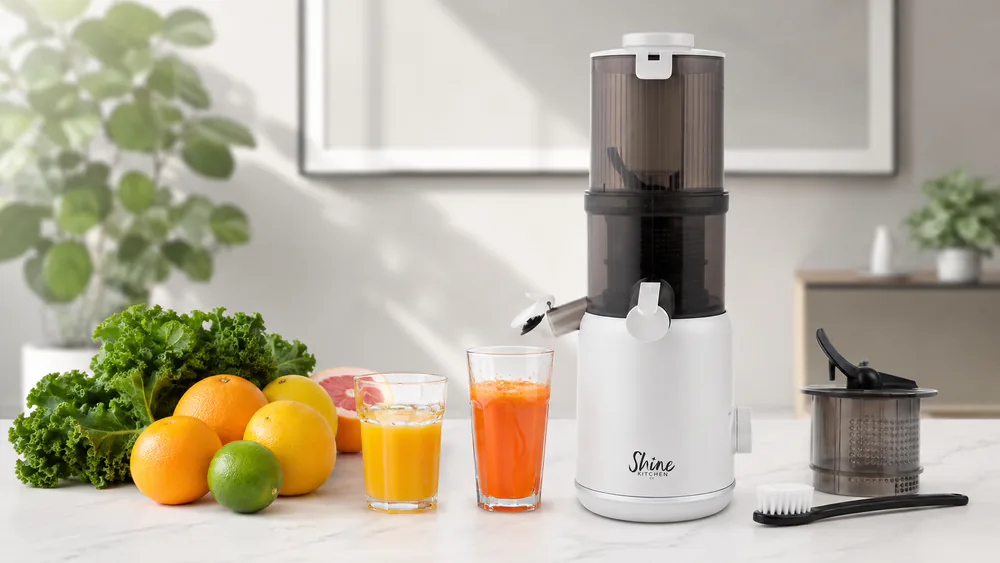
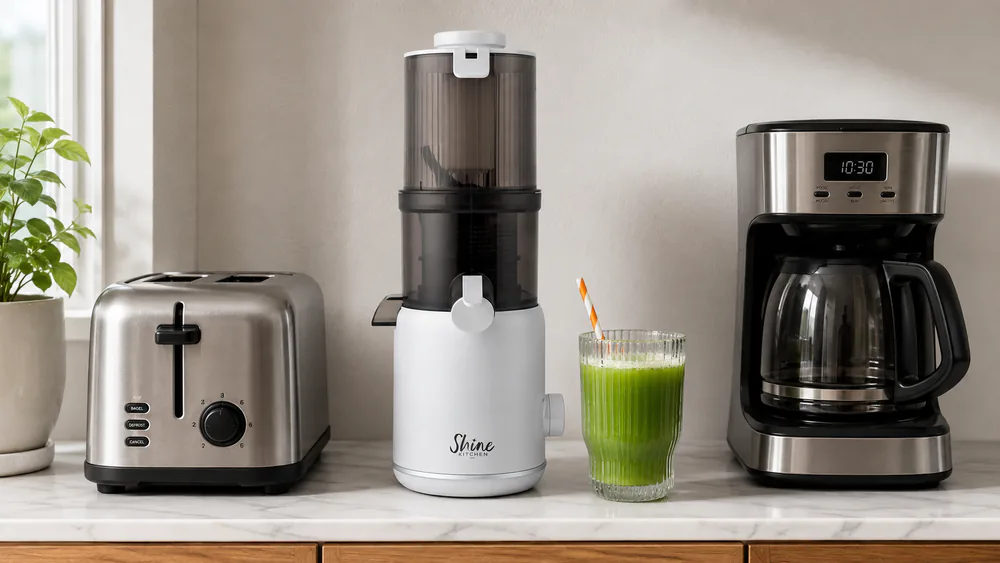
And if counter space is the whole game, the Tribest Shine SMB-1 is the smallest cold press we recommend: a compact vertical masticator with a hands-free hopper that feeds itself, 4.3 lb, and a footprint under 5 in of counter. The Shine Multi-Batch Compact Cold Press Juicer page at Tribest's site has the full spec breakdown.
Hands-free hopper with Continuous Feed Quick Load
150W motor pressing at 40 RPM
All four juice parts BPA-free and heavy-metal free
Specifications
Motor
150W, 40 RPM
Hopper
24 oz; juice container 23 oz
Cleanup
Quick rinse; disassembly is the weak point
Warranty
3-year household
In use it is quiet, smooth, and mess-free, and cleanup is a quick rinse; we had a glass of juice ready in minutes. We also have to be honest about its limits: the short pulp ejector clogs on celery, leafy greens come out weak, and disassembly is the weak point, with parts that wedge together when wet and bottoms that have popped off on heavily used units. For soft fruit and citrus it is fair at roughly $150. See the Tribest Shine Multi-Batch Compact Cold Press Juicer at Amazon for current pricing.
Pros and Cons
Pros
Tiny footprint and travel-friendly weight
Hands-free feeding, quiet operation
Mess-free cleanup with a quick rinse
Cons
Clogs on celery, weak on leafy greens
Disassembly can wedge parts when wet
Durability concerns on heavily used units
Juicer Comparison Table
Prices are list prices at the time of writing and move with sales.
Pick
Type
Price
Juice Yield
Cleanup
Noise
Rating
Best For
Nama J2
Cold press, hands-free hopper
~$599
Top yields, dry crumbly pulp
Strainer scrub by hand
Quietest of the group
4.8
Daily batches, leafy greens
Ninja NeverClog
Cold press, self-feeding auger
~$150
Strong on greens, dry pulp
Dishwasher-safe parts
Louder than the quietest cold press
4.5
Budget cold press quality
Nama J3
Cold press, compact
~$499
Great flavor, 8-16 oz per load
Quick rinse
Very quiet
4.6
Small kitchens, travel
Hurom H400
Cold press, strainer-free
~$749
High yield, pulpier juice
Rinse and go
Whisper quiet
4.7
Families, minimal cleaning
Breville JE98XL
Centrifugal, 2-speed
~$150
Strong on hard produce
Mesh basket, hand wash
Loudest of the group
4.4
Speed, whole fruit
Hamilton Beach 67850
Centrifugal, 2-speed
~$150
Mixed extraction
Easy Sweep, dishwasher-safe
Loud, prone to vibration
4.0
First-time juicers
Tribest SMB-1
Cold press, compact batch
~$150
Decent, clogs on celery
Quick rinse, tricky disassembly
Quiet
3.8
Tiny countertops, travel
How We Tested Juicers
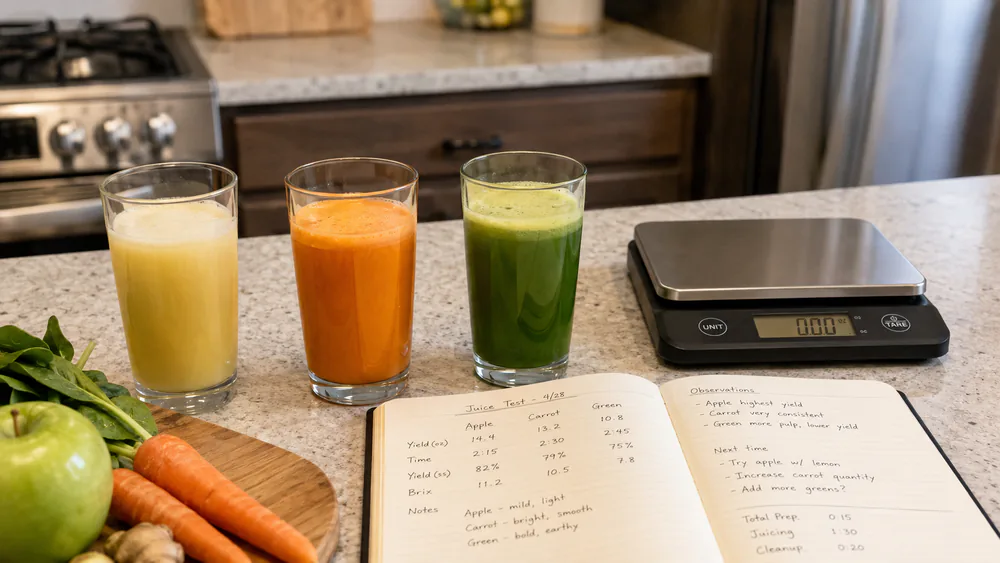
We tested more than 20 juicers for this guide, running each one through the same protocol: apples, carrots, and leafy greens, in real batches. We weighed juice yield, timed cleanup, and logged noise at counter height.
The numbers separated them sharply. The Breville extracted 66.4% of the juice from oranges, second best in its group, but only 25.1% from kale, the weakest leafy-green score we logged. The Nama models pressed clean, bright green juice with dry, crumbly pulp, and the Hurom H400's screenless chamber went from dirty to dry in under a minute. Noise ranged from the Hurom, quiet enough for a sleeping child, to the Breville at roughly 80 to 86 dB.
Every machine ran the same protocol: apples, carrots, and leafy greens.
We also scored long-term durability: which parts fail first, whether replacements exist, and how long the warranty runs. The Ninja's replacement chute assembly runs about $70, and one slow juicer we considered has no replacement parts available at all.
Why you can trust this list: every machine here went through the same protocol, and we scored on performance and durability, not spec sheets. We live with our picks after the test window, and the seven below are the ones we kept reaching for.
Other Juicers We Considered
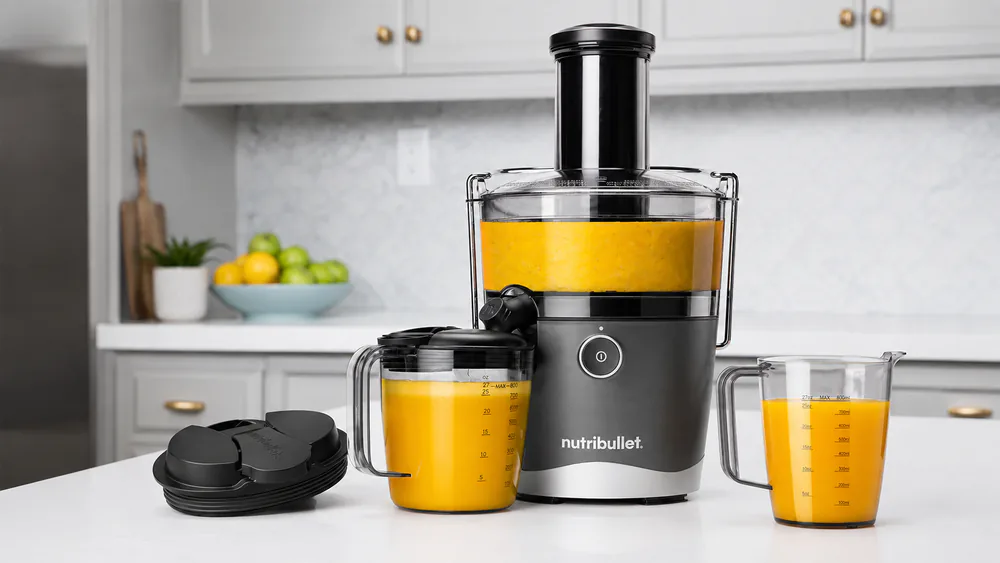
Of the more than 20 juicers we tested, four came close enough to earn a mention. The Hurom H70 Easy Clean Slow Juicer cleans like a much simpler appliance, with parts that rinse clean in minutes and nothing to scrub; it just costs more than the H400 for a smaller machine. The NutriBullet Juicer is a capable beginner centrifugal, but wet pulp and durability questions kept it out of the main list.
8
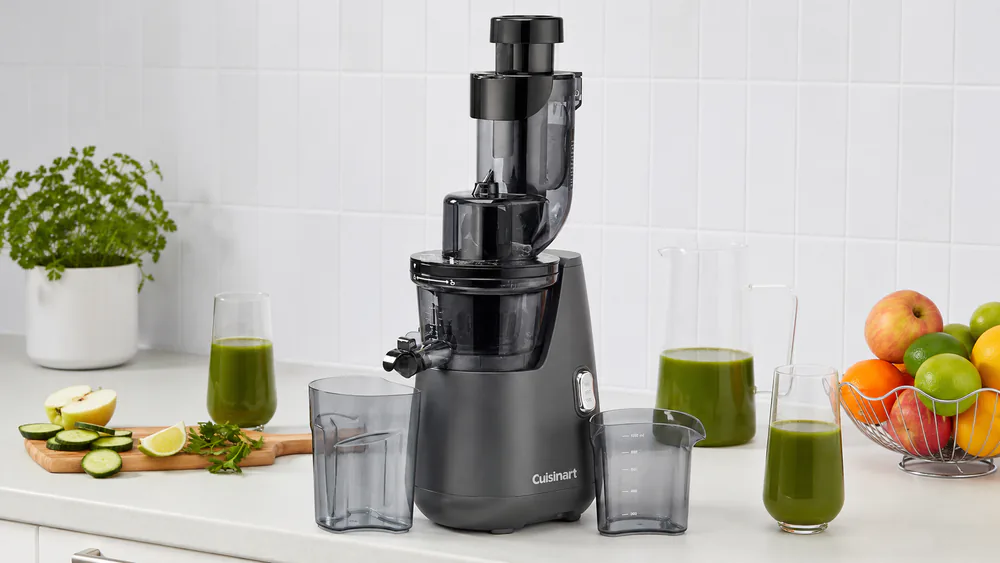
Cuisinart CSJ-300 Easy Clean Slow Juicer
4.1
Makes a lot of juice with dry pulp, but pulp traps in tight crevices.
The best juicer for you matches how you actually cook. Work through the six criteria below before you spend; they decide whether a machine becomes a habit or a cabinet ornament.
All 7 picks on the key specs
Nama J2
200W, 50 RPM, 16-32 oz per load, 15-year warranty
Ninja NeverClog
150W, 24 oz jug, 1-year warranty
Nama J3
130W, 50 RPM, 8-16 oz per load, 15-year warranty
Hurom H400
150W, 90 RPM, 550 ml chamber, 15-year warranty (US)
Breville JE98XL
850W, 6,500/12,000-13,000 RPM, 35.2 oz jug, 1-year warranty
Hamilton Beach 67850
850W, 2-speed, 40 oz pitcher, 3-year warranty
Tribest SMB-1
150W, 40 RPM, 23 oz container, 3-year warranty
Centrifugal vs. Masticating vs. Citrus Juicers
Three families of machines share the name. Centrifugal juicers spin a shredding disc at high speed and sling pulp outward; they are fast, cheap, and swallow whole fruit, but they run loud and extract poorly from leafy greens. Masticating juicers, also called cold press or slow juicers, crush produce between auger pieces at 40 to 90 RPM; they squeeze out more juice, run quiet, and preserve more nutrients through less heat and oxidation, but they cost more. Citrus juicers handle oranges, lemons, and grapefruit and nothing else.
Motor Power and Speed
A centrifugal needs real watts, like the 850W in the Breville and Hamilton Beach, to tear through produce. A masticating juicer works at 130 to 200W and 40 to 90 RPM, and more watts barely change extraction, which is why the 200W Nama J2 out-yields most of what we tested. Check the continuous-use rating if you batch juice; the Hurom H400 is rated for 30 minutes straight.
Feed Chute Size
The chute decides how much knife work you do. A 3 in whole-fruit chute, like the Breville and Hamilton Beach, takes small apples and oranges whole. Narrow-chute cold press machines like the Ninja need produce cut to size. Hoppers change the math: the Nama J2, Nama J3, and Tribest feed themselves, so you chop once and walk away.
Warning. Overshooting the feed chute causes most jams. Feed fruit at a steady pace, and cut firm produce smaller; the Ninja's Reverse button clears a jam when one happens.
Ease of Cleaning
This criterion decides whether a juicer survives. Screenless designs like the Hurom H400 make cleanup a breeze, because the auger is the strainer. Mesh-strainer machines like the Nama J2 and Breville deliver clearer juice, but the strainer needs dedicated scrubbing. Centrifugals from Breville and Hamilton Beach put most parts on the top rack.
Noise Level
Slow machines hum, fast machines roar. Masticating juicers press at 40 to 90 RPM and mostly sit below conversation level, which is why the Hurom H400 can run during a toddler's nap. Centrifugals spin at 6,500 to 13,000 RPM and pay for it in sound. If you juice before the household wakes, noise may matter more than yield.
Price and Warranty
Juicers span roughly $80 to $750: centrifugals about $80 to $150, cold press machines about $150 to $750. Street pricing moves week to week, and major retail events can drop the Nama J2 by a few hundred dollars. Warranties run from 1-year on the Ninja and Breville to 15-year on the Nama machines and the Hurom in the US.
Tip. A long warranty only helps if you can get parts. Check that replacement strainers and augers are sold separately before you buy.
Juicer FAQ
How do you clean a juicer?
Clean it right after juicing, while the pulp is still wet. Rinse every part that touched juice and scrub the mesh strainer with the included brush. Screenless machines like the Hurom H400 cut the job to a rinse plus a dishwasher cycle for the auger. On the Nama J2, watch the small pulp-outlet gasket; it can pop off and is not easy to replace.
Can you use the leftover pulp from juicing?
Yes, and drier pulp has more uses. The cold press picks here leave pulp dry and crumbly, which folds well into muffins, veggie burgers, or smoothies. Centrifugal pulp runs wetter and is better for the compost bin.
Cold press vs. centrifugal juicer: which should you choose?
Ask how often you will actually use it. Daily juicers, especially green-juice drinkers, get more from a cold press machine: better yields, quieter operation, and juice that keeps longer, at a higher price. Occasional juicers who want whole fruit in the chute and juice in seconds are better served by a centrifugal.
Do you lose nutrients when you juice fruits and vegetables?
Some, and the machine matters. Slow pressers like the Nama and Hurom machines minimize heat and oxidation, which is why they are associated with better nutrient retention. Drink the juice fresh, though the Hurom H400's juice keeps up to three days refrigerated. For a deeper look, PubMed's index of the research is a good place to start.
Is juicing actually good for you?
It can be a healthy part of your routine, but it is not a replacement for whole produce. Juicing concentrates vitamins and plant compounds while stripping most of the fiber, so it is easy to drink more sugar than you realize. The Mayo Clinic advises getting most of your fruit and vegetable servings whole, with juice as a supplement, not a substitute.
Is there anything you shouldn't put in a juicer?
Remove hard pits and stones first, and cut fibrous roots like ginger before they reach a slow auger. Avocados and bananas crush to paste rather than yield juice, so they belong in a blender. In a centrifugal, wrap leafy greens around sturdier produce so they don't blow back up the chute.