
Kitchen Appliances
Espresso vs. Coffee: Which Brew Is Right for You?
As an Amazon Associate we earn from qualifying purchases. We may earn a commission from links on this page, at no extra cost to you. Learn more.
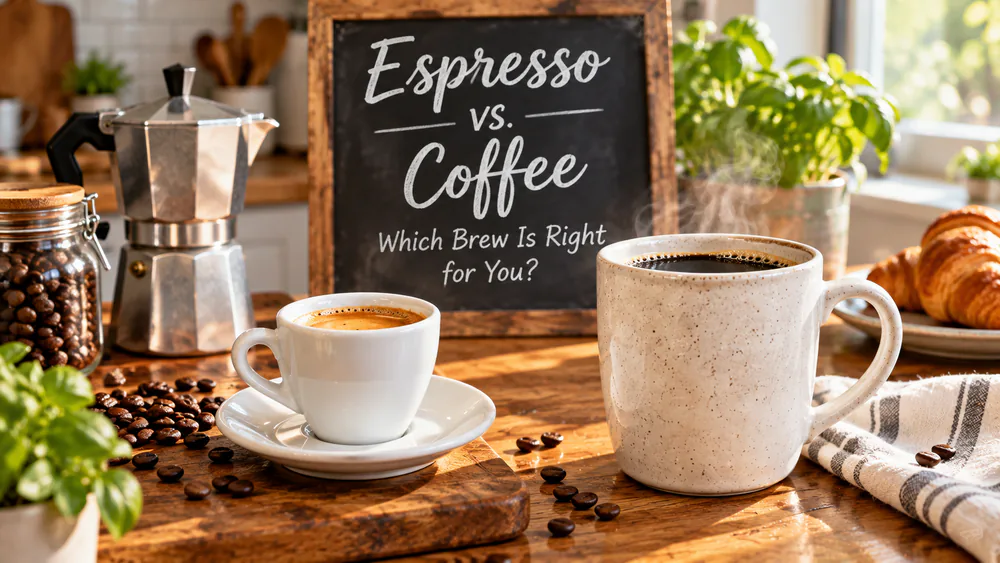
Is espresso just stronger coffee? Not really: espresso is a brewing method, not a different bean or a stronger drink.
Pressure, grind, and portion size set the two apart. Espresso forces hot water through fine grounds at about 9 bar in thirty seconds. Drip coffee lets gravity do the work over minutes, and below we compare brewing, caffeine, and taste.
Key takeaway. Espresso vs. coffee: which should you drink? Espresso wins for concentrated, syrupy shots; per serving it has less caffeine than drip (about 63 mg versus 95 mg) but more per ounce. Black, both are essentially calorie-free.
Espresso vs. Coffee: Quick Comparison
Comparison table: espresso vs. drip coffee
| Attribute | Espresso | Drip coffee |
|---|---|---|
| Brewing method | Pressurized water through a packed puck | Gravity filter or steep |
| Pressure | About 9 bar | None; gravity only |
| Grind size | Very fine (like table salt) | Semi-coarse to medium |
| Water ratio | About 1:2 | About 1:16 to 1:18 |
| Brew time | 25-30 seconds | 4-8 minutes |
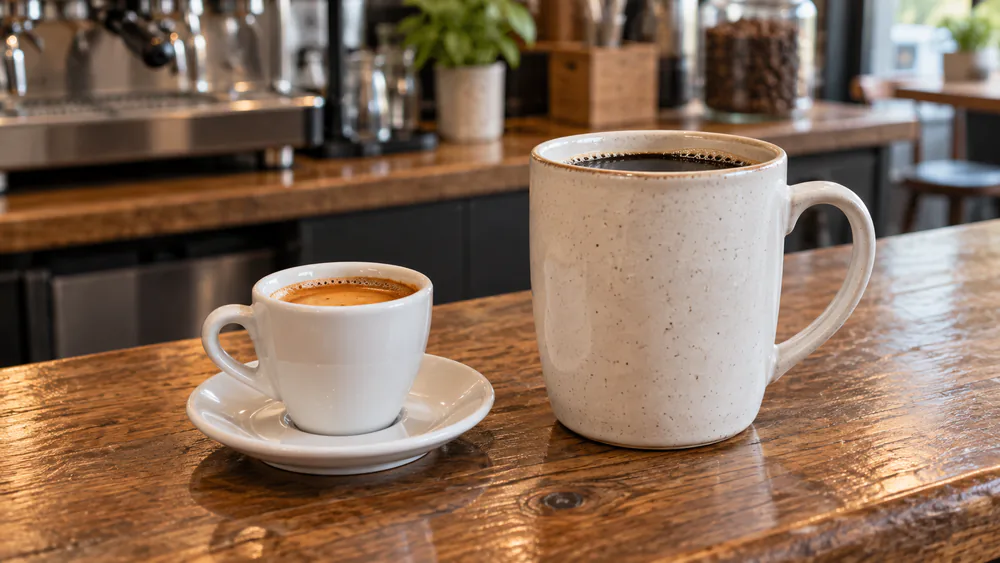
| Serving size | 1-2 oz shot | 6-12 oz cup |
| Caffeine per serving | About 63 mg per 1-oz shot | About 95 mg per 8-oz cup |
| Taste and body | Bold, syrupy, concentrated, crema-topped | Lighter body, cleaner, more transparent |
What Is Espresso?
Espresso is a type of coffee: a brewing method that forces hot water through finely ground coffee under high pressure to make a small, concentrated shot.
How Espresso Is Made
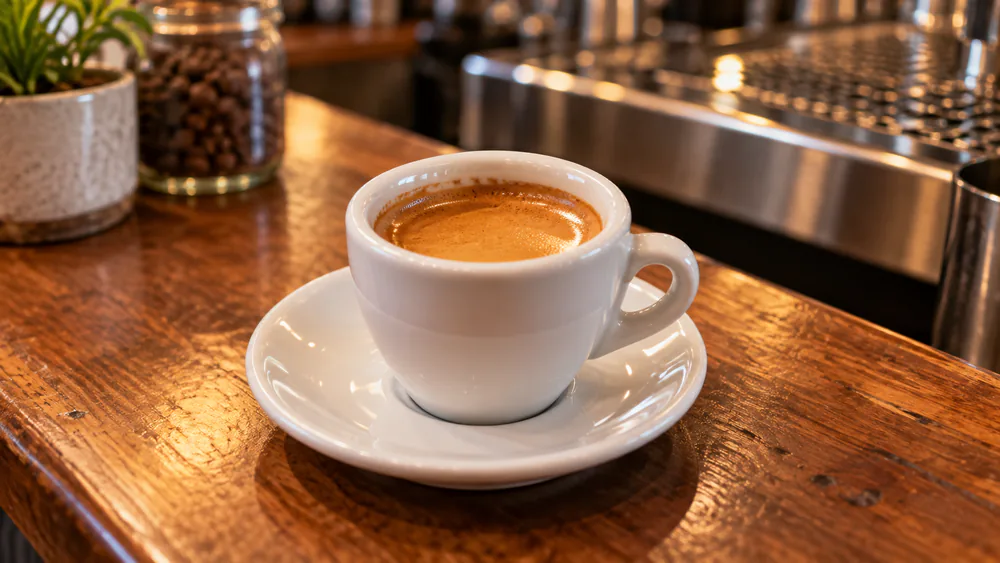
A barista measures about 18 grams of coffee ground to the texture of table salt and tamps it into the portafilter, the handled basket that locks into the machine, before extracting the espresso, a process called pulling a shot. Water at 195-205 F (90-96 C) passes through the puck at about 9 bar for 25-30 seconds, and out comes a 1-2 oz shot crowned with crema, the golden foam pressure creates.
What Is Coffee?
Brewed coffee is ground beans steeped or filtered with hot water at low or no pressure. Machines and pour-overs follow the same setup: water over grounds, left to brew.
How Brewed Coffee Is Made
The grind is semi-coarse to medium, the water ratio runs about 1:16 to 1:18, and gravity does the work, so a batch takes 4-8 minutes and a serving lands between 6 and 12 oz.
Espresso Beans vs. Coffee Beans
There is no such thing as an espresso bean; the label is marketing, and the same beans brew either drink.
Roasting and Grinding
Roast level comes down to preference: darker roasts are traditional for espresso, but light roasts are common in third-wave cafes. Grind size distinguishes the methods: very fine for espresso, semi-coarse to medium for drip.
Brewing Method: The Key Difference
Pressure is the difference, and we could taste it. In our test kitchen, the same beans produced a clean, transparent cup of drip coffee and an intense, syrupy espresso topped with crema. The coffee did not change; the method did.
Per the Specialty Coffee Association, the standard is about 9 bar, which is why a true shot needs a pump; the pressure forces carbon dioxide out of the grounds, emulsifies the oils into crema, and extracts a concentrated liquid in seconds.
Dialing in is the real work of home espresso; beginners burn through a bag of beans before shots come out right.
Caffeine: Which Has More?
Espresso tastes stronger, and per ounce it is: about 63 mg per shot versus about 12 mg per ounce of drip, roughly five times more concentrated.
Per Serving vs. Per Ounce
Per serving, the picture flips. An 8-oz cup of drip runs about 95 mg, more than the 63 mg in a 1-oz shot, and a double shot lands around 120-140 mg. The FDA's caffeine guidance lists regular brewed coffee at 113-247 mg per 12-oz cup.
The FDA advises healthy adults to cap caffeine at about 400 mg per day, a limit the Mayo Clinic echoes, roughly four 8-oz cups or six shots, and the National Coffee Association agrees in its caffeine FAQ.
Taste, Texture, and Flavor
Intensity is the honest difference, and it comes from concentration rather than the bean.
Espresso Tastes Like
Espresso is intense and concentrated, with a syrupy body and a thick crema cap, and its flavors read bold and layered, with chocolate, caramel, or nut notes that the concentration magnifies.
Coffee Tastes Like
Drip is lighter, cleaner, and more transparent, with none of espresso's syrupy density; pour-over highlights brightness and acidity, while French press runs heavier.
Espresso vs. Coffee: Which Is Healthier?
Neither is inherently healthier: black, both are essentially calorie-free, and the difference comes from what you add.
Calories and Nutrition
USDA's FoodData Central puts a black shot at a couple of calories and a black cup at roughly the same; values vary a little by database. Either way, black coffee is essentially calorie-free; the calories in your latte come from the milk and sugar.
Antioxidants
Coffee, espresso included, is a major source of antioxidants like chlorogenic acid, though roasting lowers the content, so darker espresso roasts carry less, while a meta-analysis of 201 reports found the largest benefits at three to four cups a day.
Can You Make Espresso From Regular Coffee?
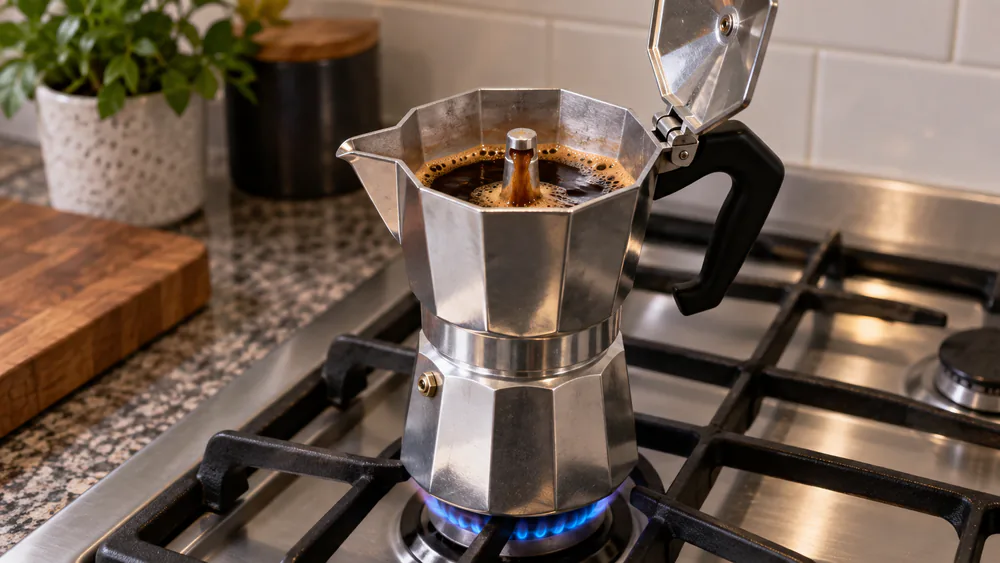
Yes, because only one kind of coffee bean exists. Any bean works as long as the grind is fine enough; the question is the machine. A true shot needs about 9 bar; a moka pot reaches roughly 2-4 bar and makes a strong close cousin, not the real thing.
Espresso as the Base for Milk Drinks
Espresso is the foundation of lattes, cappuccinos, and americanos, and its concentrated flavor holds up to milk better than filter coffee, which can taste watery with the same dilution.
Which Should You Choose?
Whether you prefer a slow pot or a fast shot, the choice comes down to how you drink coffee. If volume, ease, and a low entry price matter most, drip is the answer: a capable setup starts under $100. If you want concentrated flavor and milk drinks, espresso justifies itself, though a machine plus grinder runs $400 to $1,000 and up.
The math works when you already buy cafe drinks: a few milk drinks a day can pay a machine off in about a year, and a bag of beans is the price of the learning curve.
Frequently Asked Questions
What's the main difference between espresso and coffee?
The brewing method: espresso uses about 9 bar for 25-30 seconds; drip uses gravity over 4-8 minutes.
Which has more caffeine, per serving?
Drip: about 95 mg per 8-oz cup versus about 63 mg in a 1-oz shot.
Is espresso healthier than coffee?
Not inherently. Black, both are essentially calorie-free; what you add decides the rest.
Can you use regular coffee beans for espresso?
Yes. Any roast works if you grind fine enough; the espresso label is just marketing.
Why does espresso have crema?
Pressure forces carbon dioxide out of fresh grounds and emulsifies the oils into the foam; stale beans pour thin.
Read next
Ready to upgrade your kitchen?
Drip wins on volume and ease, espresso on intensity and milk drinks: pick the brew that fits your mornings.