As an Amazon Associate we earn from qualifying purchases. We may earn a commission from links on this page, at no extra cost to you. Learn more.
We have spent the past two years testing coffee makers in the Mr. Kitchen Adviser test kitchen, and the 30+ machines behind this roundup are the result of that program. Every finalist logged weeks of daily counter use before scoring, we measured brew temperatures on each one, and we kept notes on which machines still brewed cleanly months later. Nine earned a spot here, from a $39.94 French press to a $499.95 espresso machine.
The right machine depends on how you drink coffee: a big pot for a busy household, a pod brewer for one quick cup, a pour-over for the ritual, and an espresso machine for milk drinks. Whatever your habit, the picks below are the ones we would give counter space. Start with the top picks for a quick verdict, then read the full reviews when one catches your eye.
Note. Pricing reflects street prices as of early August 2026, and they move with sales.
Our Top Picks
The nine picks below are ranked by category rather than head-to-head, since a French press and an espresso machine serve different mornings.
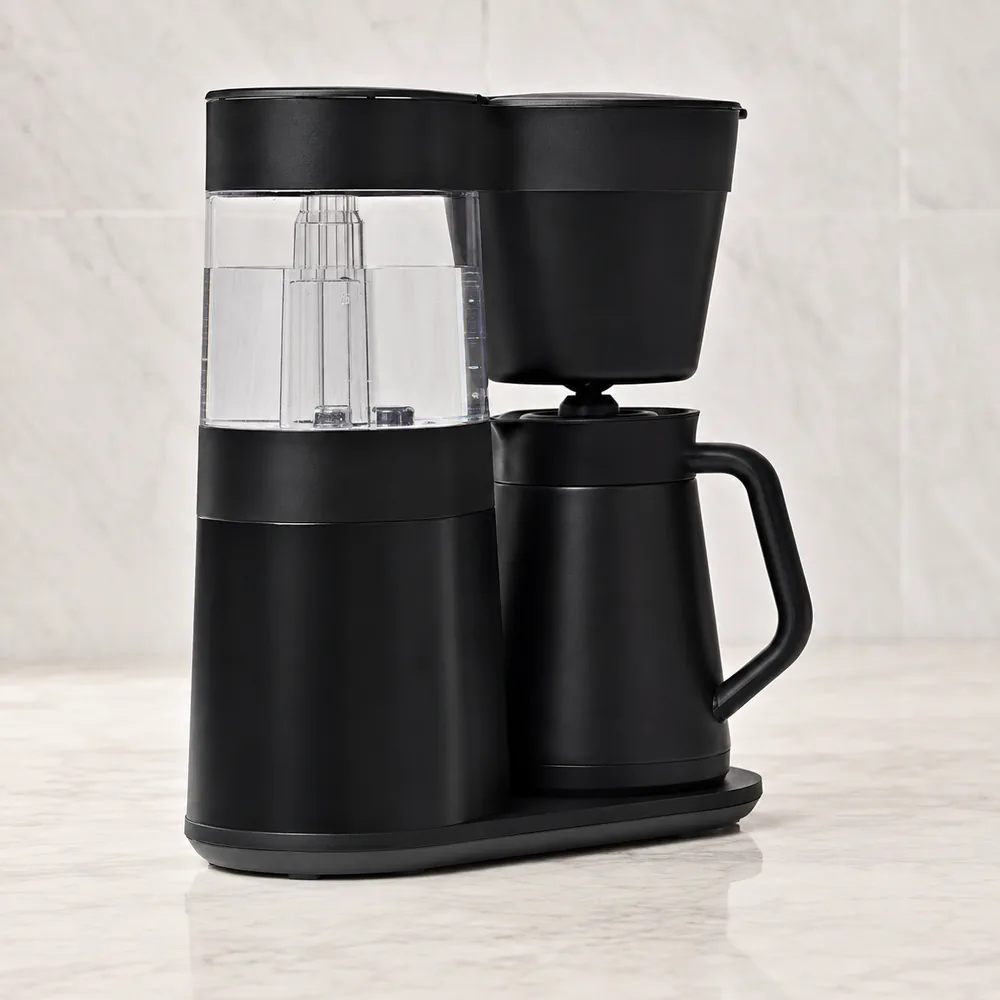
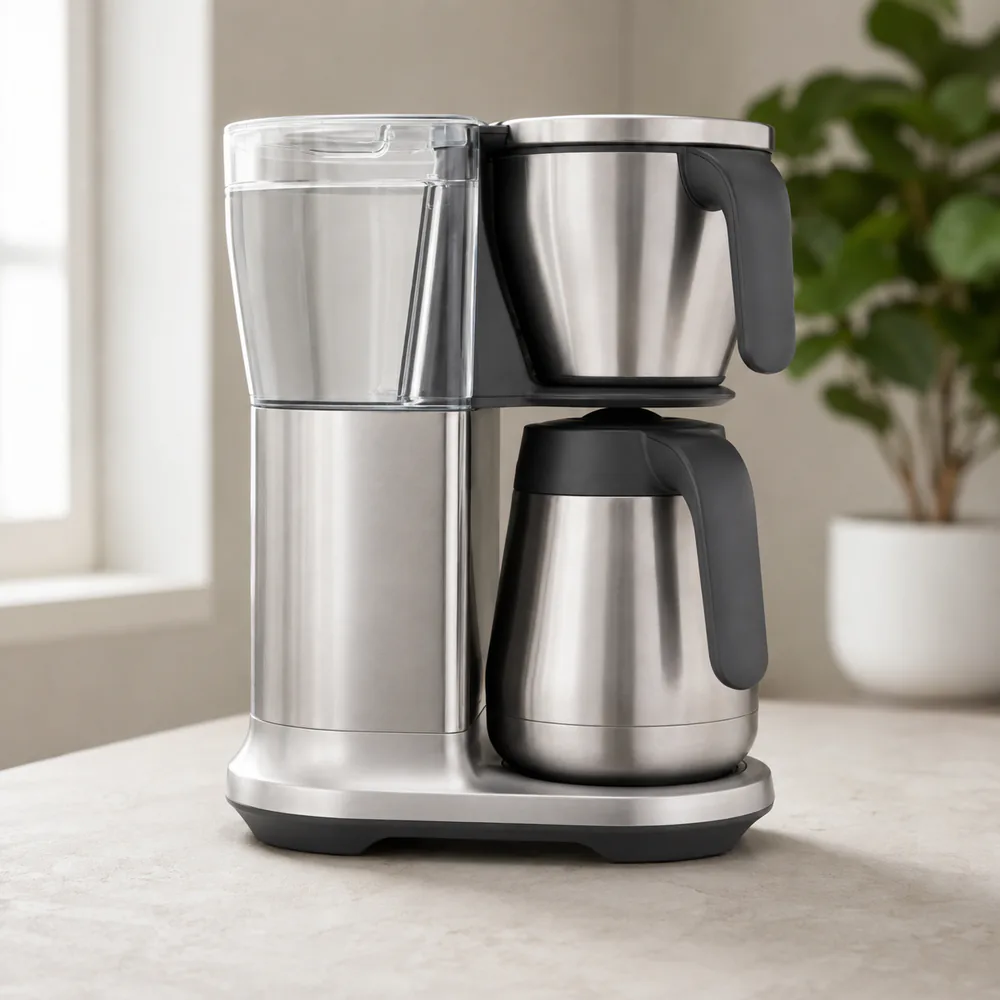
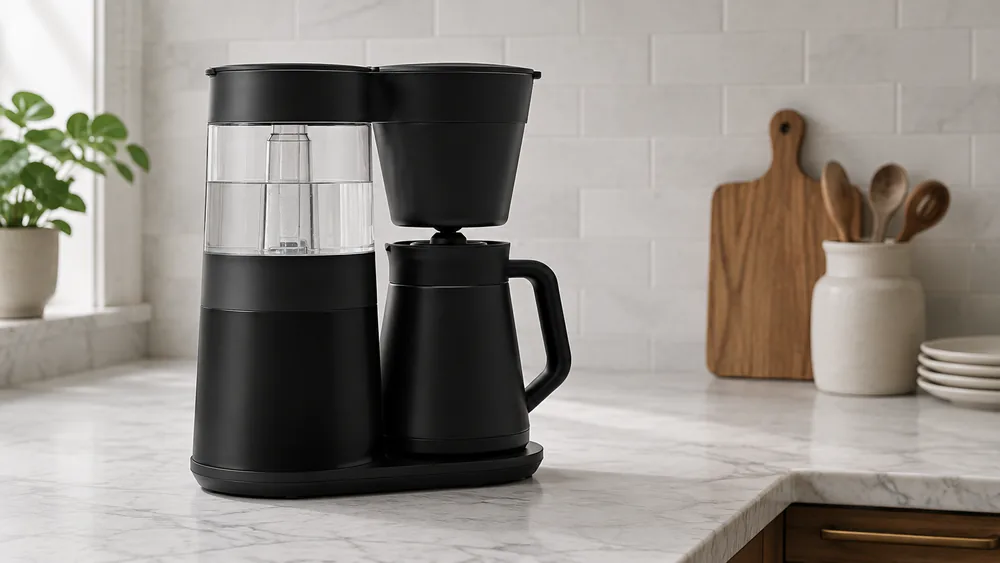
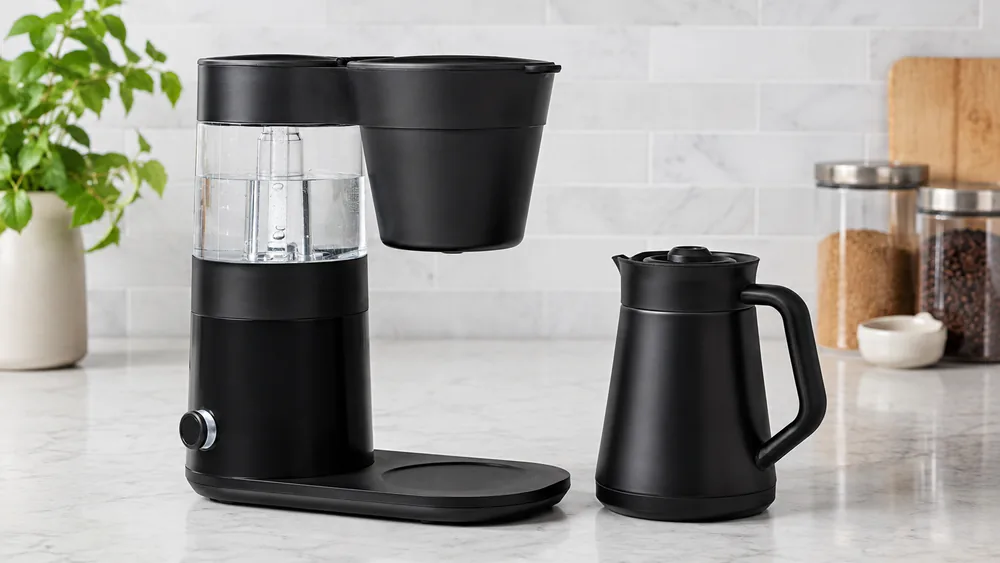
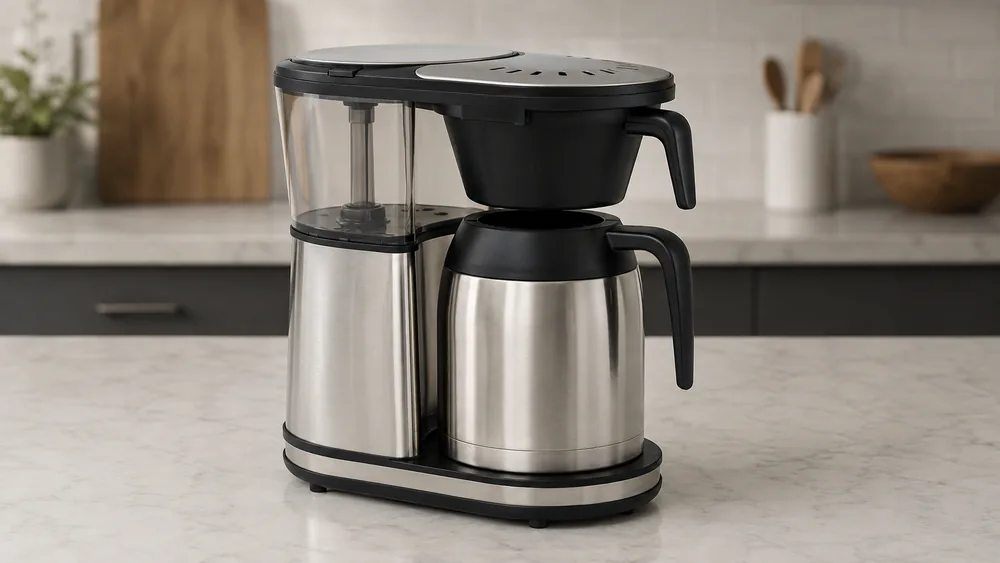
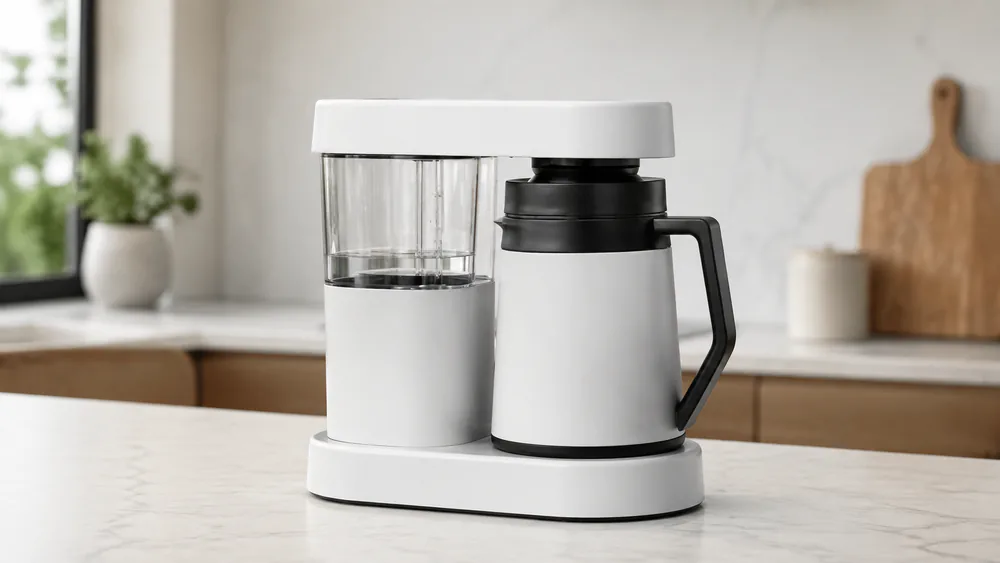
Our overall pick is the OXO Brew 9-Cup, an SCA Certified Home Brewer that delivers cafe-quality drip coffee at the push of one button. The 9-cup thermal-carafe model we tested runs about $245 at the time of writing, OXO has sold it at $187.49 on sale, and street pricing swings with sales and between carafe variants. A full pot brews in 7 to 8 minutes, and the 2-year warranty covers the parts most likely to matter. The OXO Brew 9-Cup product page carries the full spec sheet.
Pros
Water hits the grounds at 197.6 to 204.8 F, the SCA-preferred drip range
Thermal carafe held 165 F a full hour after the last drip
Brew pause plus a freshness counter that tracks roughly 90 brews to descaling
2-year limited warranty
Cons
Water tank is not removable; it slides out of the rear to fill
About 17.2 inches tall, tight under 16-inch upper cabinets
Single strength profile; stronger-cup drinkers compensate at the grind
A small share of long-term units failed outright, with inconsistent service response
The first pot told the story: coffee that tastes like it was fussily made, from a machine that asks only for the push of a button. We ran 15 back-to-back slurry measurements with the temperature never leaving a 5-degree window, and our long-term unit is still going strong at the 2-year mark. Consistency is what keeps it on the counter: the same beans, the same button, and the same cup, morning after morning.
The single dial runs the whole machine, and the thermal carafe keeps the last cup hot.
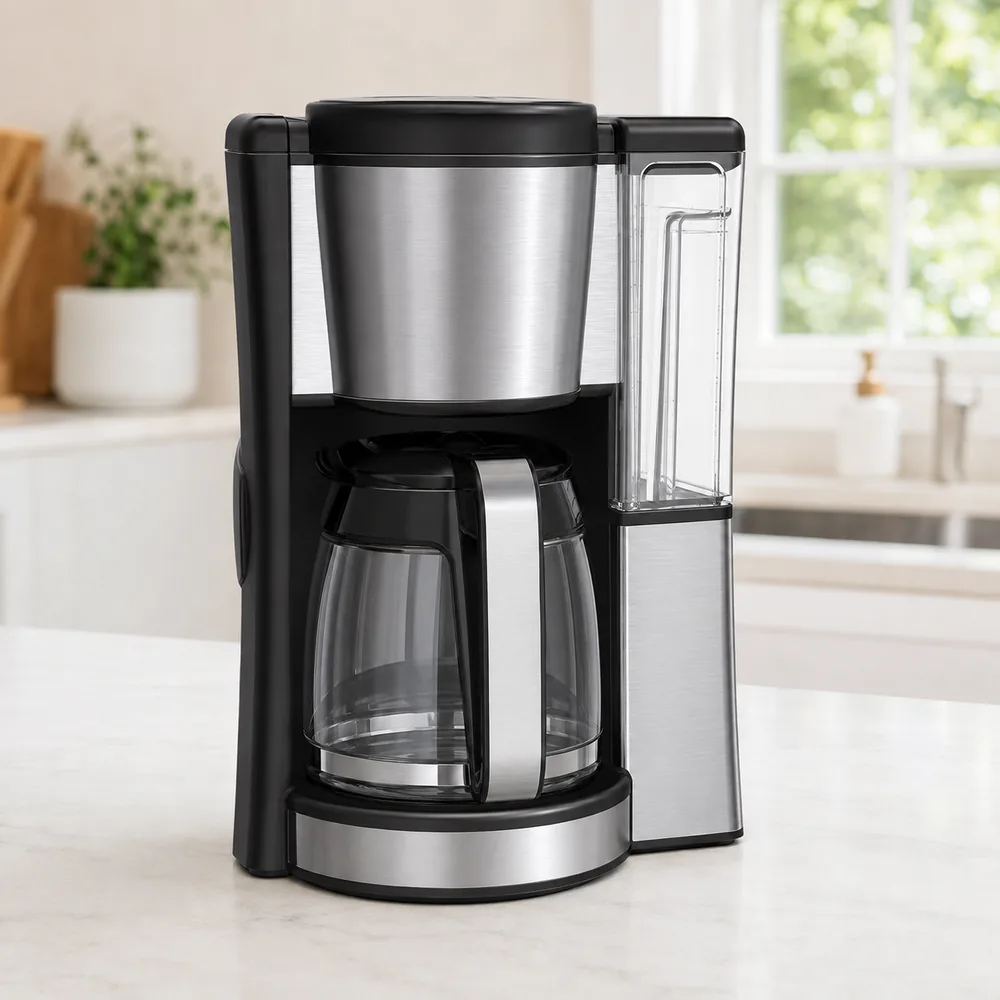
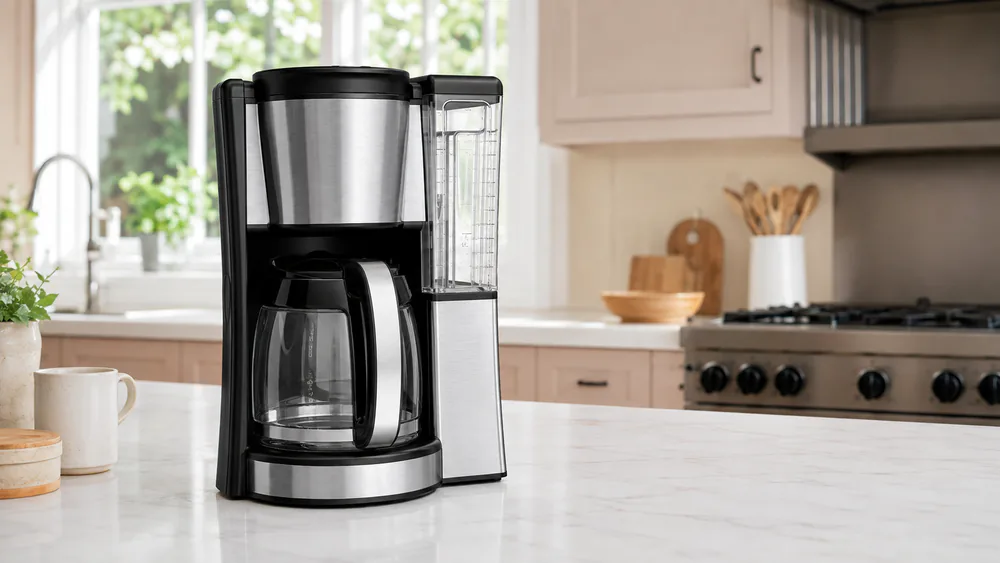
The Ninja 12-Cup Programmable Coffee Maker (CE251) makes the best-tasting drip coffee of any machine under $100 we have tested, and it is also one of the easiest machines to use. The 12-cup glass-carafe model sells for about $90 at the time of writing, usually between $70 and $100 on the street. A full pot takes about 15 minutes, slow by drip standards, and the 1-year warranty is the budget norm.
Pros
Best-tasting drip under $100 in our blind tastings
Programmable delay brew with a 24-hour window
Adjustable warming plate holds coffee hot up to 4 hours
60-ounce removable reservoir
Cons
Full 12-cup pot brews slowly by drip standards
1-year limited warranty
The failure points we track in long-term units: warming plate stops, glass carafe micro-cracks
The taste panel work told the story: the CE251's cups came out balanced and delightful, smooth but bold in flavor. The rich brew setting is noticeably stronger on the mornings that need it, and our daily full-pot unit brewed perfectly for six months, which is more than we can say for pricier machines.
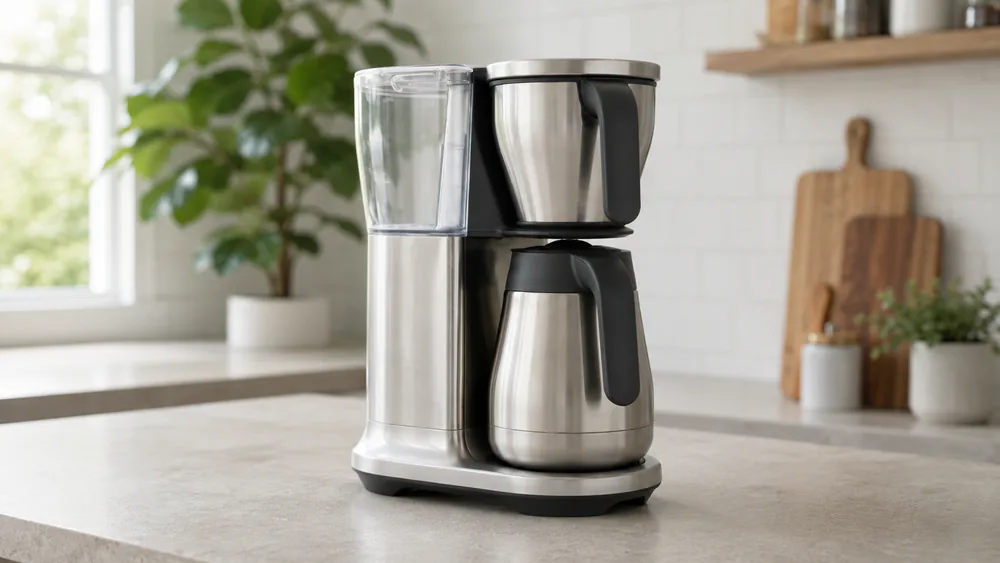
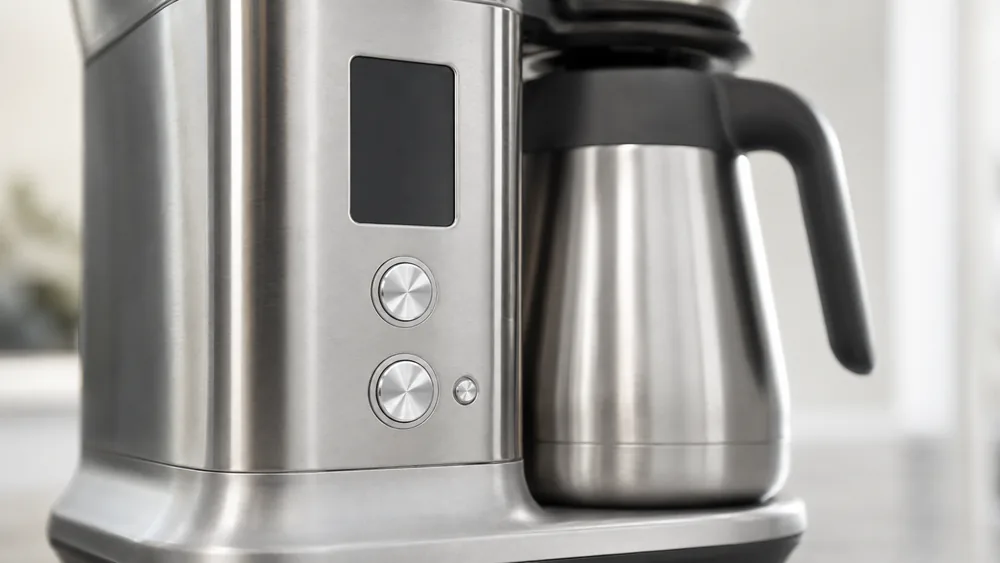
The Breville Precision Brewer is the most programmable drip machine we tested, with six brew modes, PID temperature control, and a My Brew mode. That last mode lets you dial in bloom time, temperature, and flow rate yourself to match a specific bean rather than a generic preset. The 60-ounce thermal-carafe model lists at about $330, and its street price drifts with availability and sales. It runs at 1650 watts and carries a 2-year limited warranty, which is the standard for Breville's premium line.
Pros
Six brew modes plus My Brew customization of bloom, temperature, and flow
PID controller holds the SCA Gold Cup temperature band
Pour-over adapter fits Hario V60 and Kalita Wave drippers
2-year limited warranty
Cons
Default Gold-mode cups read light-bodied to several testers
A couple of long-term units developed a small top leak after a few months
Some units brewed cold coffee that descaling advice did not fix
The Gold Cup preset targets the SCA band, and our slurry measurements confirmed the machine holds the line cup after cup. The coffee read palatable, neutral, and smooth with a fleeting finish, though several testers found it a touch light, so we dialed up the strength for most mornings. Fast mode finished a carafe well ahead of the standard cycle and became our rushed-morning default.
Six brew modes and a My Brew setting make this the deepest programmer in the roundup.
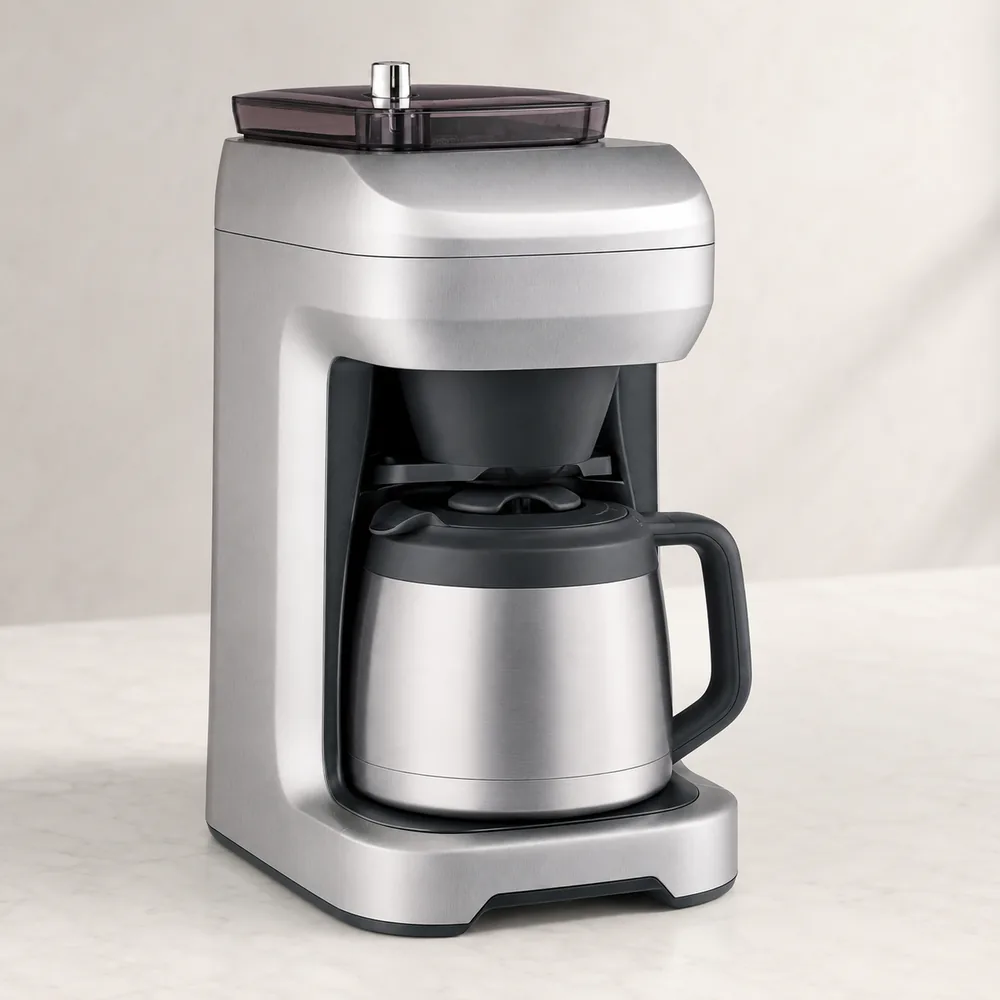
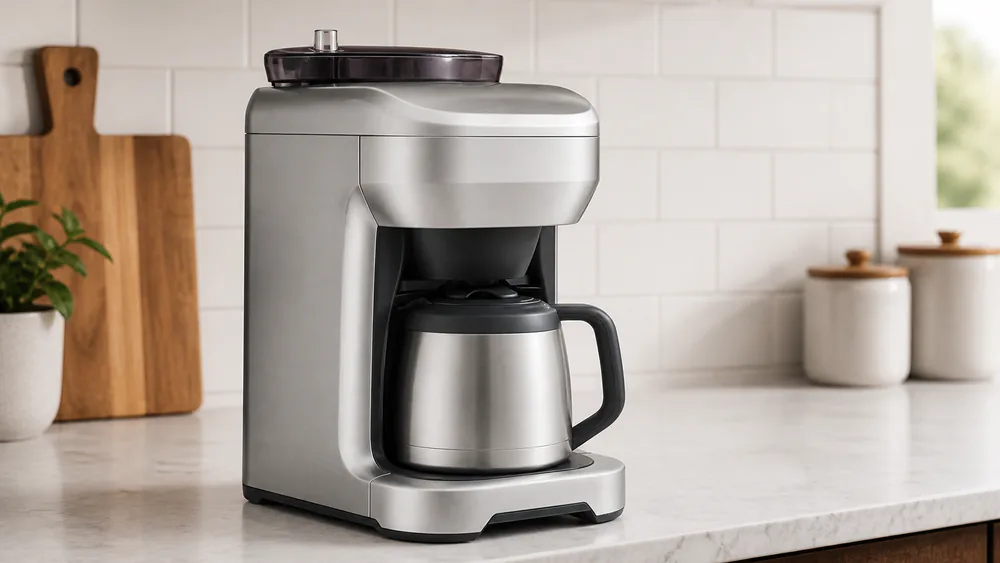
The Breville Grind Control (BDC650BSS) puts an adjustable conical burr grinder and a 12-cup dual-wall thermal carafe in one machine, so a half-pound hopper of beans becomes a full pot. It lists at $399.95, and street pricing moves week to week with the occasional promo dip below list. Brew time runs 5 to 8 minutes, it kept coffee hot longer than most machines in our tests, and warranty terms run one to two years depending on the channel.
Pros
Integrated conical burr grinder with 8 strength settings
12-cup dual-wall thermal carafe and 1/2-lb bean hopper
Kept coffee hot longer than most machines in our tests
Our longest-tracked unit ran daily for 7 years and 10 months
Cons
Grinder jams on certain beans, as often as 1 in 3 to 1 in 5 brews on the unit we tracked
Needs more daily maintenance than any other pick here
Warranty runs one to two years depending on the channel
Our longest-running Grind Control unit went 7 years and 10 months of daily use before it died, and another ran 18 months before failing. The catch is the maintenance, since the grinder needs regular cleaning and skimping on it leads to failures; when it ran clean, the coffee came out robust and flavorful. Stay on schedule with the cleaning and you are rewarded with a fresh-ground pot every single morning, which is the point of a $400 grind-and-brew.
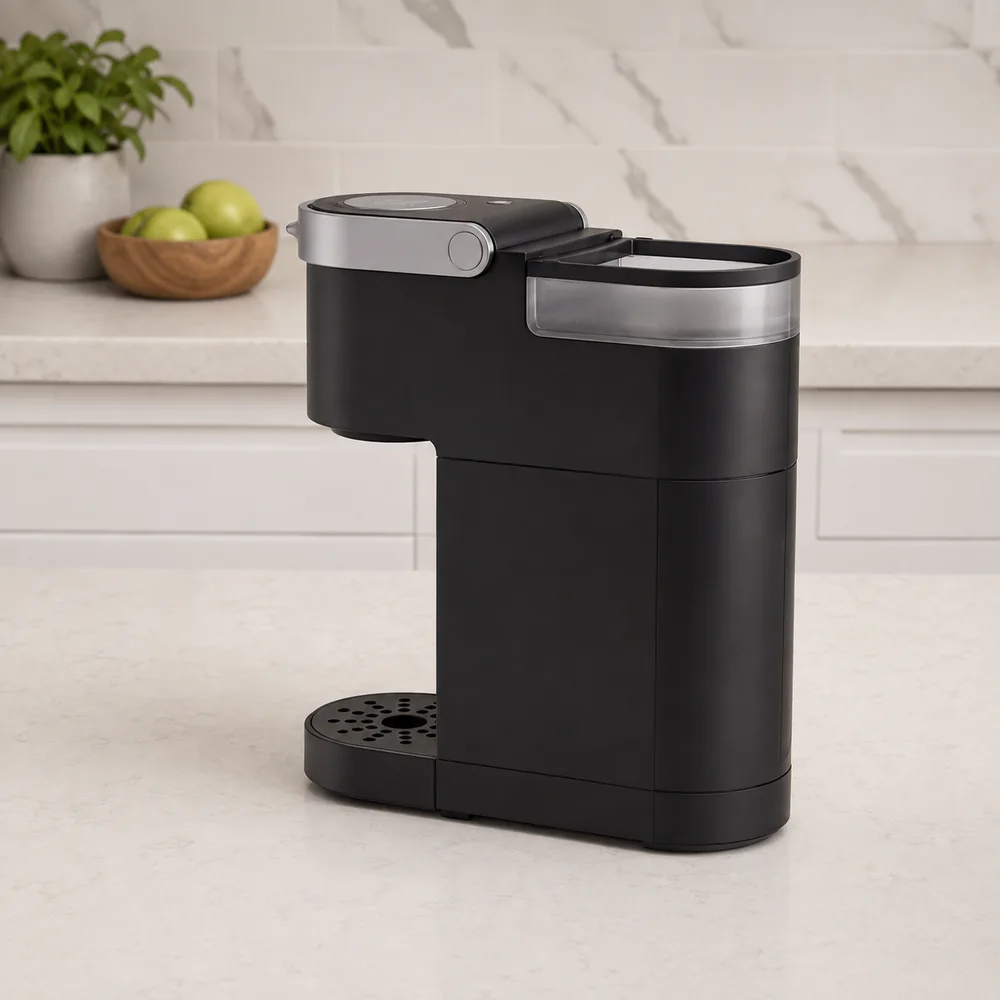
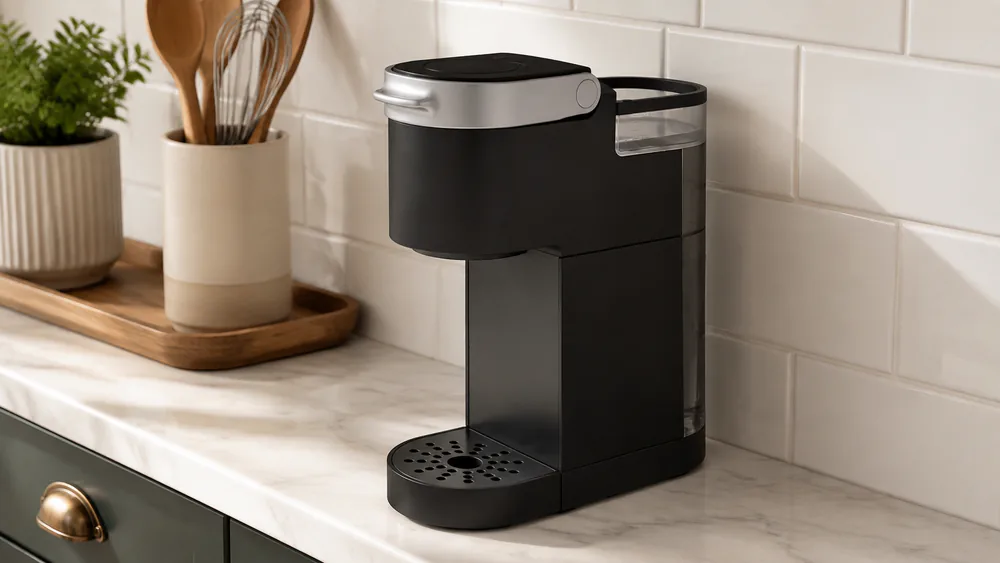
The Keurig K-Mini is the smallest single-serve brewer we tested, less than 5 inches wide, and it turns a K-Cup pod into 6 to 12 ounces of coffee in under 2 minutes. It sells for about $72 at the time of writing ($90 at list), and street pricing varies by week and finish. The one-cup reservoir is not removable, and there is no programmable timer.
Pros
Less than 5 inches wide, for the narrowest counters
Brews 6 to 12 oz cups with no preheat wait
Auto-off 90 seconds after the last brew
Cord storage and a drip tray that clears 7-inch travel mugs
Cons
Coffee reads light with slightly astringent, ashy notes in our tastings
One-cup reservoir is not removable
Tracked units last about two years of daily use
A past recall covered some units for turning on unexpectedly, so check the CPSC database for your serial number when buying used
We measured the trade-offs honestly, since the coffee comes out light and smoother than expected with slightly astringent, ashy flavors, and the unit splashes while filling and sometimes while brewing. The smallest 6-ounce cup came out in under a minute, and the footprint fit our narrowest counter. The units we have tracked last about two years of daily use, so we treat it as a convenience appliance rather than a keeper.
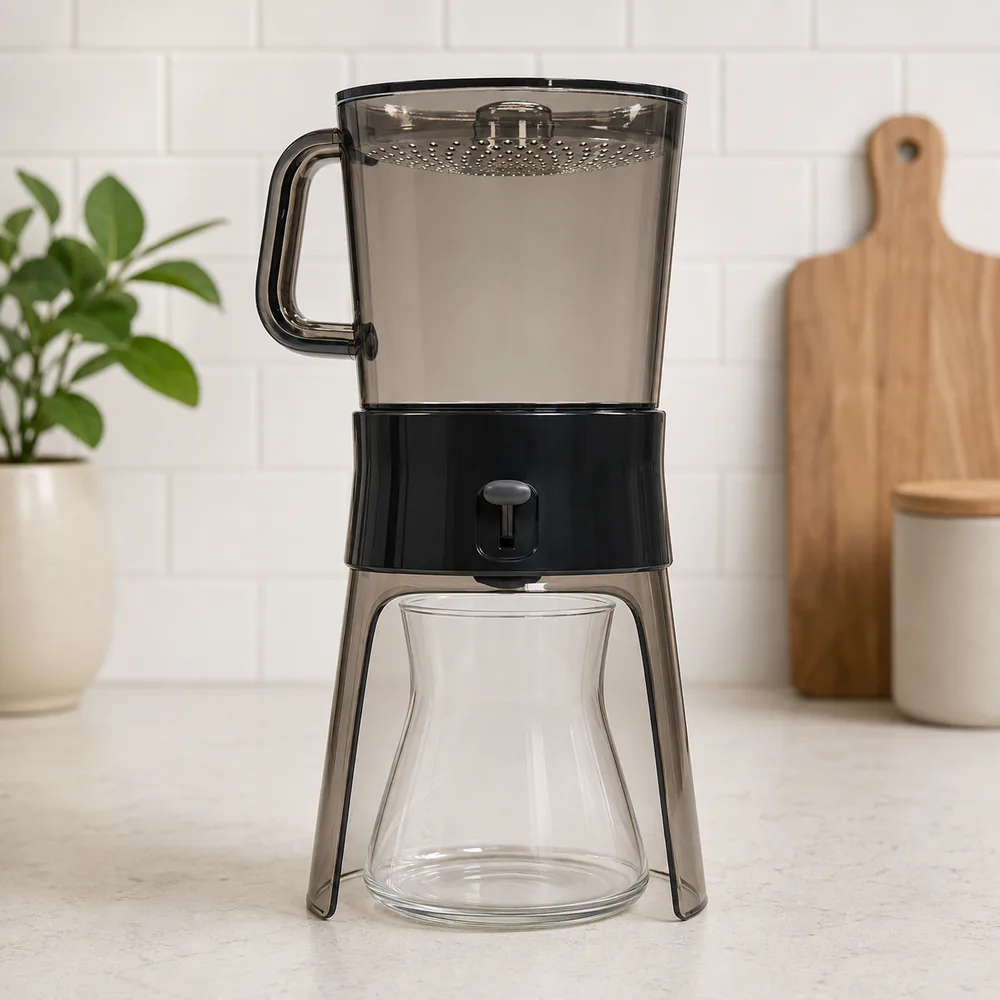
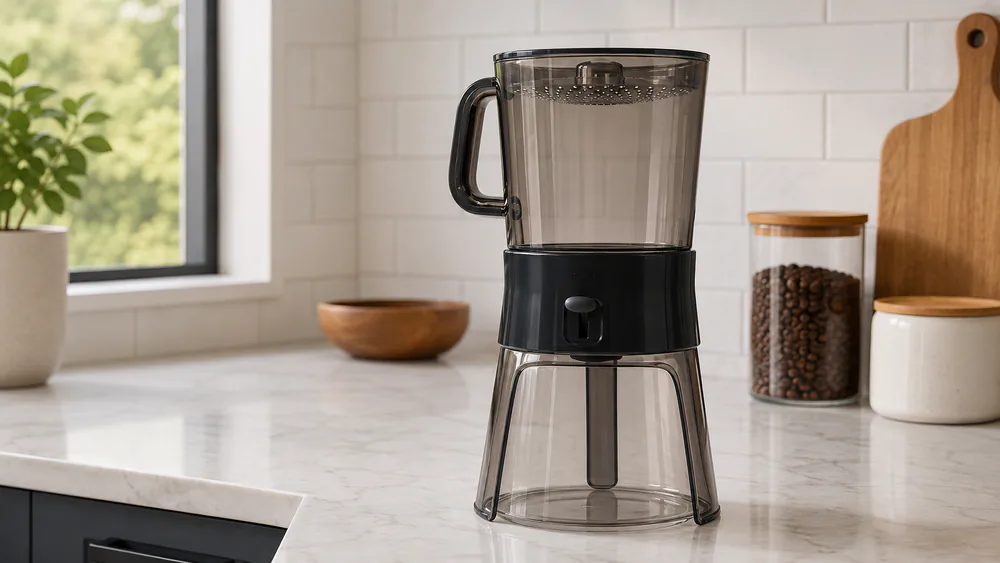
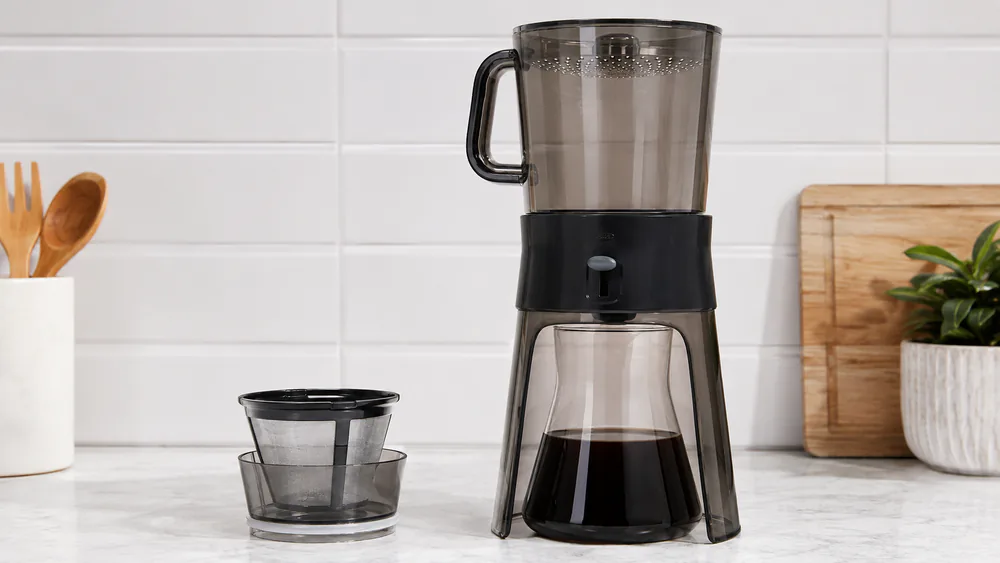
The OXO Good Grips Cold Brew Coffee Maker turns a 12 to 24-hour steep into 32 ounces of concentrate. Diluted with water or milk, that concentrate stretches to 14 coffee drinks at a fraction of the bottled price. It sells for $59.95 at the time of writing, and OXO's lifetime satisfaction guarantee backs it. The rainmaker top spreads water evenly, and a brew-release switch starts and stops filtration on demand.
Pros
Carafe volume markings mean no separate measuring cup
Brew-release switch starts and stops filtration cleanly
Strong, low-acid concentrate at a fraction of cafe cold brew prices
About 2 minutes to wash; filter basket is dishwasher safe
Cons
The overnight steep means planning a day ahead
A couple of units in our notes leaked a little during the steep
Glass carafe is hand-wash only
Concentrate approach suits steady cold-brew drinkers more than single-cup households
The carafe's volume markings meant we never touched a measuring cup, and the drain switch stopped the flow cleanly the moment the carafe came away. Our batches came out strong and low-acid, noticeably smoother than the same beans brewed hot, and we settled on 200 grams of coarse grounds to 1000 ml of water. Cleanup took about 2 minutes, and we set the brew on a tray after a couple of units wept during the steep.
Thirty-two ounces of concentrate stretches to 14 drinks, and the filter basket goes in the dishwasher.
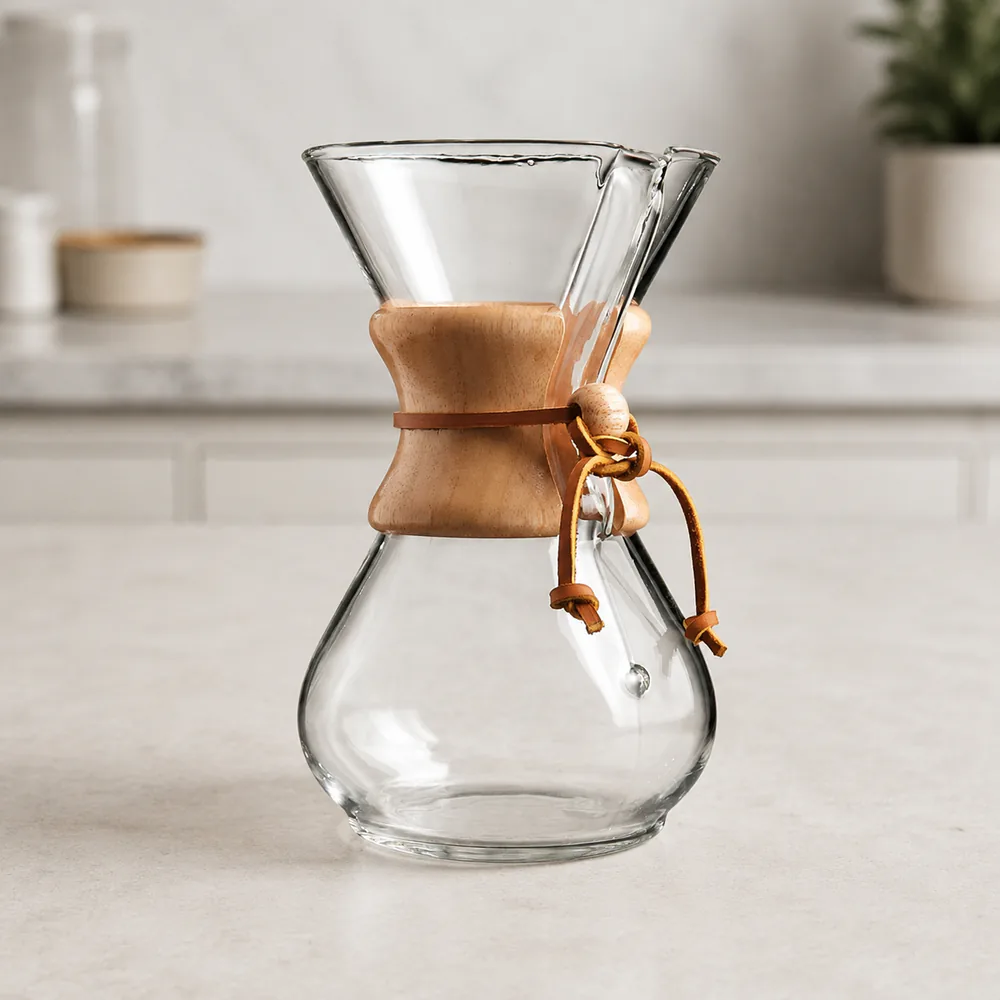
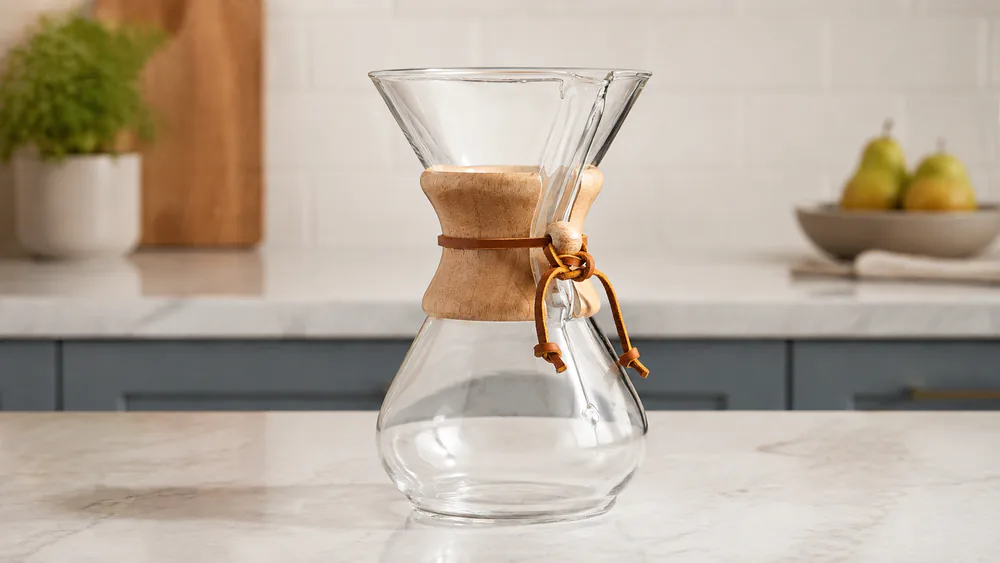
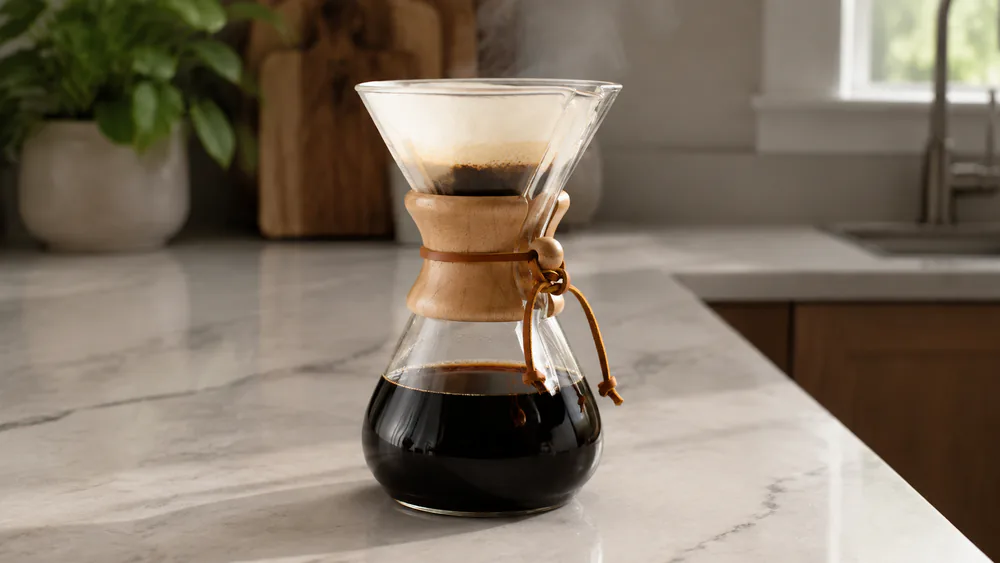
The Chemex Classic 6-Cup is the pour-over we reach for when the coffee itself is the event rather than a means to a morning. It is non-porous borosilicate glass with zero plastic in the brew path, and a full batch takes 4 to 5 minutes. It costs $47.95 at the time of writing, it carries a 1-year limited warranty, and the only consumable is the bonded filter. Chemex counts a cup as 5 ounces, so the 6-cup glass yields 30 ounces.
Pros
Sediment-free, not-bitter cups from the bonded filters and glass
Zero-plastic brew path in non-porous borosilicate glass
Cleanup is essentially nonexistent
Brewed coffee covers and refrigerates without losing flavor, per the patented design
Cons
Needs Chemex bonded filters, not included
A gooseneck kettle gives the best results
Glass carafe can break with hard use
30-ounce batch suits two people, not a crowd
What won us over was the cup itself, since the bonded filters and the glass deliver coffee that is not bitter at all and carries no sediment. A former pod household on our team converted for that cleaner taste, and the pour became the point of the morning. Cleanup is essentially nonexistent: the glass rinses out, the wooden collar wipes down, and the filter goes in the compost.
The bonded filters and all-glass brew path deliver the cleanest cup in this roundup.
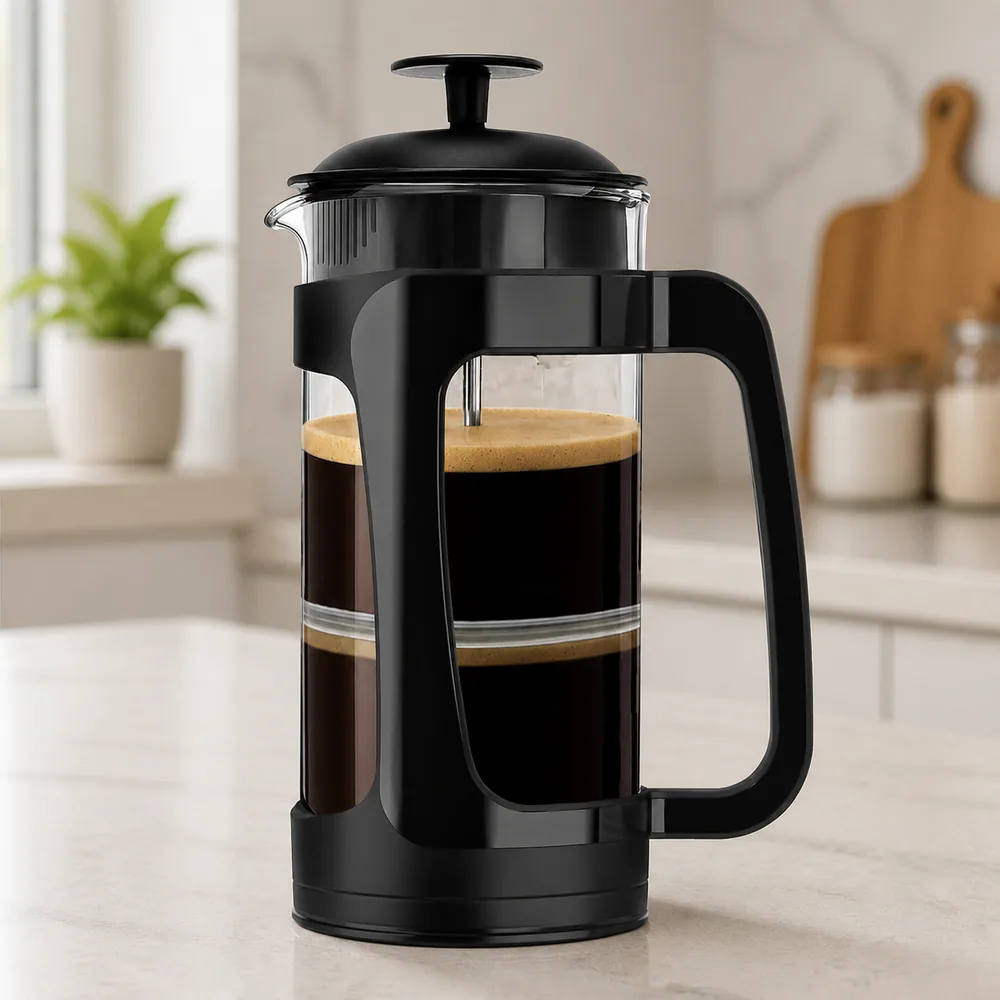
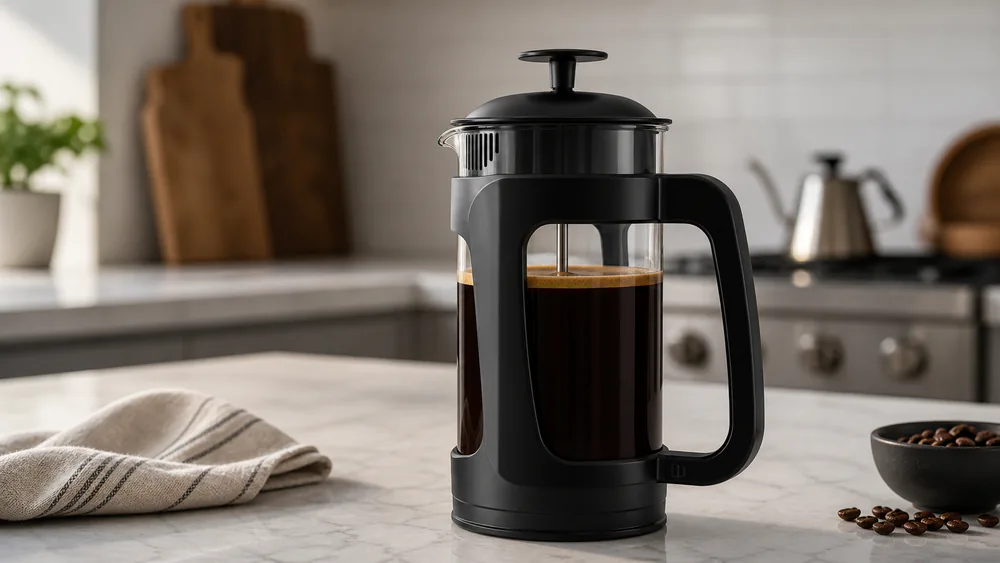
The Espro P3 French Press is the press for people who hate press coffee, since it removes the murk the method usually brings. Its patented dual-layer micro-filter is up to 12 times finer than a standard press screen, and it leaves nearly no silt in the cup. The 32-ounce (4-cup) model sells for $39.94 at the time of writing, and Espro backs its presses with a limited lifetime warranty. The carafe is borosilicate glass about 40% thicker than typical press glass, wrapped in a plastic cage frame for protection.
Pros
Dual-layer micro-filter removes 90 to 95% of fine particles
Up to 12x finer filtration than standard press screens
Borosilicate glass about 40% thicker than typical press carafes
Double silicone seal stops over-extraction and traps bitterness
Cons
Heat retention is mediocre: about 193 F to 150 F in 30 minutes, near 128 F after an hour
Deep filter basket eats capacity, so 32 oz of water yields less drinkable coffee
Cannot brew less than 24 ounces in the 32-ounce model
A few carafes in our notes broke after a couple of months
In our tasting, this was the cleanest press coffee of the roundup: bright, sweet, and free of the murk that sends people away from French presses. The measurements made us plan around the machine, since the deep filter basket changes the math on yield and heat retention; we poured promptly and brewed close to the 24-ounce minimum. About 6 ounces of liquid stays trapped below the filters, so we brewed a touch strong and topped up the cups.
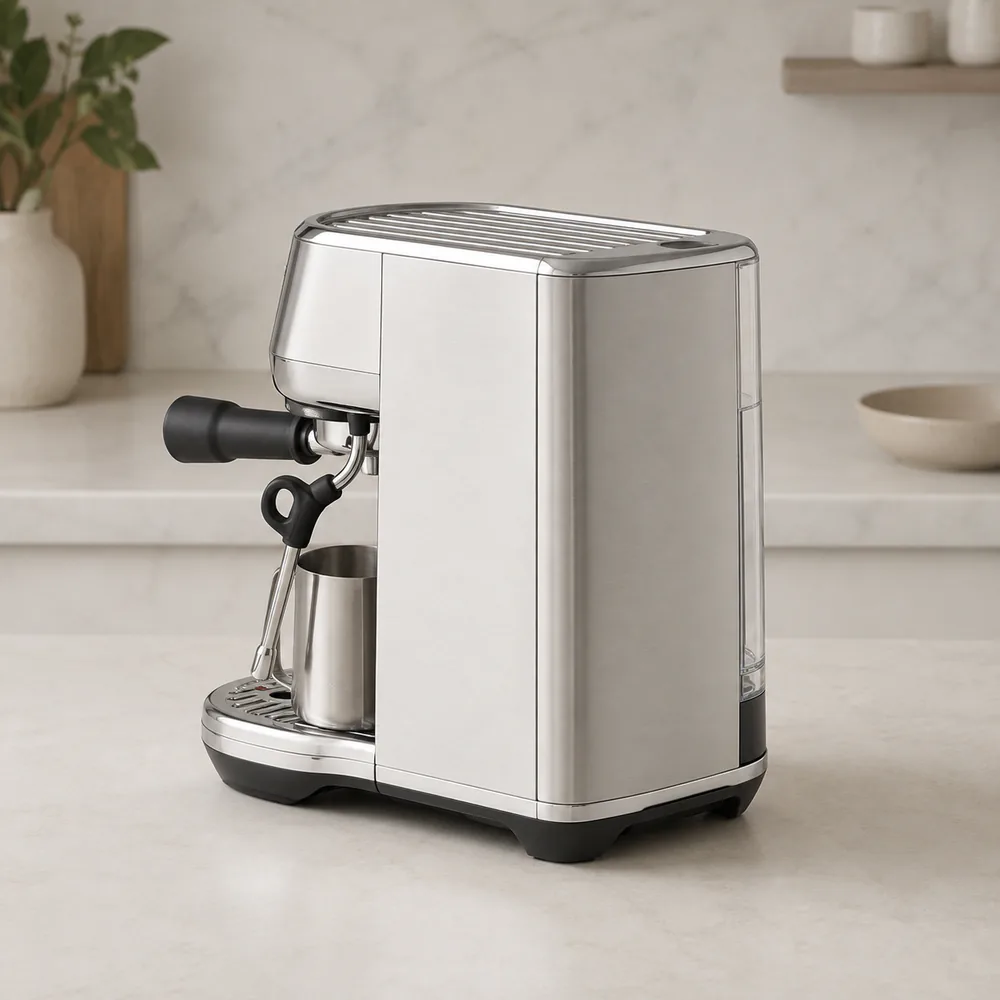
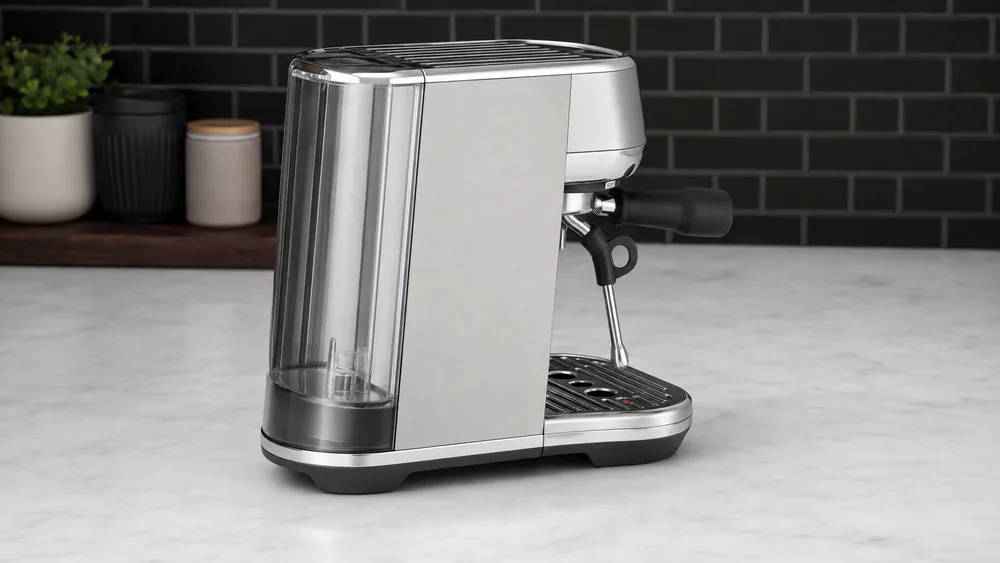
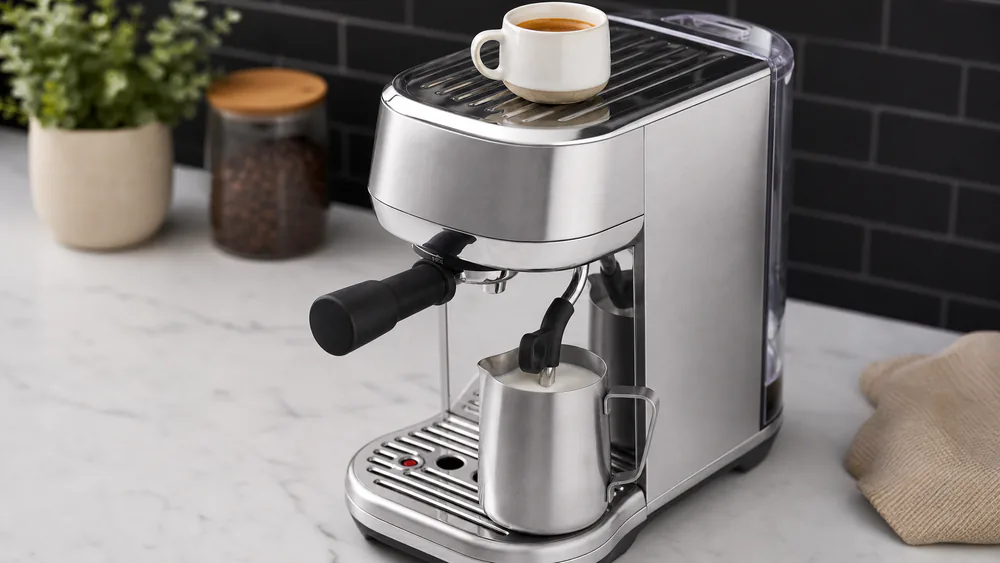
The Breville Bambino Plus is the espresso machine we recommend to beginners, because it removes the steepest part of the learning curve. The automated steam wand sets milk temperature and texture for you, and the 54mm portafilter pulls consistent shots. It lists at $499.95 at the time of writing, and a 2-year limited warranty covers it. It draws 1560 watts, heats quickly, and keeps a compact footprint on the counter.
Pros
Automated steam wand sets milk temperature and texture
Fastest switch-on to finished latte in the roundup
Compact footprint, and 2-year limited warranty
Cons
Small drip tray fills fast from the auto-purge, so empty it often
Heating elements can degrade after 3 to 4 years, and out-of-warranty solenoid repairs run about $150 to $200
One unit in our tracking failed at 7 months of infrequent use
A starter machine, not a buy-it-for-life one
Our timing runs had a finished latte in hand 4 minutes 3 seconds after switch-on, remarkably fast. Milk texture scored 8 out of 10 and consistency 7 out of 10 in our steaming tests, numbers that would have taken us years of practice with a manual wand. One unit ran nearly flawlessly for a year of one to two drinks a day, and another is still working after 2.5 years of two shots every morning.
The automated steam wand handled milk texture consistently in our steaming tests.
What to Look For When Buying a Coffee Maker
Every machine in this guide makes coffee; the criteria below separate the ones that earn counter space from the ones that do not.
Brew Types (drip, single-serve, espresso, manual)
Drip machines are the default for households that drink pots. Single-serve pod brewers like the K-Mini trade cup quality for speed and a tiny footprint, and espresso machines extract by pressure rather than gravity. Manual brewers, from the Chemex pour-over to the Espro press and the OXO cold brew, put the control in your hands. The type changes the cup more than the brand does: filters and gravity for drip and pour-over, pressure for espresso, a full steep for French press.
Capacity and Carafe Type (glass vs thermal)
Think in cups per morning, not cups per day: 12-cup machines suit households of four or more, 6-cup machines suit two, and single-serve suits one. Carafe type matters almost as much, since it decides whether the last cup is worth pouring. Glass carafes sit on warming plates that can scorch coffee left for hours, while thermal carafes hold heat with no hot plate. Thermal costs more and pours its last cup less gracefully.
Features: Programmability, Built-In Grinder, Temperature Control
A delay brew on the Ninja or the OXO means coffee waits for you, not the other way around. Built-in grinders like the Grind Control's save a countertop appliance but add cleaning and the occasional jam. Temperature control is what coffee people actually pay for: drip wants water near 200 F, and the Precision Brewer's PID controller holds that line cup after cup.
SCA Certification and Build Quality
An SCA Certified Home Brewer has met the Specialty Coffee Association's standards for brewing quality, consistency, and performance, verified by third-party testing. The certified list includes the OXO Brew 9-Cup, the Technivorm Moccamaster, and the GE Cafe Specialty Drip. Certification is not the whole story; build quality is the brew path, the tank, and the parts. Plastic matters at temperature: NIST found everyday plastic products release trillions of microscopic particles into near-boiling water, with mass loss below the FDA's 1% threshold. The Chemex, with its all-glass brew path, is the cleanest example on this list.
Cleaning, Descaling, and Warranty
Every machine here needs a descale eventually, and the OXO's freshness counter tells you when, roughly every 90 brews. Budget drip brewers like the Ninja carry one-year limited warranties, the industry norm, while premium machines run 2 to 5 years. Mr. Coffee's warranty page spells out typical budget terms. Removable parts make the routine easier, which is why the cold brew's dishwasher-safe filter basket and the Ninja's cone filter basket earn their keep.
Budget Ranges
Under $50 gets you manual brewing, with the Espro press at $39.94 and the Chemex at $47.95. From $60 to $100 you are in automatic territory, where the Ninja at $89.99 is our top value. The $100 to $350 band holds the OXO 9-Cup and the Precision Brewer, and above $350 you are buying a grinder, espresso, or both. Expensive does not automatically mean better tasting: the Ninja CE251 was the best-tasting drip under $100 in our blind tastings.
Tip. Buy whole beans and grind just before brewing, since freshness changes the cup more than any machine upgrade ever will.
How We Test Coffee Makers
We bought every machine in this guide from a pool of 30+ we tested over the past two years, and ran the finalists through weeks of daily counter use before scoring.
Brew temperature decides most of our scores, since the extraction window for drip is narrow. The ideal band is 195 to 205 F, and the SCA Golden Cup standard narrows the target to 197 to 204 F. We measure the slurry with a thermocouple, and we timed full pots and carafe heat retention.
Taste came next, with every machine brewing the same test coffee and scoring blind for balance, body, and finish. That protocol is how we know the Ninja's cups read bold and smooth while the K-Mini's ran light and slightly ashy. Manual brewers got their own routines, from steep times to milk-steaming tests.
The last criterion is what happens after the honeymoon, which is why long-term units keep running on the counter after the review is done. We track failure patterns in our notes, from warming plates and glass carafes to grinder jams and solenoid valves. A machine that fails at month eight ranks below one that still brews cleanly at year two.
Our Testing Criteria
Every machine scored 1 to 5 on brew quality, speed, ease of use and programming, cleanup effort, and long-term durability. The rating on each product box is our own score from those runs, weighted most heavily toward brew quality and long-term durability.
Every machine brewed the same test coffee and ran through weeks of daily counter use.
Other Coffee Makers We Tested
These machines brewed good coffee in the same testing program, but they did not earn a slot in the top nine. Each one is still worth a look depending on your priorities.
10
Mr. Coffee Simple Brew
3.6
A $30 to $45 12-cup switch machine with Grab-A-Cup pause and a lift-and-clean basket; fine for basic drip, but the taste trails the Ninja.
Mostly yes, but for specific upgrades rather than a better cup by itself. The Grind Control's price buys a burr grinder and a half-pound hopper, the Precision Brewer's buys six brew modes, and the OXO's 24-hour timer comes with a 2-year warranty, double the Ninja's one-year term.
What is the best drip coffee maker?
The OXO Brew 9-Cup for most kitchens, but choose by when you need the coffee. The OXO finishes a full pot in 7 to 8 minutes, quick enough for a weekday morning. The Ninja CE251 takes about 15 minutes for a full 12-cup pot, so its 24-hour delay timer matters most: set it the night before. Both are programmable; the difference is budget and counter space.
What are the different types of coffee makers?
Five categories cover the market: drip for daily pots, single-serve pods for one cup in minutes, espresso for milk drinks, manual brewers (pour-over, French press, cold brew) for control, and grind-and-brew machines in between. Start with how many cups you drink a day, then decide pods or beans, and the right type picks itself.
How do you clean a coffee maker?
Rinse the carafe daily, wash the removable basket weekly, and descale every month or two with white vinegar or a citric acid descaler. The OXO tracks its own descale cycle and reminds you on the dial, and removable, dishwasher-safe parts shorten the routine.
Glass vs thermal carafe: which is better?
Decide by how fast your household drinks a pot. The OXO 9-Cup, the Precision Brewer, and the Grind Control use thermal carafes, and the OXO's held 165 F an hour after the last drip, so thermal wins when you nurse a pot all morning. The Ninja and the manual brewers go glass, the right call when the pot is gone in under an hour. Our long-term notes flag the Ninja's warming plate and glass carafe as the failure points.
What is the best coffee maker for espresso drinks?
The Breville Bambino Plus is the espresso pick we give beginners, but it is not for every household. It brews one or two shots at a time, not a pot, so households that also want drip coffee should buy a drip machine and a separate frother instead. And it is a starter machine, not a buy-it-for-life one; the Grind Control we tracked ran daily for 7 years and 10 months.
Why Trust Mr. Kitchen Adviser
Mr. Kitchen Adviser is an independent kitchen-gear testing site, and we buy the products we review. The 30+ coffee makers behind this guide were purchased for our test kitchen, not borrowed for a favorable paragraph. We test for weeks of daily counter use and keep long-term notes on the machines we live with, so the rankings change when the evidence does.