As an Amazon Associate we earn from qualifying purchases. We may earn a commission from links on this page, at no extra cost to you. Learn more.
Updated August 2026. Specs and street prices re-verified.
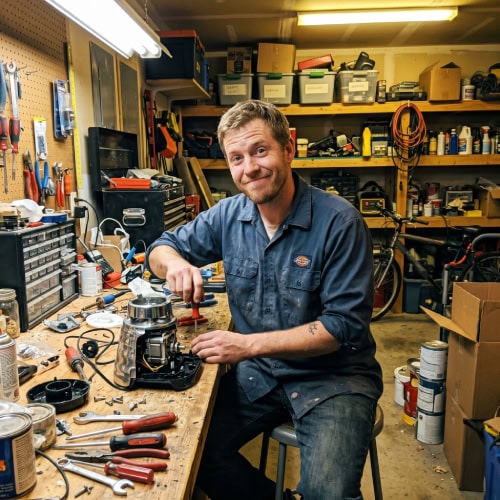
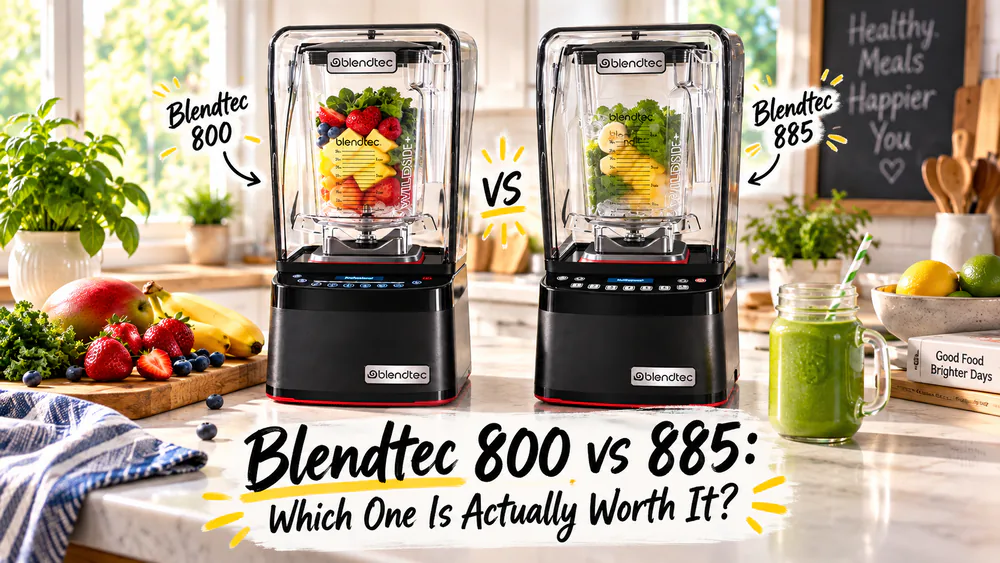
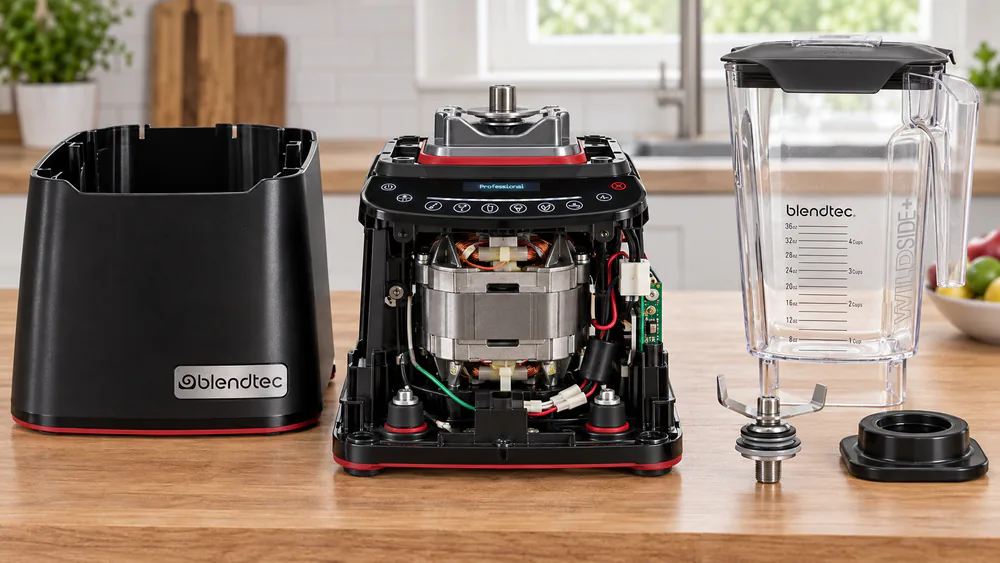
These two blenders share one motor and one jar: a 3.8 peak horsepower motor rated at 1800W on a 15A circuit and the same WildSide+ 90 oz jar (36 oz blending capacity), yet they sell about $500 apart. The gap is packaging: sound enclosure, controls, and duty rating. Published measurements put the 800 around 67 dB at the counter, while the 885's figures range from about 60 to 74 dB, and after three weeks of daily use we opened both to check the motor, wiring, blade-mount seal, and drive coupling. The 885's enclosure costs more to disassemble and reseal; the 800's chassis is faster and cheaper to service.
Quick Verdict: Which One Should You Buy?
For a home kitchen, buy the 800: quieter at the counter (about 67 dB versus up to 74 dB), simpler controls, a 10-year warranty, and about $500 less. The 885 is the machine a juice bar buys: 200+ blends per day, NSF certified. On everyday recipes the 800 finished a loaded smoothie in about 60 seconds.
Blendtec 800 vs 885: Side-by-Side Specs
Core Specifications at a Glance
Feature
Blendtec Professional 800
Blendtec Stealth 885
Target audience
Home kitchen, light commercial
Commercial-first: juice bars, coffee shops
Motor
3.8 peak hp / 1800W / 15A / 120V
3.8 peak hp / 1800W / 15A / 120V
Noise at the counter
about 67 dB
about 60 to 74 dB (varies by seal)
Controls
11-speed touch slider, 6 presets, pulse
42 presets, pulse, BlendWizard + USB (14 custom)
Jar
WildSide+ 90 oz (36 oz blend), BPA-free, dishwasher-safe
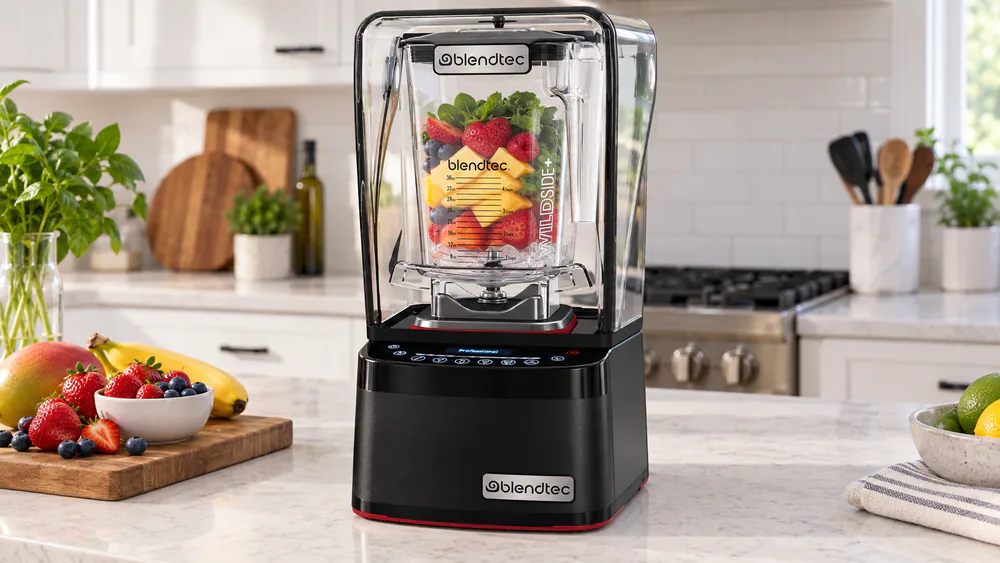
The Blendtec Professional 800 is the machine we kept on our counter after three weeks of testing. Its sealed enclosure is the quietest blender arrangement we have lived with: a podcast at normal volume mid-blend, nothing waking upstairs. The 11-speed touch slider and 6 pre-programmed cycles cover every home recipe.
Pros
Quietest at the counter: about 67 dB at full speed
11-speed touch slider, 6 pre-set cycles, pulse
10-year residential warranty plus 30-day money-back
Sealed jar, no removable blade seals to lose or replace
Self-clean in under a minute
Cons
No tamper included; nut butter stalls without a stop-and-stir
Sealed jar bearings fail first; a grind at idle means jar replacement
Acrylic enclosure is a fingerprint magnet
Startup torque can nudge the unit on polished counters
Key takeaway. The 800 is the pick for a household that blends most days: quiet mornings, simple controls, and a warranty that outlasts the machine.
Real-World Experience
Morning smoothies were velvety in about 60 seconds; tomato basil soup took under five minutes. Thick loads stall on an air pocket; liquid first, ice last fixes it. Any liquid under the jar means the blade-mount seal is compromised: file a warranty claim.
Who It's For: Home or Light Commercial
The 800 is marked "For Residential Use Only", so treat it as a home machine. At about 17.25 in with the enclosure, measure your upper cabinets first.
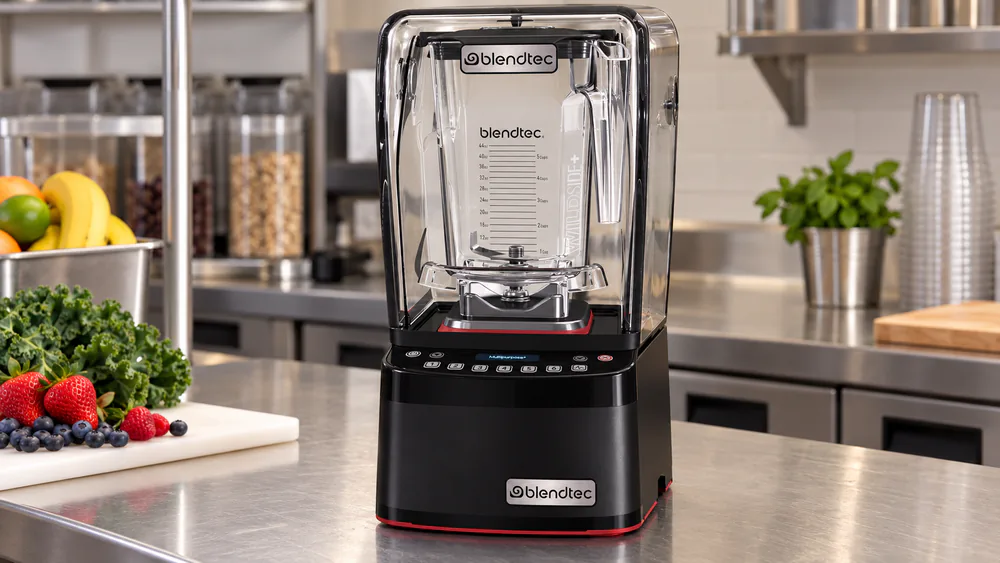
Where the 800 stays home, the Blendtec Stealth 885 is built for the counter behind the register. Its Stealth enclosure holds conversation level when shut. It is NSF-certified commercial food equipment rated for 200+ blends per day, with 42 one-touch cycles. The catch is the interface: no manual speed slider, and custom cycles need a computer, BlendWizard, and a USB drive (14 stored).
Pros
Rated 200+ blends per day, NSF and ETL certified
Quietest of the two at its best: conversation level when sealed
42 one-touch pre-set cycles with LCD countdown
USB port plus BlendWizard, 14 custom cycles stored
Same WildSide+ 90 oz jar as the 800
Cons
About $500 more than the 800 at street prices
3-year parts / 1-year labor warranty, far shorter than the 800's 10-year residential coverage
No manual speed slider; the 42-cycle menu on a two-line display is confusing
Key takeaway. The 885 is the buy for a juice bar, coffee shop, or any counter that needs 200+ blends a day and a programmable, NSF-certified machine. In a home kitchen it is more machine than the job needs.
Real-World Experience
Sealed, the 885 blends at conversation level; open, it is the loudest machine in this test. The lid is a quirk: one new unit sprayed water on a clean cycle when unseated. In commercial service, gaskets and dampening pads need weekly inspection; failing blade bearings mean full jar replacement.
Who It's For: Commercial or Heavy Home Use
The 885 earns its price at 200+ blends per day. For heavy home use it works, but you pay for the commercial rating, the certification, and an interface you will not use.
The 6 Differences That Actually Change Your Decision
1. Noise: Which One Is Actually Quieter?
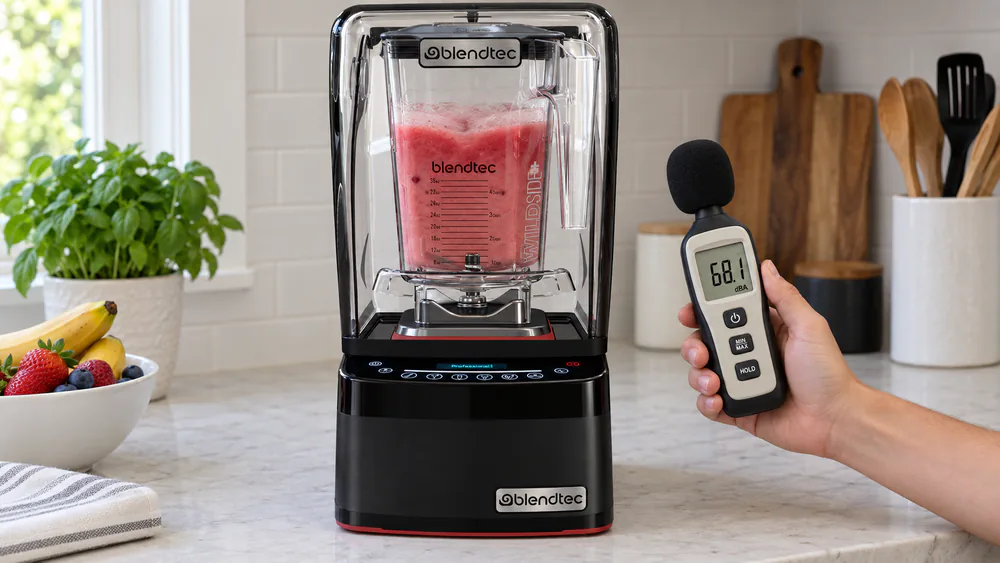
The 800 is quieter at the counter, not close once you know the 885's catch. Published measurements put the 800 around 67 dB at the user's position. The 885's figures range from about 60 to 74 dB and hit their low numbers only when sealed; open, the raw motor is deafening. So "stealth" is conditional: the 885 only wins sealed; in real use, the 800 is steadier. For perspective, 67 dB is normal conversation; the OSHA workplace noise guidelines put the hearing-protection threshold at 85 dB.
Published measurements put the 800 at about 67 dB at the counter.
2. Motor Power and Performance
This is the non-difference. Both carry the same motor: 3.8 peak horsepower, rated 1800W on a 15A, 120V circuit. That 1800W is the nameplate spec, not a plug draw we measured; no source publishes a measured watts-at-the-wall figure for either machine. The math cross-checks (15A × 120V = 1800W), but nameplate amperage is a peak ceiling, not mid-blend draw: a universal motor pulls rated amperage only in brief peaks like an ice crash, with normal smoothie runs well below it. Both use the same patented blunt blade (about 80% thicker, 10x stronger) and are assembled in the USA. What differs is duty rating: the 800 is residential-only, the 885 rated for 200+ blends per day.
The same 1800W-class motor in both; the 885's enclosure adds disassembly work.
3. Controls and Pre-Set Cycles
The 800 gives you an 11-speed touch slider, 6 pre-programmed cycles, and pulse. The 885 gives you 42 one-touch cycles and is the only one with programming: BlendWizard and a USB port store up to 14 custom cycles. The trade: no manual speed slider, a 42-cycle menu on a two-line display. For a home user, 6 presets beat 42; for a shop, repeatability is the point.
4. Jars and Capacity
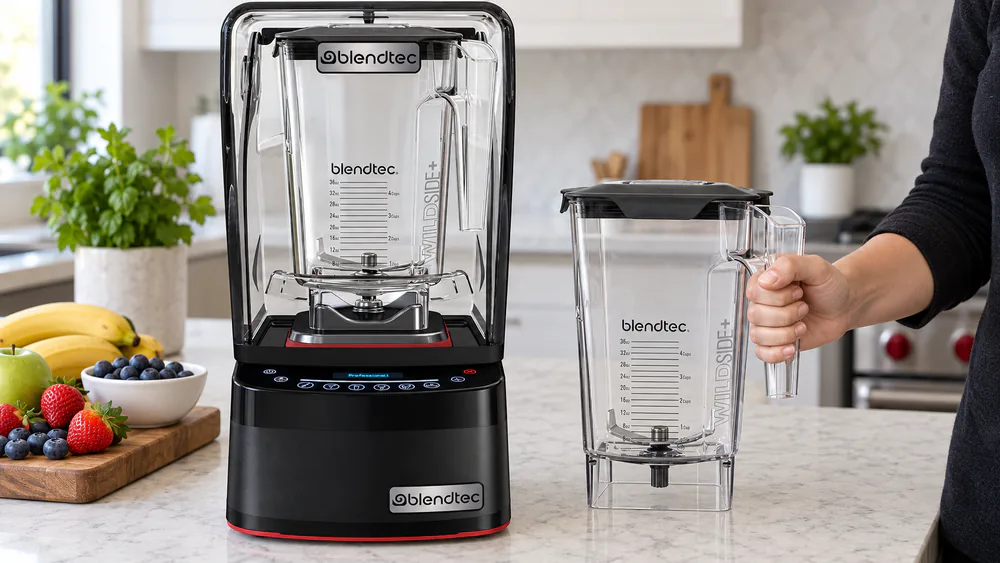
No difference here either. Both ship with the same WildSide+ 90 oz jar (36 oz blend capacity), BPA-free, and jars swap freely between bases; the 800's is dishwasher-safe. The failure point is the sealed bearing: rotating jars extends life, a grind at idle means jar replacement.
The same WildSide+ 90 oz jar fits the 800 and 885 bases.
5. Price and Long-Term Cost
Street prices at the time of writing put the 800 at $799.95 and the 885 at $1,297.64 (a nearby two-jar 885 bundle at $1,275.59 corroborates that ballpark), a gap of about $500. No official list price was verifiable for either machine, so street is the only honest number: pricing moves week to week and varies by retailer. The premium buys the enclosure, the commercial rating, and the 42-cycle interface, not faster blending.
Price and long-term cost
Blendtec Professional 800
Blendtec Stealth 885
Street price (time of writing)
$799.95
$1,297.64
Typical price gap
about $500 less than the 885
Warranty
10-year residential plus 30-day money-back
3-year parts / 1-year labor
Blade and jar replacement
Same sealed WildSide+ jar on both; jar replacement is the main part cost
Same
Service cost
Simpler chassis, faster and cheaper to service
Enclosure adds disassembly and resealing work
6. Warranty and Support
The 800's 10-year residential warranty plus 30-day money-back guarantee is the strongest coverage here, verifiable on the official Blendtec Professional 800 product page. The 885 carries a 3-year parts / 1-year labor commercial warranty, per the official Blendtec Stealth 885 product page. From service experience, parts matter more than headline years: the sealed jar and blade assembly is what fails, and one part serves both machines. Blendtec shipped a replacement promptly on return of the failed unit.
Real-World Performance Results
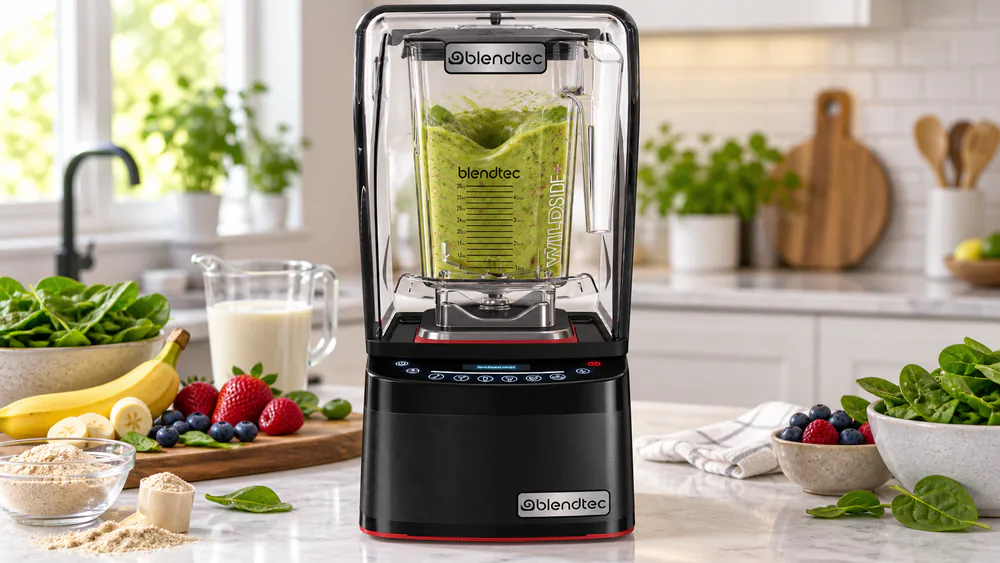
A loaded smoothie in about 60 seconds on the 800.
Smoothies and Frozen Drinks
A loaded protein smoothie with kale, frozen fruit, and ice finished in about 60 seconds on the 800: no grit, only the occasional small chunk. The 885 tore through the same fully frozen loads without hesitation once liquid was in the jar.
Ice Crushing and Nut Butter
Both tear through ice once liquid is present; the 885 will not blend dry ice. Nut butter is where the 800 needs help: without a tamper, a thick load stalls on an air pocket. We ran ours at 2 a.m. in an apartment without disturbing anyone; nut butter that took 7 minutes in an old blender finishes smooth in about 60 seconds.
Hot Soups and Heavy Loads
The 800's hot soup cycle made tomato basil soup in under five minutes; both generate heat through the blunt blade, welcome for soup, a caution for raw juice on long cycles.
Cleaning and Maintenance
Self-clean works on both: hot water and a drop of soap, seconds on pulse, then rinse. Dry jar and base before the enclosure goes back on; trapped humidity breeds bacteria. The 800's acrylic enclosure needs a microfiber wipe; the 885's button crevices trap sticky juices and its USB port stays sealed.
Home vs Commercial: The Real Use-Case Split
The shorthand that the 800 is for home and the 885 is for shops is mostly right, but for the wrong reason: both are 1800W-class machines. The 885's premium buys a home user the enclosure, touchpad, and commercial duty rating plus NSF certification, not faster blending. Respect the 800's residential-only marking: a shop doing 200+ blends a day should not run one. Serve customers? Buy the 885. Feed a household? Buy the 800.
Final Verdict: Blendtec 800 or 885?
Key takeaway. For the home kitchen, the winner is the Blendtec Professional 800: it matches the 885's blending results, runs quieter at the counter, carries a 10-year warranty instead of 3-year parts / 1-year labor, and costs about $500 less. The Stealth 885 is the right buy for commercial counters that need 200+ blends per day.
Buy the 800 for a household that values quiet mornings and low long-term cost; buy the 885 if the blender is a revenue tool or you need BlendWizard programming. Still weighing premium countertop blenders? Our Vitamix E310 review covers the other side. A machine only earns a recommendation if it performs well and is built to last, and after three weeks of daily use and a full teardown, the 800 is the one we would buy.
Frequently Asked Questions
Is the Blendtec Stealth 885 quieter than the Professional 800?
Only when its enclosure is fully sealed. In real use the 800 is steadier at about 67 dB; the 885's published figures range from about 60 to 74 dB.
How many decibels is the 885 vs the 800?
The 800 measures about 67 dB at full speed, roughly 65 to 67 dB depending on how it's measured. The 885 varies from about 60 to 74 dB, sealed to reach its low end. Neither approaches the 85 dB OSHA threshold.
Can the Blendtec 800 handle commercial use?
Not for full commercial duty. It is marked "For Residential Use Only" and is not rated for commercial blend counts, so a shop doing 200+ blends a day should not run one.
Are the 800 and 885 jars interchangeable?
Yes. Both ship with the same WildSide+ 90 oz jar (36 oz blend capacity), and jars swap freely between bases. The jar is the main long-term replacement part.
Is the commercial warranty shorter than the residential warranty?
Yes, significantly. The 885 carries a 3-year parts / 1-year labor commercial warranty; the 800 carries a 10-year residential warranty plus 30-day money-back.
Is the Stealth 885 worth the extra money?
For a juice bar or coffee shop, yes: the 200+ blends per day rating, NSF certification, and BlendWizard justify the premium. For a home kitchen, no: the 800 blends the same recipes for about $500 less.