As an Amazon Associate we earn from qualifying purchases. We may earn a commission from links on this page, at no extra cost to you. Learn more.
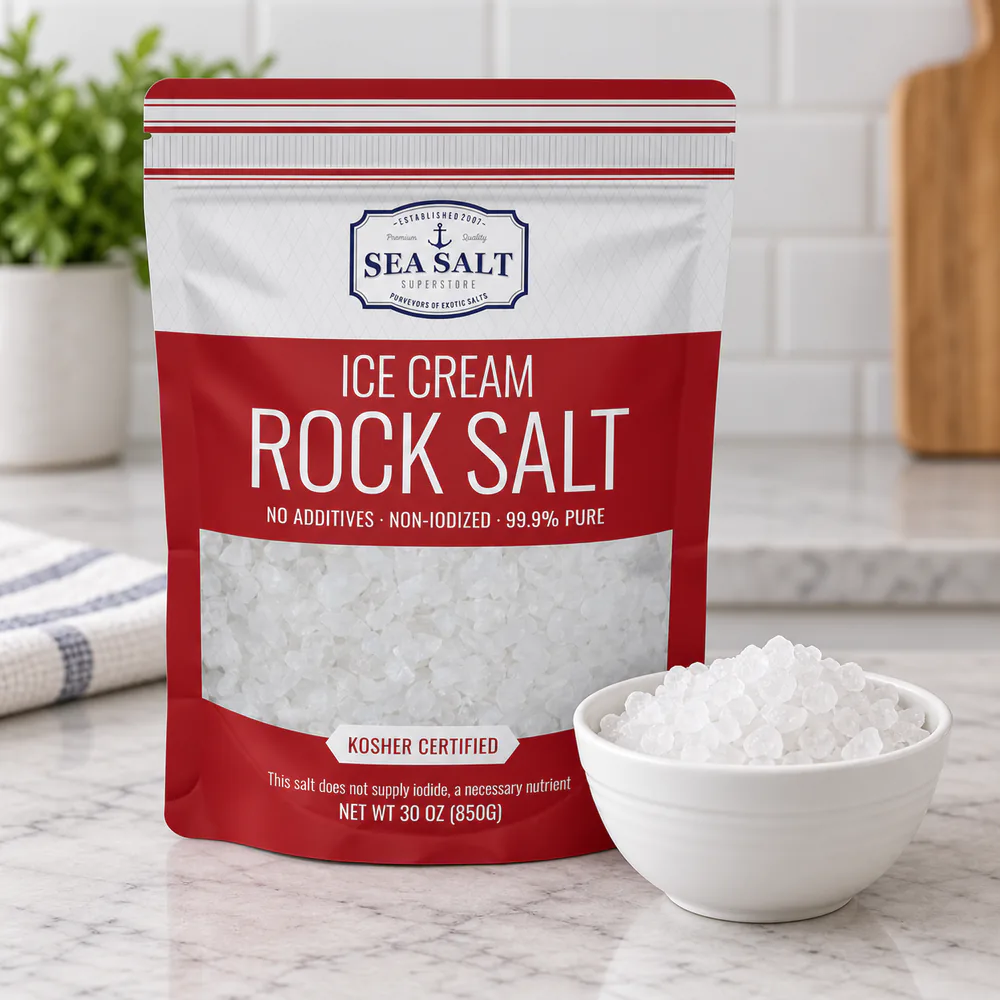
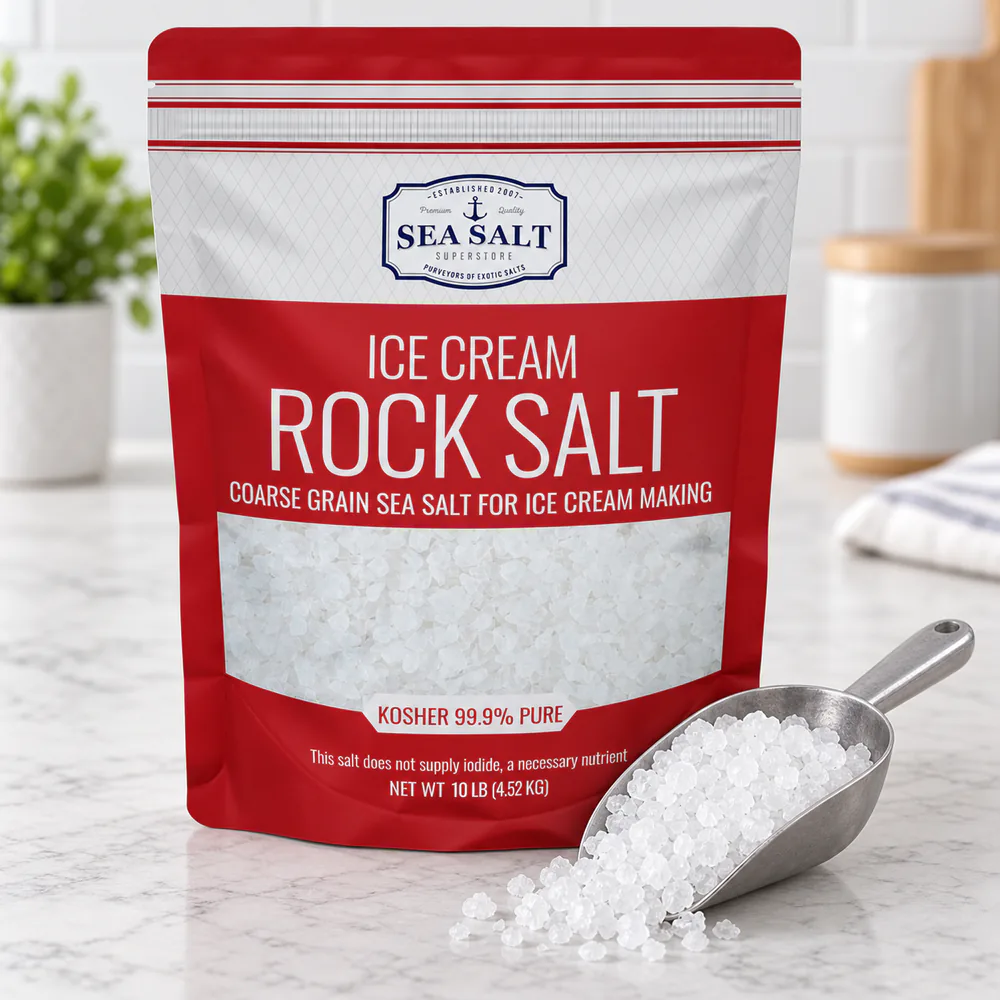
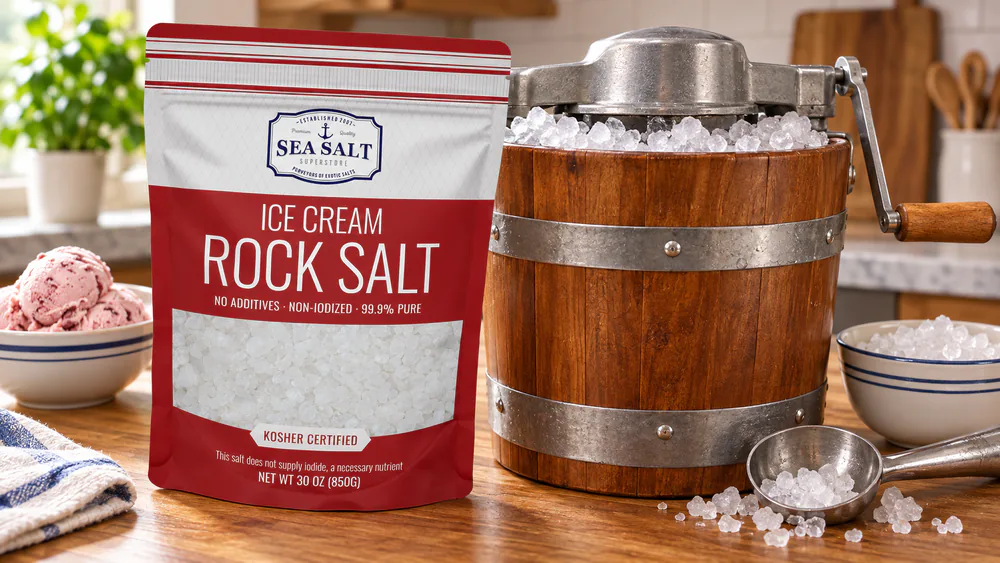
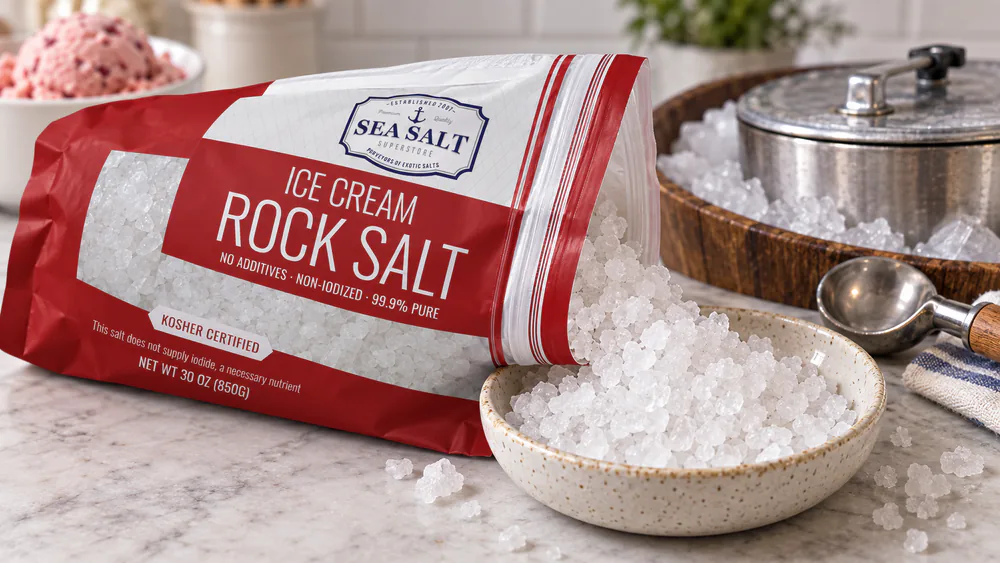
We ran five rock salts through the same test: one churn, one vanilla base, and a stopwatch on the brine, and the Sea Salt Superstore Rock Salt for Ice Cream Making, 30 oz stood out from the first batch, with 99.9% pure, extra-coarse crystals that dissolved slowly and finished our vanilla velvety and clean tasting.
Salt is the half of the salt-and-ice method that the manual skips, and it is the half that decides the batch, because layered around the canister it drags the brine down to about -6 F (-21 C), cold enough to freeze a mix that plain ice at 32 F cannot touch, while getting the salt wrong means a watery tub, a stalled churn, or coarse, icy results, so we tested every bag below hands-on, tasted each batch, and scored the field on purity, grain size, and freeze speed.
Key takeaway. Top recommendation: the Sea Salt Superstore Rock Salt for Ice Cream Making, 30 oz bag, which is 99.9% pure, extra coarse, and non-iodized, with the steadiest freeze and the cleanest flavor of the five.
Best Rock Salt for Ice Cream Makers: Our Top 5 Picks
The five salts below are the ones we would buy again, ranked from the 30 oz all-rounder to the 10 lb bulk order and scored on purity, grain size, melt speed, and finished batch; prices come from listings at the time of writing and move week to week.
Rank
Product
Best for
Price
Rating
Buy
1
Sea Salt Superstore Rock Salt for Ice Cream Making, 30 oz
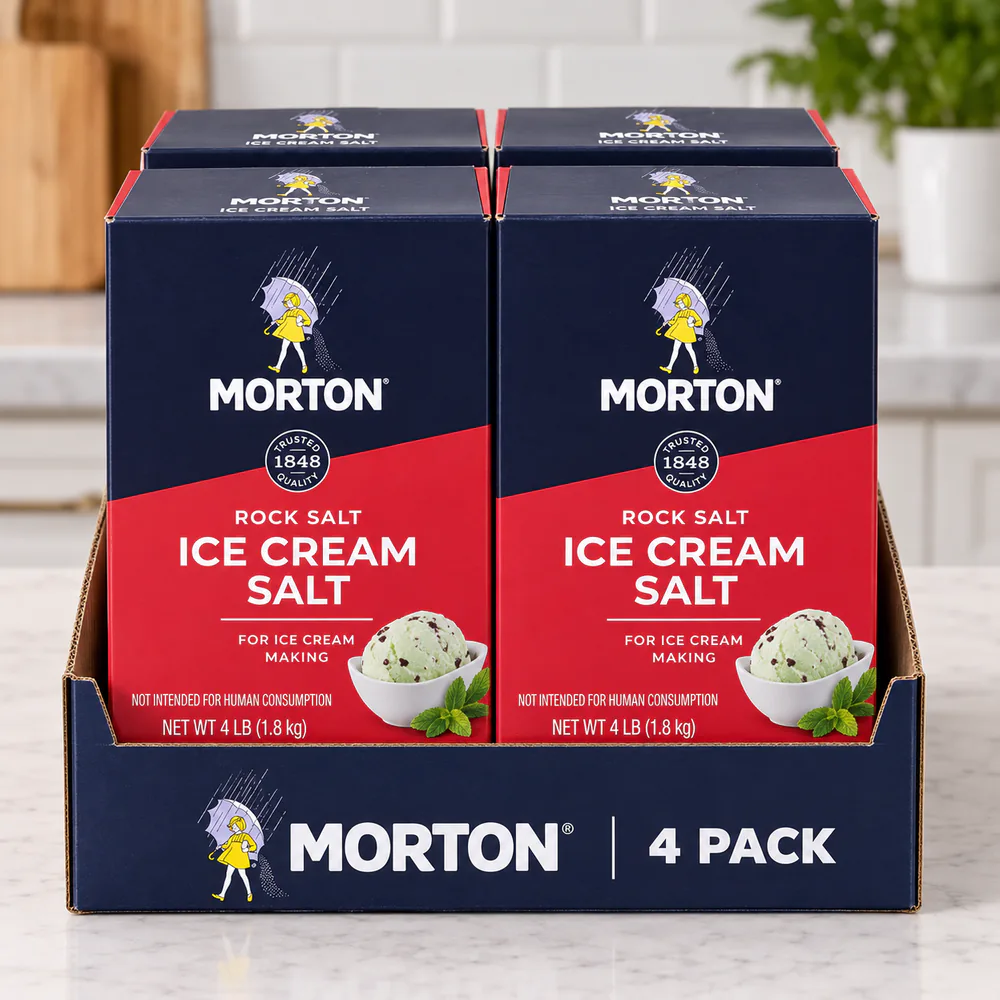
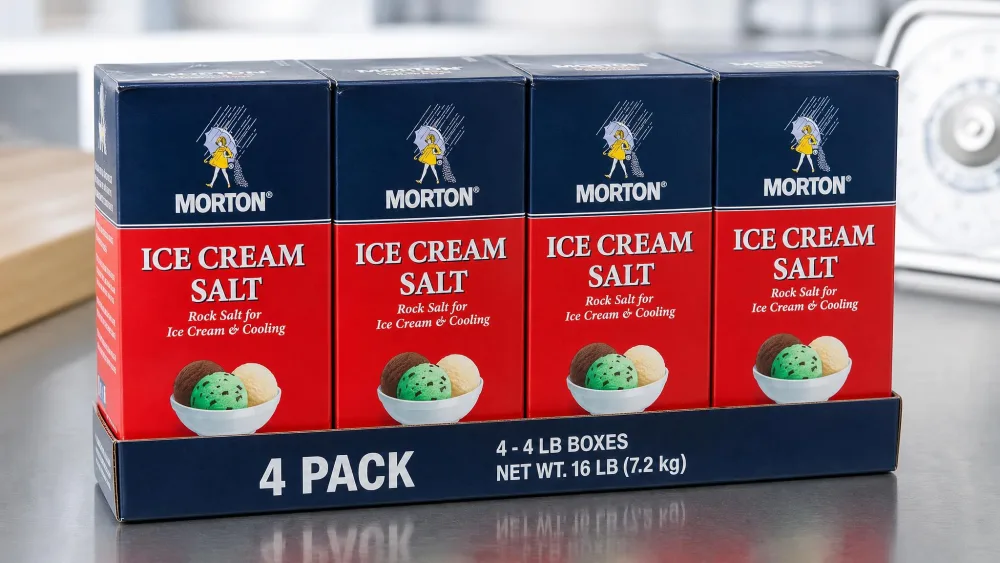
Where the Sea Salt Superstore bags lead on purity, the Morton Ice Cream Salt, Rock Salt, 4 lb four-pack leads on price per pound, and in our kitchen one box carried a full batch, vegan base included, with brine to spare. The case holds four sturdy boxes, but the pour opening is so narrow that we widened one with a knife, and the chunky crystals are messier to handle than fine salt, so weigh a box on arrival since per-box weight has varied.
Pros
Best price per pound of the five picks
Chunky crystals that dissolve at the right pace
Four separate boxes, easy to store
Cons
Narrow pour opening on each box
Messier to pour than fine salt
Not intended for human consumption
Sea Salt Superstore Rock Salt for Ice Cream Making, 30 oz
1
Sea Salt Superstore Rock Salt for Ice Cream Making, 30 oz
Where Morton wins on value, the Rock Salt for Ice Cream Makers, 30 oz bag wins on control, and control is what decides a batch. Its 99.9% pure, non-iodized, food-grade crystals dissolve slowly, so the bath never spiked cold or went watery, our vanilla finished velvety and scoopable with no off-taste, and the bag worked in our rolling-ball maker as easily as in a bucket churn, though 30 oz covers a batch or two, so regular churners should step up to the 5 lb bag.
Pros
Slow, steady dissolve that prevents watery brine
Clean flavor with no off-notes
Resealable bag, works in bucket and rolling-ball makers
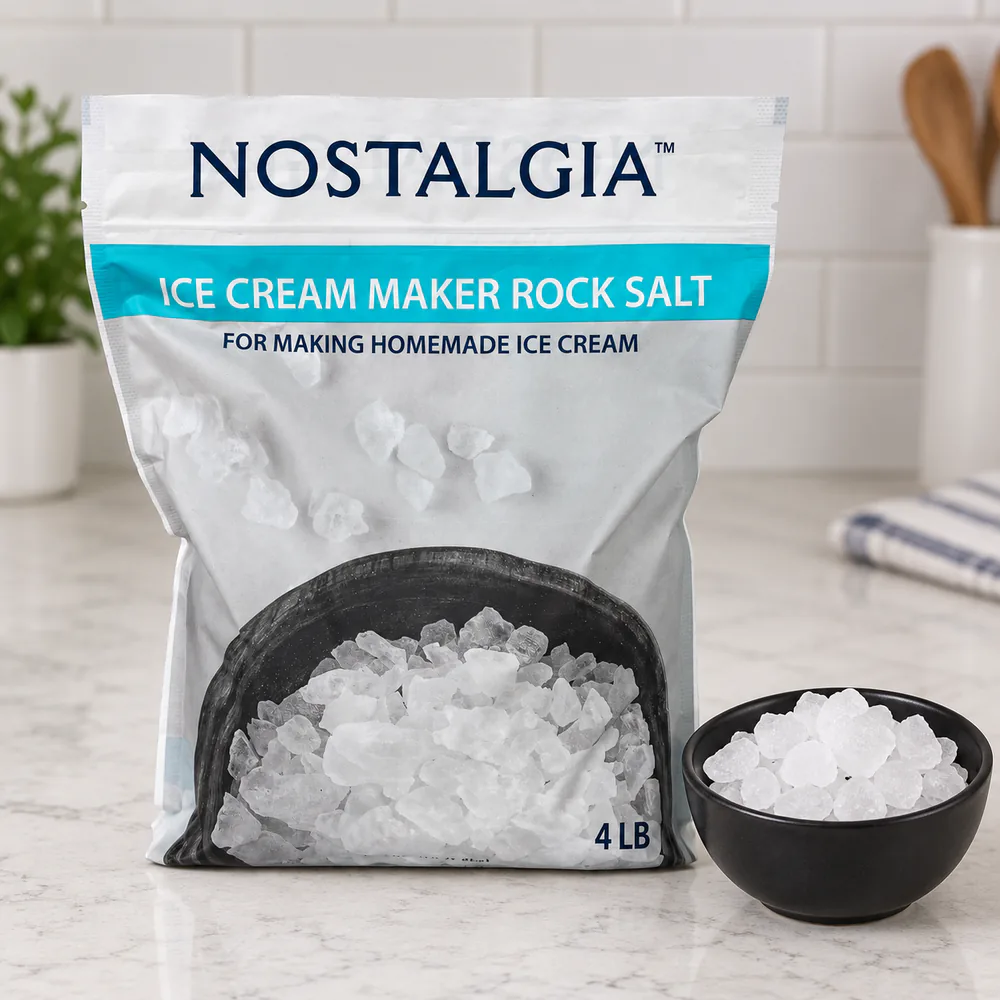
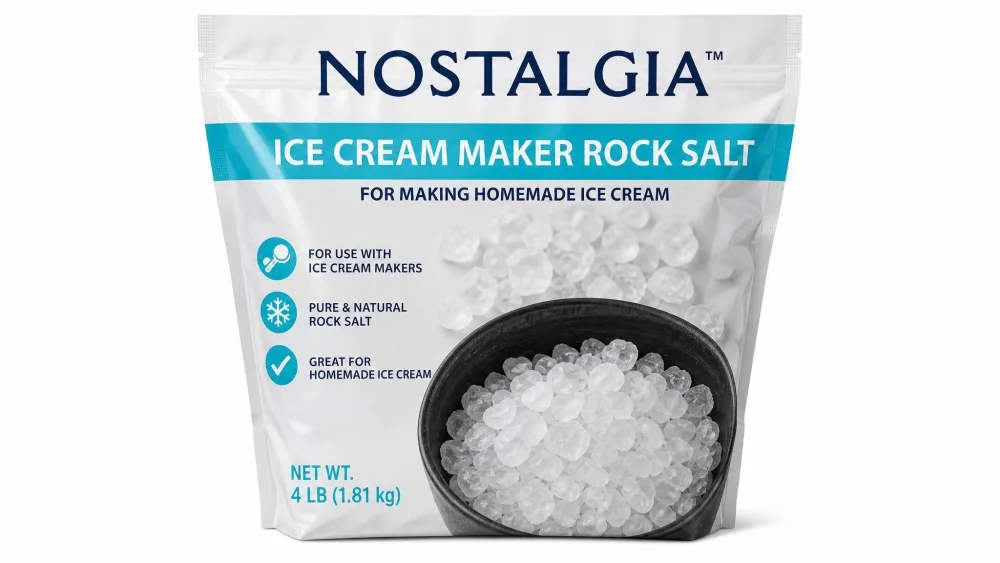
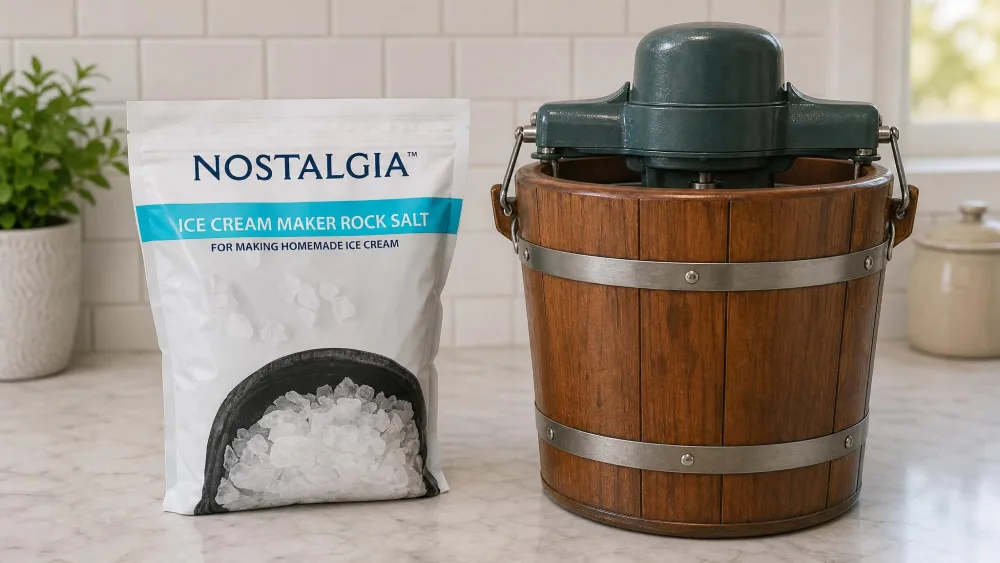
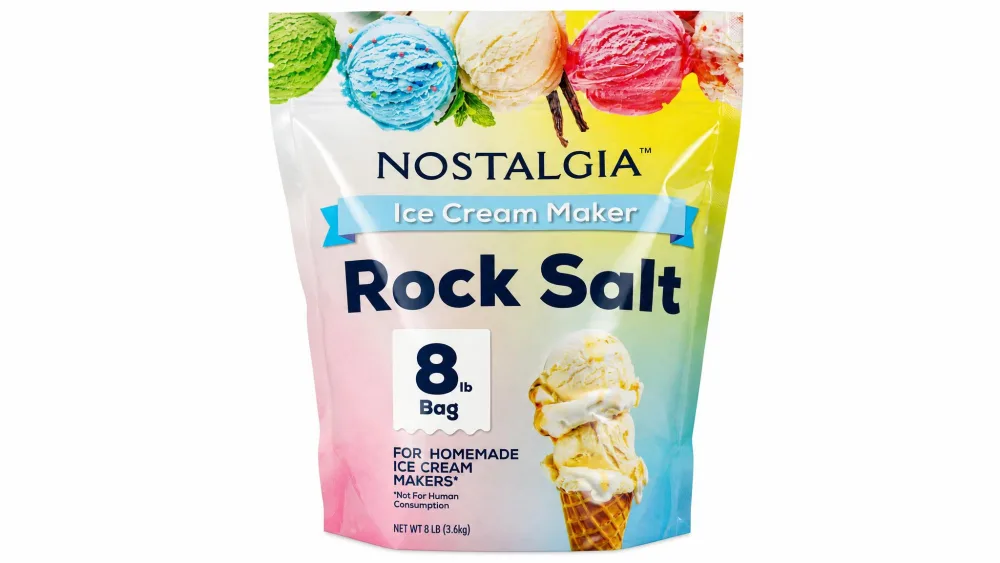
If the first two picks are about value and purity, the Nostalgia Ice Cream Rock Salt, 4 lb bag is about the classic churn, and its crystals are chunky and sturdy rather than dusty. In our bucket test the brine got visibly colder faster than it did with table salt, and the batch finished creamy and fully frozen with no fuss, but the salt also melted noticeably quicker than the others here, so budget for refills on long batches; the bag is a plain resealable pouch rather than the box in the photos, and the label is clear it is not for eating, so keep it away from kids and food-prep counters.
Pros
Brine cooled visibly faster than with table salt
Chunky, sturdy crystals that do not turn dusty
Budget price for a 4 lb bag
Cons
Melts faster than rival salts, so more refills
No pour spout; a bit messy to pour
Not intended for human consumption
Sea Salt Superstore Rock Salt for Ice Cream Making, 5 lb Bag
4
Sea Salt Superstore Rock Salt for Ice Cream Making, 5 lb Bag
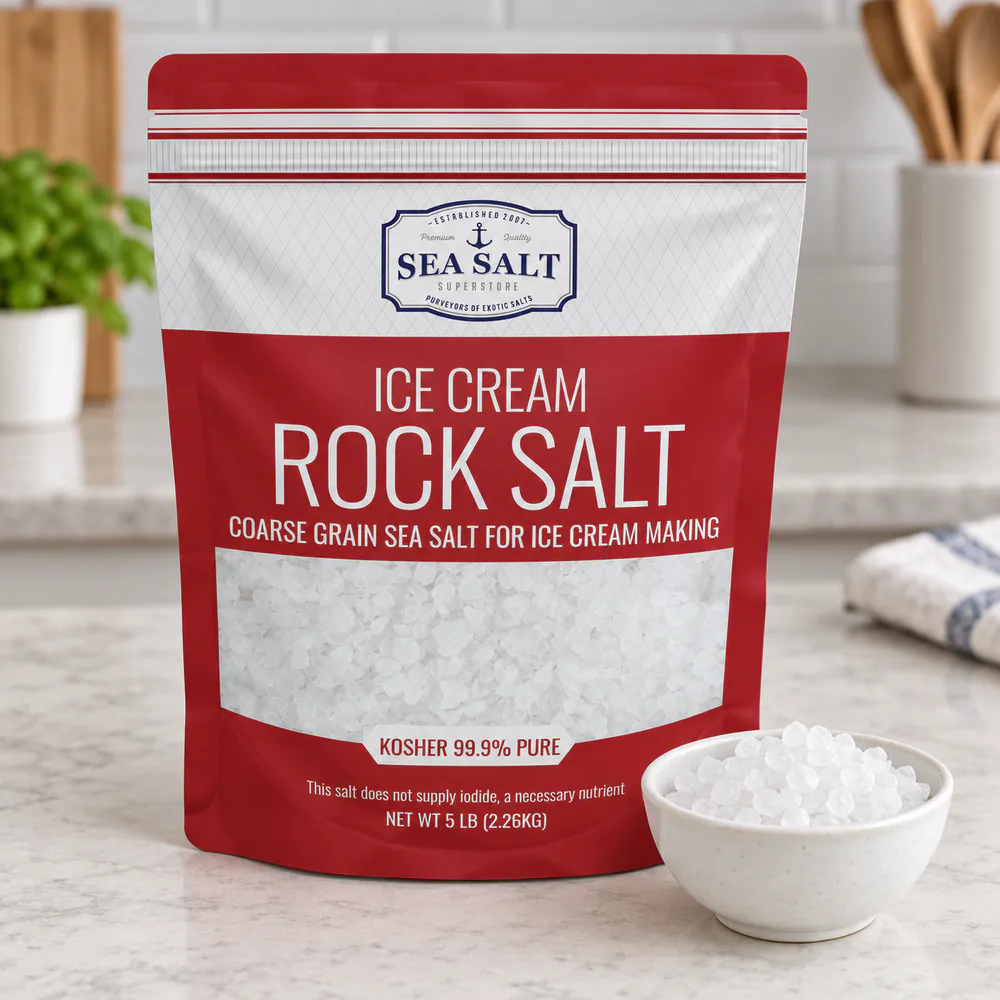
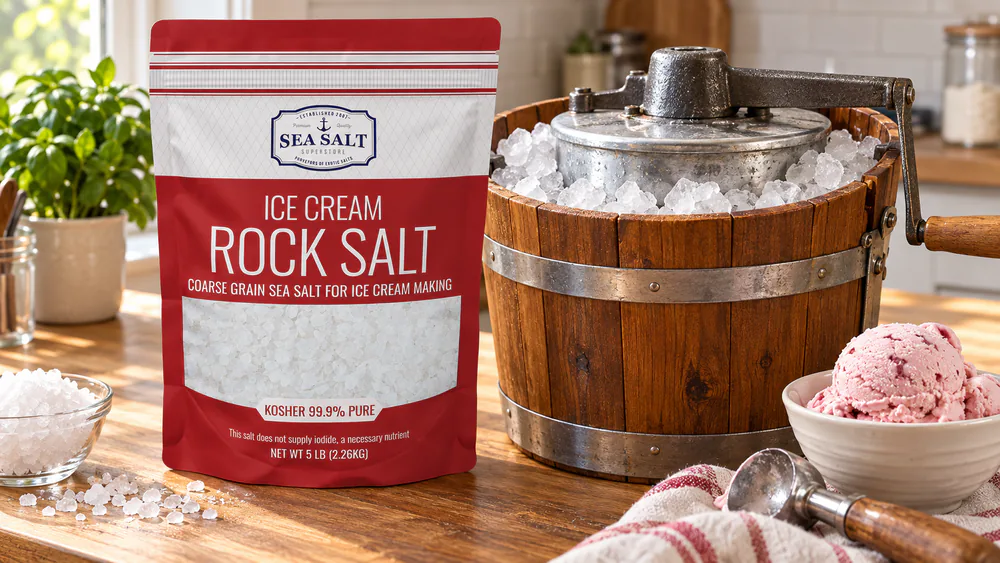
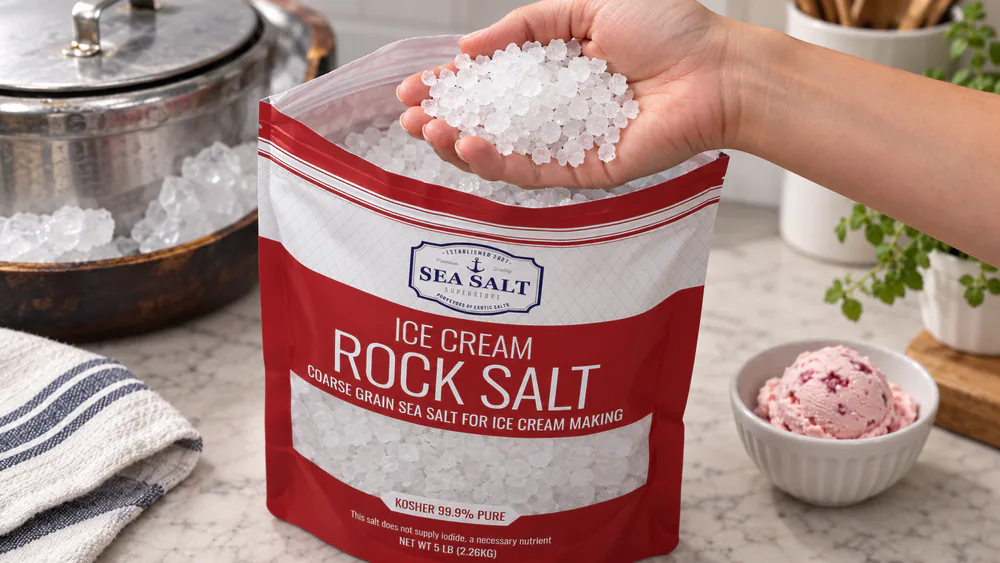
Where the 30 oz bag is a starter size, the Rock Salt for Ice Cream Makers, 5 lb bag is the step-up for weekly churners, with grains coarse but not pool-salt chunky and crystals pure and clean, free of dust and fines. A handful per batch was enough, and the slow dissolve kept the ice from vanishing too fast, so batches came out creamy and evenly frozen, though it pours messier than fine salt and costs more per pound than the Morton four-pack.
Pros
99.9% pure, non-iodized, food-grade kosher
Clean, dust-free crystals
Slow dissolve gives a controlled, even chill
Cons
Pricier per pound than the value four-packs
Messier pour, slower to dissolve than fine salt
Sea Salt Superstore Rock Salt for Ice Cream Making, 10 lb
5
Sea Salt Superstore Rock Salt for Ice Cream Making, 10 lb
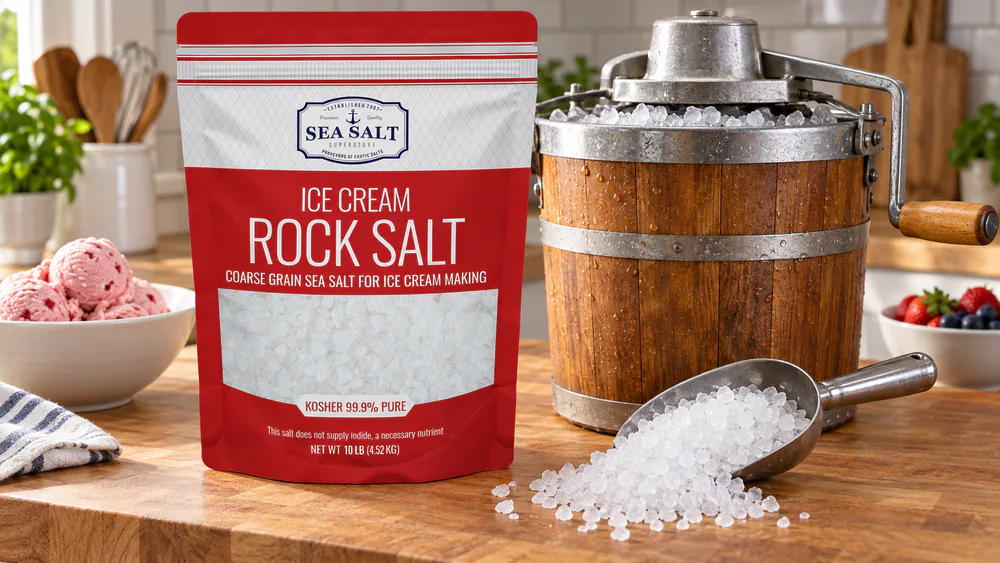
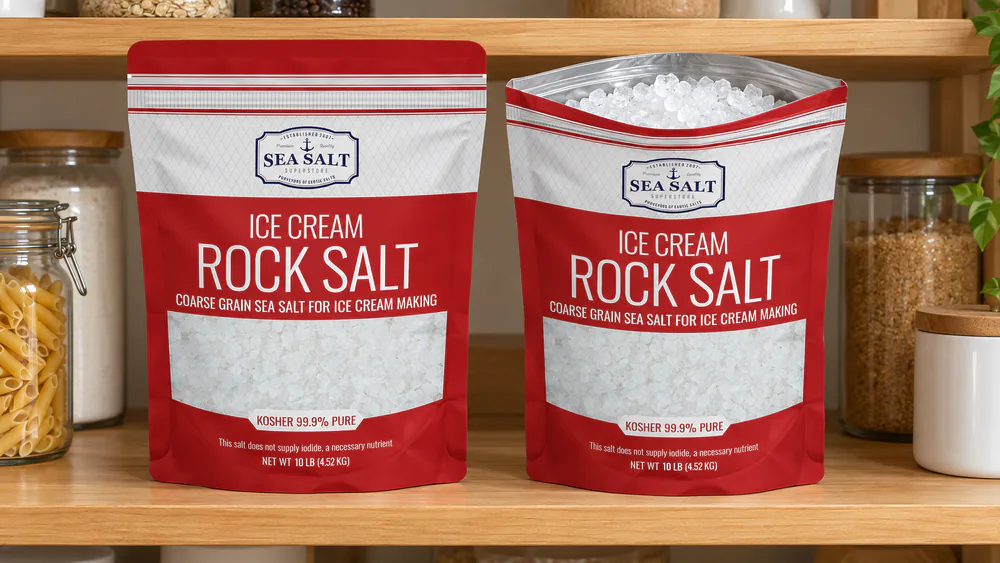
And for churners who empty a bag a month, the 10 lb order is the biggest value here: two thick, durable resealable zip-top bags that survived our shaking without leaking and kept the salt dry for months. Two caveats before you order: a few darker trace crystals sit in the mix, and the price moves with the listing, so compare it against the 5 lb bag first.
Pros
Biggest bulk value for heavy users
Two sturdy resealable zip-top bags, no leaks
99.9% pure, non-iodized, food-grade
Cons
A few darker trace crystals in the bag
Takes real pantry space
Price varies with the listing
Honorable Mentions
Two more bags earned a mention, one for its exceptionally chunky crystals and one for pure budget bulk.
6
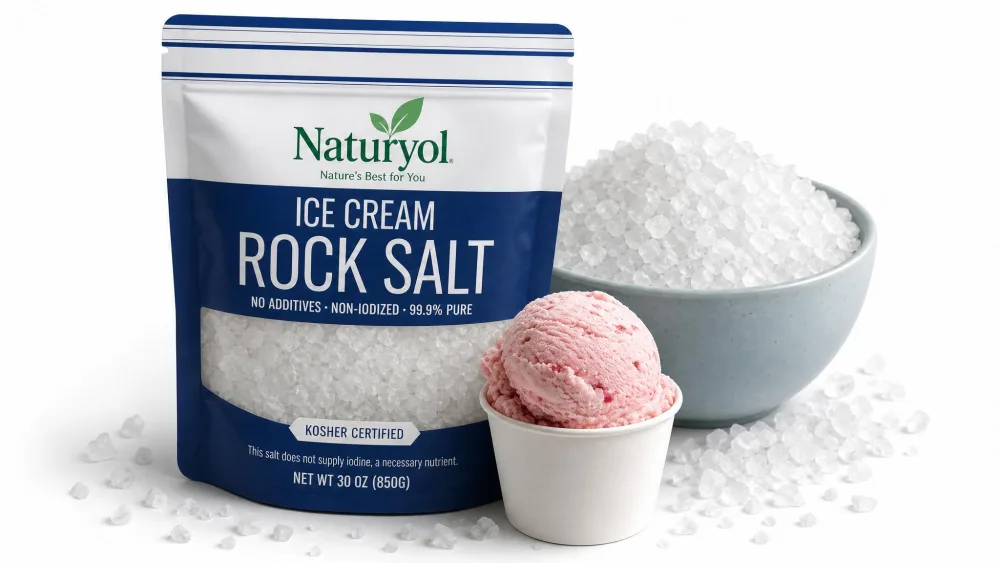
Naturyol Rock Salt for Ice Cream, 30 oz
Mined Turkish rock salt, 30 oz (850 g), with extra-chunky crystals that go further per batch; the price runs high next to the name brands.
Buying Guide: How to Choose Rock Salt for Ice Cream Making
Every bag here lowers the freezing point of the ice around your canister; what separates them is grain size, purity, and how much you want on hand.
Grain Size and Texture
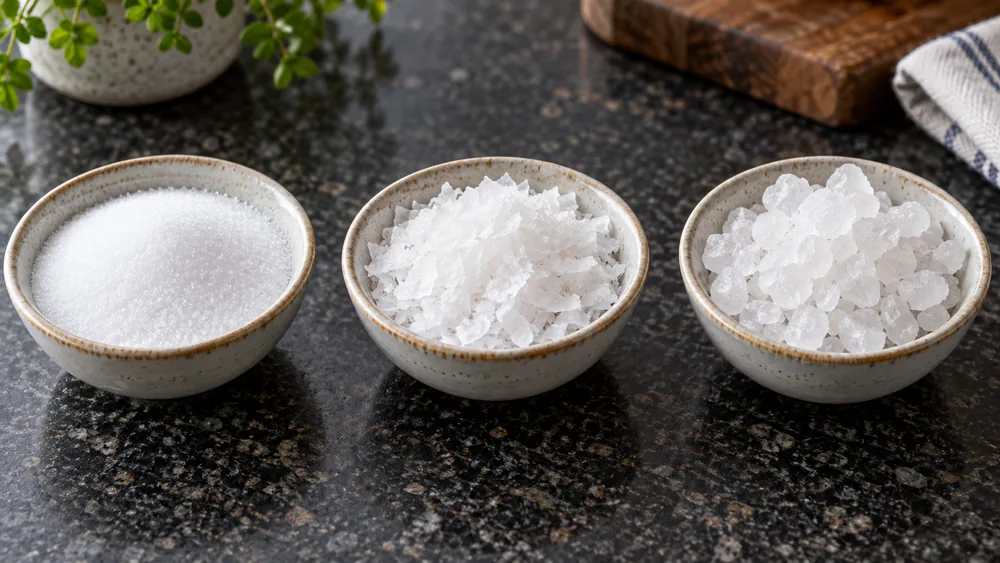
Coarse crystals are the point, dissolving slowly to keep the brine cold and slushy through a full 20 to 40 minute churn, while fine salt dissolves almost instantly, gives a short cold burst, and turns the bath watery, so table salt needs constant top-ups.
Purity and Iodization
Look for salt that is 99.9% pure and non-iodized, with no additives or anti-caking agents, because iodized or heavily processed salt can add an off or bitter character even though the canister seals it out of the ice cream.
Package Size and Value
Plan on 1 to 2 cups of rock salt per batch, which means a 30 oz bag covers a batch or two, a 4 lb bag several, and an 8 lb bag roughly eight at about a pound each, so per pound the Morton four-pack is the cheapest buy; pick the size that matches your churn habit, not the biggest bag on the shelf.
Compatibility With Your Ice Cream Maker
Rock salt is only for salt-and-ice makers, meaning bucket freezers with a dasher, rolling-ball makers, and soccer-ball style machines, while freezer-bowl and compressor models freeze internally and need no salt, so check the manual before you order; our roundups of the best ice cream makers of 2026 and the best ice cream churners cover the field.
The salt never touches your ice cream; it just drags the water around the canister below freezing so the churn can do the rest.
Why Rock Salt Is Essential in an Ice Cream Maker
An ice cream mix does not begin to freeze until it falls below about 27 F, and plain ice water bottoms out at 32 F, so that gap is why ice alone cannot freeze a batch. Salt closes it through freezing-point depression, because dissolved salt breaks up the water's crystal structure and forces the brine far colder before freezing, and at about 23% salt by weight a salt-and-ice mix can pull the bath to about -6 F (-21 C), while a 5 cups ice to 1 cup salt mix holds at 8-12 F. Compressor machines, the ones in our best compressor ice cream makers roundup, reach the same temperatures with a motor and need no salt.
How Much Rock Salt Should You Use in an Ice Cream Maker?
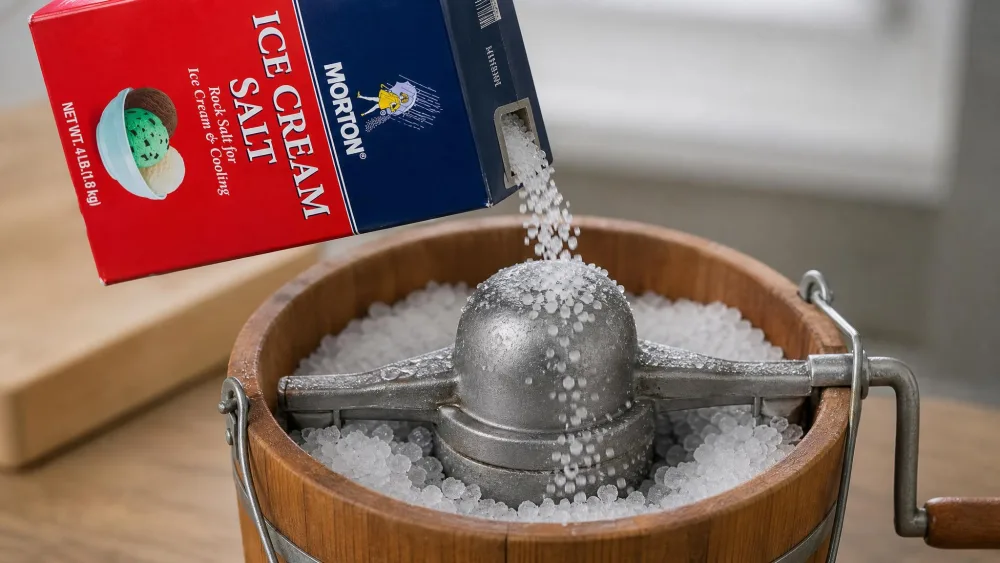
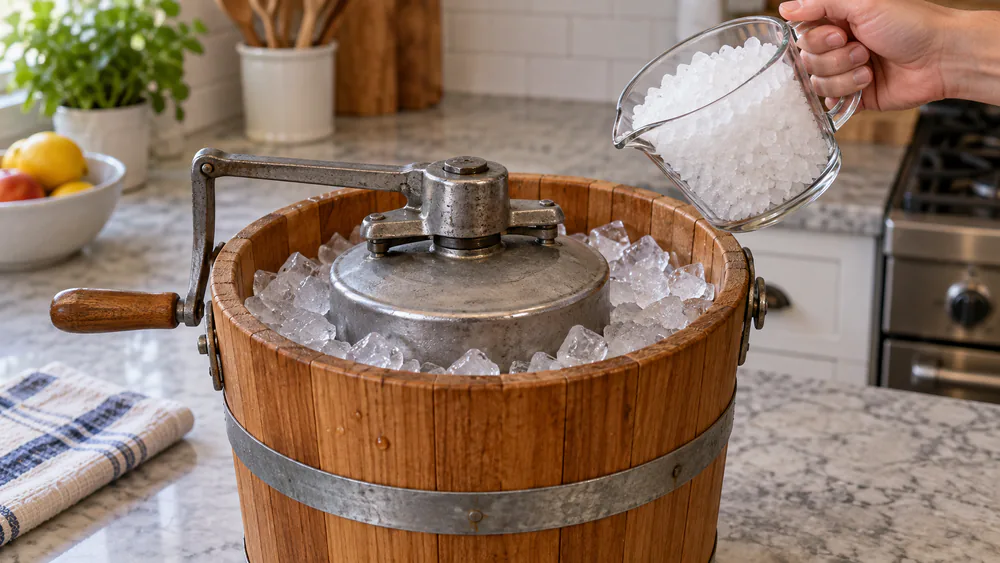
Use 1 to 2 cups of rock salt for a standard 1.5-quart batch, layered around the canister as ice, salt, ice, salt, roughly 1:5 to 1:3 salt to ice by weight, though the layering matters more than the exact ratio. The brine should turn thick and slushy after 3 to 5 minutes, and if it does not, the bath is not cold enough, so expect a 20-40 minute churn for a 1.5 to 2 quart batch with refills of ice and salt partway through, then dump the brine, rinse the tub, and dry it, or it smells like a marina by morning, and keep the brine below the lid seam so meltwater never reaches the machine base.
Tip. Use 1-2 cups of rock salt for a standard 1.5-quart maker and skip iodized salt; the right amount turns the setup from a hassle into a routine.
Warning. Rock salt belongs in the ice bath, never in the ice cream, and bags like Morton's and Nostalgia's are labeled not for consumption. Oversalting floods the churn and can corrode machine surfaces; wash the tub after every batch.
Rock Salt vs. Table Salt vs. Kosher Salt vs. Sea Salt: What's the Difference?
The other salts make more sense once you know what rock salt does, which is to dissolve slowly and hold the brine cold, exactly what a 20 to 40 minute churn needs, while table salt is the same sodium chloride ground fine and dissolves almost instantly, giving a short cold burst before the bath turns watery. Kosher salt sits between the two, and coarse sea salt is evaporated seawater with big crystals intact, but for an ice bath, grain size and purity matter more than harvest method, and note that some ice cream salts, including Morton and Nostalgia, are not intended for human consumption, while food-grade bags like Sea Salt Superstore's can double as finishing salt.
Pros
Rock salt dissolves slowly, holding the brine cold through a full 20 to 40 minute churn
Coarse grains need fewer top-ups
Cons
Table salt dissolves almost instantly, so the cold burst goes watery fast
Table salt needs far more frequent ice top-ups mid-churn
Frequently Asked Questions
Can I use table salt instead of rock salt in an ice cream maker?
In a pinch, yes, but coarse rock salt is the right tool for a 20 to 40 minute churn, since table salt dissolves almost instantly, turns the bath watery, and forces far more frequent ice refills.
Is non-iodized rock salt necessary?
It is the norm for ice baths, because iodized or heavily processed salt can add an off or bitter character and usually carries anti-caking agents, none of which you want in the ice bath.
Can I reuse rock salt?
Not effectively, because most of the salt dissolves into the brine as it works and what is left is dilute and weak, so fresh salt gives better results; most guides say to dump the brine, though some recommend drying leftover crystals.
How long does rock salt take to freeze ice cream?
Count on 20-40 minutes of churning for a 1.5 to 2 quart batch, with the brine thick and slushy after 3 to 5 minutes, and if the churn runs longer than usual, the bath is not cold enough.
What happens if I use too much or too little salt?
Too little salt forms a hard ice ring around the canister and the churn drags, so add 1 to 2 tablespoons and wait 3 to 5 minutes, while too much salt melts the ice fast, turns the tub watery, and stalls the batch, fixed with fresh ice and no salt on the next layer. Texture suffers either way: too fast a freeze gives coarse ice cream and too slow gives a spongy one, the same pattern behind why your Ninja Creami ice cream comes out crumbly.
Conclusion
Coarse, pure, non-iodized salt decides the batch, so match the bag to your churn habit. Grab the 30 oz Sea Salt Superstore bag for a few batches a summer, the Morton four-pack when value wins, and the 10 lb order for weekly churning.