Its browning quirks are most noticeable in everyday cooking. It cooks well, but it asks you to pay attention the first time you run a new food.
Toasting and Bagels
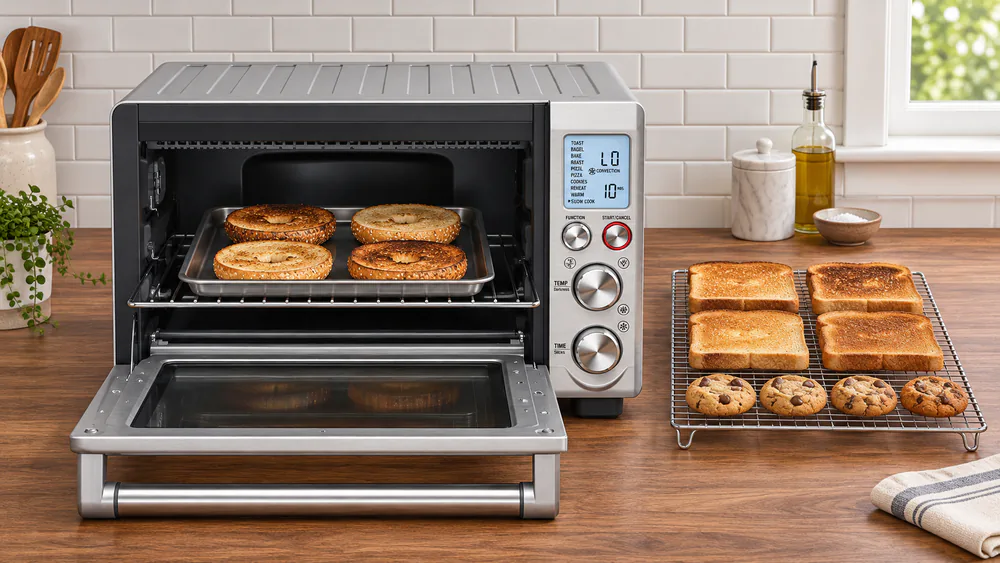
Bagel cut faces brown well, though they can come out darker than you expect, so watch the first batch. Toast can brown more deeply at the center than at the rear, which means bread placement and the shade setting both matter. If you toast six slices at once, rotate or reposition them rather than trusting one pass.
Baking, Pizza and Roasting
Cookies and small bakes are the oven's comfort zone, and the 13-inch pizza pan is a handy size for a weeknight pie. Pizza browning can be patchy, with pale areas beside darker crust. Roast chicken can keep pale, soft patches of skin even with convection on, so we would not promise crackling skin without a turn or a few minutes under the broiler.
Convection helps, but Breville's claim of up to 30% shorter cooking is a manufacturer maximum, not a saving you should count on for every recipe. Time savings depend on the food, the load and the mode.
Broiling, Reheating and Keeping Food Warm
The oven offers broil, reheat and warm settings, and they cover the leftovers-and-garlic-bread jobs that eat up a busy evening. We do not have detailed measured results for broiling and reheating, so we will not claim more than the modes themselves promise. Remember that the top and door stay hot after cooking, and the display returns to its inactive color before the oven has cooled. Supervise young cooks and keep oven mitts nearby.
Slow Cooking
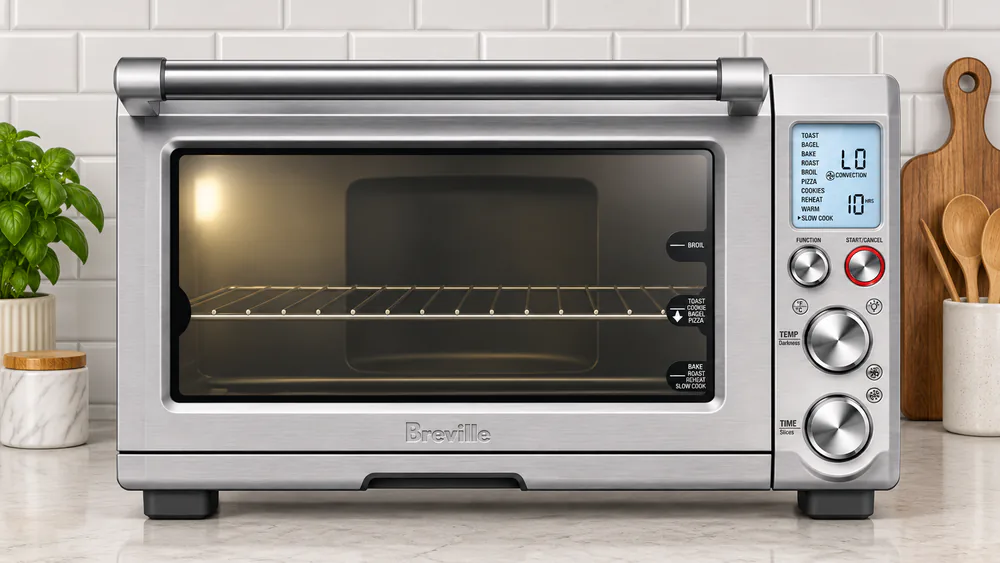
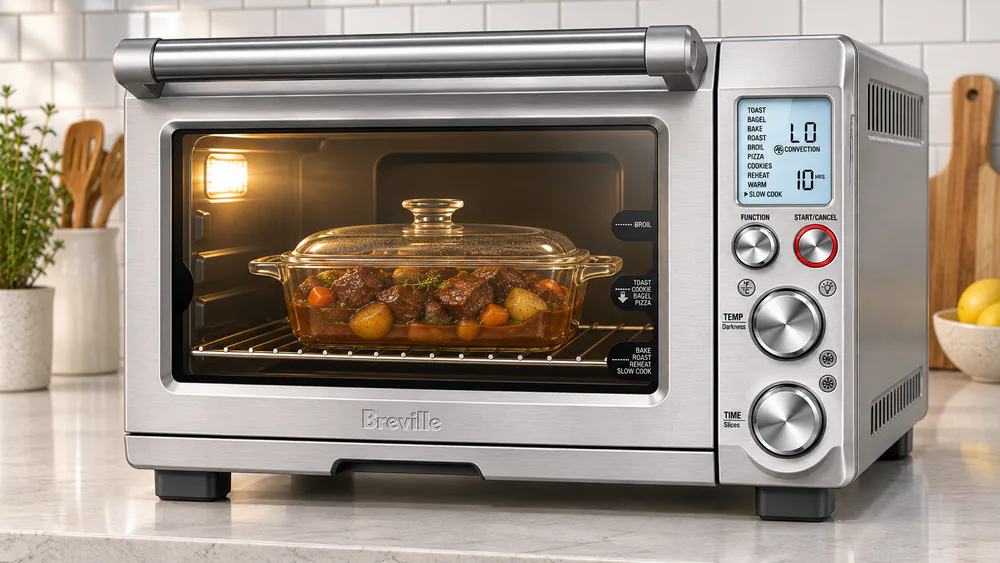
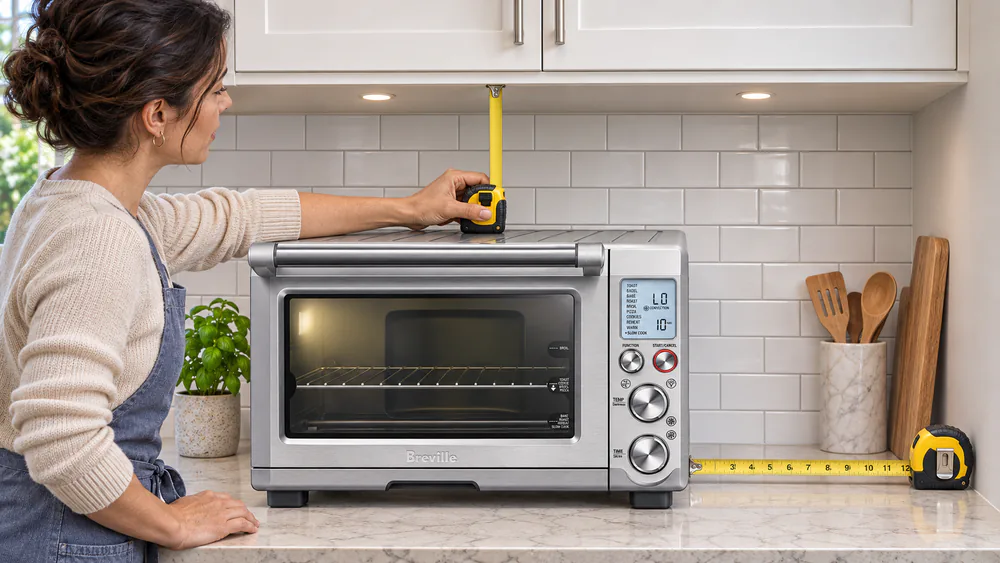
Slow Cook is the feature that separates the Pro from the standard Smart Oven. Low runs 4-10 hours and High runs 2-8 hours, then an automatic keep-warm setting runs for up to 2 hours. It produces tender meat and vegetables, but large recipes need scaling down to fit the cavity. Use ovenproof cookware, and do not expect it to replace a full-size slow cooker for a crowd.