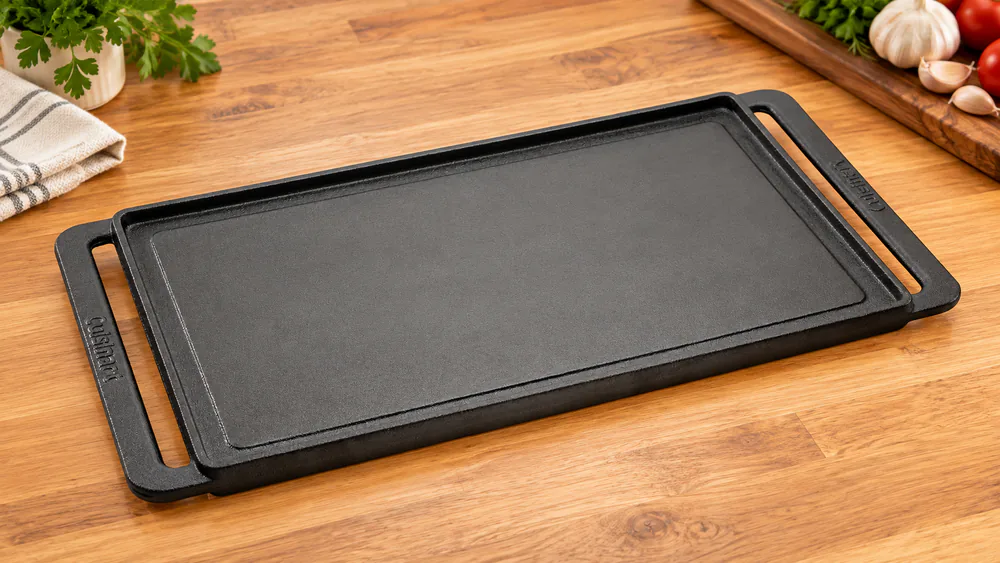
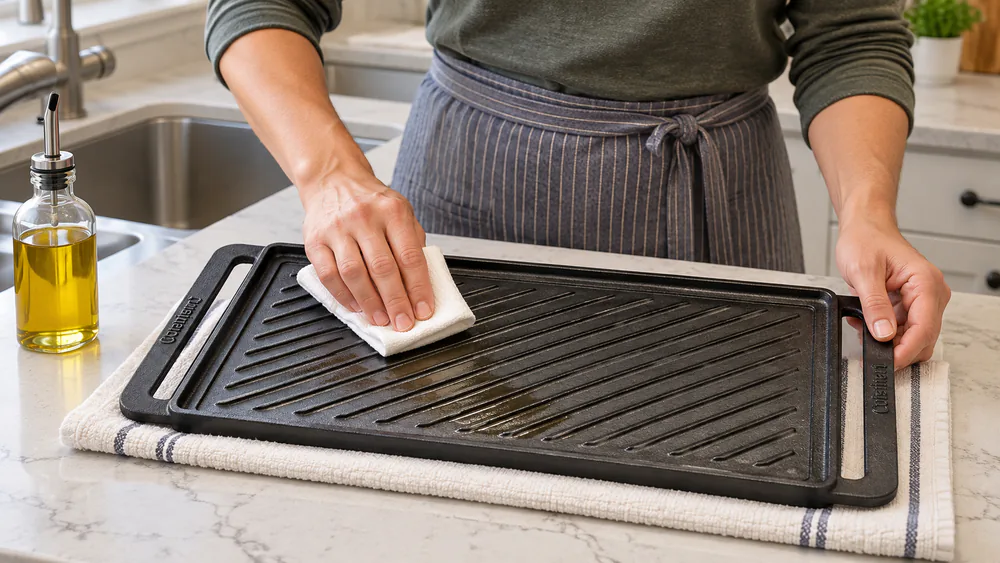
Cast iron earns its place by storing heat and giving it back to the food, and this plate does that. The trade-off is that you have to respect the mass: it takes time to come up to temperature and holds that heat long after you are done.
Heat retention, preheating, and uneven heating
Once hot, the CCP-2000 keeps a sear going when a cold steak lands on the surface, which is why cast iron suits this job. Heat the plate gradually, use a heat source that suits its size, and give it time before the first piece of food goes on. Sudden or concentrated heat can distort cast iron, and a plate this long and narrow benefits from patient warming. If your burner heats only the middle, expect the middle to run hotter than the ends and move food around to compensate.
In practice that means starting on low to medium heat, letting the iron warm for a good while, and only then raising the flame if you need a harder sear. We cannot give you a reliable preheat time or a maximum safe temperature, because neither is established for this plate, so judge readiness by how the surface behaves: a drop of oil should shimmer and spread easily, and food should sizzle the moment it touches down. Since the plate keeps its heat, you can also turn the burner down once it is ready and let the stored heat do the work, which saves fuel and reduces the risk of scorching the oil.
We know of no recurring pattern of fracture, warping, flaking, or rust failure with this plate, but we do not promise a lifespan either; how long it lasts depends largely on how well you keep up the seasoning.
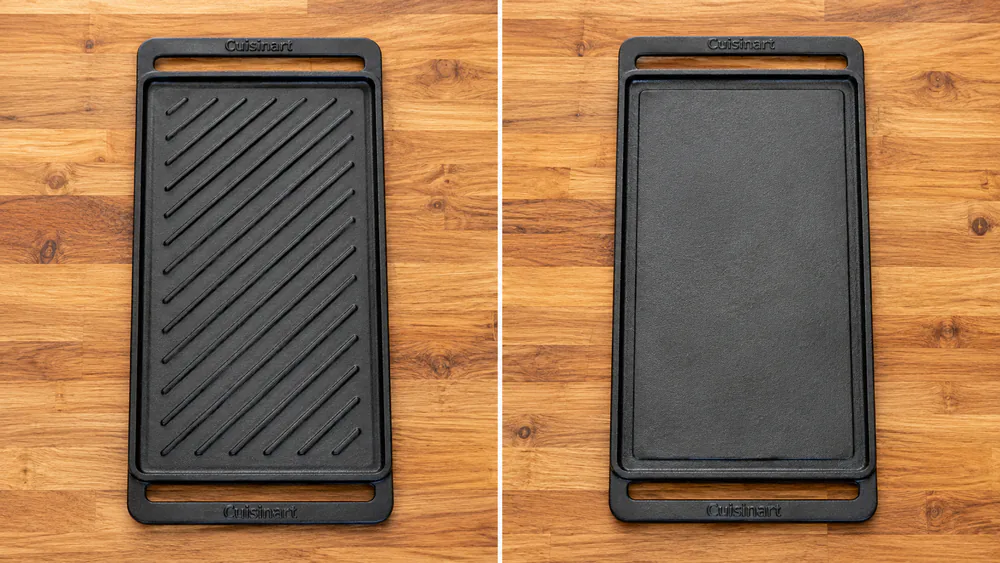
Ribbed side: Searing and grill marks
The ribbed face leaves visible sear marks on meat, which is the main reason to pick a grill plate over a flat pan. Steaks, chops, and burgers pick up clear lines, and the ridges lift food slightly so rendered fat can run into the grooves.
Because the plate is solid rather than a grate, small vegetables such as sliced peppers, asparagus, and onions stay on it instead of falling between barbecue bars. The raised edge and perimeter channel also help catch grease while bacon cooks, though you will still want to watch for pooled fat.
A few habits make the ribbed side easier to live with. Pat meat dry and oil the food rather than flooding the plate, so you get browning instead of steaming. Leave steaks and chops alone until they release naturally, since moving them early tears the crust and leaves residue in the ridges. Because the ribs hold onto drippings, a plate used for fatty cuts is the one to clean first, before the residue sets.
Flat side: Breakfast foods and sticking
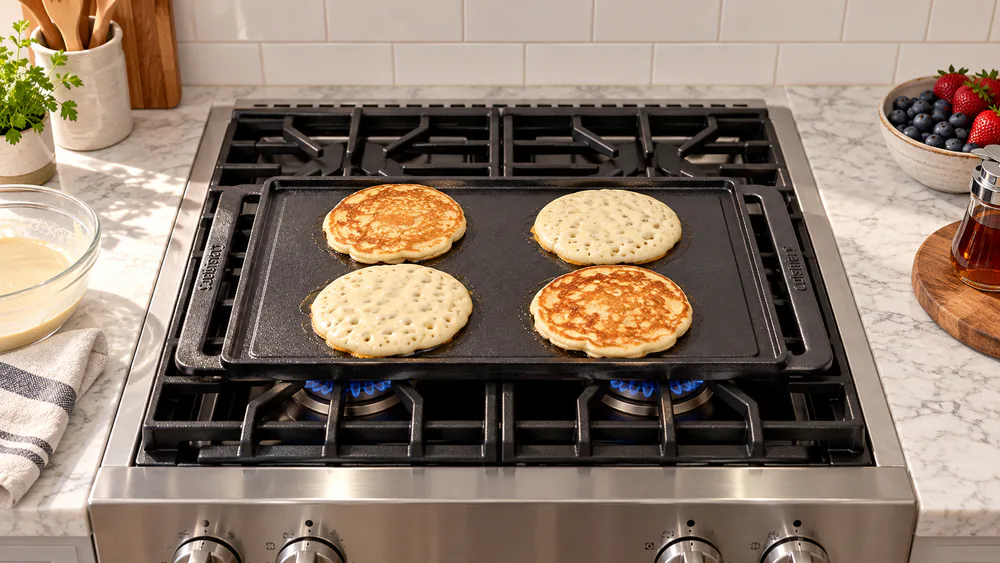
Flip the plate over and the flat face gives useful room for pancakes and other breakfast foods on a stovetop. It is a better pancake surface than the ribs, and it handles bacon, sausage, sandwiches, and vegetables well.
Sticking comes down to seasoning. Food release on the flat face improves as the seasoning develops with use, so expect the first few cooks to be a little less slippery than later ones. Oil the surface lightly, do not rush the preheat, and go easy with metal tools in the early weeks.
The flat face is also where the plate's two-burner design shows. A 15.75 x 9 inch surface is roomy for a breakfast spread of pancakes, eggs, sausage, and sandwiches, but the heat will not be identical at both ends. Keep delicate items such as eggs near the center or wherever your burners put out the most even heat, and use the cooler ends to hold finished food. We cannot promise a fixed number of pancakes per batch, so size your batches by what fits comfortably without crowding.