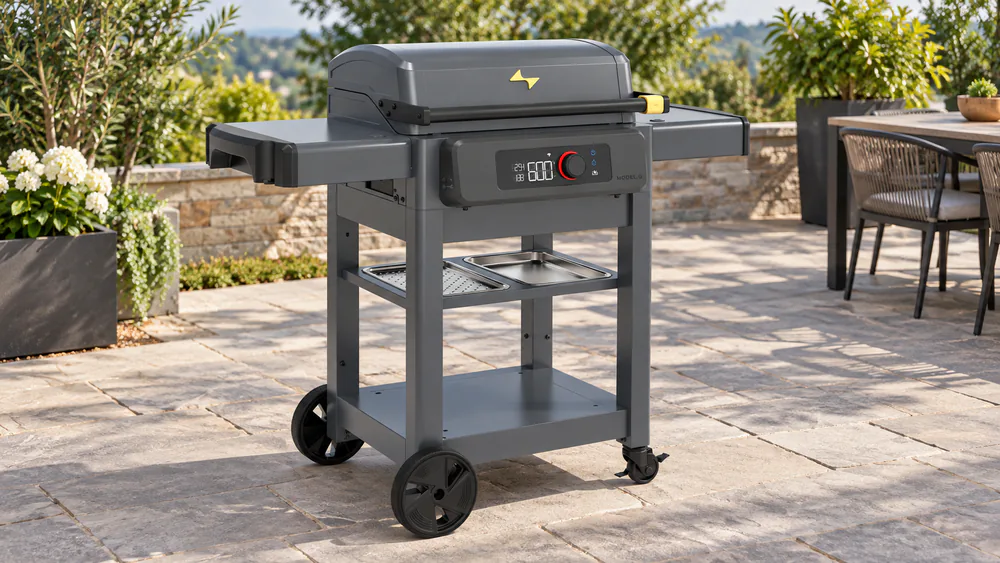
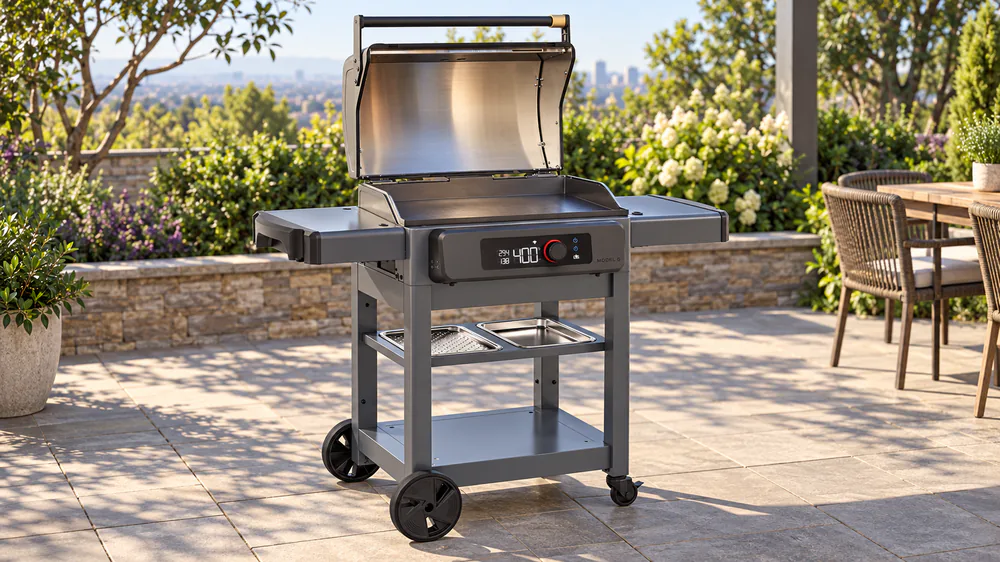
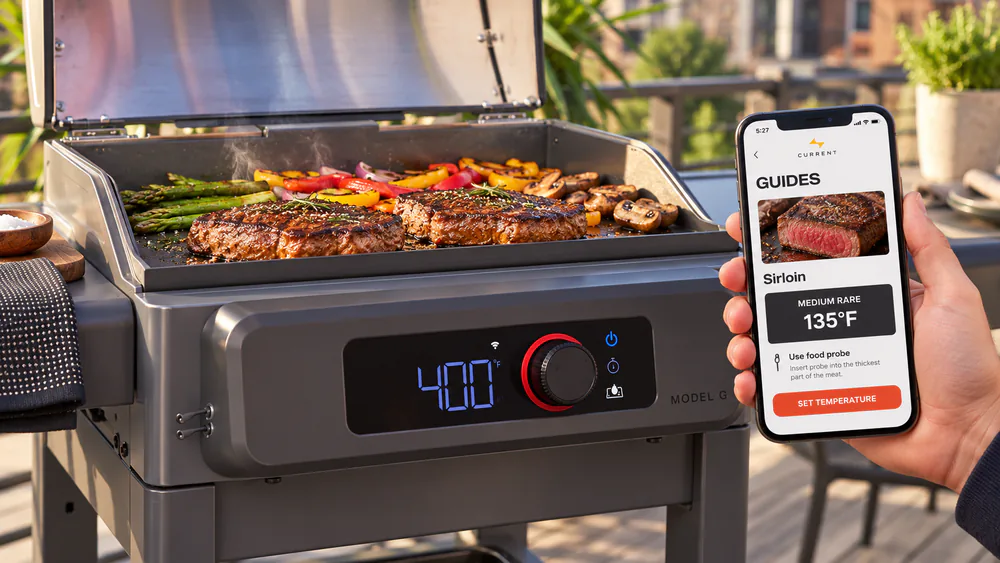
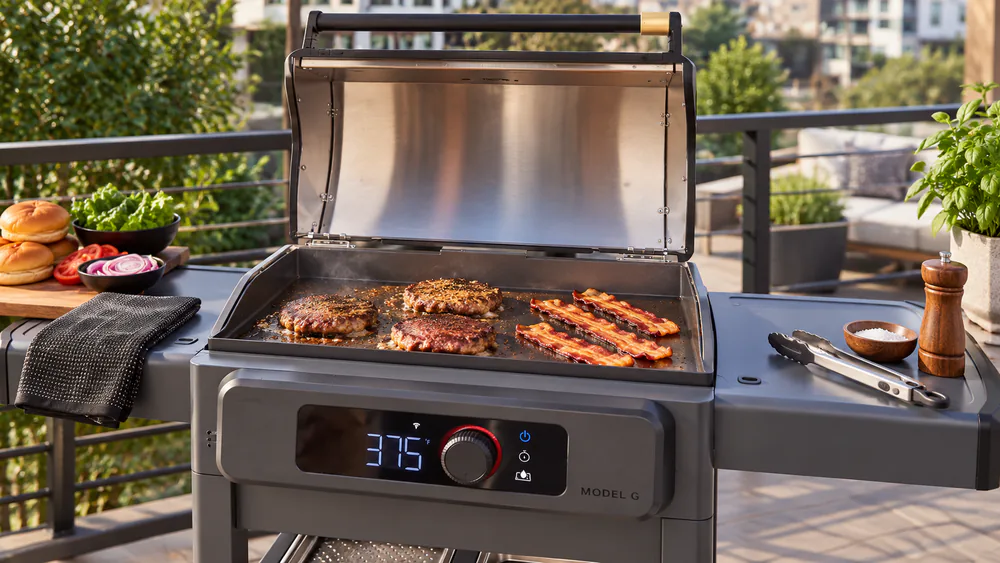
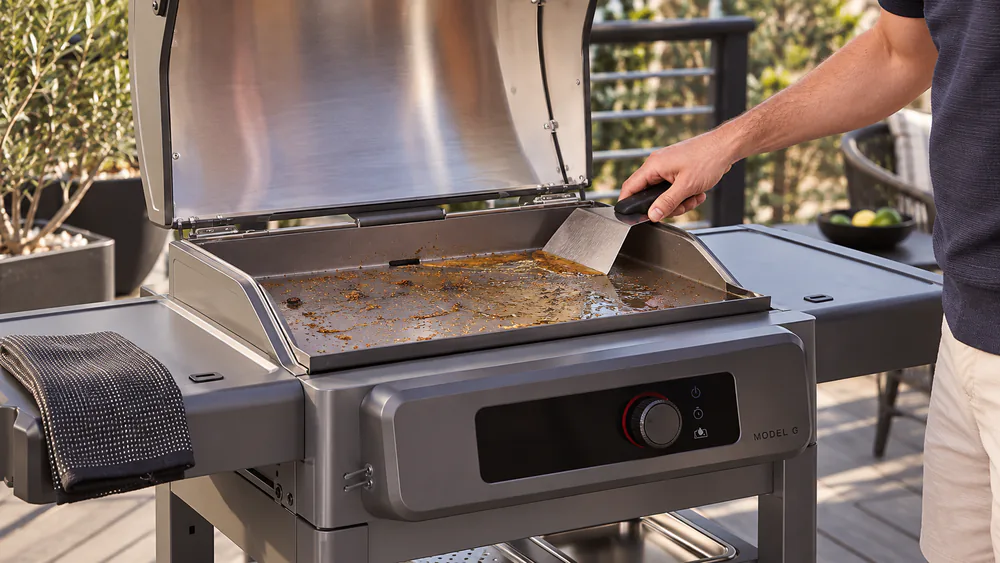
The design is straightforward: a seasoned-steel griddle top, a painted-steel lid and side shelf, and a rolling frame about 49 inches wide and 24 inches deep.
Cooking Surface and Zones
The surface is about 330 square inches, which is plenty for a full breakfast or six smash burgers in one go. Because there are no grates, nothing falls through, and that is the whole case for choosing a griddle over a grill.
Treat the griddle as one continuous surface. Do not expect the high-heat and warm-hold split the grill offers; you build a cooler side by moving food around the steel.
Assembly and Setup
Assembly runs about an hour to 90 minutes. The app-based instructions are awkward on a phone, so a second pair of hands and a narrow-handled screwdriver both help.
Build quality is solid, with one caveat. The frame feels a little wobbly when you roll it, and a plastic side-panel clip can loosen after about a month. The side panels also do not block wind-blown dirt or rain, so a cover is worth buying.
Power setup matters more than anything else here. The griddle wants a standard 15A breaker, a 120V outlet, and no other appliances on the same circuit. Sharing a circuit with a space heater blew a fuse, so give it its own outlet. The 12 ft cord is short, so plan on an outdoor-rated 14 AWG extension cord if the outlet is far away.