Most nonstick pans are coated all over. HexClad is not. It combines a stainless steel cooking surface with a nonstick layer set below the ridges, and the result behaves like both materials at once. Our Nonstick Cookware section covers how this compares to fully coated pans.
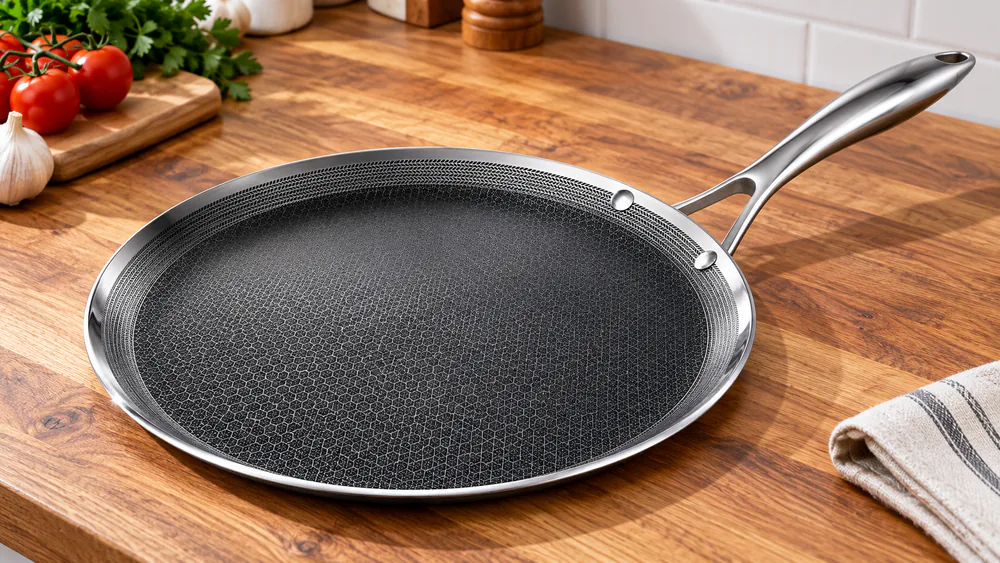
The Laser-Etched Stainless Steel Surface
The surface is a pattern of laser-etched hexagonal ridges in stainless steel. Under the surface sits a tri-ply build: a magnetic steel base, an aluminum core and a stainless steel top.
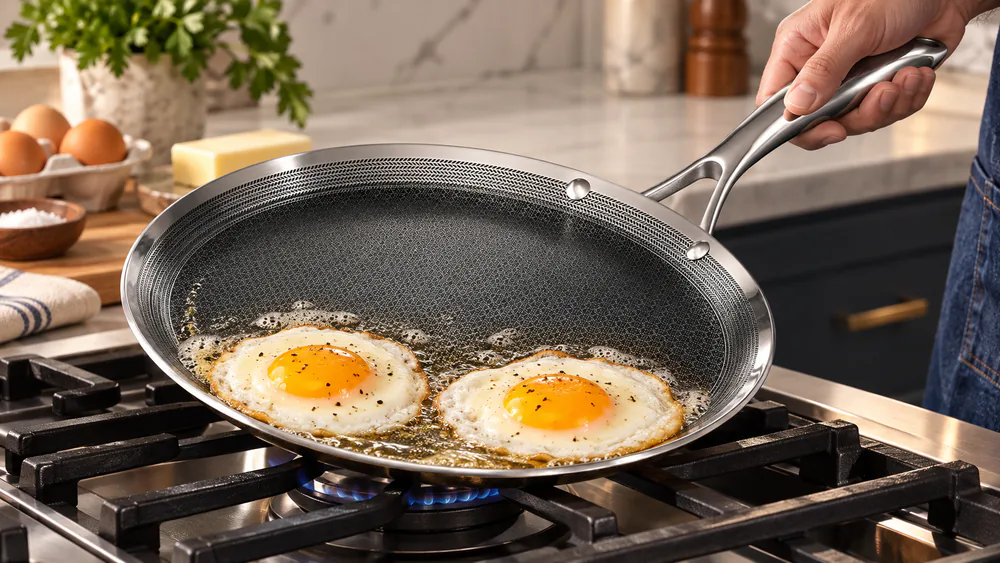
The ridges do the searing because they touch the food directly, so you get browning that a flat coated surface rarely delivers.
How the Nonstick Valleys Work
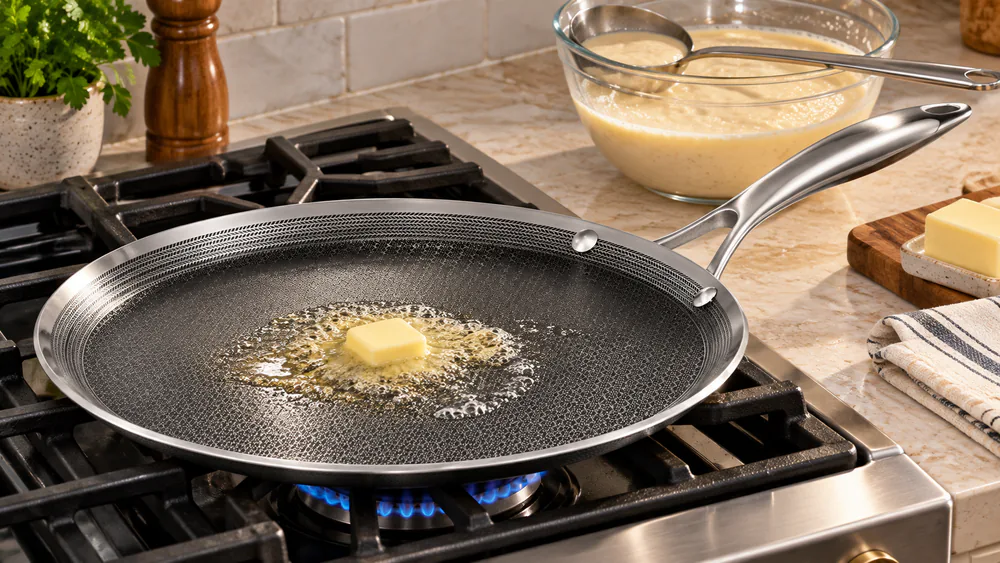
Between the ridges, a TerraBond ceramic nonstick sits in the valleys. The maker calls it PTFE-free and free of forever chemicals, though its page does not use the term PFAS. That is a manufacturer claim, and we treat it as one.
In use, the valleys help food release and keep cleanup easy, while the ridges give you the sear. The pairing is the whole point of the design.
HexClad Griddle vs HexClad Fry Pan
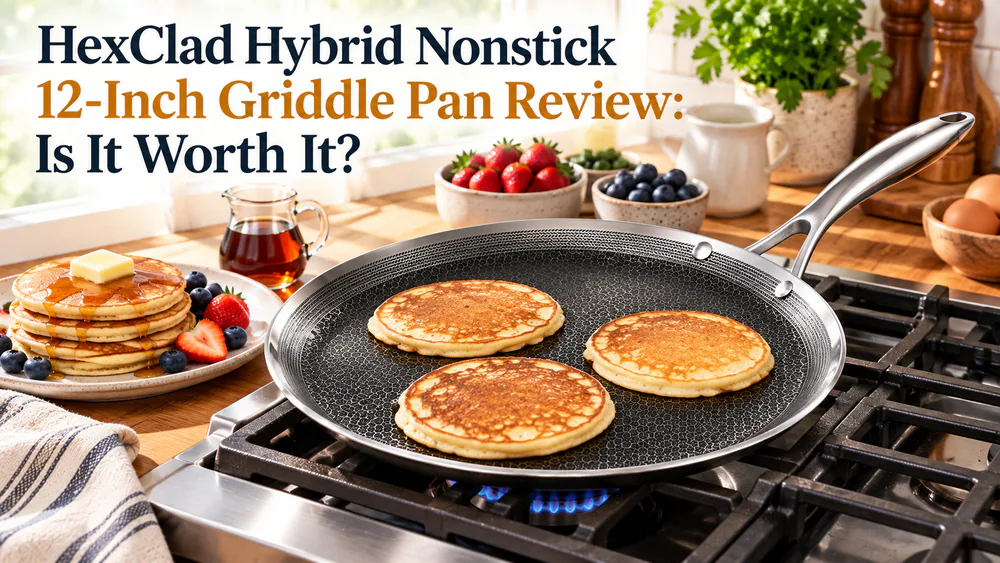
The griddle is a low-sided, flat 12-inch pan. The fry pan has taller walls for sauces and stir-frying. The fry pan weighs just over three pounds, which is lighter than cast iron, and the griddle should feel similar in the hand.
If you want a flat surface for pancakes, sandwiches and smash patties, the griddle is the better fit. If you want one pan for everything, the fry pan is more flexible. For a bigger batch, our HexClad Hybrid Double Burner Griddle review covers the oversized version.