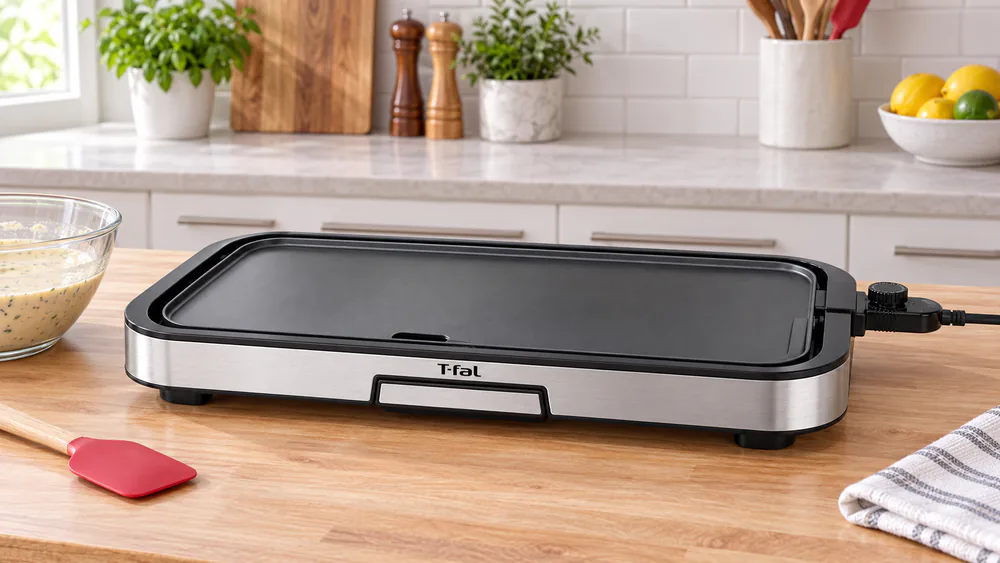
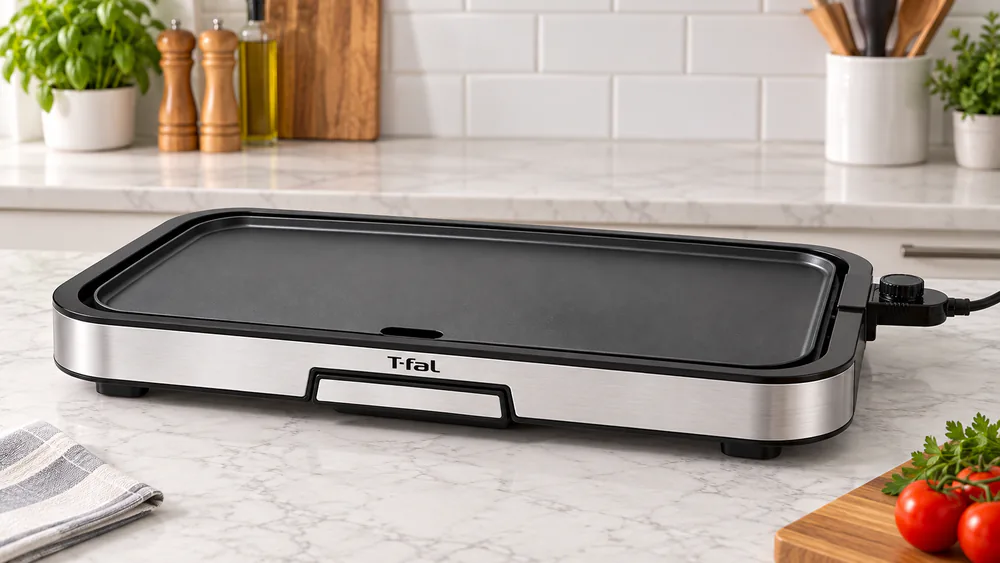
Cooking performance starts with how the 1500W element heats the plate. It heats the plate quickly, and a fast preheat matters on a surface this long, because you do not want to wait while a hungry table watches.
Heat Distribution and Temperature Control
Any long griddle raises the same question: does the far end cook like the near end? Long plates can run hotter near the element and cooler at the corners, and we have no measured end-to-end heat map for this model to share. Treat even heat as something to check with a first test batch of pancakes.
The dial offers 5 settings, and T-fal publishes no temperature ranges or maximum temperature for them. In practice you start in the middle, watch the first pancake, and adjust. It works, but it is less precise than a griddle that prints degrees on the dial.
Pancakes, Eggs and Breakfast
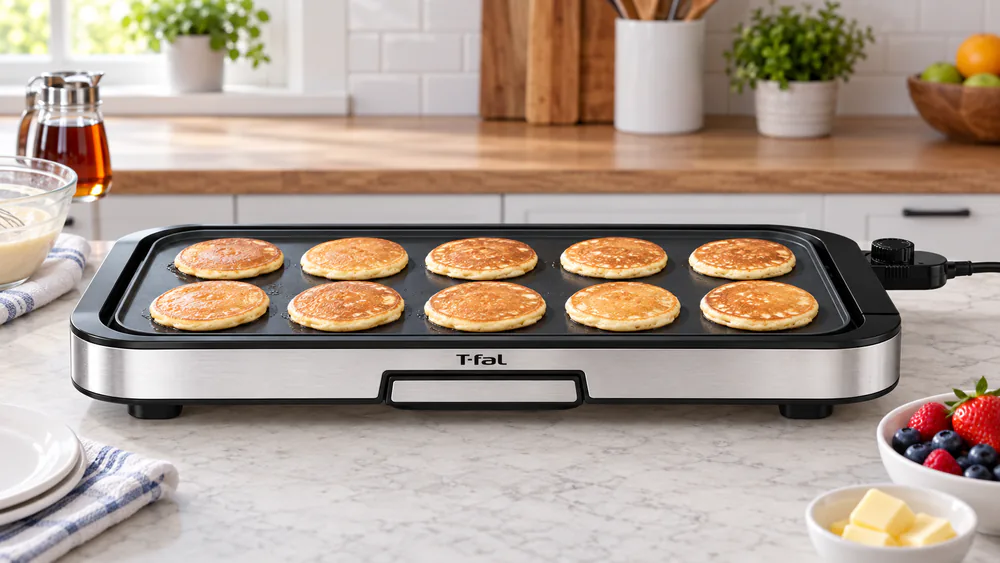
Breakfast is where a plancha like this earns its counter space. A wide flat plate lets you pour a full row of pancakes and fry eggs and sausage beside them. The nonstick surface lets you cook with little or no oil, so eggs slide out without a greasy pool.
Because the surface is smooth and flat, batter spreads cleanly and spatulas slide under food without catching on ridges. That is a real advantage over ribbed plates when the goal is a pancake with an even golden face.
Burgers, Bacon and Dinner Foods
For dinner, the same flat plate suits smash burgers, quesadillas, sliced peppers and onions, and bacon. The box holds no ribbed grill plate, so you do not get grill marks. Fat from bacon and burgers spreads across the surface instead of draining away, so the drip tray is the part to watch during fatty cooks.
If you plan to cook several foods at once, keep the strongly flavored ones apart. Onions and bacon share a plate easily, but a pancake sitting beside a fatty burger will pick up grease and flavor.