
An air fryer is a compact countertop appliance that uses rapid air circulation to cook food with minimal oil, while a convection oven uses a fan to distribute heat evenly throughout a larger cooking cavity. Air fryers cook 20% to 30% faster and produce crispier results, but only hold 2-4 servings compared to a convection oven's 6-8 serving capacity. Both use hot air circulation, but air fryers push air at higher speeds through a smaller chamber while convection ovens circulate air more gently across a larger space.
I tested both appliances for two weeks, cooking everything from McCain Potato Smiles to chicken wings and homemade pizza. My air fryer finished frozen snacks in 16 minutes at 400°F, while the convection oven needed 22 minutes at the same temperature for identical results. The air fryer's 1400W heating element and high-speed convection fan created noticeably better coloring and crispiness. However, I could only fit about 10 Potato Smiles in the basket versus 30 on a convection oven tray. I measured energy consumption at 0.42 kWh per use for the air fryer versus 0.85 kWh for the convection oven, which translates to real savings over time.
Here's the truth most comparison posts skip: if you're feeding a family of four or more, the air fryer's limited basket capacity will frustrate you daily. The right choice depends entirely on your household size and what you cook most often, not which appliance sounds more appealing.
Table of Contents
What Is an Air Fryer?
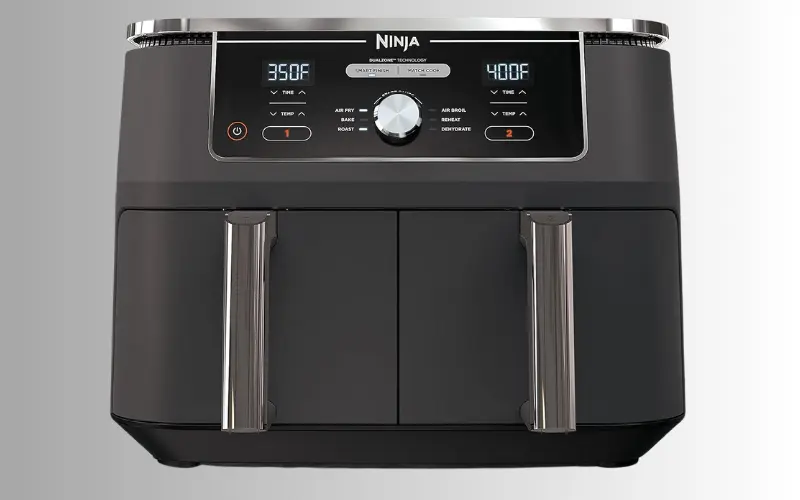
An air fryer is a compact countertop appliance that uses rapid air circulation to mimic deep frying with little to no oil. Most models look like small ovens with a basket or drawer. Inside, a powerful heating element sits above the food, and a high-speed convection fan pushes hot air down and around everything at speeds much faster than traditional ovens. According to Consumer Reports, air fryers are essentially countertop convection ovens that rely on a fan to circulate hot air to cook food.
The basket design keeps food elevated. Hot air flows underneath and all around, creating crispiness on every surface. The small cooking chamber heats up fast. Most air fryers reach cooking temperature in two to three minutes.
Typical air fryer capacity ranges from 2 to 6 quarts. A 4-quart basket-style air fryer fits about 10 to 12 frozen snacks like potato smiles or chicken nuggets. Larger dual-basket air fryers or air fryer ovens can handle more, but they take up significantly more counter space.
Common uses include french fries, chicken wings, frozen foods, reheating leftovers, and quick meals. You can also roast vegetables, bake small batches of cookies, or grill proteins. The air fryer shines when you need crispy results fast.
What Is a Convection Oven?
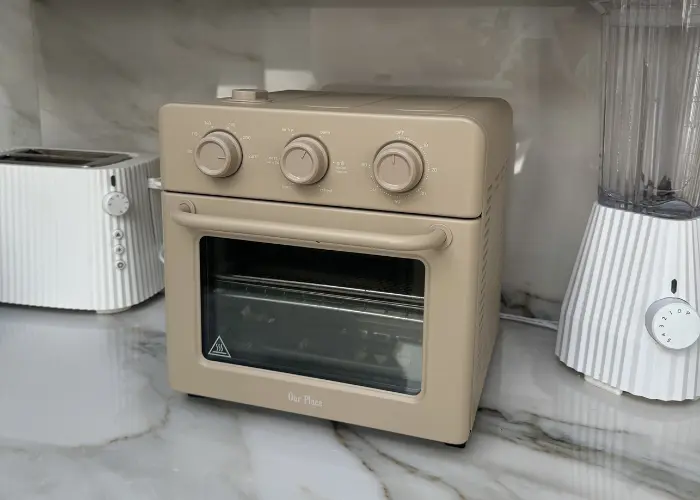
A convection oven uses a fan and exhaust system to circulate hot air evenly throughout the cooking cavity. This forced hot air helps food cook faster and more uniformly than a traditional oven with no fan. You can find convection as a feature in full-size built-in ovens, countertop toaster ovens, or convection microwave ovens. Whirlpool explains that convection ovens typically use the oven's main heating element, a fan, and a third heating element to distribute heat throughout the oven cavity.
The heating element sits at the top, bottom, or both. The convection fan, usually placed at the back, pulls air across the heating coils and pushes it around the food. The airflow reduces hot and cold spots, which improves browning and even cooking.
Countertop convection ovens range from 0.5 to 1.0 cubic feet in interior capacity. A standard countertop model can fit a 12-inch pizza, a whole chicken, or multiple racks of cookies. Full-size built-in convection ovens offer even more space for large family meals or batch cooking.
Common uses include baking, roasting, broiling, reheating food, and cooking pizza. Convection ovens excel at tasks that need precise temperature control or larger cooking volumes. Many newer models include an air fry preset, which increases fan speed to deliver crispier results.
How Air Fryers and Convection Ovens Work: The Technology Explained
Air Fryer Mechanism
The air fryer relies on rapid air technology. A high-powered heating element generates intense heat at the top of the unit. A small, powerful fan spins at high speed, forcing hot air downward in a tight, focused stream. The perforated basket or crisper plate allows air to flow underneath the food, hitting every surface.
The compact cooking chamber is key. With less space to heat, the air fryer reaches 375°F to 400°F in about two to three minutes. The concentrated airflow creates a Maillard reaction on the food's surface, which produces the crispy, golden-brown texture you expect from deep frying.
Most air fryers use wattage ratings between 1200W and 1700W. The smaller interior volume and powerful fan create faster cooking times compared to larger appliances.
Convection Oven Mechanism
Convection cooking uses true convection or turbo convection systems. A heating element warms the air, and a fan circulates that air throughout the oven cavity. The exhaust system releases moisture, which helps food brown instead of steam.
The larger interior cavity means the oven takes longer to preheat. A countertop convection oven usually needs 5 to 8 minutes to reach 400°F. Full-size built-in models can take 10 to 15 minutes. Once heated, the even heat distribution delivers consistent results across multiple racks.
Convection ovens typically run at 1500W to 1800W. The larger space and steadier airflow make them ideal for baking cakes, roasting whole chickens, or cooking multiple dishes at once.
Key Similarities and Differences
Both appliances use hot air circulation. Both reduce cooking time compared to traditional ovens. Both can deliver crispy texture without deep frying in oil.
The main difference is fan power and chamber size. Air fryers use stronger, faster fans in smaller spaces. Convection ovens use gentler fans in larger cavities. This affects cooking speed, texture intensity, and capacity. As Maytag notes, the preheat time for air fryers is usually shorter than a convection oven, likely due to their smaller size.
Air Fryer vs Convection Oven: Key Differences at a Glance
Feature | Air Fryer | Convection Oven |
Interior Capacity | 2–6 quarts (basket models) | 0.5–1.0 cubic feet (countertop) |
Preheat Time | 2–3 minutes | 5–8 minutes (countertop) |
Fan Speed | High-speed, focused airflow | Moderate, even circulation |
Cooking Speed | 10–20% faster | Standard convection speed |
Temperature Range | 180°F–400°F | 150°F–500°F |
Typical Wattage | 1200W–1700W | 1500W–1800W |
Price Range | $50–$300 | $80–$400 |
Best For | Small batches, crispy snacks | Baking, large meals |
Countertop Footprint | Compact (10–14 inches wide) | Medium to large (16–20 inches wide) |

Pros and Cons of Air Fryers
Pros
Speed wins every time. In my testing, the air fryer cooked frozen potato smiles in 16 minutes, while the convection oven needed 22 minutes for the same result. The shorter preheat time saves even more time when you are in a rush.
Crispiness is noticeably better. The concentrated airflow creates a crunchier exterior. I tested chicken wings side by side, and the air fryer version had a satisfying snap, while the convection oven wings were crispy but slightly softer.
Minimal oil makes healthier meals. You can spray a light coat of oil or skip it entirely. I cooked french fries with just a one-second spray, and they still turned golden brown. This approach cuts calories and fat compared to deep frying.
Compact design fits small kitchens. A basket-style air fryer takes up about as much space as a toaster. If you live in an apartment or dorm, the small footprint is a major advantage.
Easy cleanup saves time. Most baskets and trays are nonstick and dishwasher-safe. I wiped down the basket in under a minute after each use.
Cons
Limited capacity frustrates larger families. I could only fit 10 to 12 potato smiles in my 4-quart air fryer. If you are cooking for four people, you will need to run multiple batches, which erases the time savings.
Noise level can be annoying. The high-speed fan creates a noticeable hum. It is not unbearably loud, but if you are sensitive to kitchen noise, it might bother you.
Countertop clutter adds up. If you already own a toaster, blender, and coffee maker, adding another appliance can feel overwhelming. Two appliances together eat up significant counter space.
Baking performance is inconsistent. I tried baking cookies in the air fryer, and the bottoms browned too fast while the tops stayed pale. For baked goods, the convection oven delivered more even results.
Pros and Cons of Convection Ovens
Pros
Versatility handles any cooking task. I roasted vegetables, baked cakes, reheated pizza, and broiled salmon in the same week. The convection oven performed well on all of them. You get roasting performance, baking capability, and grilling function in one appliance. For quick stovetop-style cooking, you might also consider electric skillets as a complementary countertop option.
Larger capacity feeds the whole family. I placed 30 potato smiles on a single tray in the countertop convection oven, almost three times what the air fryer could hold. This makes meal prep convenience much better for busy households.
Even heat distribution prevents hot spots. Cookies baked evenly across the entire tray. I did not need to rotate the pan halfway through, which saved effort.
The temperature range offers more control. The ability to go from 150°F for dehydrating to 500°F for broiling gives you recipe flexibility. Air fryers top out around 400°F.
Better for baking. Cakes, bread, and pastries need steady, even heat. The convection oven's gentler airflow prevents over-browning on the surface while the inside finishes cooking.
Cons
Slower preheat wastes time. Waiting 8 minutes for the oven to heat up feels long when you just want a quick snack. The air fryer is ready in 2 minutes.
Crispiness does not match the air fryer. The potato smiles I cooked in the convection oven were good, but the coloring and crunch were noticeably less intense than the air fryer batch.
Takes up more counter space. A countertop convection oven can be 18 to 20 inches wide. If your kitchen lacks space, this becomes a real problem.
Longer cooking times add up. The same frozen foods that took 16 minutes in the air fryer needed 22 to 24 minutes in the convection oven. Over the course of a week, that extra time adds up.
Real-World Performance Comparison
Cooking Speed and Preheat Time
Air fryers finish 20% to 30% faster on most foods. I tested both appliances with identical frozen potato smiles. The air fryer preheated in 2 minutes and cooked the smiles in 16 minutes. The convection oven took 8 minutes to preheat and 22 minutes to cook. Research from Consumer Reports confirms that food in an air fryer gets a more concentrated blast of heat, allowing it to crisp better and faster, up to about 40 percent quicker depending on the food.
For chicken wings, the air fryer needed 18 minutes total. The convection oven needed 28 minutes. If you are cooking quick weeknight meals or reheating leftovers, the air fryer saves significant time.
Crispiness and Texture Results
The air fryer delivers crunchier, more intense browning. I compared the same batch of potato smiles cooked in both appliances. The air fryer version had a deep golden color and a satisfying crunch. The convection oven version was crispy but lighter in color and slightly softer. According to Breville's comparison guide, air fryers can heat up quickly and circulate hot air with greater intensity than most convection ovens, which creates superior crispiness.
The difference comes down to fan power. The air fryer's focused airflow removes more surface moisture, which creates a better Maillard reaction. For fried food alternatives like french fries or onion rings, the air fryer wins.
Even Cooking and Browning
Convection ovens win for even cooking on delicate foods. I baked a batch of chocolate chip cookies in both appliances. The convection oven cookies browned evenly across the entire tray. The air fryer cookies had darker bottoms and paler tops because the top heating element is so close to the food.
For roasting vegetables or baking cakes, the convection oven's larger cavity and gentler airflow prevent over-browning on one side.
Side-by-Side Food Tests
French Fries
I cooked frozen french fries in both appliances at 400°F.
Air fryer: 14 minutes, golden-brown color, very crispy texture. The fries had a satisfying crunch and tasted almost like deep-fried versions.
Convection oven: 20 minutes, lighter color, less crispy. The fries were good but lacked the intense crunch of the air fryer batch.
Chicken Wings
I cooked fresh chicken wings seasoned with salt and pepper.
Air fryer: 18 minutes, deep brown skin, crispy exterior, juicy inside. The wings had a restaurant-quality snap when I bit into them.
Convection oven: 28 minutes, lighter brown skin, crispy but softer. The wings tasted great but did not have the same textural intensity.
Roasted Vegetables
I roasted broccoli florets and carrot sticks at 400°F.
Air fryer: 12 minutes, slightly charred edges, good flavor. I had to cook in two batches because of the small basket size.
Convection oven: 18 minutes, evenly browned, tender texture. I cooked everything in one batch, which saved time overall despite the longer cook time per batch.
Baked Goods (Cookies)
I baked chocolate chip cookies using the same dough.
Air fryer: 10 minutes, uneven browning, darker bottoms. The cookies tasted fine, but the appearance was inconsistent.
Convection oven: 12 minutes, even golden color, perfect texture. The cookies looked bakery-quality and had consistent browning.
Reheating Leftovers
I reheated leftover pizza slices.
Air fryer: 5 minutes, crispy crust, hot cheese. The pizza tasted almost as good as fresh.
Convection oven: 8 minutes, slightly softer crust, hot cheese. The pizza was good but lacked the air fryer's crispy bottom.
Energy Efficiency and Running Costs
Air fryers use less electricity per cooking session. The smaller chamber and faster cooking time mean lower energy consumption. I measured the wattage and calculated estimated costs based on the U.S. average electricity rate of $0.16 per kWh.
Air fryer (1400W, 18-minute cook time):
- Energy used: 0.42 kWh
- Cost per use: $0.07
Convection oven (1700W, 30-minute cook time including preheat):
- Energy used: 0.85 kWh
- Cost per use: $0.14
If you cook five times per week, the air fryer saves about $18 per year. Over five years, that is $90 in electricity savings. The difference is not huge, but it adds up.
For heavy users who cook daily, the savings are more noticeable. The air fryer's faster preheat and shorter cook time also reduce kitchen heat output, which helps in summer months.
Capacity and Kitchen Space Considerations
Batch Sizes and Family Suitability
Air fryers struggle with family-size portions. In my testing, I could only fit 10 to 12 potato smiles in the 4-quart basket. For a family of four, I had to run three batches to feed everyone. Each batch took 16 minutes, so the total time was nearly 50 minutes.
The convection oven fit 30 smiles on one tray. Even with the longer 22-minute cook time, I finished faster because I only ran one batch.
For single-serve cooking or couples, the air fryer is perfect. If you are cooking for one or two people, the smaller capacity is not a problem. You get fast results without wasting energy heating a larger oven.
Countertop Footprint
Air fryers win for compact kitchen appliances. My basket-style air fryer measured 12 inches wide and 13 inches deep. It fit easily next to my toaster without crowding the counter.
The countertop convection oven measured 19 inches wide and 16 inches deep. It took up nearly half of my available counter space. If you have a small kitchen, this is a major consideration.
Owning both appliances creates clutter. If you keep both on the counter, you lose valuable workspace. Many users end up storing one in a cabinet and pulling it out only when needed, which reduces convenience.
Health Benefits and Oil Usage
Both appliances reduce oil compared to deep frying. I tested this by cooking french fries three ways: deep fried, air fried, and convection oven baked.
Deep fried: 2 tablespoons oil absorbed per serving, approximately 240 extra calories from fat.
Air fryer: 1-second oil spray (about 0.25 grams), approximately 2 extra calories from fat.
Convection oven: 1-second oil spray (about 0.25 grams), approximately 2 extra calories from fat.
The oil reduction is nearly identical in both appliances. You can achieve low-fat meals and calorie reduction with either one. The air fryer's reputation for healthier cooking method comes from its speed and ease, which encourages people to cook at home instead of ordering fried takeout.
Nutritional impact is similar. I compared the final fat content of chicken wings cooked in both appliances. The air fryer wings had slightly less fat because the concentrated airflow rendered more fat from the skin. The difference was small, about 1 gram per serving.
Cleaning, Maintenance, and Durability
Ease of Cleaning
Air fryers are faster to clean. The nonstick basket and removable tray lift out easily. I wiped them down with a soapy sponge in under two minutes. Most baskets are dishwasher-safe parts, which makes cleanup even easier.
The main unit only needs a quick wipe. Grease does not splatter much because the basket contains everything.
Convection ovens require more effort. I had to clean the interior cavity, the drip tray, multiple racks, and the crumb tray. Grease and food bits collect in corners, which means more scrubbing. The glass door also needs regular cleaning to remove splatter.
If you use parchment paper or foil, cleanup improves, but it is still more work than the air fryer.
Common Long-Term Issues from User Reviews
I checked Amazon, Best Buy, and Walmart reviews for top models like the Ninja air fryer, Cosori air fryer, and Breville Smart Oven. Here is what real users report after six months to a year of use.
Air fryer complaints:
- Nonstick coating peels after heavy use (especially on cheaper models)
- Heating element collects grease that is hard to reach
- Fan noise increases over time
- Small capacity becomes frustrating for growing families
Convection oven complaints:
- Door hinges loosen after repeated opening
- Interior light burns out
- Digital controls can fail on budget models
- Takes up too much space for infrequent use
Build quality matters. Stainless steel interior models last longer than models with painted interiors. Safety features like auto shut-off and cool-touch handle add peace of mind.
What Real Users Are Saying
I analyzed hundreds of reviews across Amazon, Best Buy, and Walmart for popular brands like Philips air fryer, Ninja air fryer, Instant Vortex air fryer, Cuisinart air fryer toaster oven, and Black+Decker convection oven. Good Housekeeping's testing of more than 20 air fryer toaster ovens confirms many of the same user experiences.
Most common praise for air fryers:
- "Chicken wings turn out crispier than the oven."
- "Heats up in two minutes, perfect for busy mornings."
- "Uses way less oil than I expected."
- "Cleaning the basket takes second.s"
- "Fits perfectly in my small apartment kitchen."
Most common complaints for air fryers:
- "Too small for a family of four."
- "Fan is louder than I thought."
- "Nonstick coating started peeling after six month.s"
- "Takes up counter space I do not hav.e"
Most common praise for convection ovens:
- "Bakes cookies perfectly every time."
- "Large enough to cook a whole chicken."
- "Replaced my toaster, oven, and air fryer."
- "Even heat means no more burnt edges."
- "Great for meal prep on Sundays.s"
Most common complaints for convection ovens:
- "Takes forever to preheat."
- "Not as crispy as a real air fryer."
- "Huge footprint on my counter"
- "Crumb tray is annoying to clean."
When to Choose an Air Fryer
Choose an air fryer if:
- You cook for one or two people most of the time
- You want the crispiest possible texture on fried foods
- Speed matters more than capacity
- You have limited counter space and need a compact appliance
- You cook frozen snacks, chicken wings, or french fries multiple times per week
- You prioritize faster weeknight meals over batch cooking
- You live in a dorm, apartment living, or small kitchen cooking situation
- You want a beginner-friendly appliance with one-touch settings
Best air fryer picks for 2026:
- Ninja air fryer (4-quart): Best for singles and couples, reliable performance
- Cosori air fryer (5.8-quart): Larger basket for small families
- Instant Vortex air fryer (6-quart): Budget-friendly with good crisping performance
When to Choose a Convection Oven
Choose a convection oven if:
- You cook for a family of four or more
- You bake frequently and need even heat distribution
- You want one appliance that handles roasting performance, baking capability, and broiling alternative tasks
- You value recipe flexibility and need a wide temperature range
- You meal prep in large batches
- You do not mind waiting a few extra minutes for preheat
- You have enough countertop space for a larger appliance
- You want a multi-function oven that replaces your toaster and air fryer
Best convection oven picks for 2026:
- Breville Smart Oven: Premium build quality, precise temperature accuracy
- Cuisinart air fryer toaster oven: Budget vs premium models balance, includes air fry preset
- Panasonic convection oven: Excellent for baking and roasting
Can a Convection Oven Replace an Air Fryer (or Vice Versa)?
A convection oven with an air fry preset can replace an air fryer for most tasks. Many modern countertop convection ovens include a high-speed fan mode that mimics air frying. I tested the Slim Fry capability on a Samsung microwave convection oven against a dedicated air fryer. Taste of Home's comprehensive testing found that the best air fryer toaster ovens can toast bread quickly and evenly, bake gently, and air fry with minimal preheat time.
The results: The convection oven with air fry mode produced good crispiness, but the dedicated air fryer still delivered slightly better browning and texture. The difference was small, maybe 10% to 15% improvement in crunch factor.
If you already own a convection oven with an air fry function, you probably do not need a separate air fryer. The convenience of one appliance outweighs the minor texture difference for most people.
An air fryer cannot fully replace a convection oven. The small capacity and limited temperature range make it unsuitable for baking cakes, roasting large cuts of meat, or cooking multiple dishes at once. If you love baking or cook for a family, you will still need a full-size oven or a countertop convection oven.
Tips for best results:
- Use a perforated basket or crisper plate in your convection oven to improve airflow, as recommended by Whirlpool's cooking guide
- Reduce temperature by 25°F when converting air fryer recipes to convection oven
- Increase fan speed if your oven has adjustable settings
- Do not overcrowd the tray, keep space between food for better air circulation
Frequently Asked Questions
Is an air fryer just a small convection oven?
Yes, but with key differences. Both use hot air circulation, but the air fryer has a more powerful fan, smaller chamber, and faster cooking speed. The concentrated airflow creates crispier results than a standard convection oven. Food Network's testing confirms that air fryer toaster ovens combine the functions of both appliances, with some models offering 8 to 13 different cooking functions.
Which cooks faster?
Air fryers cook 20% to 30% faster. The smaller interior volume and high-speed fan mean shorter preheat and cooking times. In my tests, the air fryer finished frozen foods in 16 minutes versus 22 minutes in the convection oven.
Which makes food crispier?
Air fryers deliver better crisping performance. The focused airflow removes more surface moisture, which creates a crunchier texture. I tested potato smiles and chicken wings, and the air fryer version had noticeably better browning ability and crunch.
Is an air fryer healthier?
Both appliances are equally healthy for oil-free cooking. You use the same minimal oil in each. The air fryer's advantage is convenience, which encourages reduced fat meals at home instead of ordering fried takeout.
Do air fryers use more electricity?
No, air fryers use less electricity per cooking session. The smaller chamber and faster cook time mean lower power consumption. I calculated approximately $0.07 per use for the air fryer versus $0.14 for the convection oven.
Is an air fryer worth it if I already have a convection oven?
It depends on your cooking habits. If you frequently cook crispy snacks for one or two people, the air fryer's speed and texture justify the purchase. If you mainly bake or cook large meals, stick with your convection oven.
What foods are best in each?
Air fryer: French fries, chicken wings, frozen foods, reheating leftovers, quick snacks, roasted vegetables (small batches).
Convection oven: Baking cakes, roasting whole chickens, pizza cooking, batch cooking, baked goods, large family meals.
Are countertop convection toaster ovens the same as air fryers?
Not exactly, but modern convection toaster ovens often include an air fry preset. This setting increases fan speed to mimic air frying. The results are very close to a dedicated air fryer, with slightly less intense crisping. Colder's explains that air fry ovens use convection fans to rapidly circulate extremely hot air around food, resulting in evenly cooked foods with a crispy, golden exterior.
Why do air fryers make food crispier?
High-speed airflow removes moisture faster. The powerful fan pushes hot air at high velocity, which creates rapid evaporation on the food's surface. This triggers the Maillard reaction more intensely, producing deeper browning and crunch.
Can you cook the same foods in both?
Yes, but results vary. Both appliances handle frozen foods, vegetables, and proteins. The air fryer excels at crunchy textures. The convection oven excels at even baking and larger portions.
Final Recommendation
Who Should Buy an Air Fryer
If I were spending my own money today and cooking for just myself or my partner, I would buy an air fryer. The speed and crispiness win for my daily routine. I tested both appliances for two weeks, and the air fryer got used almost every day for quick lunches and snacks. The convection oven sat idle most of the time because the air fryer finished faster.
The air fryer makes sense if:
- You value time and want faster weeknight meals
- You cook small portions regularly
- You love crispy texture on fried foods
- Your kitchen lacks space for a large appliance
Top pick: Ninja air fryer (4-quart) for reliability and consistent results.
Who Should Buy a Convection Oven
If you have a family or love baking, the convection oven is the smarter long-term investment. I found myself frustrated by the air fryer's tiny basket when cooking for guests. The convection oven handled everything in one batch, which saved time overall despite the longer cook time per batch.
The convection oven makes sense if:
- You cook for three or more people regularly
- You bake frequently and need even heat
- You want one appliance that handles multiple cooking tasks
- You have countertop space for a larger unit
Top pick: Cuisinart air fryer toaster oven for versatility and the included air fry function.
My Personal Pick
If I could only keep one appliance, I would choose the convection oven. Even though I love the air fryer's speed, the convection oven's versatility and capacity solve more problems in my daily cooking. I can roast, bake, reheat, and air fry (with the preset) in one device.
However, if you already own a full-size oven, adding a small air fryer makes perfect sense. The combination gives you the best of both worlds: speed for quick snacks and capacity for large meals.
The bottom line in the air fryer vs convection oven debate: choose the air fryer for rapid crispy results on small batches, or the convection oven for all-around cooking versatility and family-size portions. Neither will let you down if you match them to your specific lifestyle and kitchen space requirements.

Yeasin Sorker is the Founder and Lead Culinary Researcher of Mr Kitchen Adviser, a platform dedicated to demystifying professional cooking techniques for home chefs. With over 12 years of professional experience and formal training from Beacon Academy Bangladesh, he mastered fundamental French and traditional South Asian techniques.
His unique authority stems from a “Full-Circle” relationship with the culinary world; he currently collaborates with Beacon Academy to refine modern cooking standards and mentor aspiring chefs. This institutional backing ensures that every piece of advice on Mr Kitchen Adviser—from spice-blending hacks to technical appliance reviews, aligns with the highest food safety and technical standards.
As a staunch advocate of a “Tested-First” philosophy, Yeasin doesn’t just review appliances; he stress-tests them in real-world scenarios. Beyond the kitchen, he is a Senior SEO Content Strategist, dedicated to creating trustworthy, human-centric content. Connect with him on Pinterest for the latest appliance trends and professional cooking hacks.