As an Amazon Associate we earn from qualifying purchases. We may earn a commission from links on this page, at no extra cost to you. Learn more.
If you've ever loaded a blender with frozen berries and milk, hit pulse, and listened to the blades spin in place while the fruit stays put, you already know why this list exists. Stalling is the number one failure mode with frozen fruit, and after weeks of daily smoothies and frozen margarita batches, we know which blenders crush and which ones choke. We tested 10 top blenders on rock-hard berries and ice, clocked blend times, watched for stalls, and tracked which parts wear out first, because a blender that dies at the nine-month mark is no bargain at any price. You don't need a four-figure machine: the right 1000-watt workhorse, or a properly powered personal blender, turns a bag of frozen fruit into a smooth drink in seconds.
Quick Overview: Our Top Picks at a Glance
Ten blenders ranked on how they handle frozen fruit.
Rank
Product
Best for
Power
Rating
Buy
1
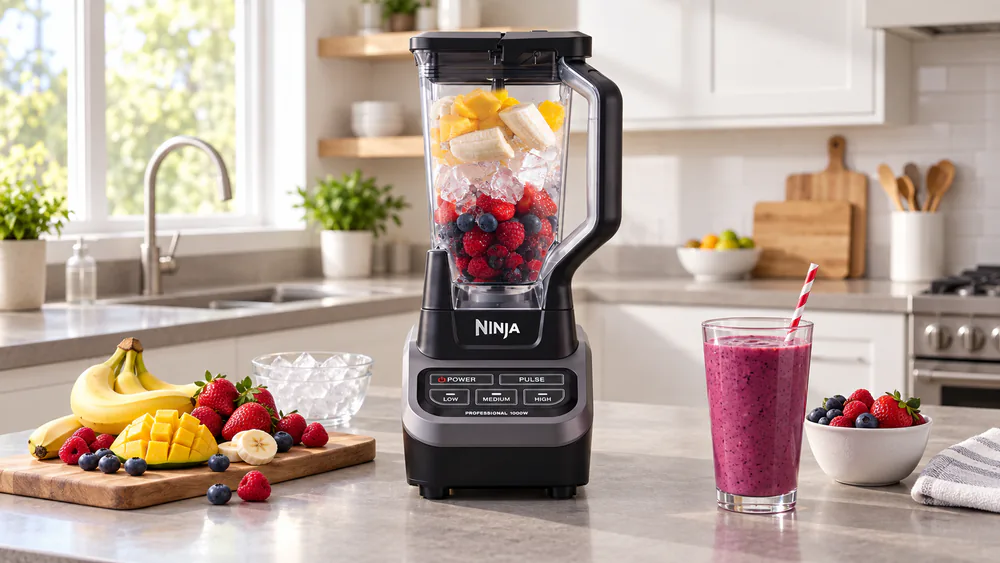
Ninja Professional BL610
Best Overall
Family batches and daily smoothies; 72-oz pitcher (64-oz liquid). Midrange price.
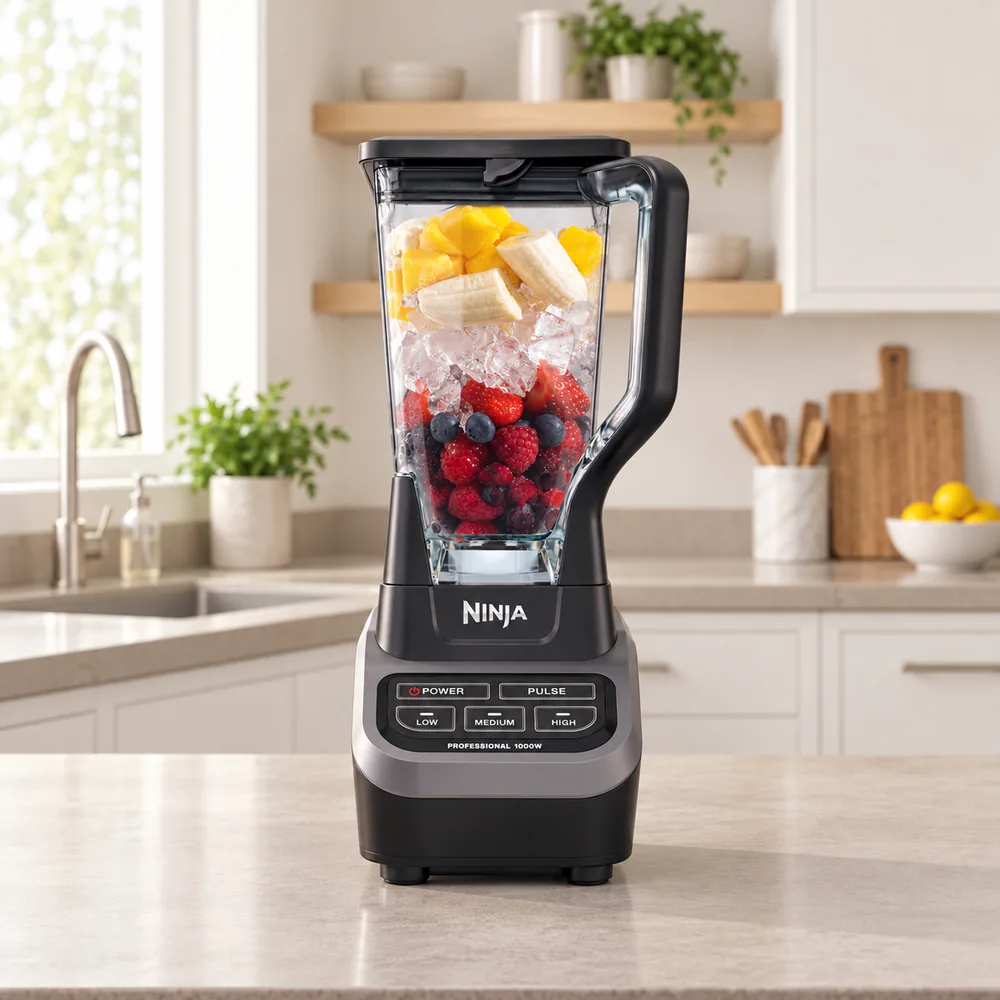
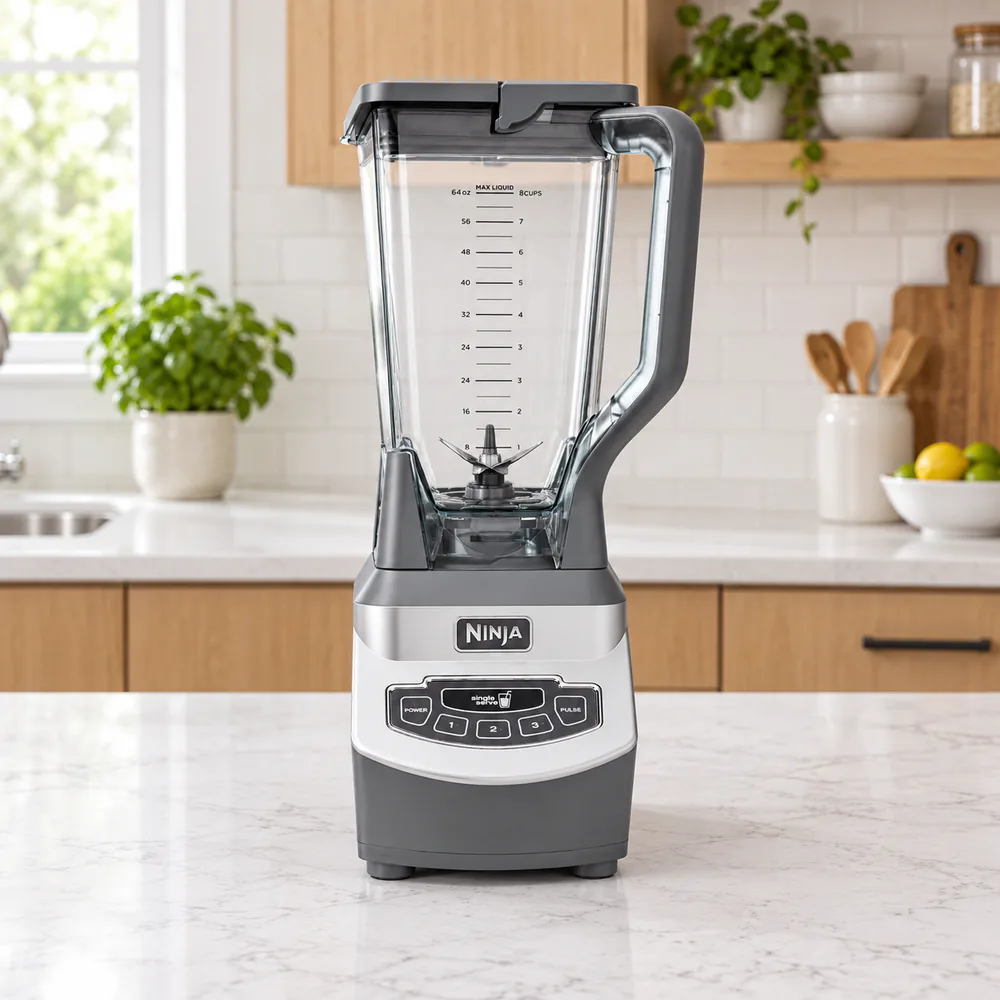
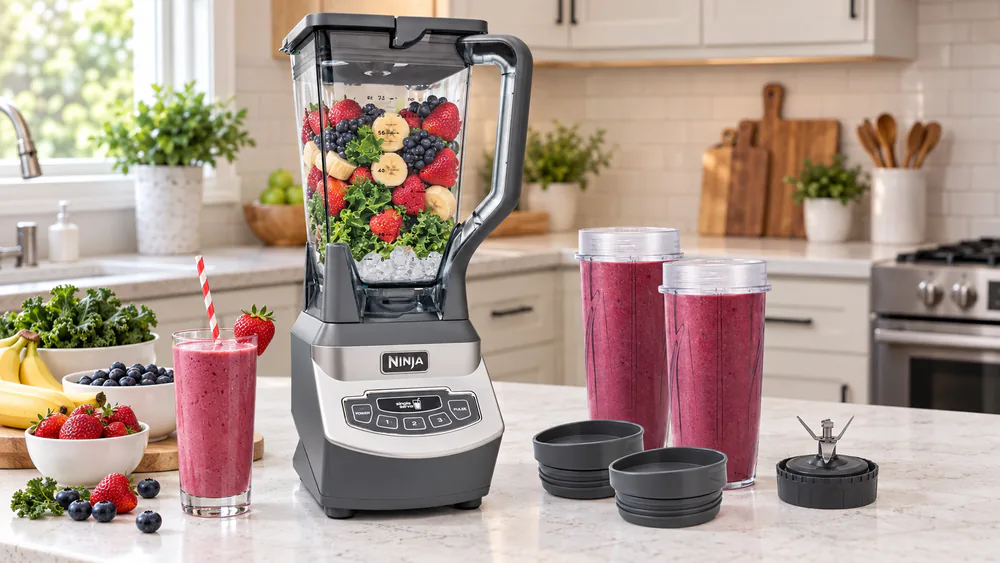
The BL610 is the blender we kept reaching for, because it turns a bag of frozen fruit into a smooth, drinkable blend without stalling or babysitting. Week after week it ran family-size batches and meal-prep smoothies in a single pass, and cleanup is a breeze: three pieces that rinse or go in the dishwasher. The stacked Total Crushing blades grab frozen chunks the way cheap single blades can't.
Pros
Blends frozen fruit and ice fast with the stacked blade assembly
72-oz pitcher fits family batches and weekly meal prep
Cleanup is three dishwasher-safe pieces
Cons
Very loud on high
Sharp stacked blades need careful handling in the sink
Lid spring is a known failure point around the two-year mark
Specifications
Power
1000W
Capacity
72-oz BPA-free pitcher (64-oz max liquid)
Speeds
3 plus pulse
Blades
Total Crushing stacked assembly
Noise
About 110 dB on high at arm's length
Warranty
1-year limited
The trade-offs are real: about 110 dB at arm's length on high, blades sharp enough to treat with respect, and a lid spring that tends to fail around the two-year mark. For a family that blends daily, the Ninja Professional BL610 earned the top spot, near $88 with street pricing that moves week to week.
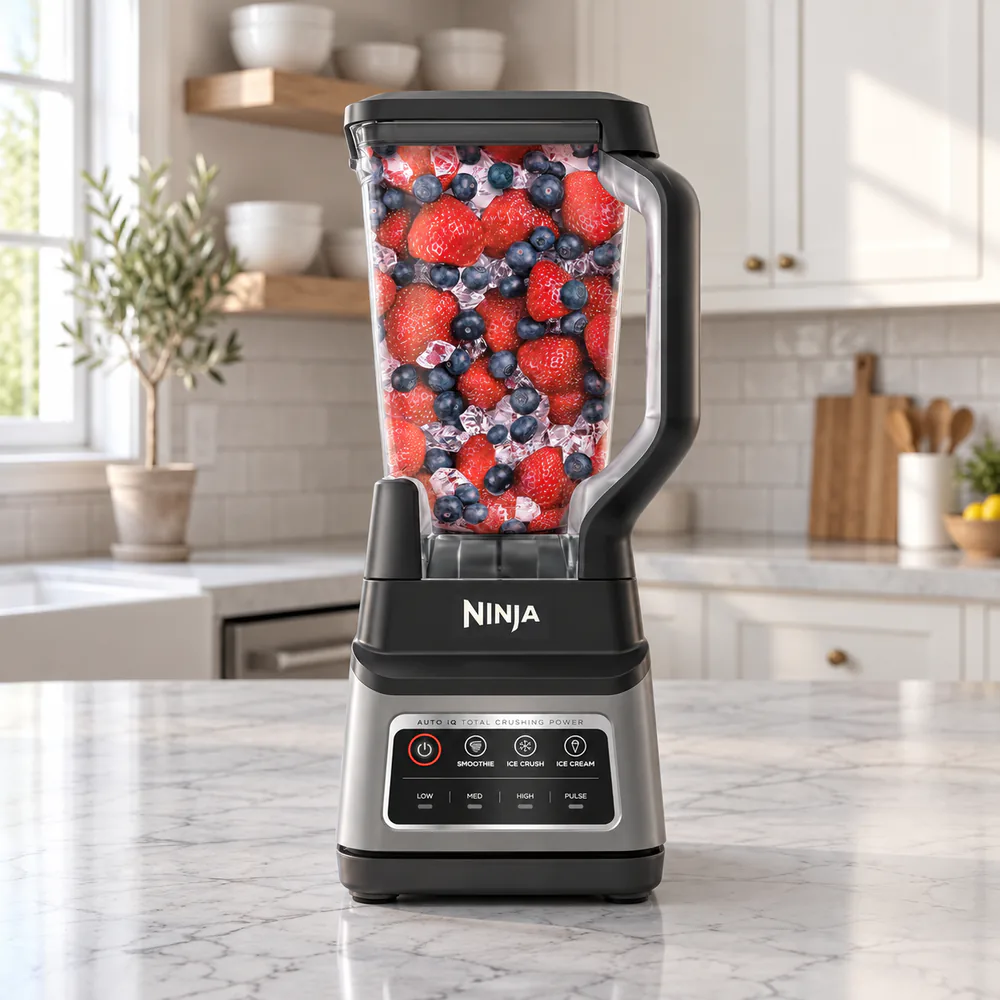
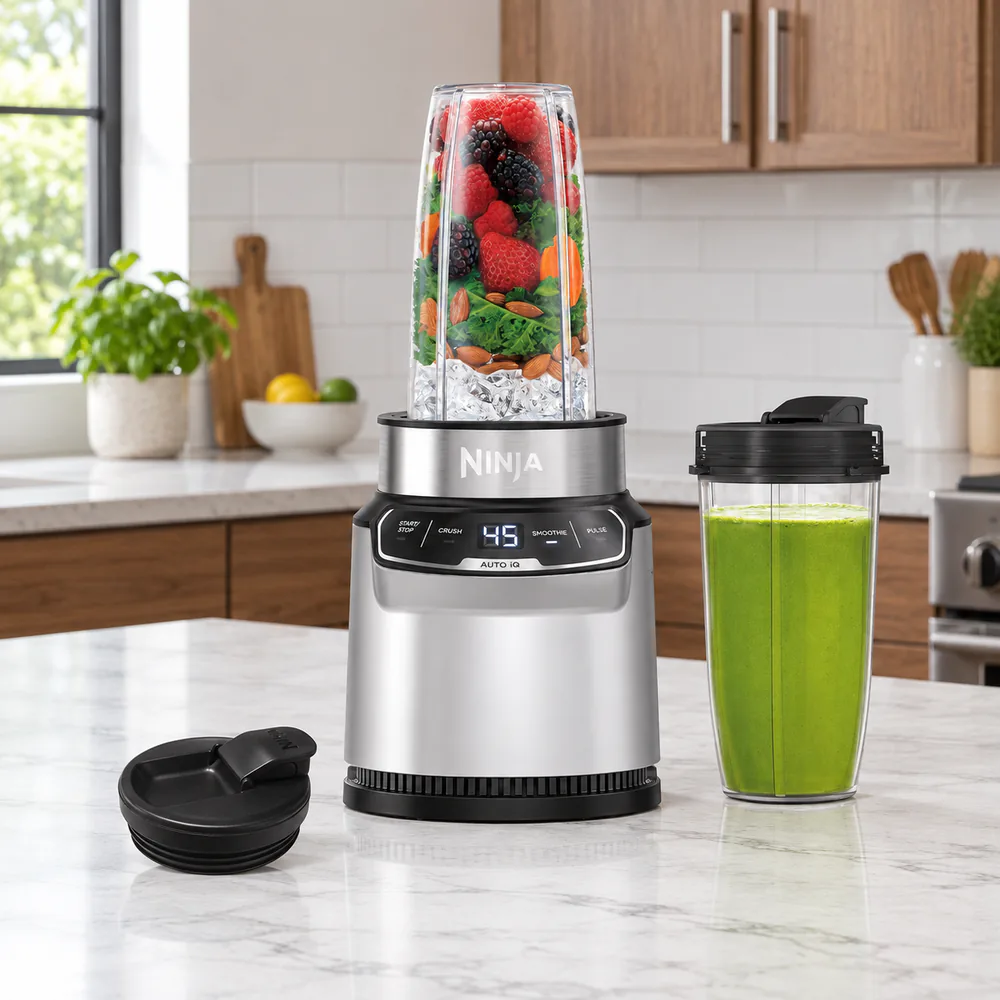
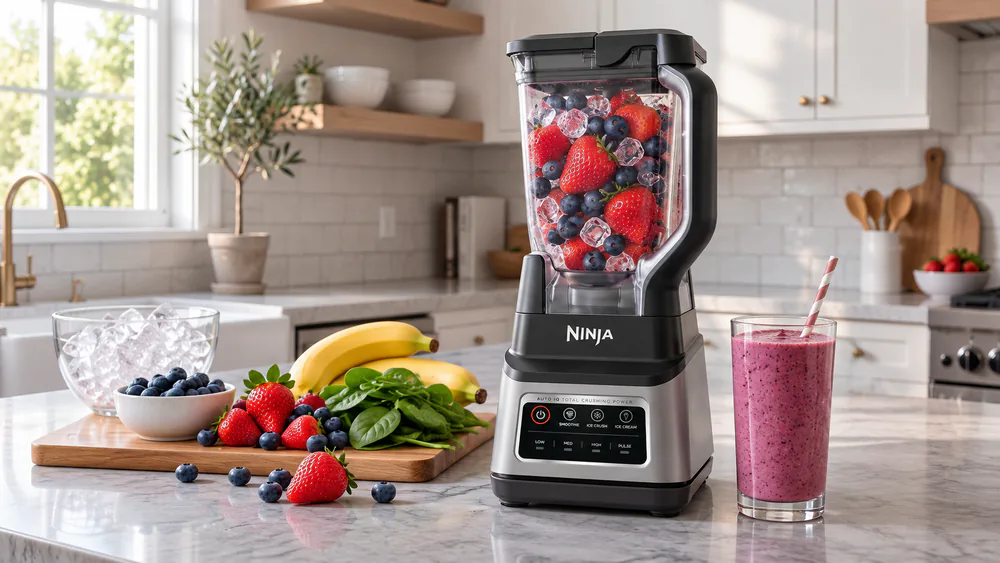
If the BL610 is the value hero, the BN701 is its power-hungry sibling, and it showed in the first test: ice, frozen mango, and lime became literal snow in about 12 seconds, a batch that stalled machines costing three times as much. The 3 Auto-iQ presets clear most frozen fruit hands-free in 30 to 60 seconds, and the suction-cup base stays planted.
Pros
1400 peak watts, roughly 40% more crushing strength than the BL610
Turns ice to snow in about 12 seconds
Auto-iQ presets blend frozen fruit in 30 to 60 seconds hands-free
Suction-cup base stays planted
Cons
Frozen fruit smoothies come out slightly grainy, not silky
Pitcher and lid can crack in the dishwasher; hand wash instead
Small single servings blend unevenly
Specifications
Power
1400W peak
Capacity
72-oz pitcher (64-oz max liquid)
Presets
3 Auto-iQ plus manual speeds
Blades
Total Crushing stacked assembly
Noise
Loud on high
Warranty
1-year limited
The trade-off shows up in the glass: frozen fruit smoothies come out slightly grainy, not silky, and the pitcher isn't truly dishwasher-safe, with cracking within weeks of machine washing in our experience. Near $97 with street pricing that moves week to week, the Ninja BN701 Professional Plus is the strongest blender for the dollar here.
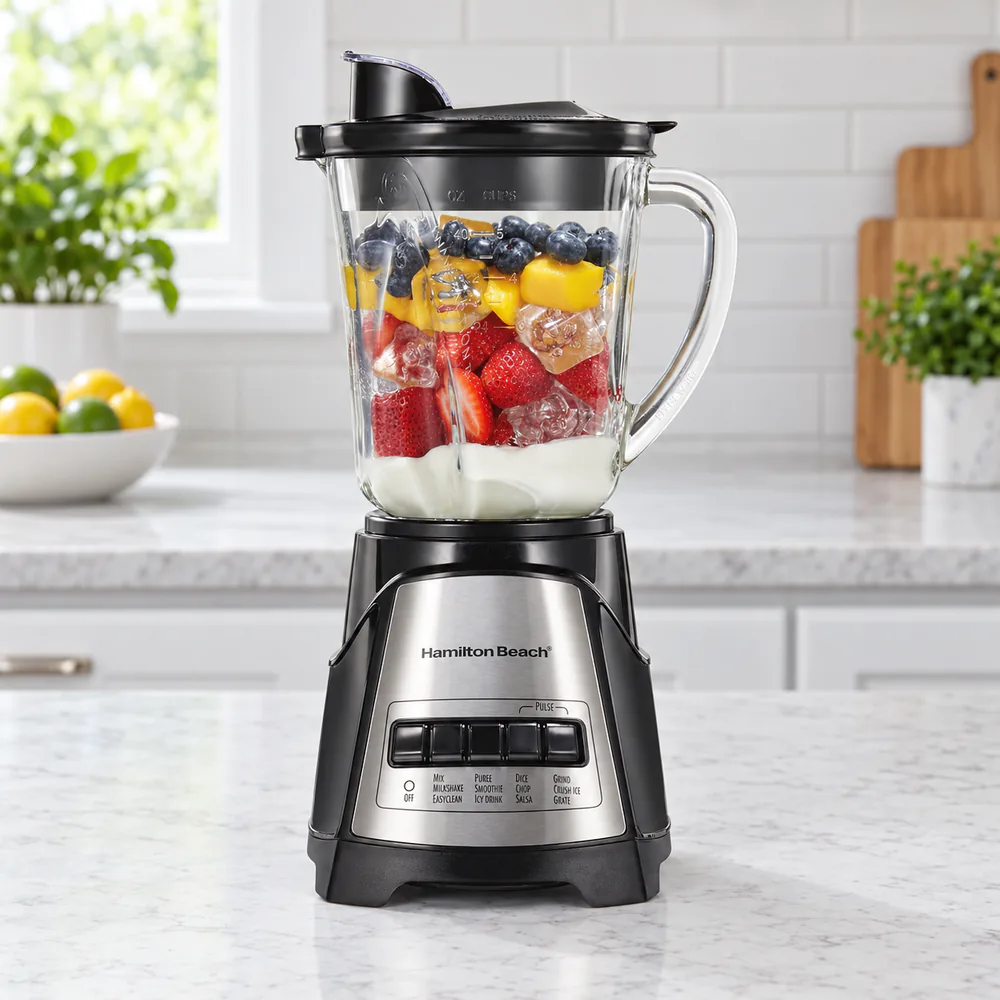
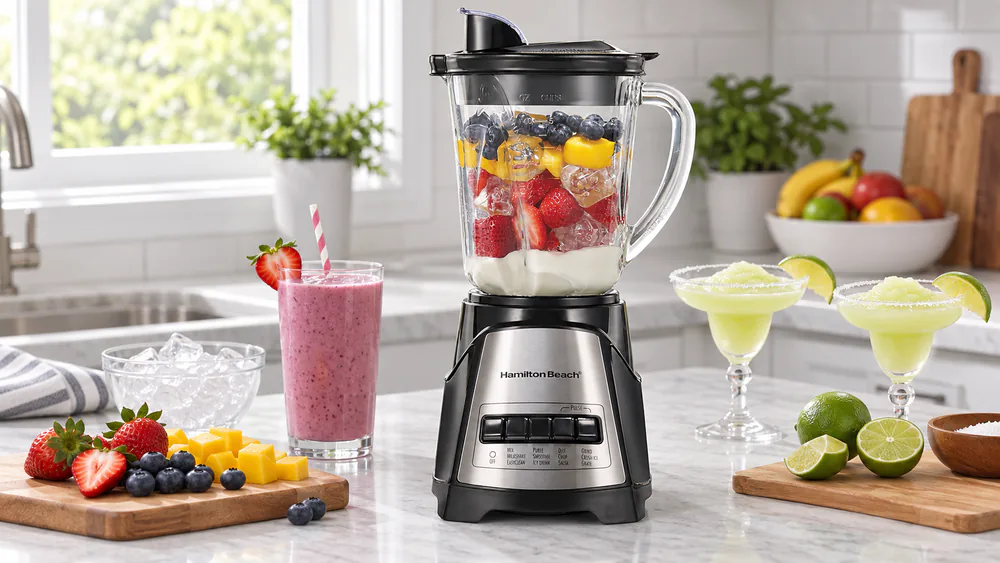
Where the Ninjas crush by force, the Hamilton Beach Power Elite wins on price and glass, with the honest part up front: at 700 watts it's the weakest motor in the full-size group, and on dense frozen mango it bogged down and left chunks until we stopped, stirred, and added liquid. That's the budget-blender trade. What you get instead: a real 40-oz glass jar that took hot soup, a 3-year warranty, and a new blade and gasket for about $11.
Pros
Real glass jar that handles hot soup and cleans easily
12 blending functions including a dedicated crush-ice setting
3-year warranty, the best in the budget group
Replacement blade and gasket run about $11
Cons
700W motor struggles with frozen fruit; expects stirring and added liquid
Lid is hard to remove and the pour spout is nearly useless
Durability is a gamble; some units fail within the first year
Specifications
Power
700W peak
Capacity
40-oz glass jar, BPA-free
Functions
12 on 5 buttons, including crush ice
Blades
Stainless Ice Sabre with Wave Action
Noise
Varies; pulse is louder than continuous run
Warranty
3-year limited
When the blade gasket finally cracked at three years, that $11 repair was the whole story. For an occasional frozen-fruit habit, View Latest Price near $40 is hard to beat, though street pricing moves week to week; just expect to stir, add liquid, and grip the stubborn lid.
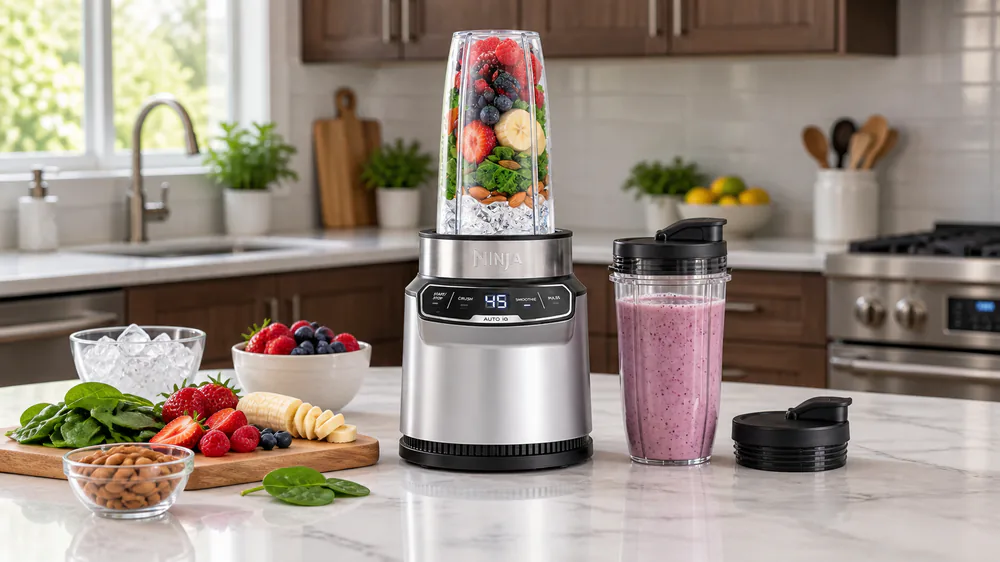
The full-size Ninjas handle the family; the Nutri Pro BN401 shrinks that power to a single cup. At 1100 peak watts it's the strongest personal blender here, and the daily test proved it: frozen banana, kale, spinach, protein powder, and coconut milk fully blended in about a minute with no babysitting. It's also one of the loudest appliances in our kitchen, loud enough that the 60-second cycle is a mercy.
Pros
1100 peak watts blends frozen fruit, greens, and protein powder in about a minute
Auto-iQ presets make blending one touch
Cups with spout lids go straight to the car or office
Cons
Among the loudest kitchen appliances we've used
Blade gasket needs periodic removal and brushing or residue sours
Durability is inconsistent; some units fail within months
Specifications
Power
1100W peak
Cups
2 x 24-oz to-go with spout lids
Presets
2 Auto-iQ (Smoothie, Crushed Ice) plus manual
Timer
60-second default cycle
Blades
Pro Extractor assembly
Noise
Very loud
Warranty
1-year limited
The one maintenance habit to know: residue under the removable blade gasket turns sour, so pull the gasket out and brush the groove regularly. For daily single-serve drinkers, the Ninja Nutri Pro Single Serve Blender (BN401) is the pick, near $100 with moving street pricing.
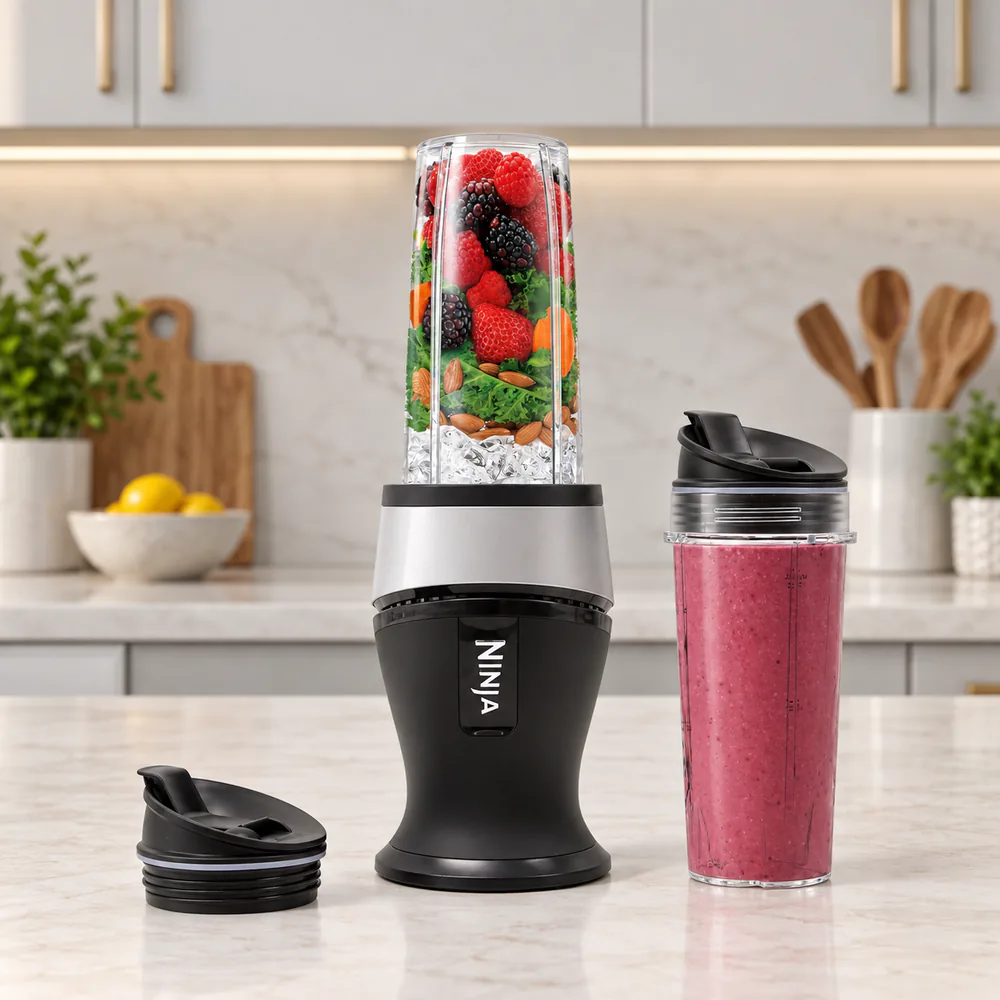
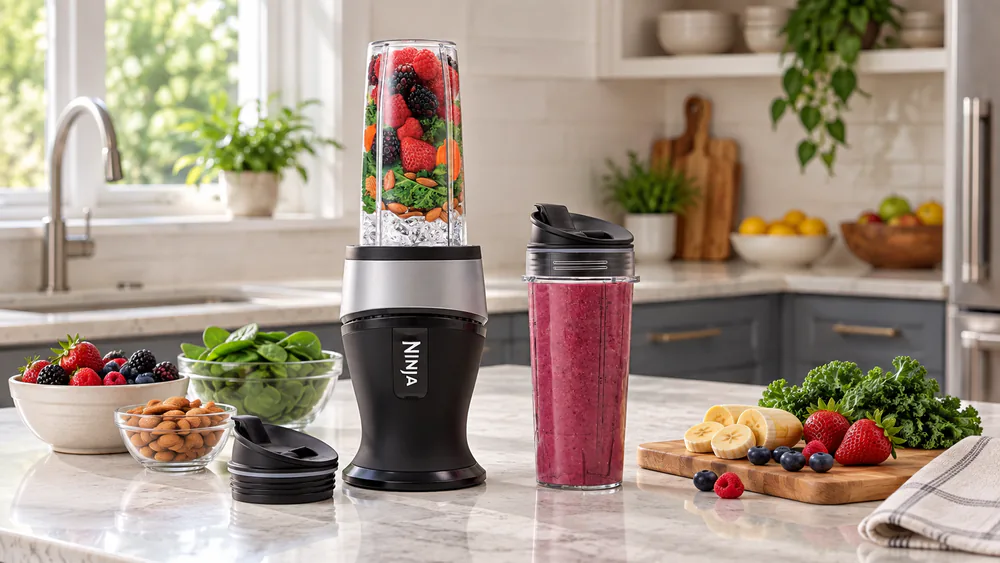
If the Nutri Pro is the personal blender with presets, the Ninja Fit is the stripped-down version, and push-to-blend pulse is the right tool for frozen fruit: frozen mango, ice, and protein powder turned smooth in seconds after three or four pulses, and several of our testers said it beats their full-size blenders for a single serving.
Pros
Blends frozen mango, ice, and protein powder smooth in seconds
Tiny footprint and light 3.06 lb weight
Drink straight from the cup; most parts are dishwasher safe
Cons
Very loud for its size
16-oz cups are small, and Ninja makes no larger cups for this base
Blade O-ring can fail early and isn't covered by warranty
Specifications
Power
700W
Cups
2 x 16-oz with spout lids
Controls
Push-to-blend pulse
Weight
3.06 lb
Blades
Pro Extractor assembly
Noise
Very loud for its size
Warranty
1-year limited
It's super loud for its size, and the 16-oz cups are genuinely small, so bigger drinkers will be refilling. The Ninja Fit Compact Personal Blender (QB3001SS) is the cheapest way into Ninja power, near $70 with moving street pricing, at just 3.06 lb, and watch the blade O-ring, which can fail early.
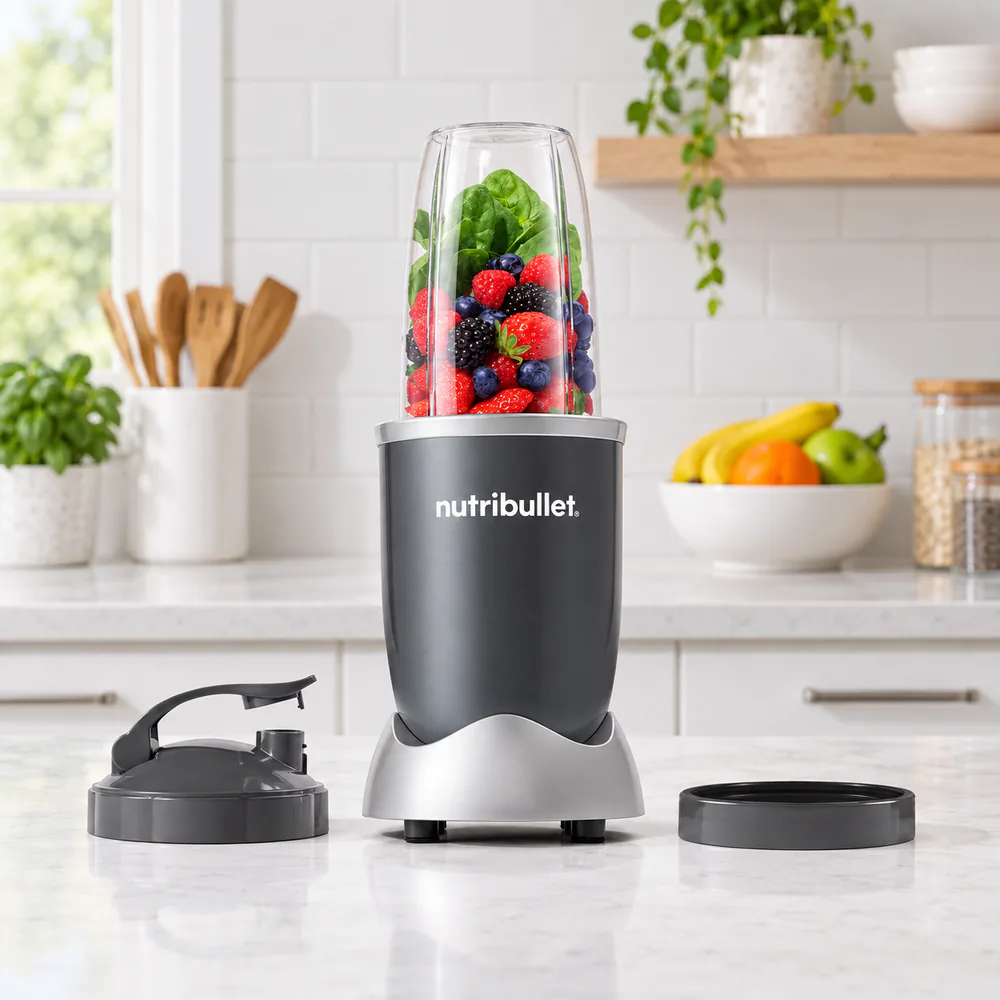
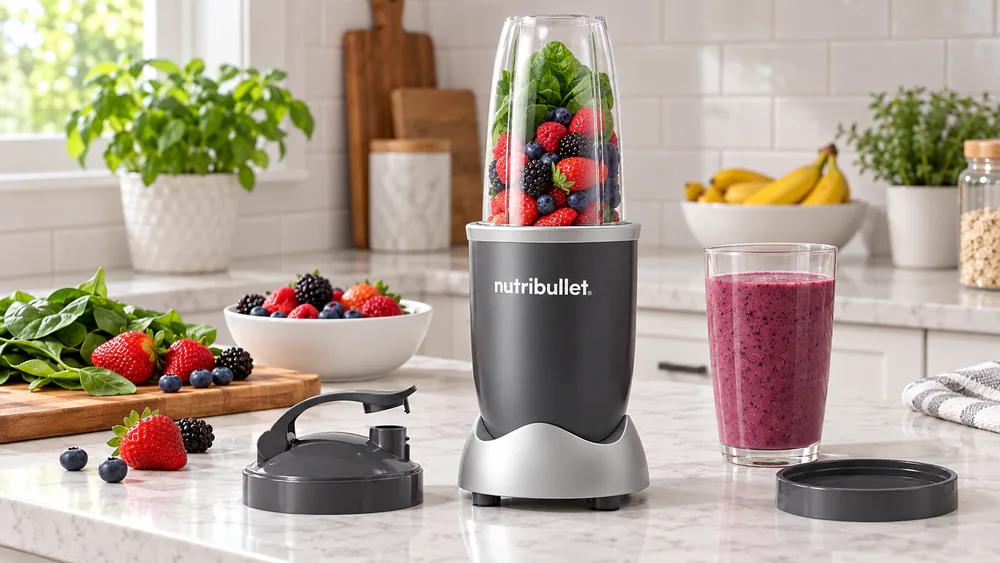
Where the Ninja Fit pulses, the Nutribullet 600 does one thing: push and hold. We ran it three days straight on frozen banana, tropical fruit, oats, and romaine smoothies without a miss, which says a lot for 600 watts. The rules are the same: liquid first, frozen last, and don't pack the cup full, because it refuses to blend without enough liquid.
Pros
20,000 RPM extractor blade at a budget price
One cup, one blade cleanup; cup doubles as the drinking cup
Handles frozen fruit when you layer liquid first and stay under the max line
Cons
Needs plenty of liquid; refuses to blend dry or overpacked cups
Cups can crack within about a month of daily use
Motor bearings typically wear out around the three-year mark
Specifications
Power
600W
Cup
24-oz, doubles as the drinking cup
RPM
20,000
Controls
Single-speed push-and-twist
Blades
Stainless extractor blade
Warranty
1-year limited
Cleanup is one cup, one blade, rinse and go, and the 24-oz cup doubles as the drinking cup. At 20,000 RPM the Nutribullet Personal Blender (600 Watt) spins faster than the wattage suggests, near $55 with moving street pricing; just know the cup can crack within about a month and the bearings squeal around the three-year mark.
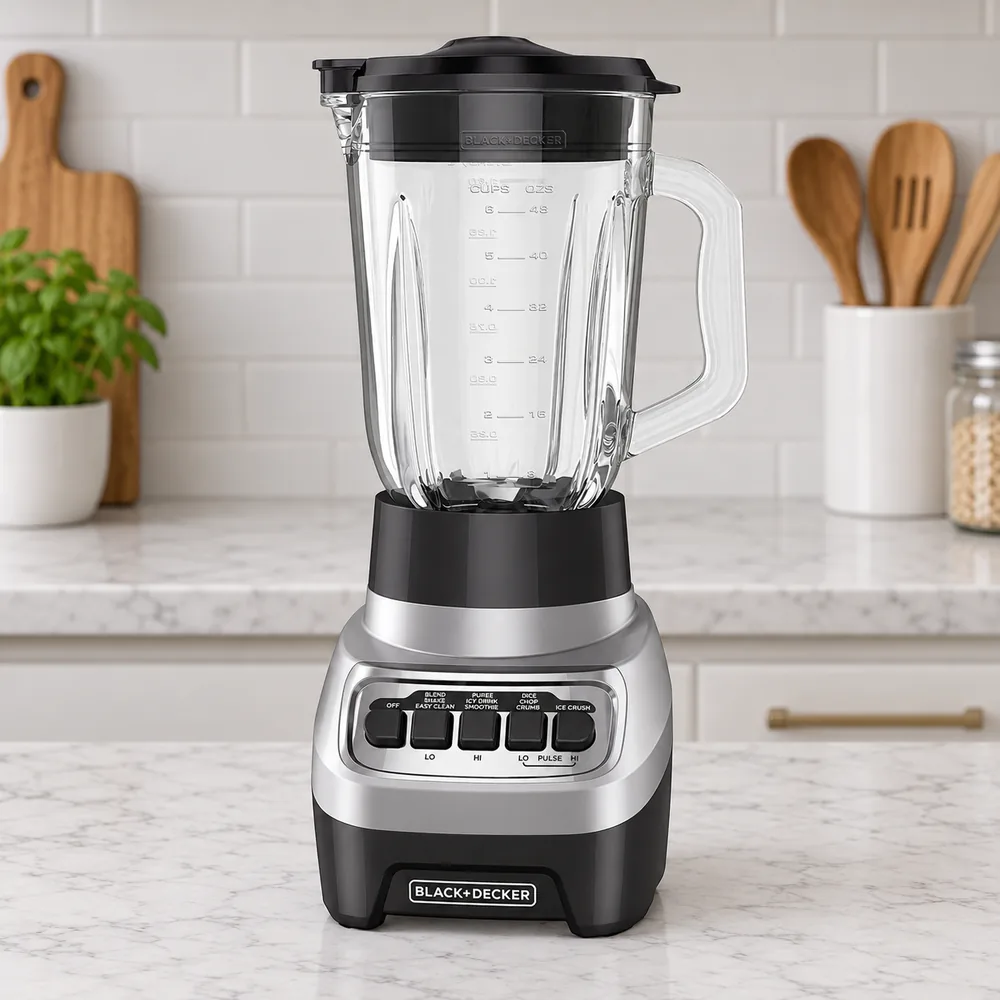
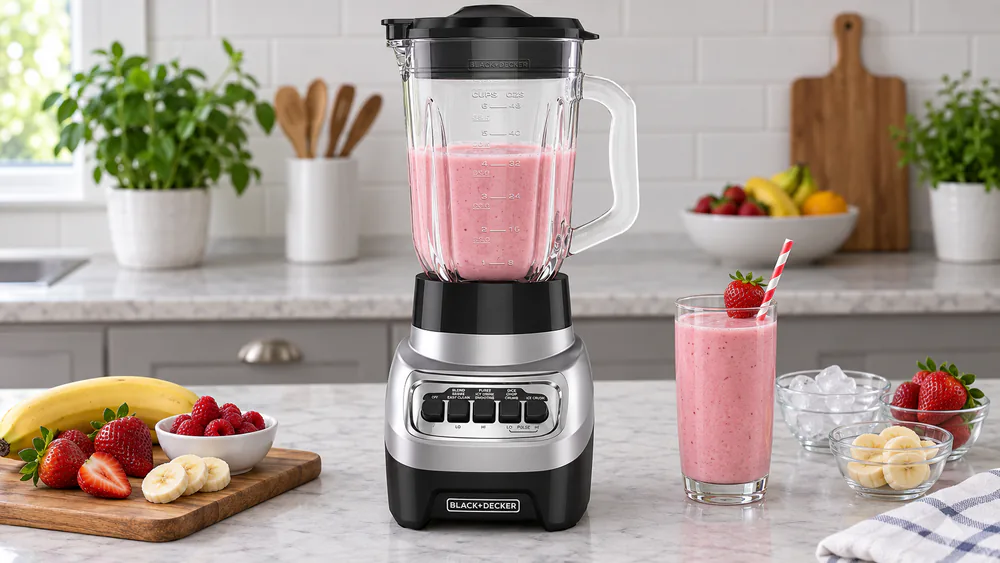
If Nutribullet owns the budget personal blender, BLACK+DECKER owns the budget jar blender, and the PowerCrush is the hardest pick to score because our results split clean down the middle: it crushed a tray of ice to snow one run and left chunks in a dense frozen berry mix the next, and the difference was the liquid in the jar.
Pros
Full glass jar that disassembles completely for cleaning
Easy Clean function spins the blades to loosen caked-on food
2-year warranty, longer than most at this price
Cons
Performance is inconsistent; dense frozen mixes leave chunks without lots of liquid
Some units stop or die within months of purchase
Dishwasher cycles can leak bearing grease from the blade assembly
Specifications
Power
700W peak (350W continuous)
Capacity
48-oz (6-cup) glass jar
Speeds
4 (low, high, low pulse, high pulse)
Blades
4-tip QuadPro stainless
Cleaning
Dishwasher-safe jar and lid; hand wash the blade assembly
Warranty
2-year limited
The glass jar is the real selling point, since it disassembles completely for cleaning. Near $40 with street pricing that moves week to week, the BLACK+DECKER PowerCrush brings a 2-year warranty; hand wash the blade assembly, because dishwashers can leak the bearing grease, and tighten the base firmly or it can leak.
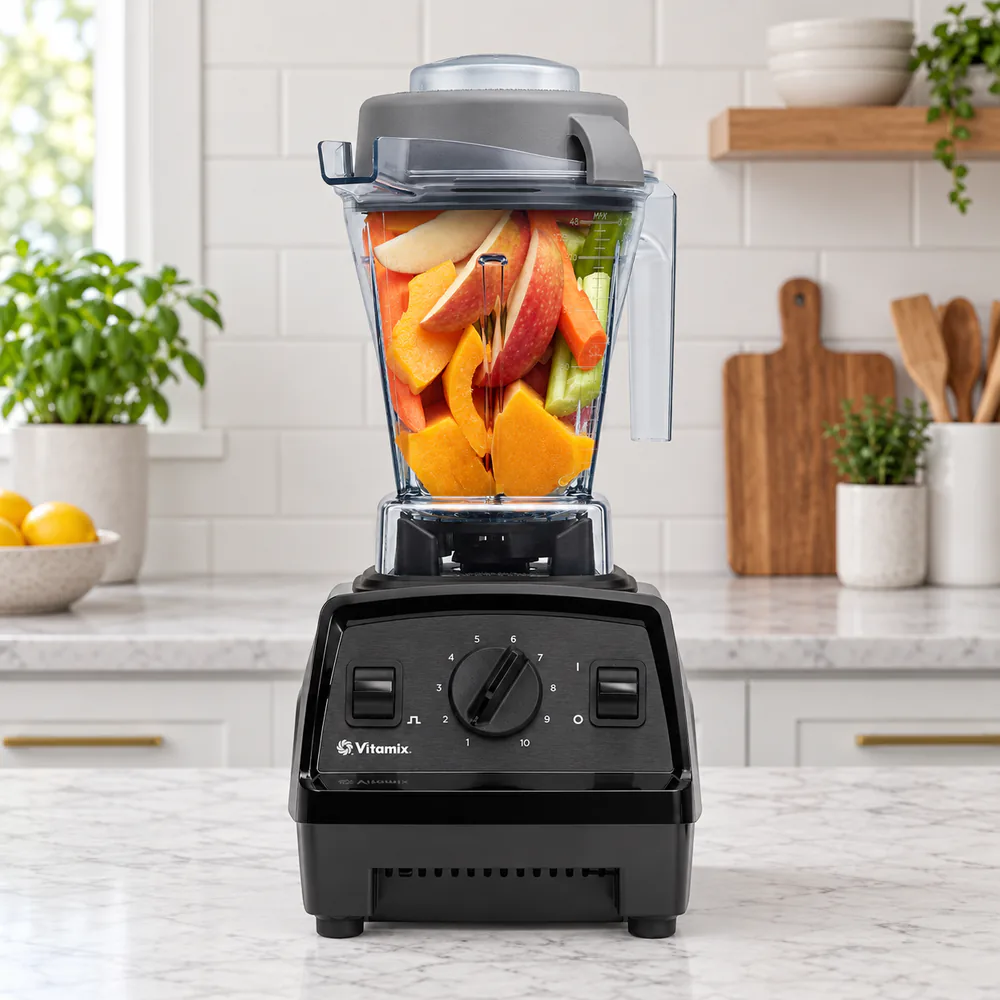
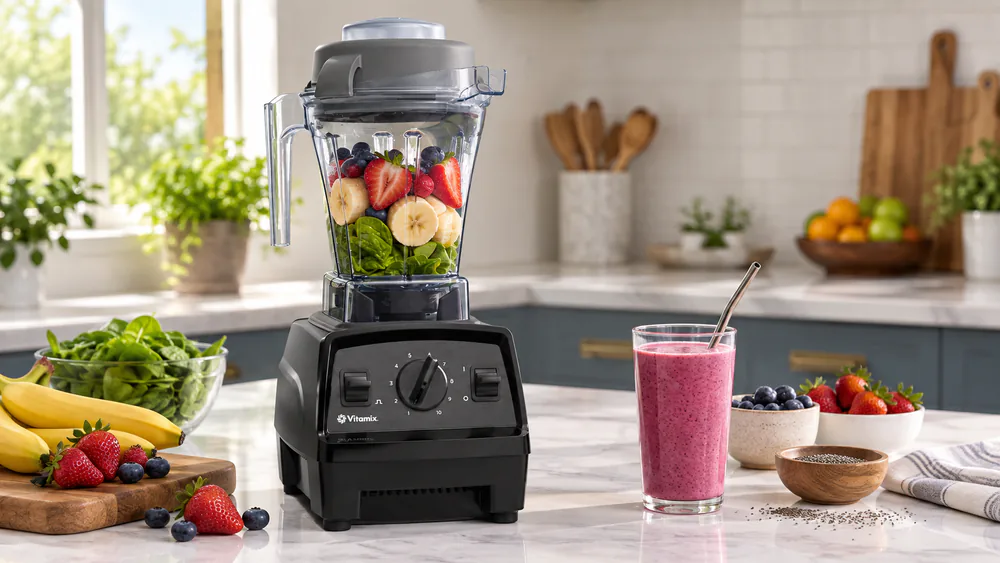
Every pick so far wins on wattage or price; the Vitamix E310 wins on a different axis. In our 10-blender test it was the only machine that consistently turned rock-hard strawberries and ice into a smooth puree in under 60 seconds, pulverizing frozen bananas in 45. The 2-horsepower motor drags dense frozen blocks into the blades where other motors just spin, and at speed 10 the result is silky smooth.
Pros
The only machine in our test to puree rock-hard strawberries and ice in under 60 seconds, every time
2 HP motor with 10 speeds and about 22,500 RPM on high
5-year warranty that has covered a container replacement
Cons
About 88 dB at speed 10, with vibration
48-oz container is small for family batches
No presets, and thick blends need the tamper for the first 15 seconds
Self-cleans in 30 to 60 seconds with soap and water; not dishwasher safe
Warranty
5-year, container covered
You pay in noise, about 88 dB with vibration, and in technique: thick blends need the tamper for the first 15 seconds. Near $379 with street pricing that moves week to week, the Vitamix Explorian E310 is the pick if price isn't a factor, backed by a 5-year warranty that has already covered a container replacement for us, though 48 oz suits medium batches, not big family breakfasts.
If the E310 is the specialist, the BL660 is the workhorse: more than 1,200 daily smoothies over three years, with internals that kept churning like day one despite a lightweight, plasticky build with no sound dampening. It's loud, the suction cups can pop up and let the base walk, but it never refused a batch.
Pros
1100W motor that won't quit, proven over 1,200-plus daily smoothies
72-oz pitcher plus two to-go cups with their own blades
To-go cup blade replacements run about $15
Cons
Loud with no sound dampening
Replacement pitchers cost $70 to $80, near the price of the blender
Suction cups can pop up and let the base walk
Specifications
Power
1100W
Capacity
72-oz pitcher (64-oz max liquid) plus 2 x 16-oz to-go cups
Controls
3 speeds, pulse, dedicated single-serve
Blades
Total Crushing plus Pro Extractor for the cups
Noise
Loud, no sound dampening
Warranty
1-year limited
The two 16-oz to-go cups with their own blades make morning smoothies fast, and replacement blades run about $15. The Ninja BL660 pairs that with a 72-oz pitcher near $120 with moving street pricing, though replacement pitchers run $70 to $80, nearly the price of the blender, so skip the hot liquids.
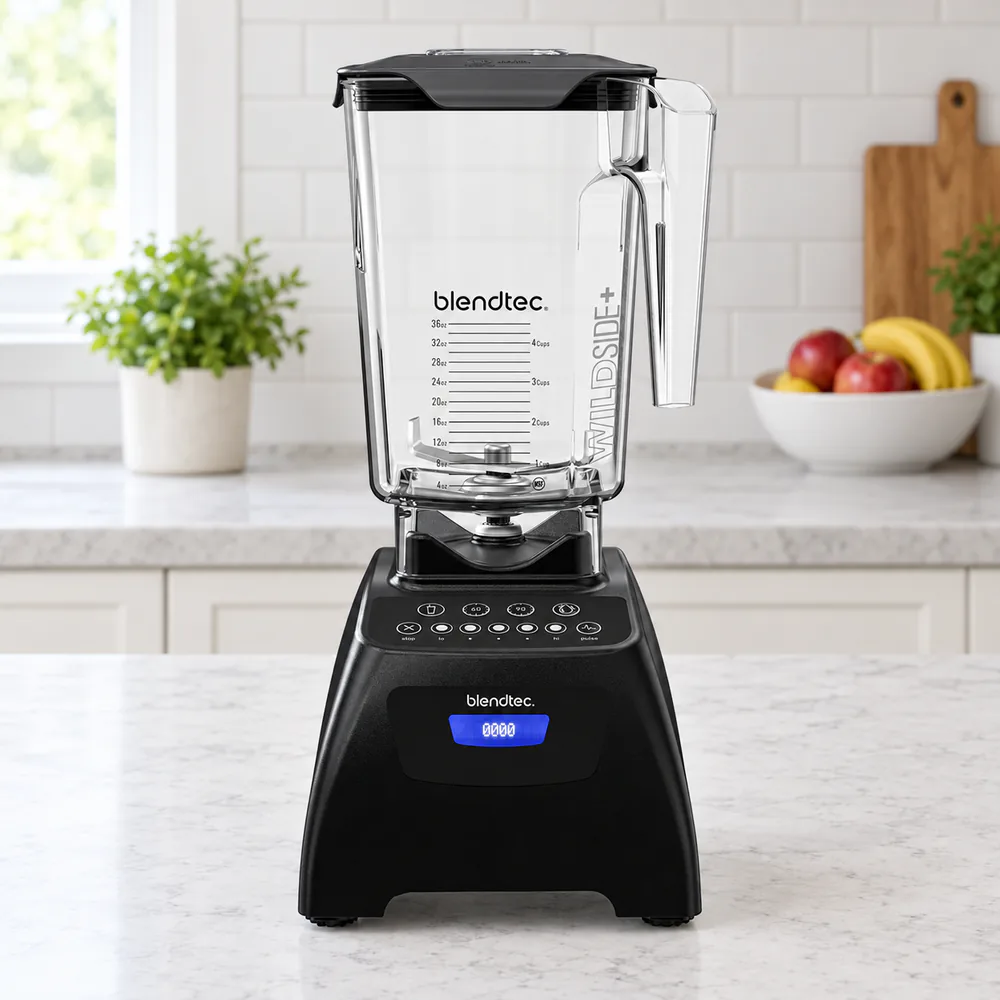
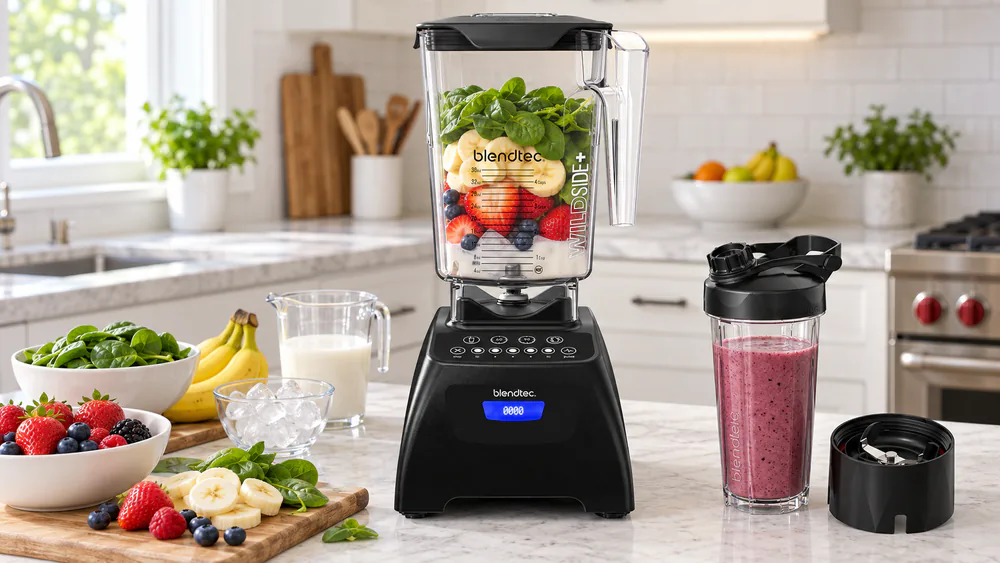
The list ends where the batches get big: the Blendtec Classic 575. Over a 40-smoothie stretch the blunt forged blade tore through frozen mango effortlessly and never stalled, and the 90-oz WildSide jar handles four to six servings, the biggest capacity here by far. Its ice-crushing record is the strongest endorsement in this space, 9.6 out of 10 in RTINGS' frozen-drink testing.
Pros
1560W motor and 90-oz jar handle four to six servings
RTINGS' top scorer for frozen drinks, 9.6 out of 10 for ice crushing
Blunt forged blade claimed to last five-plus years without sharpening
Cons
No tamper; very thick low-liquid mixes can stall in a cavitation bubble
Very loud, and the base jumps around on the counter
Warranty claims split between 2 and 8 years; official terms are unclear
Specifications
Power
1560W (3 peak HP)
Jar
90-oz WildSide+ (36-oz blend capacity, 4 to 6 servings)
Controls
4 presets, 5 speeds, pulse; touchpad with timer
Blades
Patented blunt forged stainless, no tamper available
Cleaning
Self-clean cycle under a minute
Warranty
2 years per most listings (claims vary)
The blunt blade smashes rather than chops, so seeds stay intact and friction warms smoothies, which is why we added ice. There's no tamper, so very thick low-liquid mixes can stall in a cavitation bubble, it's jet-engine loud, and one of our units died inside its first year. Near $400 with moving street pricing, the Blendtec Classic 575 is for big-family frozen drinks, not a single thick smoothie.
Factors to Consider When Choosing a Blender for Frozen Fruit
A blender that fails on frozen fruit usually fails on one of five counts: a motor that can't keep the blades spinning, blades that can't grab frozen chunks, a jar that's the wrong size or shape, no pulse control, or parts that give up after a few months. Prices here are street prices at the time of writing and move week to week.
Motor Power and Wattage
Set the floor at 700 watts for basic frozen fruit, with stirring and extra liquid required. At 1000 watts, blending frozen fruit stops feeling like work, which is where most of our full-size picks sit, and smoothie bowls or nut butters want 1400 watts and up. Wattage alone doesn't predict success, because brands measure it differently: Ninja quotes peak watts, Vitamix talks horsepower, and Breville publishes detailed spec sheets on the Breville website. We also watched a 2-horsepower motor drag dense frozen banana into the blades better than some higher-wattage machines, so treat wattage as a floor, not a score.
Blade Design and Ice-Crushing Ability
Two blade philosophies dominate. Stacked assemblies like Ninja's Total Crushing grab frozen chunks fast and shred them into a drink in seconds, at the cost of a fibrous mouthfeel and blades that dull with use. Single large blades pull ingredients down and pulverize more completely, which is why the Vitamix E310, spinning near 22,500 RPM, pureed frozen strawberries where slower blades left chunks. RPM matters more than blade count: for ice and frozen fruit, look for 20,000 RPM or more, and know that standard sharp blades dull measurably in 12 to 18 months of daily frozen use, with chewiness as the first sign. Some caution lists even flag frozen fruit as a blender risk; the real danger is blending it dry, with no liquid to draw it down.
Jar Capacity and Size
A 48-oz jar handles about two 20-oz smoothies, good for one or two people; a family of four wants a 72-oz pitcher. Remember the real limit: effective capacity for thick blends is roughly half the jar volume, because frozen fruit and yogurt don't flow, which is why these pitchers hold 64 oz of liquid at the max line. Tall narrow jars leave unblended bits at the top of very thick mixes, and most full-size blenders run 15 to 17 inches tall, fitting under standard upper cabinets.
Speed Settings and Presets
Pulse is the control that matters most for frozen fruit: it works the blade in bursts, shaking the contents down between pulses, and it's the standard rescue move when a budget blender stalls. Presets like Ninja's Auto-iQ take that work off your hands, and a variable-speed dial gives the finest control. Don't buy on preset count; a machine with 12 programs blends no better than one with three.
Durability, Cleaning, and Noise
Plan for wear: blades dull, gaskets sour, and lids crack, so buy the machine whose weak points you can live with, because you'll be stuck with them for years. Treat dishwasher claims with skepticism: several of our pitchers cracked or leaked grease after machine washing, so we hand wash blade assemblies by default. Glass jars clean easily, take hot soup, and avoid plastic wear, at the cost of weight. Set noise expectations, too: ice crushing on most powerful blenders easily exceeds 85 dB at the jar.
Tip. Set your wattage floor at 1000W and layer the jar: liquid first, then powders and yogurt, then soft fruit, then frozen fruit on top. Let frozen berries sit in the liquid 2 to 3 minutes and pulse before full power, and even a budget blender will stall far less often.
Frequently Asked Questions
Can you put frozen fruit directly in a blender?
Yes, as long as there is liquid in the jar and the fruit isn't past the max line. Drop it in frozen, because that cold gives smoothies their thick texture. The only no-go is blending it dry, which is how stalls happen, and if berries froze into one solid clump, break it apart first.
How many watts do you need to blend frozen fruit?
For a family-size jar, treat 1000 watts as the practical floor; at 700 watts you will blend frozen fruit, but you will stir, pulse, and add liquid. Personal blenders work at 600 to 700 watts because the smaller jar gives tighter blade geometry, but the 1100-watt class, like the Nutri Pro, is where single-serve blending stops being a fight.
Do you need to defrost fruit before blending?
No, if the blender is powerful enough; frozen fruit blends straight from the bag on every machine here. If you are making a very thick, low-liquid recipe, thawing for 10 to 20 minutes softens the fruit so even a strong motor doesn't work as hard, a trick we use for bowl-style blends.
Are personal blenders good for frozen fruit?
Yes, with two caveats. The small jar geometry helps, because ingredients stay close to the blades, and the best models here blend frozen banana, greens, and protein powder in about a minute. The caveats: you need enough liquid, the cups can't be packed full, and it's single servings only, so a family breakfast still wants a full-size pitcher.
Glass vs. plastic: which jar handles frozen fruit better?
Functionally, both handle frozen fruit fine, but they age differently. Plastic is lighter and usually dishwasher safe, though Ninja pitchers have a history of cracking in the dishwasher. Glass, like the Hamilton Beach Power Elite's jar, cleans easily, takes hot soup without thermal-shock problems, and has cheap replacement parts, but it is heavy, which matters for weak wrists.
How long do blades last crushing frozen fruit?
Standard sharp blades dull measurably in 12 to 18 months of daily frozen use, with chewiness as the first sign. Replacement blades are affordable on most of these machines, roughly $15 for Ninja to-go cups and about $11 for the Hamilton Beach blade and gasket. Blendtec's blunt forged blade is the exception, claimed to last five years or more.
Final Verdict: What's the Best Blender for Frozen Fruit?
Ask us for one answer and it's the Ninja Professional BL610, the pick that balanced frozen-fruit performance with a price most households can stomach. The rest is about matching the jar to the kitchen: the Nutri Pro BN401 for a daily single serving, the BL610 or BN701 for a family of four, the Blendtec 575 for margarita nights, and the Hamilton Beach Power Elite on a strict budget. Before you buy, check that replacement blades and jars exist and what they cost, because they are wear items, and the machines still running years from now are the ones their owners could fix cheaply. If the verdict reads right, today's price on Amazon is worth checking before it moves.