As an Amazon Associate we earn from qualifying purchases. We may earn a commission from links on this page, at no extra cost to you. Learn more.
What do a weekend smash burger, a stack of pancakes, and a steak with a proper crust all have in common? They all cook better on a flat, solid surface than on any set of grates. That is the promise of a flat top grill, and it is the reason the backyard griddle has become the outdoor kitchen many cooks did not know they were missing.
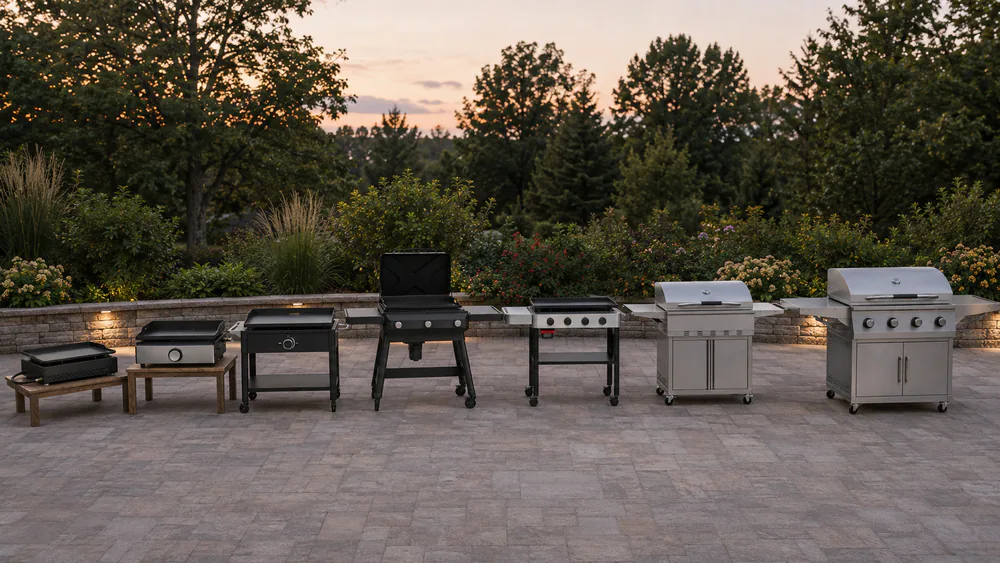
We tested 7 flat top grills in 2026, cooking smash burgers, pancakes, and seared steaks on every one and logging heat maps, recovery times, and cleanup sessions along the way. Our year-long unit went head to head with six newcomers, and the differences surfaced fast: in the temperature spread across the plate, in how long a surface took to come back after a big batch, and in what a grease cup did to the end of a cook.
The picks below span every budget and every use, from a $111 tabletop for first-timers to a three-zone 33-inch machine for serious cooks. Whatever you are planning to cook, one of these seven is the right flat top for it.
Best Flat Top Grills Compared
Seven griddles, seven different answers to the same question: how much cooking do you want from a flat surface? We ranked them on heat evenness, recovery, cleanup, and value, then grouped them by the job each does best. This table is the fastest way to see the field. The reviews below go deeper on every pick, and the buying guide at the end explains the specs that actually matter.
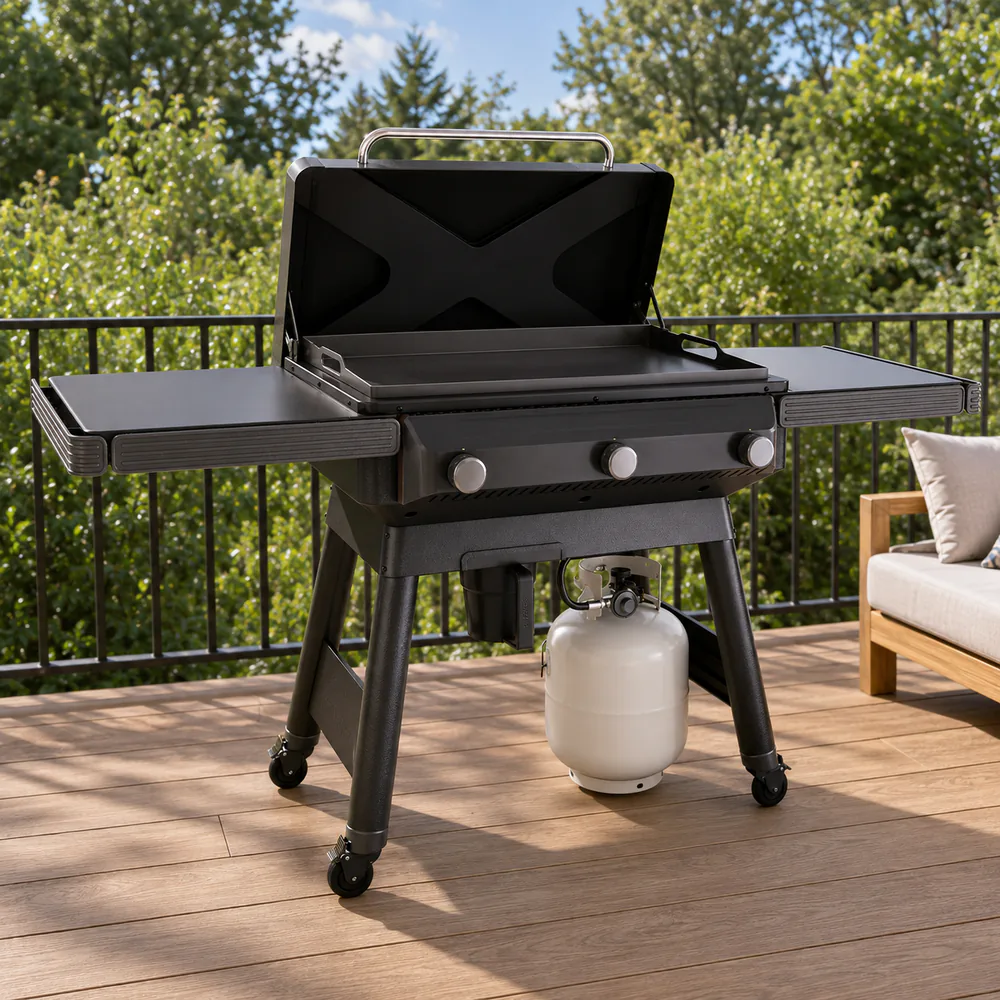
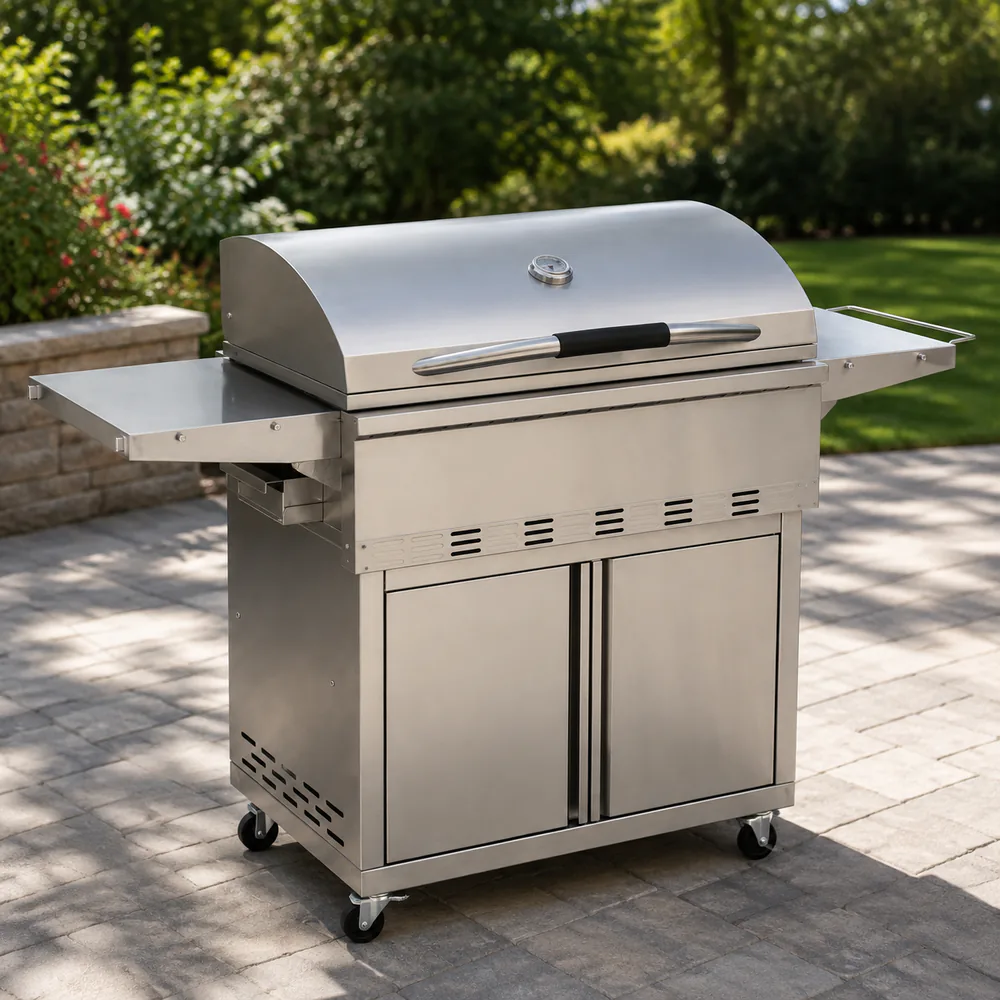
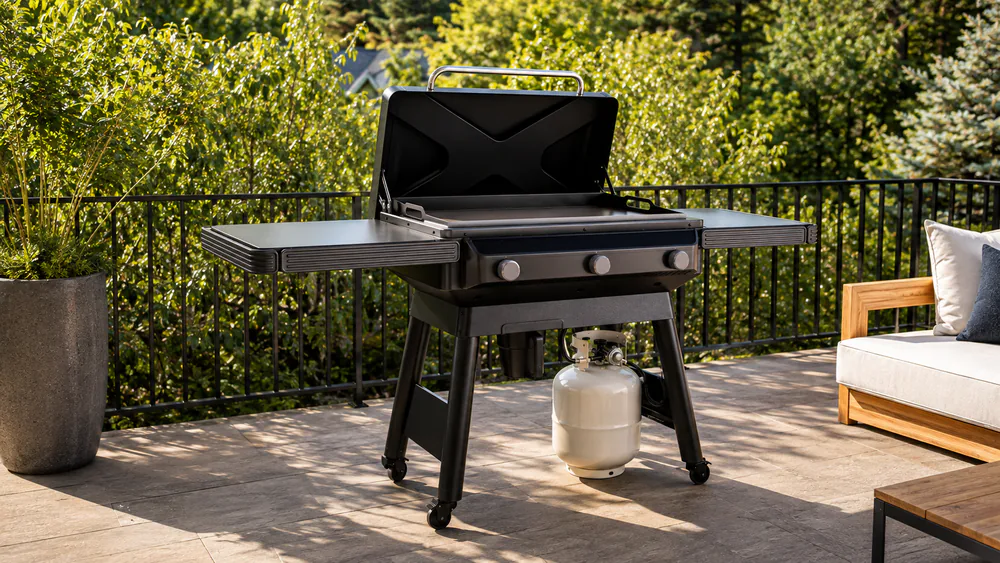
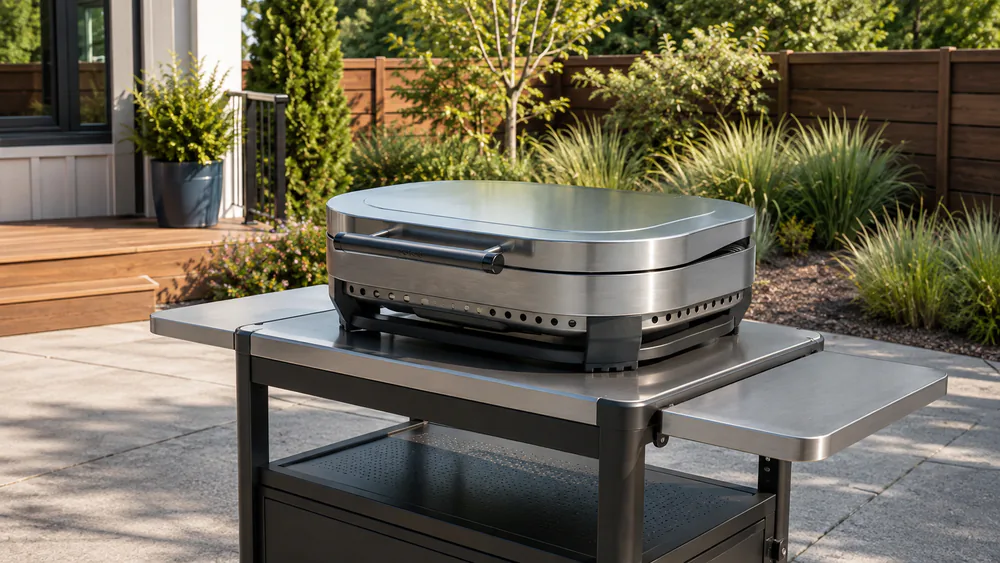
The Traeger Flatrock 3-Zone 33 is the flat top grill we would buy twice. After a year of near-daily cooks, ours has never flamed out, and the temperature spread across the main cooking area stayed under 20 degrees, the tightest heat we measured in this test.
Pros
The most even heat we measured: under 20 degrees of variation across the main cooking area
Three independent zones cook bacon, burgers, and fried rice at once
Grease keg makes the end of a cook a two-minute job
5-year limited warranty
Cons
Tops out just under 600 F, so no lightning-fast smash-burger crust
Assembly flips the unit upside down, and the hood scratches easily
Wheel locks feel cheap for the price
Heavy: about 100 to 189 lbs depending on the source
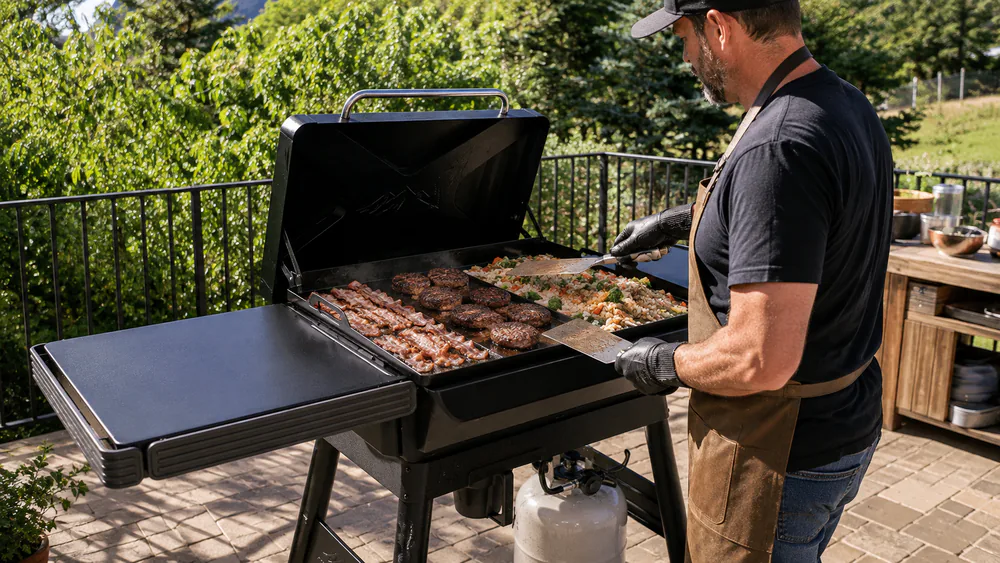
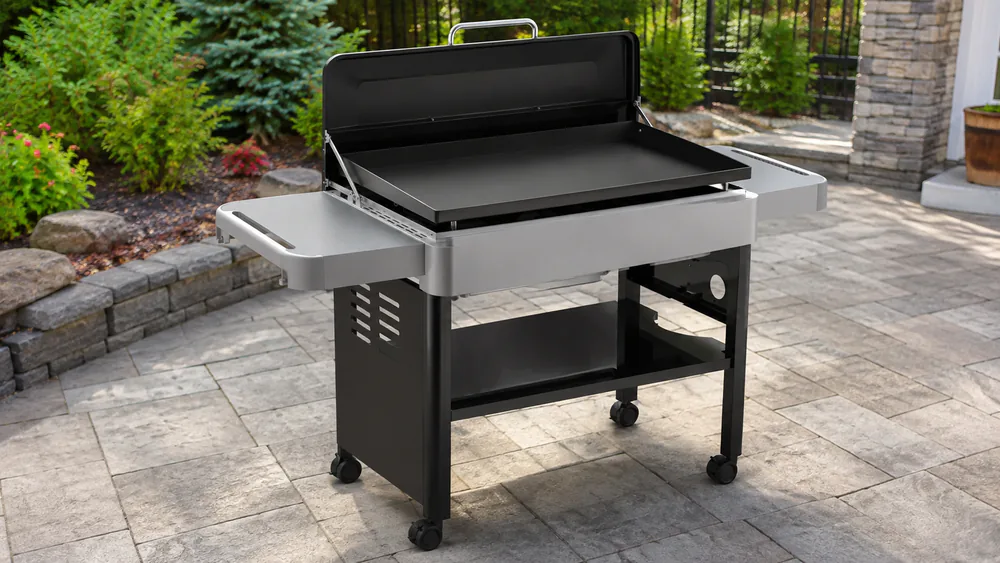
The three TruZone burners are the reason it kept its spot on our patio. On a Saturday we ran bacon on the cool zone, burgers in the middle, and fried rice on the hot side all at once, and every zone held its ground. The grease keg at the back makes the end of a cook a two-step affair: scrape, pull the keg, done. The unit tops out just under 600 F, so it will not deliver the instant crust of a griddle that runs hotter; it prefers the more dignified sear we got on fish and steaks.
Assembly flips the whole unit upside down, and the hood scratches easily, so pad the work surface and get help lifting it upright. The wheel locks feel cheap even though the cart is rock solid, but none of that changed our verdict.
Three zones, one cook: the Flatrock's party trick.
Key Specs
Cooking surface: 594 sq in (33 x 18 inch recessed cooktop)
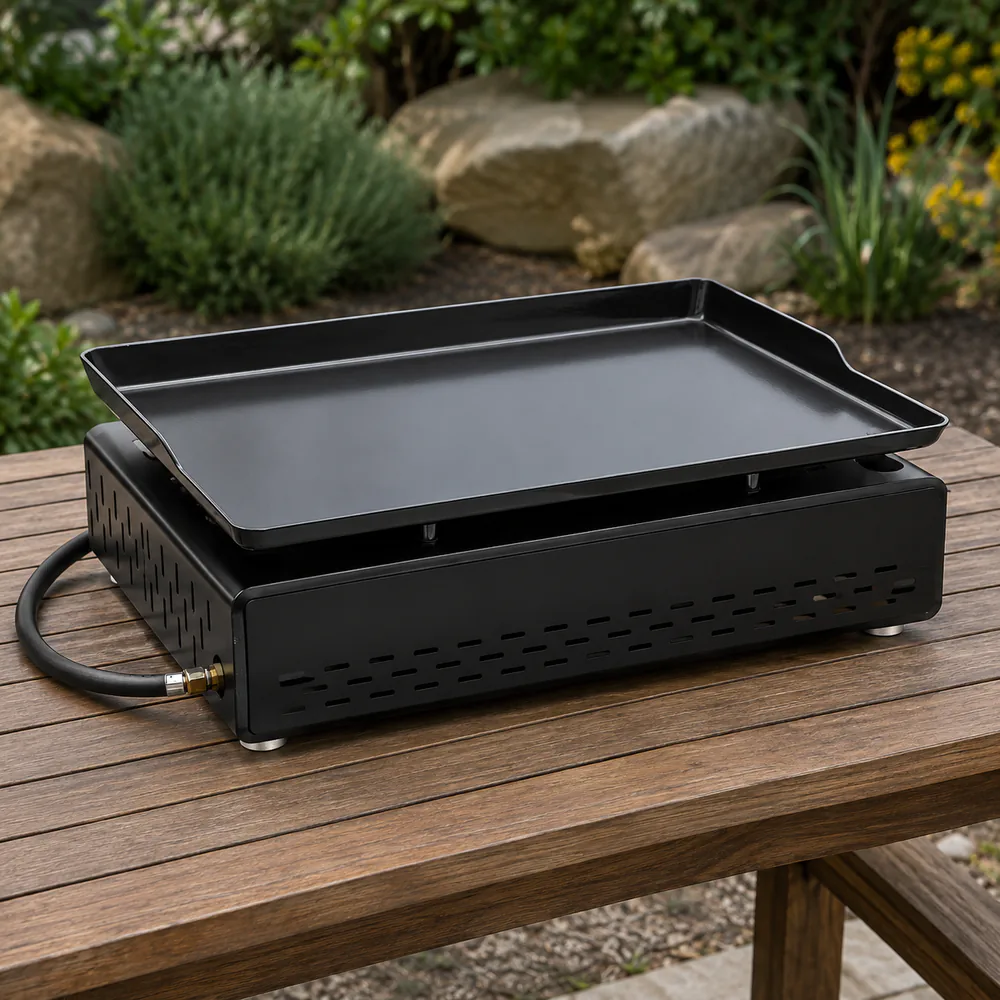
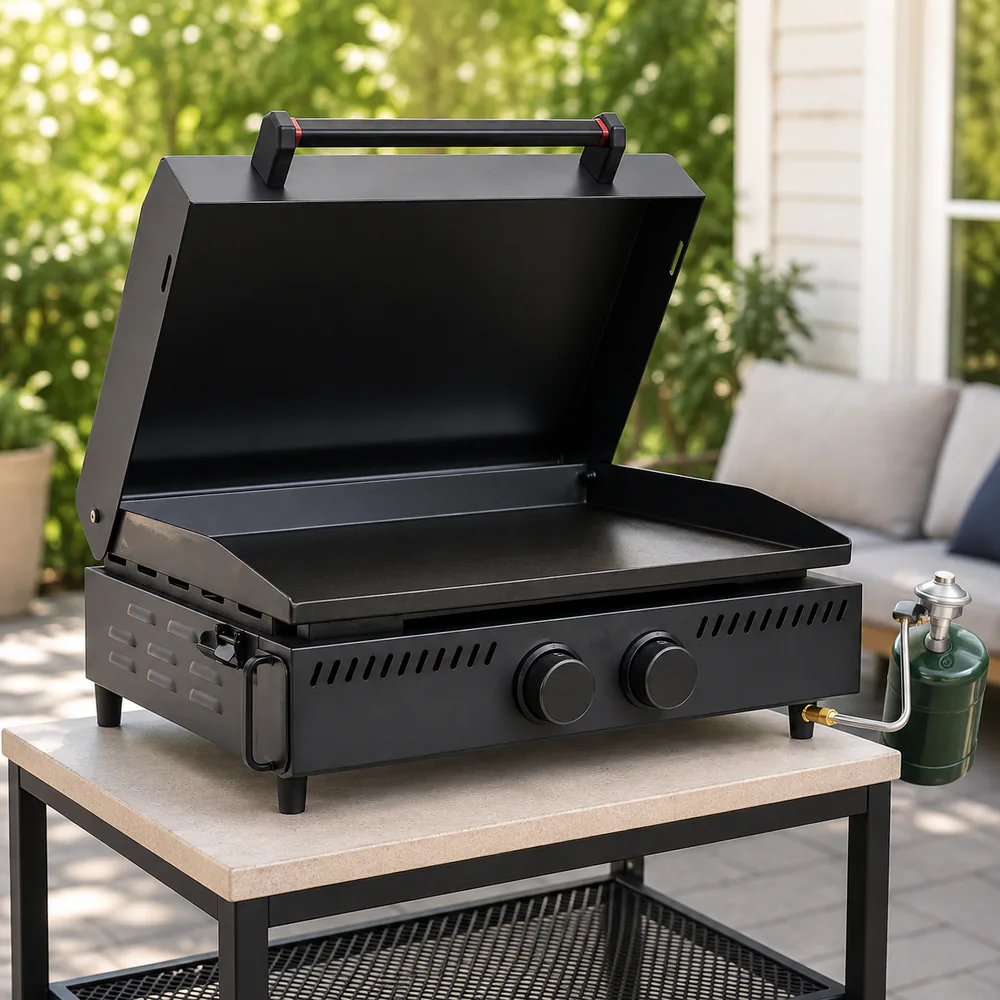
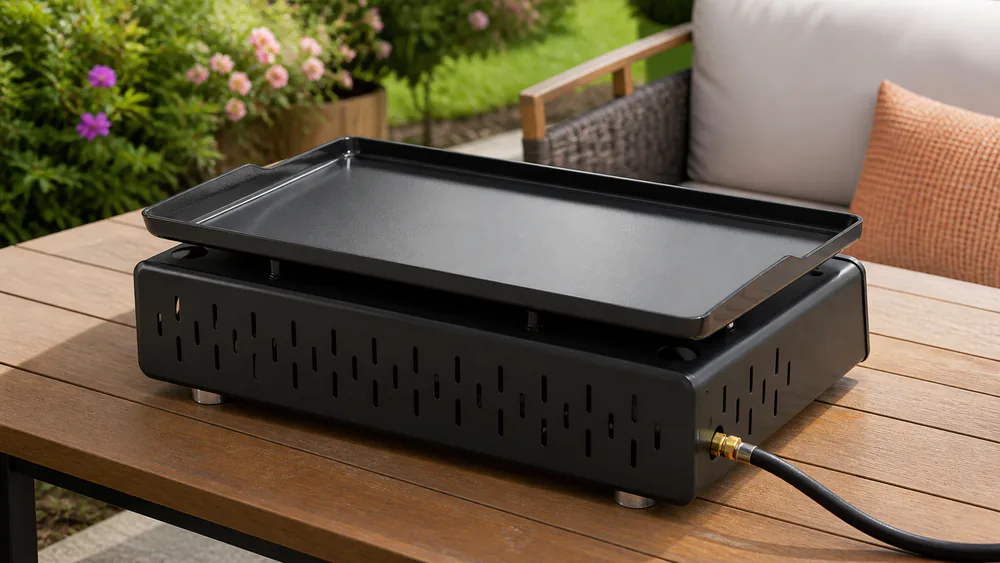
If the Flatrock is the everyday cook's machine, the Royal Gourmet PD1301S is the flat top grill on a budget: three burners, a tabletop footprint, and a street price around $111. It sears, it scrambles, and it fits in a trunk, which makes it the easiest way to find out whether flat top cooking is for you.
Pros
About $111, with a locking-lid wind guard and PVC cover included
Three independently controlled burners handle a full breakfast at once
Reaches 550 F for searing
Slide-out grease cup and 24-inch tabletop footprint
Cons
Coated cooktop is not very nonstick out of the box
Runs hot: cook mostly on the lowest setting
Grease trap hole needs watching mid-cook
Piezo ignition can take a few pushes
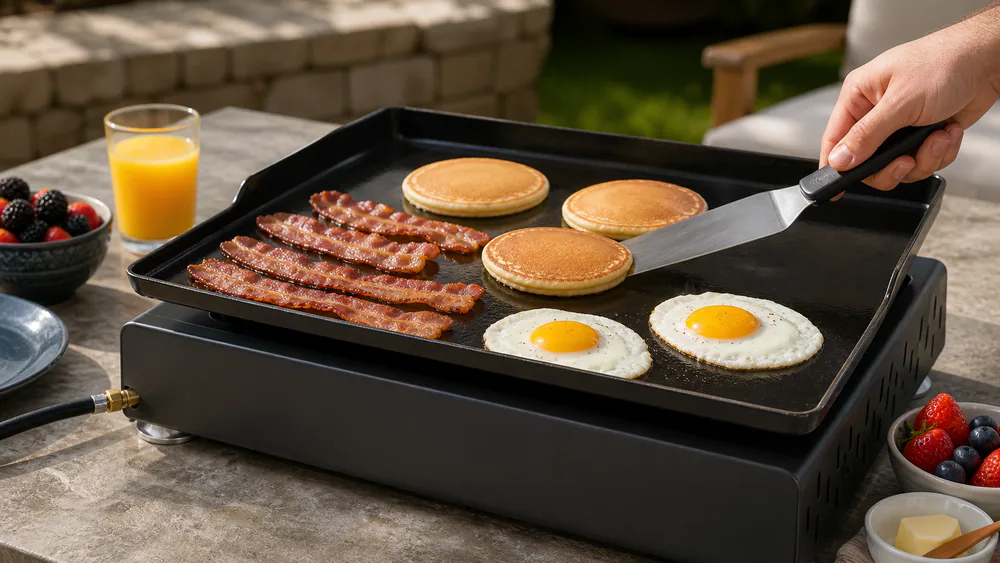
On a Sunday we ran bacon, pancakes, and fried eggs across all three burners at once, and every station finished on time; the 25,500 BTU total seared smash burgers with real crust. The catch showed up at cleanup. The coated cooktop was not as nonstick as we hoped, and bacon grease left a stubborn residue that would not scrub off, which stings when easy cleaning is the whole point of a flat top.
We also learned to cook mostly on the lowest setting, because the unit runs very hot, and the grease trap hole is small enough to need watching mid-cook. Seasoning the porcelain surface like a cast iron pan dramatically improved its nonstick behavior, and the piezo ignition sometimes needs a second push. For the price, we accept both.
A full breakfast on three burners, for about $111.
Key Specs
Cooking surface: 304 to 319 sq in depending on the source
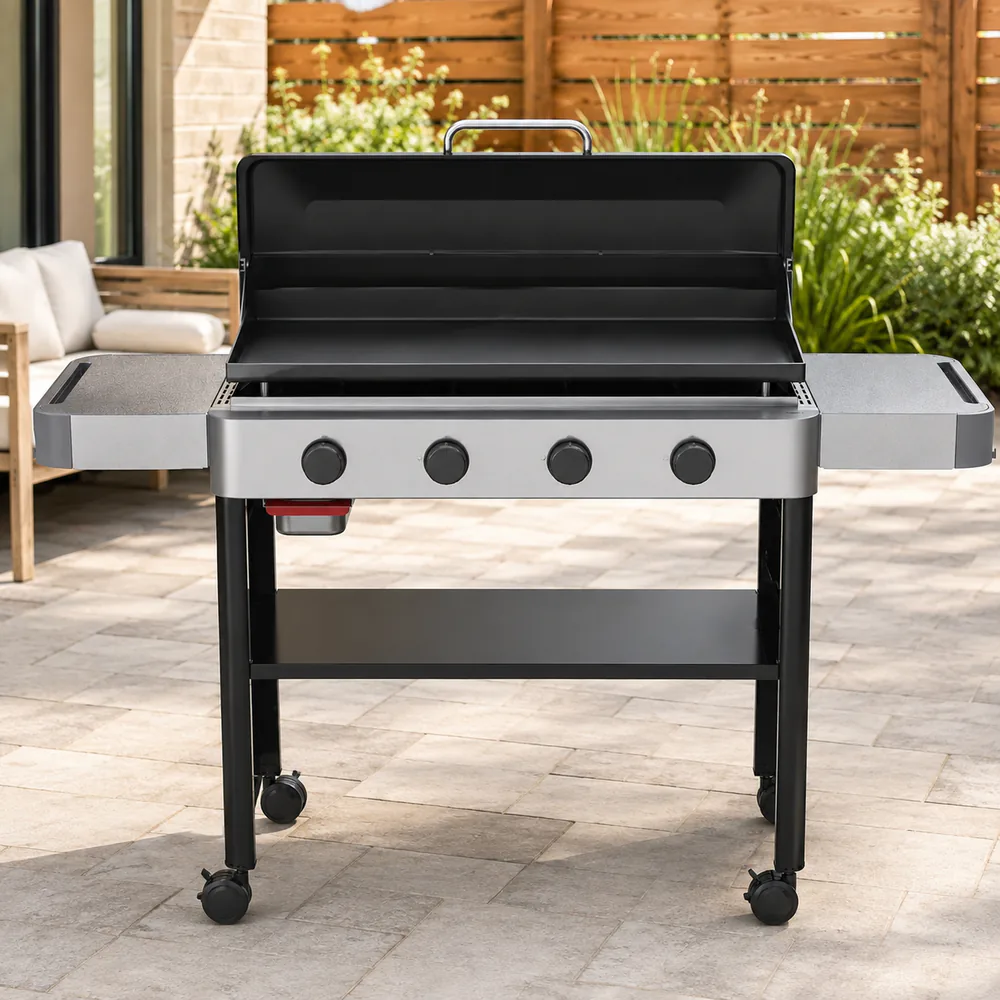
The Weber Slate 36 Rust-Resistant Griddle is the premium pick because it removes the two chores that wear out flat top owners: seasoning marathons and rust patrol. It arrives pre-seasoned and pressure-treated, so the first-day ritual other griddles demand, an hour of oiling and smoking on some models, becomes a quick extra coat with less oil, less time, and less worry.
Pros
Pre-seasoned and rust-resistant, so the first-day seasoning ritual disappears
756 sq in of cooking surface on 4 independently controlled burners
Digital surface temperature display and propane tank gauge
5-year warranty on burners, 2 years on parts
Cons
Clear hot spots: about 50 degrees of variation across the main area
Heavy: about 146 to 198 lbs depending on the listing
Premium price, about $999-$1,049
The drip pan needs checking before every cook
Where the Flatrock disappears into the background of a cook, the Slate makes itself known from the first fire. The surface temperature display and the weight-based propane tank gauge are the kind of tools we expect from a gas grill, not a griddle. After six months of use, the cooktop still shows zero rust and wipes down easily, and cleanup has never required a scrubbing session. One habit it taught us: check the grease pan before firing it up, because the extra-large drip pan fills faster than you expect.
It is not perfect. The surface still has clear hot spots above the burners, about 50 degrees of variation across the main area, which kept it just below the Flatrock on cooking performance. It is also heavy and expensive, but you pay for a rust-resistant, case-hardened cooktop that handles metal tools safely and a 5-year warranty on burners.
The Slate's case-hardened surface skipped the first-day seasoning ritual entirely.
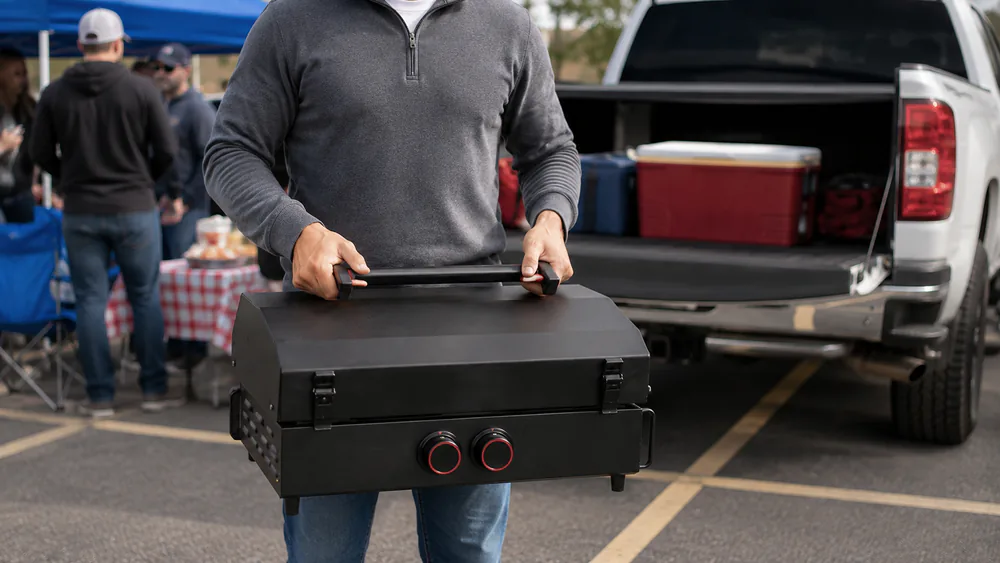
The Camp Chef Gridiron Gameday 24 is the portable we kept reaching for, because it heats more evenly than a tabletop has any right to and packs away latched and one-piece, ready for the trunk.
Pros
Heats incredibly evenly for a tabletop
Pre-seasoned with 100% plant oils and ready out of the box
Latched one-piece transport with fold-down legs
Hidden drawer grease trap keeps drippings sealed between uses
Cons
Only 240 sq in, so big batches cook in waves
About $299, pricier than most tabletops
Two burners cap the heat-zone flexibility
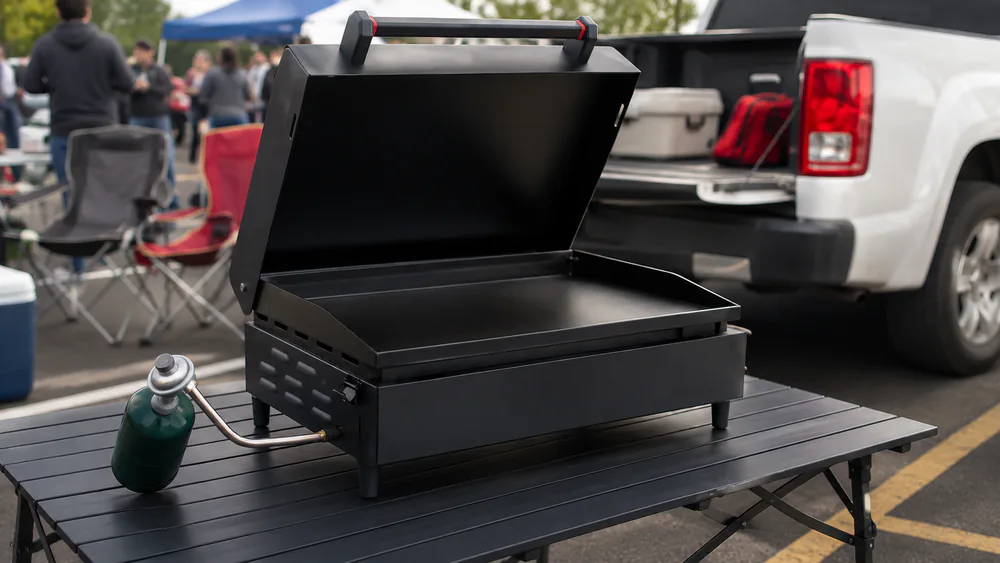
After the Slate's 756 sq in, the Gameday's 240 sq in feels almost playful, but the balance is the point. It arrives pre-seasoned with 100% plant oils and ready out of the box, so the first cook is a real cook rather than a chore. The hidden drawer grease trap is the cleverest piece of design in this test: drippings collect in a sealed drawer, out of reach of curious noses, and the whole unit closes into a latched case for transport. Adjustable legs level it on a picnic table.
It costs more than most tabletops, about $299, and 240 sq in means big batches cook in waves. For tailgating and weekend trips, the trade is worth it, and Camp Chef Gridiron accessories extend the kit.
Latched, folded, and gone: the Gameday's party trick is transport.
Key Specs
Cooking surface: 240 sq in
Burners: 2 independently controlled burners
Total BTU: 24,000
Seasoning: pre-seasoned with 100% plant oils
Ignition: flamethrower
Fuel: Propane
Grease: hidden drawer trap
Price: about $299
Best Flat Top Grill for Camping: Blackstone 2142 Original 17" Tabletop Griddle
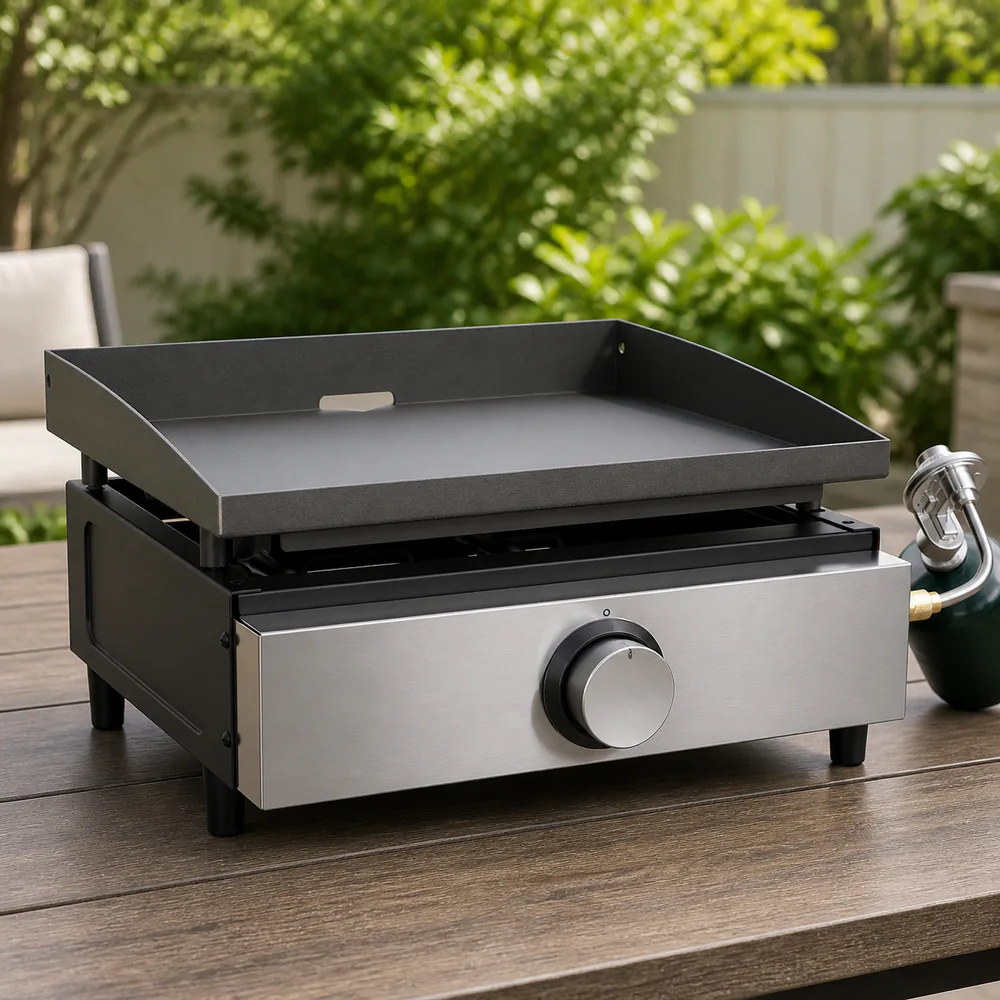
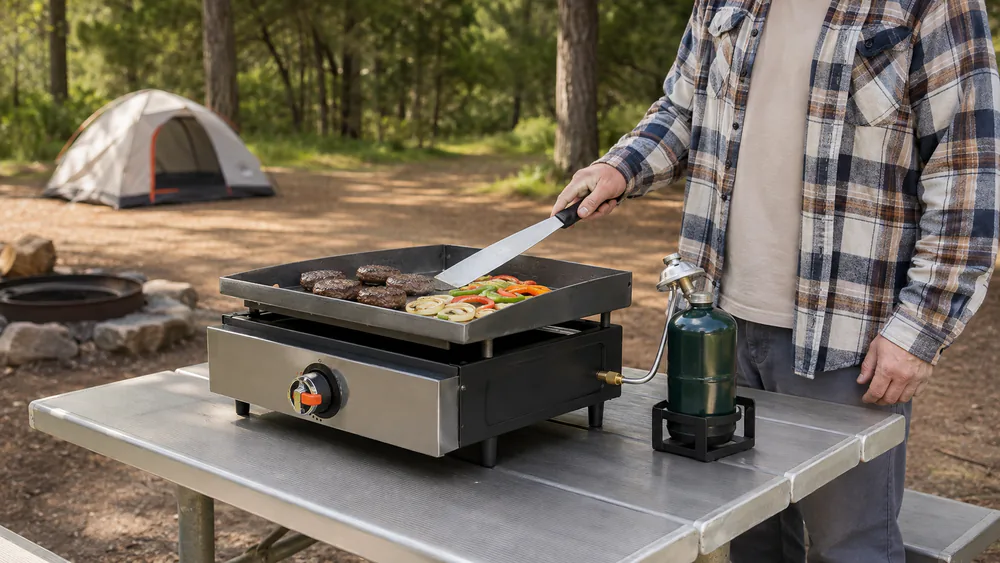
The Blackstone 2142 Original 17-inch Tabletop Griddle is the camping classic: 17.5 lbs, runs on 1-lb cylinders, and cheap enough that you will not wince when it bounces in the truck bed.
Pros
17.5 lbs and runs on 1-lb propane cylinders
About $100-$150 street price
Rear grease management keeps drippings off the table
Low-maintenance stainless front plate and piezo ignition
Cons
Single 12,500 BTU burner means one heat zone and slower recovery
Initial seasoning takes patience
267 sq in fits only two to four people
1-year warranty
Where the Gameday is the premium way to go portable, the 2142 is the practical one. The first seasoning took a while to get hot, which is normal for a new plate, but from the second cook onward it was ready in a couple of minutes. The 267 sq in surface feeds two to four people, and the rear grease management keeps drippings off the table. The low-maintenance stainless front plate and push-and-turn piezo ignition round out a unit built for the truck bed.
The single 12,500 BTU burner means one heat zone and slower recovery after a cold batch, so plan the sequence of a big meal. Grab a 1-lb-to-20-lb adapter hose before your first trip if you do not want to stock tiny cylinders.
The 17.5-lb classic for campsites and small patios.
Key Specs
Cooking surface: 267 sq in, for 2-4 people
Burners: 1 (H-style stainless)
Total BTU: 12,500
Fuel: Propane (1-lb cylinders)
Weight: 17.5 lbs
Features: rear grease management, push-and-turn piezo ignition, stainless front plate
Warranty: 1-year limited
Price: about $100-$150
Best Stainless Steel Flat Top Grill: Solo Stove Steelfire 22"
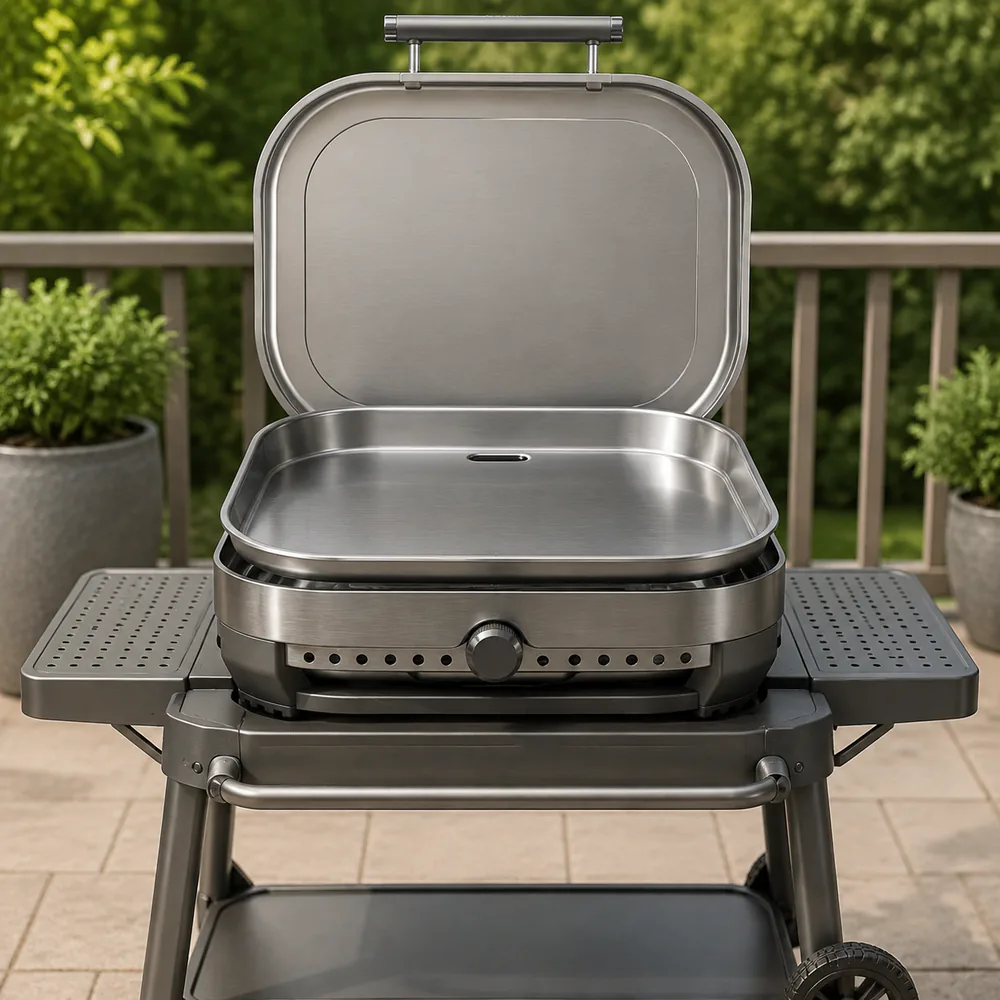
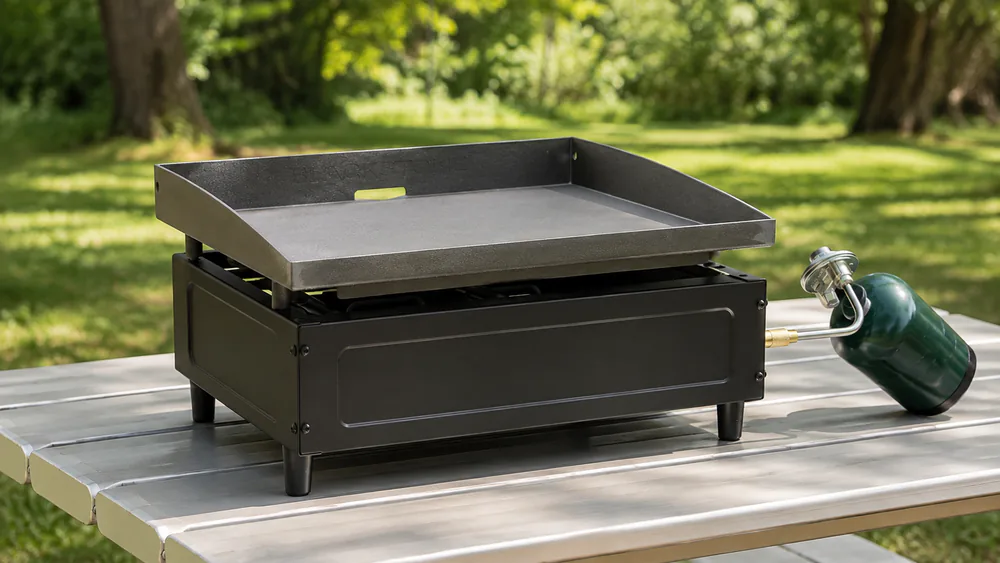
The Solo Stove Steelfire 22 is for cooks who want a griddle that never needs seasoning and never rusts: 3-ply stainless steel, no coating, no ritual. It is the answer to every question a carbon steel owner has ever asked about rust.
Pros
Never rusts and needs no seasoning
3-ply stainless (304) construction heats evenly with no hot spots
Searing temperatures in about seven minutes
5-year limited warranty
Cons
Handle and temperature knob feel cheap for the price
Stainless needs real scrubbing to look like new
321.7 sq in is small for a family
About $400 is a lot for a tabletop
Where the Blackstone 2142 asks for patience at seasoning, the Steelfire asks for none, because there is nothing to season. It seared steaks impressively in our tests, heated evenly with no hot spots, and stayed rust-free through weather that would worry a carbon steel plate. The trade is cosmetic: getting the stainless back to like-new requires real scrubbing, and the handle and temperature knob feel cheap for a premium product. Searing temperatures arrive in about seven minutes, and the 14,000 BTU output covers the 321.7 sq in surface without drama.
If you want more room, the Solo Stove Steelfire 30-inch, 486 sq in of the same stainless, sells direct for about $900. The 22-inch is the one on this list, and it fits a small patio or a camper's table. The 5-year limited warranty backs the rust-free promise.
Rust-free and seasoning-free, the Steelfire's claim in one frame.
Key Specs
Cooking surface: 321.7 sq in
Burners: 2 racetrack burners
Total BTU: 14,000
Cooktop: 3-ply stainless (304 stainless over an aluminum core)
Searing temps: about 7 minutes
Weight: 38.7 lbs
Warranty: 5-year limited
Price: about $400
Best Combo Flat Top Grill (Griddle + Grill): Grilla Grills Primate
The Grilla Grills Primate is the combo answer: stainless grill grates on one side, a drop-in griddle top on the other, and 60,000 BTU to feed both. If the Steelfire answers the rust question, the Primate answers the surface question: why pick between a grill and a griddle at all?
Pros
Grill grates and drop-in griddle top in one unit
Preheats to 500 F in about four minutes
60,000 BTU from four stainless burners
Double-wall insulated chamber holds heat
Cons
Stainless shows water spotting between cooks
Grill grates stick unless oiled
Heavy, about 190 lbs, and a two-person assembly
About $1,100
It preheats to 500 F in about four minutes, which is quick for any grill, and it runs hot enough that we dialed back early in cooks. The double-wall insulated chamber holds heat through a long session, and the ClearView grease management keeps the mess off the cart. The griddle top is where it earns the combo label: the same cook that sears a strip steak over the grates can smash burgers on the flat top, and nothing else on this list does both.
The stainless shows water spotting between cooks, and the grill grates stick unless you oil them, so the Primate asks for more upkeep than a dedicated griddle. It also costs about $1,100 and weighs about 190 lbs. If you want one machine for both surfaces, this is it.
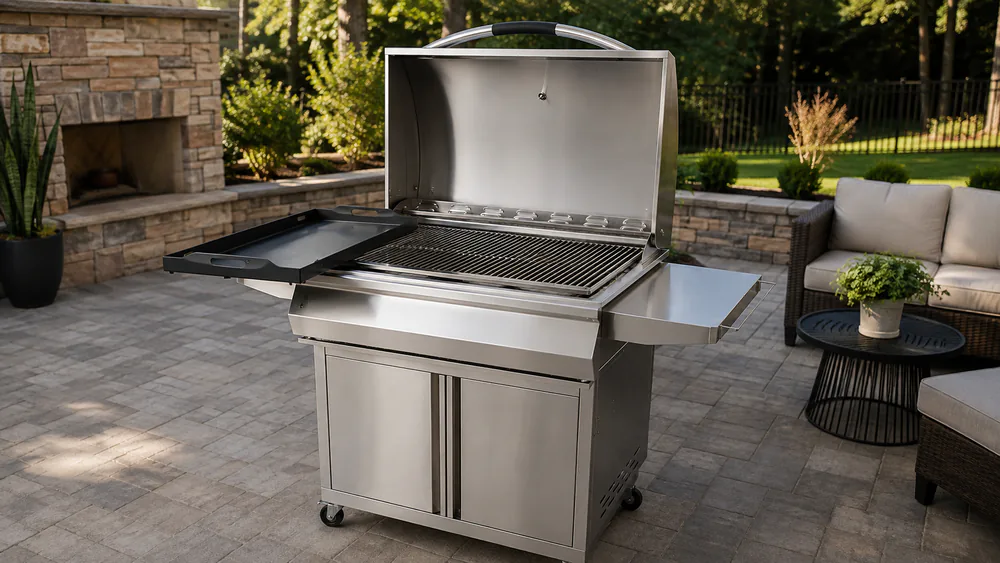
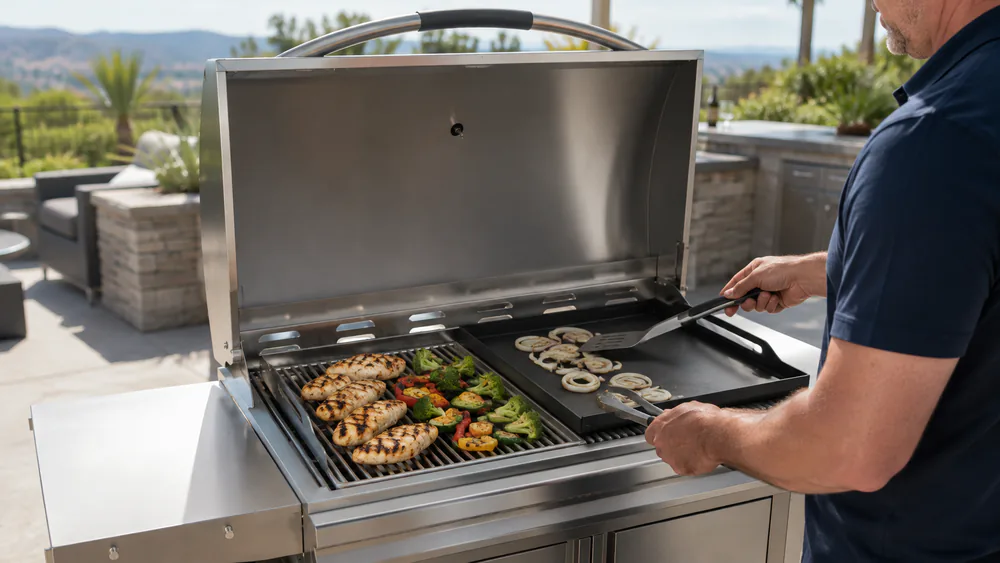
One cart, two surfaces, one dinner.
Key Specs
Cooking surface: 490 sq in main surface; the drop-in griddle top converts the grill side to a flat top
Burners: 4 stainless burners, 15,000 BTU each
Total BTU: 60,000
Dimensions: 62 x 25 x 41.5 in
Weight: about 190 lbs
Fuel: Propane, with a natural gas conversion kit available
Grease: ClearView management system
Price: about $1,100
How We Tested
We bought every grill in this roundup at retail, with our own money, and assembled each one the way you would. Then we cooked on them like a restaurant kitchen on a summer Saturday: smash burgers pressed hard onto a screaming surface, pancakes to test low-temp evenness, and thick steaks seared at 450 to 500 F, the range that builds a crust without burning the outside.
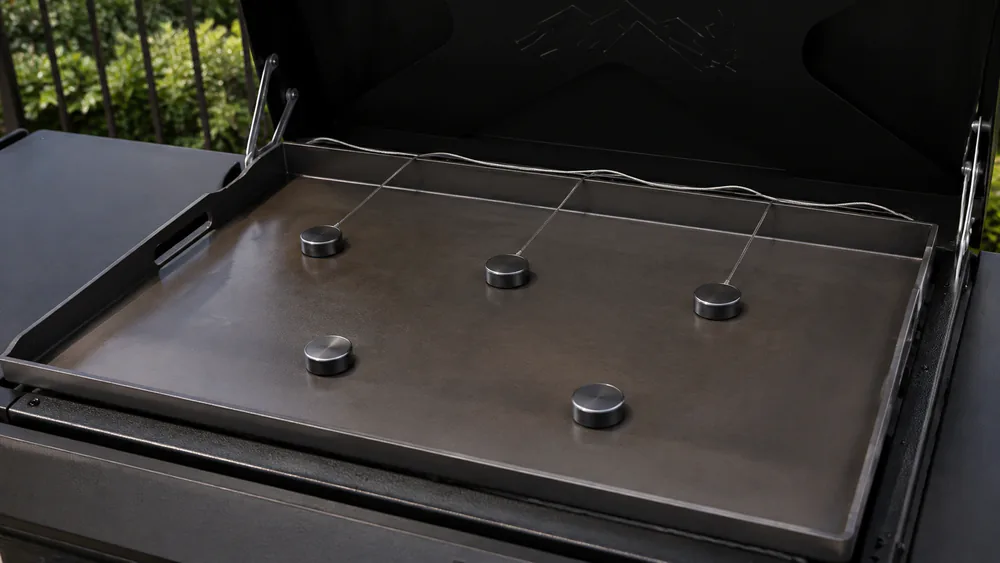
Every cook got scored on five things: heat evenness across the surface, recovery after a big batch, usable temperature range, grease management, and cleanup friction. Heat evenness came from surface probes across each plate. The best unit held under 20 degrees of spread; a 36-inch Blackstone Iron Forged plate we ran varied as much as 100 F across the burner area, a reminder that big surfaces need zone discipline. Recovery is the number BTU ratings hide: a griddle with more power is not automatically the better cooker if the surface takes forever to come back after a dozen burgers go down at once.
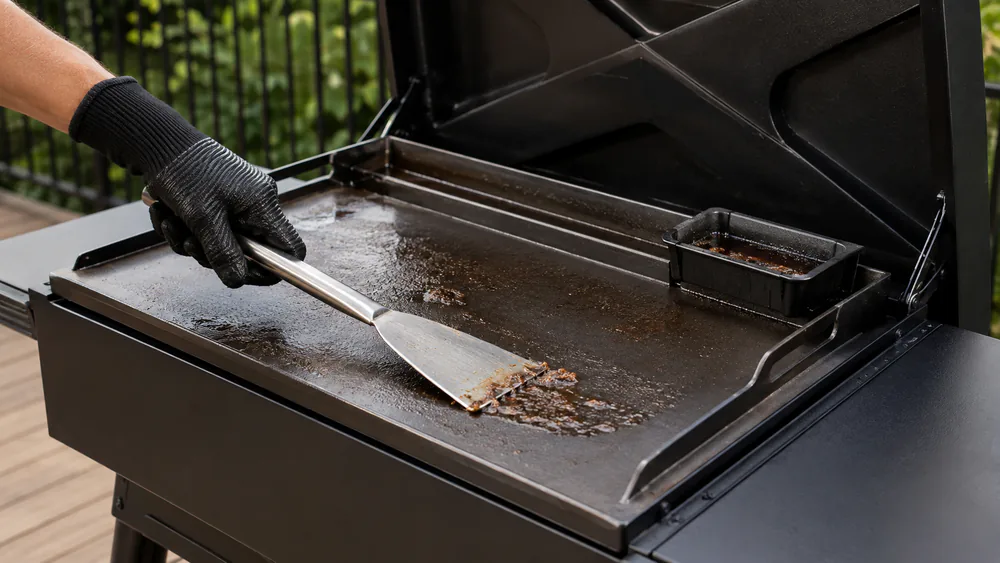
Grease management mattered more than we expected. A rear channel draining into a removable cup is the difference between a two-minute scrape and a scrubbing session on a greasy plate. Cleanup followed the same rhythm every night: scrape the surface warm, steam-lift stuck bits with a little water, and empty the grease cup once it cooled.
Wind turned out to be the hidden variable. The same griddle that cooked beautifully on a calm patio nearly doubled its cook times in a 10 mph campsite breeze, which is why recessed cooktops and wind guards earned real points in our scoring. Our year-long Flatrock went through the whole battery with no flameouts, and the Slate spent six months on the patio without a spot of rust.
Surface probes across the plate: how we measured even heat.
What to Consider When Buying a Flat Top Grill
Every flat top grill in this roundup can sear, scramble, and smash its way through a weekend. The differences that decide a purchase are the ones you cannot see in a product photo: how evenly the plate heats, how grease leaves the surface, and what the cooktop is made of. Keep in mind these details before you buy.
Wind is the hidden variable in flat top cooking. A 10 mph breeze nearly doubled our cook times on an exposed griddle.
Cooking Surface Size
A 17 to 22 inch griddle suits one to three people and portable-first use, and it lives on a folding table without drama. A 28 inch surface is the family-of-four sweet spot: enough room for a full breakfast without dominating the patio. Plan on a 36 inch model when you regularly cook for eight or a serious crowd. In square inches, budget 200 to 400 for two to four people, 400 to 600 for four to six, and 500 to 750-plus for big gatherings. The small end of the field, like the Cuisinart 17-inch tabletop gas griddle, fits a balcony, while Blackstone 36-inch griddles give a caterer's worth of room and Blackstone 28-inch griddles anchor the family market.
BTU Output and Heat Zones
BTU is the number everyone quotes and the number that tells you the least on its own. As a floor: compact portables should start at 12,000 BTU, a mid-size 28 inch unit wants 24,000 to 34,000, and a large 36 inch griddle should deliver 60,000 or more. What matters more is recovery, how fast the surface returns to temperature after a cold batch of burgers hits it. Burner count shapes how you cook. Independent zones let you run eggs at low heat next to sausage at high heat, which is the difference between the Flatrock's three TruZone burners and a single-burner tabletop. For searing, aim for a cooking surface between 450 and 500 F, the range we used for steaks in this test.
Cooktop Materials: Carbon Steel vs. Stainless vs. Ceramic
Cold-rolled carbon steel is the classic griddle material: it seasons into a natural nonstick layer and cooks beautifully, but it rusts if you neglect it. Pre-seasoned, case-hardened steel resists rust without seasoning, which is the Weber Slate's whole trick. Stainless steel trades a little preheat speed to eliminate rust entirely, which is the Solo Stove Steelfire's pitch. Ceramic coatings are easy to clean but degrade over time and hold heat less well, and cast iron holds heat but rusts easily. Whatever the material, look for a cooktop at least 3 mm thick; thicker steel holds heat better and cooks more evenly.
Grease Management
Rear grease channels that drain into a removable cup are the cleanest design we tested. Front-channel systems need emptying more often and drip if the unit is not level, so check the ground before you cook. Slide-out trays are the fastest to deal with, and a hidden drawer, like the one on the Gameday, keeps drippings sealed away between uses. Whatever the design, empty the cup after every cook once it cools, and never let a full cup sit overnight.
Rear grease management: the difference between a quick scrape and a long scrub.
Portability and Stands
Tabletop griddles under 20 lbs, like the Blackstone 2142 at 17.5 lbs, ride in a trunk and run off 1-lb cylinders. Cart models with folding legs, like the Blackstone 22-inch OTG, collapse and wheel away like a suitcase. Full-size carts with locking casters stay put on a patio but become a two-person project when you need to move them. Weight is part of the story: the Halo Elite4B weighs about 200 lbs assembled, so its built-in bubble level and adjustable casters exist because you will not be relocating it often. For camping and tailgating, buy for the trunk, not the patio.
Seasoning and Maintenance
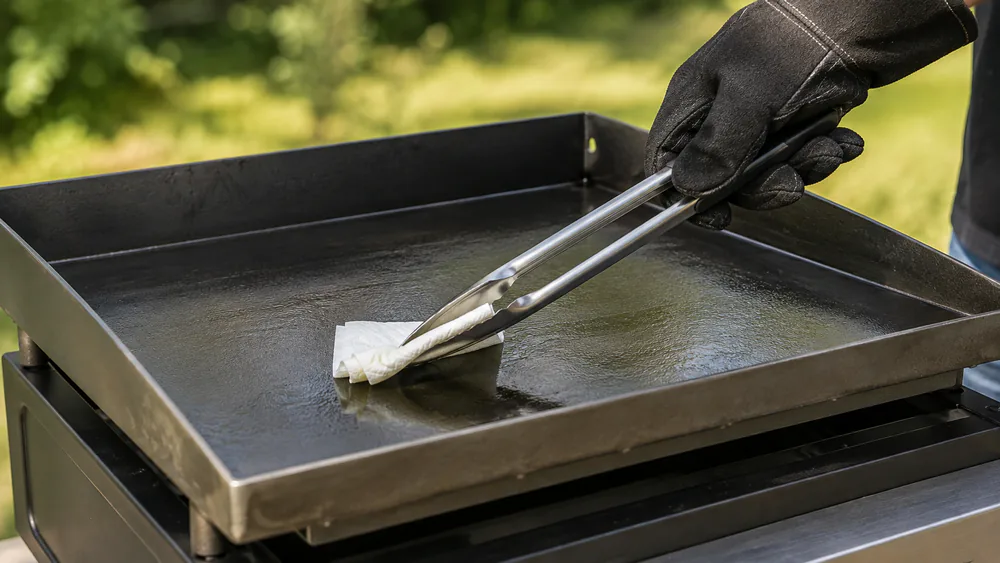
A new steel griddle needs a first-seasoning session: heat the clean surface to medium-high, apply a thin layer of a high-smoke-point oil like flaxseed, canola, or vegetable shortening, let it smoke off, and repeat three to five times. Re-oil lightly after every cook, and never use soap on a seasoned surface. Keep a dedicated Blackstone griddle scraper on the shelf; a flat, sharp edge beats any sponge on a seasoned plate.
Tip. Most flat top manufacturers say never to cook with the lid down: trapped heat can warp the plate. Use the lid for wind, weather, and transport instead.
Warning. Every grill here runs on propane, and the stakes are real: leaking fittings and pooled grease cause most grilling fires. Check hoses and fittings before the first cook of the season, keep the grill away from siding and eaves, and never let grease sit in the cup.
Thin layers, smoke, and repeats: the first-seasoning ritual.
Warranty and Brand Support
Warranties vary as much as prices. Blackstone backs most models with a 1-year limited warranty, Traeger and Solo Stove offer 5-year coverage on the Flatrock and Steelfire, Weber covers burners for 5 years and parts for 2, and Camp Chef gives the Gridiron line 3 years. If the grill lives outside year-round, the warranty is a durability signal, not paperwork. Accessories matter too: the BAR accessory system on Blackstone's 36-inch Iron Forged model, Weber Works accessories, and Camp Chef's Sidekick lineup all extend what a single machine can do, and Blackstone accessories are stocked everywhere for a reason.
Warranty coverage by brand
Blackstone
1-year limited on most models
Traeger
5-year limited on the Flatrock
Weber
5 years on burners, 2 years on parts
Camp Chef
3-year limited on the Gridiron line
Solo Stove
5-year limited on the Steelfire
Flat Top Grill vs. Traditional Grill
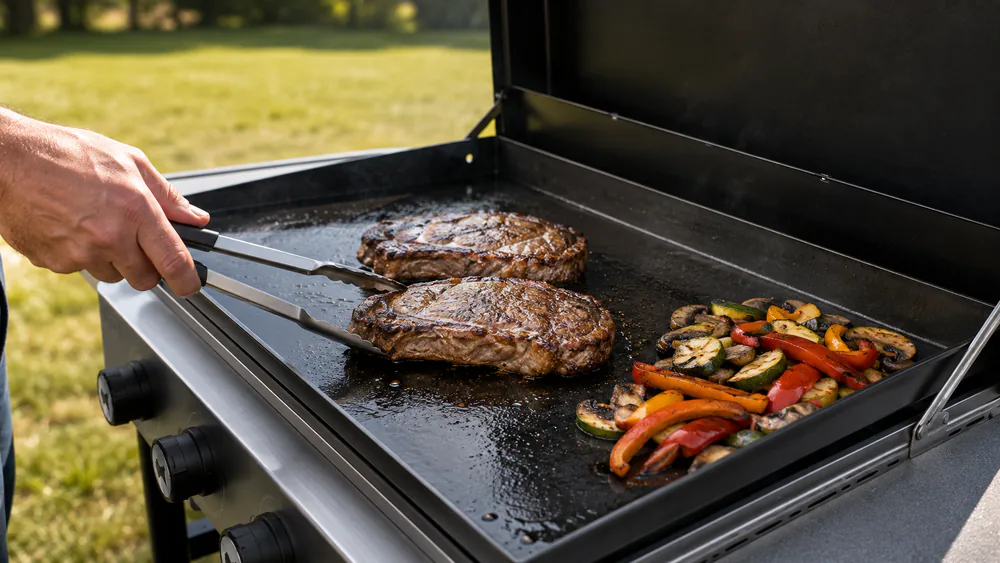
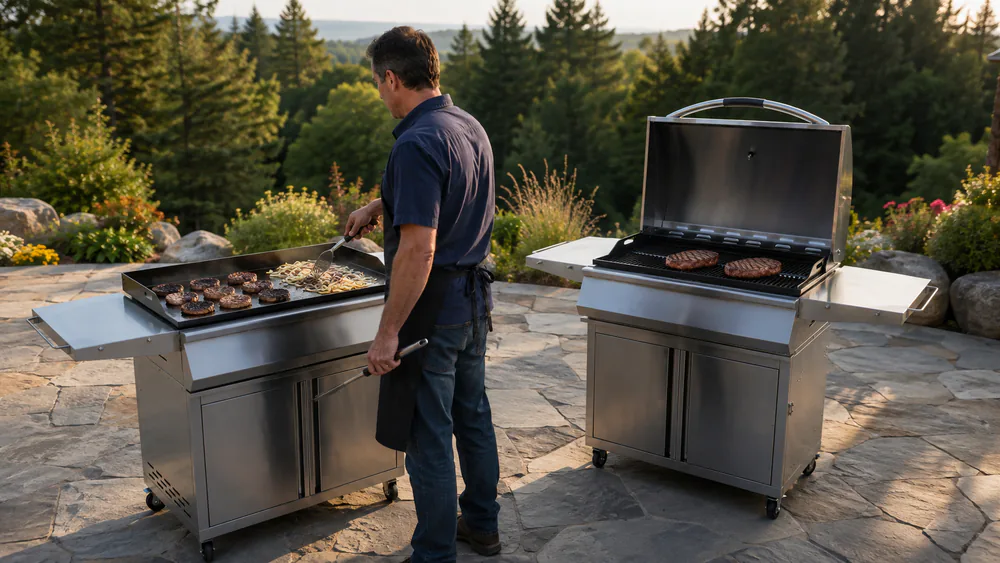
A flat top cooks by conduction on a solid surface; a traditional grill cooks by radiant heat and smoke through grates. The trade-off is real. You will not get grill marks or live-fire smoke flavor from a griddle, and nothing on a flat top carries that campfire char. What you get instead is a surface that never drops food through the gaps, cooks eggs and delicate fish that are impossible on grates, and builds an edge-to-edge crust on a smash burger that a grate grill simply cannot match.
Cleanup flips the script. A grill burns off its residue, while a griddle needs a scrape-and-wipe after every cook. That is the honest trade, and it is why so many backyards end up with both: run the farmer's breakfast on the flat top while the regular grill handles the steak. Combo units like the Grilla Grills Primate put both surfaces in one cart, and budget buyers can pair a tabletop with the grill they already own.
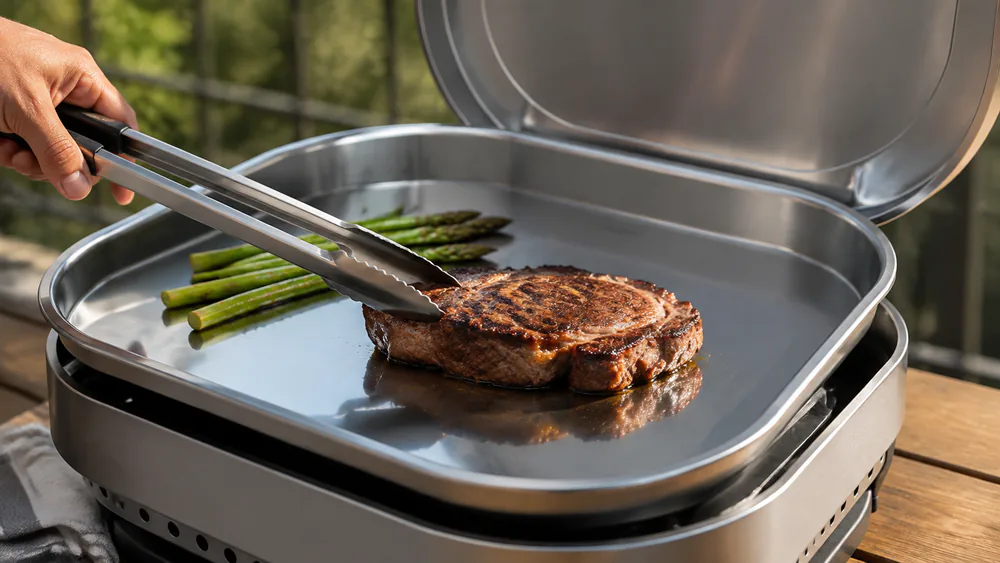
Conduction versus char: the two schools of backyard cooking.
Frequently Asked Questions
How do you season a flat top grill for the first time?
The step-by-step first-seasoning process is in the Seasoning and Maintenance section above. What most owners miss is the upkeep: the layer thins where you cook hardest, so re-oil lightly after every cook and dry the surface before covering, because moisture on bare steel is what starts rust. If a spot does rust, scrub it back to bare steel, dry it completely, and run two or three thin-oil smoke-off passes over just that patch. Pre-seasoned models like the Weber Slate skip the first-day marathon but still want the same habit.
What size flat top grill do I need?
A 17 to 22 inch model suits one to three people, 28 inches is the family-of-four sweet spot, and 36 inches serves eight or more. If you mostly cook for two, do not buy a 36-inch cart just because the price per square inch looks better; a tabletop will treat you as well.
How do you clean and maintain a flat top grill?
Cleanup is a warm-surface ritual: scrape, wipe with paper towel, and steam-lift stuck bits with a little water. Empty the grease cup once it cools. For cold-weather storage, dry the surface and oil it lightly before covering, so rust never gets a foothold.
Can you leave a flat top grill outside?
Yes, if it is covered when not in use. Carbon steel rusts when moisture sits on it, stainless models like the Solo Stove Steelfire shrug off weather, and pre-seasoned steel like the Weber Slate resists it well. Keep 1-lb-cylinder tabletops indoors, and check hoses and fittings at the start of every season.
Is stainless steel better than carbon steel for a griddle?
Match the material to the storage plan. For a griddle parked outside year-round, stainless like the Solo Stove Steelfire or pre-seasoned, case-hardened steel like the Weber Slate handles the elements with no care ritual. For one that sleeps in a garage or shed, plain carbon steel is the classic choice, since a covered, dry surface never gives rust a foothold. Decide where the grill will live first, and the material question answers itself.
Are flat top grills worth buying?
If you cook outside for a crowd or want one-pan breakfasts and smash burgers, yes: a flat top can run a farmer's breakfast while your regular grill handles the steak. If you only grill a few times a season, a tabletop model or a griddle insert for your existing grill makes more sense.
Conclusion
None of these griddles is perfect straight out of the box, and a few demand a patient first seasoning. If we could send you to the checkout with just two: the Traeger Flatrock 3-Zone for everyday cooks who want even heat, and the Royal Gourmet PD1301S for anyone easing into flat top cooking on a budget. Our one do-over from this test is to buy a quality cover on day one, because rain and neglect do more damage than any cook.