How to Choose the Best Hand Wand Blender
Motor Power and Wattage
For basic soups and soft blends, 300 to 500W is plenty; frozen fruit, ice, and thick mixtures need 500W-plus with a turbo or pulse, and 1000W-plus handles the toughest loads. On 300W budget models, respect the duty cycle: about one minute on, then a rest. The Mueller Ultra-Stick and the Elite Gourmet EHB1015 both run 500W motors.
Speed Settings and Controls
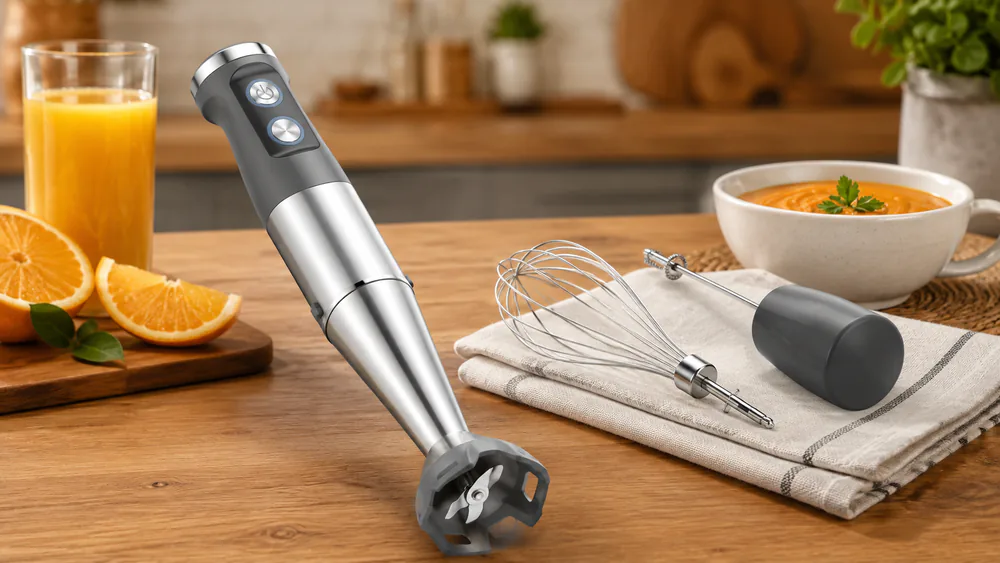
A variable trigger or slide is the most useful control, going from a gentle stir to a full blend without stopping. Turbo and pulse modes help on tough loads, and a good trigger beats a dozen settings.
Attachments and Versatility
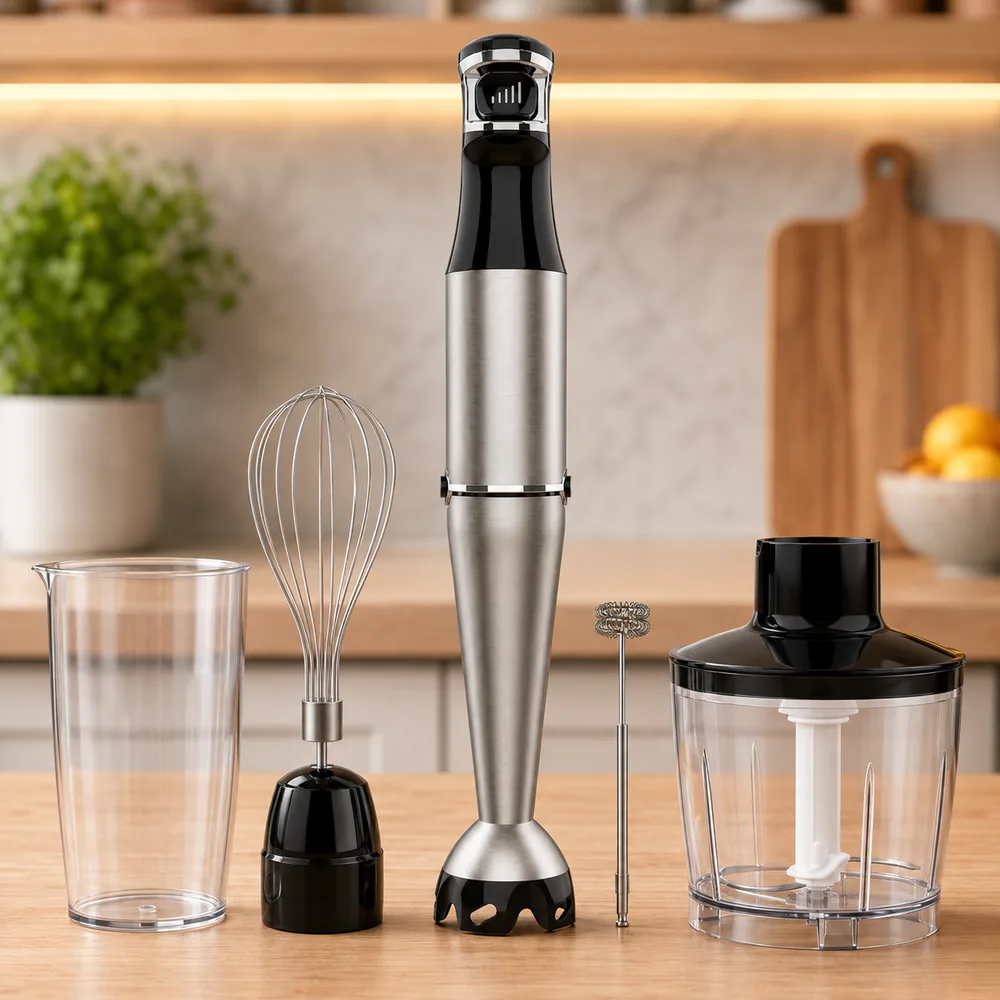
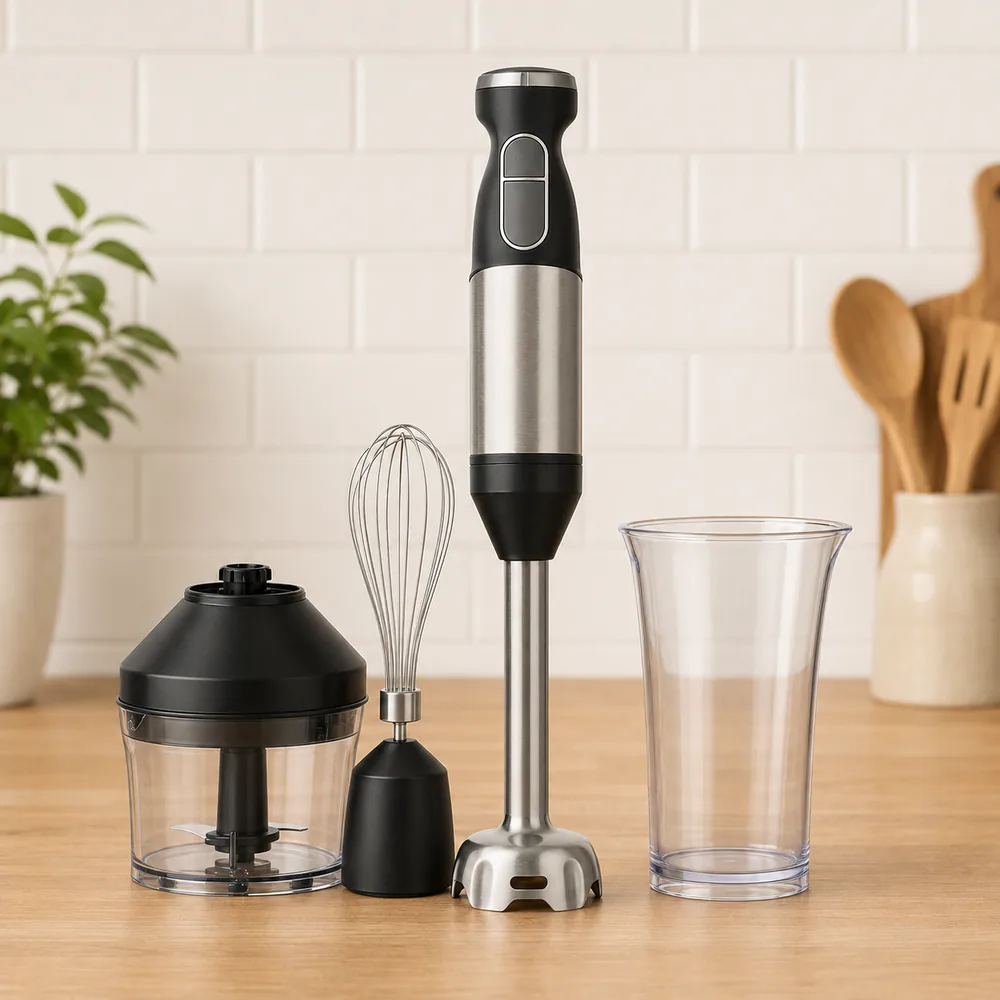
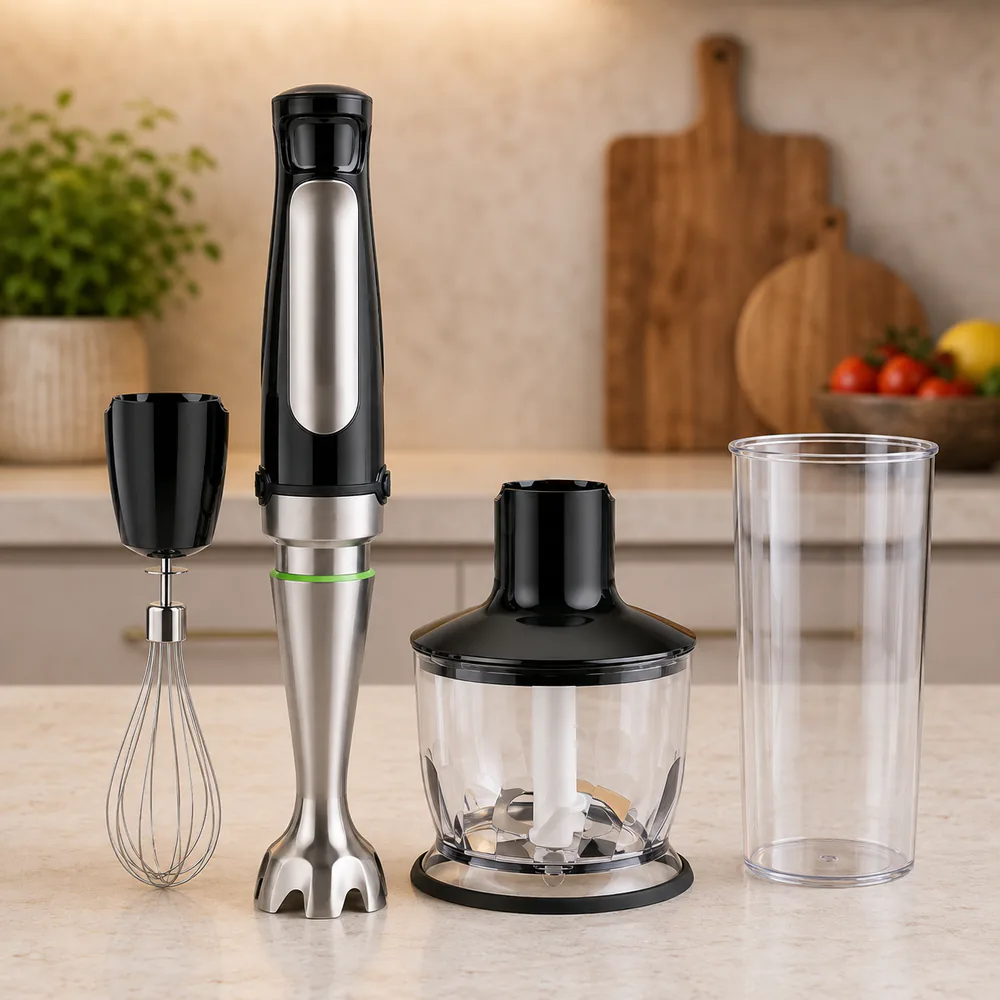
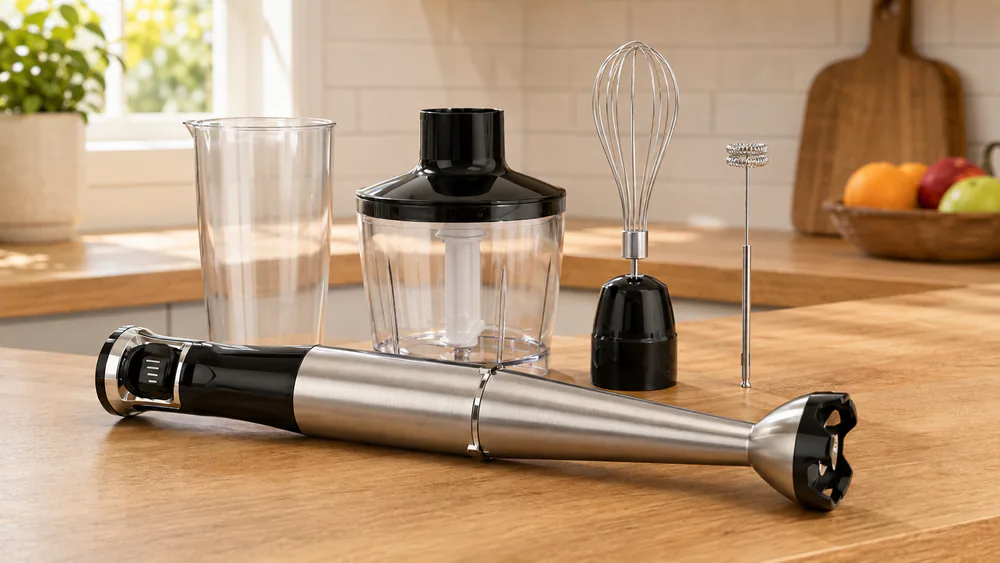
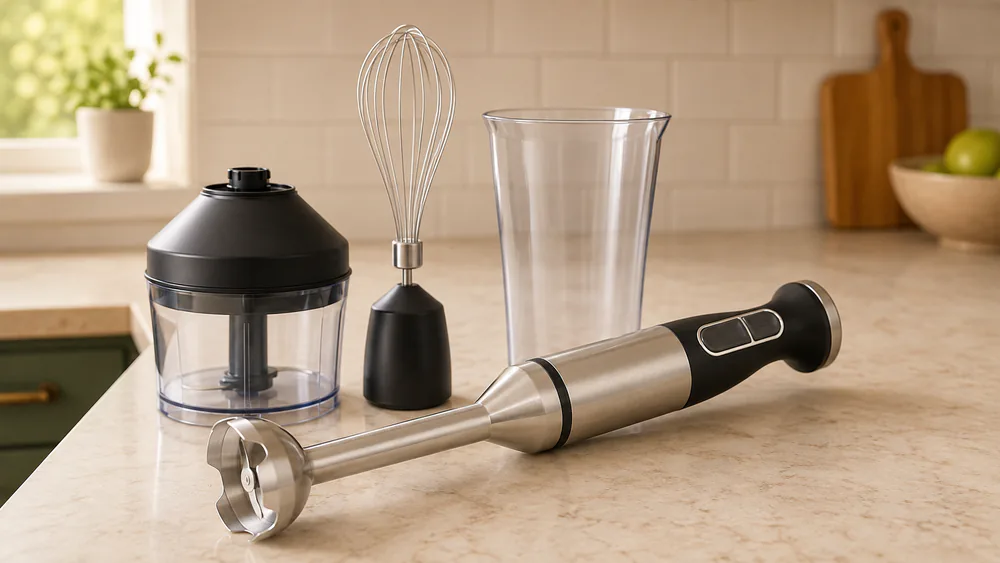
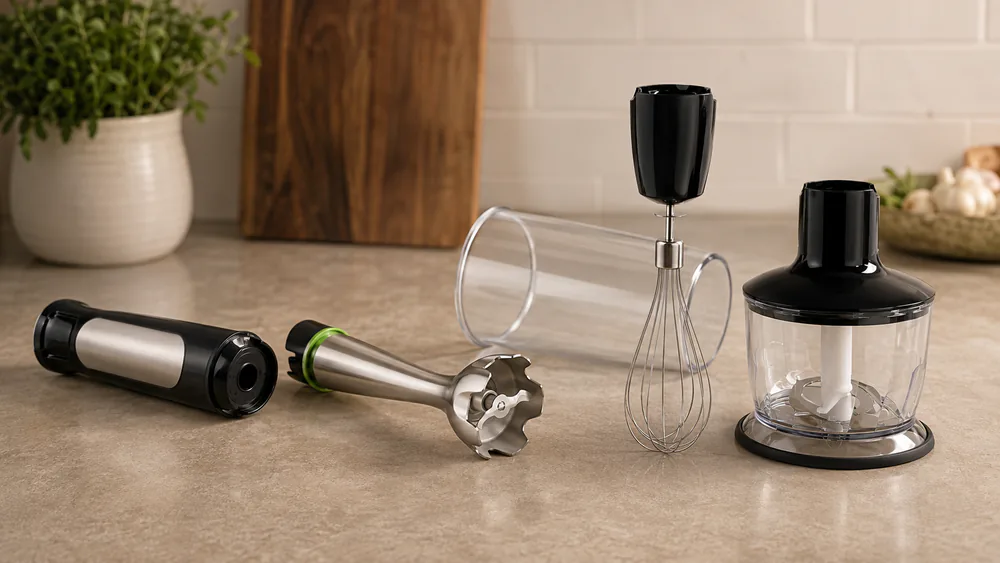
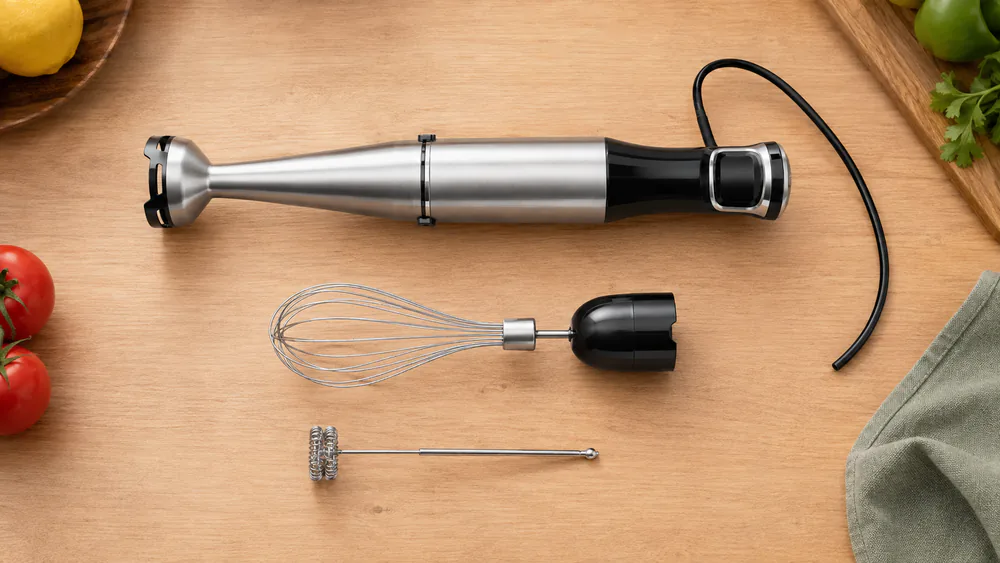
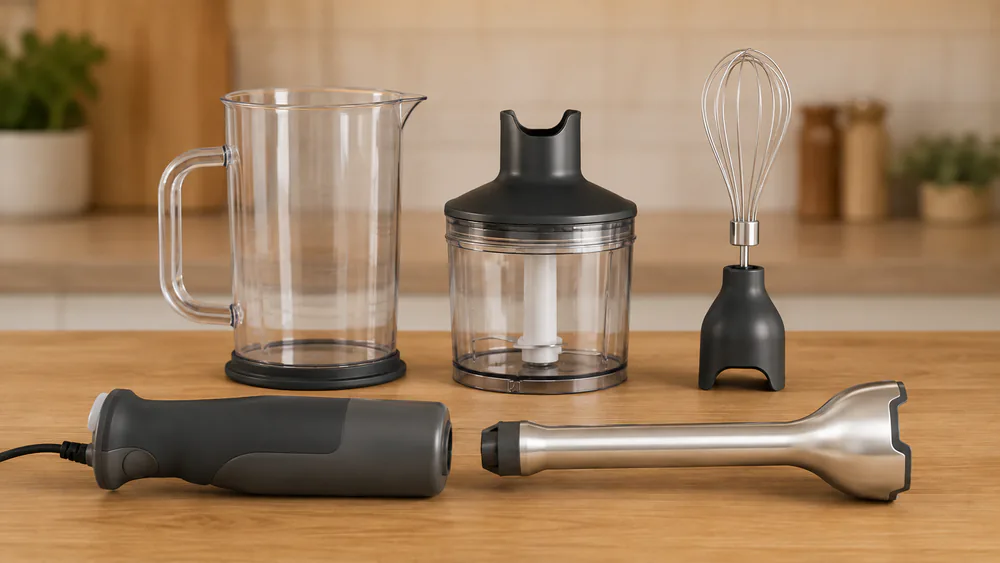
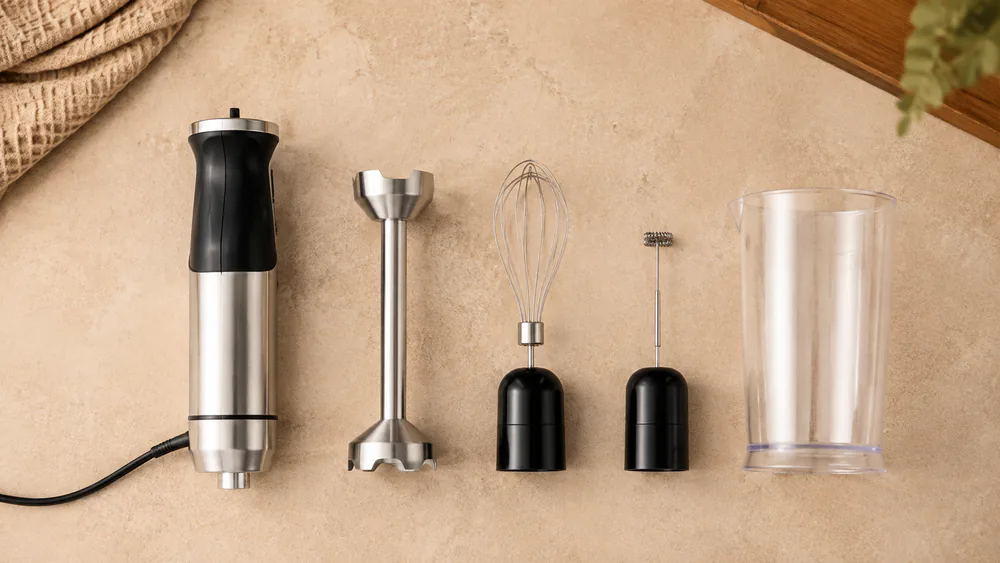
The whisk and frother earn their space; a beaker makes single servings a one-container job. The chopper is the attachment we trust least on budget sets; those blades break first.
Shaft, Blade, and Build Materials
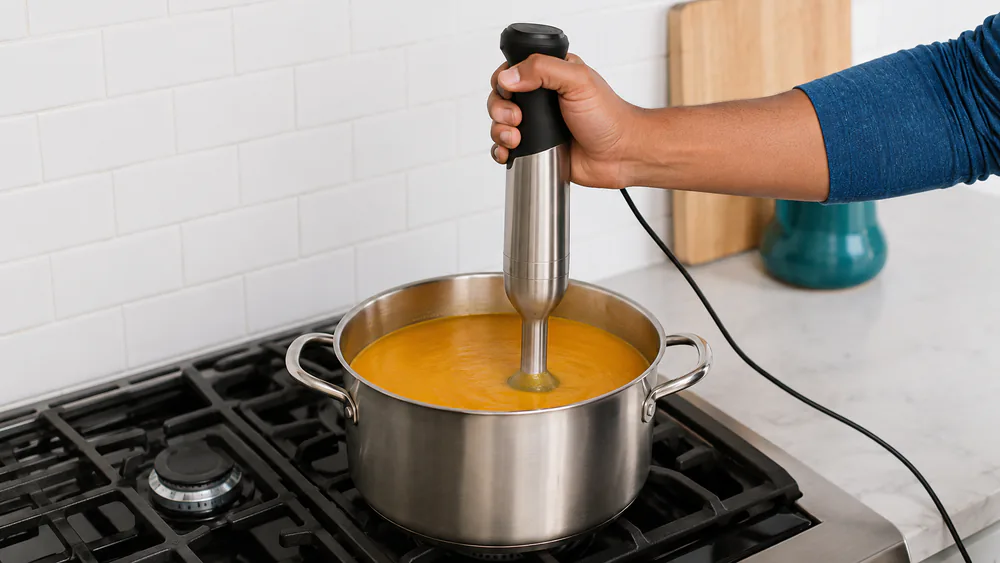
A stainless shaft is the baseline; an 8-inch shaft like the Cuisinart's reaches deep into stockpots. Anti-scratch or nylon guards protect enamel and nonstick cookware. Hot dishwasher cycles degrade blade seals, so hand-rinse and air-dry unless the unit is explicitly dishwasher-safe. Warranty is the backstop: 3 years on the Cuisinart, Braun, and Vitamix.
Ergonomics and Ease of Cleaning
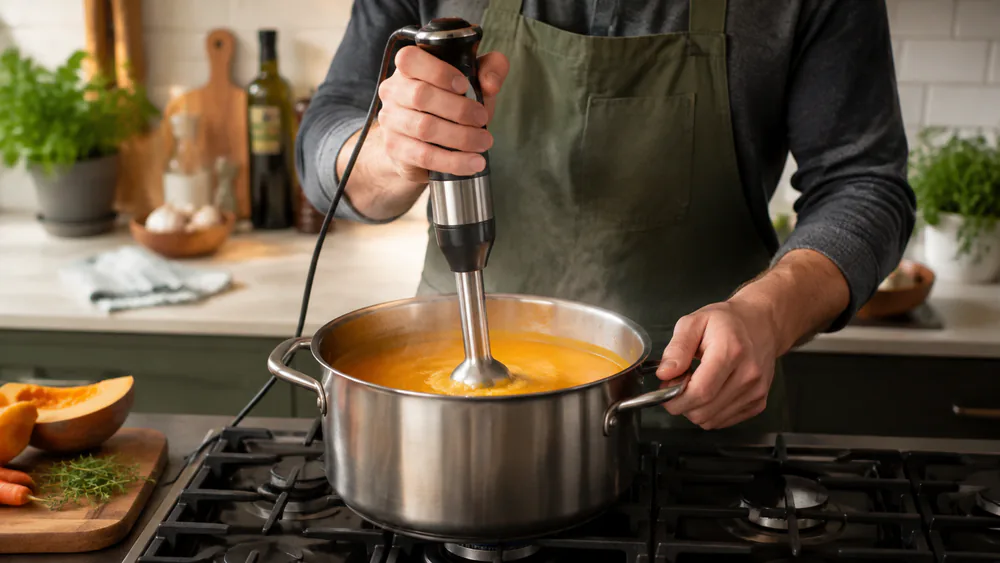
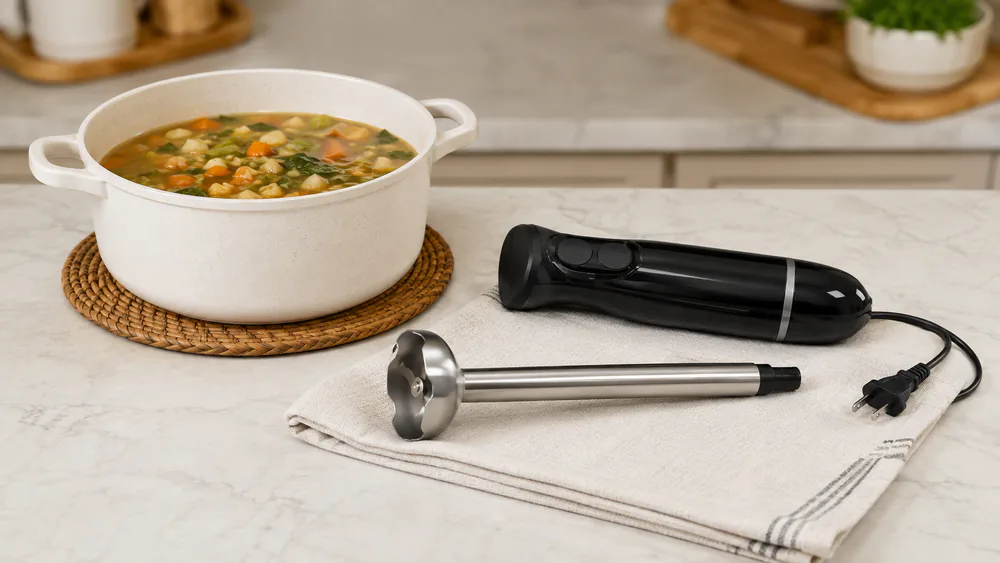
Weight and grip decide whether a wand gets used; a heavy wand pulls and can get away from you in thick soup. For cleaning, detachable parts win: click-off parts that go in the dishwasher beat soak-and-scrub. The motor body never goes underwater.
Corded vs. Cordless
All ten picks here are corded: a corded wand puts its budget into the motor. Cord length matters; the Vitamix and Mueller carry 5-foot cords. If the cord is why the blender stays in the drawer, go cordless.