1
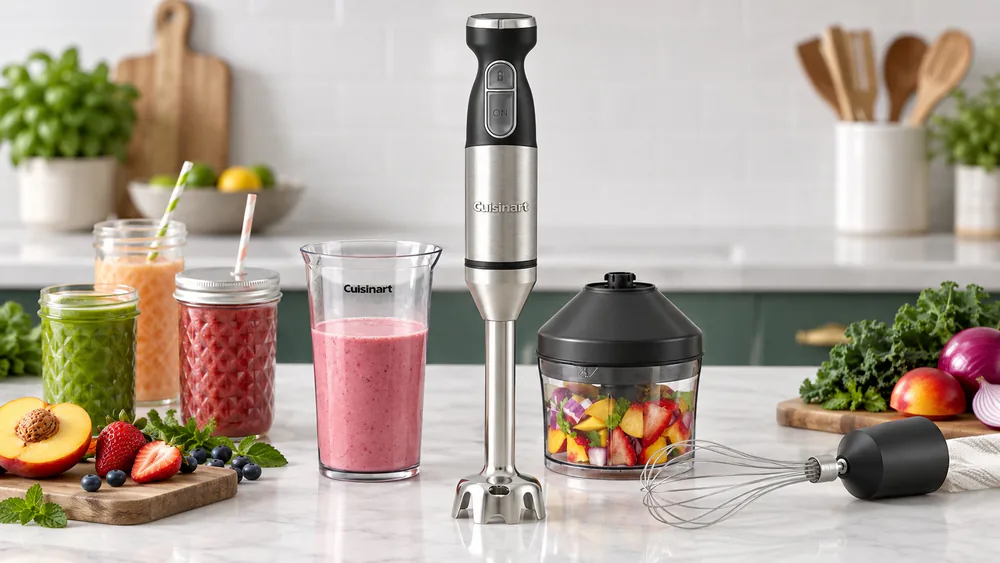
Cuisinart Smart Stick CSB-179 Variable Speed Hand Blender
4.4The 300W pick for weekly mayo: a quiet DC motor that emulsified garlic and olive oil into smooth aioli every time we ran it.
$59.95
Check Price
Helping you create a kitchen you love.

Kitchen Appliances
As an Amazon Associate we earn from qualifying purchases. We may earn a commission from links on this page, at no extra cost to you. Learn more.

Wondering how many watts your emulsion blender really needs? For most home emulsifying, the answer is 300 to 500 watts. Mayonnaise, aioli, hollandaise, and vinaigrettes all live in that range, and so do soups and dressings. Thin sauces handle fine on 150 to 250 watts, while frozen ingredients and thick dips want 500 watts or more.
We have compared immersion blenders from a 150-watt wand up to a 625-watt heavy-duty model, and the wattage sticker told us less than the motor behind it. This guide covers the numbers that matter, the torque that does the real work, and the wattage we would buy.
An emulsion blender is the same tool as an immersion or stick blender: a wand with the motor on top and rotating blades at the end of a shaft. You lower the shaft into the pot and blend. The shaft is usually detachable for cleaning, and the design dates to the 1950s. At its core, how immersion blenders are powered is simple: a small electric motor spins the blades, and wattage measures the power it draws.
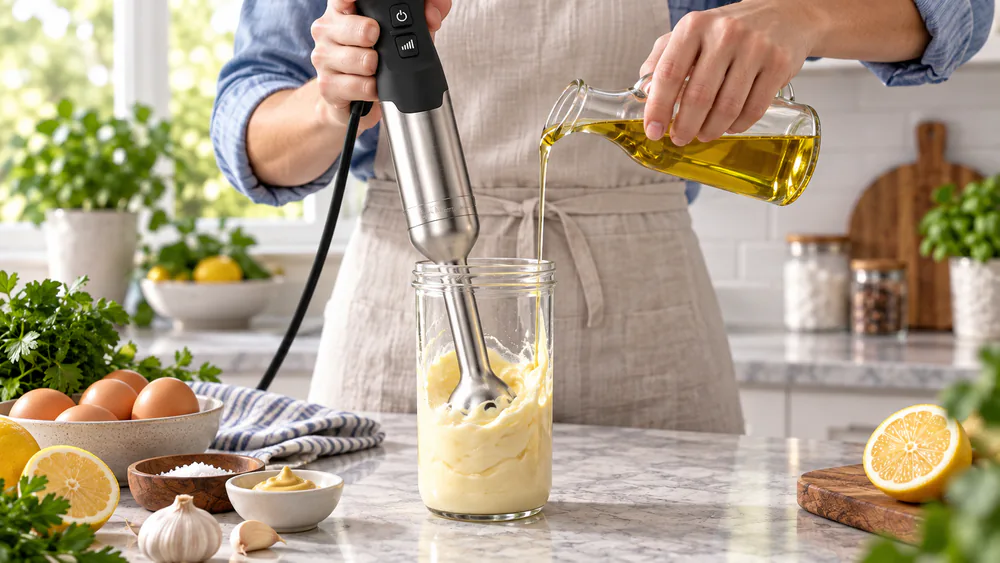
Emulsifying is a specific job. Mayonnaise and hollandaise are oil-in-water emulsions held together by egg yolk lecithin, and forming them takes energy: the blade bell has to shear the oil into tiny droplets and keep them suspended. That is how stable emulsions like mayonnaise are formed. A vinaigrette is the same trick without the stabilizer, which is why it separates unless you shake it.
General blending is different: pureeing soup or crushing frozen fruit chops and shears instead of suspending droplets, and the two jobs demand different things from the motor.
Wattage is the electrical power the motor draws while running: a useful ceiling, but not a measure of blending force. The same 300 watts can feel effortless in a well-designed machine and sluggish in a cheap one, because blades, motor quality, and speed control sit between the watts and the food. Home immersion blenders range from about 120 to 600 watts, and commercial units run far higher.
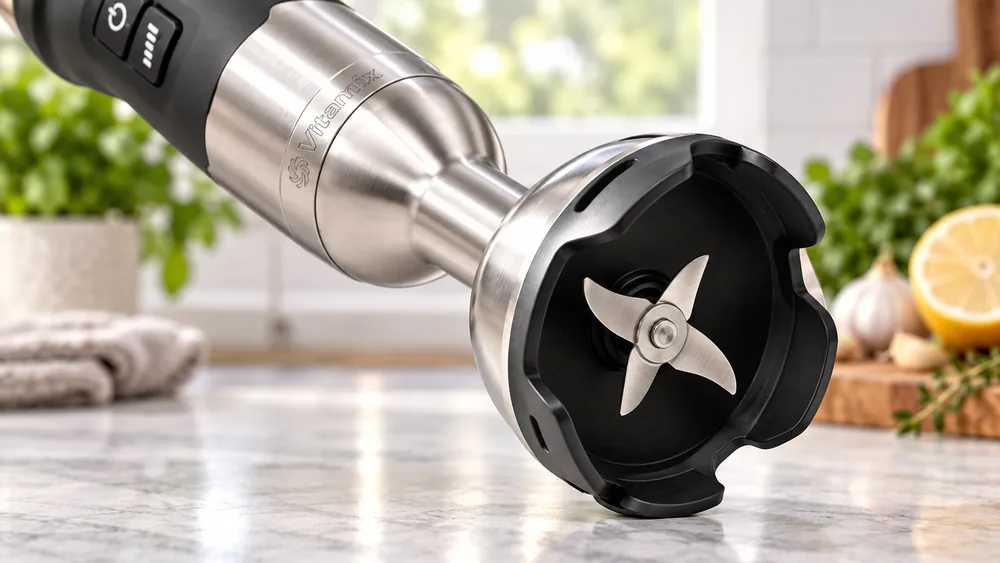
For a home kitchen, the sweet spot for emulsifying sits at 300 to 500 watts. That band covers mayonnaise, aioli, hollandaise, soups, and dressings, and it is where torque, noise, and price balance out.
Tip. If your blender will mostly emulsify, 300 to 500 watts is all the power you need. Spend the difference on blade quality and a good anti-splash bell.
Budget models under 250 watts are best limited to soft ingredients: thin sauces, dressings, simple emulsions, and soups. We have watched a 150-watt wand beat every higher-wattage model in soup and smoothie tests, so the band is more capable than its price suggests. The limits are real: pushed at thick mixes or ice, a low-wattage motor runs hot, and that is the fastest way to burn one out.
This is the band for weekly emulsion work. Our 300-watt Cuisinart blended garlic and olive oil into smooth aioli, crushed ice for shakes, and never threatened to overheat. If you make mayonnaise, aioli, hollandaise, or vinaigrette weekly, start here.
Step up to 500 watts or more when the ingredients fight back: frozen fruit, nut butters, thick dips, and small ice batches. Models with 500W+ and sharp stainless steel blades handle limited ice without help, at the cost of more noise, weight, and price.
Tip. Do not buy an 800-watt machine if you only blend soft soups. A well-built 300-watt model does the same job with less noise and a smaller price tag.
The biggest mistake we see is buying on wattage alone. Wattage is the ceiling; torque is the delivery. A motor that keeps its speed under load emulsifies better than a bigger motor that bogs down, and blade design matters more than either number.
Torque is turning force, and in plain language it is how hard the blades push through thick mixes without slowing. A machine that holds blade speed under load shears oil droplets evenly; one that stalls leaves a broken emulsion. That is why variable speed matters: start low and ramp up so the mixture thickens instead of splitting. Independent immersion blender power tests tell the same story: modest wattage machines beating far bigger numbers.
A cheap high-wattage motor can lose torque the moment the load climbs, while a well-built 300W motor holds its speed and keeps blending. We have seen low-wattage machines burn out when pushed at ice or dense mixes; one cheap 500-watt unit gave up after six months. The most common failure point is the motor-to-shaft connection: plastic gear interfaces strip under heavy loads, especially run continuously at high speed.
Pick the band by the hardest task you actually blend, not by the biggest number in the store. Here is how it maps to real kitchens.
If you emulsify weekly and puree the occasional soup, a 300W machine covers everything. Our 300-watt Cuisinart handled the whole weekly rotation without ever needing more power than its sticker promised.
Aioli for forty people is a different animal. Large batches mean sustained load, and that is where a 400 to 500W motor earns its keep. Our 500-watt Braun pureed a full pot of tomato basil soup in under 90 seconds with no visible lumps, so if you blend big pots regularly, stay in the 500W band.
Frozen fruit is the clearest wattage divider we found. A 280-watt machine finished a frozen fruit smoothie, but it took noticeably longer and the motor worked hard the whole time. A 625-watt machine handled the same frozen fruit almost without slowing. If smoothies with ice and frozen berries are a daily habit, budget for 500W+.
Wattage is one dial, and not the loudest. These three factors are why two blenders with the same sticker feel completely different.
Blade and bell design change the feel of blending more than an extra 200 watts. A bell that creates strong suction glues the wand to the pot bottom in thick mixes, making the motor work harder and overheat. Anti-suction bells stop that, and a good guard keeps splatter down. That is the difference between a frustrating wand and a one-hand job.
Duty cycle is how long a motor can run before it needs rest. Immersion blenders are not built for minutes of continuous blending: prosumer housings run warm after about five minutes, a budget 1,100W unit after about three, and commercial manuals often specify a 5-minute on, 2-minute rest cycle. Short bursts of 5 to 7 seconds keep the motor cool and the machine alive.
Cordless blenders are convenient, but battery power sags as it drains, and thick loads drain it fastest. A cordless unit gives short bursts rather than sustained power. The KitchenAid Go runs on a 12V battery rated for up to 30 minutes of continuous runtime; in real use, thick soup drains it noticeably faster. If you blend at the stove, corded delivers more for the money.
The whole guide in one table, with the torque caveat in the limits column.
| Wattage range | Best for | Limits | Who should buy |
|---|---|---|---|
| 150–250W | Thin sauces, dressings, simple emulsions | Bogs down on thick mixes and skips ice; motors run hot under sustained load. Blade quality can still beat the wattage sticker. | Occasional sauce and dressing makers |
| 300–500W | Mayonnaise, aioli, hollandaise, soups, smoothies | Ice takes patience and small batches. Even here, motor efficiency and blade design matter more than a bigger number. | Most home cooks |
| 500W+ | Frozen fruit, nut butters, thick dips, small ice batches | Louder, pricier, and heavier, and the motor still burns out if the duty cycle is ignored. A well-built 300W can out-blend a sloppy 800W. | Smoothie-and-frozen-fruit households, batch cookers |
Three machines we ran that map onto the bands above, ranked for the cook each suits best. Prices are a snapshot; street pricing moves week to week. We left the light-duty band empty on purpose: a 150 to 250 watt wand is fine for sauces and dressings, but the 300W pick below does far more for little more.
The 300W pick for weekly mayo: a quiet DC motor that emulsified garlic and olive oil into smooth aioli every time we ran it.
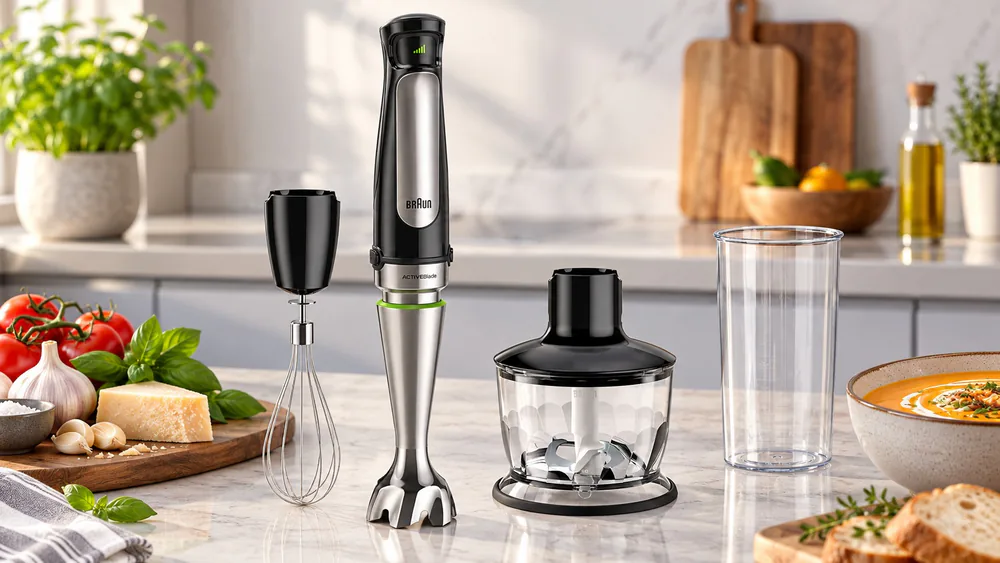
The 500W all-purpose pick: it pureed a full pot of tomato basil soup in under 90 seconds and crushed small ice batches without complaint.
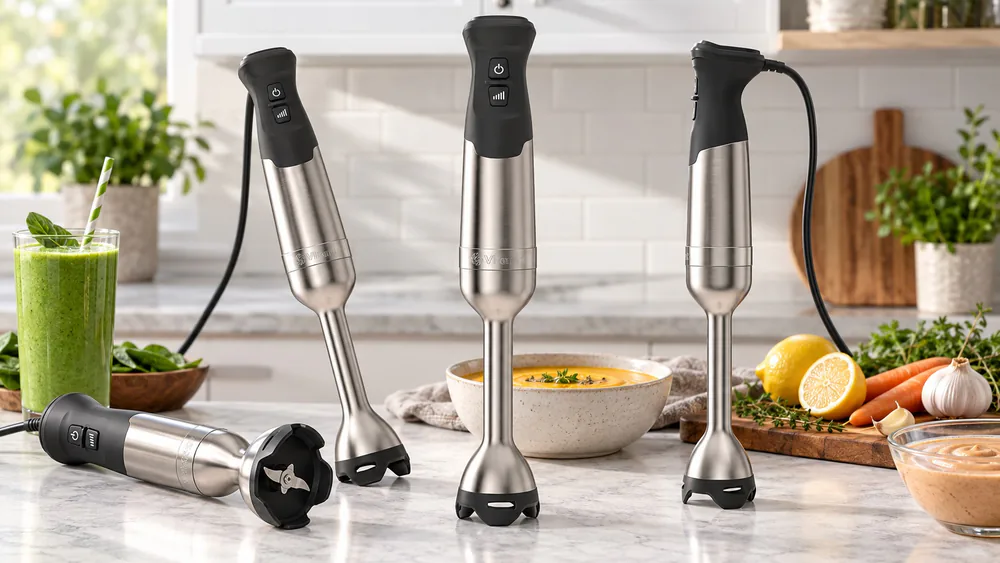
The 625W heavy-duty pick: five speeds give real control, and the bell guard keeps the blades off the pot bottom.
Yes. Two hundred watts emulsifies mayonnaise and hollandaise, and it is the rating some professional machines are marketed around for dressings, aioli, and mayo. The technique matters more: run in short bursts so the motor stays cool.
Not on its own. Emulsions form from energy input at the blade, and torque consistency plus blade design decide that more than the wattage number. Starting low and ramping up keeps an emulsion from breaking, so variable speed matters more than the sticker.
Yes, with patience and small batches. Our 300W Cuisinart crushed ice for protein shakes. Below 300 watts, ice is usually a struggle, and pushing a small motor at it is the fastest way to burn one out.
Usually, but motor quality matters as much. Higher wattage machines tend to be louder, yet a good DC motor can be powerful and quiet. The 500W Braun we ran felt powerful without being obnoxiously loud.
Almost nothing. An immersion blender in the 200 to 400 watt range costs roughly $0.75 to $1.50 a year at about $0.16 per kWh. Higher wattage can even win: a 1,200W blender finishing a smoothie in 30 seconds uses about 0.010 kWh, while a 400W model struggling for three minutes uses about 0.020 kWh. The yearly gap between a 500W and a 1,500W unit is roughly $1 to $2.
Restaurant-grade machines typically run 700 to 1,145 watts: Waring's Big Stix tops out at 1,145W, Globe, KitchenAid commercial, and Sammic sit around 720 to 750W, and Hamilton Beach's BigRig runs 800W. Light-duty commercial starts around 200 to 350W.
Buy for the hardest job you actually blend, and stop there. Most home cooks should land in the 300 to 500 watt band, which covers the full home rotation of mayonnaise, aioli, hollandaise, soups, and dressings. The 300W Cuisinart is the machine we would put in most kitchens: it did everything that band promises at a fraction of the heavy hitters' price.
Step up to 500W+ only for frozen fruit, nut butters, and thick dips; the 625W Vitamix is the pick there, and the 500W Braun covers big pots of soup. We would skip the biggest wattage numbers entirely: in our testing, torque, blade design, and a respected duty cycle outperformed wattage every time, and a 150-watt wand beat machines two to four times its size on soup and smoothies. Match the band to your toughest task, and the choice gets easy.
Most home kitchens land in the 300 to 500W band. Browse our tested blender guides to find the machine that fits the way you cook.