As an Amazon Associate we earn from qualifying purchases. We may earn a commission from links on this page, at no extra cost to you. Learn more.
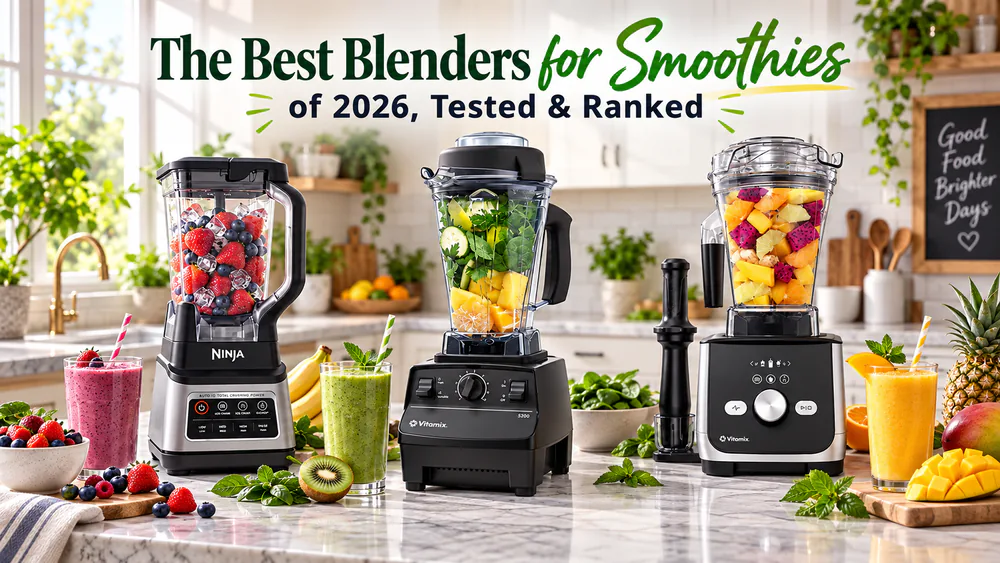
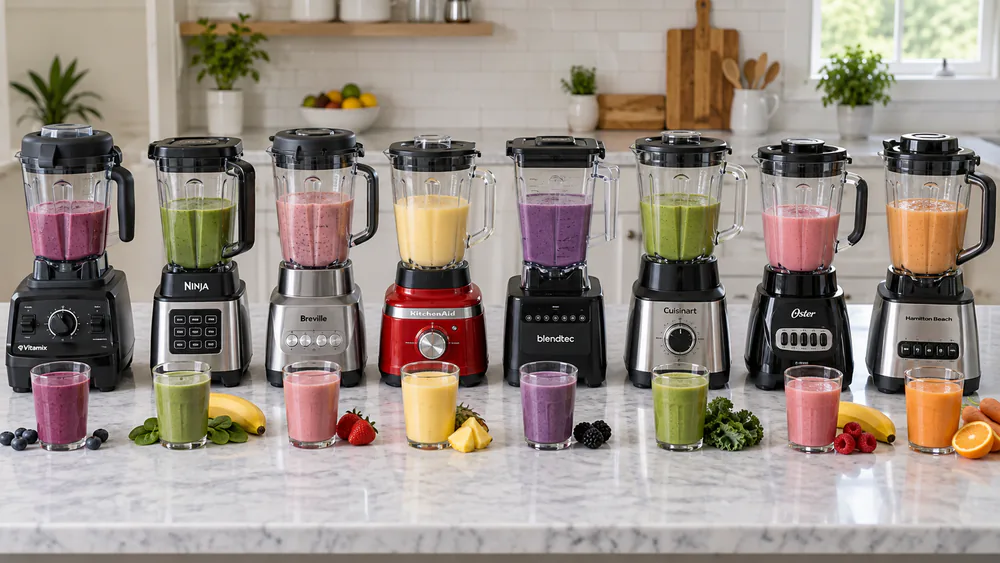
If smoothies are part of your morning routine, you want a blender that turns frozen fruit silky smooth in seconds instead of leaving gritty chunks and leafy bits behind. We spent six weeks testing eight blenders, from the $39.95 Hamilton Beach Power Elite to the $749.95 Vitamix Ascent X5, blending frozen fruit, greens, ice, and seeds. Our best overall is the Vitamix 5200, which has run daily in our kitchen for years. Here are the picks, how we tested, and what to look for.
Quick Picks: The 3 Best Blenders for Smoothies
Street prices from early August 2026; ratings are our own.
We earn a commission if you make a purchase, at no additional cost to you.
How We Tested Blenders for Smoothies
Every blender in this guide was bought at retail with affiliate income; brands cannot pay for placement. The eight machines lived on our counter for six weeks of daily use, more than 75 hours across the field.
The test menu was identical: a strawberry-kale smoothie, blended on each machine's smoothie preset or for 90 to 120 seconds per the manual, then strained; a strained frozen margarita; a milkshake; an ice-crushing run; and a timed cleanup after every blend.
We scored texture, noise in decibels, ease of cleaning, build quality, and value.
1. Vitamix 5200 – Best Overall Blender for Smoothies
Specs at a Glance
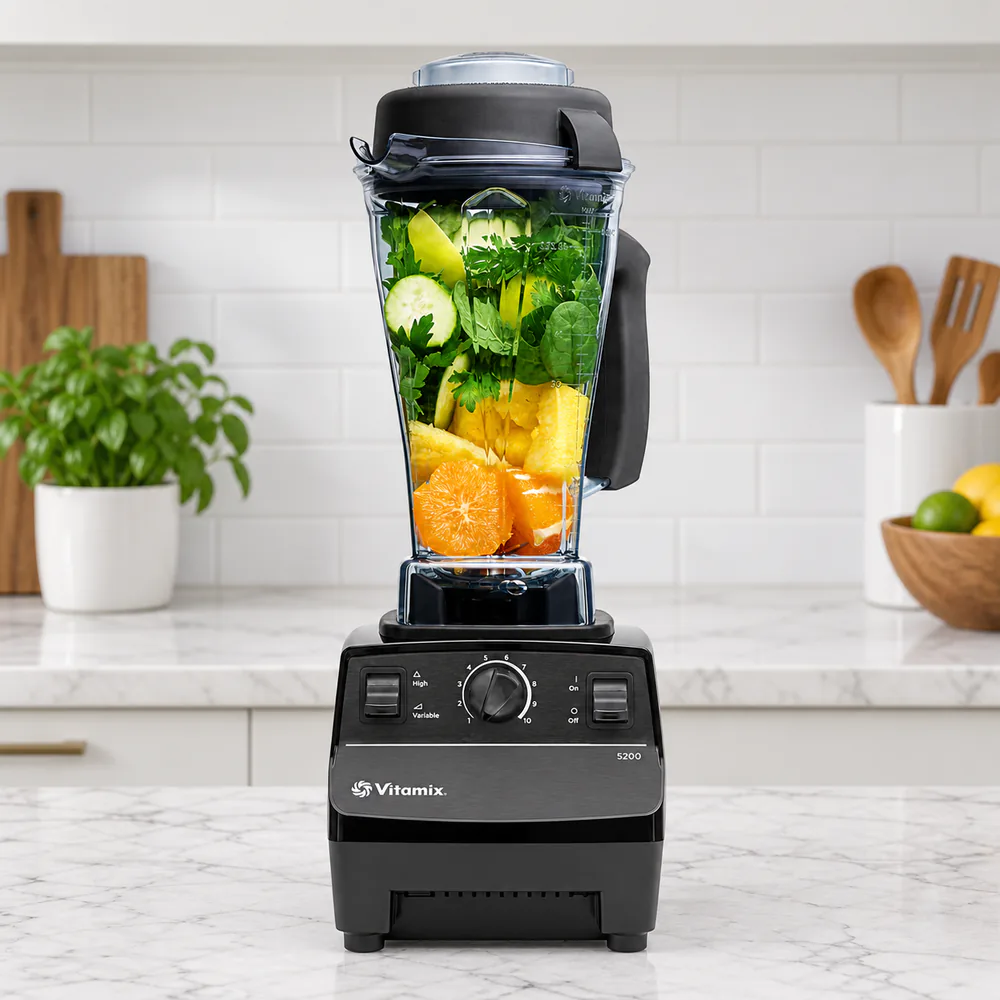
2 HP motor, 64 oz jar, 10 speeds plus High, 7-year warranty.
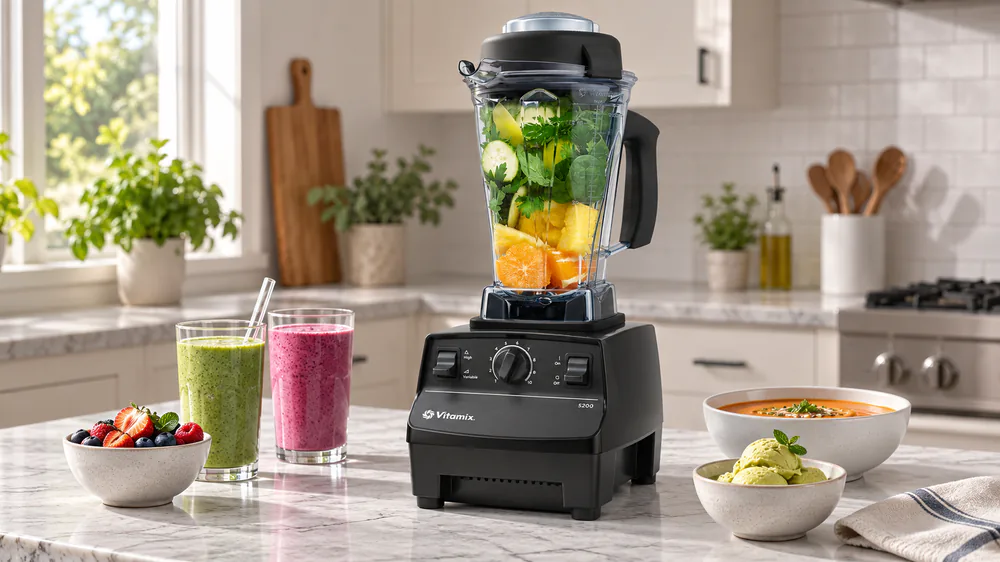
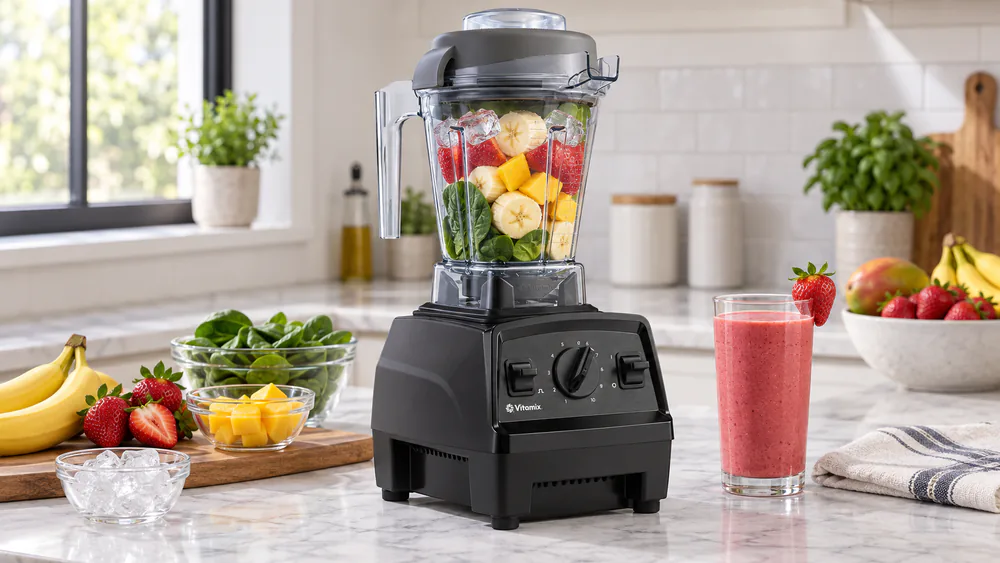
Where most blenders spin, the Vitamix 5200 works, turning frozen strawberries, kale, and chia seeds silky smooth in about 30 seconds with no gritty residue or leafy bits left behind. At about $479, it is the most proven blender we have tested and our pick for most kitchens.
Pros
2 HP motor powers through frozen fruit, ice, and greens
64 oz jar handles family batches
Self-cleans in 30 to 60 seconds
Cons
Too tall at 20.5 in for under-cabinet storage
No presets; the dial is the whole interface
Container is not dishwasher safe
Who Should Buy It
Buy it if you blend most days; it will outlast the decade.
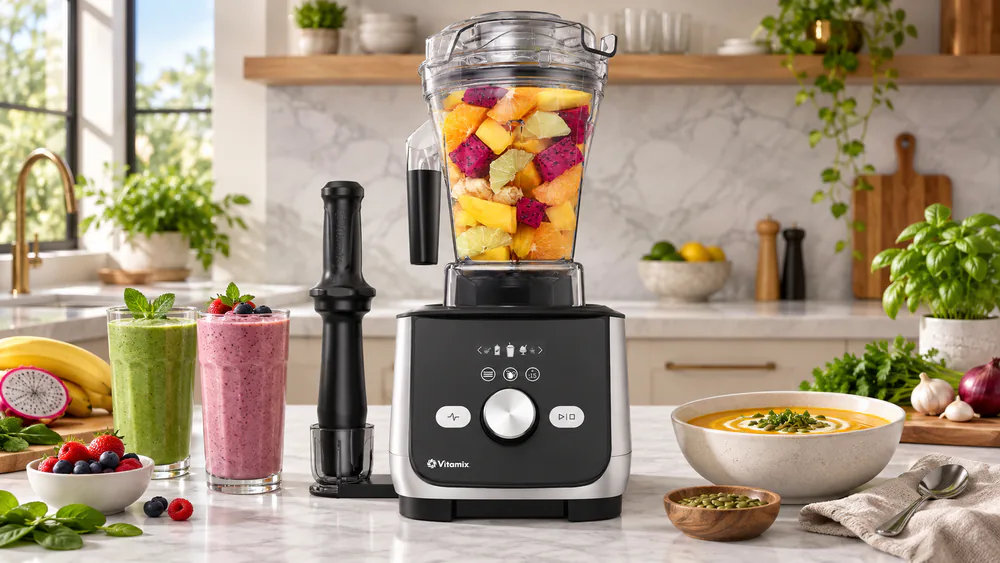
2. Vitamix Ascent X5 – Best High-End Blender for Smoothies
Specs at a Glance
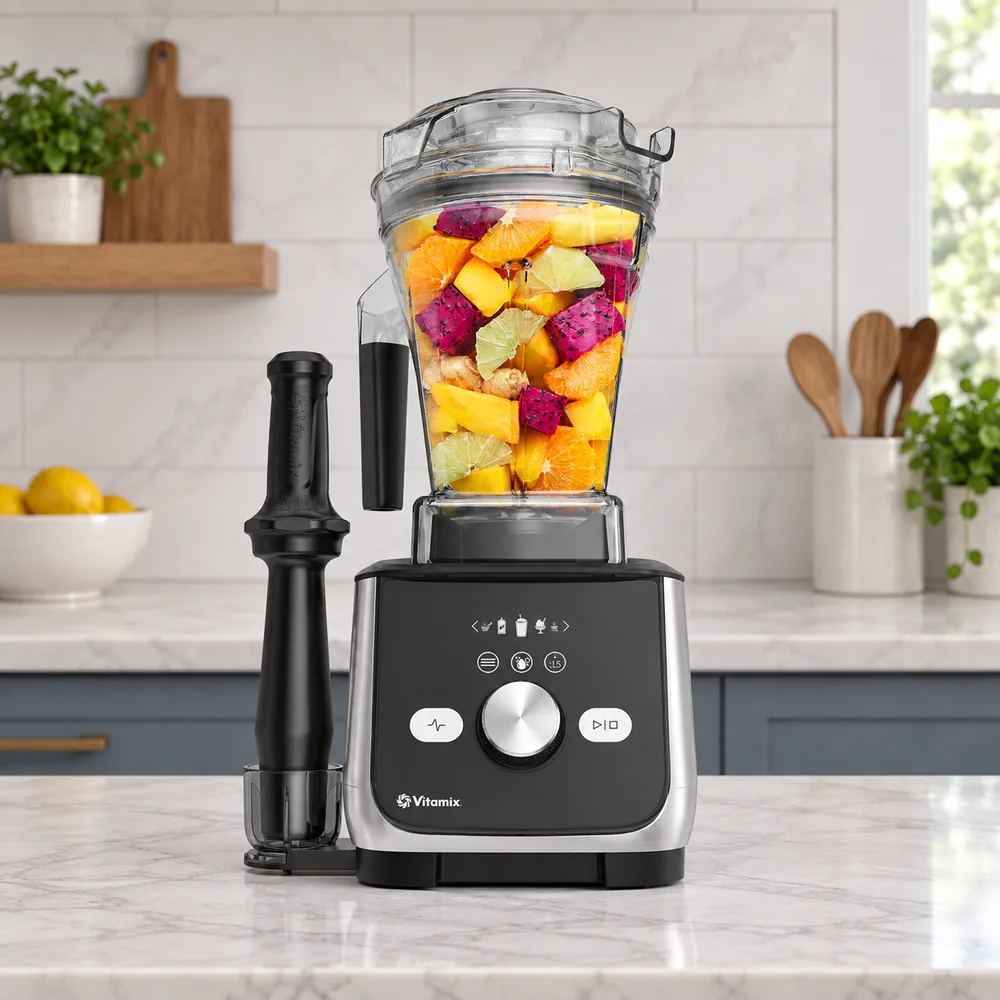
2.2 HP (1,500W), 48 oz jar, 10 programs, 10-year warranty.
If the 5200 is the classic, the Ascent X5 is the flagship. It produced the smoothest textures in our roundup across smoothies, margaritas, and soup, though our nut-butter batch came out chunkier than the 5200's until we added a splash of oil. In everyday use, the +15-second button was the control we actually reached for to finish a smoothie. See the Vitamix Ascent X5 or the Ascent X5 at Williams Sonoma for pricing.
Pros
10 programs from smoothies to spice grinding
Self-clean in 60 seconds or less
Fits under standard upper cabinets
Cons
About $749.95 typical street price, the highest here
Program icons look alike and take a learning curve
48 oz jar is smaller than the 5200's 64 oz
Who Should Buy It
Buy it for one-touch programs and the longest warranty here.
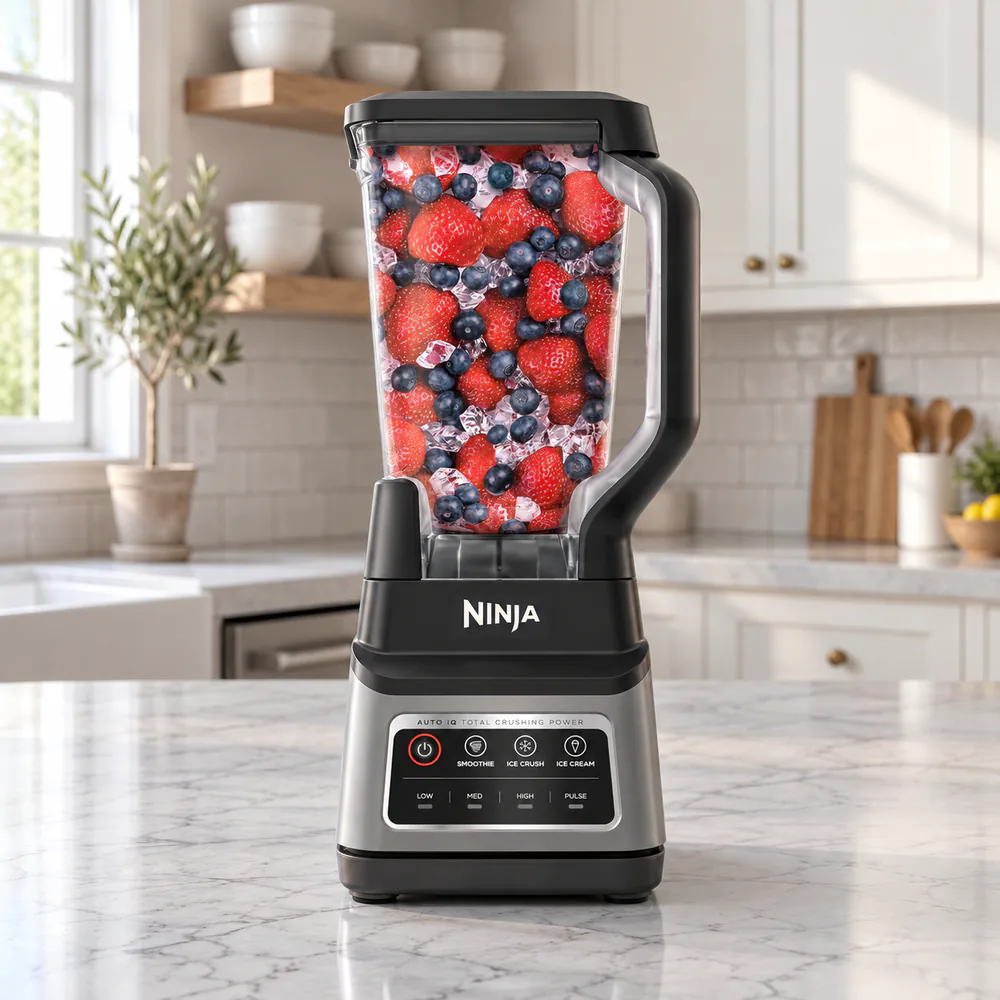
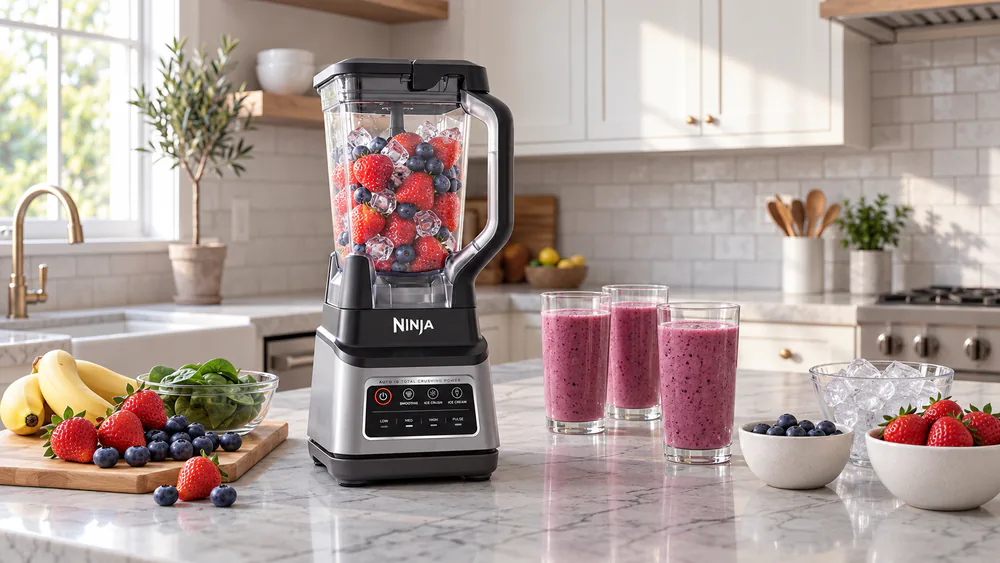
3. Ninja Professional Plus BN701 – Best Value Blender for Smoothies
Specs at a Glance
1,400 peak watts, 72 oz pitcher (64 oz max liquid), 1-year warranty.
The BN701 is the value pick that does not blend like one, handling whole frozen strawberries and large ice chunks without stopping while the Auto-iQ smoothie preset needed no babysitting. The Ninja Professional Plus BN701 sits near $99.95; replacement 18 oz single-serve cups are easy to find, and the full system is on Wayfair.
Pros
1,400 peak watts crush ice to snow in seconds
72 oz pitcher handles family batches
Suction-cup feet and a lid-lock interlock
Cons
Stacked blades are fiddly to hand-wash
The pitcher can crack in the dishwasher
1-year warranty is the standard short term
Who Should Buy It
Buy it for family-size smoothies on a budget.
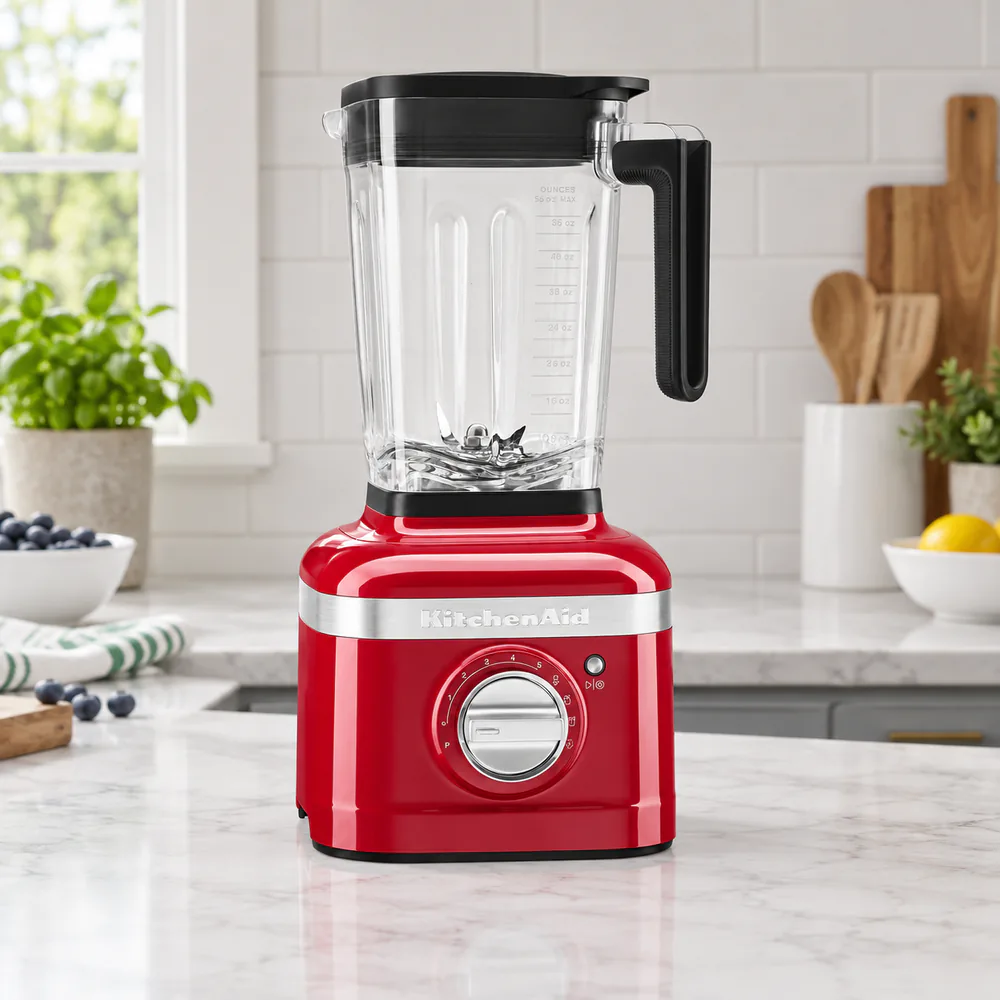
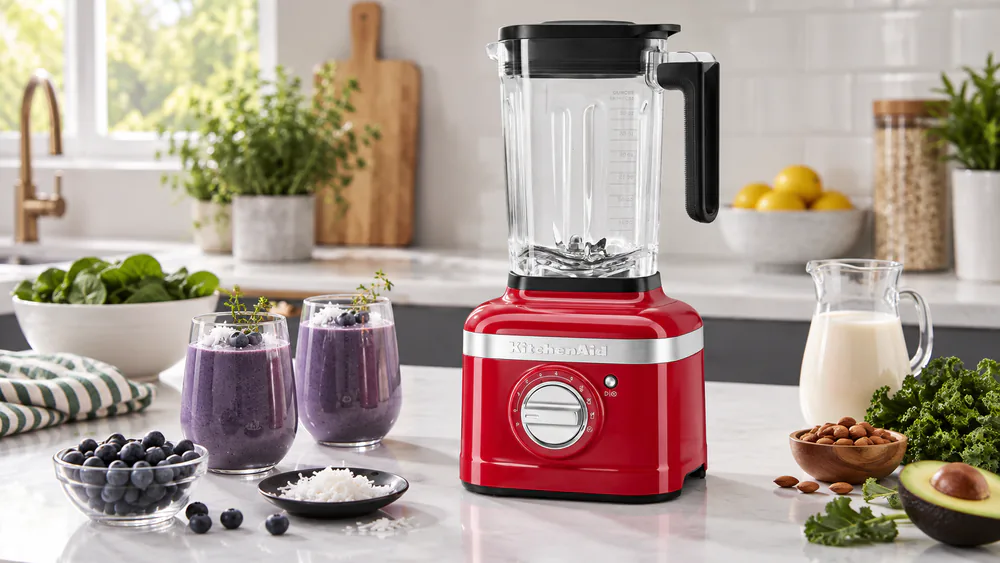
4. KitchenAid K400 – Best for Family-Size Batches
Specs at a Glance
1.5 HP (1,200W), 56 oz jar, 3 presets plus 5-speed dial, 5-year warranty.
Who Should Buy It
Buy it for pitcher-size smoothies for two or three.
The K400 is the quieter specialist among full-size blenders: it crushed ice to a snow-like consistency, hid the kale in a green smoothie, and blended chia seeds smooth with a low-frequency hum that suits early mornings. Check the KitchenAid K400's current price; pricing has dipped toward $230.
Pros
56 oz jar and 1.5 HP motor for family batches
3 presets plus a 5-speed dial
Self-clean cycle; 5-year limited warranty
Cons
The start button sometimes needs a second press
Thick blends need tamper help
A jar can leak at the base, so check the gasket
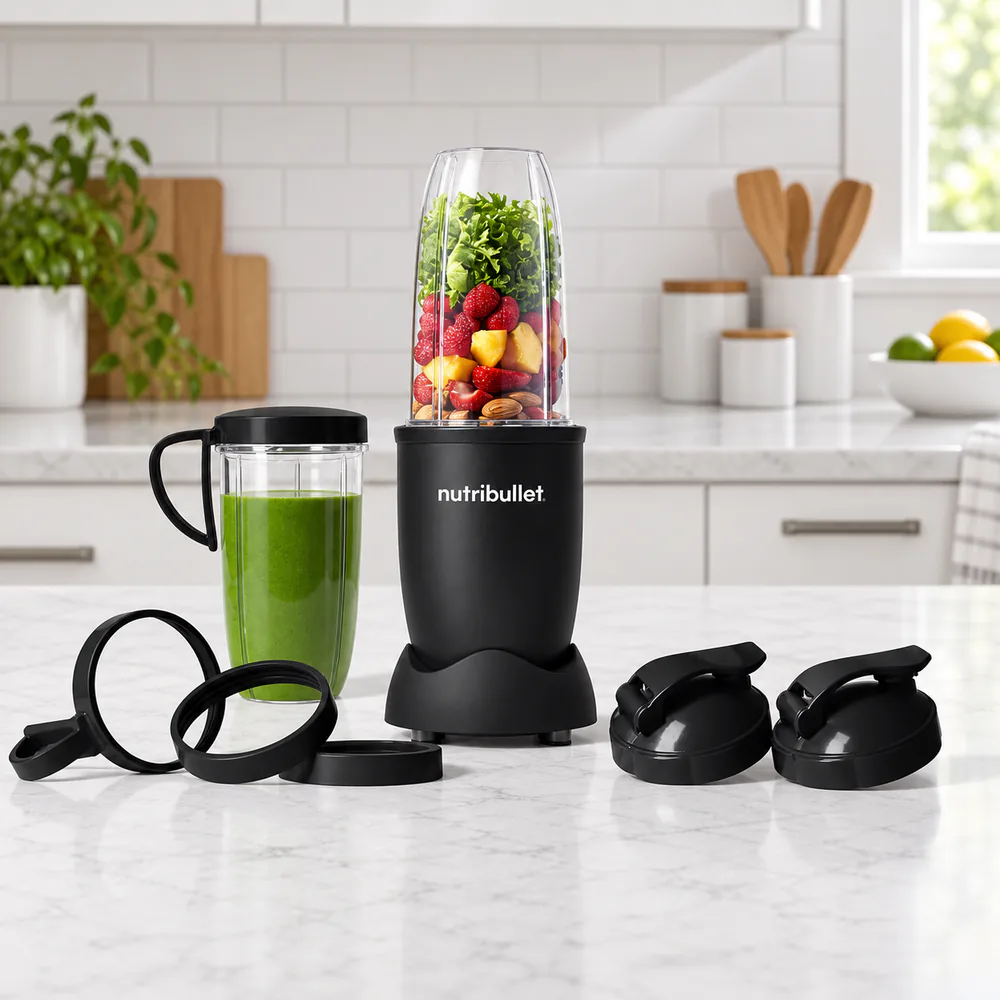
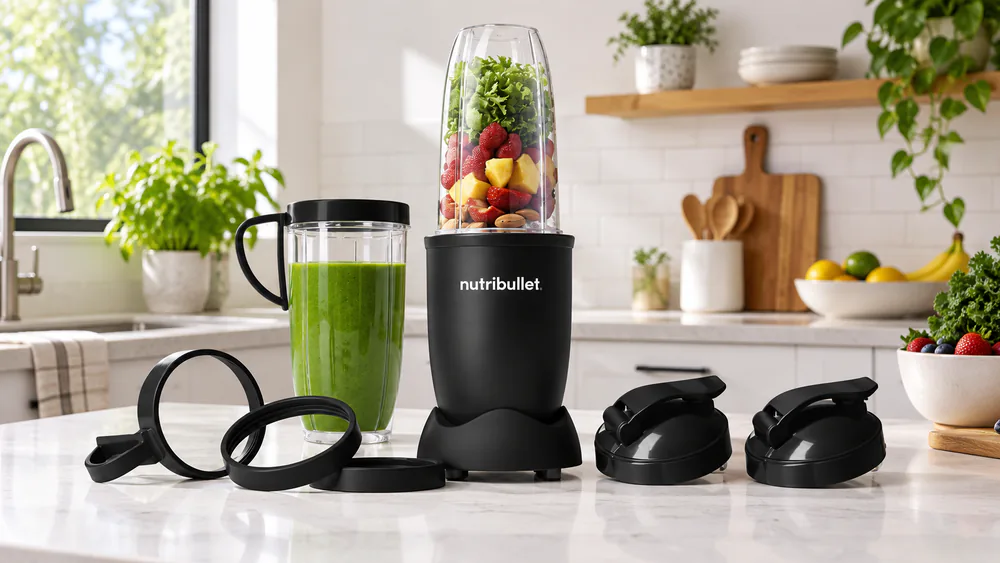
5. NutriBullet Pro – Best Personal Blender for Smoothies
The NutriBullet Pro is the machine for the daily single-serve routine, and most smoothies finished in under a minute with a gentle shake while blending into the 32 oz cup meant cleanup was a rinse. It sounds like a hairdryer on medium, and spares live on the NutriBullet site.
Pros
900W blends frozen fruit, greens, and seeds smooth
Blends into the cup you drink from
32 oz cup plus two 24 oz cups
Cons
Single speed with no presets or pulse
One-minute run ceiling; the motor can overheat
Residue collects in the cup crevices
Who Should Buy It
Buy it if you blend one smoothie at a time.
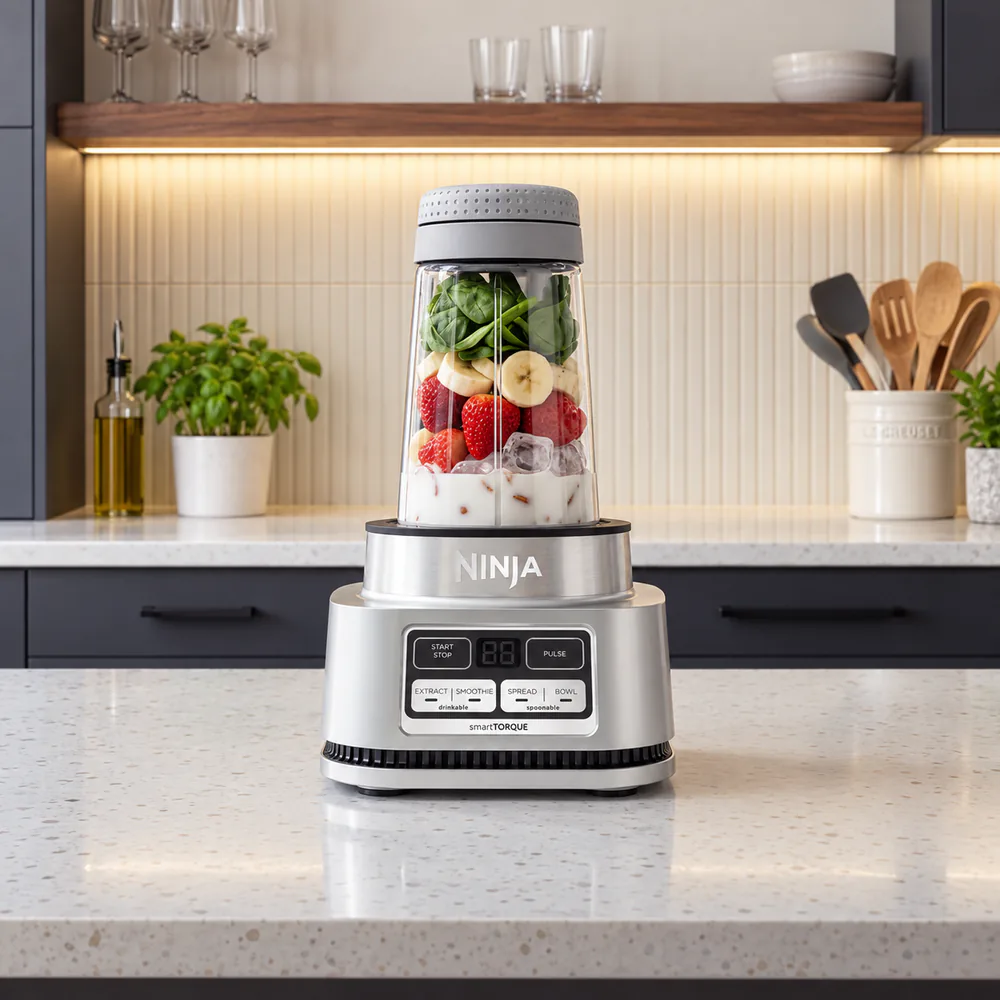
6. Ninja Foodi Smoothie Bowl Maker – Best for Smoothie Bowls
Specs at a Glance
1,200 peak watts, 14 oz bowl plus 24 oz cups, 1-year warranty.
Who Should Buy It
Buy it for smoothie bowls and to-go smoothies, noise included.
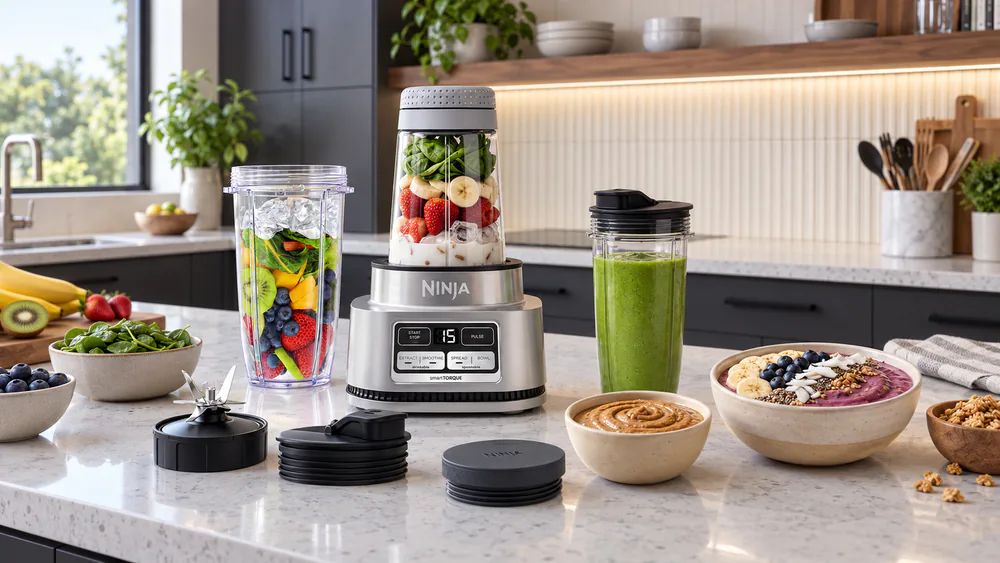
The SS101 is a bowl machine first, and the 14 oz bowl with its built-in tamper made spoonable, fork-ready bowls in about 30 seconds. It is loud, but the bowl preset's run lasts about 30 seconds, and the Ninja Foodi Smoothie Bowl Maker is also at Best Buy.
Pros
Spoonable smoothie bowls in about 30 seconds
4 Auto-iQ presets including Bowl
Cups, lids, and blades are dishwasher safe
Cons
Measured 102.3 dB on the bowl preset; genuinely loud
The bowl needs extra attention after oily blends
14 oz bowl is single-serving only
7. Ninja Blast Max – Best Portable Blender for Smoothies
Specs at a Glance
Cordless 11.1V, 22 oz vessel, 3 Auto-iQ programs, 1-year warranty.
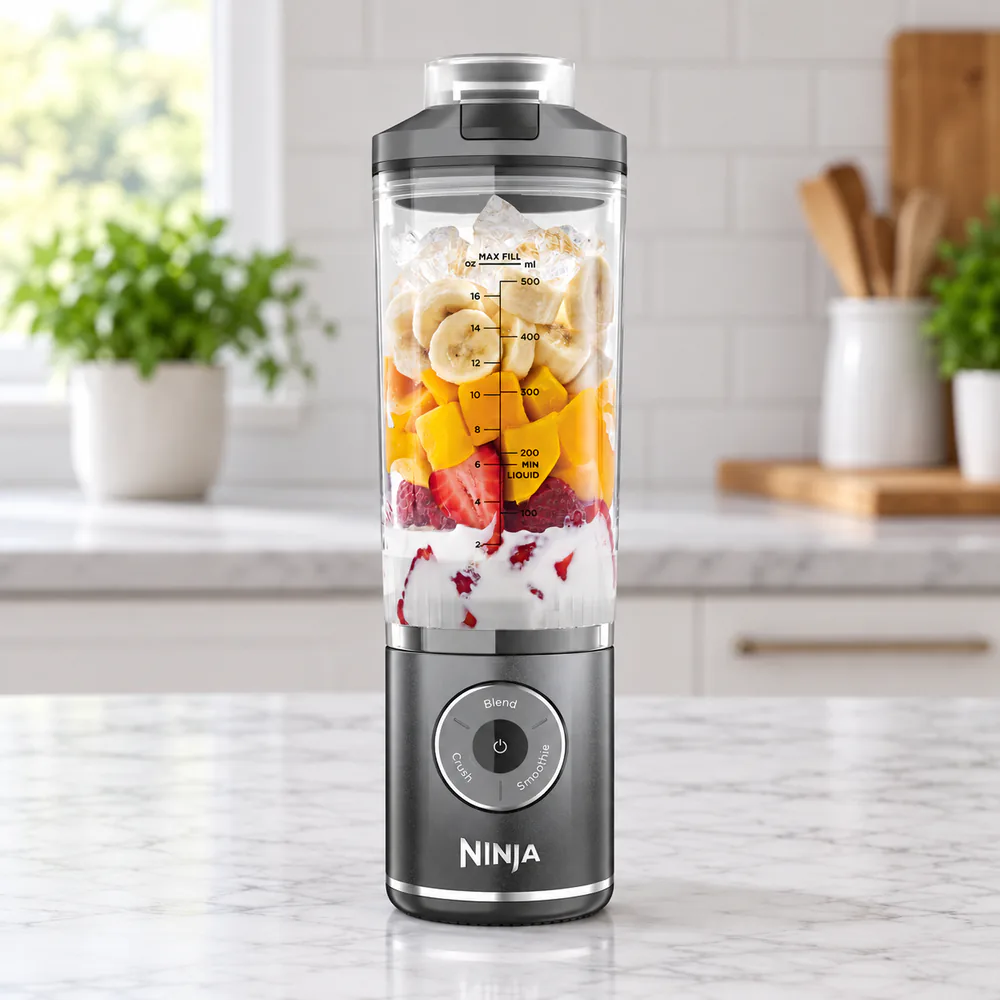
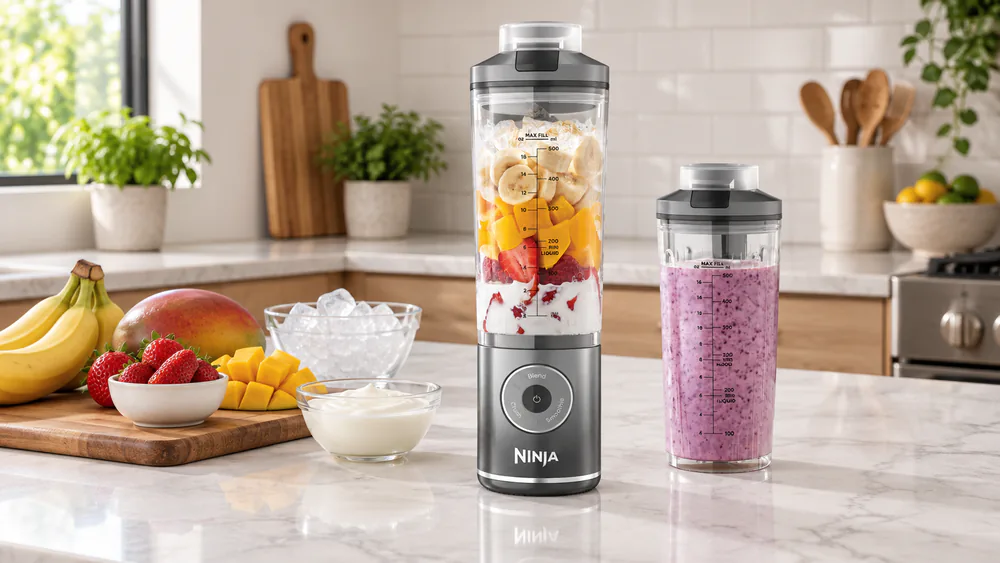
The Blast Max fixes the portable blender's worst habit, because the vessel twists off the motor base so you sip a light cup instead of a brick. Small-batch smoothies came out clean as long as we did not fill the vessel to capacity, so respect that limit. See the Ninja Blast Max's current price and our Ninja Blast vs Ninja Blast Max and Cutify portable blender review guides.
Pros
Detachable vessel is about 50% lighter than rivals
3 Auto-iQ programs on a power button
Quiet for a blender, with a sip lid
Cons
Blends more slowly than corded machines
Battery life varies from one blend to ten-plus
The vessel is not drying-cycle safe; air-dry it
Who Should Buy It
Buy it for smoothies at the gym or in the car.
8. Hamilton Beach Power Elite – Best Budget Blender for Smoothies
Specs at a Glance
700 peak watts, 40 oz glass jar, 12 functions on 5 buttons, 3-year warranty.
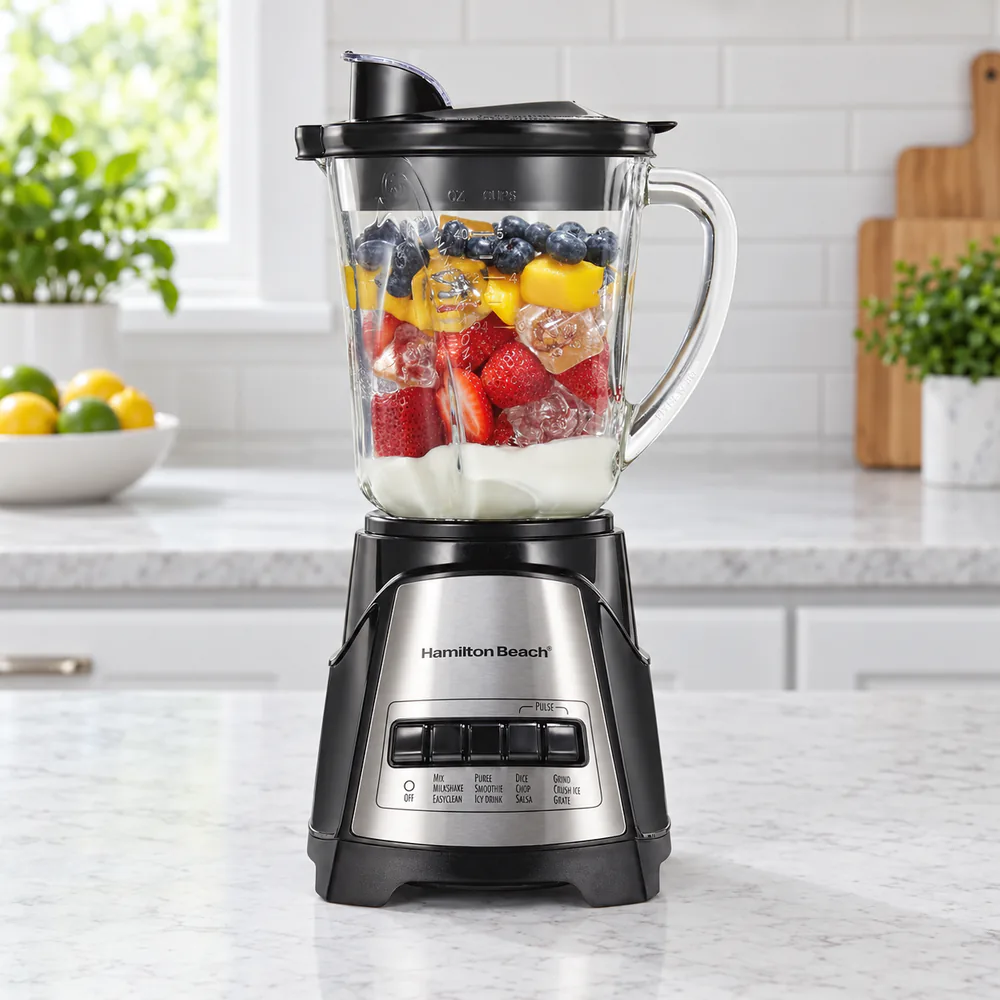
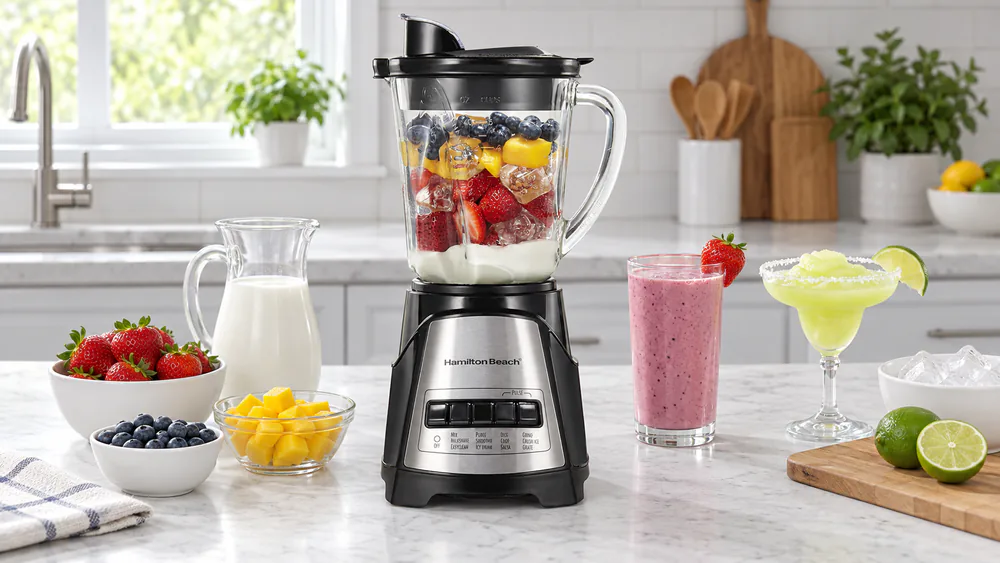
The Power Elite is the honest budget pick, and with liquid added first the 700W motor pulverized ice and frozen fruit at a fraction of the price of anything else here. Thick, dry loads barely moved, but at about $39.95 with a 3-year warranty it is the pick for tight budgets, and the Hamilton Beach page shows the lineup.
Pros
About $39.95 with a 3-year warranty
Glass jar, lid, and blades are dishwasher safe
12 blending functions on a 5-button panel
Cons
700W struggles with thick, dry loads; add liquid first
The stiff lid can spill mid-pour
40 oz jar is small for more than two people
Who Should Buy It
Buy it for budget smoothies for one or two.
What to Look For in a Blender for Smoothies
The eight winners are the short list, but the criteria matter more.
The 30-second strawberry-kale test tells us more about a blender than any spec sheet does.
Motor Power and Wattage
Watts and horsepower measure different things, so compare within a brand's own numbers, though strong smoothie blenders generally land between 900 and 1,500 watts and Taste of Home recommends aiming for at least 1,500W.
Jar Capacity and Material
Capacity depends on how many smoothies you pour: 32 oz suits one, 48 oz a couple, 56 to 64 oz a family, and 72 oz a crowd. BPA-free plastic keeps weight down while glass adds heft, and either way a tall jar needs cabinet clearance.
Blade Design
Blade geometry matters more than blade count, and Ninja's stacked blades keep ingredients moving while the 5200's shred fibrous greens.
Ease of Cleaning
A blender you dread cleaning gets used less, and self-clean cycles are the fastest path: warm water, a drop of dish soap, and 30 to 60 seconds on high, while dishwasher-safe parts go on the top rack.
Noise Level
Blenders are among the loudest small appliances in a kitchen, and our decibel meter read 102.3 dB on the SS101's bowl preset while the NutriBullet Pro runs like a hairdryer on medium.
Tip. Add liquid first, then ice and frozen fruit last; the blades need liquid to work.
Personal vs full-size, one more fork in the road:
Pros
The cup-and-blade unit is the serving glass
The motor-in-base layout keeps the cup light enough to drink from
A smaller motor and simpler parts keep the price under $100
Cons
The cup locks in the batch size; a family breakfast takes several runs
Short duty cycles mean heavily frozen loads need rest time between bursts
There is no pitcher to scale up to for a crowd
Other Blenders We Considered
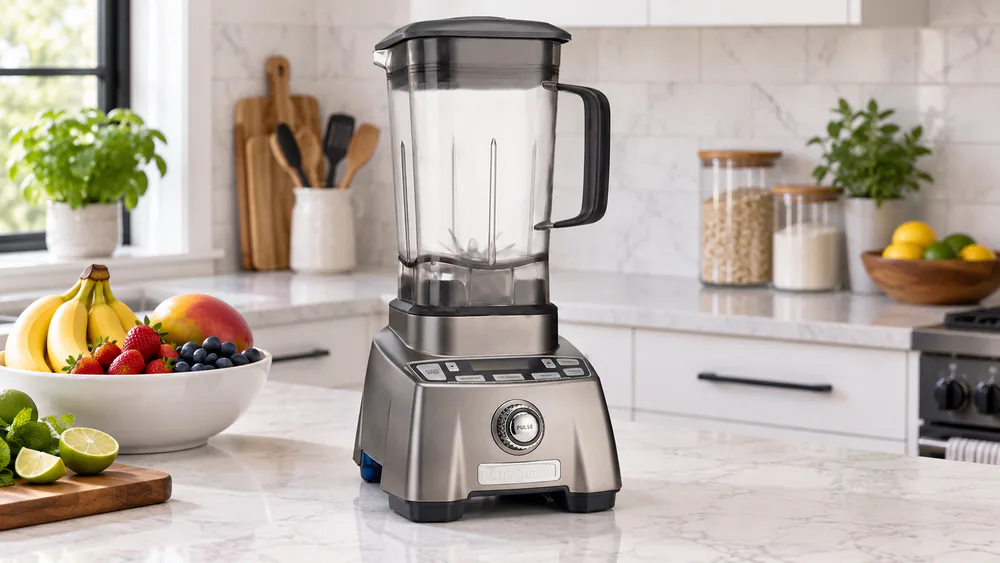
The Breville Fresh and Furious blended beautifully with 6 presets, but it landed where the Ascent X5 does more. The NutriBullet Ultra made thick smoothies in about 90 seconds, yet strawberry seeds survived, while the Vitamix Ascent X4 finished its smoothie preset perfectly smooth in 45 seconds. The Ninja Twisti Duo at about $140 is another budget stand-out; Shop on Walmart for the Cuisinart Hurricane Pro's price.
9
Cuisinart Hurricane Pro
4.3
A 2,000W motor that pureed our test in 90 seconds, but preset ice crushing was poor.
A full-size blender with at least 900 watts, like the Vitamix 5200 or the Ninja BN701, suits most households; the NutriBullet Pro does single glasses in under a minute.
What wattage do I need for a smoothie blender?
Wattage figures are not comparable across brands. Ninja quotes peak watts, Vitamix quotes horsepower, and the Blast Max publishes no wattage; the 5200's 2 HP motor draws about 1,380 watts. Buy on blend results, not the number on the box.
What is the difference between a blender and a smoothie maker?
In most cases, nothing mechanical, since "smoothie maker" is a marketing label for single-serve blenders and portable cups, while our full-size picks are blenders that excel at smoothies.
Can any blender crush ice and frozen fruit?
No. Full-size machines at 900W and up, like the BN701 and the 5200, crush ice to snow in seconds; personal and portable picks handle smaller loads more slowly.
How do you clean a blender after making smoothies?
It depends on the model. The 5200's container is not dishwasher safe, the Ascent X5's is top-rack only, and the BN701's pitcher can crack in a machine wash despite its label, so we hand-wash it. The Blast Max's vessel is not drying-cycle safe, so air-dry it, while the NutriBullet's cups are top-rack safe and its blade is hand-wash recommended.
Final Thoughts
The right pick depends on the routine you actually have: if your budget tops out near $100, the Ninja BN701 delivers most of what the $479 machines do, while the NutriBullet Pro earns its spot for single-serving routines. Measure your cabinet clearance, then buy for how often you actually blend.
Why You Should Trust Us
Mr. Kitchen Adviser is an independent kitchen-gear testing site, and we buy the machines we review with affiliate income, so brands cannot pay for placement. For this guide, eight blenders were bought at retail and run through six weeks of daily testing.