As an Amazon Associate we earn from qualifying purchases. We may earn a commission from links on this page, at no extra cost to you. Learn more.
The Miele CM6360 MilkPerfection is a premium super-automatic espresso machine built around one idea: cafe-style milk drinks at home, at the touch of a button. It lists at $2,999, while street pricing often settles near $2,599. That makes it the most expensive countertop coffee machine Miele sells. Our verdict after two weeks of daily use: the milk drinks are excellent, but the maintenance and the reliability record demand real thought. We spent two weeks with the CM6360 on our kitchen counter, making cappuccinos, flat whites, lattes, long coffees, and tea. Then we lived through the cleaning routine that decides whether a $3,000 machine stays pleasant.
Miele CM6360 at a Glance
The short version of our two-week verdict, up front.
After two weeks of daily use, the CM6360 MilkPerfection is the best milk-frothing super-automatic we've tested. Drink after drink came out consistent, from morning cappuccinos to late flat whites, and the machine never once got in the way of the coffee. What holds it back is the package around the cup: the $2,999 list price, an app that lags the front panel, and a reliability record on the milk circuit we can't wave away at this price. We rate it 4.1 out of 5: excellent where it matters most, expensive and high-maintenance where it doesn't.
Pros
Cafe-quality milk drinks with finely textured, glossy foam
Strong espresso with stable crema at factory settings
Removable brew unit plus dishwasher-safe tank and drip tray
Cons
$2,999 list price, even with street deals near $2,599
The weekly milk-line maintenance is the biggest chore in this category
The app lags the front panel, which already does everything
Key takeaway. Is the CM6360 worth $3,000? Only with conditions. If you drink milk-based coffee daily, buy at the street price of about $2,599, and accept a real maintenance routine, it earns its keep. If you mostly drink black coffee, hate maintenance, or expect the low-drama reliability of a budget machine, it doesn't. The milk runs hot at factory settings, the drip tray fills fast from all the automatic rinsing, and the learning curve is real, so budget your expectations along with your money.
Key Specifications
The numbers that matter, from the official spec sheet.
Miele CM6360 MilkPerfection key specifications
Type
Bean-to-cup super-automatic espresso machine
Pump pressure
15 bar
Water reservoir
1.8 L / 60.9 fl oz, removable
Bean hopper
300 g / 10.6 oz
Grinder
Stainless conical burr, 5 grind settings
Specialty drinks
17 (12 coffee recipes plus 6 tea settings)
Milk system
MilkPerfection cappuccinatore with 0.7 L glass container
Two cups at once
OneTouch for Two
User profiles
8
Brew unit
Removable, rinse and air-dry
Power
1450 W
Dimensions
14.1 x 9.9 x 16.8 in (W x H x D)
Weight
21.8 lb / 9.9 kg
Warranty
2 years
Colors
Obsidian Black, Lotus White
Who Is the Miele CM6360 For?
The CM6360 is for households where milk-based coffee is the daily ritual: a cappuccino at breakfast, a flat white mid-morning, a latte macchiato after dinner. It's for people who want cafe texture without a barista and who will actually run the maintenance it demands. It is not for black-coffee purists, not for one-coffee-a-week households, and not for anyone who plans to ignore a $3,000 appliance until it breaks. The sweet spot is two to six milk drinks a day, every day.
Pros & Cons
A full accounting of the CM6360's strengths and weaknesses, beyond the short list in the review box.
What We Love About the CM6360
What we love is what comes out of the spout. In two weeks of daily drinks, the machine delivered the same excellent cup every single time, which is exactly what a $3,000 purchase should promise and so rarely delivers.
Pros
The grinder is genuinely quiet in use, despite the loud rating on paper
A compact footprint that sits smaller on the counter than the Jura E8
Eight user profiles cover a whole household's drink preferences
OneTouch for Two pours two cups at once for double orders
Six tea settings with a TeaTimer turn it into a hot-drink station
The coffee pot mode brews up to eight cups for a table
Cons
Default drink volumes run small by American standards
Programming custom portions is convoluted compared with ounce-based menus
Milk temperature varies between units, so the first drink needs a taste check
The milk circuit's reliability record is the biggest risk at this price
Consumables and out-of-warranty repairs add up over the machine's life
What Could Be Better
What could be better is everything around the coffee. The interface, the programming, and the maintenance schedule all ask for your patience before the coffee does. Underneath all of it sits the durability question, the one we can't answer with enthusiasm at this price.
Design & Build Quality
Miele is a kitchen-appliance maker first and a coffee company second, and it shows in how the CM6360 is built.
Looks, Colors & Kitchen Integration
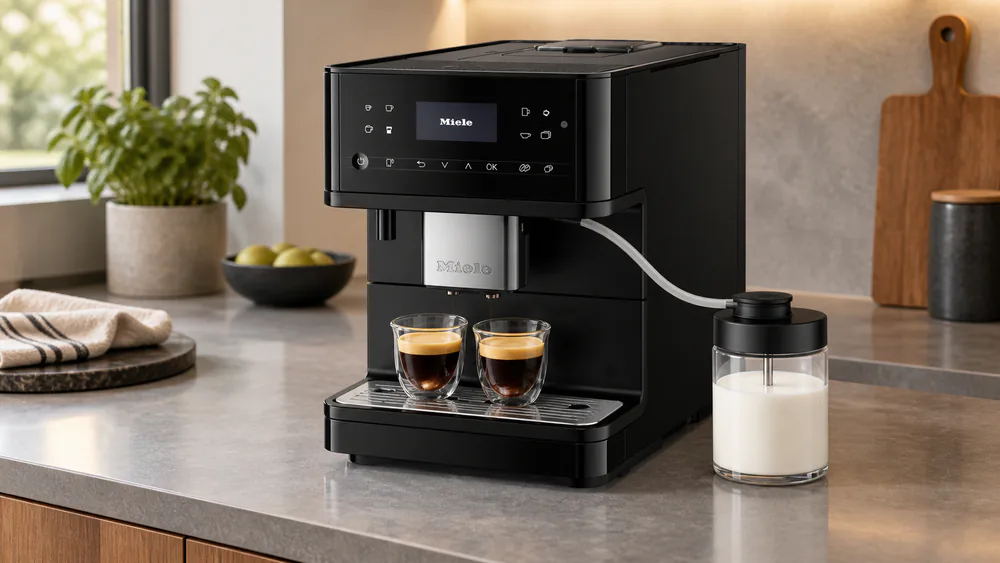
The CM6360 comes in Obsidian Black and Lotus White, a CleanSteel Metallic finish that reads as a kitchen appliance rather than a gadget. It sits at the top of Miele's countertop coffee machine range. On the counter it measures about 10 by 17 inches, and the 16.8-inch depth can be tight on shallow counters. It sits smaller than the Jura E8 it competes with, which helps in a narrow galley. The heated cup tray warms cups while you brew, the BrilliantLight LED lights the spout area, and the spout adjusts from 82 to 140 mm.
Build Quality Feel
At 21.8 lb it's a substantial, stable machine, and Miele's durability promise is the real story here. The reputation is earned: Miele machines have a track record of running 11 to 20 years without a breakdown, and that's the bar the CM6360 is being held to. It's why the reliability reports on the milk circuit sting as much as they do. We've tracked grinders that failed inside the first year and units that died at 15 months, still inside the two-year warranty, with repairs that took weeks to arrange.
Key Features Explained
The CM6360 belongs to the class of super-automatic espresso machines: machines that grind, dose, extract, and steam with almost no input from you. Here's what each headline feature actually does on the counter.
OneTouch for Two Coffees
At the push of a button, the CM6360 grinds, brews, and pours two identical drinks into two cups at once. It's the machine's signature move for a two-drinker household, and both cups pour the same drink. Two different orders still run one at a time.
12 Coffee Recipes & 6 Tea Settings
The drink menu runs from ristretto to coffee pot, and then jumps to tea:
Coffee recipes: ristretto, espresso, coffee, long coffee, espresso macchiato, cafe au lait, latte macchiato, cappuccino, cappuccino italiano, cafe latte, flat white, and coffee pot, which brews up to eight cups
Tea settings: black, green, white, herbal, fruit, and Japanese, each with a TeaTimer that steeps it correctly
Count it however you like: 17 specialty drinks, or 12 coffee recipes plus 6 tea settings. It's the same menu, counted differently.
MilkPerfection Cappuccinatore System
The milk system is the reason this machine exists. It's built around a 0.7 L glass milk container with a stainless steel pickup tube. You pour in milk, pick a drink, and the machine draws, steams, and textures it on demand.
User Profiles & Customization
Eight user profiles let each drinker save their own recipes: dose, grind, water volume, and temperature per drink. An Expert mode opens up the grind and water settings, and PerformanceMode offers Eco, Barista, Latte, and Party presets. For a household with different tastes, profiles are the feature that stops arguments over the machine.
Miele App, WiFi & Smart Features
The app is where the CM6360 stumbles. WiFiConn@ct pairs the machine with the Miele app, but the reality is half-baked. Remote brewing still requires a button press on the machine first, it makes one drink at a time, and our pairing attempts got stuck in a setup loop more than once. The front panel does everything the app does, faster, and after two weeks we agree. Treat the app as a convenience, not a reason to buy.
Setup & First Use
Setup is fast, but the first milk drink is where the machine can bite you.
Unboxing & Initial Setup
Out of the box, setup takes about 10 minutes: rinse the water tank, load the beans, and run a first espresso. The catch is the paper instructions, which are confusing, and the milk-clean process, which is easy to botch on day one. The pro move is to read the online manual before you make your first milk drink. It walks through the rinse sequence in a way the booklet doesn't.
Tip. Two day-one traps, both avoidable: keep the water in the milk-clean tank at or under about 300 ml or the cycle hangs, and follow the machine's guided steps for the first milk rinse instead of trusting memory.
WiFi Pairing with the Miele App
Pairing took us a couple of attempts, because the app and the machine expect a specific order: machine online first, then the app's search. Follow the online manual's sequence and it connects. Once paired, the app mirrors the panel: recipes, profiles, and maintenance status.
Coffee Quality & Espresso Performance
This is where the CM6360 earns its price, most of the time.
Grinder & Bean-to-Cup Workflow
The grinder is a stainless conical burr with five grind settings, and it's the quiet surprise of this machine. On paper it's rated at 74.8 dB, but in use it's quiet enough that the machine's other sounds stand out more. The workflow is simple: beans in the 300 g hopper, cup under the spout, drink on the panel. There's also a bypass chute for pre-ground coffee, one shot at a time and capped at a 15 g dose, handy for a decaf after dinner.
Espresso Extraction & Shot Quality
At factory settings the espresso is very strong, with stable crema and a chocolate-bomb profile on medium roasts. The AromaticSystem pre-infusion softens the first extraction stage, and the 15 bar pump does the rest. It won't match a skilled semi-automatic setup for control, but it beats the entry-level super-automatics we've tested without effort.
Drink Strength, Recipes & Adjustments
Default drink volumes run small by American standards, and our first long coffee came out short. Portion-size programming is also convoluted next to the Jura E8's ounce-based menu. The fix we settled into: DoubleShot for long coffee, which doubles the dose rather than the volume and delivers a properly strong 300 ml drink. Expert mode covers grind and water tweaks once you know your beans.
Tip. Medium roasts are this machine's sweet spot, which is where the chocolate-forward profile shows up best. If a drink tastes thin, reach for DoubleShot before you change the grind.
Milk Frothing: The MilkPerfection System Tested
Where the coffee side is dialed in by default, the milk side asks for your input. The MilkPerfection system is why this machine exists, and the two subsections that follow cover the foam it pours and the temperature it pours at.
Milk Foam Quality & Texture
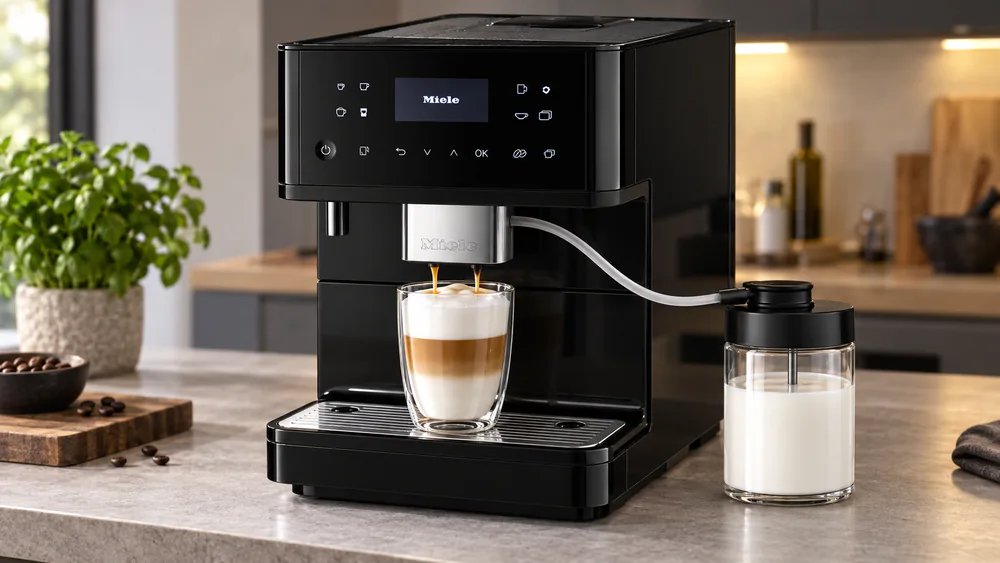
The MilkPerfection system produces finely textured foam with a glossy, folding quality that sits right on top of a cappuccino and pours through a flat white without collapsing. In our two weeks it made cafe-quality milk drinks consistently. One caveat on plant milk: only barista-blend oat milk froths as well as dairy. Most other plant milks fail, which at first looked like a broken unit. If you're plant-based, buy barista blends and nothing else.
Finely textured foam straight off the MilkPerfection cappuccinatore.
Milk Temperature: The Known Trade-off
Milk temperature is the CM6360's most discussed quirk, and our notes reflect both sides of it. At factory settings, a latte macchiato came out far too hot to drink, so we dialed the temperature down and the problem went away. But we've also tracked units where the milk pours lukewarm and no setting raises it. The honest summary: temperature is adjustable, the factory default runs hot, and the milk circuit behaves differently between units. Sip-test your first milk drink before you serve the whole household.
Ease of Use & Daily Experience
Once you learn the routine, the machine gets out of your way. Until you do, it asks for patience.
Control Panel & Navigation
The interface is a text display with buttons and submenus. It works, and the layout is logical enough that the learning curve is short, but it feels dated next to the Jura E8's 3.5-inch color screen. Everything is reachable from the panel, because you'll live there more than in the app.
Real-Life Testing Notes
Our two-week routine looked like this: morning cappuccinos for two via OneTouch for Two, a flat white mid-morning, tea for visitors with the TeaTimer, and a late espresso on the nights we needed one. The machine whirs and rinses between drinks a lot, so it's never really silent, though the grinder itself stays quiet. The drip tray fills surprisingly fast from all that automatic rinsing. Once full, it's genuinely awkward to carry to the sink without sloshing, so we emptied it early and often.
Cleaning & Maintenance
The machine that gets out of your way during the day asks for one real weekly chore in return. Maintenance is the price of great milk drinks, and the CM6360 asks more of you than its Swiss rival.
Daily & Weekly Cleaning Routine
The good news first: the milk tube rinses itself after every milk drink and comes out spotless, which is a game changer versus hand-washing a frother. The tray and water tank are dishwasher-safe, which is rare in this category. The cost is the weekly milk-pipework maintenance, about 20 minutes of guided steps. Plan for it the way you plan for a dishwasher filter: a weekly chore, not an occasional one.
The rhythm that worked for us:
Daily: empty the drip tray and the grounds container, top up the water tank
Weekly: run the milk-pipework program, about 20 minutes, and rinse the brew unit
Every few months: run the guided descaling cycle, about 25 minutes
Tip. Run the weekly milk-pipework program at a quiet time, because the machine is tied up while it runs. Rinse the brew unit under warm water and let it air-dry fully before it goes back in.
Removable Brew Unit & Descaling
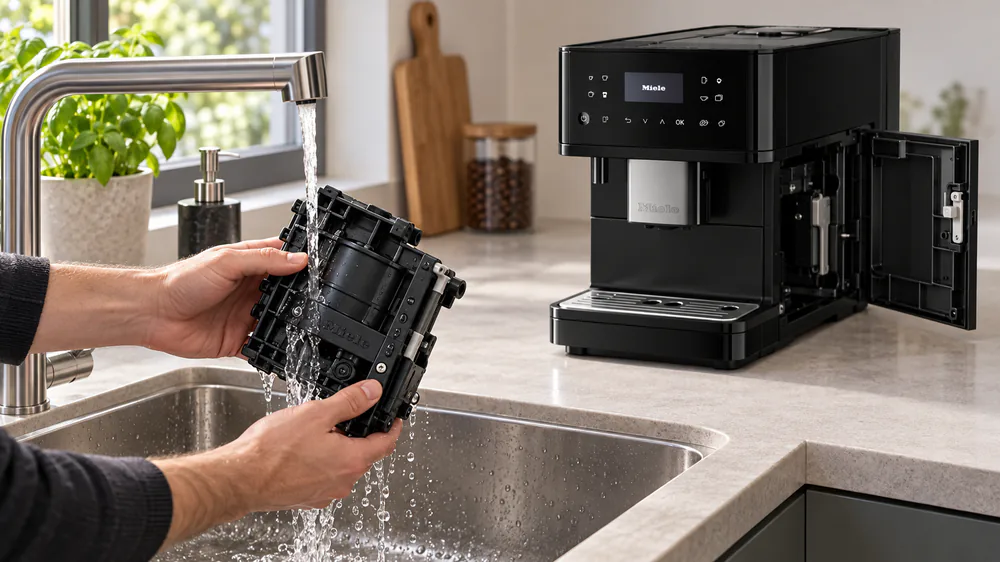
The brew unit pulls out of the side for cleaning. The routine is simple: rinse it under warm water and let it air-dry completely before reinserting it. Descaling runs about 25 minutes every few months, and the machine guides the whole cycle. Between the weekly milk-line clean and the descaling, this is not set-and-forget, but every part that touches your drink comes apart and gets genuinely clean.
The brew unit rinses under warm water and air-dries completely before it goes back in.
Troubleshooting Common Issues
Every machine has known behaviors that look like failures. Here are the ones we hit or tracked, and what fixes them.
Common Issues & Quick Fixes
The milk-clean cycle hangs: the milk-clean tank is likely overfilled. Drain it down and run the cycle again.
Frothing stops and the machine sputters hot water and air: this is the milk-circuit fault we've tracked, sometimes with an error code. Service is the answer here, not cleaning.
Plant milk won't froth: most plant milks genuinely fail. Switch to a barista-blend oat milk before assuming the machine is broken.
The app won't pair: reset the machine's WiFi and follow the online manual's order. The front panel works regardless.
Drinks taste weak or short: raise the portion size or use DoubleShot, which doubles the dose rather than the volume.
Miele CM6360 vs. Jura E8
The E8 is the CM6360's most natural rival: similar price, similar premise, and a very different philosophy.
Coffee Quality Shootout
Both machines run 15 bar pumps, and both offer 17 specialty drinks, so the shootout comes down to taste. The CM6360 pours very strong espresso at factory settings, with stable crema and a chocolate-forward profile on medium roasts. The E8 is consistent and crema-forward too, with its Pulse Extraction Process and eighth-generation brewing unit. Medium roasts shine there as well. The honest ranking: both sit a step above entry super-automatics, neither reaches semi-auto level, and the difference is character rather than quality. Miele drinks stronger by default; Jura drinks smoother.
Milk Frothing Head-to-Head
The milk story is where the machines split. The CM6360's foam is finely textured and its temperature is adjustable, while the E8's fine-foam system makes glossy cappuccino foam and smooth warm milk. Foam texture on the E8 is not adjustable, and it tends to over-froth for flat whites and lattes, wasting milk in the process. Cleaning flips the script: the E8's one-touch milk cleaning finishes in a few minutes, quick enough to run daily, while the Miele's program is guided, longer, and manual. If you drink mostly cappuccinos, both satisfy. For flat whites and cortados, the Miele's control wins; for speed and simplicity, the Jura wins.
Price & Total Cost of Ownership
The CM6360 lists at $2,999 and commonly sells near $2,599, with promo pricing tracked from about $2,200 up to the full list. The E8 sits at about $2,599 street against a list near $2,799, and both carry two-year warranties. Running costs tip the other way: Jura-brand consumables run roughly $200 to $300 a year once filters and tablets are counted, while the Miele's consumables are lighter but its cleaning asks for your time. Repairs are the wild card. A ship-and-repair visit for the CM6360 runs about $360 with a multi-week turnaround, and year-three cost-of-ownership math lands near $820. Check the current prices before you decide: See CM 6360 on Amazon and the Miele CM 6360 MilkPerfection product page.
Note. The US-to-Europe price gap is one of the strangest things about this machine: US pricing lands near $2,500 while the same CM6360 runs about 1,000 EUR in Europe. The gap is promo-dependent, but it shows how much of the US price is positioning.
Miele CM6360 vs. Jura E8
Miele CM6360
Jura E8
List price
$2,999
~$2,799
Typical street price
~$2,599
~$2,599
Milk-line cleaning
~20 min weekly, manual-guided
~4 min, one-touch
Annual consumables
Lighter; time is the real cost
$200-$300 (Jura-brand)
Warranty
2 years
2 years
Final Verdict: Is the Miele CM6360 Worth the Money?
The short answer: yes at the right price, for the right drinker. The long answer is a buyer profile rather than a product summary.
"Miele CM6360 $2500 vs 1,000eu."
r/superautomatic, Miele Coffee Makers Review CM5300 vs CM6360 vs Jura
Who Should Buy the CM6360
Buy it if milk-based coffee is your daily ritual and you want cafe texture without barista training. Buy it if you already trust Miele to last a decade or two and you'll run the weekly milk-line cleaning the way you'd run a dishwasher filter. Buy it if you drink two to six milk drinks a day, because at that pace the convenience pays for itself. Buy at the street price near $2,599, not the $2,999 list. What we'd do differently: read the online manual first, turn the milk temperature down before the first drink, and empty the drip tray daily.
Who Should Look Elsewhere
Skip it if you mostly drink black coffee. A much cheaper super-automatic covers that well at a fraction of the price. Skip it if you want set-and-forget, because the Jura E8's one-touch cleaning is genuinely easier to live with. Skip it if reliability is the whole ballgame for you; the milk circuit is the machine's known weak point, and at this price that matters. And if the only price you can find is the full list, wait for a deal. We've seen the same machine below $2,400.
Frequently Asked Questions
At what street price does the Miele CM6360 become worth it?
We've tracked the same machine from about $2,200 on sale up to the full $2,999 list, with street pricing that commonly settles near $2,599. That spread changes the value math. Near the bottom of the range the CM6360 costs like a mid-range super-automatic while delivering the full cafe menu; at the top it has to win on features alone. The machine is identical at every price, so wait for a promo and buy when the gap is wide.
How does the CM6360's espresso compare with a manual espresso machine?
It's a step above entry-level super-automatics but not at the level of a skilled manual setup. You get cafe-consistent results at the touch of a button and give up fine control over extraction, which matters only if you chase specific profiles.
How long does the weekly milk-pipework program actually take, and what do I have to do during it?
Budget about 20 minutes, and the machine is out of action for the whole run, so schedule it at a quiet time. The display walks you through each step in order, so you supervise rather than guess. One number is worth memorizing: keep the milk-clean tank at or under about 300 ml, or the cycle hangs partway and has to restart. That weekly block is the deep clean.
When is pre-ground coffee worth using in the CM6360?
The bypass chute earns its keep for decaf after dinner and for a one-off bag you do not want to commit to the hopper. For everyday beans, skip it. The machine is tuned around freshly ground coffee, and the built-in conical burr grinder is the better path.
Do both cups pour at exactly the same time?
Yes, both cups fill together in the same run. That is the point of the feature for a two-drinker household: both drinks land on the counter hot at the same moment instead of one sitting while the other brews. The catch is that the pair is one drink at one size, so when two drinkers want different things, the second order runs on its own and the first cup cools while it does. Saving a profile for each drinker makes the second run a single button press.
What is the water reservoir capacity, and what warranty do you get?
The reservoir holds 1.8 L (60.9 fl oz) and lifts out for filling. The standard warranty is two years, and Miele offers a paid extension, so confirm the current terms and price with your dealer before you buy.