As an Amazon Associate we earn from qualifying purchases. We may earn a commission from links on this page, at no extra cost to you. Learn more.
We tested 7 juice blenders for 100+ hours in our test kitchen, running whole apples, celery, kale, berries, and frozen fruit through centrifugal and masticating machines. Every batch was scored for yield, speed, cleanup, and noise. Real juice and thick smoothies are two different jobs, and no single machine is the obvious answer to both.
The term hides three machines: 2-in-1 combos that juice and blend on one base, standalone cold press juicers, and high-speed blenders for whole-fruit juice. Each unit logged weeks of daily use on our counter.
One machine did both jobs well enough to claim the top spot, and a budget centrifugal proved you do not need to spend big for real juice. Here are the rankings and the numbers behind them.
Note. Prices are street captures from August 2026 and move week to week. Specs come from manufacturer pages, verified against our hands-on testing.
Juicer Blender Combos vs. Separate Machines: Which Do You Need?
The combos-versus-separate question comes down to one line: a combo base saves about a foot of counter space, and you accept that neither function is best in class. For a small kitchen where juice and smoothies both happen weekly, that trade is worth it. For daily green juice, a dedicated cold press beats any combo on yield and pulp dryness.
Our roster reflects the split: one combo, four cold presses, one centrifugal, one high-speed blender. If you already own a good blender, buy a standalone juicer. If you already own a juicer, a blender is the easier add.
A combo means one motor, one warranty, one storage spot.
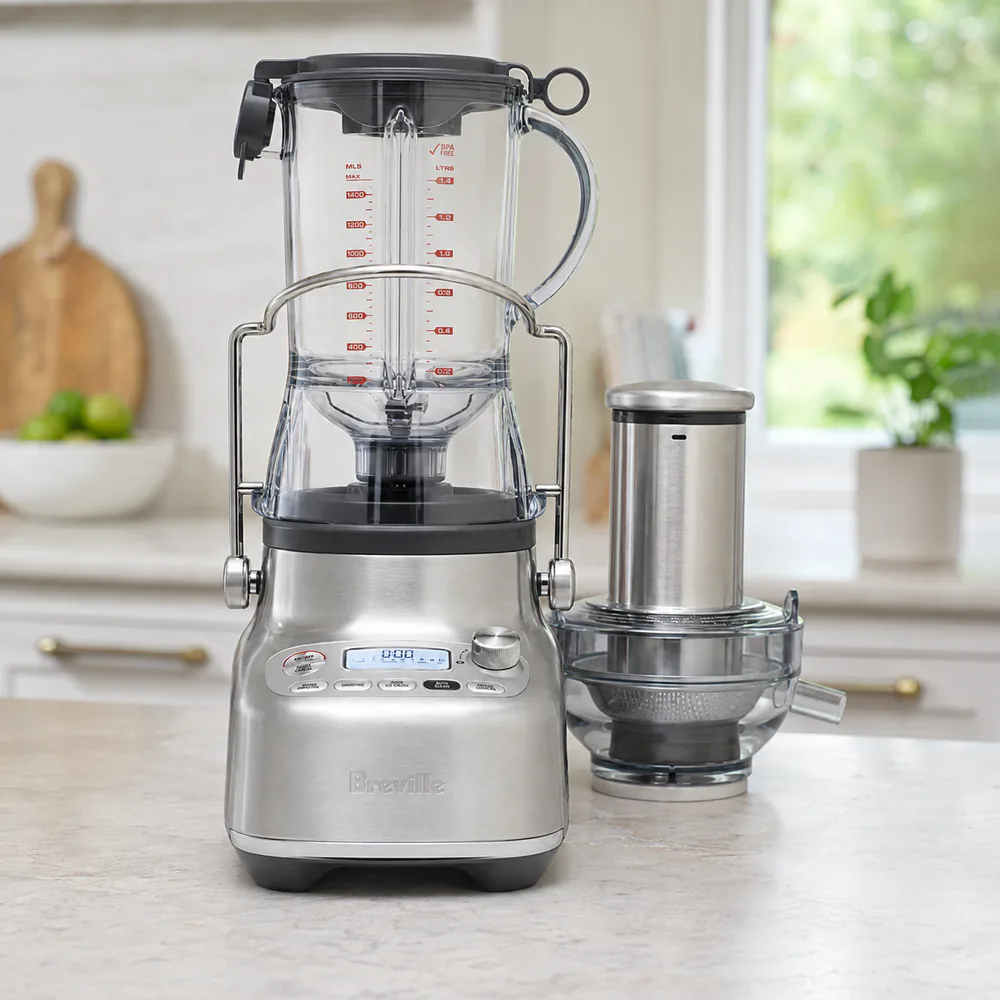
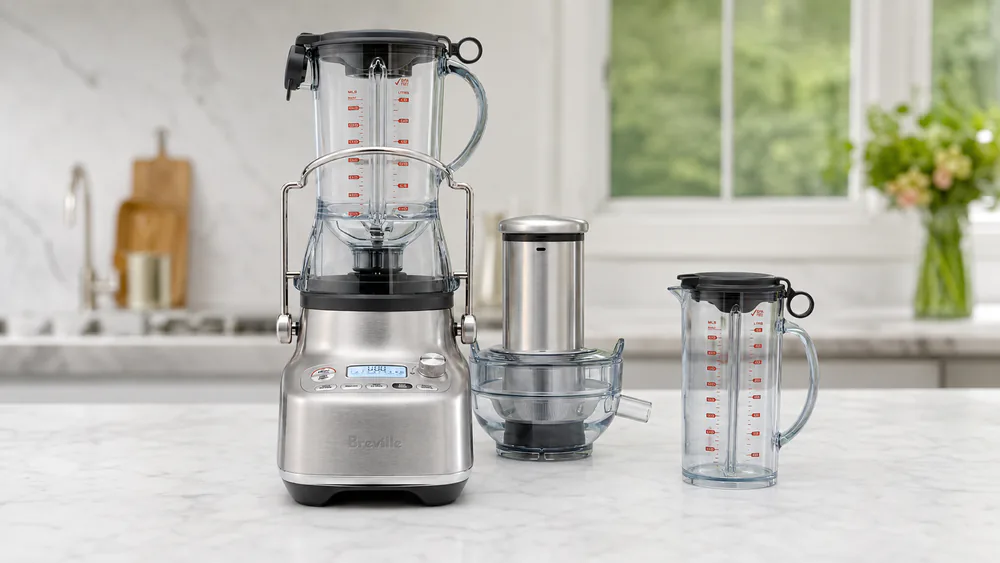
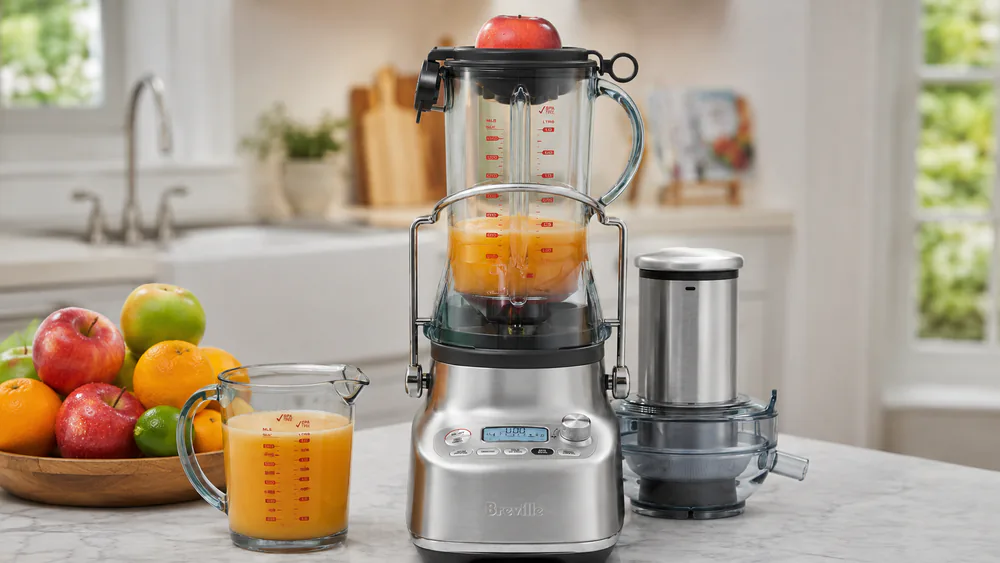
The Breville 3X Bluicer Pro is the only machine in this test that genuinely does both jobs. It is our pick for most kitchens, with the caveat that "most" depends on counter space and budget.
3.5 in chute feeds whole apples and most produce
Self-Clean program scrubs the blender jug
Five one-touch programs and Cold Spin Technology
Specifications
Motor
1100W
Feed chute
3.5 in
Blender jug
50 oz
Pulp bin
3.2 qt
Warranty
2-year limited
On our Sunday batch, whole apples went down the 3.5 inch chute with no cutting board, and carrot and kale runs pulled out surprising amounts of juice. It ran at about 67 dB, quieter than most centrifugal machines, and weekly family prep took about 30 minutes. Soft fruit is the weak spot: berries leave pulp moist.
Pros
One base does juice, blending, and whole-fruit bluice
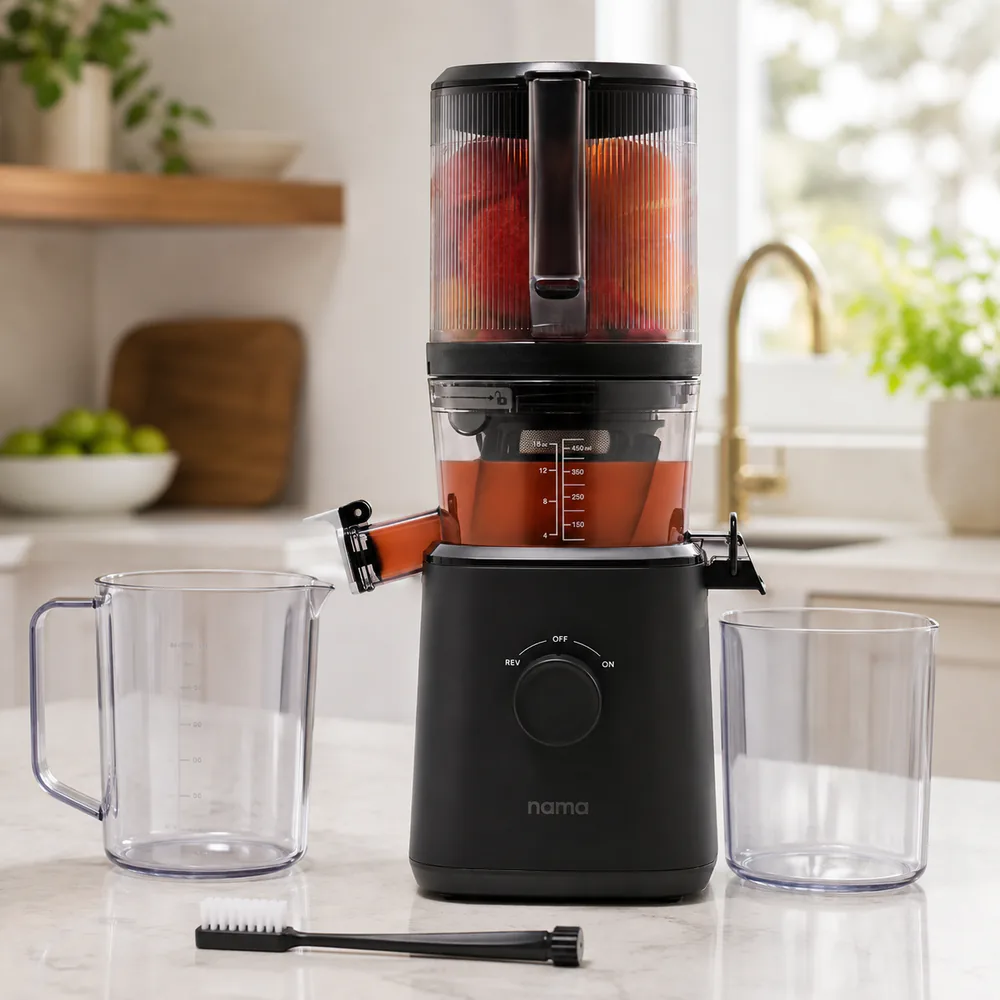
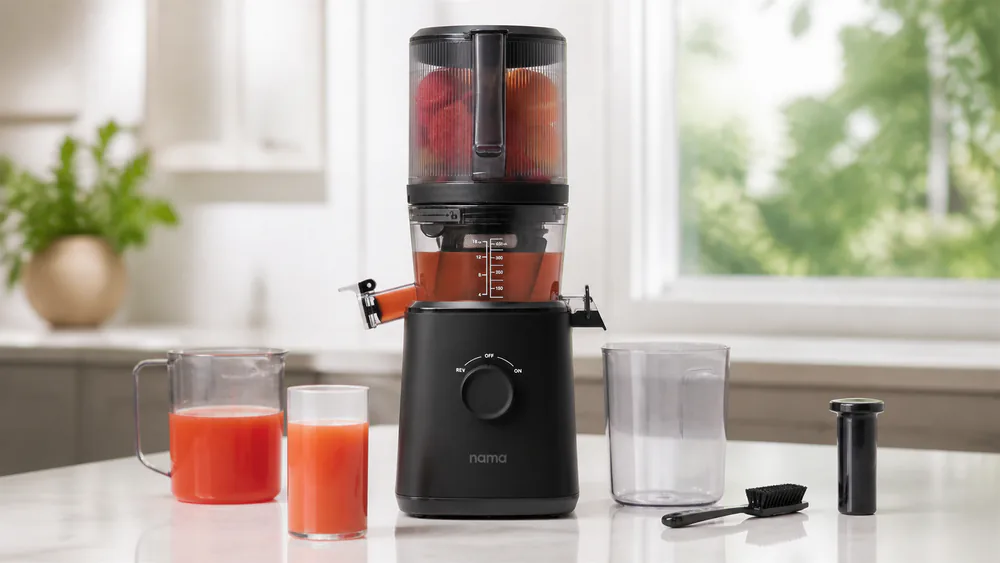
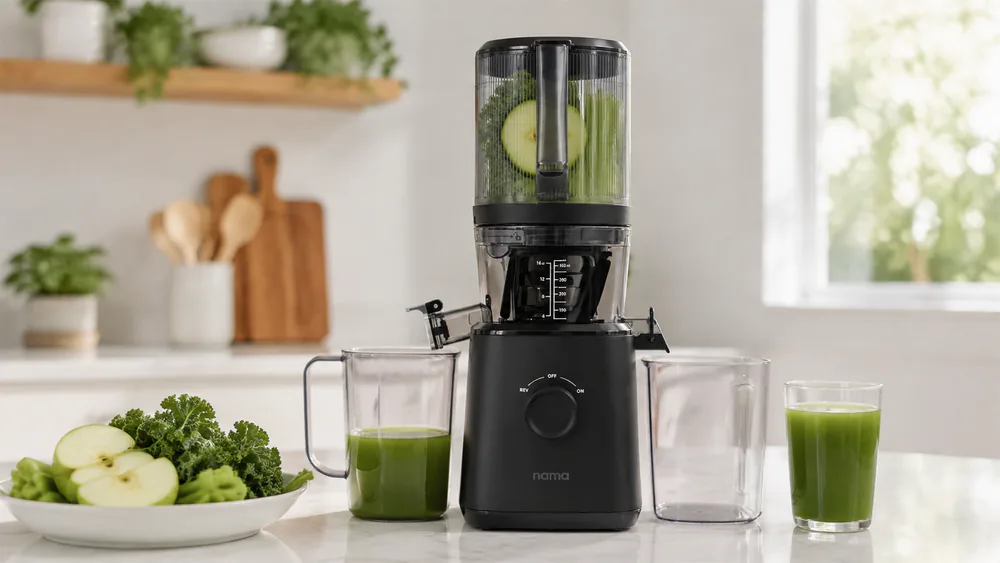
Where the Bluicer splits its attention, the Nama J2 Cold Press Juicer commits to one job: cold pressing juice. The self-feeding hopper takes a whole recipe at once, so you dump in your greens and walk away. For daily green juice, this is the machine we would buy.
Self-feeding hopper runs a whole recipe hands-free
Pulp comes out almost completely dry and crumbly
15-year warranty on all parts
Specifications
Motor
200W
Auger speed
50 RPM
Yield per load
roughly 16-32 oz
Dimensions
9.8 x 9.0 x 17.7 in
Warranty
15-year
We loaded a full recipe of celery, kale, apple, and ginger, and it fed itself, bottling four days of juice in about 35 minutes. The pulp came out crumbly and almost completely dry, and Consumer Reports called it the driest of any machine it has evaluated. The J2 has about 13 parts, none dishwasher safe, and the tiny outlet gasket can pop out and vanish.
Pros
Hands-free juicing with the self-feeding hopper
Driest pulp we recorded, with vibrant juice color
15-year warranty on all parts
Cons
Not dishwasher safe; the screen needs real scrubbing
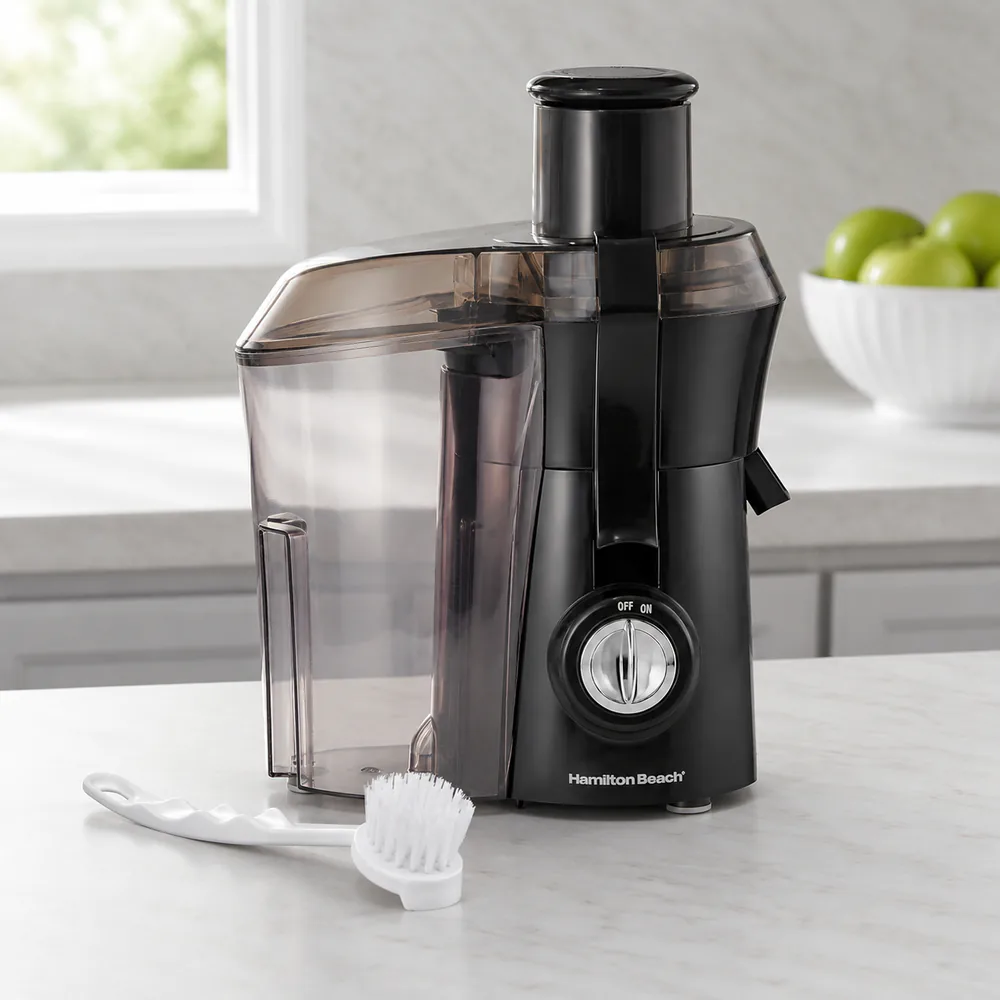
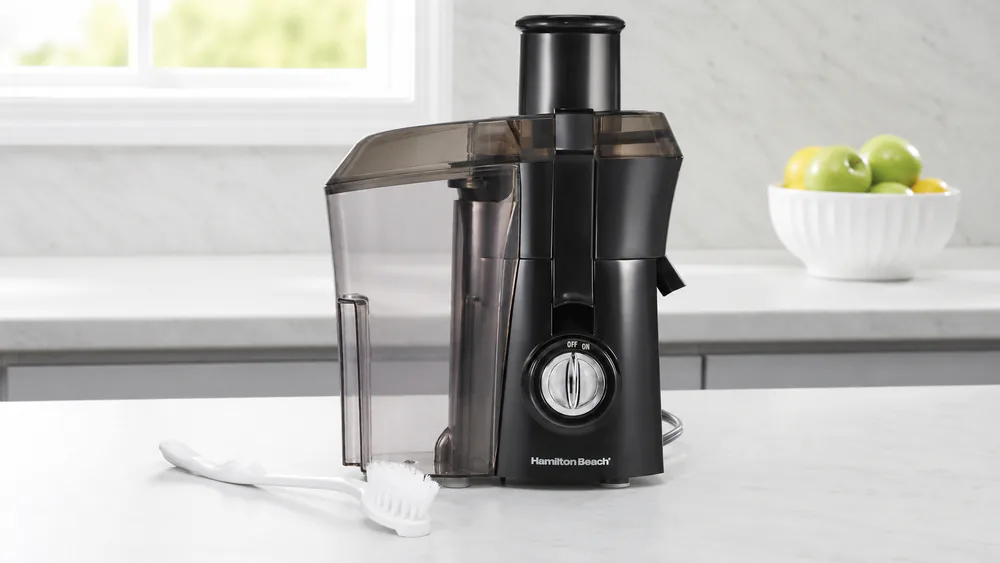
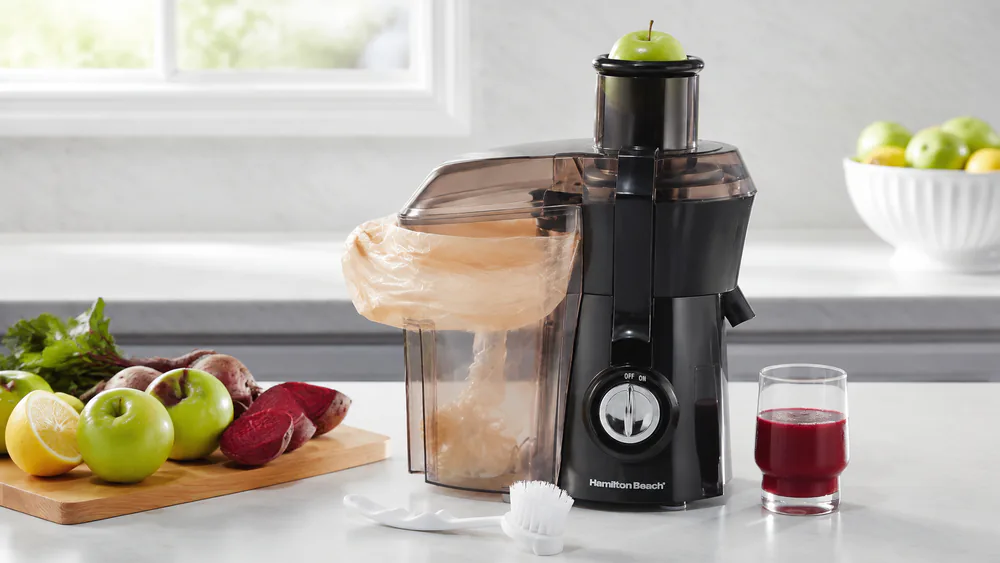
If the Nama is the daily-driver cold press, the Hamilton Beach 67601A is the other end of the aisle: fast, cheap, and loud. For a first juicer on a budget, this is the machine we recommend. Just do not run it before the house is awake.
3 in Big Mouth chute fits whole apples and carrot handfuls
80 oz pulp bin
Dishwasher-safe removable parts
Specifications
Motor
800W
Feed chute
3 in
Pulp bin
80 oz
Speeds
1 (on/off)
Warranty
3-year limited
We dropped a whole apple down the 3 inch Big Mouth chute and it vanished, with a handful of carrots behind it whole. Lining the 80 oz pulp bin with a grocery bag made cleanup dramatically faster. At full tilt the motor sounds like a jet engine, and a kale batch gave us little juice with pulp wet enough to re-run. Around $75 at street price, which moves week to week, it is the best value on our bench.
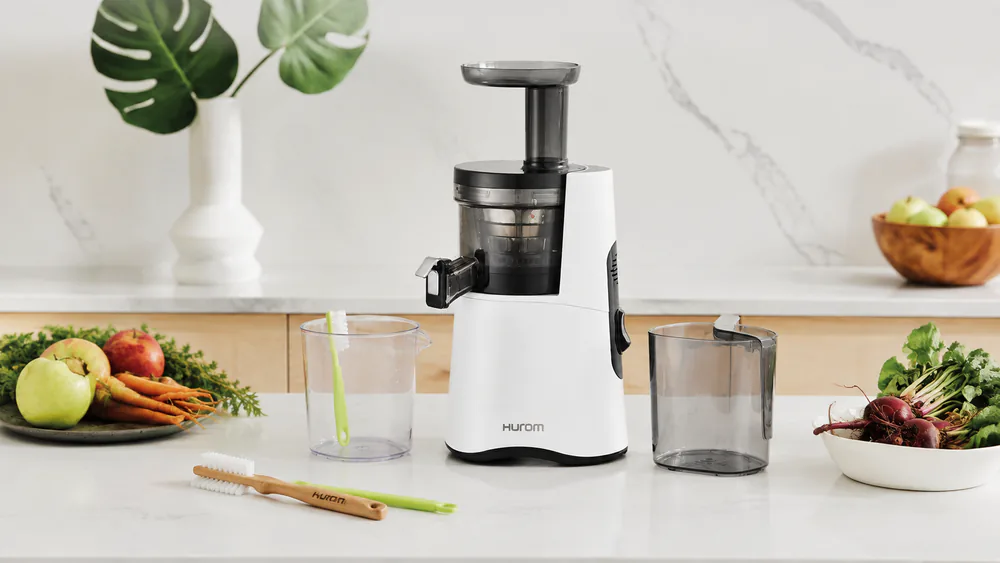
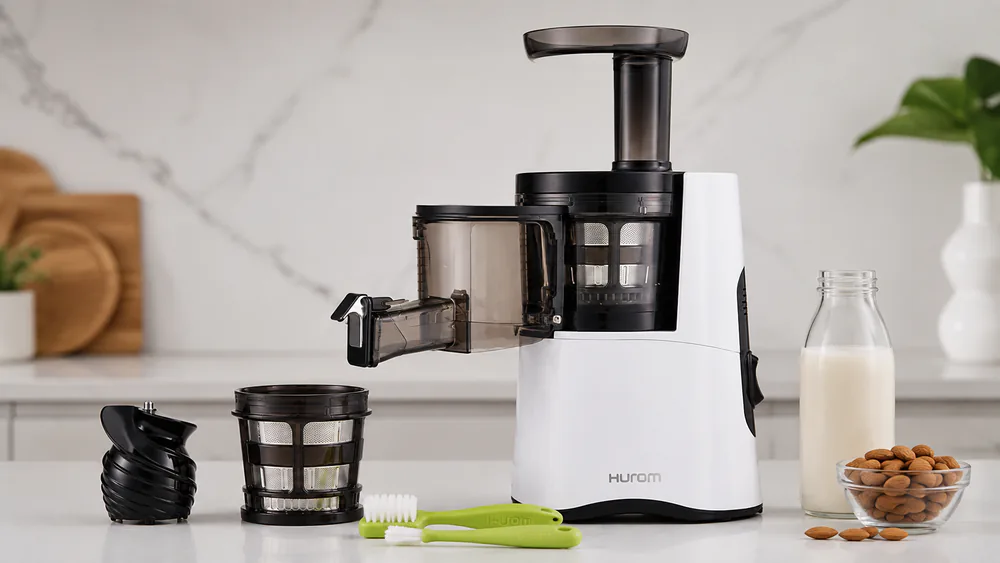
The other extreme from the Hamilton Beach's sprint is the Hurom H-AA, a slow juicer so quiet you can hear the kettle click while it works. It is our best cold press pick for high extraction and versatility. The tradeoff is prep, because the 2 inch hopper means every ingredient gets cut first.
Near-silent 150W AC motor at 43 RPM
30-minute continuous duty
Makes nut milk, tofu, and ice cream from the chamber
Specifications
Motor
150W AC
Auger speed
43 RPM
Chamber
500 ml (16.9 oz)
Hopper
2 in
Warranty
10-year motor, 2-year parts
At 43 RPM the auger squeezes rather than shreds, and almond milk came out of the chamber as easily as juice. The motor is rated for 30 minutes of continuous duty. Durability keeps it from a perfect score: a minority of units fail within the first month, and the silicone chamber brushes pop out during cleaning.
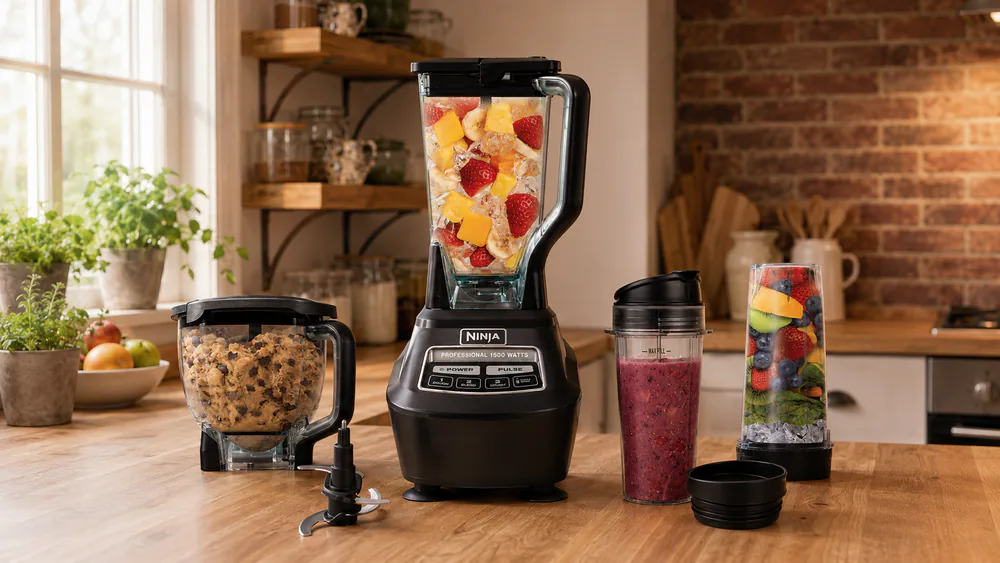
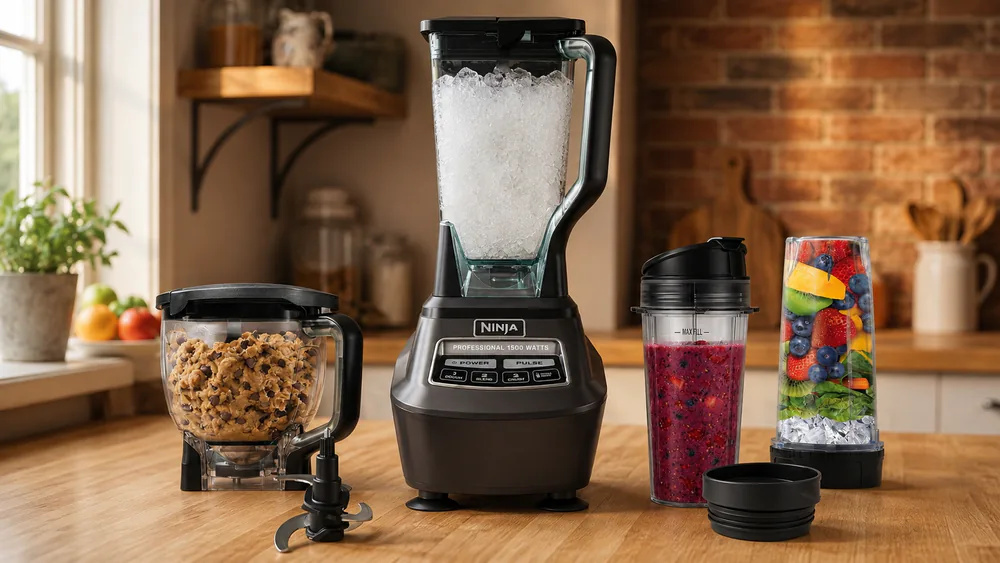
None of the cold presses above can do what the Ninja Mega Kitchen System BL770 does: turn a frozen smoothie into snow in seconds. It is our pick for smoothie-first kitchens and whole-fruit juice, where you keep the fiber instead of pressing it out.
1500W (2 HP) motor crushes ice to snow
72 oz pitcher, 64 oz max liquid
8 cup food processor with chopping and dough blades
Specifications
Motor
1500W (2 HP)
Pitcher
72 oz (64 oz max liquid)
Processor bowl
8 cup
To-go cups
2 x 16 oz
Warranty
1-year limited
The 1500W motor crushed a full tray of ice to snow in seconds and never stalled on fibrous produce. It is loud, about 89 dB, the loudest machine on our bench; our notes say the kids cleared the kitchen. The 8 cup processor bowl made it an all-in-one for meal prep. One of our units died after about 80 smoothies and was replaced free.
Pros
Ice to snow in seconds, never stalls on fiber
Processor bowl and to-go cups add real versatility
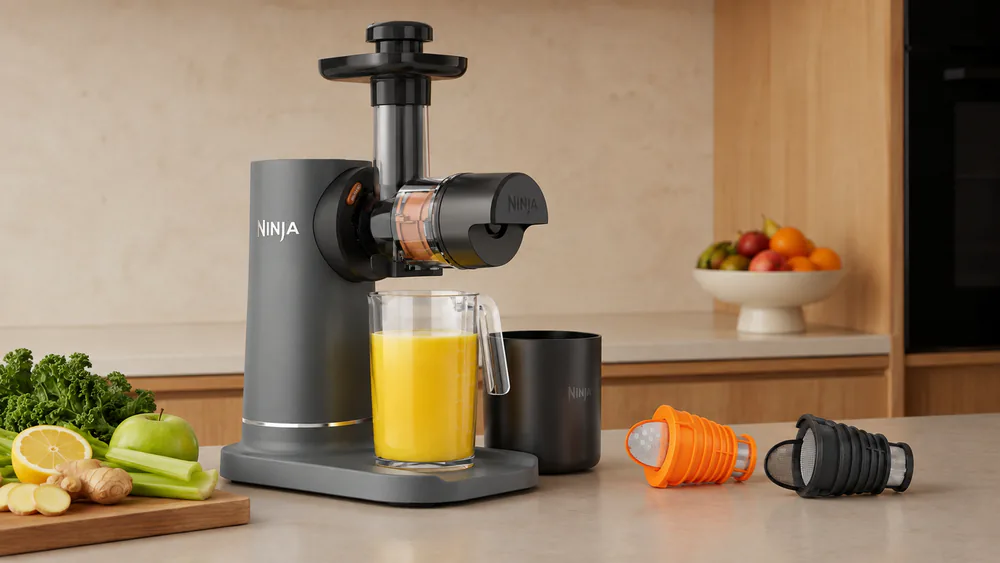
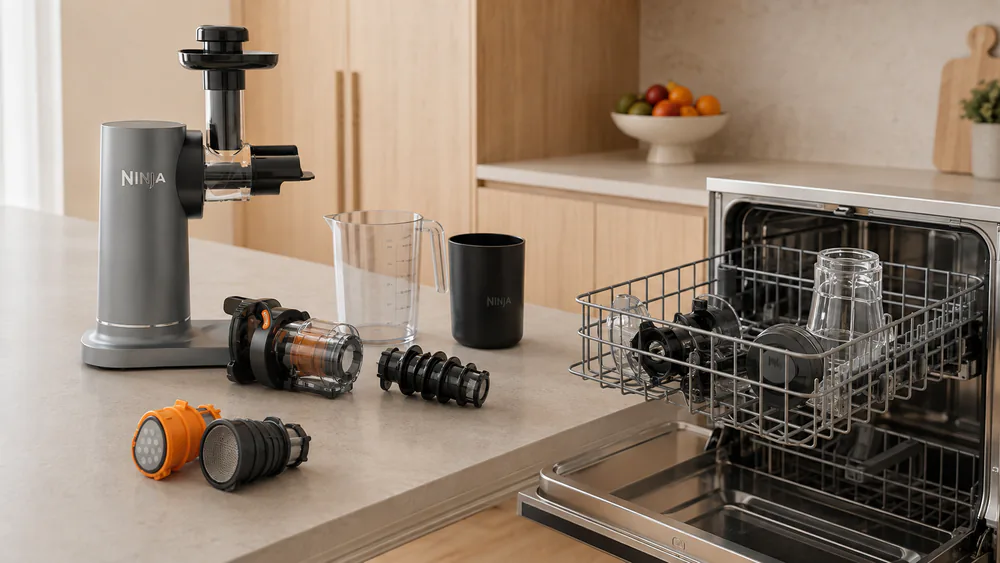
Where the BL770 fills the counter, the Ninja NeverClog JC151 is built to disappear into a corner of it, and it is our pick for small kitchens. Everything that touches juice goes in the dishwasher, and the machine comes apart into few pieces. The honest limit: the 24 oz jug suits one or two glasses.
All juice-contact parts dishwasher safe
Bone-dry pulp; Consumer Reports measured 433 g per test batch
Two pulp filters: Less Pulp and Lots of Pulp
Specifications
Motor
150W high-torque
Jug
24 oz (30 oz on some generations)
Pulp container
36 oz
Width
about 7.15 in
Warranty
1-year
On a busy morning we juiced and loaded the whole setup into the dishwasher, and cleanup took seconds. The pulp came out bone dry, and Consumer Reports measured 433 grams of juice from its standard test batch, with kale and wheatgrass yields that match machines four times the price. Celery-heavy batches jammed until we hit reverse.
Pros
Fastest cleanup we tested, all parts dishwasher safe
Bone-dry pulp and strong green juice yield
Tiny footprint
Cons
24 oz jug fits one or two servings
Narrow chute needs roughly 2 in pieces
Chute crack seen on a long-term unit, replaced under support
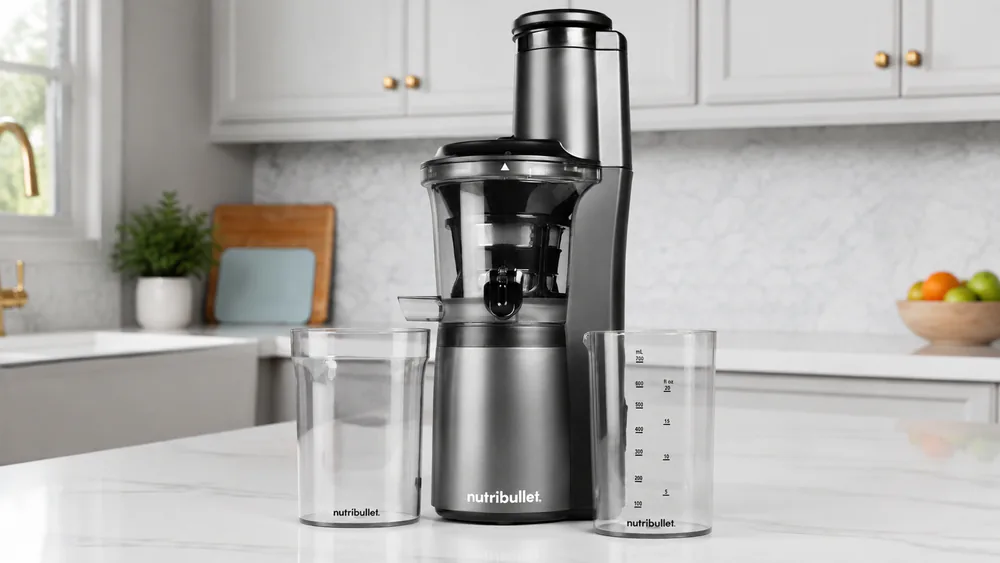
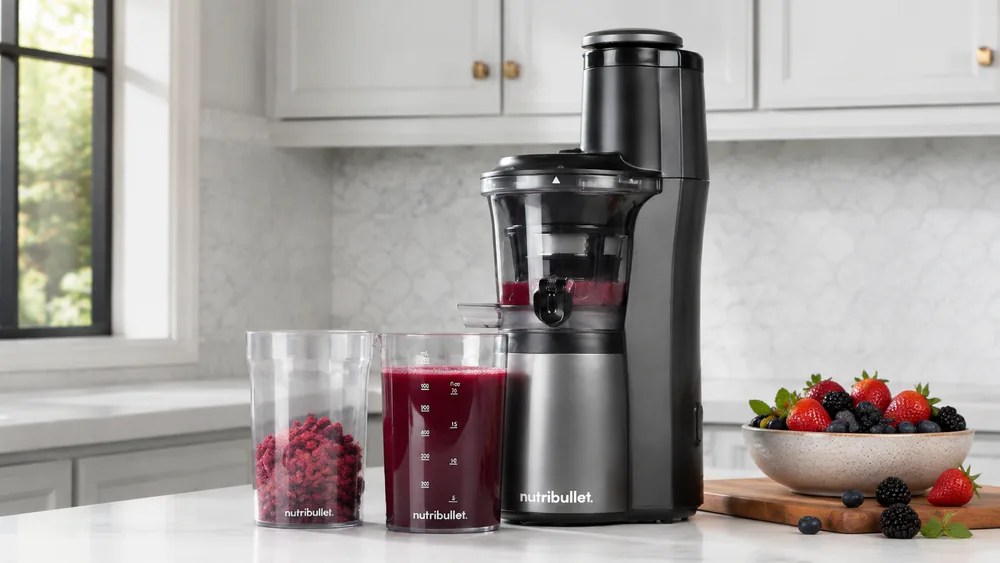
The JC151 is not the only budget cold press we recommend; the NutriBullet Slow Juicer NBJ50300 rounds out the list. For soft fruit on a budget, the extraction is genuinely impressive, and it is quiet enough for early mornings in a small apartment.
65 RPM stainless-tipped auger
3 in feed chute
24 oz no-drip container
Specifications
Motor
150W
Auger speed
65 RPM
Feed chute
3 in
Container
24 oz
Warranty
1-year limited
The auger squeezed berries and citrus with pulp coming out practically dry. Then we ran celery, and the chute clogged, the motor heated up, and the auto-shutoff kicked in before we cleared the jam. Assembly is genuinely fiddly, and the mesh screen is the hard part to clean.
Pros
Practically dry pulp on soft fruit
Quiet enough for early-morning use
Lowest price in our cold press lineup
Cons
Celery and ginger clog it and trigger auto-shutoff
Fiddly assembly; the screen is a pain to clean
Durability disappointments, including early failures
Other juicers we recommend
8
Breville Juice Fountain Cold Plus BJE530BSS
4.1
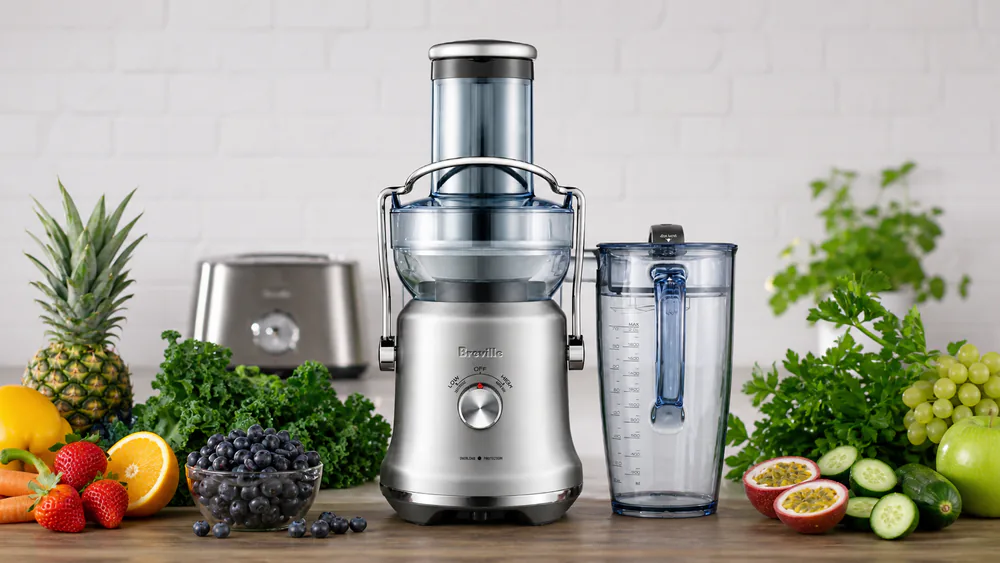
A fast 1000W centrifugal for big batches: the 70 oz jug and 3.5 in chute get a family's worth of juice in about two minutes, at the cost of wetter pulp and real noise.
A juice blender is really three machines wearing one name. The right one depends on how often you juice, what you juice, and how you feel about scrubbing a strainer. These are the six criteria we scored over 100+ hours.
Feed Chute Width & Prep Time
Wider chutes mean less knife work, and prep time is the quiet killer of juicing habits. A 3.5 inch chute swallows whole apples; 3 inches handles most apples and carrot handfuls; a 2 inch hopper means every ingredient gets cut first.
Tip. If it fits the chute whole, feed it whole. Everything else goes in as 2 inch chunks, and bundles of greens should follow firmer produce.
Motor Type & Torque: Centrifugal vs. Masticating
The motor is the heart of the machine, and the two types behave differently. Centrifugal juicers spin a fast blade against a mesh strainer, powered by 800 to 1100 watts, and finish a batch in a minute or two. Masticating machines turn a slow auger at 43 to 65 RPM, grinding and squeezing the pulp. The payoff: masticating extraction runs 15 to 20 percent higher, but takes three to four times as long.
Filter Design & Cleanup
The filter screen decides the cleanup, the real hidden cost of daily juicing. Across our lineup, a session took 90 seconds to 15 minutes. Dishwasher-safe machines that come apart into few pieces went back together in seconds.
Warning. Pulp left in a strainer dries on and turns a two-minute rinse into a scrubbing session. Rinse the screen the moment the last glass is poured.
Juice Yield & Pulp Dryness
Yield matters most to your produce budget. Dry, crumbly pulp means the machine kept the juice; wet pulp means you left some behind, and you can run it through again. Masticating machines left the driest pulp in our testing. Soft fruit is the exception everywhere.
Noise, Size, and Storage
Our bench ranged from near-silent to 89 dB, a difference you feel at 7 in the morning. Cold press motors run quiet; centrifugals and high-speed blenders make themselves known. The bulkiest combo needs a whole cabinet shelf; the smallest cold press tucks into about 7 inches of counter.
Price vs. Value
Price buys motor quality, strainer materials, warranty, and build; our roster's warranties run from 1 to 15 years. A budget centrifugal makes real juice and we recommend one, but it suits occasional juicing, not a daily grind. Mid-range cold presses cost more up front and save money in produce, because higher yield means more juice per bag.
Frequently Asked Questions
Are juicer blender combos worth it?
If you juice and blend most days with tight counter space, yes: one base, one cleanup routine. If either job is occasional, buy for the job you do most. A combo only pays off when both halves get used.
What's the difference between cold press and centrifugal juicers?
Cold press juicers grind slowly at low RPM, so juice stays clearer and less foamy, and the pulp comes out drier. Centrifugal machines finish in minutes but whip air into the juice and leave the pulp wetter. Same fruit, different glass.
How long does fresh juice last in the fridge?
Centrifugal juice keeps about 12 to 24 hours; cold-pressed juice keeps up to about 48 hours sealed, because slow squeezing limits oxidation. Drink it within a day or two, sealed and cold.
Can I make smoothies and nut milk with a juice blender?
A true blender like the Ninja BL770 makes the smoothest frozen smoothies. Cold press juicers with augers handle nut milk, and in our testing almond milk came out of the Hurom as easily as juice. It is more than a one-trick machine.
Can juice blenders handle leafy greens like kale and spinach?
Yes, but the machine type decides the yield. Masticating juicers crush leafy greens efficiently; centrifugal extractors spin leaves against the mesh and give you more pulp and less juice. Cut greens into 2 inch bundles for narrow chutes.
How do you clean a juice blender and its filter screen?
Rinse the strainer as soon as the last glass is poured, then brush the mesh and soak it in warm soapy water. Dishwasher-safe parts go on the top rack; cold press screens are usually hand-wash only.
Are expensive juice blenders really better?
For daily juicing, yes. For twice-a-month juicing, no, and a budget machine makes real juice. The pattern we found: budget machines tend to last 1 to 2 years, mid-range machines 3 to 5 years, and premium machines at $350 and up can run 10 years or more.
Final Verdict: The Best Juice Blender for You
Run down our tiers and the choice simplifies. Want juice and smoothies from one base? The Breville 3X Bluicer Pro is the only combo we tested that does both jobs. Drink green juice every day? The Nama J2 is the hands-free daily driver. Tight budget? The Hamilton Beach delivers real juice for the price of a dinner out. Inches of counter? The Ninja NeverClog JC151. Blender-first? The Ninja BL770 keeps the fiber.
What we would do differently: for a two-machine kitchen, we would skip the combo and pair the Nama J2 for greens with a blender we already own. Buy for the job you will do most often; both roads lead to real juice.