As an Amazon Associate we earn from qualifying purchases. We may earn a commission from links on this page, at no extra cost to you. Learn more.
A moka pot is a stovetop coffee maker that uses steam pressure to push hot water through ground coffee, and the result is a small, concentrated cup that sits somewhere between strong drip and espresso. For most kitchens, the Bialetti Moka Express is the way to go: it brews a rounded, substantial cup, it is simple to use, and its design dates to 1933. If you cook on induction, buy the Bialetti Venus instead, because the classic aluminum pots will not work on your cooktop without a separate adapter.
The catch with every pot here is that the label on the box is a nominal cup count, not a mug. A "3-cup" pot fills a small espresso-style cup three times, and that mismatch is the most common reason people buy the wrong size. We sorted the five picks by the things that decide daily happiness: how the coffee tastes when you control the heat, how easy the pot is to handle and clean, and whether it fits the burner you own.
If you are weighing other machines for your counter, our coffee maker reviews cover drip, pod and espresso options too. Here, we stay on the stovetop.
Best Moka Pots at a Glance
Here is the short version, with each pick matched to the kitchen it suits. Sizes are the nominal capacities of the exact models we link to, not guaranteed amounts of finished coffee.
Model
Best use
Size (nominal)
Material
Cooktop
Bialetti Moka Express
Best classic
3 cups, 130 ml
Aluminum
Gas and electric; induction needs a separate adapter
Bialetti Venus
Best for induction
4 cups, 5.7 oz
18/10 stainless steel
Gas, electric and induction
Grosche Milano
Best value
6 cups, 9.3 oz
Aluminum
Gas, electric, glass and propane; not direct induction
Primula Classic
Best budget
6 demitasse servings
Cast aluminum
Electric, ceramic, gas and propane; no induction
Alessi 9090
Best premium
6 cups, 10.1 fl oz
18/10 stainless steel
Gas, electric and induction
How We Tested the Moka Pots
We judged each pot on one loop: dial in the grind, fill the basket, control the heat, watch the stream, then clean and dry every part. A moka pot rewards small adjustments, so we treated the first brews in each pot as a dial-in rather than a verdict, and we held each pot to its maker's own instructions for cooktop support, cleaning and assembly.
The rating on each pick is our own editorial score out of 5. It blends four things: cup quality when the heat is controlled, how comfortable the pot is to assemble and hold while hot, how much work cleanup takes, and how widely it fits home cooktops. Marketplace star counts played no part in the number, and a pot that wins on one measure can still lose points on another.
What We Looked For
We looked for five things in every pot:
A cup that stays rounded. Lingering on the heat brings bitterness and a drying astringency, so we removed each pot from the burner as it started to sputter.
Visibility. A collector that lets you watch the flow makes it far easier to stop at the right moment.
Handling when hot. Handle shape, finger room and how the pot grips during assembly all count.
Cleanup. Trapped grounds and retained moisture are the enemies, so we separated and dried every part.
Cooktop fit. Material alone does not guarantee induction compatibility, so we checked each model's stated hob support.
Note. Nominal cups are not mugs. A "cup" in moka terms is a small espresso-style serving, and the finished yield depends on the pot, the dose and where you stop the brew. Treat capacity labels as a size guide, not a promise.
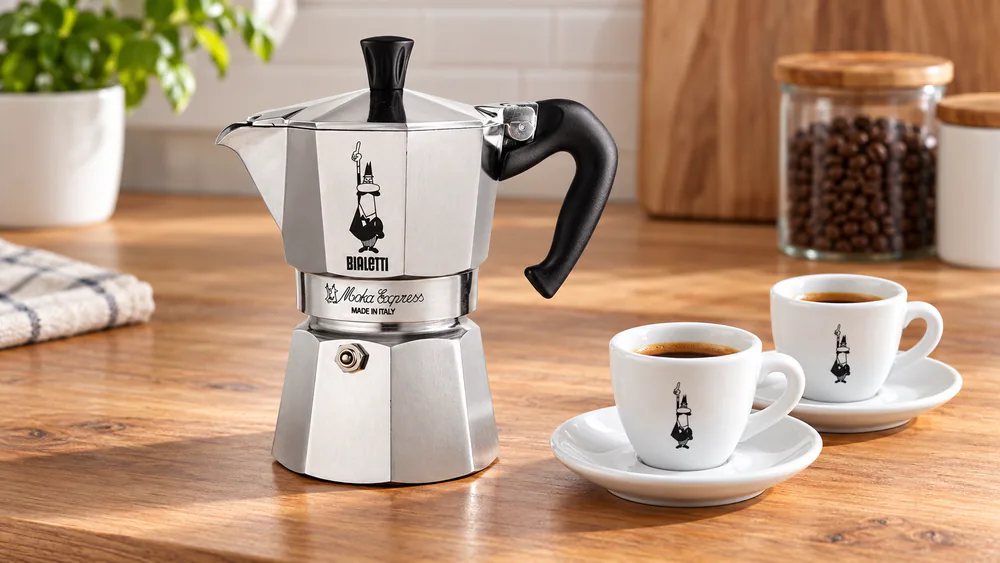
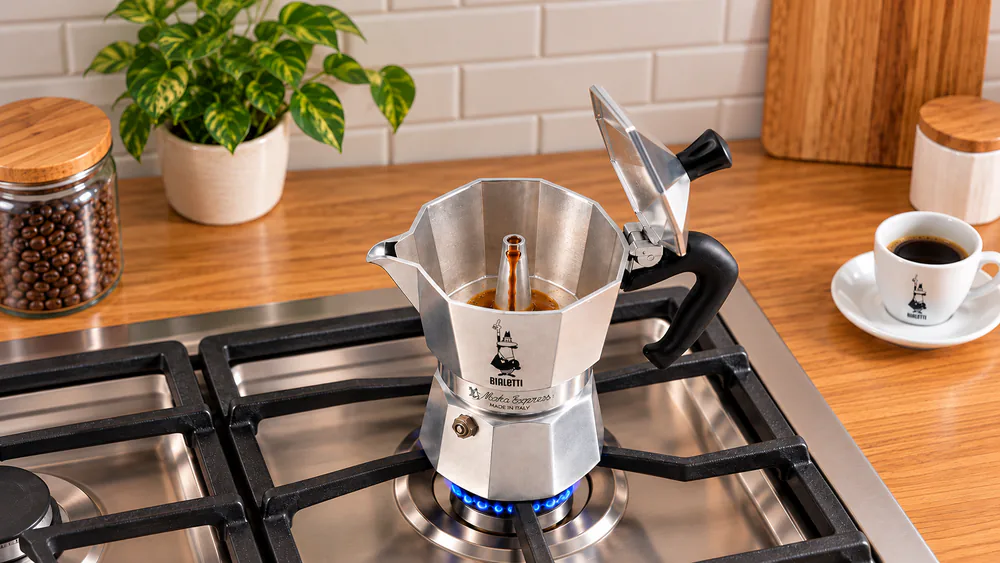
The Moka Express is the pot we would buy again first. With controlled heating it gives a rounded, substantial cup, and the bright, open collector lets you watch the coffee flow so you know when to pull it off the burner. The octagonal body has flat sides that help you grip the boiler while screwing the pot together, which is the fiddliest moment of the routine.
Pros
Rounded, substantial cup when the heat is controlled
Bright, open collector makes the flow easy to watch
Flat sides give a good grip during assembly
A water rinse is enough for cleanup
Cons
The handle can get hot when the burner is high
Lingering on the heat brings bitterness and astringency
Needs a separate adapter for induction
Who It Suits and Where It Falls Short
This is the pot for anyone with a gas or electric stove who wants the classic result without thinking too hard. The version we link is the 3-cup model, which holds a nominal 130 ml. That suits one person with a generous morning cup, or two people sharing small servings.
The aluminum body is light, and the design defines the category: it dates to 1933 and is made in Italy. The safety valve is inspectable, and the handle and lid knob are thermoplastic, which keeps most of the heat away from your hand when the burner is low.
A fresh pot out of the box can carry a faint odor, so brew and discard a pot or two before you drink the first one. That initial discard batch is easy to skip and worth doing.
Bialetti's own instructions start with room-temperature water. Starting with preheated water is an alternative technique that shortens the time the grounds sit on the heat, but the boiler is hot to handle, so protect your hand when you assemble it.
If you only have an induction hob, skip this one. Bialetti sells a separate adapter for induction use, but the Venus below is simpler and needs no extra gear.
Where the Moka Express needs an adapter on induction, the Venus is the easiest recommendation for induction kitchens. Its 18/10 stainless steel body works on gas, electric and induction, and the roomy handle and parts that separate readily make daily use less fussy. The trade-off is that it heats quickly and asks for your attention once the coffee starts to flow.
Pros
Stainless steel body that works on induction as well as gas and electric
Roomy handle and parts that separate readily for cleanup
Rinsing is straightforward
Concentrated coffee makes a good base for milk drinks
Cons
Narrow collector makes the stream hard to watch
Quick heating needs attention once the coffee starts flowing
Some edges feel sharp during handling
Cooktop Compatibility and Size Choices
The Venus comes in 2, 4, 6 and 10 cup versions, and the pot we link is the 4-cup, which holds a nominal 5.7 oz. That is not four mugs. It is closer to two generous small cups, or enough concentrate for a pair of milk drinks.
Size and induction support are separate decisions. Bialetti excludes the 2-cup Venus from its induction range, so if you cook on induction and want a small pot, check the listing before you buy. The other sizes are specified for induction use, and we would still confirm that your hob detects the base.
The narrow view into the collector is the real learning curve. Stay at the stove, lower the heat as the first coffee appears, and the Venus makes a clean, concentrated cup that works equally well straight or as the base for a latte at home, without a big countertop machine.
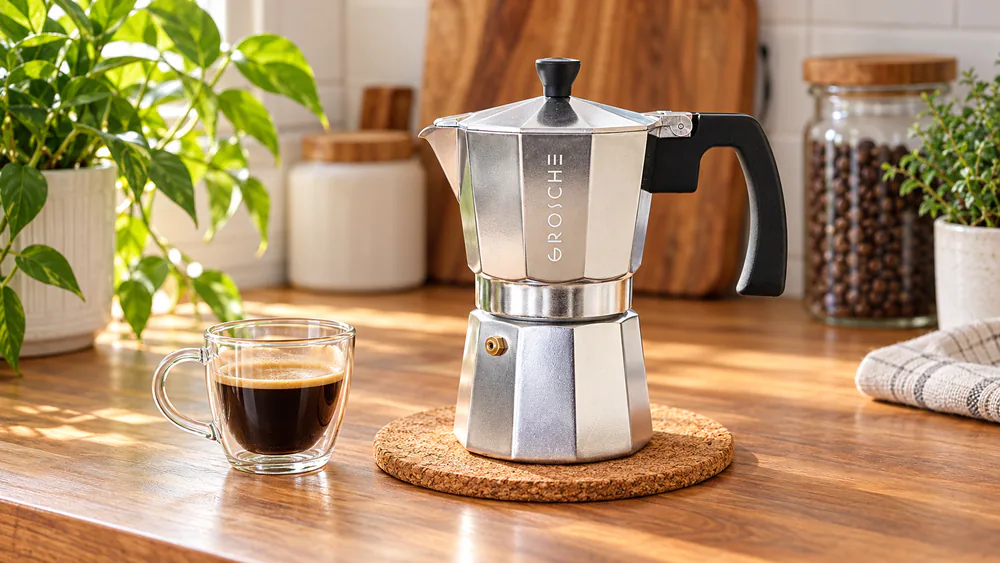
Where the Venus asks for your attention at the stove, the Milano is the pick for people who want a larger pot that is pleasant to hold. The soft handle and finger guard make carrying the hot pot more comfortable, and the pale collector makes changes in the flow easy to see. When we brewed carefully, it gave a mellow, juicy cup. Its weak spot is build: there is play in the lid hinge, which makes the construction feel less substantial than the Bialetti or Alessi.
Pros
Soft handle with a finger guard is comfortable to hold
Pale collector shows changes in flow clearly
Silicone gasket removes more easily than a stiff rubber seal
Mellow, juicy cup with careful heat control
Cons
Play in the lid hinge feels less substantial
Not a direct induction choice
Hand wash only
Everyday Use and Key Tradeoffs
The 6-cup Milano holds a nominal 9.3 oz, which makes it the best fit for a household that brews for two or three people. It sits in the middle of the group on cost, and it gives you more handle comfort for the money than anything else here.
Daily handling is where it earns the value label. The finger guard keeps your hand away from the hot metal, and the silicone gasket comes out for cleaning without a fight. Grosche backs the pot with a standard 1-year warranty against manufacturing defects. The lid-hinge play is the one thing that reminds you it is a mid-priced pot, but it does not affect the brew.
Two caveats. The standard aluminum Milano is specified for non-induction hobs, and Grosche sells a separate induction-specific model, so do not assume this one works on induction. Brew speed also depends on your stove and your starting water, so we would not promise a fixed advantage over the Moka Express.
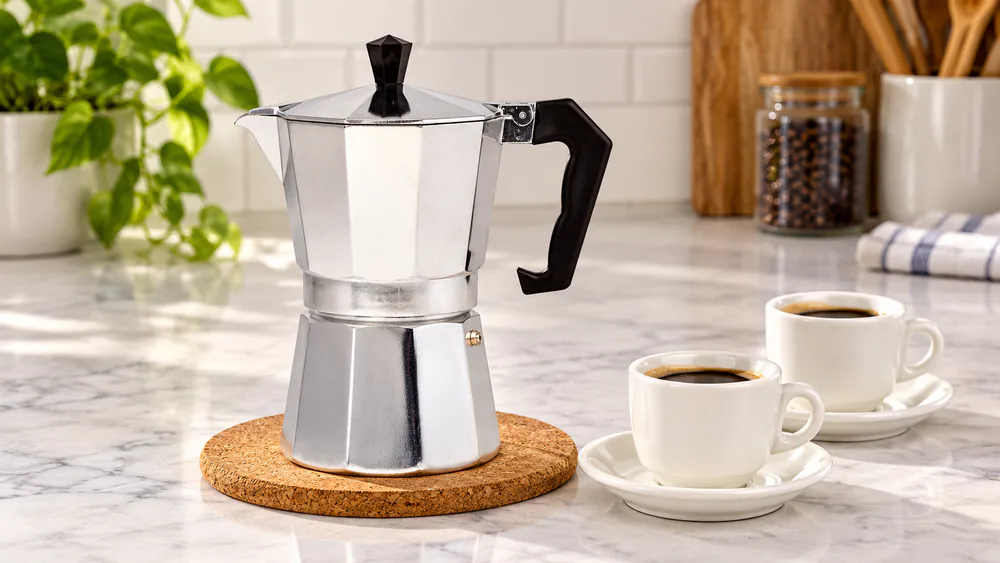
Stepping down from the Milano, the Primula Classic is the cheapest pick here, and it earns its place as an inexpensive way to learn the method. The simple assembly makes the basic routine approachable for beginners. We would not oversell the flavor, though: the smaller basket can leave the coffee thin, flat and slightly bitter, and the other picks sit clearly above it in the cup.
Pros
Lowest cost of the five picks
Simple assembly suits beginners
Small sizes pack easily for occasional use or camping
Reusable filter and safety-release valve
Cons
Coffee can taste thin, flat and slightly bitter
Not induction compatible
Less convincing flavor balance than the stronger picks
The cast aluminum body has a reusable filter, a flip-top lid, a heat-resistant handle and knob, and a safety-release valve. It works on electric, ceramic, gas and propane stoves, but not on induction. The version we link makes six demitasse servings, which is a nominal count and not a measured amount of liquid.
Because it is light and compact, the smaller sizes are handy for camping or an occasional cup.
The trade-off is cup quality. If you drink moka coffee every morning, the money you save here comes back as a flatter cup, and stepping up to the Moka Express or Milano is the better long-term move. If you are curious about moka coffee and do not want to commit, this is a sensible first pot. Treat it as a way to learn grind and heat control, and keep your expectations modest on flavor.
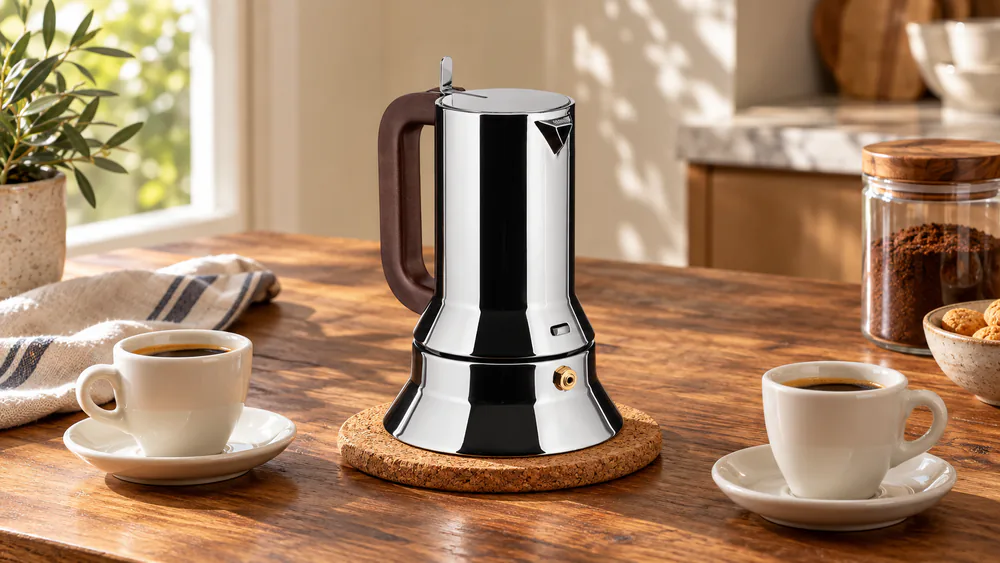
The lever latch comes first on the Alessi 9090: it avoids wrestling screw threads around a hot boiler, and it sets the tone for a pot built for people who care about the ritual as much as the cup. the broad base feels stable on the stove, and the small spout pours neatly. Its substantial construction improves the daily handling in a way the lighter pots cannot match. The flip side is cost, and a narrow collector that hides the developing brew.
Pros
Lever latch avoids screw threads around a hot boiler
Broad base feels stable on the stove
Small spout pours neatly
Upper filter and gasket come out easily for cleaning
Cons
The most expensive pick here
Narrow collector obscures the developing brew
Reducer for smaller batches may need confirming in the package
When the Design Is Worth the Extra Cost
The 9090/6 holds a nominal 10.1 fl oz, stands 8.07 inches tall, and is made from 18/10 stainless steel with a magnetic bottom for induction. It was designed by Richard Sapper, and it shows: the lever-lock assembly and enlarged base make it the most pleasant pot to handle in the group.
The 9090/6 also supports a 3-cup batch with a dedicated reducer filter, which is useful because a normally filled basket is more predictable than a half-filled one. Package contents vary by region, so confirm the reducer is included before you buy if you plan to brew small batches. Alessi offers replacement filters, reducers and washers, which supports long-term use.
Check your hob before ordering. Body diameter and the flat induction contact area are not the same measurement, so look at the maker's guidance if your induction plate is small.
If a good cup for the least money is the goal, the Moka Express and Milano do that job. Choose the Alessi when you want a pot you are happy to see on the stove every morning.
How to Choose the Right Moka Pot
Start with your cooktop, then pick a size, then decide on material and handling. Those choices settle most purchases.
Match the Pot to Your Cooktop
Induction needs a base that responds to magnets, and steel alone is not a compatibility guarantee. Choose a model that states induction support, such as the Venus or the Alessi 9090. If you own a gas, electric or ceramic stove, any of the five works, and the aluminum pots are the lighter choice.
If you already own an aluminum pot you love and later move to induction, a separate adapter plate is one route, but it adds a step and slows the heat-up. Buying an induction-ready pot is simpler.
Choose a Size by Coffee Yield, Not Mug Count
Nominal cup count, boiler water volume and the coffee you actually collect are three different numbers. Grounds hold back some water, and some stays below the basket. Plan on a small espresso-style serving per cup, and size the pot to the coffee you drink most often.
A full basket behaves more predictably than a partly filled one, so if you often brew for one, buy a smaller pot or a model with a reducer rather than half-filling a large one.
Tip. Not sure which size to buy? Pick the pot whose nominal capacity matches your normal morning, not the one you might use at a dinner party. A pot brewed full every day beats a big pot run half-full.
Compare Aluminum and Stainless Steel
Aluminum is light and traditional, and it is what the Moka Express, Milano and Primula use. Stainless steel is heavier, has a polished finish and is available in induction-ready models, as with the Venus and Alessi.
Neither material makes a better cup on its own. Steel does not make a pot dishwasher-safe either, so every pick here is hand-washed.
Check Handles, Pouring and Replacement Parts
Handles decide how comfortable the pot is. The Milano's soft handle and finger guard are the most comfortable, the Venus has a roomy grip, and the Moka Express handle can warm up on a high flame. Look at the spout too: the Alessi pours neatly.
Gaskets and filters wear, so check that replacements exist for the exact pot size you are buying. The Milano's silicone gasket and the Alessi's replacement filters, reducers and washers are good examples.
A moka pot rewards attention, not force: control the heat, stop at the sputter, and the cup takes care of itself.
Decide Between Stovetop and Electric
All five picks need a burner. Electric moka pots have a powered base and need an outlet, and automatic shutoff and keep-warm behavior depend on the model. They suit people who do not want to watch the stove, but you give up the burner control that gives a stovetop pot its edge.
Nominal cups are small espresso-style servings, not mugs.
Brewing and Cleaning Basics
A few habits make any pot better. These apply to all five.
Grind, Filling and Heat Control
Use coffee ground for moka: finer than typical drip grounds but coarser than espresso. Fill the basket level and do not tamp it. Fill the boiler to the level the instructions give, near the safety valve, and keep the valve clear.
Heat is where the cup is won or lost. Use low heat, watch the stream, and remove the pot as it sputters so you do not cook the finished coffee. When you switch to a different coffee, adjust the grind and heat, because one setting does not suit every roast.
Moka coffee is often called stovetop espresso, and the pot is sold as a stovetop espresso maker. The flavor is concentrated and bold, but the method relies on steam pressure rather than a pump, so the cup tastes different from a cafe shot.
Tip. Change the burner setting before you change anything else. Heat control fixes more cups than a new grinder does.
Cleaning, Drying and Gasket Care
Let the pot cool completely before you take it apart. Remove the spent grounds, rinse each part and dry them separately. Trapped grounds and retained moisture are the usual trouble, so fully separating and drying the parts is worth the extra minute.
Look over the gasket and filter regularly, and replace worn parts with correctly sized replacements. Skip detergent and the dishwasher, which Bialetti, Grosche and Alessi all advise against.
Why Trust Mr. Kitchen Adviser
We write about home coffee gear from the point of view of someone standing at the stove on a weekday morning. Our ratings rest on a declared rubric of cup quality, handling, cleanup and cooktop fit, and we do not turn marketplace scores into editorial scores. Where something is not verified, such as measured finished yield for every variant, we say so.
We earn a commission if you buy through our links, at no extra cost to you, and that does not change which pots we recommend or how we score them.
Which Moka Pot Should You Buy?
The pick is made; the choice among the others comes down to who is brewing. A household of two or three that wants comfort in the hand should look at the Milano. A first-time moka drinker who is not ready to commit can start with the Primula. Someone who brews daily and enjoys the ritual will get the most from the Alessi.
Moka Pot FAQs
Does a moka pot make espresso?
Not in the strict sense. Heat raises pressure in the lower chamber and drives water through the coffee basket, which makes concentrated coffee, but it is not the pump-driven pressure of an espresso machine. Many people call it stovetop espresso, and it works well as a base for milk drinks.
Can you brew less than a full pot?
It is better not to half-fill the basket, because a full basket gives more predictable resistance. Choose a smaller pot, or a model with its own reducer, such as the 3-cup reducer for the Alessi 9090/6.
How often should you replace the gasket?
Replace it when it looks worn or stops sealing well. Check it each time you clean the pot, and buy a replacement that matches the exact size of your pot.
Will a moka pot work on a glass or ceramic cooktop?
Several of our picks do. The Milano is specified for glass, and the Primula for electric and ceramic. Check the maker's cooktop list for your model before you buy.