As an Amazon Associate we earn from qualifying purchases. We may earn a commission from links on this page, at no extra cost to you. Learn more.
If your counter is short on space and your household is small, a full-size brewer simply wastes real estate. The good news is that a compact machine can still make a genuinely good cup, as long as you pick the right format for how you drink coffee. We compared seven small brewers, from budget drip machines to a compact espresso machine, on flavor, capacity, counter fit, and cleanup. Browse our coffee maker reviews for the wider lineup.
Every machine here went through the same questions: how it tastes, how much it really brews, whether it fits, and how easy it is to clean.
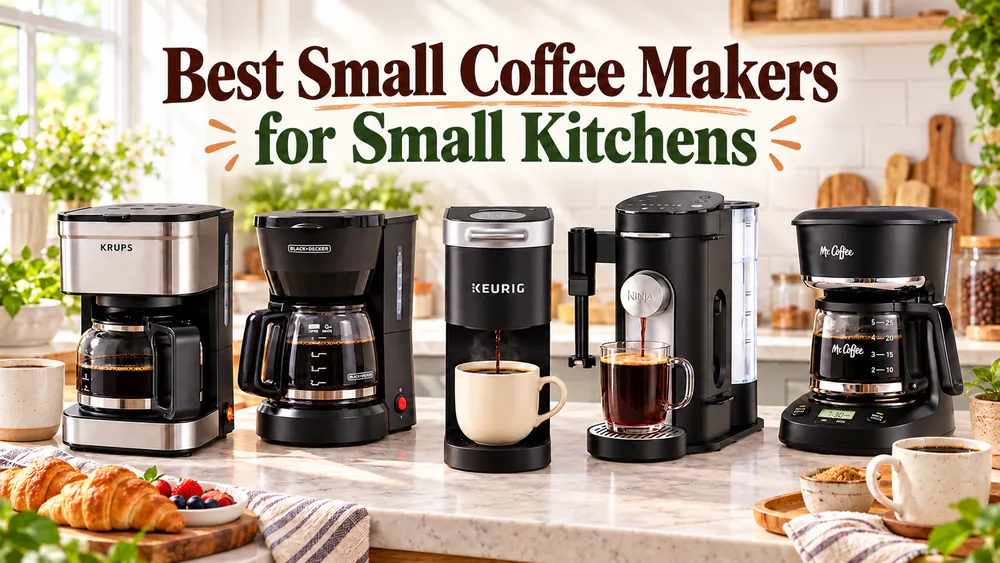
Our Top Small Coffee Maker Picks at a Glance
Here is the whole lineup in one table. Sizes are width x depth x height in inches, and where manufacturers and measurements disagree, we say so rather than guess. Reservoir volume is not the same as brewed servings, and a closed body is not the same as the clearance you need when the lid is open.
Model and use case
W x D x H (inches)
Brew capacity
Coffee format
Main limitation
KRUPS Simply Brew 5-Cup (small drip)
About 8.1 x 5.7 x 10.1; axes disputed
5-cup nominal; exact ounces unresolved
Ground coffee, permanent filter
No scheduling; no completion beep
BLACK+DECKER DCM600B (budget)
7.4 x 9.9 x 10.8 official; disputed
25 oz nominal carafe
Ground coffee, paper filter
Manual switch-off
Keurig K-Mini (pods)
4.5 x 11.3 x 12.1
6 to 12 oz per cup
K-Cup pods; reusable filter sold separately
Fresh water for every cup
Ninja Pods & Grounds PB051 (pods and grounds)
7.36 x 15.08 x 16.14 official; 5.51 x 13.07 x 13.31 in another published set
Pods to 12 oz; grounds to 24 oz
Pods or grounds
Does not heat milk or make true espresso
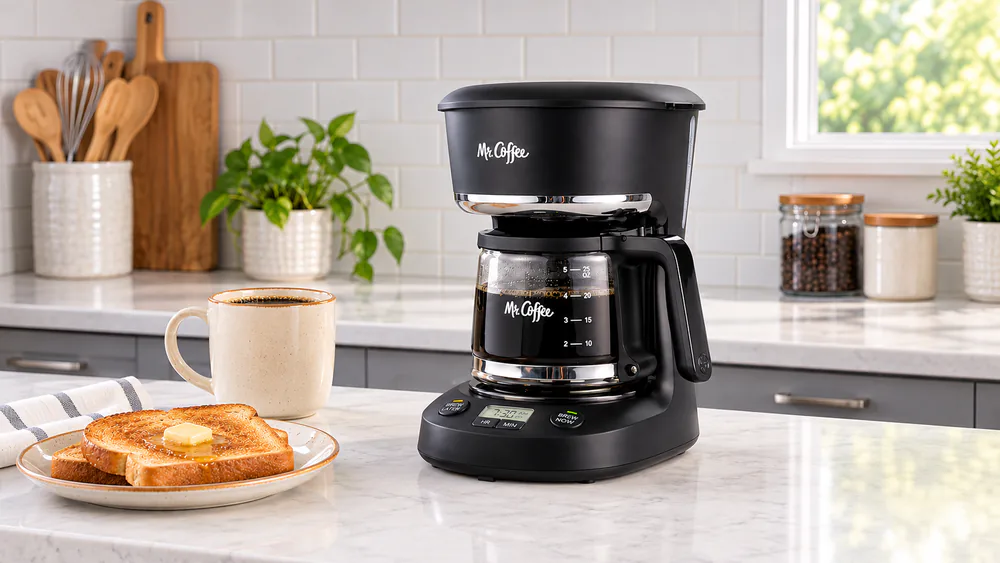
Mr. Coffee 5-Cup Programmable (scheduling)
6.4 x 9.7 x 10 for the named official suffix; black variant unresolved
25 oz nominal carafe
Ground coffee, reusable filter
Carafe can catch; residual drips
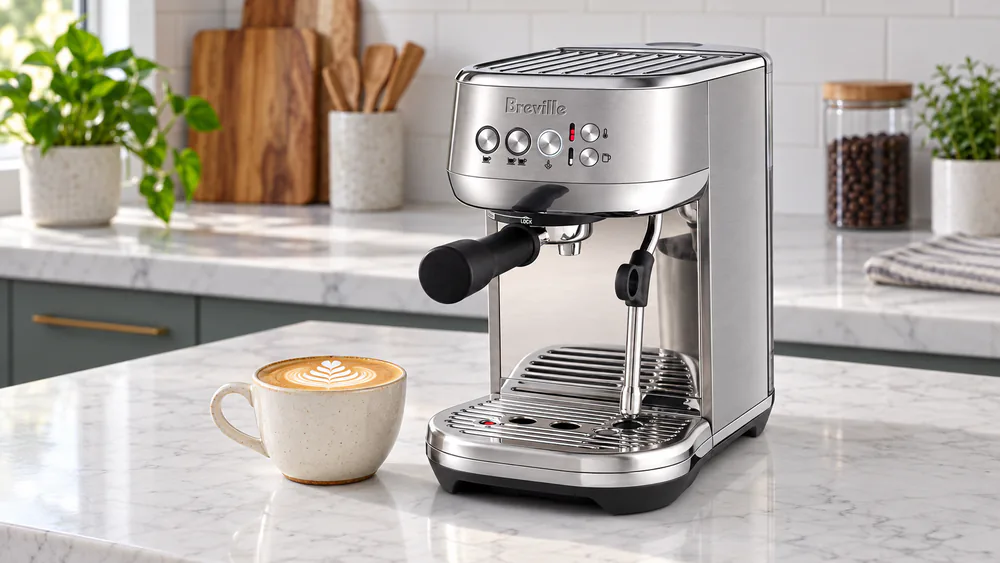
Breville Bambino Plus BES500 (espresso)
11.9 x 7.4 x 14.3 official; about 7.6 x 12.5 x 12.2 elsewhere; disputed
Single or double espresso
Espresso grounds; separate grinder
Grinder cost; drip tray fills fast
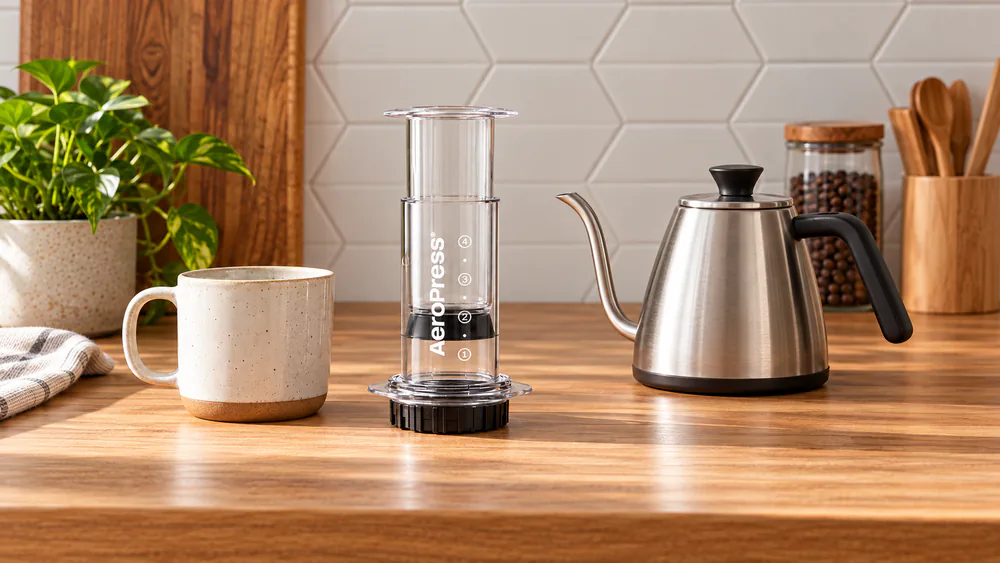
AeroPress Clear (manual)
About 4.22 across x depth unspecified x 5.26 compressed
10 oz chamber
Grounds and paper microfilter
Needs separate hot water
Note. Dimensions for several of these machines conflict across published sources. Treat every figure as a planning number, and measure your cabinet gap against the actual unit before you commit to a tight recess.
Best Small Drip Coffee Maker: KRUPS Simply Brew 5-Cup
The KRUPS is the small drip machine we would hand to someone who just wants coffee without a learning curve. Setup was straightforward, the brew cycle runs quietly, and the coffee tastes pleasant for everyday drinking, though it lacks the complexity of fancier brewing systems.
Pros
Simple on/off switch with nothing to program
Permanent filter means no paper to restock
Quiet brew cycle
Filter holder lifts out without any complicated assembly
2-year warranty against manufacturing defects
Cons
No completion beep, so you check the pot yourself
Thin-feeling glass carafe needs careful handling
No scheduling feature
Keep-warm and shutoff behavior varies by version
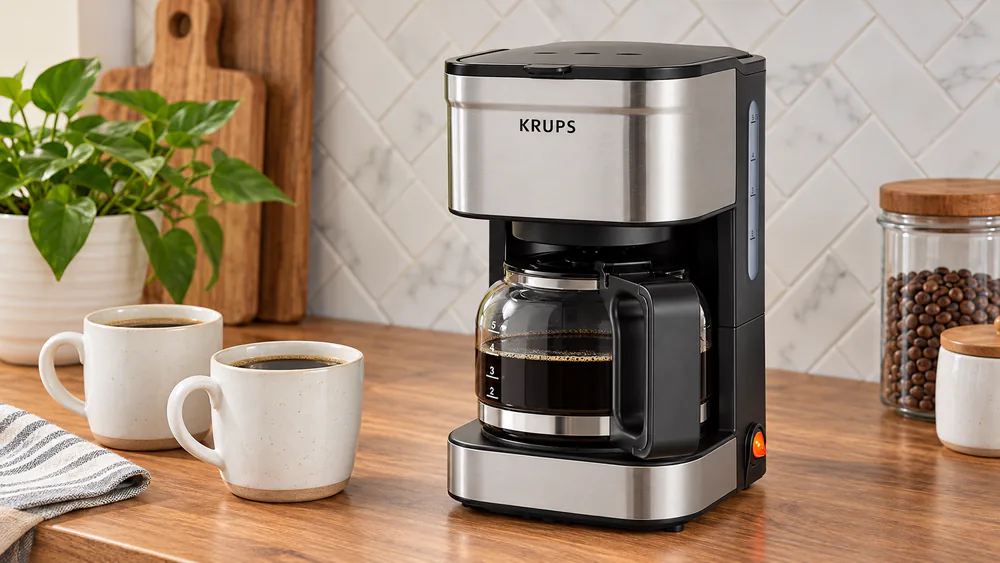
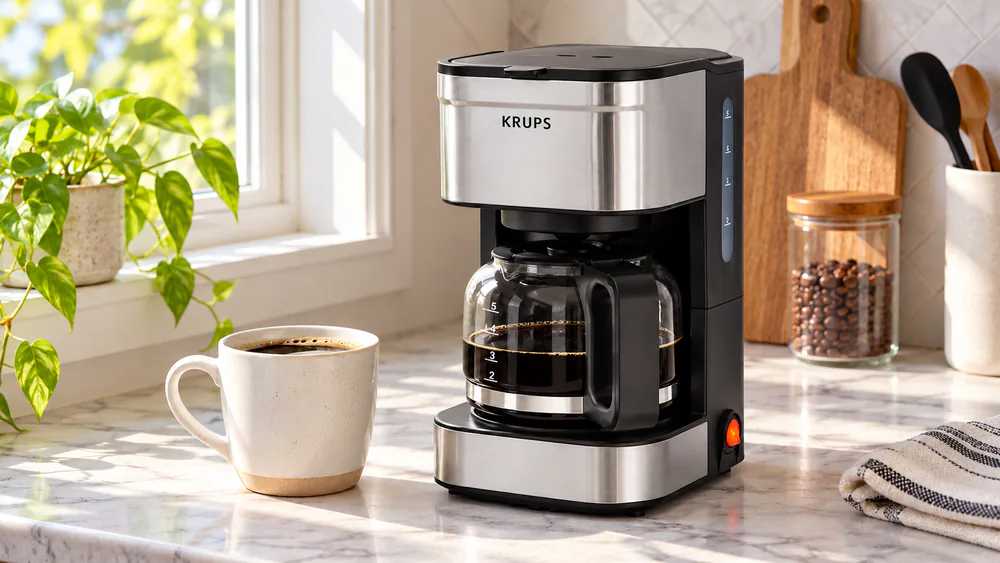
A 5-cup drip machine keeps the counter clear for everything else.
What the permanent filter changes
The KRUPS is built around a 5-cup nominal carafe and a 650W heater, and the permanent filter means no paper to restock. That 5-cup label is a manufacturer measure, not a mug count. The documentation mixes a 0.75 L replacement carafe with a 1.2 L maximum quantity, so check the markings on your own carafe before you plan around an exact number of ounces.
The footprint is small, roughly 8.1 x 5.7 x 10.1 inches, but published width and depth are transposed in places and some dimensions belong to a different model suffix. If you are sliding it into a tight recess, measure the unit you receive. The tank fills from the top, so you need lid clearance above the machine.
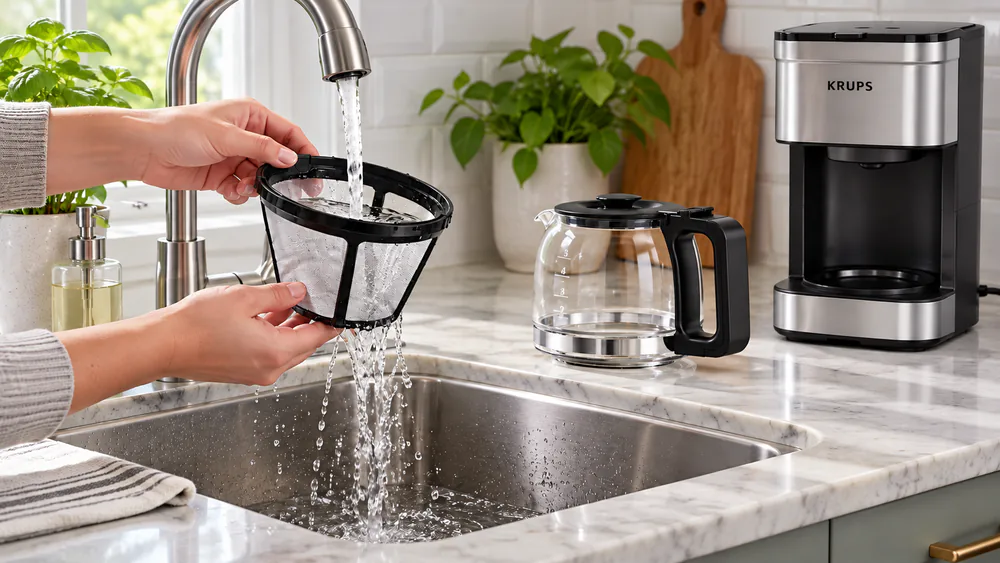
The carafe pours cleanly without drips, and the reusable filter feels delicate during cleanup, so rinse it gently. The warming plate can concentrate a small amount of leftover coffee through evaporation, which is why we pour a mug right away and do not leave the last inch to cook. Buy it if you drink one to two mugs a morning and do not need a timer. Skip it if you want to wake up to fresh coffee.
Best Budget Small Coffee Maker: BLACK+DECKER DCM600B
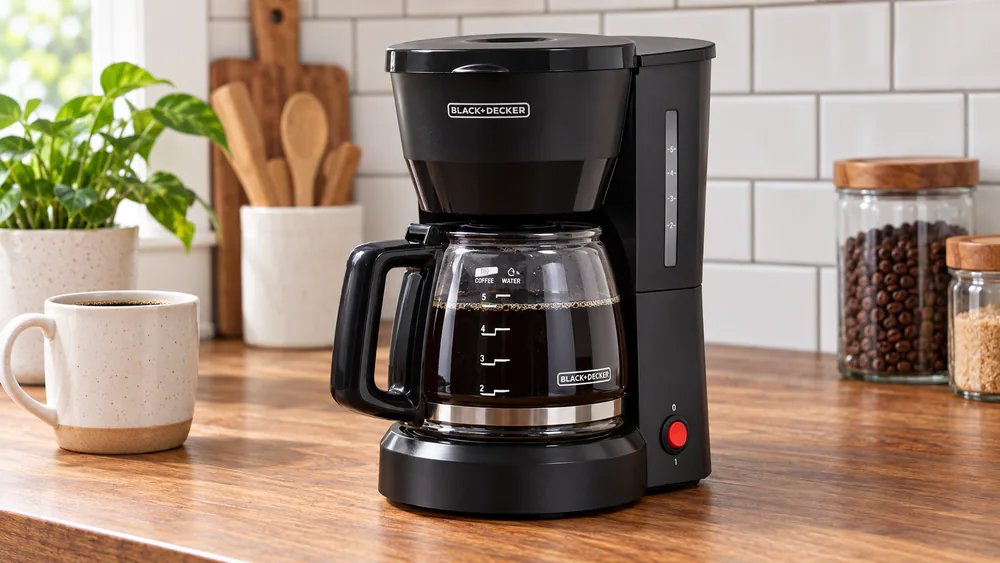
Where the KRUPS leans on a permanent filter, this is the budget pick, and it behaves like one. The switch-based routine is easy to learn, the cord stores away to keep a small counter tidy, and the carafe handle is comfortable, but it does not extract coffee as thoroughly as the target we measure against for fuller flavor.
Pros
Among the least expensive picks in the group
On/off switch with a water window
Cord storage keeps the counter tidy
Removable lid and basket make washing easier
2-year limited warranty
Cons
Brew performance falls short of the temperature-and-contact-time target for fuller extraction
Manual switch-off, with no shutoff timer
Takes paper basket-style filters
Glass parts are excluded from the warranty
Check the listing before you check out
The DCM600B holds a 5-cup carafe with a 25 oz nominal capacity and draws 650W. Official dimensions are 7.4 x 9.9 x 10.8 inches, while another published measurement comes in at 7.25 x 8.2 x 10.75 inches. Because those disagree, allow extra room and confirm the unit in hand.
Some listings describe this model as a single-serve reservoir brewer, but the model number and feature list identify a glass-carafe machine. Confirm that the listing says DCM600B and shows a carafe.
The carafe, lid, and basket can go on the top dishwasher rack, and the manual specifies monthly descaling and basket-style paper filters, so factor a pack of filters into ownership. Buy it if the goal is the lowest-priced entry into drip coffee and you are happy to flip the switch off yourself. If flavor is your top priority, step up to one of the other picks.
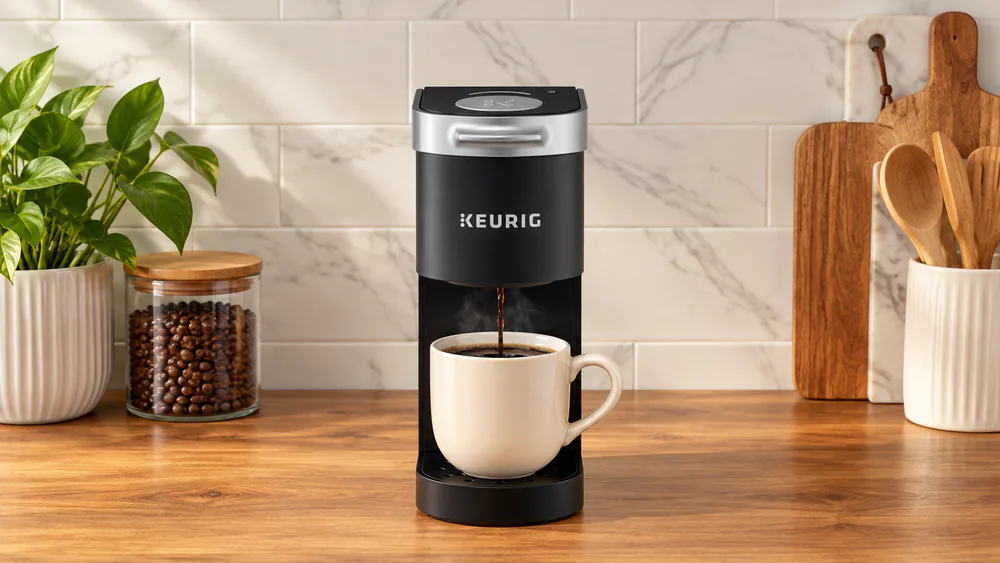
Unlike the carafe machines above, the K-Mini is the narrowest machine in this roundup, and the narrow body is easy to place almost anywhere. The price of that slim shape is refilling fresh water for every cup, which gets repetitive when you brew back to back.
Pros
Narrow 4.5-inch body fits tight spaces
Turns itself off 90 seconds after the last brew
Removable drip tray and built-in cord storage
Quick single-cup brewing from K-Cup pods
Cons
Fresh water needed for every brew
A small cup can leave splashes in the drip-tray area
Dispensing can sputter at the end
Original model has no separate strength button
Cabinet height is the catch
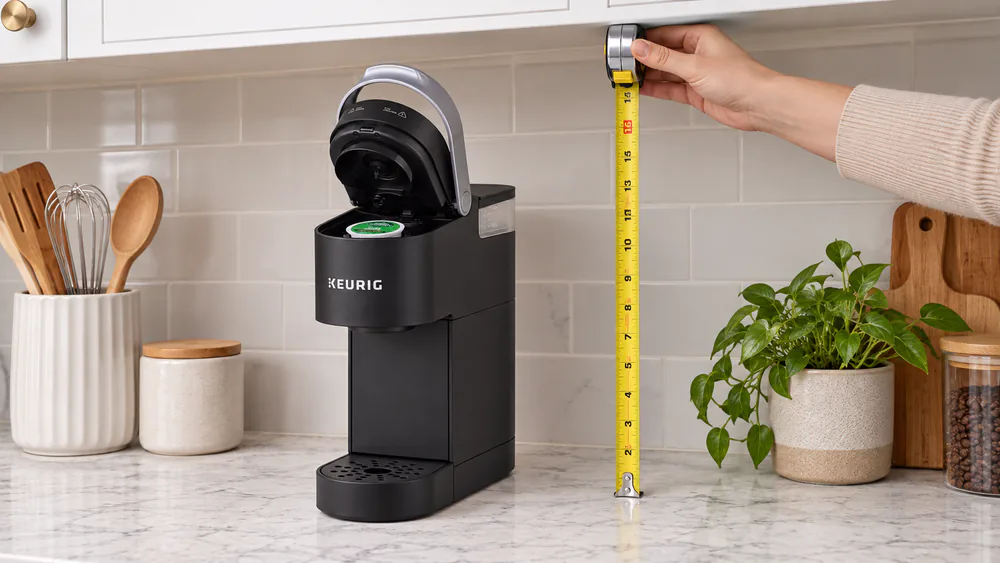
The K-Mini measures 4.5 x 11.3 x 12.1 inches, which works out to 50.85 square inches of closed body footprint before you add any clearance. The catch is height when the handle swings up. It stands 16.8 inches high with the handle open, so check the gap under your cabinet before you assume it fits.
It brews K-Cup pods in a range of 6 to 12 oz, though the manufacturer's own copy mixes cup ranges, so follow the reservoir markings. A reusable filter for your own grounds is sold separately. Mug height is a question too: the selected model's copy allows a mug up to 7.0 inches tall with the tray removed, while the manufacturer's comparison says travel mugs do not fit, so test your mug shape.
A brew that is interrupted mid-cycle may not restart cleanly, and the failed part is unclear, so avoid yanking the handle mid-brew. Buy it if you drink one cup at a time and value a slim shape over capacity. Skip it if you pour two mugs in a row.
Best Small Coffee Maker for Pods and Grounds: Ninja Pods & Grounds Specialty PB051
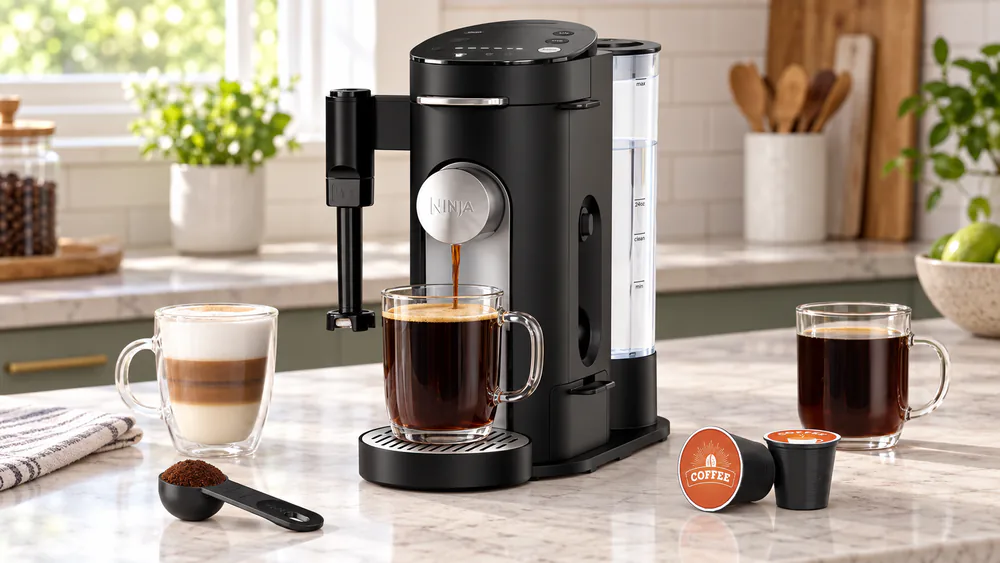
Where the K-Mini commits you to pods, this is the most flexible brewer here, and the one we would choose if you want pods on rushed mornings and fresh grounds on weekends. Both formats produce satisfying coffee, and the Rich setting holds its own against added milk.
Pros
Brews pods and fresh grounds in the same machine
56 oz removable tank cuts refilling
Swapping the pod adapter and grounds basket is simple
Integrated storage reduces loose pieces on the counter
Folding frother tucks away neatly
Cons
Largest footprint of the single-serve picks
Does not heat milk or make true espresso
Grounds-filter cleanup can be fiddly around the twist-lock diffuser
1-year limited warranty is the shortest in the group
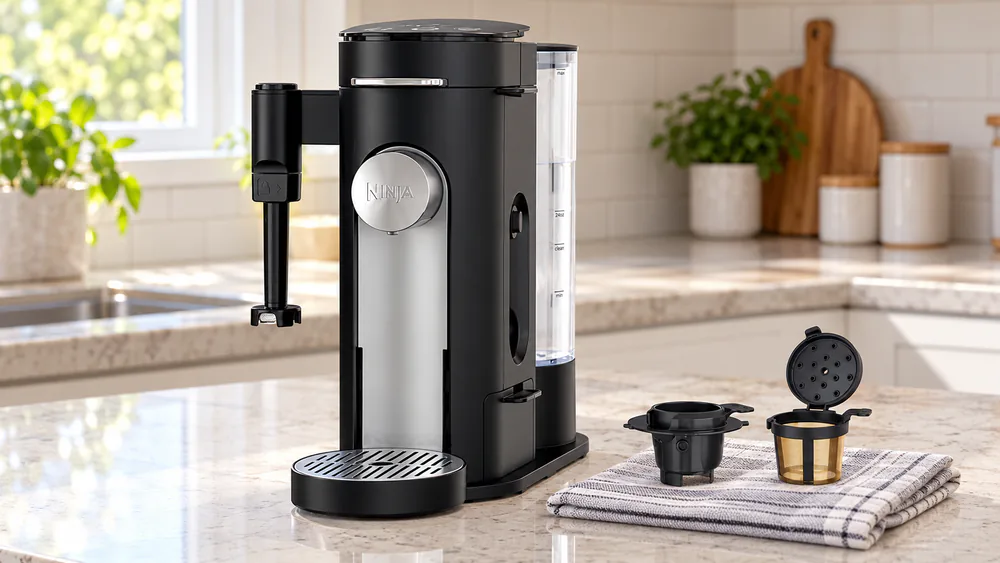
The adapter and basket swap in seconds, and both store on the machine.
Two formats, one tank
The Ninja is not tiny, and the published sizes disagree. The manufacturer lists 7.36 x 15.08 x 16.14 inches, while another set of measurements is 5.51 x 13.07 x 13.31 inches. Neither should be your guaranteed cabinet clearance, so measure the unit and leave room for the lid, the removable tank, and the side frother.
Pods can run 6, 8, 10, or 12 oz, while grounds can run up to 24 oz, with six other sizes in between. Its Specialty mode makes 4 oz of concentrated coffee, which is strong and useful for milk drinks but not pressure-extracted espresso. The Over Ice setting is hot brewing poured over ice, not cold brew. The tank holds 56 oz, but that is stored water, not a single serving. As planning arithmetic, 56 divided by 12 gives 4.67 twelve-ounce portions per full tank, though real yield will vary. A travel mug up to 8 inches tall fits.
Who it suits
The frother aerates milk but does not heat it, so a hot latte means warming the milk separately. Rinse the milk whisk right away and hand-wash the brew basket and pod adapter. Buy it if you share a kitchen with people who disagree about pods and grounds. Skip it if your cabinet gap is truly tight.
Best Programmable Small Coffee Maker: Mr. Coffee 5-Cup Programmable Mini Brew
Back in drip territory, the timer is the reason to buy this one, and it starts brewing reliably at the time you choose. The coffee is serviceable for routine drinking, though it can feel not quite hot enough for anyone who wants a piping-hot cup.
Pros
Brew Later timer starts on schedule
2-hour automatic shutoff
Ounce-marked glass carafe
Reusable filter and water-filtration system included
Buttons respond promptly
Cons
Carafe can catch on the brewer body
Residual drips reach the warming plate after the main brew
Coffee can feel lukewarm
Small carafe is less convenient to hand-wash than its size suggests
Scheduling, and the mug math
The carafe holds 25 oz nominal, and the 2-hour automatic shutoff takes care of the warming plate for you. Dimensions are 6.4 x 9.7 x 10 inches for the named official suffix, but model and color revisions use different sets, so confirm the suffix on the black unit you buy.
Brew Now and Brew Later controls sit on the front, and the carafe is marked in ounces so measuring water is a breeze. A reusable filter and water filtration are part of the package. The mug math: 25 oz divided by 12 oz gives 2.08 nominal mug equivalents, and grounds hold back some water, so think about two mugs, not five large coffees.
The carafe can catch on the brewer body, so steady the machine with one hand while pulling the pot, and give the warming plate a quick wipe now and then. Buy it if you want a timer and a small pot. Skip it if scalding-hot coffee is non-negotiable.
Best Small Espresso Machine: Breville Bambino Plus BES500
Stepping well up from the drip machines, this is the splurge pick and the only machine here that makes real espresso. Dialing in the grind and dose takes trial and error, but once settled, shots can be consistent and rich, and the automatic milk steaming removes much of the skill from texturing milk.
Pros
Real espresso with low-pressure pre-infusion
Automatic milk steaming gives consistent texture
3-second ThermoJet heat-up claim
Supplied tamper, milk jug, and cleaning tools
2-year limited warranty
Cons
Separate grinder required, which adds cost and counter space
Drip tray fills quickly after steam-wand purging
Light body can slide when the portafilter locks in
Most expensive pick by a wide margin
The grinder is not included
The Bambino Plus is compact for an espresso machine, but it is not a small footprint once you add a grinder. The manufacturer's page lists 11.9 x 7.4 x 14.3 inches, while other published sizes are about 7.6 x 12.5 x 12.2 inches. Axis labels conflict, so measure the actual unit and include space for tank removal.
It uses a 54mm portafilter, a 64 oz water reservoir, and a 1560W heater. The 3-second heat-up is a claim about the heater, not the total time to grind, prepare, and serve a drink. It does not grind beans, so you must own or buy a grinder.
Buy it if
Steam-wand purging splashes milky water, so expect an extra wipe-down, and the light body slides when the portafilter locks in, so hold the base with one hand. Treat the automatic shot stop with attention: if shots run wrong, diagnose the machine instead of assuming a grind change will fix it. Buy it if you want cafe-style lattes at home and accept the grinder and the learning curve. If you only want black coffee, any other pick is simpler.
After a plugged-in espresso machine, the AeroPress is the smallest way to brew a great single mug. The pressed puck ejects cleanly, and the paper filter gives a clear cup without the sediment you get from a metal-mesh press.
Pros
Tiny storage footprint and no electrical heater
Puck ejects cleanly, with fewer loose grounds than a French press
Paper filtration gives a clean cup
Clear chamber shows the drip and plunger position
1-year warranty
Cons
Needs a separate kettle and a sturdy mug
Manual effort every time
Brewing space needed around the mug
No pump noise, but a brief hiss on pressing
What you need besides the brewer
The brewer is about 4.22 inches across at the widest flange and 5.26 inches tall when compressed, with depth not specified. Chamber capacity is 10 oz, normally one mug, and you can dilute the concentrate. Do not mistake the compressed storage height for the height over your mug during pressing, because the plunger rises as you brew.
There is no heater inside, so you need a kettle and a sturdy mug, and both still need working space. Cleanup is quick: eject the puck, rinse the brewer, and wash it as directed, and it is dishwasher-safe. Buy it if you like a clean single mug and want something that disappears into a drawer. Skip it if you want to press a button and walk away. Pour-over cones and French presses fill a similar slot, but the AeroPress is the compact one we would keep.
How We Selected These Small Coffee Makers
We scored each machine on flavor, practical capacity, counter fit, ease of cleaning, and build, using manufacturer specifications and the hands-on findings we gathered. Our ratings are editorial scores on that basis, not a ranking from a lab, and we say plainly where a unit falls short.
Where a machine showed a habit worth knowing, such as a carafe that catches or a tray that fills fast, we note it in the review. We do not claim a fixed number of brews or weeks per unit, and we do not publish timed or measured results we did not collect under one protocol.
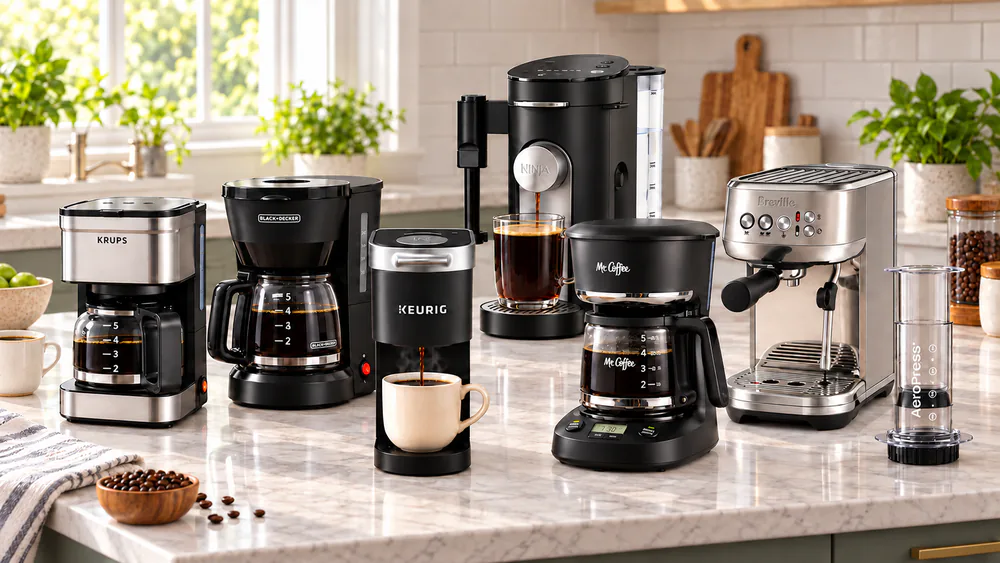
All seven picks, side by side.
Size, Capacity, and Everyday Usability
We did not stop at the box dimensions. We asked whether the machine fits under a cabinet with its lid up, whether a real mug sits under the spout, and whether the tank can be refilled without moving the whole unit. We also kept reservoir volume separate from brewed servings, because a 56 oz tank is not a 56 oz coffee.
Evidence Sources and Evaluation Limits
Some limits are worth stating. Published dimensions conflict for several models, so we treat sizes as approximations and do not rank footprints we cannot confirm. We do not have a failure rate or a guaranteed service life for any model, and we do not publish brew times or decibel readings, since we did not measure them under one common protocol. Warranties and replacement parts are cataloged today, but stock can change.
How to Choose a Small Coffee Maker
Measure Width, Depth, and Lid-Opening Clearance
Small footprint and small capacity are different things. A machine can be narrow and still tall, and a top-fill tank needs space above it to open. The Keurig K-Mini is the clearest example: it is only 4.5 inches wide, yet it needs 16.8 inches of height with the handle open.
Tip. Measure your cabinet gap, then add the lid-open height and the height of the tallest mug you own. Do this before comparing models.
Measure the gap with the lid up, not just the closed height.
Match Brew Capacity to Your Actual Mug Size
Cup ratings on drip machines are small. A 5-cup brewer with a 25 oz carafe fills roughly two 12 oz mugs. If you drink one mug a day, a single-serve machine or the AeroPress wastes nothing. If two people drink coffee at once, a 5-cup carafe is the sensible minimum.
Choose Between Drip, Pods, Espresso, and Manual Brewing
Drip is the easiest way to serve two people, and the KRUPS, BLACK+DECKER, and Mr. Coffee all do it in a small body. Pods trade handling for ongoing capsule purchases, and the Keurig K-Mini is the slimmest way to do it. Espresso adds milk drinks, but it also adds a grinder and a learning curve. Manual brewing needs a hot-water source but takes the least storage space.
If you cannot decide between pods and grounds, the Ninja PB051 handles both, and a reusable filter lets the K-Mini take your own grounds too.
Check Refilling, Cleaning, and Descaling Access
Look at how the tank fills and whether the carafe, basket, and lid come off easily. A top-fill tank and a removable basket make daily cleanup faster. Ask how you will descale: the BLACK+DECKER manual specifies monthly descaling, and Breville prompts you when it is due.
Compare Useful Features and Ongoing Costs
A timer, an automatic shutoff, and a water window are worth having. Consider what you buy again and again. Grounds-based brewing adds filters and grounds disposal, pods add capsules, and manual brewing needs a kettle. Espresso adds a grinder. Include those costs when you compare, because the sticker price is only part of what you pay.
A small coffee maker is only small if it fits your cabinet, your mug, and your routine.
Cleaning and Caring for a Small Coffee Maker
Small machines reward a short, steady routine. Rinse removable parts after each use, let them dry, and wipe the housing. Wash cooled parts with mild soap, and use the dishwasher only for parts the maker lists as dishwasher-safe, such as the KRUPS carafe and filter or the BLACK+DECKER carafe, lid, and basket on the top rack.
Machines with milk systems need more attention. Rinse the Ninja whisk promptly, and wipe and purge the Breville steam wand every time. Descale on the schedule in your manual, because mineral buildup slows heating and dulls flavor.
A quick rinse after each use keeps small parts from building up residue.
How Often Should You Descale a Small Coffee Maker?
There is no single interval, so follow your manual. The BLACK+DECKER manual specifies monthly descaling, the Breville prompts you when its cleaning cycle is due, and the Mr. Coffee and KRUPS manuals direct you to remove mineral buildup on their own schedules.
Does Pod Coffee Taste Weaker Than Drip?
Not by default. The Ninja PB051 produced satisfying coffee from both pods and fresh grounds, and its Rich setting held up against added milk. The KRUPS drip pot is pleasant for everyday drinking too. The real trade-off is handling: pods mean ongoing capsule purchases, while grounds mean filters and disposal.
Can You Brew an AeroPress With a Microwave-Heated Mug?
We have no findings on microwave heating, so we would not recommend it. What the maker specifies is a separate hot-water source, such as a kettle, and a sturdy mug.
Does an Espresso Machine Need a Separate Grinder?
The Breville Bambino Plus does. It does not grind beans, so you need separately ground coffee and a grinder of your own, which adds cost and counter space. Dialing in the grind and dose takes trial and error before shots settle.
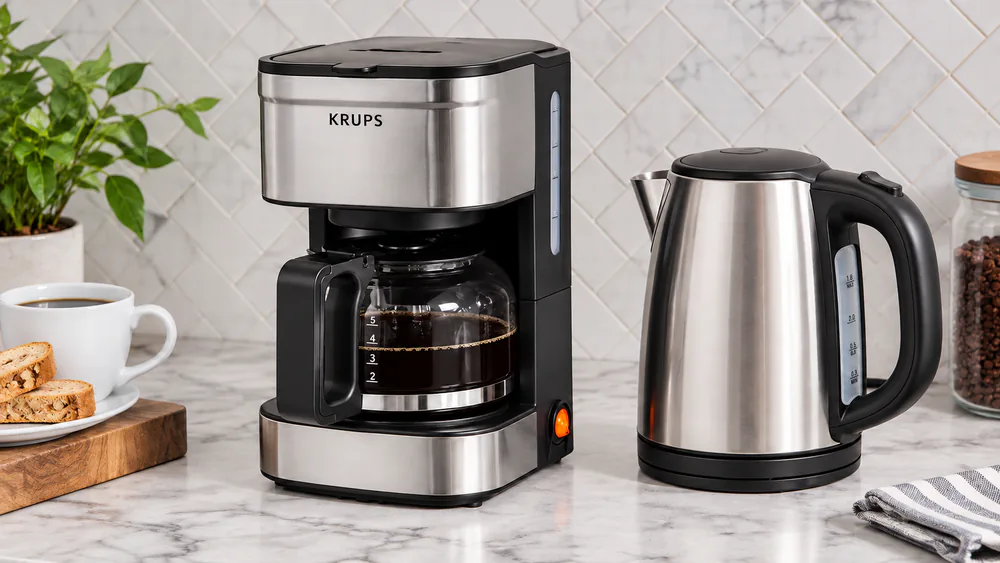
A good small brewer leaves room for the mug and the kettle.
Final Verdict: Which Small Coffee Maker Should You Choose?
The right pick comes down to how you drink coffee, not which model is best on paper. For the simplest two-mug drip routine, choose the KRUPS Simply Brew. For the lowest-priced entry, take the BLACK+DECKER DCM600B and accept a less thorough extraction. For a timer, the Mr. Coffee 5-Cup Programmable earns its place on the counter.
If you brew a single cup at a time, the Keurig K-Mini is the slimmest option, and the Ninja PB051 is the most flexible if you want both pods and fresh grounds and can spare the space. The Breville Bambino Plus is the one to buy for espresso and steamed milk, as long as you add a grinder. The AeroPress Clear is the smallest to store and the one we would reach for when space is tightest.