
Helping you create a kitchen you love.

Kitchen Appliances

Best Cuisinart Coffee Makers: 8 Models for Every Brew Style

As an Amazon Associate we earn from qualifying purchases. We may earn a commission from links on this page, at no extra cost to you. Learn more.

Best Cuisinart Coffee Makers: 8 Models for Every Brew Style

We compared every type of Cuisinart brewer worth buying right now: classic glass-carafe drip, thermal carafe, single-serve, and grind-and-brew. Different households need different machines, so the right pick depends on how many cups you pour, how long the coffee sits, and how much counter space you can spare.

Cuisinart covers more brew styles than almost any other mainstream brand, and that is exactly what makes shopping for one confusing. A 14-cup glass pot, a mug-at-a-time dispenser, and a combination grinder and brewer all carry the same name on the front. This guide sorts them out. If you want to browse the wider category first, see all of our coffee maker reviews.

We rate every machine here on the same points: brewing quality, heat retention, pouring, controls, cleanup and longevity, so the eight picks are directly comparable.

Our Top Picks at a Glance

RankProductBest forCapacityRatingBuy
1

Cuisinart 14-Cup Programmable PerfecTemp (DCC-3200)

Best Overall
Families and daily drip drinkers 14-cup glass 4.7 View on Amazon
2

Cuisinart Brew Central 12-Cup (DCC-1200)

Best Value
Reliable, no-fuss mornings 12-cup glass 4.6 View on Amazon
3

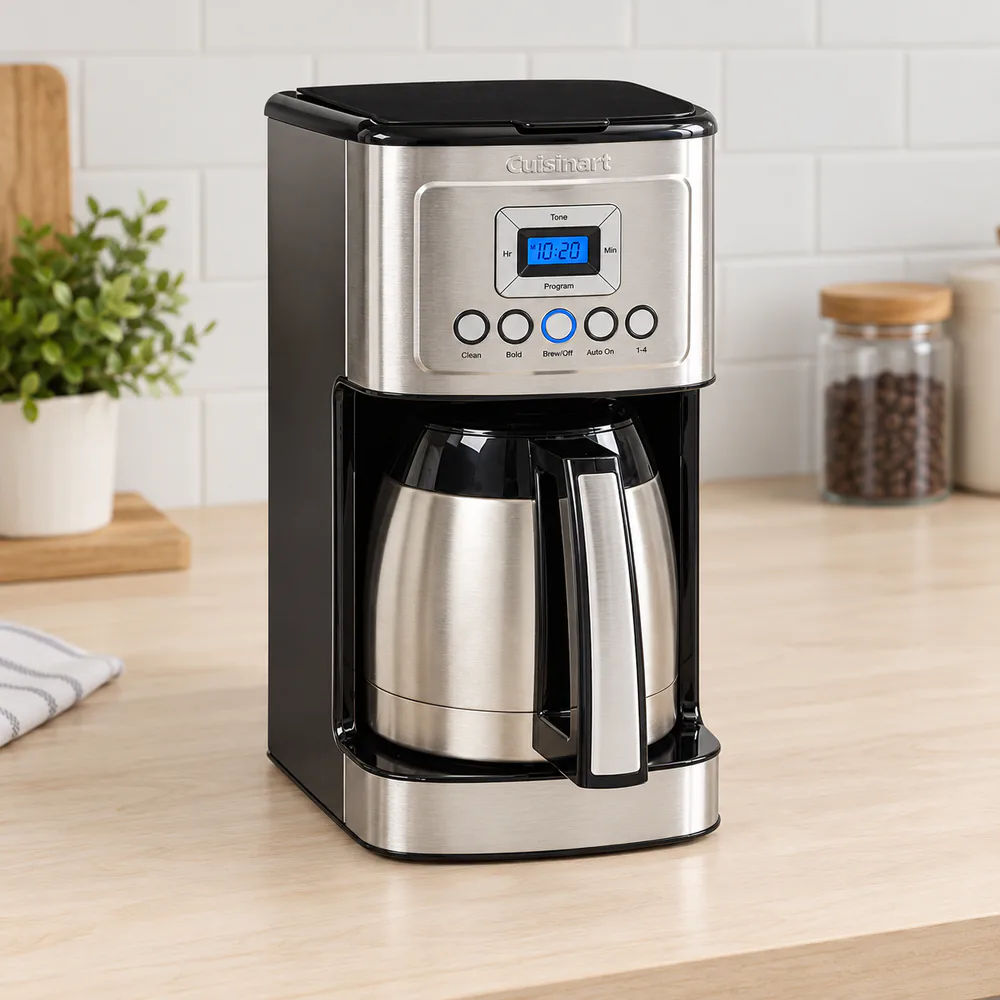
Cuisinart 12-Cup PerfecTemp Thermal (DCC-3400)

Best Thermal Carafe
Slow sippers who hate a hot plate 12-cup thermal 4.5 View on Amazon
4

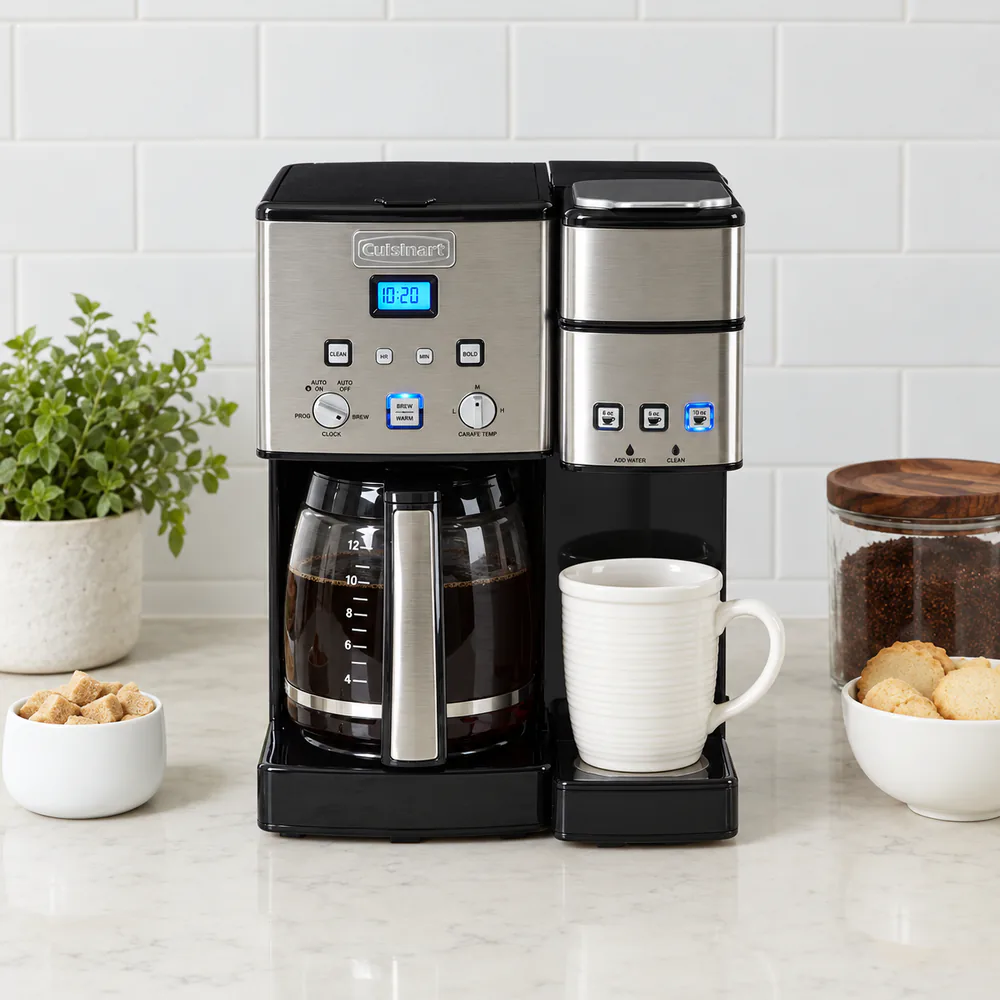
Cuisinart Coffee Center 12-Cup + Single-Serve (SS-15P1)

Best 2-in-1
Mixed households 12-cup + 40-oz tank 4.4 View on Amazon
5

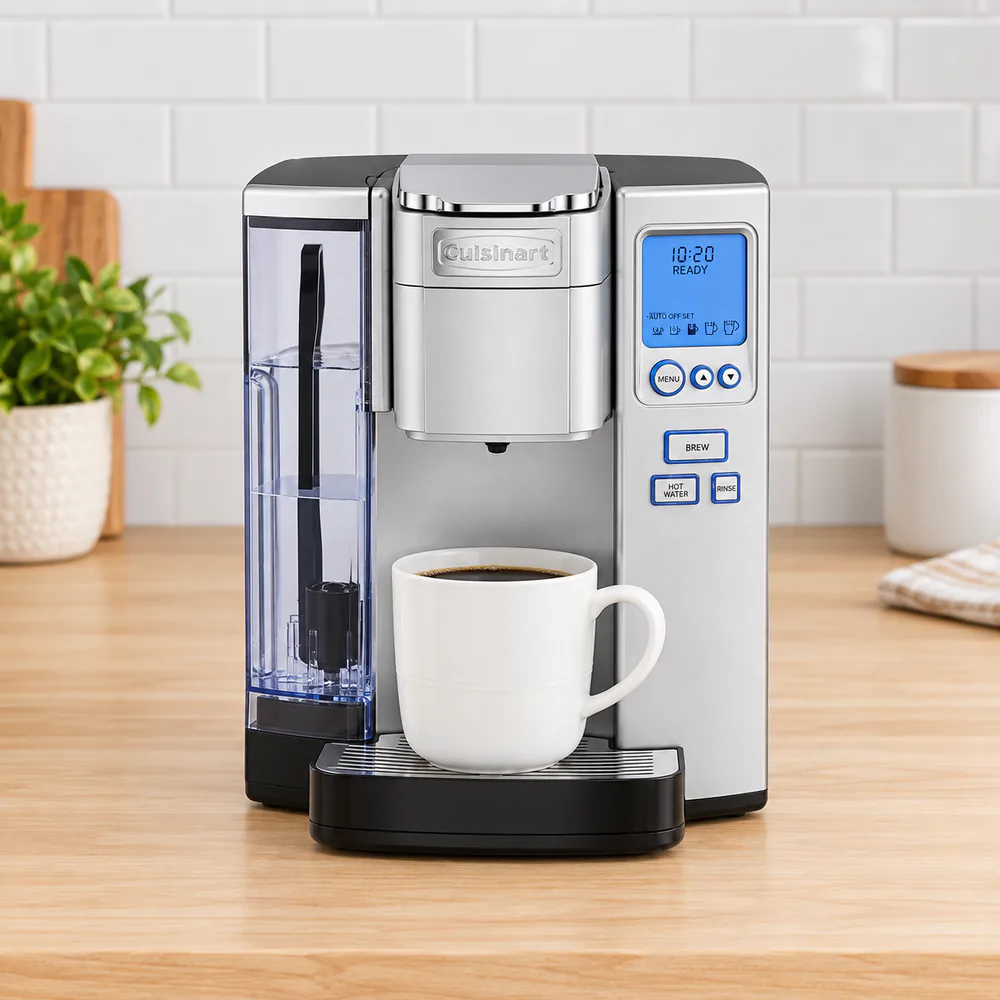
Cuisinart Single-Serve 72-Ounce (SS-10P1)

Best Single-Serve
One-cup drinkers who hate refilling 72-ounce tank 4.2 View on Amazon
6

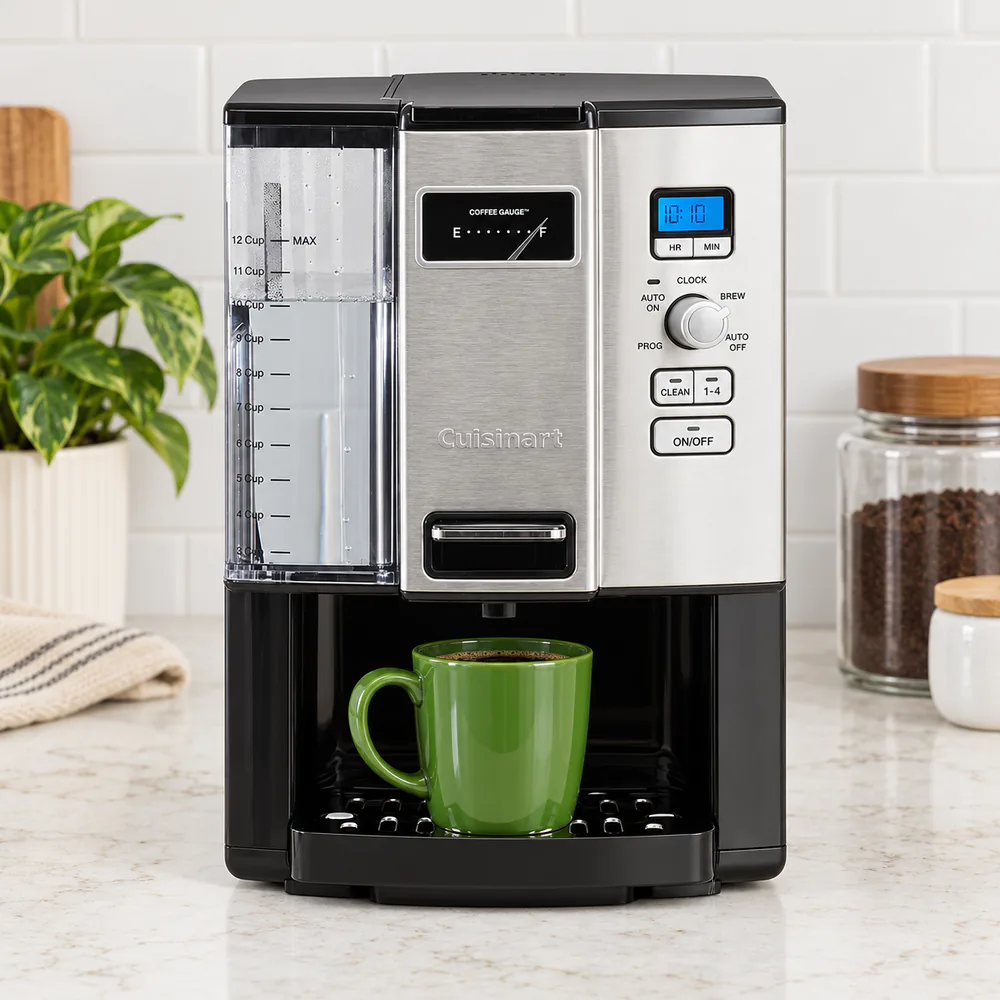
Cuisinart Coffee on Demand 12-Cup (DCC-3000)

Best for Convenience
Shared kitchens that pour by the mug 12 cups, no carafe 4.0 View on Amazon
7

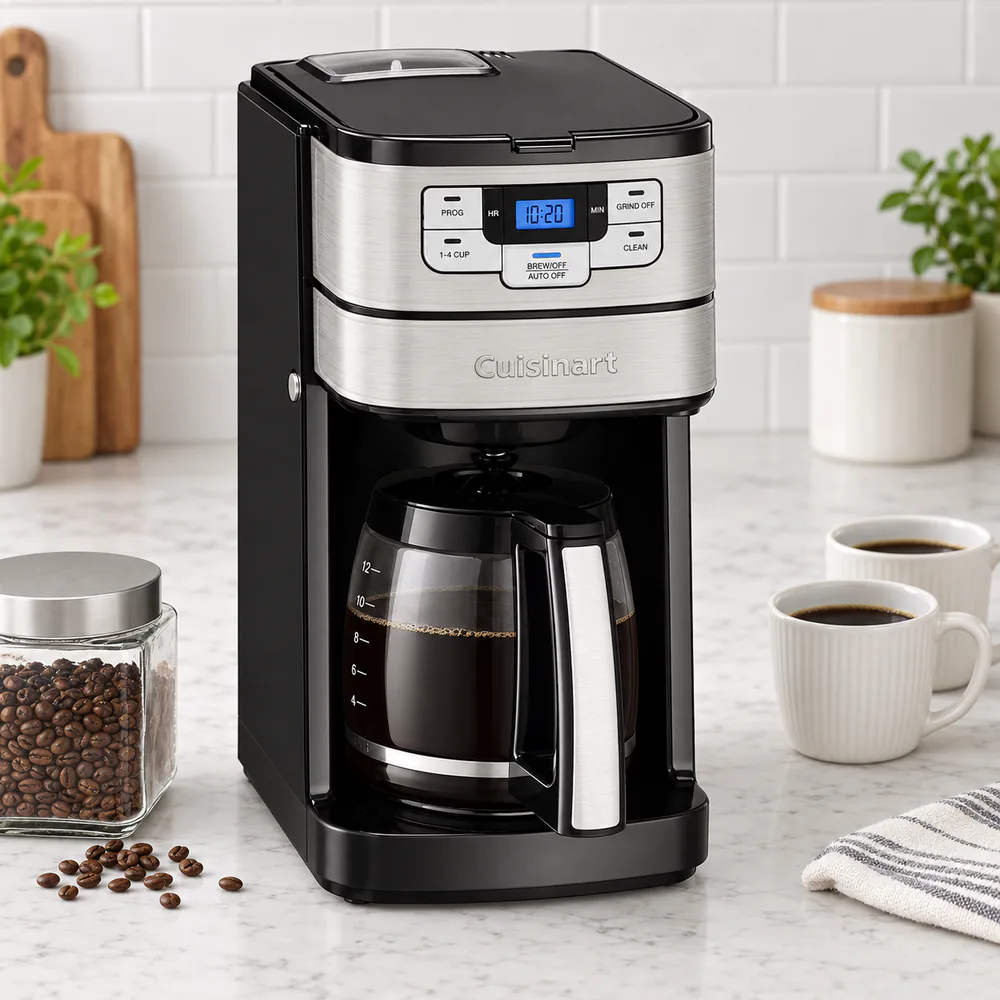
Cuisinart Automatic Grind and Brew 12-Cup (DGB-400)

Best Grind and Brew
Fresh-ground coffee with one button 12-cup glass, blade grinder 3.9 View on Amazon
8

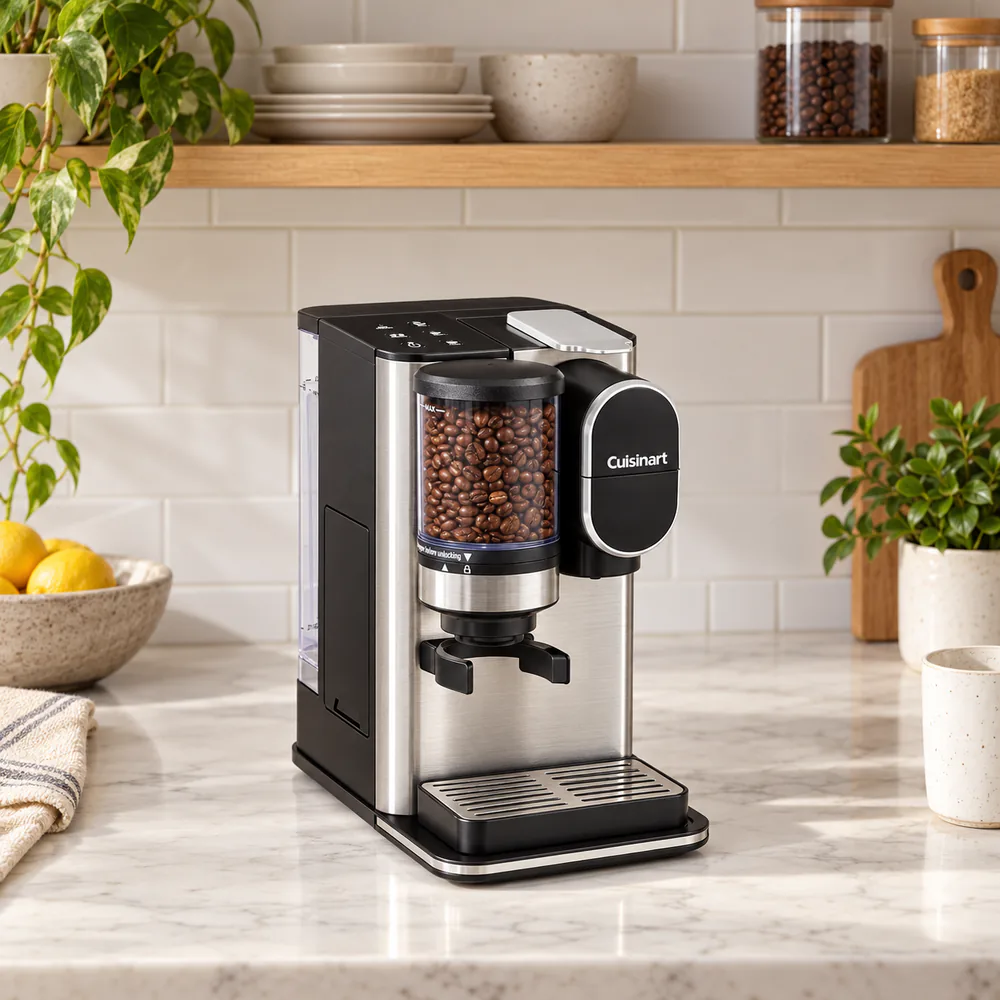
Cuisinart Single-Serve + Grinder (DGB-2SS)

Best Single-Serve Grinder
Single cups from whole beans 48-ounce tank, conical burr 3.9 View on Amazon

We earn a commission if you make a purchase, at no additional cost to you.

See full comparison table

How We Rate Cuisinart Coffee Makers

We weigh every machine on the things that decide whether a coffee maker earns its counter space: how good the coffee tastes, how hot it stays, how the carafe pours, how easy the controls are to learn, and how much work cleaning takes. We also weigh the parts that wear first, because a brewer that fails in year three is not a bargain at any size.

Brewing quality comes first. A drip machine that brews at the wrong temperature or lets the pot cook on a hot plate wastes good beans, so we favor designs that protect the coffee after the cycle ends, such as a thermal carafe or an adjustable heater plate. Controls come second. Some of these brewers have confusing panels that take a pot or two to learn, and we count that against them.

Cleanup and wear come last, and they count for a lot. We look at how each filter basket, reservoir and spout handles regular rinsing, and where each model tends to fail as it ages. Ratings are our own, on a five-point scale, and they weigh brewing quality, daily convenience and longevity about equally. Where a model has a thin track record, we say so in its review.

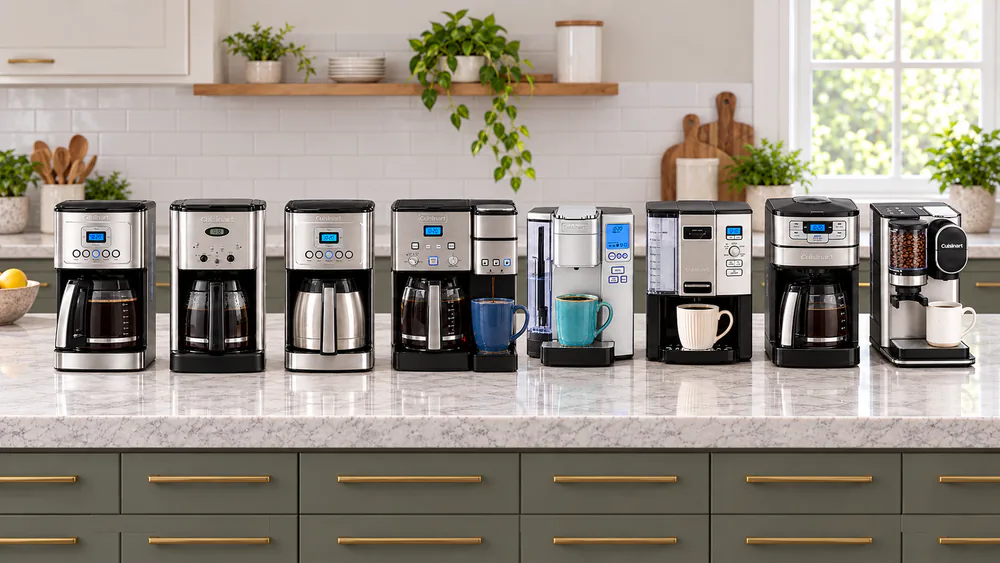
Eight Cuisinart coffee makers lined up on a kitchen counter, glass carafe, thermal carafe, single-serve and grind-and-brew models side by side
Glass, thermal, single-serve and grind-and-brew models, the four styles we compare here.

Our Cuisinart Coffee Maker Reviews

Cuisinart 14-Cup Programmable PerfecTemp (DCC-3200)
1

Cuisinart 14-Cup Programmable PerfecTemp (DCC-3200)

Best Overall
Check Price on Amazon
4.7/5

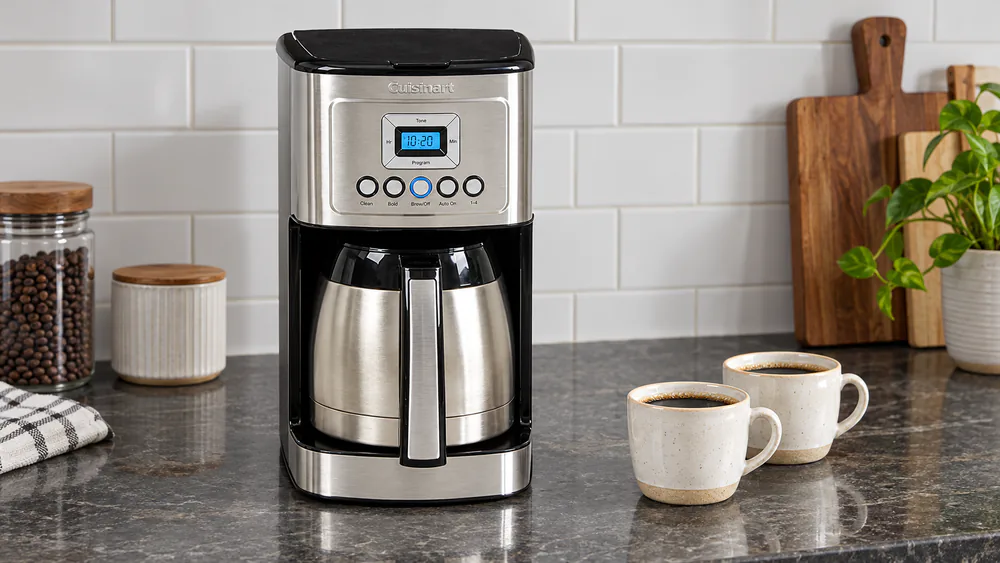
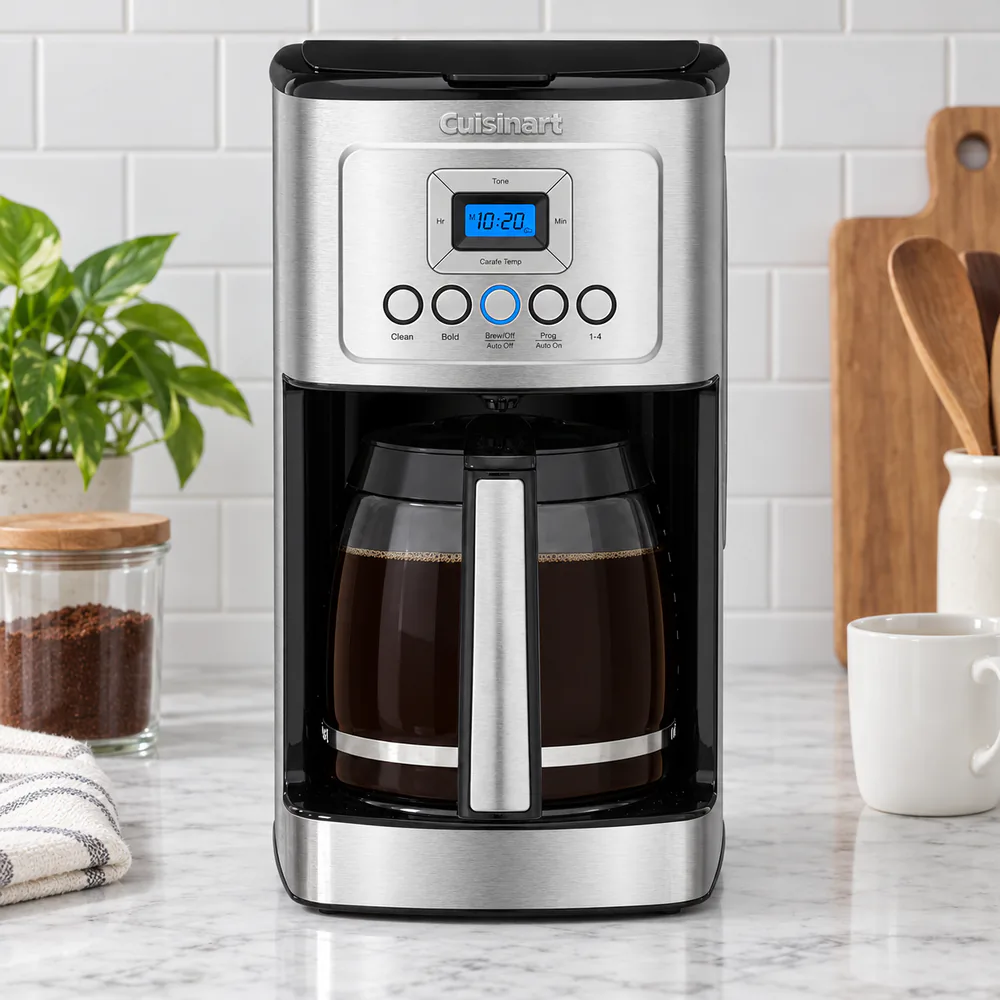
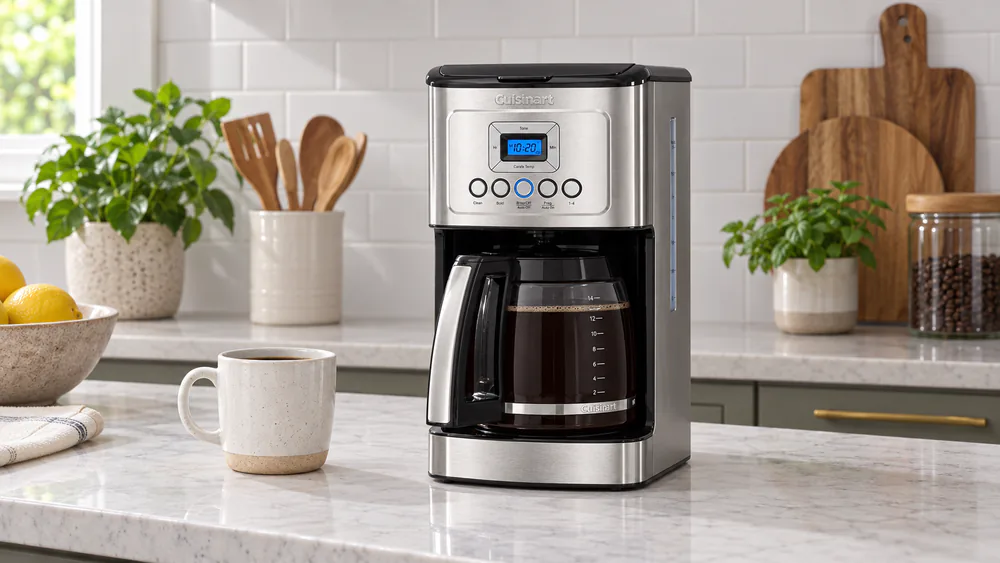
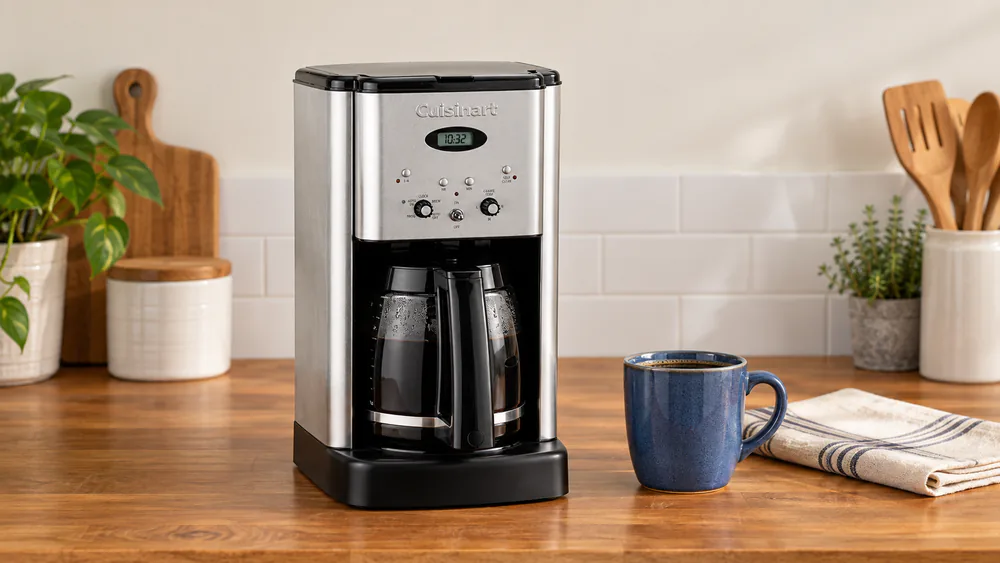
The DCC-3200 is a basic, high-capacity machine that brews consistently good coffee, and that consistency is why it is our top pick for most homes. The warming plate holds heat for hours without scorching the pot, which is the quiet failure that ruins a lot of cheaper drip machines. It is not flashy. It simply does the job every morning without drama.

Specifications

Type
Programmable drip
Capacity
14-cup glass carafe
Programmable
24-hour
Keep-warm
Adjustable
Body
Stainless

The 14-cup glass carafe is the headline feature, and a 1-4 cup setting means you do not have to brew a full pot for a couple of mugs. You can program it for a 24-hour start, pick regular or bold strength, and adjust the keep-warm temperature. We treat the Bold setting as more gimmick than game changer. It nudges the cup a little stronger, but adding a bit more coffee does more for flavor than the button does.

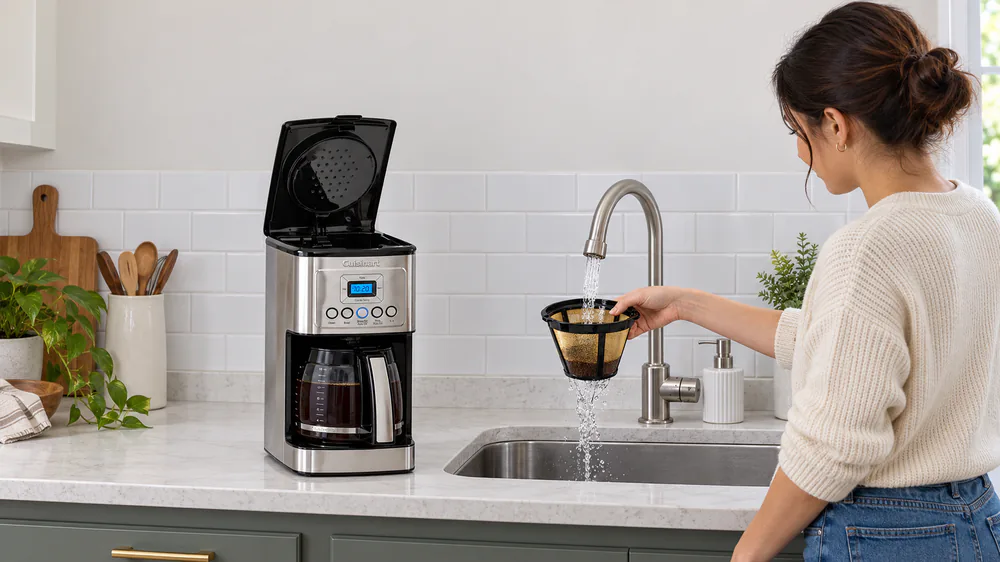
The control panel is confusing for the first brew or two, then becomes second nature. After that it fades into the background, which is what you want from a morning machine. The gold-tone permanent filter means no paper to buy, and rinsing it before you fill it keeps silt out of the pot. The keep-warm mode can taste cooked after a long hold, so pour what you need and shut the machine off if you are leaving the house.

Two quirks are worth knowing. To keep a full carafe from dribbling onto the counter, tilt it gently and pour very slowly. On some black-stainless units the clock runs fast and needs resetting. Neither stopped us from recommending it.

On longevity, a DCC-3200 can last about seven years of daily use before a crack in the glass or base starts a leak. Another ran about four years before failing. That spread is typical for a mid-priced drip machine, and it is a fair trade for how simple the machine is to live with. Consumer Reports lists its measured capacity at 72 ounces, which matches the generous pot you pour.
Pros

  • Brews consistently good coffee
  • Warming plate holds heat for hours without scorching
  • 1-4 cup setting plus 24-hour programming
  • Large 14-cup carafe suits families and guests

Cons

  • Carafe dribbles unless you pour slowly from a full pot
  • Control panel is confusing for the first brew or two
  • Keep-warm coffee can taste cooked after a long hold
  • Glass or base can crack and leak after several years
A Cuisinart DCC-3200 gold-tone permanent filter being rinsed under a kitchen tap before brewing, glass carafe waiting beneath the machine
Rinsing the gold-tone filter first keeps silt out of the pot.
Cuisinart Brew Central 12-Cup (DCC-1200)
2

Cuisinart Brew Central 12-Cup (DCC-1200)

Best Value
Check Price on Amazon
4.6/5

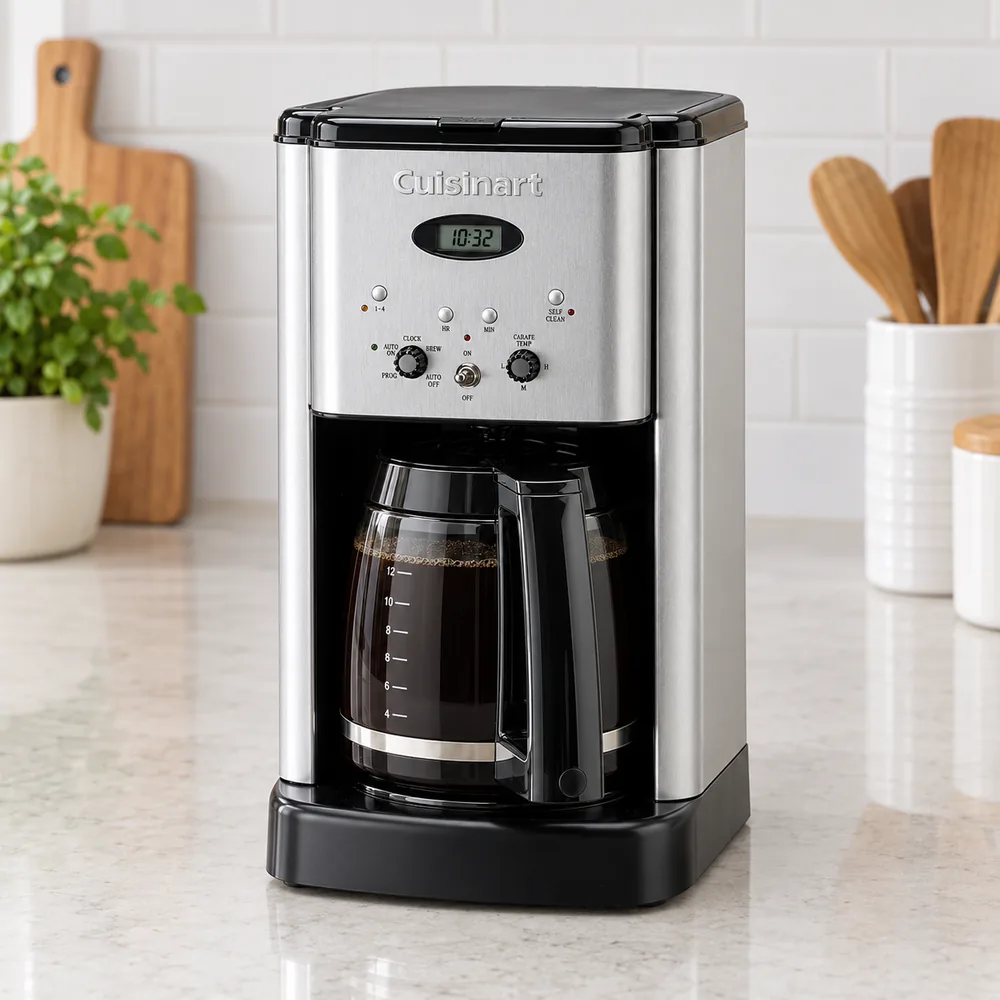
The DCC-1200 is a workhorse, and that single word covers most of what you need to know. These machines run daily for five, ten and even 13 years, and the usual failure is a heating problem long after the first decade. For a budget-tier brewer that is a remarkable record, and it is why we rank it second and call it our value pick.

Specifications

Type
Programmable drip
Capacity
12-cup glass carafe
Programmable
24-hour
Small batch
1-4 cup setting
Auto-off
0 to 4 hours

It offers 24-hour programmability, a 1-4 cup setting and an auto-off you can set anywhere from 0 to 4 hours. The variable heater plate has low, medium and high levels, and choosing the lower level helps you avoid the over-cooked flavor a hot plate can give. Coffee on a hot plate will never match a thermal carafe, but if you drink the pot within an hour or so, this machine is perfectly happy.

Day to day it is easy to live with. It runs quietly and beeps when the pot is ready, a small courtesy in the morning. It can be loud while brewing on some units, so if you share a thin wall with a bedroom, listen before you commit. The ergonomic handle has a knuckle guard, and the dripless spout pours cleaner than the DCC-3200's does.

It ships with a built-in charcoal water filter and a permanent gold-tone filter, plus a scoop and a starter pack of #4 paper filters. The gold-tone filter eventually wears out, and it is a cheap replacement. The machine also needs periodic descaling, like any drip brewer, and we cover that in the cleaning section.

If we had to buy one drip machine for a rental, a dorm or a first apartment, this would be it. It gives up the 14-cup capacity and the strength control of the DCC-3200, and in return it asks for very little.

Pros

  • Long record of daily reliability
  • Dripless spout and knuckle-guard handle
  • Adjustable heater plate and auto-off
  • Cheap, easy gold-tone filter replacement

Cons

  • Hot plate coffee never matches a thermal carafe
  • Can be loud while brewing
  • Needs periodic descaling
  • No brew strength control
Cuisinart 12-Cup PerfecTemp Thermal (DCC-3400)
3

Cuisinart 12-Cup PerfecTemp Thermal (DCC-3400)

Best Thermal Carafe
Check Price on Amazon
4.5/5

The thermal carafe on the DCC-3400 keeps coffee hot for about three hours with no burnt taste, which is exactly the feature that justifies stepping up from a glass pot. Without a hot plate cooking the brew, the last cup tastes close to the first. It also fits compactly under low cabinets, a point that matters more than it sounds in a small kitchen.

Specifications

Type
Programmable drip, thermal
Capacity
12-cup (about 5 oz per cup)
Programmable
24-hour
Filters
Gold-tone and charcoal water
Display
Backlit LCD

The feature list is generous. You get 24-hour programmability, a 1-4 cup setting, brew strength control, Brew Pause and a backlit LCD with an optional ready tone. A decalcify indicator light tells you when scale is building, so you are not guessing when to descale. It ships with both a gold-tone filter and a charcoal water filter. If you want a deeper look at this line, see our Cuisinart PerfecTemp review.

The carafe is the complaint. The inset rim and restrictive lid slow the pour, and you have to tilt a full pot far to empty it. The spout can pour clean once you learn the angle, but it takes a few mornings to learn, and it is a learning curve glass-carafe machines do not have.

Two practical cautions. The machine vents a lot of steam, which can damage cabinets above it, so do not slide it fully under a cabinet and brew. And the self-clean cycle does not replace regular manual cleaning, so keep rinsing the basket and carafe yourself.

For a household that brews once and sips for the morning, none of that is a dealbreaker. The coffee stays hot and tastes fresh, and that is the point of buying a thermal machine.

Pros

  • Hot, fresh-tasting coffee for hours
  • Decalcify indicator takes the guesswork out of descaling
  • Strength control and Brew Pause
  • Fits under low cabinets

Cons

  • Inset rim and lid make pouring awkward at first
  • Vents a lot of steam that can harm cabinets above
  • Self-clean does not replace manual cleaning
Cuisinart Coffee Center 12-Cup + Single-Serve (SS-15P1)
4

Cuisinart Coffee Center 12-Cup + Single-Serve (SS-15P1)

Best 2-in-1
Check Price on Amazon
4.4/5

Where the DCC-3400 suits one sipper, the SS-15P1 solves a very common household problem: one person drinks a single cup, and everybody else wants a pot. The two-in-one works well for mixed households, with strong full pots on the carafe side and a quick, fairly quiet single cup on the other. You never have to brew twelve cups for one mug.

Specifications

Type
Drip plus single-serve
Carafe side
12-cup glass
Reservoir
40-oz removable
Programmable
24-hour (carafe side)
Filters
Charcoal water filter included

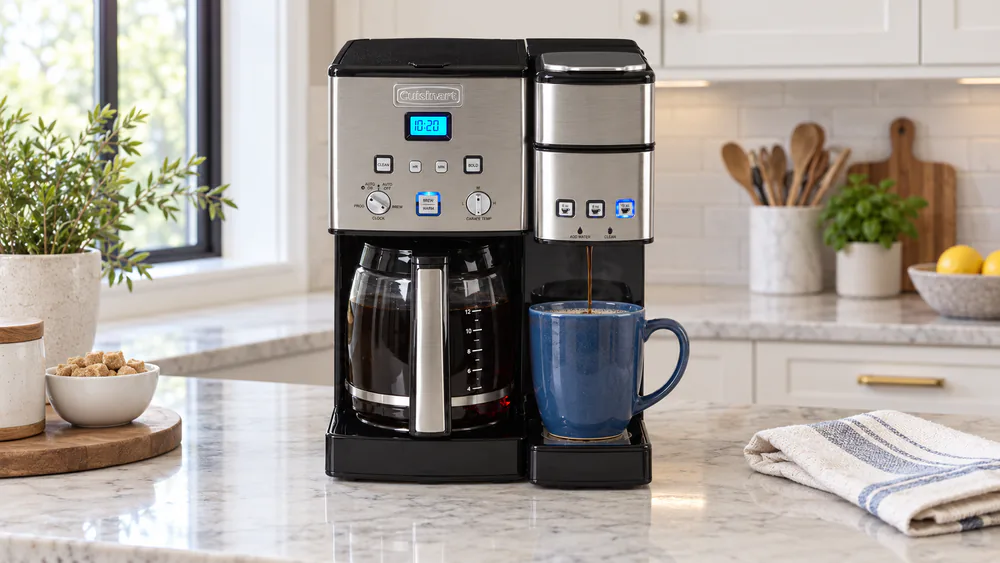
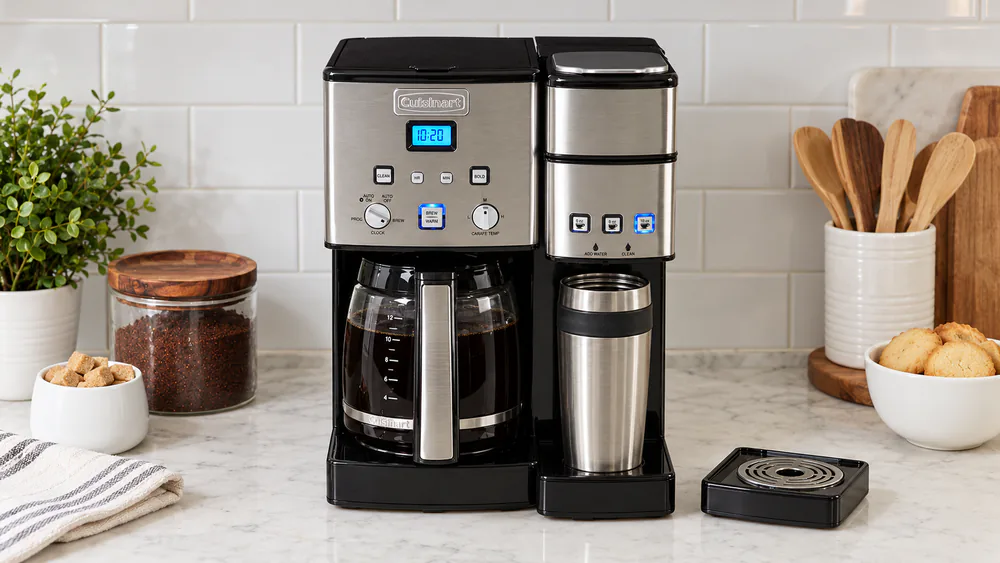
The carafe side has a 12-cup glass pot with a 24-hour brew start, brew strength control, Brew Pause, an adjustable auto-off, a ready alert and a self-clean cycle. The single-serve side brews 6, 8 or 10 ounces from a 40-ounce removable reservoir, takes any brand of single-cup pod including K-Cup, and has an optional reusable filter cup for your own grounds. A removable drip tray makes room for a travel mug, and a charcoal water filter is included.

The weak spot is the single-serve side, which is the part that tends to leak over the years. There is also a user-error trap: pushing the filter basket down fully while brewing sends water over the top and makes a mess to clean up. Seat the basket gently and it behaves; push it down fully mid-brew and the water goes over the top and onto the counter. Units run roughly three and a half to eight years, a wide range, so treat the three-year limited warranty as useful protection.

It takes up more counter than a single-purpose machine, and it costs more than the plain drip models. We think the flexibility is worth it for a house with split coffee habits. For a single person who only drinks pods, a dedicated single-serve brewer is the leaner buy.

Pros

  • Full pot and single cup in one machine
  • Quick, fairly quiet single-cup brewing
  • Accepts any brand of pod or your own grounds
  • Self-clean and brew strength control on the carafe side

Cons

  • Single-serve side tends to leak over the years
  • Pushing the filter basket down sends water over the top
  • Larger footprint than a single-purpose brewer
A Cuisinart SS-15P1 Coffee Center with the glass carafe on one side and a travel mug under the single-serve spout on the other
The SS-15P1 handles a full pot and a single cup side by side.
Cuisinart Single-Serve 72-Ounce (SS-10P1)
5

Cuisinart Single-Serve 72-Ounce (SS-10P1)

Best Single-Serve
Check Price on Amazon
4.2/5

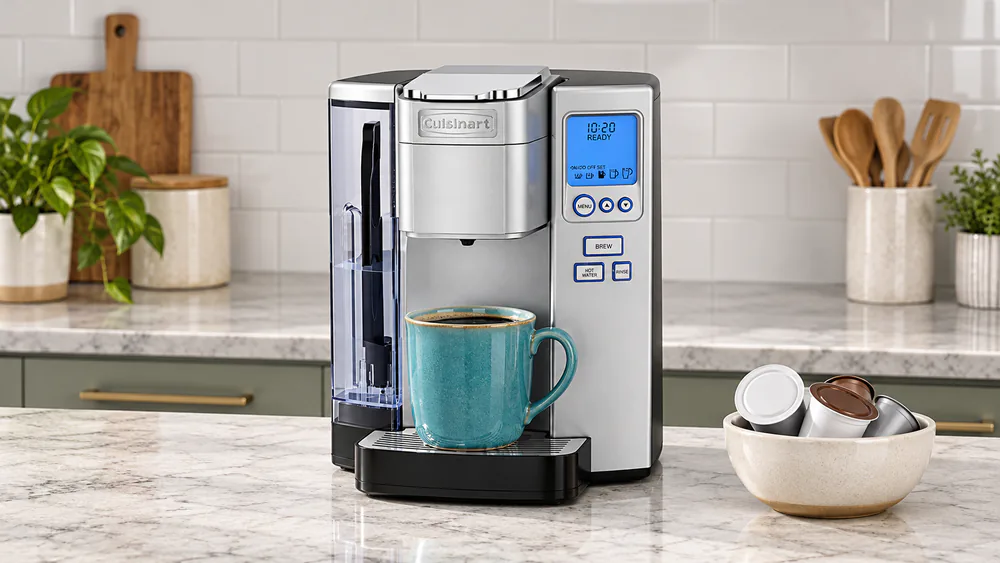
The big 72-ounce tank is the reason to buy the SS-10P1. It cuts refills dramatically compared with the small reservoirs on mini pod brewers, so you can make cup after cup through the week without lifting the lid. For a single drinker who brews daily, that is a genuine convenience.

Specifications

Type
Single-serve
Reservoir
72-ounce
Cup sizes
5 settings
Programmable
Yes, with auto on/off
Filters
Charcoal water filter, reusable filter

It offers five cup-size settings, a programmable start, a backlit LCD, auto on and off, and adjustable temperature. It is compatible with pods, includes a reusable filter for your own grounds, and has an auto-rinse feature plus a built-in charcoal water filter. A hot water dispenser is a bonus that works for tea or instant oatmeal.

The trade-offs are size and upkeep. It is larger than mini pod brewers, so it needs real counter room. The pod needle area needs regular cleaning, so rinse it weekly. It also pours one cup at a time, so it cannot serve two people at once, which is where the SS-15P1 above has the edge.

It is a smart pick for anyone who is the only coffee drinker in the house and wants variety without brewing a pot. We rank it fifth rather than higher because most households still do better with a full-size carafe.

Pros

  • Five cup sizes and adjustable temperature
  • Hot water dispenser
  • Accepts pods or your own grounds

Cons

  • Pod needle area needs regular cleaning
  • Bigger than mini pod brewers
  • Serves one cup at a time
Cuisinart Coffee on Demand 12-Cup (DCC-3000)
6

Cuisinart Coffee on Demand 12-Cup (DCC-3000)

Best for Convenience
Check Price on Amazon
4.0/5

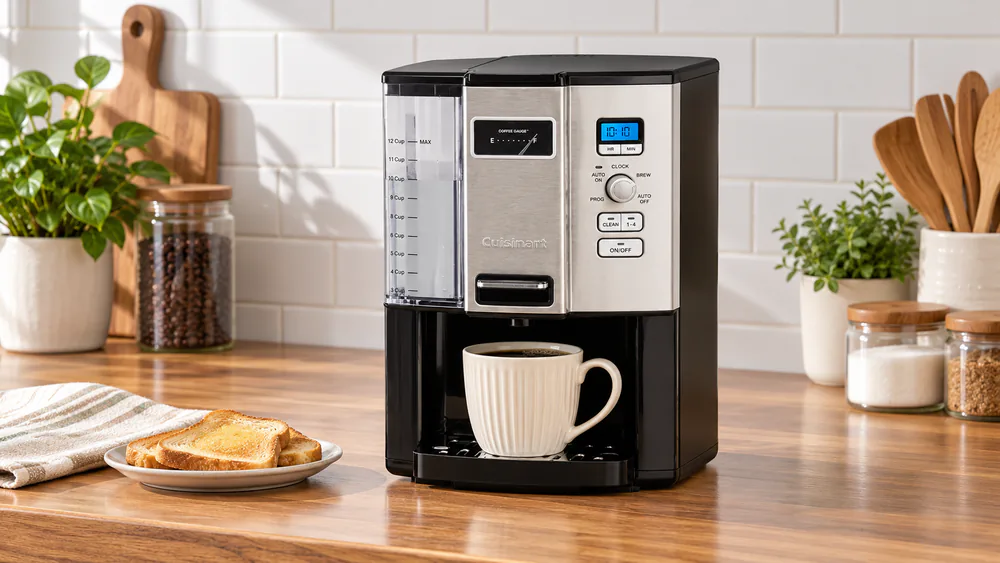
The DCC-3000 is the odd one in this roundup because it has no carafe. It holds 12 cups in an internal reservoir and dispenses them by the mug with a single press, and a cup gauge counts down how much is left. That suits shared kitchens, offices and households where people drift in at different times.

Specifications

Type
Drip with internal reservoir
Capacity
12 cups, no carafe
Programmable
24-hour
Reservoir
Removable
Auto-shutoff
Adjustable

It also offers 24-hour programming, an adjustable auto-shutoff and a removable water reservoir. The catch is that it brews a full batch first, so you do not save coffee by pouring a single cup. The internal reservoir must be rinsed regularly or coffee tastes stale, and we would put a weekly rinse on the calendar.

The dispensing spout is the weak point, and units tend to last around four years. The filter basket handle also catches when you dump the grounds.

We like the design and one-press convenience, but its long-term record keeps it in sixth place. Buy it if the no-carafe design solves a real problem in your house, and know that you are buying a convenience feature with a shorter lifespan than the plain drip machines above.

Pros

  • No carafe to pour, wash or break
  • One-press dispensing suits shared kitchens
  • Cup gauge shows what is left
  • Programmable with adjustable auto-shutoff

Cons

  • Dispensing spout can drip or leak within a couple of years
  • Cup-level indicator can stop registering
  • Travel mugs do not fit under the spout
  • Reservoir needs regular rinsing
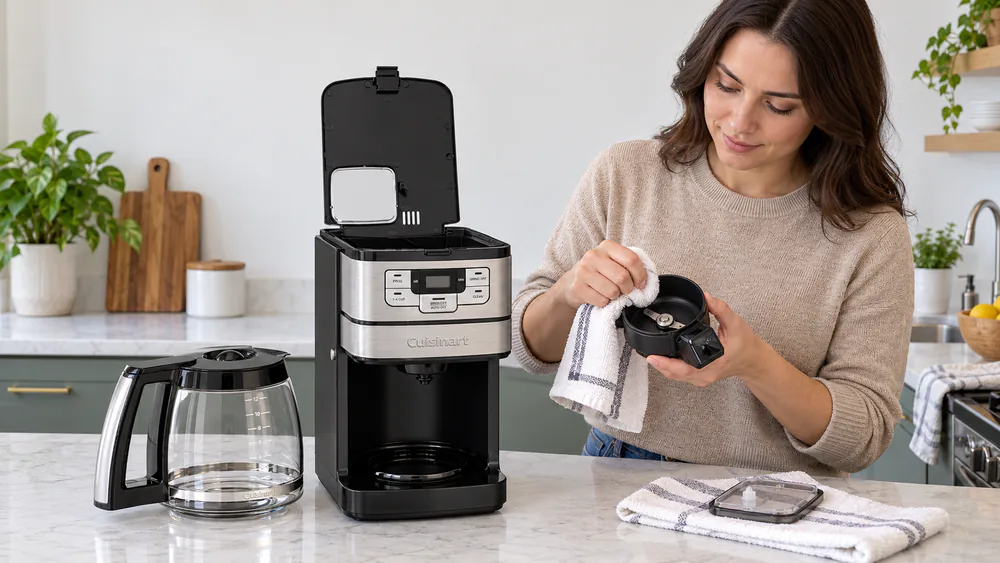
A Cuisinart DGB-400 with its lid open and the blade grinder chamber being wiped out with a cloth beside the glass carafe
Wiping out the grinder chamber is part of owning a grind-and-brew.
Cuisinart Automatic Grind and Brew 12-Cup (DGB-400)
7

Cuisinart Automatic Grind and Brew 12-Cup (DGB-400)

Best Grind and Brew
Check Price on Amazon
3.9/5

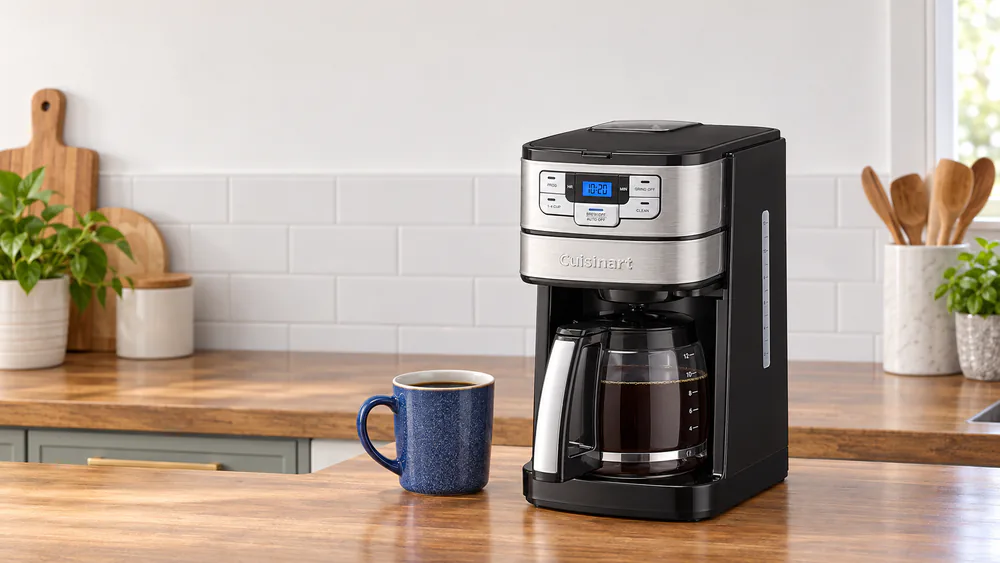
The blade grinder in the DGB-400 cannot produce an even grind, and it cannot run quietly, so know those limits first. Within them, it is the current Cuisinart grind-and-brew we can recommend, and the idea is appealing: load whole beans, press the button and wake up to a pot made from freshly ground coffee. It is a 12-cup glass-carafe machine with a blade grinder and a grind-off option, so you can still use pre-ground coffee on busy days.

Specifications

Type
Grind-and-brew drip
Capacity
12-cup glass carafe
Grinder
Blade, grind-off option
Programmable
Yes
Filters
Gold-tone permanent, charcoal water

It also has a 1-4 cup setting, Brew Pause, programming, a permanent gold-tone filter and a charcoal water filter. Because the grinder is a blade, not a burr, the grind is less even than a burr grinder produces. If grind quality is your priority, our roundup of Cuisinart coffee makers with a built-in grinder goes deeper.

Grind-and-brew machines come with a known downside. They are noisy during the grind and a chore to clean around the grinder, which is why a separate grinder is easier to maintain. Plan to wipe out the grinder chamber regularly, and expect more steps than a plain drip machine.

We keep this review brief because the brewer earns a modest score. It does what it promises, and the convenience is real, but the noise and cleanup keep it behind the simpler picks. If you want fresh grounds without any fuss, a plain drip machine and a separate grinder remain the lower-maintenance route.

Pros

  • Fresh grounds at the press of one button
  • Grind-off option for pre-ground coffee
  • 1-4 cup setting and Brew Pause
  • Programmable

Cons

  • Noisy during the grind
  • Blade grinder gives a less even grind than a burr
  • More cleaning around the grinder
Cuisinart Single-Serve + Grinder (DGB-2SS)
8

Cuisinart Single-Serve + Grinder (DGB-2SS)

Best Single-Serve Grinder
Check Price on Amazon
3.9/5

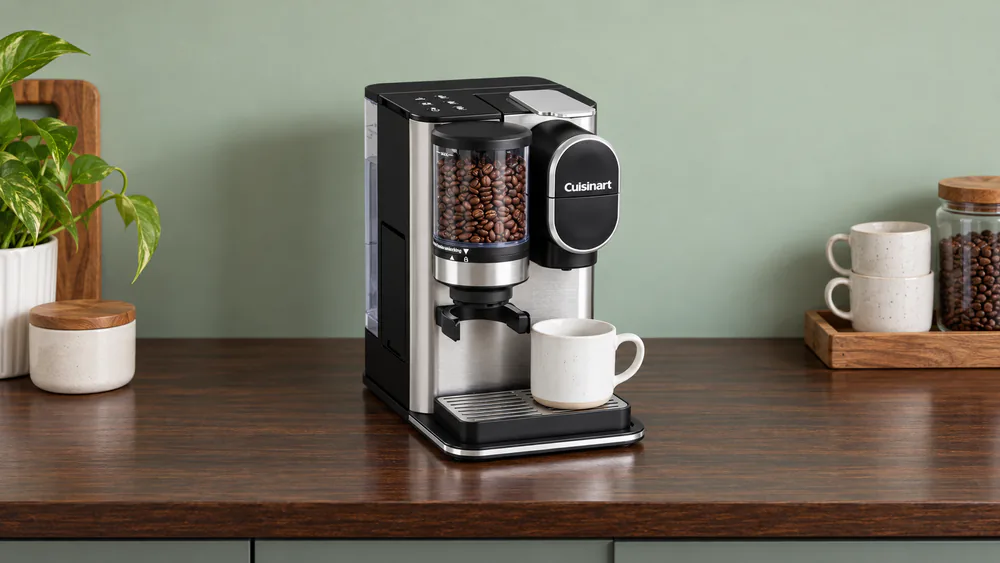
Pairing a conical burr grinder with a single-serve brewer, the DGB-2SS starts each cup as whole beans. The burr grinder feeds the reusable filter cup directly from a sealed bean hopper. A conical burr gives a more even grind than the blade in the DGB-400, which is the better design for flavor.

Specifications

Type
Single-serve with grinder
Reservoir
48-ounce removable
Grinder
Conical burr
Cup sizes
8, 10 or 12 ounces
Warranty
Limited 3-year

It brews 8, 10 or 12 ounces from a 48-ounce removable reservoir and comes with a limited 3-year warranty. The reservoir is large enough for several cups, though not as large as the SS-10P1 tank. The same grinder-cleanup warning applies here as to every grind-and-brew machine: they are noisy during the grind and take more effort to clean around the grinder.

We keep this entry short on purpose, and it sits last because it is the newest and least proven pick in the lineup. If you are weighing it against the DGB-400, our guide to Cuisinart single-serve grind and brew machines covers the comparison. For one person who loves whole beans and drinks one cup at a time, it is a sensible choice.

Pros

  • Conical burr grinder for a more even grind
  • Sealed bean hopper
  • Large removable reservoir
  • Limited 3-year warranty

Cons

  • Grinder adds noise and cleanup
  • Serves one cup at a time
  • Fewer proven results than the other picks

Cuisinart Coffee Makers Compared Side by Side

Here is how the eight machines line up on type, capacity, carafe and features. The ratings are ours.

ProductTypeCapacityCarafeProgrammableBuilt-in grinderBest forRating
DCC-3200 Programmable drip 14-cup Glass Yes (24-hour) No Families 4.7
DCC-1200 Programmable drip 12-cup Glass Yes (24-hour) No Reliable value 4.6
DCC-3400 Programmable drip 12-cup Thermal Yes (24-hour) No Slow sippers 4.5
SS-15P1 Drip + single-serve 12-cup + 40-oz tank Glass Yes (24-hour) No Mixed households 4.4
SS-10P1 Single-serve pod 72-ounce tank Mug Yes No One-cup drinkers 4.2
DCC-3000 Drip, internal reservoir 12-cup None (dispenses) Yes (24-hour) No Shared kitchens 4.0
DGB-400 Grind-and-brew drip 12-cup Glass Yes Yes (blade) Fresh-ground pots 3.9
DGB-2SS Single-serve + grinder 48-ounce tank Mug Not stated Yes (conical burr) Whole-bean single cups 3.9

How to Choose a Cuisinart Coffee Maker

Most of the decision comes down to four questions: how you brew, how much you brew, how long the coffee sits, and how much maintenance you will tolerate. Once those are answered, the field narrows quickly.

Drip vs single-serve vs grind-and-brew

Drip machines give you the most coffee for the least effort. If anyone else in the house drinks coffee, or you host guests, a drip machine like the DCC-3200 or DCC-1200 is the practical choice. Single-serve brewers suit one drinker who wants variety and a fresh cup every time, and the SS-10P1 is the best of the pod-style machines here. If you split the difference, the SS-15P1 does both.

Grind-and-brew models promise fresh grounds from a single machine. The cost is noise during the grind and more cleaning around the grinder, which is why many cooks prefer a separate grinder. If you are weighing combos across brands, see our look at espresso and coffee maker combos.

The best Cuisinart is the one that matches how many cups you pour and how long they sit, not the one with the longest feature list.

Capacity and carafe type

Capacity is easy to misread. Cuisinart measures a cup at about 5 ounces, so a 12-cup machine makes around 60 ounces, which is closer to six large mugs. Match the pot to your real consumption rather than the number on the box.

Glass carafes sit on a hot plate. They are simple and cheap, but coffee that sits there starts to taste cooked, so they work best when you drink the pot within an hour. Thermal carafes like the DCC-3400's hold heat for hours with no burnt taste, though they pour more slowly. A carafe-free dispenser like the DCC-3000 avoids the pouring problem altogether, with its own long-term drawbacks.

Programmability and features

Every drip model here offers 24-hour programming, and it is the feature that most changes your mornings. Waking up to a ready pot is the whole point. A 1-4 cup setting is also valuable if you often brew less than a full pot, because the coffee-to-water ratio stays right.

Brew strength control is nice but not essential. Adding a little more coffee to the basket does as much as pressing a strength button. A decalcify indicator, as on the DCC-3400, is a useful reminder for anyone with hard water. For more on the category, our guide to the best drip coffee makers and best coffee makers overall compare other brands.

Budget and warranty

Cuisinart coffee makers carry a limited 3-year warranty. The simple budget-tier drip machines, led by the DCC-1200, have the strongest record for lasting years, while the feature-heavy models with dispensers and pod systems tend to develop leaks sooner. Mid-priced thermal and 14-cup machines sit in between. Spending more buys features, not necessarily a longer life, so decide which features you will really use.

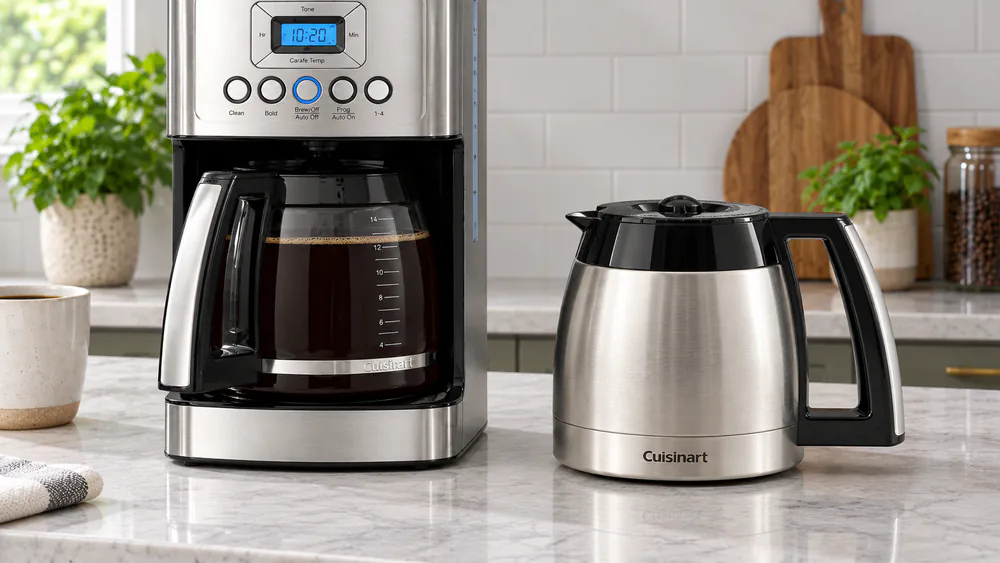
A Cuisinart glass carafe on a warming plate next to a stainless thermal carafe, both filled with coffee on a kitchen counter
Glass carafes sit on a hot plate; thermal carafes hold heat without one.

Cleaning and Descaling Your Cuisinart

Whichever machine you choose from the guide above, it is easier to live with if you build in a small routine. Rinse the filter basket and carafe after each use, and rinse the gold-tone permanent filter before you fill it so silt stays out of the pot. On the DCC-3000, rinse the internal reservoir regularly or the coffee starts to taste stale. On the SS-10P1, clean the pod needle area on a regular schedule.

Scale builds up in any machine that heats water, and hard water makes it worse. The DCC-3400 has a decalcify indicator light, which takes the guesswork out of it. The other models do not have one, so descale on a schedule that fits your water: more often if you notice slower brewing or a different taste. Follow the descaling steps in your manual for the exact solution and cycle.

Self-clean cycles, such as the one on the DCC-3400, are a helpful extra but not a replacement for regular manual cleaning. Replace the charcoal water filter on its recommended schedule on the models that include one, which is the DCC-1200, DCC-3400, DGB-400, SS-15P1 and SS-10P1.

Tip. Rinse the gold-tone permanent filter under the tap before you add grounds. It keeps silt out of the pot and makes the cup cleaner.

Frequently Asked Questions

Where are Cuisinart coffee makers made?

The brand does not state a country of manufacture, and it differs by model and production run. Check the label on the base of your unit to see where it was made.

Do the DCC-3200 and DCC-1200 take the same filters?

Not exactly. Both use a gold-tone permanent filter, but the DCC-1200 also ships with a charcoal water filter and paper filters in the starter pack, while the DCC-3200 relies on the permanent filter. Check the manual for the exact replacement parts before you order.

Do the single-serve models take pods other than their own?

The SS-15P1 takes any brand of single-cup pod, including K-Cups, and both it and the SS-10P1 accept a reusable filter cup for your own grounds. Confirm pod compatibility on the box before buying a brand you have not used.

What happens if I skip descaling in hard water?

Scale builds up in any machine that heats water, and hard water speeds it along. The usual signs are slower brewing and a change in taste. Cuisinart does not publish one interval for every model, so go by those signs and the steps in your manual.

How does the 1-4 cup setting work?

It adjusts the brew for a small batch so the coffee-to-water ratio stays right when you make a couple of mugs instead of a full pot. The DCC-3200, DCC-1200, DCC-3400 and DGB-400 all have it.

Can I use pre-ground coffee in a grind-and-brew machine?

On the DGB-400, yes. Its grind-off option lets you skip the grinder and brew with pre-ground coffee on busy days.

Final Verdict

The DCC-3200 and DCC-1200 are covered above, so the decision that is left is whether your household needs something different. Choose the DCC-3400 if hot coffee over several hours matters, and the SS-15P1 if your house splits between pots and single cups. Pick the SS-10P1 if you are the only drinker, and treat the DCC-3000 and the grind-and-brew models as convenience buys that cost you extra upkeep.

Read next

Ready to upgrade your kitchen?

Pick the Cuisinart that fits how you brew, and enjoy a better cup every morning.