Helping you create a kitchen you love.

Appliances

Best Espresso and Coffee Maker Combos: 7 Machines That Do Both Well

As an Amazon Associate we earn from qualifying purchases. We may earn a commission from links on this page, at no extra cost to you. Learn more.

Best Espresso and Coffee Maker Combos: 7 Machines That Do Both Well

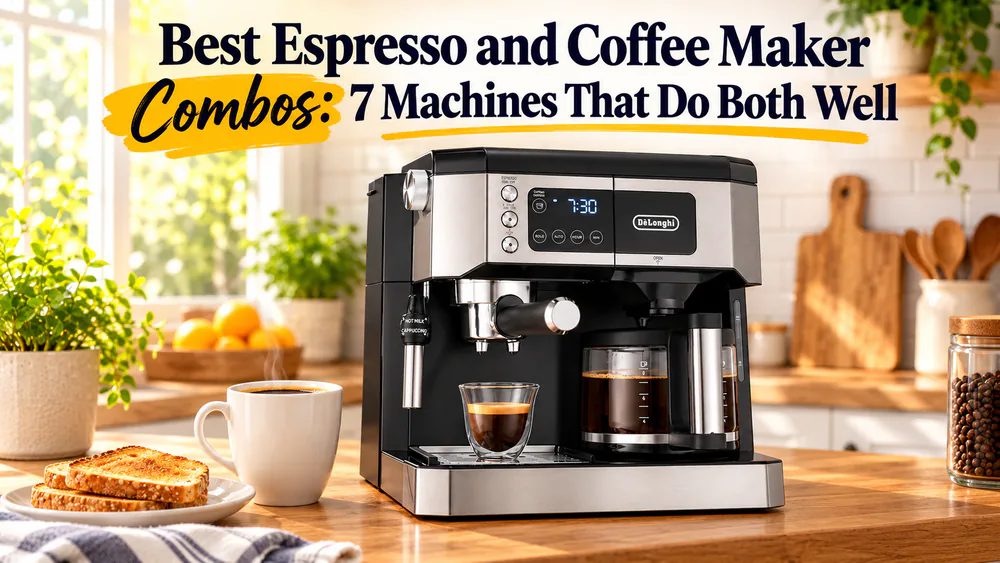
If you want real espresso on a Saturday and a full pot of drip for the in-laws on Sunday, you probably also want to keep one machine on the counter instead of two. A good all-in-one can do that, and it can save counter space in a small kitchen. We came to this as coffee people first, and our first piece of advice is always to budget for the grinder before the machine. That advice shapes every pick below, and our top choice, the De'Longhi All-in-One Combination, earned its spot by doing the best of both worlds without a steep learning curve.

Across all seven machines, the drip and capsule sides were easy and consistent. The espresso and milk-steaming systems needed more adjustment, ran louder, and were usually the first parts to fail. Machines with a separate milk system, like the Keurig K-Cafe frother and the Philips LatteGo jug, rinse clean in seconds, while the steam-wand and auto-frother designs are the usual early trouble spots.

Combo machines are a compromise by nature, and we say so up front. Some give you drip plus espresso, some blend pods with a frother, and one is a bean-to-cup automatic. If you already know you want a dedicated espresso machine, our espresso machine reviews go deeper on that side. If you want one machine for the whole household, keep reading.

Our Top Picks at a Glance

RankProductBest forBrew typesRatingBuy
1

De'Longhi All-in-One Combination

Best Overall
Households that want drip and espresso Drip + espresso 4.5 View on Amazon
2

Keurig K-Cafe

Best Pod Combo
Latte-style drinks from pods K-Cup + shot 4.4 View on Amazon
3

Ninja Luxe Cafe Premier

Best Premium All-in-One
Hands-off lattes with a built-in grinder Espresso, drip, cold brew 4.3 View on Amazon
4

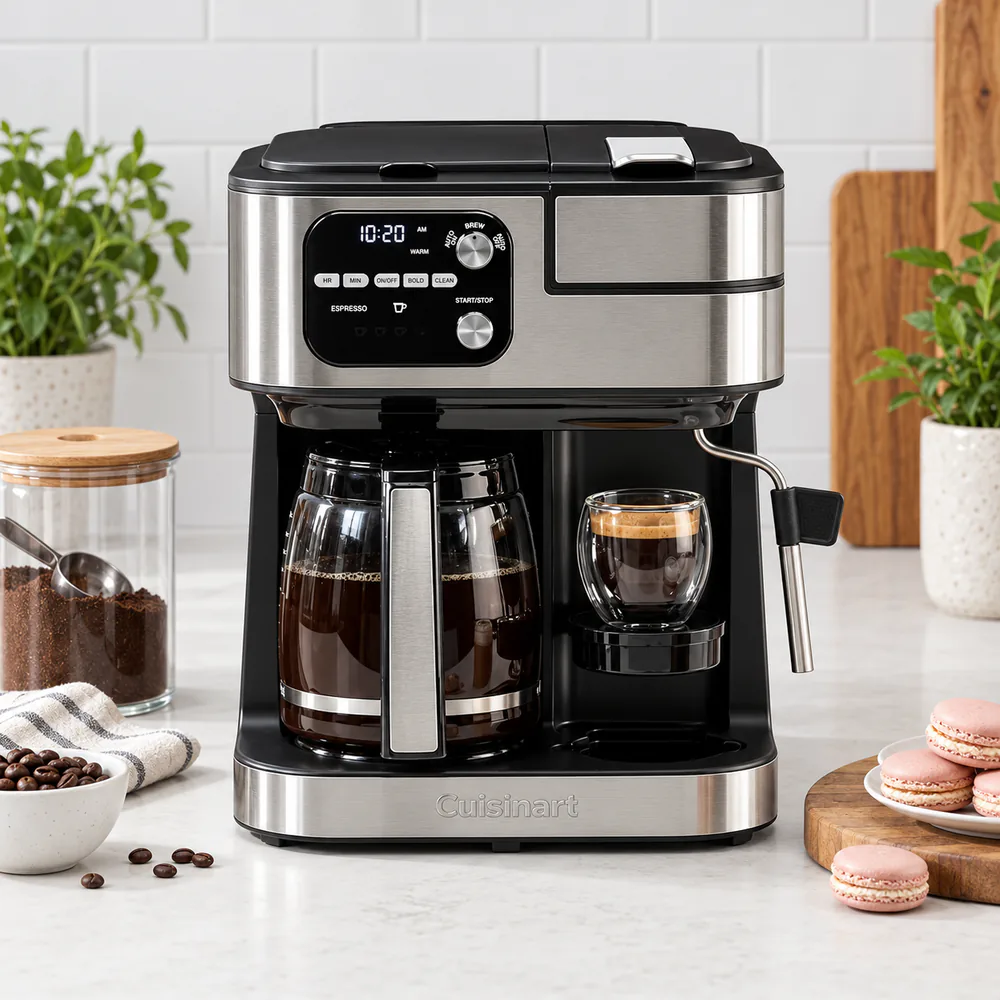
Cuisinart Coffee Center Barista Bar

Best 4-in-1 Station
Mixed households with different tastes Drip, K-Cup, Nespresso capsule 4.2 View on Amazon
5

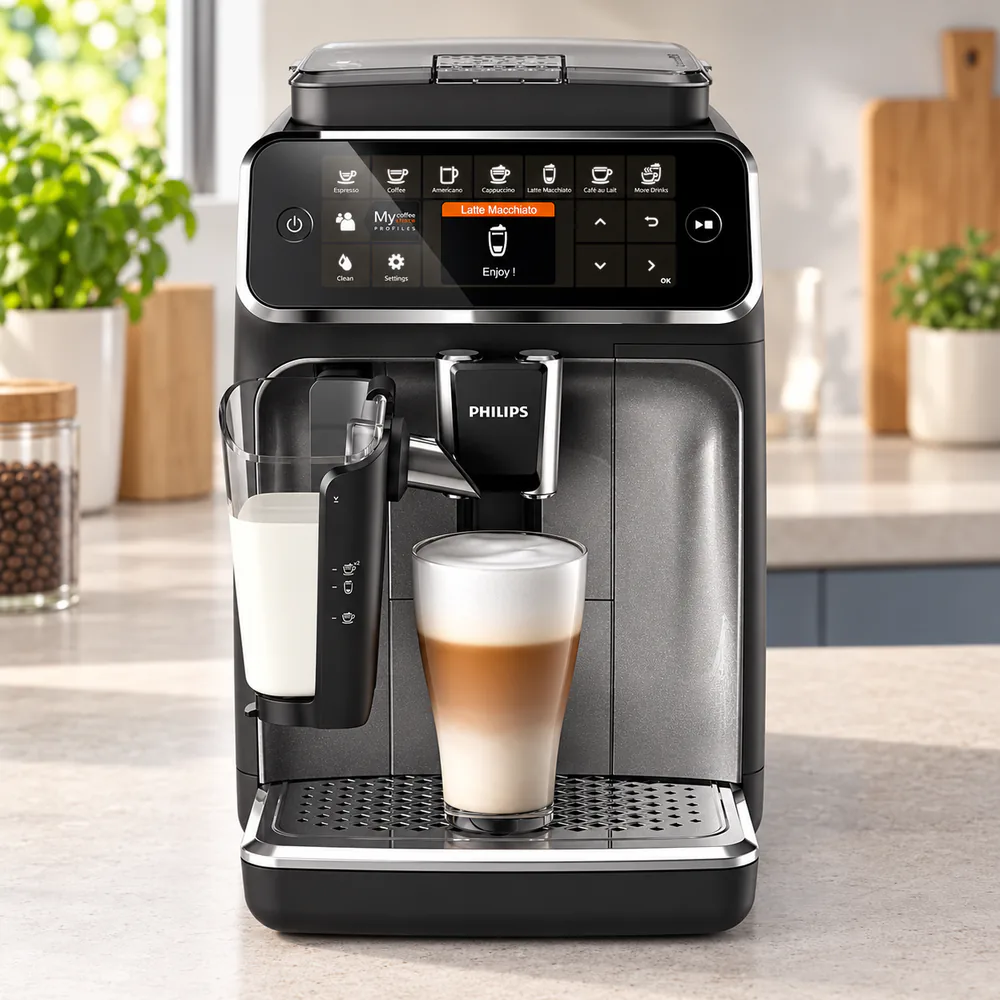
Philips 4300 Series

Best Automatic
Quick, tidy morning lattes Bean-to-cup espresso styles 4.2 View on Amazon
6

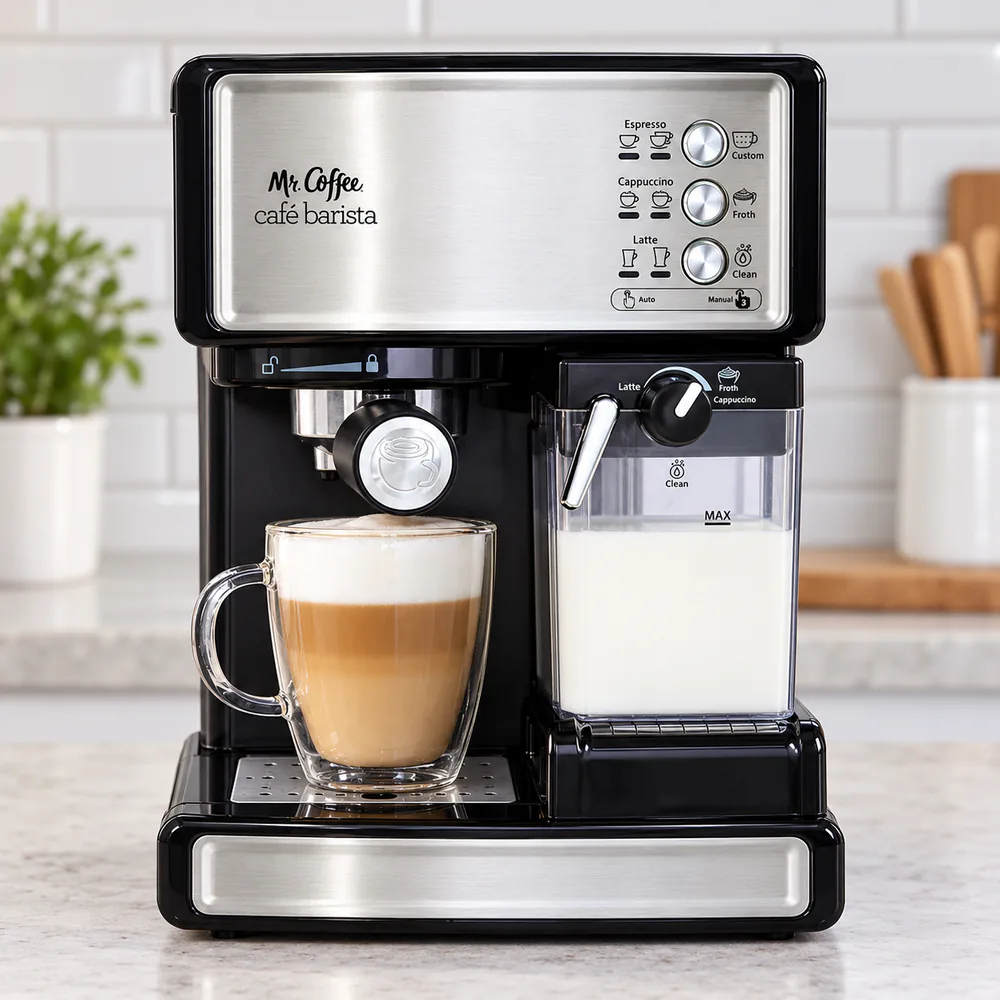
Mr. Coffee Espresso and Cappuccino Machine

Best Budget
Trying espresso without a big spend Espresso and cappuccino 3.9 View on Amazon
7

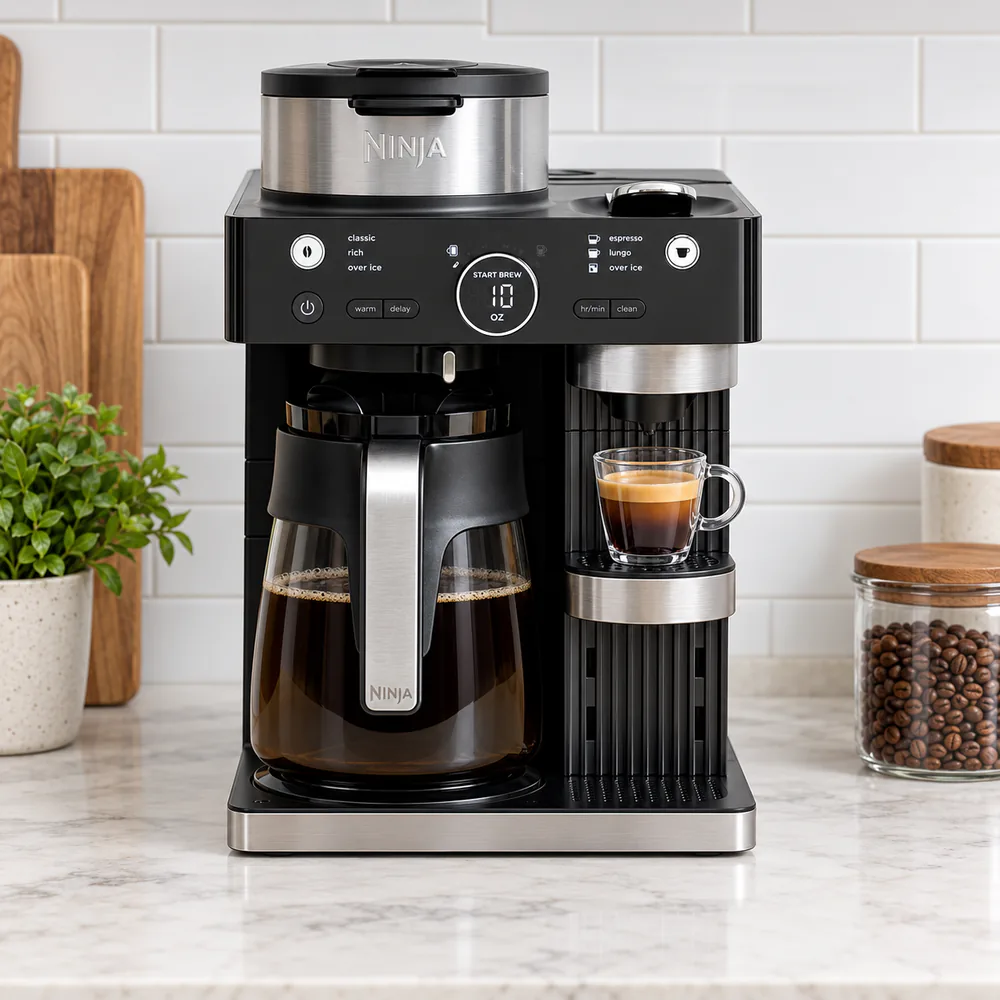
Ninja Espresso & Coffee Maker Barista System CFN601

Best Single-Serve
Capsule espresso plus a guest-sized carafe Capsule espresso + drip 3.8 View on Amazon

We earn a commission if you make a purchase, at no additional cost to you.

See full comparison table

How We Tested Combo Machines

We judge every machine by the standard of a café bar on a slow weekday: dial in the grind, dose, pull shots, steam milk, and repeat until the routine is predictable. Taste, ease of dialing in, milk texture and daily cleanup are the four things we score. Pressure numbers on a box matter far less to us than temperature stability, steam power and how much fuss the machine adds to a weekday morning.

Because a combo has to do two jobs, we score each side separately. The drip side is judged on cup quality, heat and how easily the carafe pours. The espresso or milk side is judged on how forgiving the grind and tamp are, how rich the milk foam turns out, and whether we can repeat a good drink on the third try, not just the first. A final cleanup score covers rinsing the frother, emptying drip trays and wiping the group head or pod holder.

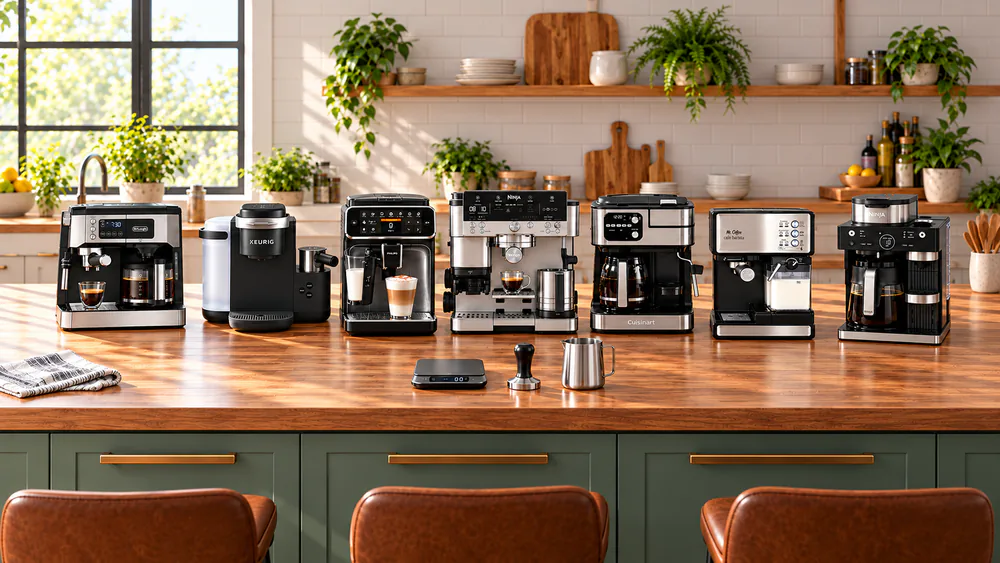
Seven espresso and coffee maker combo machines lined up on a kitchen counter with a scale, tamper and milk pitcher beside them
The seven combo machines in this guide.

Note. Counter space is a real test criterion for a combo machine. Several of these units fold two or three appliances into one footprint, but the footprints and tank sizes are not stated consistently by the makers, so we do not quote numbers we could not confirm. Measure your cabinet clearance before ordering.

1. Best Overall: De'Longhi All-in-One Combination

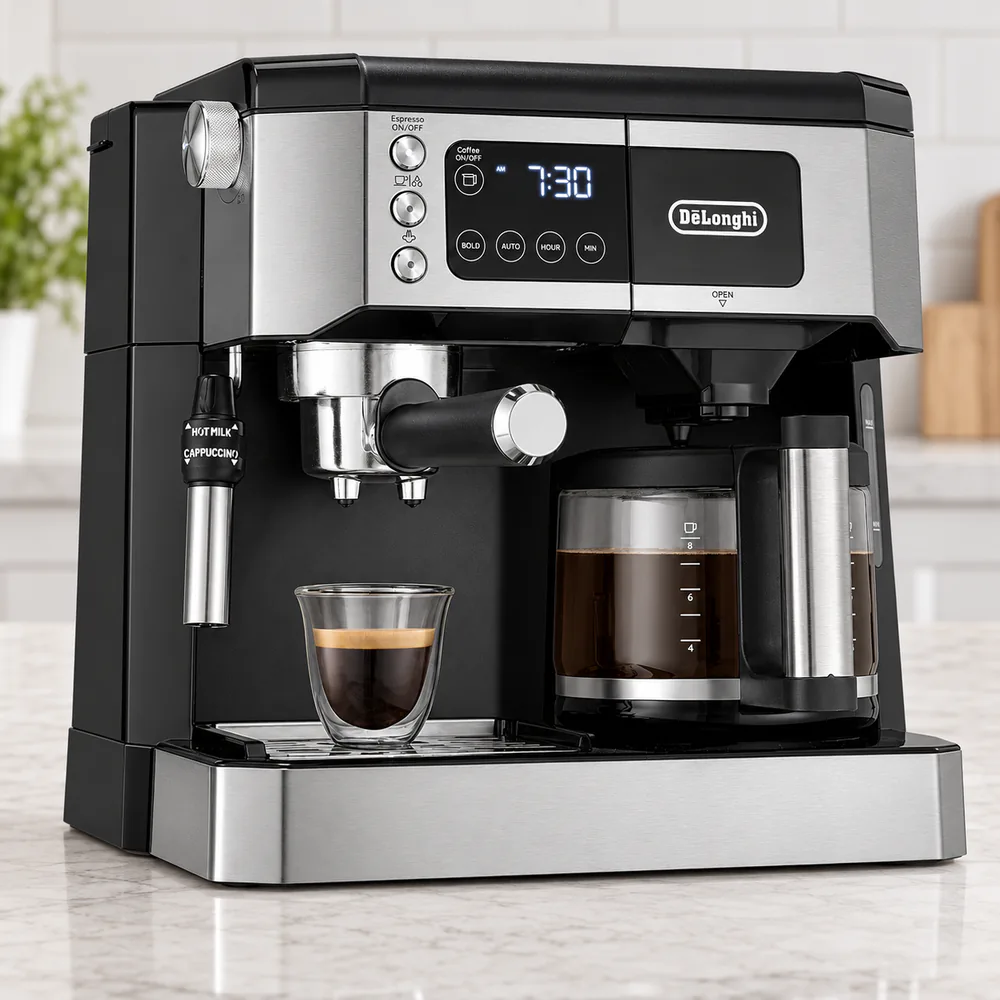
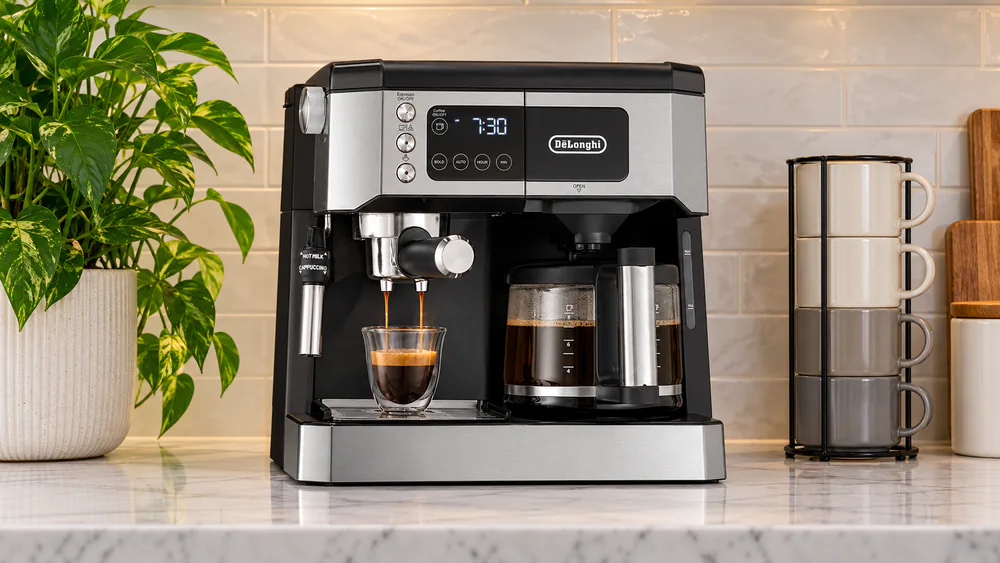
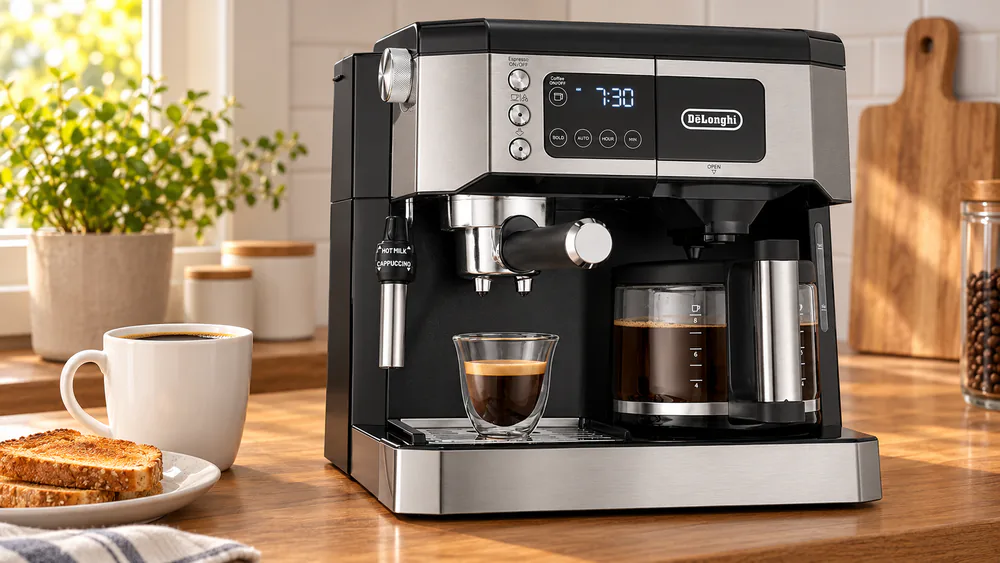
The De'Longhi All-in-One Combination earns the top slot because it does the thing the category promises. A dual heating system lets you brew drip coffee and espresso at the same time, so the pot is filling while the shot pulls. Drip comes from a 10-cup glass pot, and a 24-hour programmable timer on the digital touchscreen means you can wake up to coffee. The pump is a 15 bar Italian unit, which is plenty for a home machine of this kind.

The drip side is the pleasant surprise, since it pours a really good cup, clearly better than a basic drip machine, and the water capacity suits a household. The espresso half is the fussy one: in our kitchen, getting a proper shot meant fiddling with grind and tamp until it came right, so we would not call it plug-and-play. Grind finer than feels natural, tamp evenly, and adjust one variable at a time.

Milk drinks come from a steam wand with micro-foam and cappuccino settings. The dual boilers let drip brew while espresso pulls, but steaming milk and pulling a shot cannot overlap, so we pulled the shot first and steamed second. There is no milk jug in the box, so add one to your cart.

The machine feels light and a bit cheap in daily use, but it is easy to move and quick to clean. It runs noisily, and the steam wand is its likeliest trouble spot. Some units fail inside the first six months, which is why we recommend buying through a retailer with an easy return path.

De'Longhi All-in-One Combination on a counter with the glass carafe on the drip side and an espresso cup under the portafilter on the other side
Drip on one side, espresso on the other.
De'Longhi All-in-One Combination
1

De'Longhi All-in-One Combination

Best Overall
Check Price on Amazon
4.5/5

The best true two-in-one we tested: great drip, workable espresso with practice, and a steam wand for milk drinks, all in one footprint.

  • Digital touchscreen with 24-hour timer

Specifications

Pump
15 bar
Drip capacity
10-cup glass pot
Timer
24-hour programmable
Tank size
not stated

Pros

  • Drip coffee clearly better than a basic drip machine
  • Dual heating system brews drip and espresso at the same time
  • Programmable timer and clean touchscreen
  • Steam wand with micro-foam and cappuccino settings

Cons

  • Espresso side needs fiddling with grind and tamp
  • Cannot steam milk and pull a shot at the same time
  • Light build, noisy, and the steam wand is the likeliest trouble spot
  • No milk jug in the box

2. Best Pod Combo: Keurig K-Cafe

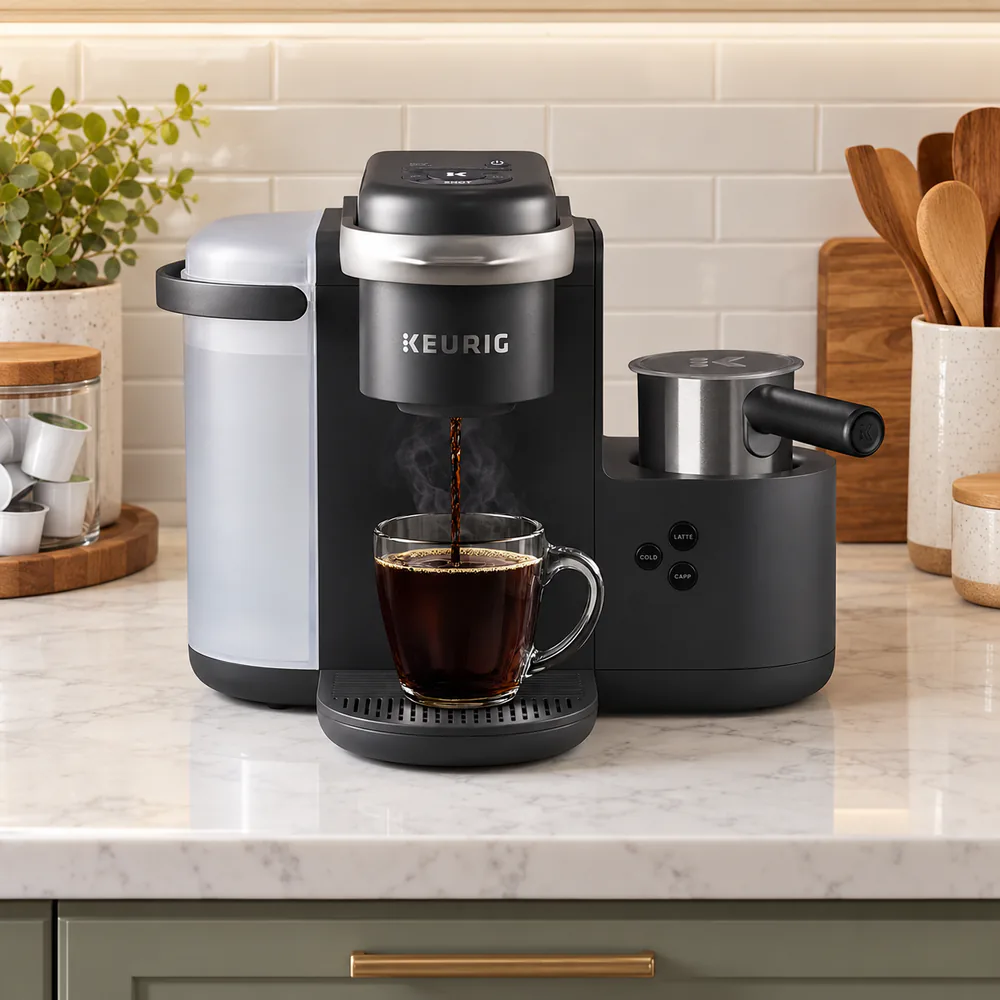
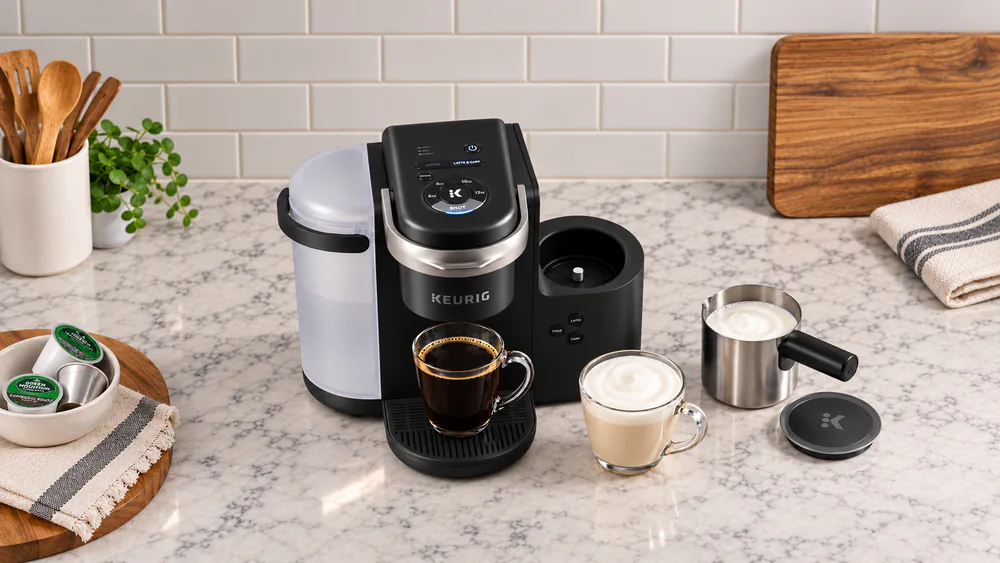
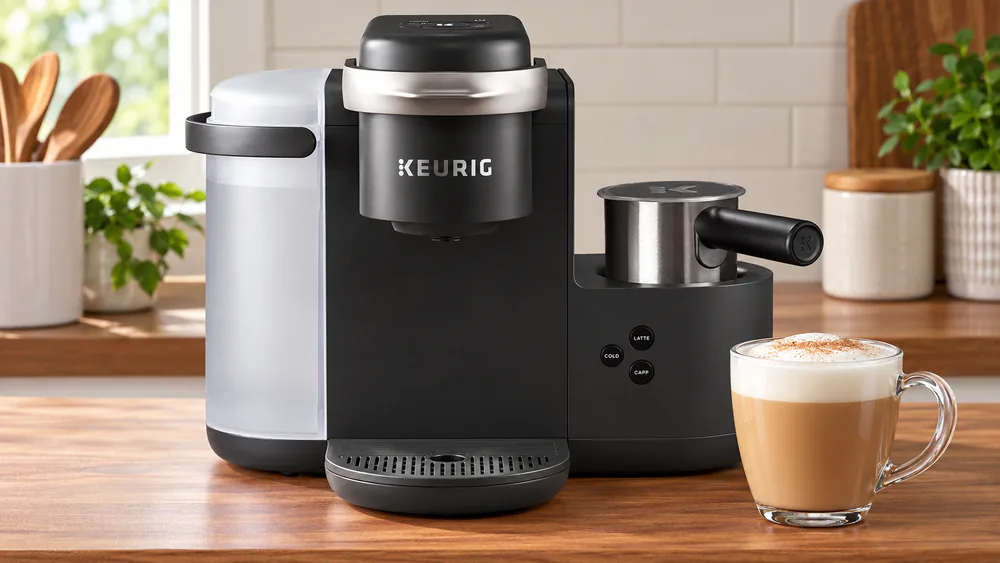
After the De'Longhi, the next question is how little skill you want to bring. If you want latte-style drinks without learning espresso, the Keurig K-Cafe is the easiest route in this guide. It has a SHOT button that brews a concentrated K-Cup shot, plus a built-in frother with hot and cold settings. It is not true espresso, because there is no pump pressure, and we would rather say that plainly than let the label mislead you.

The frother is the standout. Whole milk froths best, and after a morning latte we simply pulled the frother off and rinsed it, or put it in the dishwasher, which is a big deal on a rushed weekday. Pair the SHOT button with frothed milk and you get a respectable latte-style drink with almost no skill required, and the machine brews quickly and quietly in a compact footprint that saves counter space compared with the larger combos here.

The reservoir holds 60 oz and removes for filling, and four cup sizes (6, 8, 10 and 12 oz) cover most mugs. The drip tray accommodates travel mugs up to 7.2 inches tall, which is handy for commuters. The machine also accepts the My K-Cup reusable filter for your own grounds and shuts off automatically after 2 hours.

The weak point is the frother, which can quit after a few weeks on some units. Pricing differs between the Smart variant and the base unit, so check the current price before you buy.

Keurig K-Cafe with a mug of frothed milk beside the removable frother and the SHOT button lit on the top control panel
The frother pulls off and goes in the dishwasher.
Keurig K-Cafe
2

Keurig K-Cafe

Best Pod Combo
Check Price on Amazon
4.4/5

The easiest latte-style machine here: a concentrated K-Cup shot, a dishwasher-safe frother and a footprint that saves counter space.

  • Auto shut-off after 2 hours

Specifications

Reservoir
60 oz removable
Cup sizes
6, 8, 10, 12 oz
Mug clearance
up to 7.2 inches
Pump pressure
none

Pros

  • Frother is dishwasher safe and froths whole milk well
  • Brews quickly and quietly
  • Compact for the category
  • Reusable filter option for grounds

Cons

  • The shot is concentrated coffee, not espresso
  • Frother can quit after a few weeks on some units
  • Pod costs add up over a year

3. Best Premium All-in-One: Ninja Luxe Cafe Premier

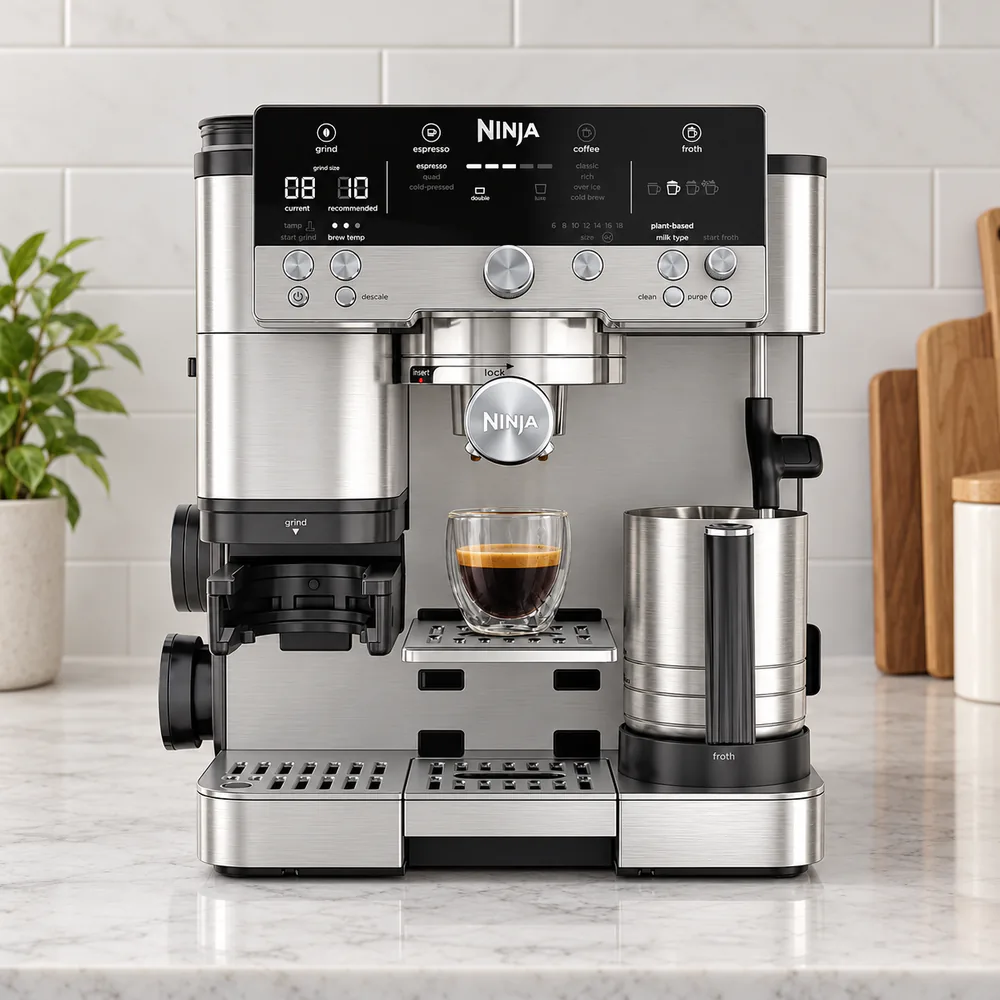
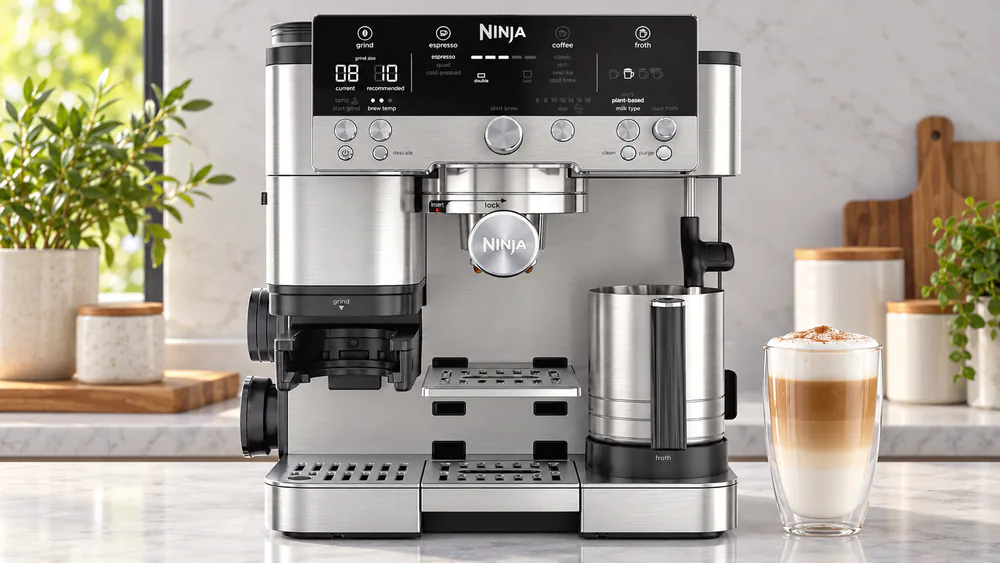
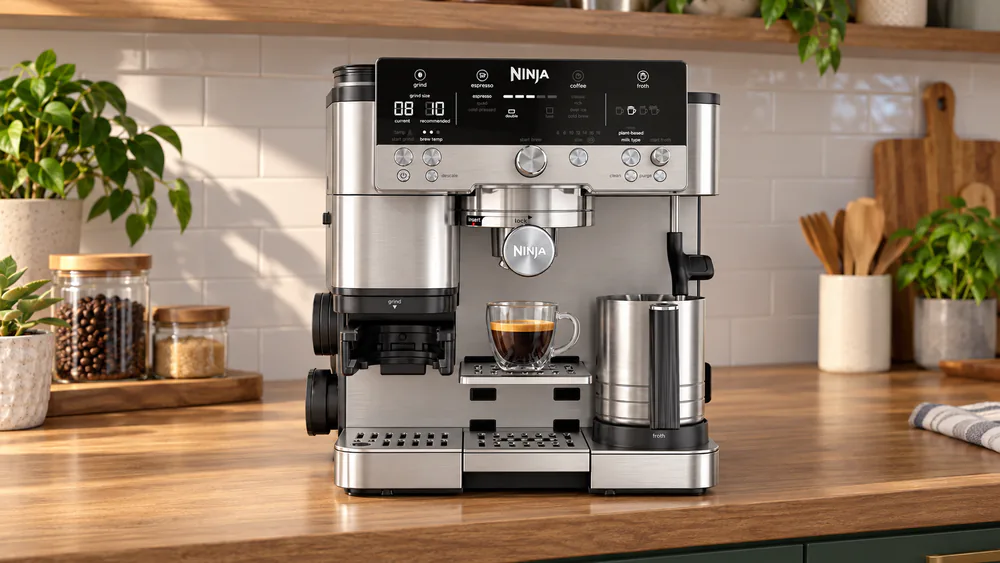
Where the Keurig skips espresso entirely, the Ninja Luxe Cafe Premier automates it, which makes it the most ambitious machine in the roundup. It combines a built-in conical burr grinder with 25 settings, espresso, drip and cold brew in one body, and that matches our grinder-first philosophy better than any other pick. Drip and cold brew come in sizes up to 18 oz, and you can choose double shot or quad shot espresso.

What sets it apart is how much dialing-in it removes, because weight-based dosing and an assisted tamp take most of the guesswork out of the grind, dose and tamp triangle that trips up beginners. Screen prompts walk through every step, and our first lattes were not great, but by about the third try we were getting a decent one, which is a fair expectation for a hands-free machine. Milk comes from a dual froth system (a whisk plus a steamer) with 4 presets: steamed milk, thin froth, thick froth and cold foam.

The housekeeping is thoughtful, with accessories stored inside the machine and water and bean tanks that lift out for easy filling and cleaning. There is no single-filter basket, so you are working with the dual-wall style baskets the machine supplies.

It is not perfect, since extraction and frothing are slow compared with a dedicated espresso machine, the latte setting is buried in the menu, the thin-foam setting runs loud, and the drip tray fills fast. The grinder dial can feel stiff. It is the priciest machine here, and pricing differs by retailer, so shop around.


Ninja Luxe Cafe Premier with its control display showing brew and froth settings and a finished latte in a glass beside it
Screen prompts guide each step.
Ninja Luxe Cafe Premier
3

Ninja Luxe Cafe Premier

Best Premium All-in-One
Check Price on Amazon
4.3/5

The closest thing here to a barista in a box: built-in grinder, weight-based dosing and guided recipes, slowed down by a slow, loud workflow.

  • Screen-guided recipes
  • Accessories store inside the machine

Specifications

Grinder
conical burr, 25 settings
Drip and cold brew sizes
up to 18 oz
Espresso styles
double or quad shot
Frother
4 presets, whisk plus steamer

Pros

  • Built-in 25-setting burr grinder
  • Weight-based dosing removes most dialing-in guesswork
  • Water and bean tanks lift out for filling and cleaning
  • Does espresso, drip and cold brew

Cons

  • Slow extraction and frothing
  • Latte setting buried in the menu
  • Thin-foam setting is loud and the drip tray fills fast
  • Highest price in the roundup

4. Best 4-in-1 Station: Cuisinart Coffee Center Barista Bar

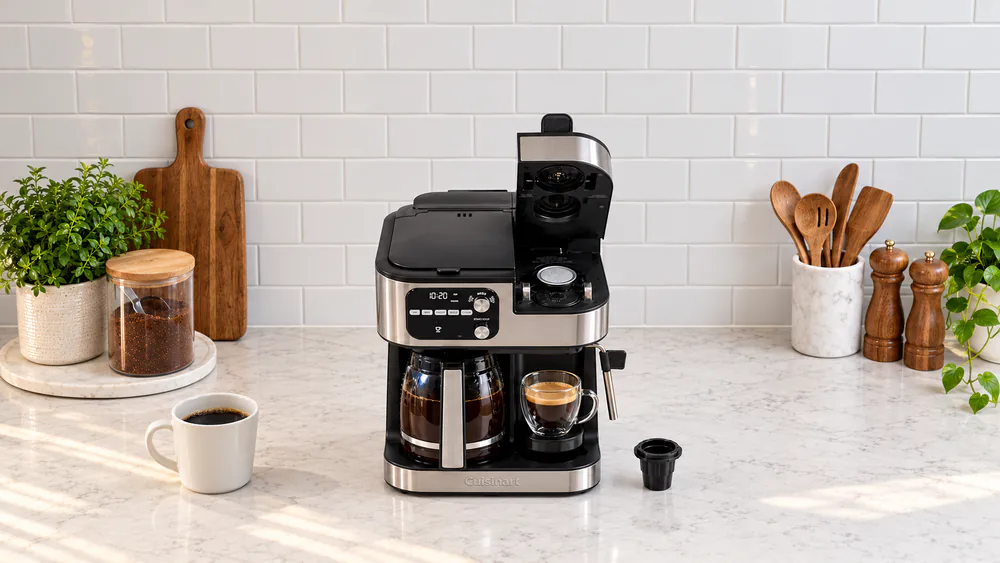
Where the Keurig serves one taste, the Cuisinart Coffee Center Barista Bar is built for a household where nobody agrees on coffee. One person wants a pot of drip, another uses K-Cups, and a third wants a Nespresso-style capsule. This machine covers all of it, plus frothing and hot water, in one footprint. The glass carafe makes up to 12 cups, and the programmable drip side is a 24-hour timer with brew pause and strength control.

Single-serve sizes run 6, 8 and 10 oz, and an adjustable keep warm holds the pot for up to 4 hours, while the drip side includes a gold-tone permanent filter and a charcoal water filter. Side by side with a Keurig, the first cup from the Cuisinart came out noticeably hotter, a nice change if you have been drinking lukewarm pod coffee.

The capsule side is where expectations need adjusting, because espresso from the Nespresso-style capsule side has good flavor but little crema, and the frother stops on its own with a thick froth. The single-serve side has no obvious cleaning function in the manual, so plan on regular manual rinsing. Build quality varies widely by unit and some fail early, so we cannot promise durability.

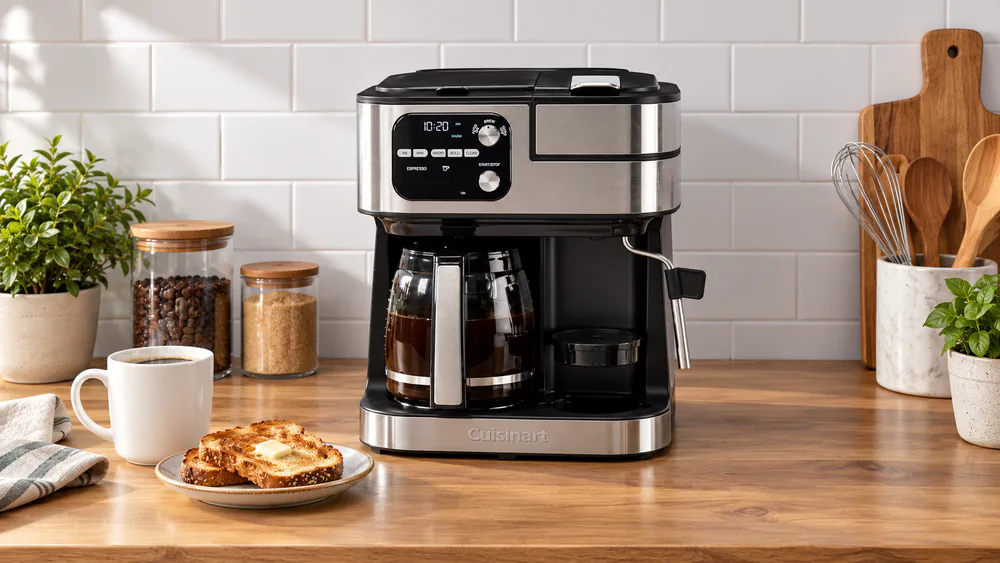
Cuisinart Coffee Center Barista Bar with the glass carafe, a K-Cup holder and a Nespresso-style capsule loaded on the same counter footprint
Drip, K-Cup and capsule brewing share one footprint.
Cuisinart Coffee Center Barista Bar
4

Cuisinart Coffee Center Barista Bar

Best 4-in-1 Station
Check Price on Amazon
4.2/5

The most flexible footprint in the roundup, with hot coffee and four brewing routes, and a capsule side that is better on flavor than on crema.

  • Hot water dispensing included

Specifications

Drip capacity
up to 12 cups
Single-serve sizes
6, 8, 10 oz
Keep warm
adjustable, up to 4 hours
Tank size
not stated

Pros

  • Four brewing routes in one footprint
  • Coffee comes out noticeably hotter than from a Keurig
  • Brew strength control and permanent filter
  • Adjustable keep warm up to 4 hours

Cons

  • Capsule espresso has good flavor but little crema
  • No obvious clean function for the single-serve side
  • Build and QC vary widely, with early failures on some units

5. Best Automatic: Philips 4300 Series

The Philips 4300 Series is the odd one out because it is not a drip machine at all. It is a fully automatic bean-to-cup machine with a built-in grinder, so it earns a place by solving the espresso half for people who do not want to dial in anything. If you can live without a drip pot, it is the simplest way to a quick morning latte.

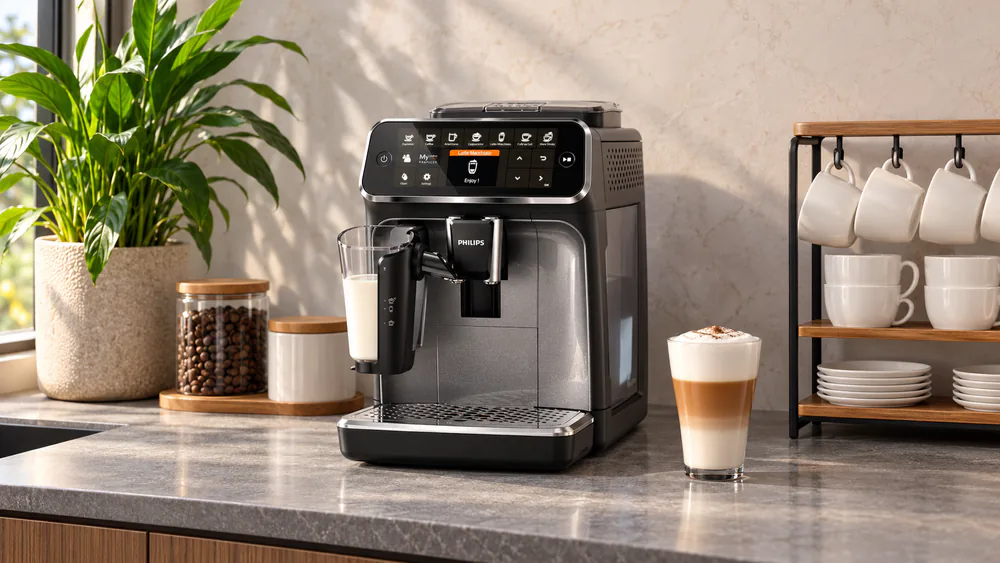
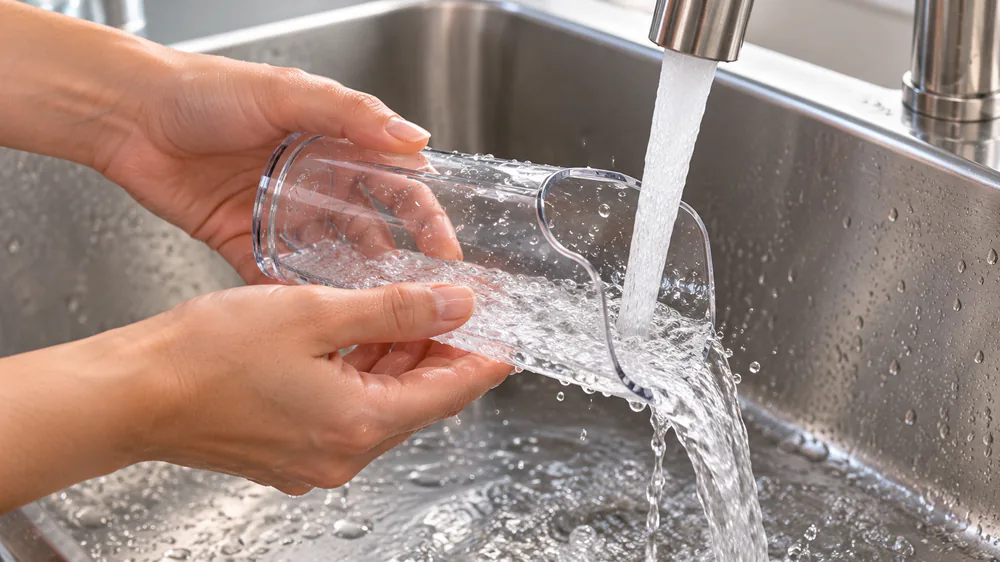
You pick from 8 coffee varieties on a touch display, and the My Coffee Choice menu adjusts strength and quantity. Aroma Extract balances brew temperature, and the LatteGo milk system is the part we like best. The milk jug rinses in seconds, and the machine auto-rinses on startup, so the morning routine stays tidy. The AquaClean filter promises no descaling for up to 5000 cups.

The trade-off is flexibility. There is no drip pot, no pods and no steam wand to play with, so a household that wants a big carafe of coffee for company will want a second machine. Price is not listed currently and is typically mid-range, so check availability before you plan around it.

Our advice to anyone eyeing this one is the same as for any bean-to-cup machine: buy fresh beans, because the built-in grinder only handles what you feed it.

Philips 4300 Series
5

Philips 4300 Series

Best Automatic
Check Price on Amazon
4.2/5

A quick, tidy latte maker with a built-in grinder, held back only by the lack of any drip option.

  • My Coffee Choice menu for strength and quantity

Specifications

Varieties
8 coffee varieties
Descaling
no descaling for up to 5000 cups with AquaClean filter
Grinder
built in
Drip pot
none

Pros

  • Built-in grinder and fully automatic operation
  • Milk system cleans up in seconds
  • Auto-rinse keeps the morning routine tidy
  • Long interval between descaling with the AquaClean filter

Cons

  • Bean-to-cup only, no drip pot
  • No steam wand to practice milk texture
  • Current pricing is unstable
Philips 4300 Series espresso machine with the LatteGo milk jug detached and held under a running kitchen tap
The LatteGo jug rinses clean in seconds.

6. Best Budget: Mr. Coffee Espresso and Cappuccino Machine

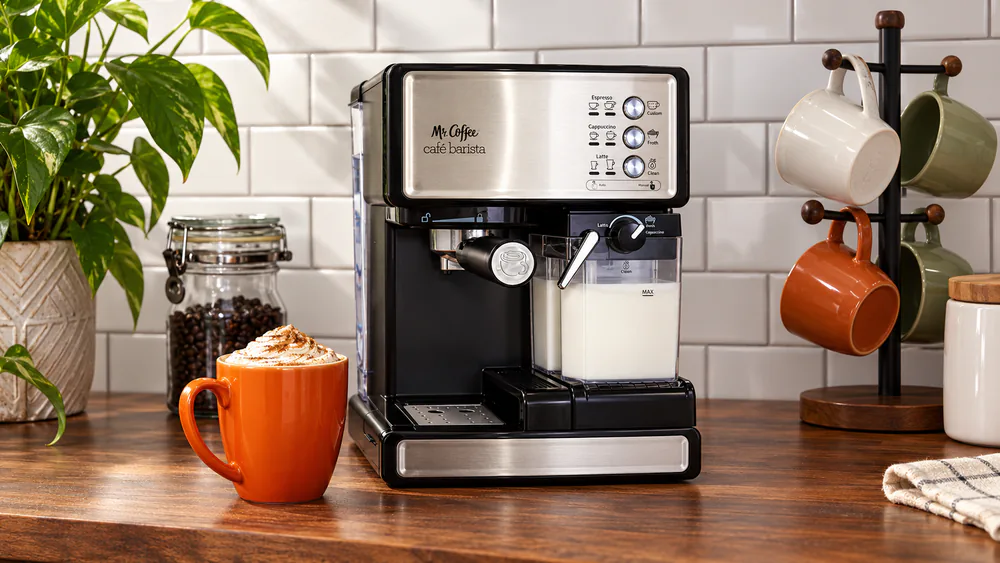
Start with what the Mr. Coffee Espresso and Cappuccino Machine cannot do: it brews no drip coffee and it will not last like the pricier picks. What it can do is give curious beginners a first taste of espresso without a big spend. It has a 15-bar pump, a semi-automatic design, single and double shot filters, a one-touch panel and an automatic milk frother. It makes espresso, cappuccino and latte only, with no drip pot, so it is a combo of drinks rather than brew methods.

It can pull respectable espresso if you work with it. Use a medium-fine to coarse-ish grind, tamp firmly, and preheat the portafilter and cup. Those three habits fix most of the weak shots people get. If you want to improve on any machine at this price, the grinder is where the money goes first, and a blade-ground or pre-ground coffee will cap what this machine can do.

The drawbacks are real. The machine runs loud, the auto frother can quit, and many units last a year or less of daily use, so think of it as a low-cost way to learn what you like rather than a long-term investment.

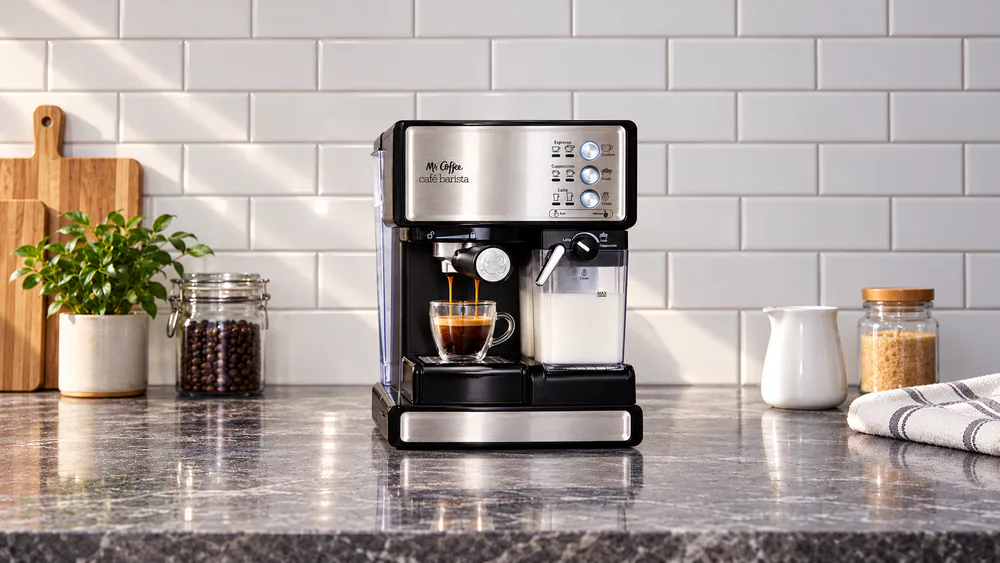
Mr. Coffee Espresso and Cappuccino Machine with a double-shot filter in place and espresso dripping into a small glass cup
Preheating the portafilter and cup helps weak shots.
Mr. Coffee Espresso and Cappuccino Machine
6

Mr. Coffee Espresso and Cappuccino Machine

Best Budget
Check Price on Amazon
3.9/5

A capable starter machine that pulls respectable shots with the right grind and tamp, but it is loud and short-lived.

  • Espresso, cappuccino and latte drinks only

Specifications

Pump
15-bar, semi-automatic
Filters
single and double shot
Drip pot
none
Tank size
not stated

Pros

  • Respectable espresso with a medium-fine grind and firm tamp
  • Single and double shot filters
  • One-touch panel and automatic frother
  • Lowest barrier to entry for semi-automatic espresso

Cons

  • Runs loud
  • Auto frother can quit
  • Many units last a year or less of daily use
  • No drip option

7. Best Single-Serve: Ninja Espresso & Coffee Maker Barista System CFN601

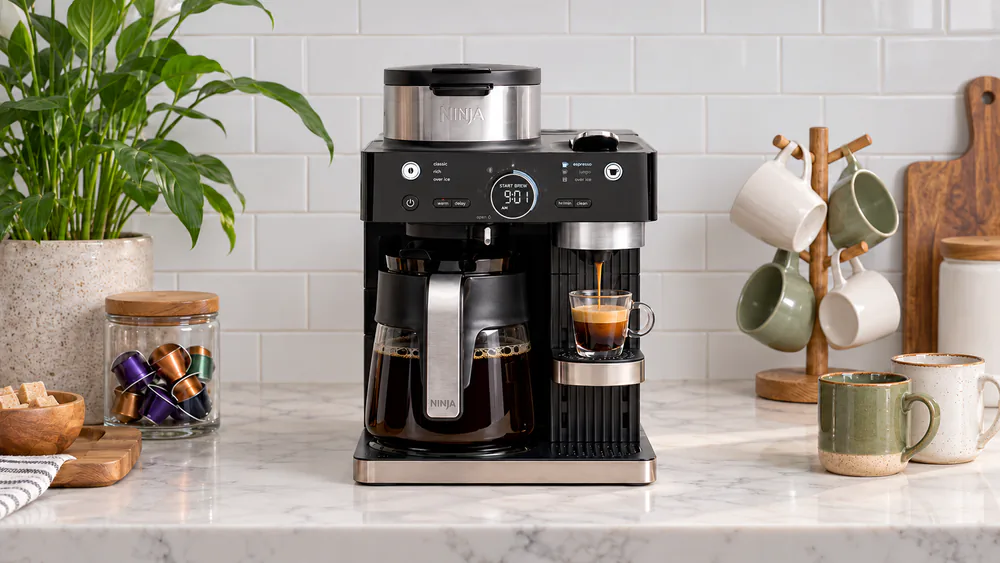
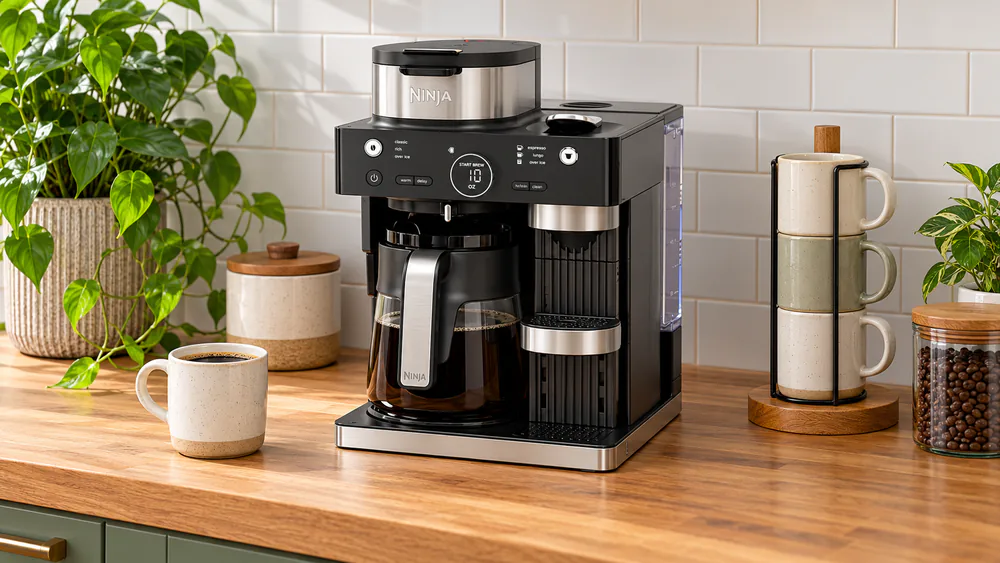
Last in the ranking, the Ninja Espresso & Coffee Maker Barista System CFN601 is the single-serve option that can also fill a full pot. It uses a 19-bar pressure system with Nespresso OriginalLine capsules, and it offers Espresso at 1.35 oz, Lungo at 3.75 oz and Over Ice at 1 oz. On the drip side it brews ground coffee into a 12-cup glass carafe with 9 drip sizes, so guests get coffee without you running a dozen single cups.

A fold-away frother handles milk, and the machine adds delay brew, keep warm, an adjustable cup tray and a warming plate. It makes a good frothed-milk cappuccino and the carafe is useful for company. The used capsule bin holds up to 20 capsules, so emptying it is a weekly chore rather than a daily one.

We have concerns. The coffee can come out lukewarm, leaks appear on some units, and several break after about seven months. That drops this machine to the bottom of the ranking even though its feature list is strong.

If you only want pods and grounds with a cheaper price, the Ninja Pods & Grounds Single Serve is the alternative to look at. It has a 56 oz removable reservoir, brews 6 to 24 oz, and offers 4 brew styles: Classic, Rich, Over Ice and Specialty. The Specialty setting is a concentrate for lattes, not true espresso. It brews a better cup than a standard Keurig and costs much less, though some units quit within about ten months.

Ninja CFN601 Barista System with a capsule espresso shot in a cup on one side and a full glass carafe of drip coffee on the other
Capsule espresso for one, a full carafe for company.
Ninja Espresso & Coffee Maker Barista System CFN601
7

Ninja Espresso & Coffee Maker Barista System CFN601

Best Single-Serve
Check Price on Amazon
3.8/5

A flexible capsule-plus-carafe machine with a good cappuccino, undercut by lukewarm coffee and reliability worries.

  • Nespresso OriginalLine capsule compatible
  • Fold-away frother and warming plate

Specifications

Pressure
19-bar
Espresso size
1.35 oz
Lungo size
3.75 oz
Used capsule bin
holds up to 20

Pros

  • Capsule espresso and a full carafe in one machine
  • Good frothed-milk cappuccino
  • Delay brew and keep warm
  • Used capsule bin holds up to 20

Cons

  • Coffee can come out lukewarm
  • Leaks appear on some units
  • Several break after about seven months

Combo Machine Comparison Chart

Here is how the seven picks line up. Where a maker does not publish a figure, the table says "not stated" instead of guessing.

RowDe'Longhi All-in-OneKeurig K-CafeNinja Luxe Cafe PremierCuisinart Barista BarPhilips 4300Mr. Coffee EspressoNinja CFN601
Brew types Drip + espresso K-Cup + shot Espresso, drip, cold brew Drip, K-Cup, Nespresso capsule Bean-to-cup espresso styles Espresso, cappuccino Capsule espresso + drip
Pump pressure 15 bar None Not stated Not stated Not stated 15-bar 19-bar
Tank size Not stated 60 oz Not stated Not stated Not stated Not stated Not stated
Frother Manual steam wand Built-in frother Hands-free dual froth Frother LatteGo Automatic frother Fold-away
Footprint Not stated Compact Not stated 4-in-1 center Not stated Not stated Not stated
Our rating 4.5 4.4 4.3 4.2 4.2 3.9 3.8

What to Look for in a Coffee and Espresso Combo

Choosing a combo is mostly about being honest regarding what you drink on a normal Tuesday. If it is mostly lattes, you are shopping for a milk system. If it is mostly drip with the occasional shot, you want a good pot and a modest espresso side. Start with that answer and the rest of this section gets easier.

Types of Combos (drip plus espresso, pod-based, super-automatic)

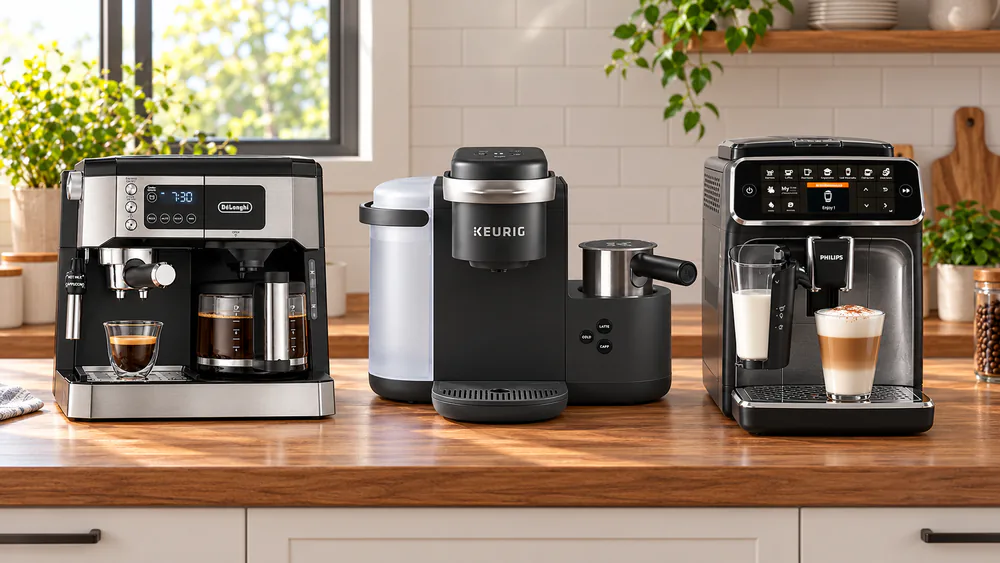
A drip-plus-espresso combo like the De'Longhi puts two brewing systems side by side. It gives you the biggest range, but you do the work on the espresso half. A pod-based combo like the Keurig K-Cafe or Cuisinart Barista Bar gives you speed and consistency, at the cost of pod prices and, for K-Cup shots, true espresso character. A super-automatic like the Philips 4300 grinds, doses and brews for you, and it only does espresso-style drinks.

Three machines side by side on a counter: a drip plus espresso combo, a pod-based combo and a bean-to-cup automatic
The three combo families: drip plus espresso, pod-based and automatic.

Pressure, Heat-Up and Temperature Control

Pump pressure is the number printed on the box, and it is also the least useful number. Look past it to temperature stability, because a machine that holds water at a steady temperature makes better shots than one that simply claims more bars. The machines here list 15 bar, 15-bar or 19-bar, but only the Ninja Luxe and the De'Longhi told us much about how they behave under load, through weight-based dosing and the dual heating system respectively.

Heat-up time varies by design. The Nespresso Vertuo Plus, a model we considered but did not rank, advertises a 25 second heat-up, which shows how quickly a capsule machine can be ready. For the picks in this guide, the makers do not publish comparable heat-up numbers, so we do not quote them.

Warning. Steam wands and frothers get hot, and a steam wand can spit. Purge it briefly before and after steaming, keep your hand clear of the tip, and let a freshly used wand cool before wiping it.

Milk Frothing

Frothers come in three styles here. The De'Longhi has a manual steam wand, which rewards practice with better microfoam but demands your attention. The Keurig, Mr. Coffee, Ninja and Cuisinart machines use automatic or fold-away frothers that are simpler but less flexible. The Philips LatteGo and Ninja Luxe automate nearly the whole process. If you love a latte every morning, the cleanup on the milk side matters more than a spec sheet: a jug that rinses in seconds will be used, and one that needs scrubbing will not.

Pods vs Grounds

Pods are fast, consistent and neat. Grounds are cheaper per cup, give you control over the bean and grind, and usually taste fresher. The Vertuo is a good example of the pod trade-off: it is the simplest route to a café-style shot, with one touch and thick crema, but the coffee is closer to a long espresso-style cup than Keurig-style drip, it lacks a dedicated hot water button and the pods are pricey. If you go with grounds, the Ninja Luxe's built-in grinder saves a separate purchase.

Tip. Grind size is the first thing to adjust when a shot tastes off. If it tastes sour and thin, the grind is too coarse. If it tastes bitter and the machine strains, go a notch coarser. Change one thing at a time and keep notes.

Size, Water Reservoir and Cleanup

A larger reservoir means fewer refills, which is why the 60 oz Keurig K-Cafe and the 56 oz Ninja Pods & Grounds are easy to live with. Beyond tank size, think about the cleanup path: a dishwasher-safe frother, a milk jug that rinses fast, a drip tray you can see filling, and a clear descaling routine. If you do nothing else, learn how to clean a coffee maker before your first month is up, because scale and old milk shorten a machine's life faster than anything else.

Tip. Descale on a schedule rather than waiting for slow flow or a warning light. The Philips 4300 is rated at up to 5000 cups between descales with its AquaClean filter, while the others rely on you following the maker's manual.

Are Combo Machines Worth It?

For most households, yes, with caveats. A combo makes sense when counter space is tight, when you drink both drip and espresso-style drinks, and when you want one cleaning routine. It makes less sense when you care deeply about shot quality. A dedicated machine plus a separate grinder will beat any combo in this guide for espresso, which is why we also point readers to espresso machines with a built-in grinder and espresso machines under $500 when espresso is the priority.

The comparison to keep in mind is espresso vs. drip coffee in daily use. Drip is forgiving and fast for a crowd. Espresso rewards attention and a good grinder. A combo lets you switch between them, but it asks you to accept that neither side is the absolute best of its kind. If that sounds right, a combo is the sensible way to save counter space. If you already own a good grinder and you pull shots daily, our best espresso machines are a better starting point.

Common Mistakes When Buying a Combo

The biggest mistake is shopping the pressure number. A bigger bar rating does not guarantee a better shot, and a machine without a good grind and tamp will not make one. The second is skipping the grinder, since pre-ground coffee caps the quality of every machine in this guide that takes grounds. The third is ignoring milk cleanup; a frother that is a chore to rinse ends up unused within a month.

Another common slip is expecting pod "espresso" to taste like pulled espresso. The Keurig and Ninja Pods & Grounds both make good coffee drinks, but their shots are concentrated coffee, not espresso. Finally, do not assume every unit will last. Some units of several models in this guide fail early, so buy from a retailer with an easy return process and test the machine thoroughly during the first few weeks.

FAQs

Do I still need a separate grinder with a combo machine?

Only for the pump models that take grounds, such as the De'Longhi and Mr. Coffee, which have no grinder of their own, so blade-ground or pre-ground coffee will cap their shots. The Ninja Luxe and Philips 4300 grind internally, so for those the better upgrade is fresh whole beans.

Which of these machines can brew a full pot for company?

The De'Longhi (10-cup), Cuisinart (up to 12 cups) and Ninja CFN601 (12-cup carafe) all fill a glass carafe, while the Philips 4300 and Mr. Coffee have no drip pot at all and the Keurig brews one cup at a time.

Pod or ground coffee: which is better?

Grounds usually taste fresher and cost less per cup. Pods win on speed and neatness. Pick the one you will actually use on a rushed morning.

Final Verdict

If you want one machine for the whole household, buy the De'Longhi All-in-One Combination. It brews great drip, it can pull workable espresso with some practice, and it is the only pick that handles both at the same time. Choose the Keurig K-Cafe if you want lattes with no learning curve, and the Ninja Luxe Cafe Premier if you want a built-in grinder and are happy to pay for it. The Philips 4300 is the right call if you never want a drip pot, and the Mr. Coffee is a cheap way to find out whether espresso suits you.

Whichever machine you choose, spend on fresh beans and a decent grinder first. That one change improves every cup more than any feature on this list.

Read next

Ready to upgrade your kitchen?

Browse our tested buying guides and find the right gear for your kitchen.