
Kitchen Appliances
How to Clean a Coffee Maker With Vinegar: Ratio, Rinse, and How Often

As an Amazon Associate we earn from qualifying purchases. We may earn a commission from links on this page, at no extra cost to you. Learn more.

If your coffee tastes flat, sour, or oddly bitter, mineral deposits and old oils are the likely cause. Plain white vinegar and a little patience will clear both, and you probably have everything you need in the pantry. Here is the routine we recommend, from the first pour to the last rinse.
This page is about the vinegar method specifically. For the whole machine, from the carafe lid to the warming plate, see our guide on how to clean a coffee maker. Every one of the coffee makers we cover benefits from the same basic habit.
What You Need
The list is short, and nothing here is specialized.
- Distilled white vinegar
- Fresh water
- A mild dish soap and a soft sponge
- A narrow bottle brush for the reservoir corners
- A clean cloth for the exterior
- A paper filter (for the final flush)
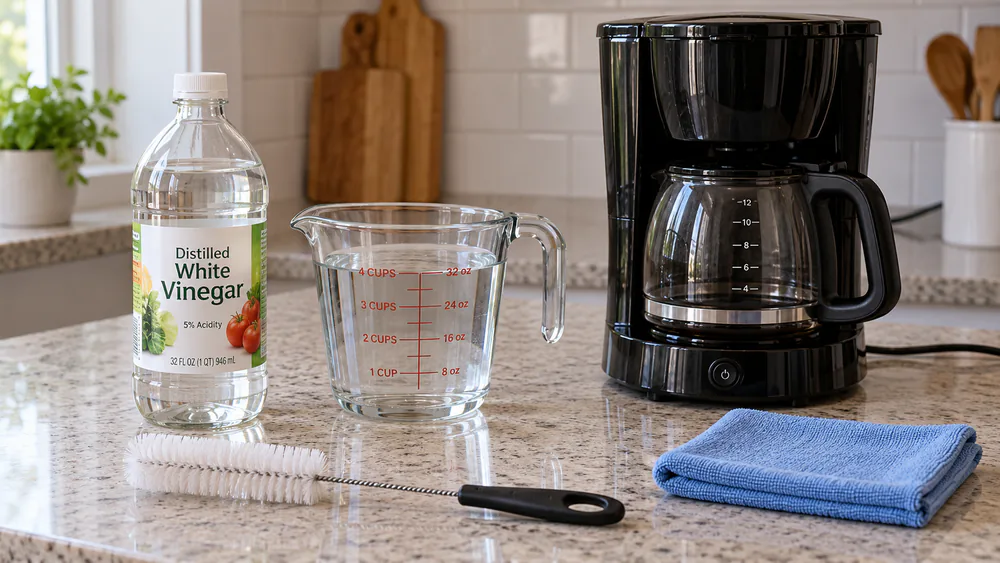
How to Clean a Drip Coffee Maker With Vinegar
Five steps, about an hour start to finish, and most of that is waiting. Read the manual first, because some makers have their own cleaning instructions.
Step 1: Empty the Machine and Remove the Parts
Toss the used grounds and the paper filter. Wash the carafe, the basket, and any permanent filter in warm soapy water.
Wipe the reservoir interior with a damp cloth. A narrow bottle brush reaches film in corners that a cloth cannot reach. Wipe the exterior and the warming plate too, once the machine has cooled.
A quick swish of water after brewing clears visible grounds but does not stop odor and oil buildup. Soap and a brush do.
Step 2: Mix Equal Parts Vinegar and Water
Use distilled white vinegar and fresh water in equal parts. Mix it in the carafe, then pour it into the reservoir. Never pour undiluted vinegar into the machine.
Warning. Never mix vinegar with bleach or any other cleaner. Some manufacturers advise against vinegar, and using it in place of the maker's own descaler can void a warranty, so check the manual first.
Step 3: Run Half a Cycle, Then Pause and Let It Sit
Put the empty basket back, with no filter and no grounds, and start a brew. When about half the mixture has run through, switch the machine off.
Let it sit for 30 minutes. The hot solution works on the mineral deposits inside the lines while you do something else. If you are in a hurry, a shorter soak still helps.
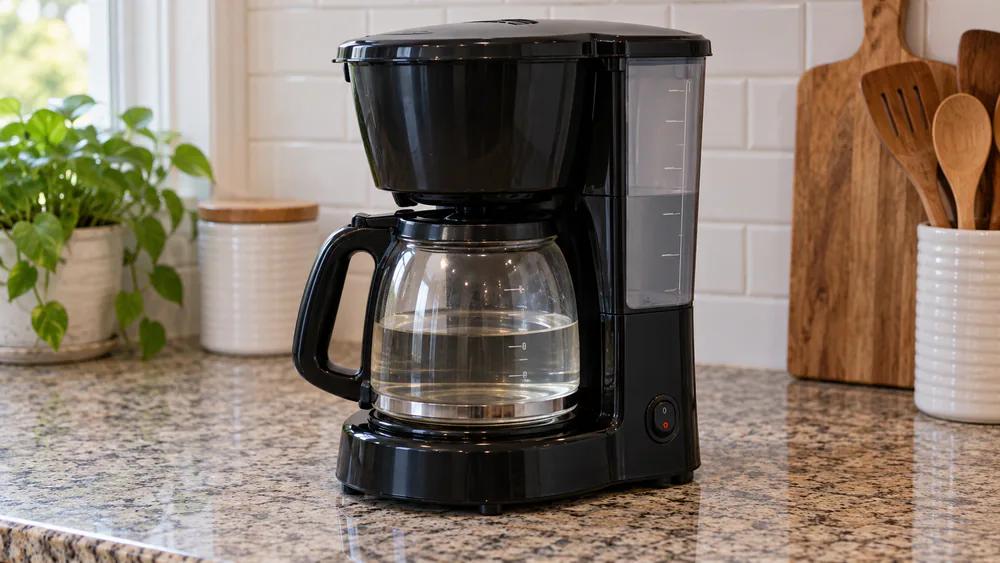
Step 4: Finish the Cycle
Turn the machine back on and let the rest of the solution run through. Empty the carafe into the sink and give it a quick rinse.
Tip. The pause is what does the work. A solution that sits in a warm machine loosens far more than one that races straight through.
Step 5: Rinse With Fresh Water Until the Smell Is Gone
Fill the reservoir with fresh water and run a full cycle. Repeat for 2-3 fresh-water cycles, until the pot just smells of water.
A faint vinegar smell right after a clean is normal. If the first rinse still smells strong, run a second flush rather than brewing coffee on top of it.
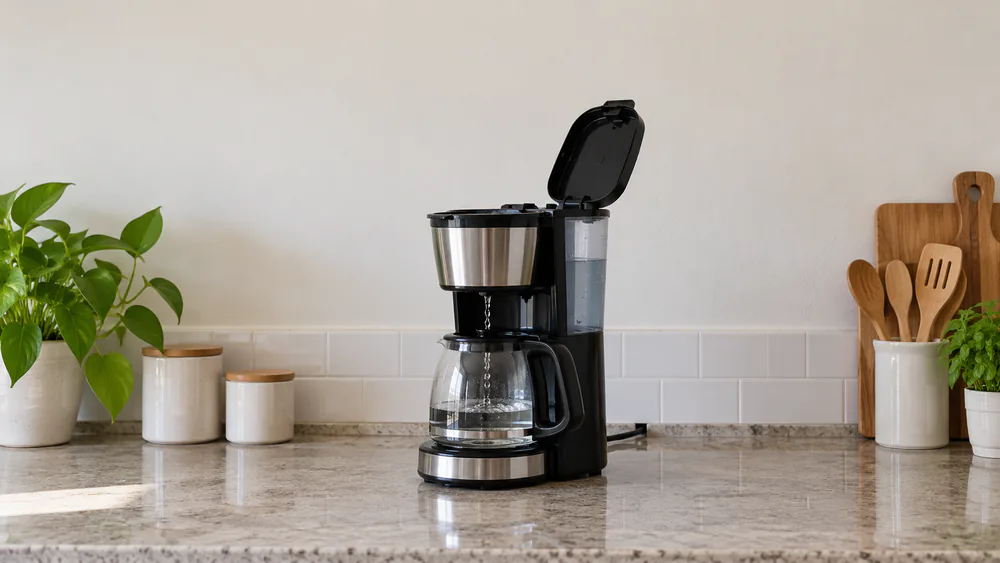
How Much Vinegar to Use
Stick to the 50/50 mix. For a 12-cup machine with a 60 oz reservoir, that means 30 oz of vinegar plus 30 oz of fresh water. Smaller machines scale down the same way: fill the reservoir to the max line, half vinegar and half water.
Stronger is not better. Undiluted vinegar adds no real cleaning power and leaves a stronger smell that takes more rinse cycles to clear than a 50/50 mix.
| Item | Amount |
|---|---|
| Vinegar | Half the reservoir |
| Fresh water | Half the reservoir |
| Soak | 30 minutes |
| Rinse | 2-3 full cycles |
How to Get the Vinegar Taste Out
Start with an extra plain-water cycle, this time with a paper filter in the basket. The filter helps flush out the vinegar taste.
If the carafe still smells, swish ice cubes, a cut lemon, and 1 tablespoon of salt through the cold, empty carafe. Let it sit for an hour, then rinse well.
Tip. If milk curdles in your first coffee after a clean, leftover vinegar in the reservoir or carafe is the cause. Rinse again before the next brew.
How to Clean a Keurig or Single-Serve Machine With Vinegar
Single-serve brewers use the same idea, with a few differences. Keurig recommends descaling every 3 to 6 months with its own solution, and white vinegar is an accepted alternative for most brewers.
Run the vinegar solution through with no pod in place, then follow it with several fresh-water cycles. Skip the vinegar on any metal exterior, since one Keurig manual says to avoid vinegar-based solutions there. For a closer comparison of vinegar and a dedicated product, see how to descale a coffee maker in our companion guide: how to descale a coffee maker.
How Often to Clean a Coffee Maker
Once a month suits daily drinkers. Occasional users can stretch it to every 3 months. How often you need to clean depends on water hardness and use; hard water means more frequent cleaning.
| Use | How often |
|---|---|
| Light use | Every 3 months |
| Daily use | Once a month |
| Hard water | Monthly or sooner |
How do you know it is time? Look for a white film, visible mineral deposits, oily residue, slow dripping, or coffee that suddenly tastes off. A white scale line at the bottom of the reservoir means the clean is overdue.
Burnt, bitter coffee is not always a dirty machine. Coffee left on a glass carafe's warming plate turns bitter on its own, so rule that out first.
When Not to Use Vinegar and Common Mistakes
Check the manual before you start. If the maker's instructions call for a branded descaler, or the warranty is still active, follow the maker.
A few mistakes come up again and again:
- Skipping the rinse cycles and brewing straight away
- Using apple cider vinegar instead of distilled white
- Pouring in vinegar without diluting it
- Forgetting the carafe, basket, and filter, which hold the oils that cause the off flavors
Vinegar Alternatives: Citric Acid, Baking Soda, and Dish Soap
Citric acid is the usual swap if vinegar's smell bothers you. Dissolve it in water and run it the same way, with the same rinse cycles. Follow the directions on the package for the amount.
Dish soap belongs on the removable parts, not in the reservoir. Baking soda is handy for the carafe but is not a substitute for the descaling step. Descaling tablets made for coffee makers are another choice, and they are the safest option when the manual specifies one. If you are choosing a new machine, our picks for the best drip coffee makers and the best coffee makers are easier to keep clean.
Frequently Asked Questions
Can I use apple cider vinegar?
Stick with distilled white vinegar. Apple cider vinegar can leave an unpleasant flavor or odor behind.
Does vinegar damage my coffee maker?
Diluted 50/50, it is widely used and accepted for most drip machines. Some manufacturers advise against it, though, and using it in place of their descaler can affect a warranty, so check the manual.
Why does my machine still smell like vinegar?
Run another fresh-water cycle, this time with a paper filter in the basket. A faint smell right after a clean is normal, and a second flush clears it when the first does not.
How do I know it is time to clean?
Slow dripping, a white film or scale line, oily residue, or coffee that suddenly tastes off all point to a clean.
Final Thoughts
Mix equal parts vinegar and fresh water, pause the cycle halfway, let it sit, and rinse until the pot smells of water. If you brew daily, clean once a month to keep your coffee tasting cleaner.
Read next
Ready to upgrade your kitchen?
Browse our buying guides for appliances that are easier to keep clean.