As an Amazon Associate we earn from qualifying purchases. We may earn a commission from links on this page, at no extra cost to you. Learn more.
Ever wonder what's actually inside that microwave popcorn bag? The salt and flavoring are easy to spot, but the lining is the part worth a second look. Those bags have historically been treated with PFAS chemicals, the same family behind non-stick coatings, which is why more home cooks are switching to makers that pop plain kernels in materials they can name.
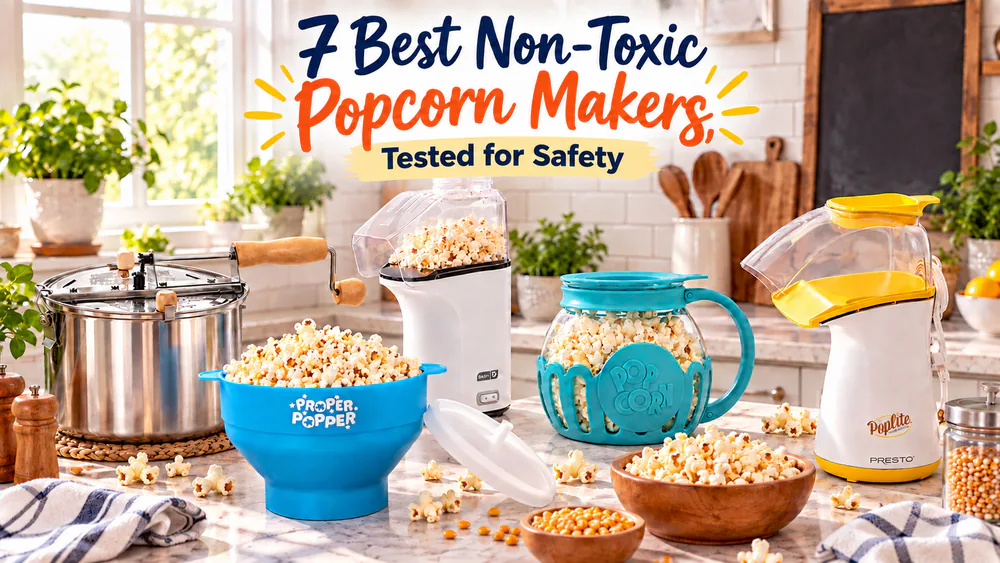
That is what this guide is for: we popped 50+ batches across seven finalists in our test kitchen, timing every batch and counting unpopped kernels. The picks below are the ones we would buy twice, from a nine-dollar silicone bowl to a theater-style kettle for movie night.
One note: "non-toxic" is a claim, not a category. A few of our picks are plastic-bodied, and we say so plainly, because peace of mind only works when the details are honest.
The 7 Best Non-Toxic Popcorn Makers at a Glance
Here is the short version. We scored every finalist on popping time, unpopped kernels, cleanup, and material honesty.
A "non-toxic" maker keeps anything you would rather not eat out of the popping chamber. Knowing the problem materials makes the list easier to read.
Microwave Popcorn Bags: The Real Problem
The convenience bag is where this conversation starts. Independent testing found PFAS in 100% of microwave popcorn samples purchased from dollar stores, including ACT II, Pop Secret, Orville Redenbacher's, Popweaver, Regal Cinemas, and Clover Valley, according to the campaign that commissioned the testing. The FDA determined back in 2008 that certain PFAS could migrate from bags into popcorn, and a 2007 EPA study detected them in the air over just-heated bags. The Center for Environmental Health has even turned the warning into an educational video for kids. None of this is a reason to panic, just a reason to pop at home, where you control the wrapper.
BPA and Plastics in Contact with Heat
BPA is an industrial chemical found in some food packaging, and the Mayo Clinic has a plain-language answer on what BPA is and why it matters. The concern sharpens with heat, since plastic alongside hot food is plastic at its most mobile. Our rule: no plastic in the popping path, or a verifiable BPA-free claim with no Proposition 65 warning.
Non-Stick Coatings (PFOA, PFAS, Teflon)
Older non-stick coatings leaned on PFOA (perfluorooctanoic acid), a chemical largely phased out of cookware. Overheated non-stick can release fumes that cause polymer fume fever, better known as Teflon flu, and suspected cases hit their highest count since 2000 in 2023, with more than 3,600 logged over two decades. PFAS, nicknamed forever chemicals, resist breaking down. For popcorn, skip non-stick entirely: kernels release from steel, glass, and silicone with no coating.
Aluminum and Reactive Metals
Aluminum shows up in popper heating chambers more often than you would think. Research shows aluminum can migrate into food and drink from aluminum containers. The study covered beverage cans, not cookware, and found no significant risk for healthy kidneys, but when stainless steel costs the same, we pick steel. It is why the DASH review below carries a caveat.
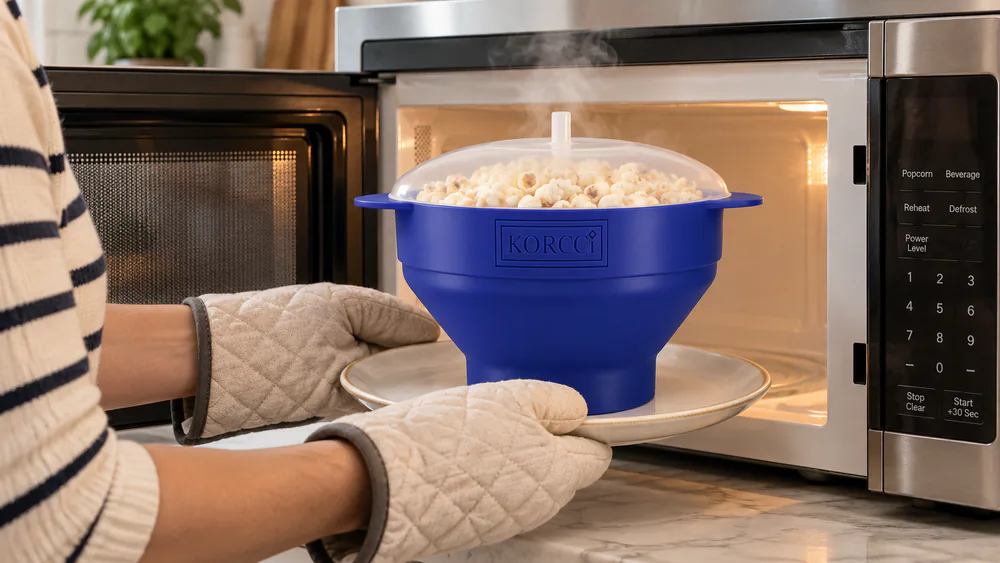
Warning. Silicone bowls and glass poppers come out of the microwave hot enough to sting. Use a plate or hot pad and wait about thirty seconds.
The Safest Materials in Popcorn Makers
A material that ignores heat has nothing to hand your popcorn. Three materials cover all seven of our picks.
Stainless Steel
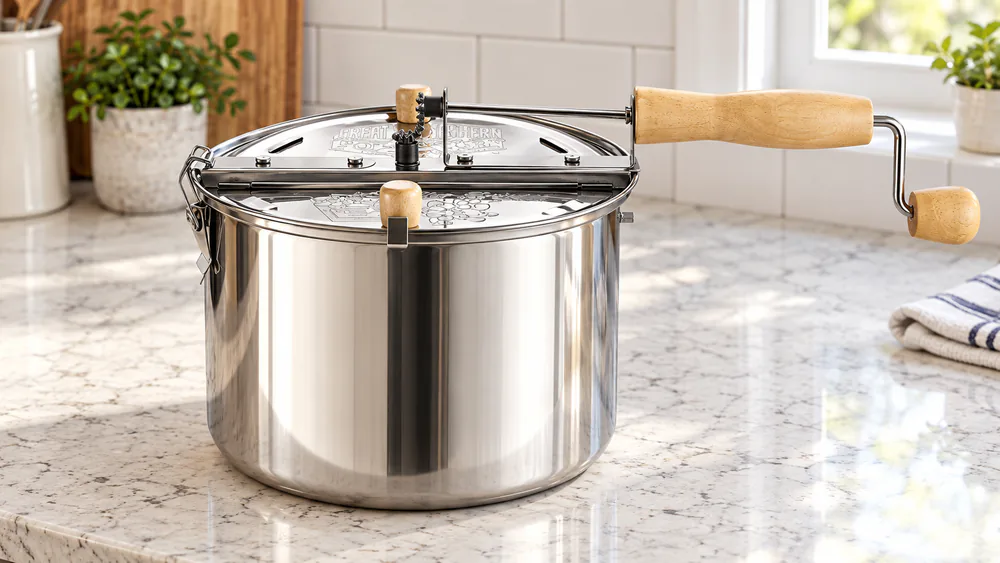
Steel is the boring, brilliant choice: inert, uncoated, and happy at stove temperatures. The Great Northern kettle pairs a stainless pot with a duplex heat pad and a stay-cool wooden handle.
Borosilicate Glass
Borosilicate glass handles the thermal shock of a microwave cycle, unlike cheap soda-lime glass, and it cannot leach anything into a batch. The Ecolution is our glass pick, with one honest note: the bowl gets too hot to eat from directly, so transfer to a serving bowl.
Food-Grade Silicone
Food-grade silicone is heat-stable well beyond microwave temperatures, and it collapses for storage in a way steel and glass never will. The Proper Popper, Korcci, and Salbree all use it. "Food-grade" and "BPA-free" on the listing matter, since not all silicone is made equal; a new bowl's slight silicone smell clears after a dishwasher run, as our first batch confirmed.
Beyond materials, read what a maker is willing to print. Explicit BPA-free claims, ETL listing, or third-party testing are real signals; the DASH carries ETL listing from Intertek. No claims at all is a yellow flag.
The 7 Best Non-Toxic Popcorn Makers, Reviewed
We ranked all seven by how they popped, how they cleaned up, and how honest their materials are. Ratings are out of 10.
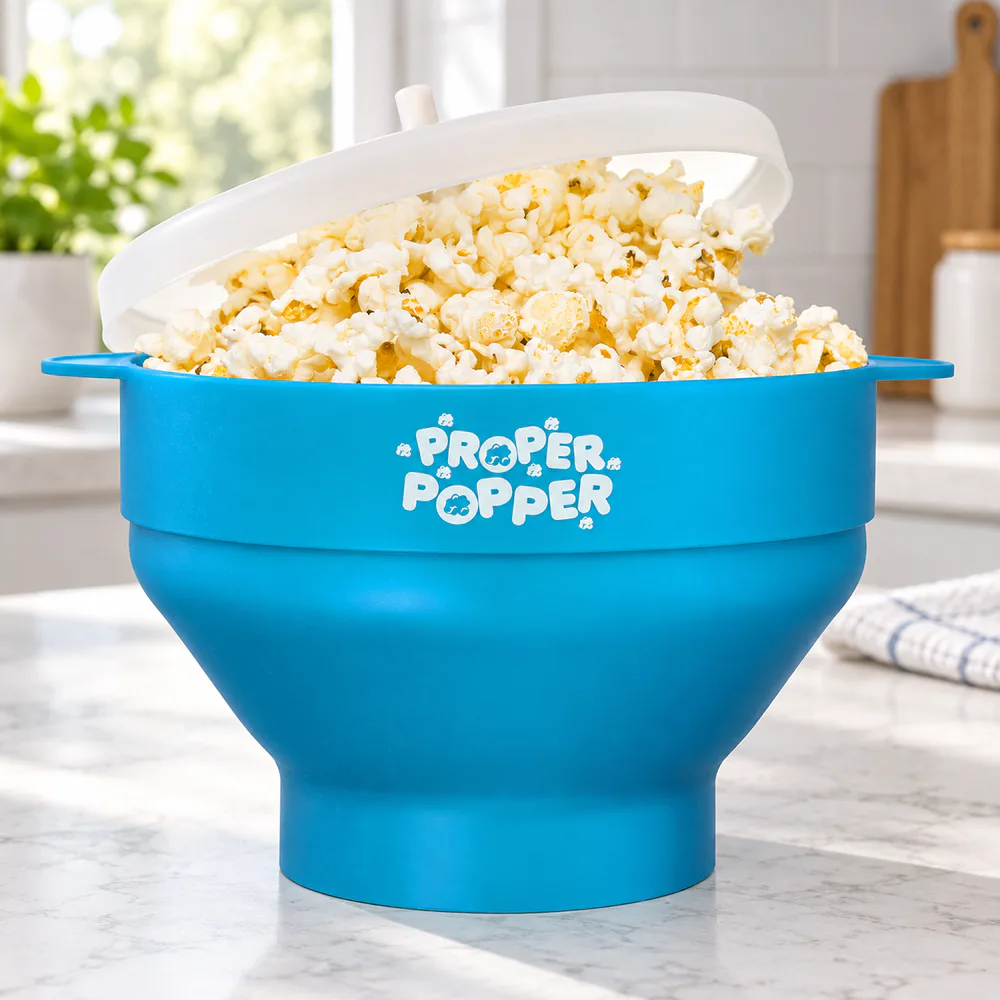
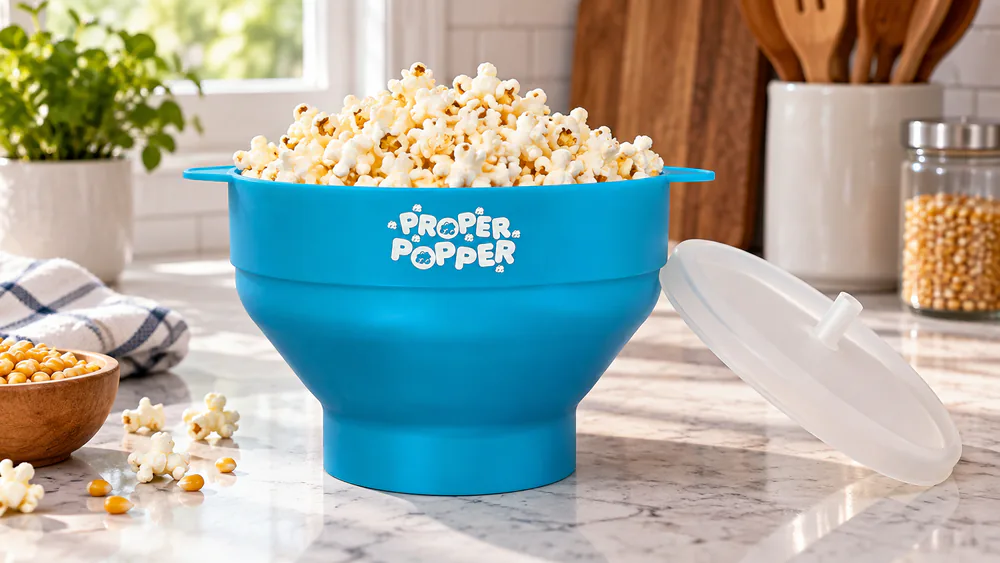
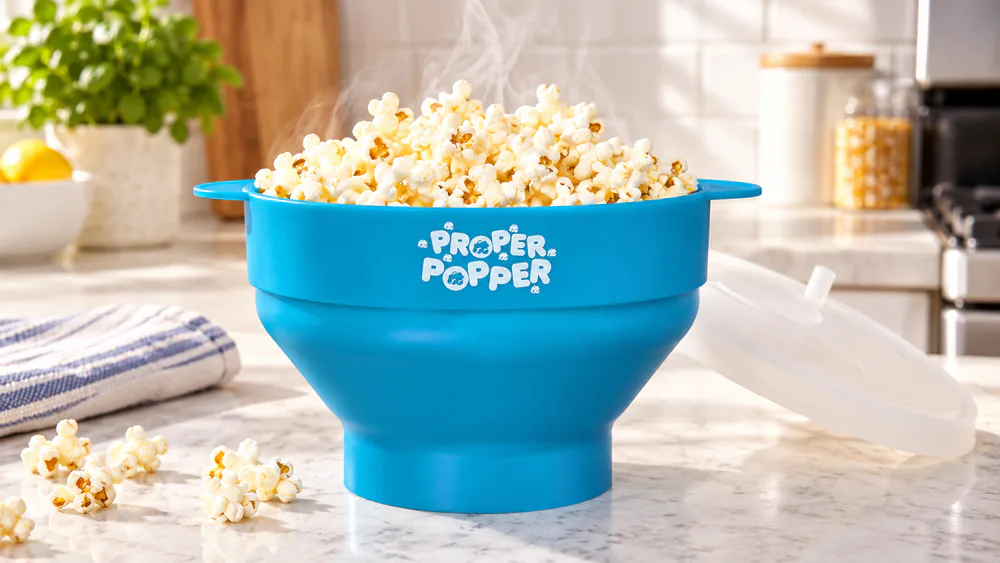
The Proper Popper is the pick we keep reaching for, and at about $13 it is the cheapest good answer here. A full batch popped in 3 minutes 45 seconds, oil-free, with very few unpopped kernels.
The silicone walls come out hot, so we waited thirty seconds before grabbing them, and a first-batch silicone smell cleared after one dishwasher run. The bowl washed up with no sticky residue, earning 9.4 out of 10.
Pros
Pops oil-free in under 4 minutes
Popped every kernel of a full cup in our test
Food-grade silicone, BPA- and PVC-free, dishwasher safe
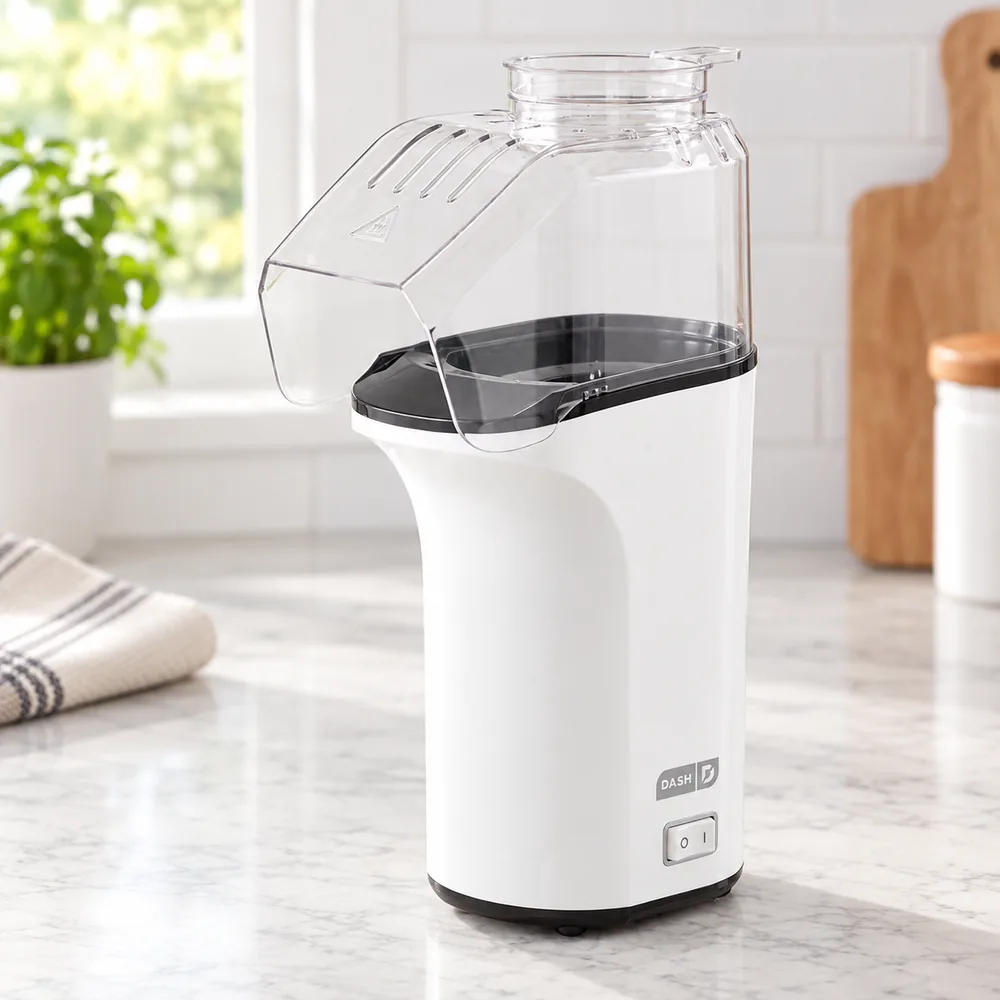
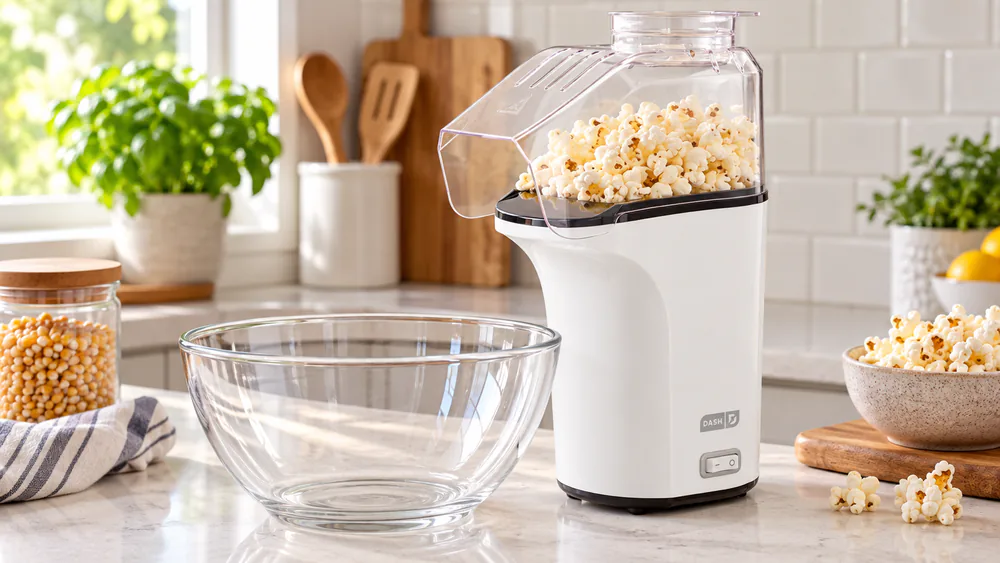
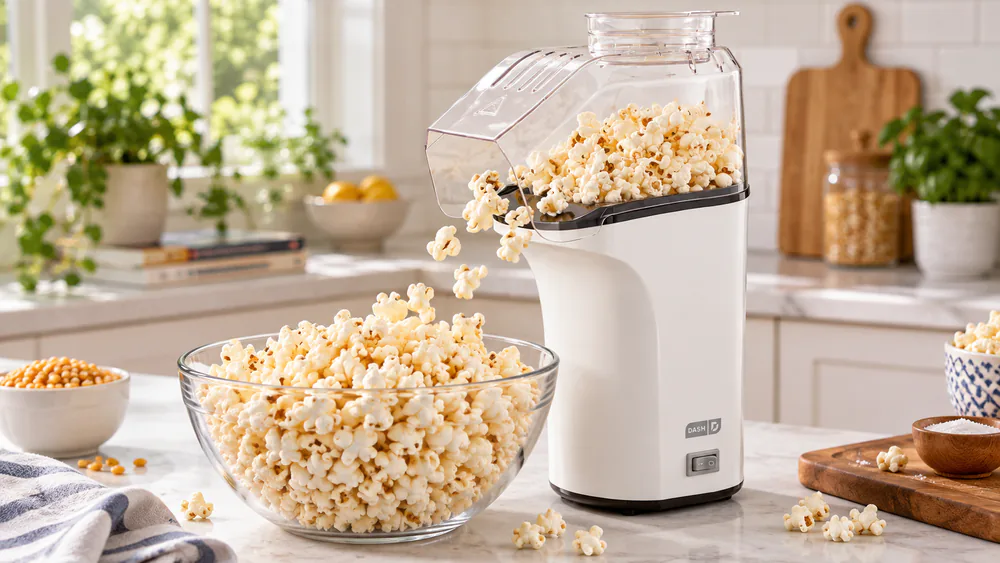
The DASH Fresh Pop is the family classic: no oil, a 16-cup yield, and five-second chute cleanup. It averaged about 4 percent unpopped kernels in our side-by-side batches, 20 seconds slower than the Presto.
The honest part: the body is plastic, the heating chamber is aluminum, and the BPA-free label is disputed by a Proposition 65 warning on the US listing. The butter tray never melted butter during a cycle, and the clips holding the top on wear out first. It scores 7.8 out of 10; the non-toxic case rests on hot-air popping, not plastic-free construction.
Pros
1400W hot-air popping with no oil
Pops a full bowl from a heaping half-cup of kernels
Chute wipes clean in about five seconds
Compact countertop footprint
Cons
Plastic body and aluminum heat chamber, not stainless steel
BPA-free label disputed by a Prop 65 warning
Butter tray does not melt butter during a cycle
Specifications
Material
plastic body, aluminum heating chamber
Capacity
up to 16 cups popped
Power
1400W; about 3 minutes per cycle, 10-12 minute cool-down
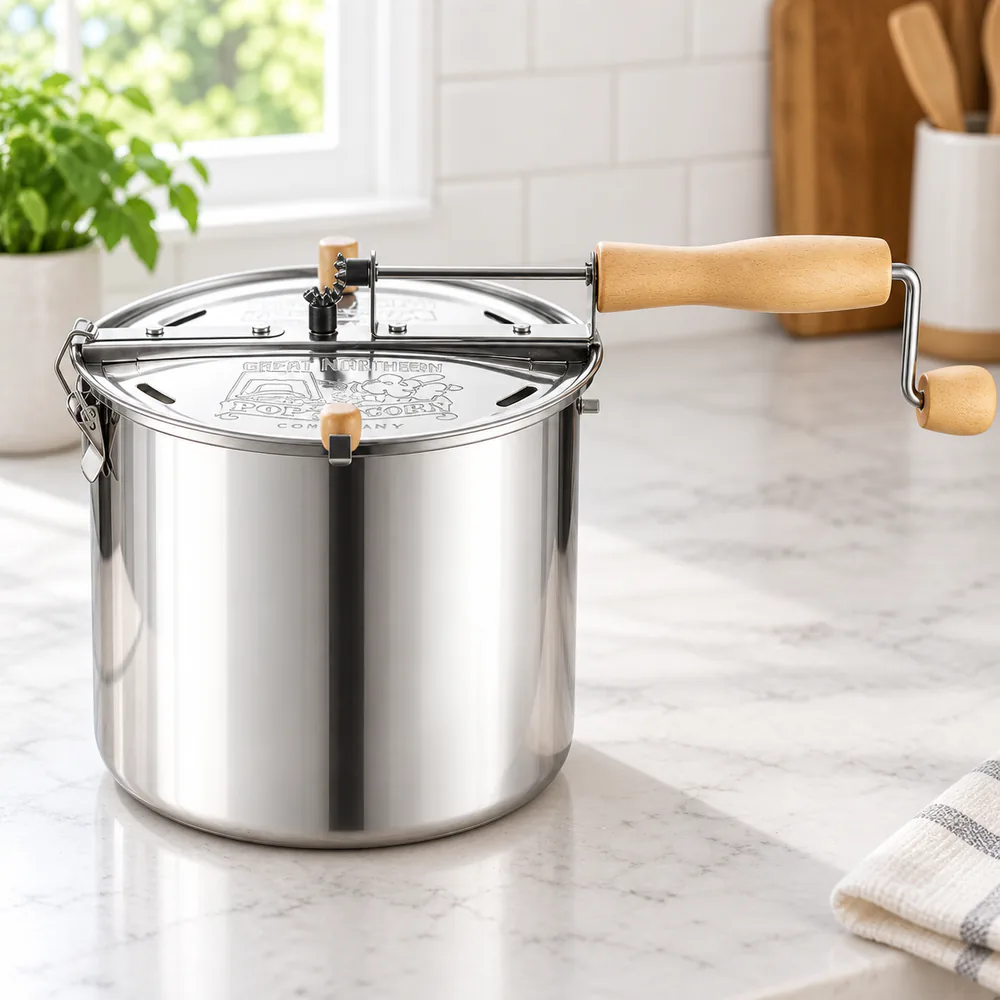
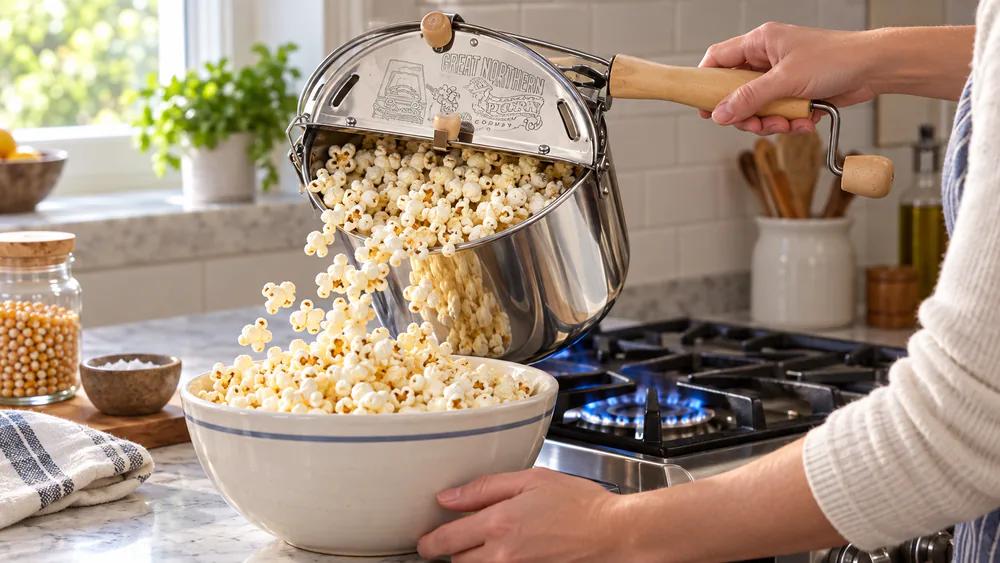
The Great Northern's stainless kettle tastes like the movie theater. On medium heat the crank turned smoothly, and the batch came out crunchy and evenly popped with almost no unpopped kernels. Start on medium; medium-high scorched our first batch.
It needs oil and will not work on induction. The gear set is the part to watch: it wears over time, and cranking the wrong direction can unscrew it, so always crank clockwise. Our longest-running unit is nearly ten years old, scoring 8.8 out of 10.
Pros
Up to 5 quarts of theater-style popcorn per batch
Stainless steel pot with stay-cool wooden handle
Vented lid doubles as an easy-pour spout; campfire capable
Best texture of the seven; crank lasts for years
Cons
Needs oil; start on medium or the first batch scorches
Wipe-clean only; not dishwasher safe or induction compatible
Gear set wears over time; crank clockwise only
Specs: stainless steel with duplex heat pad and wooden handle, 6.5-quart pot making up to 5 quarts popped, about 4 minutes on medium heat, bare steel with no coatings.
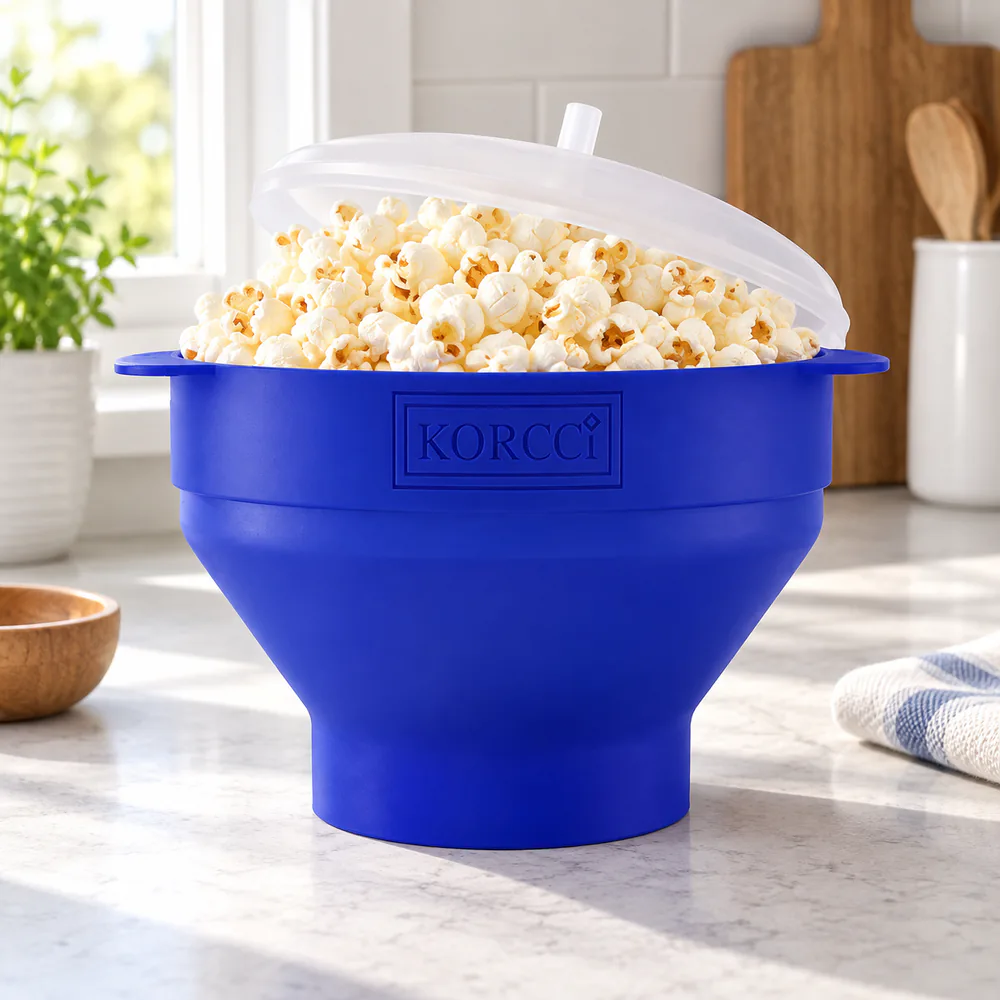
4. Korcci Silicone Bowl: Best Microwave Silicone Bowl
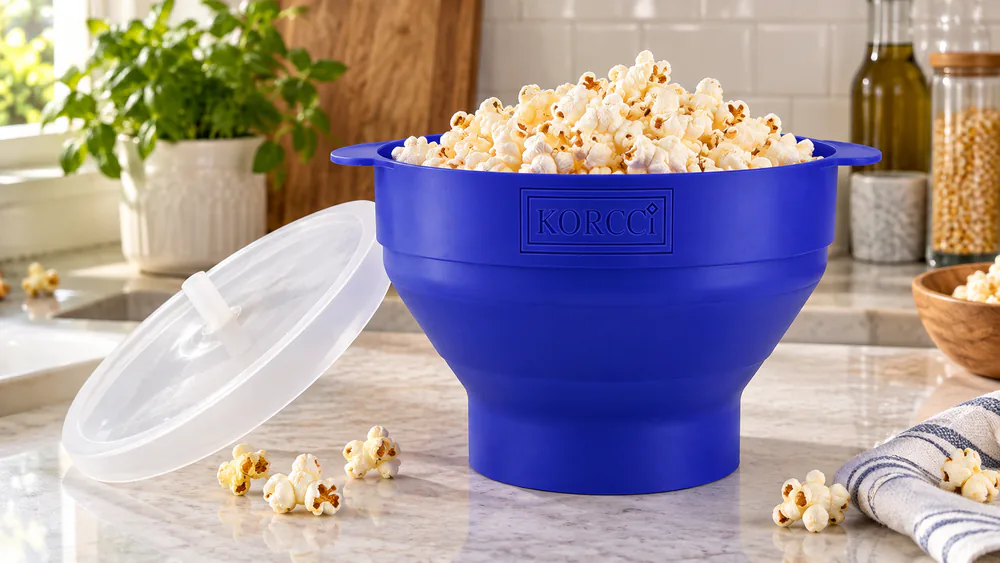
The Korcci bowl is the value pick of the microwave group. Three tablespoons of kernels at 1000 watts popped almost everything in about 2 minutes 40 seconds, oil-free.
The bowl gets very hot, so we sat it on a plate before removal, and it feels flimsier than older bowls even though it pops fine. At about $9, it is the cheapest honest pick we tested, scoring 8.5 out of 10.
Pros
Holds 15 cups of popped popcorn with no oil
Pops almost everything in under 3 minutes
Food-grade silicone with a BPA-free claim
Dishwasher safe; collapses to 2-3/8 inches
Cons
Bowl gets very hot; set it on a plate before removal
Feels flimsier than older bowls of the same design
Specs: food-grade silicone bowl and lid, up to 15 cups popped, about 2.5 to 3 minutes at 1000 watts, BPA-free claim and dishwasher safe.
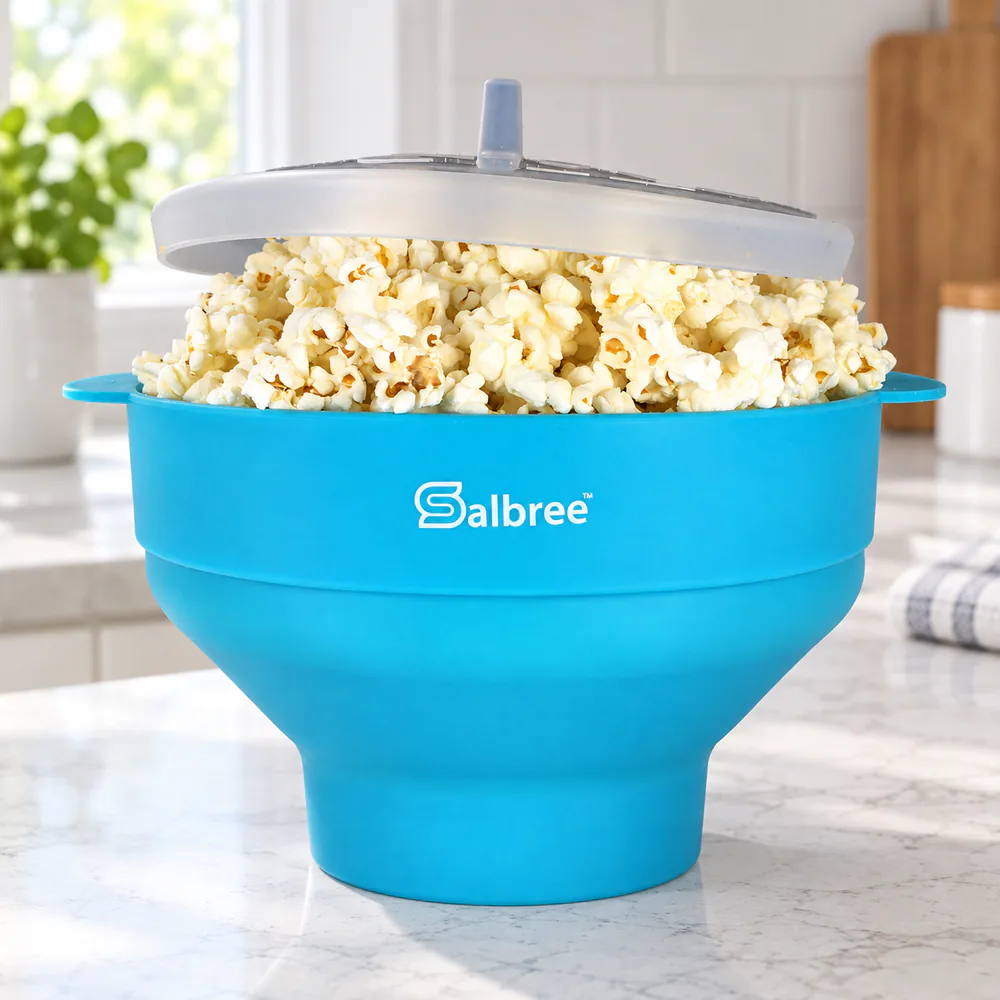
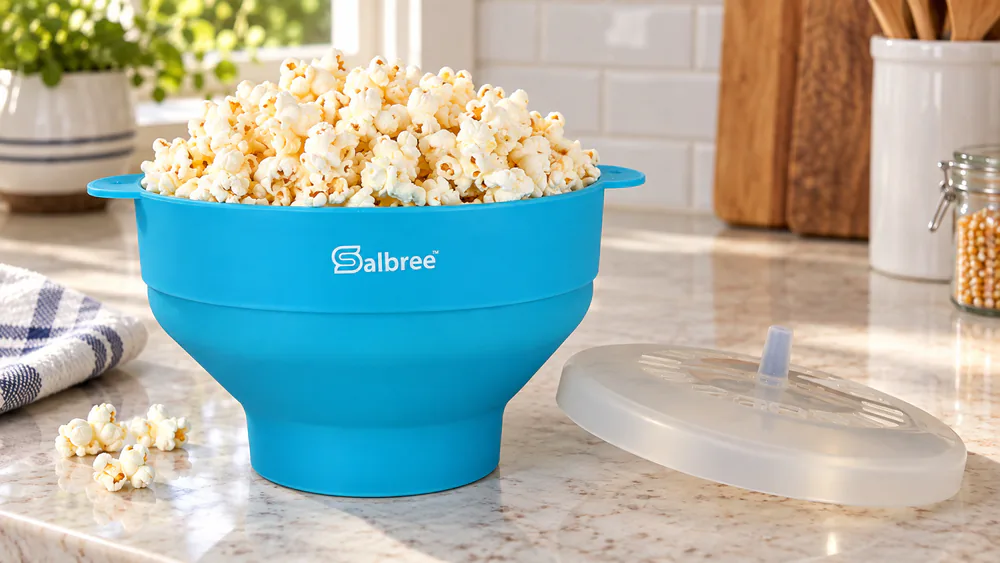
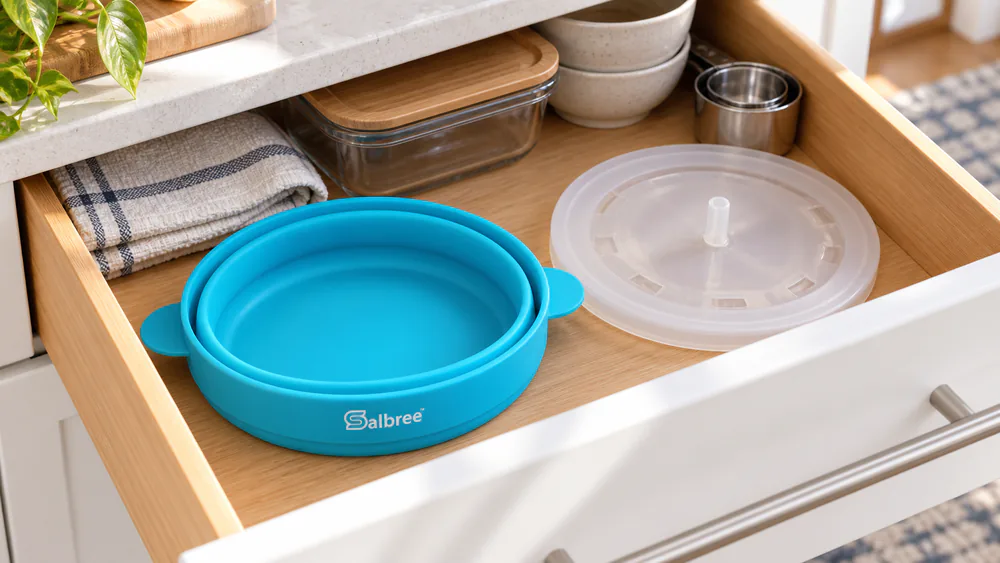
Salbree is what a budget pick should be: more bowl than its price suggests. It popped evenly with very few unpopped kernels, and the silicone felt sturdy despite costing about $17.
It survived dozens of aggressive fold and unfold cycles with zero wear. The handles get hot enough that hot pads help, and dishwasher-only care leaves hard-water spots, so we hand wash ours. It scores 8.3 out of 10.
Pros
Popped evenly with very few unpopped kernels in our batches
Certified BPA-free food-grade silicone
Survived dozens of fold and unfold cycles with no wear
Folds flat for storage; 16-cup capacity
Cons
Handles get hot enough that hot pads help
Hard-water spots if it only ever sees the dishwasher
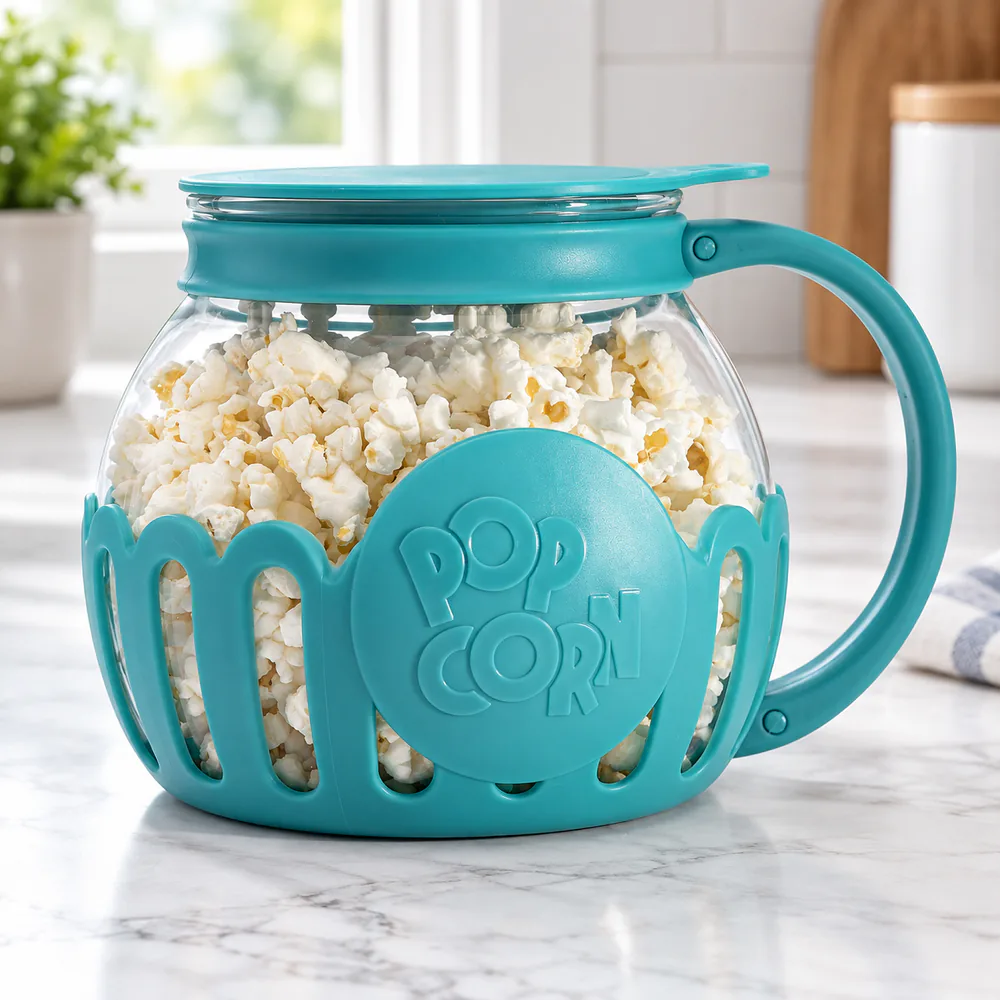
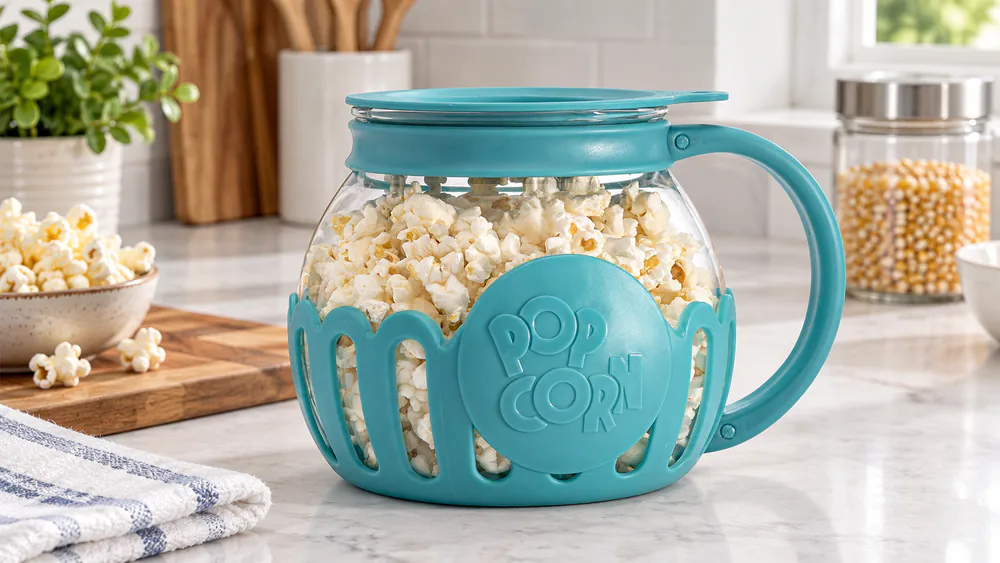
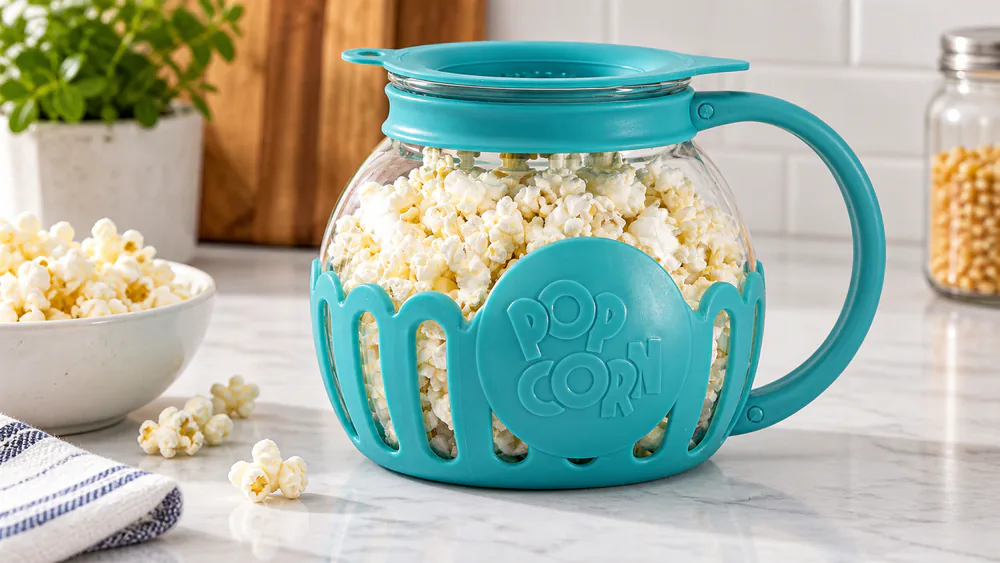
Ecolution's Micro-Pop pops in 3 minutes or less on a turntable microwave, and the 3-in-1 lid measures kernels and melts butter on top. Results split: some runs popped nearly every kernel in two minutes, others left a quarter unpopped and burned.
Our fix: stick to 2 to 3 minutes and listen for the pops to slow; a teaspoon of oil cuts the unpopped count. Butter on the lid burns during a full cycle, and the glass runs about 380 to 425 F while the lid stays touchable, so transfer to a serving bowl. Newer units ship with a hard plastic lid cap, not silicone. It scores 8.0 out of 10.
Pros
Temperature-safe borosilicate glass bowl
3-in-1 lid measures kernels and melts butter
Pops in 3 minutes or less; Made Without BPA claim
Dishwasher safe
Cons
Popping results split; running long burns kernels
Butter on the lid burns during a full cycle
Newer units ship with a hard plastic lid cap, not silicone
Specs: borosilicate glass with a plastic lid cap on newer units, 1.5-quart bowl with a 3-quart family size available, 3 minutes or less on a turntable microwave, Made Without BPA claim and dishwasher safe.
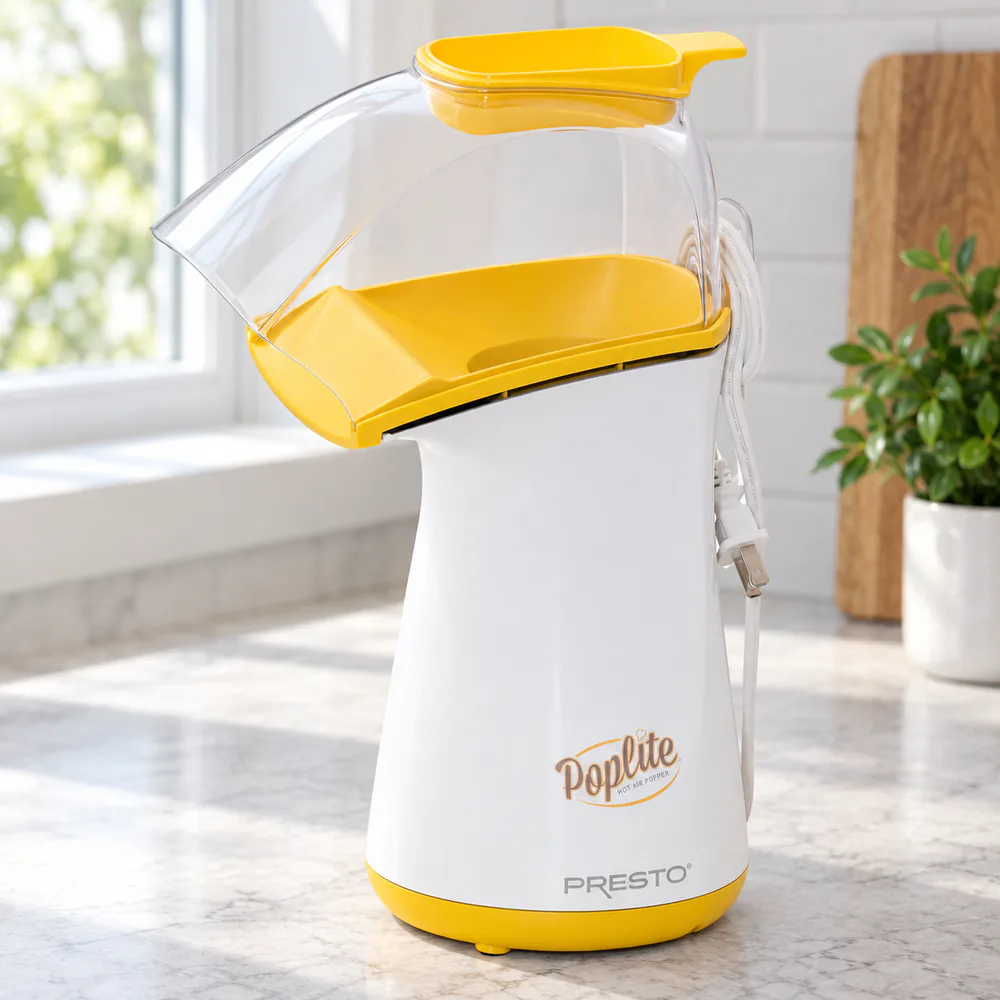
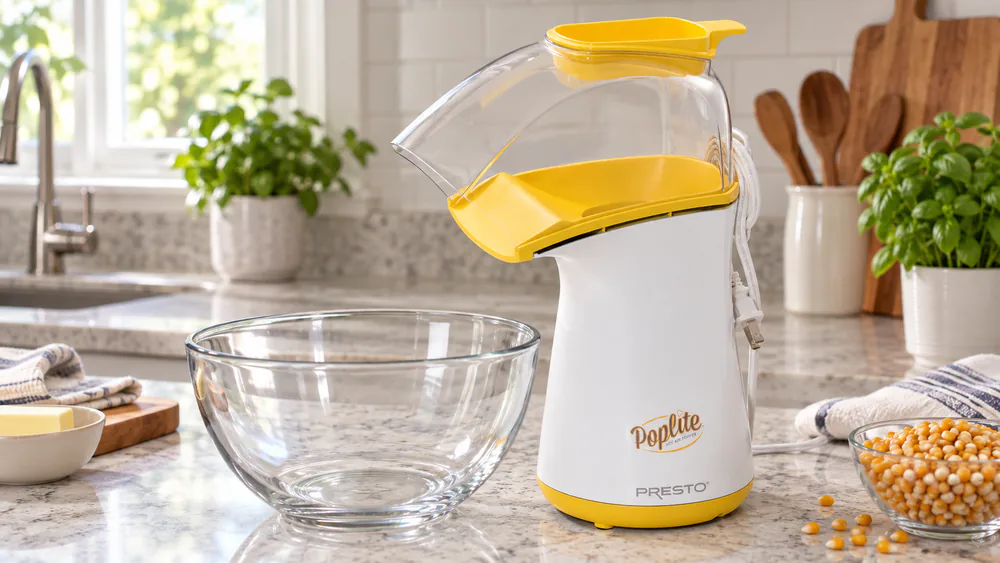
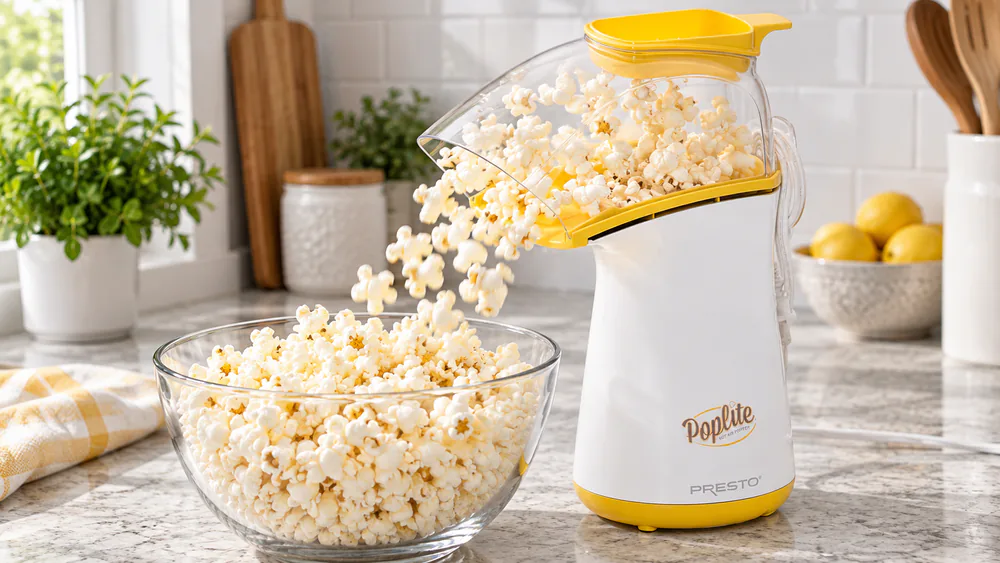
The Presto PopLite is the workhorse of the group: 18 cups in under 2.5 minutes with just 2 percent unpopped kernels, the best rate of any air popper in our tests.
There is no on/off switch; you plug it in to run it and unplug it to stop. The caveat matches the DASH: plastic housing, no official BPA-free statement, and a Proposition 65 warning on one retailer listing. Durability is mixed: some units fail within months, others run for decades. It scores 8.1 out of 10.
Pros
Under 2.5 minutes for a full batch, the fastest in our tests
2 percent unpopped kernels, the best of any air popper we tested
Quieter than the DASH; cord wraps around the base
Cap doubles as a measuring cup and butter-melting tray
Cons
Plastic housing and chute with no official BPA-free statement
No on/off switch; you plug and unplug to run it
Some units fail within months of use
Specifications
Material
plastic housing and chute
Capacity
up to 18 cups (4.5 quarts)
Power
1,440-1,475W; under 2.5 minutes per batch
Certifications
no BPA-free statement; 1-year limited warranty
Non-Toxic Popcorn Maker Buying Guide
Four questions settle almost everything: how it pops, what it is made of, how it cleans, and how much bowl you need.
Popping Method: Air vs. Stovetop vs. Microwave vs. Electric
Hot-air poppers like the DASH and Presto need no oil, but their plastic bodies are the caveat. Microwave bowls, silicone or glass, use an appliance you already own and pop in about three minutes, though the bowl comes out hot. Stovetop kettles need oil and attention and return the crunchiest, most theater-style batch.
Pros
Hot-air and microwave silicone poppers need no oil and leave no greasy residue
Oil-free batches finish in about three minutes and clean up in seconds
Cons
Oil-popped stovetop batches have a denser, crunchier texture worth the extra steps
Stovetop kettles take longer and need a wipe-down between batches
Materials, Certifications, and Heat Safety
Stainless steel, borosilicate glass, and food-grade silicone are the materials we trust. Read the listing for "BPA-free" and "food-grade", and check for a Proposition 65 warning, which overrides any marketing claim. Treat hot bowls like hot pans: use a plate or hot pad, and skip the microwave's popcorn button on glass bowls.
Capacity, Ease of Cleaning, and Price
Match the bowl to the crowd: 15 to 18 cups feeds a family with leftovers, while the 1.5-quart Ecolution suits one or two. Dishwasher-safe silicone and glass save the most time; kettles wipe clean. Prices run about $9 to $40 at street pricing, which moves week to week. Kernels matter too; our guide to the best popcorn for popcorn makers covers which pop cleanest.
Tip. Keep kernels in a sealed container. Dry kernels are the top reason for unpopped corn.
Frequently Asked Questions
What makes a popcorn maker "non-toxic"?
Materials that stay inert under heat: stainless steel, borosilicate glass, or food-grade silicone, with no BPA plastics and no non-stick coatings. Explicit BPA-free claims and certifications like ETL listing help too.
Are air popcorn poppers non-toxic?
The hot-air method is clean, since it needs no oil and no non-stick coating. The housing is the part to check: both of our air-popper picks have plastic bodies, and the DASH's heat chamber is aluminum. Third-party testing helps too, which is why we look for an electrical safety listing like the ETL mark from Intertek that the DASH carries.
Is silicone safe for popping popcorn in the microwave?
Yes. Food-grade silicone is formulated to take microwave heat easily, and the certification on the package is the detail worth checking: FDA food-grade silicone and the European LFGB food-contact standard are the marks to trust. Any bowl that carries one of those is safe for popcorn.
Do microwave popcorn bags still contain PFAS?
They can. The 2007 EPA study detected PFAS in the air above just-heated bags, and independent testing has since found the chemicals in every microwave popcorn sample it bought from dollar stores, including ACT II, Pop Secret, and Orville Redenbacher's. If you would rather skip the question entirely, pop kernels at home in a silicone bowl, glass bowl, or kettle.
What's the healthiest oil for popping popcorn?
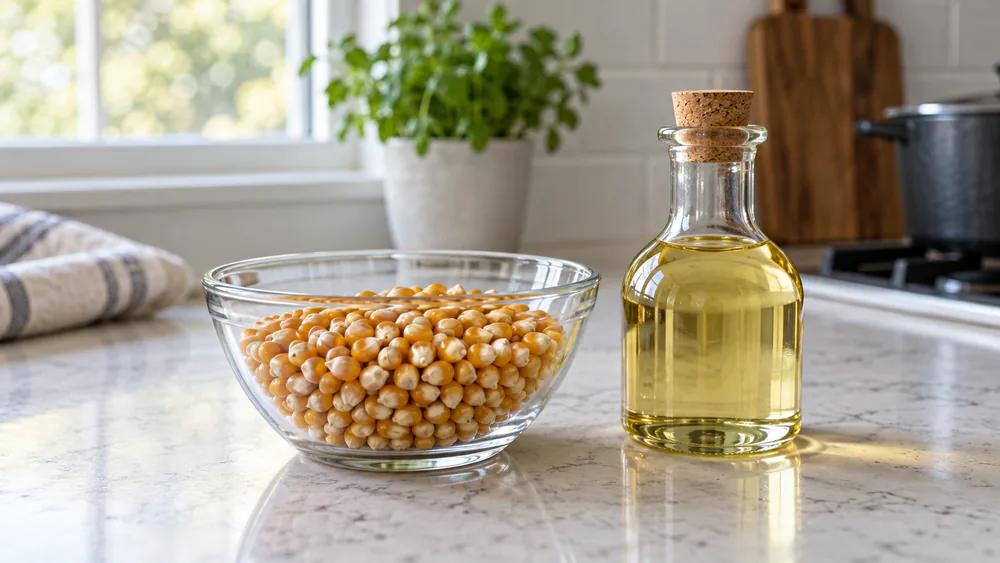
Avocado oil is our default because it handles popping heat without smoking. Hot-air poppers and silicone bowls skip oil entirely, and fresh kernels carry plenty of flavor on their own.
How do I clean a non-toxic popcorn maker?
Silicone and glass bowls are dishwasher safe, and hot-air poppers need just a wipe of the chute. Stovetop kettles wipe clean when cool. See how to clean a popcorn maker for the full routine.
Are non-toxic popcorn makers more expensive?
No. Several picks come in under $15, and a silicone bowl that lasts for years costs about the same as a few boxes of microwave bags.
Why do some kernels stay unpopped?
Kernel moisture is the main factor, so old or dried-out kernels pop poorly. Stop the cycle when pops slow to two or three seconds apart, and a teaspoon of oil helps in a microwave bowl.
Final Thoughts
If you want a single answer, buy the Proper Popper. It is the bowl for the cook who wants popcorn most nights without the microwave bag, and it suits solo snackers and families alike. For crowds, the Great Northern kettle is the one to beat, and the Korcci bowl covers budget buyers. Air-popper shoppers should read the DASH and Presto reviews with the plastic-body caveat in mind. The through-line: let the maker do less chemistry and keep the movie nights. For the full tour, see our roundup of the best at-home popcorn makers.
Note. We only recommend makers we tested and would buy again. Buying through our links earns us a commission at no cost to you.