
Kitchen Appliances
How to Clean a Popcorn Maker

As an Amazon Associate we earn from qualifying purchases. We may earn a commission from links on this page, at no extra cost to you. Learn more.
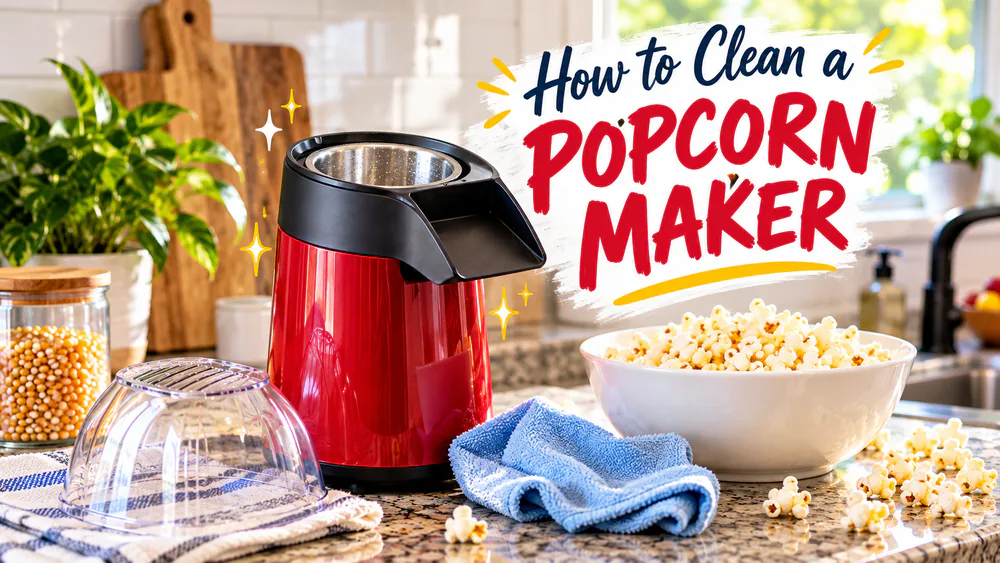
A clean popcorn maker means better-tasting popcorn, and a neglected one means stale, rancid flavor in every batch. Leftover oil breaks down between uses, sticky buildup makes the motor work harder, and burning residue smokes. A machine that smokes is a safety risk.
A clean machine starts with a routine you can repeat in minutes. We'll walk you through the best way to clean a popcorn maker, step by step, covering stovetop kettles, electric machines, and air poppers. Give each type its own routine, and it will stay in top shape for years.
Why Cleaning Your Popcorn Maker Matters
Old oil turns rancid and flavors every batch, and buildup makes heating elements work harder until they break. Properly cared for, a popcorn maker lasts 5-10 years, not 2-3.
Burning residue produces smoke and is a fire risk. Clean and sanitize before each use, in a wash, rinse, sanitize, then air-dry sequence.
Cleaning extends the life of your machine.
The Best Way to Clean a Popcorn Maker: Supplies You'll Need
Most of what you need is already in the kitchen: degreasing dish soap, white vinegar, baking soda, a spray bottle, microfiber towels, paper towels, and rubber gloves. Add a kettle cleaning brush and a plastic or silicone scraper for hardened bits, plus an optional food-grade popcorn kettle cleaner.
Two rules apply to every type: keep white vinegar diluted 1:1 with water for kettle soaks, glass panels, and interior wipes, and use a non-abrasive nylon scrubber, never steel wool, which scars finishes.
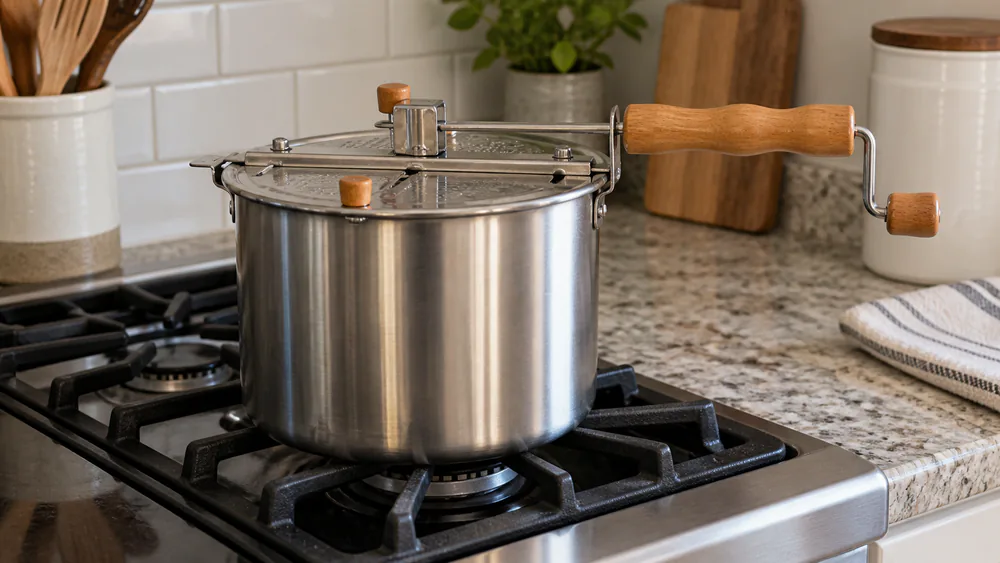
How to Clean a Stovetop Popcorn Maker
Stovetop poppers are the simplest to clean because nothing is electric. Scrubbing depends on the oil; some owners just wipe out the cooled kettle, while heavy butter batches demand a real wash.
1. Let It Cool and Disassemble
Let the kettle cool at least 15-20 minutes, then separate the lid, crank, and other pieces.
2. Wash the Kettle with Warm Soapy Water
Wash the kettle, lid, and crank in warm soapy water. Never soak wooden handles; wipe them with a damp cloth. Rinse until no soap remains, then dry completely.
3. Remove Stuck-On Oil and Burnt Bits
Soak the kettle for 15-30 minutes, then scrub with a baking soda paste. You do not need bare aluminum; a patina is normal.
4. Rinse, Dry, and Reassemble
Dry every piece completely, then reassemble.
Tip. If the crank stiffens, clean the gears and lubricate with food-safe oil; the Whirley Pop's nylon gears are the classic case.
We recommend hand-washing all stovetop parts.
How to Clean an Electric Popcorn Maker
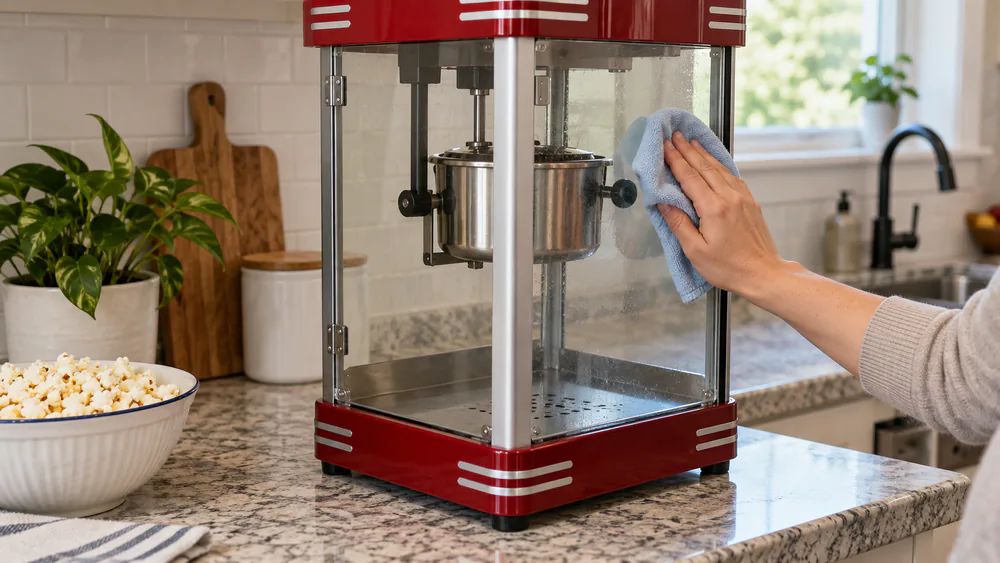
Electric machines are the most work to clean because they trap the most grease; water and electricity must never meet.
1. Unplug and Let It Cool Completely
Unplug the machine first, then let it cool completely.
Warning. Unplug and fully cool before cleaning, at least 30 minutes. Never submerge the base, heating element, or motor.
2. Clean the Kettle and Heating Plate
Hand-wash the kettle, stirring arm, tray, and bowl in warm soapy water, and wipe the heating plate with a well-wrung damp cloth; vinegar handles a sticky plate. For heavy buildup, boil-out the kettle: 1-2 cups of water plus a few tablespoons of vinegar or baking soda, simmer 5-15 minutes, cool, then rinse and dry.
3. Wipe Down Glass Panels and the Interior
Wipe the glass with a microfiber cloth sprayed with a 1:1 vinegar and water mix; ammonia-based cleaners cloud glass. Replace any chipped or cracked panel.
4. Clean Removable Parts and the Exterior
Wash the removable parts and wipe the exterior with a damp cloth. Air-dry several hours or overnight before reassembly.
Tip. Treat the kettle's finish gently: soft sponge only, no abrasive pads.
How to Clean an Air Popper
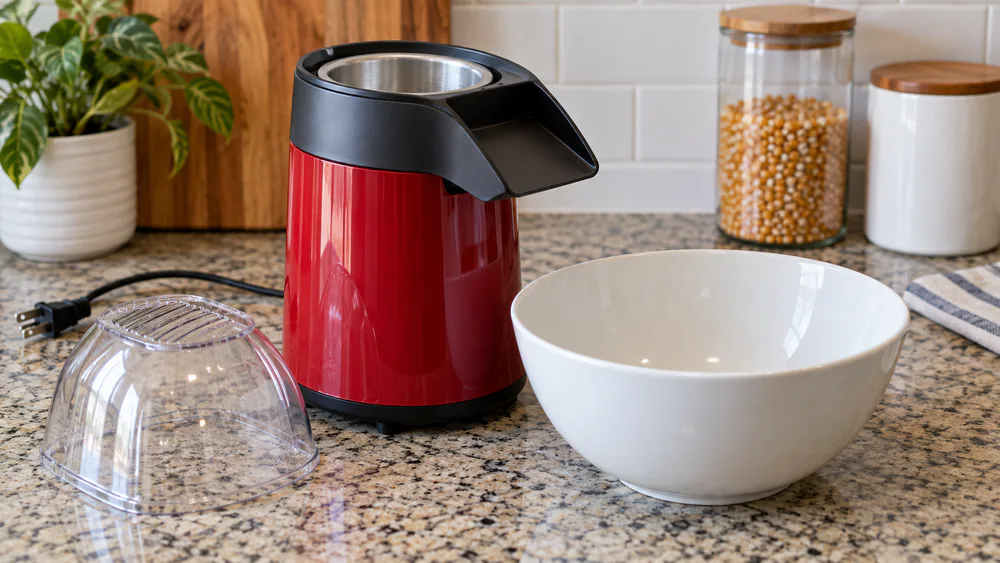
Air poppers are the easiest of the three because they use no oil, and the chamber is designed to stay dry; the routine is wipe and brush, not wash and soak.
1. Unplug, Cool, and Remove Removable Parts
Unplug the machine, let it cool, then remove the cover and other removable parts.
2. Brush Out Kernels and Burnt Bits
Per the manufacturer's care manual, do not wipe or wash inside the popping chamber; it is designed to remain dry. Invert the cooled popper to dump kernels and chaff, and check the bottom screen each cleaning.
3. Wash the Chute, Bowl, and Lid
Wash the cover in warm, soapy water; it is top-rack dishwasher safe only, and the base must never go in the dishwasher.
Tip. Keep the vents and bottom screen clear; kernels that lodge near the heating element burn and smoke.
How Often Should You Clean Your Popcorn Maker?
Quick-clean after every batch while fresh grease is still soft; it wipes off in seconds.
How often you deep clean depends on how many batches you pop and what you add; sugar and Flavacol burn on faster than plain oil. Guides range from every 3-4 uses to every 5-10 uses, with monthly as the common floor and weekly if you pop every day; a full clean takes 20-40 minutes.
| Method | Oil use | Cleaning difficulty | Common issues | Quick clean | Deep clean |
|---|---|---|---|---|---|
| Stovetop popper | Yes, 1-2 tbsp in the kettle | Medium: hand-wash all parts; burnt-on spots common | Burnt-on spots from direct heat; crank gears jam on kernels | About 5 minutes | About 15 minutes |
| Electric popper | Yes, oil in the kettle | High: grease on glass, heating plate, and stir arm | Greasy glass; slow stirring from buildup; smoke if residue burns | About 7 minutes | About 20 minutes |
| Air popper | None, hot air | Low to medium: chamber stays dry; wipe, brush, and wash the cover | Kernels and chaff in vents; lingering burnt smell; fan noise | About 3 minutes | About 8 minutes |
How to Deep Clean Tough Stains, Burnt Oil, and Odors
When a regular wash does not cut it, tackle stubborn residue in order: soak 15-30 minutes in warm soapy water, add 1/4 cup of white vinegar, and let a baking soda paste sit about 15 minutes, up to 30 on heavy spots.
Burnt batches need immediate action: ventilate, take the kernels outside, then clean. Kettle corn caramel burns on fast, so soak the kettle immediately.
If an oil smell persists, residue is still somewhere it can burn when the machine heats; re-clean with degreaser, dry, and run a brief oil-free cycle.
Warning. Never use bleach or abrasive cleaners; they damage finishes and leave residue in your food. Never clean a hot machine, and take smoke seriously: unplug and let it cool first.
Common Popcorn Maker Cleaning Mistakes to Avoid
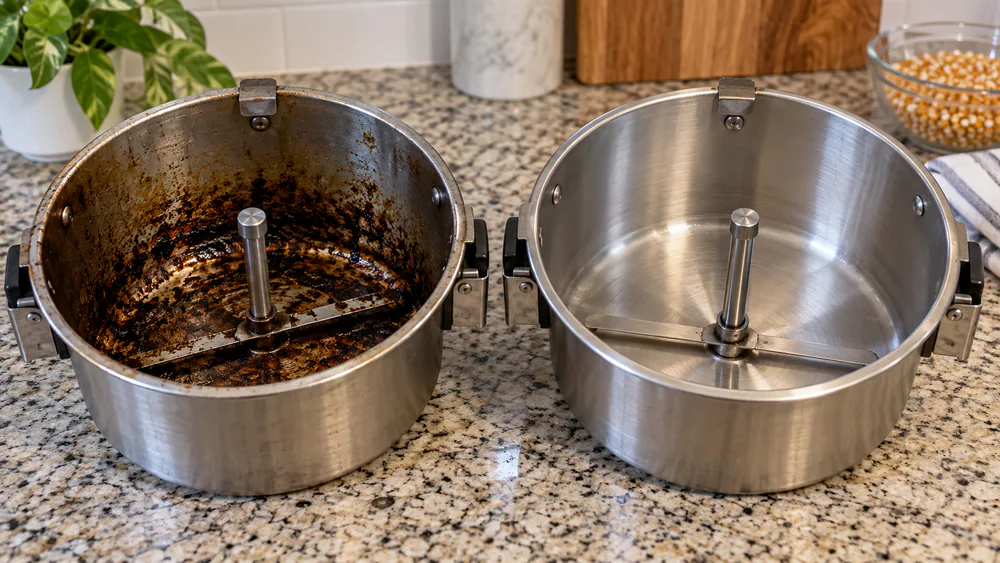
Letting grease sit is the biggest mistake; fresh grease wipes off in seconds. Soaking the wooden handle ruins stovetop poppers.
Skipping the heating plate and stirring arm is how burnt smells start; cleaning them fixes it in most cases. Walking away from an air popper is another trap; stuck kernels burn and smoke.
Using the dishwasher for parts that cannot take it is common; high heat warps plastic and damages seals, so when in doubt, hand-wash.
Maintenance Tips to Keep Your Popcorn Maker Clean Longer
Wipe down after every use, once the machine cools, while grease is still soft; that single habit does more than any deep-clean schedule.
Oil choice changes cleanup: cheaper oils burn faster and leave more residue, while quality oils leave less. Dry everything completely before reassembly.
Owners who settle into about 10 minutes per use plus 20 minutes monthly rarely fight burnt smells.
Safety First: Popcorn Maker Cleaning Precautions
Unplug before cleaning, every time, and let the machine cool completely: 15-20 minutes for a stovetop kettle, at least 30 minutes for an electric machine.
Never submerge the base, heating element, or motor; wipe electrical parts with a well-wrung cloth.
Stop using the machine if you smell a metallic or plastic-like odor; that signals an electrical problem, not residue.
Popcorn Maker Cleaning FAQs
How often should I deep clean my popcorn maker?
Every 5-10 uses, with monthly as the common floor and weekly if you pop every day. Deep clean sooner if the machine starts smoking or popping unevenly.
Can I put popcorn maker parts in the dishwasher?
Check the owner's manual; some air-popper covers are top-rack safe, while electric kettles and stovetop poppers like the Whirley Pop are not.
What is the best way to remove burnt popcorn from the kettle?
Soak it in warm soapy water with 1/4 cup of white vinegar, or let a baking soda paste sit about 15 minutes before scrubbing. Never scrape with metal tools.
How do I get rid of a burnt smell after cleaning?
Re-clean with a degreaser, dry everything completely, and run a brief oil-free cycle to burn off any last residue. If the smell keeps coming back, check around the heating element for buildup.
Is vinegar or baking soda safe for a popcorn maker?
Yes, and they are the best first choices for a food-contact surface. A diluted vinegar and water mix cuts grease and neutralizes odors, and a baking soda paste handles stubborn spots. Skip bleach.
Final Verdict
Cleaning a popcorn maker comes down to one habit: clean after every use, while the grease is still soft. The air popper gets a quick brush and cover wash, the stovetop kettle a warm soapy wash, and the electric machine a little more attention. Deep clean every few weeks, and it stays sparkling for years of movie nights.
Read next
Ready to upgrade your kitchen?
A quick-clean habit after every use keeps your popcorn maker fresh for years of movie nights.