Helping you create a kitchen you love.

Kitchen Appliances

Blackstone 28 vs 36: Which Griddle Should You Buy?

As an Amazon Associate we earn from qualifying purchases. We may earn a commission from links on this page, at no extra cost to you. Learn more.

Blackstone 28 vs 36: Which Griddle Should You Buy?

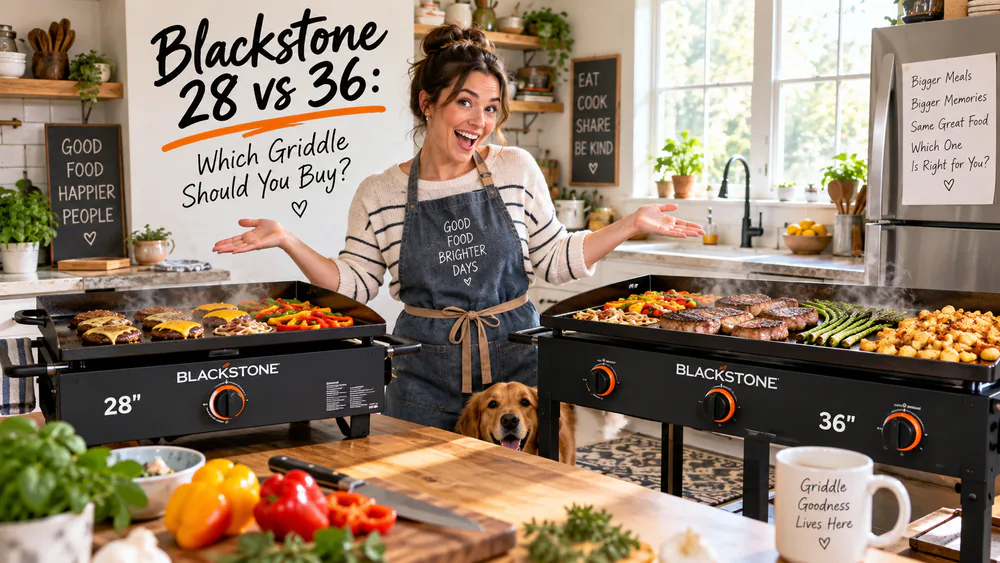
For most backyards, the real question between the 28-inch and the 36-inch Blackstone is how many people you cook for. Both run on the same 20 lb propane tank and the same cold-rolled carbon steel surface, but the 28 spreads 524 square inches across two burners while the 36 spreads 768 across four. That number drives the rest: price, portability, and burgers per batch.

After cooking on both sizes and reading the owner reports that come back to us, we'd buy the 28-inch for most families and the 36-inch only for regular crowds. The 28 feeds the 4 to 6 people most households sit down, folds flat, and costs less. The 36 pays for its extra price, weight, and patio space only when you routinely cook for 6 or more.

In real use they cook differently than the spec sheets suggest: the 28 covers its shorter span more evenly, and the 36's outer edges can lag slightly. We'll walk through the numbers and the trade-offs below.

Quick Comparison Table

Here is the head-to-head comparison at a glance, between the 28-inch model 1517 and the 36-inch model 1554. You can browse the current lineup on the official Blackstone Products website while you read.

FeatureBlackstone 28-inchBlackstone 36-inchWinner
Cooking surface524 sq in768 sq in36-inch
Burners2436-inch
Independent heat zones2436-inch
Total output~34,000 BTU~60,000 BTU36-inch
Weight~75 lb~120 lb28-inch
Dimensions (W x D x H)44.5 x 19.5 x 33.5 in62 x 22 x 36 in28-inch
Capacity (people)4-68-1036-inch
Portability & storageFolds, one-person moveStationary, two-person move28-inch
Grease managementRear grease management systemRear grease management systemTie
Price~$275-350~$450-55028-inch
Cooking qualityTieTieTie

Blackstone 28-Inch Griddle: Overview

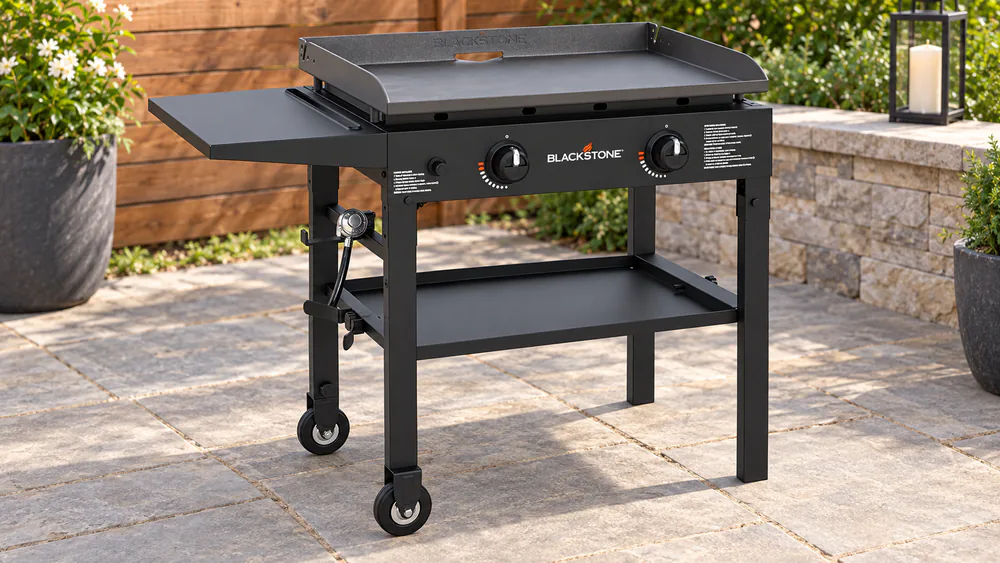
The Blackstone 28-inch griddle, model 1517, is the compact half of the pair and the size most families should start with. It cooks for 4 to 6 people, folds up, and runs on two independently controlled burners; the full current lineup lives on Blackstone's official 28-inch collection.

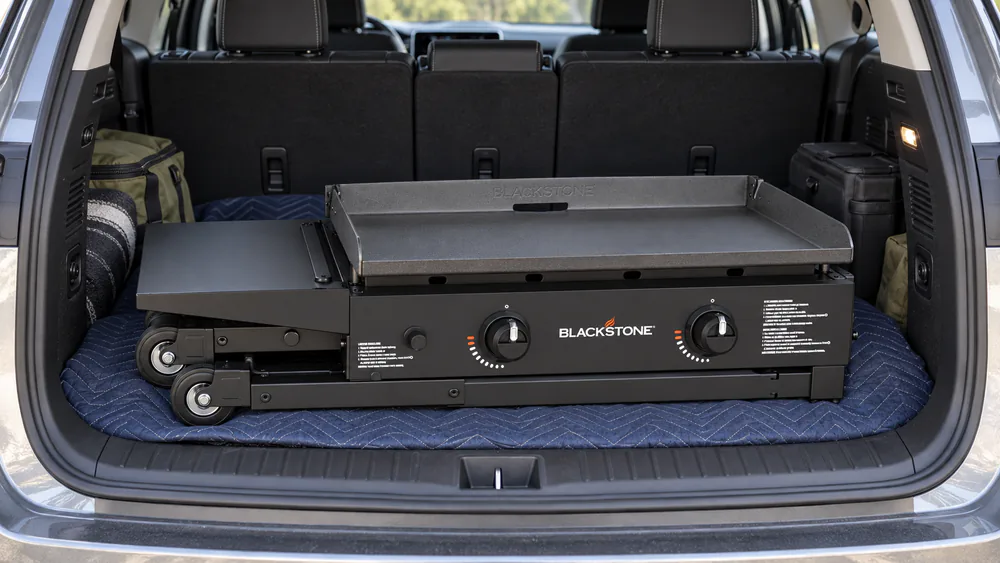
A Blackstone 28-inch griddle with its legs folded and the side shelf down, compact enough to fit in a car trunk or camper for tailgating.
The 28-inch folds flat enough for one person to move and store.

Key Specs at a Glance

  • Cooking surface: 524 sq in
  • Burners: 2 independent, 17,000 BTU each (34,000 total)
  • Heat zones: 2
  • Dimensions: 44.5 x 19.5 x 33.5 in (W x D x H)
  • Weight: about 75 lb
  • Capacity: 4 to 6 people (16 to 20 smash burgers per batch)
  • Warranty: 1-year limited

Pros and Cons

Blackstone 28-inch Griddle (Model 1517)
1

Blackstone 28-inch Griddle (Model 1517)

Best for Most Families
Check Price on Amazon
4.3/5

The 28 has been the workhorse of the pair, and the trait that stands out is how even it runs across its shorter span. Bacon at the far edges finishes about two minutes behind the center strips, a visible but small gradient. It arrives mostly assembled, so we had it seasoned and cooking about ten minutes after the box opened, and the push-button ignition runs off one AA battery.

Pros

  • Lighter and easier to move; folds flat for storage or a trunk
  • Costs less up front and burns less fuel at full blast
  • Even coverage across its shorter span
  • Arrives mostly assembled; cooking about ten minutes after the box opens
  • Comfortable for 4 to 6 people

Cons

  • Grease channel and drain are the weak point owners flag most
  • Side tray runs too hot to use as a holding shelf
  • Outer burners sometimes need a manual light
  • Big breakfasts of pancakes, sausage, bacon, and eggs crowd the surface
Who the 28-Inch Is For

The 28 is the pick for families of four to six, for cooks who want one griddle that also travels, and for anyone short on patio or garage space. Owners who cook for two are consistently happy with the room; those who run out of surface during big breakfasts tend to wish they had sized up.

Blackstone 36-Inch Griddle: Overview

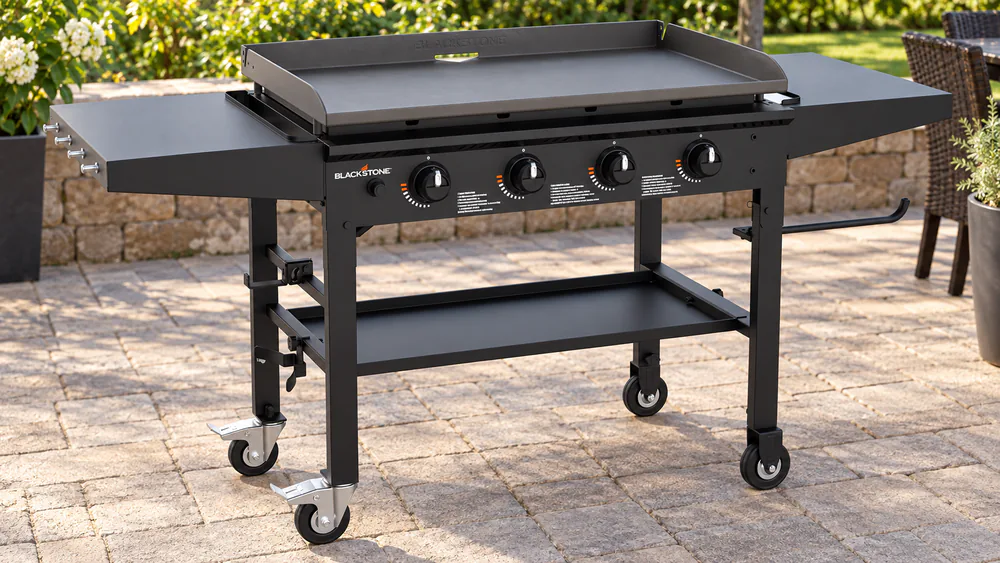
The Blackstone 36-inch griddle, model 1554, is the crowd-size half of the pair: four burners, 768 square inches, and room for 8 to 10 people. It is also about 120 lb and more than five feet wide, so it is not a griddle you move around. See the current range on Blackstone's official 36-inch collection.

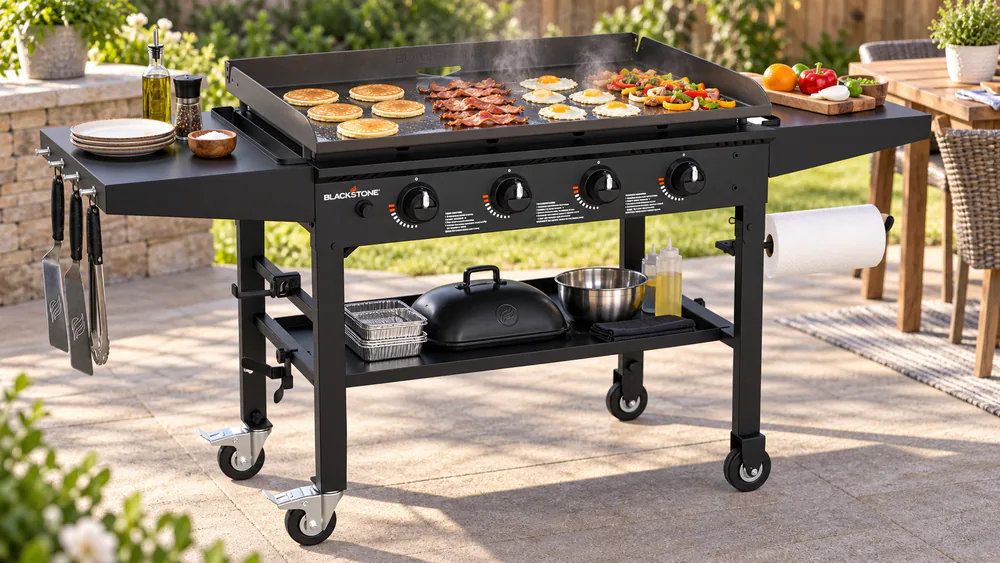
A Blackstone 36-inch griddle on a backyard patio, the wide cooking surface loaded with food across all four heat zones.
The 36-inch spreads 768 square inches across four heat zones.

Key Specs at a Glance

  • Cooking surface: 768 sq in
  • Burners: 4 independent, 15,000 BTU each (60,000 total)
  • Heat zones: 4
  • Dimensions: 62 x 22 x 36 in (W x D x H)
  • Weight: about 120 lb (published figures range from 115 to 130)
  • Capacity: 8 to 10 people (28 to 30 smash burgers per batch)
  • Warranty: 1-year limited

Pros and Cons

Blackstone 36-inch Griddle (Model 1554)
2

Blackstone 36-inch Griddle (Model 1554)

Best for Big Crowds
Check Price on Amazon
4.6/5

The 36 is the griddle we reach for when the guest list gets long. A Sunday pancake breakfast for six that runs about two hours on the stove came together in roughly fifteen minutes across the full surface, and the unit reached cooking temperature in about five. Assembly took about fifteen minutes with a 10 mm wrench, an adjustable wrench, and a Phillips screwdriver, and the top alone weighs about 55 lb, so bring help for the lift. For regular crowds, four zones and 768 square inches earn the space.

Pros

  • Four independent heat zones for different temperatures at once
  • Cooks for 8 to 10 in one pass
  • Thicker steel recovers heat faster in cold weather
  • Full-surface breakfasts finish in about 15 to 20 minutes

Cons

  • About 120 lb and a two-person move; essentially stationary
  • Roughly 50 percent more surface to scrape, wipe, and re-season
  • Rear grease system works best when the cart is level
  • Goes through propane noticeably faster at full blast

Who the 36-Inch Is For

The 36 is for households that regularly cook for 6 or more: Sunday breakfasts for the extended family, holiday cooks, and burger nights with a crowd. It is a griddle you buy for the patio it will live on, not one you throw in the trunk.

Cooking Surface & How Many People You Can Feed

Surface area is the headline difference, and it shows up in real meals, not spec sheets.

What 524 vs 768 Square Inches Means in Practice

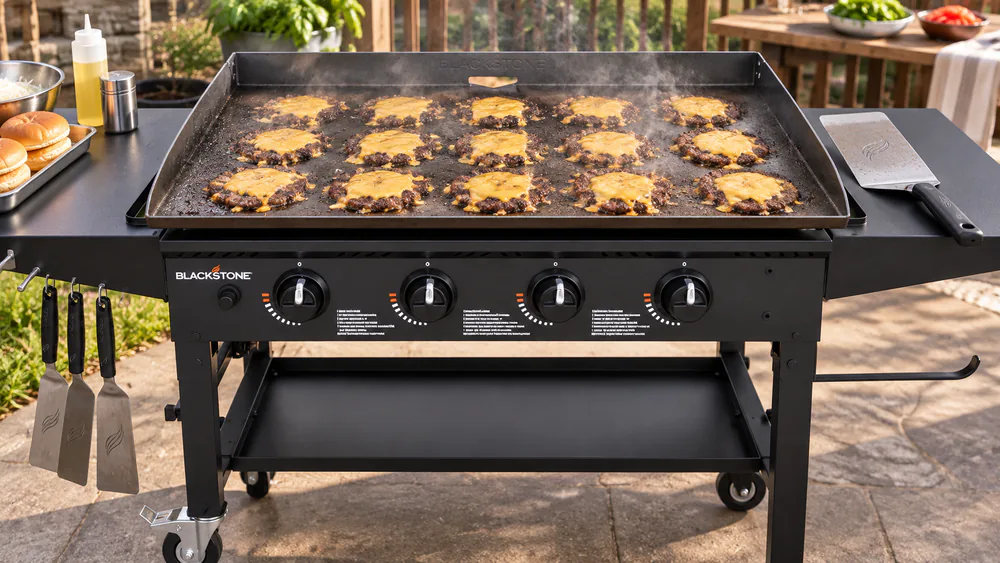
768 square inches is roughly 50 percent more cooking surface than 524. On the 28, a batch of 16 to 20 smash burgers fills the plate; the 36 takes 28 to 30 at a time, or a full breakfast of pancakes, sausage, bacon, and eggs laid out at once. Neither surface cooks on 100 percent of its footprint, so the usable gap is a little smaller than the numbers suggest.

A row of smash burgers cooking across the full surface of a Blackstone griddle, the outer edges of the cooktop visible at both ends.
Batches of smash burgers are the classic test of surface space.

How Many People Each Griddle Feeds

Blackstone rates the 28 for 4 to 6 people and the 36 for 8 to 10. Our rule of thumb: 1 to 2 people, the 28; 2 to 4, the 28; 4 to 6, the 28 unless you entertain regularly; 6 or more, the 36. That pattern matches the upgrade stories owners tell us.

ScenarioBlackstone 28-inchBlackstone 36-inch
Burgers per batch~16-20~28-30
1-2 peopleComfortableOverkill
2-4 peopleComfortableComfortable
4-6 peopleWorks, unless you entertain regularlyComfortable
6+ peopleCrampedThe right size

Burners, Heat Zones & Evenness

Two burners on the 28, four on the 36; the count matters less than the independent zones it creates.

Two Zones vs Four Zones

The 28 runs two burners at 17,000 BTU each for 34,000 BTU total, split into two independent zones, left and right. The 36 runs four burners at 15,000 BTU each for 60,000 total, split into four quarter zones. Zones let you hold pancakes low on one side while the other sears. The four-zone 36 adds two more stations, which pays off when you juggle proteins at different temperatures at once.

Cold Spots and Winter Performance

Every flat top has edges. The 28 covers its shorter span more evenly, though bacon at the far edges finishes about two minutes behind the center strips. The 36's outer edges can lag slightly despite its four burners, so the perimeter is the natural home for bacon and keep-warm food. In cold weather, the 36's thicker steel recovers heat faster, while the 28's shorter span is less wind-affected. A gap between the 36's griddle bottom and frame lets wind snuff a low flame, and some owners foil the gap.

Price, Value & Operating Costs

Both are affordable by outdoor-cooking standards, but the gap between them is real.

Upfront Cost: 28 vs 36

The 28-inch typically sells for $275 to $350, while the 36-inch runs $450 to $550. Street pricing moves week to week and varies by retailer, so check today's price on the 28-inch and see what the 36-inch is going for right now before you commit. On value for money, the 28 is the clear pick: roughly $150 to $200 less buys the same steel and a smaller footprint.

Propane Cost Per Cook

Both run on standard 20 lb propane tanks, and at full blast the 36 draws 60,000 BTU per hour against the 28's 34,000, about 75 percent more fuel per hour. It reaches cooking temperature in about five minutes; cooking on one or two zones makes it sip fuel closer to the 28's pace.

Tip. Do not let propane cost decide this. A 20 lb tank refill costs the same for either griddle, and the fuel gap only shows up when the 36 runs all four burners on high for a long cook.

Portability, Size & Storage

This is where the two models part ways most sharply.

Weight and Foldable Legs

The 28 weighs about 75 lb and folds flat, so one person can move it, and it fits in a car trunk or a camper. The 36 weighs about 120 lb, spans more than five feet, and is a two-person move that gets awkward on porches and out of sheds.

Call it what it is: the 36 is essentially stationary.

Footprint, Garage and Patio Fit

The 28 measures 44.5 x 19.5 x 33.5 in, small enough for a patio corner or garage wall, folded. The 36 measures 62 x 22 x 36 in, so it needs more than five feet of width plus clearance behind it while you cook. Measure the patio spot and the storage spot before you buy.

Warning. Measure your patio and garage before buying the 36. At 62 inches wide and about 120 lb, it is not the sort of griddle you want to discover does not fit after assembly.

Build Quality, Assembly & Cleanup

Both cook on cold-rolled steel tops, the 36's plate the thicker of the two; the build differences show up in assembly, cleanup, and the parts that wear first.

Assembly Time and Difficulty

The 28 arrives mostly assembled; we had it seasoned and cooking about ten minutes after the box opened. The 36 goes together in about fifteen minutes with a 10 mm wrench, an adjustable wrench, and a Phillips screwdriver, but its top alone weighs about 55 lb, so plan on a second person for the lift. Both tops are removable, so a dinged cooking surface is replaceable rather than the end of the griddle.

Cleanup, Maintenance and Warranty

Both need to sit level or grease will not drain, and both need regular seasoning or food sticks and the steel rusts. A well-seasoned top cleans in 3 to 5 minutes with a scrape, a water steam, and a re-oil. The 36 adds roughly 50 percent more surface to scrape and re-season, and that chore adds up over a summer.

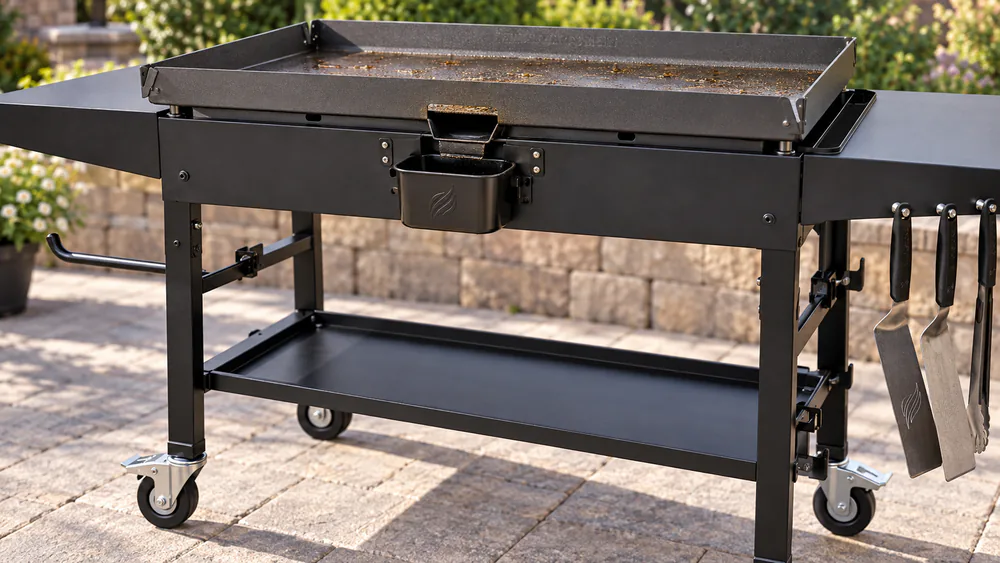
On grease management, model 1554 uses Blackstone's rear grease management system: the cooktop channels grease toward an opening at the back and into a rear-mounted cup. Keep the cart level so cooking fat follows that path cleanly. Shipping damage is the top arrival complaint on the 28, dents and scratches, the odd cracked panel or dead igniter, none fatal. On the 36, rust is the durability watch, so keep it covered and seasoned; one covered unit rusted out its burners, knobs, and screws in under two years.

Both carry a 1-year limited warranty, and the support record is a bright spot: a lost camping thumbscrew replaced free and email support answered by a real person.

The rear grease opening and collection cup on a Blackstone 36-inch model 1554 griddle after a cook.
The 36's rear grease opening channels cooking fat into a cup mounted behind the cooktop.

Which One Should You Buy?

The honest answer is short: most families and patios should buy the 28-inch, and the 36-inch is worth the extra cost only when you regularly cook for a crowd. Match the size to the guest list, not the spec sheet: the 28 covers the 4 to 6 people most households cook for, while the 36 earns its price when you routinely feed 6 or more or need four heat zones at once. The checklists below sort out where you land.

Key takeaway. Most families and patios: buy the 28-inch. Choose the 36-inch only if you routinely cook for 6+ or need four heat zones. Our pick for most households is the 28-inch. Owners who outgrow it for entertaining almost universally wish they had sized up, while almost nobody who buys a 36 downsizes later.

Buy the 28-Inch If...

  • You cook for 4 to 6 people, not a regular 6 or more
  • You want one griddle that also travels
  • Patio or storage space is tight; the 28 needs about 44 inches of width
  • Price matters; it typically runs $150 to $200 less than the 36
  • Two heat zones cover the way you cook

Buy the 36-Inch If...

  • You routinely cook for 6 or more
  • Big breakfasts, burger nights, and holiday crowds are regular events
  • You need four heat zones for different temperatures at once
  • You have a permanent patio spot and a second person for moves
  • You want 28 to 30 burgers down at once

Frequently Asked Questions

Is the Blackstone 28-inch big enough for a family of 4?

Yes. The 28 cooks for 4 to 6 people, with room for a full breakfast of pancakes, eggs, and sausage or a big batch of smash burgers. For a family of four, that is all the plate you need for a typical week.

Will I regret buying the 28-inch instead of the 36-inch?

Only if you regularly cook for 6 or more, because the regret runs one way: people outgrow the 28 for entertaining, but 36 owners do not trade back down. Cook for two or four and the 28 rarely feels tight; host big groups often and the 36 saves you a later upgrade.

Does the 36-inch waste propane when cooking for two?

Only when all four burners run on high. A 20 lb tank refill costs the same either way, so the fuel gap only matters when the 36 runs flat out for a long cook. One or two zones keep small meals efficient, and for two people the 28 is still the more economical buy.

Is the extra burner on the 36 worth it?

For crowds, yes. Two extra burners mean two more independent heat zones, so you can hold a low zone beside two searing zones at once. For four or fewer, the 28's two zones handle nearly every cook.

Do the 28 and 36 cook evenly, or are there cold spots on the outer edges?

Both cook evenly enough for real meals, with two practical caveats. The 36's griddle bottom leaves a gap at the frame where a gust can snuff a low flame, and a strip of foil closes it, a fix worth copying. And both griddles only drain grease properly when they sit level, so check the cart's feet before the first cook.

Can I move and store a 36-inch Blackstone by myself?

Not comfortably. The 36 weighs about 120 lb, spans more than five feet, and is a two-person move, especially up steps. Its legs fold, but in practice it is a stationary griddle; the 28 folds and one person can move it.

The Bottom Line

Most families should start with the 28-inch. It feeds the 4 to 6 people most households cook for, folds away, costs less, and cleans up faster. Choose the 36-inch only when you routinely cook for 6 or more or need four heat zones. Trade-downs from the 36 are rare, and the one regret its owners do voice is losing the easy-to-carry size, so buy the griddle that fits your patio and your guest list.

Read next

Ready to upgrade your kitchen?

Find the right griddle for your patio and guest list, and get more tested buying guides in your inbox.