Serrated vs. Straight-Edge Blades
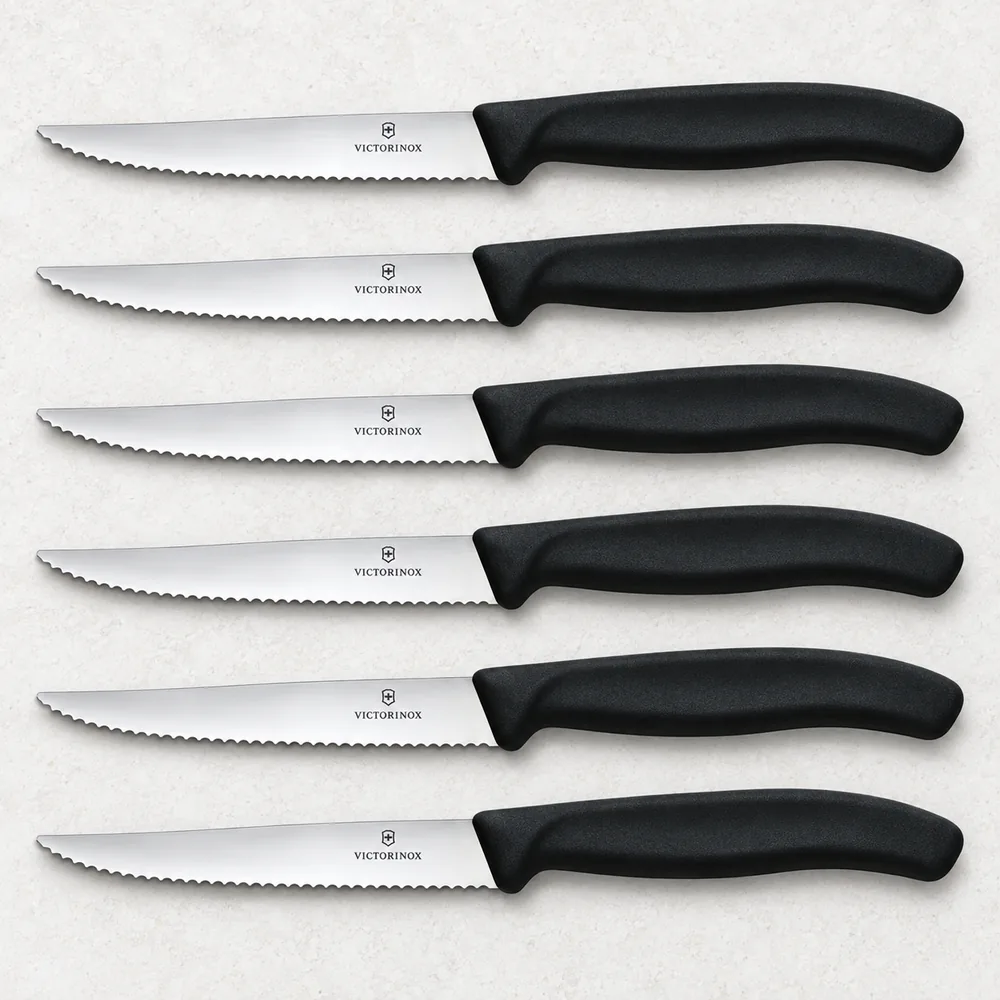
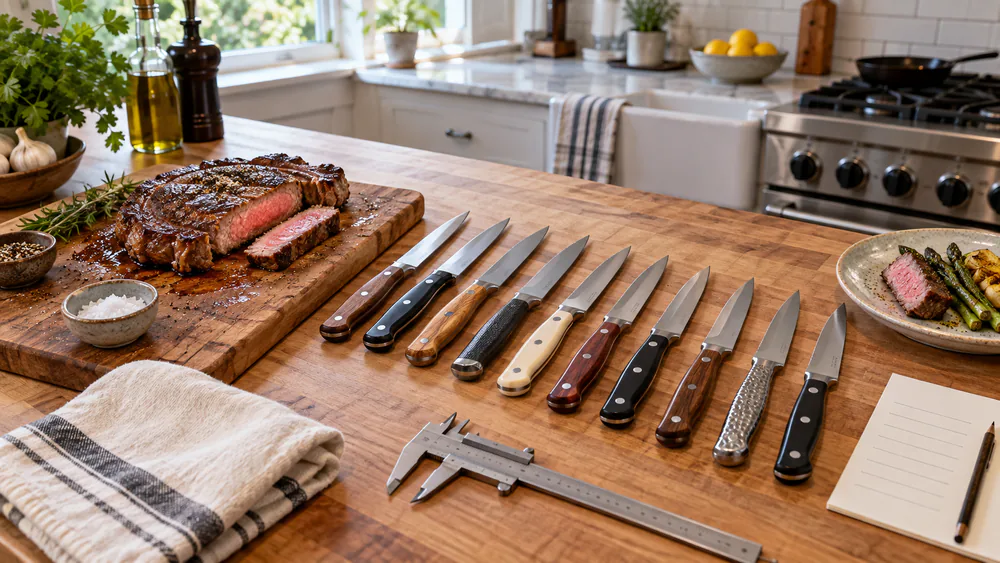
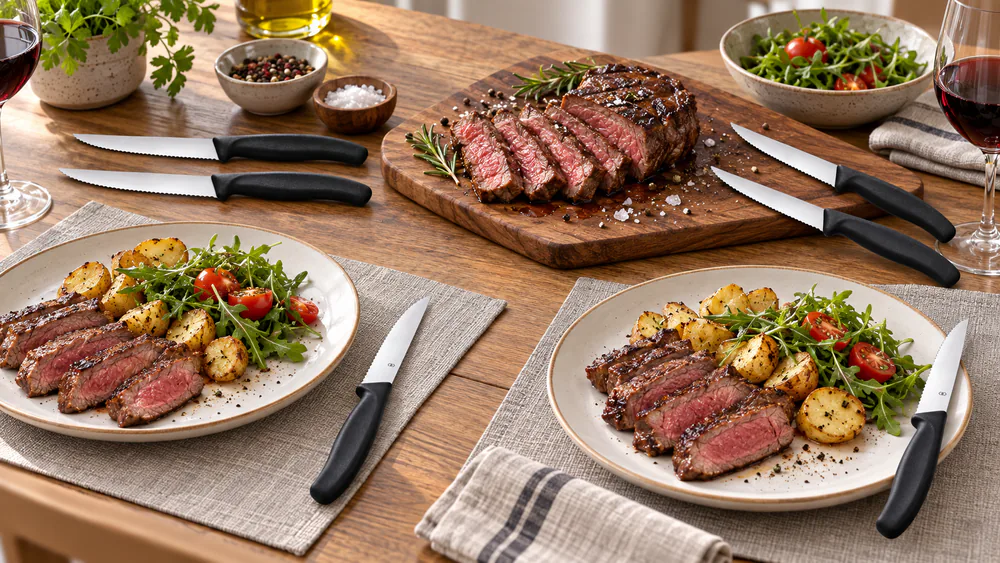
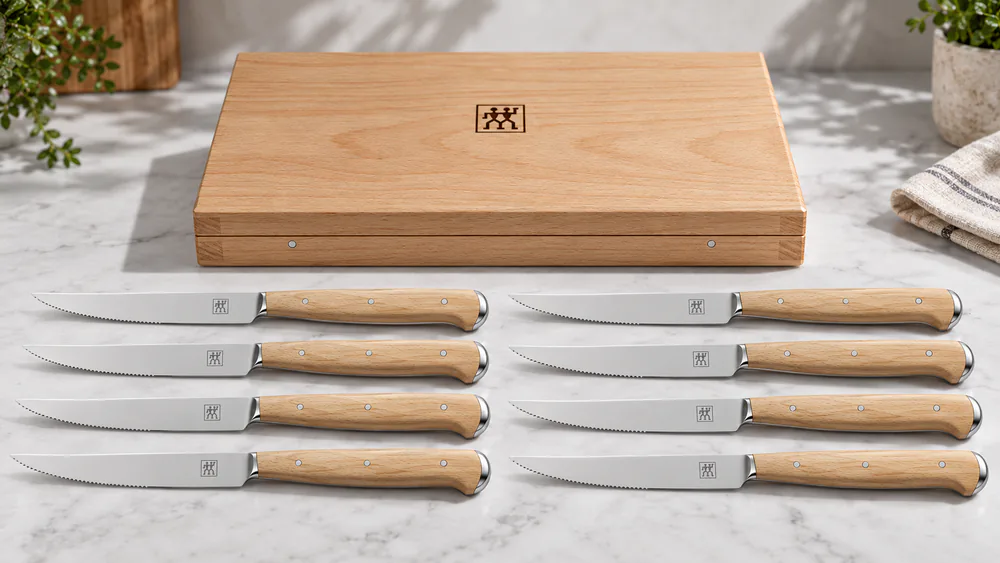
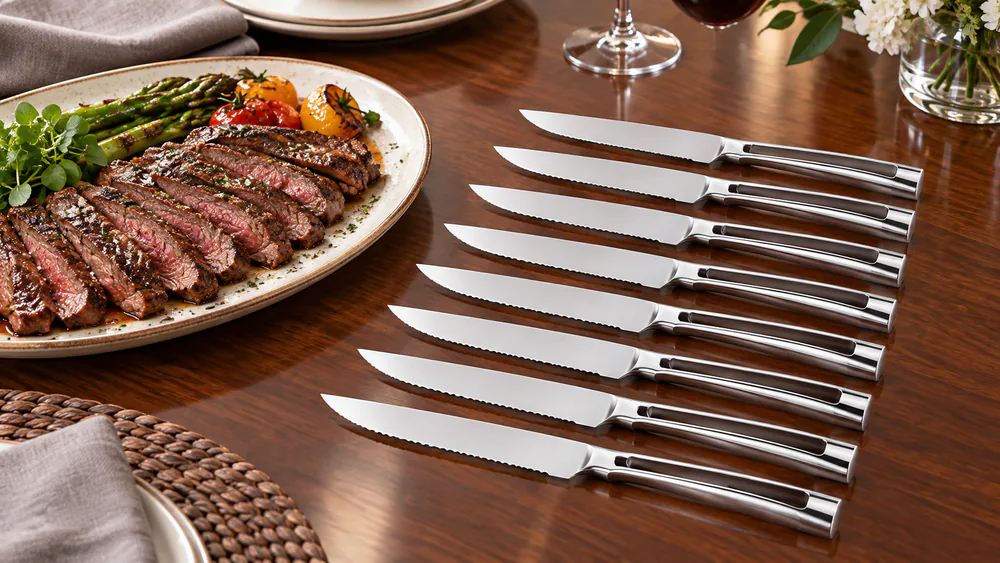
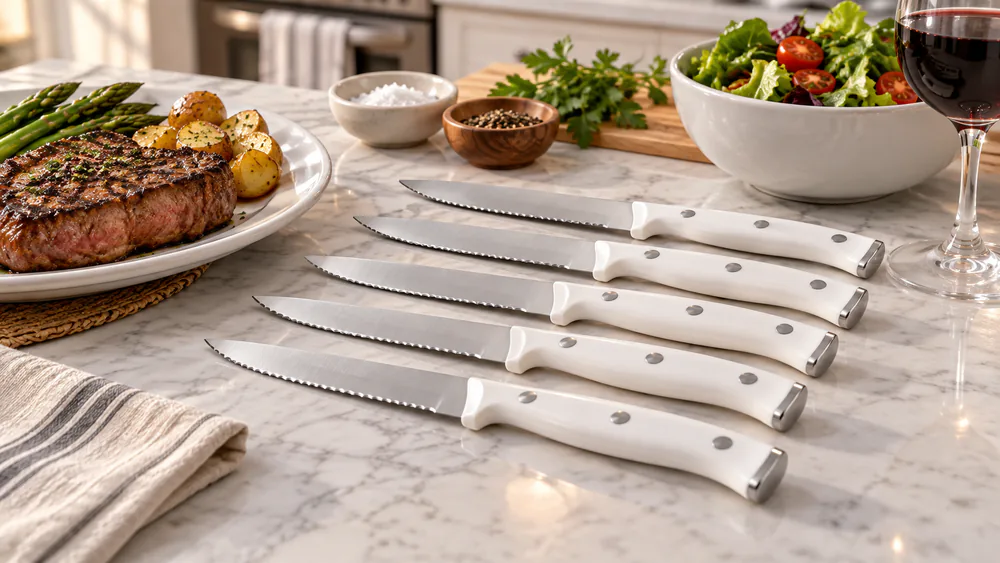
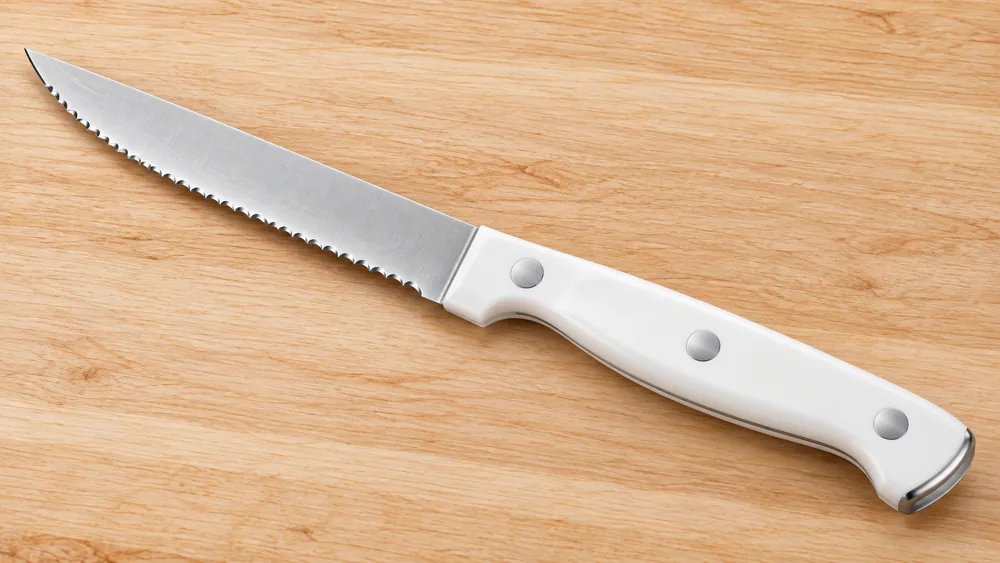
A steak knife is a table knife built for cooked meat, and the edge style decides how it performs. Serrated edges stay sharp for years with zero maintenance, but most cannot be resharpened at home. Straight edges cut the cleanest slice, and a full-bolster knife adds balance and heft, but they need regular honing. The French Laguiole is a straight-edge table knife you maintain for years; only authentic versions are worth the premium.
Blade Material and Construction (German vs. Japanese Steel)
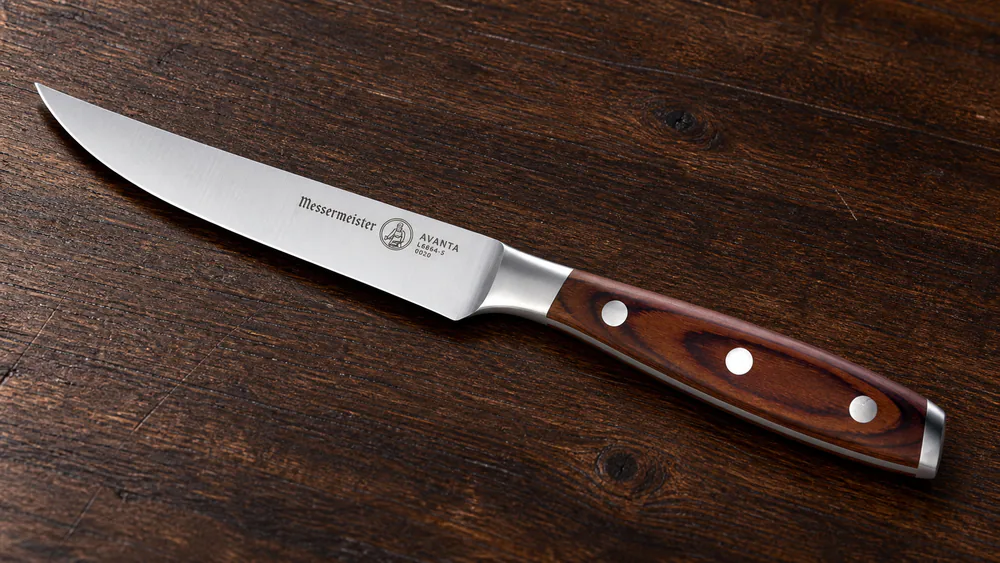
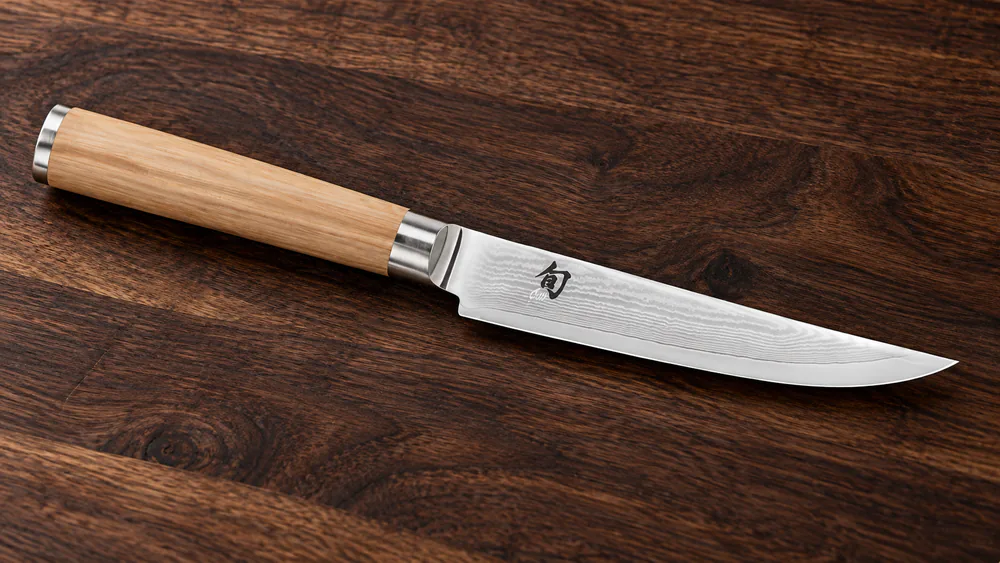
Blade steel splits into two schools. German steel, like Messermeister's X50, is softer and tougher, around 56 to 58 HRC, so it resists chipping and sharpens back quickly. Japanese steel, like Shun's VG-MAX, runs harder, often 58 to 60 HRC or beyond, which holds a finer edge longer but is more brittle. A full-tang blade runs through the handle for balance, and forged blades carry more weight than stamped ones.
Handle Material and Comfort
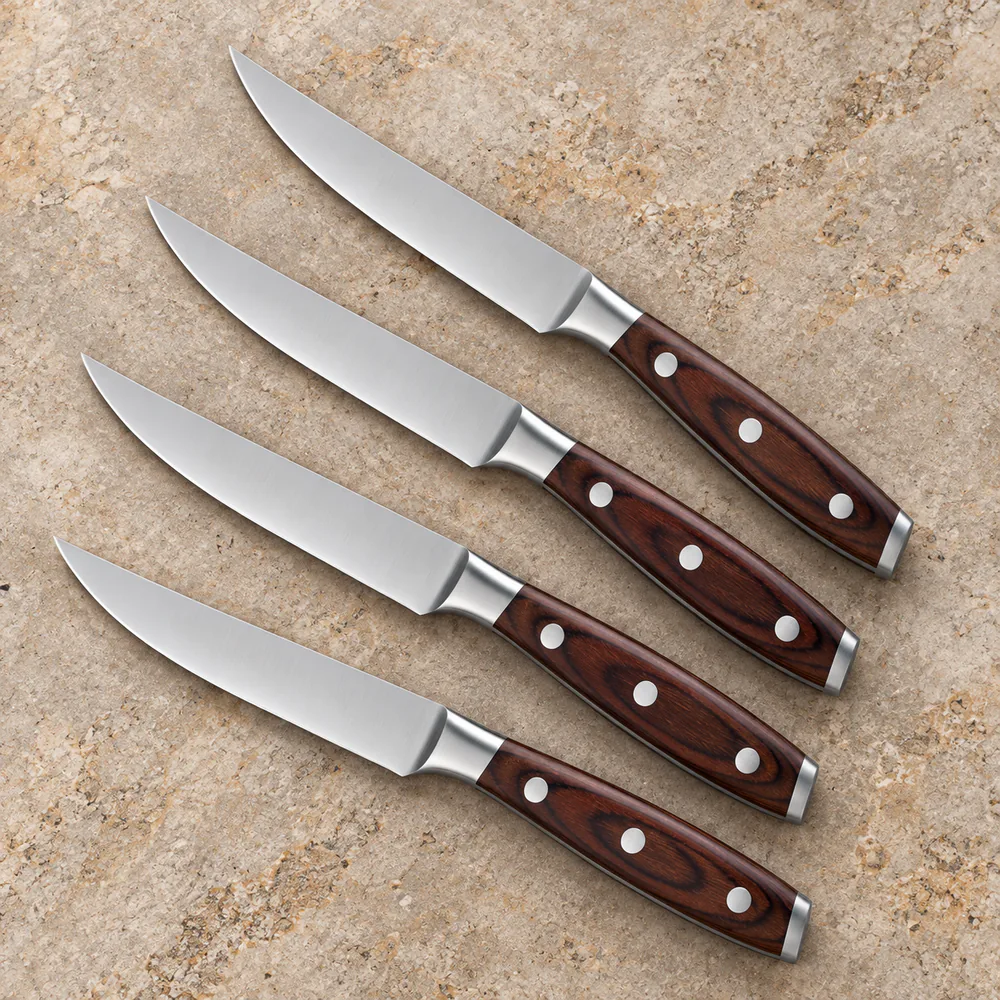
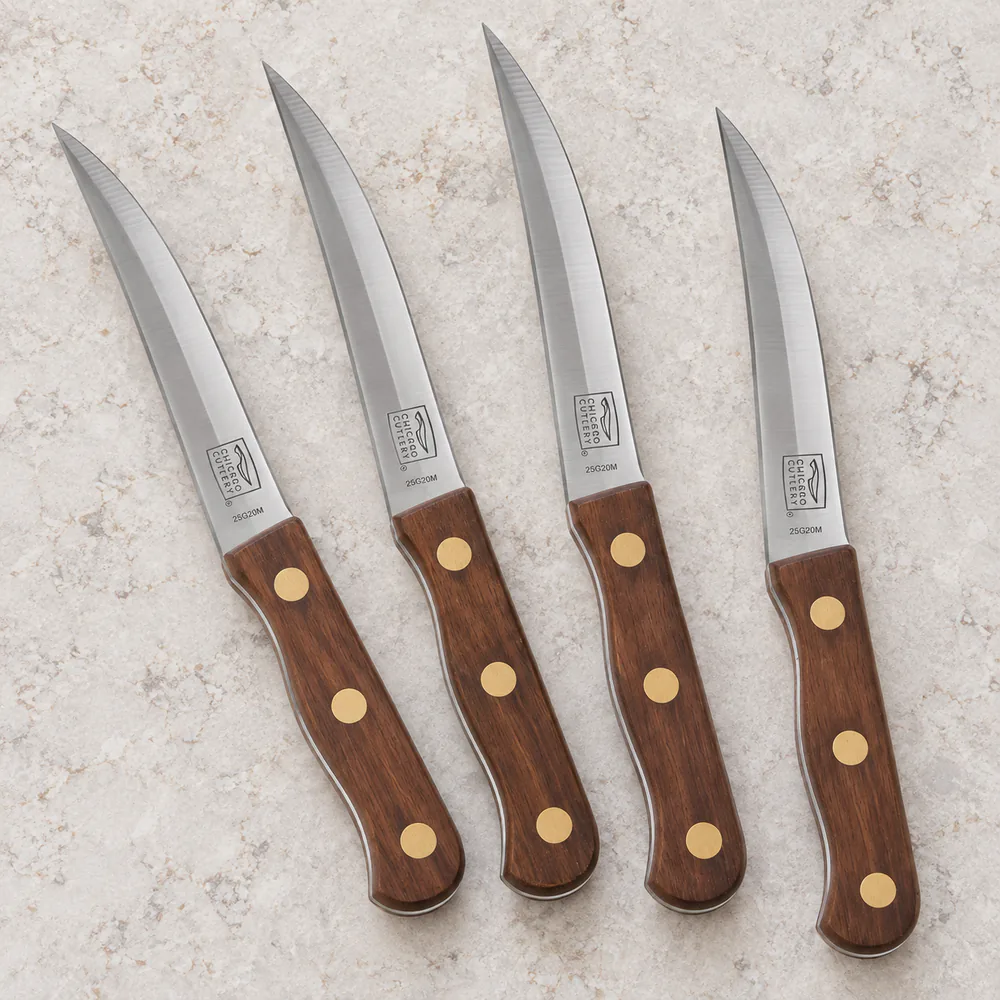
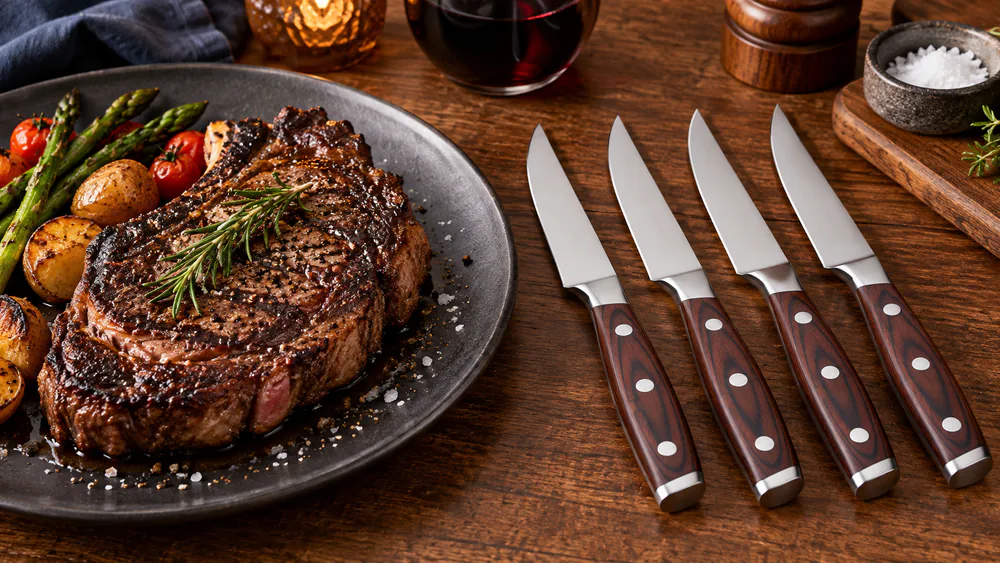
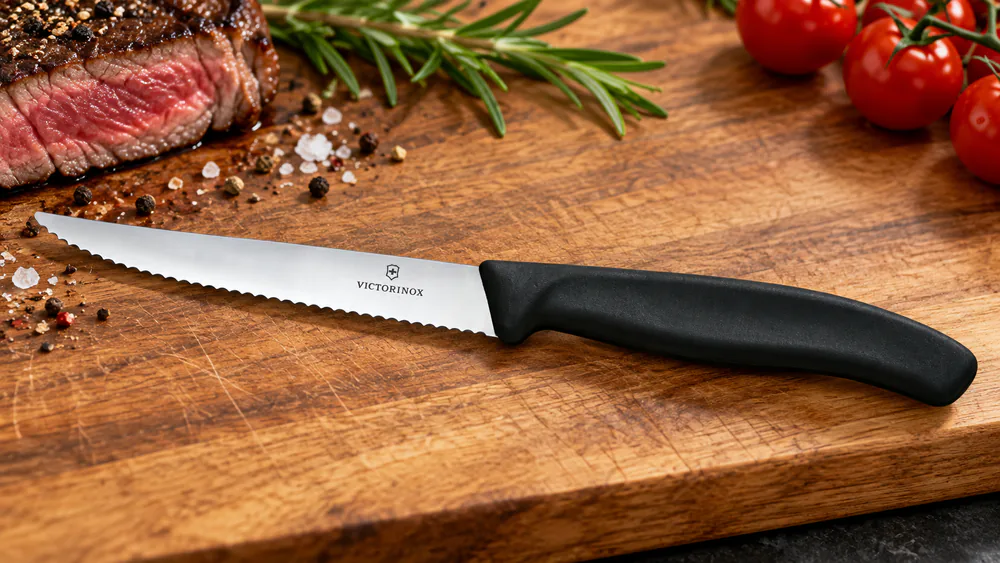
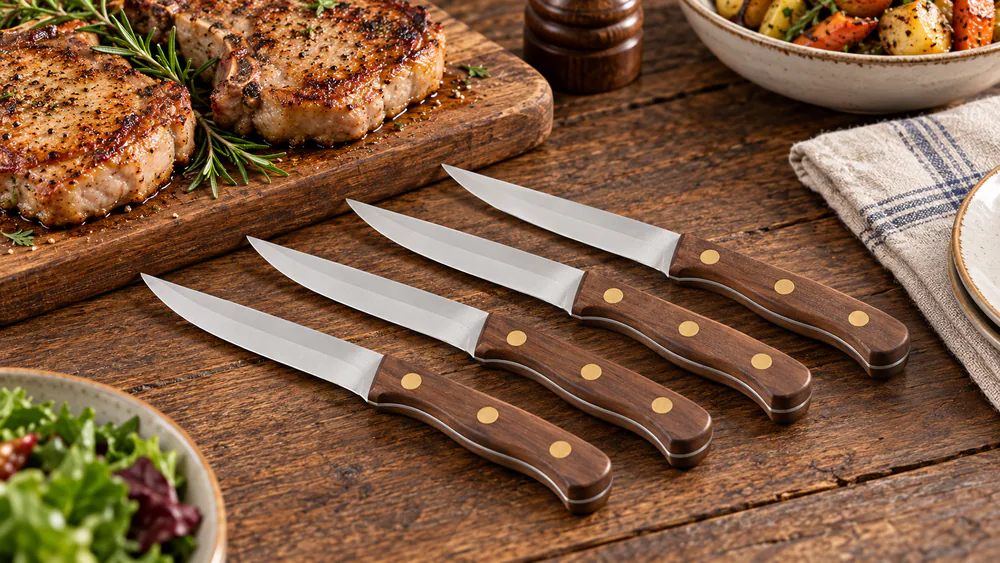
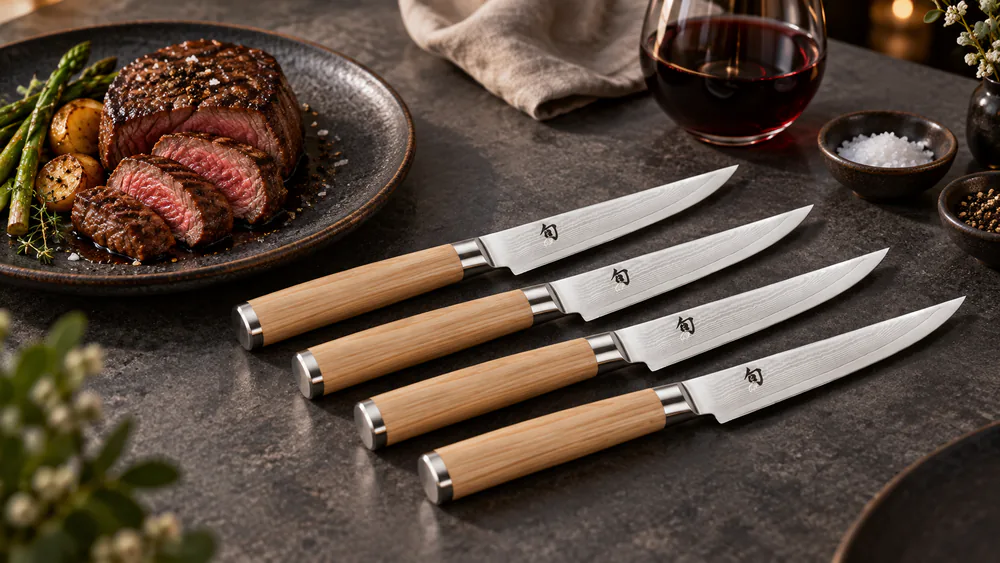
The handle is where a steak knife earns its keep, because your guests hold it for a whole meal. Pakkawood, a stabilized wood composite, looks classic but resists moisture; the Messermeister, Shun, and HOSHANHO all use it. Textured polypropylene, as on the Victorinox, grips well when wet and weighs almost nothing. Walnut, as on the Chicago Cutlery, looks beautiful but runs rough and small.
Set Size and Storage
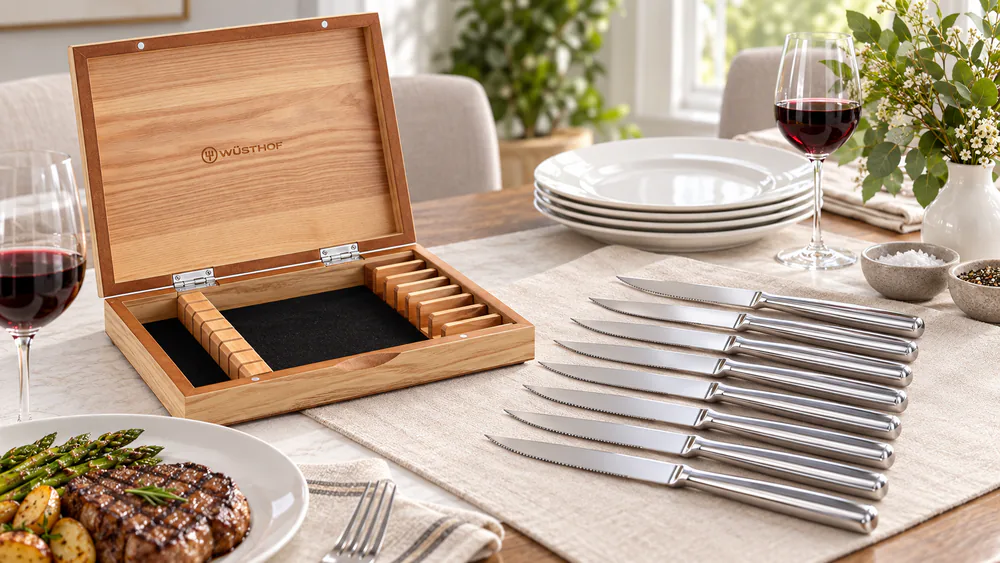
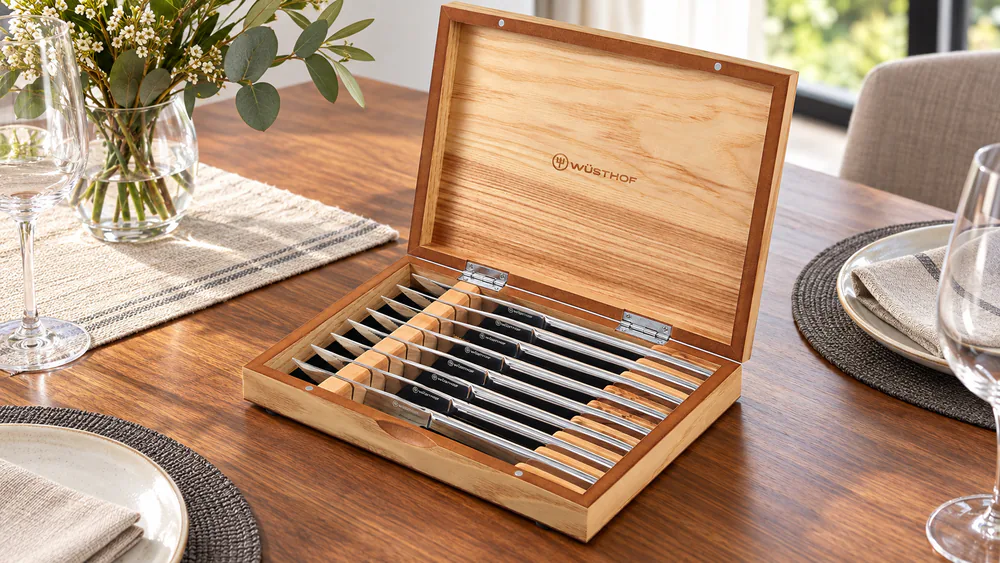
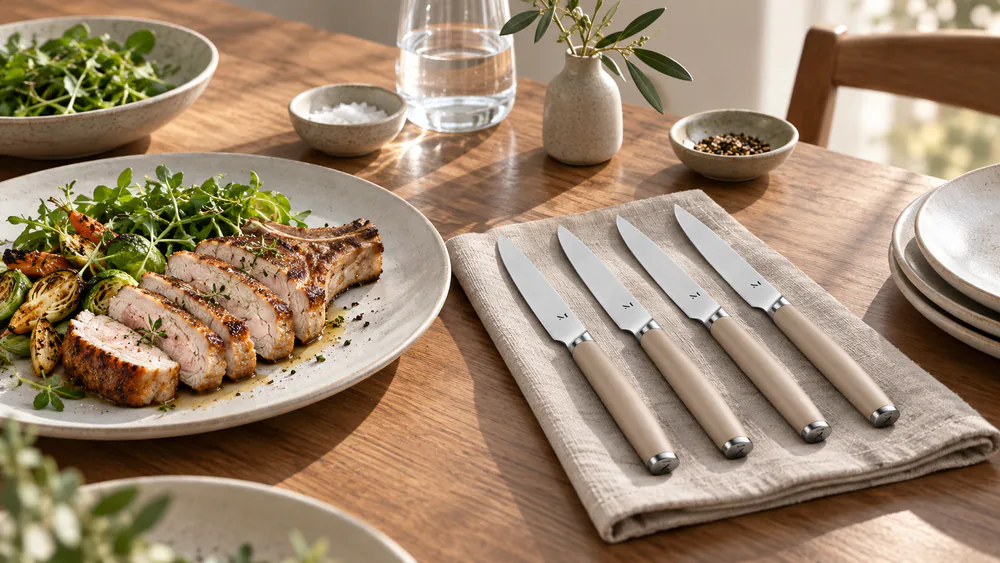
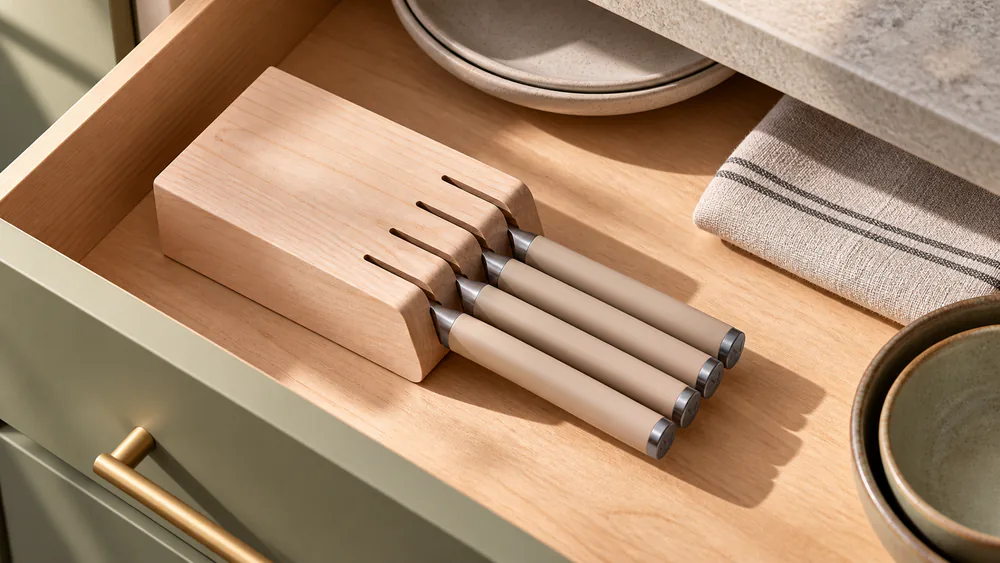
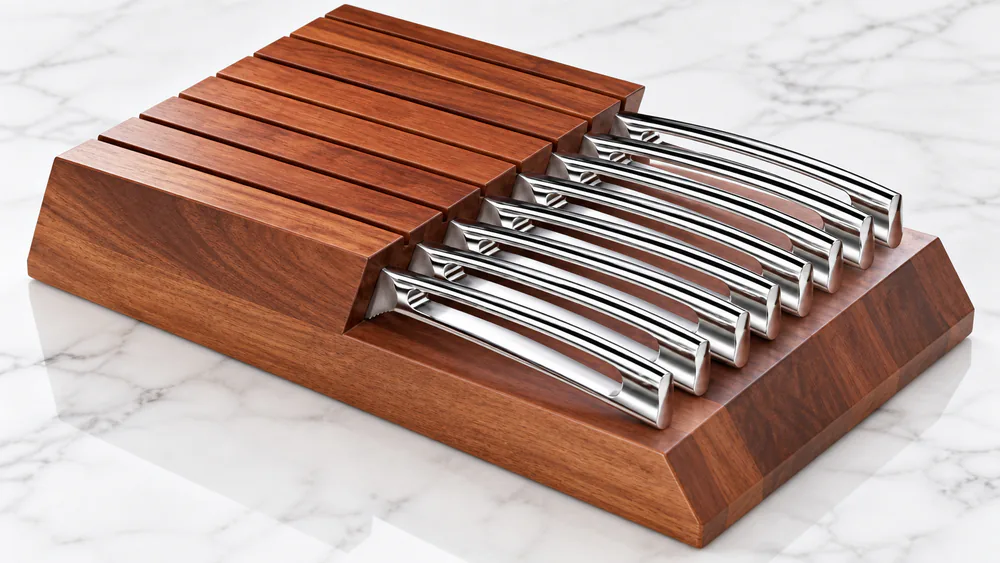
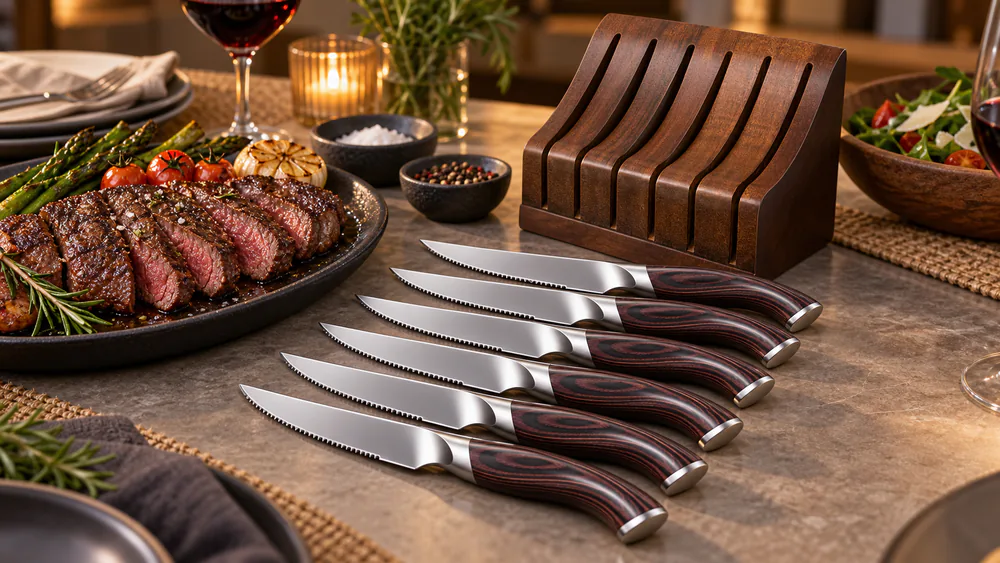
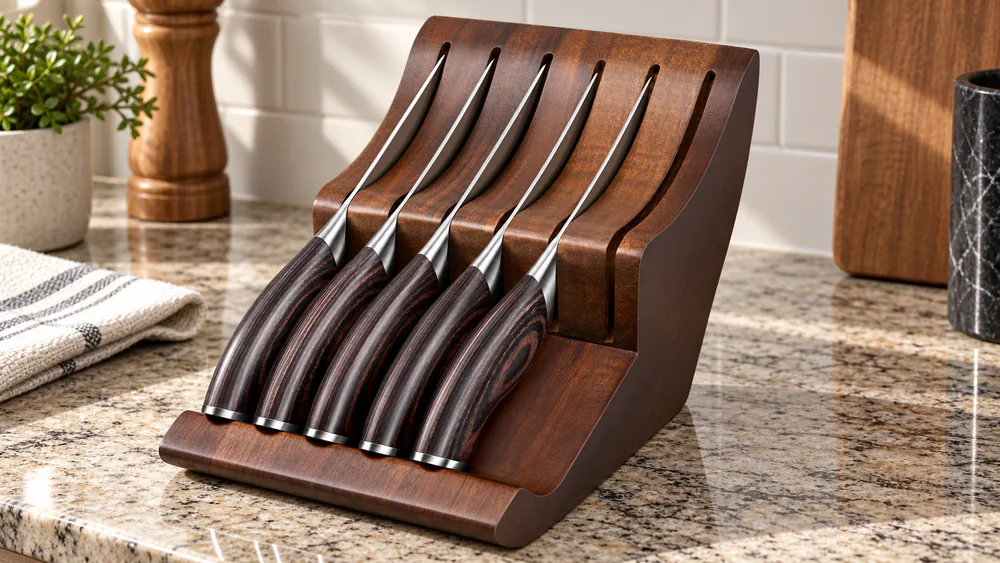
Sets come in four, six, or eight pieces. Four covers a dinner party, six suits a family table with seconds, and eight handles bigger gatherings or a gift. A wooden block keeps knives at hand but eats counter space; a presentation box protects edges and looks gift-ready.
Dishwasher Safety and Maintenance
Here is the short rule: if a set costs more than a few dollars, hand wash it. The dishwasher dulls edges and can pit cheaper steel, as it did on the Cuisinart here, which developed rust spots after a few months of dishwasher use.