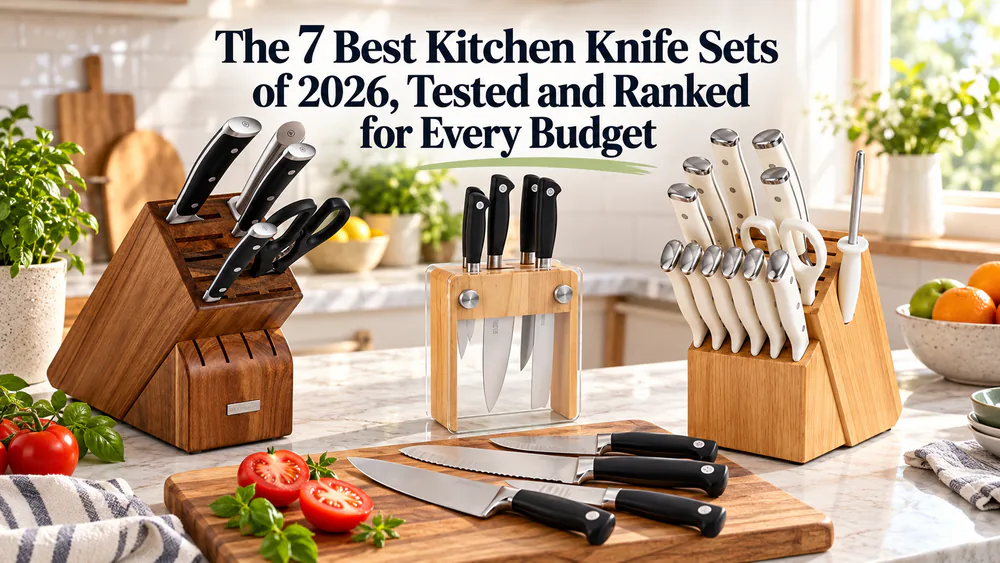
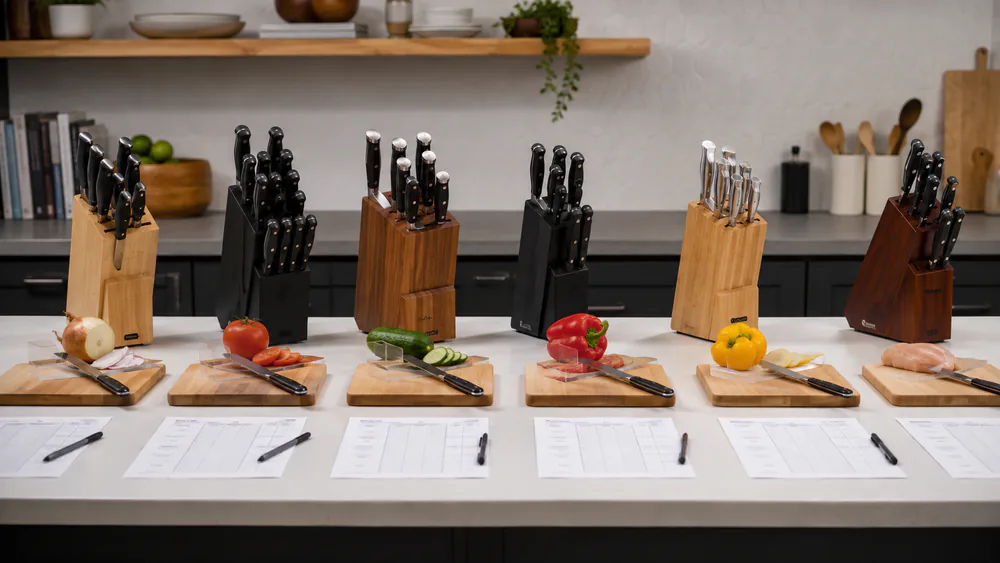
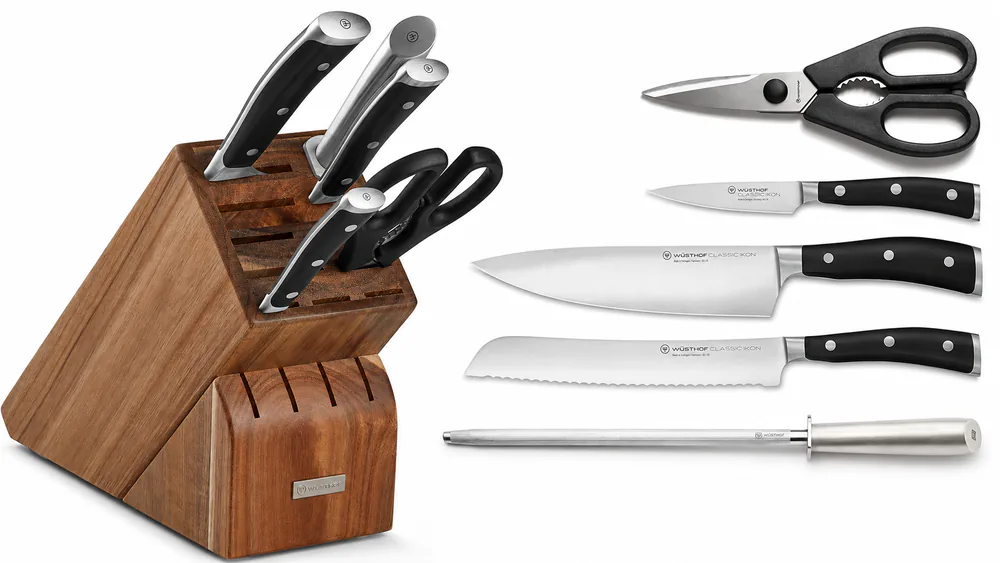
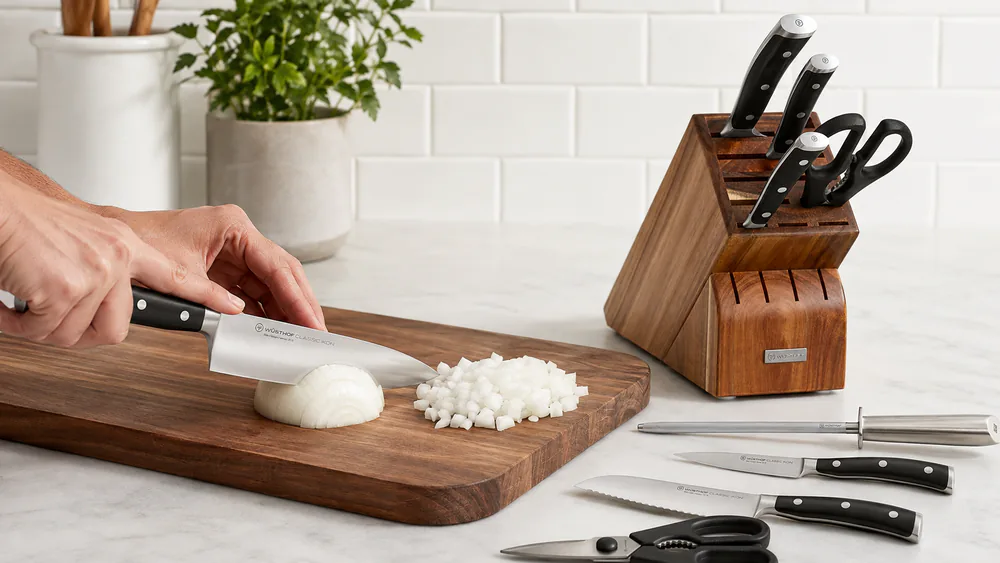
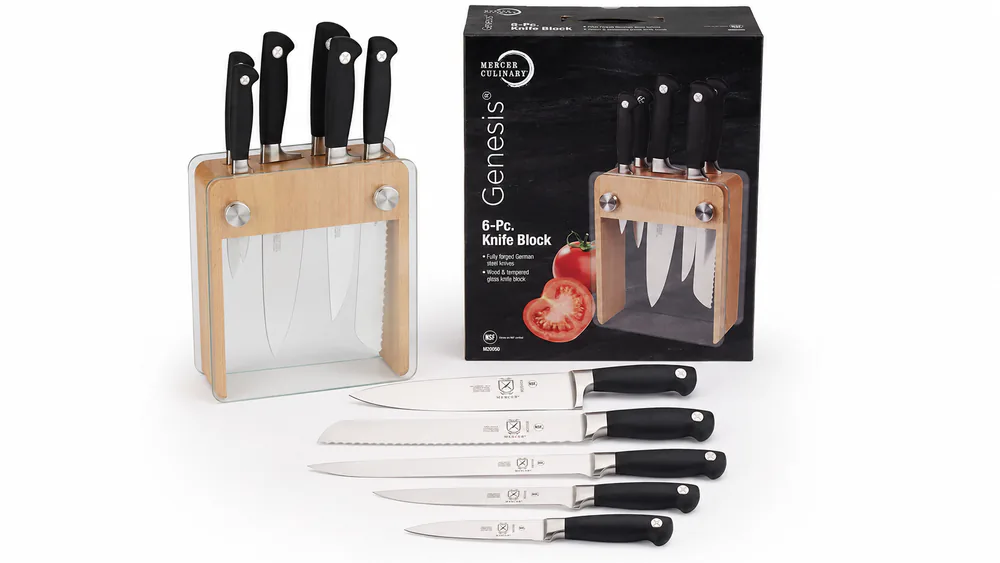
The right set depends on how you cook, but six things decide whether a set earns its counter space.
German vs. Japanese Steel
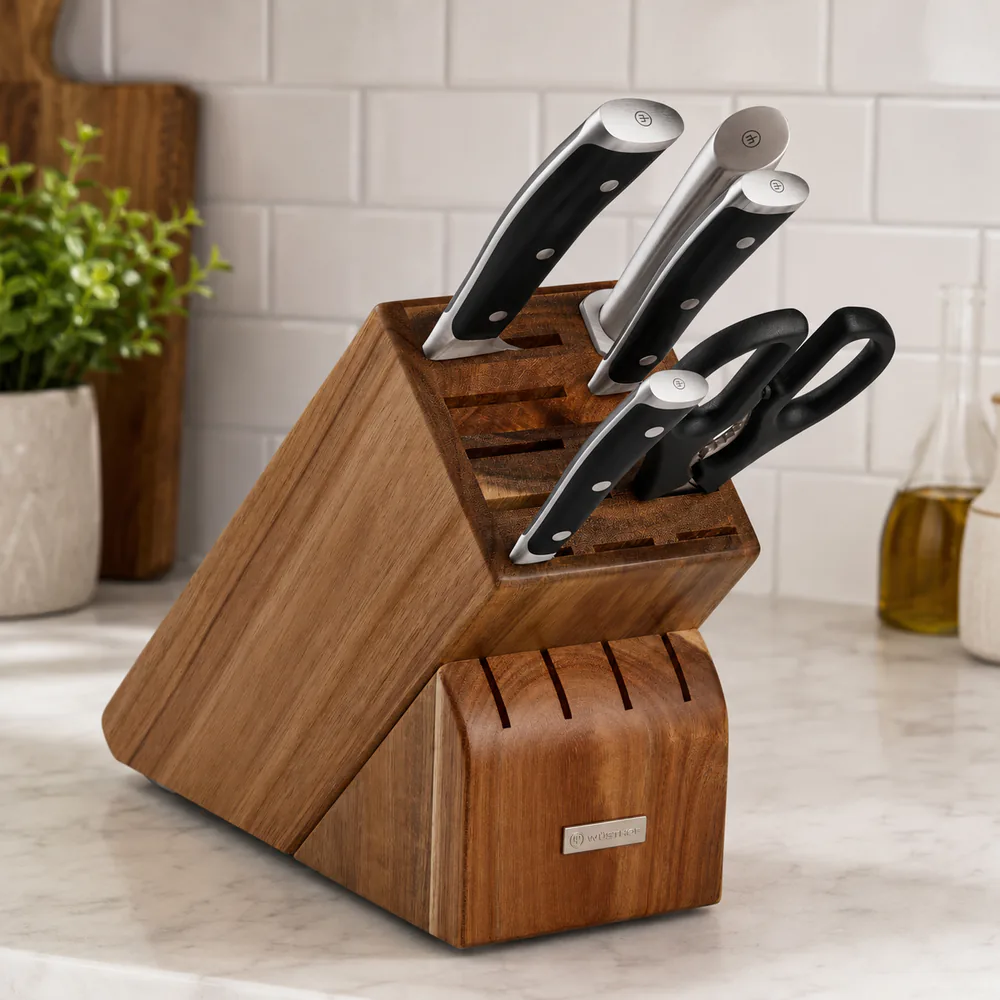
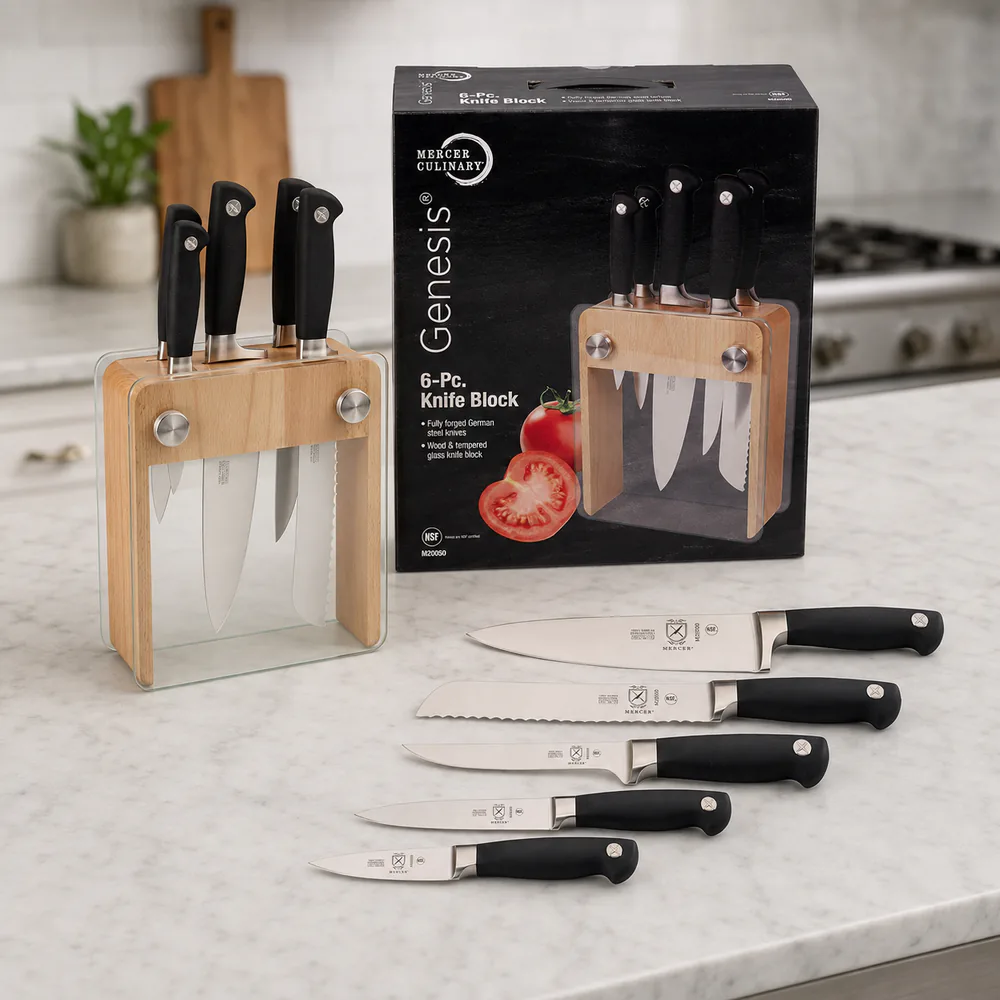
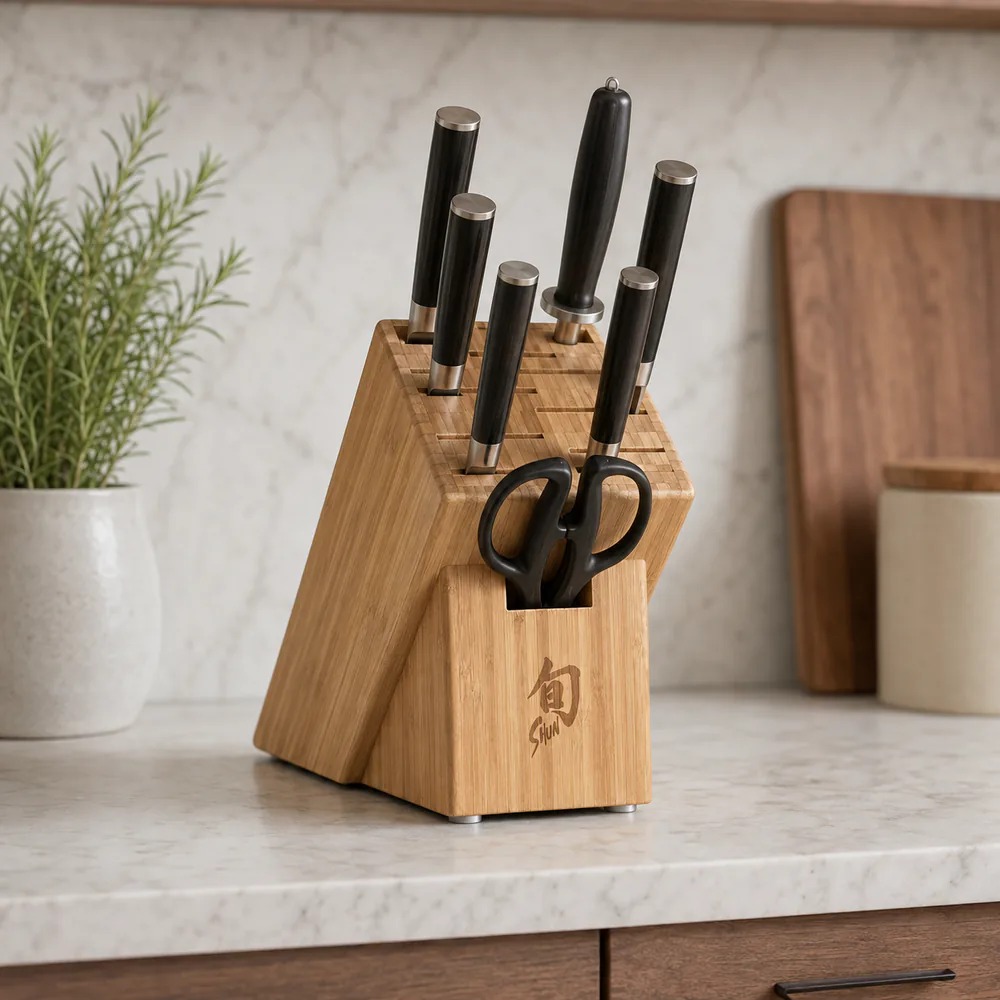
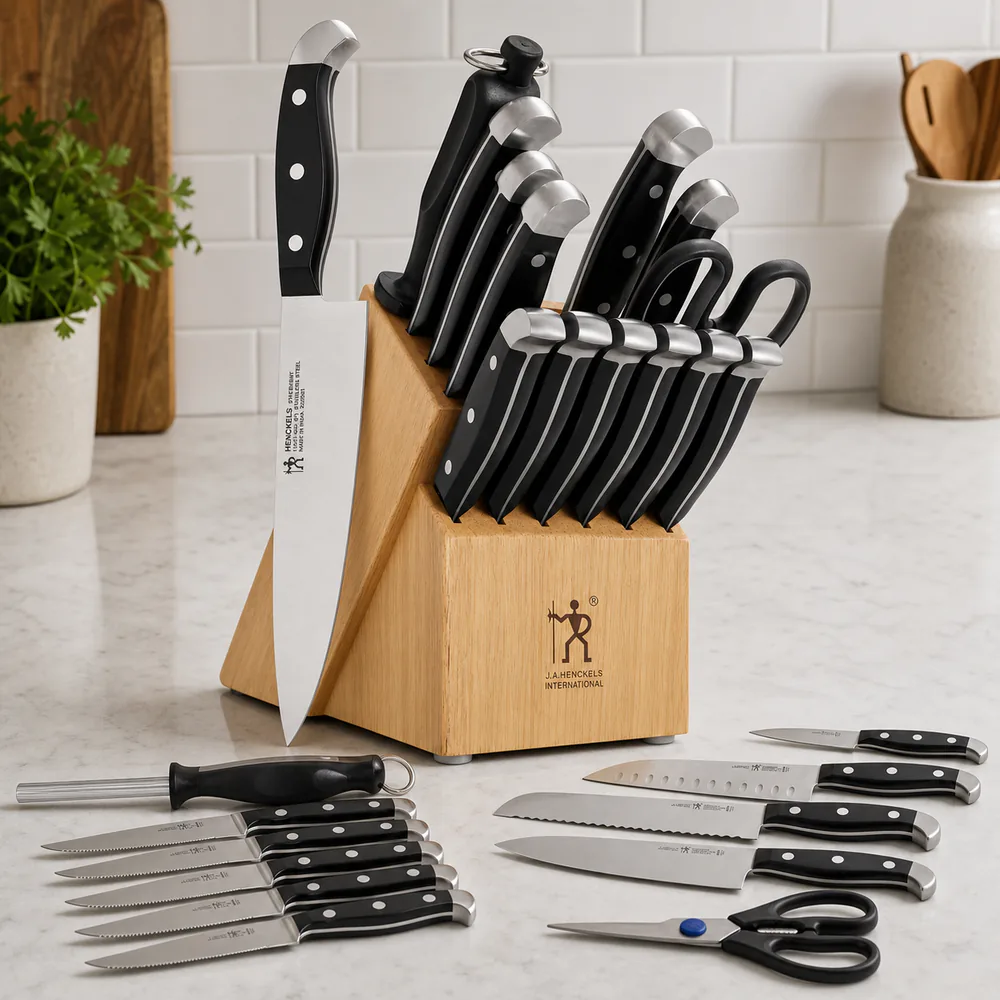
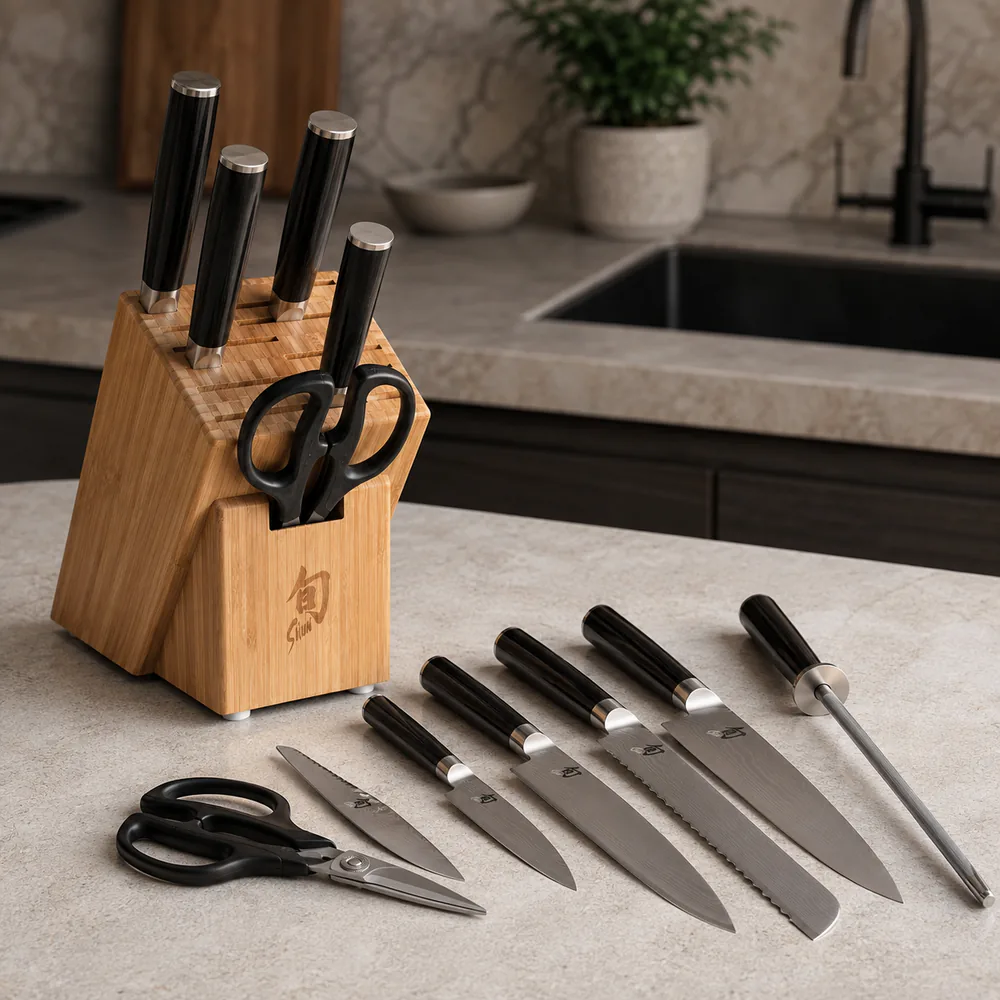
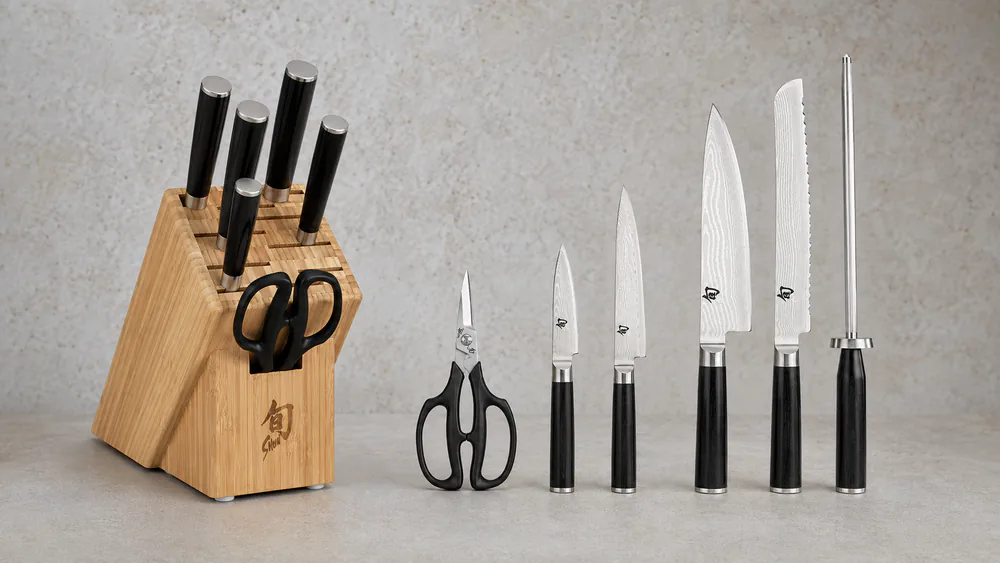
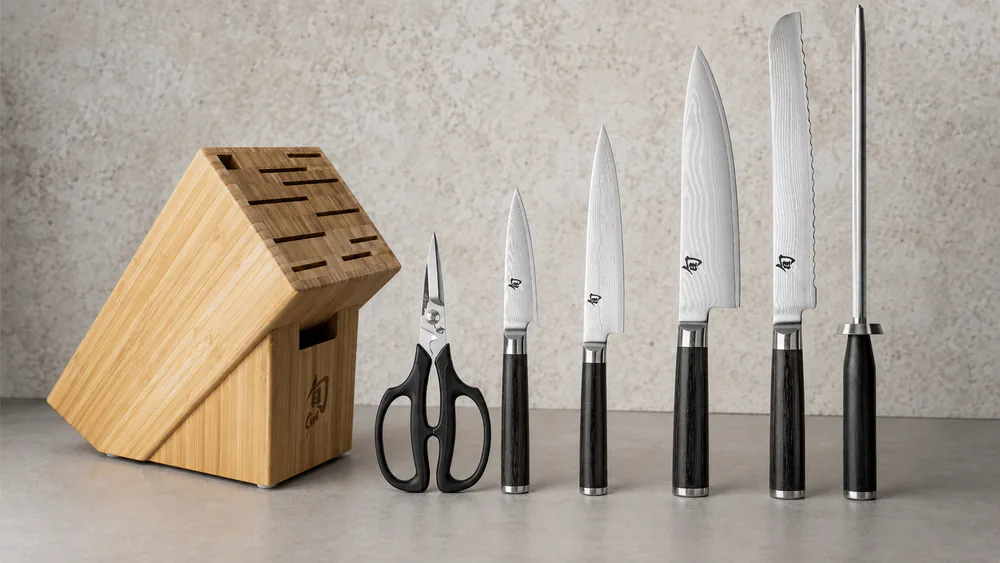
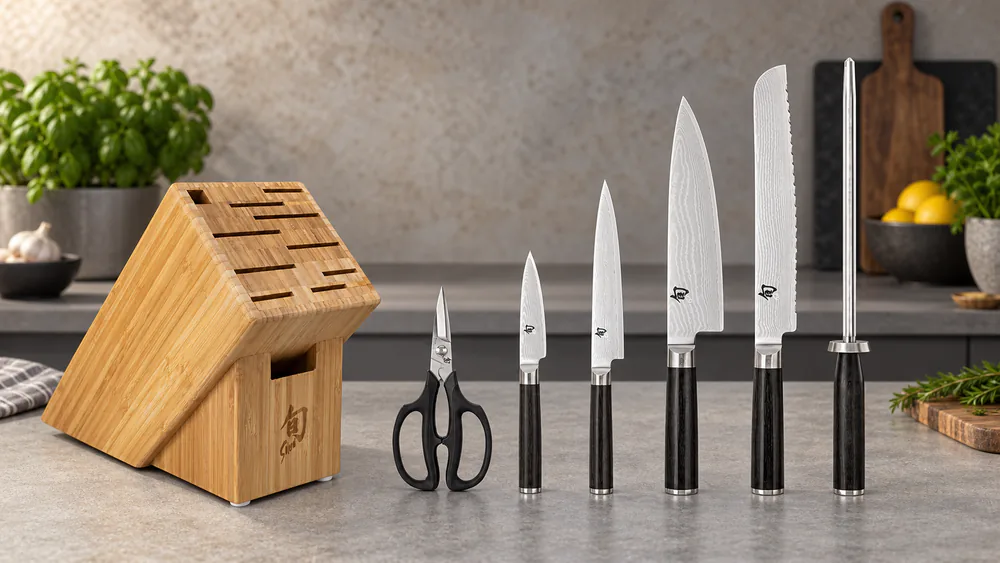
German blades, like the Wüsthof, the Mercer, and the Henckels here, use tougher steel around 56 to 58 HRC. They shrug off hard use, take an edge easily on a home sharpener, and forgive an imperfect sharpening habit. Japanese blades, like the Shun and the Material, run harder and thinner, with edges ground to 13 to 16 degrees, which cuts beautifully and asks for more careful handling. Neither is better. They are different contracts: German steel says bring anything, Japanese steel says cut with precision and treat me well.
How Many Knives You Actually Need
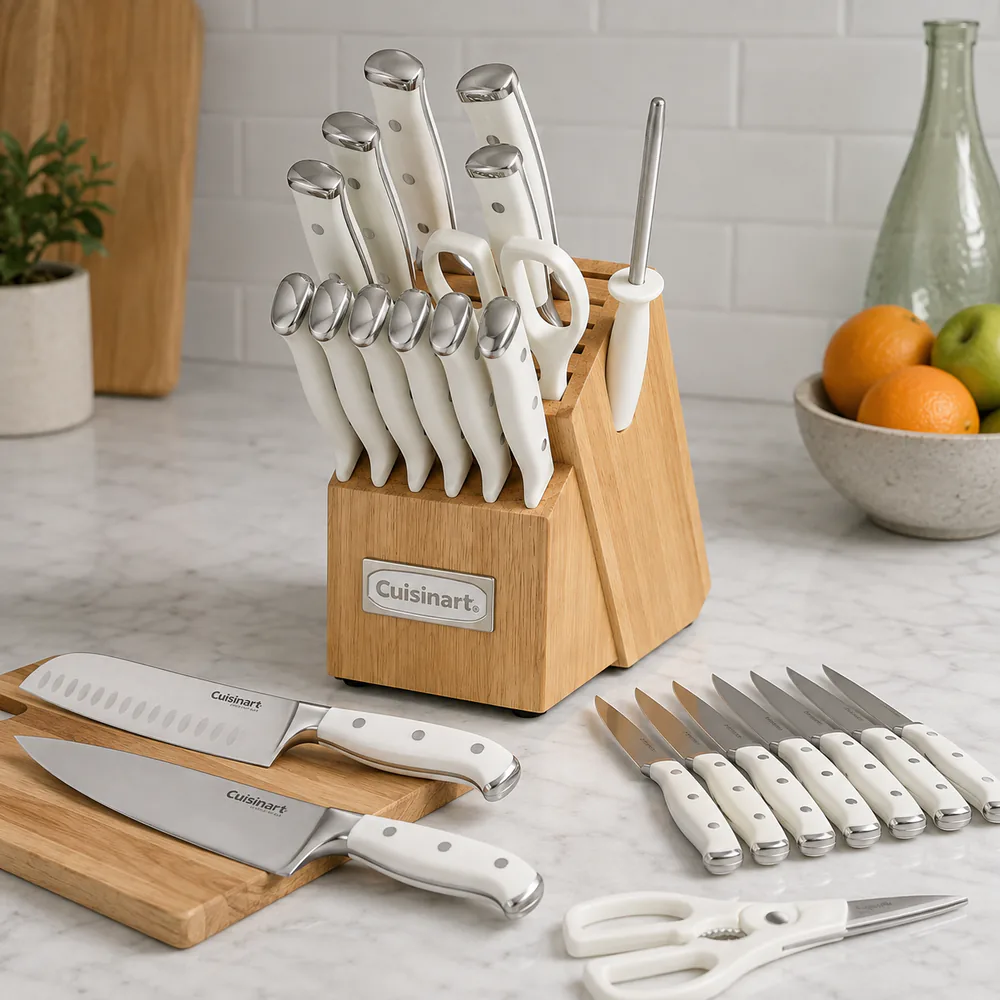
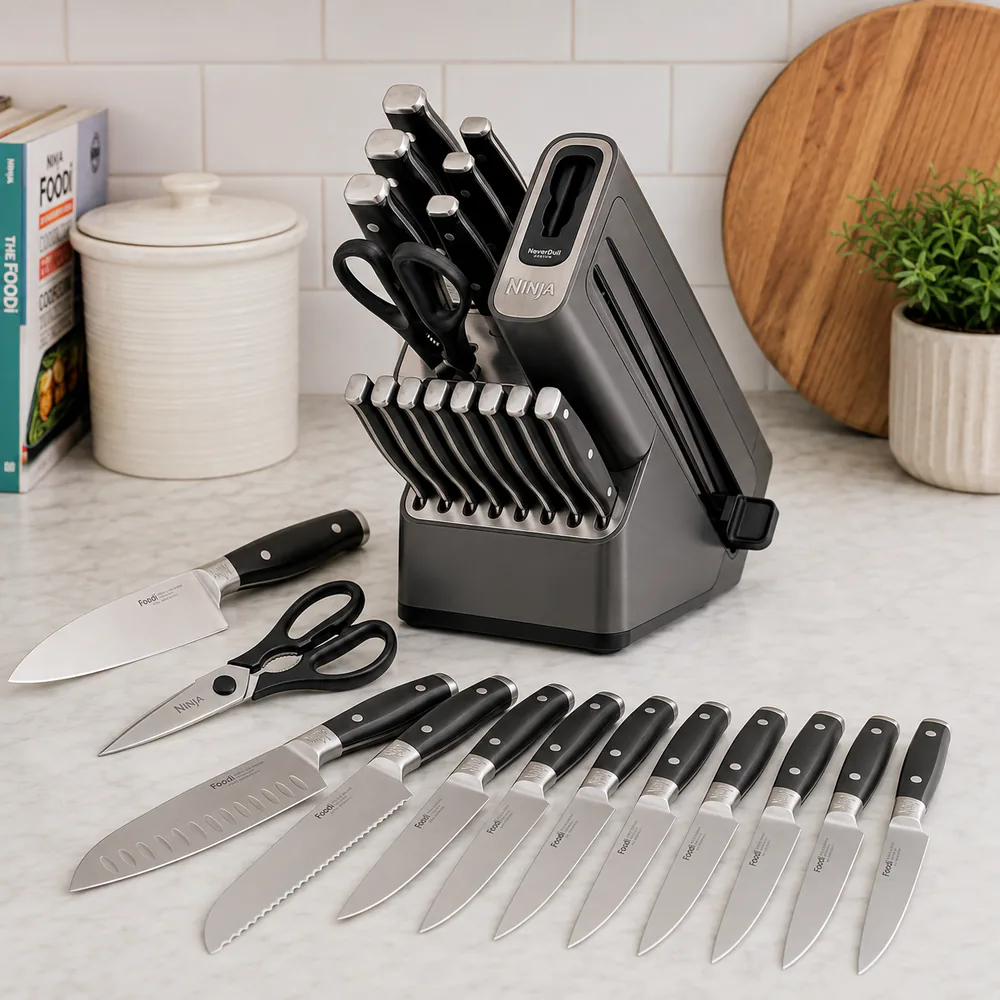
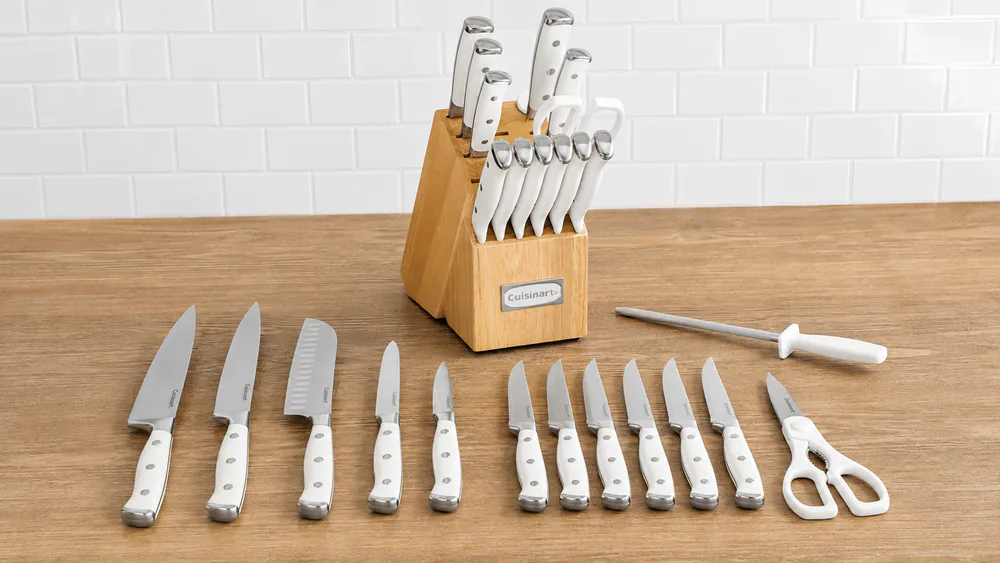
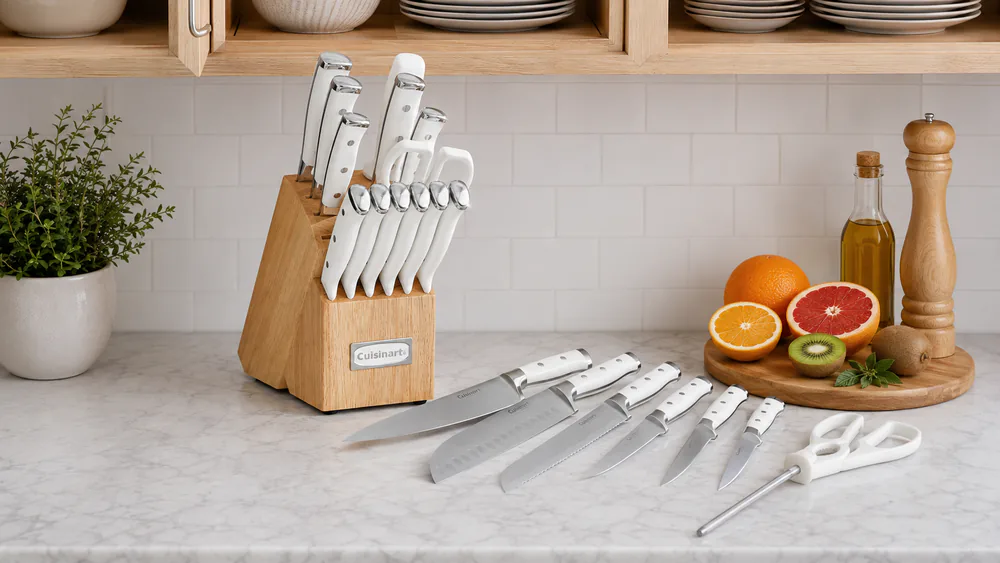
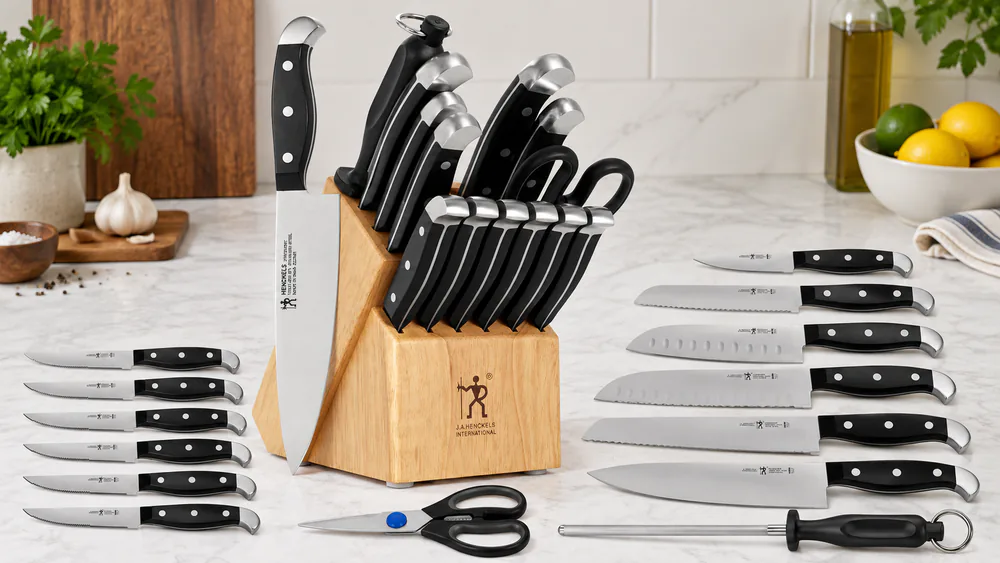
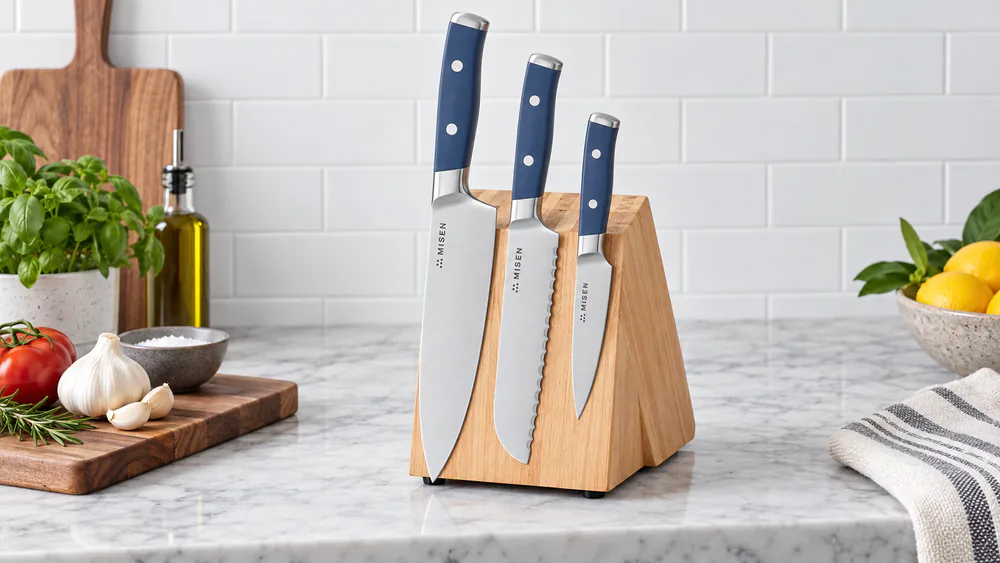
A chef's knife, a paring knife, and a serrated bread knife cover nearly all of home prep. Add a utility or boning knife if you cook meat, and steak knives only if you actually serve steak. The 15- and 17-piece sets exist because steak knives and shears pad the count, so decide whether the extras earn counter space before you pay for them. When in doubt, a 6- to 8-piece set is the sweet spot for most home cooks.
Handle Design and Ergonomics
The handle is the part you feel in hour three of prep. Look for a full tang and scales that fit a relaxed grip: Wüsthof's contoured POM, Shun's D-shaped Pakwood, and Mercer's soft-touch Santoprene all worked for us. Heft matters too. The Classic Ikon's weight reads as quality in hand, while the Henckels' stamped blades run light, which suits smaller hands and quicker work. Try the handle before you buy if you can, because no spec sheet tells you how a grip wears on you.
Full Tang Construction and Build Quality
A full tang runs the full length of the handle, which makes the knife stronger and better balanced, and every set we ranked uses one. Forged blades, formed from a single block of steel, hold an edge longer and feel denser than stamped blades, which are punched from sheet steel and then sharpened. Stamped is not bad, the Henckels proves that, but forged reads better in hand and in the edge. Check the rivets and the bolster on arrival, and inspect every blade for nicks before you trust a new set.
Block, Magnetic Strip, or Drawer Storage
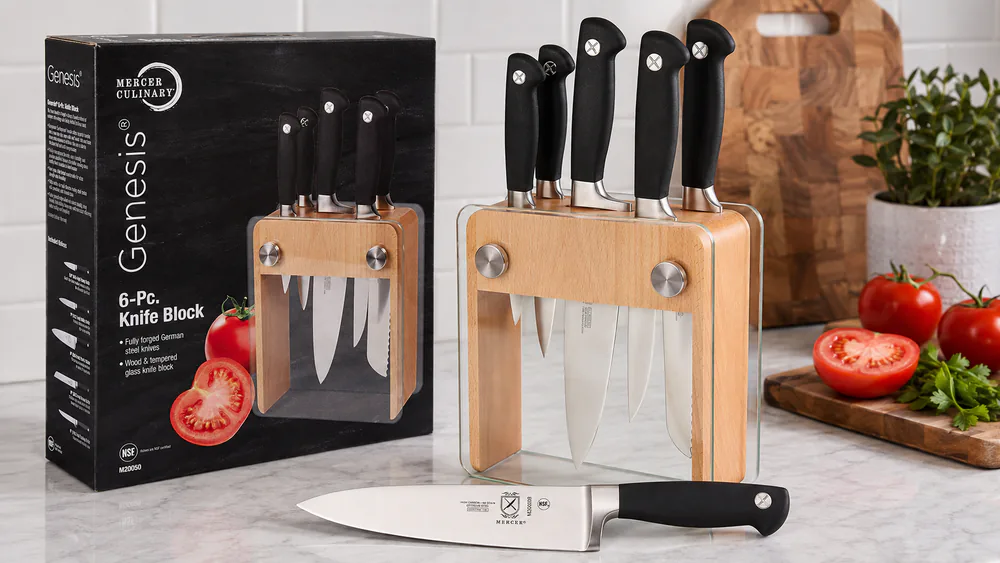
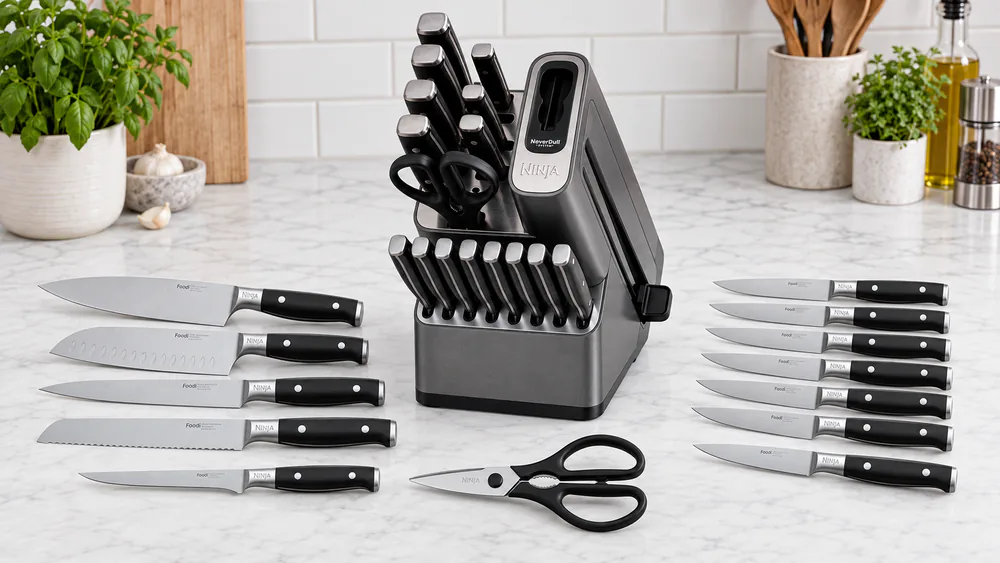
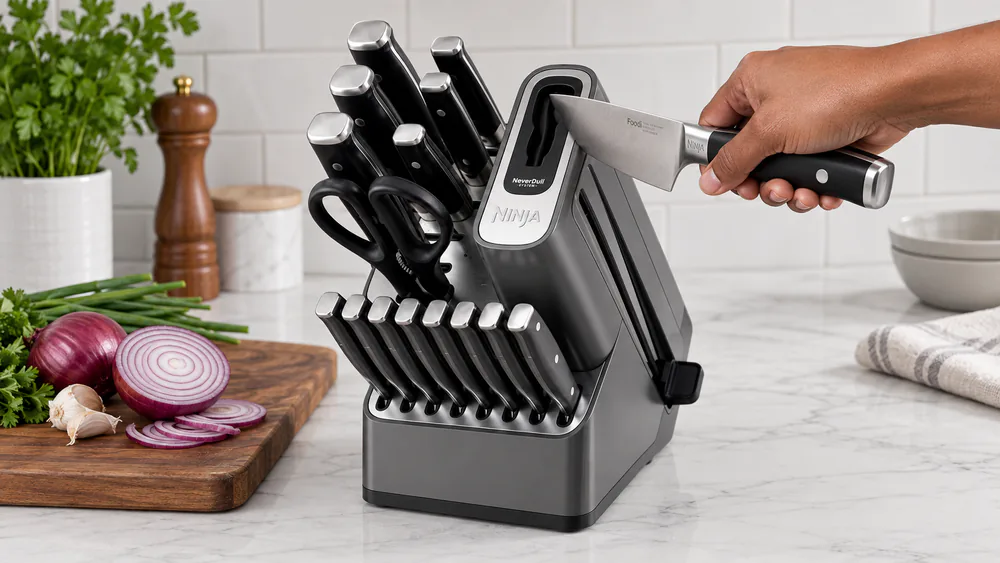
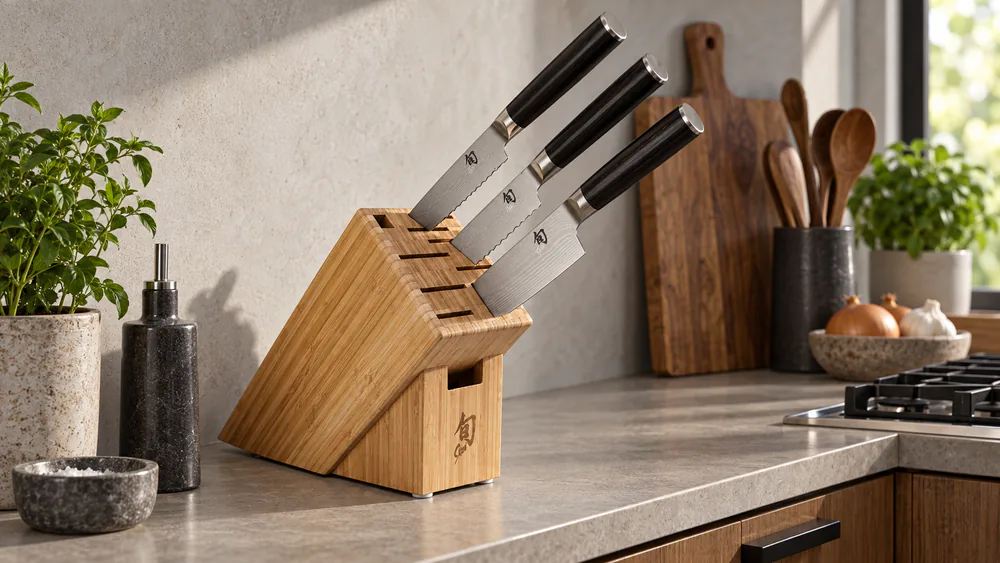
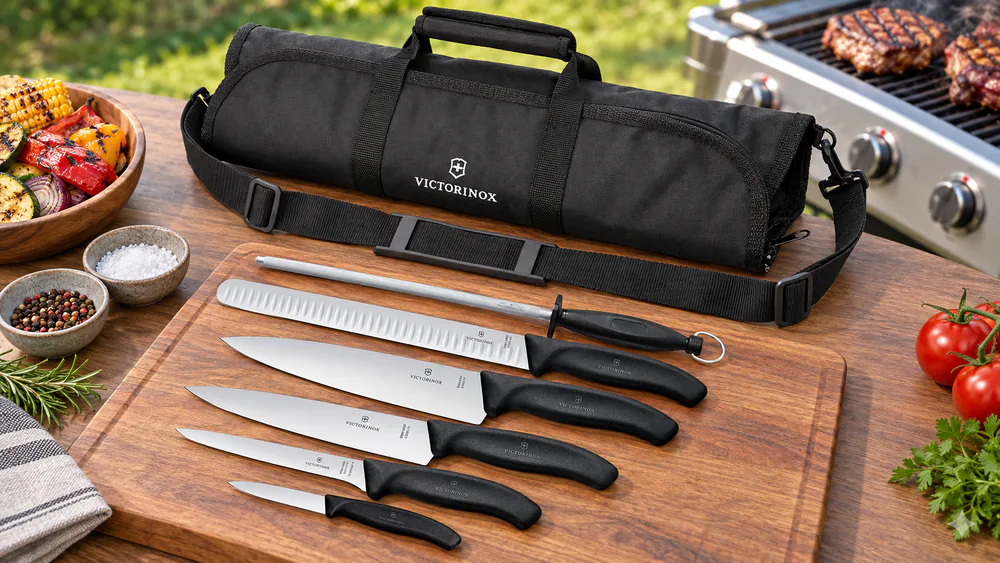
Blocks protect edges and keep knives organized, but they eat counter space: the Ninja block is roughly the footprint of a small appliance, while the Cuisinart and Henckels blocks are heavier than the average 15-piece. Magnetic strips save space and show off the steel, and rolls like the Victorinox travel well, though nothing protects an edge like a slot. Watch the details: the Mercer glass block can rock until shimmed, and the Ninja sharpener only works on Ninja knives.
Knife Maintenance and Sharpening
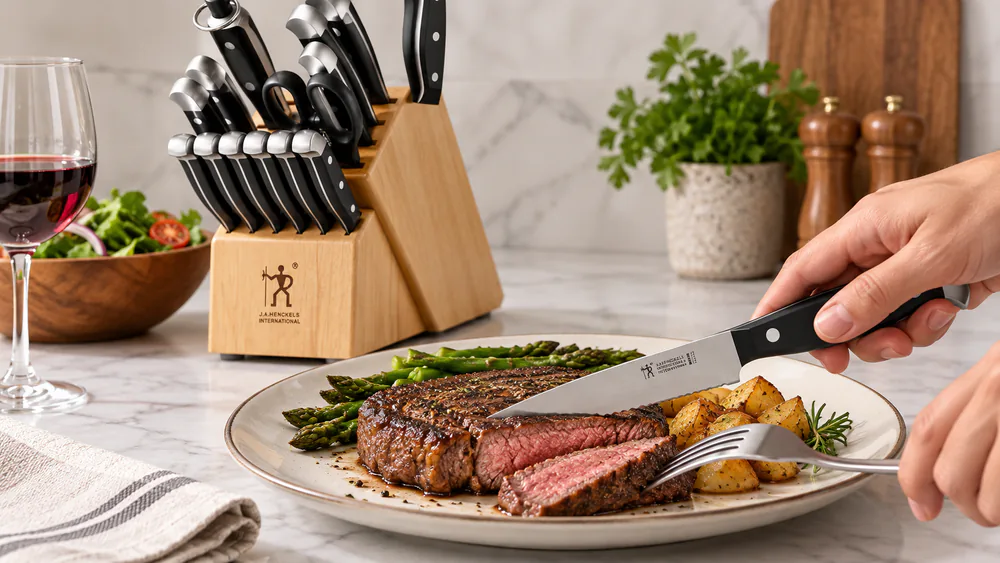
Every set in this guide is hand-wash only, with one exception: the Henckels is marketed dishwasher-safe, and we still recommend hand washing it. Dishwashers bang blades against each other, and the heat attacks handles and rivets. Dry blades promptly. Rust showed up in our tests when knives sat wet, even overnight, especially on stamped steel. A few passes on a honing steel before heavy prep keeps most of these edges working for weeks between sharpenings.