As an Amazon Associate we earn from qualifying purchases. We may earn a commission from links on this page, at no extra cost to you. Learn more.
Most home cooks can get by with just three knives: a chef's knife, a paring knife, and a bread knife. So is a 15-piece block ever worth it? For most people, yes, if you choose the right set. We tested the year's top contenders to find the eight sets that earn a place in your kitchen: our top pick balances razor-sharp steel with a handle that stays comfortable in hour three, and the budget-friendly sets beat their price point.
Our eight picks run from a $150 block to a handmade Japanese set near $850, and every one went through real prep in our test kitchen, scored on edge retention, handle comfort, and sharpenability.
We ran the evaluation for a month of real prep in rotation, with an edge check after every session, and every set faced the same rotation of chopping, slicing, and dicing.
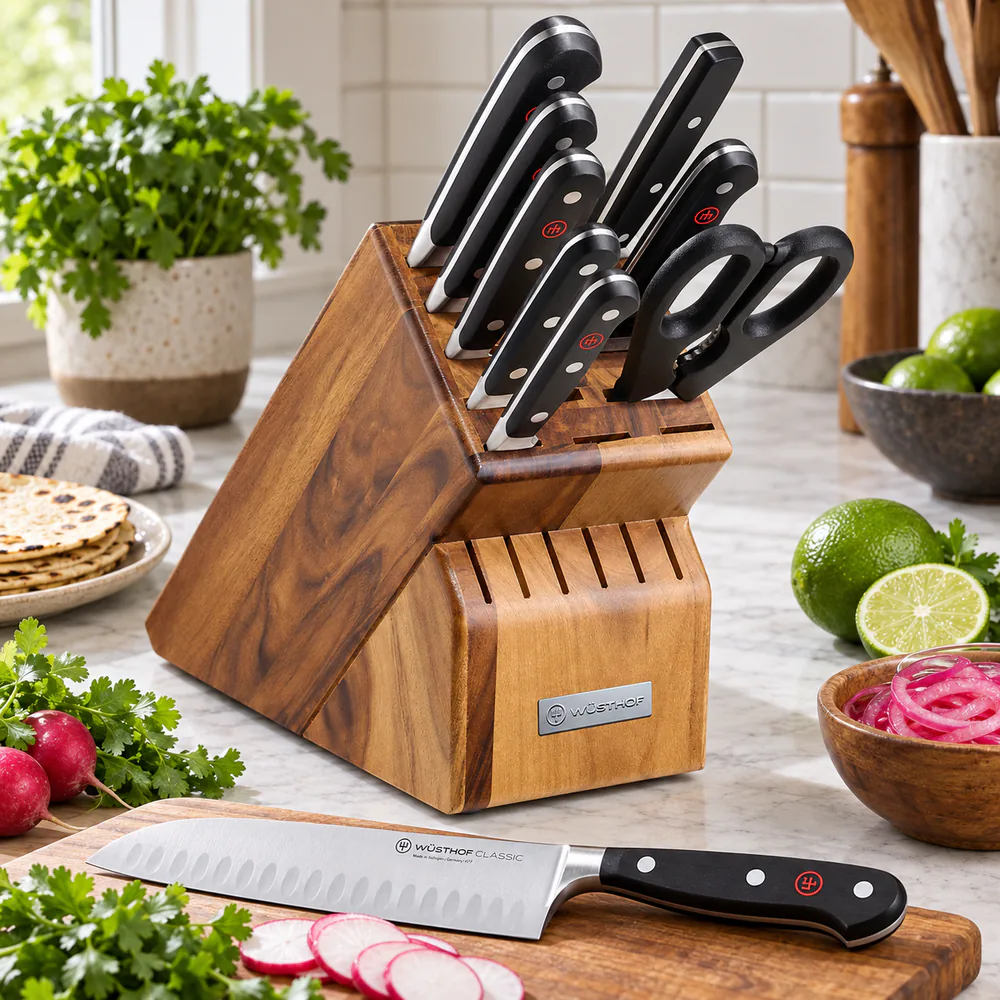
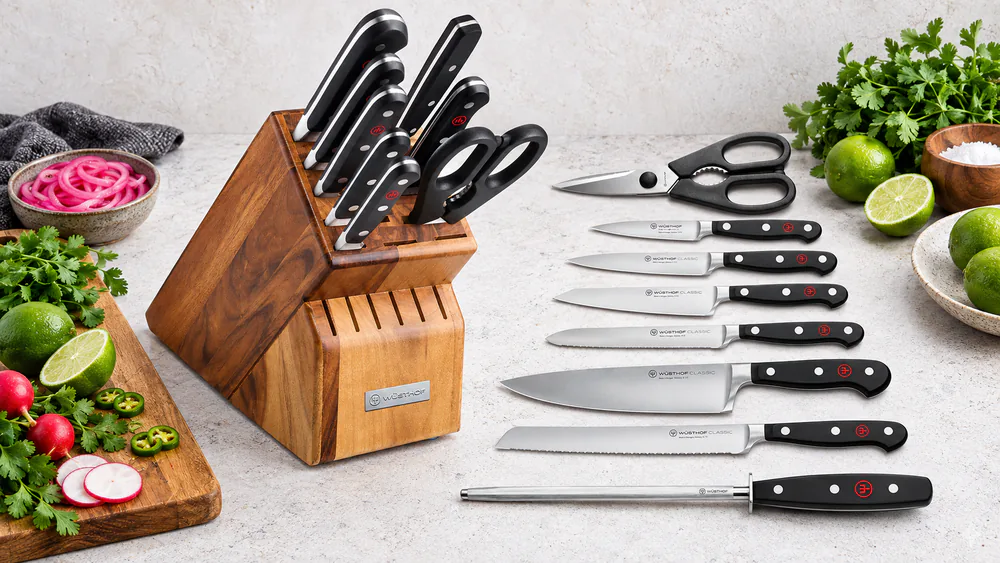
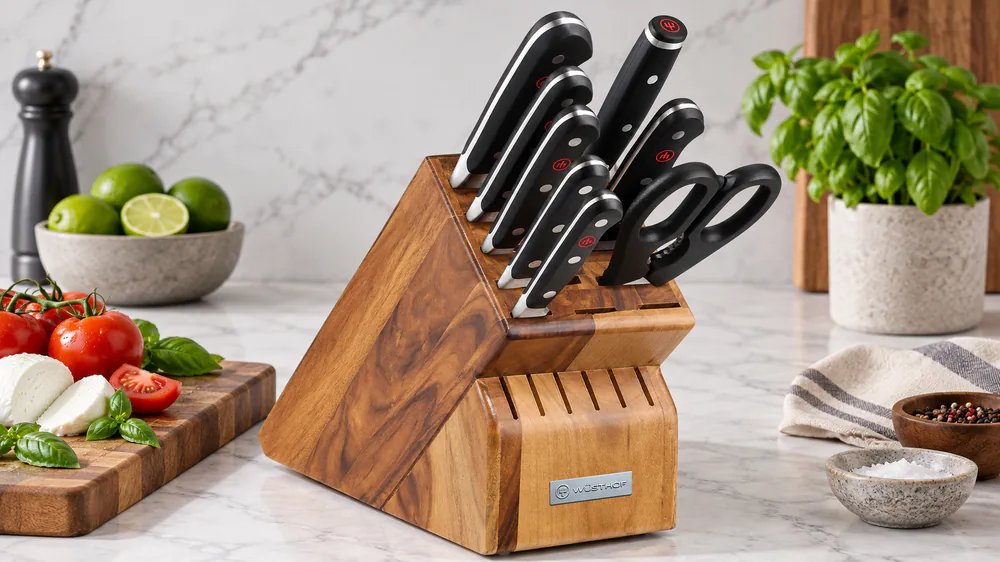
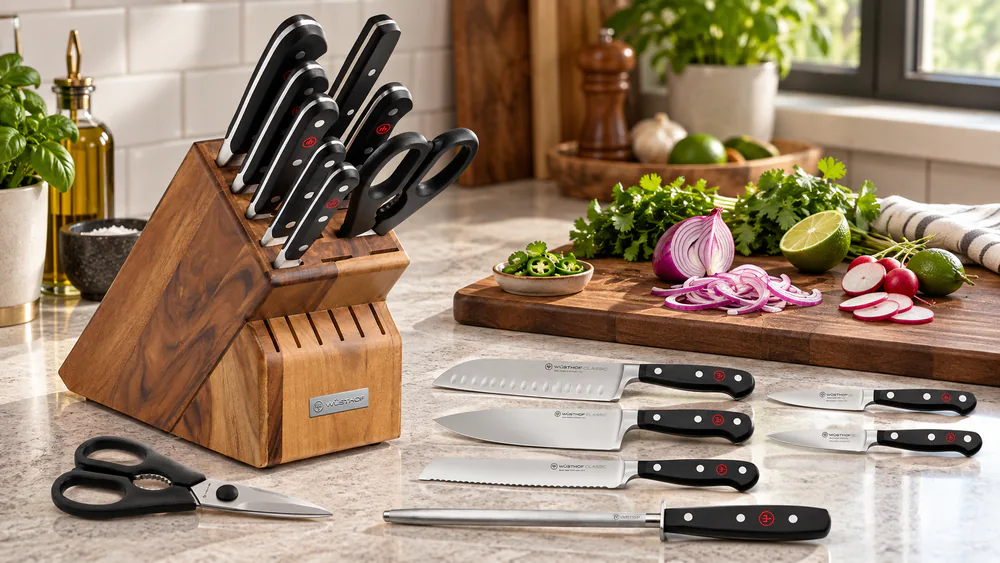
The Wüsthof Classic 9-piece is the set we would buy for a serious home cook who wants one block for the next twenty years; it is the reference point for every other set here. Forged in Solingen, it earned the highest rating of the eight.
Pros
Forged full-tang steel at 58 HRC
PEtec edge is 20% sharper and lasts twice as long
Triple-riveted handles that resist fading
Lifetime warranty
Cons
Handles run small for big hands
Hand wash only; no dishwasher
$685 is a real outlay
Our longest-running edge test is the Wüsthof chef's knife, which went four and a half years of daily prep before we even thought about sharpening; the edge simply held, and when it finally went soft, the included honing steel brought it back in a couple of minutes. Out-of-box sharpness tells you little about year three. Nine pieces: seven knives, a honing steel, and shears in a 17-slot acacia block. The Wüsthof Classic 9-Piece Knife Block Set lists at $685 on wusthof.com, Amazon, and Wayfair.
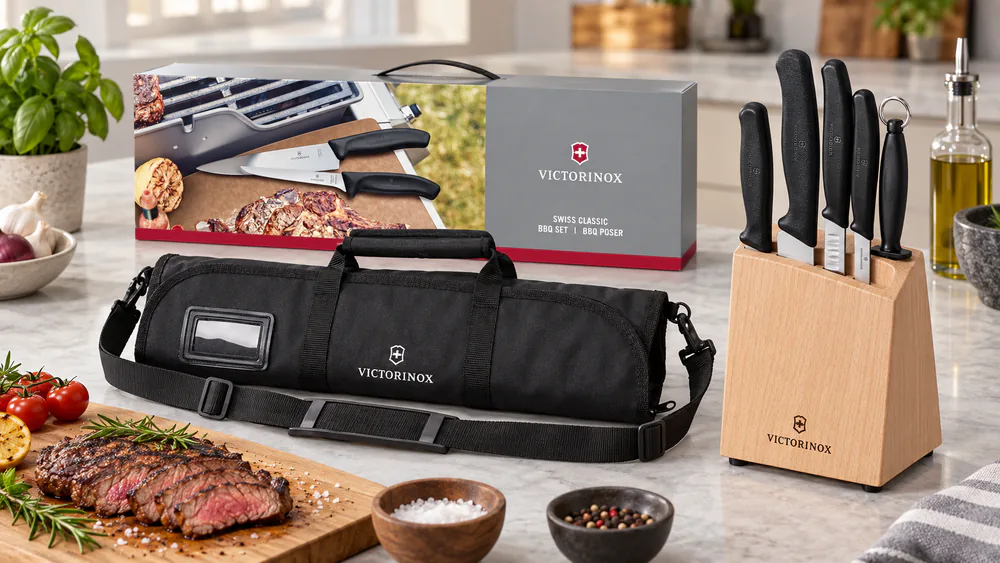
Best Budget Knife Set: Victorinox Swiss Classic 7-Piece Knife Block Set
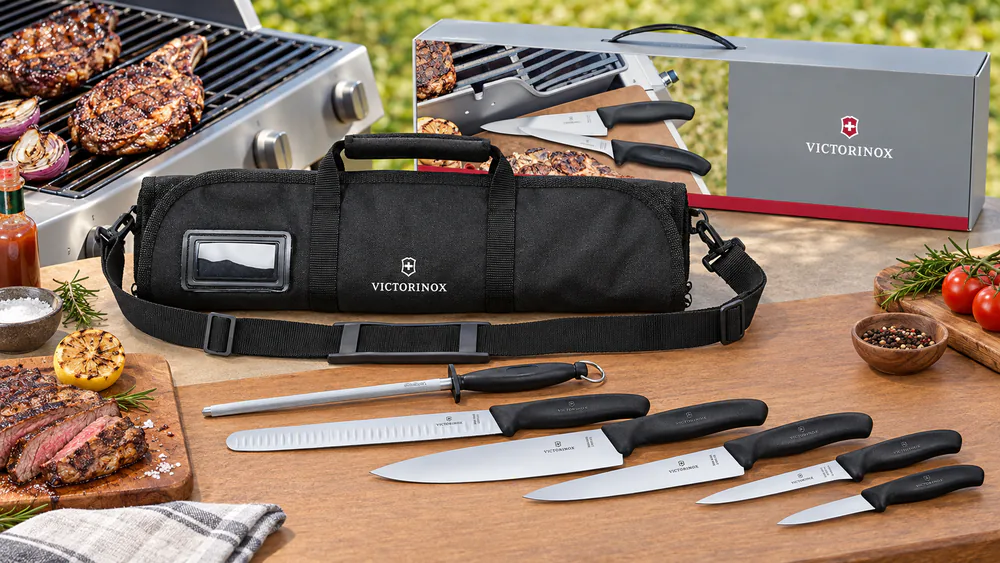
Where the Wüsthof optimizes for edge retention, the Victorinox Swiss Classic optimizes for value. It is our best budget pick, and it beats its price point by a comfortable margin.
Pros
Swiss-made high-carbon stainless steel
Light, slip-resistant TPE handles
Compact beech block for a small counter
Lifetime warranty
Cons
Paring knife rusts if left wet
Block is not solid wood and slots fit loosely
Stamped blades dull within a year
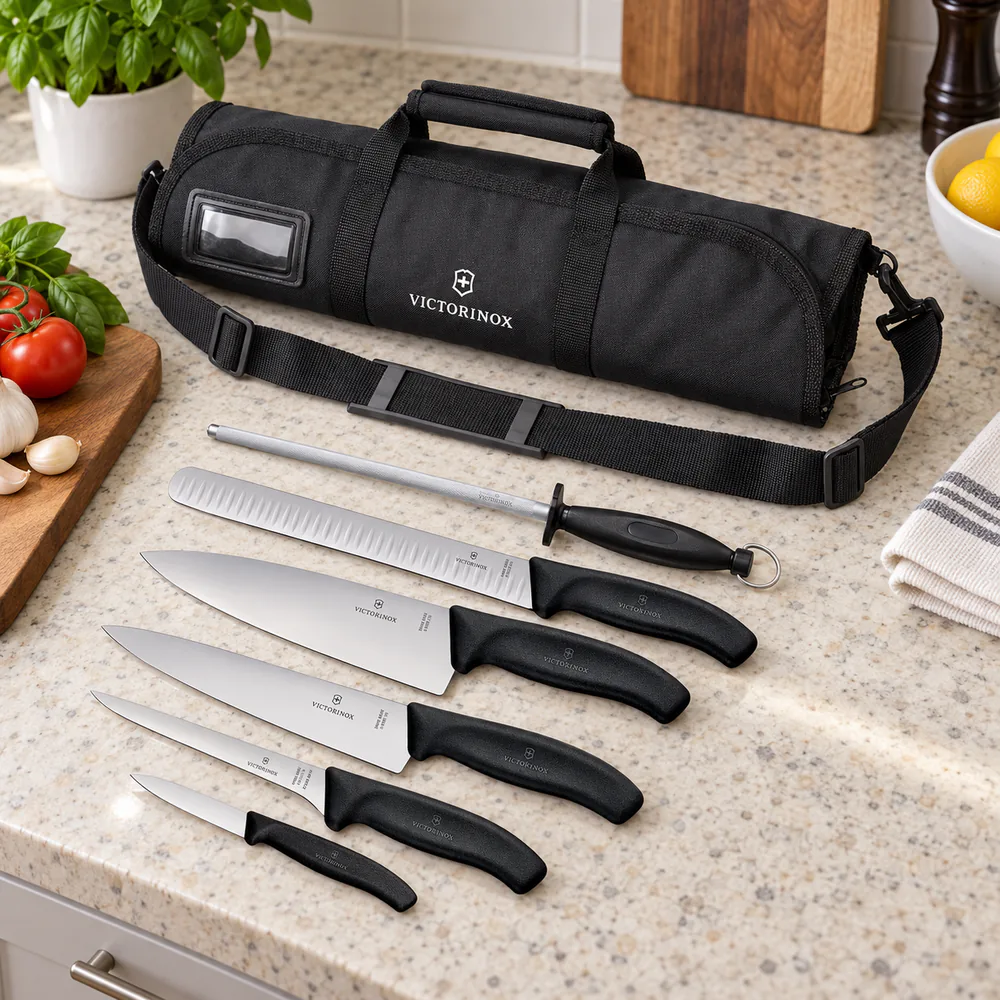
Out of the box, these knives are scary sharp and light in the hand; six-plus months in, ours needed sharpening but showed no performance decline. A paring knife left wet can throw rust spots within a week, so we hand dry every blade. Seven pieces: two paring knives, a tomato and table knife, an 8-inch chef's knife, shears, a steel, and a beech block. The Swiss Classic 7-Piece Block Set lists at $239.99 on victorinox.com; street pricing varies by retailer and region.
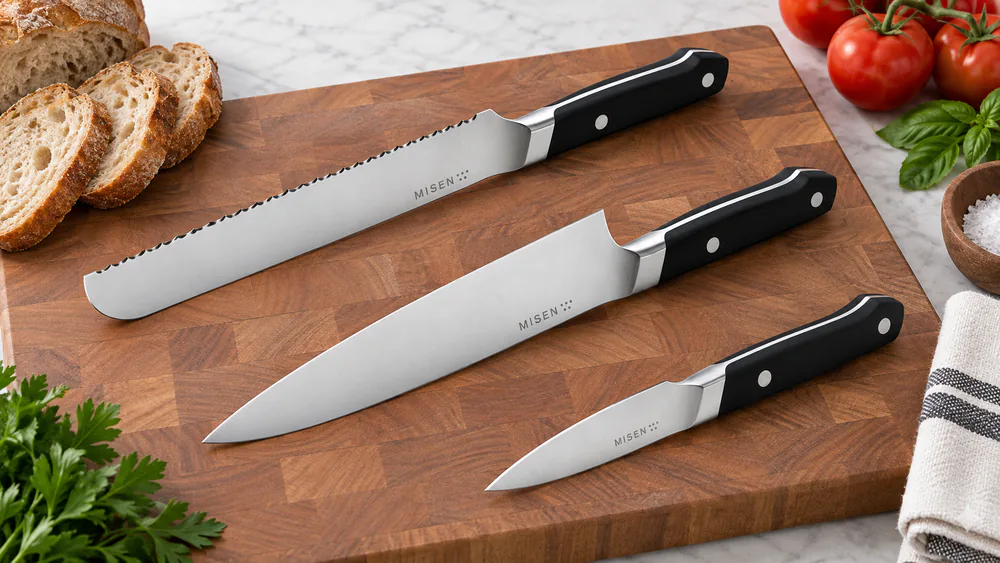
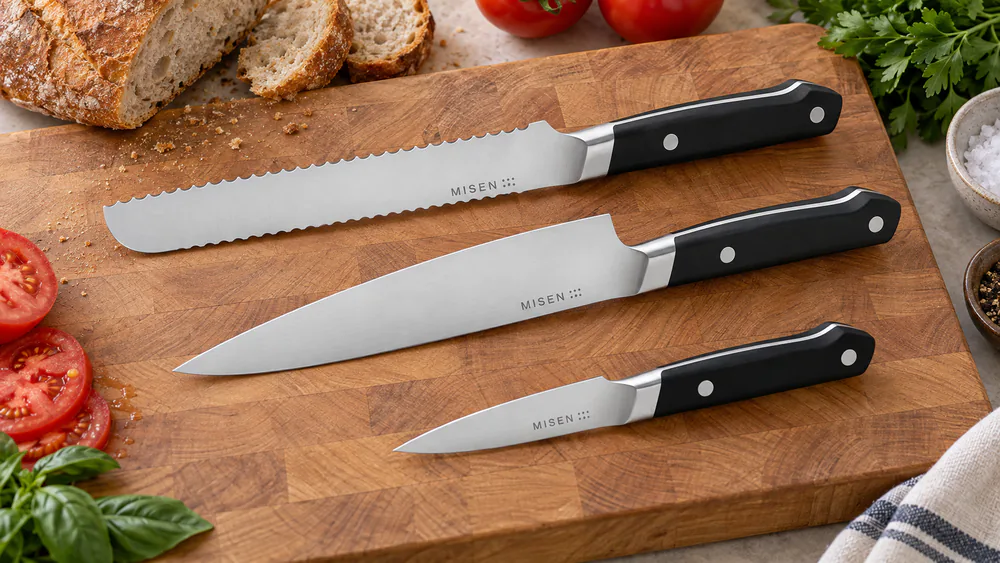
If the Victorinox is the starter kitchen's set, the Misen is the next step up for cooks who want better steel and nothing else. Three knives, no block, no filler: the whole pitch, and it works.
Pros
AUS-10 steel at 58 HRC with a 15-degree edge
Lifetime free sharpening program
Sloped bolster built for the pinch grip
Chef's knife weighs just 0.5 lb
Cons
Steel rusts if not dried immediately
Delicate 15-degree edge
No storage included
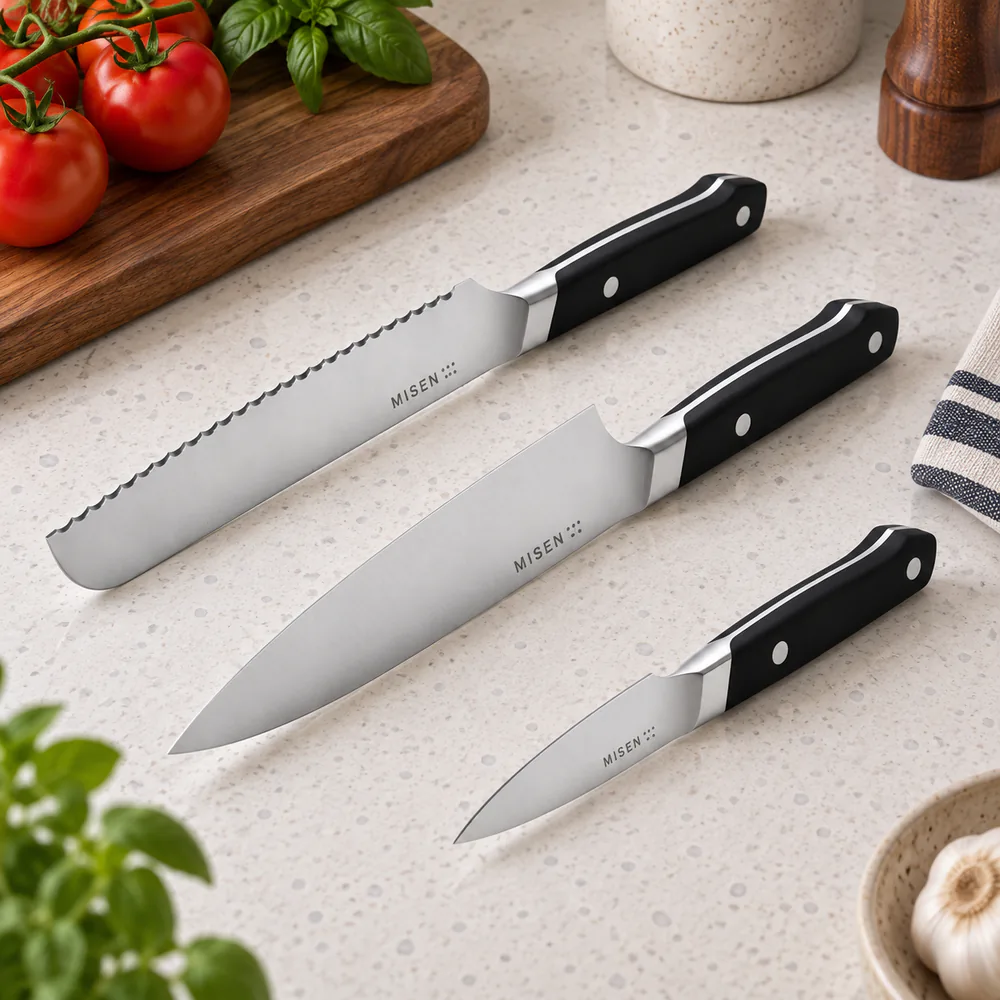
The chef's knife arrived razor sharp and went roughly three weeks of heavy prep before it needed a honing touch-up, then about ten days between honings. The sloped bolster makes the pinch grip comfortable through long sessions. Keep a towel nearby: the 15-degree edge is delicate and the steel rusts if not dried right after washing. Three pieces: an 8-inch chef's, a 3.5-inch paring, and an 8-inch serrated. The Misen 3-Piece Knife Set lists at $234 on misen.com, and the brand runs frequent sales.
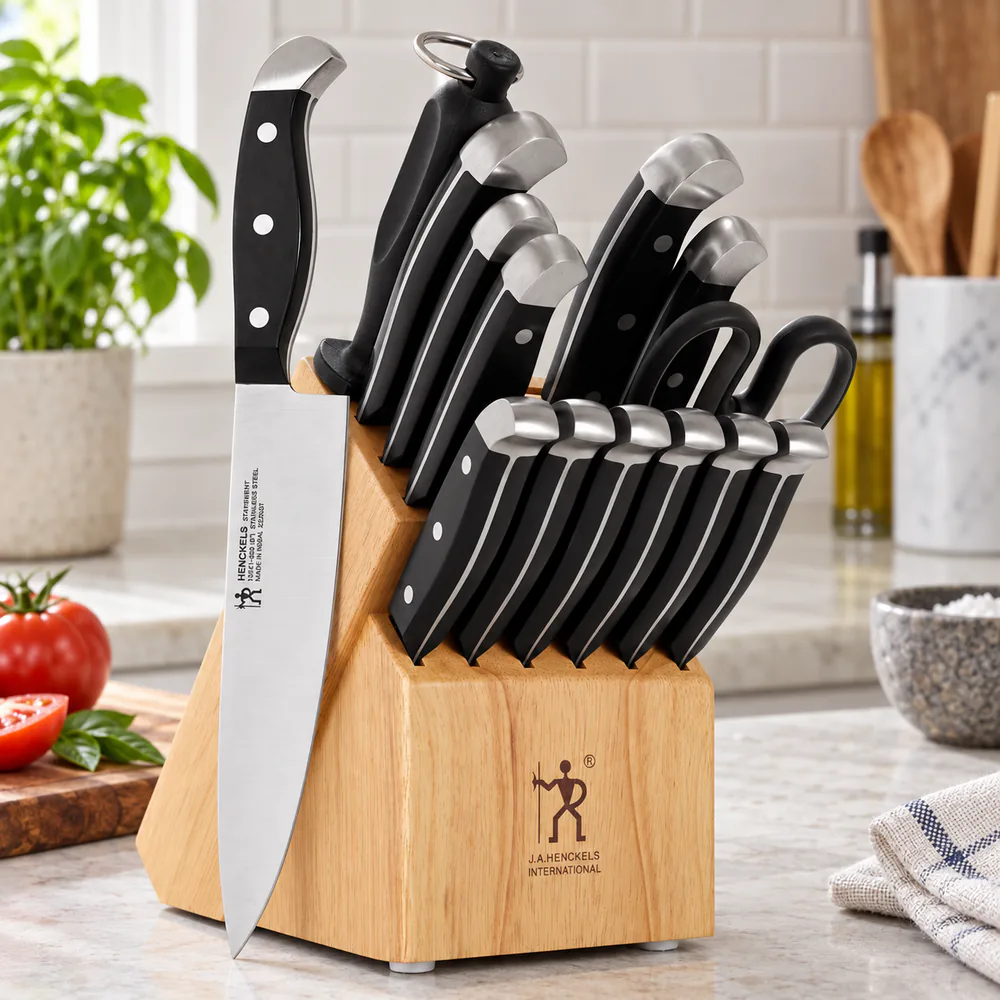
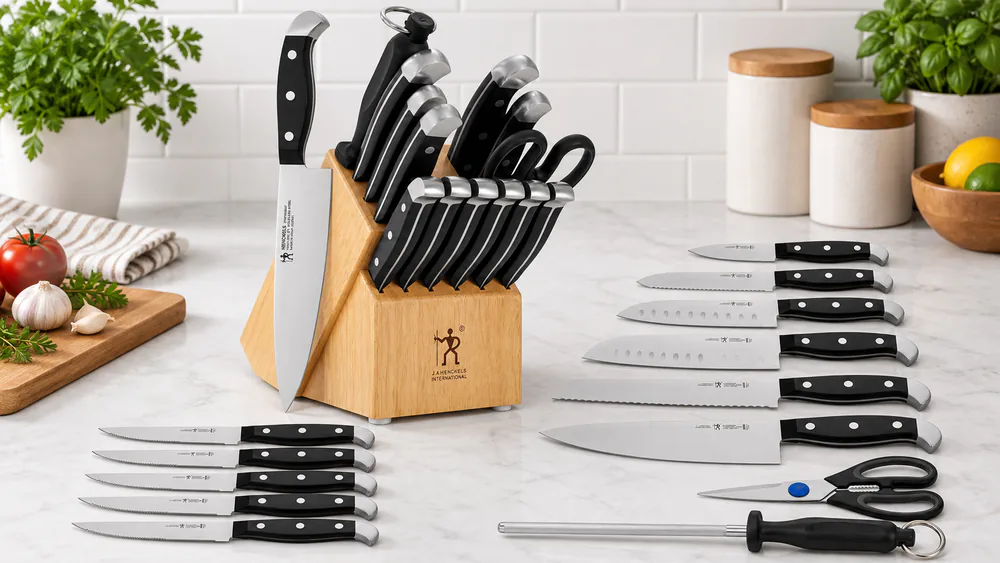
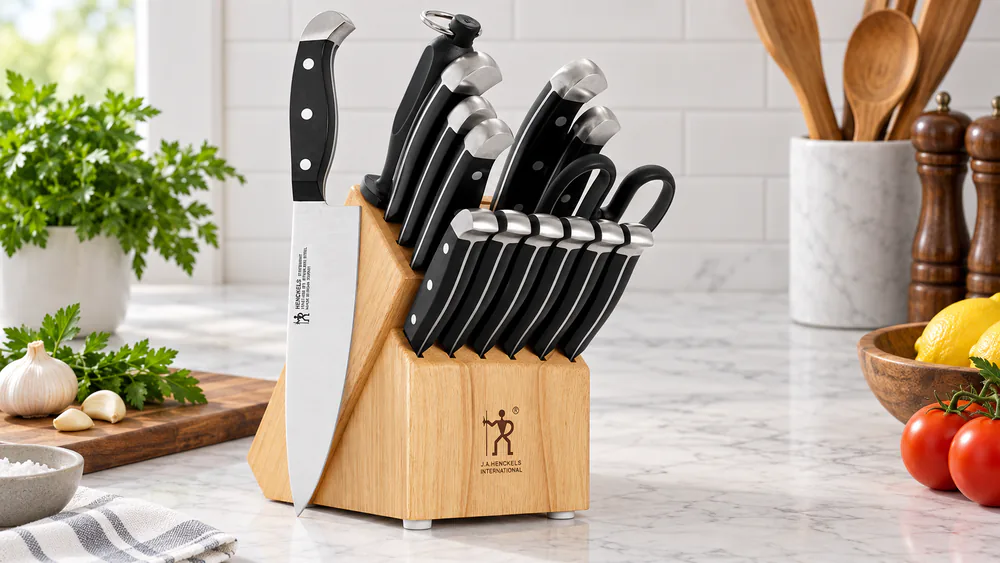
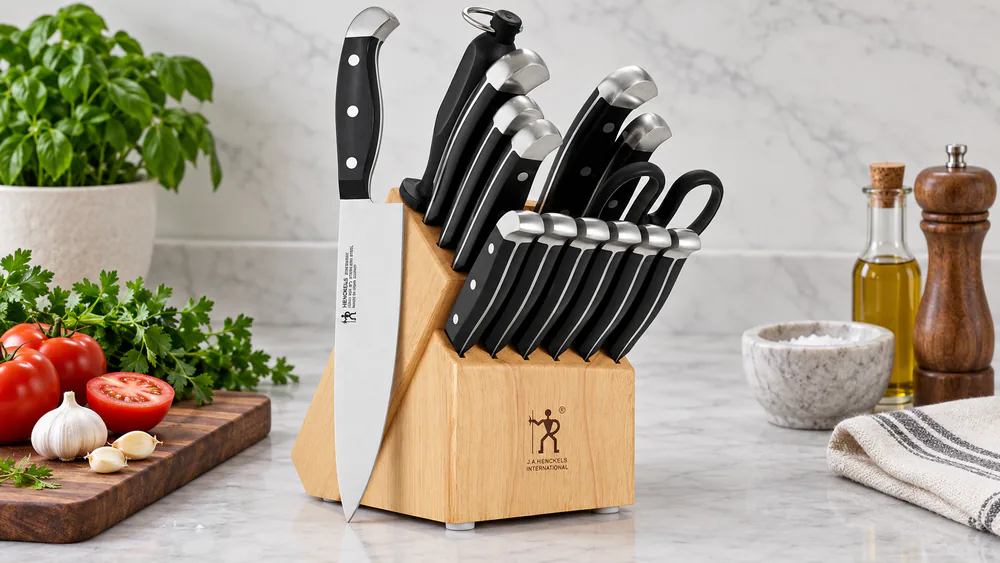
Best Knife Set With Steak Knives: J.A. Henckels Statement 15-Piece Knife Block Set
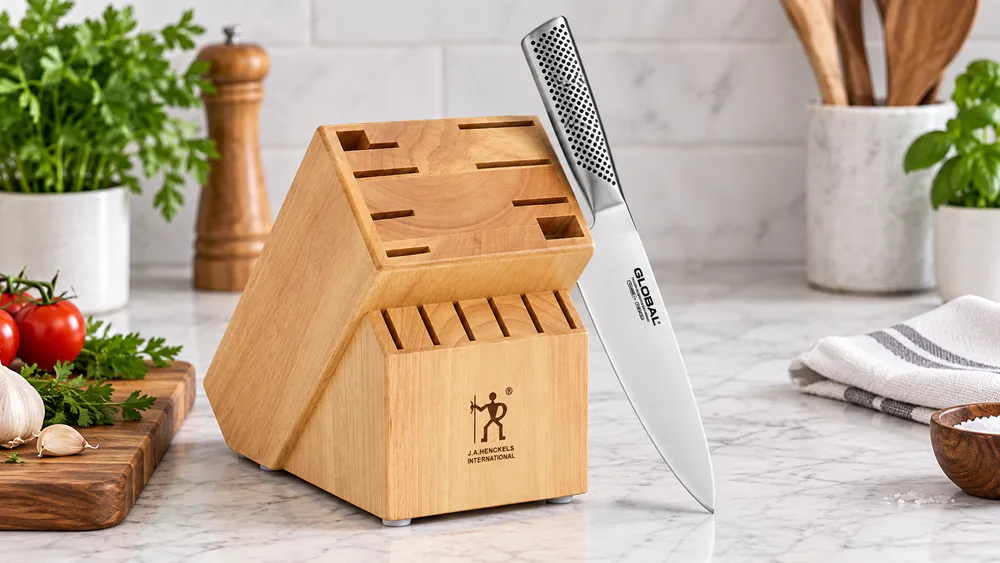
Where the Misen keeps things minimal, the Henckels Statement goes big: fifteen pieces, six steak knives, and a hardwood block for about $150. It is our pick for households that serve steak knives more than once a month.
Pros
Six steak knives, the point of the set
Full-tang stamped steel, lighter than forged
Block stores prep knives on their sides
Lifetime warranty
Cons
Soft, thin blades dull faster than forged steel
Rust spots appear if blades sit wet
We do not rely on the dishwasher claim
The blades are on the soft, thin side, but the chef's knife still sliced a tomato paper-thin out of the box, and a year in, honing every other use keeps it as sharp as day one. Left wet, the blades develop rust spots; we hand dry ours and never see them. The block lays the prep knives on their sides, protecting the edges. It runs about $149.95 on Amazon, and street pricing moves week to week.
Best Japanese Knife Set: Miyabi Artisan 7-Piece Knife Block Set
The Henckels is stamped and budget-friendly; the Miyabi Artisan is its opposite. Handmade in Seki, Japan, with an SG2 powder-steel core ice-hardened to 63 HRC and a hand-honed edge at 9.5 to 12 degrees, it is the sharpest set we tested.
Pros
SG2 powder steel, ice-hardened to 63 HRC
Hand-honed edge at 9.5 to 12 degrees
Exceptional edge retention in our testing
Cocobolo pakkawood handles with brass spacers
Cons
63 HRC steel is brittle; no bones, frozen food, or twisting
Hand wash only
$849.95 is a serious price
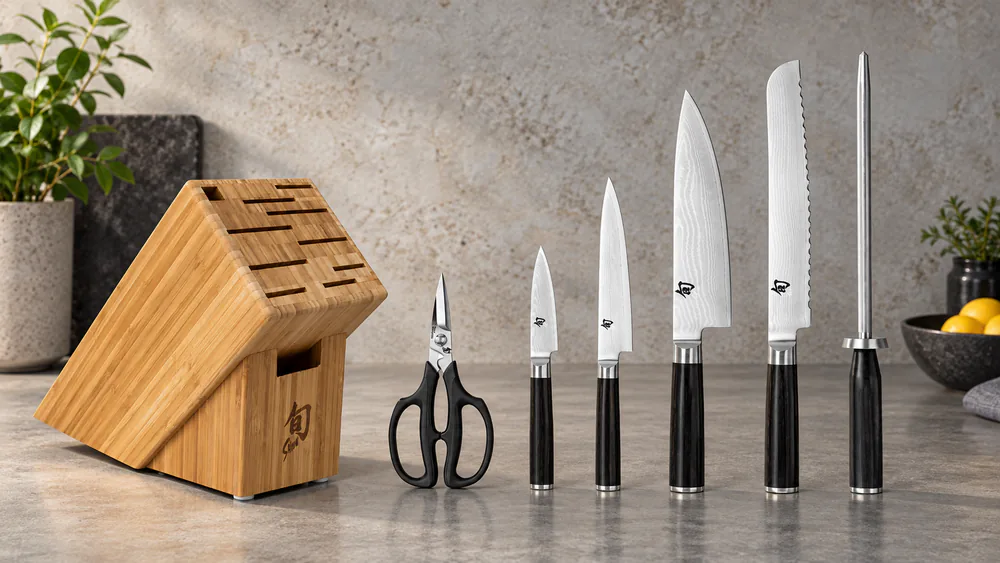
Edge retention is exceptional: after heavy daily use, the chef's knife felt as sharp as the first cut, where a German steel knife needed resharpening. The 70/30 grind veers off line on dense, tough produce, so we never force or twist it; it sharpens easily on a ceramic rod and responds to whetstones. Seven pieces: chef's, santoku, bread, and paring knives, shears, a steel, and a bamboo block. The Miyabi Artisan 7-Piece Knife Block Set is $849.95 at Sur La Table.
Best Large Knife Set: Global 11-Piece Knife Block Set
Where the Miyabi is a handmade 7-piece, the Global line goes the other direction: a full set in a stainless block, made in Niigata, Japan, from CROMOVA 18 steel. Caveat: the exact contents of the 11-piece set could not be verified at any US retailer, so we recommend the 11-slot block (about $325) and building the set from the line.
Pros
CROMOVA 18 steel, 15 to 17 degrees per side
Seamless one-piece construction
Dimpled handles stay grippy when wet
Made in Japan, lifetime warranty
Cons
Thin edges chip easily, even with careful use
Rusts and stains unless dried immediately
11-piece contents unverified at US retailers
The thin CROMOVA 18 blades cut with a lightness European knives never match, and the dimpled, sand-filled handles stay grippy when wet. But thin edges chip easily; we saw chips within the first weeks, and the blades rust and stain unless washed and dried immediately. They are not for bones, frozen food, or twisting. The Global Ikasu 7-Piece on Amazon is the closest verified complete set at $399.95.
Best Blockless Knife Set: Material The Knives + Stand
The Global is a block set; Material The Knives + Stand rejects the block entirely. Three knives on a magnetic wooden stand, out in the open: that is the design pitch, and it is our best blockless pick.
Pros
Three-layer Japanese steel with a 13-degree edge
Magnetic stand holds up to eight knives
Full-tang handles with a grippy finish
30-day trial, guaranteed for life
Cons
Only three knives; no full-size bread knife
No storage for shears or a honing steel
Price swings with frequent sales
The knives are super sharp, with a comfortable, grippy handle and a light, well-balanced feel. The magnetic stand holds up to eight knives on both sides and wipes clean in seconds, and it became the storage we reached for when a block felt like overkill. The steel is a three-layer Japanese high-carbon alloy with a 13-degree edge, cryogenically tempered. Material The Knives + Stand is $355 at Material; the price swings with the brand's sales.
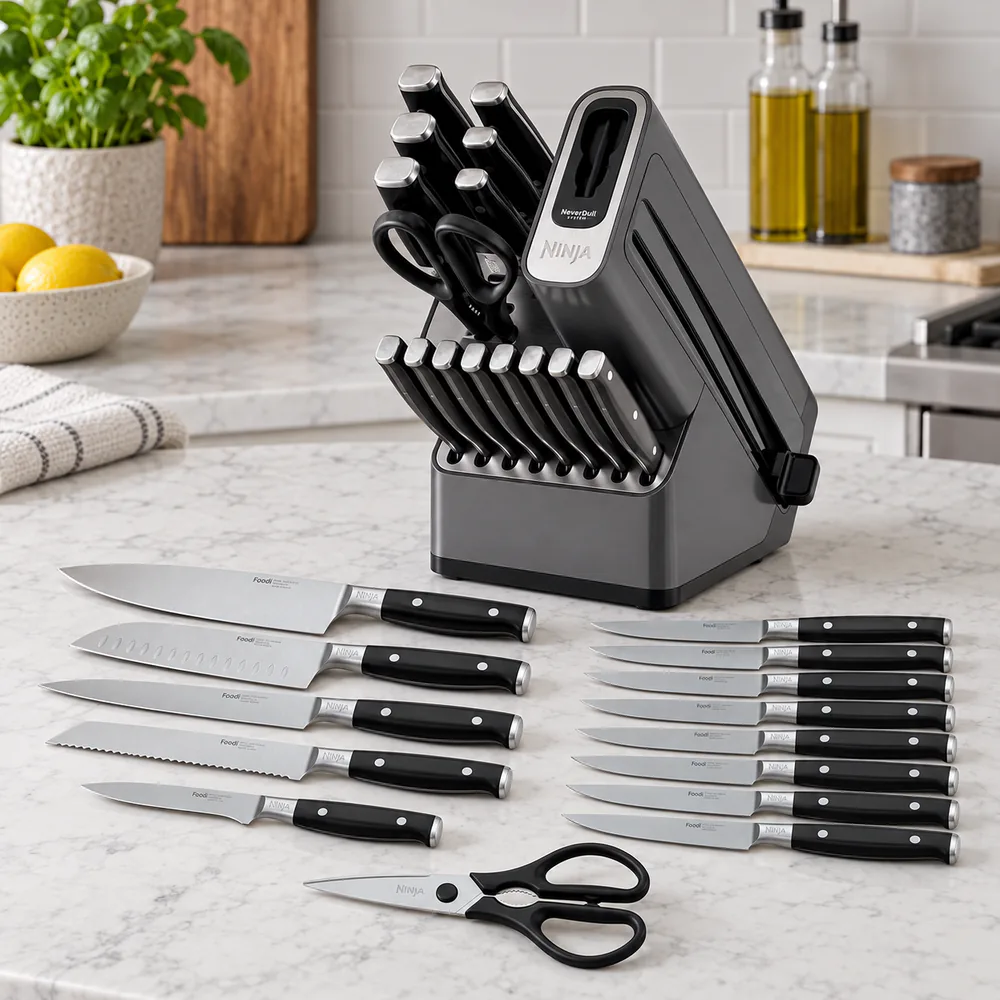
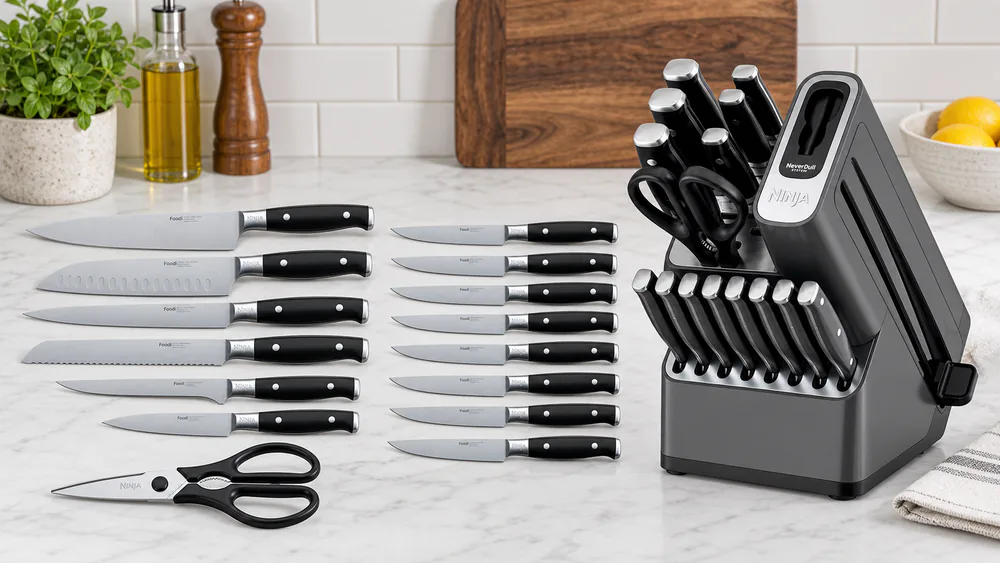
Best Knife Set for Beginners: Ninja Foodi NeverDull Premium 17-Piece Knife System
8
Ninja Foodi NeverDull Premium 17-Piece Knife System
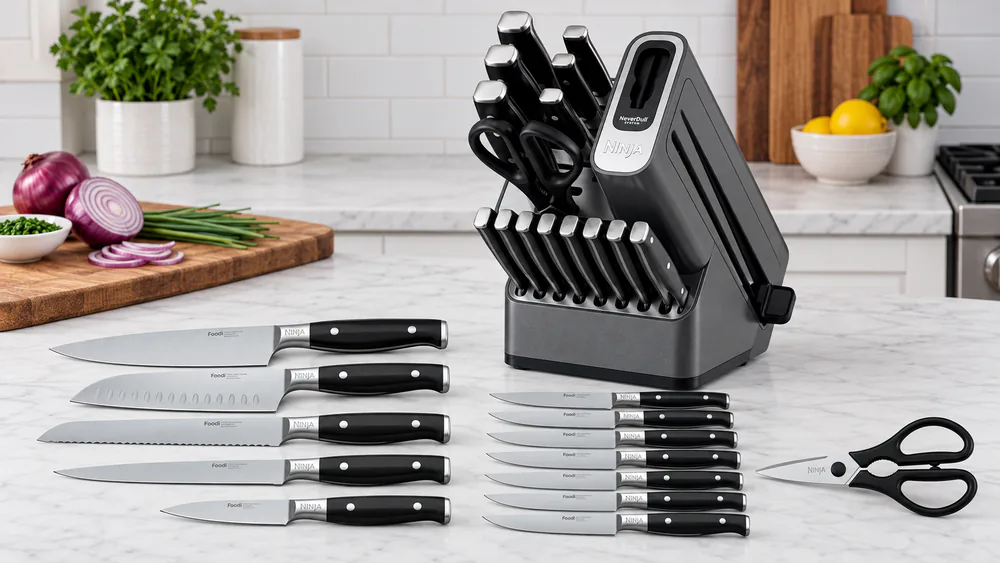
Where Material trusts the cook to maintain three knives, the Ninja NeverDull assumes you won't, and it builds the sharpening into the block. Seventeen pieces, eight steak knives, and a ceramic sharpener you operate with one finger: our pick for beginners.
Pros
Built-in ceramic sharpener restores edges in seconds
Eight steak knives included
Suction-cup base keeps the block planted
10-year limited warranty
Cons
Sharpener only takes the Ninja knives
Hand wash only
$400 is a lot for stamped steel
The built-in sharpener is genuinely foolproof: a few swipes on the lever before big prep and the edge comes back noticeably. It only works on the Ninja knives, so the bread knife and shears never go in. The suction-cup base keeps the block planted during one-handed pulls. The Ninja Foodi NeverDull 17-Piece Knife System lists at $399.99 and was $384.95 on Amazon when we checked.
Other Knife Sets We Considered
Four more sets came close to the main list. Here is why they missed, and who should buy them anyway.
Excellent Runners-Up
1
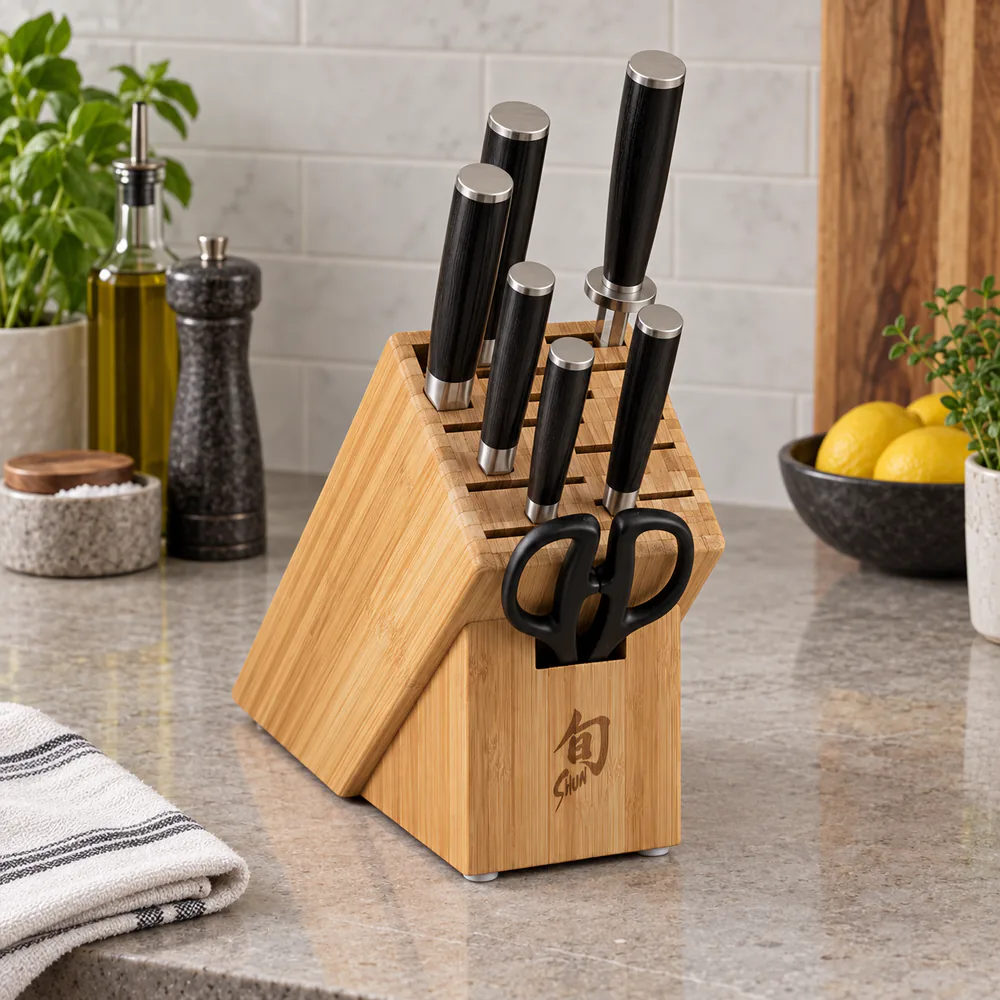
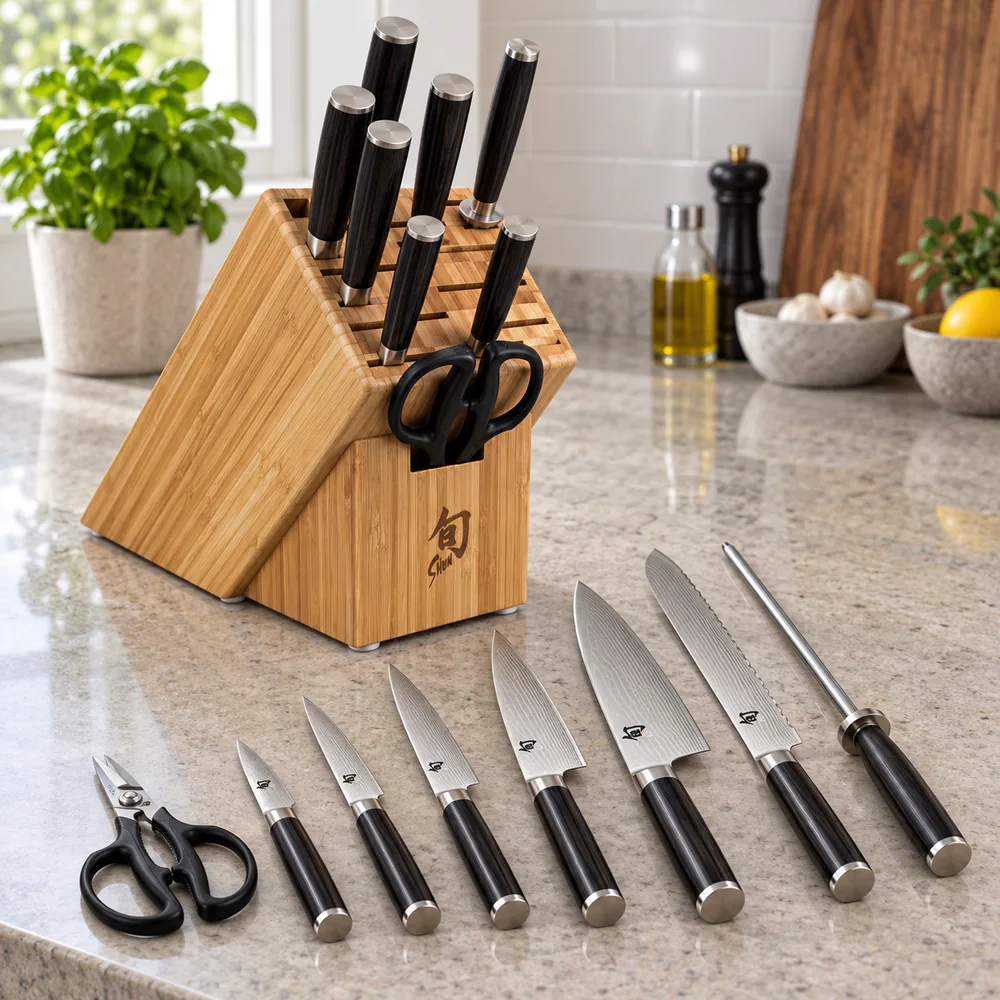
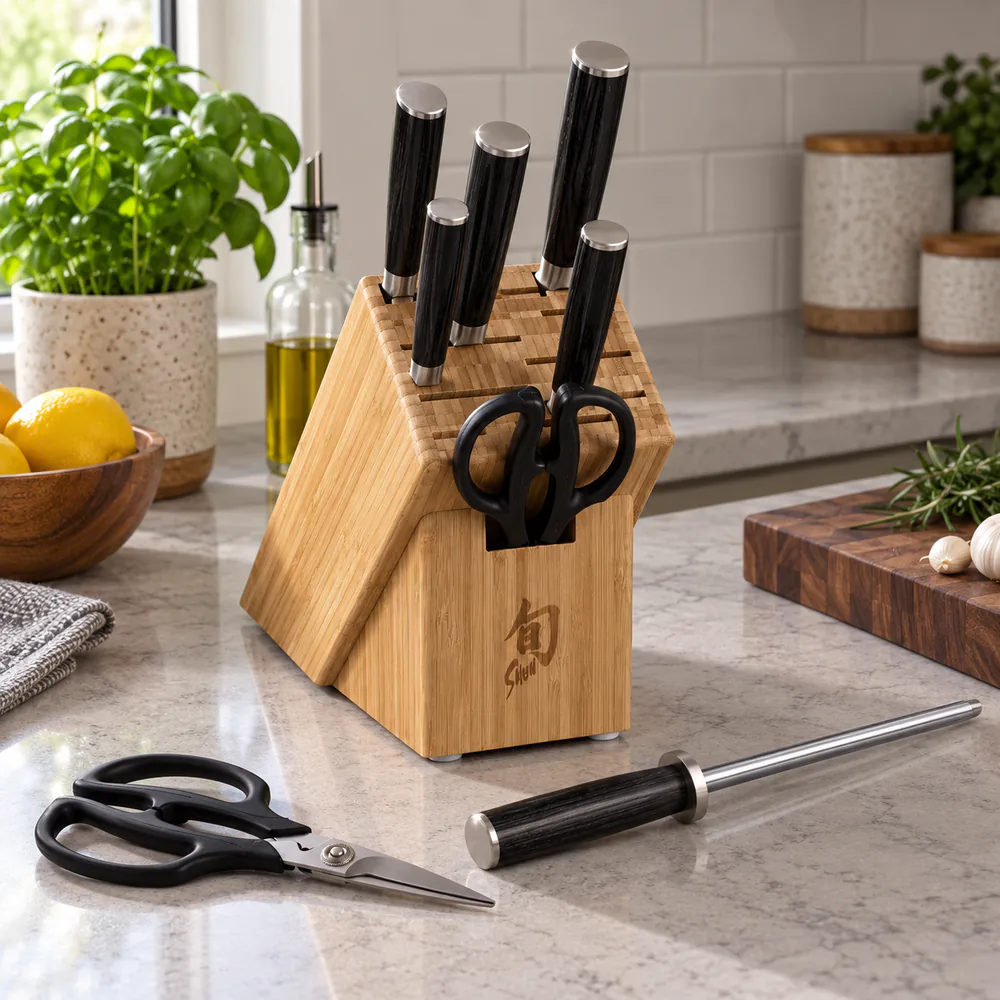
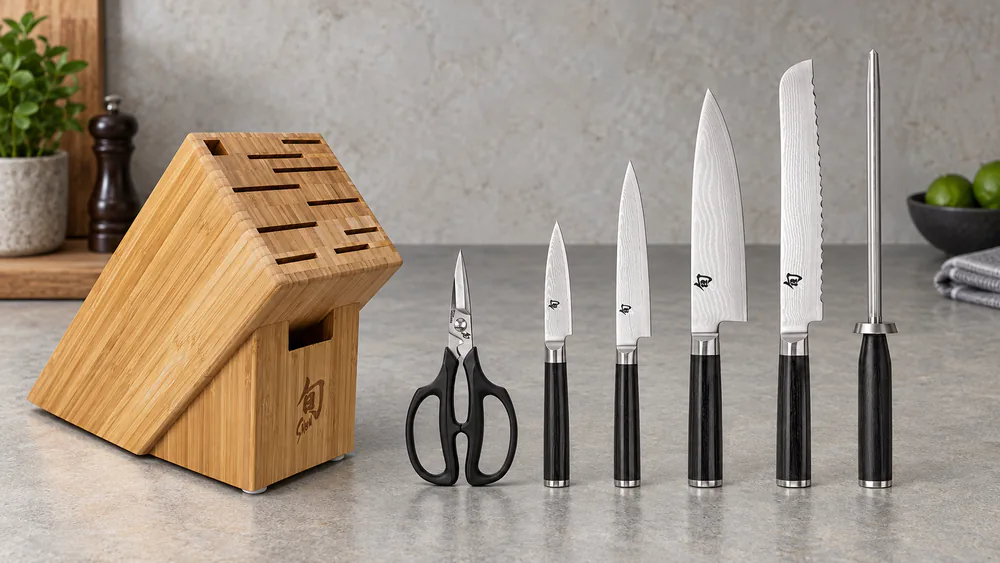
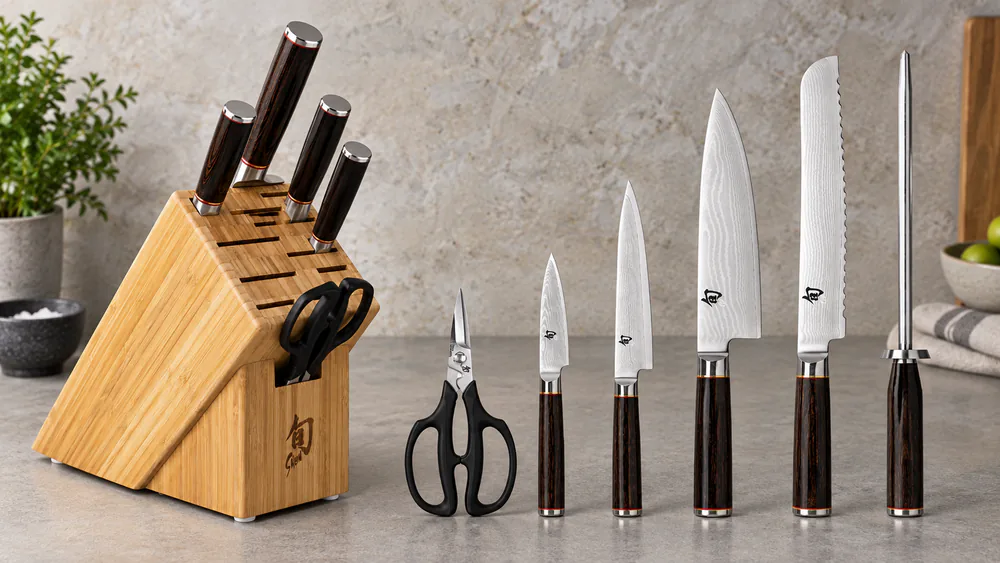
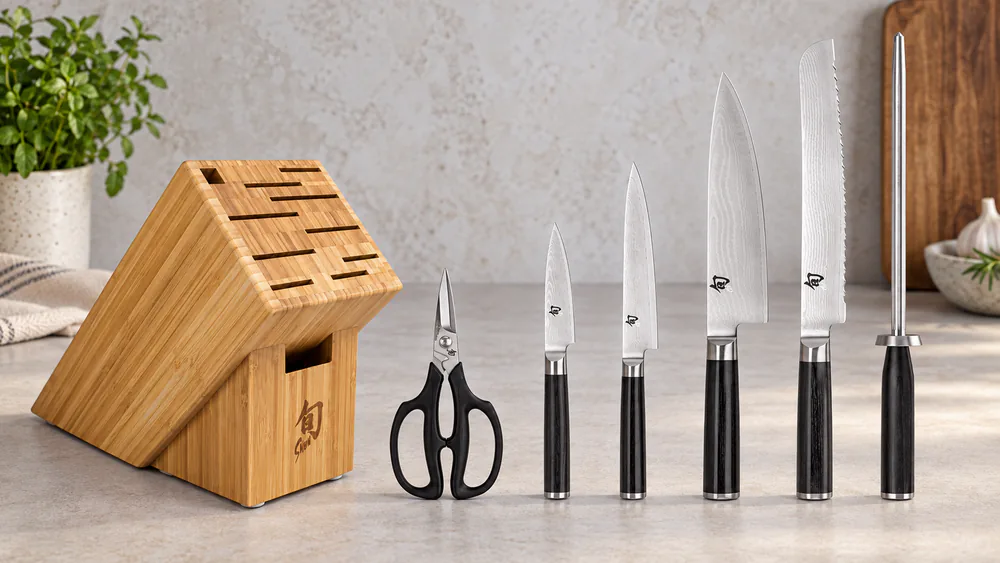
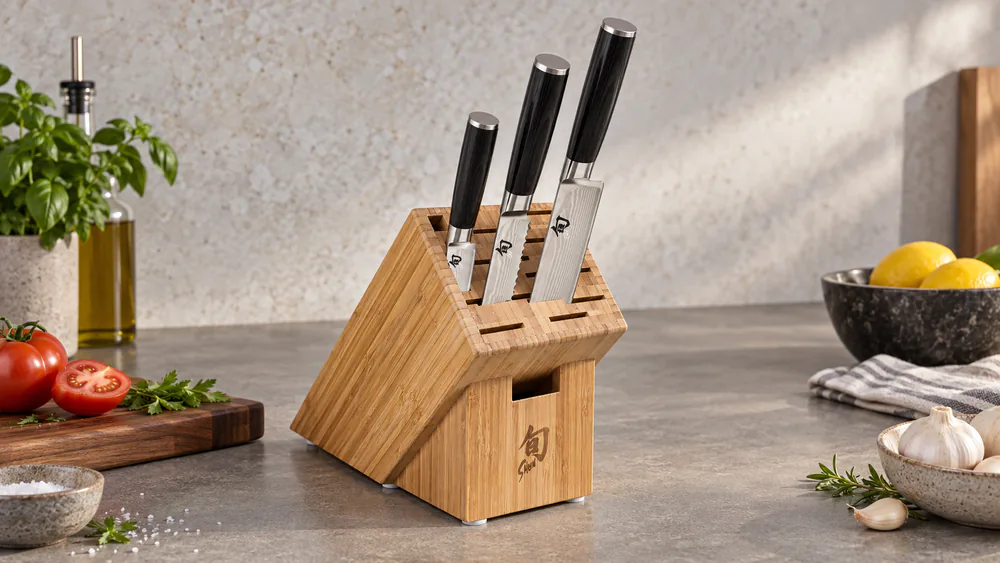
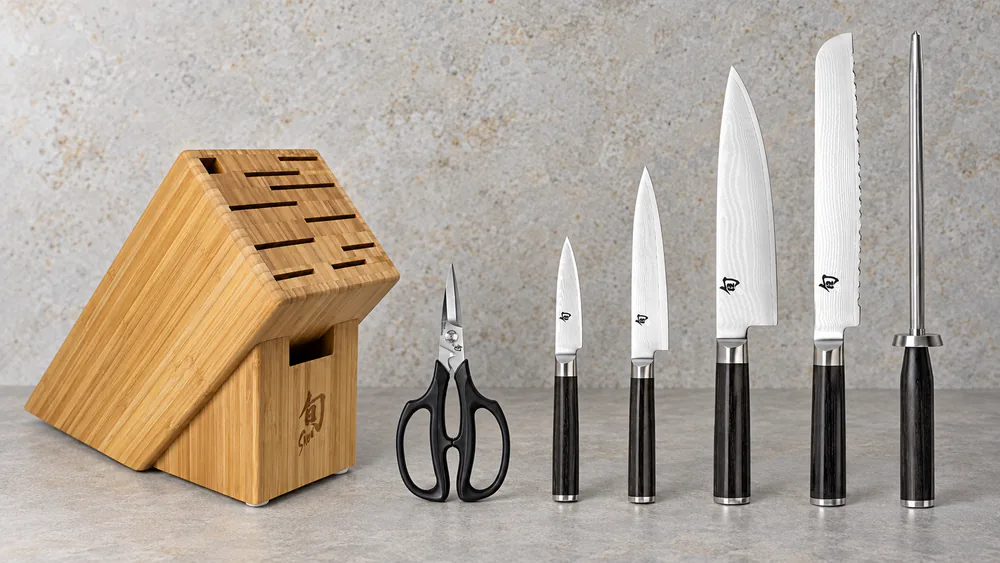
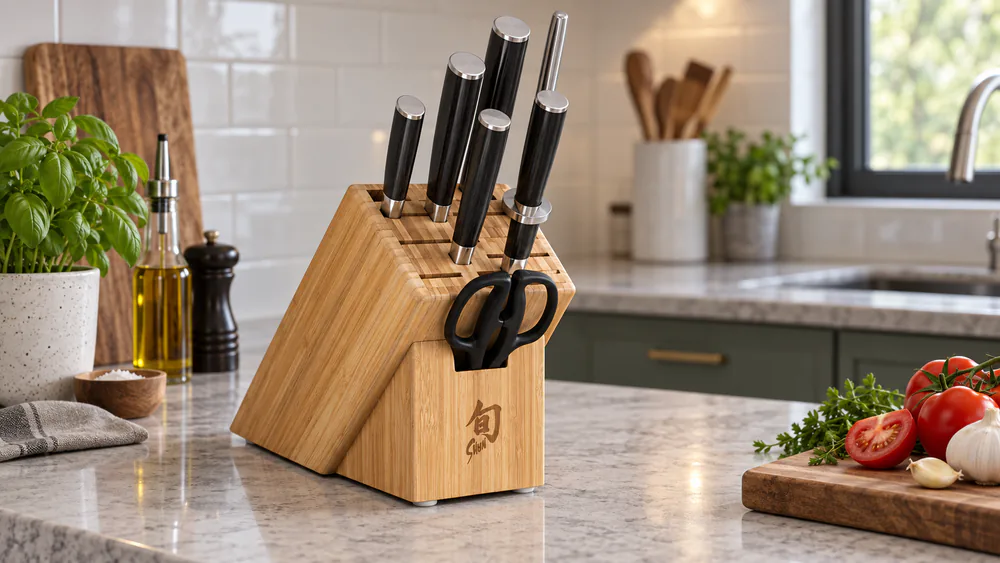
Shun Classic 7-Piece Essential Knife Block Set
4.6
VG-MAX Damascus blades that arrive seriously sharp, but the steel is hard to keep sharp at home.
The Shun Classic 7-Piece Essential Knife Block Set is also at Williams Sonoma, and its warranty includes free factory sharpening.
We Suggest Skipping
Skip any set that sets you up for maintenance you will not do. Rust-prone blades are fine if you hand dry, a 63 HRC edge is fine if you never touch bone, and a 17-piece block is fine if the steak knives get used. Otherwise, buy fewer, better knives.
How We Tested Knife Sets
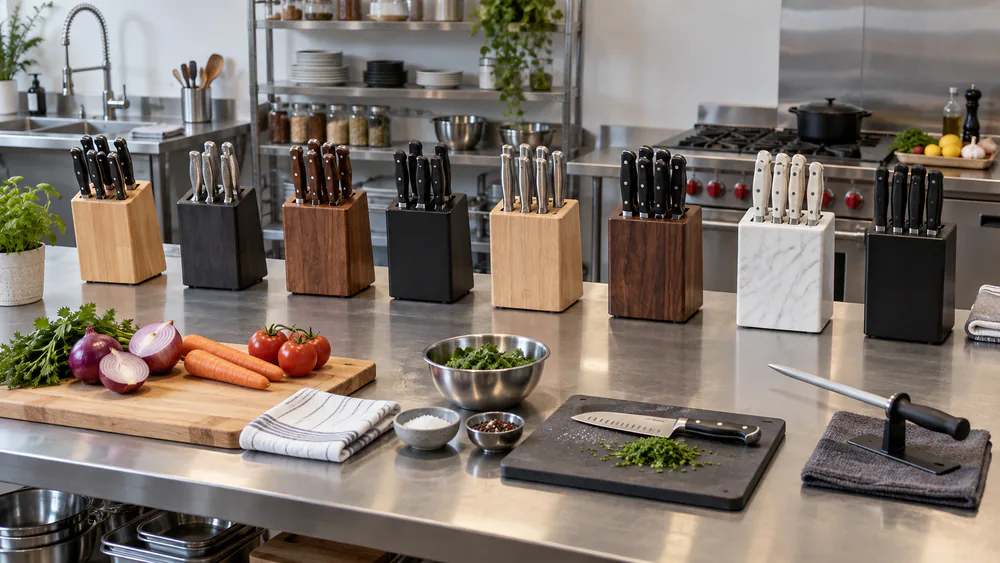
We tested eight knife sets, the same eight ranked here, and every knife ran the same rotation of chopping, slicing, and dicing. The ratings above are ours, earned through real prep, not spec sheets.
All eight sets were purchased at retail through normal channels with our testing budget; no brand supplied samples, and no maker paid for a slot. The evaluation ran about a month, and after every prep session we checked the edge and scored how it held, how the handle wore on the hand, and how easily the steel sharpened back to new on a home sharpener.
What to Look for When Buying a Knife Set
The best knife set for you is the one that matches how you cook; four decisions matter more than the brand badge.
We judge a knife set the way a working kitchen does: how the edge holds after a week of prep, how the handle feels in hour three, and whether the steel takes a fresh edge easily on a home sharpener.
Knife Types You Actually Need
A chef's knife, a paring knife, and a bread knife cover most cooking. Everything else is a specialty tool: a santoku, a boning knife for poultry, steak knives if you entertain. Count the tools you will use before you count the pieces.
Blade Material and Steel
The biggest decision splits German and Japanese knives. German blades like the Wüsthof Classic are forged from high-carbon stainless and tempered around 58 HRC, tough enough for bones and bad habits. Japanese blades like the Miyabi Artisan run harder and hold a finer edge longer, but they chip if abused. Alloying elements are what let a blade hold an edge.
Forged blades are cut from a single bar and run heavier; stamped blades are pressed from sheet steel and run lighter and cheaper. Full tang, steel running the full length of the handle, keeps a knife from breaking at the joint.
Pros
Forged: tougher, better edge retention
Full tang: will not snap at the joint
Cons
Stamped: dulls faster, flexes more
Partial tang: weakens the joint
Warning. Never put knives in the dishwasher. Heat and detergent attack the edge, and blades left wet develop rust spots.
Handle Comfort and Balance
A knife is a hand tool, and the handle is half the knife. Full tang and proper weighting keep it balanced at the bolster, and the shape has to fit your grip: our big-handed testers found the Wüsthof handles tight, while the Misen's sloped bolster made the pinch grip comfortable through long sessions. Judge it after ten minutes of prep, not in the store aisle.
Storage: Block, Magnetic, or In-Drawer
Where knives live matters as much as what they are made of. A block with soft slots keeps every knife at hand, a magnetic strip or stand like Material's frees counter space, and an in-drawer tray keeps a set tidy on a short counter. The edge should never rest on metal, stone, or glass. Wüsthof's Build Your Own Knife Block Set tool assembles one blade at a time.
Tip. Hone often, sharpen rarely. A few passes on a honing steel before big prep keeps an edge alive for months; ten minutes on a whetstone once a year handles the rest.
How Many Knives Do You Really Need in a Set?
Three knives cover most cooking; sets earn their keep with better steel per dollar and storage that protects the edges. A 7-piece like the Victorinox Swiss Classic adds a steel and shears; a 9-piece like the Wüsthof Classic adds a utility and a bread knife. The big sets, 15 and 17 pieces, are mostly about steak knives: count how many you actually serve first.
Knife Set FAQs
Are expensive knife sets worth it?
For daily cooks, yes: the premium buys edge retention you can feel in year two. Occasional cooks are better served by a budget set like the Victorinox, with the difference spent on a good cutting board.
Which knife brand is best?
No single brand wins. German and Japanese knives solve different problems: German makers like Wüsthof temper steel for toughness, while Japanese makers like Miyabi and Shun run harder edges that stay sharp longer but chip if abused. Buy the style that matches your cooking.
Is it better to buy knives individually or as a set?
A set wins on value and consistency: matching handles, a block to store them, and a lower per-knife price. Buying individually lets you spend where it matters, usually the chef's knife. Start with three good knives, then add a steak-knife set when you need one.
What knife do chefs use most?
The 8-inch chef's knife, by a wide margin: it rocks, chops, slices, and minces, and covers 90 percent of prep. That is why every set on this list leads with it.
What's the best way to store your knives?
A block with soft slots or a magnetic strip keeps edges off hard surfaces; loose drawers are where edges get chipped and fingers get cut. Wash and dry knives before storing, because moisture is what stains high-carbon blades, and keep the edge off metal and stone.
Why Trust Mr. Kitchen Adviser
This guide was written by our knives and cutlery expert, and it reflects how a working kitchen judges steel: the edge after a week of prep matters more than the first day's sharpness. Every pick earned its slot on our testing, with pricing checked against official sources.