
Recipes
White Spots on Frozen Shrimp: What Causes Them and Are They Safe?

As an Amazon Associate we earn from qualifying purchases. We may earn a commission from links on this page, at no extra cost to you. Learn more.

If you just found white spots on your frozen shrimp, you're probably wondering whether they're safe to eat. The short answer is usually yes, since most white spots are freezer burn, a quality issue that dries shrimp out without making it unsafe.
We've opened plenty of spotty bags in the test kitchen, and nearly every time the cause was freezer burn, not spoilage. White spots can also come from an ice glaze, calcium deposits, or a rare disease that sounds scarier than it is.
Quick Answer: Are White Spots on Frozen Shrimp Safe to Eat?
Yes, in nearly every case. White-spotted frozen shrimp is safe to eat as long as it shows no other signs of spoilage.
Key takeaway. Freezer-burned shrimp is safe to eat. The only time to throw shrimp away is when it smells bad, feels slimy or mushy, or shows other signs of spoilage.
Here's how to read the spots on your bag:
- Dry white or gray patches on the meat: freezer burn, safe to eat.
- Frosty coating over the whole piece: protective glaze, harmless.
- Small white dots on the shell: calcium or a rare disease, never a human risk.
- Slime, an ammonia smell, or mushy flesh: spoilage, discard the bag.
1. Freezer Burn: The Most Common Cause
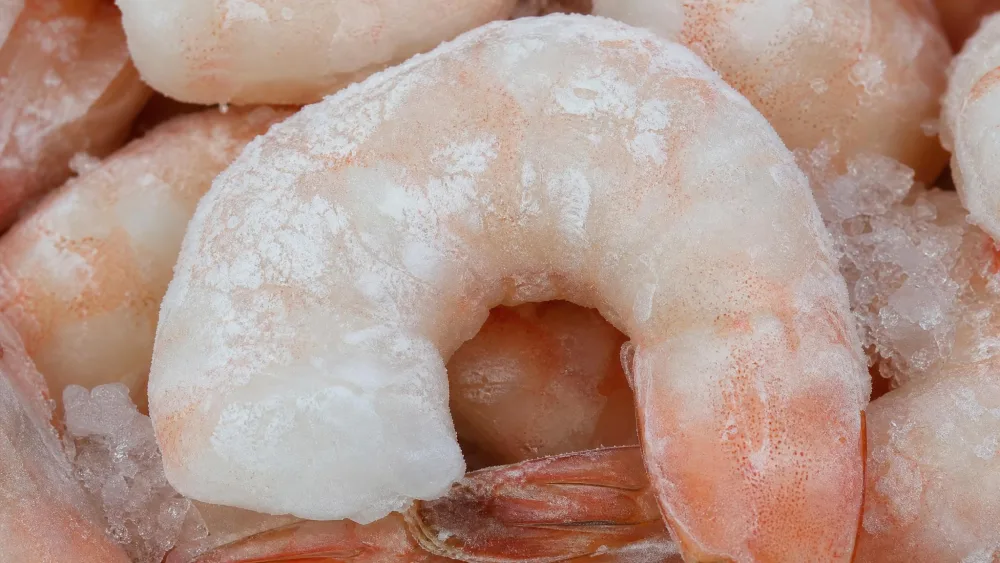
The most common cause is also the least worrying. Freezer burn is surface dehydration: dry freezer air pulls moisture out of the exposed shrimp through sublimation, leaving the whitish-gray patches you see, and it comes from improper sealing, unstable freezer temperatures, storing too long, or partial thawing before refreezing.
What Does Freezer Burn Look Like on Frozen Shrimp?
Freezer burn shows up as dry, chalky white or gray patches on the meat, usually along the edges.
Does Freezer Burn Change Taste and Texture?
Yes. Freezer burn pulls out the moisture that carries flavor, so cooked shrimp turns dry, tough, and chewy, and the flavor turns bland. We saw it with a bag that went white on the edges: the thawed shrimp cooked up tough and rubbery.
Can You Eat Shrimp With Freezer Burn?
Yes. Freezer burn is a quality issue, not a safety issue, and it will not make you sick.
Cooking Note: Shrimp Turn White When Cooked (That's Normal)
Raw shrimp turns opaque white-pink when cooked through, and the tail curls into a tight C. That's the normal doneness signal, not disease or spoilage, and Health Canada's safe internal cooking temperature for shrimp is 74°C (165°F).
White spots on frozen shrimp are also a cue that the shrimp is still raw; cooked pieces never look white-spotted the same way.
2. White Spot Disease (WSSV): Rare in Store-Bought Shrimp
The next cause sounds the most alarming, and it's one you almost never need to worry about. White spot syndrome virus (WSSV) is a viral disease of shrimp, crabs, crayfish, and lobsters, and it doesn't infect fish or humans. It's a farm-economics problem, not a food-safety one: research shows it poses no risk to people.
Infected shrimp can carry white spots 0.5 to 3.0 mm across on the shell and appendages, and more than 93 arthropod species are reported as hosts or carriers.
How to Tell WSSV Apart From Freezer Burn
Location is the giveaway. WSSV spots sit on the shell in small, round dots, while freezer burn sits on the meat in dry patches.
Don't try to diagnose the virus at home. Shell spots alone aren't a reliable diagnostic, since similar spotting can come from bacteria, high water alkalinity, or stress. Either way, white spot disease isn't harmful to humans and doesn't affect flavor.
3. Protective Glaze: Harmless and Common
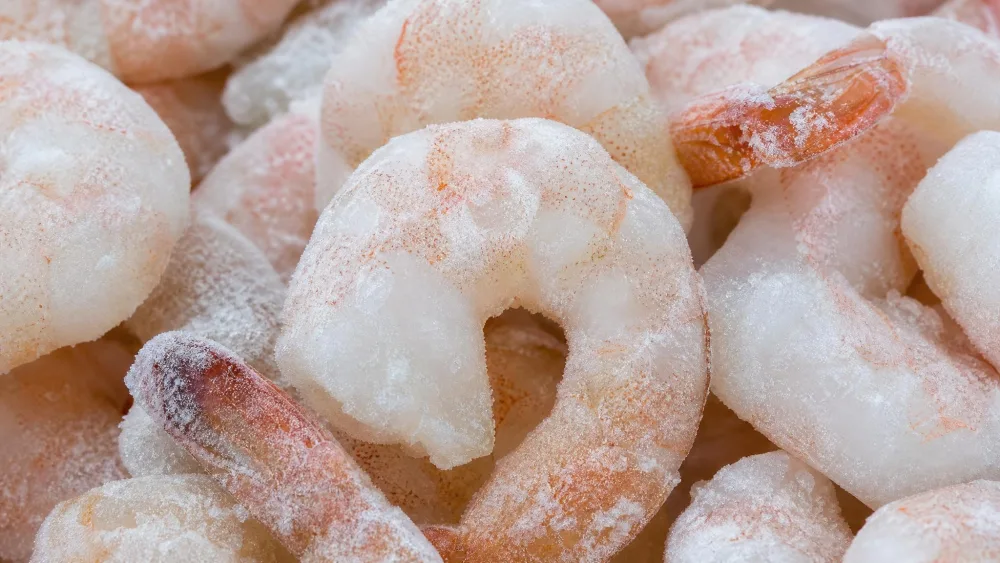
This cause is common, harmless, and rarely on anyone's radar. Processors coat many individually quick-frozen shrimp with a thin protective ice glaze that locks in moisture and shields the meat from freezer air.
The glaze shows up as a white or frosty coating over the whole piece, nothing like freezer burn when you thaw it. In our kitchen, it rinses right off under cold water, leaving clean, normal shrimp behind.
4. Calcium Deposits and Processing Marks
The last cause is the least familiar, and it's also entirely cosmetic. White spots inside the shells of raw frozen shrimp can be calcium carbonate crystals, a compound called ikaite that precipitates during frozen storage above about -30°C (-22°F).
The spots sit in the shell, not the meat, and no protein or chitin changes come with them. Peel the shell and you get perfectly normal shrimp underneath, which is what we find whenever we check a spotted bag at the sink.
What to Do With Freezer-Burned Shrimp: Salvage and Recipes
Mild freezer burn doesn't waste a bag. Trim the dry patches, restore moisture, and cook it in something saucy. If the burn covers most of the shrimp, buy a fresh bag instead.
Tip. Trim the dry white patches, then go heavy on garlic, onion, basil, soy sauce, or a spicy sauce. Bold seasoning covers what freezer air took away.
Marinating to Restore Moisture
An oil-based marinade overnight in the fridge rehydrates the meat, and baking after it brings the texture closer to fresh.
Soups, Curries, and Pasta
The easiest salvage is moist-heat cooking. Soups, stews, curries, and saucy pasta let the shrimp rehydrate in the liquid, while grilling and broiling make freezer-burned shrimp even tougher.
How to Prevent White Spots: Freezer Storage Done Right
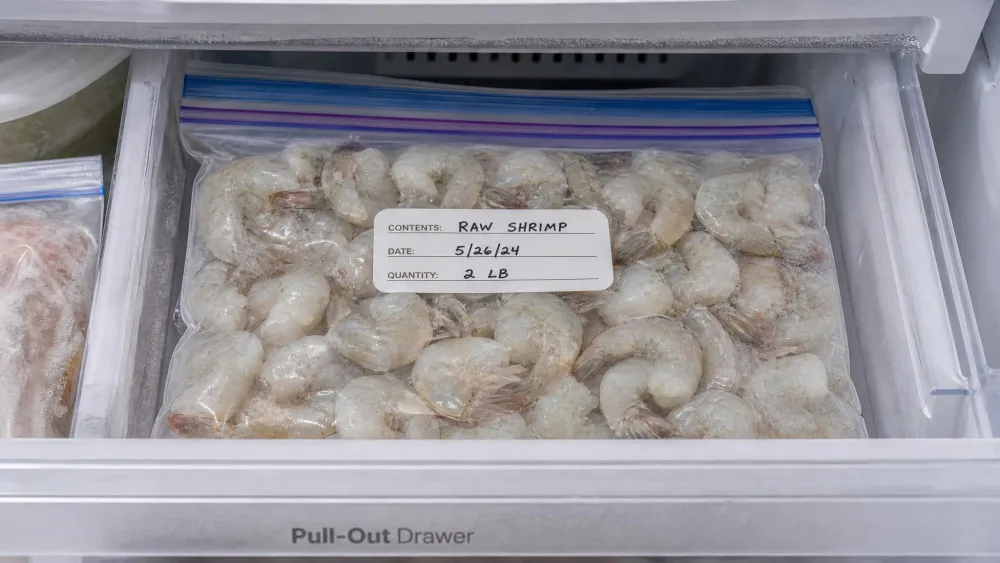
Prevention is simple: keep air away from the shrimp and keep the freezer cold. Use airtight, freezer-safe bags or containers, press out as much air as possible, and hold the freezer at a steady 0°F (-18°C), per the FDA's seafood safety guidelines.
Freezing and Sealing Tips
- Use airtight freezer bags or containers, press out the air, and store the bag at the back of the freezer, away from the door.
- Label every bag with the freeze date. In our kitchen, that habit saves a whole bag, since out of sight is how shrimp passes the six-month mark.
- Freeze raw shrimp with shells on and heads off, and skip refreezing thawed shrimp.
Thawing Frozen Shrimp the Right Way
Thaw frozen shrimp in the refrigerator overnight, the safest method. For a quick thaw, seal the shrimp in a bag and submerge it in cold water.
Buying Tips
Beat white spots at the store: skip packages that are open, torn, or crushed, and pass on bags with frost or ice crystals or flesh that isn't hard.
Through clear plastic, white spots and frost damage are easy to spot before you buy. With opaque bags, pick one where the pieces feel separate; clumping suggests thawing and refreezing. Sell-by dates are quality estimates, not safety deadlines.
How to Tell If Frozen Shrimp Has Gone Bad (Beyond White Spots)
White spots alone are almost never a problem. Spoilage brings its own cues.
Warning. Throw shrimp out if it smells like ammonia, feels slimy or mushy, shows fuzzy mold, or has black spots alongside a bad smell. No amount of cooking fixes spoiled shrimp.
The Smell Test
Fresh raw shrimp smells mild, clean, and slightly salty. A strong ammonia odor means spoilage, and so do sour, rancid, and rotten-egg notes. The nose is the best tool at the sink, so we always sniff before we season.
The Touch Test
Good thawed shrimp is firm and bounces back. Discard it if it feels slimy, mushy, or soft.
Black or dark spots on the shell are the one gray area. They're often natural melanosis, which cooks away and is safe to eat, but they can also ride along with spoilage. Judge them alongside the smell and texture tests; when in doubt, throw it out.
How Long Does Frozen Shrimp Stay Good?
Shrimp kept continuously frozen at 0°F (-18°C) is safe to eat indefinitely; freezer burn never makes frozen food unsafe, it only dries it out, per the USDA freezer storage chart.
For best texture and flavor, use frozen raw shrimp within 3-6 months. That's a quality window, not a safety deadline. The fridge windows matter too:
- Fresh raw shrimp keeps about 2 days in the fridge at 40°F or below.
- Cooked shrimp keeps 3-4 days in the fridge.
- Frozen cooked shrimp is best within about 2-3 months, though the window varies with the preparation, the packaging, and how you count quality versus safety.
We toss shrimp frozen past the year mark.
Quick Reference: Freezer Burn vs. Glaze vs. White Spot Disease vs. Spoilage
| Cause | Appearance | Location | Texture | Safe to eat? | What to do |
|---|---|---|---|---|---|
| Freezer burn | Dry white or gray patches | Exposed surface of the meat | Dry, tough, leathery | Yes | Trim, marinate, cook moist |
| Protective glaze | Thin white ice or frost coating | Outer coating over the whole piece | Melts away as it thaws | Yes | Thaw normally, rinse off |
| White spot disease (WSSV) | Small round spots, 0.5-3.0 mm | Shell and appendages | Firm; surface-only | Yes | Cook normally |
| Calcium deposits | White mineral spots | Inside the shell, not the meat | Firm; shell-only | Yes | Peel and cook normally |
| Spoilage | Slime, dull or dark discoloration, black spots | Meat and shell | Mushy, slimy, soft | No, discard | Throw it out |
The Bottom Line: Is It Safe to Eat?
White spots on frozen shrimp are safe to eat, with one condition: the shrimp has to pass the smell and touch tests. Freezer burn, glaze, and calcium deposits are quality issues or cosmetics, never safety problems.
- Look at the spots: on the meat, the shell, or the ice.
- Thaw in the refrigerator, then check for spoilage cues.
- If it smells clean and feels firm, cook it.
- If it smells bad or feels slimy, throw it out.
The one rule that covers every case: if you're not sure, throw it out.
FAQ: White Spots on Frozen Shrimp
Are white spots on frozen shrimp safe to eat?
Yes. All of the common causes are harmless to humans; throw shrimp out only if it smells bad or feels slimy after thawing.
What causes white spots on frozen shrimp: freezer burn, disease, glaze, or calcium?
All four are possible, with freezer burn the most common by far. Calcium deposits and white spot disease are rare in store-bought shrimp.
Do white spots disappear after thawing?
It depends on the cause. Glaze melts away, freezer-burn patches stay on the meat, and calcium spots stay in the shell.
How can you tell if frozen shrimp has gone bad?
Fresh shrimp smells mild and salty and feels firm. Ammonia or sour smells, slime, or mushiness mean it's time to discard.
How long is frozen shrimp good for?
Safe indefinitely at 0°F, with best quality within 3-6 months for raw shrimp. Fresh raw shrimp lasts about 2 days in the fridge; cooked, 3-4 days.
Can eating freezer-burned shrimp make you sick?
No. Freezer burn dulls flavor but never makes the meat unsafe.
Is white spot disease (WSSV) harmful to humans?
No. WSSV infects crustaceans, not people, and infected shrimp remain safe to eat.
Read next
Ready to upgrade your kitchen?
Store shrimp airtight at a steady 0°F, and you will rarely see white spots again.