
Kitchen Appliances
How to Use Frozen Fruit in the Ninja Creami

As an Amazon Associate we earn from qualifying purchases. We may earn a commission from links on this page, at no extra cost to you. Learn more.
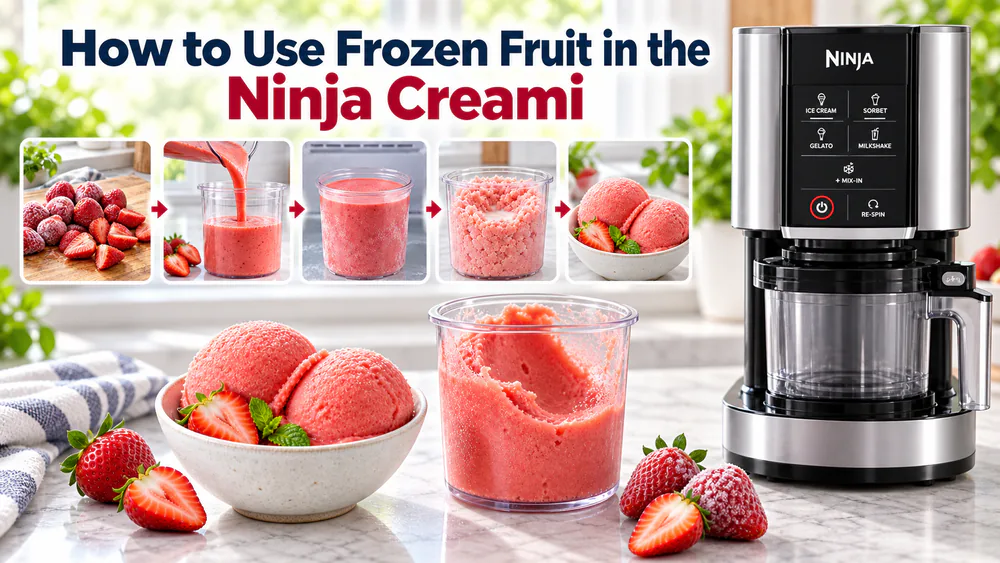
Using frozen fruit in the Ninja Creami means turning a bag of freezer berries into a smooth, scoopable sorbet by building the fruit into a solid base, freezing it, and spinning it on the Sorbet program. The printed manual tells you not to drop frozen fruit straight into the pint on its own, and that warning is real. The good news is that the workaround is simple, and once you learn it you can whip up a refreshing treat almost any time of year.
We spend our days in a small-appliance lab, and the Ninja Creami is one of the machines we keep on the bench. We run it, we listen to the motor, and we open up the housing to see how the paddle and blade hold up. That hands-on time is what shapes the advice below, so you get the process that actually works rather than the one the box implies is impossible.
This guide covers what to buy, how to prep the fruit, the exact four-step process, a sample sorbet recipe, and the small fixes that turn an icy first spin into something creamy.
Can You Put Frozen Fruit Straight Into the Ninja Creami?
Not on its own, and this is where most people get tripped up. The printed manual and quick-start guide warn against processing loose frozen fruit, or frozen fruit floating in liquid, without first building it into a proper base. That instruction is there for a reason, and it is the one rule worth taking seriously.
Here is what the manual does not spell out clearly: you absolutely can use frozen fruit, you just have to prepare it first. The Ninja Creami is not a blender. Its 800W motor drives a spinning blade downward through a frozen block, shaving it into a fine, creamy texture with what Ninja calls Creamify Technology. It needs a solid, level surface to shave. Loose chunks give it nothing to bite into.
When you drop rock-hard chunks into an empty pint, they just rattle around the container. The result is rough and icy at best, and at worst the loose pieces strain the blade and motor instead of shaving smoothly. So the short answer is yes, frozen fruit works beautifully, as long as you turn it into one solid base before it goes in.
Why Frozen Fruit Needs a Little Prep First
The machine is built to process a single frozen block that fills the pint evenly. That is the whole design. When your base is one smooth, gap-free level surface, the blade can travel down through it in even passes and produce that soft-serve texture everyone wants.
Frozen fruit straight from the bag fails this on two counts. First, the pieces sit at random heights with air gaps between them, so the blade meets a bumpy, uneven surface. Second, fruit that freezes with too much water content turns glassy and hard, which reads as icy in the finished sorbet.
A little prep solves both problems. You soften the fruit slightly, cut it smaller, add a splash of liquid, and freeze it into a level block. That block is what the Creami was designed to spin. Skip this step and you fight the machine; do it and the machine does the work for you.
What You'll Need
You do not need much, and most of it is already in your kitchen. The one non-negotiable is the machine and its pint container.
Best Fruits to Use
Almost any frozen fruit works, but some behave better than others. Berries are the easiest starting point because they break down evenly and carry plenty of natural flavor. Here is how the common options tend to perform:
- Strawberries, raspberries, and blackberries: reliable, bright, and forgiving. A great first project.
- Mango and pineapple: naturally creamy and sweet, so they need less added sugar.
- Peaches and cherries: excellent flavor, but pit and slice them small before freezing.
- Bananas: add richness and body, and they help other fruits spin smoother.
You can use a single fruit or a blend. Watery fruits like watermelon are the trickiest, since extra water freezes glassy and pushes the texture toward icy.
Equipment and Optional Add-Ins
For hardware, you need the Ninja Creami itself. The NC301 ships with 7 one-touch programs and two 16 oz CREAMi pint containers with lids, both dishwasher-safe. One pint makes a single serving or two small ones, so plan on freezing a couple of bases if you are feeding a crowd. The unit is fairly tall at roughly 15.7 inches, so check that it clears your upper cabinets before you commit to a counter spot.
Beyond the machine, a small blender or food processor helps you build a smooth base, though a fork and a little patience can work for soft fruit. For add-ins and liquid, keep these on hand:
- A liquid: fruit juice, milk, plant milk, or water
- A sweetener: sugar, honey, maple syrup, or a sugar substitute
- A brightener: a splash of lemon or lime juice
- Optional richness: a spoonful of yogurt or a ripe banana
You can shop the Ninja Creami ice cream machine directly if you are still deciding on a model.
How to Use Frozen Fruit in the Ninja Creami (Step by Step)
Here is the full process, start to finish. Read it through once before you begin, because the freezing step needs planning a day ahead.
Step 1: Choose and Prep Your Fruit
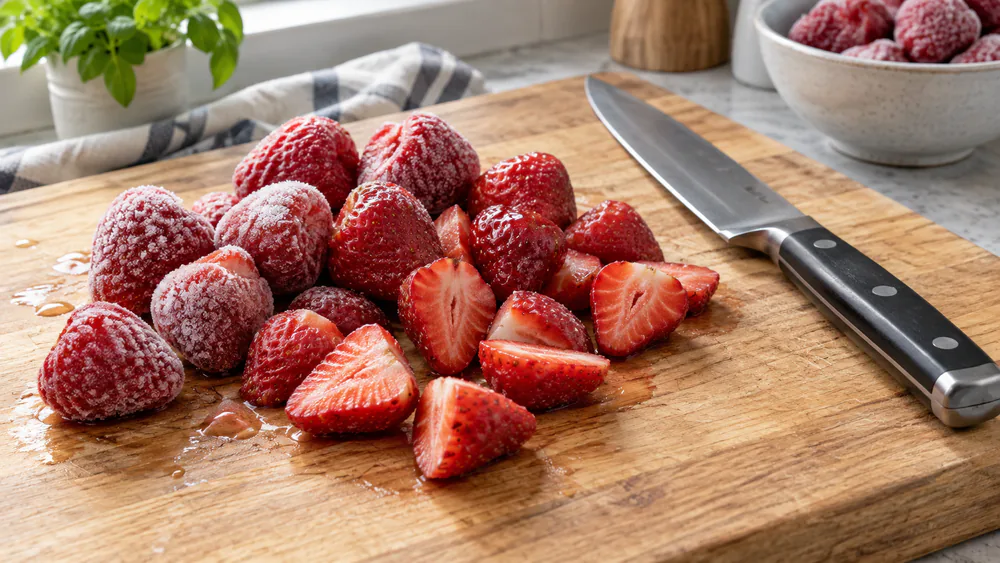
Pull your frozen fruit out and let it sit on the counter for a few minutes. You are not trying to fully thaw it, just take the deep-freeze hardness off so a knife can get through. Cut larger pieces into smaller chunks, roughly bite-size or smaller.
Warning. Never spin bare, rock-hard frozen fruit on its own. In our lab we have watched loose chunks simply rattle against the blade, which gives a rough icy result and strains the motor and paddle instead of shaving cleanly. Thaw the fruit slightly, cut it smaller, and always build it into a base first.
This small thaw-and-cut step is the single biggest predictor of a smooth result. Fruit that goes in as one uniform, softened mass freezes into the level block the machine wants.
Step 2: Add Liquid and Sweetener
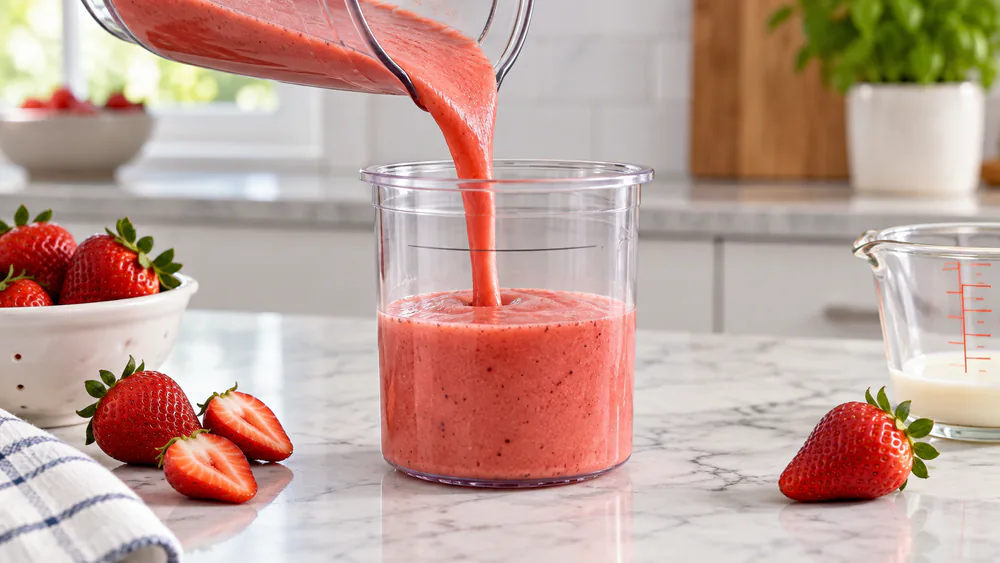
Combine your prepped fruit with a splash of liquid and your sweetener, then blend until smooth. The liquid is what keeps the finished sorbet creamy instead of icy. Plain water alone freezes too solid and glassy, which is why a sweetened liquid like juice or milk works better: the sugar lowers the freeze point and softens the texture.
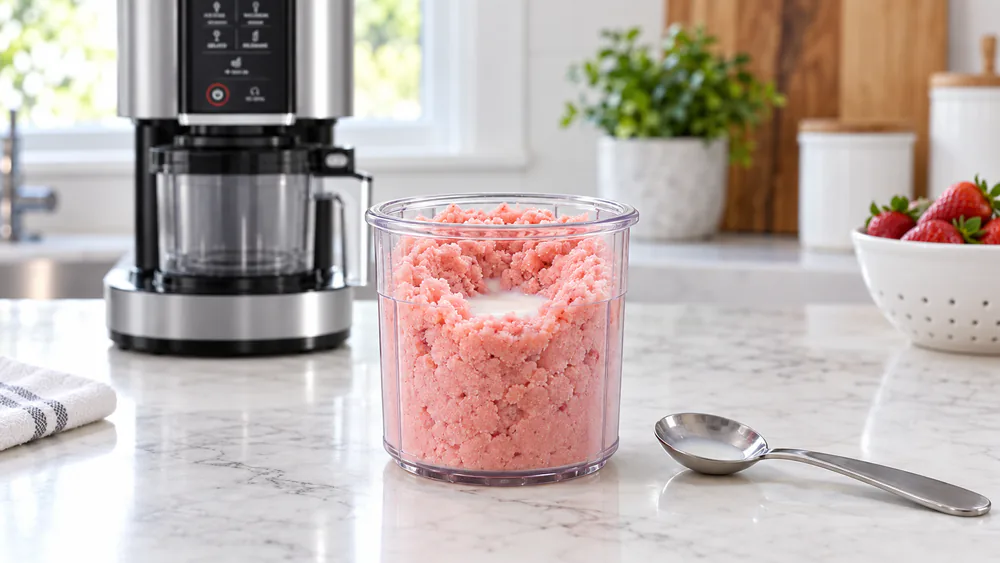
Tip. Add a splash of juice or milk rather than water for a smoother, creamier spin. If your first spin still comes out crumbly, that is normal, and a re-spin with a little more liquid fixes it almost every time.
Taste the base before you freeze it. Cold dulls sweetness, so the base should taste a touch sweeter at room temperature than you want the final sorbet to be. A squeeze of lemon or lime here brightens everything.
Step 3: Freeze in the Creami Container
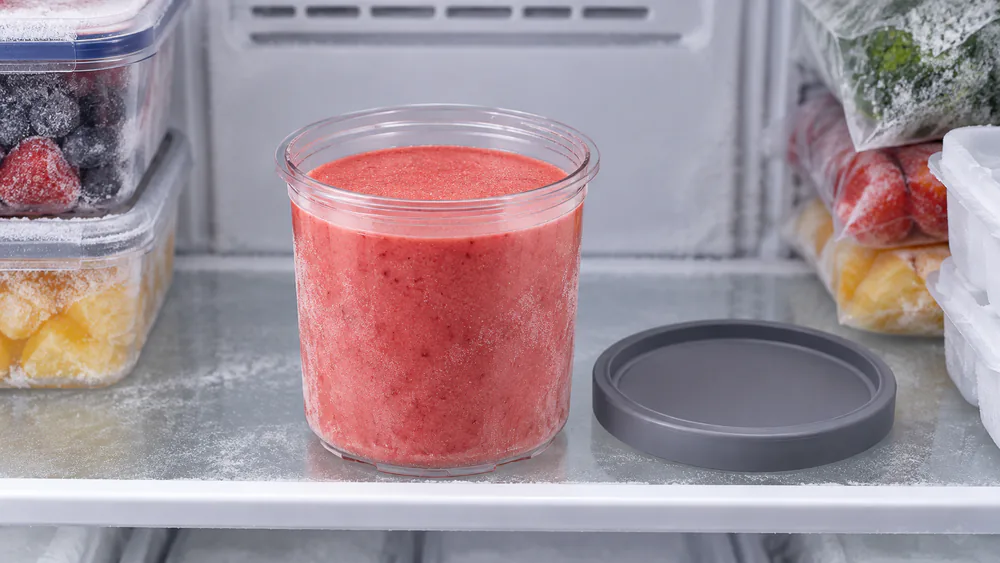
Pour the blended base into a CREAMi pint. Keep it below the container's max-fill line, and set the pint on a level freezer shelf so the top freezes flat. A flat, level surface is what lets the blade shave evenly.
Freeze the base for 24 hours before processing. This is the part that needs planning, and it is one of the real trade-offs of the machine along with its single-pint batch size. You want the base firm all the way through. Over-freezing can leave it too solid to process on the first pass, while under-freezing gives a soupy result, so aim for firmly set rather than partly slushy.
Step 4: Process (and Re-Spin if Needed)
Take the frozen pint out, remove the lid, and lock it into the outer bowl. Install the bowl on the machine and press Sorbet. Use the Sorbet program for fruit-and-liquid bases; save the Ice Cream setting for bases that include dairy or cream.
The machine is genuinely loud when it runs, roughly vacuum-cleaner level, and it is loudest in the first 30 seconds of the spin. That is normal, not a sign anything is wrong.
Here is the step almost every guide glosses over: the first spin on a fruit base often comes out grainy or powdery. Do not panic. Add 1-2 tablespoons of liquid to the pint, press Re-Spin, and let it run again. This second pass is what turns a crumbly block into something smooth and creamy, so plan on it as a normal part of the process rather than a rescue.
Easy Frozen Fruit Sorbet Recipe
Once you have the process down, this simple strawberry sorbet is a perfect first batch. Quantities are a starting point; adjust the sweetener to your fruit and your taste.
Ingredients
- 1 1/2 to 1 3/4 cups frozen sliced strawberries, slightly thawed
- 1/2 cup water or fruit juice
- 1/4 cup sugar, or sweetener to taste
- Optional: 1 to 2 teaspoons lemon juice to brighten
For a mixed-fruit version, scale up to about 4 cups of frozen fruit with 1/2 cup of liquid (water, coconut milk, or juice), 2 to 3 tablespoons of sweetener, and an optional 1 to 2 tablespoons of lemon or lime juice.
Instructions
- Let the strawberries sit out a few minutes, then cut any large pieces smaller.
- Blend the strawberries, liquid, and sugar until smooth. Taste and adjust sweetness.
- Pour the base into a CREAMi pint, staying below the max-fill line.
- Freeze level for 24 hours, until firm all the way through.
- Lock the pint into the machine and run the Sorbet program.
- If the result is crumbly, add 1-2 tablespoons of liquid and Re-Spin until smooth and creamy.
- Scoop and serve right away, or press it back into the pint to refreeze.
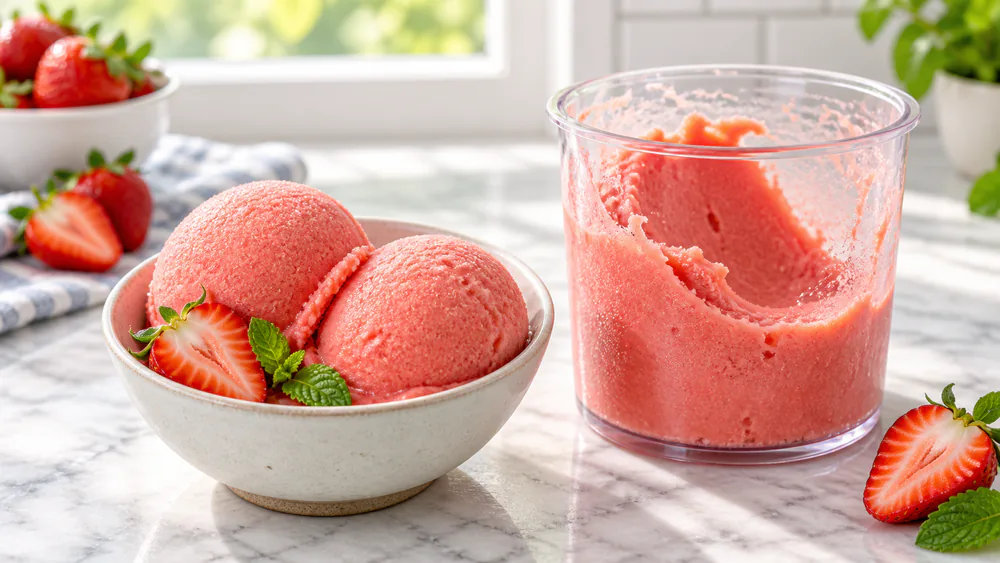
The re-spin is not a rescue, it is the recipe. A splash more liquid on the second pass is what turns a powdery block into real sorbet.
Tips for the Creamiest Results
A few habits separate a good batch from a great one, and most of them come down to controlling water and freeze quality.
Watch your water content. Icy texture almost always traces back to too much water in the base or fruit that was not thawed and broken up enough before freezing. Lean on juice, milk, or a naturally creamy fruit like banana or mango instead of extra water.
Keep the base level and fully frozen. A flat top and a firm-all-the-way-through freeze give the blade the even block it needs. Add a little richness when you want soft-serve texture: a spoonful of yogurt or a ripe banana blended into the base makes a noticeable difference.
Frozen fruit is not a compromise here, either. Frozen fruit is just as nutritious as fresh in most cases, since it is picked and frozen at peak ripeness, so you keep the nutritional value of fruit while gaining year-round convenience. And expect to re-spin. Building a second pass into your plan means you never over-thaw the base trying to get it right on the first try.
Common Mistakes to Avoid
Most sorbet disappointments come from a short list of avoidable errors. We see the same ones again on the bench when a base does not turn out.
- Spinning loose chunks or fruit-plus-water alone. The Creami is not a blender. Always build a level, gap-free base first.
- Skipping the liquid. Fruit and nothing else freezes into a glassy brick that spins icy. A splash of juice or milk is not optional.
- Under-freezing the base. A base that is not firm all the way through spins soupy. Give it the full 24 hours.
- Overfilling the pint. Staying below the max-fill line keeps the base level and lets the lid and machine seat correctly.
- Giving up after the first spin. Grainy is expected. Re-spin with a little liquid before you judge the batch.
A quick word on longevity, since we open these machines up: the paddle and blade assembly is a wear part that holds up for roughly 12 to 18 months of regular use. Cleanup is easy relative to a churn machine, with only about three parts to wash and the pint plus lid both dishwasher-safe, and the unit carries a 1-year limited warranty. Treat the paddle gently, never force a base that is frozen rock-solid, and it will last.
Frequently Asked Questions
Can you put frozen fruit directly in the Ninja Creami?
Not loose and on its own. The manual warns against processing bare frozen fruit, and it can strain the blade and motor. You can absolutely use frozen fruit, but you have to blend it with a little liquid and freeze it into a solid, level base first.
Do you need to add liquid like juice, milk, or water?
Yes. A splash of liquid is what keeps the sorbet creamy instead of icy. Juice, milk, or plant milk work better than plain water, because the sugar in them lowers the freeze point and softens the texture.
Will frozen fruit damage the machine or blades?
Building fruit into a proper base will not. Spinning loose, rock-hard chunks is what causes trouble, since the pieces rattle against the blade and strain the motor. Thaw slightly, cut smaller, and always freeze into a level block.
Should you thaw the fruit first?
Only slightly. Let it sit out a few minutes so you can cut it into smaller pieces and blend it smoothly. You are not fully thawing it, just taking off the deep-freeze hardness before you build and refreeze the base.
How long does freezing and processing take?
Freeze the base in the pint for 24 hours before spinning. The spin itself takes only a couple of minutes, plus a short re-spin with a little added liquid if the first pass comes out crumbly.
Can you use fresh fruit instead of frozen?
Yes, but you still have to freeze it into a solid base for 24 hours before spinning. Frozen fruit simply gives you a convenient head start and works just as well.
Final Thoughts
Frozen fruit and the Ninja Creami are a natural match once you stop fighting the manual and start working with the machine's design. Prep the fruit, add a splash of liquid, freeze a level base for 24 hours, spin on Sorbet, and re-spin if it comes out crumbly. That is the whole game.
What we would add from our time with the unit on the bench: respect the paddle and plan around the 24-hour freeze, and the Creami rewards you with smooth, scoopable sorbet from little more than a bag of frozen berries. It is an easy, refreshing treat you can make any time of year, and once the routine clicks you will reach for it constantly.
Read next
Ready to upgrade your kitchen?
Browse our latest hands-on guides and reviews, or get our newsletter for more test-kitchen tips.