As an Amazon Associate we earn from qualifying purchases. We may earn a commission from links on this page, at no extra cost to you. Learn more.
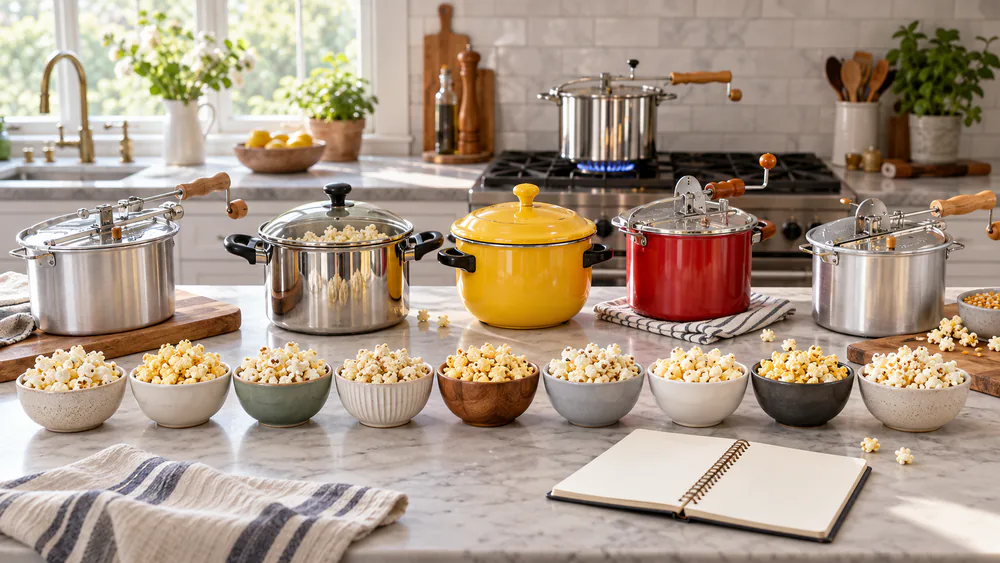
We ran nine stove top popcorn makers on our gas range and induction cooktop, popping batch after batch to clock pop time, count unpopped kernels, and watch how fast each scorches and how badly it cleans up. The winners delivered theater-style popcorn in about 3 minutes; the duds burned, bound, or let steam do its worst.
The stakes are simple: a stove top popper either earns its place in the drawer or becomes a paperweight. Our test kitchen has been popping corn this way for over a decade, and the Original Whirley Pop has been in weekly rotation for most of it, which is why we know a good crank when we feel one. Prices run from about $38 to $199.
Whether you want a classic crank popper, a dishwasher-safe premium model, or a budget starter, there is a pick here. If you are weighing electric and air-popped options too, our guide to the best popcorn makers covers that ground.
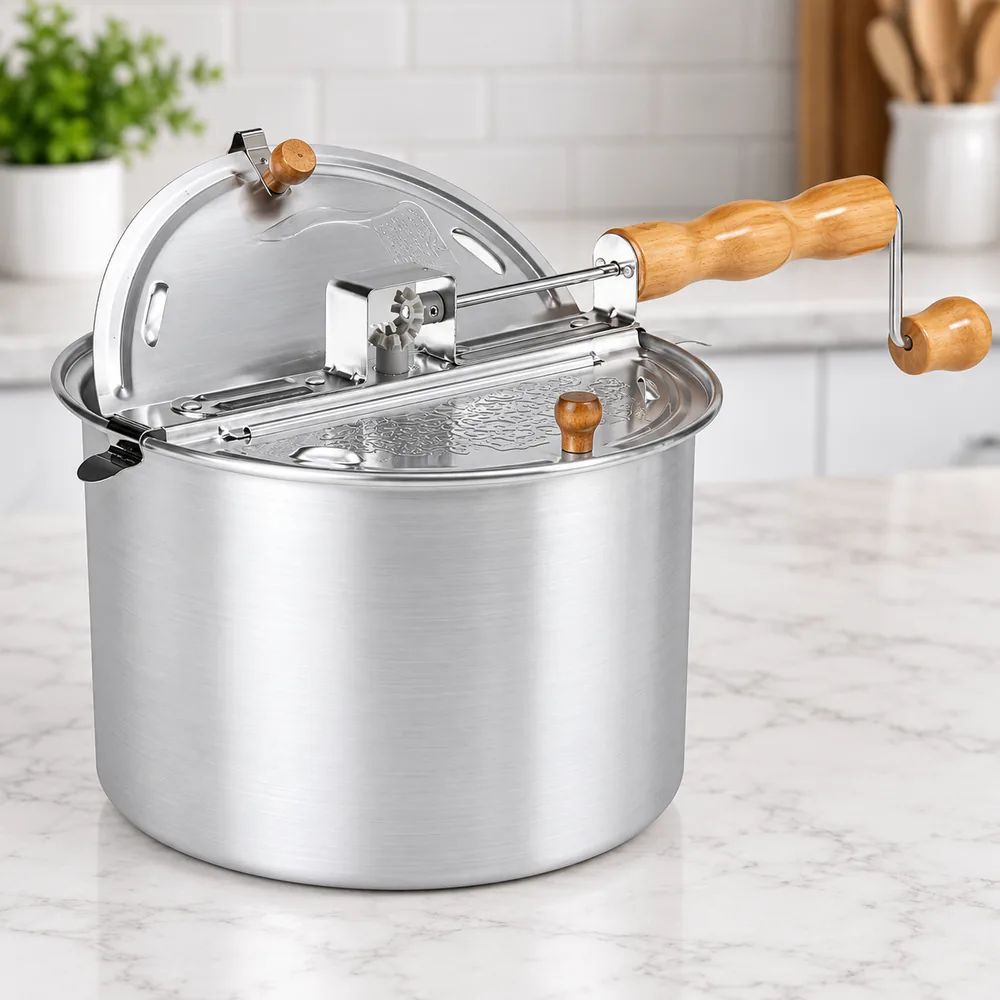
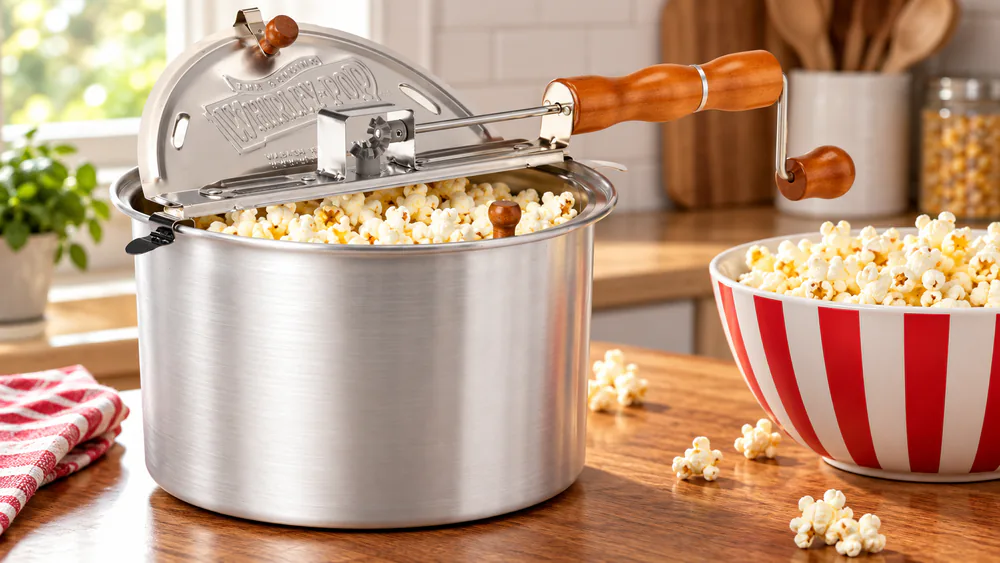
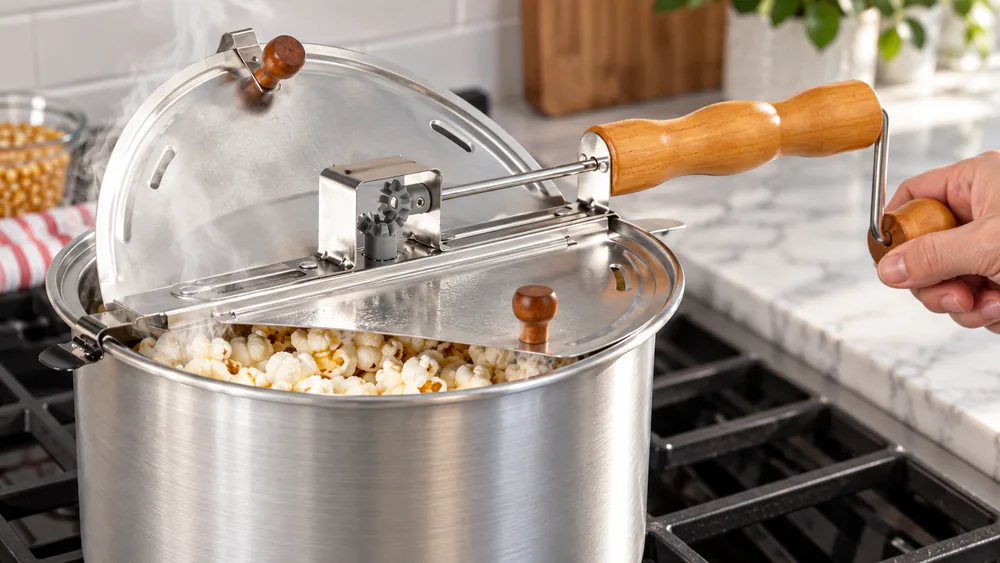
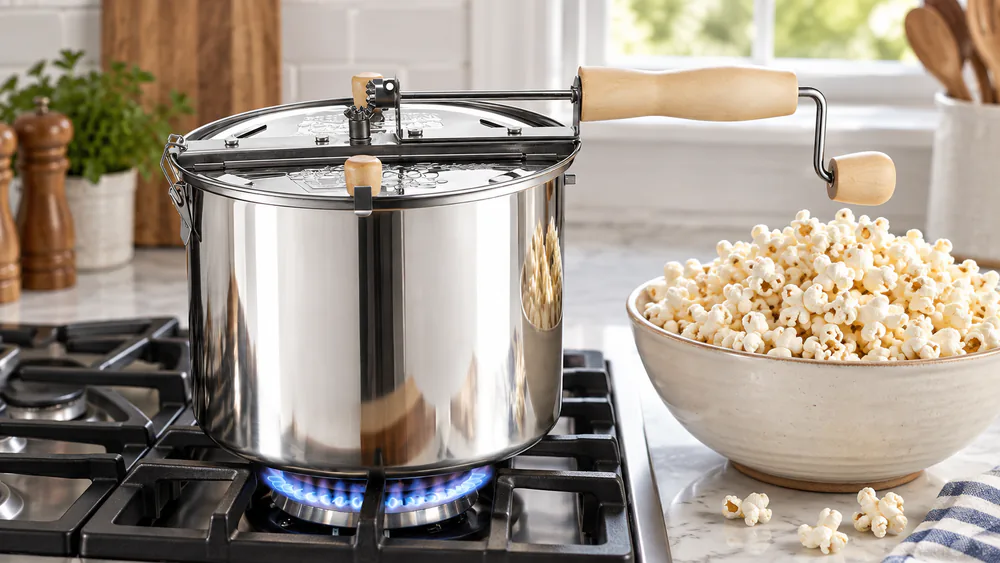
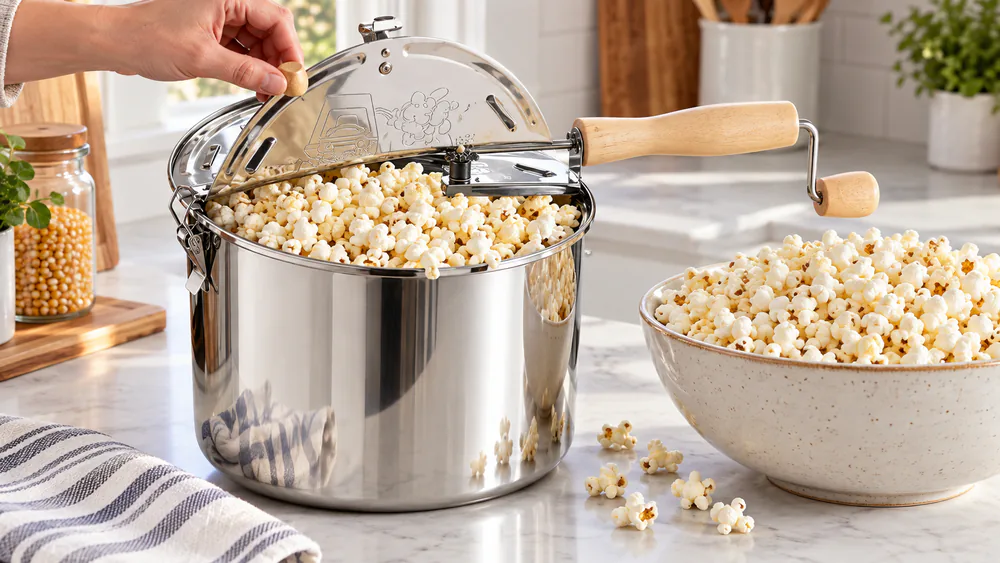
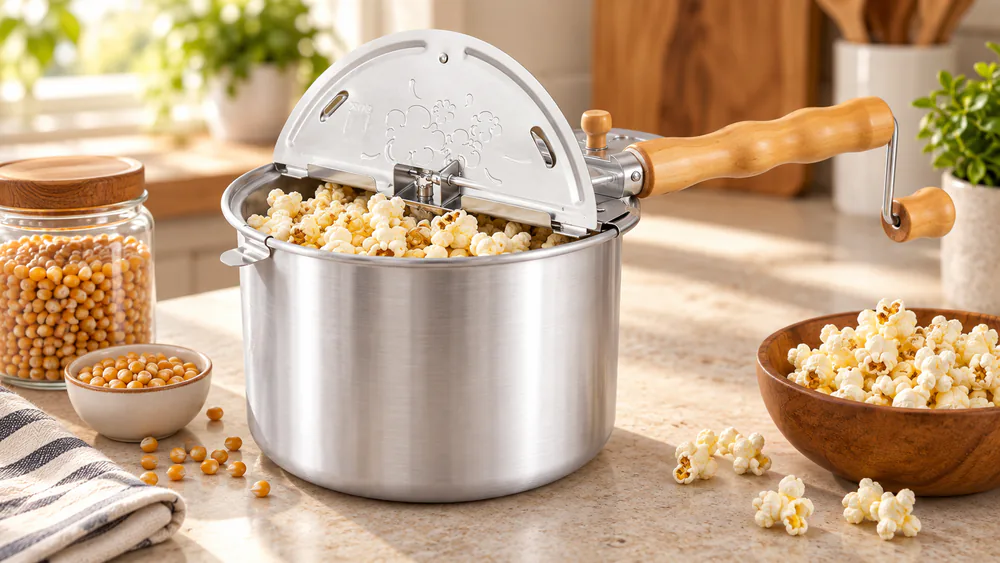
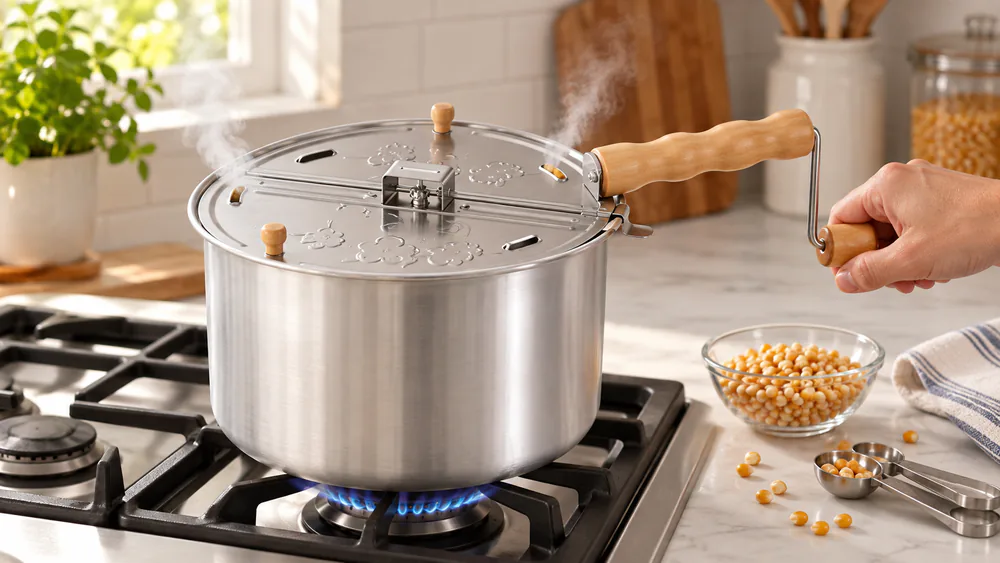
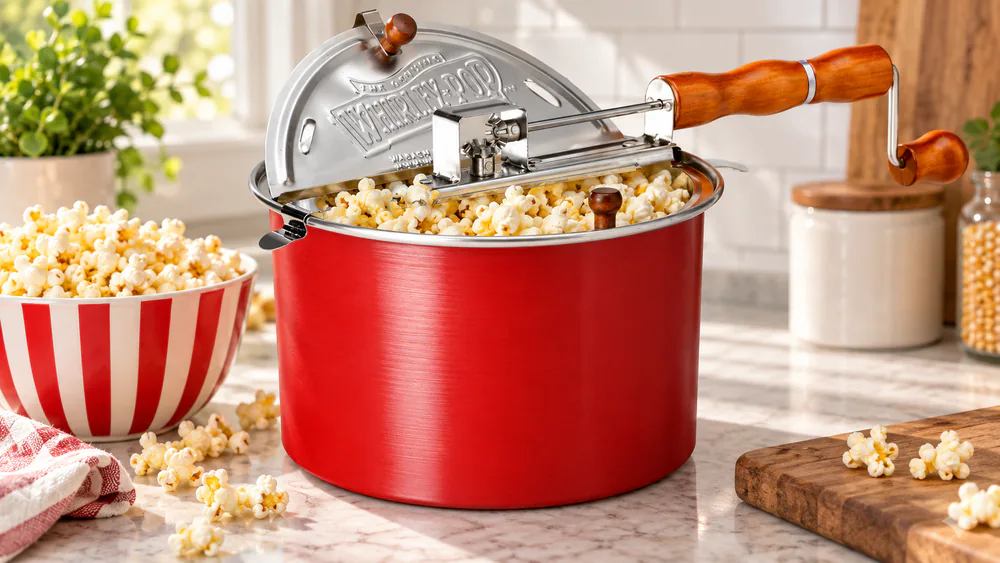
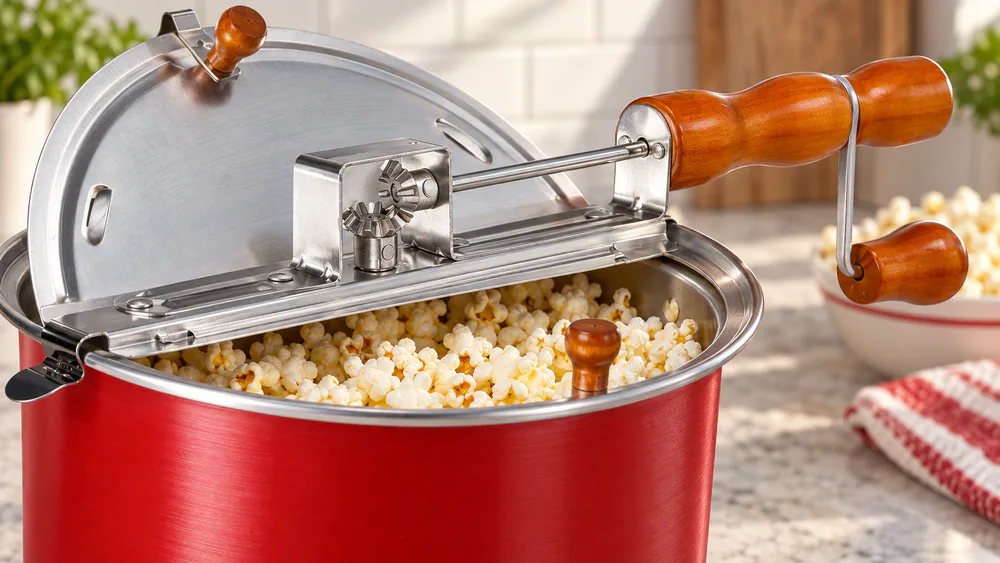
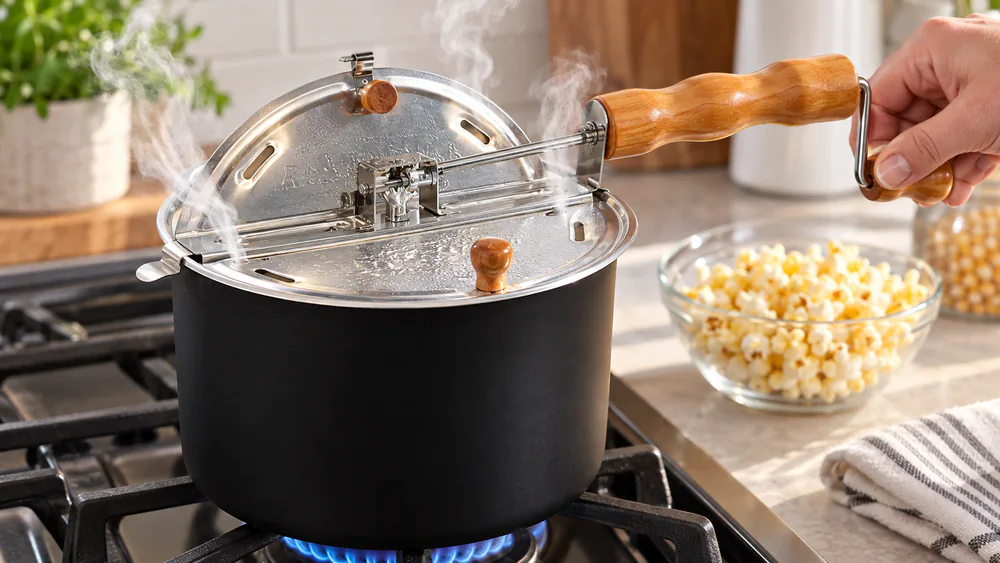
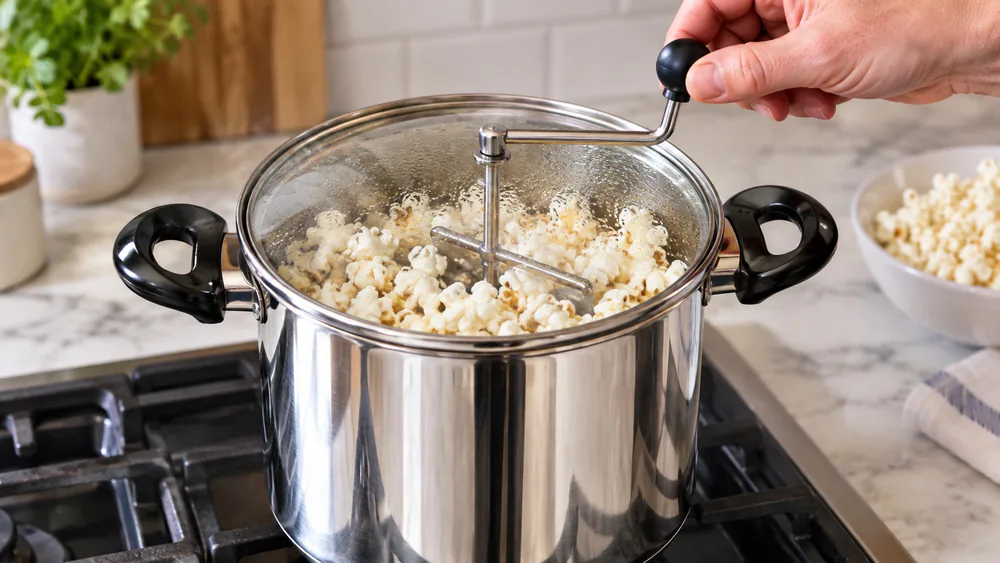
The Whirley Pop has been the standard for decades, and our kitchen understands why. A 1/2 cup of kernels becomes 7 to 10 cups of fluffy corn in about 3 minutes, nearly every kernel popped. Our decade-old unit finally wore through its nylon gears, not the pot, and replacement gears cost about five dollars. Constant cranking is the one real annoyance.
Pros
6-qt batches in about 3 minutes, nearly every kernel popped
25-year warranty on the moving parts
Uses as little as a teaspoon of oil
Cons
Not induction compatible
Hand wash only; the dishwasher ruins the finish
The patented stirring system makes the Whirley Pop the classic.
Who Should Buy It
Anyone with a gas, electric, ceramic, or glass-top stove who wants the proven classic.
What to Consider Before Buying
It will not heat on induction, and the nylon gears are a wear item with cheap replacements.
2. Great Northern 6.5-Quart Stainless Steel – Best for Large Batches
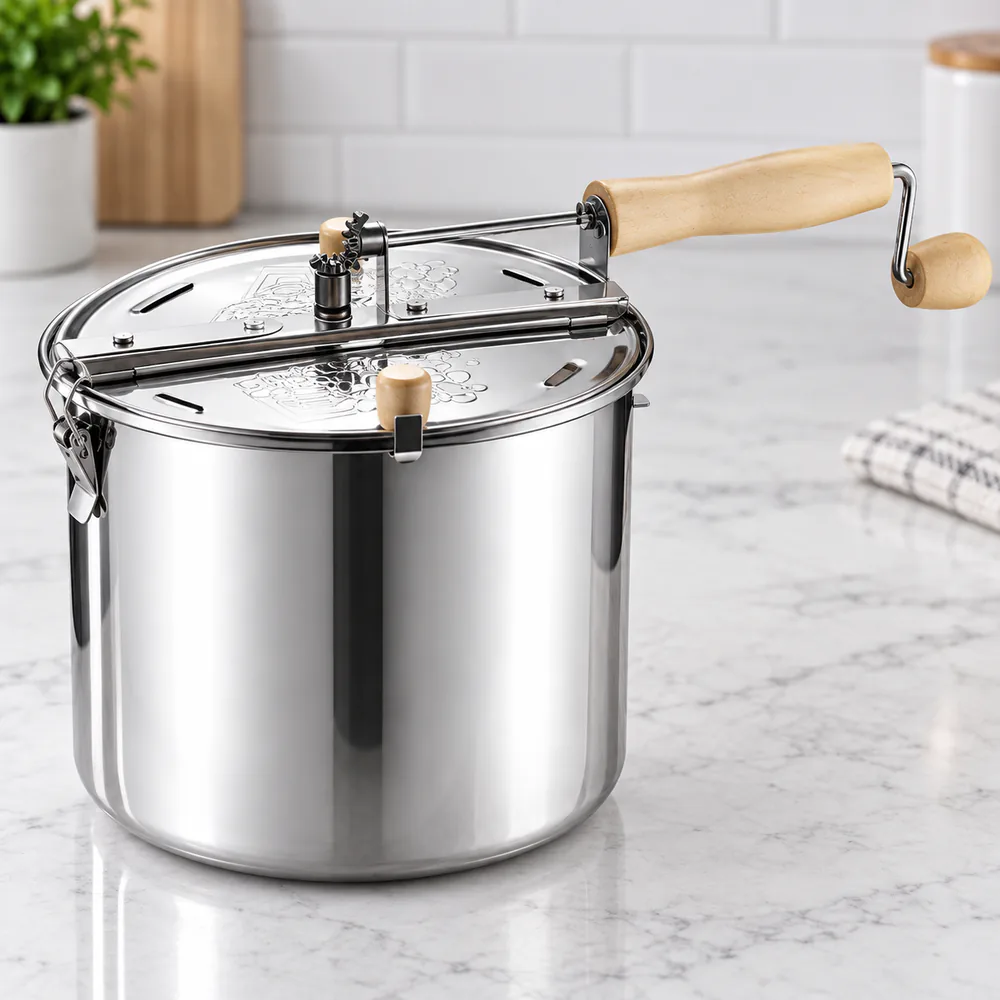
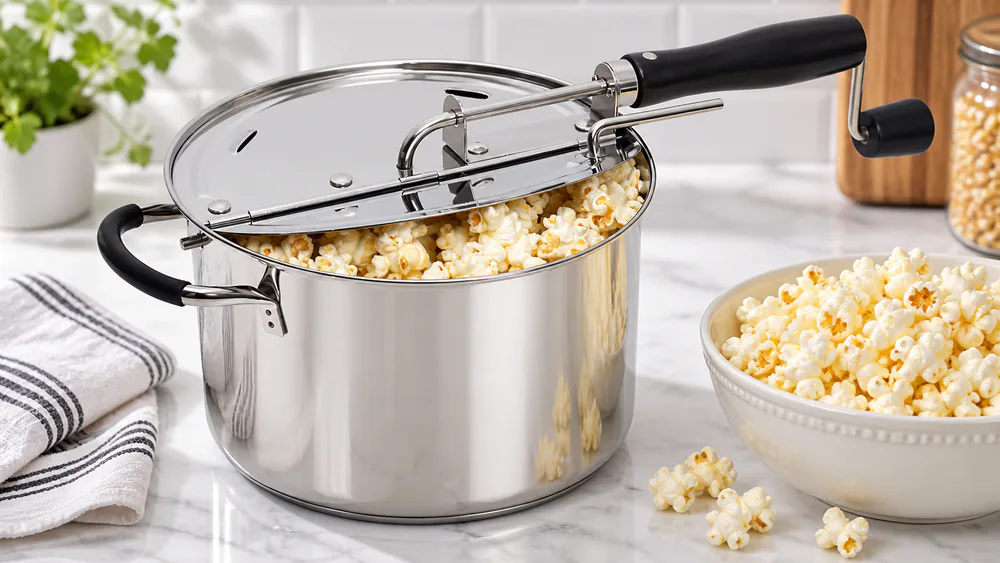
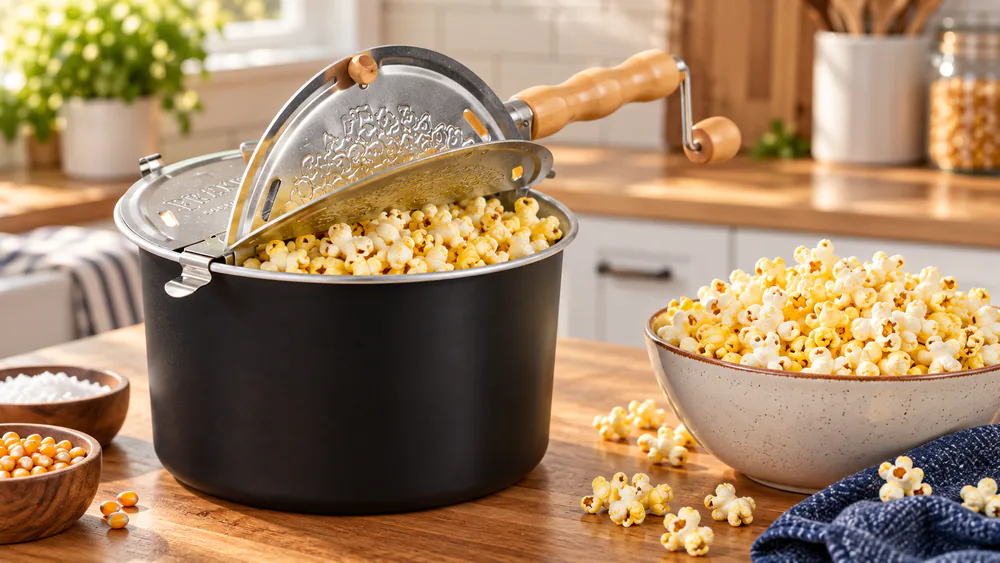
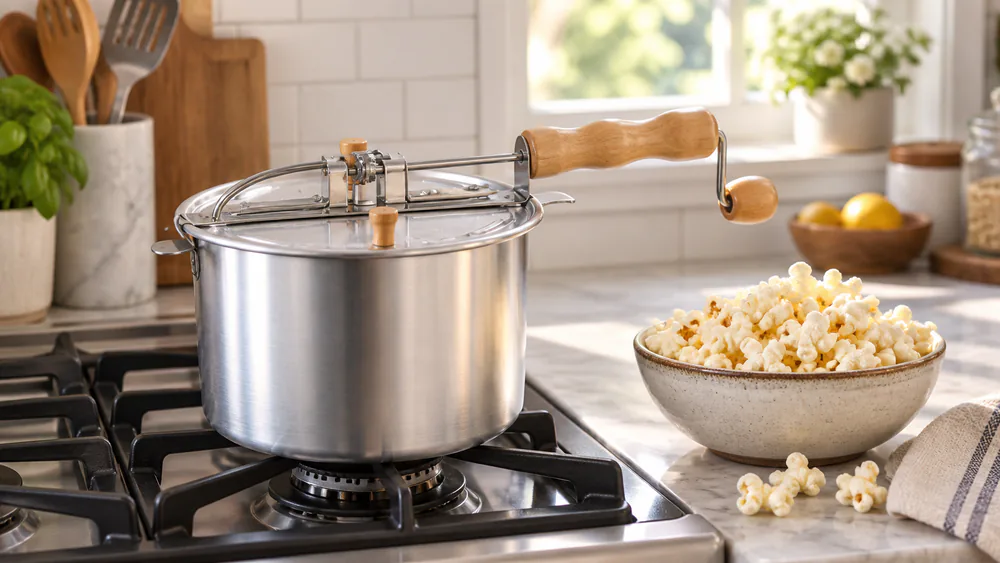
Where the Whirley Pop serves most kitchens, the Great Northern serves the biggest ones. The 6.5-qt pot makes up to 5 quarts of popped corn, and one of ours has survived near-daily use for almost a decade. Heat discipline matters: we blackened one batch on medium-high before learning, but on medium it finishes in under 2 minutes with no unpopped kernels.
Pros
Biggest batch of the roundup: 5 quarts popped
Beefy metal gears with an adjustable stirrer
Cons
90-day warranty is short
No induction, no dishwasher
Thinner steel dents if dropped
Five quarts changes the math of a crowded movie night.
Who Should Buy It
Big families and hosts: 5 quarts of popped corn covers a crowd.
What to Consider Before Buying
No induction, no dishwasher, and a short 90-day warranty; the thinner steel dents.
3. Cook N Home 6-Quart Aluminum – Best Budget Pick
The Whirley Pop and the Great Northern justify their prices; Cook N Home undercuts them both. At about $38 this 6-qt aluminum pot has been in weekly rotation for five years and still pops nearly every kernel. The crank wants a slow rotation, about one turn per second, and when a batch jams the stir wire, a half-turn in reverse clears it.
Pros
Pops nearly every kernel after five years of weekly use
Hot-water rinse cleanup
All-metal gears
Cons
Not induction compatible
Warps if soaked or dishwashed
A minority of units have had gears break
Who Should Buy It
Budget buyers who want a proven popper, plus anyone who wants kettle corn.
What to Consider Before Buying
Hand wash only, no induction, and a 1-year warranty; crank gently.
4. Popsmith The Popper – Best Premium Pick, Dishwasher-Safe
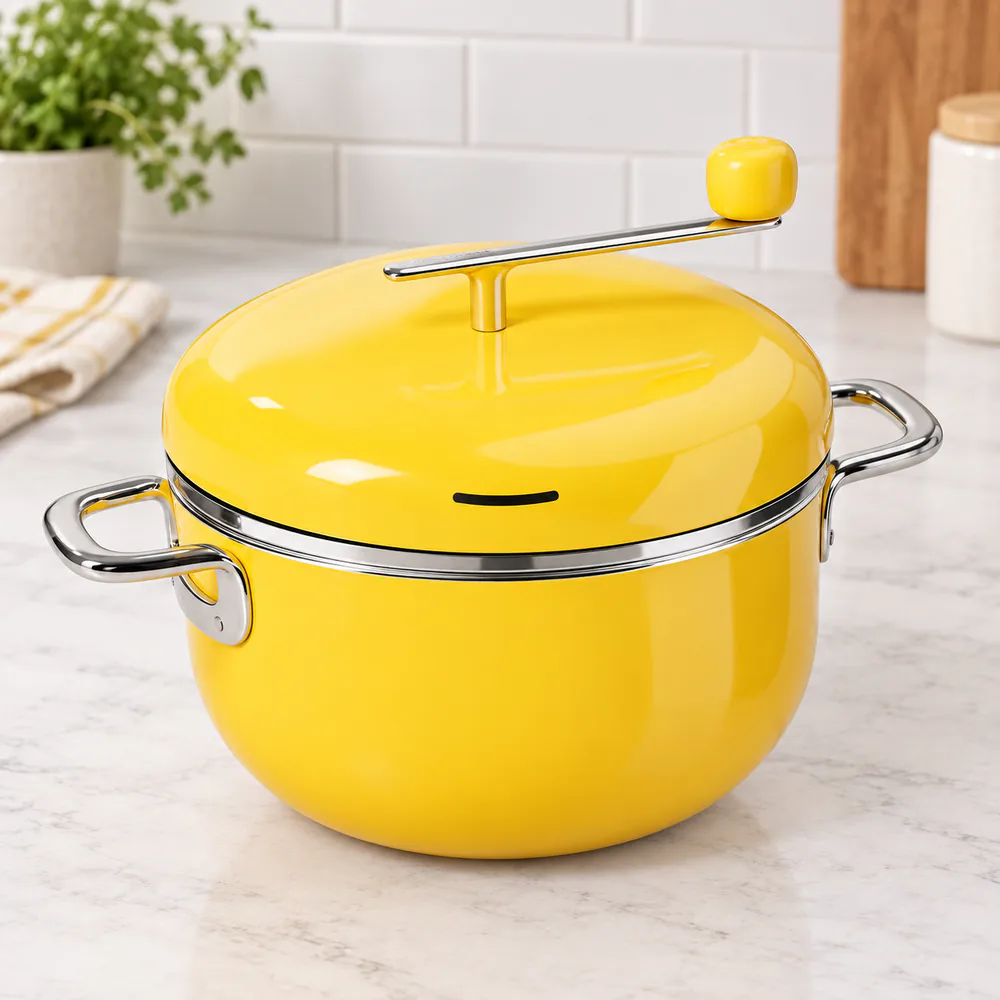
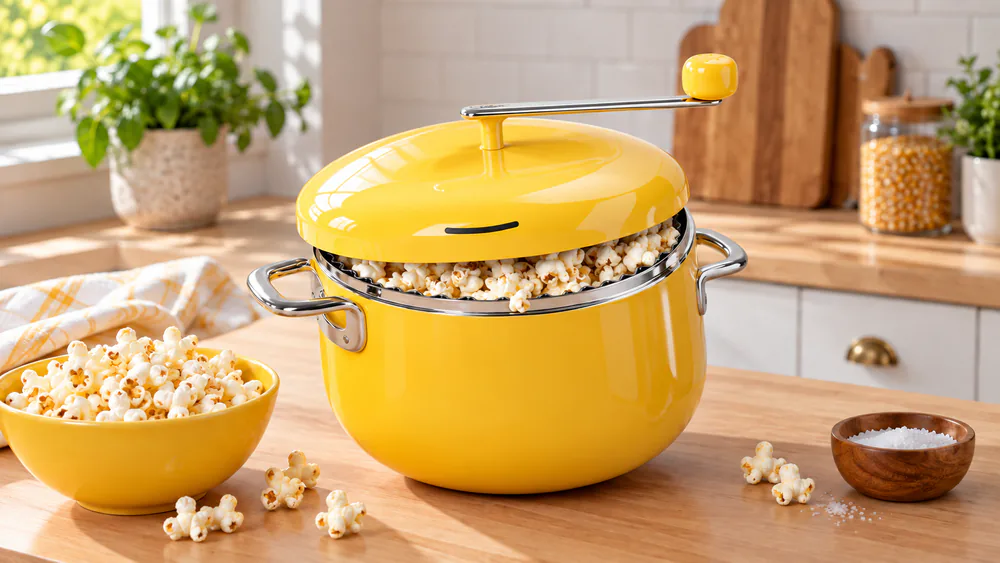
The first three picks are working poppers; the Popsmith is a showpiece. It is the most beautiful popper we tested, heavy and solid with even heat, and one of only two dishwasher-safe poppers in the roundup, alongside the Lehman's. On gas and induction nearly every kernel pops. At $199 the enamel chips: units have arrived chipped, replacements too, so you are paying for the finish, not better popcorn.
Pros
Dishwasher safe, one of two in the roundup
Works on induction
Smooth stirring with nearly every kernel popped
Cons
$199 is a lot for popcorn
Enamel finish chips
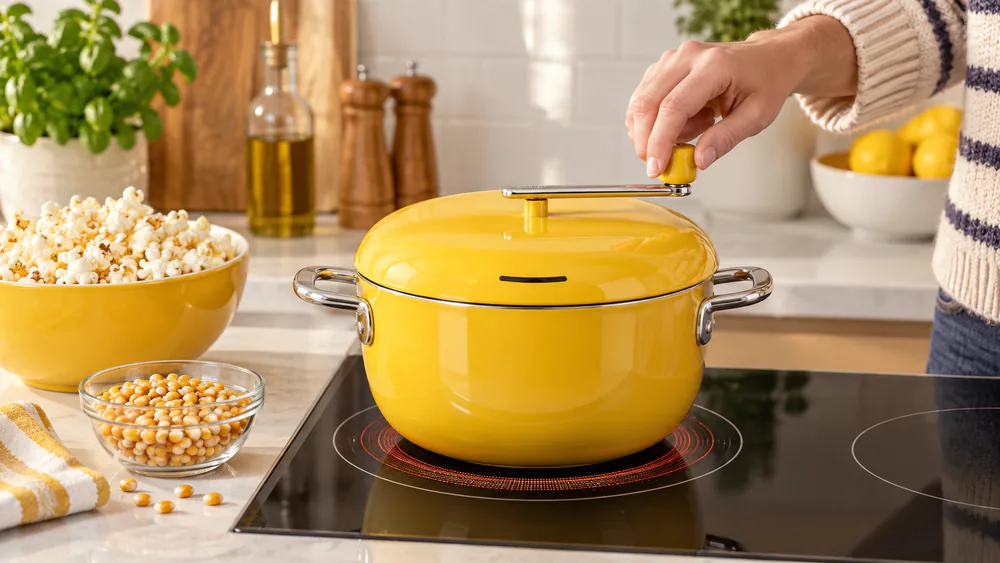
The Popsmith pops cleanly on induction, but the enamel chips.
Who Should Buy It
Induction kitchens and anyone who wants premium stainless on the counter.
What to Consider Before Buying
The price is the real cost; the StovePop delivers induction stainless for far less.
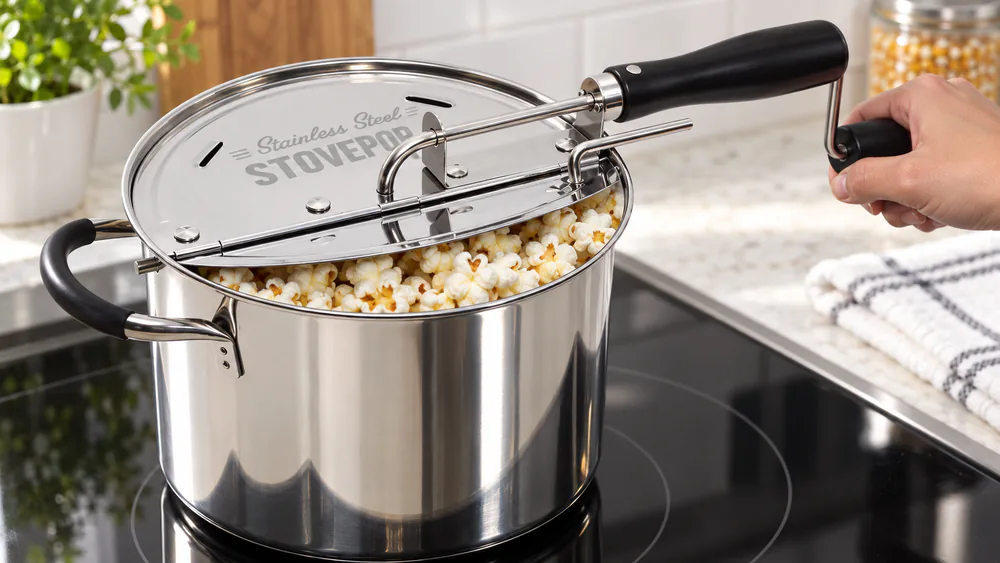
5. Victorio StovePop – Best Gearless, Induction-Compatible
Where the Popsmith impresses with looks, the StovePop impresses with engineering. Its gearless flex-drive cable replaces gears entirely, and one of ours has run for eight years with nothing to fail. The aluminum-clad bottom holds temperature steadier than thin aluminum, and the magnetic lid-lift rod makes one-person dumping genuinely safe.
Pros
Gearless flex drive with nothing to fail
Induction compatible
Doubles as a coffee roaster
Cons
Setup has a learning curve
Stir wire needs reseating after every dump
Who Should Buy It
Induction cooks who want gearless reliability, plus coffee roasters.
What to Consider Before Buying
Setup has a learning curve, and warranty coverage varies by seller.
6. Whirley Pop with Metal Gears – Most Durable Classic
If the original's nylon gears give you pause, this is the answer. The metal-gear Whirley Pop keeps the patented stirring system and 6-qt capacity, swaps nylon for metal, and carries the same 25-year warranty on moving parts. The gears feel more robust, but they run louder than nylon and the crank squeaks shrilly at every angle, speed, and grip.
Pros
Sturdier metal gears with the same 25-year warranty
Starter kit pops with nearly every kernel accounted for
Cons
Crank squeaks shrilly
Louder than the nylon original
Binds when packed full
Who Should Buy It
Buyers who will crank hard and want the classic without the nylon weak point.
What to Consider Before Buying
No induction, hand wash only.
7. Franklin's Gourmet Popcorn Popper – Best Multipurpose
Where the Whirley variants perfect the crank, Franklin's perfects the pop. Its thin aluminum heats fast, and the four lid vents let steam escape cleanly, so we clocked the biggest, fluffiest kernel expansion we have seen in years. It also doubles as a coffee roaster, which is how we wore out its gears after about 40 roasting batches over three years, then happily bought another.
Pros
Fluffiest expansion we measured
Heats fast with almost no oil splatter
Doubles as a coffee roaster
Cons
Stirring mechanism feels fragile
Warranty terms not published
Who Should Buy It
Multipurpose cooks who want one pot for popcorn and coffee roasting.
What to Consider Before Buying
Warranty terms are not published, and the stirring mechanism feels fragile.
8. Great Northern Aluminum Popper – Best Budget Starter
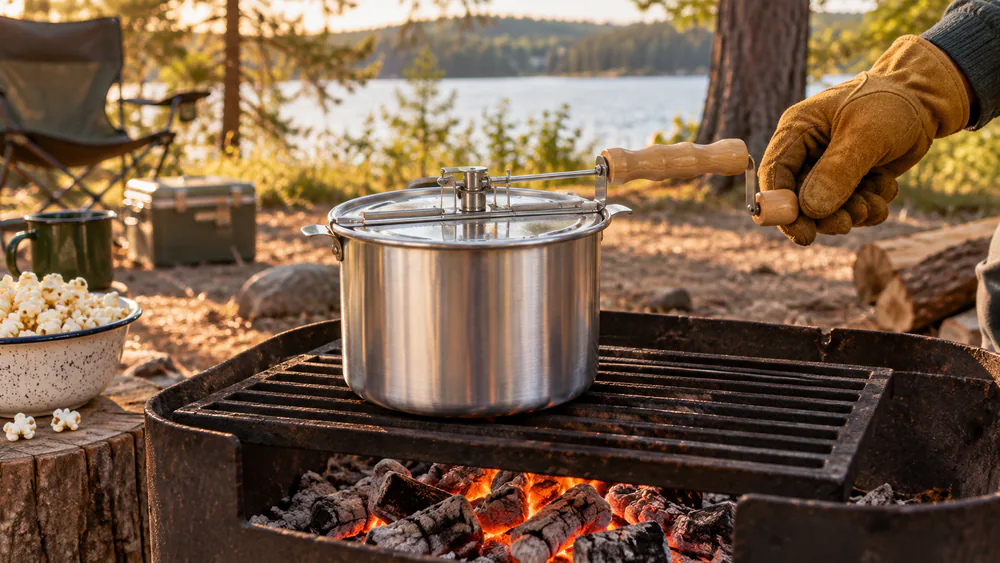
Franklin's and the Whirleys all cost more than this Great Northern aluminum. At about $39 it pops a 6-qt batch on 2 tablespoons of oil and 1/2 cup of kernels, and the whole run from cold stove to bowl takes 3 to 4 minutes, faster than a microwave bag. The pot is campfire-capable, though the lid's hinge holes spatter hot oil toward your arm, so watch your hand.
Pros
Campfire-capable at a starter price
3 to 4 minutes from cold stove to bowl
Duplex heat pad spreads heat evenly
Cons
Thin metal dents if dropped
Lid hinge holes spatter hot oil
Not for sugar-based kettle corn
Who Should Buy It
First-time popper buyers, campers, and budget shoppers.
What to Consider Before Buying
Not for sugar-based kettle corn, and the 90-day warranty is minimal.
9. Lehman's Gearless Stainless Popper – Best for Small Households
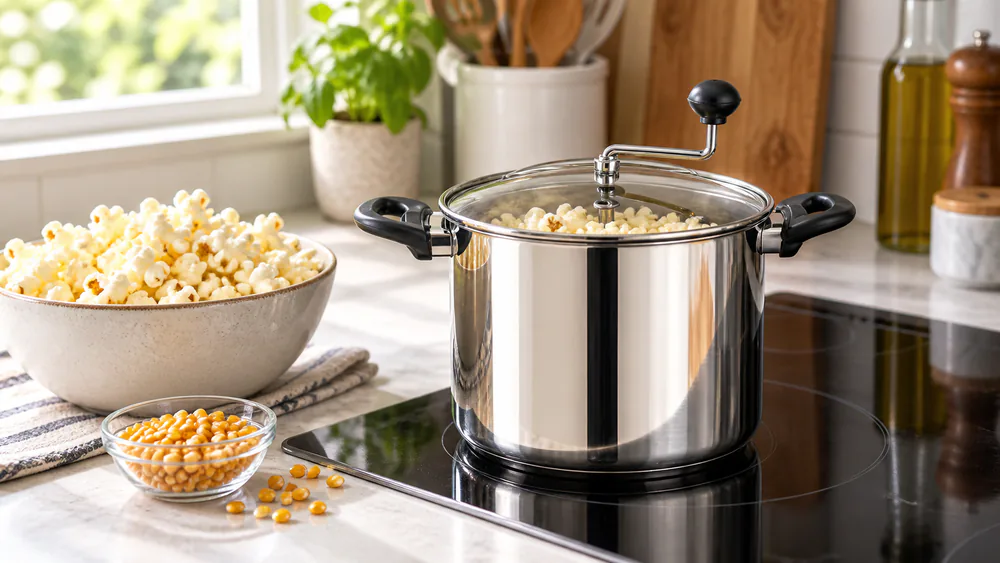
Every popper so far is a crank; Lehman's removes the crank entirely. A stirring rod sweeps the bottom with no gears, and at 4.76 qt it is the smallest of the roundup, sized for one or two. It works on induction, is dishwasher safe, and doubles as a soup pot. The glass lid is the weak point, ours shattered while cooling in the sink after two uses.
Pros
No gears, nothing to wear out
Induction ready and dishwasher safe
Doubles as a soup pot
Cons
4.76-qt pot is the smallest of the roundup
Glass lid is the known weak point
The smallest popper of the roundup, built for one or two.
Who Should Buy It
Small households and induction cooks who want a popper that doubles as a pot.
What to Consider Before Buying
No warranty term is published, and it will not feed a crowd.
How We Tested the Best Stovetop Popcorn Makers
All nine poppers went through the same gauntlet on gas and induction cooktops. We clocked pop time from cold stove to bowl, counted unpopped kernels, watched for scorch, and ran each pot through a full wash cycle. Every batch used the same base recipe, 1/2 cup of kernels and 2 tablespoons of oil at medium heat. We also popped kettle corn in the aluminum pots and coffee-roasted where the marketing promised it. The whole comparison ran for weeks of daily use before any verdict was written, and all nine poppers were bought with our own money, not provided as samples.
Every popper ran the same gauntlet: timed batches, yield counts, wash cycles.
How to Choose the Best Stovetop Popcorn Maker
A stove top popcorn maker is a simple machine, a pot, a lid, and a stirrer, but the details decide whether it pops for you or fights you.
Aluminum vs Stainless Steel
Aluminum heats fast and costs less, which is why three of our budget picks use it, and pours one-handed. Stainless is tougher, resists dents, and some models are induction-ready, but heavier and slower to warm up. The Cook N Home aluminum and the Great Northern aluminum prove cheap aluminum can pop with the classics.
Induction Cooktop Compatibility
This is the filter most shoppers skip. Induction cooktops need a ferromagnetic base, so aluminum poppers will not heat; only stainless models with a magnetic bottom, like the Popsmith, the StovePop, and the Lehman's, work there.
Warning. On induction, an aluminum popper simply will not heat; only ferromagnetic stainless, like the Popsmith, StovePop, and Lehman's, works.
Gear Types: Nylon vs Metal vs Gearless
The stirrer is the part that actually fails. Nylon gears, as on the classic Whirley Pop, are quiet but wear out after years of use, and a replacement costs about five dollars. Metal gears, as on the Whirley Pop with metal gears and Franklin's Gourmet, last longer and run louder; gearless flex-drive designs have nothing to wear out.
Tip. When a crank binds mid-batch, reverse it a half-turn instead of forcing it. That clears most jams we hit in testing.
Capacity and Batch Size
Most stovetop poppers hold 5 to 6.5 quarts and yield roughly 15 to 24 cups of popped corn, enough for 4 to 6 people, though claimed capacity never equals yield. The Great Northern 6.5-qt stainless makes the biggest batches at 5 quarts popped; the Lehman's is the smallest at 4.76 qt.
Cleaning and Maintenance
Every crank popper is hand wash only, and that is a feature: the dishwasher ruins aluminum finishes, and soaking warps thin pots. Soapy water and a sponge handle most days; our guide on how to clean a popcorn maker (stovetop, electric and more) walks through the full routine. Only the Popsmith and the Lehman's are dishwasher safe.
Warranty and Price
Warranties run from 90 days on both Great Northerns to 25 years on the Whirley Pop's moving parts, with the Cook N Home and Popsmith at 1 year. Prices ran from about $38 to $199 in August 2026. A popper you will buy twice is worth paying for once.
A 25-year warranty on the crank means nothing if the pot will not heat on your cooktop. Check induction compatibility before you fall in love with the finish.
How to Make Perfect Stovetop Popcorn Every Time
A good popper is half the recipe; the other half is four small habits.
Choose the Right Oil
Refined coconut oil is the closest thing to a movie theater guarantee: it handles stovetop heat without burning and carries that familiar buttery aroma. Plain butter burns its milk solids in about 30 seconds, so use ghee or butter-flavored popping oil, or drizzle melted butter over the finished bowl.
Master the Heat Settings
Medium heat is the working range for every popper here, even the ones whose instructions promise otherwise; we burned a batch black on one model's listed highest heat. Heat the oil until a test kernel sizzles, add 1/2 cup of kernels, crank at about one turn per second, and pull the pot when pops slow to 2 to 3 seconds apart; residual heat finishes the batch.
Prevent Soggy Popcorn
Steam is the enemy of crisp popcorn. Dump the corn into a wide bowl the second the pops slow so trapped steam escapes, and leave the pot open to cool. On glass-lid poppers, condensation collects on the glass, so lift the lid straight up rather than tipping it.
Seasoning and Flavoring
Movie theater flavor at home comes down to coconut oil and a fine popcorn salt like Flavacol, the trick theaters have relied on for decades. Salt right after popping while the steam helps it cling; kettle corn works in the aluminum poppers with 1/2 cup of kernels, 3 tablespoons of sugar, and 3 tablespoons of oil.
Why Stovetop Popcorn Beats Microwave or Air-Popped
Microwave bags are the convenience trap: they cost roughly four times as much per serving as bulk kernels popped at home, and they bring artificial flavorings and chemical coatings you never chose. Stovetop popping puts you back in control of the oil and salt you choose, and the corn itself is a whole grain: the USDA notes a 3-cup serving carries about 100 calories before toppings. Flavor is where the stove pulls ahead, with the theater-style crunch air poppers cannot copy.
Frequently Asked Questions
What's the best stovetop popcorn maker?
For most households it is the Original Whirley Pop. A 1/2 cup of kernels makes 7 to 10 cups in about 3 minutes for about $50, with a 25-year warranty on the moving parts. Induction kitchens should look at the StovePop or Lehman's.
Is stainless steel better than aluminum?
Tougher, yes; better, not always. Among our nine picks, five are aluminum and four are stainless. Aluminum (both Whirley Pops, the Cook N Home, Franklin's, and the Great Northern aluminum) heats fastest and pours one-handed; stainless weighs more but resists dents and is the only induction-compatible material.
How do I prevent popcorn from burning on the stove?
Keep it at medium heat and stay in the kitchen. Burned batches happen when the oil gets too hot before the first kernels pop; medium-high scorches the bottom fast. Pull the pot when pops slow to 2 to 3 seconds apart.
Which stovetop popcorn makers work on induction cooktops?
Three of our nine: the Popsmith, the StovePop, and the Lehman's, all stainless. The surprise is the Great Northern 6.5-qt stainless, not induction-ready despite the steel; induction needs a magnetic base, which not every stainless pot has. A portable induction plate works as long as the pot's base is magnetic.
Is stovetop popcorn healthier than microwave popcorn?
It can be. Stovetop popping uses only the oil and salt you choose, with no microwave-bag chemical coatings or artificial flavorings, and some poppers work with as little as a teaspoon of oil.
Do I need oil to pop popcorn on the stove?
Yes. Oil carries the heat into the kernels and helps seasoning stick, and without it the corn scorches before it pops. Skip plain butter; its milk solids burn in about 30 seconds.
Our Final Verdict
The Whirley Pop wins for most kitchens, and this roundup taught us two things the rankings alone do not show. If you feed more than four people, the Great Northern 6.5-qt stainless is the smarter buy, because 5 quarts of popped corn changes the math of a movie night. If your cooktop is induction, start with the StovePop or the Lehman's, because the best crank in the world will not spin a pot that cannot heat. What we would do differently: buy the metal-gear Whirley Pop and pop with ghee rather than butter. Our guide to the best at-home popcorn maker covers electric and air-popped options too.